



Abstract
The radial flow between two flat disks plays a crucial role in engineering and industrial applications due to its relevance in lubrication systems, cooling technologies, and fluid transport mechanisms. This study investigates the laminar radial flow of an incompressible Jeffrey fluid between permeable flat disks under the influence of a magnetic field. The exact solutions for both accelerating and decelerating flows are derived using the Jacobi elliptic function of the first kind. The effects of key physical parameters on velocity profiles are analyzed graphically, while torque variations are presented in tabular form. Additionally, the streamline patterns and 2D velocity graphs exhibit consistent trends across parameter variations, reinforcing the accuracy of the findings. Results indicate that accelerating velocity increases with a stronger magnetic field but decreases for all other parameters. In contrast, decelerating velocity rises with increasing porosity and declines for all remaining factors. Torque analysis reveals that an increase in the Jeffrey fluid parameter enhances torque on both disks, whereas a higher Darcy number increases the torque on the upper disk but reduces it on the lower disk. Streamline analysis is conducted to illustrate flow behavior under varying parameter conditions. The results confirm a parabolic velocity profile, with maximum velocity at the central region and minimum velocity at the disk surfaces.
Keywords
Introduction
Disk flow encompasses two fundamental types of non-swirling fluid motion: accelerating flow and decelerating flow. Accelerating flow occurs when fluid is induced from the boundaries and drained through a central outlet, whereas the reverse process defines decelerating flow. This type of flow is a core concept in fluid mechanics, with significant applications in engineering and industrial systems. It plays a crucial role in the design and optimization of various technologies, including air bearings, flow control valves, disk-type heat exchangers, atmospheric micrometers, viscosity meters, HVAC systems, artificial heart valves, centrifugal pumps, and turbines. Furthermore, the U.S. Federal Highway Administration Hydraulics Lab is investigating disk-type flow for studying bed-load inception, as it involves varying shear stress at disk surfaces. A comprehensive review of disk-type flow reveals that numerous studies have been conducted due to its widespread industrial significance. However, most research has primarily focused on numerical solutions, given the nonlinear nature of the governing equations. Over the years, various numerical techniques have been employed to tackle this problem. Willis 1 pioneered early research in this field, followed by Osterle et al., 2 who used the Kármán integral technique to derive an approximate solution for high Reynolds number disk flows, highlighting the significance of inertial effects in the laminar flow regime. Livesey 3 later applied the integral method to analyze viscous flow between parallel plates while considering inertia effects. Several researchers extended this work by introducing different solution techniques under varying physical conditions. Morgan and Saunders 4 numerically solved the inertial effect in disk flow, while Savage 5 used the perturbation technique to analyze creeping and laminar flows between flat parallel plates. Moller 6 explored inflow and outflow in disk flows through simplifications of the Navier-Stokes equations. Boyack 7 investigated inflow between two rotating disks via the integral method, later extending his study to non-rotating disks. 8 Other key contributions include the work of Lee and Lin, 9 who derived a numerical solution for radial pressure distribution, and Vatistas,10,11 who provided a closed-form solution by simplifying inertial terms and analyzing Reynolds number variations in velocity profiles. Vatistas and Zitouni12,13 further utilized series expansion, asymptotic methods, and numerical techniques to explore disk flow behavior, observing that velocity decreases in the central region while increasing at disk surfaces. Hossain et al. 14 incorporated temperature-dependent viscosity and magnetohydrodynamics (MHD), employing perturbation, asymptotic, and finite difference methods. Arikoglu et al. 15 examined the influence of temperature and velocity jumps on entropy generation, flow characteristics, and heat transfer, solving the nonlinear equations via the von Kármán substitution technique. Despite extensive research, most previous studies have relied on numerical or closed-form solutions for tackling nonlinear governing equations in disk flow problems. Given its practical significance, an exact analytical solution is necessary for simplifying computations and enhancing theoretical insights. Guo et al. 16 derived an exact solution for fully developed flow between flat radial disks, using Jacobi elliptic sine-squared functions to simplify the nonlinear governing equations for both inflow and outflow. Their analysis detailed laminar flow with a parabolic velocity profile at low Reynolds numbers. Mahmud et al. 17 extended disk flow studies by incorporating magnetic effects, while Naeem et al.18–20 recently advanced the field by deriving exact solutions for accelerating and decelerating magnetized flows through porous disks under various conditions.
Non-Newtonian fluids have attracted significant attention from researchers and scientists due to their wide-ranging applications in engineering, industrial processes, and biomedical sciences. Examples include paints, oils, clay coatings, blood, and drilling mud, where the shear stress and deformation rate do not exhibit a linear relationship. Due to this complexity, solving flow problems involving non-Newtonian fluids requires advanced mathematical models and computational techniques. To capture their unique rheological behavior, several fluid models have been developed, including Oldroyd-A, Oldroyd-B, Williamson, Maxwell, Jeffrey, and Casson fluid models. Among these, the Jeffrey fluid model is particularly important due to its ability to exhibit both viscous and elastic characteristics under deformation. This dual behavior makes it suitable for studying viscoelastic flows in various scientific and industrial applications. Unlike Newtonian fluids, Jeffrey fluids deviate from the linear shear stress-strain relationship, with deformation influenced by multiple factors such as strain rate, material properties, and external forces. Several researchers have investigated the hydrodynamics and heat transfer characteristics of Jeffrey fluid under different conditions.21–23 Further, Hayat et al. 24 analyzed the effect of Newtonian heating and magnetohydrodynamics (MHD) on Jeffrey fluid flow along an impermeable stretching surface, concluding that fluid velocity decreases under magnetic effects, while temperature rises with Newtonian heating. Qasim 25 extended this study to include heat and mass transfer effects in Jeffrey fluid flow along a stretching sheet, incorporating the influence of a heat source and solving the equations using the power series method. Ellahi et al. 26 explored peristaltic flow of Jeffrey fluid in eccentric cylinders under MHD effects, deriving series solutions for the problem. Prasad et al. 27 examined the boundary layer flow of Jeffrey fluid along permeable circular cylinders, incorporating heat transfer analysis and solving the problem numerically. Similarly, Nallapu and Radhakrishnamacharya 28 analyzed Jeffrey fluid flow through narrow porous tubes under a magnetic field, deriving analytical solutions and illustrating the effects of key parameters graphically. Ramesh 29 explored Poiseuille, Couette, and generalized Couette flows of Jeffrey fluid between parallel plates, incorporating effects of Joule heating, thermal radiation, viscous dissipation, and slip boundary conditions, and obtaining analytical solutions for all governing equations. Later, Ramesh and Joshi 30 extended this study to unsteady flows, deriving solutions numerically. The effects of magnetic fields and thermal radiation on different non-Newtonian fluid models (Jeffrey, Maxwell, and Oldroyd-B) in a porous medium along a stretching sheet were examined by Khan et al. 31 Naganthran et al. 32 analyzed Jeffrey fluid flow over a porous stretching disk, focusing on heat generation and absorption effects. Rana et al. 33 investigated the transverse swimming of motile gyrotactic microorganisms in a Jeffrey fluid near a stretching wall, employing the shooting method and Runge-Kutta-Fehlberg technique for numerical solutions. Their study revealed that the first solution was more stable than the second. In lubrication studies, Ali et al. 34 examined the flow of incompressible Jeffrey fluid between two co-rotating rolls under MHD effects, utilizing lubrication approximation theory to simplify governing equations and obtain analytical solutions for velocity and pressure. Similarly, Sadiq et al. 35 analyzed Jeffrey’s fluid lubrication effects in spiraling disk flows, demonstrating that increased lubrication enhances flow speed while reducing skin friction at the disk boundary. More recently, Khan et al. 36 studied Jeffrey fluid flow with nanofluidics, MHD, and thermal radiation effects in a conical disk system, solving the problem numerically. Their findings highlight the complex interactions between magnetic fields, thermal properties, and fluid dynamics in confined geometries.
The literature review indicates that previous research primarily focused on solution methodologies for disk flow, with limited emphasis on non-Newtonian fluids and magnetic effects. Motivated by the growing significance of Jeffrey fluid in industrial and engineering applications, this study explores the electrically conducting Jeffrey fluid flow between permeable radially flat disks under the influence of a magnetic field. Disk-type flows are widely encountered in turbomachinery, centrifugal pumps, heat exchangers, cooling systems, and bioreactors, making this research highly relevant to both mechanical and biomedical engineering. Furthermore, it is observed that most existing studies have relied exclusively on numerical techniques for solving disk flow problems. In contrast, this work presents a novel analytical approach by deriving exact solutions for the governing equations using complete and incomplete Jacobi elliptic functions of the first kind. The novelty of the problem is given in Table 1. The effects of key physical parameters on the velocity profile are examined graphically, while the influence on torque distribution is systematically presented in tabular form. This analytical framework provides deeper physical insights into the behavior of Jeffrey fluid in disk flows, offering a valuable reference for future studies in fluid dynamics and magnetohydrodynamics (MHD) applications.
Novelty of the present problem.

Mathematical formulation
A fully developed accelerating and decelerating flow of an incompressible Jeffrey fluid is examined between two parallel disks having an inner radius

Schematic geometry for flow between two narrowly flat radial disks.
Justification for the assumptions used in the study
In developing the mathematical model for the radial flow of an incompressible Jeffrey fluid between permeable flat disks under a magnetic field, certain assumptions were made to simplify the governing equations while preserving the essential physics of the problem. Below is a detailed explanation of the rationale behind these assumptions:
Incompressible fluid assumption
The fluid is assumed to be incompressible, meaning its density remains constant throughout the flow.
This is a reasonable assumption for liquids (such as lubricants, biofluids, and industrial coolants), where density variations due to pressure changes are negligible.
Laminar flow assumption
The study considers laminar flow, which is justified based on the low Reynolds number typically observed in applications like lubrication systems, cooling devices, and biomedical flows.
In laminar regimes, the flow is smooth and predictable, allowing for accurate analytical solutions.
Jeffrey fluid as a non-Newtonian model
The Jeffrey fluid model is chosen because it effectively captures both viscous and elastic effects, making it more suitable for describing complex fluids like biofluids, polymeric solutions, and industrial suspensions.
This assumption is well-supported by previous studies in non-Newtonian fluid mechanics.
Magnetic field influence (MHD)
The inclusion of a magnetic field is based on its importance in MHD lubrication, electromagnetic pumps, and biomedical applications (such as targeted drug delivery using magnetic nanoparticles).
The assumption that the magnetic field is uniform and externally applied simplifies the governing equations while retaining the core physical effects of MHD forces.
Permeability of the disks
The assumption that the disks are permeable is justified by its relevance in filtration, cooling systems, and biological membranes where fluid injection or suction occurs.
This allows for a more realistic analysis of flows in porous media and engineering applications.
Use of the longitudinal symmetry in the radial direction
The flow is assumed to be radially symmetric, meaning variations in the azimuthal direction are neglected.
This simplification is valid for centrally symmetric systems, such as disk-shaped lubrication films and rotating machinery.
For the above-mentioned assumptions, the velocity field becomes 16

The continuity equation becomes

which provides

where
The extra stress tensor for the Jeffrey fluid is given by 23 :

where

Equation (2) gives

Equation (6) reduced the momentum equation in the radial direction
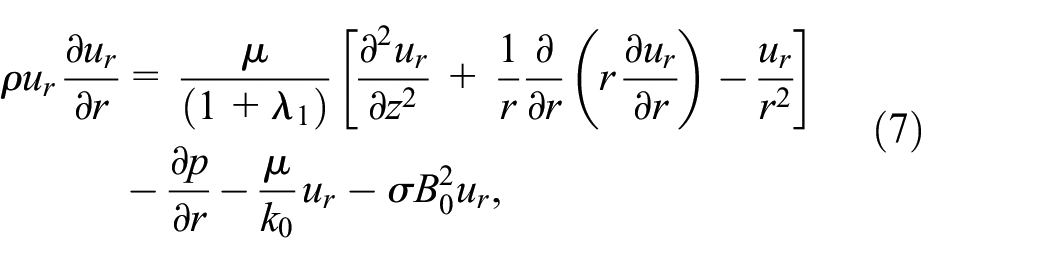
where

which indicates that the pressure gradient speeds up or slows down the flow by controlling the viscous effect. The assumption of axisymmetric flow results as

Differentiating equation (8) w.r.t

By applying integration, the above equation becomes

where

which shows

Due to flow symmetry along

where the minus sign indicates the accelerating flow while the plus sign indicates the decelerating flow. The
Non-dimensionalization of governing equation
The non-dimensional solution of equation (8) can be obtained by using equation (3) as

which gives

Substitution of equations (15) and (16) into equation (8) gives

As

which indicates that
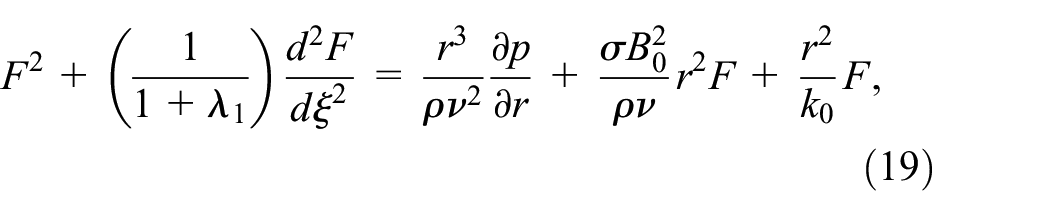
And the boundary conditions from equation (14) changed as

The non-zero condition in equation (20) implies that the problem can be further simplified if rescaling

where the non-dimensional quantities can be expressed as
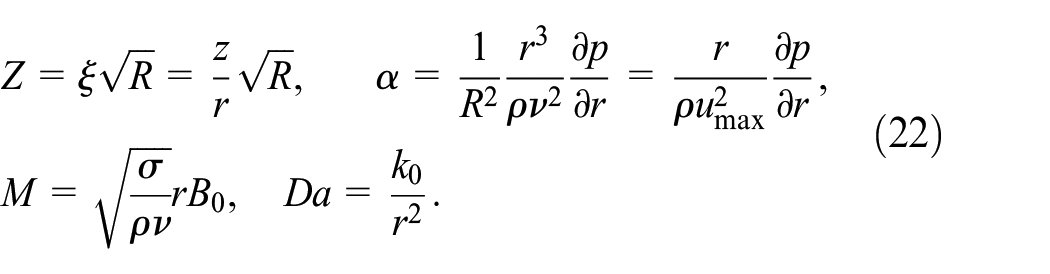
The dimensionless boundary conditions become

In equation (22), M is the magnetic parameter,

Now, the solution for
Velocity distribution
Accelerating flow
Equation (8) can be solved by multiplying with

where

which can be expressed as

For accelerating flow, the condition is
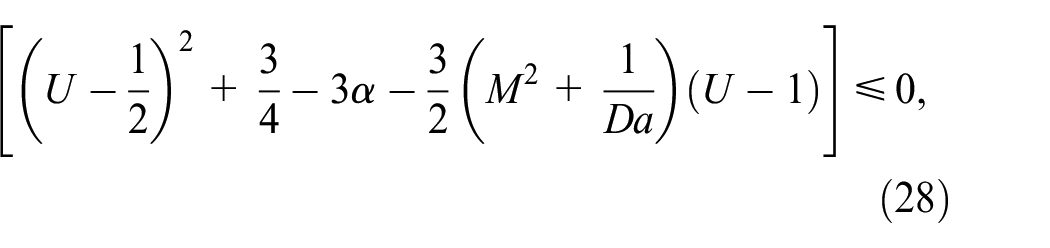
resulting as
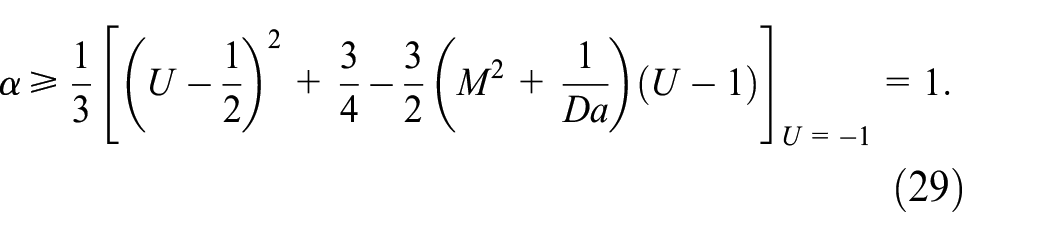
This is the accelerating flow condition, meaning that if

where the real roots for


Simplification of equation (30) gives

The solution of above equation (33) can be obtained by integrating and using the condition

where

Equation (34) can be rewritten as

and the simplification of equation (36) by using the Jacobi elliptic sine function gives

The above-calculated solution can be verified by putting equation (37) into equation (30).
Moreover, the solution in terms of Z with the no-slip condition can be re-written as

Equation (37) shows the exact solution of accelerating the flow of Jeffry fluid with the magnetic effect in the porous medium.
Decelerating flow
Equation (8) is also applicable for decelerating flow by using the boundary condition with a plus sign to obtain the constant of integration as

or
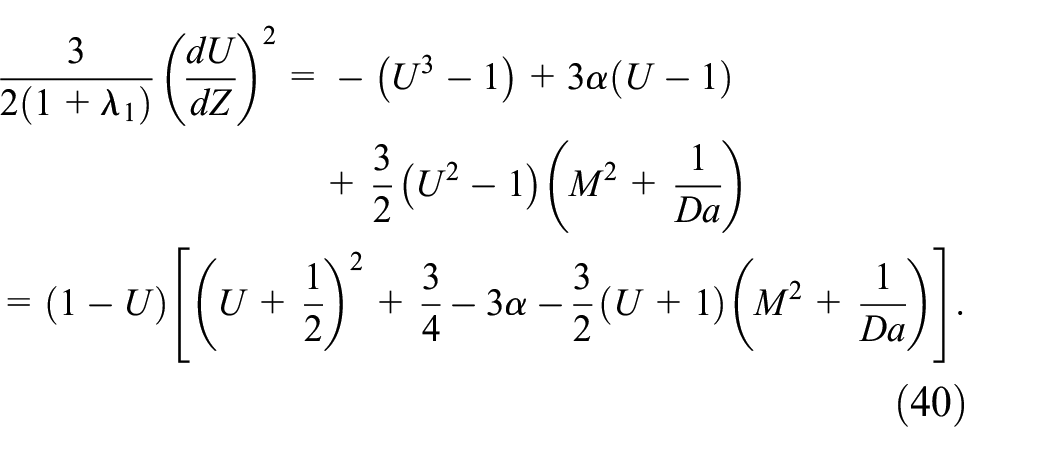
The condition for decelerating flow is

resulting as

which indicates the condition for decelerating flow. Equation (40) can be rearranged as

where

with

The roots
Equation (40) can be simplified by using

with

Equation (46) can be expressed in terms of Jacobi elliptic sine function as

Equation (48) is accurate for the whole region of decelerating flow due to the symmetry along the z-axis. By using

Pressure distribution
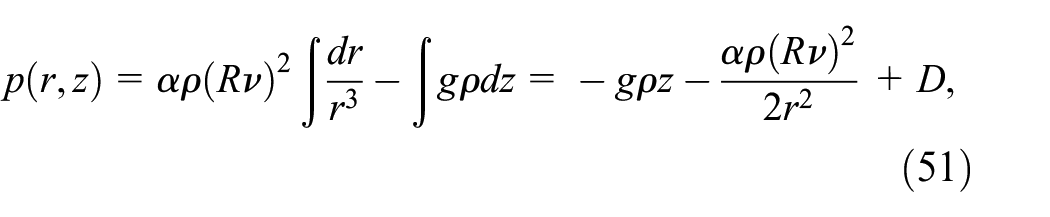
The non-dimensional flow rate in terms of maximum velocity is given as

In equation (50),
where

Specifically, for the upper boundary that is,

Equation (50) can also be written as

Now,
Disk torque
The torque

where

By using equation (56) in equation (55), the torque becomes

Shear stress distribution
For the condition

Shear stresses at the surface of disks have much importance. So, shear stresses at the boundary can be evaluated by using

and

where using equation (25),
Convergence criteria
To verify the convergence of Jacobi elliptic sine squared function, standard convergence criteria is applied as
Boundedness and periodicity
The Jacobi elliptic sine function is periodic with a real period
Convergence of the elliptic integral representation
The function transformation uses incomplete elliptic integral relations as in equation (48) for the decelerating flow. For convergence,
Specific cases of
Case
Case
Case The function is periodic and remains within the range [0, 1], ensuring uniform convergence.
Boundary condition verification
The condition

which is well-defined and ensures a valid elliptic integral expression for all real
Results and discussion
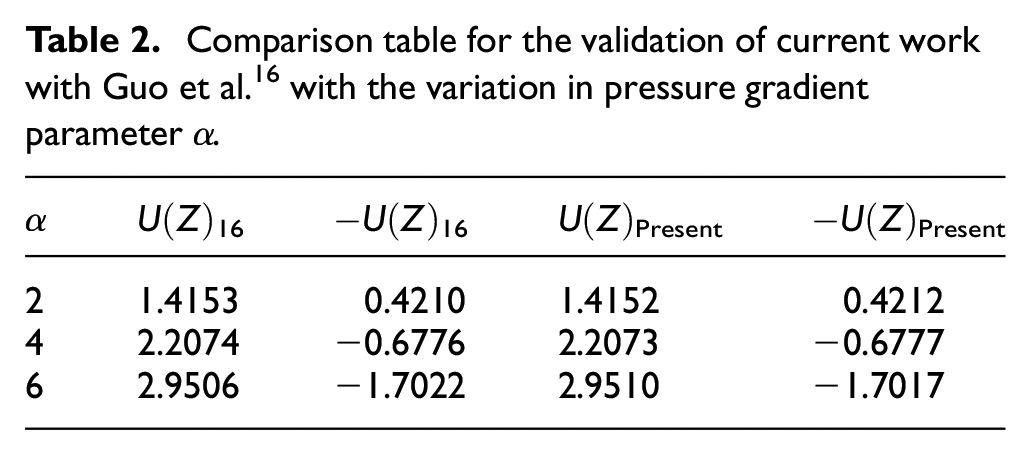
In this article, the radial flow of a Jeffrey fluid is considered between two flat disks. The effect of MHD and porous medium is studied in detail. The analytical solution for both accelerating and decelerating flow is derived by using the Jacobi elliptic function of the first kind to solve non-linear governing equations. The impact of Jeffrey fluid parameter, darcy number, magnetic and pressure gradient parameters on accelerating and decelerating velocity are expressed graphically. The streamlines for accelerating and decelerating flow are also shown graphically. Moreover, the torque on both disks is also derived and expressed in tabular form. Moreover, the accuracy and reliability of the present work have been validated through a comparison of the obtained velocity profiles with those of the previous study by Guo et al.
16
For identical values of the dimensionless variables, the velocity profile from the current work, in the absence of a magnetic field, porosity, and fluid parameter
Comparison table for the validation of current work with Guo et al.
16
with the variation in pressure gradient parameter
Accelerating flow
Figure 2(a) to (d) shows the velocity profile of accelerating flow
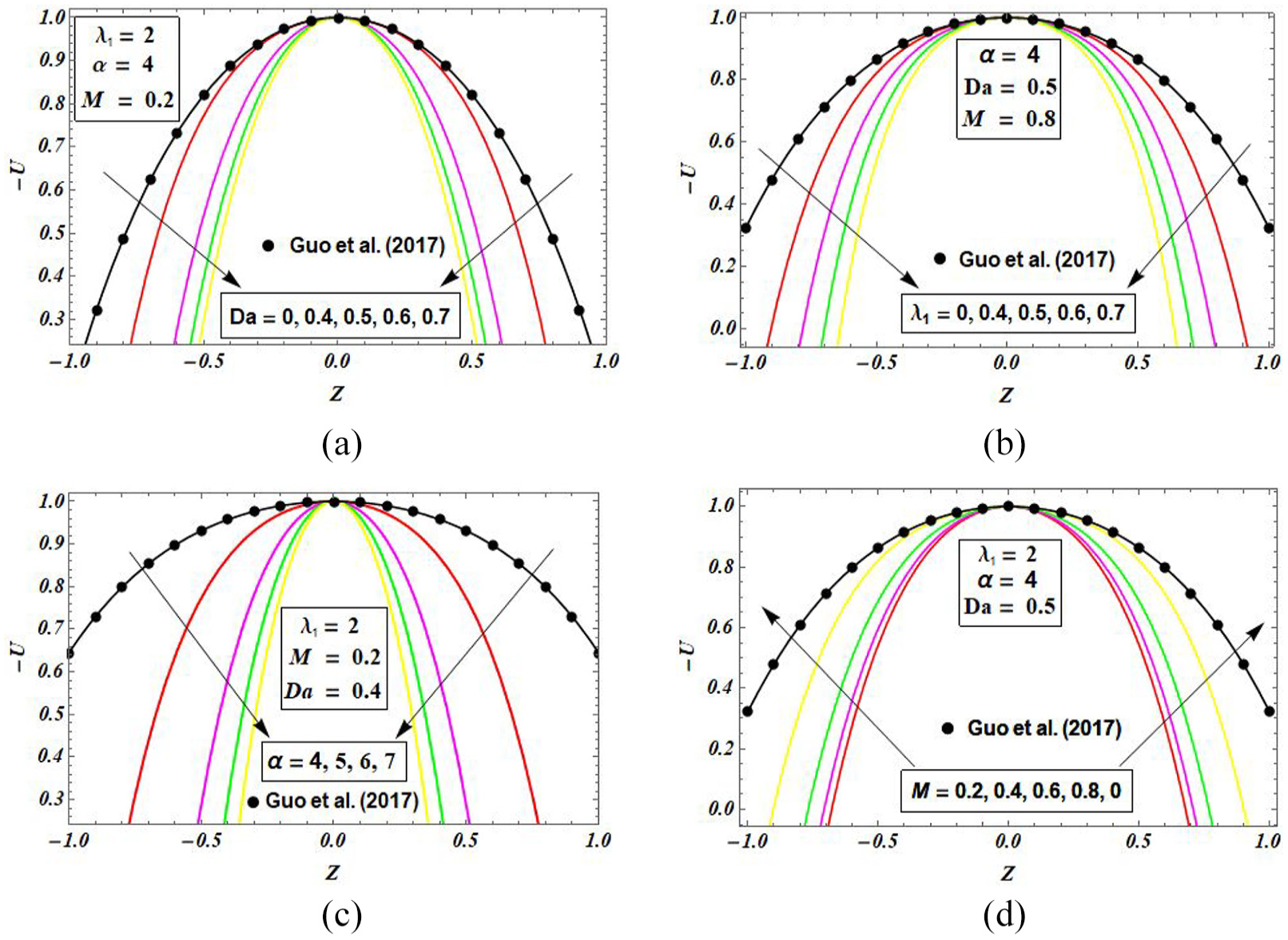
(a–d) Deviation in accelerating velocity
Decelerating flow
Figure 3(a) to (d) shows the velocity profile of decelerating flow

(a–d) Deviation in decelerating velocity
Streamlines
Streamlines are a crucial tool for visualizing the flow patterns of fluids, providing insights into the direction and behavior of fluid motion under varying conditions and geometries. Figures 4(a) and (b) and 5(a) and (b) show the streamlines for the accelerating flow at different values of Darcy’s number and Jeffrey’s fluid parameter. Figure 4(a) and (b) shows the streamlines of accelerating flow for different values of Darcy number. It is examined that with the increase in

(a, b) Deviation in streamlines of accelerating flow for (a)

(a, b) Deviation in streamlines of accelerating flow for (a)
Figures 6(a) and (b) and 7(a) and (b) show the streamlines for the decelerating flow at different values of
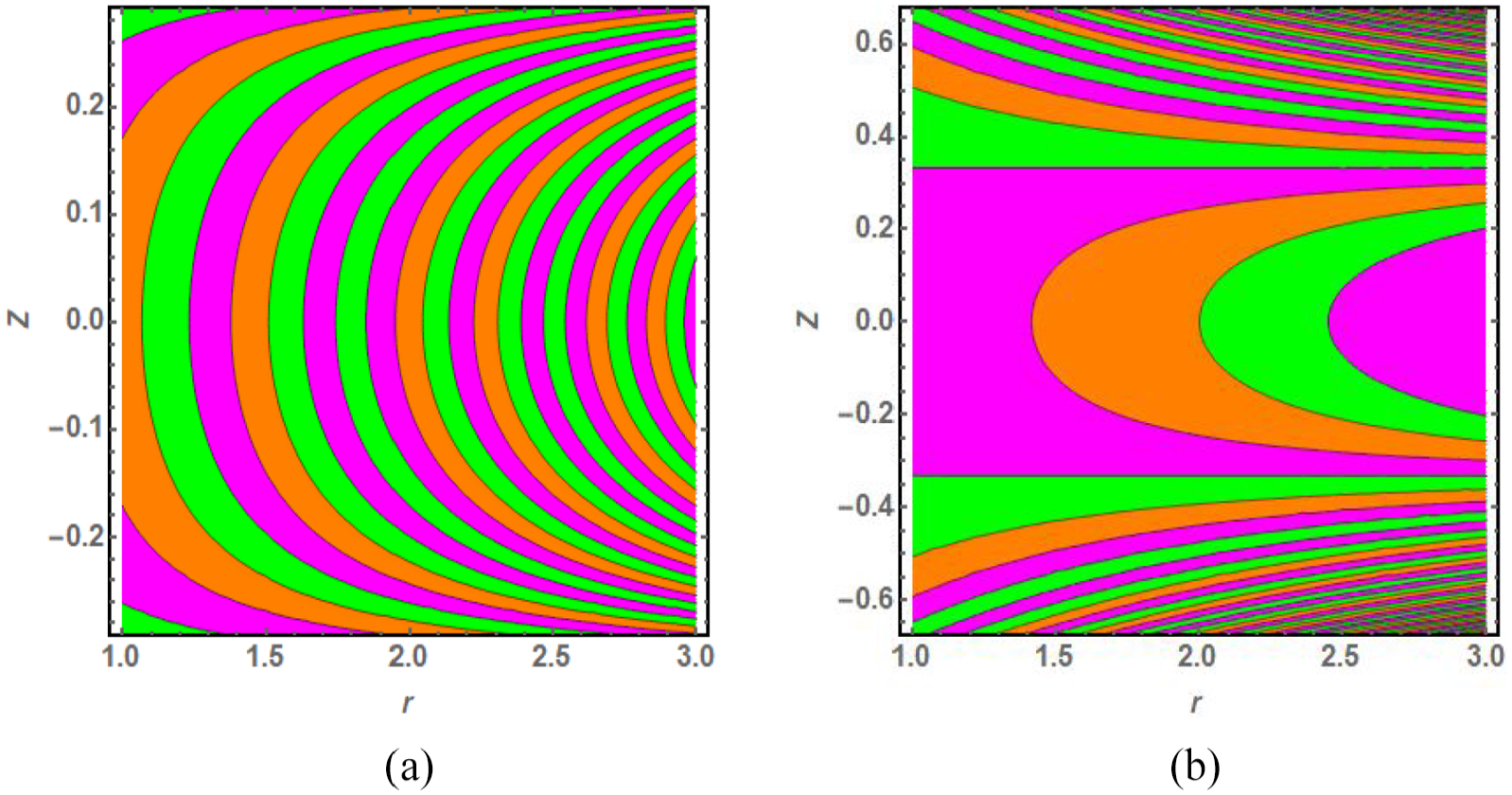
(a, b) Deviation in streamlines of decelerating flow for (a)

(a, b) Deviation in streamlines of accelerating flow for (a)
Table 3 reveals the effect of variations in
Effect of

Conclusions
The considered problem deals with the steady, laminar, radial flow of Jeffrey fluid between two flat disks with the magnetic effect and porous medium. The exact solution of accelerating and decelerating flow for the considered non-linear problem is obtained by using the Jacobi elliptic sine-squared function of the first kind with the effect of MHD and porosity. The inspiration for this work is the wide applications of disk flow in biomedical, aerospace, and chemical engineering, rotating machinery, viscometers and rheometers, microfluidic devices, centrifugal separators, etc. In the future, this work can be extended by employing different fluid models like the Couple stress fluid model, Williamson’s fluid model, hyperbolic fluid model, and many other non-Newtonian fluid models along with numerous effects like viscous dissipation, entropy generation, Joule heating, Hall effect, and Sorret-Dufour impacts, etc. Following are some important results obtained during the considered problem:
The velocity and pressure gradient remain unchanged in the radial direction.
Both accelerating and decelerating flow verify the Poiseuille parabolic law at a low Reynolds number while becoming uniform at a high Reynolds number.
For accelerating flow, velocity increases with the escalation in magnetic effect while declines for Jeffrey fluid parameter.
For decelerating flow, velocity increases with the upsurge in porosity and decreases for all the remaining parameters.
Due to no-slip condition and stationary disks, the velocity at the disks becomes zero, increases away from the disk surface, and becomes maximum at the center.
Torque on the upper disk increases with the Darcy number while decreasing at the lower disk while the increase in Jeffrey fluid parameter, torque on both disks increases.
A comparison of recent work with the previous study 16 is shown graphically and also in Table 2.
