



Abstract
Fluid flow and heat transfer inside a rectangular framework have numerous engineering applications, including energy generation, power systems, cooling technologies, and nuclear reactors. Researchers are currently focusing on improving heat transfer rates through the use of nanofluids. With this motive, the current study investigates the constant, incompressible flow of nanofluids containing copper nanoparticles suspended in ethylene glycol and water, within a rectangular framework. The study investigates the non-Newtonian Ree-Eyring nanofluid flow with impact of Hall Effects. Furthermore, the impacts of Joule dissipation, thermal radiation, and viscous dissipation are examined. Additionally, the physical quantities skin friction coefficient and Nusselt number are investigated. The mathematical modeling is examined, followed by the application of similarity transformation to the nonlinear governing partial differential equations (PDEs) with particular boundary conditions. This procedure simplifies the derivation of dimensionless ordinary differential equations. The dimensionless scheme of equations is then solved numerically using the bvp4c numerical technique, which is integrated into the MATLAB software. Graphical and tubular representations are used to study the logical impact of fascinating aspects on subjective dimensions. According to the findings, greater magnetic parameters reduce velocity components, whereas larger Ree-Eyring fluid values enhance them. The temperature profile improves when magnetic parameters increase, but declines as Ree-Eyring fluid parameters rise. As suction parameters increase, the skin friction coefficient drops. The Nusselt number drops with a rising Biot number. This study have examined the first time to the best of authors knowledge.
Introduction
A nanofluid is made up of nanoparticles, which are miniscule particles on a nano scale that improve the fluid’s viscosity and heat conductivity. To ensure their uniform distribution, these nanoparticles are added to the solution via dispersion procedures including chemical stabilization or ultrasonic. By raising the effective surface area for better heat dissipation, this improves heat transfer efficiency. Because they are so good at improving energy absorption, nanofluids are used in a wide range of heat transfer systems, such as solar energy systems, electrical devices, and automobile engines. The issue of nanoparticles and the environment is extensive, and a thorough study cannot be provided here. With increasing financing, research and development initiatives have expanded, resulting in a large increase in the number of publications. Covering all of these articles is beyond the scope of this article. Instead, a succinct review of the myriad scientific and technological problems and potential is presented, emphasizing the importance of collaborative efforts to increase understanding. Choi and Eastman 1 introduced the term “nanofluid” during his key paper. Nanofluid is a liquid that contains a dispersion of solid particles (nanoparticles) ranging from 1 to 100 nm in size. The field of nanotechnology has advanced significantly in the last few decades. Shah et al. 2 examined the rotating flow of a micro polar nanofluid including CNT nanoparticles in different base fluids between parallel and horizontal plates in a porous media defined by Darcy-Forchheimer’s law. Sharma et al. 3 investigated the effect of heat radiation on grapheme Maxwell nanofluid flow across a linearly extended sheet. Ge-Jile et al. 4 investigated the heat transfer properties of a nanofluid smoothly through a vertical cone in the occurrence of thermal radiation. They investigated a water-based nanofluid with ferrous nanoparticles. Mishra and Kumar 5 investigated the effects of radiation on the heat transfer efficiency of a nanofluid flow across a stretched sheet. Rashed et al. 6 investigated nanofluid behavior near a sliding vertical plate, specifically how nanoparticle dispersion within the boundary layer influences fluid characteristics. Their study shows that nanofluids can greatly improve heat transfer efficiency, which is consistent with previous findings. Rashed et al. 7 explored the impact of a variable magnetic source on a ferro-nanofluid containing CoFe2O4 nanoparticles and water as the base fluid. Their findings revealed that nanofluid velocity and shear stress rose with higher nanoparticle volume fraction and magnetic field strength, but reduced with increasing Pr. Rashed et al. 8 explored MHD fluid flow in both stretching and shrinking contexts. Their theoretical analysis showed that greater magnetic field parameter values led to a notable increase in fluid heat transfer, with the effect being more pronounced during stretching than in shrinking. The Hall Effect is important because it affects magnetic force and changes the current density’s direction and magnitude. The effects of Hall current on velocity and temperature fields in the occurrence of unstable Hartmann numbers were examined by Attia. 9 Three-dimensional Coquette flow with transpiration cooling was examined by Singh 10 in the existence of a static magnetic field perpendicular to the flow. Singh 11 investigated an additional aspect of this flow, concentrating on the case in which the moving plate stayed motionless inside the magnetic field. The discussion in this field was aided by Prasada Rao and Krishna 12 who examined the Stokes and Eckert problems in magneto hydrodynamics with Hall effects. The conductivity perpendicular to the magnetic field decreases in an ionized gas with low density and/or large magnetic fields because of the free rise motion of electrons and ions along the magnetic field lines before encountering collisions. Furthermore, a perpendicular current is brought to the magnetic and electric fields. Turkyilmazoglu 13 investigated the flow over a porous disk in the existence of a Hall current, emphasizing its effects and practical applications.
The Hall Effect is a well-established phenomenon that has received extensive attention in the literature. Magneto hydrodynamic flows with Hall currents are of great interest in technical applications, especially in the domains of flight magneto hydrodynamics, Hall accelerators, and magneto hydrodynamic generators. Due to its frequent occurrence in a variety of industrial and technological applications, fluid flow within a circular duct or pipe is of significant importance within the technical realm. Although a great deal of study has been done in this area by scholars like Szymanski.14–21
Non-Newtonian fluids are remarkable for their capacity to defy the simplicity of Newton’s viscosity law, showing changing viscosity under diverse shear rates. Ree-Eyring is a popular model for complex designs that are necessary to capture their complex activities. This model is intended specifically for fluids that behave as if they are shear-thinning, meaning that as shear rates increase, viscosity falls. Researchers are interested in Ree-Erying fluid because its wide series applications in biological and industrial processes. Al-Mdallal et al. 22 investigated radioactive Ree-Eyring nanofluid flow between two stretching rotating disks and solve the obtained equations numerically. Alzahrani and Khan 23 investigated entropy formation of reactive Ree-Eyring nanofluid flow between two rotating disks with the influence of joule heating. The outcome indicates that rising Wiesenberger number, boost the velocity profile. Shoaib et al. 24 investigated the irreversibility of Ree-Eyring Nanofluid flow among two spinning discs, considering the Arrhenius chemical reaction, viscous dissolution, and nonlinear thermal radiation. They addressed the problem using a mix of the Bayesian Regularization approach and the Homotopy analysis method. Their findings show that as the Wiesenberger number is adjusted, both the velocity components rise, while the axial velocity profile decreases. Rooman et al. 25 studied the Hall effects and entropic effect on Ree-Eyring nanoliquid flow over leaky rotating discs and discovered that the Sherwood number is reduced due to Brownian diffusivity. Shah et al. 26 investigated the flow of Ree-Eyring non-Newtonian nanofluids with AA7072 and AA7075 nanoparticles over a stretching sheet, taking into account magnetic dipoles and using the Koo-Kleinstreuer and Cattaneo-Christov models for heat transfer. The results showed that AA7075 nanoparticles outperformed AA7072 in terms of thermal efficiency improved as volume fraction and magnetic interactions increased.
The diverse applications include physics and technology, particularly in material and equipment construction, aerospace engineering, and gas generators, thermal radiation’s impact on natural convection phenomena is becoming increasingly important. England and Emery
27
studied the effects of heat radiation on a lamina, focusing on mixed convection boundary layers descending a vertical shallow for both absorbing and non-absorbing gases. Furthermore, Mahanthesh et al.
28
investigated the numerical properties of boundary layer two-phase nanofluid flow containing particles such as
The main purpose of this research is to appearance at how the Hall Effect the flow of a Ree-Eyring nanofluid based on ethylene glycol water over a rectangular frame. The investigation contains the effects of suction and stretching, as well as viscous dissipation, Joule dissipation, and thermal radiation effects. The work presents findings for nanofluids comprising copper nanoparticles.
Dispersed ethylene glycol water, subject to certain limitations. To explain the findings, visual representations of numerical analyses are presented in the form of tables and graphs. The primary objective of this study was to answer the following research questions:
How does the Hall Effect the temperature and velocity fields?
How does the nanofluid effect the rate of heat transfer?
How does altering the volume percentage of nanoparticles effect velocity and temperature fields?
What is the impact of Ree-Eyring parameter on temperature and velocity profiles?
Mathematical formulation
A magnetic field of strength

Here


Here
This study investigates the constant, incompressible three-dimensional flow of nanofluids made up of copper nanoparticles dispersed in a base fluid of ethylene glycol and water. The analysis takes into account the effect of magnetic fields and heat radiation. The velocity components (

Fluid flow geometry.
The Ree-Eyring hybrid nanofluid flow’s continuity, momentum, and energy equations can be stated as follows using the usual boundary layer approximation with the viscous dissipation term:



Where

Where

Since

Thus

Here

Based on what has been said above, the Ree-Eyring boundary layer equations as follows26,39


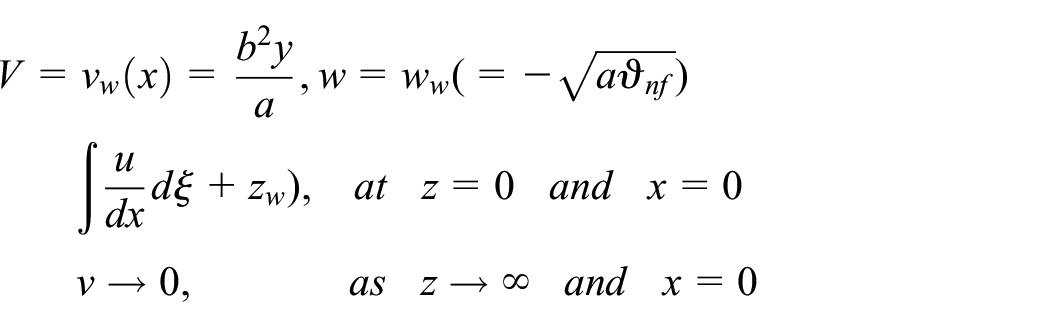
Boundary condition 40


Rosseland approximation
Using Rosseland’s approximation for radiative heat flux, the expression for radiative heat flow can be written as follows:

In the above expression, the symbol “
Thermo physical characteristics of the basefluid and nanoparticles.

The abbreviation “nf” in the above properties refers to the thermo physical properties of nanofluids. In this nomenclature,
Similarity transformation
Similarity transformation is utilized to find non-dimensional equations, which are listed below. 40
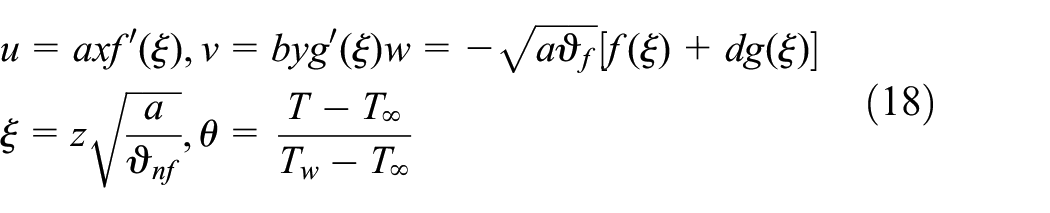
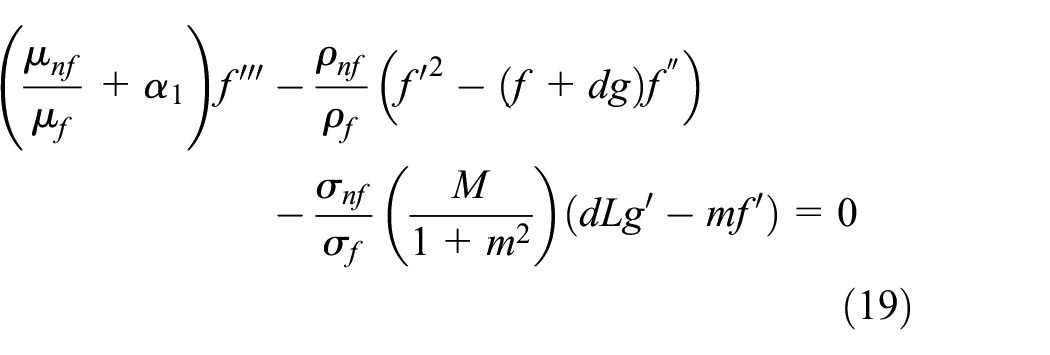
Using similarities between dimensional expressions, constructed the dimensionless equations:


Boundary condition

Here

Thermal conductance aggregation was produced by adapting Maxwell’s model to create the Bargeman model. This method was chosen for its precision, combined with the intrinsic aggregation properties of nanofluids. The thermal conductivity of the collective model is calculated as follows.
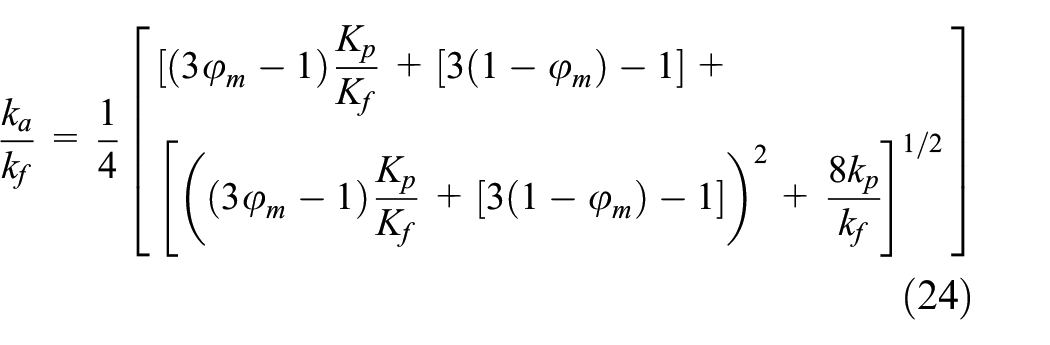
The collective volume fraction is the volume occupied by aggregates divided by the largest aggregate’s maximum packing fraction.

Let

Range of non-dimensional parameters.

Physical quantities of engineering interest
In this portion, the native skin friction coefficient


The Reynolds number
Numerical scheme
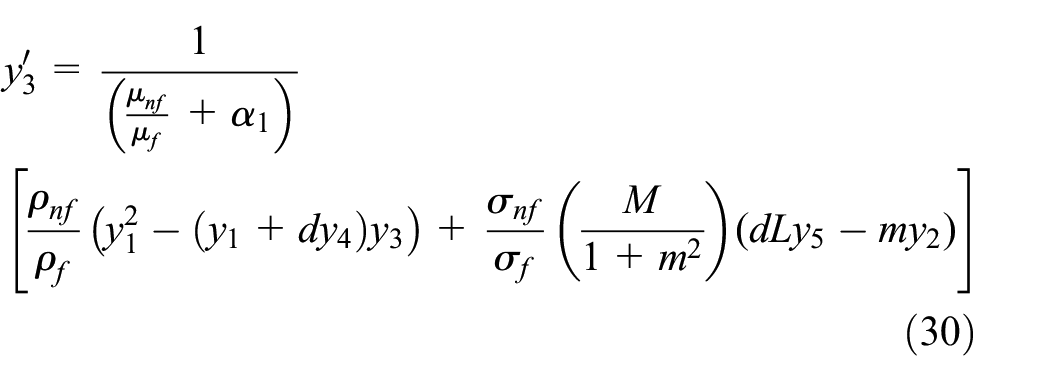
In this portion, the ordinary differential equations and their boundary conditions equation (15) precisely presented. The shooting algorithm, implemented through the bvp4c in MATLAB, is used to find the flow model’s numerical solution. In this technique, the higher order is first transformed (Figure 2).



(bvp4c) Flow chart.
Result and discussion
This section discusses in depth the graphical and tabular results generated from a numerical solution using the bvp4c method. Tables and graphs are used to investigate the impact of many governing factors, including fluid, magnetic, stretching ratio, Biot number, Ree Eyring fluid parameter, suction velocity, and volume fraction parameters, on velocity profiles
Velocity profile
Figures 3 and 4 represent the variation of velocity profile along

Impact of Ree Eyring fluid parameter
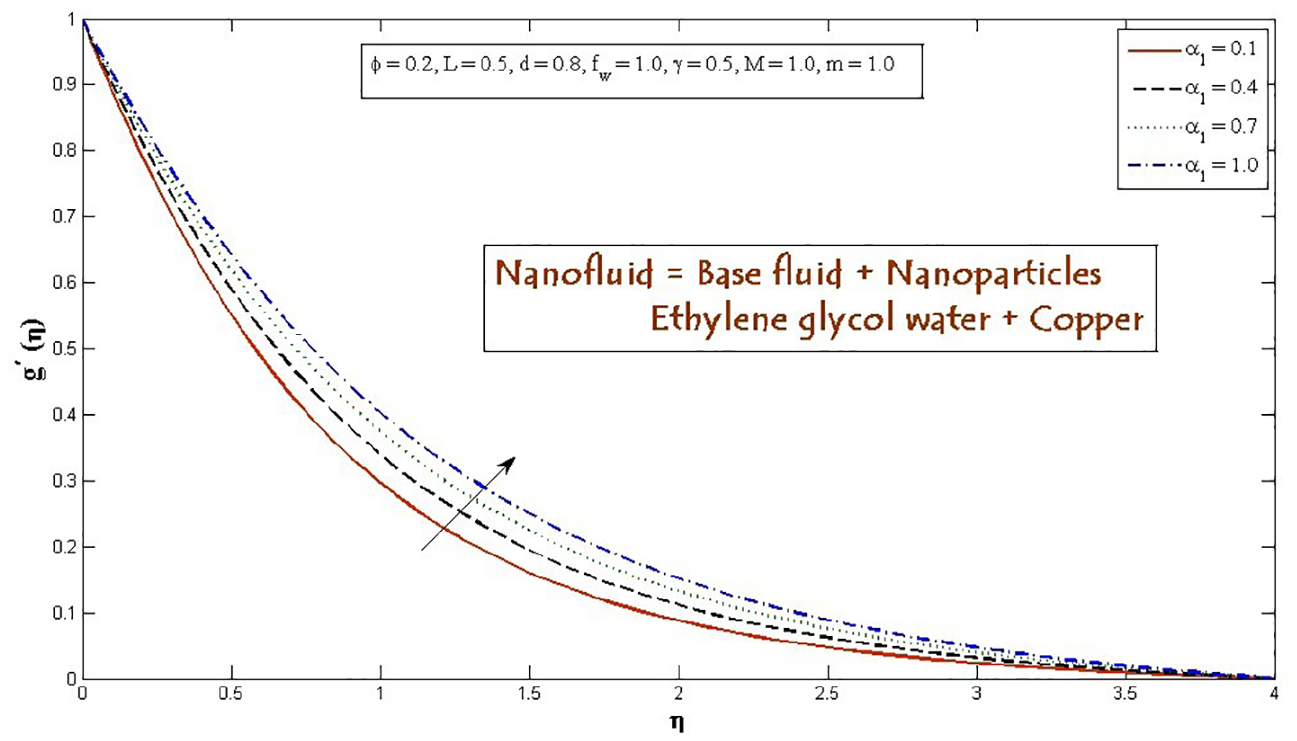
Impact of Ree Eyring fluid parameter
Figures 5 and 6 show the behavior of velocity profile in x and y path respectively for distinct values of suction velocity parameter

Impact of Suction velocity parameter

Impact of Suction velocity parameter
Figures 7 and 8 examine the variations in the velocity fields
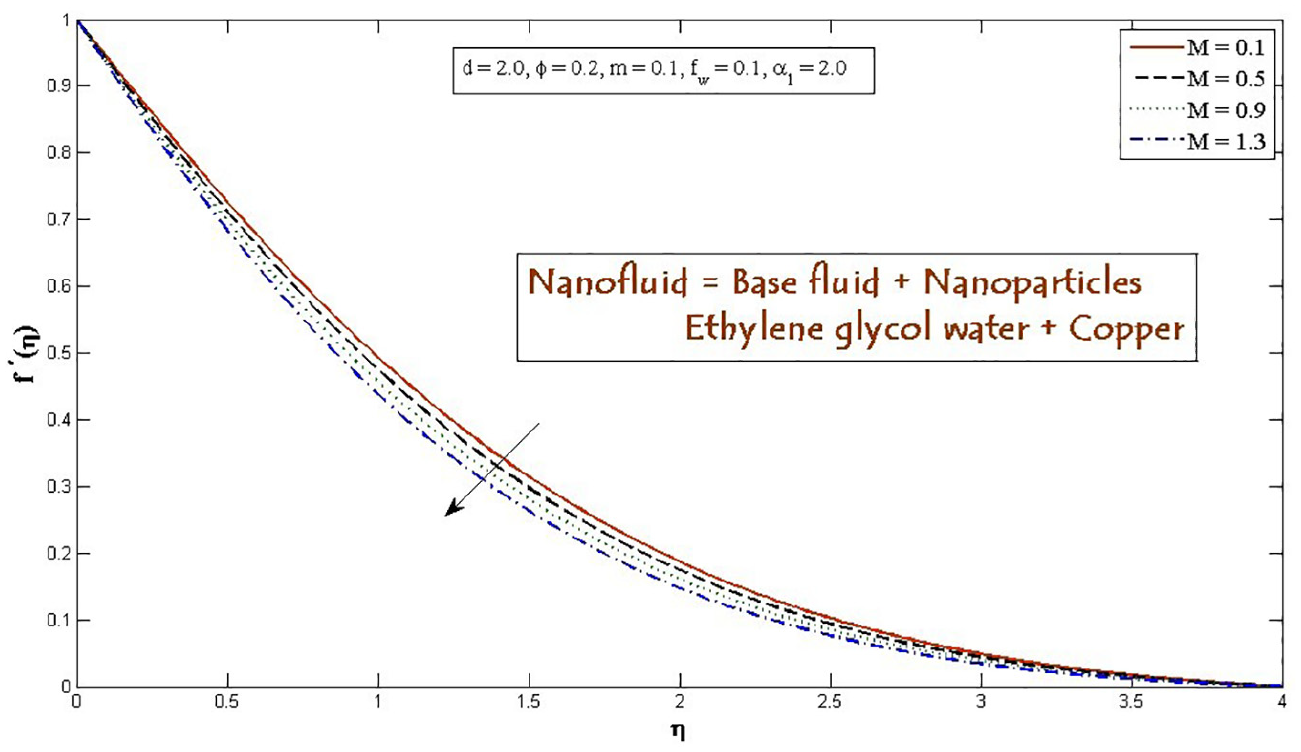
Impact of Magnetic parameter
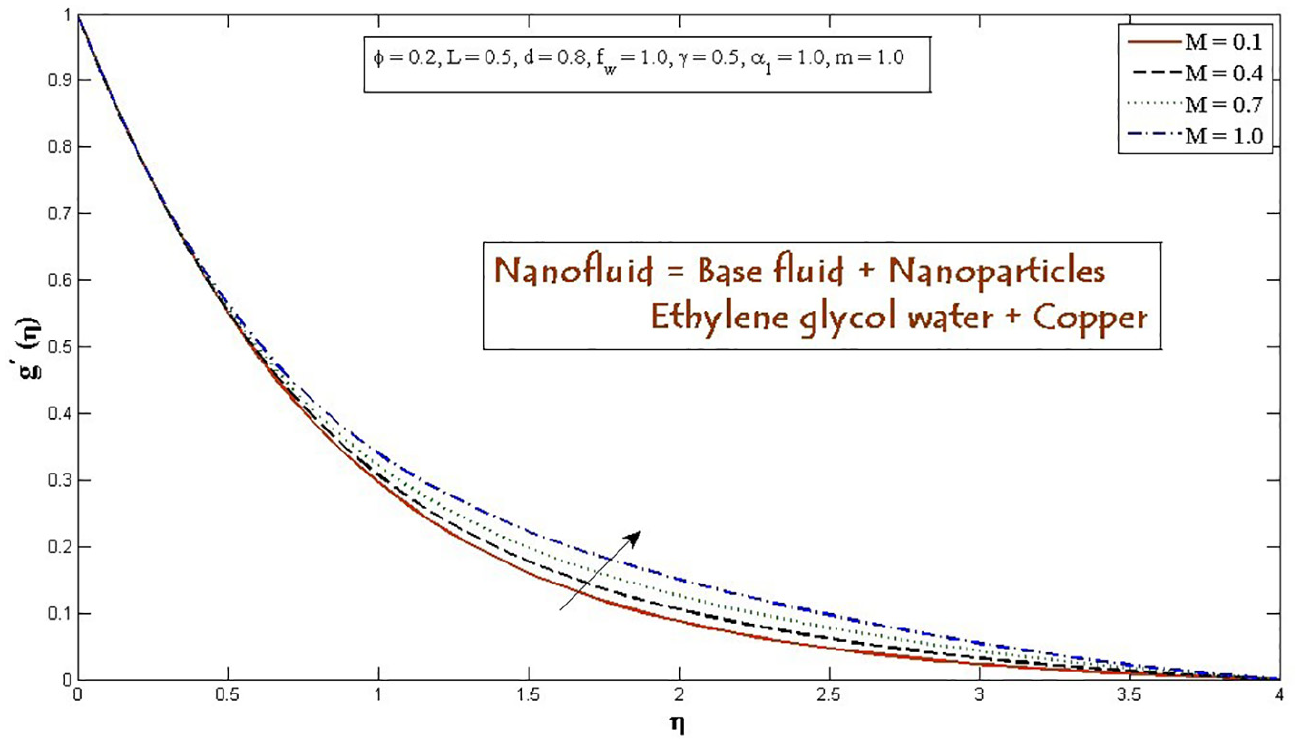
Impact of Magnetic parameter

Impact of Volume fraction parameter

Impact of Volume fraction parameter

Impact of Stretching ratio parameter

Effect of Stretching ratio parameter

Impact of Hall effect parameter
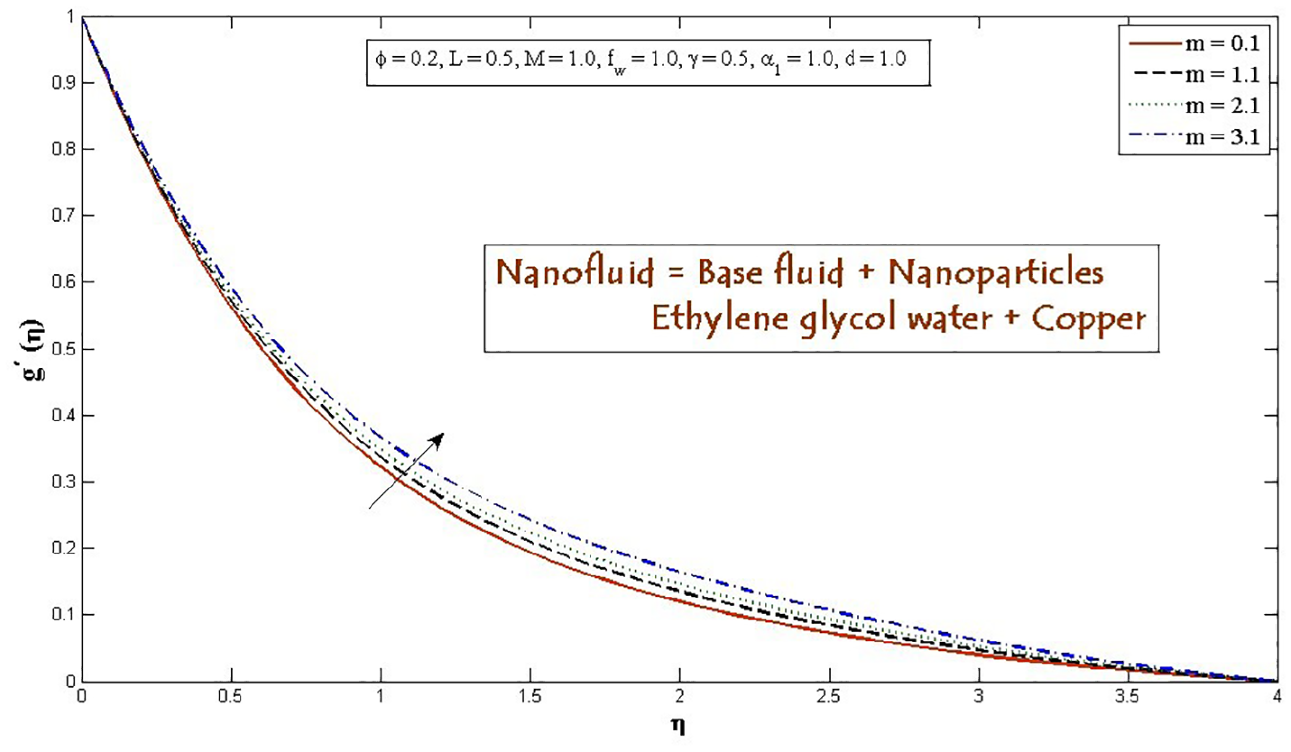
Impact of Hall effect parameter
Temperature profile
Figure 15 illustrates the temperature profile for different values of Ree-Eyring fluid parameter
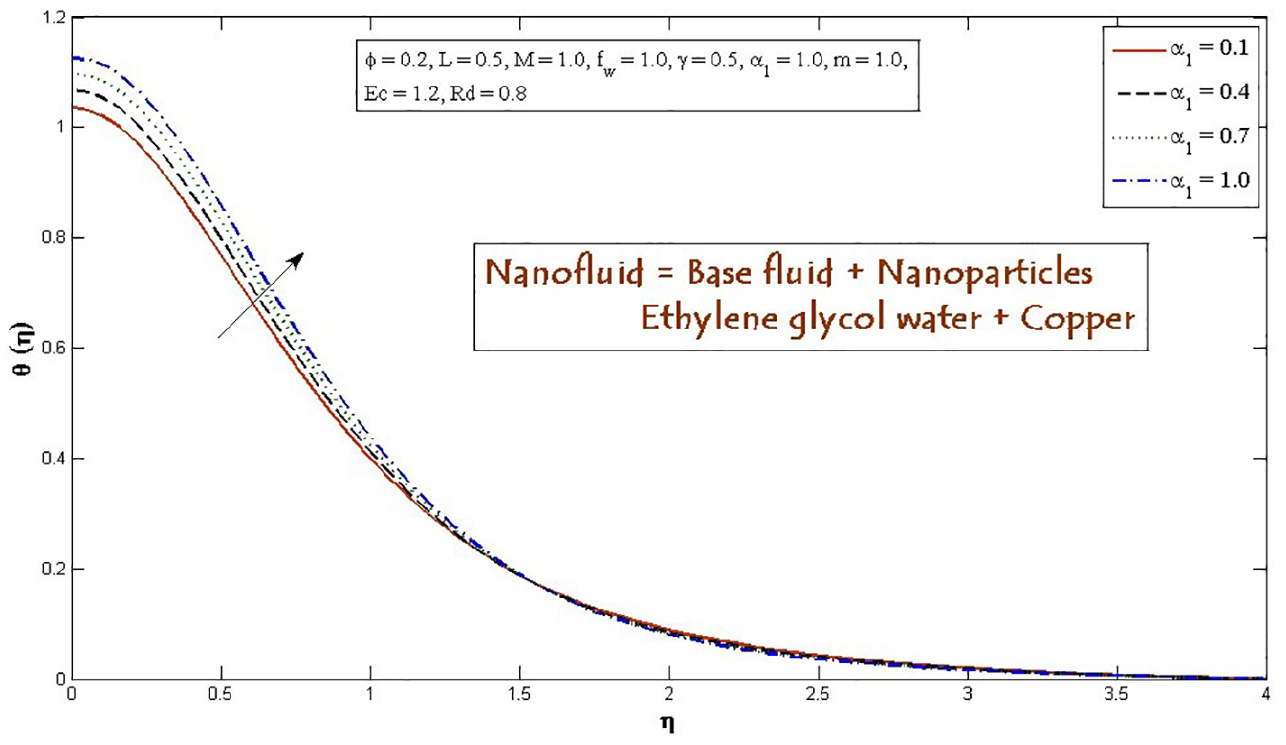
Effect of Ree Eyring fluid parameter
Here in Figure 16 it is analyzed that temperature drops as the Biot number grows. As the Biot number grows, it suggests that convective heat transmission at the solid-fluid interface is more efficient than internal heat conduction within the nanoparticles. In other words, the amount of heat transfer among the nanoparticles and the surrounding fluid (ethylene glycol-water mixture) exceeds the rate of heat transmission within the nanoparticles. This efficient convective heat transmission results in a more consistent temperature distribution throughout the nanofluid. As a result, the temperature profile of nanofluid reduces.

Influence of Biot number
Figure 17 illustrates the temperature profile for different values of magnetic parameter

Influence of Magnetic parameter
The increased heat transfer rate from the heated surface to the adjacent nanofluid causes a temperature increase in the nanofluid. As the magnetic parameter increases and MHD convection becomes more evident, the temperature profile within the nanofluid rises, resulting in greater temperatures across the nanofluid. Figure 18 refers the temperature profile in

Effect of volume fraction parameter
Figure 19 illustrates the temperature profile in x direction decreases when increase the Hall effect parameter. As the Hall effect parameter rises in a fluid, such as an ethylene glycol-water combination containing copper nanoparticles, the magnetic force (Lorentz force) deflects charged particles and heat-conducting nanoparticles from the x-direction to the y-direction. This diversion limits heat transport along the x-axis, resulting in a lower temperature profile in that direction. Additionally, a smaller thermal boundary layer might reduce the efficiency of heat transport along the x-axis.

Effect of Hall effect parameter
Table 3 indicates the skin friction coefficient for magnetic parameter M, volume fraction parameter
Deviation in Skin Friction coefficient with varying of different parameter.

Increase in skin friction in the
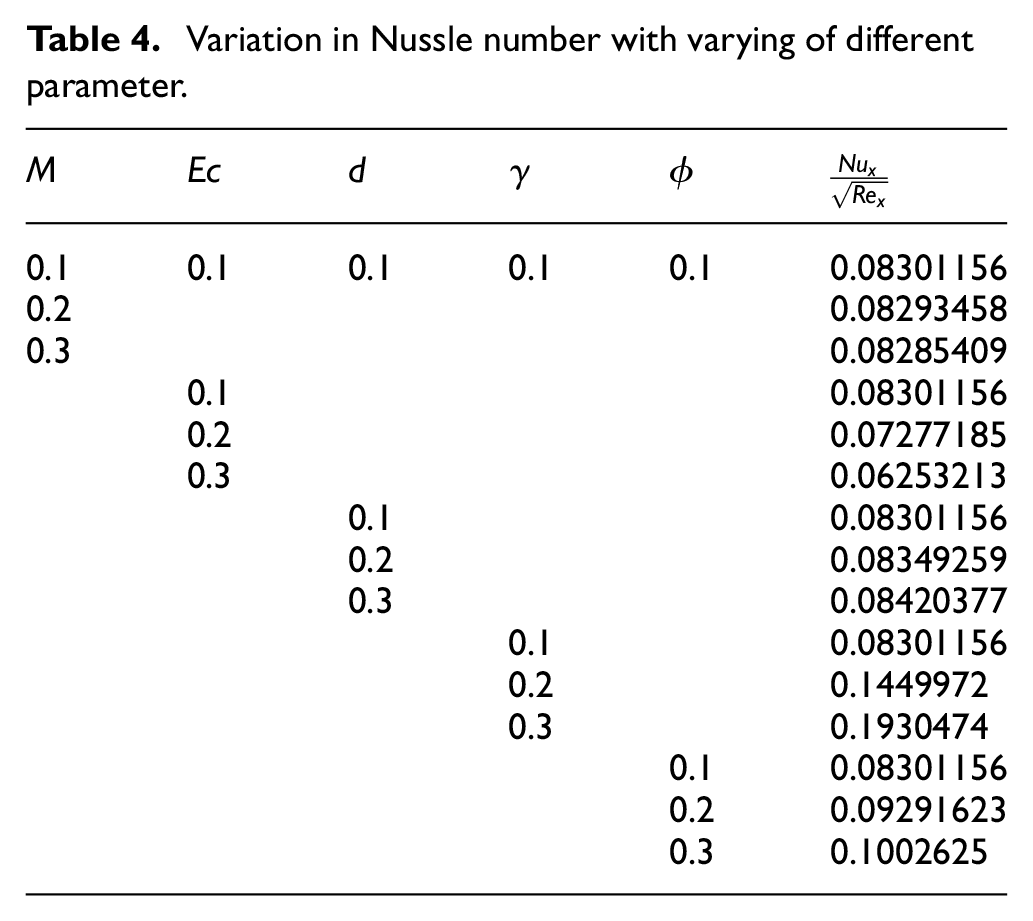
Table 4 represent the deviation of Nussle number for different values of magnetic parameter
Variation in Nussle number with varying of different parameter.
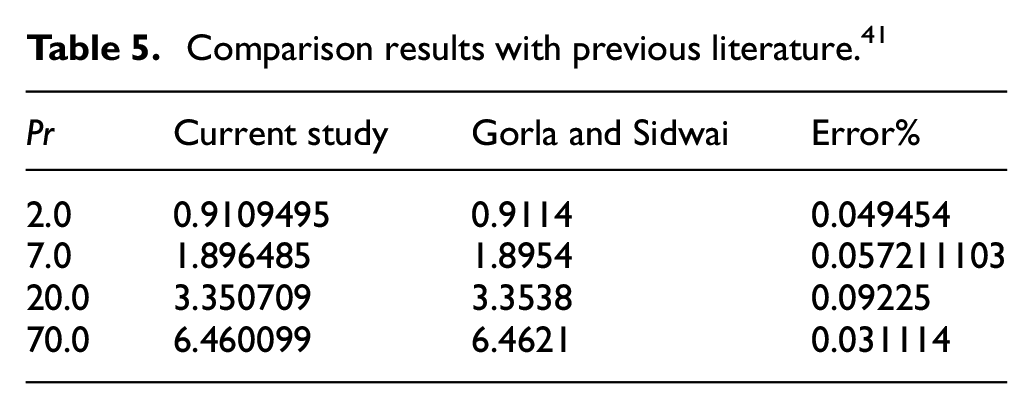
Comparison results with previous literature. 41
Conclusion
This study investigates the non-Newtonian Ree-Eyring nanofluid flow with the influence of Hall effects within rectangular framework. Furthermore, the impacts of Joule dissipation heating, viscous dissipation, and thermal radiation are also considered. Additionally, the physical quantities are investigated through tables. In this study the nanofluids containing copper nanoparticles suspended in ethylene glycol-water. The non-linear governing PDEs are altered to non-linear system of ODEs utilizing similarity transformation. The obtained non-linear system is solved by numerical technique (bvp4c). The key finding of this investigation is summarized as follows:
The velocity profile in both
For high values of suction velocity parameter and volume fraction, the velocity profile in both
The velocity profile in
The temperature profile enhanced for large values of Magnetic parameter and Biot number, while opposite comportment is observed for large values of volume fraction and Ree-Eyring fluid parameter.
The skin friction declined in both
For large values of Magnetic parameter, the skin friction in
The Nusselt number enhanced for higher values of stretching ratio parameter and Biot number, while declined for large number of Magnetic parameter and Eckert numbers.
Footnotes
Appendix
Notation

| Velocity components ( ) | M | Magnetic parameter | |
| Coordinates axis ( ) | Magnetic field strength ( ) | ||
| d | Stretching ratio parameter | Pr | Prandtl number |
| Density of nanofluid | Rd | Radiation parameter | |
| Stretching rates | Horizontal velocity in direction | ||
| Suction velocity parameter | Dynamic viscosity | ||
| Temperature of fluid ( ) | Thermal conductivity [ ] | ||
| Horizontal velocity in direction | Electrical conductivity | ||
| Stefan Boltzmann constant | Specific heat | ||
| Heat transfer coefficient | Temperature of fluid at the wall ( ) | ||
| Thermal radiative heat flux | Mean obserption coefficient | ||
| Heat capacitance of nanofluid | Heat capacitance of nanoparticles | ||
| Volume fraction | Nanofluid | ||
| Fluid | Solid particles | ||
| Biot number | Ree-Eyring fluid parameter | ||
| Dimensional less quantity | Eckerd number | ||
| Hall effect parameter |
Handling Editor: Chenhui Liang
Author contributions
All authors participated equally in the conceptualization, investigation, analysis, original draught writing, review, and editing of the work.
Declaration of conflicting interests
The author(s) declared no potential conflicts of interest with respect to the research, authorship, and/or publication of this article.
Funding
The author(s) disclosed receipt of the following financial support for the research, authorship, and/or publication of this article: “This project was supported by Researchers Supporting Project number (RSP2024R411), King Saud University, Riyadh, Saudi Arabia.” “Project financed by Lucian Blaga University of Sibiu through research grant LBUS - IRG - 2023 - 09.”
Data availability
The datasets used and/or analyzed during the current study are available from the corresponding author upon reasonable request.
