



Abstract
Darcy-Forchheimer transport of nanofluid comprising Ethylene glycol in Cattaneo-Christov heat flux across an extended cylinder with various slips is investigated in this paper. The influence of autocatalytic chemical reactions in the governing equations enrich the novelty of the proposed mathematical formula. The current challenge also includes an entropy minimization study of the governing equations. For the conversion of the nonlinear system to ODEs, a relevant transformations technique is used. For the calculation of a nonlinear set of linear equations, the bvp4c (shooting) method is coupled with the MATLAB program. Graphical drawings are used to examine the effects of the leading factors on occupied fields. The results demonstrate that a high magnetic parameter boosts the thermal profile while lowering the velocity. In addition, the velocity is reduced when the slip parameter is estimated. Furthermore, it was determined that as the thermal relaxation parameter was raised as the entropy number increases. The tabular data is included to support the current mathematical model.
Keywords
Introduction
The investigation of the dehydration process is very important in the semiconductor sector because excessive heat production can damage or destroy equipment or devices. An increase in heat transfer between such a coolant and a heated surface is comparable to improving convective transfer in cooling systems. All thermophysical properties enhancement measures will affect these two metrics, convective heat transfer efficiency, and fluid/wall exchange surfaces. The fins primarily enhance the thermal transfer surface, while the heat transfer fluid’s conductance affects the heating and cooling coefficient. To improve the efficiency of a cooling system, many strategies have been used. Large surfaces, including fins, are a dependable, cost-effective, and commonly utilized technique of heat dissipation. To maintain a cool, large, the high-powered system needs more heat dissipation. The second approach for eliminating heat is integrating liquid aerodynamic performance with high conductivity of increased resistance. Metal-based water nanofluid has greater thermal conductivity and convective heat transfer than the base liquid. This strategy is undeniably the most appealing for increasing heat transport. In 1993, Masuda et al. 1 were the first to use ultrafine solid particles for distribution in a base fluid. Choi 2 coined the term “nanofluid” in 1995, which traditionally refers to a fluid with nanomaterials suspended in it. Many studies have found that substituting a coolant with a nanofluid enhances a base fluid’s thermal efficiency.3,4 The thermal conductivity of most solids is larger than the fluid’s heat transfer coefficients. The dispersion of nanoparticles to the conventional fluids resulted in greater thermophysical properties and improved thermal performance when compared to the base fluid. Muhammad et al. 5 studied the impact of compressing flow on the melting of nanofluids. Goudarzi et al. 6 investigated the effect of nanomaterials with convection and radiation on nanofluid. Sadaf and Abdelsalam 7 studied the effects of nanofluid flow in a curved non-uniform disc with flow separation features. Hussein et al. 8 looked at using a nanofluid to boost the thermal output of photovoltaic panels. Gul et al. 9 studied the impact of MHD dipoles on heat transfer using a nanofluid. Abbas et al. 10 explored the Yamada–Ota and Xue theories of nanofluid on spinning needles. Waini et al. 11 investigated with a forward flow of nanofluid toward such a squeezing cylinder. Non-Newtonian fluids are widely employed in industry and business, which has prompted academics to do research in this area. The chemical industry, which includes paint manufacture, palm increased oil, and conditioner production, and even the food industry, which includes mayonnaise preparation, are all examples of key applications for these fluids. Eyring–Powell fluid and Viscoelastic fluid are the most important non-Newtonian fluids. The Eyring–Powell liquid was investigated in this article. Exercising non-Newtonian fluids is the subject of the following scientific projects. Broad-spectrum of products methodologies, including satellite communications vehicles, missile social reintegration, various propulsion equipment for airplanes, an atom bomb power plant, solar energy assimilation, in combustion application fields such as Engine design, furnaces, fires, solar constructions, etc., all require radiative heat transfer inside the flow. The mass and heat transfer scenario happened when the concentration variation of species in a mixture transfers them from a high-concentration area to a low-concentration area. There are various operations in this amazing period, such as absorption, heat resistance, and food preparation, as well as alcohol distillation and water content dispersion over grooves fields, all of which need a mass transfer. Abbas et al. 12 developed an entropy optimized MHD micropolar nanofluid with slip phenomena and osmotic pressure. Kotha et al. 13 investigated the heat generation on MHD flow of nanofluid generated by microorganisms. Shahid et al. 14 used heat radiation to study the MHD flow of nanofluid through a porous layer. Awan et al. 15 investigated nonlinear heat and mass transfer effectiveness in the magnetohydrodynamics flow of nanofluid using the impacts of a solar cell. Mishra and Kumar 16 investigated the effects of velocity and slip flow using a straining cylinder with entropy production and Joule heating. Li et al. 17 explored microbe investigation and Wu’s slip-over flow of nanofluid across a surface. Morteza Mousavi et al. 18 studied the impacts of Joule heating on Magnetohydrodynamics flow nanofluid with heat transmission in microfluidic systems. The MHD generator creates converts electrical energy to kinetic energy directly. The main difference between an MHD generator and a traditional electric alternator is that a magnetohydrodynamics generator seems to utilize ionized fluids as conducting polymers. MHD is the investigation of the magnetic properties of conducting fluids. The connection between fluid metals or magnetized particles inside the present and the electrostatic force is considered via MHD interaction. The electrodynamics Maxwell formulas are coupled with fluid equations that incorporate the Lorentz force in the MHD model. In principle, the Lorentz force and inductive electric current have opposing production mechanisms. An increment in the Joule heating variable causes the temperature to rise, concentration to fall, and velocity to rise. Below are some studies in the fields listed in this paragraph. In a Magnetohydrodynamic generator, an ionized fluid is anticipated to migrate at a specific velocity through such a strong magnetic field, creating an electromagnet that may be used to harvest electric energy by inserting two conductors across the fluid stream. Alshber and Nabwey 19 examined heat and mass transfer phenomena caused by the MHD flow of nanofluid around a rotating frame. The features of MHD flow of nanofluid with heat production were investigated by Oyelakin et al. 20 The effects of dissipative heat energy on MHD flow across a nonlinear sheet were investigated by Baag et al. 21 More work on nanofluid and MHD is carried out.22–30 Figure 1 shows a schematic representation of the microbiological, antineoplastic, wound healing, and angiogenic capabilities of zinc oxide nanoparticles in veterinary sciences. ZnO nanoparticles have also been employed in tissue regeneration, as a food additive, and as a feed ingredient.
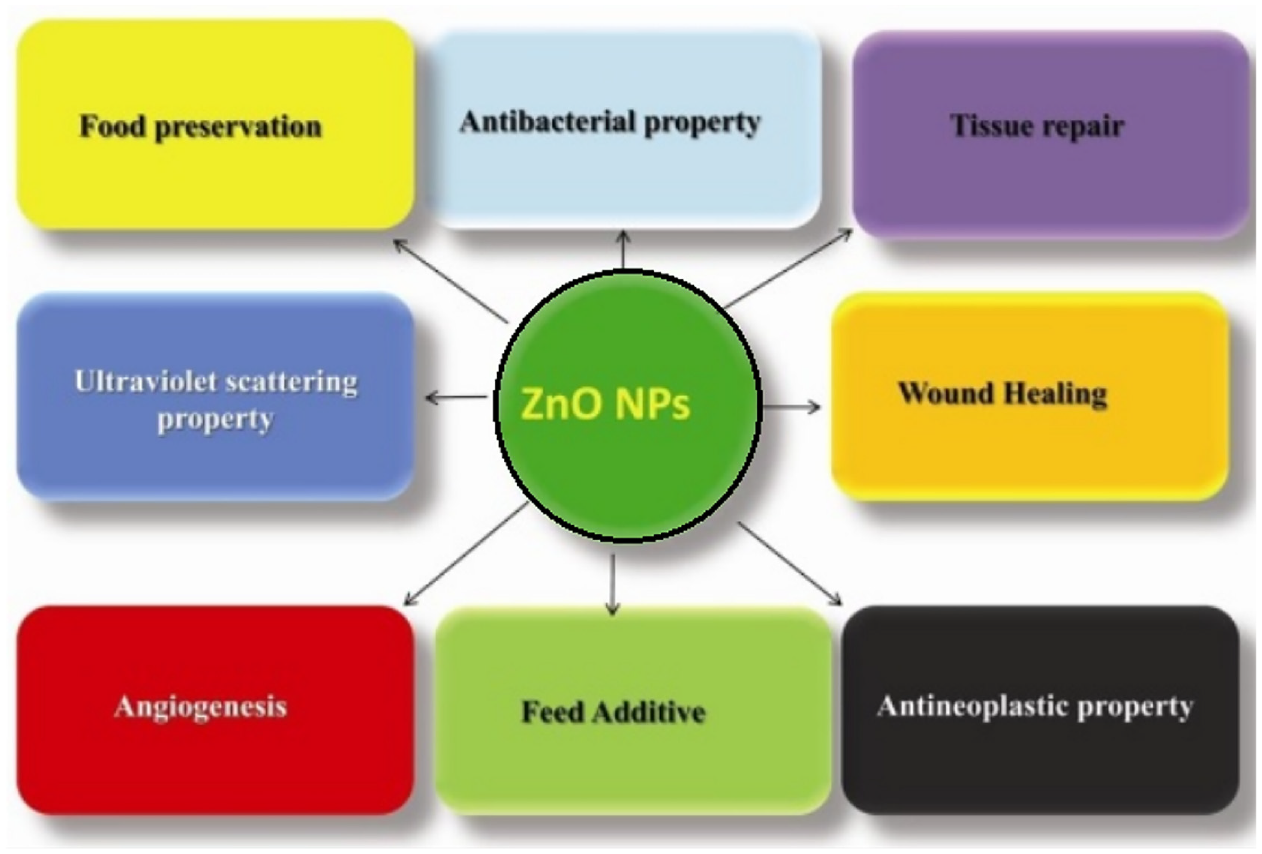
Application of ZnO NPs.
This communication analyses the Darcy–Forchheimer permeable medium flo
Physically and mathematically flow modeling
Flow description
Here we considered the incompressible flow of nanofluid including zinc

Flow geometry.
Chaudhary and Merkin 31 proposed the isothermal homogeneous reaction with cubic autocatalysis in nanofluid flow, which is expressed as follows:

Hence the heterogeneous reaction can be calculated as follows:

The homogeneous reaction rate is
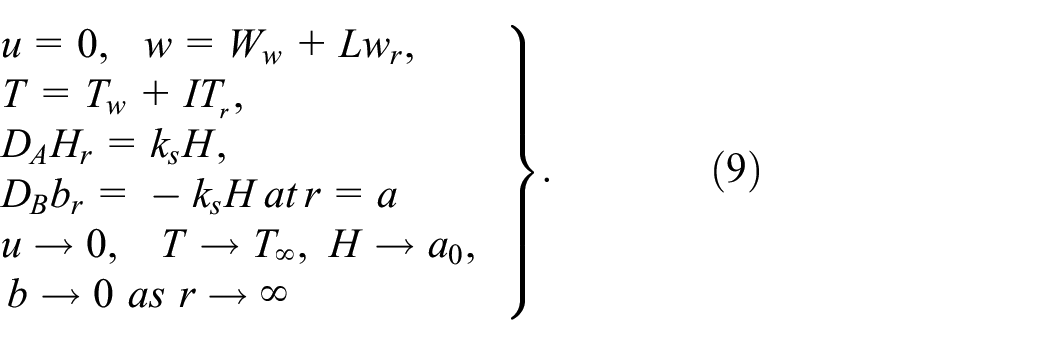
Dimensional non-linear equations
The assumed model for the governing flow is given as32–35:



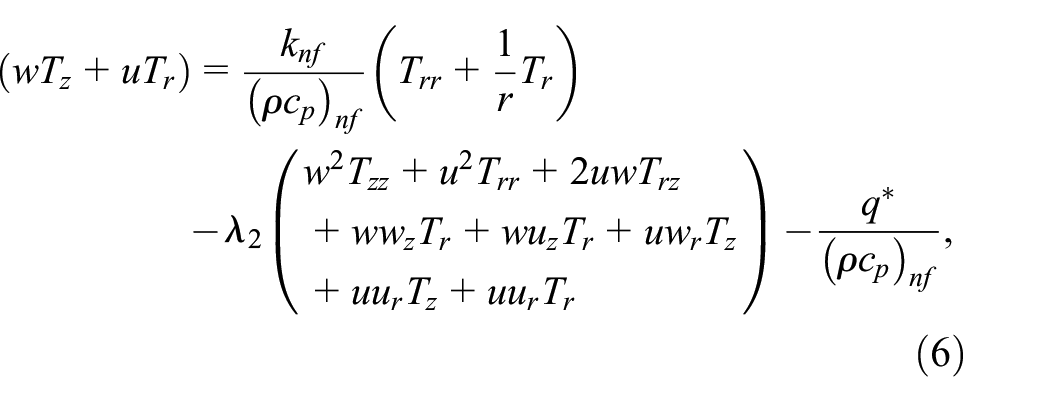


The relevant boundary is
Transformation variables

Dimension-less equations
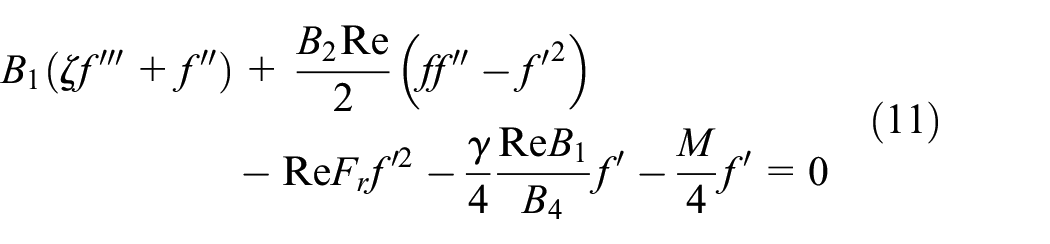
With similarity transformation (10) the equations (4)–(9) obtained the following form
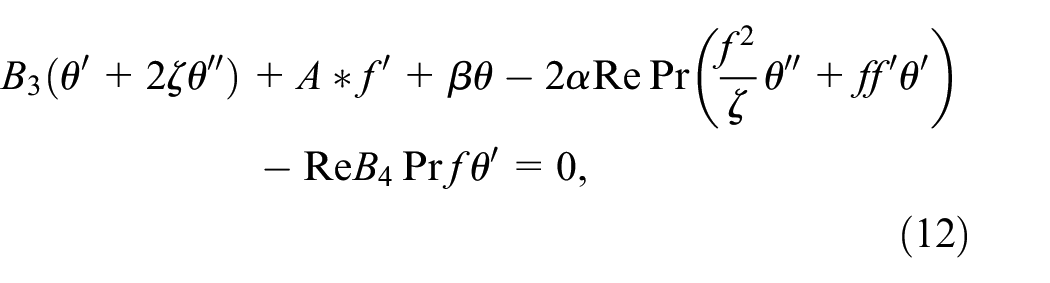


The dimensionless boundary conditions are

Reduced parameters
In the above equations, the Prandtl number is
The dispersion if

From equation (13)–(14)

With

Skin friction coefficient is categorized as


Here, appended the dimensionless form of the drag force

Numerical scheme
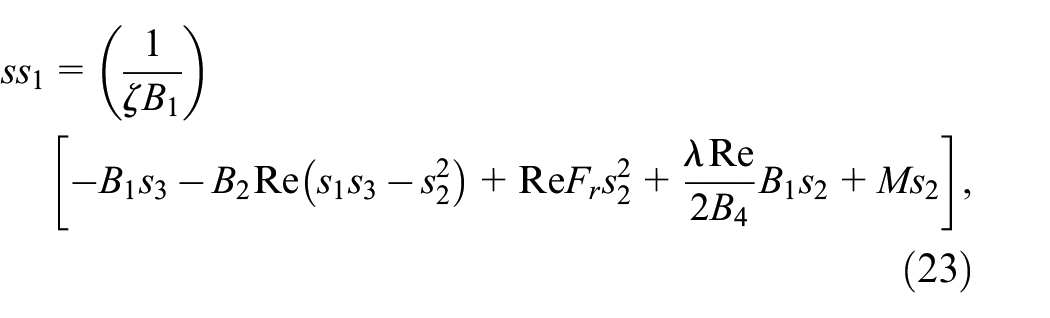
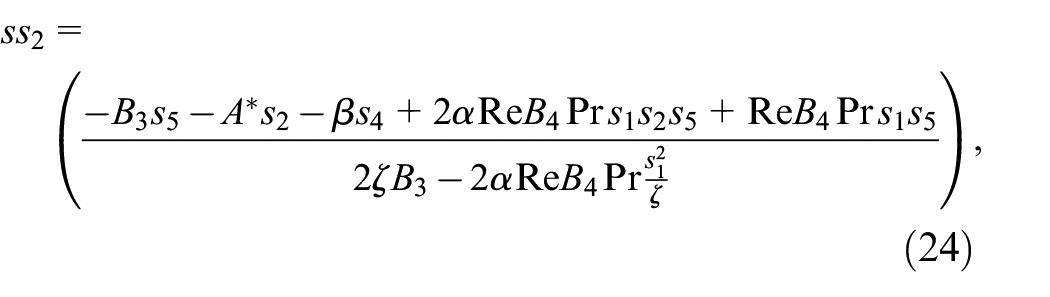
The nonlinear non-dimensional converted problem equations and boundary conditions were addressed using the nonlinear shooting technique and the MATLAB built-in function bvp4c.36–38 For



Entropy profile
The entropy generation is stated as.39,40

The rate of entropy generation is

By using similarity transformation (10), the entropy generation is transformed into the following dimensionless form


The Brinkman number is supposed as


The Bejan number is defined as

The non-dimensional form of the Bejan Number

Results and discussion
The governing prominent parameters such as magnetic parameter, thermal relaxation parameter, Brinkman number, the velocity slip parameter, Reynolds number, the nanoparticles volume fraction, the thermal slip parameter, and temperature difference parameter against the temperature, concentration distribution, velocity, and entropy generation are deliberated through graphs by MATLAB software (see Table 1 and Table 2). The results of
The properties of nanofluid.


Aspects of velocity profile for

Aspects of velocity profile for
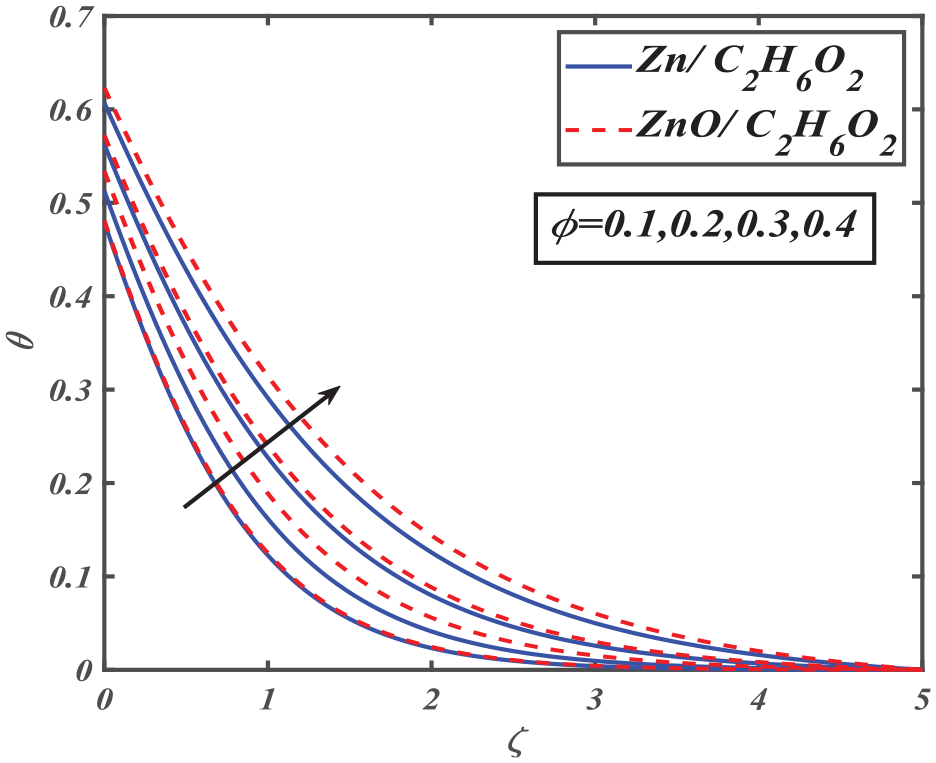
Aspects of thermal profile for

Aspects of thermal profile for

Aspects of thermal profile for

Aspects of thermal profile for

Aspects of thermal profile for

Aspects of concentration profile for

Aspects of concentration profile for

Aspects of entropy profile for

Aspects of entropy profile for

Aspects of streamlining for

Aspects of streamlining for

Aspects of streamlining for
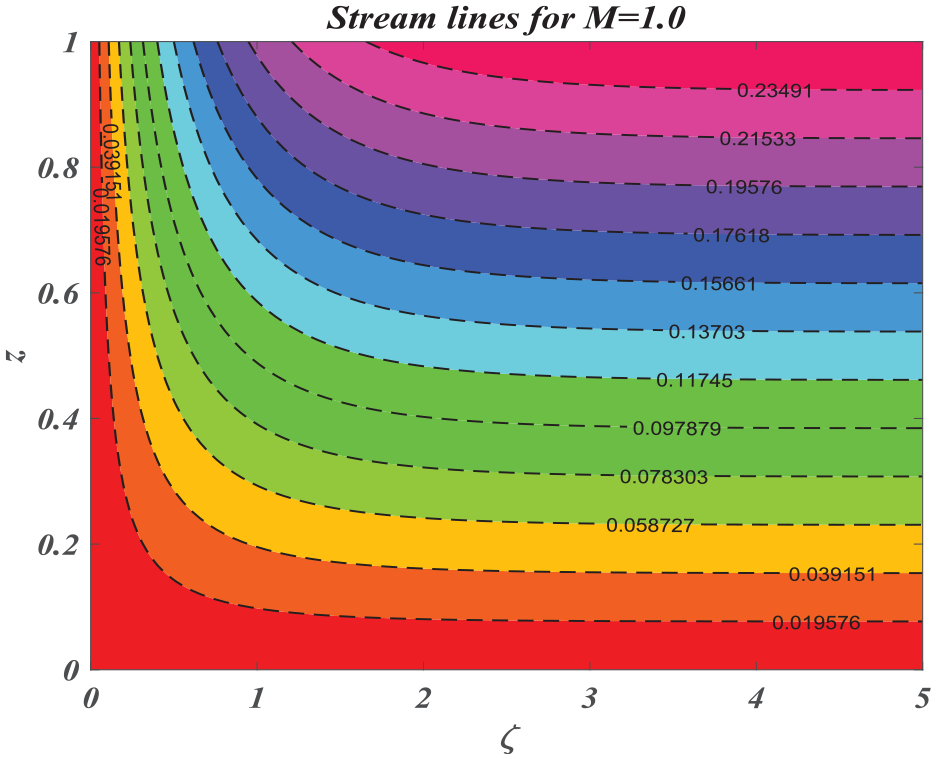
Aspects of streamlining for

Aspects of Contour line for
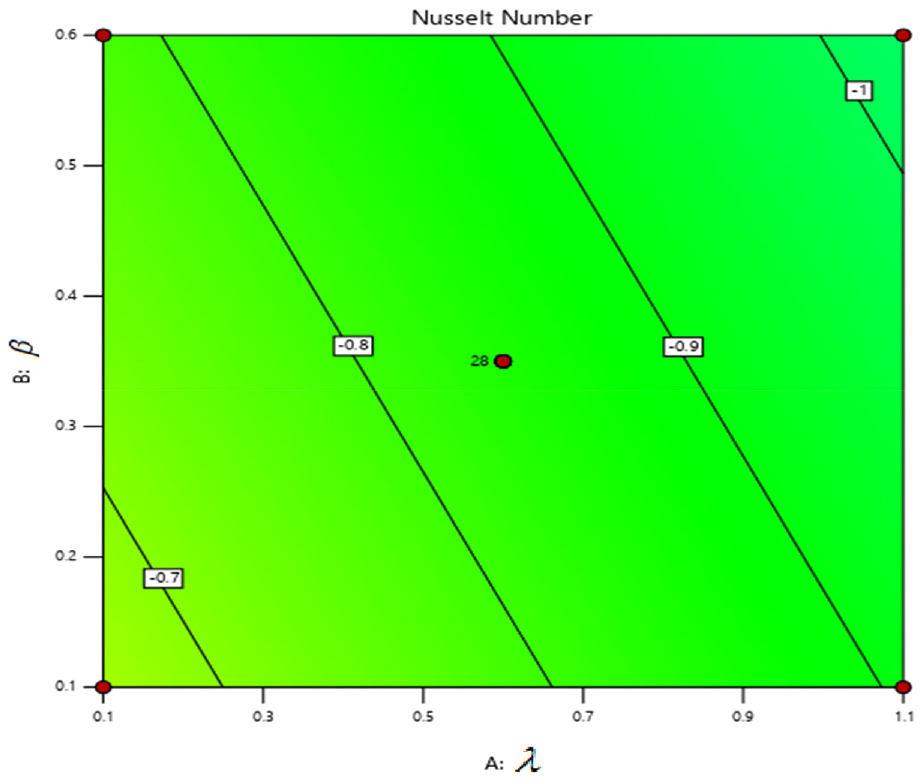
Aspects of Contour line for

Aspects of the 3D plot for
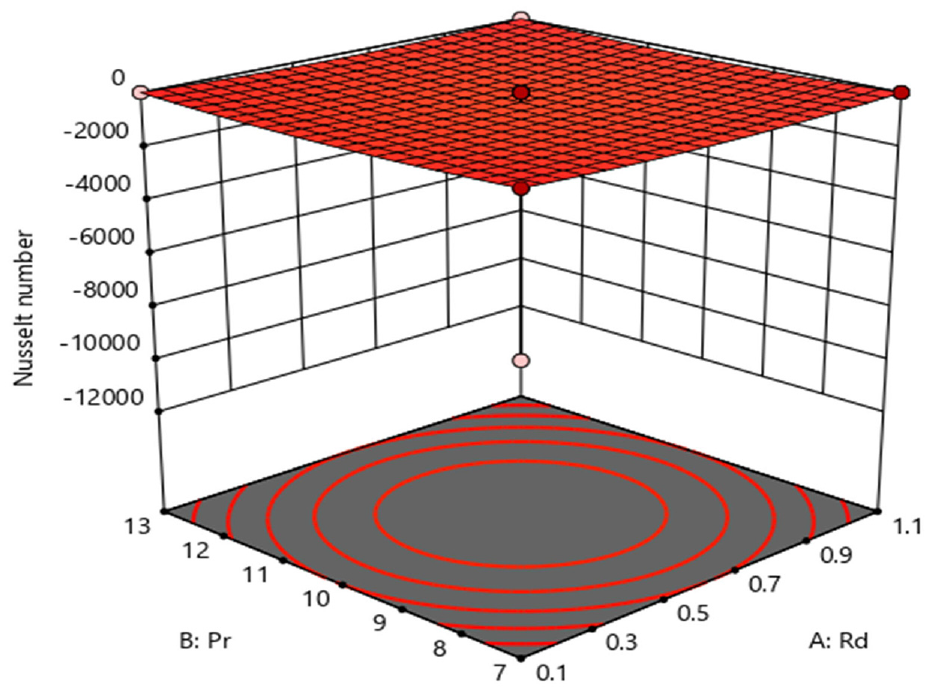
Aspects of the 3D plot for
Conclusions
Here the Darcy–Forchheimer flow of
• The velocity distributions profile decreased for the rising values of porosity parameter and magnetic parameter
• The temperature distributions increased for the growing variations of magnetic parameter and volume fraction of nanoparticles
• The heat profile diminished for the higher values of thermal relaxation parameter and slip parameter for
• The concentration distributions profile declined for the rising estimation of Schmidt number and heterogeneous reaction
• The entropy generations profile is enhanced for the higher values of Reynolds number and Brinkman number for
Footnotes
Handling Editor: Chenhui Liang
Declaration of conflicting interests
The author(s) declared no potential conflicts of interest with respect to the research, authorship, and/or publication of this article.
Funding
The author(s) disclosed receipt of the following financial support for the research, authorship, and/or publication of this article: The authors extend their appreciation to the Deanship of Scientific Research at King Khalid University, Abha, Saudi Arabia for funding this work through Large Groups Project under grant number RGP.2/206/43.
