




Abstract
Lived experience (LE) researchers are often lay people who work alongside academics to undertake research within their own communities, particularly in the fields of health and social inquiry. High-quality and rigorous LE research can lead to local, national and international policy and practice impacts; however, if managed poorly, the involvement of LE researchers has the potential to be extractive, inequitable and disempowering. There is a need to understand how universities can support more sustainable and enduring forms of co-investigation with LE researchers. This qualitative research study utilised a phenomenological approach and reflexive thematic analysis in order to understand the lived experiences of LE researchers. Sixteen former and current LE researchers who worked with researchers from an Australian university participated in face-to-face and online semi-structured interviews between May to July 2024. We identified six key themes: (1) LE researchers are motivated to create change; (2) LE research can be both rewarding and taxing; (3) trust must be earned, nurtured and reciprocated; (4) power sharing is less important than responsible leadership; (5) LE research is a methodology NOT a ‘fashion’; and (6) an institutional ethic of care is critical. A social ecological model is used to discuss the implications of the findings at an intrapersonal, interpersonal, institutional and policy level. Given participation has become the new zeitgeist and involvement of people with LE in research is fast becoming a prerequisite for some funding streams, it is important to intentionally establish foundational building blocks supporting the ethical and equitable participation of LE researchers across the social ecological model.
Keywords
Introduction
From the Participatory ‘Turn’ to the Participatory ‘Zeitgeist’
For decades, the catchcry “nothing about us without us” has been a demand of social justice movements the world over (Charlton, 1998; Kaida et al., 2019), reflecting the “radical roots” of lived experience activists insisting on “seats at the table and their voices heard” (Cataldo et al., 2021, p. 13). This activism has profoundly influenced the participatory agendas that emerged across political discourses, academic research praxis and civil society activism in the 1960s – a phenomenon described as the “participatory turn” (Bherer et al., 2016; Siffels et al., 2021). The right to participation was enshrined in numerous declarations and human rights instruments including the Declaration of Alma-Ata (World Health Organization, 1978), the Convention of the Rights of Persons with Disabilities (United Nations Department of Economic and Social Affairs, 2006) and the Declaration on the Rights of Indigenous Peoples (United Nations Economic and Social Council, 2007).
Deeply entwined with these social movements, participatory research (PR) traditions arose through grassroots organising to reject the stigmatising impacts of much research on marginalised peoples (Cornwall & Jewkes, 1995; Damon et al., 2017; Liamputtong, 2020). Some claim participation has become the “norm” (Saurugger, 2010) and ubiquitous - ‘cobiquitous’ even (Williams et al., 2020) - representing the “new zeitgeist” (Palmer et al., 2019, p. 247) – a defining spirit of our times in knowledge production. Further embedding the zeitgeist is an even more emphatic call to go beyond participation, to decolonise and “disrupt” the academy with lived experience-led knowledge (Higgins & Lenette, 2024; Lenette, 2022).
This progression is re-shaping contemporary approaches to policy development, service design and research with various forces driving this agenda including advocacy and rights-based organisations, researchers, policymakers and funders (Wallerstein & Minkler, 2018). For example, Australian research funding bodies have placed a premium on evaluating outcomes and impacts from publicly funded research and now expect engagement with end-users and people with lived experience (Australian Research Council, 2022).
Lived Experience Research as a “Burgeoning” Research Practice
Conceptual frameworks, such as the International Association of Public Participation (Burdett, 2024; IAP2 Australasia, 2018) and Hart’s Ladder of Participation (Hart, 2008), depict participation along a spectrum of ever deepening collaboration between those with lived and learned expertise. At the most engaged end of the spectrum - or at the height of the ladder - is coproductive research where those with lived experience (LE) are empowered to contribute to all phases of research including planning, implementation, dissemination, evaluation and knowledge exchange (Roper et al., 2018). This article is particularly concerned with PR that aims to coproduce knowledge with LE researchers.
LE research is considered a “burgeoning” practice (Wargent, 2013). Emerging in the late 1970s, it is most commonly utilised in the fields of health and social equity research (Goodson & Phillimore, 2012; Warr et al., 2017). This study focuses on LE researchers1,2 - lay people recruited for their lived expertise - who work alongside professional researchers to undertake research with and for their communities 3 (Bell et al., 2021b; Ross et al., 2023). Generally, LE researchers are not required to have prior research experience and are provided training (Webb et al., 2022).
LE researchers are involved in both qualitative and quantitative research projects with populations experiencing marginalisation. Examples include projects with residents of socioeconomically disadvantaged neighbourhoods (Richardson, 2014; Warr et al., 2011); young people leaving out-of-home care (Kelly et al., 2020); victim-survivors of family and domestic violence (Fiolet et al., 2024); women living with HIV (Kaida et al., 2019); people involved in the criminal justice system people (Doyle et al., 2022); people with disabilities and mental ill-health (Carnemolla et al., 2022; Warr et al., 2017; Webb et al., 2022); people from refugee and asylum seeking backgrounds (Marlowe et al., 2015); Aboriginal and Torres Strait Islander communities (Bell et al., 2021a); and racialised young people (Ali, 2023).
“The Promise and the Pitfalls”: Benefits, Limitations and Challenges of LE Research
Critics and proponents alike acknowledge the “promise and pitfalls” of LE research (Damon et al., 2017, p. 86). The inclusion of LE researchers is reported to enhance the relevance of research questions and facilitate greater access to and engagement with research participants, particularly those from hardly reached and/or research fatigued communities where LE researchers vouch for the “trustworthiness” of academics (Richardson, 2014, p. 35). Inclusion may also increase the richness and depth of data collected, provide more nuanced insights to data analysis, enhance the validity and relevance of findings, and increase the impact of recommendations (Warr et al., 2011). It is argued that high-quality LE research can result in local, national and international impacts across social, health and economic domains (Doyle et al., 2022).
Further, inclusion of diverse lived expertise has the potential to improve epistemological equity and reduce epistemic injustices by challenging the dominant systems of knowledge production and the discriminatory structures that uphold them (Dei, 2010). Proponents assert that rigorous and emancipatory research with LE researchers can result in the “researched becom [ing] researchers” (Bell et al., 2021b, p. 16).
Less positively, pitfalls include methodological limitations (Bell et al., 2021b; Richardson, 2014); ethical challenges (Warr et al., 2011); poor or exploitative practices (Damon et al., 2017); risks of re-traumatisation or vicarious trauma (Fiolet et al., 2024; Kelly et al., 2020); and a lack of institutional support (Raynor, 2019). Some suggest the practical, professional, personal and financial costs – the “dark side” - outweigh the potential benefits, claiming the risks may be too high for university-based researchers (Oliver et al., 2019). Others, whilst recognising benefits, urge the need for more “cautious and critical utilization of peer research”, going as far as to suggest a move away from LE research given the unacceptably high risks of harm to LE researchers (Ross et al., 2023, p. 744).
Research Gap and Rationale
Much of the existing literature focuses on the benefits, challenges and risks of LE research for university-based researchers. Less has been written about the experience of LE researchers themselves and their motivations to be involved, nor the long-term or sustained impacts of their participation (Fiolet et al., 2024; Ross et al., 2023). Those who have sought to understand LE researchers’ perspectives report the acquisition of new skills, knowledge and peer-support networks, improved confidence and self-advocacy and enhanced employment opportunities through resume building (Carnemolla et al., 2022; Vaughan et al., 2019). However, LE researchers have also reported potential and actual harms of participation, particularly when they felt “fetishized” (Damon et al., 2017, p. 86) or tokenised, undervalued and poorly remunerated, and lacked opportunities for advancement and professional development (MacKinnon et al., 2021; Thulien et al., 2022; Voronka & King, 2023).
Given increased pressures to incorporate LE into research, this study sought to understand how universities can work towards a “step-change” in the “critical and careful” inclusion of LE researchers in the academy (Bell et al., 2021b, p. 4). Given gaps in existing literature, qualitative research is required to more fully understand LE researchers’ experience with a view to maximising the benefits, reducing potential risks and ensuring rigour in coproduced research. There is also a need to examine how universities can better support university-based and LE researchers – both ideologically and practically – to ethically and equitably embed empowering, enduring and sustainable LE research practices across the research ecosystem (Bell et al., 2021a, 2021b; Vaughan et al., 2019).
This research seeks to understand how the zeitgeist – the spirit of our times – is experienced by lived experience researchers and asks the following research questions: What are the motivations, expectations and aspirations of former or current LE researchers and how might these be met? What institutional supports are required to embed ethical, empowering and equitable LE research practices across the social ecological model?
The research setting was the University of Melbourne (UoM) in Victoria, Australia, a publicly funded, research-intensive institution. Like many colonial-era sandstone universities, it has a history of elitism, sexism, ableism, racism, and colonisation. Through its first Diversity and Inclusion strategy launched in 2021, UoM acknowledges that: Legacies of exclusion and injustice have become embedded in our structures, systems and practices over time…[these] limit our capacity to build an educational and research culture that truly benefits from a full range of knowledge systems and standpoints. (The University of Melbourne, 2021, p. 7)
Conducting LE research in a way that is ethical and appropriately supportive is clearly imperative to avoid perpetuating these legacies. The research aimed to explore the motivations, expectations and aspirations of former or current UoM LE researchers; and investigate what institutional supports are required to embed ethical, empowering and equitable LE research practices at an institution such as UoM.
Theoretical Framework
This study was situated within a transformative, critical paradigm - a values-driven approach to knowledge production which recognises structural inequities and socially constructed power imbalances (Thambinathan & Kinsella, 2021) - and has the explicit aim of contributing to transformative social change (Whitaker et al., 2021). As Wallerstein and Minkler (2018) suggest, researchers have a responsibility to “transform institutions of higher education” (p. 19).
Given the need to attend to power imbalances, this research draws upon the feminist philosophical theory of an ‘ethic of care’ which values relationality, interdependence, compassion, responsibility, competence, responsiveness, trust and reciprocity (Botti, 2015; Gilligan, 2014). This research seeks to demonstrate how an ethic of care can influence interpersonal and institutional responses to LE research. The ethic of care guides us in acting carefully…and highlights the costs of carelessness…of not paying attention, not listening, being absent rather than present, not responding with integrity and respect. (Gilligan, 2014, p. 103)
Additionally, the authors utilised a social ecological framework (McLeroy et al., 1988) to conceptualise the complex, layered and interrelated factors, influences and power dynamics that work together to empower - or exploit - LE researchers (see Figure 2 in the discussion section). At an intrapersonal level, LE researchers bring their skills, motivations, aspirations and lived experiences to the work they undertake. LE researchers work within a research ecosystem and are impacted by interpersonal relationships with university-based researchers and other LE researchers, which in turn are situated within institutional practices and policy environments (Roura, 2021).
Methods
Researcher Positionality
All authors are non-Indigenous, able-bodied, cis women, and the first author (who conducted the interviews) is a woman of colour.
Sampling, Recruitment and Data Collection
This qualitative research study utilised a phenomenological approach in order to understand the lived experiences of LE researchers. The study population was limited to former or current UoM LE researchers; however, the inclusion criteria were loosely defined to allow for maximum heterogeneity. Participants were recruited through direct invitations from the first author, using purposive sampling strategies through a phased recruitment process to ensure maximum variation in demographics and LE.
Sixteen semi-structured interviews were undertaken with consenting participants between late May to late July 2024, with five choosing to be interviewed face-to-face and 11 online. Interviews ranged from 35 to 60 min. Three member-checking workshops were held online in early March 2025 to discuss the findings of the study, with nine of the 16 participants choosing to participate.
Data Analysis
NVivo was used to store and organise the data. Given the scarcity of research in this area, an inductive reflexive thematic approach was employed as pre-determined categories were not available (Braun et al., 2019; Liamputtong, 2020). Patterns across the codes were then identified and interpreted into themes.
Ethical Considerations
Risks and mitigation strategies were identified for participants. Whilst LE researchers are not inherently vulnerable, they are generally recruited for their LE of marginalisation. A distress protocol was developed and, to minimise the risk of distress, interview questions focussed on general insights about LE research and empathetic interviewing techniques were employed.
All participants were given the opportunity to review and revise their transcripts. Given the small sample size, the plain language statement and consent form highlighted the potential risk that participants may be identifiable. Efforts were made to protect their anonymity and confidentiality using pseudonyms and omitting any identifying information.
Through her work at UOM, the first author has supported several projects involving LE researchers. Thus, it was necessary to address a potential power imbalance. During recruitment and at the beginning of each interview, the voluntary nature of participation was strongly emphasised. Participants were also encouraged to be frank and to not feel constrained in any critique they may have of UoM.
Results and Key Findings
Participant Demographics and Lived Experience
Demographics
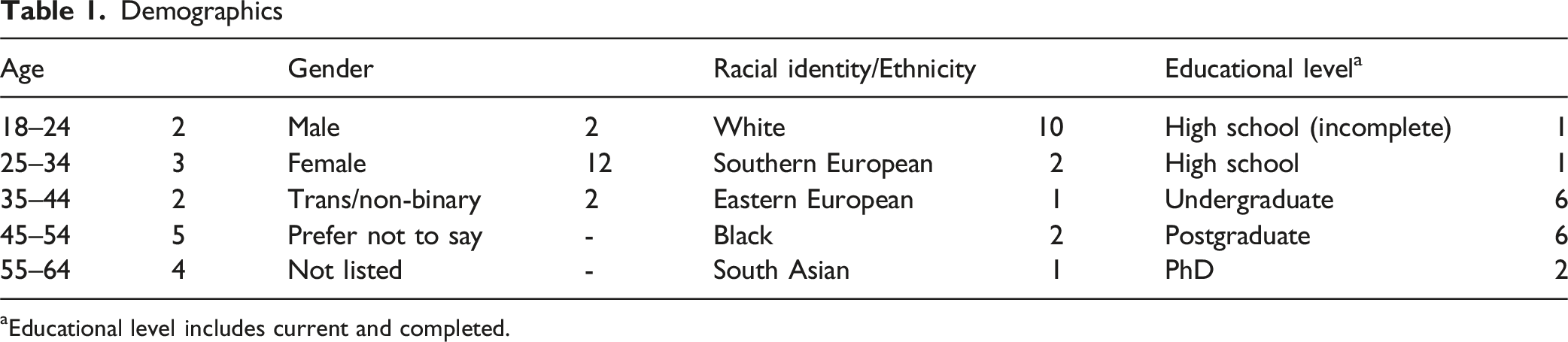
aEducational level includes current and completed.
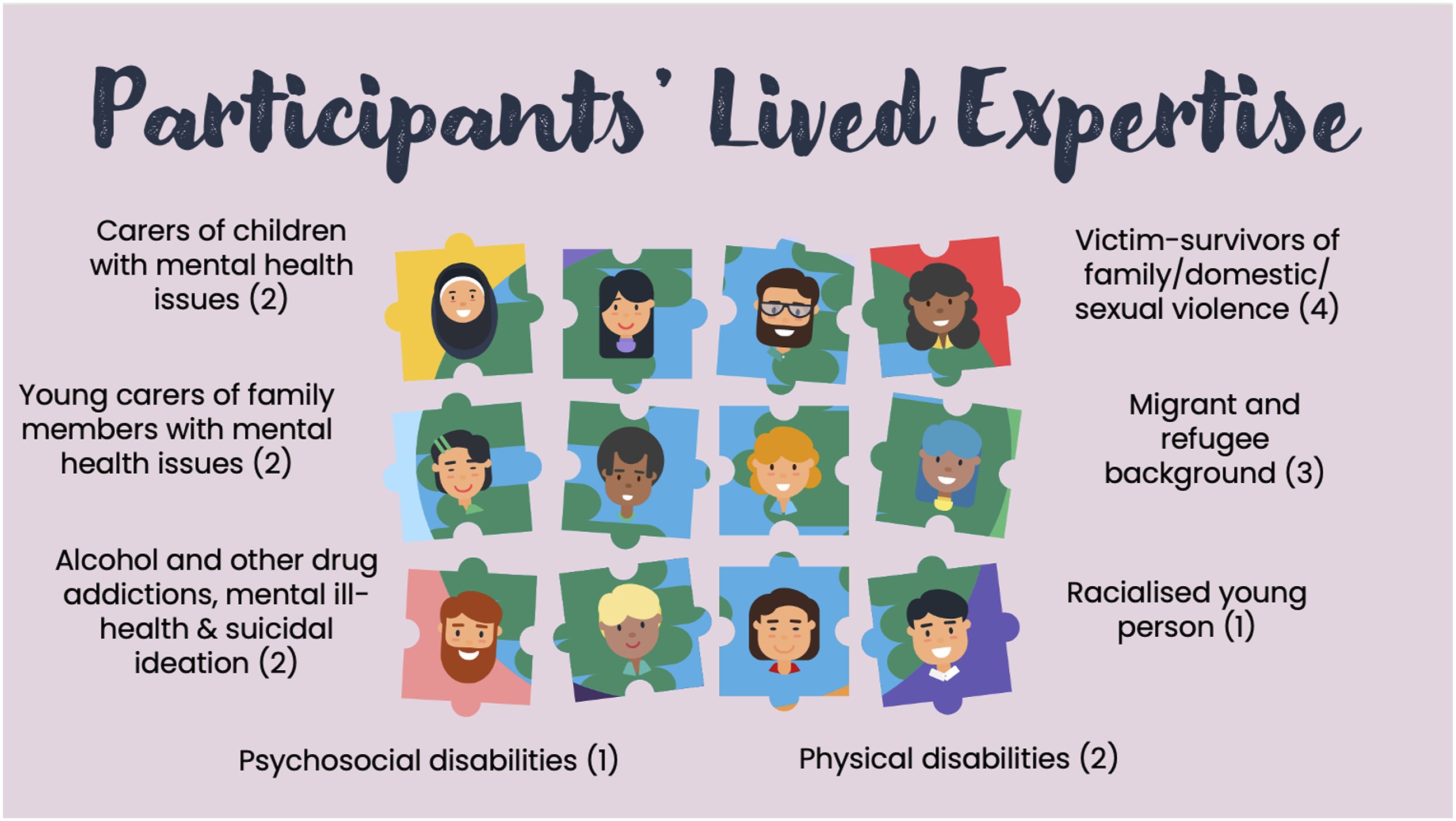
Participants’ lived expertise
Level of Involvement

Key themes identified through the analysis were: (1) LE researchers are motivated to create change; (2) LE research can be both rewarding and taxing; (3) trust must be earned, nurtured and reciprocated; (4) power sharing is less important than responsible leadership; (5) LE research is a methodology NOT a ‘fashion’ and; (6) an institutional ethic of care is critical.
Theme 1: LE Researchers are Motivated to Create Change
Participants described multiple and diverse motivations for their involvement in research: All [motivations are] connected - personal interest, communal interest and the greater concerns that I thought there are a lot of issues that are not heard. (Aziz)
Unsurprisingly, many LE researchers were attracted to research to challenge injustices. When asked what motivated her to be involved in research, Helena described her anger about systems, saying “this needs to change, research needs to happen”. Many spoke of wanting to use their LE to positively influence systems change for future generations: This could help my son or people younger than me, people who haven’t entered the system yet…things are so broken and it could be a lot better. (Cameron) Being involved…is my way of contributing and trying to make use of my experience…What has it all been for if not? You have to try to turn the negative into a positive. (Rachel)
Several participants came from advocacy backgrounds and felt their communities were underrepresented “in the places where it matters” (Meena), and Hannah was drawn to LE research as it created an opportunity to incorporate “perspective(s) of young people.” Others noted an absence of LE voices in previous research and wanted to ensure that people with LE were engaged ethically: I feel most strongly about the communities I’m from being heard by researchers, informing and leading in research and what gets researched and how. (Alexei)
Some were motivated by the opportunity to learn about research processes and practices, and to gain new skills. Steph had previously been involved as a community partner on research projects and wanted to “understand a bit more about what was happening behind the scenes”, whilst Aziz wanted to learn more about the social sciences without having to undertake another degree.
Given participants’ motivation to engage in research was for social change, it was important that university-based researchers were clear about what outcomes were realistic. Fleur acknowledged that achieving social change through research was “frustratingly slow” and Alexei reflected “sometimes that excitement about what impact the project could achieve had to be managed.”
Theme 2: LE Research can be Both Rewarding and Emotionally Taxing
When academics provide the supports required to ensure an enriching and validating experience, involvement in research has the potential to have a profound and life-altering impact on LE researchers. A number of participants spoke of how positive experiences of LE research was formative for them, setting them on a path to further LE research work as well as postgraduate study, including PhDs. Alison recounted how her LE research work directly contributed to her professional development, which included a promotion to a leadership position, and a masters degree: I gained a love of writing that I’d never had…my love of learning increased significantly…I wouldn’t have applied for the Masters had I not done that project. It’s been pretty darn significant for me.
Several participants spoke about how contributing their lived expertise made them feel valued and described the satisfaction and joy arising from this. Others spoke of the therapeutic benefits associated with their involvement, with Cameron describing it as “fundamental to keeping me well”. There is a therapeutic benefit along the lines of post traumatic growth. It almost helps you process it by talking through it, you re-live it but in a safe space. (Nat) The work is hugely validating. It’s respectful of my experience, it’s respectful of me…I absolutely love it. If I could get full time work, I’d do it. (Rachel)
For LE researchers who were motivated to make a difference and relished the opportunity to interview people with a similar lived experience, a potential trade-off was the mental and emotional costs associated with LE research. Academics needed to be cognisant of the risk of triggering past trauma and to ensure that appropriate supports were in place to support LE researchers mental and emotional wellbeing: Having experienced similar experiences of abuse or neglect or pain - leaving an interview and trying to bring yourself back to ‘everything’s OK’ is not easy. (Helena)
An oft-cited benefit of LE research is that LE researchers can act as a conduit between their communities and academic researchers; however, several LE researchers described the responsibility they felt to do this well and the emotional toll this burden exacted. Others spoke of the burden of representation, particularly when they were the sole LE researcher on their team or where they felt they were expected to represent the view of their whole community. These feelings of responsibility can evolve into feelings of powerlessness and guilt if LE researchers feel that the research is unethical, or if they deem the research problematic in some way: I’ve already felt myself burning out...you don’t have the capacity to be able to speak up, so you don’t say anything and that does take a toll. You know it’s going to affect your community. [I feel] powerless, and guilty as well. Guilty for the fact that I can’t speak up but I know I don’t have the power to. (Jesse)
Further, feelings of powerlessness can also be exacerbated in situations where LE researchers felt that projects had unrealistic timelines: That’s one of the biggest stresses…trying to slow people down…while everyone is busy and wanting to rush ahead to the outputs…that weighs on me. (Steph)
These findings suggest that academics have a duty of care to support LE researchers to navigate the complexities of their positionality and community responsibilities, and to ensure that participating in research does not entail an undue emotional and mental burden.
Theme 3: Trust Must be Earned, Nurtured and Reciprocated
Despite being a highly educated sample, many participants described an initial sense of imposter syndrome and trepidation. Fleur described how she had felt her long-standing interest in research had been out of reach, Felicity spoke of “sneaking into academia”, whilst Alexei initially felt undeserving of the opportunity, saying: “Who am I? I’m just some person.”
With mentoring and capacity building, however, this sense of imposter syndrome dissipated with time. Many acknowledged that feelings of self-doubt were a symptom of their own lack of confidence rather than a result of how they were made to feel by team members: That was my own stuff ’cause I never felt that from the team…but it took a long time to really feel I’m meant to be here. (Felicity)
Jesse described pushing back on feelings of intimidation, stating they didn’t use the term ‘imposter syndrome’ because it put the onus on the individual to resolve it. Instead: I like to take a perspective of community care and your team understanding that ‘of course you wouldn’t have those skills yet, of course we would have to support you’.
It was appreciated when academics demonstrated trust in LE researchers’ abilities through an ethic of care; by providing training, reassurance and a safe space for LE researchers to learn, make mistakes and build their confidence in an inclusive way. Many spoke of how academics did this in a considered and careful way: They skilled us up…It was always OK…to potentially stuff up or not do it perfectly. (Angelika)
Angelika also reflected on the importance of the foundational work the academics undertook to ensure positive group dynamics and a sense of belonging were formed early. Building trust between ‘professional’ and LE researchers could not be rushed and needed to be nurtured. Felicity described this as needing to “move at the speed of trust”: If you don't trust the people around you and if you don't feel like they trust you, that would be a scary and not very fun thing to be a part of. I really believe that the reason this has been such a good experience is because of relationship building.
Recognition of the relational dynamics across the research team, recognition of LE researchers’ strengths and opportunities to build confidence were features of positive experiences. Helena reflected that they felt trusted to do the work as someone who had something to “bring to the table other than what I look like or what equipment I use”: What gave me the biggest boost was to be asked to present [research findings] …I remember saying ‘are you sure you trust me to do this?’ Having presented there, brought back a lot of memories of what I was capable of doing before my injury. (Helena)
Another important way academics built trust with LE researchers was through sharing their own LE in a spirit of reciprocity. Cameron said “to be vulnerable with each other…[was] a really important thing” whilst Felicity saw this as breaking down the distinction between ‘professional’ researchers and those with LE.
Theme 4: Sharing Power was Less Important than Responsible Leadership
Sharing power is a complex and dynamic process and is often considered the ultimate goal of PR. However, many participants felt that this was not realistic, or even desirable. Research is laden with power imbalances (Thambinathan & Kinsella, 2021) and many participants felt that power hierarchies were inherent due to structural asymmetries between those with security and professional status and those without. Many agreed that it was appropriate that power was not equally distributed because responsibilities were not equally distributed: The academic in this situation is the supervisor who’s managing the ethics and will receive complaints...I think it's helpful if everyone's clear about that. (Steph)
Whilst equal power distribution was not an expectation of the LE researchers interviewed – indeed, some felt that aiming for equal power distribution would be confusing for everyone - many commented on the importance of shared decision-making and having their views respected and valued. Instead, participants considered clarity of roles, competent leadership and a culture of care far more important than shared power. Many commented on how atypical they felt their positive experiences had been, and how they hinged on a very particular mix of skills, experiences and the values of the academics involved: She has very little ego around her career…She genuinely sees people with lived experience as experts and not just in a tokenistic way...I would like to think that’s common, but I think that’s fairly rare. (Felicity) What makes it work is people leading who are skilled in participatory research…confident in what they’re doing and sharing...They had lots of skills in collaboration…you weren’t experiencing mysterious effects of them having conflict. (Steph)
LE researchers working with academics who had little experience or appreciation of PR methodologies felt that those academics should acknowledge their need to develop skills and understanding: I think leaders have a responsibility to learn, ask questions, be curious and receive training on how they can work effectively with lived experience. Because really, they are missing out if they aren’t using a person’s full capabilities. (Jesse) You sit at a round table with peer researchers - you don’t sit opposite them saying ‘I’m not like you, I’m an academic.’ (Helena)
Participants felt that academics who choose to engage LE researchers in their projects have a duty to recognise the power they have over LE researchers, value their contributions and reciprocate with an ethic of care. This includes appreciating the complexity of LE researchers’ lives and understanding how best to support them. At a member-checking workshop, there was fierce agreement that the LE researchers did not want to be singled out or treated differently from non-LE researchers in their team. They did not want special treatment, as they felt this would be paternalistic rather than empowering and respectful of their expertise. Instead, several LE researchers spoke of how good leaders normalised a culture of care across their teams, utilising a trauma-informed approach to support emotional safety for all: We would check in before and after each meeting…it was really good because that was seen as part of the work…creating that space to do it. I’ve never really had that outside of that project. (Cameron) You can just let your guard down…They’re all trauma-informed…I feel safe. (Fleur)
Participants also discussed the need for academic leaders to ensure they equitably share the benefits of research with LE researchers. At one member checking workshop, there was a robust discussion on what constitutes appropriate remuneration – both the method by which a person was paid as well as the amount remunerated. Whilst some felt that vouchers can be appropriate in some circumstances, others felt that being paid in vouchers devalued their contributions. Whilst there was some disagreement on what was most appropriate, all agreed that LE researchers should be given a choice in how they were paid, and that there should also be transparency and consistency in how much they were paid.
Sharing benefits of research also extends to appropriately acknowledging the contributions of the LE researchers: I didn’t write a single word but [contributing to data analysis] qualified us to be considered as authors…I was like ‘What? Really? You’ve got to be kidding!’ (Fleur) I was like ‘don't worry about putting my name on it I didn't really do [any writing];…they’re like ‘you were part of this thinking and shaping…’I’ve felt very much like this team has thought of my contribution as really vital. (Felicity)
Significantly, the academic Felicity works with has not only created space for them within the academy, but also secured resources for an initiative being led by Felicity: I get quite emotional about it…It’s pretty amazing to be given an opportunity to do something I’ve wanted to do for 20 years.
Sadly, some LE researchers had quite negative experiences with “out of touch” supervisors, who demonstrated that they had no real understanding of their lived reality. Terry thought there was a “gap between the non-lived experience researchers and their understanding of the world…particularly around disadvantage.” Two other LE researchers, employed for their LE as carers, spoke of the challenges of balancing work with caring responsibilities: In the case of my family and my experience, there’s no lived, it’s always living...that means there's probably some more support requirements that I need. (Hannah) There are days that you do need to care for someone but maybe your research team doesn’t have awareness of that. (Jesse)
These examples demonstrate the important role that academics take on when supervising LE researchers. It is imperative that academics provide sensitive and appropriate care to ensure that LE researchers are enabled to contribute their LE without being placed in harm’s way, and to ensure equitable and reciprocal benefits of research outcomes.
Theme 5: LE Research is a Methodology NOT a ‘Fashion’
With the increased expectation of funding bodies to ensure LE is included in research, there is a danger that it becomes a cynical exercise rather than a genuinely coproductive endeavour. LE researchers described a spectrum of experiences, from academics simply not knowing how to effectively incorporate LE in research, to others unethically using someone for their LE. These experiences were harmful to varying extents.
Many participants had an awareness of the increased requirement of involving LE, and spoke of transactional or tokenistic arrangements where their LE was exploited: If it was a really tokenistic type of set up, where you feel it’s a tick box exercise or just something that is flavour of the month…I would hate doing that because that almost demeans me…It can be harmful. (Angelika) Co-research became this fashionable way of doing research, which is not what it should be… you’re a token, you’re not actually a colleague. (Helena) The reality is, lived experience does get funding…you’re able to get grants that you normally wouldn’t get. (Jesse)
Some felt that the academics they were working with had low or no expectations of their capacity to contribute, or only sought their expertise in a piecemeal way if researchers felt it was outside of their skill set (for example, interpreting statistics): They don’t know and I don’t know what insight I might be able to provide but I certainly know by excluding me I’m not going to provide anything. (Cameron)
Others felt frustrated when they were assigned purely administrative duties and were not given the opportunity to contribute their insights. Sharmila said that the work they were given “felt like homework that never went towards anything.” Reflecting on their experience, they wished they had spoken up but was unsure as to whether this was normal or not, the researchers always seemed busy and they didn’t want to be a burden. With the benefit of hindsight, they realised what they experienced were simply poor research practices: Wow, they’re talking about [participatory research] but not actually doing it!
These experiences demonstrate poor incorporation or underutilisation of LE in research. At best, academics were inexperienced, time-poor or neglectful; at worst, they were intentionally exploitative. All these situations have the potential to be highly damaging for LE researchers.
Theme 6: An Institutional Ethic of Care is Critical
A surprising number of LE researchers interviewed expressed empathy with the academics they worked with, who they saw as battling systems and processes that were not well suited to participatory LE research practices. Steph observed that “if the University wants happy co-researchers than it needs to think about a happy workplace for everybody”, acknowledging that academics are often facing their own significant challenges: I’d say in the projects which have been less positive, the Chief Investigators have almost always been trying their best, but their skill mix has been beaten by things like university systems and funders’ requirements.
Academics involved in LE research often acted as buffers between the LE researchers and the institution, absorbing the stresses of inadequate institutional systems and structures. For example, the inaccessibility of the UoM campus and other resources presented challenges that required creative, time-consuming and costly workarounds: [They] really tried to protect us from those pressures and I think that put a burden on them and their work…It made me acutely aware of the barriers to doing research in a coproductive way. (Alexei)
Many LE researchers suggested that UoM needed to develop centralised supports for both university-based and LE researchers, including training on community-based and coproductive research methodologies and working with LE in research. A number of participants spoke about a lack of educational pathways into formalised degrees for LE researchers, and suggested that LE researchers should have their contributions fairly recognised through accreditation and qualifications: There’s no career development, it’s just they come and they go…the University can measure [and recognise] what they have done…something to show. (Aziz)
Many participants felt that a Community of Practice would have been supportive of their experiences and also suggested establishing a system of support through LE supervision. LE supervision is a regular practice in the field of social work. It is a form of peer support which involves mentoring from a more experienced person outside of your immediate project team. LE supervision enables individuals to debrief and process their experiences, helping to strengthen their LE practice.
Table 3 depicts some of the extremes in the LE researchers’ experiences and highlights how academic and institutional practices influence the experiences of LE researchers.
Discussion
For all the potential benefits of LE research, truly PR can be a “soft messy process” (O’Neill, 2013, p. 762); simultaneously difficult, frustrating and risky but also dynamic, relational and reparative (Lenette et al., 2019). For all involved, it takes significant time, energy, trust and emotional labour to do it well and embodies both the “joys and risks of balancing together on a trampoline” (Liamputtong & Rumbold, 2008, p.10 as cited in Lenette et al., 2019, p. 163). The findings from this study are consistent with the views of others who suggest that current practices are not fit-for-purpose when it comes to PR and embedding the inclusion of LE in the academy (Raynor, 2019; Vaughan et al., 2019). We argue LE participation cannot merely be an ‘add-on’ to business-as-usual: to do so is transactional, reductive and risks causing harm. Rather, it will require a paradigm shift and a radical restructuring of values and systems. As Ross and colleagues (2023, p. 737) note: There are limited gains that can come from simply including those who have previously been excluded into oppressive systems, without working for fundamental changes to those systems.
In this section of the report, we discuss the implications of this research in support of the implementation of empowering LE research. Key findings are mapped against the social ecological model (see Figure 2) and the barriers and facilitators experienced across the multiple levels of the social ecological model are examined. The good, the bad, the ugly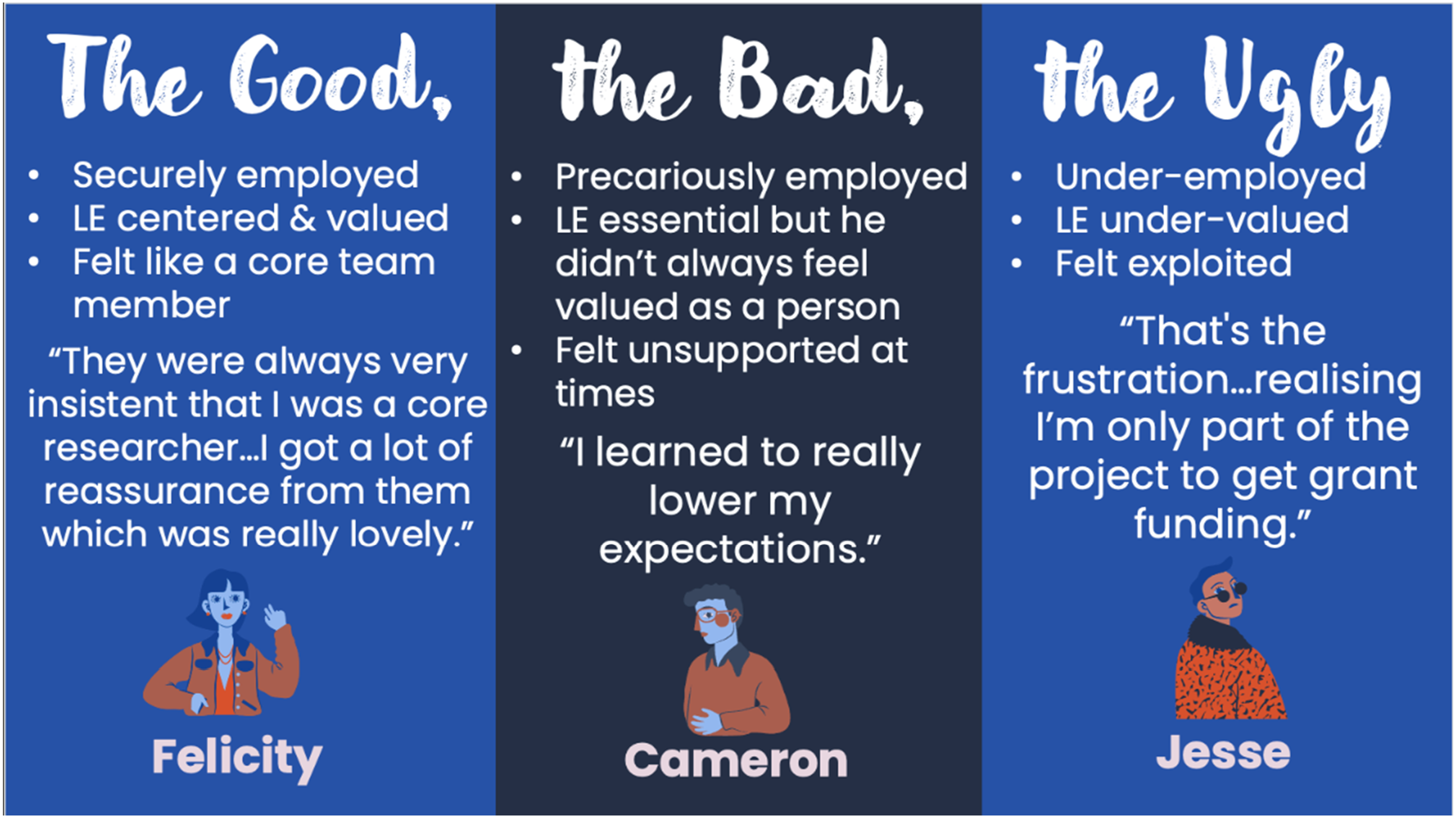
Intrapersonal Level
LE researchers are engaged within a complex, dynamic and ever evolving research ecosystem, as illustrated in the Social Ecological Model (Figure 3). LE researchers bring not only their experiences but also skills, motivations and aspirations to projects. They may also bring experiences of oppression and traumatisation. Indigenous early career researchers Tynan and Bishop (2019) critique what they call the “trickery of opportunity” (p. 11) when “exploitation is disguised as opportunities” (p. 3). For them – and many others who do not hold power in the academy – universities are a potential site of harm particularly if there are “attempts to possess and profit from [their] knowledges” (p. 2). Most study participants reported extremely positive experiences where they gained much from the research training, capacity-building and peer support provided. However, many were acutely aware that not all research that claims to be coproductive is truly coproduced and acknowledged that they were ‘lucky’ to have had their positive experiences. A few described very poor experiences, where they felt their ability to contribute their LE was overlooked, or worse, their LE was exploited by academics. All participants spoke of the need to be well supported, and that their experiences were highly dependent on the experience, skills and positionality of academics. Further, most were on short-term, part-time contracts and with little opportunity to secure a qualification through their LE work. Bell and colleagues (2021b) note this irony, given LE research is often situated within universities. Theme alignment to the social ecological model of lived experience research
Interpersonal Level
The involvement of people with LE in the pursuit of knowledge coproduction is not only a right (Appadurai, 2006), but also a responsibility. However, academics committed to PR approaches often undertake this work despite a lack of appropriate institutional supports (Raynor, 2019). LE researchers described academics acting as buffers between inadequate institutional systems and LE researchers. When academics were not able to absorb stresses, this placed downward pressure on LE researchers.
Academics and their teams play a pivotal role in creating a culture of care and safety in which LE is respected and valued. A failure to do this may lead LE researchers to feel excluded, frustrated or even exploited. “Cobiquity” has made it “challenging to distinguish whether…the term has been co-opted [to] sidestep meaningful engagement” (Moll et al., 2020, p. 1). Further, academics have an obligation to be mindful of the complexity of LE researchers’ lives, provide trauma-informed supervision and mentorship, recognise LE researchers’ personal strengths and knowledge gaps, and build research capacity.
As we have shown, if LE is not central to the purpose and design of the research, there is a lack of meaningful engagement. To simply ‘add-on’ LE research to existing research processes is insufficient; an ethic of care is essential to ensure genuine reciprocity. This points to the incompatibility of incorporating LE into research lacking an epistemological commitment to PR practices, and where individual academics lack reflexivity. This lack of integrity and care is exacerbated by the competitive nature of research funding, which may create situations of exploitation and epistemic violence. Tokenistic LE research may be perceived as academics “cynically building careers on the social suffering of community” (Damon et al., 2017, p. 88).
Institutional Level
Universities have a responsibility to create supportive environments, systems and processes that demonstrate an institutional ethic of care towards university-based and LE researchers. Inaccessible university environments – both physical and virtual – as well as administrative systems and structures may create barriers for both academics and LE researchers, which may require practical and creative ‘workarounds’. These workarounds may be burdensome, laborious and emotionally taxing.
An institutional ethics of care must also be embedded across procedural ethics to ensure that ethics committee members are able to appropriately identify ethical issues arising from LE research (i.e. How are LE researchers being incorporated and how will they benefit? What supports are in place for LE researchers? Do the university-based researchers have experience and expertise in working with LE?) but to also avoid unnecessary and paternalistic roadblocks to LE research.
Academic reward and recognition structures can act as a disincentive to the ethical and equitable pursuit of participatory and LE research (Lenette et al., 2019; Raynor, 2019). Traditional publication metrics do not recognise the complexity and time investment necessary to support the relational nature of participatory research, which can put undue pressure on participatory researchers and impede their career progression. Further, in the absence of structural and institutional supports, those who pursue PR methodologies may be at a greater risk of vicarious trauma and burn out. This has occupational health and safety implications if the lack of institutional support in creating the conditions for poorer mental and emotional health (Baker et al., 2023). Finally, the feminised nature of PR has also meant it has long been undervalued and marginalised within the academy (Lenette et al., 2019), creating a further burden on female and gender diverse academics.
Universities must assess their capacity and commitment to PR and LE researchers, to ensure benefits and avoid ‘trickery’. Damon and colleagues (2017) suggest that universities are not best-placed to support the inclusion of LE research and call for an independent body to provide support, training and grievance processes for LE researchers. This recommendation has the potential to provide greater protections for LE researchers but may lock-out university-based research providers. Fortunately, promising practices are also emerging from the university-sector itself (Bennett et al., 2024; Fiolet et al., 2024) including colleagues who have developed a framework for working with victim-survivors of family and domestic violence who are ‘experts by experience’ (Lamb et al., 2023).
Policy Level
The involvement of LE researchers has been intended as an “epistemological intervention” to democratise the research process and to enhance research quality through the utilisation of LE knowledge (Ross et al., 2023, p. 736). However, it is not “magical just because it is participatory” and may not be appropriate for all projects (Lenette et al., 2019, p. 175). At a policy level, research funders create the drivers and conditions for LE research. Funders must recognise when PR and the involvement of LE is appropriate, understand the time needed to undertake ethical and equitable LE research and therefore provide realistic and flexible deadlines, and ensure sufficient resources to do this, which may include pre-funding. One youth LE researcher, who had been employed after funding had been secured but before the ethics application had been finalised, had described a completely collaborative research process where they had the ability to influence how the research was conducted. However, they noted that had they been involved earlier, and if pre-funding had been available to properly engage young people, the research aims and questions would likely have been very different. This example highlights the important role that funders play in enabling coproductive research. Funders can influence whether LE participation is superficial or genuinely engaged, and must ensure applicants go beyond ‘tick box’ inclusion of LE and require evidence of well-planned, co-designed research with LE researchers.
Limitations and Directions for Future Research
This qualitative research was undertaken with a small sample of participants at one institution and aimed to develop a rich understanding of the experiences of a limited population. The results, therefore, are not generalisable or transferrable to a wider population. There may, however, be insights from this research that resonate with the experiences of other LE researchers working in higher education institutions.
There may also be selection bias within the sample, where those with largely positive experiences volunteered to participate in the study. Significantly, the sample also lacked participants from Indigenous communities, which is a shortcoming of the research given how extensively this field has been developed with and by Indigenous researchers. However, given we had no Indigenous researchers on our team, we decided against specifically targeting Indigenous participants. This is a key area for future research. Further participatory research is also required with LE and university-based researchers and university executives to better understand the how this emerging category of worker can be better supported within universities.
Conclusion
Participation has become the new zeitgeist and involvement of people with LE is fast becoming a prerequisite. Thus, it is important to intentionally establish the foundational building blocks supporting the ethical and equitable participation of LE researchers across the social ecological model. The ‘promise’ of the participatory zeitgeist cannot be realised if academics and their institutions – intentionally or unintentionally – exploit the LE and emotional labour of LE researchers, particularly where shared decision-making, reflexive practice and capacity-building are lacking. Universities and funders must create an enabling environment supportive of academic researchers and, by extension, LE researchers. Through the adoption of interpersonal and institutional ethics of care, the conditions required for equitable and empowering participation will be created and the ‘promise’ of LE research fulfilled.
Footnotes

Ethical Considerations
Ethics approval (ID: 29406) via the Greater Than Low Risk pathway was granted by the University of Melbourne Ethics Committee on 27 May 2024.
Consent to Participate
Research participants provided both written and verbal consent prior to participating in both the semi-structured interviews and member checking workshops.
Consent for Publication
Consent for publication was included in the participation consent process.
Author Contributions
CE conceptualised, developed the methodology for, collected data and conducted the analysis for this research project as part of her Master of Public Health research capstone, under the supervision of KB and CV. CE prepared the original draft of this paper. KB and CV provided supervision and reviewed and edited this paper.
Funding
The authors received no financial support for the research, authorship, and/or publication of this article.
Declaration of Conflicting Interests
The authors declared no potential conflicts of interest with respect to the research, authorship, and/or publication of this article.
Data Availability Statement
Data is not available – consent was not sort to share data and therefore cannot be shared for ethical reasons.