




Abstract
Bricolage is a ‘critical, multi-perspective, multi-modal and multi-theoretical’ (Rogers, 2012, p.1) research approach to exploring complex phenomena. Levi-Strauss (1966) suggests it requires the researcher (‘bricoleur’) to use creativity and ‘wild thinking.’ The approach develops a repertoire of skills and knowledge that enable bespoke, fit-for-purpose data collection, analysis, and theorisation; combining these to innovate understandings of complex research issues. Though complicated, bricolage can be successfully deployed by the ‘apprentice bricoleur,’ whereby the emerging researcher’s skill development occurs simultaneously with the development of the research approach. This paper provides a ‘how-to’ guide to ‘becoming a bricoleur.’ We document the development of a holistic bricolage that combines critical social theory with creativity to re-purpose coronary candidacy in a new disease context — breast cancer — and advance understandings about how public health might improve breast cancer prevention. We introduce bricolage and outline how it varies from mixed methods research. We describe our process for constructing a holistic, critical bricolage to explore breast cancer candidacy (i.e. women’s perceptions of their own/other people’s breast cancer risk) and how this impacts their cancer prevention practices (specifically alcohol reduction). We describe the value of the connected methodological, theoretical, interpretive, political, and narrative dimensions of the bricolage. Our bricolage combined something ‘old’ (the candidacy concept), something ‘at-hand’ (secondary data), and something ‘new’ (empirical data collection), with Bourdieu’s relational social class theory, and by recognising gender as a social determinant of health, the bricolage paid attention to gendered power. Our bricolage facilitated a comprehensive understanding of women’s perceptions of breast cancer risks from varied perspectives, contoured by life chances, social contexts, and personal experiences. We discuss how bricolage supports emerging researchers’ skill development and progresses ‘apprentice bricoleurs’ to become competent, reflexive researchers. We conclude with insights about the benefits and strategies to overcome the potential challenges of bricolage.
Introduction
Bricolage is a ‘critical, multi-perspective, multi-modal and multi-theoretical’ (Rogers, 2012, p. 1) approach to research. The anthropologist Levi-Strauss (1966), first referred to bricolage in his studies examining how humans perceive the world. He used the French term ‘bricoleur,’ meaning ‘a jack-of-all-trades,’ as a metaphor to explain the meaning-making process of human thought. Levi-Strauss (1966) suggested that humans use what is ‘at-hand’ to build their understanding. As such, bricoleurs are adept at repurposing something old and using differing/complementary approaches to make something new (Rogers, 2012; Wibberley, 2012).
Bricolage entails an iterative and incremental approach, which allows the researcher to add elements and review and adapt these as the research progresses and as new lines of inquiry emerge. Employing the interconnected methodological, theoretical, interpretive, political, and narrative dimensions of bricolage facilitates a critical research approach that can build an understanding of a complex phenomenon, which is situated within broader social, cultural, political, and historical contexts (Wyatt & Zaidi, 2022). In health research, like nursing education and practice (Campos & Ribeiro, 2016; Warne & McAndrew, 2009), healthcare organisational change (McMillan, 2015), racism within medical education (Wyatt & Zaidi, 2022) and healthcare access (Phillimore et al., 2018) the use of bricolage facilitates a move away from positivist research approaches to allow the complexity in these areas to be uncovered and explored.
Specifically, McMillan (2015, p.2) has proposed the construction of a bricolage that would move organisational research from that which is ‘linear, measurable, predictable, and void of any human components’ and linked to fiscal outcomes and maximising efficiencies to that which builds a comprehensive understanding of the complexity of organisational change, the relationships within it, and how it affects frontline workers like nurses. In doing so, a methodological bricolage would deploy qualitative approaches and incorporate critical theory in the theoretical bricolage. The interpretive bricolage would engage analysis approaches to elucidate the relational nature of organisational change, and ‘insider’ bricoleurs would reflexively investigate the system they are part of. The political bricolage would give voice to frontline workers (nurses) and examine the power relations at play, while the narrative bricolage would tell the story of these nurses. A bricolage constructed in this manner would allow differing voices to be heard, new perspectives to be gleaned, and power and relationships to be examined (McMillan, 2015).
Each bricolage is bespoke, and unlike pre-determined research designs, a clear building plan may not be fully in sight when the research commences. Therefore, when reporting on bricolage research, researchers provide a ‘chain of evidence’ that develops and articulates the methodological, theoretical, and interpretive decisions to increase rigour and enable transparent, trustworthy outcomes (Lotteri et al., 2023; Pratt et al., 2020).
In this paper, we provide a ‘how-to’ guide to becoming a bricoleur. We provide an overview of the bricolage approach and how it was used in our research to explore and interrogate the concept of breast cancer candidacy among Australian midlife women. We document how we constructed and used a holistic and critical bricolage to develop a nuanced understanding of breast cancer candidacy that engages with women’s social contexts and to inform the design of new public health approaches (decreasing alcohol-related breast cancer risk). Our purpose, alongside outlining the methodological strengths of bricolage for creating new knowledge of complex public health issues, is to show how the emergent and flexible nature of the methodology concurrently affords an opportunity to support an emerging researcher’s skill development (doctoral candidate, Samantha Batchelor (SB)).
We adopt the term ‘apprentice’ for its dual purpose. Doctoral candidates progressing to qualified researchers are often considered research apprentices (Flores, 2011; Zhang & Hyland, 2021). This aligns with the analogy of bricoleurs as tradespersons, where an apprentice bricoleur learns their trade under the guidance of a skilled researcher. Also, bricolage affords the ‘apprentice bricoleur’ opportunities to develop (and then hone) their research skills; gain in-depth and new understandings about complex phenomena; examine it from differing perspectives, including closely examining their positionality for reflexivity; and position it within a socio-cultural and historical context to inform future practice.
The aim of this paper is, therefore, to illustrate the use of bricolage through its application in our research to explore breast cancer candidacy and to record the research journey of an ‘apprentice bricoleur’ (Author SB), an emerging reflexive researcher. We share our insights into the benefits and strategies to overcome the potential limitations of bricolage and invite other researchers to consider this approach. We begin with a literature review that introduces bricolage, examining its foundations and development, key components, and how bricolage differs from mixed methods research. We also introduce the concept of candidacy to situate our research example. In the methods section, we detail our breast cancer candidacy study and outline the study rationale and ontological and epistemological underpinnings, so the reader can situate the relevance and the potentialities of the bricolage. We then demonstrate our application of the bricolage approach to show how the five interconnected bricolage dimensions were constructed into a holistic, critical bricolage to explore breast cancer candidacy and offer a contextualised understanding of women’s perceptions of their own breast cancer risk, not previously assessable in extant literature. We provide a brief results section to demonstrate the enhanced understandings that result from using the bricolage. The discussion section contains reflections about the journey from the perspective of our emerging researcher — an ‘apprentice bricoleur’ — to becoming a reflexive researcher at the end stages of their doctoral studies — a competency-building process supported by the bricolage approach. We argue that bricolage does not necessarily require researchers to commence with a full repertoire of skills; rather, bricolage enables the simultaneous development of both the research (process) and the researcher (practice) and supports ‘apprentice bricoleurs’ to become competent reflexive researchers. We conclude with insights about the benefits and strategies to overcome the potential challenges of bricolage.
Literature Review
An Overview of Bricolage
Bricolage has been described as ‘a complex, dense, reflexive collage-like creation that represents the researcher’s images, understandings and interpretations of the world or phenomenon under analysis’ (Denzin & Lincoln, 2011, p. 6), but more than this, it is a ‘critical, multi-perspectival, multi-theoretical and multi-methodological’ (Rogers, 2012, p. 1) approach to investigating complex phenomena. It allows for an emergent, flexible, iteratively developed, and layered research design that combines multiple theories, methodological approaches, data collection methods and sources, differing literatures (theories, philosophies), and interpretive analysis to comprehensively answer a research question (Rogers, 2012; Wibberley, 2012).
Although Levi-Strauss (1966) initially conceptualised bricolage within structuralism, its application has evolved substantially in the decades since. Bricolage has been used to study complex phenomena within varied paradigms from postmodernism, post-structuralism, and critical theory (Denzin & Lincoln, 2011; Kincheloe, 2005). Incorporating differing interdisciplinary and multidisciplinary approaches, bricolage facilitates rich interpretations of the phenomena being investigated (Kincheloe, 2005) and has therefore been increasingly used across anthropology, sociology, education, organisational research, health and doctoral education (Cilesiz & Greckhamer, 2022; Green, 2018; Warne & McAndrew, 2009; Wibberley, 2012).
To create a unique bricolage designed to explore a particular phenomenon, bricoleurs draw on one or more of the five dimensions of bricolage. ‘Methodological bricolage’ utilises differing data sources; ‘theoretical bricolage’ engages differing theoretical positions or lenses; ‘interpretive bricolage’ allows for divergent analytic approaches and emphasises researcher reflexivity and positionality; ‘political bricolage’ facilitates the exploration of power and structural issues that impact the phenomenon under investigation; and ‘narrative bricolage’ affords different narratives of the same phenomenon or different ways of storytelling (Denzin & Lincoln, 2011). Incorporating all five dimensions creates a holistic bricolage (Lotteri et al., 2023), and by paying attention to the political dimensions of complex issues, specifically how issues of power are inferred through the research process: what knowledge is generated, whose voices are heard, and how issues like social injustice and marginalisation are addressed, it becomes a critical bricolage (Kincheloe, 2005; Rogers, 2012).
Although bricolage adds ‘rigour, breadth, complexity, richness, and depth to any inquiry’ (Denzin & Lincoln, 2011, p. 5), the characteristics of bricolage that allow for this — the blending of multiple perspectives, theories, approaches, interpretations, and critical stance (Kincheloe, 2005) — have also attracted criticism. Critics suggest the flexibility and eclecticism of bricolage weaken the rigour and stringency of research conducted using this approach.
Previous research studies have been critiqued on the basis that bricoleurs have cursory engagement with the varied perspectives and methods they use, potentially resulting in fragmented and superficial understandings (Santiago Sanchez et al., 2025). Moreover, some scholars think the ‘multi-faceted’ approach compromises coherence within the research design and is at odds with more standardised conventional research designs, potentially impacting the chances for publishing bricolage research (Gonzalez & Lypson, 2021).
Given these concerns about the ways the messiness of bricolage research compromises depth, rigor and validity, providing a ‘chain of evidence’ documenting how/why the bricolage was constructed, and how data was collected, synthesised, and reported on, is imperative (Lotteri et al., 2023, p. 3). This demonstrates the quality of the research through transparency about decisions and documenting researcher reflexivity increases the trustworthiness of the findings. Moreover, rigour can be achieved through the researcher’s prolonged engagement with the data from varied perspectives, while the selection and addition of new elements to the bricolage facilitates a deeper understanding afforded by this flexible approach. In addressing the perceived limitations of bricolage, the benefits are simultaneously exposed (Santiago Sanchez et al., 2025). Before we demonstrate this using our breast cancer candidacy study, we first differentiate bricolage from mixed methods research and introduce the concept of candidacy to orient readers to the phenomena we explored through our bricolage approach and the reasons why it was utilised/beneficial.
Bricolage or Mixed Methods?
The key to bricolage is ‘wild thinking’ (Levi-Strauss, 1966) which allows researchers to be free from standardised methodological templates and the need to follow a prescribed plan, and enables them to be open to opportunities and to laying new plans based on emergent understandings (Pratt et al., 2020). These advantages can also be perceived as shortfalls of the bricolage approach. Indeed, mixed methods research may be considered more desirable and rigorous, given its persuasion to levels of standardisation and ease of meeting reporting requirements (Braun & Clarke, 2024; Pratt et al., 2020). While similarities exist between the approaches, like employing multiple strategies, tools, and techniques to explore phenomena, there are discrete differences. Both approaches integrate data (often quantitative and qualitative) to provide greater insight than a single approach (Creswell, 2021), but philosophically, the approaches differ. Bricolage may include quantitative approaches, but it often aligns with qualitative practices, and the philosophical assumptions, structure of the research, and the role of the researcher differ markedly from mixed methods.
Mixed methods approaches typically align with positivist ontological and epistemological positions, often seeking some level of measurement (Gobo, 2023). In a mixed methods design, a qualitative approach may be used to identify key constructs of a phenomenon, which a quantitative approach will then measure – an exploratory sequential design or quantitative methods will be first used to measure a phenomenon, followed by a qualitative approach to offer explanatory weight (Creswell, 2021). Indeed, the initial premise for our research was to conduct the former, using a qualitative approach to understand women’s perspectives of candidacy, followed by the measurement of candidacy across a national representative sample using statistical analysis. However, as our understanding of candidacy developed, and needed development, the limitations of a mixed methods approach to uncover the complexities of the concept became apparent. Mixed methods felt incongruent with our philosophical underpinnings, thus leading us to bricolage. Bricolage could more fully explore complexity, compare and contrast differing points of view (Kincheloe, 2001), and understand how candidacy is shaped, rather than attempting to measure it.
Introducing Candidacy
In our research example, as bricoleurs, we repurposed the concept of coronary candidacy (Davison et al., 1991) to explore breast cancer candidacy among Australian midlife women (aged 45-64 years) (Batchelor et al., 2021, 2023, 2024). Davison’s conceptualisation of candidacy developed in the late 1980s, and was an explanatory shorthand to arrive at an understanding of the risk of coronary heart disease (Davison et al., 1991). Informed by ‘lay epidemiology,’ individuals readily identified what Davison et al. called a ‘culturally familiar’ candidate, that is, ‘the heart attack waiting to happen.’ In doing so, they theorised that individuals formed a judgement about who was at risk of heart disease, aka a candidate. A candidacy assessment could be used retrospectively to explain why an individual succumbed to heart disease, or prospectively, to identify risk in others. Interestingly, Davison et al. found that when asked to consider their personal risk or candidacy, study participants were more/most reluctant to identify risks in themselves. Davison et al. showed that as a predictor of disease, candidacy is fallible – the disease was present in those without any characteristics of the ‘heart attack waiting to happen,’ while others displaying obvious risk factors remained disease-free. Regardless, the notion of candidacy helped clarify why health promotion advice might fail to resonate, as seemingly, individuals could do all the ‘right things’ yet be a ‘coronary candidate.’ The candidacy concept has been extended to other disease contexts to explore lay understandings of risk and preventive behaviours (Batchelor et al., 2021; Macdonald et al., 2013; Ward et al., 2022).
Levi-Strauss’ conceptualisation of bricolage, where ‘the materials of the bricoleur, are elements which can be defined by two criteria: they have had a use … and they can be used again’(cited in Wibberley (2012), p. 3) enabled us as bricoleurs, to reimagine the candidacy concept in an entirely new context – that is, breast cancer candidacy among Australian midlife women. Through recycling the concept and using a bricolage approach to locate ‘something new,’ our study aimed to explore and interrogate the concept of breast cancer candidacy among Australian midlife women
Methods
Positioning the Breast Cancer Candidacy Study
Here we apply this candidacy lens to gain insights into how midlife women from differing social classes consider breast cancer risks (specifically alcohol-related breast cancer risk), apply these to themselves (and others), and engage in breast cancer prevention practices. This is important because despite improved breast cancer survival rates, incidence continues to rise (Sung et al., 2021), and improved approaches are required to both primary and secondary prevention (Ginsburg et al., 2023; Trapani et al., 2022). We selected midlife women (45–64 years), who had not had a breast cancer diagnosis as the study cohort. Given their age, breast cancer risk is elevated for midlife women and increases further when any level of alcohol is consumed (Freudenheim, 2020). Unlike other segments of the Australian population, alcohol consumption in this cohort is not reducing (Australian Institute of Health and Welfare, 2024), which is relevant to public health given alcohol is causally linked to breast cancer in a dose-dependent manner (Freudenheim, 2020). Furthermore, a social patterning exists in the modifiable risk factors for breast cancer. The ‘alcohol harm paradox’ posits that socio-economically disadvantaged groups experience more harm from alcohol compared with advantaged groups, even at similar levels of consumption (Bloomfield, 2020; Boyd et al., 2021). This social gradient in health also exists across the breast cancer continuum (prevention through to treatment), where disadvantage creates inequalities in breast cancer incidence, diagnosis, treatment, survival, and mortality (Levesque et al., 2016; Lyle et al., 2017). Our study utilised Bourdieu’s (1984) relational social class theory to understand if/how women’s social class position shapes their perspectives of breast cancer risks (candidacy) and prevention practices, including addressing alcohol consumption and/or attending mammography screening.
It was important to elicit women’s personal experiences/perspectives and subjectivities about breast cancer risks and prevention practices using qualitative methodologies. We engaged an interpretive ontology and a social constructionist epistemology as research frames. We extended the approach to framing used in other studies examining lay understandings of alcohol risks (Dare et al., 2020; Emslie et al., 2015; Lovatt et al., 2015) and studies of breast (and other cancer) screening practices (Aasbø et al., 2023; Seaman et al., 2020). Our interpretative ontology enabled a rich understanding of women’s social contexts and conditions of daily living that shape their alcohol-breast cancer perceptions. It was important to acknowledge the multiple meanings and differing realities of women’s lives and further, recognise how subjective meanings constitute their knowledge about breast cancer candidacy (who is at risk of getting breast cancer), and perceptions of their own candidacy (are they at risk of getting breast cancer), and also, how social worlds that shape subjective meanings might differ and emerge concerning women’s alcohol consumption and prevention practices (MacLean et al., 2020). We embraced the value-bound and subjective nature of our research approach (Saunders et al., 2009), fitting with the reflexive approach central to bricolage.
The ‘critical, multi-perspective, multi-modal and multi-theoretical’ (Rogers, 2012, p. 1) approach of bricolage suited our re-exploration of candidacy. We engaged with literature from medical sociology, public health, epidemiology, and anthropology to explore the experiences of midlife women, and their descriptions of the contexts of alcohol consumption and their breast cancer risk perceptions. Additionally, we utilised differing theoretical lenses to examine the same concept — candidacy — and we layered sources of data, harmonising them into a holistic, cohesive whole (Harreveld et al., 2016) typifying bricolage, to meet the research aim and objectives. The following section describes our holistic bricolage process.
Constructing a Holistic Bricolage to Explore Breast Cancer Candidacy
To construct a bricolage in order to explore breast cancer candidacy, we followed Lotteri et al. (2023), who suggest a holistic bricolage should consistently include all five bricolage dimensions (methodological, theoretical, interpretive, political, and narrative) throughout a study. Although the methodological bricolage (studies A, B and C) progressed linearly, with each study building on the former, when we considered study findings as a whole or groupings of findings across each study, the overlap between the methodological, theoretical, interpretive, political, and narrative dimensions of our bricolage emerged, and we moved from a linear characterisation of the bricolage to a construction that acknowledged its ‘elastic clause,’ being dynamic and evolving (Kincheloe, 2005). We re-envisioned the bricolage as shown below (see Figure 1). By layering these data sources and examining them from differing perspectives and through differing theoretical lenses, and then synthesising them, greater richness to our findings was enabled, showing facets of complexity to our understanding of breast cancer candidacy than would have been available through a single study. Figure 1 provides a visual representation of how the five dimensions of bricolage overlap and enhance each other. Following this, we describe each of the bricolage dimensions and the synergies between them. A Holistic Bricolage to Explore Breast Cancer Candidacy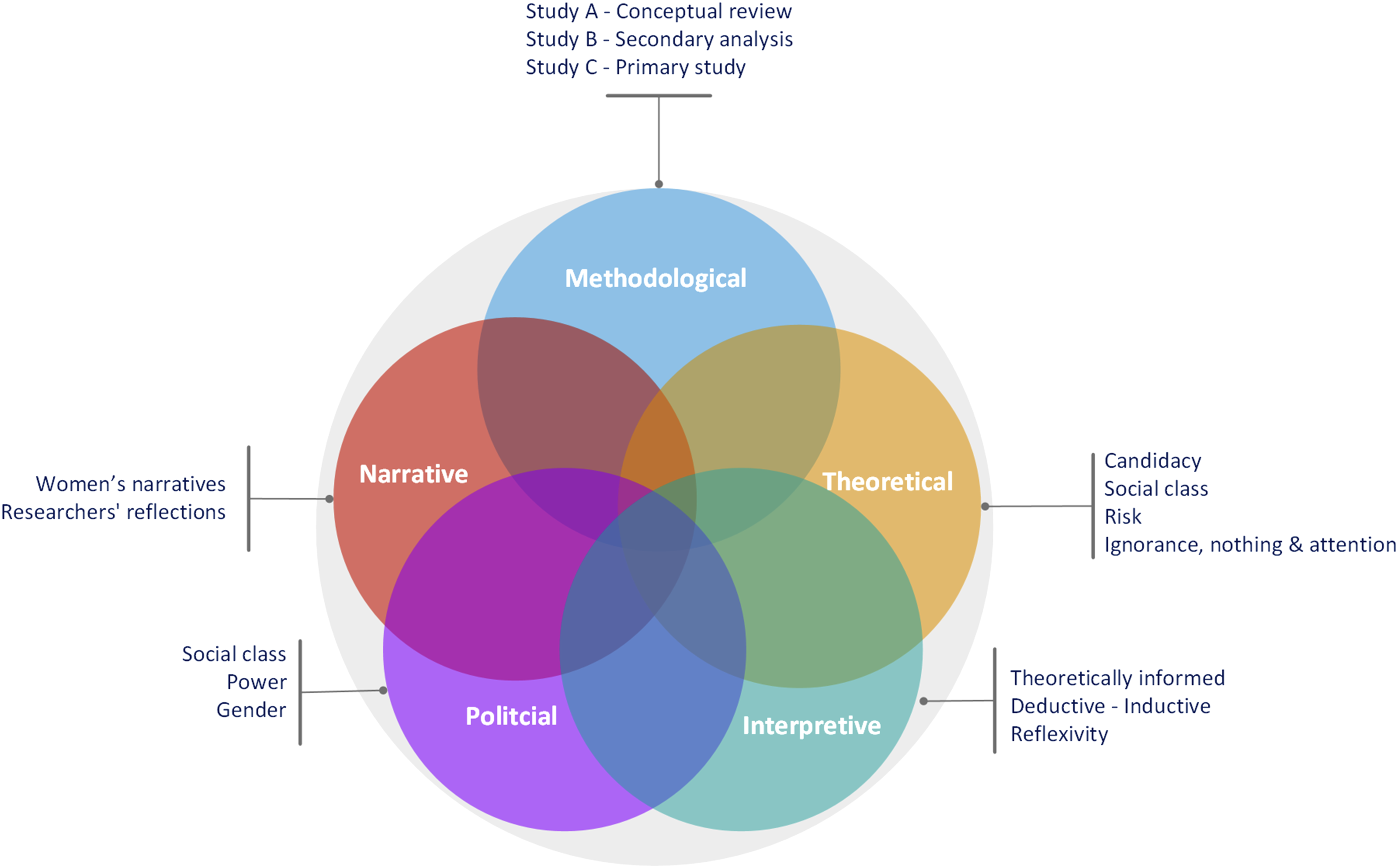
The Methodological Bricolage
To develop our research, the methodological bricolage was incrementally constructed using multiple ‘research tools’ (Denzin & Lincoln, 2011) to allow candidacy to be considered from differing perspectives and using different data sources (Kincheloe, 2005; Lotteri et al., 2023). We combined three distinct studies: something old (the candidacy concept) (study A); something ‘at-hand’ (secondary qualitative data) (study B); and something new (empirical data collection) (study C). Through the following discussion of the dimensions of bricolage, aspects of each of these studies are touched on, but for full details of the methods, analysis and findings of studies A, B and C, please see our other relevant publications (Batchelor et al., 2021, 2023, 2024, 2025). Berry (2015) suggests research should commence at a point where the researcher is most familiar. In our research, the first element added to the methodological bricolage was a conceptual review of candidacy (Batchelor et al., 2021) (study A), which leveraged the existing literature appraisal skills of our ‘apprentice bricoleur.’ Conceptual reviews integrate diverse literature to clarify vague concepts by exploring their key components, relationships and constructs and if/how it changes in differing contexts (Callahan, 2010; Hughes & Duffy, 2018; Jaakkola, 2020). Our aim was to reframe concepts (candidacy per social class), raise questions about their relevance (situated within public health and breast cancer prevention) and then use this as a foundation for expanding or developing theory (guiding future practice/policy) (Whetton et al., 2021). The conceptual review offered an ideal starting point to examine breast cancer candidacy and aligns with the bricoleur’s approach of starting with something old to create something new. The review summarised research that has explored candidacy previously to identify commonalities and key constructs of candidacy. Thus, this sensitised our ‘apprentice bricoleur’ to the concepts used to analyse and interpret the findings of subsequent studies in the bricolage (Zaidi, 2022).
Building on study A, a secondary qualitative data analysis (study B) was added to explore the components and enactments of candidacy identified through the conceptual review. The secondary data analysis allowed us to use existing data to answer new research questions that were not initially the primary unit of analysis, in an efficient manner (Heaton, 2008; Irwin & Winterton, 2011; Notley & Colllins, 2018; Tate & Happ, 2018), bringing a new theoretical lens to the analysis of data (Heaton, 2004). It is typically used for exploratory purposes (before collecting one’s primary data) (Hinds et al., 1997) and is a way of ‘prioritising a concept or issue that was present in the original data but was not the analytical focus at that time’ (Irwin & Winterton, 2011). Importantly for apprentice bricoleurs, and in our experience, it offers a learning experience, and access to sizeable datasets promptly circumvents delays caused by data collection (Mitchell, 2015).
Our earlier work (Foley, Ward, Warin, & Lunnay, 2024; Lunnay et al., 2022; Meyer et al., 2022; Ward et al., 2022) provided our ‘apprentice bricoleur’ (Author SB) with 50 transcripts from interviews with South Australian mid-life women, which explored women’s understandings of breast cancer and the place of alcohol in their lives. This provided an opportunity to upskill Author SB in becoming a bricoleur at the commencement of their doctoral studies and facilitated a rapid transition from identifying candidacy concepts and enactments in the literature to identifying them within the experiences and subjectivities of the narratives of midlife women. Additionally, it enabled an exploration of candidacy through a social class lens and informed study C, the primary data collection phase.
Study C aimed to determine how candidacy impacted and was operationalised relative to primary and secondary prevention among women who attended mammography screening and those who did not (screeners and non-screeners). Interviews were conducted with 43 midlife women from the NSW Central Coast region (n = 32) and nationally (n = 11) to explore women’s perspectives of breast cancer candidacy and how perspectives coalesced with their prevention practices (Batchelor et al., 2024). Under the guidance of the broader research team, this study allowed our ‘apprentice bricoleur’ researcher to combine all aspects of the research cycle, including planning the research, defining the sample, and sampling frame, developing the research questions, seeking ethics approval, recruitment and data collection, analysis, and writing up of findings and publication.
Methodologically, bricolage facilitated an understanding of these differing approaches to data generation, highlighting advantages/disadvantages. The layering of data sources, quintessential to bricolage, allowed a comprehensive picture of candidacy to evolve. Data generation, analysis, and reflection occurred in an ongoing cycle and theoretical frameworks were reshaped in response to new insights (Santiago Sanchez et al., 2025). Here, the methodological and theoretical bricolage (discussed in the next section) overlap.
The Theoretical Bricolage
The theoretical bricolage engages differing theoretical lenses to fit the meanings and purposes of the research (Lotteri et al., 2023). It shapes the questions asked, the literature consulted, and the various theoretical perspectives provide analytic architecture (Papaioannou, 2024) — hence the theoretical and interpretive bricolages intersect. While ontological consistency is desirable between various theories, a bricoleur may work with disparate approaches where an adequate rationale is provided (Pratt et al., 2020).
Our theoretical bricolage evolved iteratively, engaging differing but compatible theoretical lenses to guide and enhance understandings of breast cancer candidacy. First and foremost, candidacy itself provided a theoretical framing, and given the social patterning of breast cancer (Lyle et al., 2017), a theoretical choice was made to engage with Bourdieu’s relational social class theory (Bourdieu, 1984). This was added as a mechanism to explore if/how/why structural issues impact women’s perspectives of breast cancer candidacy and prevention. Subsequently, Bourdieu’s ‘thinking tools’ were central to the research design, data collection, analysis, and interpretation. In studies B and C, the social class position of participants was determined using a social class survey (Savage et al., 2013), validated for use in the Australian context (Sheppard & Biddle, 2017). This operationalises the social class theory developed by Bourdieu (1984) and grouped women into different social classes based on their economic capital (income and assets), social capital (occupational prestige of people they know), and cultural capital (activities they participate in). In reviewing, coding, and analysing the data, we were cognisant of how the concepts of habitus, capitals, and fields impacted women’s narratives. We also ran queries of the data and themes by social class to compare/contrast the narratives of working-class, middle-class, and affluent-class women.
Theoretical understandings of risk were also enveloped within the theoretical bricolage, given that candidacy is inherently an assessment of disease risk. How risk is theorised in different contexts from sociological and psychological perspectives (Taylor-Gooby & Zinn, 2006) was, therefore, important for understanding and interpreting women’s perspectives on breast cancer risks and candidacy. Through the data analysis, additional theoretical lenses were deployed to understand and interpret the data. The sociology of ignorance (McGoey, 2012, 2019), attention (Friedman, 2023), and nothing (Scott, 2017) were applied to consider the data from multiple perspectives and contexts.
The Interpretive Bricolage
Interpretive bricolage refers to the differing perspectives used in a study to interpret data. It includes the social, cultural, economic, and political contexts (Lotteri et al., 2023), together with the researcher’s reflexivity and positionality (Denzin & Lincoln, 2011) that shape the data and influence its interpretation. There is ‘no one correct telling’ (Denzin & Lincoln, 2011, p. 5), with the phenomena being viewed from varied vantage points, which adds depth to the research process and allows for multiple meanings, plurality, and the interrelatedness of the phenomena to be demonstrated (Papaioannou, 2024; Rogers, 2012).
Our interpretive bricolage to explore breast cancer candidacy used a theoretically informed thematic analysis approach (Batchelor et al., 2023, 2024, 2025). The analysis was inductive and deductive, testing the theory of candidacy across contexts and ultimately extending the concept to ascertain lessons for breast cancer prevention. Borrowing from the mixed methods literature, a ‘contiguous’ approach (Fetters et al., 2013) allowed an opportunity to ‘zoom in’ on each study (A, B and C), where each ‘data chunk’ was individually analysed and reported on (Batchelor et al., 2021, 2023, 2024, 2025). In enriching this interpretive bricolage, candidacy was considered and interpreted from differing perspectives, providing a layered effect that built on understandings of candidacy, from the initial constructs to the intersections of candidacy with social class and prevention practices.
The need to ‘zoom out’ and understand the bricolage as a whole by converging these separate ‘data chunks’ (Studies A, B and C) — a unique characteristic of bricolage research (Wibberley, 2017) — required a deep understanding of the data and a creative process of synthesising and integrating the data (Pratt et al., 2020), akin to metaphors like weaving, sewing, quilting or creating a montage (Wibberley, 2017). Amalgamating the ‘data chunks’ was an evolving process, challenged by the time intensity of the task and the breadth of data to be integrated. To meet this challenge, the three studies and the process of/outputs from analysis, including coding structures, and research notes were considered side-by-side and examined to identify commonalities, differences and what was missing (i.e. gaps in understanding). Integrating and synthesising these ‘data chunks,’ involved engaging with the complexities of how candidacy — a seemingly individual perception or expression — is shaped, and enacted within social, cultural, and political contexts (enabled through the theoretical, interpretive and political dimensions of the bricolage) and coalesces with women’s prevention practices within their life contexts (in combination with the methodological element of the bricolage).
Finally, central to bricolage research is the role of the researcher in all aspects of the bricolage. Bricolage pays close attention to reflexivity and positionality, and how this impacts the interpretation of the data. We return to the development of the ‘apprentice bricoleur’ of the research team later in this paper. Through this interpretive bricolage, depth and rigour to our understanding of breast cancer candidacy and the interrelatedness of the contexts in which it was considered were achieved, while also being cognisant of the differing contextual and structural factors at play in participants’ daily lives.
The Political Bricolage
Rogers (2012, p. 4) encourages, ‘interpretive bricoleurs [to] recognise that knowledge is never free from subjective positioning or political interpretations.’ Being mindful of this, political bricoleurs are cognisant of how socio-historical dynamics and imbalances of power, social injustice, marginalisation, and oppression shape varied phenomena and subsequently seek to disrupt them (Kincheloe, 2005; Rogers, 2012). A recent Lancet Commission, which advocated for the importance of examining issues of gender and power relative to women and cancer (Ginsburg et al., 2023) also necessitated the need for a focus on social class, gender and structural issues within our exploration of breast cancer candidacy.
As political bricoleurs, we were particularly interested in how social class positions, translatable as struggles for power, and gender mutually impact breast cancer candidacy. Studies B and C evidenced the impact of social class on lived experiences. Understanding of breast cancer risks, alcohol consumption, and engagement in health care and prevention practices were all classed. Moreover, gender, itself a determinant of health, also impacted these issues. Women’s gendered roles as mothers and caregivers influenced both their alcohol consumption (as a mechanism for coping with these gendered roles), and their prevention practices (potentially, not affording themselves time for this) when prioritising gendered caring roles (Caluzzi et al., 2024; Lunnay, Seymour, et al., 2023). Exacerbating this, the commercial determinants of health also exploit gender to further expose women to risk factors that increase breast cancer risk (Atkinson et al., 2021; Ginsburg et al., 2023; Lunnay & Foley, 2024). Moreover, issues of power link to additional macro concerns that have resonance when examining breast cancer candidacy: the discordance between lay and expert views of knowledge; how strategic ignorance foregrounds some information while leaving other details in the background such as discourses surrounding pink ribbon and mammography screening; how neoliberalism discourses promulgate personal responsibility for health; and the alcohol industry markets their product to women, are all underpinned by issues of power and politics.
The political bricolage also affords consideration of power differentials between the researcher and participants. As such, our ‘apprentice bricoleur’ endeavoured to promote equality between herself and the research participants. Author SB encouraged women to share their stories, recognising them as experts in their own lives (Liamputtong, 2020). Additionally, she positioned herself as a non-expert and shared information about her own life to establish rapport and foster reciprocity (Oakley, 1993, 2015). In these ways, a milieu was established in the interviews whereby women were comfortable sharing their experiences of a sensitive issue like breast cancer.
The Narrative Bricolage
The narrative bricolage allows researchers to tell the stories of what they have studied in varied, layered, and contextual ways (Denzin & Lincoln, 2011), presenting differing interpretations of a phenomenon, thus intersecting with and providing evidence emerging from the interpretive bricolage. The presentation of the narrative is a construction and just one representation of the data, and given that objective reality can never be captured, different narrators would have different tellings of the stories (Rogers, 2012), and as such, there is ‘no one correct description of an event’ (Ben-Asher, 2022, p. 2). Therefore, bricoleurs play an active role in constructing the narrative bricolage they produce. In doing so, they draw on various sources, ‘research journals, field notes, actual transcripts of interviews and recorded conversations, fiction, and scholarly literature’ (Markham, 2016, p. 836) and their reflexivity and positionality to create the bricolage. The purposes of the narrative bricolage must also be considered. Constructing the narratives for publication may require a different telling, being more curtailed by academic writing conventions (Markham, 2016). Broader structural factors may also shape the telling of stories and bricoleurs’ work to highlight what may be ‘silenced in dominant research narratives’ (Rogers, 2012, p. 12) and seek to understand what might be missing from the narratives, dependent on participants’ level of comfort in fully sharing their stories (Wyatt & Zaidi, 2022).
Our narrative bricolage was told in differing ways, informed by the methodological, theoretical, interpretive, and political components of the breast cancer candidacy holistic bricolage. Constructing these different narratives, we drew on women’s accounts, the research reflections and memos of Author SB, discussions among the research team, and other literature to contextualise and theorise the meanings of breast cancer candidacy. The narratives presented stayed close to the participants’ words to privilege their voices, with findings grounded in the contexts of participants’ lives (Tracy, 2010). This thick data description was enabled by Author SB’s ongoing immersion in the data throughout the 13-month data collection period, an emphasis on inductive coding, and a comprehensive analysis process. This approach allowed for a thorough understanding of the data. Recognising the value of the different narratives that emerged through this analysis, and to meet academic writing conventions of brevity, these narratives were developed into separate manuscripts for different publications (Batchelor et al., 2023, 2024, 2025).
While the data were presented as individual studies A, B and C (Batchelor et al., 2021, 2023, 2024, 2025), they were also considered as a whole. Drawing upon Freeman (2020) the ‘data chunks’ were placed side by side to explore connections and linkages, where misalignment existed, and to identify the ‘overlaps and the blank areas’ (p.17). We adopted the process described by Wyatt and Zaidi (2022, p. 172) of looking back and forth to consider ‘micro-level experiences (i.e., individual experiences) and compare and interpret these within larger macro-level settings (i.e., society) to uncover the relationship between the two.’ Through the process of immersion and re-immersion in the analysed data and thinking about different ways of placing it together, re-ordering and rearranging it (Wibberley, 2017) the ‘edges, messiness and spaces in-between’ (Freeman, 2020, p. 22) were revealed.
We weaved together not only a narrative about current understandings of breast cancer candidacy but also reflections on what was ‘missing,’ which is a central feature of the rigour of bricolage (Kincheloe, 2005). This allowed differing narratives for study C to be told - one that constructed women’s stories about informed choice regarding mammography screening (Batchelor et al., 2025) and another that examined mammography screening relative to women’s perspectives of candidacy (Batchelor et al., 2024).
We have shown how the dimensions of a holistic bricolage overlap and intersect. Social class, fundamentally a power struggle, tied the theoretical and political dimensions of the bricolage together. The political dimension also attends to what voices are heard and privileged; this is particularly important given the relationship between lay and expert knowledge and candidacy. Indeed, the pink ribbon movement – emblematic of the experience of breast cancer has been critiqued for privileging a narrow set of voices, and the public health movement has wielded its power in controlling messages about screening (benefits over harms). In these ways, the methodological and theoretical dimensions are enmeshed with the interpretive, narrative and political dimensions, with each dimension aligning epistemologically and supporting and enhancing one another, to facilitate a more thorough understanding of candidacy (Lotteri et al., 2023) and alleviating the drawbacks of bricolage (Santiago Sanchez et al., 2025).
Results
Although this paper primarily focuses on our bricolage construction process rather than our findings (readers are directed to other sources for greater detail (Batchelor et al., 2021; Batchelor et al., 2023, 2024, 2025)), it is important to note that the bricolage approach deepened our understanding of the constructs of candidacy, women’s perspectives on breast cancer risks; their prevention behaviours; and how women’s life contexts shape these. By engaging the differing dimensions of bricolage our trilogy of studies incrementally built an understanding of breast cancer candidacy as shown in Figure 2. These bricolage dimensions afforded differing approaches to data collection (methodological), analysis (theoretical) and interpretation (interpretative and political), as well as presenting the stories that emerged from the data (interpretive and narrative). In this way, the bricolage enabled a deeper understanding of breast cancer candidacy to develop, which highlighted how social class shapes differing perspectives of candidacy relative to alcohol as a breast cancer risk, as well as women’s breast cancer prevention practices. Building an Understanding of Breast Cancer Candidacy
Study A built a broad understanding of the candidacy concept. It identified the contexts in which candidacy had been examined, its common constructs and enactments, the methods used, and gaps in the candidacy research, such as the need for a social class analysis (Batchelor et al., 2021).
Subsequently, study B explored the sensitising concepts (Zaidi, 2022) identified in study A, like resisting and competing candidacy within the secondary data. Engaging with the theoretical and political dimensions of bricolage, a social class lens was employed in study B. This demonstrated that candidacy was socially patterned and fluid. Resisting candidacy, that is, where risk factors may be denied or downplayed to distance oneself from being a candidate, was more often noted in middle-class and affluent women, who highlighted their other health-promoting behaviours to offset the risk presented by their alcohol consumption. Working-class women, however, recognised alcohol as a risk. Still, it was a ‘felt need’ in their difficult lives. In this context, working-class women more often displayed competing candidacy, where other life and/or health issues took precedence over addressing breast cancer risk. Through a social class lens, candidacy could be fluid, where women with greater capital could act on risk if they desired to do so, whereas women with less access to capital might recognise risk, but their social class position constrained their capacity to act (Batchelor et al., 2023).
Building on study B, study C further explored candidacy. While this study continued to engage with social class through the theoretical bricolage, the sociology of attention was also added to this dimension to understand women’s mammography screening practices. This allowed a differing interpretation and narrative (interpretive and narrative bricolage) to emerge from the data. Again, social class differences were observable in how candidacy was enacted — the narratives of middle- and affluent-class women exemplified resisting candidacy, while working-class women exemplified competing candidacy. Women were generally reluctant to assign candidacy to themselves, seeing themselves as candidates for screening rather than breast cancer (Batchelor et al., 2024). How women paid attention to and made informed choices about mammography screening was shown to be socially patterned (Batchelor et al., 2025).
Shedding different lights on breast cancer candidacy constructed a bricolage that showed plurality in its complexity, diversity, and multi-dimensional nature (Santiago Sanchez et al., 2025). The bricolage as a whole showed the centrality of social class in shaping all facets of the candidacy framework, from lay epidemiology, assessing, and assigning candidacy, and enacting candidacy and prevention practices, permitting the emergence of a vital new narrative. Key to this was that ‘choice’ was afforded through the dimension of class, and that choice mediated decisions about what information to pay attention to, what risks to address, and what prevention activities to enact.
Discussion
Bricolage research, at its core, is an emergent process. Bricoleurs require creativity, time, balance, resourcefulness and problem-solving skills, and must embrace flexibility and adaptability as they build upon and add new and varied elements to their research (Papaioannou, 2024; Santiago Sanchez et al., 2025; Wyatt & Zaidi, 2022), and researcher reflexivity is required throughout the research process (Davis, 2020; Rogers, 2012). We embraced these throughout our construction and use of our breast cancer candidacy bricolage. This allowed us to incrementally explore breast cancer candidacy in a step-by-step manner (using a methodological bricolage), to create a fuller picture (adding to the theoretical and interpretive bricolage), and to alleviate any ‘narrowing’ of the research focus (ensuring through the narrative bricolage that differing stories are told). As bricoleurs we balanced ‘deliberation (immersion in theoretical frameworks) and serendipity (waiting for new insights to emerge)’; ‘engagement with data (highly focused coding) and detachment from it (stepping back from the details)’; and ‘confidence in their knowing (making early conclusions) and not knowing (staying open to other interpretations)’ (Wyatt & Zaidi, 2022, p. 173). Resourcefulness and creativity were key to the construction of the methodological bricolage. Given that only two earlier breast cancer candidacy studies exist (Pfeffer, 2004; Salant & Gehlert, 2008), the conceptual review facilitated the exploration of candidacy in other contexts and required creative approaches to the literature search. The re-use of data in study B (the secondary analysis) to initially explore candidacy constructs and enactments showed resourcefulness, while problem-solving, flexibility and adaptability were required, regarding the challenges of recruitment experienced in study C.
Being comfortable with the time investment for bricolage research was vital for our breast cancer candidacy research to ensure we capitalised on the opportunities that bricolage affords. Taking time and stepping back from the data allowed us to add differing theoretical perspectives to the theoretical bricolage. This enhanced the interpretive and narrative dimensions of the bricolage and the capacity to analyse the data differently to tell a different story. Time and serendipity allowed for the discovery of Friedman (2023), who explored mammography screening using the sociology of attention. This fortuitous finding enhanced the theoretical dimension of the bricolage with the ‘sociology of attention’ and provided another lens to understand women’s logics around screening practices. While the analysis of screening from the perspective of candidacy showed that women considered themselves as candidates for screening (rather than breast cancer), adding the sociology of attention into the bricolage highlighted how women’s capacities to make ‘informed’ choices about their participation is linked with social class and personal agency (Batchelor et al., 2025). This added greater richness and depth to the findings.
The process of ‘engagement with data (highly focused coding) and detachment from it (stepping back from the details)’ (Wyatt & Zaidi, 2022) was also analogous to the challenges faced by our ‘apprentice bricoleur’ in considering what the data meanings were at an individual level compared to the population level view. While candidacy allows lay epidemiologists to apply what is seen at the population level to the individual level, the task of Author SB was to ‘zoom back out’ to identify structural issues at play rather than focus on individual behaviours and lifestyle. While this was challenging at times for our apprentice bricoleur, it also reflects that even in health policy contexts, the intent on focusing upstream can readily shift downstream to individual behaviour change, rather than the structural causes of health inequities (Phillips et al., 2016; Schultz et al., 2023). For breast cancer prevention, ideally, both upstream, midstream, and downstream approaches are required.
Being cognisant of the interpretive bricolage, bricoleurs must also become reflexive researchers who recognise the co-construction of knowledge with participants (Darwin Holmes, 2020) is influenced by their positionality (e.g. personal history, biography, and social identities) (Denzin & Lincoln, 2011; Jacobson & Mustafa, 2019) which shapes the research process (Darwin Holmes, 2020). Reflexive bricoleurs recognise that research is value-bound and address axiological questions. In our research, key considerations included societal values regarding alcohol consumption (Lunnay et al., 2022), mammography screening (Batchelor et al., 2024, 2025), and health/wellness (Ward et al., 2022), and how these are valued positively or negatively in different contexts. From a positivist, epidemiological perspective, alcohol consumption is viewed negatively due to its health harms, including its causal link to breast cancer (Freudenheim, 2020). Conversely, alcohol can be seen as representing enjoyment, choice, and a means of enhancing social identities and connections (Atkinson et al., 2021; Foley et al., 2021; Foley, Ward, & Lunnay, 2024; Lunnay, Warin, et al., 2023), a narrative that the alcohol industry utilises to sell alcohol to women, irrespective of health harms (Lunnay & Foley, 2024). These social contexts are known to influence women’s perceptions of health harms and their perceptions of the plausibility of reducing drinking (Lunnay et al., 2022). Similarly, positivist epidemiology suggests mammography screening’s value and promotes women’s participation, with normative discourse supporting screening (Armstrong, 2021), while non-participants may be judged harshly (Seaman et al., 2020).
Considering these axiological questions and positionality was particularly important for our ‘apprentice bricoleur,’ who conducted interviews with midlife women for study C. Author SB had varying degrees of insider-outsider status (Merton, 1972) relative to our participants (e.g. age, work and social roles, alcohol consumption and screening preferences) and these power imbalances within the research process required careful consideration. Author SB’s professional role in health promotion likely influenced her research, and although this was only disclosed if participants asked, it may have led some participants to feel the need to provide what they perceived as ‘correct’ responses, as she may have been viewed as an expert despite attempts to create a judgement-free milieu. Similarly, if participants asked Author SB about alcohol consumption or screening preferences, this was disclosed, recognising that it could support rapport-building (Oakley, 1993), but also bias responses. She was, however, careful to stress that her position on these things should not influence what participants shared. In these ways, our ‘apprentice bricoleur’ emerged as a reflexive researcher.
Finally, from this critical and holistic breast cancer candidacy bricolage, new understandings of the need for differing approaches to breast cancer prevention have emerged, both regarding alcohol consumption as a modifiable breast cancer risk and mammography screening (Batchelor et al., 2023, 2024). Engaging the relational social class theory of Bourdieu (1984) revealed that social class differences exist in how women consider lay epidemiology, access information, assign and enact candidacy and engage in prevention practices. This has important implications for the provision of equitable breast cancer prevention approaches. Given that structural factors and women’s social class position enable or constrain engagement in prevention practices, there is a need for public health messaging that is open, transparent, and readily accessible to all women, with strategies that are tailored and segmented to reach women with differing access to economic, social, cultural and health capital. Moreover, co-designing interventions with women from differing social class positions to improve breast cancer prevention is a crucial next step.
Conclusion
Bricolage can be used by novice or experienced researchers alike. This is counter to the requirements of a bricoleur often presented in the literature, where the bricoleur begins with an extensive repertoire of research skills, creativity, and background knowledge thought to enable varied forms of data collection, analysis and theorisation (Cilesiz & Greckhamer, 2022; Lotteri et al., 2023; Santiago Sanchez et al., 2025). We suggest that the bricoleur can start with what is ‘at-hand’ (Pratt et al., 2020; Rogers, 2012), including available data and resources, and the researcher’s competencies. In our example, our novice bricoleur montaged their existing skills to conduct a conceptual review, and access to data for secondary analysis provided an opportunity for skill development in qualitative data analysis, guided by experts within the team. In combination, these approaches allowed rapid immersion in the phenomena, rather than beginning with empirical data collection.
Although there are key dimensions to the bricolage — methodological, theoretical, interpretive, political, and narrative — there are no definitive guidelines about undertaking bricolage (Wyatt & Zaidi, 2022). Each bricolage is unique for its purpose, and while it provides rigour and depth to the understanding of phenomena, bricolage may be messy, the interpretive threads may not weave together, and as such, the product of a bricolage may be unpredictable or feel unfinished while the researcher seeks to install another element of the bricolage (Cilesiz & Greckhamer, 2022; Nord, 2022). Thus, bricoleurs need to sit with uncertainty and appreciate that the flexible and emergent nature of the approach will yield dividends in producing an understanding of a phenomenon that is rich, diverse, and holistic. Our paper demonstrates how research skills, capacity for creativity, and adaptability develop through (and by) the emergent process of constructing the bricolage, allowing them to ‘think like a bricoleur’ and find value in the uncertainty and meaning in the messiness (Nord, 2022).
Bricolage may be particularly suitable to exploring complex public health issues, where the phenomena can be explored using differing and complementary methods, and analysed through disciplinary lenses outside of public health — for example, our study utilised sociological theory, offering new ways of understanding women’s breast cancer risk perceptions than has been previously accessible (Batchelor et al., 2023). The benefit is specifically prompted through the theoretical bricolage, but also the interpretive bricolage, where the researcher is encouraged to be reflexive of their positionality. Bricolage is also an ethical modality of research; particularly suitable to sub-populations experiencing sensitive issues (such as social class and breast cancer prevention) and hardly-reached by research on the basis of structural disadvantage (such as living with poverty) and ameliorating the limitations of disclosure that can result from social power differentials between the academic researcher as compared with the researched (Batchelor et al., 2025).
Through using bricolage, we repurposed candidacy, a 30-year-old concept, demonstrating its enduring ability to offer explanatory insights into how disease risks are considered and responded to. In progressing this work, we examined and consolidated existing candidacy and breast cancer candidacy research, developing a framework that highlighted common candidacy constructs and enactments (Batchelor et al., 2021). We have extended the sparse breast cancer candidacy literature through the inclusion of Bourdieu’s relational social class theory (Bourdieu, 1984) and a specific focus on alcohol-related breast cancer risk. Thus, we have demonstrated the fluidity of candidacy by providing a new class-based understanding of women’s perspectives, logics and rationales related to alcohol-related breast risk and their prevention practices regarding alcohol consumption and mammography screening (Batchelor et al., 2023, 2024, 2025).
While the flexible and emergent nature of bricolage are assets and necessary to build a more in-depth understanding than otherwise would be possible, there are limitations to the bricolage approach. The time intensiveness of ‘layering’ the elements of bricolage can adversely impact the feasibility of time-contingent studies (such as contract research). It is also not possible to pre-determine the study design and outline firm deliverables as is often required to acquire project funding. However, depending on the tools selected, bricolage may afford a more rapid immersion in the phenomena to generate early understandings (as per our conceptual review and secondary analysis) than might be achieved by commencing solely with primary data collection. Moreover, these early steps provide proof-of-concept data that can inform funding submissions, akin to a pilot project.
Specifically, regarding our breast cancer candidacy bricolage, we have previously recognised and reported on the limitations of the methodological bricolage (Batchelor et al., 2024, 2025). To ensure a broad sample we utilised a multifarious recruitment approach including a combination of a targeted Facebook campaign, flyers distributed through community settings (e.g., clubs, residential communities for adults over 50 years of age, and sporting clubs), attendance by Author SB at local women’s community events to inform women of the study, and a broadening of the study inclusion criteria. However, limitations concerned inadequate numbers of women from diverse social class positions per their differing screening statuses (more working-class women and fewer non-screening women opted to participate). Reaching non-screening women remained intractable and is consistent with extant research exploring cancer screening (Bikker et al., 2019; Young & Robb, 2021). Future studies could consider the use of peer-led recruitment to address this issue.
However, overall, in our study exploring breast cancer candidacy, the benefits of bricolage outweighed the potential limitations. We suggest the benefits of bricolage extend beyond interpretative richness to enhancing research and skill development. As bricoleurs, we can all ‘start with what is at-hand,’ and be flexible and creative, and prepared to pivot as differing analytical elements are added to the bricolage. Moreover, through a critical bricolage, all factors impacting the phenomena can be examined. In our research, the bricolage allowed us to examine how social class, gender and structural factors impacted breast cancer candidacy, meaning our interpretations of it are ‘bound to the world around it, instead of as a “thing-in-itself”’ (Kincheloe, 2001).
Footnotes
Acknowledgements
The authors acknowledge and thank the women who participated in the study.

Ethical Considerations
This study was approved by the [Redacted for review] Research Ethics Committee (approval no. 0184) on May 16, 2022.
Consent to Participate
Respondents gave written consent or recorded verbal consent for review and signature before starting interviews.
Consent for Publication
Informed consent for publication was provided by participants.
Funding
The authors disclosed receipt of the following financial support for the research, authorship, and/or publication of this article: This work was supported by the Australian Research Council, Grant/ Award Number: DP190103434 and by an Australian Government Research Training Program (RTP) Scholarship doi.org/10.82133/C42F-K220.
Declaration of Conflicting Interests
The authors declared no potential conflicts of interest with respect to the research, authorship, and/or publication of this article.
Data Availability Statement
The datasets generated during and/or analysed during the current study are not publicly available due confidentiality and privacy concerns.