




Abstract
This research highlights the dysfunction in isolation as a metaphor in the creation of paintings. To establish a theoretical foundation for expressing isolation as a social issue in creative work, analyse the pertinent literature on art and society. There are several opportunities for studio-based research to add to the corpus of knowledge about creative processes. In studio practice, the researcher created a ‘newspaper guy’ and copied it into different works. It expresses dysfunction in isolation by representing the connection between the figure and the space. After the creation, thematic analysis is used to analyse metaphors in artworks. The results of this research are a series of oil paintings created to express the relevant themes and a dissertation in which the process and content are analysed and discussed. This study began with social observation. This was followed by the Aesthetico-Action Research model of reflection and creation to embody the characteristics of dysfunction in isolation. In this vein, the study contributed practical knowledge to current art practice by demonstrating the painting language of expression dysfunction in isolation.
Introduction
Research within the context of this study is understood as a reflective and practice-based process where knowledge is generated through artistic inquiry. Following Sullivan (2010) and Carter (2004), artistic practice is both the method and the subject of investigation. The relationship between isolation and creativity is also central to this inquiry. Isolation—particularly emotional and social isolation induced by urban life—is viewed not just as a psychological condition but as a catalyst for artistic reflection. As Morozewicz (2019) points out, artists often find expressive strength in solitude, where isolation enables deeper engagement with internal states. In this study, creative isolation becomes a methodological and thematic axis, framing the act of painting as both the result of, and response to, urban emotional disconnect.
As cities continue to develop rapidly and urban populations grow, conflicts arise amid the progress of urbanization. Urban residents face increasing pressure and challenges in their daily lives. Moreover, emotional communication between individuals is also changing with the rising economic pressure. As a result of intense competition in urban life, opportunities for face-to-face communication are decreasing, leading to various negative emotions among city dwellers. “The expression and management of emotion are social processes” (Wharton, 2011). This implies that a person’s social environment impacts their feelings. Isolation has emerged as a common emotional issue for society in urban settings. The absence of opportunities for meaningful face-to-face encounters and the fast-paced and competitive character of urban life also contribute to this. Urban dwellers who experience emotional isolation may suffer serious repercussions, including loneliness, despair, anxiety, and even suicidal thoughts. Long-term isolation can also lead to a lack of understanding and empathy for others, which feeds into the cycle of social isolation.
Urban life has undeniably brought about material enrichment for many people, and the modern products and conveniences of city living have become integral to the lives of urban populations worldwide. However, the advantages of living in a city come at a cost: the fast-paced nature of modern life, the constant activity and noise, and the impersonality of city life can all lead to feelings of alienation and loneliness. As a result, dysfunction also contributes to the isolation of the urban population. As an artist, we have discovered that metaphor can be a potent instrument for expressing and exploring these issues. Using symbolic imagery, and metaphor allows artists to communicate complex concepts and feelings. Researcher have used visual metaphors in paintings to deepen their significance, especially when examining the issue of isolation. Metaphor in painting is a source of bright ideas, the function of a metaphor in art is generally to evoke a certain feeling or thought in one who reads or witnesses the work (Hill, 2023).
According to Sullivan (2010), artists’ imaginative and intellectual work undertaken is a form of research (Sullivan, 2010). He asserts that artists’ artworks are a way of perceiving the world, and this perception injects new order into art research. Thus, art practice is an integral part of art studies. In this context, art research often involves conducting studio practice as it allows artists to experiment with different materials, techniques, and ideas hands-on way. Artists can generate new insights, develop their skills, and refine their artistic practice by creating and reflecting on their work. This process can lead to discoveries, innovations, and creative breakthroughs that inform and enrich the wider art field (Swann, 2002). In other words, art practice is not only a way of producing artwork but also a way of generating new knowledge about art (Carter, 2004). Making art is a form of research, as artists constantly experiment with new techniques, materials, and approaches to their work. This experimentation can lead to unexpected results, which in turn can inspire new directions in their work. Furthermore, the reflective process of evaluating and analysing their artwork can lead to new insights and understandings about their practice (McNiff, 2011).
Literature Review
The Sociology of Art
Many researchers have also suggested that the expression of artworks is related to the social context. Plekhanov (1957) proposed that art is a social phenomenon. Art not only expresses people’s thoughts, but also in vivid images instead of abstract ones. This is the main feature of art. Hungarian sociologist Arnold Hauser (1999) published The Sociology of Art. He proposed that the analysis of artistic works must rely on sociology. In his theory, he analysed the dependence of art on the social environment. “To explain the prevalence of a style tendency in a whole generation or a historical period, it is necessary to envisage a certain social and historical environment that favours different societies in which certain psychological attitudes succeed and win support”. Hanna Deinhard (1970) gives one approach: “works of art always originate as products of human activity within a particular time and society”. This is an art-historical approach focused on the historical conditions of artistic production. Becker (2008) approached art as “collective action” and studied art as an occupation. Without a common understanding of a work’s value, it is difficult to have any social resonance. Alexander (2020) stated that different artistic styles come from different social roots, and the aesthetic taste and appreciation psychology of different cultural classes are different. By reviewing the above literature, the content of art is inextricably related to social development. In our artworks, the expressions are based on the current situation of the urban society in which we live, and the isolation we express is also urban in origin, so the researcher’s works reflect localized urban experiences that capture aspects of alienation, anonymity, and disconnection.
However, there are also some limitations to the sociology of art theory. Some researcher argues that sociology emphasises the social factors that influence art, such as economic class, race, and gender, and not enough on art’s aesthetic and creative aspects. Furthermore, sociology may not adequately capture people’s subjective and emotional responses to art. In other words, the complexity of the field of art studies, which is merely viewed as a social phenomenon is ignored. The meaning and value of artworks are undervalued.
Expression of Isolation in Art
The emotional layer of creativity encompasses two categories of sensations: an inherent component of the creative process and a side effect or the result of the same process (Morozewicz, 2019). Isolation as an emotional state belongs to both these categories. Isolation comes from the outside on the one hand, and the artist’s heart on the other. Loneliness during the creative process, isolation necessary to focus, and lack of support and understanding by recipients are often internal, giving the creator-artist a strong feeling of isolation (Morozewicz, 2019). The artists become a source of new strength in creation through their understanding. Art in isolation is not a new concept, many artists feel it opens the creative mind, allowing for a comprehensive connection to their work (Jenkins, 2019).
This study aims to express isolation in paintings and how the urban social environment influences this isolation. The social aspects of artworks are further discussed.
Metaphor in Art
Metaphor is one of the most important ways of giving art depth and meaning. As Lakoff and Johnson (2008) argued in their foundational work Metaphors We Live By, metaphor is not only a linguistic ornament but a fundamental mechanism of human thought. Conceptual metaphors shape how we perceive, experience, and interact with the world. In visual art, these metaphors become embodied in forms, colours, and compositions that invite interpretation beyond literal representation. A visual metaphor is an image the viewer is meant to understand as a symbol for something else (Deshpande, 2021).
Metaphor is one of the most important ways of giving art depth and meaning. A visual metaphor is an image the viewer is meant to understand as a symbol for something else (Deshpande, 2021). Some researchers suggest that metaphor has a variety of functions in art. Firstly and most obviously, metaphors serve some aesthetic function. Artists aim to make us admire their ingenuity (Veit & Ney, 2021). Petrenko suggests that the metaphor is also the painting getting balanced. The two points that it (a metaphor) consists of, aesthetically, are quite equal. Moreover, this equality makes both points single and undividable (Petrenko & Korotchenko, 2012). Some researchers also believe that metaphors have the function of memory. Metaphors can enhance your work is incorporating your connection to the image (Deshpande, 2021). Memory-based creations give a more realistic sense, but the viewers may not always be able to feel the metaphor accurately. Because of the uncertainty of metaphor in visual art, Petrenko argued that A visual metaphor is always a mystery for a viewer, and a purely artistic visual metaphor is more difficult to recognise (Petrenko & Korotchenko, 2012). It can also bring ambiguity, and metaphor can lead to polysemy (Giles et al., 1991). In fact, metaphors are inherently subjective, it varies depending on the cultural and personal background of the artist and the viewers. This can lead to misunderstandings or misinterpretations. Hence, metaphors can be a powerful tool for conveying deeper meaning and emotion in art. However, according to the needs of one’s work, using too many metaphors may be difficult and confusing to understand.
Methodology
Aesthetico-Action Research
Aesthetico-Action Research (Figure 1) is a multidisciplinary research approach that integrates the principles of aesthetics with the principles of action research. It emphasises creating aesthetically meaningful experiences through an active and participatory process. This approach values all participants’ experiences, perspectives, and creativity and encourages them to co-create new knowledge through collaboration and reflection. The goal of Aesthetico-Action Research is not only to generate new knowledge, but also to create meaningful and transformative experiences that have the potential to impact the lives of participants in positive ways. Action research that involves reflexive art-making processes, and responses and requires both reflection in practice and reflection on practice (Schon, 1984). Aesthetico-Action Research is a cyclic, open-ended, active process involving observing, reflecting, planning, acting, and reflecting (Marshall, 2010). Based on these, we have created a research cycle based on the characteristics of this research. It involves the steps of observation, reflection, planning, creation and re-reflection. Aesthetico-Action Research Model
Thematic Analysis
We applied the six-phase model of thematic analysis developed by Braun and Clarke (2012), which includes: (1) familiarizing ourselves with the visual data (paintings and sketches); (2) generating initial codes for metaphorical content and compositional patterns; (3) searching for themes such as ‘emotional detachment’ or ‘functional absurdity’; (4) reviewing themes across works; (5) defining and naming themes; and (6) producing the final narrative synthesis. This approach respects the reflexivity of the researcher-artist and treats visual artifacts as meaning-making entities, thus bridging studio practice and qualitative inquiry.
Analyses of Observations and Artists’ Artworks
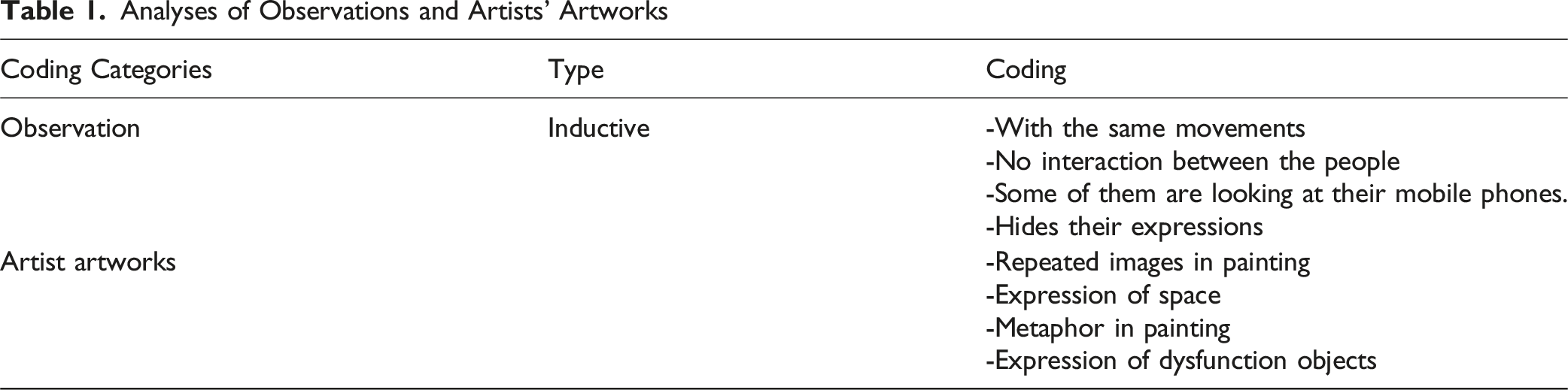
Analyses of Metaphorical Content in Studio Practice

Studio Investigation
Overview
The aim of the researchers’ artwork is to reflect urban life in it, so the starting point is the urban space and how people’s behaviour in the space expresses their emotions.
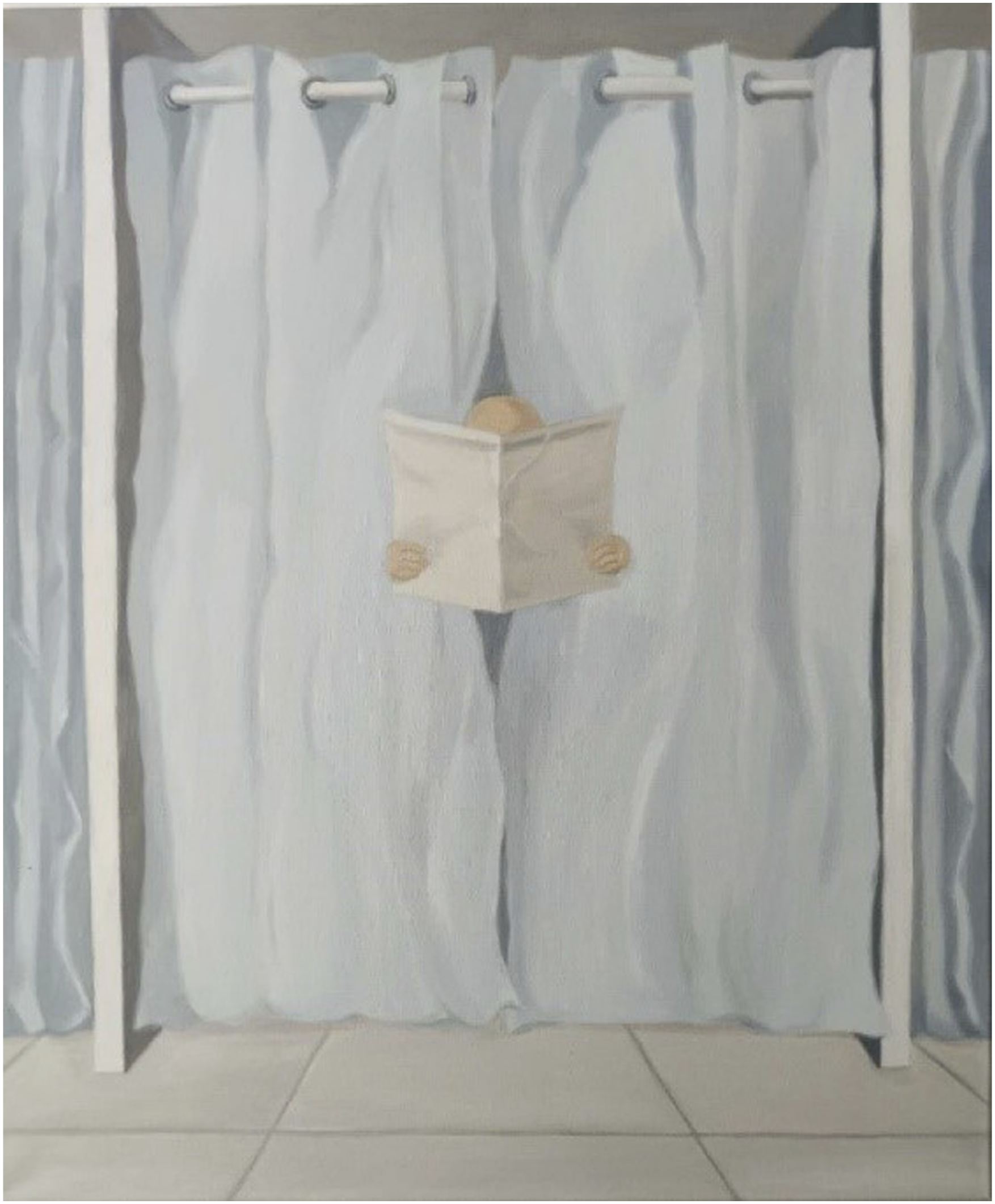
Through social observations, a ‘newspaper guy’ (Figure 2) was created and analysed. In addition, urban spaces were chosen to develop the concept further. Once the work was completed, an analysis and reflection were carried out on this phase of the work and the creative process. This enabled a deeper understanding of the work and provided insight into the creative decisions made during the process. ‘Newspaper Guy’ in the Sketch
Observation Research
Observation is data collection by observing behaviours and events or noticing physical characteristics in the natural environment (Ekka, 2021). Observation allows researchers to observe the process of people’s behaviours and interactions directly, or to observe the results of behaviours or interactions. Observing the location or setting of an event can help improve the researcher’s understanding of the event, activity, or situation being evaluated. In addition, the observation method is a good supplement if the respondent is unwilling or unable to provide data through questionnaires or interviews. In art making, artists use the observational method because it allows the artist to accurately capture the visual details of the subject matter being depicted. Observational painting, no matter what the subject, creates a visual representation based on what is directly observed. One of the most important aspects of using social observation methods in creating work is that it allows me to gain a more in-depth understanding of the environment around me and the people in it. I can create thought-provoking works by observing and studying human behaviour, social dynamics and cultural trends. In this research, social observation observes both how urban crowds behave in society and whether urban crowds behave differently in different situations. Besides, through social observation I can also get the common characteristics of the urban crowd and provide a source of material for creation.
Furthermore, as we are also someone who lives in an urban area, urban observation makes me more empathetic and better able to understand the experiences, emotions and perspectives of others. This can inform researcher’s work, make it more relevant and resonate with a wider audience.
Social Observation Content

Creating Newspaper Guy
Based on researcher observations and thoughts on the expression of dysfunction in isolation, researcher wanted to create the same figure to represent the urban crowd (Figure 2). An artist may reproduce the same figure in different paintings depending on the artist’s vision and goals for their work. The figure may be a signature element of the artist’s style. As the artist pursues his unique artistic language, repetitive motifs or symbols appear in their works. In addition, the figure may represent a larger idea or theme. The artist uses this figure to explore the subject matter being represented, and by using the same figure in multiple works, the artist can continue to explore the idea or subject matter from different angles.
Absence of Face or Facial Expression
The photographs depict a group of people bowing their heads and hiding their expressions, a common social behaviour observed in crowded places. From observations, researcher have found that people tend to hide their emotions and expressions when in the presence of many others. This may be due to various factors, such as a desire for privacy or a fear of being judged or misunderstood. The use of newspapers to conceal the individuals’ expressions also allow the viewer to speculate on the hidden emotions of the subjects. Each viewer may have their interpretation of what the expressions behind the newspapers may be, based on their own experiences and perceptions. The ambiguity of expression in the ‘newspaper guy’ enables what viewer reception theory identifies as polysemous engagement, where meaning emerges through the viewer’s interpretive frameworks. Emotional connection occurs when viewers project their own sense of urban fatigue, social detachment, or daily conformity onto the anonymous figure (Figure 3). According to perceptual psychology, minimal visual cues such as posture, gesture, or masking can trigger affective mirroring or empathetic speculation, especially when facial expression is hidden (Giles et al., 1991; Petrenko & Korotchenko, 2012). Photograph of Urban Crowed Showing Lack of Facial Expression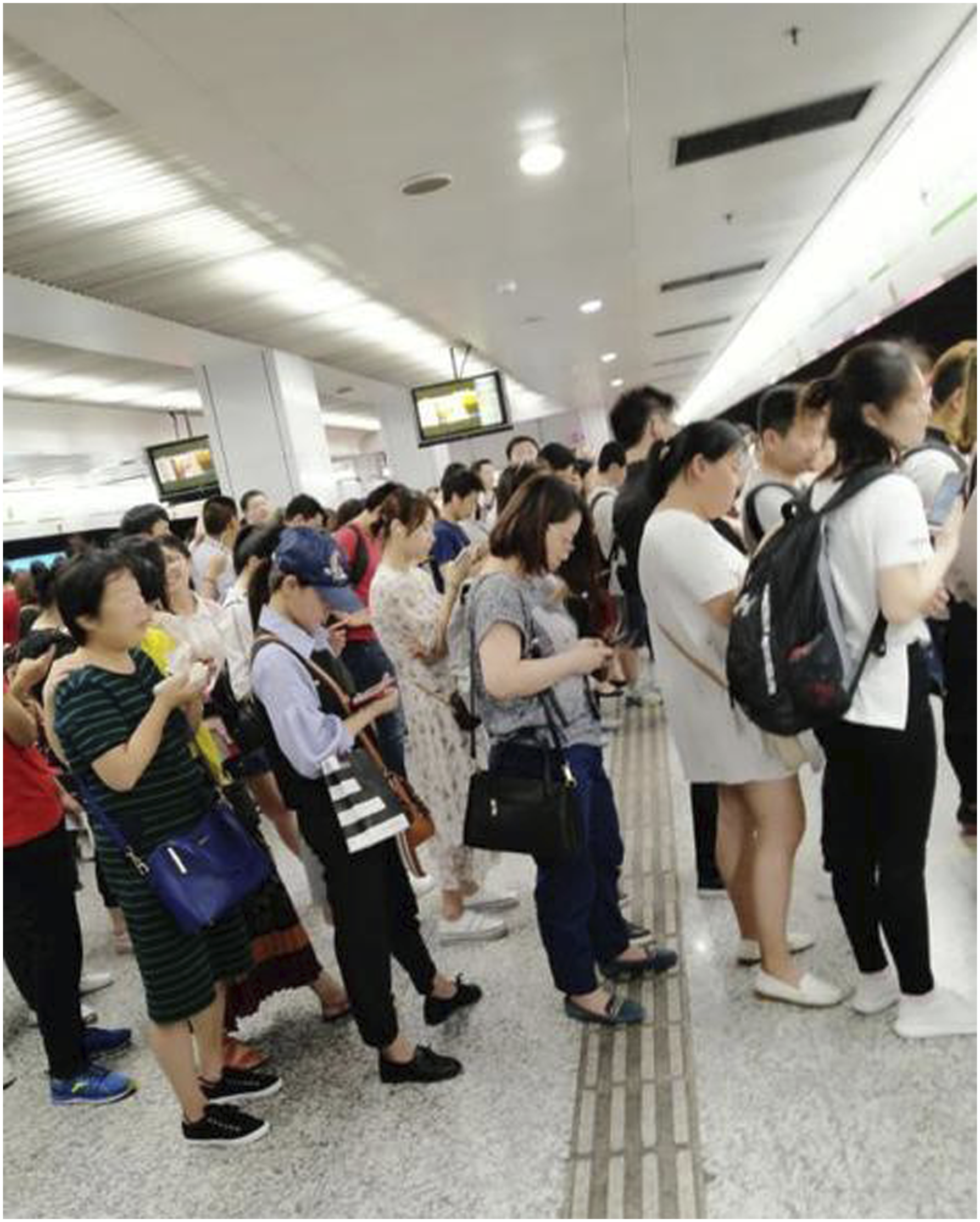
Newspapers as Accessory
The choice of accessory for a painting affects the composition, the emotion and the message conveyed by the work. Researcher chose the accessory mainly by considering these aspects. The first is the theme, and researcher want to show isolation in urban, as well researcher observed the behaviour of urban crowds, and researcher identified the need for the ‘newspaper guy’ to hold something in their hands. Secondly, from the aesthetic point of view, researcher advocate that a ‘newspaper guy’ is a simple symbol, so researcher want to reduce some distracting details, and the newspaper can cover the five senses. The last point is to convey some messages. Newspapers as an accessory also have some implied and hidden messages. Therefore, the medium should be appropriate to the subject of this research, applicable to the artistic content, as well as to the aesthetics and creative style.
Researcher chose newspapers as an accessory to show two different contents. Firstly, in terms of the role of newspapers, the newspaper is cheap and can control the public’s opinion and make it more homogenise. The content of newspapers is not free speech and is controlled by the government (or other institutions).
Secondly, from the shape of the newspaper, it is large enough to be used as a prop to cover the face as well. (Figure 4) Sample of Image Showing a Person Focusing on Reading Newspaper, and Ignoring Surrounding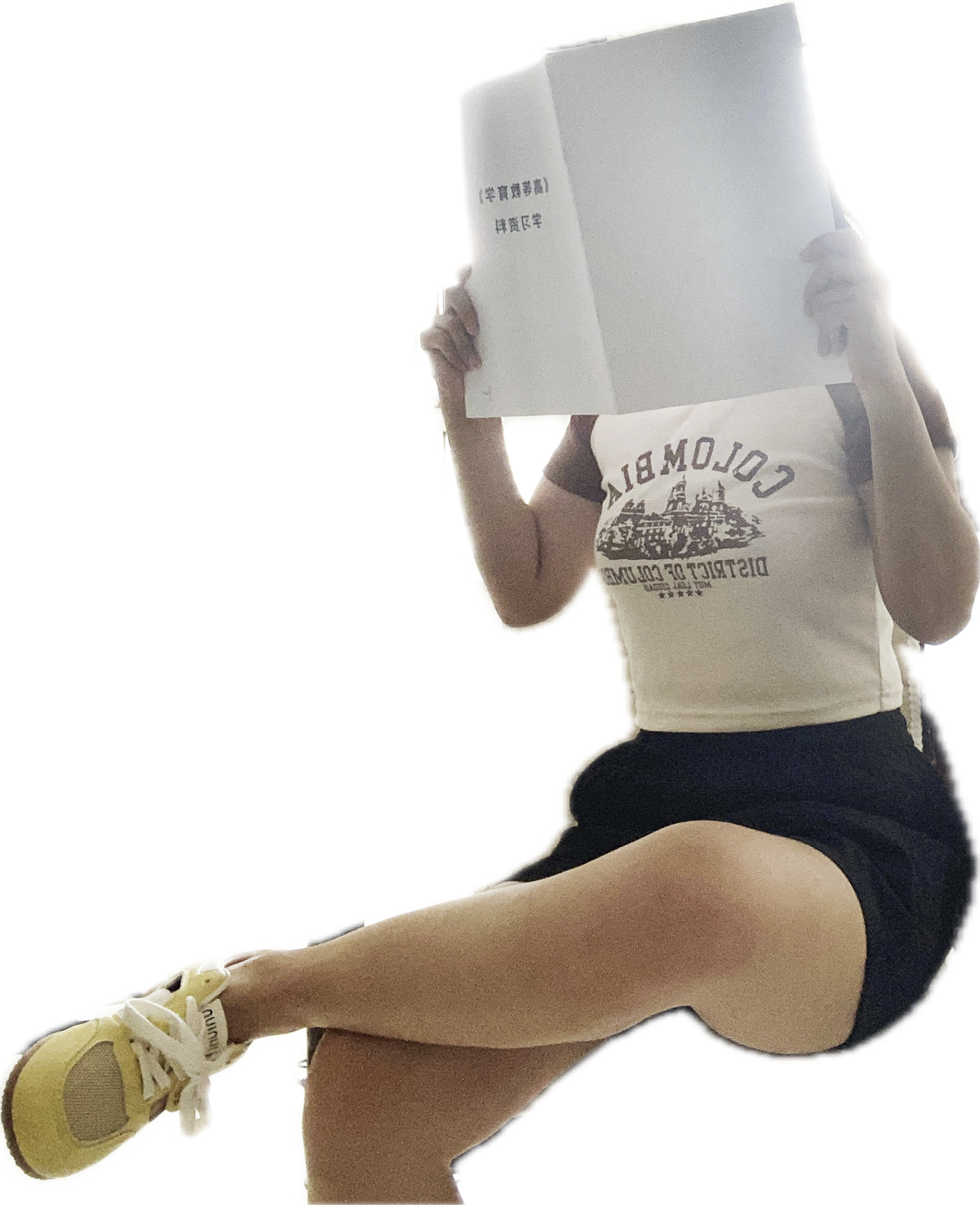
Absence of Hair
The “absence of hair” concept is not exclusive to men, as it applies to people of all genders. In modern urban life, individuals face various pressures that can lead them to prioritise a more universal and genderless appearance. These pressures may include financial constraints, psychological stressors, and other factors that can contributing to hair loss. When reading a newspaper, it may be preferable to simplify one’s hairstyle to draw attention to the task, rather than distracting others with elaborate or attention-grabbing hair.
From an aesthetic perspective, simplifying one’s hairstyle can also enhance the overall visual impact of an individual’s appearance. By reducing the visual complexity of their hair, individuals can draw attention to other elements of their appearance, such as their body language.
Top Half Body
Researcher observations show that people frequently exhibit similar traits in their top- half body movements. One of the most noticeable features is that many individuals tend to keep their heads down and their hands glued to their phones. The top half of body movements, which are more consistent and frequently reflect a person’s feelings and goals, contrast with the lower part of the body movements, which can vary widely from person to person. This consistency provides a valuable opportunity to recreate the ‘newspaper guy’ in each of works. Researcher can use these common characteristics to create a recognisable and relatable representation of people. For example, in the cinema, the ‘newspaper guy’ is often seated, with their top half body movements indicating their engagement and interest in the film, people in the lower part of the body movements may not have many commonalities. By studying these common movements and behaviours, researcher can create a realistic and engaging representation of the audience, adding depth and authenticity to work.
Wearing Tie
Some works of art that depict how a ‘newspaper guy’ would dress will have a tie showing through the newspaper. The use of ties in the artwork is often symbolic, representing the role of the urban crowd and reinforcing the idea of formality and professionalism. Wearing a tie is commonly regarded as a prerequisite, a sign of prestige and authority, and a method to demonstrate seriousness and commitment to one’s work.
The tie sis a social identity marker, highlighting the wearer’s connection to a particular group or profession. Moreover, the tie has long been associated with urban life and the fast-paced, competitive nature of city living. In many ways, it represents a certain level of sophistication and refinement often associated with urban culture. By using ties in their artwork, artists can capture the essence of this urban lifestyle and its inhabitants.
Metaphor
The metaphor adds depth and richness to the artwork, inviting the viewer to engage with the work on multiple levels and encouraging interpretation and analysis. The ‘newspaper guy’ reacts to complex behaviours and emotions concisely. It abstractly represents isolation, emotion and idea that is difficult to express through realistic depiction. The ‘newspaper guy’ is symbolic, not because everyone in the city reads a newspaper, but because the act of reading in public spaces represents a desire for detachment. The newspaper becomes a mask - an object that simultaneously hides identity and signifies conformity. The figure’s anonymity, uniformity, and lack of facial expression evoke emotional detachment and reflect the homogenizing forces of urban modernity. As a metaphor, the ‘newspaper guy’ critiques the dysfunction of social space: spaces such as cinemas, balconies, or subways are no longer used for their intended social functions, but instead become stages of isolation. The figure thus operates as a silent commentary on urban alienation and symbolic withdrawal from community life. Violations of realism in art are readily considered metaphors (J. M. Kennedy, 2008). Art’s metaphors rely on features in common with their referent. In this study, the ‘newspaper guy’ is a subject with common features, metaphor is a perceptual tactic in which the ‘newspaper guy’ becomes a mental image implying the subject researcher wants to represent.
In general, as an important subject of artworks, the ‘newspaper guy’ is a figure with metaphorical content and can show the characteristics of the contemporary urban crowd. It is used to convey a more personal or subjective meaning. It can also create an emotional or psychological response in the viewer. It can evoke a sense of identification and emotional connection when the viewer recognises the ‘newspaper guy’ and understands its meaning.
Analysis of Artwork
This section focuses on reviewing and evaluating the phase one painting created for the research. These areas may include colour choices, composition, technique, or subject matter. This process is crucial in maintaining consistency in the stylistic and thematic approach throughout the paintings, especially if the intention is to exhibit them as a whole.
Reviewing paintings also provides an opportunity to evaluate the research development and the creative process. This includes reflecting on the research questions, objectives, and methodology used, and assessing whether they effectively achieve the desired outcomes. Furthermore, the review allows the researcher to identify challenges faced during the creative process and explore potential solutions for future phases. This ensures that the subsequent phases build upon the successes and address any shortcomings. As a whole, looking back paintings have helped researchers develop abilities and produce a body of work that is cohesive.
The primary medium used is oil paint on canvas. This medium allows the researcher to create detailed and layered works that capture the complexity of the dysfunctional urban space.
Before working on the canvas, the researcher begins sketching on paper. The sketches are used to experiment with different compositions, the placement of the ‘newspaper guy’ in the space, and the amount of repetition of this figure. This process allows the researcher to explore possibilities and refine their ideas before committing them to the canvas. Once the composition and colour palette are determined, the researcher transfers the sketch onto the canvas. This involves carefully layering the oil paint to create a rich and textured surface that captures the essence of the urban space. The use of oil paint allows for a slow and deliberate process, allowing the researcher to carefully build up the layers of the painting and create a sense of depth and complexity.
Grey and Natural Tones
Because the researcher uses metaphors in work, the researcher wants work to be thought-provoking. Hence, researcher have used some less pure tones of grey. High-purity colours are often visually striking, expressing positive, enthusiastic and exciting emotions. In contrast, low purity colours are plain, subtle and quiet, and give a sense of calmness and evoke reflection. By using limited shades of grey, the researcher can combine different elements of the painting to create a sense of balance and harmony. For the use of grey, Giorgio Morandi has to be mentioned. With neutral backgrounds and tonal subtlety in depicting simple subjects, Morandi’s paintings of bottles and jars convey a mood of contemplative (Britannica, 2020). Morandi expresses through still life the quiet and elegant world in his heart.
Small-Scale Paintings
Researchers believe that the dimensions of artwork are also an important aspect of communication. As Tim Kennedy (2012) points out, paintings done on a smaller scale can convey intimacy (Kennedy, 2012). This is because the viewer is encouraged to come closer and examine the painting more closely. In selecting the dimensions for researcher’s artwork, researcher opted for a smaller scale because researcher wanted to create an intimate experience for the audience. This study aim was not to create a powerful impact through a large format, but to subliminally convey the emotions researcher wanted to express through a small-scale painting.
According to Kennedy (2012), small-scale paintings’ veracity and sincerity are particularly well-suited to this format (Kennedy, 2012). In short, the size of artwork is a deliberate choice that contributes to the overall message. By creating smaller works, researcher hope to encourage viewers to engage with art more personally and experience the emotions researcher is trying to convey more intimately.
Blurred Contour Lines
The use of blurred contour lines is a popular technique in art that is meant to soften the overall look of a painting. This technique creates a calming ambience for the painting and draws the audience’s attention to the relationship between colours rather than shapes. Impressionist artists often weakened the edge lines, and Edouard Manet used soft colours and light brushstrokes to add movement to the painting.
In this study, researcher have chosen to reduce the brush strokes and create the effect of blurred contour lines with a natural overlap between the two blocks of colour, rather than adding brush strokes in the form of blurred contour lines. This creates a subtle but effective effect that blurs the edges of the shapes, thus creating a sense of ambiguity and uncertainty. This technique can imply the confusion and anxiety of urban crowds.
Blurred contour lines can also imply movement and create a sense of energy in a painting. The softness of the lines gives the impression that the objects in the painting are in motion, adding a dynamic quality to the artwork. This can be seen in the work of many artists throughout history, from the Impressionists to the Modernists.
Simplified Forms
Colour perception is highly subjective, varying from person to person based on cultural, social, and personal factors. In modern contemporary art, many artists believe that colour can convey emotions and that space and shape can be minimised or even eliminated in favour of colour expression. One artist who embodies this philosophy is Mark Rothko, known for his large abstract paintings composed of overlapping blocks of colour with blurred edges. This technique creates an ambiguous visual effect that expresses a sense of mystery and depth, inviting the viewer to explore the emotions and meanings behind the work.
Researcher have taken a different approach in work by using flat planes of colour. This style not only complements the flatness of mass-produced industrial products commonly found in urban environments but also eliminates unimportant details, focusing instead on the essential elements of the composition. By reducing complex details to their simplest components, researcher can create a sense of visual unity that is aesthetically pleasing to the eye. In addition to this, researcher can also evoke a specific mood or emotion through use of colour. For instance, researcher can create a peaceful and calming atmosphere by utilising soft colours, encouraging viewers to relax and reflect.
Review for Artwork
In a residential area, people stand on the balcony and read the newspaper in their hands instead of looking at the view, and the balcony loses its original function. In this study, researcher copied several newspaper guys and arranged them in lines, parallel to the buildings to show the stereotypes of people. Consisting of two small artworks, the subtle colour changes represent that time is changing and the state of people is not changing; in a cinema, people read the newspaper in their hands instead of watching the film, satirising people doing their own thing regardless of the occasion and making the space dysfunctional; in a fitting room, he or she reads the newspaper in his or her hands instead of trying on clothes, but the clothes need to be tried on to know if they fit, the fitting room has lost its reason for being. In the private car, researcher positioned the subject in the rear-view mirror, only in the corner of the painting. He reads the newspaper and ignores driving safety and not using the space properly for its function. Looking for a subway station, he should look at the information on the subway, but he still looked down at the newspaper and did not look up at the information on the subway. (Figures 5–9) Fan Zhang, Landscape, 35.2 × 45.7 cm Each One, Oil Colour on Canvas, 2019 Fan Zhang, Cinema, 61 × 72 cm, Oil Colour on Canvas, 2019 Fan Zhang, Fitting Room, 50 × 60 cm, Oil Colour on Canvas, 2019 Fan Zhang, Driving I, 50 × 60 cm, Oil Colour on Canvas, 2019 Fan Zhang, Subway, 61 × 72 cm, Oil Colour on Canvas, 2019



Summary of Findings
This section discusses the key themes and ideas explored in the artwork. Using the Aesthetico-Action Research model, the researcher embodied their personal experience of painting and explored the concept of dysfunction in isolation of urban society through painting urban spaces.
The thematic analysis explored the meaning of the ‘newspaper guy’ in the paintings, highlighting the relationship between people and space. These artworks are also part of the researcher’s personal urban living experience, deepening their engagement with the subject and broadening the scope of their artistic exploration.
By building on the ideas and themes explored, the researcher can create a more comprehensive body of work that explores the complexity of dysfunction and isolation in urban society. Using the Aesthetico-Action Research model allows for a personal and embodied creative process experience, resulting in meaningful and engaging works. Overall, the research project highlights the power of art-based research in exploring complex social issues and engaging with personal experiences meaningfully.
Conclusion
This research demonstrates how metaphor, particularly the constructed figure of the ‘newspaper guy,’ can embody urban emotional isolation within studio-based oil painting. Through the application of the Aesthetico-Action Research model and the use of thematic analysis, this study has contributed a practice-based framework for understanding how artists can translate social phenomena into metaphorical visual language. By synthesizing theoretical perspectives on metaphor, isolation, and reflective practice, the findings highlight art-making as a dynamic form of qualitative inquiry. Moreover, the outcomes offer a valuable contribution to discourse on how creative processes respond to the psychosocial landscape of urban life. Future studies could expand this inquiry through audience reception analysis and comparative cultural investigations into metaphorical figures in visual art.
This research is based on creating a series of oil paintings that express the dysfunction in isolation. The research demonstrated the Aesthetico-Action Research model to facilitate the smooth conduct and results of the research. Through this model, the research demonstrates the crucial role that art-based research can play in exploring complex and nuanced issues.
Ultimately, the research contributes to the growing body of knowledge on the role of art-based research in exploring complex issues. It highlights the potential of art to express social issues and encourages further exploration of the relationship between art and society.
Footnotes
Acknowledgments
We gratefully acknowledge Universiti Sains Malaysia for providing the research facilities and support.

Author Contributions
FZ conceived the study idea, designed the study, collected data, created works, reflected on practice, and drafted the initial manuscript. RL re-evaluated their thematic core, symbolic nuances, and contextual connections, and deepened the reflective practice through critical feedback and alternative perspectives. TAF supervised the research implementation, critically reviewed the manuscript, and provided feedback for important intellectual content. All authors approved the final manuscript version for publication.
Funding
The authors received no financial support for the research, authorship, and/or publication of this article.
Declaration of conflicting interests
The authors declared no potential conflicts of interest with respect to the research, authorship, and/or publication of this article.