




Abstract
After a brief presentation of the primary qualitative analysis methods in psychological research, this paper proposes a new model for qualitative analysis, the “Contextual Narrative Interpretation” (CNI) model and demonstrates its application. The authors’ primary objectives are to demonstrate the practicality and relevance of the CNI in psychological sciences qualitative research and to assist researchers considering the adoption of this method by offering concrete case studies illustrating its utilization. The CNI emphasizes using both text and context to reveal new aspects of the narrative and represent these cases visually, in three dimensional geometric forms. This in turn aids in the structured identification of themes. The demonstration of the CNI uses data collected from “first-generation” Israeli college students through detailed case studies of their experiences. The authors guide the reader through the steps of the CNI, providing insights into how the narrative was interpreted and offering a reflective discourse on the method’s usage. Our CNI model accommodates multiple dimensions, each corresponding to a distinct aspect of text and context. The three-dimensional representations encapsulate the complexity of the narrative’s interpretation and deepen our understanding of the narrative. Hence, this article serves as an introduction to and a practical illustration of the CNI within the domain of psychological sciences, and suggest broad methodological applications.
Introduction
Qualitative research methods are grounded in a number of philosophical theories. In considering a method for analysis, the main aim is to ensure they are guided by the criteria of fidelity, utility and methodological integrity (Smith, 2024). This paper will examine the context of narratives and demonstrate the important role held by context in interpreting the parts of a narrative as well as the narrative as a whole from the perspective of content and form. We hope to offer a new understanding of qualitative analysis as a contextualized process in which researchers can understand, analyze and interpret participants’ discourses. We will also discuss the broad cultural meaning systems that inspire and give sense to any particular life story. Using our own research, we will exemplify the cultural context in which narrative data are embedded.
In our paper, we delve into a compelling exploration of narrative analysis that navigates through critical dimensions. One key facet revolves around the pivotal role of context in deciphering the narrative’s meaning. We highlight the imperative nature of incorporating context into any comprehensive analysis of storytelling, underscoring its contribution. Additionally, we delve into the intricate dynamics between the narrator and the interviewer, recognizing this interaction as a fundamental dimension within narrative analysis. This acknowledgment underscores the nuanced interplay between these roles and how it shapes the narrative’s formation and interpretation. Moreover, our paper stands out for its inclusion of three captivating illustrations drawn from empirical data. Through these examples, we offer compelling analyses that shed light on plausible interpretations. These illustrations serve as anchors, grounding theoretical concepts into tangible, real-world instances, enhancing the paper’s accessibility and applicability. This multi-dimensional approach contributes to the broader discourse on narrative analysis, offering valuable insights and paving the way for further exploration in this field.
The main innovation of this study lies in proposing a novel method for visually representing narrative life stories through graphical depictions. These representations offer readers a comprehensive understanding of how life stories unfold and develop along multiple trajectories. Our aim is to delve into the profound layers of individuals’ lives. Consequently, we endeavor to explore the underlying motivations behind the directions and choices within these narratives. Our central aim is to vividly illustrate how context, both in content and form, intricately weaves its influence across the individual components and the holistic entirety of a narrative. At the core of our investigation lies the intricate web of cultural meaning systems that underpin and infuse individual life stories with significance. Our endeavor is to unravel these broader cultural frameworks, offering a understanding of how cultural contexts not only shape but ignite the narratives that define our experiences. Simultaneously, we delve into the dynamics between narrators and interviewers, recognizing their impact on the formation and interpretation of narratives. This recognition adds a layer of depth and richness to the analysis process, enhancing our comprehension of the storytelling landscape.
In a pioneering effort to augment our exploration, we introduce innovative visual representation techniques for narrative life stories through 3D graphical depictions. These representations aim to unfold life stories along multiple trajectories, adding a transformative dimension to the landscape of narrative analysis. By providing a visual depth that mirrors the complexity of lived experiences, we aim to enhance the comprehension of narratives. To concretize our theoretical framework in tangible reality, we present three detailed empirical examples. These serve as robust anchors, bridging theoretical discourse with practical instances, thereby enhancing accessibility and applicability in navigating the complexities within narratives. Embracing a multi-dimensional approach, our study converges on essential facets of narrative analysis: contextual significance, interaction dynamics, empirical grounding, cultural influences, and the transformative potential of innovative 3D visualization techniques. Furthermore, by unraveling the motivations behind narrative directions and choices, we aim to contribute significantly to a deeper understanding of human experiences and behaviors. Ultimately, this study aims to expand the current understanding of narrative analysis by shedding light on the profound significance of context, cultural influences, interaction dynamics, and the transformative potential inherent in these 3D visualization techniques. These contributions seek to enrich the field of qualitative research methods.
Leading Approaches to Qualitative Analysis
In the qualitative literature some leading approaches to qualitative analysis are known. These approaches may be deemed dominant in the field (Pham, 2024; Smith, 2024; Wertz et al., 2011), and have been proposed and utilized across a broad range of subject matter and with various kinds of data. Qualitative research methods offer diverse approaches to understanding human experiences, emphasizing different aspects of language, culture, and interpretation.
These methods offer complementary perspectives on human experience, providing valuable insights into the complex and multifaceted nature of human psychology. For example, phenomenological psychology and narrative research can be used to explore the lived experiences of individuals with mental illness, while grounded theory and discourse analysis can be used to examine how social and cultural factors influence mental health. Intuitive inquiry and listening guide can be used to study spiritual and transformative experiences.
Contextual Interpretation in Discourse and Narrative Analysis
The contextual dimension has gained prominence in recent decades across various studies. This shift emphasizes the interplay between those being studied and those conducting the research, as well as the dynamic dialogue between the researcher and the researched. Furthermore, this change acknowledges the significance of the cultural-historical backdrop within which any inquiry unfolds. The contextual dimension in narratives refers to the environment, circumstances, culture, history, and various elements that surround and influence a story or narrative (Maxwell, 2008; Priya, 2021). Representations of narrative refer to the different ways in which stories or accounts are depicted, conveyed, or presented. In essence, the correlation between the contextual dimension and representations of narrative underscores the intricate relationship between the story and the world in which it exists. By incorporating context, representations of narratives become richer, more authentic, and better equipped to convey the complexity and depth of human experiences and societies (Gergen & Gergen, 1997, 2006; Roller & Lavrakas, 2015).
Silverstein’s work (1992, 1993) delves into the complexities of language contextualization, emphasizing that meaning isn’t solely derived from words but is shaped by social and cultural contexts. He highlights the dynamic nature of context, often implicit and reliant on shared cultural knowledge, challenging the notion of easily quantifiable context for understanding language. Koven (2007, 2015) builds on this by exploring storytelling sessions and how participants navigate between the specific and universal, crafting narratives that convey societal ‘truths.' There is a focus on the shifts in speaker roles and the transition from factual reporting to establishing normative principles, which generate contrasting moral standpoints across different spatiotemporal frameworks. The connection between scale, events, and contextualization becomes evident in storytelling, where participants interconnect varied contextualizations across narrated, narrating, and timeless event frames. They intricately weave these contextualizations, invoking other interactions within communicative networks. This discourse analysis approach, drawing primarily from linguistic anthropology, offers a methodological framework beyond individual speech events. It emphasizes studying pathways between events to comprehend processes like learning and socialization. Understanding how elements transition across events is crucial for effective discourse analysis in studying phenomena within interconnected events (Wortham & Reyes, 2020).
Contextualizing the Whole and Its Part, the Content and Its Form
While scholars such as Zilber et al. (2008) agree that contextualizing in narrative research is of high significance, none of the approaches described above has integrated the context in its analytic approach. The context is crucial to the construction, communication, understanding and interpretation of life stories. Narratives are context-bound, and individuals construct their stories inter-subjectively, in relation to their social world (Jakob Sadeh et al., 2024; Spector Mersel, 2010). Zilber et al. (2008) consider three dilemmas and challenges in context analysis. The first interpretive dilemma is segregating a relevant context and, especially, determining what should be included in or excluded from the context analysis of life stories. Any context can be further elucidated, and any context can be relocated, thus creating a new context to be further explained. A basic distinction offered in the literature is between “external” and “internal” contexts. The external context refers to norms and values prevalent in the narrator’s reality; internal context focuses on the interpersonal dimension within the interview. Once we become more sensitive to the context of life stories and deliberately look for it, we can use it reflexively in our interpretations.
A second interpretative dilemma concerning context analysis relates to the discrepancy between text and context. Both can be perceived as mutually constructed within a discourse. Contexts are dynamic, in that individuals may shift from one context to another, and people situate their life and story within specific contexts. To narrow this discrepancy, the narrator’s act of contextualization and the emphasis on their point of view regarding the relevant context of their life can be further articulated and interpreted by the researcher. In this paper we will elaborate the ways in which we can narrow this discrepancy between text and context.
A third dilemma relates to the difficulty in stabilizing a context. Context itself is in constant flux, shaped and reshaped by the stories that it influences. Researchers may re-textualize the text they study and situate it in a new context, hence change it. The challenge for researchers as interpreters is to find a balance between the contexts mentioned in the text (explicitly or implicitly) and the contexts that are created and brought into the story through the act of interpretation (Finkelstein, 2022; Zilber et al., 2008). While the methodological literature is rife with models for textual analysis, as reviewed in the first section of this paper, there are scarcely any explicit theoretical elaborations of context in narrative psychology; neither are there methodological models of how to read life stories for context.
Representations of Narrative
Gergen’s theory offers a valuable framework for comprehending human experiences’ diversity and how individuals construct their identities through narratives. It underscores the significance of storytelling in our lives and outlines four key elements - plot, characters, setting, and theme - that collectively shape a coherent and meaningful self-narrative by organizing memories, experiences, and values. Until recently, life stories were presented by only two dimensional representations, as story form or the structure of self-narrative (Gergen & Gergen, 1997, 2006). Gergen argues that three types of narratives are important for constructing a healthy and adaptive self-narrative: (a) Stability narratives: These narratives emphasize the enduring and consistent aspects of the self. They often focus on the person’s core values, beliefs, and personality traits; (b) Progressive narratives: These narratives emphasize the growth and development of the self over time. They often tell the story of the person’s journey from one stage of life to another; (c) Regressive narratives: These narratives emphasize the setbacks and challenges that the person has faced in their life. They often tell the story of how the person has overcome difficulties and emerged stronger. Stability narratives can provide us with a sense of identity and continuity. Progressive narratives can give us a sense of purpose and direction. Regressive narratives can help us to understand our weaknesses and to learn from our mistakes. These three types of narratives can be represented graphically (Gergen & Gergen, 1997, 2006), in two dimensional forms, namely they seem to flow up and down in linear lines. However, we aim at representing the deeper reasons for effecting these structures, as well as the themes, words and voices that can be identified in the narrative by representing them in three dimensional forms. Thus we hope to illuminate hidden under the surface occurrences in the narratives. In other words, we strive to understand why events happened and not only which events took place.
Contextual Narrative Interpretation Model (CNI)
This paper is suggesting a new method to represent narrative life stories with graphical representations. These representations enable the reader to comprehend the evolvement of life stories, and the way these stories develop in multiple directions. We strive to deepen the understanding of the individuals’ life stories. Hence, we try to explore the reasons for the narrators’ life directions and choices. Since life stories are influenced directly by the rapid technological, cultural and societal changes, it seems that two-dimensional representations do not suffice to encompass the complexity and the deep changes of the narrators’ lives (Hawkridge, 2022; Joynes et al., 2019). Therefore, we suggest to see context as the third dimension of narrative representation, manifesting the unique integration between text and context. Furthermore, these representations may serve as predictors of future life story lines.
We have chosen to present our own model – CNI (Contextual Narrative Interpretation) – as an elaboration of the method of content versus form and whole versus parts in reading and interpreting narrative materials, proposed by Lieblich et al. (1998). This method posits two main dimensions for analyzing life stories: (1) holistic versus categorial approaches, which refer to the unit of analysis; (2) content versus form, which refers to the distinction between the subject matter and its expression. The readings may focus on the explicit or the implicit aspects of a story. This is a holistic interpretive method of narratives combines the narrative as a whole unit, concerning form and content, integrated with contexts, focusing on narrative epistemology and methodology (Spector Mersel, 2011). This method has been applied in various narrative studies (e.g., Iyengar, 2014; Karpa, 2021).
The emerging matrix of the four cells, which consist of four modes of reading a narrative, is (1) the holistic-content mode, which uses the participant’s complete life story and focuses on the content presented by it; (2) the holistic-form mode, which focuses on the plots or structure of the entire life story, such as turning point or climax, story ascendance or descent toward the present moment in the participant’s story; (3) the categorical-content approach, which defines the topic’s categories or themes and extracts, classifies and gathers separate utterances of the participant; and (4) the categorical-form mode of analysis, which centers on distinct stylistic or linguistic characteristics of the participant’s narrative. Each of these four modes is related to specific types of research questions and is more appropriate for certain sample sizes.
In this paper we seek to shed light on the interaction between text and context. Dilley (1999) argues that context is treated as “self-evident” and sufficient on its own. Our contribution here is to eliminate the classical dichotomy between text and context. Interpreting the text and context as one unit and as a whole allows us to empower the narrator’s voice. Instead of a fragmented image, we suggest a 360-degree image for creating the whole, including depth perception, with the narrative as the central axis. This image is fluid, ever-evolving and dynamic.
Accordingly, we propose three-dimensional visual representations for narrative interpretations, an integration that enhances a comprehensive interpretation rather than a fragmented one. The representations will guide us in following the dialogical, ongoing and evolving linkage between text and context. Moreover, in Buberian terminology (Friedman, 2003), it suggests a new observation and interpretation of the relationship between narrator and interviewer. This unique interaction also allows for a wider curiosity towards the narrative on the part of both interviewer and readers. For example, instead of presenting a judgmental stance, we ask how the narrative is influenced by the relationship between narrator and interviewer.
The primary source for creating these visual representations is the text itself. Analysts need to closely examine descriptions, details, and contexts provided in the text to construct a faithful representation. The visual representation should align with the logic and consistency of the narrative. While fidelity to the text is crucial, some interpretation and creativity are often necessary. Certain aspects might not be explicitly described in the text, requiring the analyst to make informed inferences based on the narrative’s themes, motifs, or implicit cues. Using images enhances the understanding of a narrative by clarifying relationships between characters, locations, or events through the spatial arrangement of elements within an image, which might not be immediately apparent in a purely textual analysis. This visual context provides deeper insights into the underlying messages of the text while conveying emotions and tones. By analyzing the visual elements that evoke specific emotions or atmospheres, we can understand how they align with the narrative’s mood or intentions. Additionally, images illustrate the progression of events or character arcs, adding another layer of comprehension to the narrative.
By examining different stages or elements within the image, audiences can gain a visual grasp of the narrative’s development. Images can present also ambiguities or missing elements within the image. These omissions might highlight gaps or open-ended aspects of the narrative that invite further exploration or interpretation. In essence, researchers should focus on how the visual representation complements the textual narrative and attend to details that offer new perspectives, enhance understanding, or bring attention to crucial elements of the story. Evaluating the image’s fidelity to the text while exploring its interpretive potential aids in extracting deeper meaning from the narrative.
The innovation of a 3-D representation of a narrative lies in its comprehensive approach to contextual inclusion, by aiming to encapsulate the entirety of the context in a more immersive and holistic way. It attempts to create a multidimensional landscape that encompasses not just one or two dimensions of context but rather a rich, multi-layered environment that interacts dynamically with the narrative. This departure from conventional methods seeks to transcend the limitations of prior approaches that might have treated context as an add-on or secondary element. This holistic integration of context within the representation of the narrative marks a significant advancement in capturing the complexity and richness of the relationship between stories and their contextual surroundings.
Our CNI model proposes visual representation for narratives, aiming at holistic interpretation of the contexts of these narratives. This model will apply to the combinations of the four dimensions for analyzing life stories: the whole and its parts, as well as the content and the form. In the following sections we will elaborate and exemplify the CNI model in three individual narratives obtained in our research. We further suggest two forms of contexts, the narrow context and the wide context. The narrow context refers to the immediate here-and-now relationships between narrator and interviewer, the immediate context of the life story that focuses on the identity as reflected from that life story. It also deals with the concrete and personal relations between narrator and interviewer. The wide context refers to both the sociopolitical, historical and cultural contexts and to conceptualizations of the life story. As the story is being told, the narrator locates it within spatial incidences as well as specific cultural structures and chronological and historical events. The choice of the relevant cultural arena is important for understanding the narrator’s identity (Bourdieu & Passeron, 1990). We focus on plotlines of the life story and the meaning constructs that give sense to this story: the knowledge and beliefs that make this story sound reasonable to the audience. The narrator shares values, cultural and historical norms, themes and beliefs, conventions, the ecosystem in which the narrator lives and acts – the context of the narrator’s community and family as represented in their life story.
The context is crucial for understanding a life story, as it affects the behavior of both narrator and interviewer. It includes the questions to be asked (for example, what questions initiate the interview and what questions follow), the choices of sentences to be included or excluded in telling the story, choosing the manner in which to tell the story, and the requisite elaboration (Gumperz, 1993). These choices could be conscious or unconscious, and should be an integral part of the interpretation. This kind of relationship is concrete and personal and is guided by local circumstances, for example, the power relations between narrator and interviewer.
Incorporating hermeneutic principles, particularly those articulated by Ricoeur (1981), can greatly enhance the empirical processing of life stories within this study. Ricoeur’s hermeneutics introduces key concepts like distanciation and the hermeneutic circle, which are essential for a more rigorous analysis of narrative data. Distanciation allows researchers to critically examine their own biases and cultural backgrounds, promoting more objective interpretations. The hermeneutic circle facilitates a cyclical process of understanding, enabling movement between the specific details of individual narratives and broader thematic patterns, thereby uncovering deeper layers of meaning within the stories. Ricoeur’s theory significantly strengthens the CNI model by providing a deeper philosophical foundation for understanding and interpreting narratives. His hermeneutic circle is particularly relevant to the CNI model’s emphasis on analyzing both the whole and its parts, aligning with its approach of examining life stories as integrated wholes while also considering distinct elements like content and form. Ricoeur’s concept of distanciation is applicable to both the narrow and wide contexts in the CNI model, aiding in analyzing the immediate relationships between the narrator and interviewer and situating the life story within broader sociopolitical, historical, and cultural frameworks. Additionally, Ricoeur’s ideas on narrative identity, symbolism, and the ethical dimensions of storytelling enrich the CNI model’s ability to decode complex networks of meaning and ensure that interpretations are both accurate and ethically sound, especially in sensitive sociopolitical and cultural contexts.
The proposed CNI model distinguishes itself from existing approaches blending visual and narrative methods through its comprehensive and nuanced framework for analyzing life stories by integrating visual representation with narrative dimensions. While Mannay (2015) explores the role of visual artifacts in amplifying marginalized voices and providing insights into social and personal experiences, the CNI model extends these ideas by incorporating visual representations within a structured narrative analysis framework. Mannay’s approach emphasizes reflexivity and historical use of visual artifacts, but the CNI model adds depth by examining narratives across four dimensions: the whole versus parts and content versus form, offering a holistic interpretation that addresses both immediate and broader socio-cultural contexts. Simon et al. (2022) introduce the interpretive schema for drawings (ISD), which focuses on analyzing visual narratives based on themes like scale, inclusion, and prominence. While the ISD framework effectively identifies key visual features, the CNI model builds on this by combining these visual elements with a broader narrative analysis, exploring how personal and contextual factors interact within life stories. Bradbury (2017) discusses creative uses of visual methods to challenge traditional narrative limits, but the CNI model enhances this by integrating visual data with a structured narrative framework. This allows for a more detailed understanding of narratives by considering both content and form within specific contexts. Thus, our research questions are: (1) How does context, in both its content and form, intricately permeate individual narrative components and shape the cohesive entirety of a narrative? (2) How can life stories be innovatively presented through graphical depictions to provide a comprehensive understanding of their development along multiple trajectories? In summary, the CNI model innovates by merging visual representations with a multidimensional narrative analysis framework, offering a more detailed and holistic view of life stories. By addressing both immediate personal contexts and broader socio-cultural dimensions, the CNI model enhances qualitative research in psychology, providing a richer understanding of how visual and narrative elements interact within life stories.
Method
Participants
Participants range from 20 to 67 years old and include both current students and academic staff, all of whom are first-generation college students. They come from diverse backgrounds and countries. All in all, 14 interviews were carried out and analyzed, the interviewees representing a variety of cultural backgrounds: Arabs, secular and religious Jews from Ashkenazi and Sephardi backgrounds, new immigrants, and native-born students. All participants provided their consent willingly after being fully informed about the study. Personal identifying details were excluded to safeguard anonymity. Three life stories are utilized in the present paper to expand our approach to narrative reading and interpretation and, in particular, to demonstrate the place of context and of visual representation in the proposed analysis. These life stories were obtained in the framework of a multicultural, narrative study of “first-generation” college students, which was initiated and led by the third author of this paper.
Sampling and Recruitment
In this study, we aimed to capture a comprehensive understanding of the experiences of first-generation college students by ensuring a diverse representation within our sample. To achieve a comprehensive understanding of the experiences of first-generation college students, we employed a purposive sampling strategy, targeting individuals who met the criteria of being first-generation college students. Our recruitment process began with personal outreach, to engage with eligible students. The recruitment aimed to ensure a diverse sample, considering dimensions such as ethnicity, gender, socioeconomic background, and academic discipline. A total of 14 interviewees were recruited, with each participant screened to confirm they were first-generation college students, defined as those whose parents or guardians did not complete a four-year college degree. Personal invitations and referrals from academic advisors were used to reach students from varied backgrounds. The final sample provided a balanced representation, offering rich insights into their educational journeys and challenges. This approach aimed to enhance the study’s validity by incorporating multiple perspectives, thereby contributing to a nuanced understanding of the first-generation college student experience.
Data Collection
The study was designed as a group-research, carried out by 12 young scholars, all members of the Faculty of Education at big Colleges (among them the first and second authors of the present paper). The study was prompted by the growing proportion of college students from families in which none of the parents had college educations – i.e., “first-generation” college students – and the realization that these students form an interesting group for life stories research. The research questions for the were: (a) What is the narrator’s background (family, ethnic group, cultural setting, etc.)? (b) What is the narrator’s educational history (ordinary or special educational experience)? (c) What were the forces that influenced and supported the narrator toward academia, and what were the challenges and obstacles experienced? (d) What was the narrator’s experience within the higher education institution, particularly, were any special difficulties encountered? These questions were examined by means of an extensive individual narrative interview (Josselson, 2007, 2013) with man and woman College students or graduates who conformed to the above-stated definition of first-generation academics. The interviews were conducted by the young scholars who participated in the research group.
Data Analysis
All the interviews were recorded and transcribed. Each member of the research group analyzed and summarized in writing the life story of their interviewee. The approach to analysis was inspired by the model in Lieblich et al. (1998), focusing mainly on the holistic-content perspective (pp. 62–87).
The three narratives that were chosen for the present paper were those of a Jewish man who had immigrated from Ethiopia, an Arab woman, and an ultra-orthodox Jewish man. Following the formulation of the new approach to narrative analysis outlined above, our method was applied to these three cases to exemplify the CNI model and demonstrate its qualities. Citations from the interviews in the following sections of this paper are the authors’/interviewers’ translations from the Hebrew.
The CNI Model Selecting Images Process
The interview-based images serve as tools for eliciting life stories and help researchers communicate their understanding of participants’ stories and contexts. Researchers create visual illustrations that represent the life story and reflect the narrative elements conveying the development of the story. This three-step process provides a deeper understanding of the participants' experiences and narratives.
Mapping and Visualizing Temporal Representation of a Story
Researchers examine how the visual aspects can be embedded in the narratives of their inception, reception, interpretation, and impact. They map the lines of the interview or temporal trajectories from the narratives. This mapping process connects disparate events and experiences within the participants’ life histories and links them to broader social histories. Visualizing these trajectories helps researchers understand the temporal movement of the narratives and the connections between different life events.
Constructing Images of Stories through Relational Analysis
Researchers use visual representations to analyze the relational quality of identity construction, including connections between the individual and their social environment. This wide-angle perspective helps researchers attend to the complex and dynamic nature of participants’ story construction. The selected images are used as visual representations of the participants' life stories, contexts, and interpretations. Researchers analyze these visual representations alongside verbal narratives, combining both forms of data to gain a comprehensive understanding of the participants’ experiences. This method respects participants' stories and ensures that the images are authentic and reflective of their perspectives, enriching the data.
Crafting and Depicting the Intricacies: Visualizing Narrative Complexity
Researchers engage in a continuous process of interpretation and re-interpretation, acknowledging that images never contain a singular or true meaning. All readings and re-readings of the story involve forms of creative analysis. The creation of visual images involves originality, imagination, and inspiration. The process of selecting images begins with researchers providing various options for visual representation, such as different 3-D representations. In disseminating visual images, creativity is essential, often exploring spaces beyond the limitations of traditional interviews. Images represent participants’ localized worlds as researchers perceive them through these visual forms. Researchers choose from these options, facilitating interviews that reveal participants' academic experiences through their visual creations and focus on their past lives and imagined futures.
Authors’ Positionality
Based on the reflexive practice, a comprehensive qualitative research approach (Braun & Clarke, 2024), the authors acknowledge the influence of their own positionality on the research process; recognizing that individual backgrounds and experiences may have impacted the study design, data collection, and interpretation of interviews. The diverse cultural perspectives within the team fostered inclusivity of thought. Efforts were made to maintain objectivity, practice reflexivity, and actively address potential biases. This transparent discussion of positionality aims to enhance the overall transparency and credibility of the study (Secules et al., 2021).
Ethical Considerations
To uphold ethical standards, this research received prior approval from the College Ethics Committee. Participants provided both written and verbal consent after a thorough explanation of the research objectives and data collection methods. Ethical considerations encompassed ensuring anonymity, granting participants the freedom to respond to inquiries, and the unequivocal right to withdraw from the study at any point.
Results
The primary focus of this study is to illustrate the significance of context and visual representation within the proposed analysis.
Arie
Arie, a religious Jewish man raised in Gondar, Ethiopia, who immigrated to Israel in 1984, when he was nine years old. When he was three years old, his parents divorced and his mother returned to her father’s home with her three children; Arie was the eldest of them. His grandfather had a large homestead and his 12 children assumed various responsibilities, such as tending the vegetable garden, operating the metal-works forge in the smithy, and looking after the grazing land. Arie was proud of his grandfather, who was not only a farmer, a metal worker, and a butcher, but also a kes, a traditional spiritual and religious leader of the Jewish community. In his interview Arie emphasized the role of his mother in her family, her hard work and resourcefulness.
Arie came to Israel in what was called “Operation Moses,” the Israeli government’s covert evacuation of Ethiopian Jews – known as the “Beta Israel” community – from refugee camps in Sudan where they had sought shelter after fleeing their homes during a civil war that had precipitated a severe famine in the area. On the trek from Ethiopia to Sudan and the subsequent persecution often suffered in the refugee camps, the Ethiopians experienced severe hardships and traumas. Ultimately, 30,000 Ethiopian Jews were rescued and brought to Israel.
Emerging from the interview are cultural elements from the background of Arie’s parents’ home, especially the impact of immigration to Israel – “aliyah” – from Ethiopia and absorption in Israel. Indeed, Arie enthusiastically presents his family’s aliyah as a biblical miracle. As noted, Arie is a religious (Black) Jewish man who was a first-generation college student. The interviewer, considerably older than Arie, is a well-known native Israeli, a secular (White) woman professor with an academic family background. The interpretation of the narrow context of Arie’s life story is based on the discursive interaction between the narrator and the interviewer in the course of the interview. This context is linked to the interviewer’s awareness of the historical, cultural, socio-political, and academic gaps between herself and the narrator. She is aware that Arie, the interviewee, would see her as a privileged academician from an elite university, someone from a much higher socio-economic status than his own. Throughout the interview, the interviewer is careful to avoid any implications of racism – for example, when Arie criticizes young newcomers from Ethiopia for taking the existence of the State of Israel for granted, she says, “It isn’t only the young Ethiopians, but also our White youngsters who identify less with being Israeli.” Upon reflection, she senses that the interview is loaded with the disparities and differences between interviewer and narrator, and with the social meaning of those differences.
The interview took place in the college where Arie works in an administrative position, during the COVID-19 pandemic, which makes itself felt from the very beginning of the interview. The interviewer opens by saying, “We’ll talk without putting on masks, alright?” She tells him the purpose of the research she is conducting, and asks him to tell her about himself from the beginning. Arie cooperates and very openly shares his personal narrative as well as the collective narrative of his emigrant generation. During the interview, the interviewee expresses his admiration and gratitude towards the interviewer (showing respect is an important value in Ethiopian culture), saying that he is very flattered by her interest in him. Arie’s unique interaction with this interviewer, combined with his background and culture, shapes the context of the narrative. It is only by taking into account the narrator’s position vis a vis the interviewer, as well as the cultural characteristics of his background, that interpretation of the text could be carried out.
We deepened the interpretation of Arie’s life story, which takes into consideration the narrow context of the discursive interaction of the interview, by means of a graphical representation. For this we chose “Rubik’s Cube” (see Figure 1), a solid combination puzzle in which each of the cube’s six faces is covered by nine stickers, each sticker in one of six solid colors. An internal pivot mechanism allows each face to be independently turned and replaced by another face, mixing up the colors of the stickers. In a similar manner, the narrator can introduce his life story while emphasizing a different aspect at each point of the interview, depending on his current relationship, at each phase of the interview, with the interviewer. Like the pivoting of the cube’s faces, Arie’s alternating disclosures of the different aspects in his life become aligned with the interviewer’s visibility and the way he perceives her as an educated White woman. “Rubik’s Cube” for Arie’s life story representation.
Miriam
Miriam arrives for the interview wrapped in a black hijab. In the course of the interview, we learn that her mother converted from Judaism to Islam when she married Miriam’s (Muslim) father, and that Miriam herself is married to a Muslim man. She is the mother of four children. Her father and husband both operate excavating machinery in construction work; her mother is a cleaner. Miriam is a math teacher and is studying education at the graduate level at one of Israel’s larger colleges.
In examining Miriam’s life story, we concluded that it resembled a fractal – a geometric shape comprising reduced or scaled-down identical or similar copies of itself, in which internal elements of the fractal resemble the shape of the original one. Fractal-like structures abound in nature, for instance the veins of a leaf, rivers, the shapes of coastlines. The similarity between the fractal details in different resolutions is called self-similarity. One of the most prominent representations of a fractal is the Pythagorean tree (see Figure 2); the overall shape of a tree is like itself in that the smaller branches and twigs are similar in shape and pattern to the larger ones. Fractal as a “Pythagorean tree” for Miriam’s life story representation.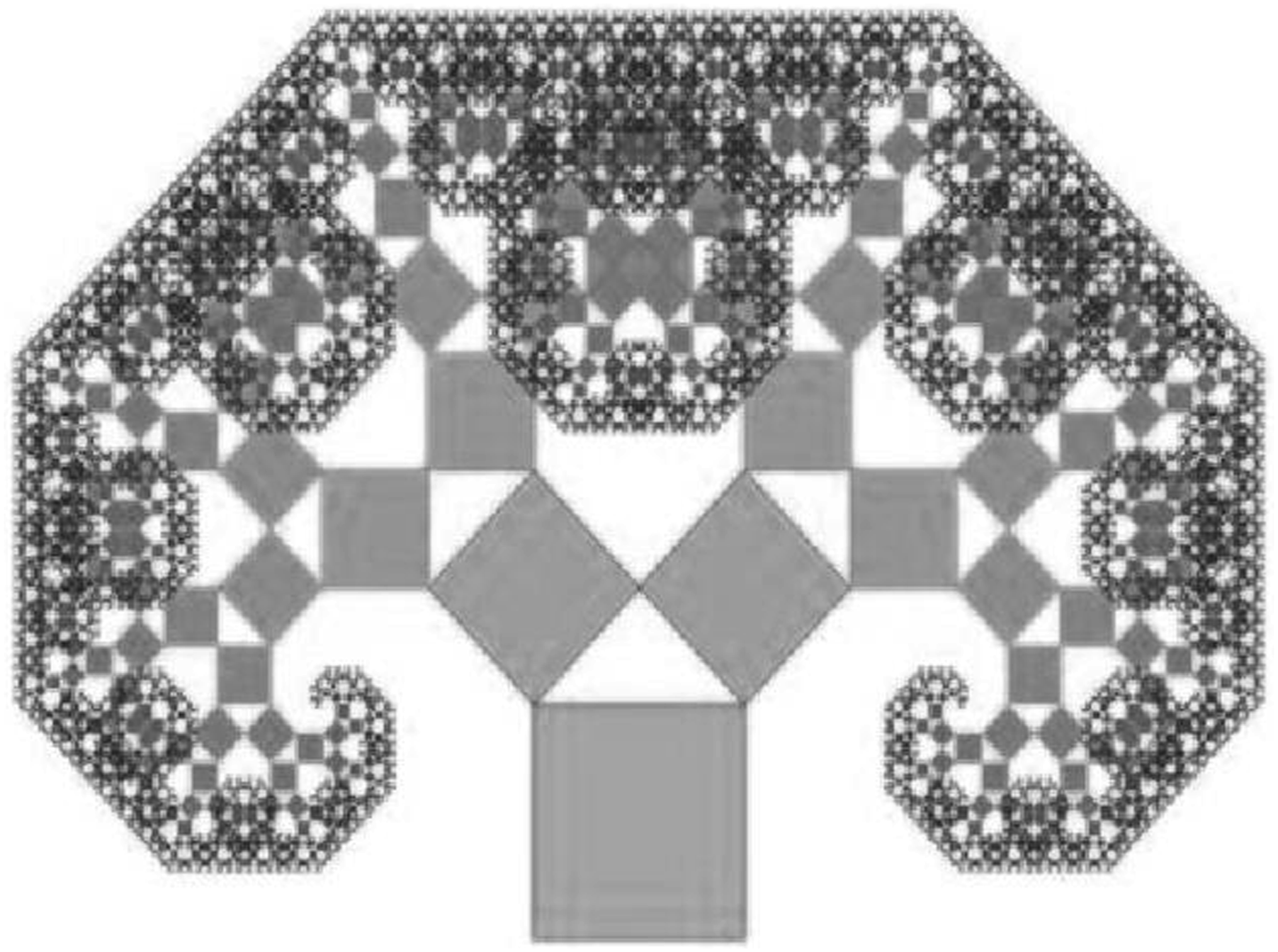
The horizons between Miriam’s basic values and the contexts in the various stages of Miriam’s life represents a development that can be described as a fractal: In each context a form is created that is similar, but not identical, to the general form that describes the story of Miriam’s life.
In the wide context, Miriam’s story returns repeatedly to the role of her mother, who always stressed the importance of family. According to Miriam, “Family is the first thing, and then everything else comes. That’s what my mother used to tell me.” Miriam’s mother also emphasized the importance of education. Thus Miriam’s mother may be seen to be struggling between tradition and the openness required in higher education.
Miriam’s story also reveals the importance of passing on tradition and family values. She talks about the importance of religion in her mother’s life, and the great importance she herself also sees in the preservation of religion. And, like her mother, Miriam faces a conflict as she advances academically and imbues her children with the importance of academic studies, while attempting to integrate education with tradition and family values. The fractal homology is evident: a dominant mother who seeks to preserve the values of the family and tradition, and at the same time to motivate her children to acquire higher education. The same conflict is preserved in a binary transference.
A fascinating instance of the fractal structure is the budget allocated for education maintained over generations. As Miriam says, “My motivation to study is my mother. She encouraged me and kept telling me, ‘I have a piggy bank for you for studies’ … and I … also keep telling [my children] that I have a piggy bank for each of them for studies. Studies are number one, then choose what you want….”
Again echoing the fractal, in the wide context we can see the intergenerational transmission in Miriam’s family, with family as a supreme value, and education as a supreme family value. There is also a less positive intergenerational transmission that Miriam fears, family behaviors that she might unwittingly pass on to her nuclear family. Miriam sees a physical similarity between her son and her brother, who dropped out of high school. She worried that her son would follow in his footsteps and feared lest she exhibit the same overprotectiveness toward him that her mother showed her brother. Miriam subsequently said that her academic achievements, and her focus on studies, helped her to conduct herself well with her son, and the result is that her son has successfully continued his education. To summarize the wide context of this story, the dynamic that Miriam builds in her family subconsciously corresponds (positively or negatively) with the dynamic she is familiar with from her mother’s house, in a structure that creates a fractal.
As far as the narrow context is concerned, the interaction between narrator and interviewer itself is a context that influences the development of the narrator’s self-identity, echoing the fractal analogy. As Bruner (1990) says, the interview/life story not only reflects a person’s identity, but also generates it. At the beginning of her interview, Miriam asserts that she does not have “a success story.” Only as the interview progresses does she seem to grasp the extent of her achievements, as a first-generation academic who typically rises from a modest educational starting point to success. As the interview draws to an end, she says, “I am proud of myself!” The interview itself constituted a process of empowerment for her both as a first-generation academic and as a woman: “I am a role model for my children.”
Avraham
Avraham, who is in his fifties, is an ultra-orthodox Jewish man born and raised in Jerusalem in an ultra-orthodox Jewish family with roots in non-Western countries: his father’s family came to Israel from Iraq in the mid-1930s and his mother’s family arrived more or less the same time from Afghanistan. He finished his higher Jewish education studies (yeshiva) at the age of twenty and married a woman from an ultra-orthodox family in Jerusalem. His parents did not have college educations, making him a first-generation college graduate.
The context of his story revolves around the baseline, i.e., the personal and family religious background that shaped his values. He begins by describing the perception of higher education held by his parents and other family members. Throughout his narration, he emphasizes his parents’ disinterest in and disregard for non-religious higher education. Therefore, the wide context of his story is intergenerational continuity in his family’s perception of the “merely serviceable” role of higher education.
We chose to represent Avraham’s story with a spiral. His life story is based on the chronological development of his narrative, in which he returns at different points in time, and throughout the story, to the starting point, which is the instrumental role of higher education. This perception informs his feeling toward the academic curriculum, which he sees as devoid of the inherent innovativeness that infuses Jewish religious tradition. He emphasizes that “there is nothing new under the sun” and, as far as he is concerned, everything has already been written in the Jewish holy books.
Avraham perceives academic language as a cultural bridge between students from the ultra-orthodox Jewish community and institutions of higher non-religious education. He believes that higher education is gaining legitimacy in the ultra-orthodox Jewish sector because it is necessary for ensuring a successful career. Currently, he is an academic director at the ultra-orthodox campus in one of Israel’s large academic colleges, and he perceives the core of his position as a bridge between the ultra-orthodox students and the secular institution of higher learning. This perception is aligned with the wide context of Avraham’s story, in which academic studies have no significance in his family tradition: “Higher education is not on our scale of values,” he claims, but is rather intended only to comply with certain professional or job demands.
The spiral shape (see Figure 3) exemplifies the starting point of his story, i.e., the family tradition. The story develops and progresses conceptually, repeating this basic claim, until it becomes possible to identify change in the narrative in the meaning and importance he attributes to institutions of higher education. The story revolves around the same reference points deriving from this starting point, specifically, secular (non-religious) and religious orthodoxy, and the academic world and the professional world. At the end of the story, Avraham describes the possibility of changing the deeply rooted social and cultural perceptions regarding institutions of higher education in the ultra-orthodox sector. Therefore the spiral form exemplifies and interprets the context of the story. It represents the ending point of the story as related directly to its starting point. The spiral shape for Avraham’s life story representation.
Discussion
This study revolves around the exploration of narrative analysis, placing particular emphasis on the pivotal role played by contextual influences in interpreting narratives. Our objective has been to elucidate how context, both in its content and form, intricately permeates through the fabric of individual narrative components, shaping the cohesive entirety of a narrative. Central to our investigation has been the intricate web of cultural meaning systems that imbue individual life stories with significance. Our effort aimed to unravel these broader cultural frameworks, thereby offering an understanding of how cultural contexts not only shape but also ignite the narratives that define our experiences. Simultaneously, our inquiry delved into the dynamics existing between narrators and interviewers, acknowledging their impact on narrative formation and interpretation. This acknowledgment added layers of depth and richness to our analytical process, enhancing our grasp of the multifaceted storytelling landscape.
One pioneering aspect of our study has been the introduction of visual representation techniques for narrative life stories through 3D graphical depictions. These representations have been designed to unfurl life stories along multiple trajectories, introducing a transformative and profound dimension to the realm of narrative analysis. Our aim in employing these techniques was to offer a visual depth that mirrors the intricate complexity of lived experiences.
To ground our theoretical framework in reality, we presented three meticulously detailed empirical examples. These served as anchors, effectively bridging theoretical discourse with practical instances, ultimately amplifying the accessibility and applicability of our exploration within the intricate domains of narratives. By embracing a multi-dimensional approach, our study converged on essential facets of narrative analysis: contextual significance, interaction dynamics, empirical grounding, cultural influences, and the transformative potential inherent in innovative 3D visualization techniques. We sought to introduce a deeply contextualized perspective to qualitative analysis, aiming to position it as a tool for comprehending, analyzing, and interpreting participants’ discourses. Moreover, our inquiry ventured into the individuals' life stories. Through unraveling the motivations behind narrative directions and choices, our aim was to significantly contribute to a deeper understanding of human experiences and behaviors. In summary, this study has endeavored to expand the current understanding of narrative analysis by shedding light on the profound significance of context, cultural influences, interaction dynamics, and the transformative potential intrinsic to 3D visualization techniques. These contributions collectively seek to enrich and propel forward the broader field of qualitative research methods into new and unexplored territories.
There are a few models of narrative analysis, including the one proposing content versus form and whole versus parts, in reading and interpreting narrative materials (Lieblich et al., 1998). We have added a third dimension, the context, including both narrow and broad contexts. We found that graphical representations enhance our ability to illustrate the context and we exemplified this with three stories and vivifying the potential of understanding of these stories. The work presented in this paper can be conceived as the development of narrative reading and interpretation in two directions: from the outside in, and from the inside out. The first direction places the narrative in the world. Labov and Waletzky’s (1967) by-now classical model of the structure of stories proposed “orientation” as the second element of a narrative, in reference to the time and place of the narrated event. The CNI model broadens the scope of this “orientation” by introducing the concept of context and elaborating it. We assert and demonstrate how many facets of the world surrounding the interview (a conventional methodology for obtaining life stories), both inter-personal and cultural-political-historical, affect or even generate the emerging story. Thus the narrated story is far more than simply a text. Rather, it is a cognitive act embedded in the world of multiple contexts. In the second direction – from the inside out – this model suggests an original manner of narrative analysis by finding a suitable three-dimensional visual representation, importing it from the fields of games, geometry or the arts, to extend and expand our understanding of the content, form and context of the life story. The interplay of the visual representation and the verbal expression produces and facilitates a profound immersion in the narrative and its meaning.
One pioneering aspect of our study introduced innovative visual representation techniques through 3D graphical depictions, aiming to unfurl life stories along multiple trajectories. These representations aimed to mirror the complexity of lived experiences. Grounding our theoretical framework with three detailed empirical examples bridged theoretical discourse with practical instances. In our analysis of Arie’s life story within the interview’s confined scope, we employed a graphical representation resembling a ‘Rubik’s Cube'. Much like the puzzle’s independent face rotations, the narrator shifts emphasis on different life aspects based on the evolving rapport with the interviewer—an educated White woman. Arie’s narrative adapts in sync with this dynamic, akin to the pivoting faces of a Rubik’s Cube, revealing varying facets of his life. Similarly, in examining Miriam’s life story, we analogized it to a fractal—a geometric pattern exhibiting scaled-down reproductions of itself. Such self-similarity, found in nature like leaf veins or coastlines, demonstrates how details at different scales mirror the overall structure. For instance, the Pythagorean tree showcases smaller branches echoing larger ones. Miriam’s life journey unfolds akin to a fractal, portraying a self-similar but evolving development across diverse life contexts. Each context generates a form reminiscent of the overall outline of her life story, resembling fractal patterns across varying scales. Furthermore, the spiral shape in Avraham’s narrative embodies its inception—the family tradition. As the story progresses, this central claim evolves, particularly in Avraham’s changing perceptions of higher education institutions. Key story elements circle back to this starting theme—secular versus religious orthodoxy and academia versus professional life. Ultimately, Avraham envisions reshaping entrenched perceptions in the ultra-orthodox sector regarding higher education, framing the spiral as a representation of both the story’s genesis and its culmination.
Seeking a deeply contextualized perspective in qualitative analysis, our ambition was to position it as an indispensable tool for interpreting participants’ discourses comprehensively. The concept of contextualization has a longstanding presence in various disciplines (e.g., contextualization of culturally responsive pedagogy, Finkelstein & Soffer-Vital, 2023). In exploring the intricate relationship among scale, events, and contextualization within storytelling, our study illuminates the interweaving of diverse contextual layers across narrated, narrating, and timeless event frames. This interplay functions as a bridge, fostering deeper interactions within communicative networks. Leveraging a discourse analysis lens rooted in linguistic anthropology, our methodological framework extends beyond singular event. It emphasizes the critical exploration of pathways between events, crucial for grasping nuanced processes such as learning and socialization. This lens offers insights into phenomena within interconnected events, enriching our understanding (Wortham & Reyes, 2020). Also, by integrating Ricoeur’s hermeneutic philosophy, the CNI model can achieve a more profound and systematic approach to interpreting narratives. Ricoeur’s concepts of the hermeneutic circle, distanciation, narrative identity, symbolism, and the ethical implications of storytelling can all contribute to a richer, more nuanced analysis that honors both the individual life story and its broader contexts.
Building upon Silverstein’s seminal work, our study accentuates the multifaceted nature of context by highlighting its complexity through cultural, situational, and societal factors. This comprehension of context schemata is pivotal for deciphering the layers of meaning inherent in language across diverse communication settings. Furthermore, Silverstein introduces three distinct kinds of context schemata, delineating frameworks that shape language meaning within specific contexts: Intra-episodic contextualization, pre-assigned values, and context parameters activating at varying thresholds. This framework proposed by Silverstein provides a structured lens to navigate the interplay of cultural, situational, and pre-assigned contextual factors. Enriching the understanding of language within diverse communicative contexts, it stands as a valuable tool for researchers unraveling the intricacies of context and its influence on linguistic expression across varied settings.
Furthermore, our contribution expands beyond existing paradigms by introducing innovative 3D representations that encapsulate the intertwinement of text and context. These representations offer a visually captivating narrative of their intricate relationship, unveiling the dynamic layers and connections between them. By harnessing cutting-edge visualization techniques, our study propels the understanding of their intertwined nature, opening new vistas within narrative analysis. This approach serves as a catalyst for further exploration, advancing the discourse within the field and providing a tangible, comprehensive depiction of text and context’s intricate relationship.
To summarize, our paper demonstrates how context plays a crucial role in the interpretation of the entire narrative and the parts of the life story. The three examples provided indicate the rich possibilities opened up when taking into consideration both the narrow and the wide contexts of life stories. These kinds of analyses can be adapted to different narratives or life stories, in a variety of fields. Like every contribution to qualitative inquiry, our model regards each story as unique, and each one can assume a unique graphical representation. Thus, endless life stories are possibilities for endless graphical representations and understanding.
Practical Implications
Beyond our theoretical implications which arise from the CNI model, the CNI model illuminates the widely accepted view of the self as a narrative that we construct and reconstruct throughout our lives. This narrative is shaped by the text, combined with the context of our experiences, social relationships, culture, language, memory, and emotion. The CNI model is also important to consider in the context of psychotherapy. Therapists can help their clients to identify and challenge negative self-narratives, and to develop more positive and affirming self-narratives (White & Epston, 1989), that lead to improved mental and emotional well-being. This can be practically done by exploring together the graphic forms which represent the clients’ life story. The CNI method can also be used to check back with participants on their experiences or to stimulate further discussion and reflection and promote progress in their lives. These type of conversations may help people who are struggling with issues of identity and self-esteem.
The CNI model can serve as a methodology which aims to bridge the gap between textual analysis, contextual understanding, and visual representation to uncover the underlying reasons driving narrative events. It allows for a multidimensional exploration that enhances the comprehension of the narrative’s depth and complexities. To bridge the correlation between text, context, and 3-D images in understanding the reasons behind narrative events, a comprehensive methodology combining textual analysis, contextual examination, and visual representation could be adopted.
Methodological Implications
The CNI model has broad methodological applications in education, sociology, anthropology, and psychology by providing a comprehensive framework for understanding the interplay between individual experiences and broader contexts. In education, the model can analyze student life stories to inform pedagogical strategies, enhance inclusivity, and evaluate educational programs by situating student narratives within their sociopolitical and cultural contexts. In sociology, it enables the exploration of social identity, group dynamics, and social phenomena such as migration and inequality by contextualizing personal narratives within larger social structures. In anthropology, the CNI model aids in studying cultural narratives, conducting ethnographic research, and analyzing historical contexts, offering a nuanced understanding of how individual stories reflect and shape cultural norms, values, and historical developments. In psychology, the model can be used to explore narrative identity, providing insights into how individuals construct their identities through life stories and how these narratives influence mental health and behavior. By integrating personal, social, and cultural dimensions, the CNI model provides valuable insights across these disciplines.
Conclusion
This study delves deeply into narrative analysis, emphasizing the impact of contextual influences on interpreting narratives. The CNI model focus has been unraveling how context intricately weaves through individual narrative components, shaping the cohesive entirety of a story. We’ve navigated the intricate web of cultural meaning systems, revealing their role in imbuing life stories with significance, showcasing how cultural contexts shape and ignite narratives. Our inquiry didn’t overlook the dynamics between narrators and interviewers. Ricoeur’s theory emphasizes the importance of creating a critical distance between the interpreter and the text (or narrative). In the context of the CNI model, this practice of suspension or reduction aligns with the narrow context, where the immediate relationship between the narrator and interviewer is examined. By suspending their cultural background, the researcher is able to engage more authentically with the narrative, allowing the narrator’s voice to emerge more clearly and reducing the risk of imposing external biases onto the narrative.
Acknowledging their significant influence on narrative formation enriched our analytical process, adding depth to our understanding of storytelling nuances. A pioneering aspect of our study introduces 3D graphical depictions for narrative life stories. These representations unfurl narratives along multiple trajectories, providing a transformative dimension to narrative analysis. The aim was to visually capture the intricate complexity of lived experiences, revolutionizing how we comprehend narratives.
Grounding our theoretical framework, we presented three detailed empirical examples. These served as robust anchors, bridging theory with practice, amplifying accessibility within narrative exploration. Embracing a multi-dimensional approach, our study converged on essential facets of narrative analysis: contextual significance, interaction dynamics, empirical grounding, cultural influences, and the transformative potential inherent in 3D visualization techniques. Venturing into the individual’s life story, we unraveled motivations behind narrative directions, contributing to a deeper understanding of human experiences and behaviors. In summary, this study expands our understanding of narrative analysis, highlighting the significance of context, cultural influences, interaction dynamics, and the transformative potential of 3D visualization techniques. These contributions aim to enrich and advance qualitative research methods into uncharted territories.
Footnotes
Acknowledgments
The authors would like to thank all the participants who participated.
Declaration of Conflicting Interests
The author(s) declared no potential conflicts of interest with respect to the research, authorship, and/or publication of this article.
Funding
The author(s) received no financial support for the research, authorship, and/or publication of this article.
