




Abstract
Thematic analysis is frequently employed in research studies and hence classified as qualitative research, but performing this kind of analysis does not always imply conducting a thorough qualitative investigation. Even though there are many examples of qualitative research in action, there are few methods in the literature about how to present a thorough and pertinent thematic analysis in a systematic way. This paper offers a beginner-friendly, step-by-step guide to conducting thematic analysis, emphasizing simplicity and clarity. It includes tips for developing a coding system, analyzing data systematically, and identifying patterns and themes and connect it with the research question using ATLAS.ti 25. The Thematic Analysis Matrix (TAM) is introduced as a helpful framework for organizing and analyzing final themes. The paper stresses the importance of staying organized, being flexible, and process in validating findings. By following the guide, beginners can gain confidence in conducting thematic analysis and produce accurate findings. The paper also emphasizes transparency and collaboration, with a focus on peer debriefing to reduce individual biases. Overall, this approach to thematic analysis provides a useful resource for researchers seeking to conduct rigorous and meaningful qualitative research.
Introduction
Thematic analysis is a widely used qualitative research method that involves identifying, analyzing, and reporting patterns within data (Farias et al., 2020). It is a flexible and theoretically free method that provides a rich and detailed yet complex analytical account of the data (Majumdar, 2022). Thematic analysis is often used in social science research, including psychology, education, and counselling (Chidyaka & Nkhata, 2019; Clarke & Braun, 2018; Farias et al., 2020; Majumdar, 2022). The method consists of several steps, including familiarizing with the data, generating initial codes, searching for themes, reviewing themes, defining and naming themes, and writing (Koop et al., 2021). Thematic analysis can be conducted using different approaches, including inductive, deductive, and abductive (A. Byrne et al., 2020). The aim of thematic analysis is to provide concise description and interpretation in terms of themes and patterns from a data set (Majumdar, 2022).
In contrast, the article by Tkachenko (2017) provides a contrastive analysis of the semantic paradigms of the British and American cultural linguistic space representations. The article aims to select the thematical groups with the highest territorial and functional variability linked to the problem of developing functional semantics in both compared variants of English (Tkachenko, 2017). In principle, thematic analysis is commonly used method for analyzing qualitative data, allowing researchers to identify and interpret patterns of meaning across large data sets. It is a flexible and adaptable approach that can be used in a wide range of disciplines, including psychology, sociology, anthropology, and education (Braun & Clarke, 2019). Thematic analysis can be used to explore a wide range of research questions, from understanding individuals’ experiences and perspectives to analyzing societal and cultural trends (Castleberry & Nolen, 2018). Despite its popularity, thematic analysis can be a daunting task for beginners (L. S. Nowell et al., 2017). The sheer amount of data involved in qualitative research can be overwhelming, and it can be difficult to know where to begin (Zairul, 2021a). However, with the right tools and guidance, even novices can conduct meaningful and thorough thematic analyses.
In this paper, it provides a step-by-step guide to conducting thematic analysis, with a focus on simplicity and clarity using tool named ATLAS.ti version 25. This paper initiates with a discussion on the fundamental principles of the interpretivist paradigm through thematic analysis, encompassing its objectives, assumptions, and methodologies. This paper then provides an overview of the key steps involved in conducting a thematic analysis, including developing a coding system, analyzing data systematically, and identifying patterns and themes. One of the challenges in conducting thematic analysis is developing a coding system that is both comprehensive and flexible. To address this challenge, this paper discusses the Thematic Analysis Matrix (TAM) developed by (Zairul, 2021b; Zairul et al., 2018), which provides a useful framework for organizing and analyzing themes. It provides an example of how this matrix can be used to analyze a sample data set, demonstrating how it can help researchers to identify and interpret patterns of meaning with the help of ATLAS.ti 25 software (Shahruddin & Husain, 2024).
Throughout the paper, I provide systematic way for conducting a successful thematic analysis. The findings of this study emphasize the importance of staying organized, being flexible, and fostering collaboration throughout the thematic analysis process, particularly for early-career academics engaging in qualitative research. These principles were not only reflected in the step-by-step procedures but also embodied by the participants themselves. Organization was evident through their systematic use of coding frameworks and project documentation, while flexibility was demonstrated in the iterative process of refining codes and themes based on emerging insights. Moreover, collaboration was encouraged through peer debriefing sessions and joint reviews of coded data, which helped enhance the credibility of the findings. By highlighting these practices, the study offers a practical guide that supports beginners in building confidence and competency in conducting thematic analysis with clarity and rigour. By following the steps outlined in this guide, beginners can gain confidence in conducting thematic analysis and produce thorough and accurate findings. Ultimately, it is hope that this paper will provide a useful resource for researchers who are new to thematic analysis and are looking to conduct meaningful and impactful qualitative research.
Understanding Thematic Analysis Through Interpretivism Lens
Interpretivism paradigm is a qualitative research approach that emphasizes understanding and interpreting the subjective experiences of individuals (Coetzee et al., 2014). Thematic analysis is a widely used qualitative research method that is often employed within the interpretivist paradigm (Campbell et al., 2021). Thematic analysis is a method for identifying, analyzing, and reporting patterns (themes) within data (Silumbwe et al., 2018). It is a flexible and useful research tool that can bridge the two realms of knowing in practice-led research, potentially providing a rich and synthesized account of the creative experience (Forbes, 2022). Thematic analysis is often used in applied health research, such as reflexive thematic analysis, which is an interpretive method firmly situated within a qualitative paradigm that recognizes the subjectivity of the researcher and views it as integral to the analysis process (Lin, 2019). Another example is the use of thematic analysis in exploring employees’ use of an enterprise social network within a large retail organization (Birt et al., 2016). Thematic analysis is also used in exploring cultural beliefs and practices across the Southern Ground-Hornbill’s range in Africa (Coetzee et al., 2014). In short, thematic analysis is a qualitative research method that is often employed within the interpretivist paradigm to understand and interpret subjective experiences.
Thematic analysis is a highly adaptable method that may be adjusted for the requirements of numerous investigations, offering a rich and detailed but complex explanation of the data (Clarke & Braun, 2006). Thematic analysis is particularly helpful for summarising important aspects of a huge data set since it compels the researcher to handle the data in a structured manner, resulting in a final report that is ordered and understandable (Brooks et al., 2015). This paper contend that a variety of epistemologies and research topics can be addressed using the thematic analysis, a qualitative research technique. It is a technique for finding, examining, classifying, and reporting themes in a data set as emphasized by (Boyatzis, 1998; Braun & Clarke, 2022b). However, several scholars frequently quote Clarke’s work from 2006, but they don’t always follow their modern perspective on reflexive thematic analysis (RTA) (D. Byrne, 2022a).
Although thematic analysis is a widely adopted method within qualitative research, it has sometimes been undervalued when compared to other analytic approaches such as content analysis or narrative analysis and interpretative phenomenological analysis(IPA) (Braun & Clarke, 2006). It is important to clarify that thematic analysis is not a research design but a flexible analytical method applicable across various qualitative approaches. (Clarke & Braun, 2013) advocate for thematic analysis to be recognized as a foundational method in qualitative research, as it equips researchers with essential analytical skills that are transferable across multiple qualitative methodologies. Many authors have argued that thematic analysis is not a distinct approach but rather a tool to support researchers in their analysis because it is a process employed by many qualitative methods (Boyatzis, 1998; Holloway & Todres, 2003) Thematic analysis has been argued to be a method unto itself by some (Braun & Clarke, 2019; Brooks et al., 2015).
Phases in Thematic Analysis (Adapted From (Braun & Clarke, 2019)

Conducting Thematic Analysis by Experimenting with Dummy Data
In several qualitative data analysis workshops that I have organized, I have utilized a set of data to demonstrate to my students the systematic process of analyzing qualitative data using the following data. The aim of this study is to develop a new framework for understanding the factors that contribute to the success of young academics in public universities in Malaysia. The research inquiry approach used in this study is phenomenology, which means that the study will focus on understanding the subjective experiences of the informants. The informants in this study are five young lecturers who have won awards and received recognition in research, teaching and academics within five years of service after completing their PhDs. These lecturers come from five different public universities in Malaysia. All participants were purposively chosen due to their recognition as outstanding early-career academics, each having received awards such as the Anugerah Pengajaran Cemerlang (APC) and Innovation in Studio Teaching Awards. Their academic experience ranges from five to eight years, with active involvement in teaching innovation, curriculum development, and higher education research. Their areas of expertise span architecture education, design pedagogy, environmental psychology, and community-based research. Additionally, all five have published in peer-reviewed journals and led university or national-level grants related to teaching and learning. By conducting interviews with these informants, the study seeks to gain insights into the experiences, perspectives, and strategies that contributed to their success in academia. Based on the findings from this phenomenology study, the researcher will formulate a new framework that can help other young academics in Malaysia to achieve success in their careers.
Saldana’s approach to thematic analysis and code crunching has served as a source of inspiration for my own method. Saldana’s approach is characterized by a meticulous, systematic process that emphasizes the importance of being attentive to the nuances of language and meaning when analyzing qualitative data. I have found this approach to be particularly effective in guiding my own analysis, as it has enabled me to derive rich and meaningful insights from complex data sets. By adopting Saldana’s approach (Figure 1), I can effectively identify and label key themes and create a comprehensive codebook that captures the various nuances and complexities of the data. In a nutshell, Saldana’s approach has been instrumental in shaping my own style of thematic analysis and code crunching and has contributed significantly to my ability to derive meaningful insights from qualitative data. Below are the structures of (Saldaña, 2013) thematic analysis process. Saldana’s Approach in Coding and Thematic Analysis
Methods
Step 1: Familiarize Yourself With the Data
The first step in conducting a thematic analysis involves familiarizing oneself with the data. To accomplish this, it is essential to read and re-read the data to become familiar with its content, context, and participants (Braun & Clarke, 2022a). This process involves carefully reading through the data set several times, taking notes on initial observations, and identifying patterns that emerge from the data (Kelle, 2001). By doing so, researchers can gain a more nuanced understanding of the data and begin to identify key themes and categories that will be used in subsequent stages of the analysis. It is essential to engage with this process openly, allowing the data to naturally reveal its patterns without the influence of preconceived notions or assumptions. By thoroughly and thoughtfully immersing oneself in the data, researchers can develop a profound and nuanced understanding that will form the foundation for constructing a robust thematic framework. In the following section, I will demonstrate how I leverage ATLAS.ti 25 to facilitate this stage of analysis. Before starting in ATLAS.ti 25, ensure your data is well-organized. Create clear folders for transcripts, images, videos, and documents. Consistent naming conventions (e.g., “Interview1_DrZZ” or “Sample interview transcript”) will help you track sources easily once imported. • Add Documents From the Menu

Since this study employs a phenomenological inquiry, the process of familiarizing oneself with the data is especially important. Phenomenology is concerned with the exploration of human experience, and as such, requires a deep and nuanced understanding of the data to fully capture the essence of the phenomena being studied. In this type of study, researchers are often dealing with highly complex and abstract data, which can be difficult to interpret and analyze without first engaging in a thorough process of familiarization (Sheriff, 2021). However, inexperienced phenomenologists, particularly qualitative researchers, frequently struggle to comprehend how theme analysis should be used in conjunction with the philosophical principles of hermeneutic phenomenology (HPP) (Hsieh & Shannon, 2005; Wu et al., 2016).
During the process of familiarizing oneself with the data in a phenomenological study, researchers may engage in activities such as reading and re-reading interview transcripts or field notes (Figure 3) and taking detailed notes on their observations and initial impressions (Manen, 2007). This process may also involve listening to audio or watching video recordings of interviews or observations to gain a deeper understanding of the nuances of human experience that are being captured. Ultimately, the goal of the familiarization process in a phenomenological study is to gain a comprehensive and nuanced understanding of the data, so that the researcher can begin to identify key themes and patterns that will inform the development of the study’s framework (Errasti-Ibarrondo et al., 2018). By engaging in this process with an open mind, researchers can fully immerse themselves in the data and gain a deep appreciation for the complexity and richness of the phenomena being studied in my case the experience of 5 young lecturers that won awards in teaching, research and academic achievements and receive recognitions within 5 years of service after PhD in 5 different public universities in Malaysia. Uploading Transcript Into ATLAS.ti 25
Step 2: Code the Data
The second step in a thematic analysis involves coding the data. Coding is the process of assigning labels or tags to relevant segments of the data based on recurring words, phrases, or concepts. Coding is a crucial part of the thematic analysis process as it enables the researcher to systematically identify and organize the key themes and patterns that emerge from the data (Braun & Clarke, 2022a). Identifying the deductive code from the research question can be helpful in determining the scope of the thematic analysis. A deductive code is a pre-existing code that is derived from the research question or a theoretical framework and is used to guide the analysis. It is based on existing knowledge and prior research in the field and provides a structure for analyzing the data.
Extracting Deductive Code From the Research Question

Developing deductive codes from a research question is a systematic process that involves moving from a pre-existing theoretical framework to specific, operational codes that are applied to the data. This process is largely theory-driven, where codes are formulated “a priori” and then used to guide the subsequent analysis (Bihu, 2023; Fife & Gossner, 2024). In this approach, the first step is to clearly define the research question in light of existing theories and literature. This helps in identifying the key constructs, variables, or themes that are relevant, which are then translated into predetermined codes (Meadows, 2003). By anchoring the coding process in established theory, researchers ensure that the codes are conceptually robust and capable of addressing the research question directly (Bihu, 2023; Bradley et al., 2007).
A crucial phase in deductive coding involves mapping out the theoretical constructs to observed phenomena within the data. This requires the development of a detailed codebook that defines each code, its inclusion and exclusion criteria, and examples of text segments that fit each code (Stortenbeker et al., 2022). The deductive code development typically starts with a set of initial codes derived from the literature or theoretical models, such as those provided by frameworks like the Theoretical Domains Framework (Bijker et al., 2024); and is followed by iterative testing and refinement. This iterative process may involve double-coding or reliability testing to ensure that the coders’ interpretations are consistent and that the codes adequately capture the intended theoretical constructs (Hall & Pyper, 2021). The resulting structured coding matrix thus facilitates transparent data analysis, as it aligns closely with the initial research questions and theoretical perspectives (Bingham, 2023).
To begin coding the data, researchers typically start by reviewing the initial observations and patterns that were identified during the familiarization process (Fereday & Muir-Cochrane, 2006). They may then use a consistent labelling system for codes and document them in a codebook to ensure that they are accurately capturing the content of the data (D. Byrne, 2022a). This codebook may be continuously updated throughout the coding process as the researcher’s understanding of the data evolves (Figure 4). Deductive Codes Used to Steer the Inductive Analytical Process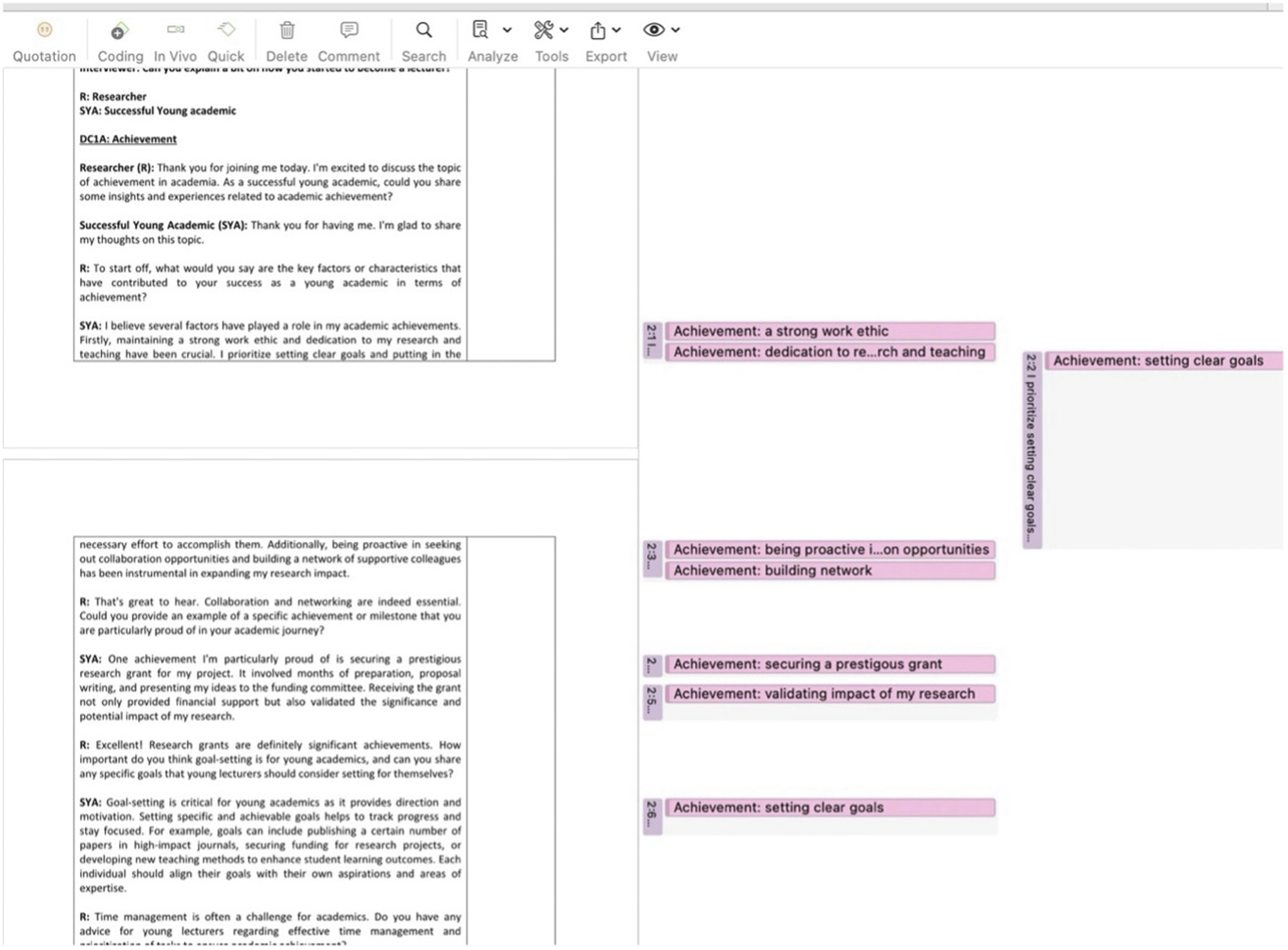
During this part, the deductive coding framework was employed to steer the analytical process (Figure 4). During the preliminary phase of coding, a range of codes pertinent to the ‘achievement’ theme inducted. These encompassed aspects such as a strong work ethic, being mindful, being proactive in seeking collaboration, engagement, and so forth (refer to Figure 5). The application of this deductive framework facilitated a more focused examination specifically aligned with the ‘achievement’ code, enabling the identification of associated codes. This approach significantly contributed to enhancing the systematic and rigorous nature of the analysis, ensuring it was firmly anchored in both the research question and the extant literature in the field. As the analysis evolved, certain codes underwent a process of refinement, including renaming, amalgamation into more integrated concepts, and restructuring to better align with the initial deductive framework. Code Manager in ATLAS.ti
A critical phase in conducting a rigorous thematic analysis involves the systematic application of codes to qualitative data. In this study, ATLAS.ti 25 was employed to facilitate an organized and transparent coding process, particularly through the structured use of
To capture the nuanced dimensions within this broad theme, a structured coding convention was implemented, wherein each deductive code was followed by a descriptive qualifier using a colon separator (“:”). This format allowed for precise categorization of data segments while maintaining alignment with the core analytical focus. For instance, when respondents discussed personal or familial challenges encountered in their academic journey, the code was labelled as
During this phase, the following steps were systematically executed: 1. Data Immersion and Highlighting: Transcripts and relevant qualitative data sources were thoroughly reviewed within ATLAS.ti 25. Segments indicative of factors contributing to achievement were highlighted for coding. 2. Application of Structured Deductive Codes: Each highlighted segment was assigned a code beginning with the deductive anchor “Achievement”, followed by a specific descriptor reflecting the contextual attribute of the narrative. This method ensured that all codes remained thematically linked while allowing for differentiation across sub-dimensions. 3. Comprehensive Code Identification: The process emphasized exhaustive coding, where as many relevant instances as possible were identified and coded under the structured schema. This approach enhanced data saturation and ensured that diverse aspects of achievement—ranging from emotional resilience to external recognitions—were systematically captured. 4. Preparation for Categorization and Theming: By employing this structured coding format, the dataset was effectively organized for subsequent stages of analysis, including code clustering, category formation, and theme development. The hierarchical structure facilitated efficient use of ATLAS.ti 25’s features such as the
This structured deductive coding approach not only reinforced analytical rigor but also enhanced traceability and transparency in the thematic analysis process. Moreover, leveraging ATLAS.ti 25’s capabilities allowed for efficient management of complex qualitative data, addressing the need for systematic analysis as highlighted in the study’s objectives. An example of this coding structure is illustrated in Figure 6, where various dimensions related to The Use of Deductive Code as a Guidance for Coding Formulation in ATLAS.ti 25
Furthermore, the codes that I identified during the initial coding process provide insight into the factors that contribute to the success of young academics in terms of achievement. Identifying these codes can help inform the development of strategies and frameworks that can aid in the success of young academics in public universities in Malaysia. The goal of coding is to identify overarching themes that induce from the data. These themes should capture the essence of the data and be consistent with the research question. By engaging in this process systematically and thoroughly, researchers can gain a comprehensive and nuanced understanding of the data and identify key insights that will inform their research findings.
Thematic Analysis Matrix (TAM) - Coding Process

The column delineating deductive codes provides the foundational theoretical framework informing the study’s direction. Adjacent to this, the third column presents the inductive codes that materialized through the data analysis phase, encompassing aspects of coding, categorization, and the distillation of final themes. The concluding column of the TAM (emerging themes) captures the nascent themes discerned within the analytical phase, embodying novel insights that surpass the initial theoretical projections and research inquiries. The author anticipates offering a comprehensive elucidation of these emergent themes in the latter stages of the report. The TAM serves as a useful tool for systematically reporting findings from the data analysis process. By organizing the results into a table format, researcher can clearly communicate the relationships between the research questions, theoretical framework, and emerging themes. This allows readers to understand the significance of the findings and the contributions of the study more easily to the existing literature.
Step 3: Categorize the Code
The third step in a thematic analysis is to categorize the codes. This step involves reviewing the initial codes and grouping similar attributes together to create categories. By doing so, researchers can identify and develop clusters that emerge from the codes. The refinement process also involves revising codes or categories as necessary to ensure that they accurately capture the content of the data (Braun & Clarke, 2022b).During the refining process, researchers may encounter a few challenges such as conflicting codes or codes that are too broad or too narrow. In such cases, researchers need to critically evaluate and compare the codes to ensure that they capture the key concepts and themes that emerge from the data (Saldaña, 2013). They may also consult with other researchers to gain insights into alternative interpretations or perspectives on the data. Refining the codes is a crucial step in the thematic analysis process as it enables the researcher to develop a comprehensive understanding of the data (Figure 7). By grouping codes into categories or sub-themes, researchers can identify patterns and connections between the data, which can inform their research findings (Williamson et al., 2018). Grouping Codes Into Categories
The process of finding categories is an important step in the thematic analysis process, as it helps to group similar terms together for further analysis. Categories are formed from codes, which are labels that are applied to segments of data that are relevant to a particular topic or concept. Once codes have been identified, they can be grouped together to form categories. These categories, in turn, can be used to identify themes within the data (Kılıç et al., 2021). Following the initial coding phase, where both deductive and inductive codes were systematically applied, the next critical step in the thematic analysis process involved the
Categorization, in this context, serves to bridge the gap between granular codes and higher-level thematic constructs by organizing individual codes into meaningful groups. This process not only enhances analytical clarity but also facilitates the identification of overarching themes aligned with the study’s research objectives. Using ATLAS.ti 25, codes previously assigned to various data segments were systematically reviewed and clustered into
This categorization process involved the following steps: 1. Review and Thematic Clustering: Each code was examined for its semantic relevance and conceptual linkage to other codes. ATLAS.ti’s Group Manager was utilized to assign related codes into predefined or emerging categories. 2. Development of Code Groups: Code groups were established to reflect key dimensions identified within the data, such as: 3. Multi-Category Assignments: Recognizing the complexity of qualitative data, certain codes were assigned to multiple categories where applicable. 4. Use of ATLAS.ti Visualization Tools: The categorized codes were further examined using ATLAS.ti’s visualization features, such as the Code Co-occurrence Table and Network View, to explore interrelationships between categories and to validate the coherence of groupings.
Process of Categorizing

The role of finding categories in the thematic analysis process is to facilitate the identification of patterns and themes in the data. By grouping similar codes together into categories, researchers can more easily identify themes that emerge from the data. The process of finding categories involves reviewing the codes that have been generated and identifying commonalities between them (Saldaña, 2013). These commonalities are used to create categories that capture the essence of the codes. It is important to note that the creation of categories is an iterative process. As researchers review the data and identify new codes, they may need to adjust the categories they have created or create new ones. This process continues until all the data has been reviewed and all relevant codes have been grouped into categories.
In the table below, an example of the creation of a category to match previously generated codes is provided. This illustrates how categories can be created based on the codes that have been generated and how these categories can be used to identify themes within the data. The process of finding categories is a crucial step in the thematic analysis process and is essential for identifying patterns and themes in the data. Notice on the
Step 4: Identify Final Themes
The final step of thematic analysis involves identifying the overarching themes that inducted from the data, which can be used to answer the research questions. At this stage, researchers review the categories that have been identified and group them together to form higher-level themes. These themes represent the underlying patterns and meanings that are present within the data and provide answers to the research questions (L. Nowell et al., 2017; Price & Mendizabal-Espinosa, 2019). The process of identifying final themes involves a careful review of the categories that have been created and the codes that have been assigned to them. Researchers must consider the relationships between the different categories and codes to identify the themes that tie them together. These themes should be relevant to the research questions and provide meaningful insights into the data.
Once the final themes have been identified, researchers can use them to answer the research questions and draw conclusions from the data. The themes should be supported by the evidence in the data, and researchers should provide examples and quotes to illustrate how the themes are reflected in the data. It is important to note that the process of identifying final themes is not always straightforward and may require multiple iterations. Researchers may need to adjust the themes they have identified or refine them based on additional analysis of the data. Overall, the final step of thematic analysis is a critical component of the research process as it enables researchers to identify the key themes and patterns within the data that can be used to answer the research questions and draw conclusions from the data.
According to the article by Josimar Antônio de Alcântara Mendes and Thomas Ormerod (Takamura & Imafuku, 2021), the final themes for analysis are defined and named in the stage of thematic analysis. The authors used the thematic analysis method to create an initial thematic map and then defined and named the final themes for analysis to develop a final thematic map. The authors also validated the constructs by sharing preliminary results with other members of the teaching staff in the same department who were not otherwise involved in the analysis. Based on the nature of my research questions and objectives from the dummy data that I have used. As highlighted in the sub-research questions that were identified earlier, there are several themes and patterns that need to be identified and analyzed within the data.
By using this approach, I can identify the key themes and patterns that emerge from the data, which will help me to answer the research questions and achieve the objectives of my study. The figure below (Figure 8) provides a visual representation of how thematic analysis can be used to identify and analyze the themes and patterns within the data, and how these themes can be used to answer the sub-research questions that were identified earlier. In ATLAS.ti 25, this is efficiently facilitated through the use of the The steps undertaken in this phase included: 1. Review of Code Groups: Existing categories were critically evaluated to ensure internal consistency and relevance to the overarching research questions. 2. Creation of Smart Groups: Using ATLAS.ti’s Code Manager, categories were right-clicked to access the “New Smart Group” option (see Figure 10). This function enabled the combination of multiple related categories into a single thematic entity, reflecting a finalized theme. 3. Dynamic Theme Refinement: The Smart Group feature allows for automatic updates—if additional codes are later assigned to the underlying categories, the Smart Group (final theme) dynamically incorporates these changes. This ensures flexibility and adaptability throughout the analytical process. 4. Thematic Labeling: Final themes were labelled to accurately represent the synthesized meaning of the grouped categories. For example, categories related to motivation, resilience, and personal values were consolidated under a theme such as “ Purpose-Driven Academic Excellence”. The Category to be Finalized as a Final Theme (Smart Group) in ATLAS.ti 25
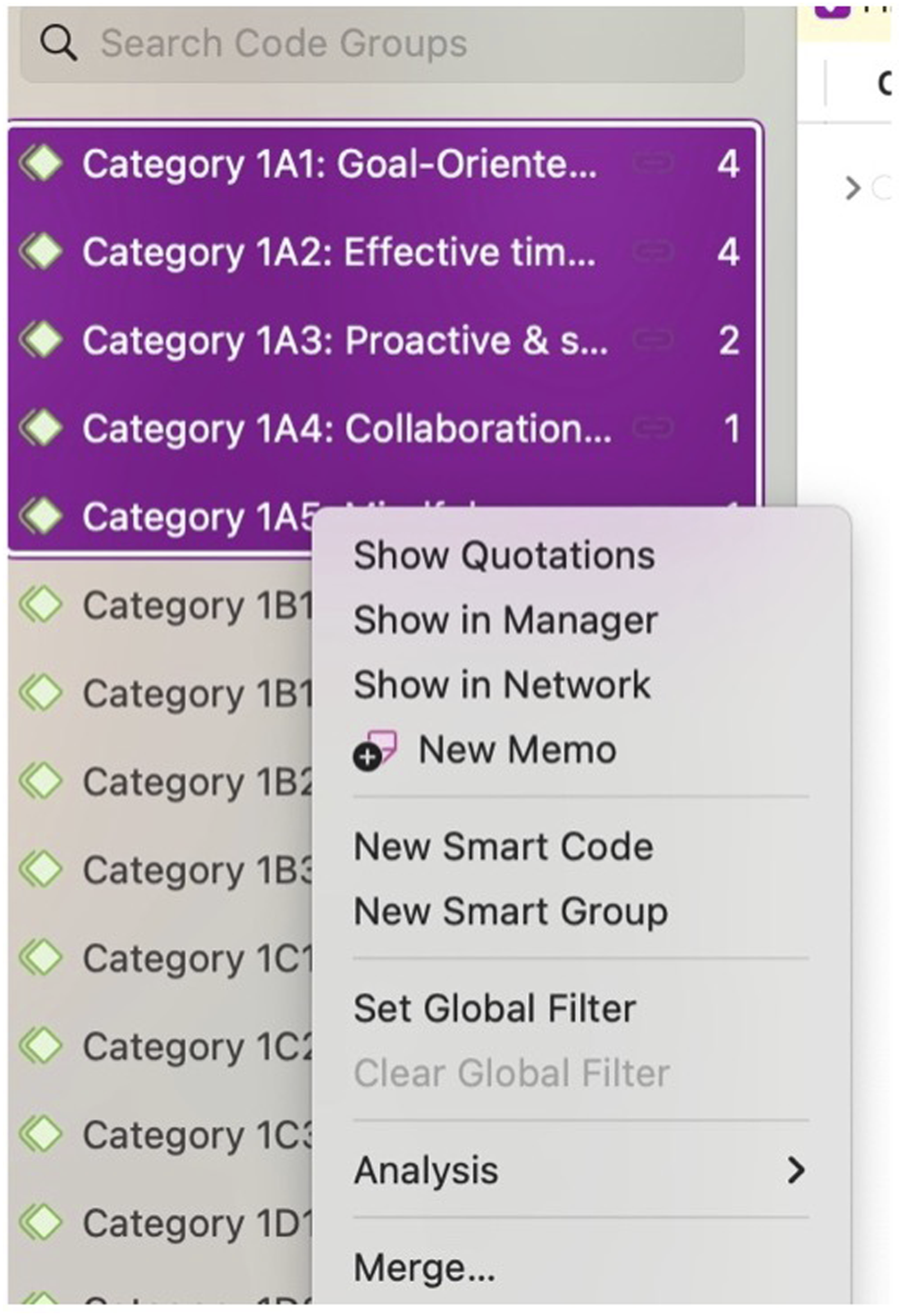
This methodical approach to theme finalization enhances transparency and traceability within qualitative analysis, ensuring that each theme is firmly grounded in systematically organized data. The use of Smart Groups not only streamlines the analytical workflow but also supports robust thematic development aligned with best practices in qualitative research.
The culmination of the thematic analysis process involves synthesizing categorized codes into well-defined themes that encapsulate the core findings of the study. In this research, ATLAS.ti 25’s Example of Labelling Process for the Theme in ATLAS.ti 25
Process Overview: 1. Selection of Relevant Categories: Categories representing conceptually linked codes were identified as candidates for thematic consolidation. 2. Initiation of Smart Code Group Creation: Through the ATLAS.ti Code Manager, the “Create Smart Code Group” dialog was activated, allowing for the specification of thematic parameters. 3. Thematic Labeling: Each Smart Code Group was assigned a descriptive theme name (e.g., Theme 1: 4. Automated and Dynamic Grouping: The Smart Code Group automatically retrieves all codes associated with the selected categories, ensuring that any future additions to these categories are seamlessly integrated into the theme. This dynamic functionality supports ongoing analysis and iterative data refinement.
By utilizing Smart Code Groups, the study ensured that theme development was data-driven, systematic, and aligned with qualitative research best practices. This approach also facilitated clear traceability from raw data to thematic outcomes, enhancing the transparency and credibility of the analysis. The finalized themes, including Theme 1:
Step 5: Fill in TAM (Thematic Analysis Matrix)
Final TAM

The final theme is divided into four main areas:
Theme 1: Purpose-Driven Academic Excellence.
Theme 2: Collaborative Networks and Professional Growth.
Theme 3: Effective Communication and Emotional Intelligence.
Theme 4: Adaptability and Personal Development.
Theme 5: Community-Centred Values and Contributions.
Collectively, these themes suggest that success for young academics is multifaceted, involving not only intellectual and professional achievements but also the cultivation of personal attributes, continuous educational development, and active participation in community and organizational activities. The emergence of these themes from the data analysis provides a nuanced answer to Sub RQ1 by delineating a holistic strategy for young lecturers aspiring to success in academia (Table 5).
To ensure that the thematic analysis remained focused on addressing the core objectives of the study, the final stage involved explicitly aligning emergent themes with the predefined
Process Description: 1. Mapping Categories to Research Questions: Categories and associated codes that directly contributed to answering a particular RQ were identified. 2. Creating RQ-Based Smart Code Groups: Using the Code Manager, Smart Code Groups were generated and labelled according to each research question (see Figure 10). This allowed for dynamic retrieval of all relevant codes and categories contributing to that specific inquiry. 3. Ensuring Analytical Coherence: This structured approach facilitated a coherent narrative in the findings, where each research question was addressed by thematically grouped data grounded in systematic coding. 4. Dynamic Updates and Flexibility: As with thematic Smart Groups, the RQ-based Smart Code Groups automatically updated to include any additional codes assigned during iterative analysis, ensuring comprehensive coverage.
By embedding research questions within the coding structure, this method enhanced both analytical rigor and reporting clarity. It provided a direct pathway from raw qualitative data to research outputs, ensuring that the findings were explicitly responsive to the study’s objectives. This approach also supports methodological transparency, allowing other researchers to trace how thematic insights were derived in relation to specific research inquiries—an essential aspect of qualitative research validity. Figure 10 illustrates the creation of a Smart Code Group linked to Research Question 1, demonstrating how ATLAS.ti 25 was employed to structure the analysis process around the core investigative aims. Creating Another Level of Hierarchy of Theme for the Research Question in ATLAS.ti 25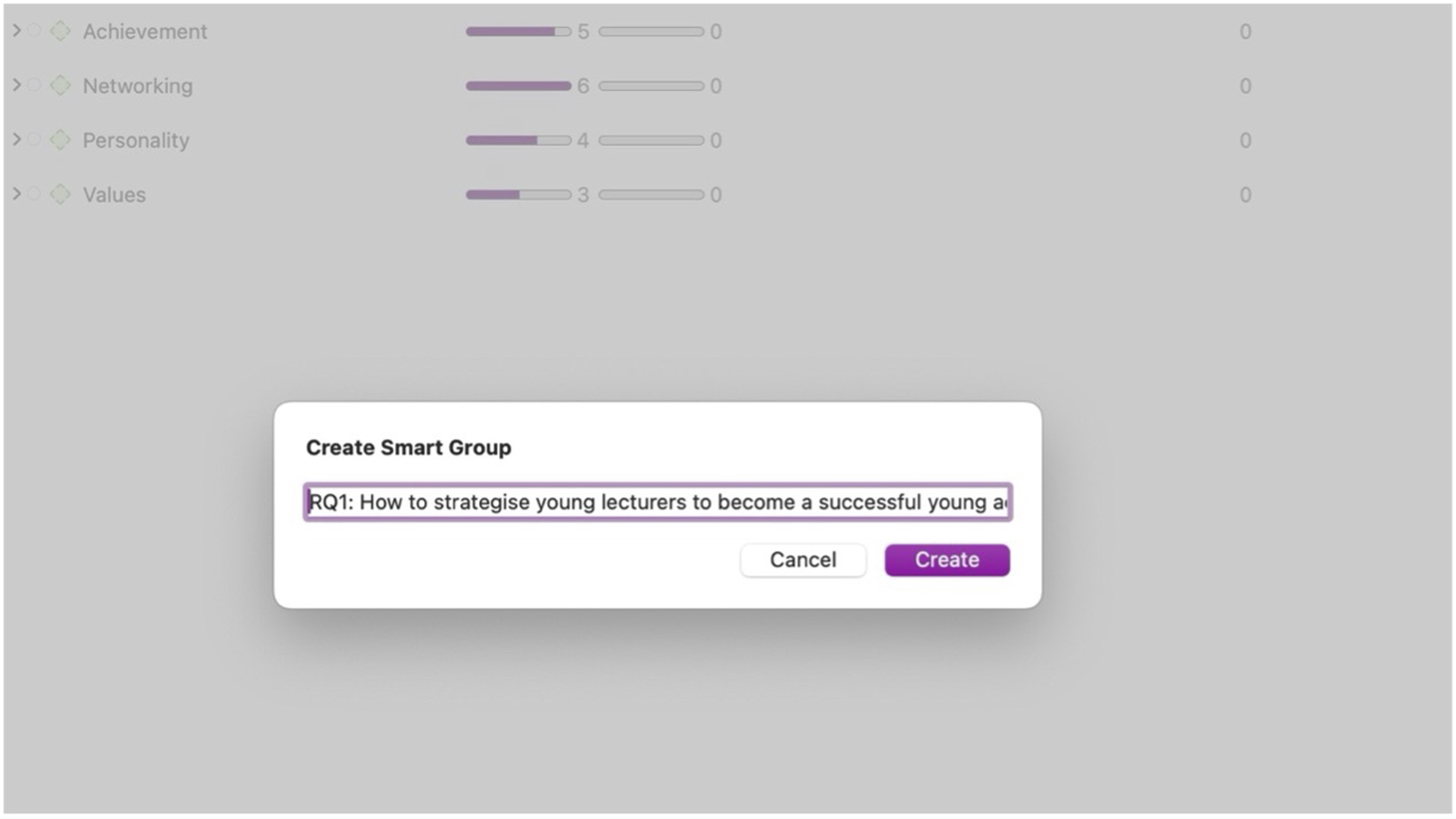
Extracting Emerging Themes for Interpretivism Paradigm

Finally, the final column of the TAM is dedicated to emerging codes that may surface during the analysis process, providing valuable insights into the experiences and perspectives of the participants, even if they are not directly related to the research question. An interpretivist approach to thematic analysis would interpret the themes that emerge from the data considering the social and cultural contexts of the participants, recognizing that the themes are subjective and shaped by the specific context of the research. This approach draws on theories from the social sciences and humanities and aims to provide a rich and nuanced understanding of the social and cultural contexts in which the research was conducted, and the subjective experiences and perspectives of the participants.
To interpret the themes that emerge from the data, you might draw on theories from the social sciences or humanities, such as sociology, anthropology, or psychology. You might also consider the broader social and cultural context in which the research was conducted, such as historical events, cultural norms and values, or political and economic structures. For example, if the emerging themes relate to challenges and obstacles to achieving success, an interpretivist researcher might explore how these challenges are shaped by broader social and cultural factors such as systemic inequalities, cultural expectations around success, or the role of social support networks in individual success. Ultimately, the goal of an interpretivist approach to thematic analysis is to generate a rich and nuanced understanding of the social and cultural contexts in which the research was conducted, and to provide insight into the subjective experiences and perspectives of the participants (Figure 11). Extracting Emerging Themes From the Data (ET)
Final Network Visualization: Integrating Deductive Codes to Address Sub RQ1
The final phase of the thematic analysis involved synthesizing the relationships between key deductive codes—
How to Strategize Young Lecturers to Become a Successful Young Academic in Terms of Achievement, Networking, Personality and Values?
Upon completion of the comprehensive coding process in ATLAS.ti 25, where all deductive codes were systematically applied across the dataset, the
Structure of the Network: 1. Completion of Deductive Coding: After thoroughly coding all data segments under the predefined deductive codes—Achievement, Networking, Personality, and Values—the dataset was primed for higher-order analysis. 2. Utilization of ATLAS.ti 25 Network Feature: The Network View in ATLAS.ti 25 was employed to dynamically map the relationships between codes, categories, and themes. This feature facilitated the visualization of complex interdependencies within the data, ensuring transparency and traceability in theme development. 3. Categorization and Thematic Synthesis: The network illustrates how specific initial codes were clustered into conceptual categories (e.g., Goal-Oriented Achievement, Effective Communication, Community Alignment), which were subsequently synthesized into five final themes:
Theme 1: Purpose-Driven Academic Excellence.
Theme 2: Collaborative Networks and Professional Growth.
Theme 3: Effective Communication and Emotional Intelligence.
Theme 4: Adaptability and Personal Development.
Theme 5: Community-Centred Values and Contributions.
Analytical Value of the Network
This final network, generated through ATLAS.ti 25’s integrated tools, demonstrates how the interplay between personal attributes, strategic professional behaviors, and value-based engagements contributes to academic success. It provides a holistic, visual framework that clearly aligns thematic insights with Sub RQ1. By leveraging ATLAS.ti 25’s Network feature, the analysis transcended traditional linear reporting, offering a multidimensional perspective on the factors influencing young lecturers’ success. The dynamic nature of this feature also allowed for iterative refinement, ensuring that the thematic structure accurately reflected the depth and complexity of the qualitative data. Figure 12 presents the final thematic network produced via ATLAS.ti 25, illustrating the structured integration of deductive codes, categories, and themes in response to Sub RQ1. Answering Sub RQ1 Using Network Diagram in ATLAS.ti 25
Step 6: Check for Validity (Trustworthiness)
In qualitative research, validity is called as trustworthiness and it refers to the extent to which the findings can be regarded as credible, dependable, confirmable, and transferable, thereby ensuring confidence in the study’s results. Drawing on the framework proposed by Lincoln and Guba (1985), credibility concerns the accuracy with which the findings reflect participants’ experiences, which can be enhanced through strategies such as prolonged engagement, triangulation, member checking, and peer debriefing. Transferability relates to the applicability of the findings in other contexts and is facilitated by providing rich, thick descriptions that enable readers to determine the relevance of the results to their own settings. Dependability addresses the stability and consistency of the research process over time, supported by maintaining an audit trail and engaging in peer examination. Confirmability ensures that the interpretations are grounded in the participants’ data rather than researcher bias, achieved through reflexive journaling and systematic documentation of methodological decisions. By systematically addressing these four criteria, qualitative researchers can enhance the methodological rigour of their studies and provide a transparent account of the analytic process, thereby increasing the confidence of both scholarly and practitioner audiences in the study’s outcomes.
Validity in qualitative research is a crucial aspect that determines the accuracy and credibility of the research findings (Lub, 2015). Validity refers to the extent to which the research accurately reflects the reality being studied (Maxwell, 1992). There are different types of validity in qualitative research, including descriptive validity, interpretive validity, theoretical validity, generalizability, and evaluative validity (Maxwell, 1992). To ensure validity in qualitative research, researchers can use various methods, including peer debriefing, member checking, and triangulation (Adamowicz et al., 2004). Peer debriefing involves exposing oneself to a disinterested peer to explore aspects of the inquiry that might otherwise remain implicit within the researcher’s mind (ARSLAN, 2022). Member checking involves sharing the research findings with the participants to confirm the accuracy of the data (Zairul, 2021a). Triangulation involves using multiple sources of data to confirm the findings (Golafshani, 2015). It is important to note that validity in qualitative research is different from quantitative research (ISMAIL AMET & KALELİ YILMAZ, 2022). While reliability and validity are rooted in the positivist perspective in quantitative research, they should be redefined for their use in a naturalistic approach in qualitative research (Golafshani, 2015).
In the case of thematic analysis, I used peer debriefing for the validation strategy. Peer debriefing is a method used in qualitative research to ensure the accuracy and credibility of the study (İSLİM et al., 2016). It involves exposing oneself to a disinterested peer to explore aspects of the inquiry that might otherwise remain implicit within the researcher’s mind (Spall, 1998). Peer debriefing can be used to encourage the researcher to examine the research process from multiple perspectives (Figg et al., 2009). It is also used to provide credibility to the study (KOÇ, 2020). Peer debriefing can be conducted in pairs or small groups, and it can be used throughout the research process, from proposal to dissertation defence (Spall, 1998). Peer debriefing is a technique that is commonly used to increase the validity of thematic analysis. This technique involves seeking feedback from other researchers or peers who are familiar with the research area and the data analysis process. During peer debriefing, the researcher presents their analysis to their peers, who then review and provide feedback on the interpretation of the data and the themes that have been identified (Spall, 1998). The peers may also offer suggestions for alternative interpretations or identify any potential biases that the researcher may have missed.
The main advantage of using peer debriefing is that it allows for a fresh perspective on the data analysis and can help to identify any potential weaknesses or errors in the analysis (Figg et al., 2009). This can increase the validity of the research findings and ensure that the conclusions drawn from the data are accurate and reliable. In addition to peer debriefing, other techniques for increasing the validity of thematic analysis include member checking, where the researcher seeks feedback from participants to confirm the accuracy of the analysis, and triangulation, where multiple sources of data are used to confirm the themes that have been identified (Zairul, 2021a). In short, using peer debriefing in thematic analysis is an effective way to increase the validity of the research findings and ensure that the conclusions drawn from the data are accurate and reliable.
Once the coding process is complete, researchers can begin to refine the codes by reviewing and grouping similar ones together to create categories. At this stage, codes or categories may be revised or combined as necessary to ensure that they accurately capture the content of the data (L. Nowell et al., 2017). Categorizing the codes involves organizing them into categories or sub-themes based on their similarities and differences (D. Byrne, 2022b). This process enables the researcher to identify and group codes that relate to similar themes, allowing for a more structured and comprehensive understanding of the data.
Reflexive vs Coder Agreement
The reflexive thematic analysis method, as advanced by D. Byrne (2022b), is founded on a fundamentally interpretivist approach that privileges the active, subjective role of the researcher in data interpretation over statistical measures of coder agreement such as Cohen’s Kappa or other inter-rater reliability metrics (Braun & Clarke, 2024). This approach diverges from quantitative content analysis, where inter-rater reliability is used to ensure objectivity and replicability (Abbott et al., 2024). In reflexive thematic analysis, by contrast, subjectivity is not only accepted but is essential to developing a nuanced, contextually grounded analytical narrative (Attila et al., 2024; L. F. Lewis et al., 2023). Rather than seeking replicability through conventional coder agreement, the method emphasizes transparency, reflexivity, and coherence in theme development (McNamee et al., 2022).
The implementation of reflexive thematic analysis involves several systematic phases: familiarization with the data, initial coding and categorization, theme formulation, and subsequent refinement and reporting (Attila et al., 2024). This process acknowledges that themes are not inherent in the data but emerge from the researcher’s iterative engagement with the text (Sassano et al., 2023). In this light, applying peer debriefing within this methodological framework serves as an effective strategy to augment the trustworthiness and validity of the findings. Peer debriefing allows researchers to subject their interpretative choices to critical scrutiny by colleagues, thereby fostering an environment of transparency and reflexivity that enhances the credibility of the analytic narrative (J. K. Lewis, 2017; McNamee et al., 2022).
Crucially, the theoretical flexibility of reflexive thematic analysis means that the evaluative focus rests on the richness of the interpretation rather than on achieving consensus through inter-rater reliability measures, which are more aligned with positivist validation strategies (Braun & Clarke, 2024). The employment of peer debriefing helps buttress the subjectivity inherent in qualitative interpretations by providing a collaborative space for reflecting on and refining the analytical choices made during the research process (Sassano et al., 2023). This collective interrogation of emerging themes not only mitigates individual bias but also further grounds the findings in the complex, multi-layered realities of the research context (Attila et al., 2024).
In summary, while quantitative methods may lean on statistical indices like Cohen’s Kappa to validate inter-coder agreement, reflexive thematic analysis intentionally eschews such measures in favor of a deeply reflective, interpretivist approach that values the researcher’s engagement with the data. By prioritizing methodological transparency and engaging in peer debriefing, researchers can produce findings that are both credible and richly context-specific, thus aligning with the broader epistemological commitments of qualitative inquiry (Lewis et al., 2023;; McNamee et al., 2022).
Conclusion
Comparison Between ATLAS.ti Manual and Other QDA Software

To further strengthen the methodological rigour of this study, a comparative analysis was conducted to evaluate the added value of using ATLAS.ti for thematic analysis, as presented in Table 3. This comparison highlights the advantages of ATLAS.ti over traditional manual methods and other qualitative analysis software such as NVivo and MAXQDA. ATLAS.ti’s strengths lie in its robust data management system, efficient coding process, dynamic visualisation tools, and built-in audit trail features, all of which enhance the transparency and credibility of the analysis. These capabilities provided significant support in managing complex data sets, facilitating collaboration, and ensuring a systematic and well-documented thematic analysis process. As such, the use of ATLAS.ti in this research not only improved analytical clarity but also contributed to the reproducibility and trustworthiness of the findings. The paper goes on to provide a step-by-step guide to conducting thematic analysis, emphasizing simplicity and clarity. The guide includes tips for developing a coding system, analyzing data systematically, and identifying patterns and themes that are connected to the research question using the software tool ATLAS.ti 25. This tool can be helpful in organizing and analyzing data, and the paper also introduces the Thematic Analysis Matrix (TAM) developed by Zairul as a helpful framework for organizing and analyzing final themes.
The paper stresses the importance of staying organized, being flexible, and processing in validating findings. It emphasizes the need for transparency and collaboration and identifies peer debriefing as a useful technique for reducing individual biases in the research process. Peer debriefing involves seeking feedback on the research process and findings from colleagues or experts in the field to ensure that the research is rigorous and accurate.
In conducting this study, a reflective comparison between manual thematic analysis and the use of ATLAS.ti 25 was undertaken to evaluate their respective efficiencies, accuracy, and analytical depth. While manual coding offers researchers a more intimate engagement with the data, fostering deeper contextual understanding, it is inherently time-consuming and prone to organizational challenges, especially when handling large datasets. Conversely, ATLAS.ti 25 significantly streamlines the analytical process by providing structured tools for coding, categorization, thematic development, and visualization. The software enhances traceability, reduces human error, and supports dynamic data management through features like Smart Code Groups and Network Views.
This comparative reflection highlights that although manual methods remain valuable for smaller, highly interpretive studies, ATLAS.ti 25 offers substantial advantages in terms of systematic organization, scalability, and methodological transparency. The integration of ATLAS.ti 25 not only accelerates the thematic analysis process but also strengthens the validity and reproducibility of findings. Therefore, for novice and experienced researchers alike, adopting qualitative data analysis software like ATLAS.ti 25 is recommended to complement traditional approaches, ensuring both analytical rigor and operational efficiency.
In summary, this paper offers a valuable resource for novice researchers seeking to conduct qualitative research using thematic analysis. It provides a comprehensive guide to the process, highlights useful tools and techniques, and emphasizes the importance of staying organized and validating findings. By following this guide, novice researchers can gain confidence in conducting thematic analysis and producing accurate and meaningful findings.
Contribution and Benefits
This paper makes several valuable contributions to the field of qualitative research. Firstly, it provides a clear and concise step-by-step guide to conducting thematic analysis, which is a valuable data analysis technique for identifying patterns and themes in qualitative data. The guide is aimed specifically at novice researchers and emphasizes simplicity and clarity, making it a useful resource for those who are new to qualitative research.
Secondly, the paper introduces two important tools for conducting thematic analysis: the Thematic Analysis Matrix (TAM) and ATLAS.ti 25. The TAM is a systematic tool for organizing and analyzing qualitative data, while ATLAS.ti 25 is a software tool that can aid in the process of conducting thematic analysis. These tools can help to streamline the process of data analysis and increase the accuracy and efficiency of research findings.
Additionally, the paper stresses the importance of validating research findings through techniques such as peer debriefing, member checking, and triangulation. By ensuring the validity of research findings, researchers can increase the reliability and accuracy of their conclusions and contribute to the existing body of knowledge on the topic.
In a nutshell, this paper provides a valuable resource for researchers seeking to conduct rigorous and meaningful qualitative research. It offers a clear and practical approach to thematic analysis, introduces important tools for conducting data analysis, and emphasizes the importance of validating research findings to increase the reliability and accuracy of conclusions.
Limitation and Future Research
While this paper provides a comprehensive step-by-step guide to conducting thematic analysis using ATLAS.ti 25 and introduces the Thematic Analysis Matrix (TAM) as a structured framework, several limitations should be acknowledged. Firstly, the study primarily focuses on a single case example using dummy data, which, although effective for instructional purposes, may not capture the full complexity and variability encountered in real-world qualitative research across diverse fields. Additionally, the reliance on a deductive coding framework, guided by predefined research questions, may limit the exploration of unexpected insights that often emerge through purely inductive approaches. The structured use of ATLAS.ti 25, while enhancing efficiency, could inadvertently lead novice researchers to adopt a mechanistic view of thematic analysis, potentially overlooking the nuanced interpretative work that qualitative research demands.
Future research could expand on this work by applying the outlined methodology across multiple, diverse datasets to validate the flexibility and adaptability of both the TAM framework and ATLAS.ti 25 tools in various research contexts. Comparative studies involving different qualitative analysis software, such as NVivo or MAXQDA, could also offer deeper insights into best practices and tool-specific advantages. Furthermore, future investigations might explore hybrid approaches that better balance inductive and deductive strategies, encouraging researchers to remain open to emergent themes while maintaining systematic rigor. Finally, there is potential to integrate AI-driven features within thematic analysis software to assist in pattern recognition and preliminary coding, which could further enhance efficiency without compromising the interpretive depth essential to qualitative research.
Footnotes
Acknowledgment
The author would like to express sincere appreciation to colleagues, students, and peers who have contributed valuable insights and feedback throughout the preparation of this manuscript. Special thanks are also extended to Alfaisal University for providing continuous academic support and resources.

Ethical Considerations
This study did not involve human participants, animals, or sensitive data collection requiring ethical approval. All procedures conducted in the preparation of this manuscript complied with institutional and international research ethics standards.
Funding
The author disclosed receipt of the following financial support for the research, authorship, and/or publication of this article: The publication of this article, including the Article Processing Charges (APC), is funded by Alfaisal University.
Declaration of Conflicting Interests
The author declares that there are no potential conflicts of interest with respect to the authorship and/or publication of this article.