




Abstract
This study examines the phenomenon of teenage motherhood among Roma girls in Hungary. Utilizing digital storytelling, reflexive thematic analysis, and action research, it explores three main themes that shed light on the complex dynamics of teenage motherhood. These themes include the impact of traditional gender norms, cultural changes associated with motherhood, and external factors such as economic inequalities and social attitudes, presenting motherhood as a pathway to success for marginalised adolescents. The study advocates a comprehensive approach and incorporates Bronfenbrenner’s ecological systems theory, which recognizes the interplay between individual and social factors that is essential for developing interventions enabling young mothers to break the cycle of disadvantage and promote their meaningful participation in family, community, and society.
Keywords
Introduction
In recent years, there has been growing attention on maternal empowerment, with the daily struggles, unseen labour, and challenges of motherhood gaining visibility. A growing number of research studies and programs are focused on the mental well-being and success of mothers (Ayers & Sawyer, 2019; Nordenmark, 2021; Van Schalkwyk, 2020). However, these programs are mainly available for middle and upper-class women who become mothers in adulthood. Evidence shows that younger mothers face greater challenges (Coley & Chase-Lansdale, 1998) and these challenges are further magnified when the individual holds a marginalized position within society (Aluga & Okolie, 2021). Teenage pregnancy is mainly considered an issue in low and middle-income countries, despite being a global phenomenon and challenge. Early childbearing can have serious consequences (e.g., greater risk for health complications, death and disease during pregnancy and childbirth, mental illness, social stigma, social and economic disadvantages, and limited educational opportunities and employment prospects) adversely affecting both adolescent girls and their children (Chen et al., 2007, 2008; Ganchimeg et al., 2014; Ngum Chi Watts et al., 2015; Rosario et al., 2016).
Furthermore, teen pregnancy has been stigmatized as a negative phenomenon and is often perceived by society as negative and undesirable (Macutkiewicz & MacBeth, 2017). The issue is multifaceted, requiring the consideration of economic, cultural, political, psychological, and social factors to arrive at effective solutions. To gain a deeper understanding of the problem, researchers have called for more qualitative studies to give voice to the lived experiences of adolescent mothers and identify structural barriers underlying the issue (O’Brien Cherry et al., 2015).
In recent years, digital storytelling (DST) has gained popularity in the social sciences as a research methodology, particularly for the investigation of sensitive topics. The approach provides a powerful platform for individuals to share their lived experiences, connect with others, and advocate for social change (Gubrium, Hill, & Flicker, 2014). By using DST, participants can create and share their stories with a wider audience and potentially influence public policy and societal perceptions of teen pregnancy and motherhood. This Hungarian-based action research combines DST with reflexive thematic analysis to explore the lived experiences of young Roma girls who became mothers during adolescence.
Adolescent Motherhood
Despite a global decline in the estimated adolescent birth rate, the number of adolescent births remains substantial: In 2000, there were 64.5 births per 1000 women aged 15–19, which has decreased to 41.3 births per 1000 women in 2023. However, there are significant worldwide disparities in these numbers, as well as in prevention and treatment. Annually, about 21 million girls aged 15 to 19 become pregnant, with approximately 12 million of them giving birth (World Health Organization, 2020).
In addition to the birth complications, health risks, and the other outcomes mentioned above, the socio-economic impact of early motherhood substantially affects education and career prospects, exacerbating the vulnerability experienced by young mothers and perpetuating the cycle of poverty (Hoffman & Maynard, 2008). Teen pregnancy often attracts social stigma, which exposes mothers to judgment, discrimination, and exclusion within their local communities (Wittenberg et al., 2022). Such stigma can have adverse mental health consequences, leading to increased levels of depression and anxiety among teen mothers (Boath et al., 2013). Moreover, socio-economic inequalities and limited access to health services often result in higher rates of teen pregnancy in marginalized communities (Mutea et al., 2022; Ntegwa & Miho, 2021).
Teenage Childbearing in the Hungarian Context
While Hungary has seen a consistent and substantial decrease in the overall number of births, there has been a noticeable increase in adolescent pregnancies (Mesleh et al., 2001). In 2021, the adolescent fertility rate (measured as births per 1,000 women aged 15–19) in Hungary reached 22.15% (Eurostat, 2021), ranking as the third highest in the European Union. Based on the most recent census data, the Roma population constitutes the largest minority group in Hungary (Central Statistical Office, 2022). Roma women are more likely to become mothers at a younger age compared to their non-Roma counterparts (Elek, 2022).
According to Béki (2013), there are three main explanatory frameworks in Hungary concerning early childbearing. The culturally orientated approach posits that some Romani communities view teenage pregnancy as a traditional norm, placing young women in a position where they must choose between following community expectations or conforming to broader societal norms. The logical-economic framework suggests that early childbearing among Roma might not be influenced by cultural characteristics but rather by rational economic choice. Financially deprived families may choose to have more children to qualify for state subsidies. Nevertheless, the decreasing value of these subsidies raises concerns about meeting the basic needs of these households. The third framework views teenage motherhood as a response to social exclusion, arising from the uneven distribution of resources, residential segregation, high rates of unemployment, and differing normative frameworks. Within insular Roma communities, motherhood is often viewed as a means towards social recognition given the lack of available opportunities.
All of these phenomena indicate the necessity of addressing not only the immediate issues related to adolescent pregnancy but also the broader societal attitudes and systemic factors that contribute to the persistence of these challenges.
Action Research with Digital Storytelling
Action research with digital storytelling is a participatory research approach that combines the principles of action research with the creative and empowering potential of DST. Action research aims to address real-world issues and promote positive change within specific contexts by fostering collaboration between researchers and participants (Sax & Fisher, 2001; Susman & Evered, 1978; Zuber-Skerritt, 2022). By involving those directly affected by the research, action research not only ensures their voices are heard but also leads to more relevant outcomes, empowering participants as active agents of change (Flynn et al., 1994; Kemmis, 2010).
DST is an audio narrative technique that utilizes multimedia elements such as images, videos, audio, and text. It offers a creative and emotionally engaging platform for participants to create and share their personal stories and experiences (Lambert, 2012). Furthermore, the integration of action research with DST facilitates the exchange of narratives among participants, inspiring them and exposing them to diverse and broadened perspectives and life experiences, fostering a sense of empathy and solidarity (De Jager et al., 2017).
Several researchers (Barcelos & Gubrium, 2018; Gubrium et al., 2014b, 2016; Krause & Gubrium, 2019; Wainaina et al., 2021) have recognized the potential of DST in studies involving teenage mothers. These European-based studies employed multimodal frameworks for data analysis, in which emotional sounds were assigned to the script, and a meticulous frame-by-frame analysis of video images as well as the use of a codebook were employed for comprehensive emotional content analysis. The studies featured heterogeneous samples with a wider range of participants, including pregnant teenagers, which enabled a broader scope for the study.
Research Context Overview
In Hungary, a country with a population of approximately 9.6 million, the Roma community comprises roughly 2.5% of the total population (Central Statistical Office, 2022). Despite efforts to improve their conditions, the Roma population continues to face severe challenges, including high rates of poverty, limited access to quality education and healthcare, and enduring discrimination and social exclusion. These factors perpetuate severe segregation in both education and employment, further intensifying their marginalized status within Hungarian society (Király et al., 2021).
The present research involves a three-day DST workshop conducted in Szomolya, a village in northeast Hungary with approximately 1,500 inhabitants, around 20% of whom are Roma. Roma families have low social status in the village and suffer from racial prejudice and discrimination across various domains. Roughly 70% of the village’s Roma population lives in poverty and deprivation. Adverse living conditions (such as a lack of running water in many homes) along with educational and occupational segregation influence each member of a Roma community, shaping the possibilities and choices of Roma girls and women. To address these issues, a local Roma NGO (i.e., the Hungarian Roma Association of Szomolya) implements small-scale programs focused on reducing the educational deficit among children. In Hungary, compulsory education ends at 16. More than 50% of Roma boys in Szomolya finish their education at this age and begin working, while nearly every girl leaves school before turning 17, “gets married”, (i.e., moves into the house of her boyfriend’s family), and assumes the role of a housewife. Since 2000, long-term cultural anthropological research has been conducted in the Roma community of Szomolya focusing on racialized identity construction and its impact on gender and family (Horvath & Oblath, 2015). In cooperation with the local Roma NGO and a Budapest-based civic organisation Parforum an art-based participatory action research project using digital storytelling has been implemented since 2015 (Horvath et al., 2017; Lanszki & Horvath, 2015; SajatSzinház.org). This research centred on institutional discrimination and violence suffered by Roma women in the context of maternity. The present study on teenage pregnancy builds on this previous research in the same local community.
Aims of the Research
This research primarily aims to develop a deep and multifaceted understanding of teenage motherhood. This includes understanding and mediating the complex motivations and day-to-day experiences of the individuals involved in this phenomenon. Moreover, by demonstrating the advantages of this approach, we intend to highlight that DST can be an effective tool in qualitative research for the in-depth examination of participants’ experiences. Additionally, this research seeks to initiate new community development programs and initiatives at the research site that can address the issue of adolescent motherhood while linking to existing efforts.
Consequently, the research questions posed seek to: - What motivations, life circumstances and lived experiences characterize adolescent motherhood in the study community? - How does the digital storytelling (DST) method support a deeper understanding and representation of teenage mothers’ experiences in qualitative research?
and - The objective of this research is to identify the needs and resources of the community that can subsequently be used to develop or strengthen local initiatives that address teenage motherhood.
Methods
Research Design Overview
Data was collected throughout the 3-day DST workshop. In addition to visual and verbal text layers of the final personal digital stories (n = 9), field notes on reflection circles, story circles, and participants’ personal creative processes were also taken. Taken together, these constitute the dataset that was analysed using reflexive thematic analysis.
In our research, we combined DST with reflexive thematic analysis to create a compelling narrative about the phenomenon of teen motherhood in order to generate knowledge relevant to researchers and the wider public, bridging the gap between traditional empirical research and participative methods. The combination of reflexive thematic analysis with the DST process is not a common approach, but the amalgamation of action research and thematic analysis is gaining increasing popularity in the field (Braun & Clarke, 2022a; Harkin et al., 2022; Munns & Walker, 2018; Rose et al., 2023; Rowley et al., 2020).
Our research was conducted within a phenomenological-constructivist epistemological framework. This epistemological stance acknowledges that the interaction of consciousness, subjective experience, and the social context shapes the construction of knowledge for both the researcher and participants (Willig, 2022). Additionally, our research represents a critical-emancipatory paradigm. As researchers, we were aware of and actively reflect on our own situations, potential biases, and preconceptions. We also recognized the impact of historical, social, and political forces on human thought and action, as well as the ways in which social structures have historically served to oppress particular groups in society.
Research Participants
Researchers Position
The first author is a psychology doctoral student with extensive experience in marginalised community development and has been actively involved in several participatory action research projects. The second author is also a doctoral student, specializing in qualitative research. The third and fourth authors are experts in arts-based research and participatory processes, with particular focus on marginalised groups and women. The fifth author is a Roma social worker who manages a local Roma NGO and was instrumental in setting up the research environment, recruiting participants, and communicating local needs. The final author is a practising psychiatrist and university professor with expertise in qualitative psychological methodology. The first, third, and fourth authors facilitated the DST research in the field, while the data was analysed by the first, second and last authors. The theme of motherhood and its associated challenges resonates profoundly with the authors, four of whom are mothers themselves. The researchers are all committed to understanding and addressing the challenges faced by disadvantaged groups, with this study focusing specifically on the Roma community.
Participants Details
It is important to note that our study consistently refers to the “sample” as “participants”. This choice of terminology aligns with the epistemology of participatory research, which is based on active participation and collaboration with the group or community being studied rather than passive data collection from a sample. Our research adhered to the ethical standards of the Research Ethics Committee of the Faculty of Education and Psychology at Eötvös Loránd University (ethical approval number: 2022/329).
Characteristics of the Participants

After one participant withdrew from the research, the digital storytelling process ultimately led to the creation of nine digital films. Among the 10 participants, one was previously acquainted with the researchers, while the others were unknown. Although most of the participants knew each other due to living in the same neighbourhood, none of them shared close relationships prior to the study.
Participant-Researcher Relationship
Our roles as researchers extended beyond traditional observation and data collection, driven by the belief that research can empower oppressed groups (i.e., adolescent mothers in our research) by exposing inequalities and giving them a voice, which can catalyse positive social change (Kramer-Roy, 2015). Recognising the challenges that participants faced in leaving their homes to participate in the research due to household activities and childcare responsibilities, we facilitated their participation by providing on-site activities for their children during the digital storytelling process.
Recruitment and Selection Process
In our study, participants were recruited in collaboration with the local Roma NGO. The organization, with its close ties to local families, facilitated the identification and initial contact with potential participants. A Roma social worker (the fifth author) with a deep understanding of the local community’s dynamics played a crucial role in informing the girls about the research program. The sole inclusion criterion was that the girls had given birth to their first child during their teenage years (aged 14–18) and were available for the entire duration of the research program. No minimum level of proficiency in technical media skills was required for participation.
Data Collection
The Process of Digital Storytelling
Digital storytelling is a complex process involving several phases, each with its own unique goals and challenges. Based on the methods outlined by the founding organization (Storycenter.org) and Joe Lambert’s seven steps of DST (Lambert & Hessler, 2018), we organized our DST research program into six major phases and eight sub-phases. Figure 1 illustrates each stage of the DST workshop. The subsequent section offers a detailed overview of the specific considerations employed in each of the sections. Stages of the Digital Storytelling Workshop
Before the research process commenced, a meticulous Preparation Phase (Phase 1) established the foundations of the research, with the first author defining the topic and target audience. Additional fieldwork was undertaken to select research sites and participants. The acquisition of the necessary tools and careful attention to ethical considerations, including protocols for informed consent and sensitive data management, were critical components of this phase.
The Introductory Phase (Phase 2) formally initiated the research and involved two crucial components. First we established the research framework, defining its objectives, timeline, and methodology while ensuring that all of the participants completed the necessary informational and consent forms. Attention was also given to addressing the participants’ queries. Following this, “icebreaker activities” were employed to foster group cohesion and prepare participants for the storytelling process. These narrative exercises helped the participants gain an understanding of the key themes and the essence of effective messaging, which laid the groundwork for constructing their personal narratives. This phase established a secure environment in which participants could openly share and reshape their personal stories, thereby setting the tone for the subsequent digital storytelling process.
During the Storytelling Phase (Phase 3) participants developed their individual stories using the “story circle” method, ensuring the authenticity and meaningfulness of their narratives (Lambert, 2006). This collaborative process allowed for the collective sharing of experiences and perspectives in a supportive environment (Brushwood Rose & Granger, 2013). This personal storytelling marked the first time that these often difficult and traumatic stories were verbalized and shared. The participants then used Story Maps, a visual tool, to organize the key components of their narratives for digital transformation (Ohler, 2006). Feedback and discussions among the participants further enriched the development and refinement of their stories.
In the Creative Phase (Phase 4), narratives underwent digital editing and finalization. Smartphones were utilized for voice recording and integrating the selected photos, music, and sound effects to create short films. Due to a lack of childhood photos, participants used selfies from social media or portraits of their children. The editing process was carried out using the Open Shut Video Editor software, with participants receiving additional support if needed. This phase entailed careful narrative reconstruction, emphasizing self-reflection and narrative coherence while ensuring that participants understood the copyright and ethical considerations involved in the process.
The Reflection Phase (Phase 5) marked the culmination of the DST process, involving comprehensive discussions and the analysis of the films and their themes. The films were presented to fellow participants, the research team, and a wider audience, including the participants’ families and other community members. Respecting the participants’ preferences, we did not publish their films online. The presentation of these deeply personal narratives was crucial in soliciting feedback, fostering community connections, and helping participants realize the shared nature of their experiences. From a research perspective, this phase provided valuable insights into participants’ perspectives, enhancing the understanding of the study’s findings.
In the Closure Phase (Phase 6), the entire research process concluded with a comprehensive evaluation in collaboration with the participants, including a reflective assessment of the whole research process, an analysis of the feedback received from the wider audience, and an interpretation of the learning outcomes derived from the research. This also allowed us to identify new research directions and potential actions that could further enhance the study of the research topic. Throughout all the phases of the DST workshop, the first, third, and fourth authors were personally involved in the research process.
Data Analysis
At the end of the DST process, we analysed all the data collected during the three-day research period, which included nine digital stories (29 minutes 44 seconds in total), field notes, reflections, and story circles created during the research, amounting to 22 hours of recorded data. Our data analysis process followed the six steps of reflexive thematic analysis (Braun and Clarke, 2019, 2022b). The process began with an initial familiarization with the dataset by all authors; the first author then conducted the coding process and identified the initial themes. Subsequently, the first, second, fourth, and final authors actively participated in reviewing and developing the initial and final themes. In line with our roles as researchers, we continuously engaged in reflection and critique of the personal positions, values, assumptions, and prejudices that may have influenced our analysis. In the context of action research, our decision to exclusively conduct thematic analysis does not imply a divide between the researchers and participants. Instead, we view this as a strategic decision that respects each party’s individual roles and responsibilities, acknowledges potential ethical challenges, and seeks to create a research environment that is both empowering and ethically sound. We believe this approach ensures that the inherent sensitivity of action research is conscientiously addressed and that the research findings align with our overarching goal of facilitating positive transformation and change.
Findings
Based on the thematic analysis, we identified the following three major themes: 1. Invisibility in the land of nowhere, with four sub-categories (1.1. No man’s land, 1.2. On a closed track - our street is the whole world, 1.3. Nowhere to Call Home, 1.4. Shameful Bodies in Peril), 2. From Invisible to Empowerment: The Transformative Power of Childbirth, and 3. Grip of the Circle of Deprivation (see Figure 2). Main Themes and Sub-themes Concerning Experiences of Teenage Motherhood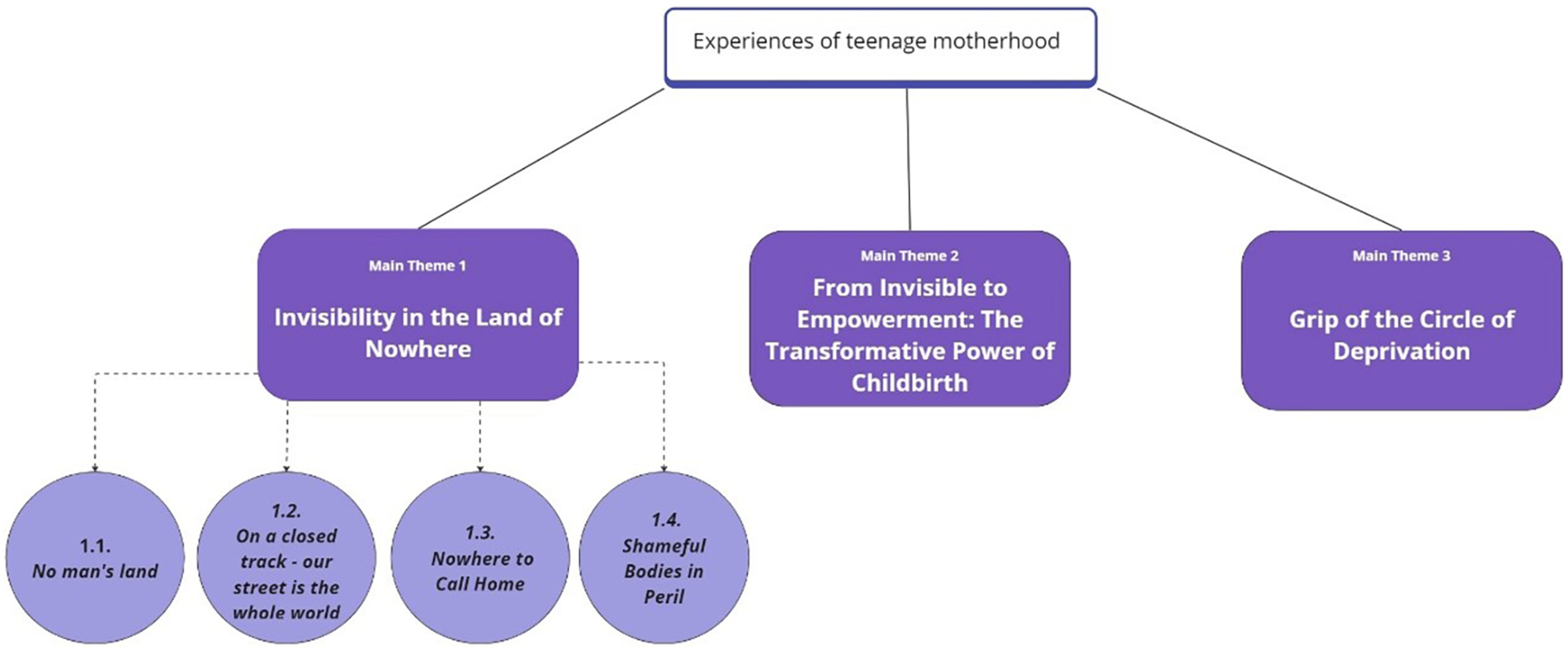
Main Theme 1: Invisibility in the Land of Nowhere
Prior to motherhood, as adolescent girls within the Roma community, our participants frequently found themselves in an environment where their voices remained unheard and their needs and thoughts went unnoticed. They often experienced marginalization within a society that overlooked their potential and denied them the opportunity to flourish. This experience is reflected in the main theme labelled Invisibility in the Land of Nowhere, which incorporates four subthemes: No man’s land, On a closed track - our street is the whole world, Nowhere to Call Home, and Shameful Bodies in Peril.
Sub-Theme 1: No Man’s Land
Our participants recall their adolescence not as a typical period of growth, self-discovery, and experimentation, but as a solitary journey facing various challenges, experiences, and emotions through a metaphorical No man’s land. Although our participants did not explicitly state that their teenage years deviated considerably from the norm, this was reflected in their stories: “Many things happened to me, a lot of bad things. This story happened 13 years ago, when I was 17 years old and already a mother of three” (Anna, digital story). Their narratives reveal that instead of experiencing the typical aspects of adolescence, such as self-discovery, experimentation, and redefining identity, they found themselves navigating a multitude of difficulties.
The experience of Tamara shows that No man’s land as a liminal space embodies a state of uncertainty, vulnerability, rejection, and lack of belonging: I was institutionalized at the age of 14. My dad left us and got another wife. My mum got sick, unfortunately, water in her lungs, and my dad offered to stay with us because my mum was no longer fit to bring us up. He didn't stay; instead, he returned to his wife. Thus, we were taken for a week with my three sisters to the foster home. (Tamara, citation from the digital story)
Traditional gender roles have a profound impact on the lives of our research participants. Within their cultural context, they often encounter societal expectations that revolve around domestic responsibilities, such as learning household skills and preparing for marriage. These traditional gender norms often dictate that young Roma women should prioritise family responsibilities over their aspirations and ambitions. Our participants found that this dynamic can hinder their sense of empowerment and self-determination and thus limit their access to opportunities beyond traditional roles. Tamara’s story highlights the pervasive impact of traditional gender roles on the educational aspirations of Roma girls: “I was in fifth grade when I left school. I just had more to do at home. I helped, cooked, cleaned, and looked after the little ones” (citation from the Creative Phase of the DST workshop).
Instead of focusing on educational development and personal growth, Tamara was directed towards domestic duties, reinforcing the societal expectation of her role as a future caregiver and homemaker. Navigating the pressures of traditional gender roles during her adolescence left her feeling trapped and limited in her aspirations. The emphasis on family duties over personal growth may have impeded Tamara from exploring her interests and talents beyond the home environment.
Sub-Theme 2: On a Closed Track - Our Street is the Whole World
Throughout the course of their lives, the participants have been confronted with a lack of opportunities, a homogeneous environment, and a dearth of perspectives. In the absence of prospects, they face persistent boredom and a sense of worthlessness, trapping them in a cycle of marginalization characterized by limited opportunities and a sense of hopelessness and despair. The phrase “On a closed track - our street is the whole world” captures this profound isolation and confinement experienced by these Roma youth, who have no visible escape from their circumstances. Hedi’s story from the Reflection Phase of the DST workshop illustrates the impact of this constrained environment and the absence of positive role models: “I was always told I had a good brain, but at that time, there were seven of us at home. The boys went to work, and I stayed home to help.”
The absence of guidance and encouragement from positive role models either within their family circles or in the wider community leaves these young individuals struggling to envision a different life, perpetuating the belief that their street is the whole world and that they have no alternative options: “My mother also gave birth to me at 16” (Vanda, excerpt from the Storytelling Phase of the DST workshop).
Sub-Theme 3: Nowhere to Call Home
Many of the participants view ‘home’ as an elusive concept, having grown up in abusive or neglectful family environments. As highlighted in the excerpt below, many of the girls have nowhere to stay, nowhere to escape from the difficulties they face, and experience an abusive family environment where home becomes synonymous with fear and danger: I lived with my mother, but there was no safe place to live because my stepfather was a very bad man. Whether we needed him or not, we had to go out in the rain to fetch or steal wood. If we didn’t go, he would chase us away, we had nowhere to go. So I left her there, I left her there. (Era, citation from her digital story)
The participants often find themselves unable to escape abusive situations and have limited access to support systems and protective services. The absence of safety nets perpetuates their vulnerability and leaves them feeling trapped in a turbulent and unstable environment. The lack of a safe and nurturing home environment has far-reaching consequences for their physical and mental health, inhibiting their personal development and preventing them from reaching their full potential: My mother drank bleach and was admitted to a psychiatric hospital. Afterwards, she drank alcohol instead and beat me up... then they took me to social services. In the social services, the professional said we were going for a bike ride, but he actually took me to a doctor, where he did an examination. (Vanda, citation from her digital story)
As shown above, as a girl Vanda faced insecurity not only within her home but also a loss of trust in social services. The social worker assisting Vanda failed to inform her about the procedures and outcomes she would face following the period of abuse and subsequent removal from the family. Fearing that Vanda would resist a formal medical procedure, the social worker deceived her by claiming that he was simply taking her for a bike ride. Instead, he took her to a doctor for an examination and to document Vanda’s injuries as a result of the maltreatment and to initiate the reporting process against Vanda’s mother. Vanda spent the next few years growing up in a children’s home, and says that having experienced this, she could never place trust in public services again.
Sub-Theme 4: Shameful Bodies in Peril
The fourth sub-theme concerns the relationship to and use of the body. Heidi’s story highlights how, in a marginalised, resource-poor situation, the body can be used through means such as prostitution or early pregnancy, perpetuating a cycle of exploitation and further marginalisation: I started taking drugs at the age of 15, I was in a very bad state. If Gyuszi had not come and married me and I had not become a mother, I do not know what would have happened to me. I would have died. (Hedi, citation from the Storytelling Phase of the DST workshop)
Hedi used drugs intensively during her teenage years and presents a stark perspective regarding the two available paths in her life: becoming a prostitute or a mother. She sees her child’s father as the saviour who steered her away from the wrong path and saved her from becoming a prostitute. The experience presented in Hedi’s story suggests that becoming a mother provided her with a sense of purpose, responsibility, and motivation to change her life path, acting as a catalyst for positive transformation.
Main Theme 2: From Invisible to Empowerment: the Transformative Power of Childbirth
Despite facing considerable challenges, the research participants describe the experience of childbirth as transformative and empowering, with the act of bringing a new life into the world instilling a sense of strength, resilience, and purpose. Moni shared this sentiment in her digital story: “I knew that if I had my little girl with me, I would overcome anything, I would do anything.” For Moni, her period of pregnancy and childbirth was a revelation of her deep inner strength. Even amidst difficult circumstances, the ability to carry and give birth enabled her to recognize her resilience and ability to nurture.
As the participants often experience a sense of hopelessness or lack of direction, the prospect of motherhood can provide a powerful sense of purpose. Anna also shared this experience in her digital story: “It was very difficult for me, and even though I had two children, I realized here that I was a mother, not a little girl. But the children give me strength.”
The responsibility of caring for a child was shown to motivate them to create a better life for themselves and their offspring. Flo expressed this in her digital story as well: “I realised then that I was responsible.”
Beyond the act of childbirth, taking control of their own body and decisions regarding their child can also be empowering. Maria explains that her grandmother, who accompanied her to her medical examination, wanted her to have an abortion, but Maria stood her ground for herself and her child: But my grandmother wanted to take the baby away from me because I was 17 and poor, and she was afraid that she would not have everything for the baby. I was sad and desperate. Then I told my mum that if they took the baby away, they could take me away with it. (Maria, citation from her digital story)
The desire to raise and care for a child can also be transformative. Hedi, who admitted that she had previously never asked for help, sought the help of a psychologist to better cope with the difficulties of motherhood. I was like, I'm not willing, and I can't raise her [the child] because I'm not able to. After a few months, I decided to see a psychologist to see if that would help. I went once and got a lot of help, but even then, my maternal instincts didn't kick in because I still needed some time to get over the grief. After six months I felt that I was capable of raising my daughter and taking care of her. (Hedi, citation from her digital story)
Although experience shows that our participants generally have a difficult and incomplete relationship with the care system, Hedi was able to access help that contributed greatly to her well-being. In her case her health visitor (a professional, common in Hungary, who provides health and care services, especially for mothers and children), who has more direct contact with local people, helped Hedi in obtaining the help she needed.
Main Theme 3: Grip of the Circle of Deprivation
The theme labelled “Grip of the Circle of Deprivation” refers to a phenomenon in which our participants become trapped in a cycle of limited opportunities and resources. Early motherhood often restricts their access to education, personal development, and employment prospects, thus perpetuating the cycle of disadvantage. As Vanda stated, “I’d like to study and finish school one day, but now I’m with the little ones all day. I look after them and do the housework. I have much work. I do not have time for anything else.” (citation from the reflection phase of the DST workshop).
Motherhood, while offering a sense of family, status, responsibility, and empowerment to the participants, can also impede their development. This is reflected in the experiences of one participant: “I never had a home; now I feel like I have one.” (Tamara, citation from the reflection phase of the DST workshop.
Similarly, Vanda found a safe haven that offered her emotional and financial support in caring for her child: Then my partner told me not to go back to my mum's, but to go to his mum's. I went there, and they were very nice to me. I told them where I came from and what my life was like. And my mother-in-law told me to trust her, they are not like that, they accept me, they love me... My partner started to work to provide everything. My mother-in-law bought everything for the baby. (Vanda, citation from digital story)
Maria shared another aspect of motherhood during the creative phase of the DST workshop: “It would be nice if I could work, because my partner only has ‘black jobs’. The family lives on what I get from family allowances and benefits.” Maria is proud to be able to support her family in her role as a mother, without which she would not be able to provide a regular source of income for her family. Although this source of income gives her status and power within the family, the role of a housewife does not allow her to work outside the home and fully realize her potential.
Discussion
Adolescent pregnancy presents a major challenge for both teenage parents and their families, often triggering a sequence of events with lasting consequences. Socially, young mothers from disadvantaged backgrounds find themselves navigating extraordinarily challenging circumstances that cast shadows on their prospects and opportunities. Despite the exacerbation of marginalization through early childbearing, our participants’ experiences show that motherhood is a potential means of escaping deprivation. Therefore, it is imperative to adopt a holistic approach that acknowledges the intricate relationship between socioeconomic factors and gender inequalities in order to effectively address teen pregnancy.
To gain a comprehensive understanding of teenage motherhood, various researchers (Corcoran et al., 2000; Meade et al., 2008; Smith, 2013) have applied Bronfenbrenner’s (1979) ecological systems theory framework. The environments surrounding adolescent girls play a pivotal role in shaping their decision-making and their path towards motherhood during adolescence. These environments encompass different layers, including the immediate environment (microsystem), the interactions between settings (mesosystem), broader community factors (exosystem), cultural values (macrosystem), and time-related events (chronosystem). The theory posits that these layers are all interrelated and interdependent. (Bronfenbrenner, 1979). The utilization of Bronfenbrenner’s ecological systems theory within our research is paramount due to its comprehensive and interconnected framework that enables a profound understanding of the complex dynamics surrounding teenage motherhood. By employing this theoretical perspective, we can effectively analyse how various environmental systems, ranging from immediate family and community dynamics to broader cultural and societal influences, shape our participants’ experiences. This framework allows us to recognize the intricate interplay between individual factors and the larger social context, shedding light on how these interdependencies impact young mothers’ decision-making processes and life trajectories. Furthermore, it helps unveil the nuanced layers of constraints and opportunities that teenage mothers encounter within their immediate environments and broader social structures, providing a holistic view crucial for designing effective interventions and support systems. Thus, the use of Bronfenbrenner’s ecological systems theory serves as a guiding tool to comprehensively explore the multifaceted dimensions of adolescent pregnancy and motherhood within the context of diverse socio-cultural settings.
Across our thematic analysis, the identified themes and subthemes highlight the factors and gaps that affect young mothers’ development at different levels and explain how early childbearing interacts with these conditions. In Figure 3, we presented the identified and interpreted themes of our thematic analysis within the framework of ecological systems theory. Ecological Systems Theory in Relation to the Experience of Teenage Motherhood
In the case of adolescent Roma girls, the microsystem encompasses their family, peers, and community. Main theme 1 (Invisibility in the Land of Nowhere) and its sub-themes (No Man’s Land, On a Closed Track, Nowhere to Call Home, and Shameful Bodies in Peril) highlight how these girls are constrained by traditional gender norms within their families and communities. This microsystem influences their perceptions of self-worth and sense of confinement within their immediate surroundings. The domestic violence and lack of family models further exacerbate feelings of deprivation and hopelessness and, in a limited living space, reinforces the feeling that there are no other alternatives in life. Denied the opportunity to explore their interests, talents, and potential, they are forced to follow a narrow path that does not support their individual development and aspirations. This cycle perpetuates a sense of hopelessness and prevents them from imagining a better future beyond their immediate circumstances. The closed track thus becomes even more closed, making it impossible not only for themselves but also for the next generation to initiate change.
The mesosystem involves the interconnections between different microsystems. Here, the transition to motherhood becomes a crucial link, as revealed in Main Theme 2 (From Invisible to Empowerment: The Transformative Power of Childbirth). Transitioning to motherhood marks a significant turning point for our participants, granting them new and elevated visibility within their families and communities. Motherhood also holds important cultural and social value, as mothers are regarded as crucial figures in shaping the community’s future. As they shift from being “invisible” to becoming empowered mothers, this new role alters the dynamics within their microsystem, potentially impacting their relationships and the expectations placed upon them.
The exosystem encompasses the external environments that indirectly impact an individual’s development. Main theme 3 (Grip of the Circle of Deprivation) aligns with this concept, demonstrating how external factors like societal attitudes, economic inequalities, and the absence of support services contribute to maintaining a cycle of disadvantage. As our sub-theme “Shameful body in peril” highlights, our participants often face discrimination, objectification, and exclusion, which puts them in a precarious situation where their bodies may be viewed as their only means of survival. In desperation and due to lack of resources, they may be forced to use their bodies as a means of survival in cases such as prostitution or early pregnancy, perpetuating a cycle of exploitation and further marginalisation. They also grapple with a sense of shame related to their appearance, the sexualisation of their bodies, or activities deemed unacceptable and stigmatized by society. Interpreting our results using Bronfenbrenner’s model draws attention to the broader social and structural inequalities that contribute to the marginalisation of these girls. Problems such as gender inequality, economic inequalities, and a lack of social support can exacerbate girls’ vulnerability and limit their ability to escape exploitative situations. These influences from the exosystem can perpetuate the lack of opportunities and resources, ultimately affecting the girls’ access to education and personal development.
Recognizing and understanding these interactions is pivotal for implementing targeted interventions that empower adolescent mothers, break the cycle of disadvantage, and significantly facilitate their meaningful participation within their families, communities, and society.
In Bronfenbrenner’s ecological systems theory, proximal processes play a critical role in understanding the dynamic interactions that influence individuals’ development within their immediate social environment (Merçon-Vargas et al., 2020). These processes, occurring within the microsystem, are essential in shaping cognitive, emotional, and social growth, ultimately impacting an individual’s well-being and resilience. Positive proximal processes, characterized by nurturing relationships and supportive interactions, foster resilience and healthy development, while negative processes may lead to maladaptive behaviors and emotional challenges.
Understanding proximal processes is key to carrying out action research in marginalized communities. By actively engaging stakeholders and empowering marginalized individuals as active agents of change, action research utilizes insights into proximal processes to develop targeted strategies that enhance nurturing relationships and support networks within these communities, promoting positive developmental outcomes and overall well-being. This approach aligns with Bronfenbrenner’s focus on empowering individuals within their immediate ecosystem, ensuring their developmental needs and well-being are met through comprehensive and inclusive strategies.
Additionally, the combination of Bronfenbrenner’s Ecological Systems Theory and action research showcases a holistic approach that respects the lived experiences of individuals within their ecosystems. This integration operates not just as a research process but as a catalyst for empowerment, transformation, and sustainable progress within marginalized communities. By merging these two approaches, action research becomes a potent tool for positive change, fostering broader societal transformations and illuminating universal human dynamics. This comprehensive framework enables interventions that yield more inclusive and impactful outcomes both locally and internationally.
Limitations
The Roma community has faced a long history of discrimination and marginalization. We argue that ethical research and effective change in their situation is possible through their inclusion and prioritizing their rights, dignity, and well-being. While addressing privacy concerns was an essential consideration, the fact that the videos were not shared in online spaces may limit the wider dissemination of the results, including to those who can influence social change. Although this article did not aim to provide an in-depth account of the cultural and ethnographic context of the Roma in Hungary; a deeper understanding of their social embeddedness may advance the research topic. Additionally, the DST application allows those with limited language skills to share in-depth content; however, compressing the experiences into videos might result in a loss of certain details. Furthermore, the DST research process can involve a fewer participants over a shorter time than in-depth interview research. In order to enhance community development and explore possible intervention directions, it was essential to study the phenomenon within a single community. However, obtaining the participation of different communities within Roma society can provide a more comprehensive picture of the phenomenon across different socio-economic strata.
From action research perspective the key limitation of this study lies in the extent of participant involvement during the analysis phase. While participants were deeply engaged in the data collection and storytelling processes, they were not involved in reviewing or validating the thematic analysis and final conclusions. This decision was made with sensitivity to the participants’ emotional boundaries, time onstraints. Nonetheless, we acknowledge that this approach creates a tension within the framework of action research, which ideally promotes ongoing dialogue and co-construction of knowledge. Future iterations of researches should explore more flexible and ethically appropriate methods of including participants in later analytical stages—such as collective theme discussions, or feedback opportunities—to enhance transparency and strengthen the participatory aspects of the research.
Conclusions
Our study demonstrates the effectiveness of DST in exploring adolescent motherhood in a marginalized population. By combining DST with thematic analysis, we have gained comprehensive insights into the complex nature of adolescent motherhood and identified potential avenues for intervention. Based on our DST research, novel participatory programs were conceptualised within the local community. The digital films were viewed by the children of the participants, as well as by several other mothers within the community, inspiring the formation of two groups focused on engagement with adolescent girls. The two groups include a mother-daughter group and a group solely for girls, which are already underway. These initiatives aim to enhance communication and understanding between generations, foster the girls’ aspirations, and increase their sexual awareness. We have collaborated with the Hungarian NGO Women for Women Together Against Violence (NANE) to provide methodological development opportunities, thus helping to mitigate social disadvantages. In regard to future directions for research, an action research study involving policymakers and health professionals could be a possible avenue for further investigation to deepen and refine our findings.
Footnotes
Acknowledgements
The authors extend their sincere appreciation to all participating mothers, recognizing their precious time and trust in sharing personal experiences.

Ethical Considerations
Our research adhered to the ethical standards of the Research Ethics Committee of the Faculty of Education and Psychology at Eötvös Loránd University (ethical approval number: 2022/329).
Funding
The authors disclosed receipt of the following financial support for the research, authorship, and/or publication of this article: The last author was supported by OTKA-K135629 (NKFI).
Declaration of Conflicting Interests
The authors declared no potential conflicts of interest with respect to the research, authorship, and/or publication of this article.