




Abstract
Educational disparities, particularly in remote and rural areas of Southeast Asia remain a critical challenge, especially regarding access to equitable and inclusive quality education. In response, four universities from the UK, Malaysia, Vietnam, and Indonesia came together in the ACES project - A Community-Centred Educational Model for Developing Social Resilience, funded by the UKRI-ESRC under the Global Challenges Research Fund. By leveraging playful and frugal educational design methods within a community-engaged framework, ACES sought to address how university partnership with community stakeholders across local, regional, national, and international contexts could target and collaboratively address educational challenges in a culturally relevant and sustainable manner. This paper discusses the methodological insights of how Community-Engaged Scholarship (CES) and Community-Engaged Research (CER) were combined and integrated through the lens of the ACES project. CES and CER have each been discussed as approaches useful for leveraging and strengthening community research relations with higher education. Collectively referred to as Community-Engaged Research Scholarship (CERS) in this paper, we critique how a collaborative CERS study design was applied to bridge the gap between academic research and community needs by fostering equitable and mutually beneficial partnerships. ACES strategies have focused on how CERS values have been consciously integrated to create impactful educational interventions. Adopting a Case Study approach, the paper analyses initiatives from Indonesia, Malaysia, and Vietnam, mapping the ACES’s core principles—community engagement, playfulness, frugality, and co-creation—to the participatory and community-engaged values of CERS. The findings reveal how ACES served to bridge the urban-rural educational divide, empowering educators and communities to co-create culturally relevant and sustainable learning experiences integrating playful and frugal methods. The CERS design underscores the importance of agile and co-creative pedagogical approaches, especially in the context of crises like the COVID-19 pandemic to enhance the resilience and effectiveness of community-engaged educational initiatives.
Keywords
Introduction
The role of universities in society has expanded significantly beyond the traditional confines of education and research. Today, higher education institutions are increasingly expected to engage with their local communities in ways that foster mutual benefit and generate substantial social impact. Examples of engagement are diverse, including approaches for community-based skills development and (re)training, participatory action research projects built on co-activism through service learning, and building/strengthening of links with industry, schools, charities, and voluntary organisations (Wimpenny et al., 2023). Yet challenges and tensions are at play in such engagements, not least considering the impetus for such activities and whom they best serve, as well as harmful historical patterns of partnership efforts which have failed to address hierarchical knowledge production and uneven power relations (Andreotti, 2016; Stein et al., 2016). Questions remain about how academic-community partnerships should be established, including examination of the ethical and geopolitical dimensions of any engagement (Stein et al., 2016).
Community-Engaged Scholarship (CES) is an approach to partnership that can be traced back to the mid-1900s, when the concept was used to ensure that a broader range of people had access to education which was then dominated by traditional elites (Cruz & Rodl, 2018). Community-Engaged Research (CER) speaks to the process of incorporating input from people who the research aims should impact and engaging with such research participants throughout (e.g. Han et al., 2021). What remains under-researched is critically examining how CES and CER can combine as a vital framework for guiding academic work with community needs through research partnerships grounded in equity, reciprocity, and social justice, and via research skills and processes which facilitate engagement on all sides (Gordon da Cruz, 2018; Han et al., 2021; Wallerstein et al., 2020). Fostering collaborative relationships between universities and communities to enable an ethical co-creation of knowledge and solutions that are directly relevant to real-world challenges is what we refer to as Community Engaged Research Scholarship (CERS), which is the main theme discussed in this paper.
Within this context, the ACES project (A Community-Centred Educational Model for Developing Social Resilience), initiated in 2020 as a collaboration between four universities, serves as a practical embodiment of CERS principles and practices. Operating across one UK and three Southeast Asian countries—Indonesia, Malaysia, and Vietnam—the ACES project seeks to address pressing educational challenges by leveraging playful and frugal educational methods within an equitable community-engaged framework.
The educational landscapes in Indonesia, Malaysia, and Vietnam, despite their unique contexts, share common challenges, particularly in the areas of pedagogical practices, teacher training, and curriculum development. These challenges are compounded by the need to align educational outcomes with the demands of the 21st-century global labour market. In Indonesia, for instance, the 2013 curriculum reform, designed to enhance the quality of education, has yet to achieve its intended impact, with 2018 PISA results showing that approximately two-thirds of Indonesian students did not meet the minimum proficiency levels in mathematics, science, and reading (Afkar et al., 2020; UNESCO, 2015b). Similarly, Malaysia’s educational system has struggled to keep pace with international standards, particularly in fostering higher-order thinking skills (UNESCO, 2015a). Vietnam, while performing well in international assessments, is increasingly recognising the need to transition from rote learning to more contemporary, student-centred pedagogies (Kataoka et al., 2020).
These challenges are further exacerbated by the ongoing urban-rural divide in educational access, a gap significantly widened by the COVID-19 pandemic (Reuge et al., 2021). The pandemic has deepened existing barriers to equitable and inclusive quality education (UN-SDG 4), particularly for marginalised learners in remote and rural areas. This situation has underscored the critical need for educators to adopt agile and creative teaching approaches to ensure that all learners remain engaged and do not miss out on educational opportunities.
In response to these challenges, the ACES project has played a pivotal role in engaging with educators, NGOs, and communities to bridge the educational divide between urban and rural areas. The project highlights the urgency of empowering educators to provide inclusive and equitable learning experiences. Grounded in four core principles: community, playfulness, frugality, and co-creation (Arnab et al., 2023), the ACES project has designed, developed, and implemented educational interventions that were viewed as culturally relevant, sustainable, and responsive to the needs of the communities involved. By aligning these principles with a participatory and community-engaged approach, ACES demonstrates how universities can serve as empathetic and proactive partners, working alongside local stakeholders to create educational practices that are both impactful and sustainable.
This paper critically examines the application of CERS principles and methodology within the ACES project, focusing on how playful, frugal, and co-creative educational design methods have been integrated into the project’s framework. By analysing case studies from Indonesia, Malaysia, and Vietnam, both scholarly and methodological insights into CERS, providing valuable understanding into how playful, frugal, and co-creative approaches can enhance the effectiveness and sustainability of community-engaged educational projects.
Background
Participatory and Community-Engaged Approach
Numerous ways of conceptualising academic-community research engagements have been considered as universities have worked to define and build theory and best practices on finding solutions to local and global problems. Also defined as community-based research, such approaches have focused on reducing inequities and in increasing community support and empowerment as part of sustained community-education partnerships for example, within public health related research (see Wallerstein et al., 2020). What is called for in such conceptualisations is careful examination of how community-academic research practices are contributing to the improvement of identified issues, rather than deepening the challenges they aim to address. For example, through practices which serve to exploit or further marginalise community participants perceived wisdom, or through superficial, paternalistic responses, or self-congratulatory solutions, which fail to address root problems, despite good intentions (Stein et al., 2016).
Community-Engaged Scholarship (CES) and Community-Engaged Research (CER), collectively referred to as CERS in this paper, have emerged as critical paradigms in higher education studies. Designed to bridge the gap between academic research and community needs by fostering plural ways of knowing and acting, CERS is underpinned by principles such as reciprocity, mutual benefit, collaboration, and a deep commitment to social justice. These aspects distinguish CERS from traditional, extractive research paradigms, which often overlook the nuanced needs and insights of community members (Gordon da Cruz, 2018; Han et al., 2021; Wallerstein et al., 2020).
Central to our consideration of CERS is the principle of co-producing knowledge with respect for the wisdom inherent in communities. Co-production in this way shifts the research dynamic from one-way knowledge dissemination ‘from the academy’ to a mutual exchange that values the expertise of both academic researchers and community members. As Wimpenny et al. (2023) highlight, the integration of community perspectives ensures that research outcomes are both academically rigorous and practically relevant. This approach closely aligns with social justice goals by ensuring diverse participant groups can participate actively in the research process, thereby working to ensure more equitable distribution of benefits and fostering long-term community resilience. Moreover, the contribution of non-institutionalised community efforts from grassroots social movements or NGOs are valued in CERS framings not least from their ability to draw on the wealth of local knowledges through their often-long-term relationships, and networking and community outreach capabilities (Stein et al., 2016).
Reciprocity and mutual benefit, while interrelated, serve distinct purposes within CERS. Reciprocity focuses on the research process—ensuring an ongoing, two-way exchange of knowledge, resources, and opportunities between academic and community partners. Mutual benefit, in contrast, centres on the outcomes—ensuring that both the community and the academic institution derive significant value from the research collaboration. Reciprocity fosters a dynamic and equitable interaction, whereas mutual benefit ensures that both partners gain tangible rewards (Ahmed & Palermo, 2010; Wallerstein et al., 2020). In combining these principles, CERS ensures that partnerships are not only ethically sound but also sustainable and impactful.
Collaboration, as a guiding principle, is crucial for fostering shared ownership and agency within CERS framings. Grounded in participatory action research (PAR) theories (Kemmis & McTaggart, 2005), collaboration in CERS also encourages actively challenging typical western knowledge production and instead placing emphasis on the ‘indispensability of all knowledges’ (Stein et al., 2016, p. 294) as a horizontal approach to ensure that the research outcomes reflect the lived experiences and expertise of the community. Research is conducted with people as active partners, not on them as passive subjects, aiming to generate knowledge that improves their lives through collaboration among researchers and relevant professionals (ICPHR, 2013). By integrating local knowledge, and critically engaging with a full range of possibilities, (with their possible harms as well as opportunities), CERS framings aim to foster solutions that are more sustainable and contextually effective, further contributing to the goal of social justice.
Essentially, social justice is at the heart of CERS, guiding the ethical conduct of research and ensuring that marginalised voices are respected and integrated. As Adhikari et al. (2019) note, community engagement strengthens the ethical dimensions of research by striving to build trust, minimise risks, and thus empower communities. This commitment to social justice aligns with broader goals of equity, ensuring that research serves the needs of vulnerable populations and addresses systemic inequalities.
In summary, the consistent emphasis of the horizontal with regards to reciprocity, mutual benefit, collaboration, co-production of knowledge, and social justice reflects a CERS model of community-academic research deeply embedded in ethical imperatives. By engaging communities as essential partners, CERS not only enhances community scholarship but also the rigour of ethical research to ensure that higher education’s engagement with international development is relevant, impactful, and transformative for the communities involved. This approach challenges traditional research power dynamics by positioning community needs and voices at the forefront of the research agenda.
The Role of Playfulness in Education
Playfulness in education has increasingly been recognised as a powerful tool for fostering engagement, creativity, and deep learning. Rooted in constructivist learning theories, playfulness encourages learners to explore, experiment, and engage in social interactions, thus fostering the active construction of knowledge (Zosh et al., 2017). Through play, learners engage in creative and exploratory practices that are not only crucial for building and applying knowledge and skills but are also deeply attuned to the cultural and social contexts of their communities (Winthrop, 2019). Organisations such as the LEGO Foundation have widely advocated the concept of learning through play, emphasising that it fosters critical thinking, problem-solving, and social skills in manners both enjoyable and meaningful.
In the context of ACES through a CERS lens/methodology, playfulness has served as an essential mechanism for engaging diverse groups of learners, particularly in settings where traditional educational methods have fallen short. CERS principles advocate for the co-creation of knowledge and equitable partnerships with communities, making playfulness a natural fit as it promotes inclusivity and strives to ensure that educational interventions are responsive to the needs of all learners, especially marginalised populations (Minoi et al., 2019). By incorporating playful elements into educational initiatives, CERS framings such as those used in ACES, create learning experiences that are not only more accessible and engaging but also resonate with the lived experiences and cultural contexts of the communities involved.
Moreover, play is understood not merely as an activity, but as a set of values, such as autonomy, agency, and curiosity, aligned with social justice, where the learner’s and educator’s voices and experiences are essential to the educational process (Arnab et al., 2021). The playful approach supports the development of resilience by encouraging learners to experiment, take risks, and learn from failure within a supportive environment. This approach, adopted by ACES, aligns with the broader goals of social justice by ensuring that all learners, of all backgrounds, could engage in meaningful educational experiences.
Frugality in Educational Design
Frugality in educational design involves creating cost-effective, sustainable, and accessible educational resources that are tailored to the needs of diverse communities. Originating from the challenges faced in resource-constrained environments, ACES integrated frugal education as part of a CERS design to emphasise the use of locally available materials, repurposing existing resources, and developing low-cost solutions that can be easily replicated and adapted (Masters, 2024). Frugality aligns with the aspects of CERS through its commitment to accessibility, inclusivity, and equity in education. It encourages the creative use of available resources to maximise impact without compromising quality (Radjou & Prabhu, 2015; Zeschky et al., 2011). As Masters (2024) highlights, frugality in educational design fosters innovation by encouraging educators and practitioners to leverage resources creatively to address specific needs or challenges, ensuring that learning experiences remain effective and engaging even in resource-constrained environments.
A frugal approach is particularly valuable in CERS, where the goal is to co-create knowledge and solutions with communities, ensuring that educational interventions are practical, culturally relevant, and responsive to local contexts. As was the intention of ACES, by transforming resource constraints into opportunities for creativity and innovation, educators can ensure that educational programmes remain accessible, resilient, and adaptable (Arnab et al., 2023). Such practices not only enhance the scalability and inclusiveness of educational interventions but also align with the principles of CERS by fostering community involvement and addressing local needs through cost-effective and practical solutions.
By designing educational resources that are affordable and easy to reproduce, CERS initiatives can reach a broader audience, including underserved and marginalised communities. Frugality also supports the CERS principle of sustainability by ensuring that educational interventions can be maintained and scaled over time. Leveraging locally available resources and promoting cost-effective practices contributes to the long-term resilience of educational systems, especially in low-resource settings (Jackson et al., 2020; Tan et al., 2023). This ensures that CERS projects can extend their reach and impact, providing all learners, regardless of their circumstances, access to high-quality education.
Co-Creation and Collaborative Design
Co-creation is a fundamental principle of CERS, emphasising the collaborative development of knowledge and resources between universities and communities. Co-creation and related concepts, such as co-design, are defined in various, and sometimes conflicting, ways (Sanders & Stappers, 2008; Slattery et al., 2020). Co-creation is a collaborative process where diverse stakeholders work together on problem-solving throughout an initiative, while co-design focuses on jointly designing solutions for a specific problem (Vargas et al., 2022). In ACES, co-creation includes all aspects of design, development, and implementation, where it involves engaging a diverse range of stakeholders in the development process, ensuring that the outcomes are relevant, culturally appropriate, and responsive to the needs of the community (Sanders & Stappers, 2008). Co-creation is particularly important in CERS, as it ensures that the interventions are not only relevant to the community but also owned by the community, increasing the likelihood of sustainability and long-term impact.
The concept of co-creation is closely linked to the principles of participatory action research, which advocates for the active involvement of community members in all stages of the research process. By involving community members in the design, implementation of educational interventions, and their usefulness, ACES, with its CERS framing, strived to ensure that the project outcomes were culturally relevant and responsive to the specific needs of the community. This collaborative approach aims to foster a sense of ownership and agency among community members, empowering them to take an active role in the educational process, and in the scaling up of interventions, ensuring their ongoing relevance, impact and effectiveness.
Methodology – Inquiry into the ACES’ Characteristics
ACES Case Studies Across Indonesia, Malaysia, and Vietnam
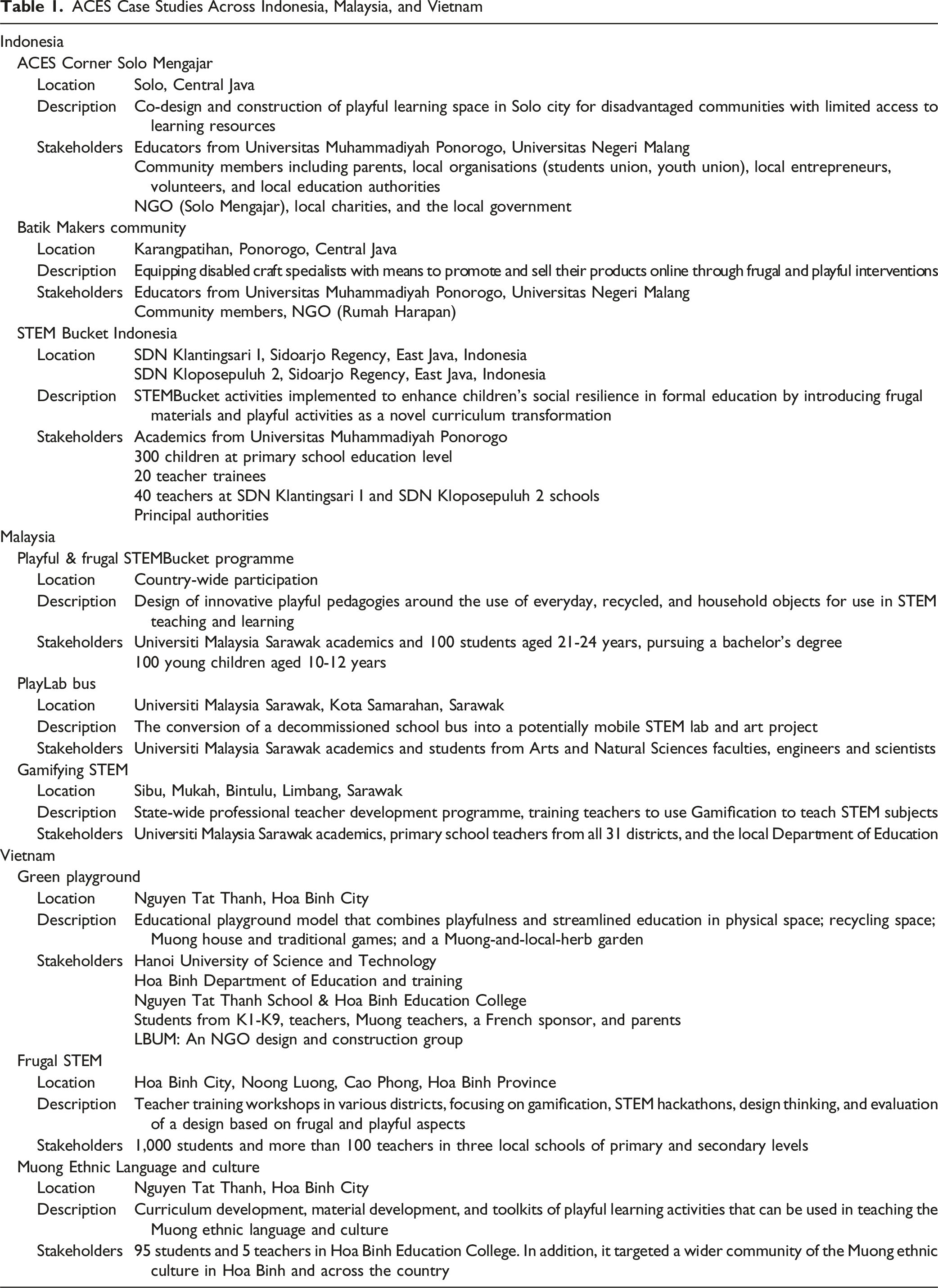
The ACES project is a collaboration between one UK institution and three higher education institutions located in Southeast Asia, specifically in Indonesia, Malaysia, and Vietnam. Each institution serves as a local champion, engaging directly with their communities to co-develop case studies that respond to specific cultural, educational, and environmental needs. A key component of the methodology is the onboarding process, which ensures that stakeholders and beneficiaries are included from the outset as part of the co-production team. This empathetic approach ensures that the interventions are aligned with local realities and community aspirations. Rather than imposing predetermined solutions, the project supports local teams in identifying context-specific challenges and collaboratively developing educational interventions, resources, and spaces using playful and frugal design methods. The process is iterative, allowing for testing, refinement, and adaptation based on feedback and emerging needs. Engagement activities such as participatory workshops, co-creation sessions, and community showcases play a vital role in strengthening collaboration, building trust, and fostering sustainability. This inclusive and context-sensitive approach reflects the core principles of CERS, including reciprocity, mutual benefit, and equitable knowledge co-production.
Four case studies—'Playlab Bus’ in Malaysia, ‘Green Playground’ in Vietnam, ‘Batik Makers Community’ in Indonesia, and the ‘Playful and Frugal STEM’ Initiatives across these three countries—were selected to represent the diverse contexts in which the ACES project operates. Each case study was developed through close collaboration between the local university partners and their communities, who played an active role in co-identifying the issues to be addressed. This began with an onboarding process where stakeholders were included as co-producers in the project team. This ensured that interventions were not only empathetically aligned with the realities and aspirations of local communities but also designed in ways that respected cultural practices and existing systems. Importantly, we were examining how CES and CER can combine as a CERS framework for guiding academic work with community needs through research partnerships grounded in equity, reciprocity, and social justice, and via research skills and processes which facilitate engagement on all sides. As such, the Case Study approach involved collecting primary data sources and mapping the ACES aspects to the playful, frugal and CERS approaches as discussed in the background section.
Data were gathered through a combination of document analysis and observations of partner project activities (using a range of creative content media e.g., film, photography, etc.). Considering our multi-method participatory research approach, the process of analysis was continually negotiated as a team approach, for example, starting with description (organising data to reveal patterns) to interpretation (developing themes and their significance and implications) (Braun & Clarke, 2022, p. 6). Meaning making took place across the network of participants (at intervals captured through film) and shared and reflected upon by the core research team in regular meetings across the respective country locations. This ongoing process of sharing with discussion and reflection, guided future actions. Additionally, the overall framework of analysis embraced a theory of change approach (e.g., Laing & Todd, 2015), necessitating a deep understanding of context and requiring a range of mapping approaches that have included focusing on tracing the case study scenarios over time, both per country partner, and then as part of the cross-case analysis, to appreciate and map the routes that knowledge travels and how impact can be understood and evidenced (Wimpenny et al., 2023).
It is of note that wider ACES study findings include a document analysis reviewing project country reports and the ACES Charter (Arnab et al., 2023) all available on the ACES project website 1 . These outputs reflect the core principles guiding the ACES project and provide useful context for understanding the project initiatives as applied to CERS, which the next section goes on to discuss.
Mapping CERS Aspects to the Case Studies
The analysis of the four case studies delves into the implementation of ACES principles - community engagement, playfulness, frugality, and co-creation – with CERS framings - reciprocity, mutual benefit, collaboration, social justice, and knowledge co-production. The example partner country case studies highlight how ACES strived to engage and build diverse partnerships with communities in the localities of the country partners to “nurture discovery, learning, and innovation so that higher education can become better entrenched within society and seen as a partner with concern for societal wellbeing” (Bhagwan, 2017, p. 171).
Case Study 1 (C1): Playlab Bus Initiative, Malaysia
Mapping of CERS Aspects to the Playlab Bus Implementation

The Playlab Bus initiative exemplifies playfulness through design considerations for the space that merge art and science, demonstrated through agentic and experimental collaboration on the aesthetics and functionality of the space. The creative process inspired innovation and deepened the team’s understanding of the intersection between art, science, and technology. The bus becomes a space for playful STEM learning for the community.
Frugality is essential to the initiative, as demonstrated by the repurposing of a decommissioned bus into a creative lab using cost-effective materials and tools. The environmentally conscious design aligns with the project’s sustainability goals. A vibrant mural on the bus’s exterior, created using a frugal digital tracing method, exemplifies how available technologies can be used creatively to overcome challenges.
Collaboration was key to the Playlab Bus’s development, involving student artists, scientists, engineers, and educators. This interdisciplinary co-creation process reflected CERS principles of mutual benefit and reciprocity, with participants sharing knowledge and contributing to innovative projects. The co-creation fostered a strong sense of ownership and pride among participants, enhancing the initiative’s sustainability. Moreover, it highlighted the importance of integrating diverse perspectives into educational designs, promoting interdisciplinary collaboration.
The principle of social justice is deeply embedded in the initiative, with the Playlab Bus providing an inclusive space for high-quality STEM and sustainability education. By offering community-engaged educational experiences and practical placements, the bus bridges the gap between academic knowledge and real-world applications, fostering a culture of innovation and environmental stewardship. The Playlab Bus showcases how the ACES framework, aligned with CERS principles, can create sustainable, socially just educational spaces that address contemporary challenges.
Case Study 2 (C2): Green Playground, Vietnam
Mapping of CERS Aspects to the Green Playground Initiative
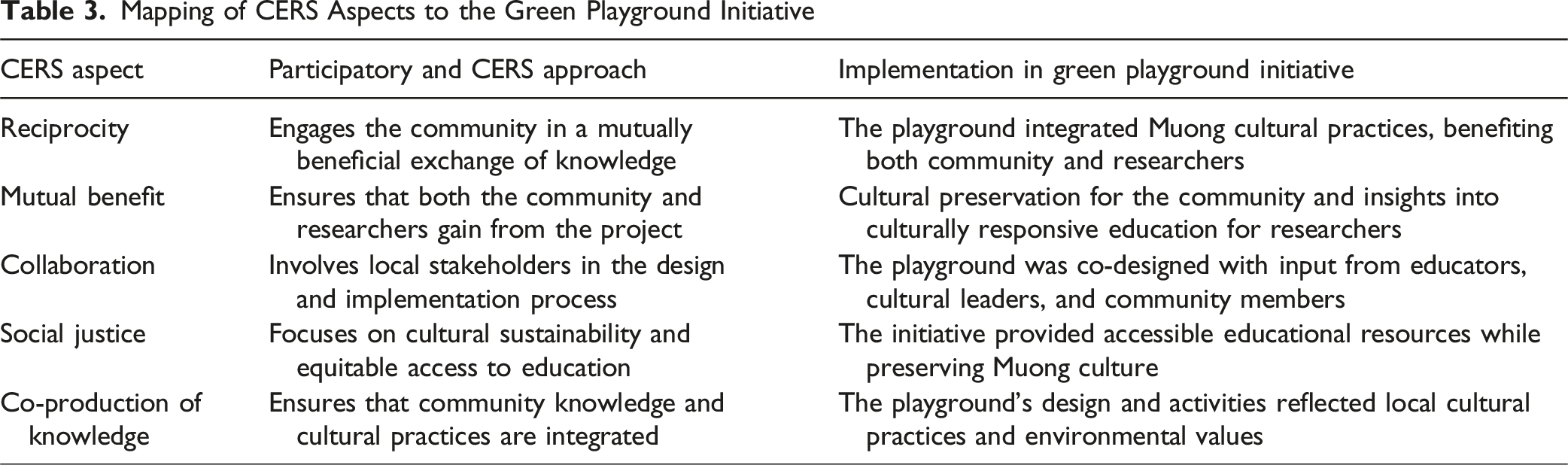
Playfulness is a fundamental element of the Green Playground, incorporating traditional Muong games and activities that engage students in enjoyable, culturally relevant, and pedagogically effective learning. These activities foster critical thinking and social skills, while teachers use the space for outdoor teaching sessions, enhancing the learning experience through cultural immersion.
Frugality is another key component, with the playground constructed using repurposed and upcycled materials, such as tyres and bicycle wheels. This frugal approach ensured cost-effectiveness and sustainability, allowing the playground to be maintained over time without burdening the community. The use of locally available materials showcases how innovative educational spaces can thrive in resource-constrained environments.
The initiative was built on CERS principles of collaboration. Educators, cultural leaders, and community members co-designed the playground, ensuring it met educational needs while preserving cultural practices. This participatory approach fostered a sense of ownership and pride, contributing to the playground’s sustainability and relevance. The use of recycled materials aligned with the community’s environmental values and the broader ACES framework.
Social justice is deeply embedded in the initiative, which focused on inclusivity by ensuring educational resources were accessible to all students, particularly those from the Muong ethnic minority. This commitment to equity provided opportunities for students who might otherwise be excluded and strengthened cultural identity by preserving Muong traditions.
In conclusion, the Green Playground in Vietnam effectively integrates the ACES principles into a sustainable and culturally relevant educational space. The initiative enhances learning while preserving Muong cultural practices, demonstrating the importance of culturally sensitive educational environments.
Case Study 3 (C3): Batik Makers Community, Indonesia
Mapping of CERS Aspects to the Batik Makers Initiative

The success of the Batik Makers Community initiative stemmed from its participatory approach, developed in partnership with local NGOs, educators, and community leaders, ensuring the project met the specific needs of disabled artisans. This collaborative effort, reflecting the CERS principle of co-production of knowledge, leveraged local expertise, making the intervention culturally appropriate and sustainable.
Playfulness was key to the initiative, especially in skill development. The project employed creative training methods in craft creation, marketing, and technology, making learning both enjoyable and practical, which built artisans’ confidence to apply their skills in real-world contexts.
Frugality was another important element, as the project utilised low-cost, locally sourced materials to develop marketing tools, ensuring that artisans could expand their business operations without incurring significant costs, aligning with ACES’s focus on scalable, impactful interventions.
Collaboration and co-creation were essential in bringing together educators, community members, and NGOs, and in empowering artisans to enhance their economic independence and providing researchers with insights into culturally responsive practices.
Social justice drove the initiative, targeting marginalised disabled artisans by providing tools to promote their products online. The project addressed economic inequality and social exclusion, aligning with broader goals of equity and inclusion, ensuring the benefits were equitably shared.
In summary, the Batik Makers Community initiative in Indonesia demonstrates how the ACES project, when aligned with CERS principles, served to empower marginalised groups through playfulness, frugality, community engagement, and co-creation, resulting in sustainable and impactful change.
Case Study 4 (C4): Playful and Frugal STEM Initiatives Across Indonesia, Malaysia, and Vietnam
Mapping of CERS Aspects to the Batik Makers Initiative
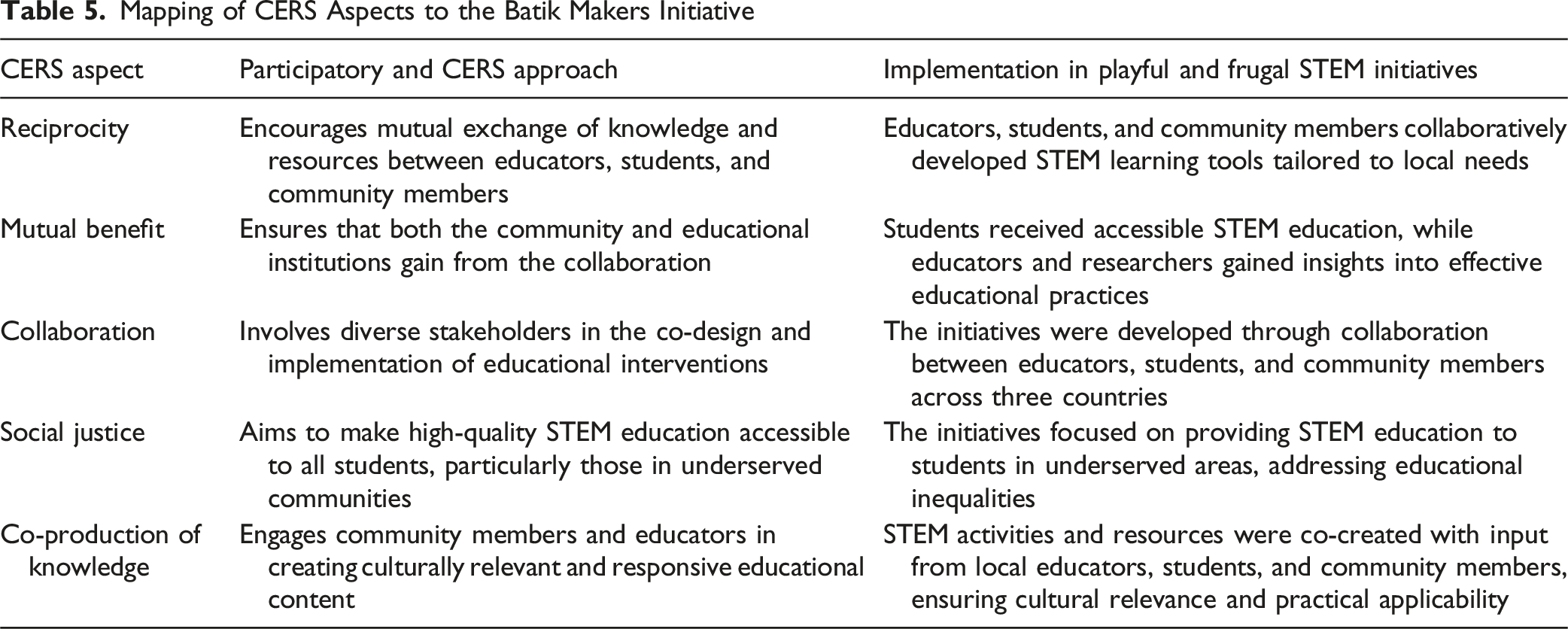
Developed through a participatory process involving educators, students, and community members across Indonesia, Malaysia, and Vietnam, these initiatives were both culturally responsive and practical within local contexts. Local stakeholders’ involvement in design and implementation fostered a strong sense of ownership, ensuring the interventions met the specific needs of each community.
Playfulness was central to the ‘STEMbucket’ (Malaysia and Indonesia) and ‘Frugal STEM’ (Vietnam) initiatives (Arnab et al., 2022). Activities were designed to engage students not merely with play as an activity to enhance new perspectives around STEM subject learning, but also in how play promoted a set of values to enhance learners’ autonomy, agency, and curiosity, encouraging students to experiment, take risks, and learn from failure within a supportive environment. These methods cultivated critical thinking, creativity, and collaboration as essential skills for today’s workforce, particularly valued in underserved communities where traditional teaching and learning methods are typically less effective.
Frugality and sustainability were guiding principles, with projects using everyday waste products and locally sourced materials to create affordable and environmentally responsible learning tools. This approach made the initiatives cost-effective, scalable, and sustainable, aligning with the communities’ cultural and economic realities, while ensuring high-quality STEM education even in resource-constrained environments.
Collaboration and co-creation were vital to the initiatives’ success. Educators, students, and community members co-produced the playful frugal STEM learning resources. This process exemplified the CERS framework’s emphasis on reciprocal knowledge exchange, where mutual benefit was clear: students gained access to creative STEM education, and educators and researchers gathered insights into effective, context-specific strategies.
Social justice was integral, with the initiatives focusing on underserved communities to address educational inequalities, especially during the COVID-19 pandemic. By making STEM education accessible to all students, these initiatives helped bridge educational gaps, empowering marginalised students to succeed in STEM fields.
In summary, the Playful and Frugal STEM Initiatives demonstrate the ACES framework’s transnational potential. By integrating playfulness, frugality, collaboration, and social justice, these initiatives fostered accessible, engaging, and sustainable STEM education, showcasing how educational projects can promote innovation and sustainability in marginalised communities.
Discussion
Aligning ACES with CERS Principles
The analysis of the ACES case studies highlights how the project strived to be deeply rooted in its inclusive process of stakeholder engagement, directly aligning with the core principles of CERS. CERS, as presented in this paper, is built on the foundation of consciously working to ensure plural means of representation, with respect for plural perspectives, whereby academic and community partners collaborate to negotiate and co-create knowledge to actively address community identified needs. Such learning continues to evolve and be shaped as the learning community engages in negotiated iterations of collaborative action, reflection, and evaluative feedback. The strategic involvement of a diverse range of stakeholders—including artists, students, educators, researchers, NGOs, local community members, and government agencies—throughout the design, implementation, and evaluation phases of the educational interventions, ensures that these interventions are not only culturally relevant but also transferable, reproduceable, and as appropriate, scalable.
In each case study, from the Batik Makers Community in Indonesia to the Playlab Bus in Malaysia, the Green Playground in Vietnam, and the playful and frugal STEM initiatives across the three countries, community members played an active role in co-creating educational interventions. Throughout the project, the local ACES teams had the autonomy to drive interventions in their respective communities, considering what strategies could best promote ownership and agency. This reinforces the value of CERS in how it guides best practices and lessons learnt for facilitating and sustaining knowledge-production for creative teaching and learning practices as part of grass-root social innovation. This participatory approach also ensured that the interventions were responsive to the unique needs of each community, thereby enhancing their relevance and effectiveness. Moreover, by involving community members as equal partners through horizontal project structures, the ACES project fostered a strong sense of ownership and agency, crucial to the long-term sustainability of the initiatives.
Playfulness, as integrated into the ACES project, aligns with CERS principles by providing a dynamic and engaging approach to learning that resonates with the cultural contexts of the communities involved. CERS emphasises the importance of creating learning experiences that are accessible and inclusive, particularly for marginalised groups. The incorporation of playful elements in the design of educational activities - whether through traditional games at the Green Playground in Vietnam, interactive STEM workshops on the Playlab Bus, creative craft-making in the Batik Makers Community, or playful hands-on STEM learning resources - proved to be an effective strategy for fostering creativity, critical thinking, and a love for learning among participants. Playfulness also facilitated the creation of learning environments that were both enjoyable and educational, thereby increasing the impact and reach of the interventions.
Frugality was thoughtfully integrated into the ACES project, ensuring that the educational interventions were not only cost-effective but also sustainable over time. CERS principles advocate for the responsible use of resources, promoting sustainability and long-term impact. The frugal approach, which emphasises the use of locally sourced materials and the repurposing of existing resources, allowed the ACES project to operate within the resource constraints of the communities it served. This approach was evident in the repurposing of an old shuttle bus for the Playlab Bus initiative, the extensive use of upcycled materials in the Green Playground, the development of a playful and natural approach for Batik making, and the application of locally sourced and upcycled materials and resources for designing effective and engaging STEM learning activities. Frugality ensured that these interventions could be maintained and scaled effectively, making a lasting impact on the communities.
Co-creation is at the heart of the ACES project’s alignment with CERS principles. By actively involving all stakeholders, ranging from local artisans and educators to government officials and NGOs, in the development and execution of educational interventions, the ACES project ensured that these initiatives were culturally relevant, practically effective, and reflective of the communities’ needs and aspirations. This co-creative process not only enhanced the quality and impact of the interventions but also was crucial for facilitating meaning-making with the communities involved and removing barriers to meaningful and contextualised participation and collaboration, empowering the communities by giving them a significant role in shaping their educational futures.
Consolidated Mapping of CERS Aspects to the ACES Approach

Challenges and Opportunities
CERS principles around stakeholder engagement, particularly in valuing diverse interests, perspectives and expectations of various stakeholders is understandably, not always straightforward, and there is no one-size-fits-all solution. The realities of academic-community work, and building stakeholder trust, takes time and patience, as well as learning from trial-and-error approaches. Such realities however, also present significant opportunities for co-learning and innovation. The participatory approach that underpinned each ACES case study facilitated the continuous refinement of educational interventions with feedback loops from stakeholders actively incorporated into the development process. This ongoing horizontal dialogue works to ensure that the interventions remain relevant and effective, even as the contexts and needs of the communities evolve. Indeed, one of the key insights gained from the ACES project is the crucial role of flexibility in stakeholder engagement. The ACES process was deliberately designed to be adaptable to different cultural and educational contexts, allowing for the iterative development of interventions that could meet the specific needs of each community. Flexibility was particularly vital for example in Indonesia, where the educational needs of disadvantaged children necessitated a tailored approach capable of addressing challenges such as limited resources and inadequate infrastructure.
Further observations from the local ACES teams across Malaysia, Vietnam, and Indonesia revealed that resistance to change, cultural perceptions of play, and a lack of institutional support were significant challenges to adopting playful educational methods. Play was often viewed as un-serious on the surface level, making it difficult to gain wider acceptance initially. However, the playful design workshops served to help shift participant apprehension as the benefits of creative exploration and problem solving were experienced first-hand. Playful teaching practices have since been demonstrated in the participating schools. The frugal principles were largely embraced as they aligned well with concerns about resource limitations, especially given the constraints posed by the COVID-19 pandemic during the project’s implementation.
Corrigan (2000, p. 189) warns that partnership with communities is often impeded when university research activities are “narrowly designed with community partners who are viewed as passive participants, not partners in discovery.” ACES has consciously worked to avoid determining a pre-defined approach, but it has been informed by the set of principles or values, aligning with CERS. Indeed, when stakeholders feel that their voices are heard and their contributions are valued, they are more likely to be committed to the success of the project. This was evident across the ACES initiatives, where the active involvement of community members, educators, and students in the co-creation process not only strengthened the relevance of the CERS interventions but also contributed to the leveraging of further resources.
Ultimately, the ACES project demonstrated that when stakeholder engagement processes are flexible and responsive, they can transform challenges into opportunities for deeper collaboration and innovation. By embracing this participatory approach aligned with playful and frugal values, the ACES project developed interventions that were not only effective but also culturally resonant across the diverse landscapes of Indonesia, Malaysia, and Vietnam, thus enhancing the overall impact of the project.
Conclusion
The ACES project exemplifies how the principles of playfulness, frugality, and co-creation can be effectively integrated into Community-Engaged Research Scholarship (CERS) to help create meaningful, impactful, community-centred educational initiatives. These principles aim to foster horizontal approaches as an ethical co-creation of knowledge and solutions that are directly relevant to real-world challenges. This paper has presented how ACES’ core attributes in its education partnership work with diverse communities in Vietnam, Malaysia and Indonesia, has been rooted in stakeholder engagement aligned with CERS principles such as reciprocity, mutual benefit, collaboration, social justice, and co-production of knowledge. The playful and frugal educational approaches in ACES not only enhanced accessibility and enjoyment but also ensured that interventions were culturally relevant, environmentally responsible, and economically sustainable. This alignment underscores the potential of CERS strategies to enhance community engagement, particularly in underserved communities, while offering a replicable framework for other educational initiatives.
The ACES project highlights the importance of flexibility and participation in designing educational models that are academically rigorous and responsive to local needs. By engaging a broad range of stakeholders in the co-creation process, ACES built sustainable, scalable models that fostered equity and social justice in education. This project provides a methodological contribution by integrating CES and CER into a unified model of CERS, blending conceptual scholarship with participatory research processes. The playfulness, frugality, co-creation, and collaboration of ACES drove the development of culturally relevant and impactful interventions, ensuring that community voices were central to designs and implementations.
The ACES project innovation lies in its ability to integrate CERS methodological principles with socio-economic and geographic divides, promoting playful and frugal approaches that expand the reach of educational interventions. This flexibility, paired with CESR’s ethical commitments, enhanced community ownership and resilience, ensuring that interventions were sustainable and responsive to local needs. We suggest CERS, as exemplified via the ACES project, can serve as a valuable methodological approach for integrating conceptual scholarship with robust research to foster equity and inclusivity in academic-community engagements, and particularly when working with marginalised communities.
Looking ahead, future work should focus on exploring the scalability and/or transferability of the ACES model to wider cultural and educational contexts. Universities can build on ACES’s lessons to advance CERS principles, contributing to sustainable, inclusive, and contextually relevant educational practices designed to empower communities to shape their educational futures.
Footnotes
Acknowledgement
We would like to thank all the collaborators and participants in Indonesia, Malaysia, and Vietnam.
ORCID iDs
Ethical Considerations
This study protocol was reviewed and approved by Coventry University Research Ethics Committee, approval number [P109635].
Funding
The authors disclosed receipt of the following financial support for the research, authorship, and/or publication of this article: The study discussed in this paper is part-funded by the Economic and Social Research Council (ESRC) for the ACES project (Grant reference: ES/T004789/1) and the GameChangers Initiative ( ).
).
Declaration of Conflicting Interests
The authors declared no potential conflicts of interest with respect to the research, authorship, and/or publication of this article.