




Abstract
The aim of this article is to characterize the methodological features and appraise the reporting quality of mixed methods research studies on racial and ethnic health inequities across the cancer control continuum (i.e., cancer prevention, detection, diagnosis, treatment, survivorship, or a combination of these domains) in the United States. A methodological review of relevant peer-reviewed articles in public health and allied fields published from 2003 to 2022 was conducted to describe the research context, reported mixed methods components, and incorporation of community perspectives in these studies. We conducted a systematic search of the Ovid MEDLINE, Scopus, Web of Science, CINAHL, and PsycINFO databases to identify relevant studies, and synthesized the findings using qualitative content analysis. We found 49 articles reporting mixed methods studies that involved participants from diverse racial and ethnic groups across the United States. We found that the majority of the articles provided a justification for using mixed methods research and detailed the qualitative and quantitative methods used. However, we noted that a minor portion of the articles explained distinctive insights gained from integrating qualitative and quantitative findings or adequately incorporated the perspectives of communities impacted by health inequities. Utilizing and reporting mixed methods procedures and insights gained through collaborative efforts will optimize the value of mixed methods research in realizing health equity across the cancer control continuum. The findings of this review suggest opportunities to elaborate on key defining procedures of mixed methods research, engaging with community perspectives, and gaining distinctive insights from the approach.
Introduction
Mixed methods research typically involves the intentional collection, analysis, and integration of both quantitative and qualitative data and findings, often guided by a researcher’s conceptual framework and philosophical assumptions, with the goal of generating interpretations based on the combined strengths of both components (Creswell, 2015; Creswell & Plano Clark, 2018; Fetters, 2020). Over the past two decades, scholars in the health-related fields have emphasized the benefits of mixed methods research in addressing multifaceted health phenomena and generating solution-oriented knowledge for practice and policy (Creswell & Plano Clark, 2018; Curry & Nunez-Smith, 2015; Curry et al., 2013; O'Cathain et al., 2007; Tariq & Woodman, 2013). In these types of studies, the quantitative component allows health researchers to determine trends and magnitudes of health outcomes, while the qualitative component helps to understand the contextual processes, beliefs, and motivations that underlie health behaviors and practices (Curry & Nunez-Smith, 2015; De Allegri et al., 2018; Regnault et al., 2018). Therefore, by using mixed methods research, health researchers can gain a comprehensive understanding of the nature and magnitude of complex health phenomena; develop holistic instruments to measure health outcomes; and describe the context, process, and outcomes when evaluating programs and interventions in experimental or real-world settings (Creswell et al., 2011; O’Cathain et al., 2007; Padgett, 2012; Plano Clark, 2010).
Mixed methods research can be particularly helpful in cancer research, as cancer constitutes a multi-faceted health phenomenon that needs to be addressed by engaging multiple perspectives and methodological approaches (Doran et al., 2022; Hiatt & Breen, 2008; Regnault et al., 2018). In the United States (U.S.), cancer is the second leading cause of mortality with persistent inequities observed across the cancer control continuum (here defined as encompassing cancer etiology, prevention, detection, diagnosis, treatment, and survivorship, or a combination of these domains) (Alcaraz et al., 2020; Green et al., 2019; Institute of Medicine Committee on Understanding Eliminating Racial Ethnic Disparities in Health Care, 2003; National Cancer Institute Division of Cancer Control & Population Sciences, 2024; Siegel et al., 2022). These observed inequities have been attributed to environmental and socioeconomic determinants at multiple socio-ecological levels influencing health, behavior, biology, and genetics and impacting cancer-related risks and outcomes throughout a person’s lifetime (Alcaraz et al., 2020; Braun et al., 2012; Forthofer, 2003; National Cancer Institute Division of Cancer Control & Population Sciences, 2024; Polite et al., 2017). Within the context of the U.S., these inequities impact racial and ethnic minority populations, who experience structural racism and other intersecting forms of injustices that may be amplified during the COVID-19 pandemic (Alcaraz et al., 2020; Bailey et al., 2017; Best et al., 2022; Centers for Disease Control and Prevention, 2022; Minas et al., 2021). Accordingly, mixed methods research can be particularly beneficial in illuminating racial and ethnic inequities in treatment experiences across the cancer care continuum, examining the structural determinants of such inequities, and developing interventions at multiple socio-ecological levels to address these inequities (Curry & Nunez-Smith, 2015; Stewart et al., 2008).
Meaningful engagement of affected communities in examining and addressing the root cause of health inequities is one of the key endorsed aspects of research efforts that seek to advance the vision of health equity (Duran & Perez-Stable, 2019; Thomas et al., 2011; Wallerstein & Duran, 2006). A key benefit of applying mixed methods research in this area is to promote culturally nuanced understanding of the experiences and determinants of inequities from historically marginalized perspectives (Mertens, 2007, 2021). In the U.S., scholars have argued that successful elimination of racial and ethnic health inequities across the cancer control continuum requires equitable engagement with communities impacted by these inequities (Polite et al., 2017; Rabin & Glasgow, 2015; Thompson et al., 2016). These community-engaged research approaches strive to integrate the interests, assets, and cultural worldviews of diverse community constituents in order to effectively intervene on the multi-level determinants of inequities (Best et al., 2022; Doran et al., 2022; Gehlert & Coleman, 2010; Thompson et al., 2016; Wallerstein & Duran, 2006; Yonas et al., 2006). Intersecting community-engaged approaches with mixed methods research can promote the integration of qualitative experiences, viewpoints, and preferences of community participants with quantitative population-based trends and patterns (Chandanabhumma et al., 2023; Creswell & Plano Clark, 2018; Curry & Nunez-Smith, 2015; DeJonckheere et al., 2019; Regnault et al., 2018). Furthering methodological interests in this area, examining the reported incorporation of community perspectives in mixed methods research procedures may help further research efforts that aim to promote health equity across the cancer care continuum (DeJonckheere et al., 2019).
When conducting a mixed methods research study, researchers are advised to follow a set of procedures unique to this methodological approach, including but not limited to: (i) establishing a rationale for the combined use and integration of quantitative and qualitative methods, (ii) choosing and implementing the appropriate mixed methods research design, (iii) planning the study from the outset with integration in mind, and (iv) integrating both data sources at one or more stages of the study (Fetters & Molina-Azorin, 2017; Wisdom et al., 2012). To permit full assessment of how well the study is conducted, researchers are also expected to report the mixed methods research procedures and findings in a transparent manner (Fàbregues et al., 2023; Hong & Pluye, 2019). For example, they should provide a clear explanation of the process of integrating the two data sources and the outcomes of such integration. For mixed methods research studies that seek to advance health equity transformations, it is also helpful to articulate the extent to which community perspectives are incorporated at different stages of the study (Chandanabhumma et al., 2020, 2023; DeJonckheere et al., 2019). This information should enable readers to critically assess whether a study of this type has been meaningfully conducted and whether the added value of mixed methods research has been achieved (Hong & Pluye, 2019).
In recent years, a number of guidelines for the elements to be reported in a mixed methods research study have been published, including several editorials in the Journal of Mixed Methods Research (Creswell & Tashakkori, 2007; Fetters & Freshwater, 2015; Fetters & Molina-Azorin, 2017; Mertens, 2011), a set of recommendations in the field of counseling (Leech & Onwuegbuzie, 2010), the American Psychological Association’s standards for mixed methods research articles in psychology (Levitt et al., 2018), and the guidelines for Good Reporting of A Mixed Methods Study (GRAMMS) (O'Cathain et al., 2008). Of these, GRAMMS, a simple and straightforward framework based on six broad guidelines, has been the most widely used, particularly in the health sciences. Several reviews have used some of these guidelines to assess the quality of mixed methods research reporting in health-related fields, such as health services research (O'Cathain et al., 2008; Wisdom et al., 2012), complementary and alternative medicine (Bishop & Holmes, 2013), population health research (Brown et al., 2015), built environment and health (Steinmetz-Wood et al., 2019), and chiropractic research (Emary et al., 2023). However, no reviews to date have appraised the quality of reporting of mixed methods research studies focused on racial and ethnic inequities in cancer health outcomes. This may leave the research community uncertain as to whether the added value of mixed methods research is being effectively realized and communicated in this research area. To this end, this methodological review aims to provide literature-informed findings and methodological guidance to optimize reported mixed methods research procedures in relevant studies that address racial and ethnic health inequities across the cancer care continuum.
The overall goal of this methodological review is to characterize the methodological features and appraise the reporting quality of mixed methods research studies of racial and ethnic health inequities across the cancer care continuum in empirical articles published in public health and related fields in the U.S. from 2003 to 2022. We focused on this time period to reflect the increased adoption and dissemination of mixed methods research in these fields since the publication of the first edition of the Handbook of Mixed Methods Research in 2003 (Tashakkori & Teddlie, 2003), a significant milestone in the history of mixed methods research, as it represents the first collaborative effort by members of the mixed methods research community (Creswell, 2024; Fetters & Molina-Azorin, 2021; O'Cathain et al., 2007). This methodological review addressed the following questions: (1) What are the research contexts of mixed methods research articles addressing racial and ethnic health inequities across the cancer control continuum? (2) What are the mixed methods research features and reporting quality of these articles based on the GRAMMS guidelines? (3) To what extent do the included articles incorporate community perspectives in addressing racial and ethnic inequities across the cancer control continuum using mixed methods research?
Methods
Design
We carried out a mixed methods research systematic methodological review to describe the research contexts, methodological reporting practices, and incorporation of community perspectives in mixed methods research articles addressing racial and ethnic disparities across the cancer control continuum in the U.S. Mixed methods research systematic methodological reviews (hereby referred to as methodological reviews) are a type of review in which researchers systematically identify mixed methods studies and assess their trends to describe how this methodological approach has been used within a field or across fields (Howell Smith & Shanahan Bazis, 2021). Formal and validated guidelines for conducting and reporting methodological reviews and mixed methods research systematic methodological reviews have yet to be developed (Howell Smith & Shanahan Bazis, 2021; Martin et al., 2020; Mbuagbaw et al., 2020). In the light of this gap and the similarity of methodological reviews to scoping reviews (Martin et al., 2020; Mbuagbaw et al., 2020), we followed the PRISMA Extension for Scoping Reviews (PRISMA-ScR) (Tricco et al., 2018) guidelines in conducting and reporting this review. This approach was recently adopted by Bakhsh et al. (2024) in a similar review of mixed methods research within the field of sport management. In addition, to address elements particular to mixed methods systematic methodological reviews that are missing from the PRISMA-ScR guidelines, we followed recommendations specific to these types of reviews by Howell Smith and Shanahan Bazis (2021), and Fàbregues and Guetterman (2024). Due to its methodological scope, the review was not preregistered.
Search Methods
A health sciences librarian (KV) created a search strategy to identify mixed methods research articles that examined racial and ethnic inequities across the cancer control continuum published from 2003 to 2022. This strategy was tested in collaboration with the research team (PPC, STT, SF) by pre-selecting a few relevant articles that met the inclusion criteria (or sentinel articles) and verifying that the articles were retrieved in our search query. Five electronic databases were searched: Ovid MEDLINE, Scopus, Web of Science, CINAHL, and PsycINFO. We used the key search terms that represented the following four conceptual areas: health inequities (e.g., “health services accessibility”, “health equity”, “healthcare disparities”), mixed methods research (e.g., “mixed method*”, “multiple method*”, “mixed research”), race and ethnicity (“race”, “ethnic”, “people of color”), and cancer (“cancer*”, “neoplas*”, “oncolog*”). The full search strategy can be found in Supplemental File 1. The search was initially carried out on September 21, 2021 (Round 1) and updated on December 16, 2022 (Round 2).
Inclusion and Exclusion Criteria
Inclusion and Exclusion Criteria
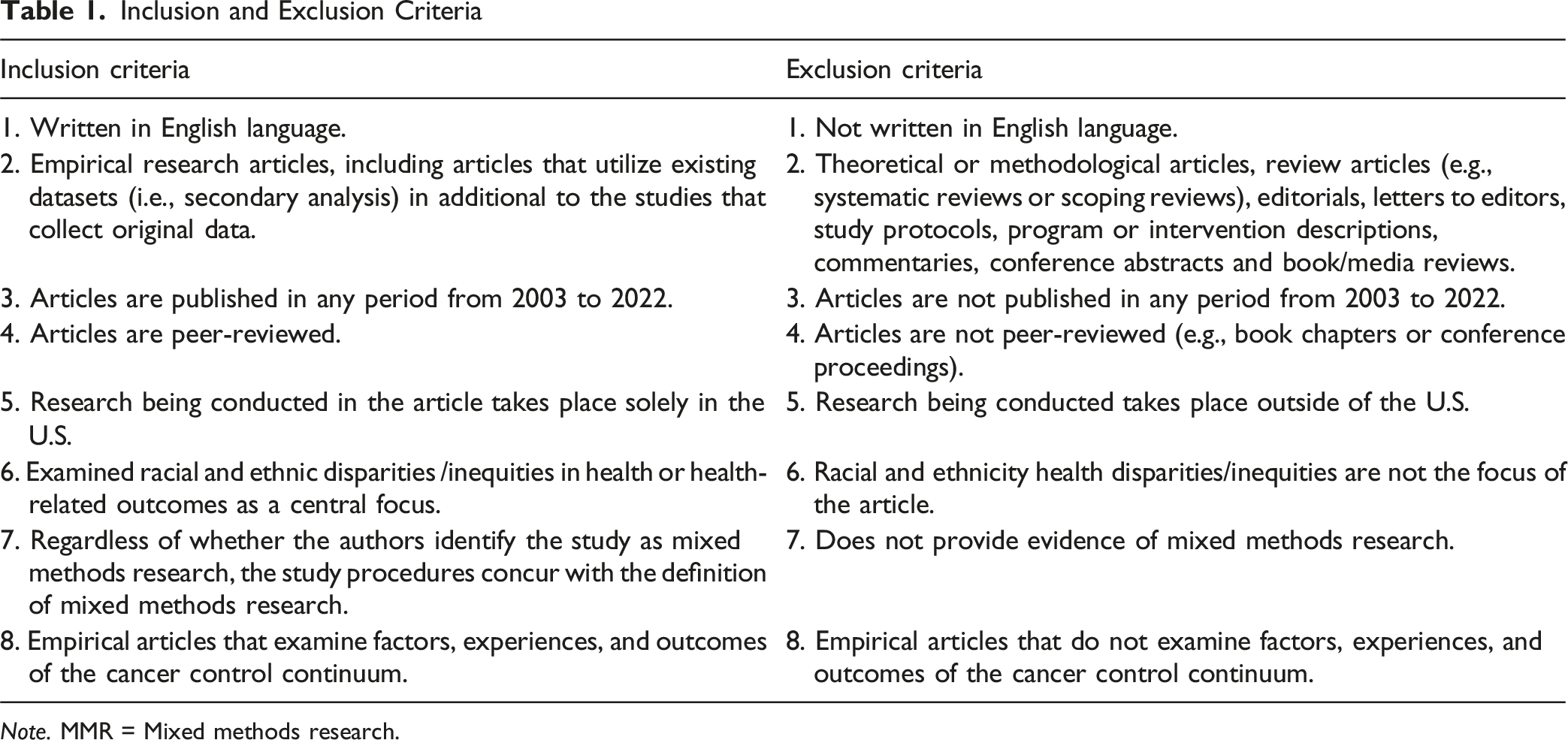
Note. MMR = Mixed methods research.
Search Outcome
Our database search identified a total of 998 articles published between 2003 and 2022. As depicted in the flow diagram (Figure 1), we excluded 544 duplicate records and reviewed the titles and abstracts of 454 articles. Based on the screening of abstracts and titles in the first round, we excluded 285 articles that did not meet our inclusion criteria. We assessed the full texts of the 169 articles for study inclusion in the next round of review. After reading the full text of these articles, we excluded 120 articles that did not meet our inclusion criteria. The selection process resulted in a final sample of 49 peer-reviewed mixed methods research articles addressing racial and ethnic health inequities across the cancer control continuum (see Supplemental File 2 for references of the articles). Flow Diagram of Study Identification and Selection
Data Abstraction and Synthesis
The research team (PPC, STT, AA, SF) performed content analysis to extract and analyze textual information from the included articles. Content analysis is a systematic and relatively structured method for analyzing extensive qualitative data sets using deductive and inductive coding approaches (Schreier, 2012). This method was deemed suitable for this review due to the large number of included articles and the use of a predetermined and inductively derived coding approach. We developed a coding spreadsheet to extract open-ended and close-ended information from the included articles including research contexts, the reporting quality of mixed methods research elements, and the integration of community perspectives within the included articles. The information on the research contexts extracted for each article included the cancer condition addressed, the stage of the cancer control continuum, expressed categories of the racial and ethnic group of study participants, the focal purpose of health equity research, the publication year, and the journal of publication (Federal Register The Daily Journal of the United States Government, 2024). After extraction, these research contexts were inductively coded by the research team. The inductive codes were discussed and agreed upon, followed by final round of coding.
To examine the mixed methods research features and reporting quality, we followed two steps. First, we extracted relevant information related to mixed methods research components, including description of the study as mixed methods research, citation of key literature on mixed methods research, rationale for using mixed methods research, mixed methods research design, qualitative and quantitative sampling, data collection and analysis, integration at the methods and reporting level, insights gained from mixed methods research integration, strengths, and limitations. We extracted both implicit and explicit textual information for the coding categories of rationale for using mixed methods research and mixed methods research design. We made this decision because the absence of explicit reporting of mixed methods research procedures does not necessarily indicate that they were not performed in the original study. Alternatively, the authors may have attempted to report these features in some manner, even if it was not recommended by the mixed methods research literature. For example, an article justified using an explanatory sequential design in order to use the qualitative results to explain the initial quantitative results. However, the article also described selecting a purposeful sample with specific quantitative indicators to collect qualitative data. In this case, we applied “development to inform data collection” for explicit rationale and “development to inform sampling” for implicit rationale. Second, we coded the extracted information using a predetermined codebook (see Supplemental File 3) informed by prior methodological reviews of mixed methods research and adapted GRAMMS guidelines (Emary et al., 2023; Fàbregues et al., 2022; O'Cathain et al., 2007). For each GRAMMS criterion, we assigned “yes” if the feature was explicitly or clearly reported in the article, “yes, but” if the reporting was implicit or had to be inferred from the text of the article, and “no” if the feature was not at all reported in the article. For integration of community perspectives, we abstracted textual expressions that address the extent to which these perspectives were integrated into the study and coded these expressions using adapted categories of community participation in research (Chandanabhumma et al., 2020; Peterson & Gubrium, 2011).
To enhance our analytical accuracy, we used a paired coding approach throughout the coding process, in which a primary coder independently coded the content of an article, and then a second person verified the coding of the primary coder. Any coding disagreements were discussed and resolved by consensus. All members of the analysis team convened regularly to discuss major progress and made iterative refinements to our analytical progress. Once we completed data extraction and coding, three team members (PPC, SF, and AA) checked the coded data for consistency. Then, we employed descriptive statistical techniques (i.e., frequency, percentage) to describe the study sample and trends in the use of mixed methods research features and reporting quality. In addition, using literature summary tables (Younas & Ali, 2021), all extracted text fragments were thoroughly examined and compared to identify similarities and differences in the methodological characteristics of the included articles.
Results
In line with our research questions, the results of the methodological review are organized in three sections: (a) research contexts of the articles, (b) mixed methods research features and reporting quality, and (c) community perspectives incorporated in the articles.
Research Contexts of the Articles
Characteristics of the Included Articles (N = 49)

Note. HPV = Human papillomavirus.
When we examined the cancer conditions addressed in the articles, we found that more than one-third of the articles focused on breast cancer (n = 18, 36.7%) followed by more than one type of cancer (n = 9, 18.4%) and prostate cancer (n = 7, 14.3%). The 49 articles included in the review included participants from diverse racial and ethnic groups across the United States. Almost one half of the articles focused on Black or African Americans (n = 19, 38.8%) followed by more than one racial and ethnic group (n = 17, 34.7%) and Hispanic or Latinos (n = 9, 18.4%). Based on the main purpose of health equity research being conducted, almost half of the articles addressed healthcare experiences (n = 23, 46.9%), followed by causes of inequities (n = 13, 26.5%), interventions (n = 12, 24.5%), and measurement (n = 1, 2.0%).
Journals in the Study Sample Indexed in Journal Citation Reports by Subject Category (n = 40)

Note. Three journals were not indexed in Journal Citation Reports and are therefore not represented in this table. Some journals were indexed in more than one subject category, so the total number of journals in the table exceeds the number of journals in the study sample. SCIE = Science Citation Index Expanded, SSCI = Social Sciences Citation Index, ESCI = Emerging Sources Citation Index.
Mixed Methods Research Features and Reporting Quality
When assessing the mixed methods research features of the articles, we found that nearly all of them used mixed methods-related terms to identify the study (n = 47, 95.9%), while two articles did not use any specific terms (4.1%). A wide majority of the articles that used mixed methods-related terms used mixed methods as a key term to describe the study methods (n = 45, 95.7%), whereas two articles used alternative terms, such as multimethod (4.1%). However, only less than a third included citations of key literature on mixed methods research (n = 16, 32.7%). Creswell and Plano Clark's (2006) Designing and Conducting Mixed Methods Research book (all three editions) was the most cited reference along with Creswell’s Research Design: Qualitative, Quantitative, and Mixed Methods Approaches book (n = 4 for each), followed by Creswell et al.'s (2011) Best Practices for Mixed Methods Research in the Health Sciences.
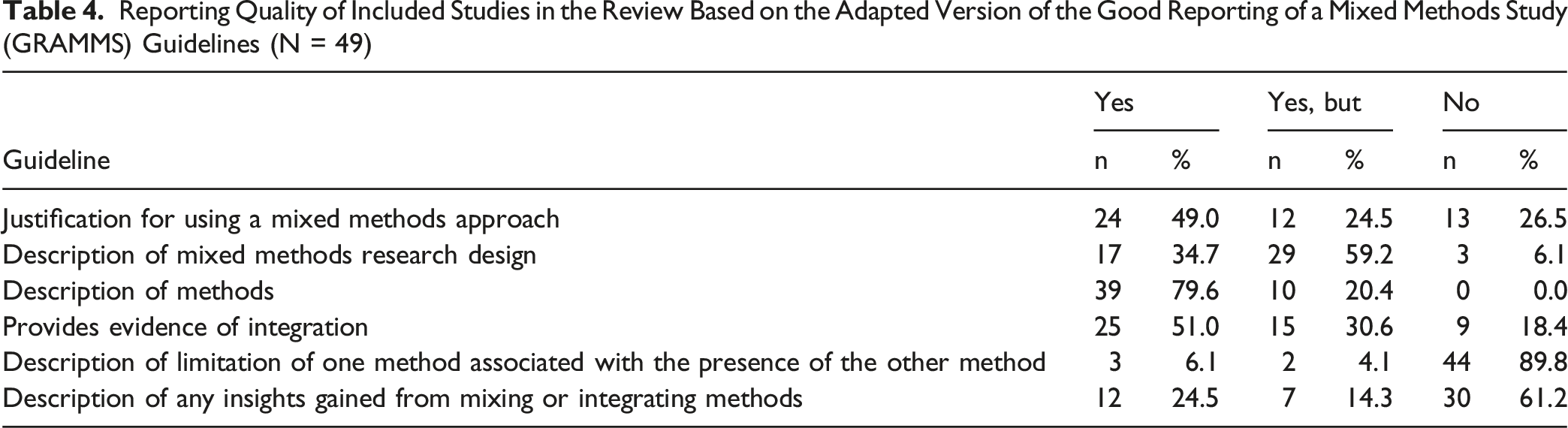
Reporting Quality of Included Studies in the Review Based on the Adapted Version of the Good Reporting of a Mixed Methods Study (GRAMMS) Guidelines (N = 49)
Mixed Methods Research Reporting Features for Rationale and Design (N = 49)

*Note. The sum of explicit and implicit reporting features may not equal the total number of articles because some articles may have no reported features while others may have more than one explicit and implicit reporting features. MMR = Mixed methods research.
Similarly, we examined the explicit and implicit mixed methods research design being reported. Of the 19 articles that provided an explicit mixed methods research design, convergent design (n = 10) was found to be the most common, followed by explanatory sequential (n = 6) and exploratory sequential (n = 3) designs. Of the 28 articles that provided an implicit mixed methods research design, convergent design (n = 23) was found to be the most common, followed by explanatory sequential (n = 3) and exploratory sequential (n = 2) designs. To illustrate, Owens et al. (2021) described using a convergent parallel design with simultaneous quantitative and qualitative data collection that are analyzed separately then integrated (or merged) to provide explanations for the focal relationships addressing prostate cancer decision-making.
In addition to the mixed methods research designs, we examined integration at the methods and reporting levels following the principles and practices recommended by Fetters and colleagues (2013). Most of the articles provided an explanation about the integration at the methods level with merging (n = 39), followed by building (n = 8) and connecting (n = 4). Several studies included more than one integration strategy reported at the methods level. Exemplifying explicit integration using merging strategy, Getrich et al. (2014) explored Human papillomavirus (HPV) decision making among clinicians, parents, and adolescent girls and described comparing and contrasting findings from questionnaire and interview data to generate case summaries for each healthcare site and, upon comparing between both sites, to synthesize an integrated decision-making model.
When we examined integration at the reporting level, we found that narrative was the most common integration strategy reported explicitly (n = 23) and implicitly (n = 15). Joint display as an integration strategy at the reporting level was less common with seven articles presenting joint displays explicitly, and one article presenting an implicit example of joint display. Six articles reported explicit use of narrative and joint display strategies; whereas only one study reported the use of narrative and joint display strategies at the reporting level implicitly. Demonstrating an example of a joint display, Mansfield et al. (2022) provided a joint display showing integration of quantitative and qualitative data for individual-level and community-level factors underlying HPV vaccine completion among adolescents. Their joint display included both qualitative quotations and sub-themes from the interviews in addition to adjusted quantitative odds ratios and explanatory variables from electronic health record data, as well as overall mixed methods research interpretations.
We further examined limitations of one method associated with another and insights and strengths from mixed methods research integration in the included articles. Only five articles provided explicit discussion of limitations of one method associated with the other method. For example, Campesino et al. (2012) investigated sociodemographic and ethnic identity factors contributing to discrimination in breast cancer care. They expressed that the qualitative data illuminated participants’ experiences of discrimination in healthcare settings which would otherwise have not emerged in quantitative findings employing traditional discrimination measures. When we examined insights and strengths from mixed methods research integration, we found that only 19 articles provided information. To illustrate, Jung et al. (2018) articulated the emergence of cultural and non-cultural factors underlying colorectal cancer screening behaviors that could not be explained by quantitative survey data alone.
Incorporation of Community Perspectives
We examined the extent to which the articles incorporated community perspectives in reporting their mixed methods research procedures based on an adapted classification of community participation in research (Chandanabhumma et al., 2020). The frequencies of the articles and textual examples based on the categories of community participation are shown in Supplemental File 5. Approximately one half of the articles (n = 24, 49.0%) did not explicitly state how they engaged the perspectives of community members in their studies. More than one third of the articles were classified as instrumental support, as the texts of these studies described the provision of instrumental support to specific research procedures, such as participant recruitment or data collection (n = 19, 38.8%). Cobran et al. (2018) described the community organizations’ roles in disseminating recruitment materials and providing on-site spaces for data collection. Three studies were categorized as community advisor, as the texts described community members offering guidance, input or feedback to the project (6.1%). For example, Wittich et al. (2019) explained the involvement of the community collaborator in sharing the recruitment materials and offering recommendations to tailor and enhance cultural relevance to the focal population. Only two articles were classified as community partner, as these articles articulated engaging community members as partners that co-contributed to key phases of the research project (4.1%). Lu et al. (2014) elaborated on adapting community-based participatory research (CBPR) approach to partner with the community collaborator in co-designing the study, collecting and interpreting the data.
Discussion
The overall goal of this methodological review was to assess the reporting quality of mixed methods research in empirical articles addressing racial and ethnic health inequities across the cancer control continuum (i.e., prevention, detection, diagnosis, treatment, and survivorship) in the U.S. published from 2003 through 2022 in public health and allied fields. Our review revealed the extent to which the reviewed articles transparently reported the contexts of research being conducted, the design and implementation of the mixed methods research study, and the incorporation of community perspectives. Elucidating the practices and considerations for conducting and reporting mixed methods research is crucial to optimizing the values of mixed methods research in advancing investigations of racial and ethnic health inequities across the cancer control continuum.
In terms of the research contexts of the articles in our sample, there was a growing trend in the published studies that identified with and employed mixed methods research after 2011. This finding may reflect greater recognition and acceptance of mixed methods research practices in allied health fields, as exemplified by the development of the Best Practices for Mixed Methods Research in The Health Sciences report by the National Institutes of Health (NIH) Working Group (Creswell et al., 2011; Gaglio et al., 2020). In terms of the focal racial and ethnic group, we found that most of the articles involved Black or African American and multiple racial and ethnic communities. These results may reflect the focus of research on communities that experience the greatest burden of health inequities across the cancer control continuum. They also suggest the opportunity to broaden mixed methods research investigations to other impacted racial and ethnic groups. Assessment of the focal research purpose indicated that the articles most frequently utilized mixed methods research with the goal of understanding the experiences of healthcare, followed by examining underlying causes, and developing intervention to address health inequities. While these findings may concur with the ways mixed methods research are leveraged in health equity research, our study identified additional potential to utilize mixed methods research to advance measurement development in this area (Curry & Nunez-Smith, 2015; Stewart et al., 2008). Our results regarding the disciplinary context of the journal being published showed that journals were notably indexed oncology and non-medical categories, demonstrating the wide reach and acceptance of the mixed methods research across multiple disciplines.
In terms of the reporting characteristics of mixed methods research, we found that most articles in our study sample included the term mixed methods in their study description. This finding concurs with our search criteria to include articles identified as mixed methods research (or similar terminology) and with methodological recommendations to explicitly use this nomenclature (Creswell & Plano Clark, 2018; Guetterman et al., 2024). Identifying a study as mixed methods research allows researchers to make it clear to readers that the study meets the requirements of mixed methods research and is therefore distinct from other forms of research that may use multiple quantitative methods or multiple qualitative methods, but not both in combination. In addition, the use of this term is likely to emphasize that there is some form of integration between the quantitative and qualitative components. Similar to patterns noted in other reviews, a minor portion of the articles included citations to key methodological literature on mixed methods research (DeJonckheere et al., 2019; Fàbregues et al., 2020; Huynh et al., 2019). When we examined mixed methods research methodological publications that were cited by these articles, we found that researchers frequently cited seminal works authored by leading mixed methods research scholars (e.g., Creswell & Plano Clark, 2011). We preliminarily noted that articles that referenced these works had a more robust rationale and a clearer description of the design than articles that did not. These findings highlight the importance of incorporating and citing key literature on mixed methods research in order to enhance transparent communication of mixed methods research as a rigorous methodology (Coyle et al., 2018; Creswell & Plano Clark, 2018; Huynh et al., 2019; Plano Clark & Ivankova, 2016).
We examined the extent to which the articles articulated key features of mixed methods research in order to assess how well they followed accepted guidelines for conducting and reporting high-quality mixed methods research studies, namely GRAMMS. We found that most studies identified their designs as mixed methods research and that nearly half of them provided explicit justification for using mixed methods research. Compared to prior reviews highlighting gaps in this area, our findings may indicate a higher level of reporting mixed methods research justification in cancer health equity research (DeJonckheere et al., 2019). Among those that reported justification, complementarity and triangulation were the most frequent. This, in turn, reflects the finding in our review that the convergent design was the most frequently cited mixed methods research design, similar to what was found in other reviews (DeJonckheere et al., 2019; Huynh et al., 2019). Similarly, the majority of the reviewed articles explicitly described qualitative and quantitative sampling, data collection, and analysis procedures. Our findings demonstrated greater adoption of transparent reporting in this area compared to prior reviews of health-related mixed methods research (Brown et al., 2015; DeJonckheere et al., 2019; Fàbregues et al., 2020; Huynh et al., 2019).
However, our review revealed major gaps in the articulation of findings and insights that emerge from integrating qualitative and quantitative dimensions of a mixed methods research study. Notably, we found that only half of the articles provided explicit evidence of integration of the qualitative and quantitative components, a finding that is consistent with other reviews of mixed methods research in the health sciences that also found limited reporting of integration in the included studies (Bressan et al., 2017; Fàbregues et al., 2020; McManamny et al., 2015; Steinmetz-Wood et al., 2019). Furthermore, most articles failed to communicate what insights were gained from mixed methods research integration or the limitations of one method related to the presence of the other method. These findings are also consistent with those found in previous reviews (Brown et al., 2015; Emary et al., 2023; Fàbregues et al., 2020; Granikov et al., 2020). We acknowledge the possibility that the degree of mixed methods research reporting may vary due to contextual reasons, including multidisciplinary team expertise, study context and journal requirements (Emary et al., 2023; Fleming et al., 2014; Jin et al., 2018). However, these contextual factors should not discourage mixed methods researchers and practitioners from reporting the core elements of the mixed methods research transparently. Inadequate reporting of mixed methods research studies has two important consequences. First, it makes it difficult for the research and community audience to assess the methodological quality of the study, because without an explanation of the procedures, others cannot judge the extent to which the study was well conducted (Hong & Pluye, 2019). For example, if the results of the integration of the qualitative and quantitative components are not presented, readers may not be able to explicitly assess the strength and weakness of the integration being performed. Second, it prevents readers from understanding the outcomes of the integration and thus the value added by the process. Conversely, by presenting the results of the integration, either narratively or through visual joint displays, readers can appreciate the unique knowledge that results from the integration of the two components. This is particularly important because integration is the core feature of mixed methods research that distinguishes it from quantitative or qualitative monomethod research (Guetterman et al., 2020).
We further assessed the integration of community perspectives, an endorsed feature of health equity research, in our article sample. This assessment aimed to elucidate the extent to which these mixed methods research studies that seek to address racial and ethnic health inequities across the cancer control continuum attend to the perspectives and interests of impacted communities. Notably, major research and funding entities have shown growing support for community-engaged approaches and integration of community perspectives in health equity research (Chen et al., 2010; Mercer & Green, 2008; Viswanathan et al., 2004). However, our findings revealed that only half of the articles explicitly outlined how communities are involved in their mixed methods research study, and for those that did, most were classified as providing instrumental support to aspects of the research process; a very minor proportion of the articles engaged with community as equitable research partners. These findings concur with those of similar health-related reviews of mixed methods research highlighting inadequate engagement with community perspectives, particularly in the early conceptualization and design stages of the study (Chandanabhumma et al., 2023; DeJonckheere et al., 2019; Ellickson et al., 2024). We acknowledge the possibility that the authors may have integrated community perspectives in their studies but faced constraints (e.g., journal guidelines, peer review guidance) from reporting them in the article. However, as research discourse shapes research action, these findings raise questions about the implications for research and community entities if the principles and practices of equity-oriented mixed methods research are not consistently reflected in major venues of scientific communication (Chandanabhumma et al., 2020; Peterson, 2010; Peterson & Gubrium, 2011).
Strengths and Limitations
This methodological review has several strengths in understanding the methodological features and reporting quality of mixed methods research studies addressing racial and ethnic health inequities across the cancer care continuum. The methodological review was conducted by a multidisciplinary research team that leveraged a wide range of perspectives (e.g., public and global health, mixed methods research, information science) to conduct critical appraisal of the peer-reviewed literature. In addition, we adapted and utilized the GRAMMS guidelines, which enabled us to assess key mixed methods research features using endorsed criteria and make comparisons to similar health-related methodological reviews. We made contextual adjustments to the GRAMMS guidelines to distinguish between explicit reporting and implicit reporting of key mixed methods research features. We further assessed the incorporation of community perspectives in health equity-oriented research studies using adapted categories of community engagement in research. Finally, the analysis leveraged quantitative and qualitative data extracted from the articles to provide comprehensive information on the contextual characteristics, mixed methods research reporting features and quality, and the incorporation of community perspectives in the articles.
The findings of the study should be cautiously interpreted with the consideration of a few limitations. First, we searched five electronic databases (i.e., Ovid MEDLINE, Scopus, Web of Science, CINAHL, and PsycINFO). Due to the fact that we identified our articles via database searching, we could not definitively confirm that the search was exhaustive, as search results are influenced by the biases of those database contents (i.e., bias due to language of publication or country of study origin). Our review did not include dissertations, book chapters, technical reports and other forms of publications that were not peer reviewed. Our search strategy utilized key search terms that represented the conceptual areas of health inequities, mixed methods research, race and ethnicity, and cancer. We made efforts in our search to include similar terms (e.g., health disparities) and adjacent key words (e.g., qualitative and quantitative) as well as controlled vocabulary of each database (when available). However, there may exist some relevant articles that we did not capture because they did not use the key words we searched. This is particularly important in mixed methods research, as the field is still developing in several disciplinary areas, especially those where it has been less prevalent in the past, and not all researchers are familiar with the nomenclature of the methodology. This methodological review focused on the U.S. context due to observed racial and ethnic health inequities across the cancer control continuum. This approach likely excluded other mixed methods research articles that examine inequities across the cancer control continuum worldwide. Owing to the considerable time, personnel, and resources required to conduct the review, it was not feasible to update the search beyond the 2003–2022 time period. Our methodological review intended to examine transparent reporting of research contexts, mixed methods research practices, and incorporation of community perspectives in the included articles to assess how well these mixed methods research studies are conducted. Our assessment did not account for research practices that were not articulated in these articles or reported through other forms of dissemination. In addition, the assessment of quality was limited to the quality of the reporting of the studies; we did not assess their methodological quality. Finally, while we acknowledge that philosophical assumptions (e.g., post-positivism, constructivism, pragmatism, transformative paradigms) variably influence the nature and conduct of research, these assumptions are rarely identified and explicitly named in mixed methods research studies (Coates, 2020; Creswell & Plano Clark, 2018; Shan, 2022). As such, full examination of philosophical assumptions of mixed methods research studies is beyond the scope of this review.
Implications for Practice
Mixed methods research is increasingly promoted to examine the experiences and underlying structural factors impact racial and ethnic health inequities across the cancer care continuum. The findings of this methodological review, however, highlight the need to clearly articulate the procedures of mixed methods research, and the extent to which the research engages with community perspectives and provides distinctive insights. We encourage researchers to follow widely accepted mixed methods research guidelines, consider methodological advances in this area (e.g., joint display analysis) and utilize contemporary terminology to enhance the precision of mixed methods research reporting (Guetterman et al., 2024). Despite common publication-related concerns (e.g., journal guidelines and limits), we note the ways in which these reporting practices promote methodological sophistication and enhance the quality of the article without excessive elongation of the manuscript. To enhance the utility of mixed methods research investigations in advancing cancer health equity, we recommend that researchers closely attend to the following: • Provide a justification for using a mixed methods research approach that explains the insights that one expects to gain from the study. • Describe the mixed methods research design used, including when and where the integration of quantitative and qualitative components occurs using text and a procedural diagram. • Describe the procedures followed in carrying out the quantitative and qualitative components, including the sampling, data collection, data analysis, and quality procedures. • Provide evidence of mixed methods research integration through the use of joint displays and describe the connections between the quantitative and qualitative findings and inferences. • Report the extent to which novel mixed methods research insights are gained from the approach. • Cite key mixed methods research publications to demonstrate that sound methodological and reporting practices have been followed.
Conclusion
In conclusion, this mixed methods research systematic methodological review provides mixed methods researchers and practitioners with field-based practices and considerations for meaningfully conducting and reporting mixed methods research studies addressing racial and ethnic health inequities across the cancer control continuum in the U.S. Researchers and practitioners may benefit from demonstrating the added value of mixed methods research by clarifying key mixed methods research procedures, including the integration of qualitative and quantitative approaches and the incorporation of community perspectives, and explaining the unique insights gained from using mixed methods research. Future mixed methods research case series investigations could be conducted to document how mixed methods research procedures are implemented in practice across different research contexts. Additional methodological reviews should be conducted to examine mixed methods research studies addressing other forms of health inequities (e.g., migration-based health inequities) impacting communities across the globe. Collectively, these efforts will contribute towards promoting the synergistic contributions of mixed methods research in eliminating racial and ethnic health inequities across the cancer control continuum.
Supplemental Material
Supplemental Material - Assessing the Reporting Quality of Mixed Methods Studies Addressing Racial and Ethnic Inequities Across the Cancer Control Continuum (2003–2022): A Methodological Review
Supplemental Material for Assessing the Reporting Quality of Mixed Methods Studies Addressing Racial and Ethnic Inequities Across the Cancer Control Continuum (2003–2022): A Methodological Review by VP. Paul Chandanabhumma, Sinem Toraman Turk, Annika Agni, Kathryn Vanderboll, and Sergi Fàbregues in International Journal of Qualitative Methods
Footnotes
Acknowledgements
We acknowledge that an earlier version of this work was presented at the 2023 AcademyHealth Annual Research Meeting (ARM). We are grateful for the guidance of Marjorie Kagawa Singer, PhD, MN PhD, MN, RN in conceptualizing and conducting this study. We thank Rania Clark for assistance in preparing the manuscript. This article was written in memoriam of Michael D. Fetters, MD, MPH, whose boundless contributions to the field of mixed methods research have inspired and motivated us to advance this methodology towards the vision of health equity.

Ethical Considerations
Ethical approval was not required for this methodological review.
Funding
The author(s) disclosed receipt of the following financial support for the research, authorship, and/or publication of this article: Chandanabhumma was supported, in part, by a science award from the National Center for Advancing Translational Sciences (NCATS; UL1TR002240). The content is solely the authors’ responsibility and does not necessarily represent the official views of NCATS.
Declaration of conflicting interests
The author(s) declared no potential conflicts of interest with respect to the research, authorship, and/or publication of this article.
Data Availability Statement
All relevant data are included in the manuscript and in the Supplementary File.
Supplemental Material
Supplemental material for this article is available online.
References
Supplementary Material
Please find the following supplemental material available below.
For Open Access articles published under a Creative Commons License, all supplemental material carries the same license as the article it is associated with.
For non-Open Access articles published, all supplemental material carries a non-exclusive license, and permission requests for re-use of supplemental material or any part of supplemental material shall be sent directly to the copyright owner as specified in the copyright notice associated with the article.
