




Abstract
Domestic violence (DV) against women in intimate relationships is a global public health issue with significant legal and institutional challenges. While legal reforms seek to enhance victim protection and perpetrator accountability, their implementation faces barriers within the criminal justice system, particularly in police and judicial institutions. A multi-agency approach—coordinating police, courts, social services, and NGOs—has emerged to improve institutional responses. This systematic review protocol follows PRISMA-P 2015 guidelines to assess the impact of legal reforms on DV policies within police institutions. A qualitative synthesis will analyse contextual factors, with searches conducted in Web of Science, Scopus, and MEDLINE/PubMed, complemented by citation mapping via Litmaps. The PICo framework and validated using the PRESS 2015 guided the search strategy, while PRISMA-S will inform data extraction and Rayyan will manage references. Independent reviewers will assess studies, resolving disagreements with a senior researcher. The review will evaluate legal reforms’ effects on DV recidivism, their effectiveness across contexts, and perceptions of punitive versus restorative approaches. Key challenges include resource constraints, institutional resistance, and program sustainability. Findings will support policymakers in refining legislative measures and strengthening institutional responses.
Keywords
Background
The Problem, Condition or Issue
Domestic violence (DV) against women in affectionate or intimate relationships is a serious public health problem worldwide (WHO, 2021). This phenomenon presents significant challenges for legislators in creating effective legal norms that address and mitigate the problem (Onyemelukwe, 2018) and imposes difficulties on agents of the Criminal Justice System (SJC) in the implementation of new legal provisions aimed at the protection of women (Carline & Easteal, 2014; Hirschel & Deveau, 2017). Legal reforms impact various professional categories responsible for their implementation, causing changes in multiple agencies, such as the police (Bradford et al., 2014) and the judiciary system.
The formulation of legislation to combat DV usually represents the first step toward restructuring the processes that seek to address the problem (Buzawa & Buzawa, 1979). Reforms in this area promote greater accountability among aggressors and increase the visibility of DV as a relevant social problem (Buzawa et al., 1998; Dugan, 2003). The continuous evaluation of policies to combat DV is crucial to ensure its effectiveness and fairness. Ideally, these reforms should be adjusted based on empirical evidence (Harvard, 1993) and feedback from the parties involved, including victims, aggressors, and professionals from the SJC, police, and social services (Coker, 2001, Corcoran et al., 2001); however, this is not always the case.
Coordinated actions between courts, police forces, and other agencies that protect victims and apply judicial measures to protect them can increase the effectiveness of actions to combat DV (Hoyle, 1998). More effective collaboration between these entities can improve the coordination of institutional responses, enhance the safety of victims, and ensure that court orders are duly complied with (Finn & Colson, 1998; Hovell et al., 2006).
Reforms in the legal system can directly impact the operations of the various bodies linked to the SJC (Kajeepeta et al., 2024). In the context of DV, more precise identification of the principal offender may result in a more targeted response that is adequate for the needs of each case (Hirschel & Deveau, 2017). For laws to fully effect aimed change, implementation challenges must be addressed (Meyer & Reeves, 2021). This ensures that those involved have adequate training and the necessary tools, especially police officers (Cho & Wilke, 2010), which plays a central role in the initial response to DV cases (Islam & Mazerolle, 2022; Smith, 1987; Tatum & Pence, 2015; Waaland & Keeley, 1985). The effects of political reforms are reflected in police practices, including arrests and mandatory rehabilitation programs, which impact public security agencies around the worldwide (Durfee & Goodmark, 2020; Li et al., 2015; Robinson, 2000; Segrave et al., 2016). This approach is improved by strengthening the ability of the JCS to cope with DV, thus promoting a more coordinated and evidence-based system (Cunha et al., 2025) aimed at the protection of women and the effective accountability of aggressors (Hamilton et al., 2021).
Intervention
A multi-agency intervention can offer a more coordinated and effective response to DV against women. This type of intervention involves partnerships between different government agencies, such as security forces, the judiciary, health and social services, nongovernmental organizations (NGOs), and community services, which collaborate to meet the complex needs of victims and ensure the accountability of perpetrators (Messing et al., 2015).
The evolution of criminal law in the context of DV and gender reflects the legal changes that began with the creation of a specific system of criminal offenses for this issue. The doctrinal and jurisprudential discussion on applying these norms and the strategies adopted to protect victims allows us to understand the evolution of legislative proposals. This process also reveals the ongoing debate about the best approaches to address DV against women, a topic that is constantly evolving (Fitz-Gibbon & Vannier, 2017).
Multiple agency interventions in DV cases may include several strategies, such as cooperation between the police, the justice system, and social services, to identify the perpetrator, assess the risk, and manage the cases (Franklin et al., 2022). This collaborative approach aims to improve the initial response of police forces, ensuring that victims receive adequate support and protection from the first contact with the SJC (Holder, 2008; Hovell et al., 2006; Xie & Lynch, 2017). In this context, the security forces play an essential role, as the police are often the first to respond to DV cases (Howes, 2019). The active participation of police officers in task forces with other agencies allows for the more efficient follow-up to restrain orders and other protective measures (Dowling et al., 2018). In addition, it facilitates the referral of victims to appropriate support and protection services (Gill et al., 2021; Tatum & Pence, 2015).
In addition, multi-agency interventions usually provide training for the professionals involved and agents who work in cooperation, including police officers (Carter & Grommon, 2016; Myhill & Johnson, 2016). Social workers and other professionals in the system have the necessary skills to identify and act effectively in cases of DV (Dichter et al., 2011). This training allows for a less invasive, more conscious, and informed approach by the agent (Douglas, 2019), which respects victims’ rights and promotes compliance with public policies based on evidence and feedback from stakeholders (Coker, 2001). Initiatives such as regular meetings between agencies are needed to discuss ongoing cases, assess the progress of applied measures, and adjust approaches as necessary. The effectiveness of such interventions depends not only on formal coordination between agencies but also on developing a network of trust and continuous communication that allows for a fluid and effective exchange of information (Maple & Kebbell, 2021; Segrave et al., 2016).
Thus, multi-agency interventions are expected to improve a more robust and coordinated response system by integrating efforts between multiple entities, expanding the protection of victims and the accountability of aggressors. By bringing together different resources and perspectives, the multi-agency approach contributes to a more comprehensive fight against DV, strengthening the capacity of the SJC and promoting evidence-based practices aimed at defining the effectiveness of protection and security policies and understanding the inherent challenges (Islam & Mazerolle, 2022; Maple & Kebbell, 2024).
How the Intervention Might Work
Multi-agency intervention to address DV against women works effectively by integrating various services and perspectives that allow for a comprehensive approach to address the complex needs of victims and hold perpetrators accountable. This intervention is based on the understanding that DV is a multifaceted phenomenon involving social, psychological, and legal variables that require a coordinated response among different actors, such as practices of colocation of police teams in partnership environments (Atkinson, 2019).
Thus, as in the case of multi-agency approaches against violent radicalization, collaboration between agencies improves the effectiveness of actions by enabling the coordination of efforts, the sharing of information, and the aggregation of resources (Cherney & Belton, 2021). This intervention begins with the action of the police, who are often the first to respond to DV cases. The police, in collaboration with other agencies (Zedaker & Goodson, 2023), identify and assess the risks, refer victims to support services, and monitor compliance with judicial protection orders. This partnership between the police and the judiciary allows protective measures to be implemented effectively and will enable victims to feel supported from the first contact with the SJC. This integrated collaboration model occurs due to the efficient sharing of information between agencies, allowing identification, monitoring, and more precise intervention in cases of DV (Slayton, 2000).
The effectiveness of the intervention is related to the continuous training of the professionals involved so that the police, social workers, and other agents can identify and deal with DV cases with sensitivity and assertiveness. Specific training in the context of DV increases the ability of these agents to assess risks and act according to best practices, which promotes compliance with protection policies based on scientific evidence and feedback from those involved (Coker, 2001). In this context, this type of multi-agency intervention can contribute to an integrated and effective response. The coordinated action of several entities will allow for a more robust and holistic approach, with support for victims, strengthening the accountability of aggressors and promoting a system that is more responsive to the complexities of this social problem related to DVs.
Prior Reviews
The prior research was conducted on March 7, 2025, in the Campbell Library and reference databases, and no systematic reviews were found on the object of study that we are proposing to investigate via this protocol. Searches were subsequently performed in two leading international multidisciplinary databases (Scopus and Web of Science). in January 2025, and no systematic review was found on the topic proposed in this protocol.
In both cases, the searches considered synonymous and similar terms, singular and plural, American and British English variations, and combination and order of the words in the search term. The search string was based on three blocks: the first block considered only the title “systematic review” as the search term; the focus of the second block was on “collaboration”; and the last block addressed aspects related to “legal reform” (Supplemental Material 1).
However, our comprehensive search may identify other reviews, even if they are not defined as systematic. If this occurs, these various reviews will be duly reported as part of our study’s results to provide transparency to our investigation.
Why it is Important to do the Review
To assess how legal reforms impact the justice system in dealing with DV, this review will be able to identify areas that need adjustments. Thus, analysing the interactions between the justice system and the police and rehabilitation programs can reveal the effectiveness of reforms and the gaps in their implementation (Jennings et al., 2021). The implementation of rehabilitation programs aims to reduce recidivism and facilitate the positive reintegration of offenders. In addition, the analysis of interactions, especially collaboration between the police and rehabilitation programs, can offer valuable insights into how these partnerships impact the protection of victims and the effectiveness of the measures adopted (Modi et al., 2014).
In addition, a review can highlight challenges, such as the lack of coordination between agencies, allowing the identification of barriers that need to be overcome. These data are essential for developing more effective strategies guided by evidence-based practices and informing future legislative decisions and public policies (Simpson et al., 2006). Understanding how rehabilitation programs integrate with the justice system can improve the social reintegration of offenders, promote behavioral changes, and provide greater security and protection for victims.
The findings of the study we propose through the design of this protocol for conducting the system review are expected to generate evidence to assist in the decision-making of the managers of these agencies involved in coping with DV and contribute to public policymakers’ support for proposing adjustments in legislation that promote integrated, more appropriate, and effective work in this context.
Objective
The objective of this protocol is to outline the method for conducting a systematic review to analyze the impacts of legal reforms aimed at combating DV against women in police institutions. This study investigates how these reforms influence the practices and strategies adopted by police forces, the application of laws, and the protection of victims in the context of police action. The review will seek to summarize the existing evidence on the effectiveness of these reforms. In addition, it will identify the main challenges and opportunities to improve the performance of police institutions in combating violence against women. Based on the findings of this study, public policymakers will be able to rely on the adequacy of coping measures in the legislative context for a more effective and adequate response to this serious problem, which has intensified in recent years.
Methods
This study is a systematic design of a literature review, following the best practices and recommendations already established for this type of study, with scientific rigor and transparency and allowing its reproducibility. For this purpose, the guidelines of the Preferred Reporting Items for Systematic Reviews and Meta-Analyses for Protocols 2015 (PRISMA-P 2015) (Moher et al., 2015; Shamseer et al., 2015) will be followed, which includes a checklist of items that assist in the preparation and development of a systematic review protocol (Shamseer et al., 2015) (Table S1).
The existing evidence in the studies located will be synthesized to answer a previously defined research question, allowing a comprehensive and contextualized analysis of the impact of contextual questions (Dixon-Woods et al., 2004; Gaber, 2000). For this purpose, a qualitative approach will be adopted that allows a deep and integrated understanding of the findings (Hong et al., 2017). This approach can produce a rich and efficient knowledge of complex programs (Pluye et al., 2009; Pluye & Hong, 2014). This ensures the validity and relevance of the conclusions and allows for the identification of gaps in relevant research.
Electronic Sources
To ensure a comprehensive global perspective, we selected databases with international coverage, both multidisciplinary and specific in scope (Costa et al., 2024). To identify this evidence, the following databases will be consulted via search strings: Web of Science™ Core Collection, Scopus™, and MEDLINE/PubMed® via the National Library of Medicine® interface. In addition, the search strategy will be complemented by citation mapping screening of the included studies.
Primary Search Strategy
Because this study’s analysis will be qualitative, the search strategy will be guided by the PICo structure (Problem/Population, Phenomenon of Interest, Context) (Stern et al., 2014). The components are organized as follows: (P) women, (I) domestic violence, and (Co) the justice system and police activities. These encompass interventions or approaches related to the criminal justice system, such as legal processes, sentences, arrests, investigations, and monitoring programs, which may impact or be impacted by legal reforms.
The fields containing the title, abstract, and keywords that compose the metadata and are registered in the scientific databases will be considered (Terra et al., 2023). The Boolean operator “OR” is used to group the synonyms of each term. The terms are then organized into blocks and connected by the Boolean operator “AND” to complete the search strategy (Costa et al., 2024; Pereira et al., 2023; Terra et al., 2023). For the PubMed database, the Medical Subject Headings (MeSH terms) were used to expand the search scope and ensure the inclusion of relevant studies indexed with controlled terminology (Terra et al., 2023).
Keywords Used in the Systematic Search Strategy Organized into Blocks.

Note. PICo is a framework to assist in the scope of the review, which defines the main elements of the research, i.e., “P” to delimit the problem/population, “I” to specify the phenomenon of interest, and “Co” to detail the context.
The search strategy of each database will be adapted, considering its unique characteristics and respective search interfaces (Pereira et al., 2023) (Table S2).
Citation Tracking of Included Studies
Additionally, citation tracking will be used to identify more relevant literature (Albæk et al., 2022) through citation mapping to search for evidence, considering the articles included in the first phase of the systematic review (Batista et al., 2025) and review articles that are in some alignment with the research topic (and that were excluded, however, tagged for this stage) and that were identified during the screening and reading of the full texts. The strategy adopted in this stage will use the Litmaps® platform (available at https://www.litmaps.com/), which integrates artificial intelligence technology to find similar studies related to an article provided as a reference (called seed) and maps scientific evidence through cross-references and citations. For each article included, a query will be made in Litmaps® using each digital object identifier (DOI) (Batista et al., 2025).
Searching for Other Resources
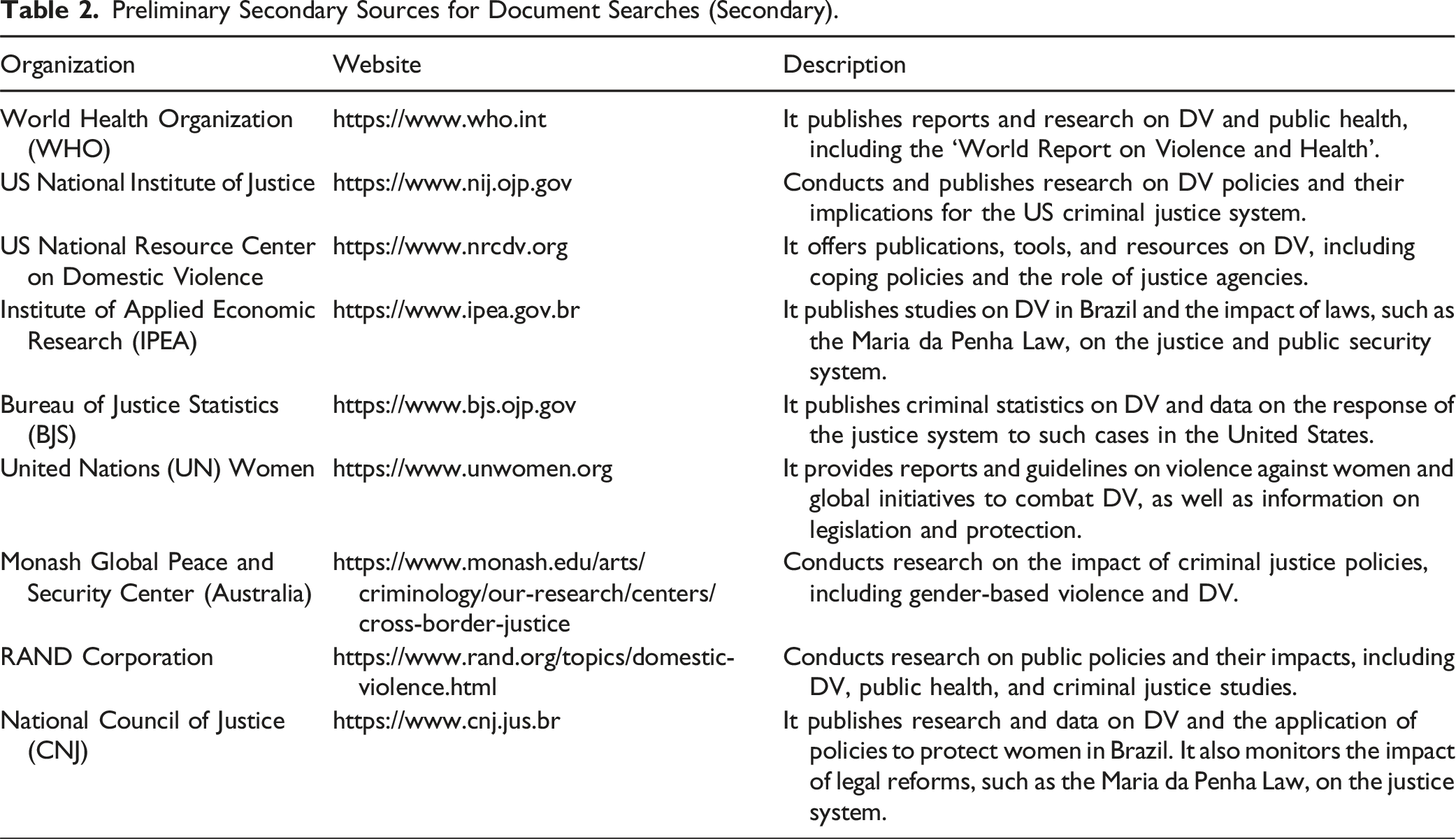
Preliminary Secondary Sources for Document Searches (Secondary).
Data Extraction
The metadata extraction from the databases will follow the guidelines presented in the PRISMA-Search checklist (PRSMA-S) (Rethlefsen et al., 2021). To optimize the search strategy for each database, specific refinement filters were applied to eliminate studies that did not meet the eligibility criteria for this systematic review before the metadata were extracted from the databases (Costa et al., 2024) (Table S2). The PRISMA-S covers several aspects of the literature search process for systematic reviews, including specific details of the database, the search strategy (registration of limits, restrictions, and filters used, among others), and the documentation process for retrieved and deduplicated records (Rethlefsen et al., 2021).
The extraction was preliminarily scheduled to occur in July 2025, provided this protocol has been accepted for publication. If the editorial decision has not yet been issued, revision of this time frame will be considered. Metadata will be extracted from all the databases on the same day, facilitating future systematic review updates.
Management of References and Document Retrieval
The main stages of the metadata evaluation and review of eligible studies will be performed and managed with the support of Rayyan® software (Rayyan Systems Inc., Cambridge, US), which is widely used by researchers and allows greater efficiency in the selection of studies for systematic reviews (Reis et al., 2023; Ribeiro et al., 2024) (available at https://www.rayyan.ai/). This software allows researchers to decide on the inclusion or exclusion of studies based on the eligibility criteria, create labels to indicate more details about the decision, and perform the extraction of relevant words, among other visual and filtering resources that accelerate the entire process (Ouzzani et al., 2016).
Eligibility Criteria
This systematic review will include relevant articles without language restrictions or publication dates that meet the inclusion criteria. Some eligible articles may be excluded if they meet at least one of the exclusion criteria defined above (Costa et al., 2024; Terra et al., 2023). Considering the wide variation in the propagation of retractions, which can lead to retracted articles being cited and considered in studies, it is crucial to practice retraction verification (Kühberger et al., 2022). The validity of eligible studies will be assessed, and any retraction records will be identified via the Scite tool – an acronym for “Smart citation index” (available at https://scite.ai/) (Nicholson et al., 2021). Among the various functionalities of this tool is that it makes it possible to verify whether a specific article has been withdrawn or contested (Brody, 2021).
Inclusion Criteria
(i1) Peer-reviewed journal articles published as original studies (Pereira et al., 2023; Terra et al., 2023). “Review” studies that address the topic will not be included in the review; however, they will be separated to be used in the secondary citation mapping step. (i2) Submit quantitative and/or qualitative data on the effects of legal reforms on collaboration between the justice system and the police (Dowling et al., 2018). (i3) Include samples of legal professionals, police officers, offenders, or other actors involved in the implementation of legal reforms (Dowling et al., 2018).
Exclusion Criteria
(e1) Duplicates from different databases. The duplicates will be removed following the method of Bramer (Bramer et al., 2016), and we will conduct a manual review to confirm your deletion (Pereira et al., 2023; Terra et al., 2023). (e2) Opinion articles, comments, editorials or similar articles, dissertations, theses, reviews, articles in print, letters from journals and books (Pereira et al., 2023; Terra et al., 2023). (e3) Studies that are not fully available in the databases surveyed cannot be accessed even after attempts to contact the authors (Pereira et al., 2023; Terra et al., 2023). (e4) Articles written in a restricted language that cannot be adequately translated (Pérez-Neri et al., 2022). This criterion will be applied only if we exhaust all translation possibilities, such as (i) seeking support in our international collaboration network, (ii) employing artificial intelligence tools, and (iii) hiring specialized companies for the necessary translations. We will indicate this in the findings of our systematic review (Costa et al., 2024). (e5) Studies that were previously withdrawn (Pérez-Neri et al., 2022).
Review Process
The systematic review process will be conducted via Rayyan® software in the following steps: (i) removal of duplicates, (ii) screening by reading titles and abstracts, (iii) calculating the agreement between reviewers, and (iv) full reading of the texts for the final decision on the inclusion of studies. Two independent reviewers will perform the first two steps with Rayyan® blinding enabled (Terra et al., 2023). A senior researcher with experience in the research topic will resolve any discrepancies between the decisions of the two reviewers (Chua et al., 2024; Liberati et al., 2009; Page et al., 2021). Three main data entries will be considered, ensuring the comprehensiveness and inclusion of relevant studies. The first entry involves systematically extracting metadata from databases. Studies will be initially selected based on eligibility criteria, and search platforms will be used to identify articles relevant to the research topic.
The second entry will involve tracking the citations of the included studies and the identified review studies. The mapping of citations will be performed via the Litmaps® platform (available at https://www.litmaps.com/), which will allow the identification of references cited in the included studies and those that cited these studies. Review articles will not be considered eligible studies, but their references will be consulted as additional data sources when they address the research topic. This technique allows the identification of relevant studies that may not have been reached by the initial search strategy (Page et al., 2021). The metadata of the studies located through the citation mapping will be imported into Rayyan® and evaluated separately, following the same guidelines and rigor criteria of the main stage.
The third entry will be searching for other sources of information, such as official reports of organizations and documents of public policies. These complementary materials will provide a broader and more contextualized view of the research topic. Including these documents will allow for a more robust analysis, considering academic studies, relevant data, and guidelines from official and governmental entities. These sources will contribute to constructing a more comprehensive systematic review, providing a more accurate and up-to-date assessment of the state of research on the subject.
The review process will follow the guidelines of the Preferred Reporting Items for Systematic Reviews and Meta-Analyses (PRISMA 2020) (Page et al., 2021), which will guide records management, including identifying duplicates and screening based on eligibility and exclusion of nonrelevant studies (Figure 1). PRISMA 2020 Flowchart for Identifying, Selecting, and Including Studies.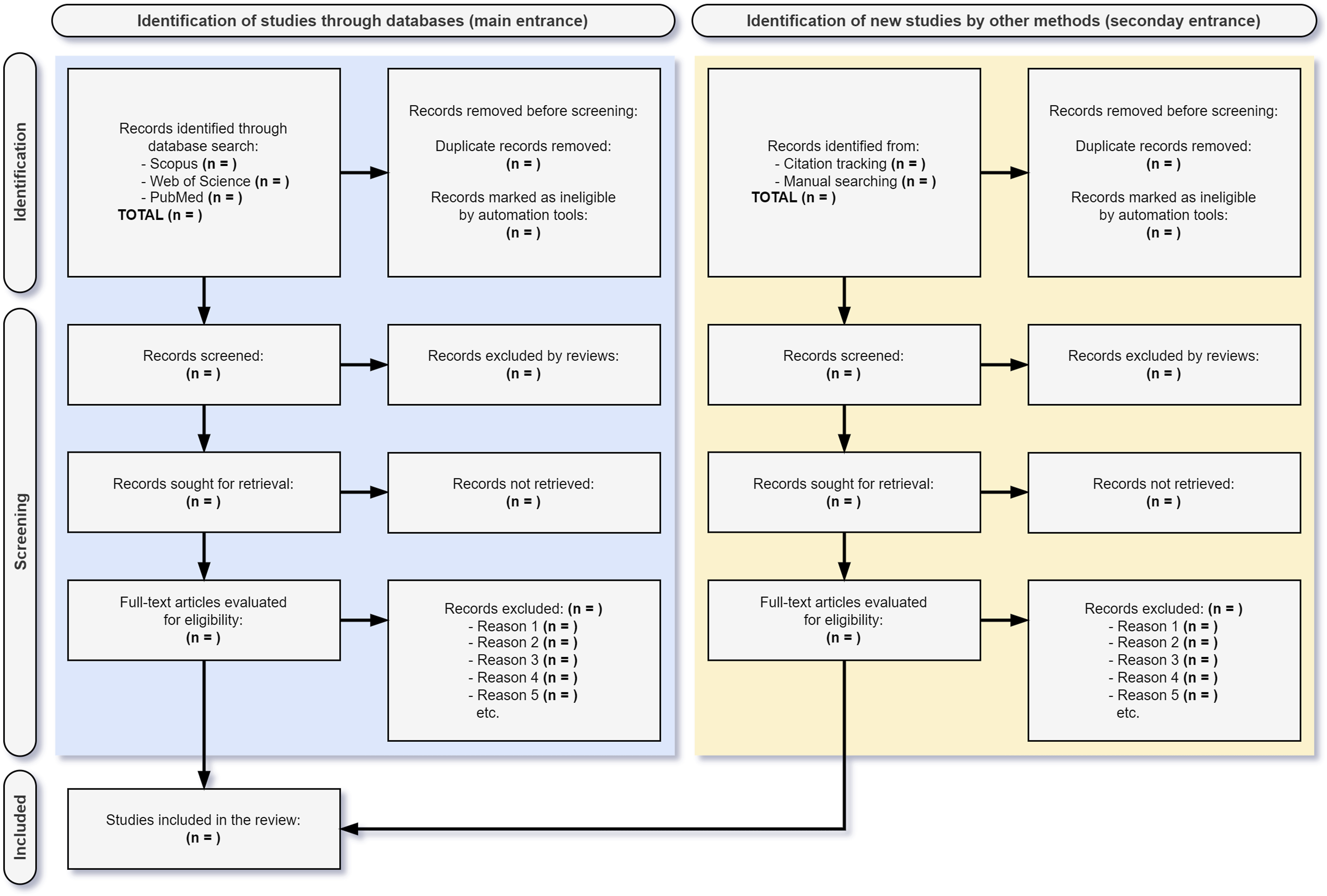
Reviewer Training
Through training sessions, the two reviewers responsible for evaluating the studies’ eligibility will be trained regarding the rigor to be adopted for selecting eligible studies. This training aims to standardize the evaluation criteria in the triage stage and enables reviewers to understand the features of Rayyan® software for standardized analysis.
Measuring Review Quality
Conducting a systematic review with independent and parallel reviewers with a blinded process is necessary to eliminate biases in the review process (Andrlić et al., 2023). However, to ensure the transparency and quality of this review, we will assess the interrater reliability for the classification of the individual components, which will be determined by calculating the percentage of agreement between reviewers (Costa et al., 2024). This calculation will be performed automatically by Rayyan® for the main flow and secondary flow, and this information will be reported in the systematic review results.
Summary Tables
A spreadsheet (Table S3) will be used to extract the data from this study to summarize and characterize the included studies and the primary data of interest (Erickson & Biedenweg, 2022). Information will be extracted from the included studies, such as publication details (for example, title, year, DOI), the context in which the study was conducted (for example, country, institution, date, scope, population involved), methodological design (e.g., type of analysis, sample size) and results (Costa et al., 2024).
Qualitative Research Analysis
The qualitative results are categorized and, if necessary, subcategorized objectively and synthetically (Costa et al., 2024). Evidence from quantitative studies will be converted into categories/themes (Hong et al., 2017). These data can also be presented through figures, diagrams, and other graphic elements that best represent categorizing categories/themes, considering identified patterns and trends (Melo et al., 2023; Stern et al., 2020). For example, the widely used visual mapping technique can effectively conceptualize processed data (Langley, 1999). This analytical detail, which integrates evidence from quantitative and qualitative studies, will make it possible to comprehensively understand the phenomena that will be studied and formulate evidence-based recommendations (Ribeiro et al., 2024).
Bibliometric Analysis Report
Bibliometric analysis is a quantitative technique that systematically evaluates research trends, performance, collaboration patterns, and the intellectual structure of a given domain (Donthu et al., 2020, 2022; Verma & Gustafsson, 2020). In this systematic review, bibliometric analysis will examine the literature on legal reforms and their impact on police institutions in the fight against violence against women. This approach provides valuable information on the historical development of research in this field and highlights the main thematic and methodological advances.
The bibliometric analysis will cover several key dimensions (Donthu et al., 2021): geographical distribution of studies, historical production trends, relationships between studies, publication by year, scientific mapping, citation and cocitation analysis, bibliographic coupling, coword analysis, coauthorship analysis, and network and cluster metrics. In the context of this study, this analysis will be performed considering the metadata of the included articles and review articles that address the topic of systematic review. For this purpose, the Bibliometrix® package in R will be used (Aria & Cuccurullo, 2017) as well as VOSviewer software (van Eck & Waltman, 2010).
Bibliometric studies play crucial roles in discovering emerging trends in the performance of articles and journals, the dynamics of collaboration, and the constituents of research. In addition, they facilitate the exploration of the intellectual structure of the literature on legal reforms and police institutions related to violence against women (Donthu et al., 2021). In systematic reviews, bibliometric analysis is particularly useful for deciphering and mapping the cumulative scientific knowledge and the evolving nuances of well-established domains. By rigorously analyzing large volumes of unstructured data, objective and subjective evaluations of investigation scenarios can be performed (Donthu et al., 2021).
A well-executed bibliometric study offers a comprehensive overview of the field, helps to identify knowledge gaps, generates new research ideas, and strategically position contributions within the broader academic discourse (Donthu et al., 2021). The results of this bibliometric analysis will improve this systematic review, providing a structured and data-based perspective on literature and informing the subsequent phases of the qualitative synthesis.
Reviews Found Report
In the context of this systematic review, several types of reviews that align with the objective of this study will be identified and reported. Although these reviews are not considered eligible for inclusion in the systematic review because of the interpretative bias introduced by their authors, they play an essential role in the citation mapping process. Additional primary studies that may not have been retrieved through the initial search strategy can be identified through citation mapping. By analyzing these further studies, relevant studies may be found that meet the eligibility criteria established for this systematic review, thus increasing the comprehensiveness of the dataset.
The reviews will be categorized and reported based on their methodological approach (e.g., systematic reviews, scoping reviews, narrative reviews, and meta-analyses). Their main conclusions and thematic relevance will also be summarized to provide a broader perspective on our object of study. This approach ensures that although the interpretive biases inherent in the reviews are recognized and controlled, their bibliographic information can be a rich source of evidence to increase the robustness and coverage of the systematic review.
Methodological Quality Assessment Approach
The Critical Appraisal Skills Program (CASP; available at https://casp-uk.net/casp-tools-checklists/) checklist will be used to evaluate the methodological rigor of qualitative studies critically (CASP, 2018), commonly used for this type of evaluation (Nadelson & Nadelson, 2014). This instrument consists of 10 questions divided into four sections: (a) validity of the study results, (b) presentation and clarity of the results, (c) applicability of the results, and (d) methodological robustness of the study (Long et al., 2020). Except for one, the other questions are objective questions in which the evaluators must choose “yes” (2 points), “I can’t say” (1 point) or “no” (0 points) as an answer (O’Dwyer et al., 2021; Yu et al., 2023). The overall quality of each evaluated study will receive a score based on a three-star system in three categories: low (one star; 0–6 points), moderate (two stars; 7–12 points), and high (three stars; 13–18 points) (O’Dwyer et al., 2021).
For the evaluation of the methodological quality of quantitative studies, the Downs and Black checklist will be used (Downs & Black, 1998). This tool is widely used in systematic reviews and meta-analyses to ensure the quality of the evidence included and strengthen the interpretation of the results (Tod et al., 2022). The original version of this instrument is composed of 27 items (Downs & Black, 1998). It addresses five domains: reports, external validity, internal validity (bias), internal validity (confusion) and statistical power (Tod et al., 2022). Several studies have adapted this checklist, considering only the items that apply to the context and study design (Costa et al., 2024; Feijó et al., 2019; Muthuri et al., 2014; Ribeiro et al., 2024; Silva et al., 2025; Terra et al., 2023). Therefore, we chose to adapt this checklist to evaluate studies whose themes are unrelated to the health field (items 1–3, 7, 10–12, 16, 18, and 20) (Silva et al., 2025). A summary quality score for each selected study was calculated by expressing the score as a percentage of the maximum possible score for the study design (Costa et al., 2024; Silva et al., 2025). A score ≥70% is considered “low quality”, whereas a score <70% is considered “high quality” (Downs & Black, 1998).
Expected Outcomes
Primary Outcomes
The evidence obtained is expected to improve interagency collaboration and promote a more integrated criminal justice system. The main objective is to identify possible changes in the management of DV cases, with a focus on the practices adopted by judges, legal practitioners, and police officers in dealing with aggressors and victims. In addition, we seek to evaluate the effectiveness of legal reforms in reducing the recurrence of DV by comparing recidivism rates before and after implementing these reforms.
Secondary Outcomes
This study will analyze the variation in the effectiveness of reforms in different geographical contexts, considering the particularities of countries and regions as well as the socioeconomic aspects of the populations served. It will also examine the influence of the approaches adopted, including punitive and restorative measures, on the effectiveness of interventions. Another relevant aspect will be the analysis of the perceptions of professionals, such as police officers, judges, and managers, about the challenges and benefits of the implemented reforms.
Challenges Identified in Implementation
The main challenges to implementing the reforms, including the scarcity of resources, institutional resistance, and difficulties in coordination between the different agencies involved, are expected to be identified. This research will also investigate how institutional and operational limitations can impact the successful implementation of reforms. Additionally, the sustainability of rehabilitation programs will be assessed, considering the long-term financial viability of the interventions, the participation and dropout rates, and the factors that influence the involvement of offenders in these programs.
Strengths and Limitations
Like any other type of research, systematic review studies may have specific limitations (Costa et al., 2024). The analysis of the results may be difficult, or even impossible, in some cases (Costa et al., 2024); if this occurs, the result of our investigation will be reported as an “empty review” (Terra et al., 2023; Yaffe et al., 2012). In addition, the specificity and uniqueness of the object of our investigation may be a complicating factor in evaluating all the studies that address our review’s objective. Additionally, the included articles may have gaps in their methodological procedures, such as unclear or nonvalidated instruments (Costa et al., 2024); this suggests that the search strategy may not capture potentially essential studies for the review (Costa et al., 2024).
However, this study has some strengths that must be acknowledged. First, this review uses additional techniques for mapping evidence from localized review articles and includes studies using Litmaps®. Second, validation of the search strategy is not always considered in a systematic review despite being a recommended practice (Costa et al., 2024). Third, there are no language or time restrictions in this study, which allows us to understand our object of study comprehensively (Costa et al., 2024; Pereira et al., 2023). Fourth, the risk of bias will be considered and reported. Finally, the analysis will follow a rigorous data extraction method and evidence evaluation, which two independently trained reviewers will conduct (Costa et al., 2024; Pereira et al., 2023).
Supplemental Material
Supplemental Material - Legal Reforms and Outcomes of the Action of Police Institutions in Combating Violence Against Women: A Systematic Review Protocol
Supplemental Material for Legal Reforms and Outcomes of the Action of Police Institutions in Combating Violence Against Women: A Systematic Review Protocol by Carlos Antonio Ferreira de Oliveira, Marcos de Moraes Sousa, Mara Célia Ferreira Ataide, Jéssica Traguetto Silva, Woska Pires da Costa, and Miguel Matos Torres in International Journal of Qualitative Methods
Footnotes
Acknowledgments
The authors thank the Instituto Federal Goiano and the Universidade Federal de Goiás for the institutional support and conditions offered to conduct the study and the Justice Administration Research Groups (AJUS-UFG) for the discussions and contributions. Also, the authors acknowledge the Conselho Nacional de Desenvolvimento Científico e Tecnológico (CNPq) and the Fundação de Amparo à Pesquisa do Estado de Goiás (FAPEG) for their recognition and encouragement of scientific research.
ORCID iDs

Author Contributions
Conceptualization: CAFO, MMS, and JTS; Data curation: not applicable; Formal analysis: not applicable; Funding acquisition: no external funding; Investigation: CAFO, MCFA, WPC, and MMS; Methodology: CAFO, MCFA, MMS, and WPC; Project administration: CAFO; Software: not applicable; Resources: MMS, JTS, and MMT; Supervision: MMT and JTS; Validation: MMS, JTS, WPC, and MMT; Visualization: CAFO, MMS, JTS, WPC, and MMT; Writing – original draft: CAFO, MMS, MCFA, JTS, WPC, and MMT; Writing – review & editing: CAFO, MMS, MCFA, JTS, WPC, and MMT. All authors have read and agreed to the published version of the manuscript.
Funding
The authors received no financial support for the research, authorship, and/or publication of this article.
Declaration of Conflicting Interests
The authors declared no potential conflicts of interest with respect to the research, authorship, and/or publication of this article.
Data Availability Statement
All files containing the metadata extracted from the databases (that is, the original raw data before the deduplication process) will be publicly available as supplementary material in RIS format in the Open Science Framework scientific repository (OSF Platform, available at https://osf.io/) (Pieper & Rombey, 2022). The data will only be publicly available after acceptance of the manuscript containing systematic review results. With any update of the necessary systematic review, the new complementary datasets extracted will also be made available in this same repository.
Plans for Updating the Review
To ensure that the results of this systematic review remain up-to-date, three main strategies were established: periodic updates every 5 years, considering the pace of academic publications and possible legal reforms; maintenance of alerts in scientific databases, withthe inclusion of new sources and adjustments in the search and analysis criteria according to new methodologies and technologies; and dissemination of updates in journals and academic events, promoting collaboration with the experts and institutions responsible for implementing the reforms. In addition,creating an online platform for curating the publications generated by the project will be evaluated, facilitating access to up-to-date data and supporting public policymakers.
Supplemental Material
Supplemental material for this article is available online.
References
Supplementary Material
Please find the following supplemental material available below.
For Open Access articles published under a Creative Commons License, all supplemental material carries the same license as the article it is associated with.
For non-Open Access articles published, all supplemental material carries a non-exclusive license, and permission requests for re-use of supplemental material or any part of supplemental material shall be sent directly to the copyright owner as specified in the copyright notice associated with the article.
