




Abstract
Modern technology has significantly enhanced the accessibility of photography, broadening its use across various scientific disciplines. Digital cameras and smartphones have empowered researchers, especially in the field, to collect data more efficiently and intimately than many traditional methods allow. Photography’s longstanding relationship with social research has made it a crucial tool for co-creating knowledge and capturing data that non-visual approaches might overlook. Beyond mere illustration, photography contributes to a deeper understanding of complex contexts. However, despite its widespread application in the social sciences, there remains a notable gap in its use within energy transitions research in science and technology studies (STS). Drawing on personal experience in studying energy development in Scotland’s Orkney Islands, this article demonstrates how photography can enrich the research process. Although not without challenges, the article highlights approaches like visual surveying, auto-photography, and photo-elicitation. This illustrates the potential of photography, emphasizing its value as a research method to enhance understanding of the visual consequences of energy transitions in rural landscapes.
Keywords
Introduction
“[P]hotography has evolved as follows. In early stages people marveled at capturing an image. Then pictures were used to report or illustrate, for archival purposes, and in family albums, documentaries, histories, and as evidence. Finally, photographs became works of art, a status that is still debated, with relatively recent acceptance by some museums and galleries. […][T]hey are also used as research data and as stimuli for gathering further data.” (Heisley & Levy, 1991, p. 259).
Photography can help obtain valuable insight into a research topic by co-creating knowledge, engaging participants, and gathering data that traditional, non-visual methods might miss. It has often been used to convey something that is not easily explained in words, or as evidence of an observation. However, its contribution to science and research extends beyond mere illustration; in other words, from helping to represent the world, to helping to interpret and understand it. Photography enables a complex, layered understanding of context (Glotfelty & Goin, 2022). Despite a broad application of photography in the social sciences, there is a noticeable gap in its use within energy research in science and technology studies (STS). This seems odd considering photography’s value as a tool to make apparent “the local, visual manifestations of wider processes” (Hall, 2009, p. 455) such as energy transitions and the visual changes they bring.
Visual consequences of energy transitions, such as landscape changes, are inevitable, but understanding of individual visual experiences is still lacking. Photography has enriched my own research on energy transitions in remote communities by engaging with both landscapes and stakeholders through methods like visual surveying, auto-photography, and photo-elicitation. My background as a former professional photographer has helped me adapt these skills, demonstrating how photography can be both illustrative and informative in a research context. These approaches also align with calls for integrating creative methods into scientific research, particularly energy transitions studies (e.g., Sovacool et al., 2020). In this auto-ethnographic account, I highlight how photography was valuable to study local visual experiences of energy transitions in Scotland’s Orkney Islands. I begin by showcasing some key approaches to using photography as a research method; I then explore how the methodology unfolded in the context of the project, emphasising both the potential and challenges of using photography as a research technique to provide important theoretical and empirical insights into how humans co-exist with evolving energy landscapes.
As a research tool, photography has historically had a closer relationship with social research when compared to other creative arts (Szto et al., 2005). Early examples of photography capturing social phenomena include the work of David Hill (1802–1870) and Robert Adamson (1821–1848), who documented the fishwives of Newhaven on the outskirts of Edinburgh, and Eugene Atget (1856–1927), who captured Parisian life; while Lewis Hine’s (1874–1940) photographs of child labor in the U.S. led to improved labor laws (Newhall, 1982; Szto et al., 2005). Moreover, photography has been crucial in social research, particularly in anthropology, with pioneers like Bronisław Malinowski using it for ethnographic studies (Goin, 1997). Despite critiques of the colonial gaze in early photography (Henninger, 2003; Posern-Zieliński et al., 1986), figures like John Collier Jr. (1913–1992) further emphasized its value in visual anthropology, using it to create extensive cultural inventories and authoring influential works on the subject (e.g., Collier & Collier, 1986). Modern technology has made photography even more accessible, allowing for its broader use in research. It now spans numerous scientific disciplines. Moreover, digital cameras and smartphones have enabled field researchers to connect with their study areas more intimately, gathering data that would be both challenging and time consuming to obtain using conventional methods alone.
Visual Surveying
A visual survey comes at the beginning of a research project, creating sets of photographs from throughout the research territory. According to Szto et al. (2005), Atget was the first photographer to make use of a visual survey with his detailed prints of Paris. However, Collier is widely credited with pioneering the technique, acknowledging the camera as a ‘logical’ tool for tasks such as mapping and surveying (Collier & Collier, 1986). As well as quickly gathering demographic, social, and economic information, photographs also offer a lasting visual record to revisit and scrutinize as the research progresses (Szto et al., 2005). Collier and Collier (1986) also highlighted the significance of photography for tasks such as reconnaissance during WWII. By mapping terrain and printing detailed photographs at a large scale for American pilots to study, such as the Burma Hump over the Himalayas, the pilots could learn to safely negotiate difficult terrain. Furthermore, the Colliers emphasized the value of photography within ethnographic study.
A visual survey can save time in the initial stages of research; a field researcher would undoubtedly struggle to obtain a similar amount of data in the same time. Tasks such as mapping, orientation, and creating inventories can be time consuming and a visual survey can speed up the process. Collier and Collier (1986) claim photographs that are rich in detail can describe such things as boundaries, patterns, relationships between humans and the environment, and community structures. Furthermore, the approach also helps a researcher become acquainted with their study area, both geographically and socially, facilitating respect and trust within the community. The Colliers emphasized the importance of researchers being accepted and trusted within the communities they study. This respect can grant access to areas typically off-limits to outsiders. Nevertheless, although photography is a good entry-point, facilitating the researcher/informant relationship, Hitchcock emphasises that good behaviour is also imperative: “If a man’s research plan involves the people he wishes to photograph he has to consider their feelings. He is not a tourist or press photographer whose aim is to get a picture and get out, broken camera or no.” (Hitchcock as cited in Collier & Collier, 1986, p. 24)
Today, the photographer researcher has more ethical obligations than ever, such as the stringent regulations that surround GDPR. However, when used thoughtfully, photography can speed up acceptance within a community, overall enhancing the research experience. This is echoed by contemporary visual researchers like Deborah Barndt (see Barndt, 2008). Barndt used photography extensively during her research, producing photo-essays that added a human element to the stories of workers in the global food chain. Barndt’s method of showing her photographs to the tomato pickers brought awareness of their proximity to the packing factory, offering new insights, and highlighting a previously unknown interconnectedness within the food production chain. Her photographs helped bridge the gap between producers and consumers.
The researcher can employ various photographic techniques to fully utilise a visual survey. Collier and Collier (1986) noted that long view and aerial photography are particularly useful during this initial phase. However, visual surveys can also include medium-range and close-up photography. For example, a photographer researcher can travel around a site capturing anything from landscapes and buildings to small material possessions and significant details. Technical proficiency in photography, such as understanding composition and depth of field, helps in producing images that clearly convey the subject as observed. Moreover, the photographer’s decisions are always meaning-bearing (Glotfelty & Goin, 2022).
External factors such as available light, space, and weather also influence how the photographer exercises control. These can also become hindrances, for example when weather works against the photographer; or when questions are raised about what the photographer chooses to include, or to intentionally leave out. The camera may not lie, but neither may it show the full picture. Nevertheless, if a photograph contains any discernible information at all it is sure to aid the research process in one way or another. Some information may be obvious, but some may not surface until after further scrutiny. Furthermore, some visual researchers (e.g., Barndt, 2008) may use accompanying text to explain unseen details. All-in-all, gathering data visually encourages the researcher to actively engage with their subject more so than when using conventional methods.
Collier’s early work includes visual surveys of up to 2,000 negatives, such as his cultural inventory of the Hacienda Vicos community in the Peruvian Andes (Collier & Collier, 1957). However, such a visual inventory does not provide the human value and sensory experience that scientific research often lacks. Sarah Pink (2013) argues that Collier should have included more perspectives of the householders, in other words, the meanings they attributed to the material elements of their homes. Pink claims her approach produces knowledge through the interpretation of the photographs – a subjective reality – rather than “purport[ing] to record reality” (p. 20).
Photo-Elicitation
In research, the process of inserting photographs into an interview situation is known as photo-elicitation. The term was first mentioned by Collier in 1957. Photo-elicitation is useful in generating dialogue and discussions with research participants, often offering a deeper understanding of a subject or phenomenon (Harper, 2002). It has become a powerful tool in research with increasing recognition within visual anthropology (Nakamura, 2013), enabling researchers to uncover nuanced insights that might be difficult to capture through traditional means. Moreover, this collaborative approach often creates actionable knowledge (Hall, 2009). “Photographs as probes in interviewing ask their own questions which often yield unpredictable answers. The imagery dredges the consciousness (and subconsciousness) of the informant, and in an exploratory fashion reveals significance triggered by the photographic subject matter. The content of the imagery which photographically is an outside view is used projectively with the informant to give us an inside view of our research territory.” (Collier as cited in Heisley & Levy, 1991, p. 260).
How we interpret visual data varies throughout what Harper (2002, p. 13) describes as a “continuum”. At one end is Collier’s classic approach – using photographs to aid with orientation and acceptance within a community, helping to identify specific areas of interest in a study area, and producing fruitful discussions with informants (Collier & Collier, 1986). At the other end is the sensory-focused approach of contemporary visual ethnographers like Pink, revealing how people’s environments and relationships shape their own perception of reality (Pink, 2013) This phenomenological approach (Harper, 2002) often evokes emotional responses, emphasizing participant subjectivity, fostering reflexivity, and acknowledging potentially changing contexts. In a recent project, Agúndez Del Castillo et al. (2024) explored photo-elicitation to gain a deeper understanding of individuals with prison experience returning to the community. One participant, Mateo, used his smartphone to capture significant aspects of his daily life, such as places of peace, memories of his home country, and interactions with his son. Mateo’s photographs subsequently facilitated reflections on his migration experience, emotional struggles, fatherhood, and evoked childhood memories, providing insights that traditional interviews might have missed.
The narratives that stem from photo-elicitation often have an in-depth quality that is harder to achieve when using discursive methods alone. Noffke (2009) notes that locally produced knowledge is frequently narrative in style and often exists in forms not traditionally recognized in research. Photographs often act as seeds, encouraging participants to tell their stories, while also strengthening relationships between researchers and informants (Davey & Moulton, 2020). Moreover, using photographs allows researchers and participants to interact differently than through conventional methods, making participants co-researchers while moving from observation to explanation. This interaction, claims Clark (2012), empowers participants by acknowledging them for being part of the research process, often lending flexibility to learning and inspiring unexpected collaborations and insights.
Photo-elicitation encourages informants’ active participation in a research project, demystifying the photographic research process and enriching data. For example, when studying household meal preparation, perhaps an uneventful task, Heisley and Levy (1991, p. 257) noted: “when the photographs ask the questions, nuances of the family’s interactions surface”. Such a collaborative and inclusive approach helps attribute meanings to observations, often evoking emotional responses from participants. Moreover, these responses could be hard to attain using more conventional methods such as surveys or questionnaires. Image/discussion dynamics encourage dialogue and reflection, and most importantly, understanding (Davey & Moulton, 2020).
Some researchers may choose to use unconventional photography styles and techniques to present a new perspective on what may be, for example, a normal daily routine or well-known place for the participant. For example, by using unusual angles, the “conventional” can be presented in “unconventional” ways to “question, criticize or deconstruct the taken for granted” (Hall, 2009, p. 460). This can stimulate deeper discussions about routine, mundane, or familiar aspects of participants’ lives.
Similarly, using archive photographs in photo-elicitation can enrich the research process by engaging community interest and evoking discussions to reveal stories from the past or to compare it to the present, for example, changing cultural landscapes or lifestyles. However, although Judith Okely (2003) claims this approach can be limited in the accuracy and continuity of the knowledge it produces, she also acknowledges that it still surpasses the limits set by using words alone. Some projects also involve participants’ own photography, often referred to as ‘auto-photography’, which are becoming increasingly common with methodologies such as Photovoice 1 or digital storytelling 2 . In a recent digital storytelling project by Davey and Benjaminsen (2021), focusing on community policing and police reform in post-conflict regions, one storyteller’s field photos helped unpack the reality of surviving in the Afghanistan/Iran border region, while offering a window for viewers to experience the harshness of the situation. Of course, there may also be times when photography is simply not an appropriate method. An often-cited example is when Kirsten Hastrup (1992) chose photography to research male-dominated Icelandic sheep markets, but she was disappointed with the results and described the method in this case as “hopeless”. Poor lighting, bad angles and no discernible information in the images rendered it inappropriate for her ethnographic study.
Photography in Energy Research
Some key energy transitions studies have utilized photography, particularly when studying wind farms. Devine-Wright (2005) researched how computer-generated photomontages in wind farm visual assessments are used to help indicate public perceptions. Further, Lutzeyer et al. (2018) claim to be the first to use nighttime photographs of offshore wind farms in a study. They presented the images side-by-side with similar images taken during the daytime to gauge respondents’ preferences. However, these and other energy studies using photographs have prioritized quantifiable indicators with numerical rankings, instead of delving deeper into the more sensory experiences of stakeholders.
A more interpretive, or according to Hall (2009, p. 456) – “alternative, post-structuralist, view of photography” – enables researchers to explore the nuanced and multifaceted nature of human experiences, in this case contributing to a deeper understanding of the social and cultural dimensions of energy transitions. Such an approach became common within geography towards the end of the 20th century, moving beyond the photograph as a depiction of reality towards a socially constructed representation that reveals more about the creator and context than the actual content. Additionally, by questioning the authority of the photographer and the notion of objective reality, post-structuralism highlights how images can be constructed and deconstructed to reveal underlying power dynamics and cultural narrative among the layers of meaning (Tseliou & Benozzo, 2022). However, not all visual researchers embraced such concepts that arose from this post-modern critique of photography which challenged traditional notions of authenticity and representation (Huang et al., 2024). Prosser and Schwartz (2005), for example, continued to place photography into a conventional qualitative framework, treating photographs as data for analysing social contexts, documenting realities, and integrating into visual sociology to complement traditional sociological research methods.
In energy research, individual experiences and attitudes, in particular visual experiences of energy, are often overlooked and unheard (Sánchez-Pantoja et al., 2018; van der Horst, 2007). Moreover, we still lack understanding of how individuals experience and respond to changing landscapes; the daily subjective experiences of energy infrastructure that are often missed in traditional surveys or questionnaires but often become integrated into daily routines and practices. This creates a gap in addressing the non-measurable, personal aspects of energy transitions such as emotional connections or physical interactions - those that focus on experiences rather than preferences, which has often been the case in studies of changing energy landscapes (e.g. Warren et al., 2005).
Recent calls within energy social science and STS include for a broader range of narrative case studies to better understand the micro-dynamics of energy transitions (Marquardt & Delina, 2019; Sovacool et al., 2020); in-depth qualitative studies that provide a more nuanced understanding of energy practices (Genus et al., 2021); studies that value lived experience, common sense, and local knowledge through direct engagement with communities (Bell et al., 2005); and research that emphasises co-production, and methodological and empirical novelty, including artistic engagement (Sovacool et al., 2020). Therefore, in studying energy transitions, photography can offer a richer and deeper understanding of attitudes, engaging participants, and providing an alternative but complimentary perspective that values individual interpretations of energy development as much as the often-favoured expert opinions. This can help researchers to understand the complex realities of human experiences, generating valuable insights that could help inform energy transitions theory and policy.
As a qualitative researcher specialising in visual methods, I have used visual surveying, auto-photography, and photo-elicitation in research projects that have explored experiences, perspectives, and responses towards energy transitions and energy development on Scottish islands that are embracing innovative approaches towards shaping a low-carbon future. One such project was in the Orkney Islands. Celebrated for their natural beauty, ancient structures, whisky distilleries, and stunning land- and seascapes, the Orkney Islands have a burgeoning reputation as a cultural hotspot and tourist haven, However, beyond its cultural allure, Orkney has emerged as a pioneering force in renewable energy production, altering the land- and seascapes that have long attracted artists and poets, and inspiring my visual approach to a visual question of energy transitions.
The Orkney Islands
The Orkney Islands, with a population of around 22,000, are nestled about 1.5 hr by ferry from Scotland’s northern coast. From the UK’s first grid-connected wind turbine in the 1950s; the commissioning of the Flotta oil terminal in the 1970s; to the current abundance of renewable energy developments throughout the islands, Orkney’s energy landscape continues to evolve. Today, the European Marine Energy Centre (EMEC) also conducts pioneering tests of wave and tidal power devices amidst the archipelago’s swift currents. Orkney has become a ‘culture of innovation’ (Euchner, 2022), encouraging and facilitating new initiatives and approaches to energy production.
Orkney’s renewable energy initiatives contrast with the discreet approaches of some smaller Scottish communities, such as the Isle of Eigg. While Eigg’s hybrid off-grid, community-owned system minimizes visual impact, Orkney’s numerous wind farms, industrial developments, and renewable energy test sites are conspicuous, reshaping both the islands’ scenery and its residents’ daily experiences. Orkney has already surpassed its capacity to both use and export the surplus energy it produces due to an aging interconnector to the mainland. However, proposed renewable energy projects throughout the islands are on-track to guarantee the production required to approve a new higher capacity subsea cable. This signals a vibrant renewables industry, both now and in the future. A few proposed developments have sparked debates about visual intrusion, heritage preservation, and community consultation, highlighting the complex interplay between industry, policy, and local values (Davey, 2024). While Orkney strides toward leadership in renewable energy, it must also address issues like disproportionately high fuel poverty, questioning the notion of a green energy utopia against the backdrop of increasing visibility of energy infrastructure along with socioeconomic disparities.
Dominant narratives from powerful political actors and institutions often overshadow the diverse perspectives of local communities (Pink, 2022), and fail to capture the complexities and lived experiences of coexisting with evolving energy landscapes, such as visual disturbance, which can lead to annoyance, frustration and in some cases, anxiety (Schwenkenbecher, 2017); vis-a-vis the tangible and visible efforts to combat climate change, where Orkney is a global leader in the field. Therefore, in navigating Orkney’s energy future, it is imperative to question such narratives that prioritize industry expertise and policy over diverse community perspectives. Thus, I used photography to explore individual (visual) experiences of living side-by-side with energy infrastructure. In doing so, I emphasize the need for ethnographic examination of individual interpretations and responses to energy transitions, arguing that qualitative research, including visual anthropology and participatory photography, can reveal these subjective experiences to a greater extent than non-visual methods. Moreover, engaging with local stakeholders through ethnographic research can provide a rich and nuanced understanding of energy transitions, integrating individual visual perspectives into future scenarios and ensuring that the voices of those directly affected are both heard and valued.
In the Field
I began my field research on Orkney with a visual survey. To prepare, I scoped literature – scholarly and otherwise – to identify potential sites of interest, familiarising myself with the islands “history, character, and issues related to place” (Glotfelty & Goin, 2022, p. 96). Fortunately, I was already somewhat familiar with the geography of Orkney from first visiting during the 1990s as a landscape photographer. Subsequently, I prepared a shooting map to guide my travel around the islands during what I anticipated to be an intense but hopefully rewarding week.
I wanted to represent Orkney’s landscape, and the energy infrastructure within it, as near as possible to what the human eye can see. I used a full-frame Nikon Df digital SLR camera, limiting my lens choices to 35 mm and 50 mm (both common in documentary photography); the former offering a very slightly wider field of view than the human eyes, although objects may appear more distant than what they are, and the latter slightly narrower with objects appearing more realistic in relation to their position in the landscape. Since I planned to publish and exhibit the photographs at a later stage, this high-quality camera body and choice of prime lenses also meant that I would have no concerns about print quality. Additionally, I carried a lightweight sturdy tripod, and I used my smartphone to shoot video when needed and to record GPS coordinates of shooting locations.
During the visual survey I photographed various forms of energy infrastructure from around 80 different locations throughout the Orkney Islands. Some of these were planned and on my shooting map, but many were not. Some were recommended to me from chance encounters with locals, while others I discovered through simply exploring. This resulted in 1393 photographs at the end of the first week: from the Orkney mainland, the smaller islands of Hoy and Sanday, and from my travel days there and back on the Scottish mainland. This approach also facilitated my engagement with residents, both old and new, along with tourists I encountered throughout my travels. Moreover, photographs included everything from an oil rig moored in Scapa Flow (Figure 1) to electric vehicle chargers in the local car park (Figure 2); both photographs eventually leading to further discussions, including the visual impressions of ‘dirty looking’ oil platforms moored in Scapa Flow between commissions to concerns about affordability and battery production of EVs. Oil Rig Moored in Scapa Flow. Photograph: The Author. EV Charging Station, Burray. Photograph: The Author.
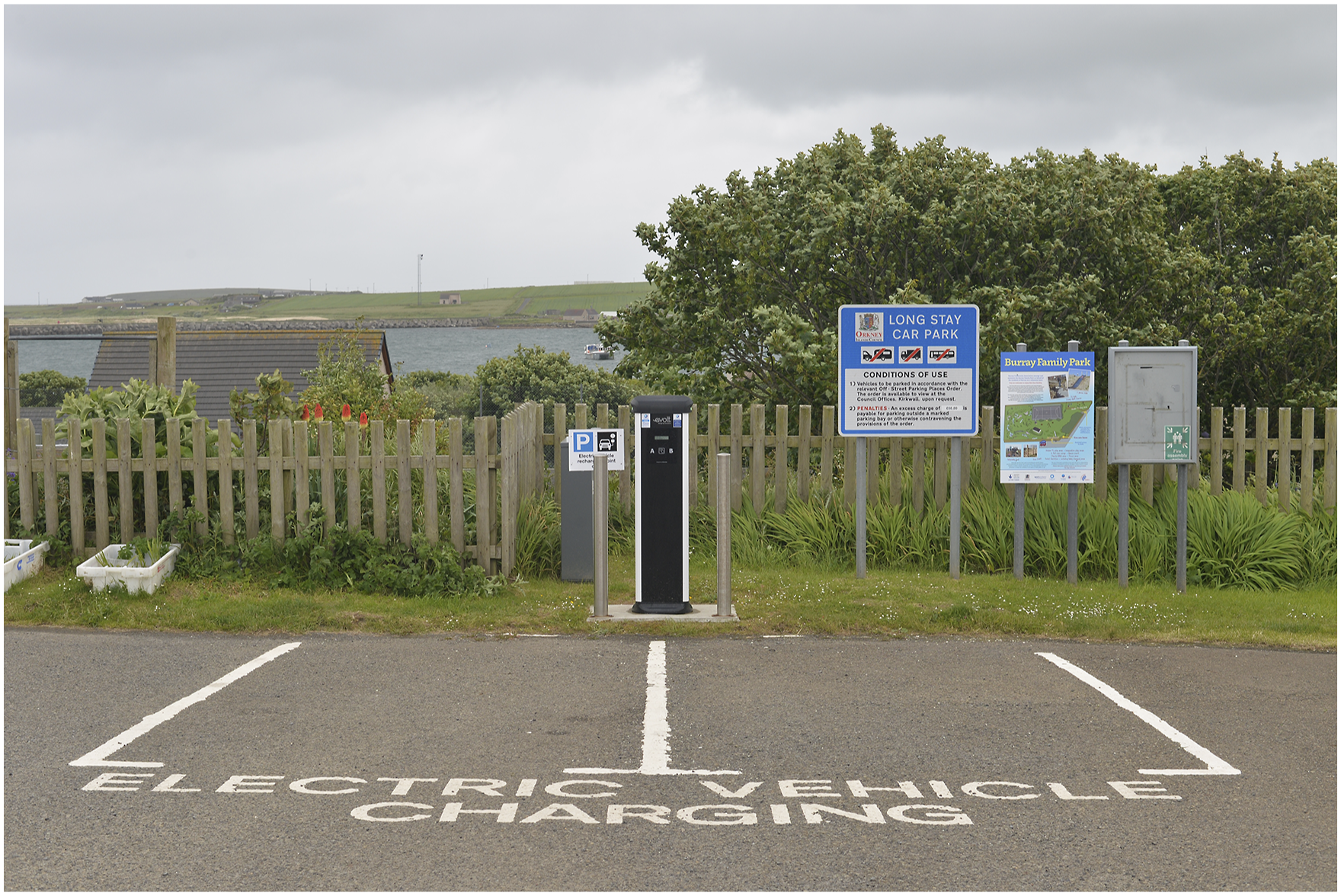
A significant proportion of research participants were selected from meetings that happened during the visual survey. Subsequently, I purposively recruited 15 participants, all of whom gave informed consent to take part. This comprised 14 residents, and a Norwegian visitor to Orkney who accompanied me on my first field trip. Residents were selected based on their proximity to energy infrastructure, focusing on how they encountered it visually in daily life, including during leisure activities, commutes, and from their homes. Initially, 6 of the 15 agreed to take their own photographs – auto-photography – whilst all of them agreed to discuss their (visual) experiences of Orkney’s energy transition with me, often with the aid of mine, theirs, or a combination of photographs to trigger the discussions.
Revisiting the photographs after the initial shooting also initiated my own process of self-reflection; finding details I had initially missed, and evoking my own sensory memories of the ‘energy islands’ (Watts, 2019). For example, while reviewing photographs from location 58 (Figure 3), I noted in my field notes: A964 nr. Scapa - Electric SUVs and wind turbines There are two smaller (large domestic/business?) turbines by the bend in the road at the Scapa junction, close to Scapa Bay and the Scapa distillery. I remember to stop this time. I make a few different compositions where I try to include them both. One includes two small SUVs travelling in opposite directions. Reviewing the image, I see they are both EVs – Kias. A telling image. I like this one, but I struggled with composition a bit. Nevertheless, it is certainly a snapshot of the time on Orkney. I wonder if one of the turbines powers Scapa Distillery – must visit that if I get a chance. It’s my favourite dram. (Field notes, 22 June 2022) Location 58. Photograph: The Author.
On my next visit, the closest turbine was lying on its side in the field. This prompted me to take more photographs, one of which I later used in a digital story to highlight a participant’s comment about individual wind turbines ruining the scenery by lying broken-down in fields.
The participants who took photographs of their own visual encounters with energy infrastructure throughout the year from June 2022-June 2023 sent me them via WhatsApp, often several each week. Participants usually accompanied the photographs with a note about what they were doing or how they felt about what they saw at the time. This allowed them to highlight what they found significant or impactful, offering insights into their personal perspectives and experiences. Subsequently, we reviewed and discussed the photographs during each return visit to the Islands. Discussions took place in participants’ homes at times that suited them. When reviewing my own photographs with participants, I spread a selection of images on the coffee table or dining table, allowing them to select photographs that ‘spoke’ to them. Conversations led to insights and ideas that I also represented through my own photography – my visual interpretations of their experiences – at a later stage, further contributing to the ongoing spiralling process of data collection, analysis, and interpretation. Therefore, photography facilitated the exploration of questions, initiation of discussions, and interpretation and representation of ideas.
Throughout the year of auto-photography and the ensuing photo-elicitation discussions, it soon became clear to me that visually, energy infrastructure throughout the Orkney Islands was far more involved in residents’ daily life than what I had seen reported. Participants’ visual experiences, and subsequently their responses to the presence of energy infrastructure, were often unique. Sociologist, Stephen J. Gold (1997) advocated for a ‘grounded theory’ approach when using photography – theories emerging as the research takes place – ‘grounded’ in the observations. Therefore, by taking such an approach that also built upon Strengers et al.’s (2019) social practice imaginaries concept, I placed the responses into three categories that surfaced during my analysis – environmental responses, embodied responses, and emotional responses – thus developing the concept of ‘visual response imaginaries’ (see also Davey, 2024).
Participants exhibited a range of emotional responses to energy infrastructure, including annoyance and discomfort, optimism and pride, and even personification of wind turbines. For example, while one participant felt a wind turbine disrupted a cherished view, others saw it as a symbol of progress against global warming. Additionally, some participants found comfort in the presence of energy infrastructure, while others experienced feelings of desolation or frustration. Participants’ environmental responses to energy infrastructure in the Orkney Islands also varied. Some found wind turbines aesthetically pleasing and even incorporated them into their artwork, while others preferred traditional landscapes without such infrastructure. Additionally, participants’ interactions with their surrounding environment were influenced by the presence of energy infrastructure. This led to unique and in some cases unconscious adaptations like letting gardens grow to visually balance nearby wind turbines – this particular response coming to light through the photographs a participant sent me with accompanying notes about a new interest in the vertical aspects of their environment. Embodied responses to energy infrastructure included physical interactions, such as synchronizing swimming movements with wind turbine blades, and geographical interactions, like using turbines as landmarks for navigation. Some participants used the turbines as weather indicators, while others altered their routines to avoid visual impacts, such as changing walking routes to avoid red lights at night. These responses highlight how energy infrastructure influences daily behaviours and engagement with the environment.
Reflections
While the global significance of transitioning to renewable energy cannot be understated, the methods were equally important to the study, showcasing why photography is important to consider in STS and energy research. The scientific rigor of the research was embedded in the methodology, traversing the ‘continuum’ from visual surveying to the more sensory elicitation techniques – moving from documentation to interpretation of reality (Szto et al., 2005).
I see how these methods not only added significant value to the research but also posed unique challenges. During the visual survey, weather was a significant issue and although this sometimes offered a window for creativity, at other times I could not leave my car, or even see the energy infrastructure I was there to photograph. Apart from one beautiful day on Sanday, I constantly battled against the elements during the visual survey. Nevertheless, the observations I was able to make prompted further questions as the research unfolded; the photographs pinpointing specific areas to discuss. My shooting map, lens choices, and decisions to photograph in a way visually representative of how islanders view their landscape together with the energy infrastructure it hosts, offered a semi-structured visual framework. However, within this I was still able to creatively interpret and represent issues and insights that arose throughout the year, for example, photographing at unusual angles or creating surreal images of wind turbines. Figure 4, for example, offered viewers a new visual perspective on a familiar sight, leading to analogies with Highland weaponry such as claymores, and subsequently wind turbines as armies advancing across a battlefield. Harper (2002) advocates for this approach, which can potentially “lead an individual to a new view of their social existence” (p. 21). Moreover, just as Steiger used specific photographic techniques to, for example, communicate the perspective of a child, my own technical know-how helped me visually communicate ideas in an alternative manner, all the while leaving them open to further interpretation depending on the perspective of the viewer. Underneath a wind turbine at Burgar Hill. Photograph: The Author.
Of course, the Orkney Islands are renowned for their scenic beauty, and many of the images I made were a result of the aesthetic quality of what I saw, along with how I could frame and represent it from an aesthetic point of view (Goin, 1997) – more of an artistic representation rather than research documentation. Interestingly, one of the most popular images that participants selected as a prompt during elicitation, looking north from Sanday (Figure 5), showed no signs of energy production – one of the few remaining ‘empty’ views, both around Orkney and indeed the Scottish coastline. Another popular choice was a black and white image of the Neolithic stone circle, the Stones of Stennes (Figure 6); about which one participant remarked was “a traditional Orkney scene”, initiating discussions about why, apart from the odd domestic wind turbine or solar panels, there are no significant energy infrastructures around that part of the West Mainland, which could jeopardise Orkney’s UNESCO World Heritage status (see Davey, 2024; Watts, 2019). Looking north from Sanday. Photograph: The Author. Stones of Stennes. Photograph: The Author.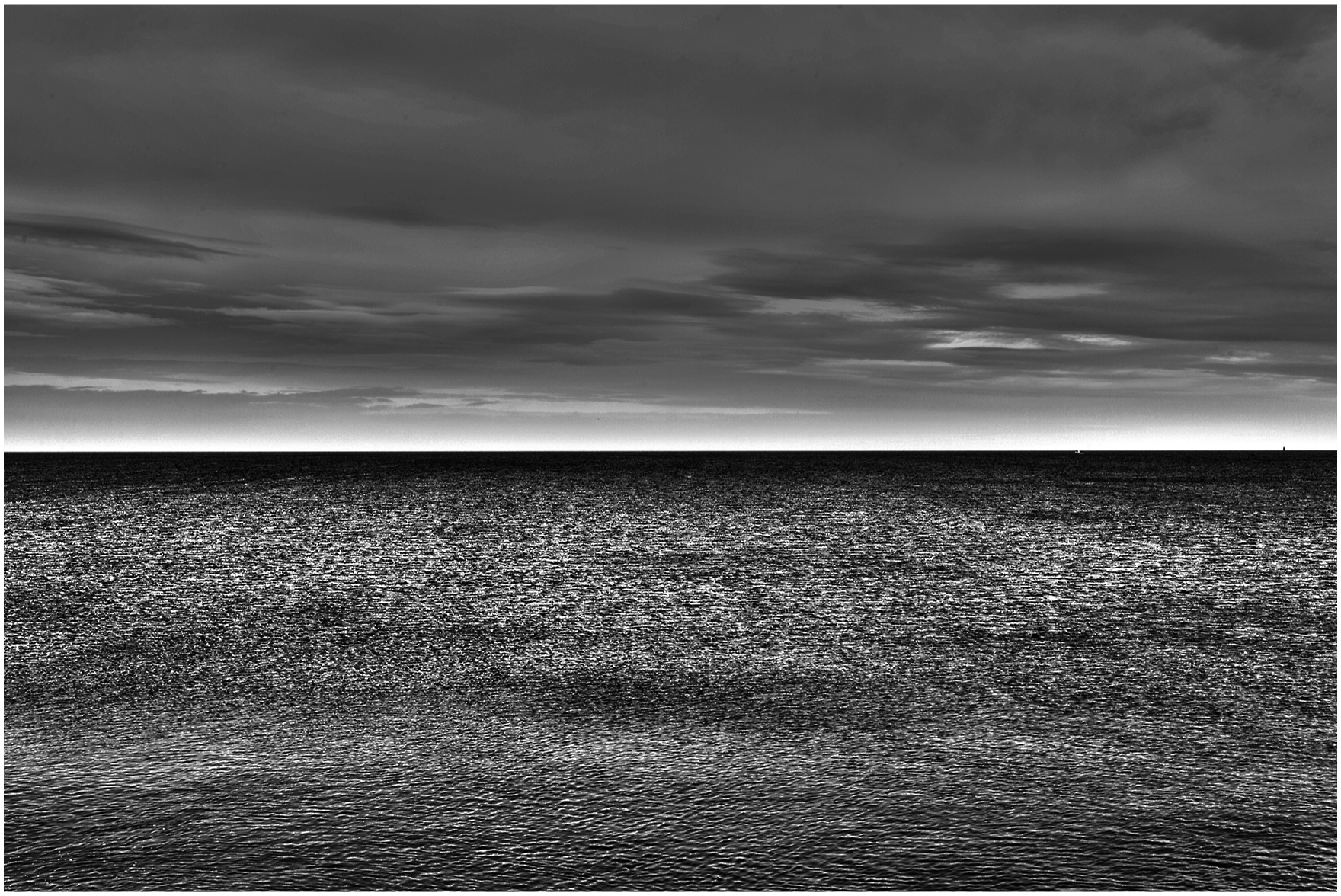

Some energy scholars (e.g., Sánchez-Pantoja et al., 2018; van der Horst, 2007) have called for more innovative qualitative studies on how individual attitudes shape perspectives on energy aesthetics. However, my primary focus was to address the shortcomings in understanding the transformative processes in individual responses to changing landscapes, specifically in the context of visuality (see Davis, 2018; Sand, 2012) rather than aesthetic preferences. The distinction I make is that while aesthetics focuses on the beauty or attractiveness of energy infrastructure, visuality captures the essence of seeing and interacting with these structures, including the emotional, cognitive, and sensory dimensions of these encounters and how they are grounded in personal and cultural contexts. As a former landscape photographer, however, it was hard to disconnect myself from the aesthetic appeal of the islands, offering another dimension to the research – an inherently arts-based approach – where I could bring my artistic interpretations (rather than just my technical proficiency) into the research process, and eventually, the outcome. Malinowski himself was even “lured by the dramatic, exceptional and sensational” (Goin, 1997, p. 69), often emphasizing an artistic approach to his photography over an evidential one.
The iterative process of data collection, coding, and analysis was enhanced by my ability to return home to Norway between field visits and take my time to revisit the photographs. I learned from them as my research progressed and new findings emerged from the images as my ‘raw data’ (Heisley & Levy, 1991; Szto et al., 2005). Moreover, I could have easily overlooked small details, such as the vortexes around the wind turbines on Sanday in Figure 7 that prompted questions about whether wind turbines can influence local weather and rainfall patterns. Further, I never felt I was far from the Orkney Islands, plastering my office walls with the photographs and increasing my understanding of living in such close proximity to energy infrastructure. This added to the on-the-ground experience, allowing me to empathize with some of the residents’ concerns. Bay of Stove and Spurness Wind Farm, Sanday. Photograph: The Author.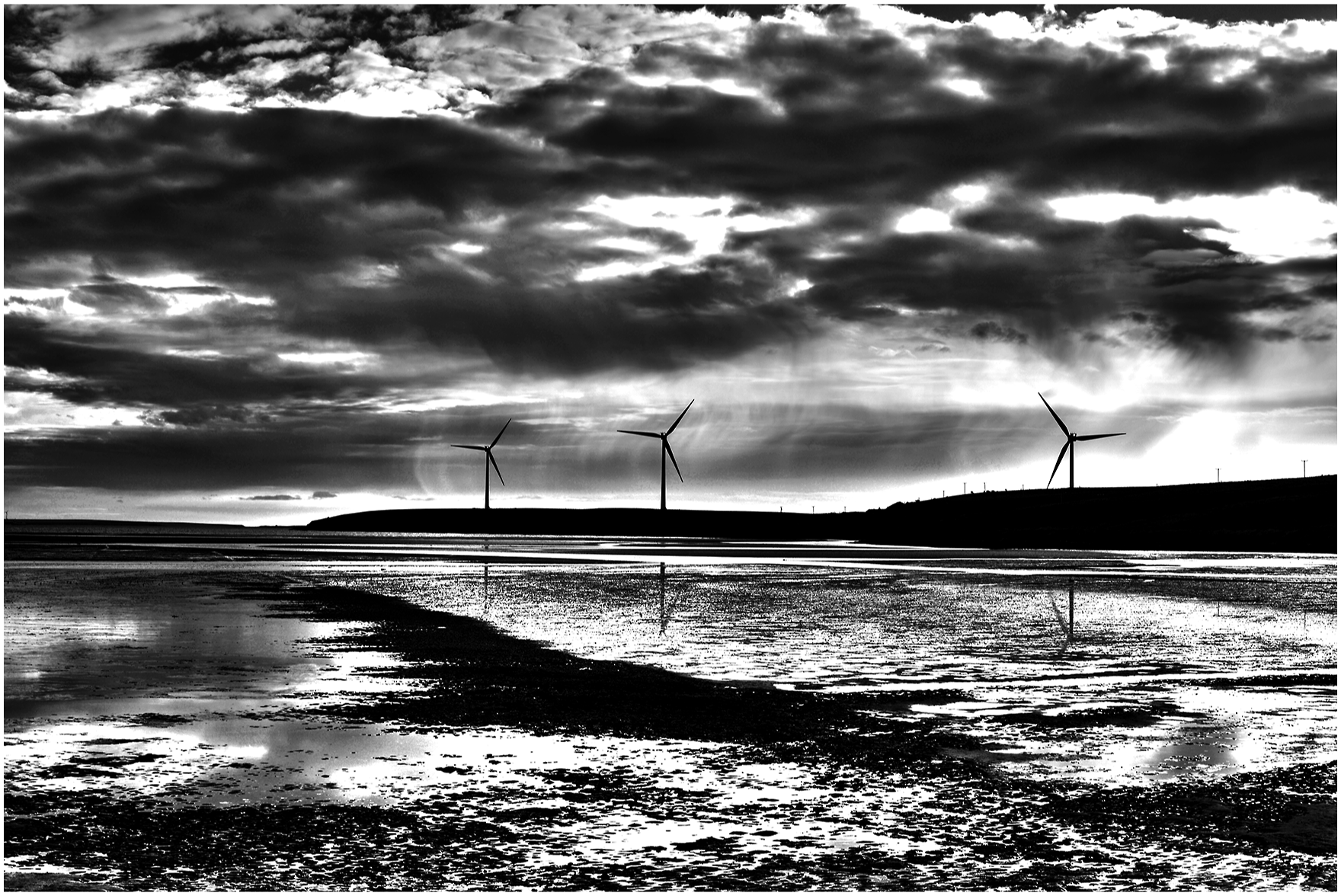
Interacting with residents yielded valuable stories. Far from experiencing “research fatigue,” many expressed a genuine interest in the research. One family remarked: “In terms of the methods used to gather data, we found it really interesting, engaging, and enjoyable. You clearly communicated your objectives in terms of the project, and how the research process would contribute to it. Crucially, we understood it well and were made to feel as if we were making a valued contribution. Really enjoyed our discussion over the images and think that was an innovative approach to the research.” (Email correspondence with participants, July 2024)
Collier (1957) also noted that photography helps avoid the repetition of conventional research methods. In my experience both in this and other research projects, it most definitely does.
I mainly travelled by car throughout the islands, accompanied by field researcher essentials such as flasks of coffee and packed lunches, which I consumed on misty hilltops under wind turbines that I could hear but hardly see: The turbines are hard to see unless close-up. I photograph from different distances as they come more into view – just a shadow in the mist. It amazes me that you can get this close to one of these large structures – right underneath in fact. I spend a bit of time playing around with angles from beneath the blades – it can be quite daunting – the blade resembling a sword as it swoops down to strike before swooping back up again and another comes down. (Field notes, 23 October 2022)
Ferry journeys between islands: The bow doors of the ferry open and I rush to grab my phone. As the bow swings around, a turbine fills the view through the doors from the car deck. Something about the turning of the boat and the turning of the turbine as we pass feels surreal – like I am about to enter another world. Feels like being on a merry-go-round while watching a ferris wheel, or something like that – hard to describe. (Field notes, 23 June 2022)
Or sandy beaches looking out towards the North Sea and beyond: Lunch of cheese, biscuits and coffee at a picnic table looking over the beach and out to sea. A local man passes by, tells us he has Covid, but comes back to point out Fair Isle on the horizon. A wee bit too close we think – not Fair Isle, him! (Field notes, 23 June 2022)
Nevertheless, I could not pass the local shop at Evie without buying freshly brewed coffee and Orkney cheese and oatcakes. This of course resulted in conversations with the shopkeeper – a recent incomer to Orkney from Edinburgh – about renewable energy, sustainable living, and his plans to make it a reality in his new island home.
Participants often provided explanations for my observations without much prompting. They attributed their own meanings to the material elements of the photographs, something which Pink (2013) highlights as important, but lacking in the work of Collier. Black and white photographs proved particularly valuable in triggering discussions; with less information (i.e., colours) to process, emotive responses are often heightened (Berger, 1992). Many documentary photographers prefer black and white images because they reduce the amount of information the brain needs to process, thereby heightening the emotional response and leaving a lasting impression. However, combining black and white with colour photographs can complement and enhance the message the photographer or researcher aims to convey, such is the case in the project’s forthcoming exhibition which features images that reflect, interpret, and communicate responses to Orkney’s energy transition, enhancing and adding depth and context to the research. Barndt (1997) used this technique by juxtaposing classic black and white images of tomato pickers with colourful photos of corporate giants like McDonald’s. According to Barndt, this further challenges the audience’s interpretation of the photographs, disrupting the black and white tradition both “visually and analytically” (p. 29).
Bonding with participants over our photographs helped them feel comfortable in my presence. The auto-photography approach proved to be fruitful and led to participant engagement that amounted to more than I could ever have hoped for, and I would argue more than would have been achieved through using conventional methods. Participants frequently sent me their photographs and videos throughout the year so that I could experience Orkney’s energy infrastructure against the backdrop of changing seasons, sunsets and sunrises, storms – sun, rain, and snow – from afar and through their eyes. Asking participants to do this for 3 months at a time extended to a year, and in some cases beyond (without me asking). I would often receive notifications on my phone from participants, keeping me immersed in the islands energy landscape as I worked in my office or at home, and keeping me constantly grateful for their engagement. Although I always remained mindful, concerned that I was making them obsessed and raising it with them on several occasions, they seemed to have an overall positive experience by engaging in this way: “I think we were happy with the process of data gathering as I for one are often taking photos of the turbines and you gave me the chance to share them! I think I learnt that I appreciate the view to the south more because we have the turbines there. We are always aware of the wind direction because of them! When we bought the house in 2008 there were 3 turbines, and those were replaced by the 5 we now have. We like that they are around Loth, as a welcome to the island. We became more aware of wind turbines in other places too. The year seemed to go by really quickly, so we obviously didn't find it too onerous.” (Email correspondence with participants, June 2024) “It was interesting working with you on the turbines that dominate the view at Stove. I started to become very engaged with their effect and focus far more acutely than I otherwise do; getting excited by moments of beauty and drama, rushing to get my phone to record them for you. It hasn’t changed my attitude I don't think which has been and still is acceptance; that if they can help to protect the wider environment then it’s ok in my front yard although personally I did prefer the clean blank headland and no sound of swish swish. Part of the acceptance for me is not giving them much thought so being asked to make observations by you was refreshing.” (Email correspondence with participant, June 2024)
However, one participant who initially agreed to take photographs was shy when it came to sharing them with me: “I was embarrassed. He’s a photographer. No way am I sending that to Neil, that’s garbage.” Ironically, I have known this participant for years after they interviewed me for an article, and their photographs are certainly not garbage! Nevertheless, like with Agúndez Del Castillo et al.’s Mateo, the photographs served as prompts for discussions, leading to deeper reflections on participants’ interactions with the landscape and offering personal perspectives and insights.
Using photographs for elicitation, and interpreting them alongside participants, connected us to the research in ways that traditional interviews may not have. Moreover, visiting participants in their homes provided me with the firsthand experience of elements I had seen in their photographs. Conversations often took place with the energy infrastructure in view, awarding me an insider’s perspective of the research territory. Furthermore, it increased my awareness of certain issues, such as the disproportionate level of fuel poverty throughout the Orkney Islands, where more energy is produced than can be consumed.
One participant threw buckets of smokeless coal into their fire and the condensation ran down their living-room windows as they told me about the high electricity and fuel prices on the island, despite the subsidies; another chopped wood to stoke their wood-burner as they explained that their oil-fired central heating system, of which installation costs were largely covered by a Scottish government grant, was too expensive to refill. The irony of their actions and the parallel discussion was not lost on me as we looked out their kitchen window to 5 wind turbines – 2 MW each and potentially producing enough energy to power around 10,000 homes – on an island with less than 500 inhabitants.
Many of the photographs evoked strong emotional responses during discussions with participants, for example the turbine at Rennibister that spoils a resident’s daily commute: “The only one I think about is the one at Rennibister. That’s the only one that jars me”; and the oil platforms moored in Scapa Flow: “What I find frustrating about this whole conversation is that nobody bats an eye about them […] They’re dirty and old and you know, they look polluting. They’re from a bygone era, and yet there’s no community uproar about them.” The elicitation approach provokes dialogue that breaks-down traditional hierarchies, where the authority belongs to the participants rather than the researcher, and where the senses are stimulated by what is viewed (Hall, 2009; Harper, 1994, 1998; Nakamura, 2013). Moreover, these opinions are shaped by participants’ own subjective backgrounds and needs, emphasizing the often-overlooked complexities of living side-by-side with energy developments in island landscapes; and as researchers, it is our duty to try to understand them (Szto et al., 2005).
During elicitation, I asked very few questions directly; participants largely led the discussions, prompted by the photographs. Some topics also surfaced indirectly. Moreover, off-topic discussions included about one participant’s (a former light aircraft pilot) flying exploits, or another’s interest in the lenticular cloud in Figure 3 – nothing to do with energy infrastructure but sparking equally interesting conversations that led to deeper insight into their lives. Although this may have happened during a regular narrative interview, in this case, the photographs served well as prompts. Coding and transcribing conversations was time-consuming, but they resulted in rich narratives – the ‘thick description’ that Clifford Geertz (1973) alluded to.
Photographs provided a medium to capture and convey the subjective and emotional responses of individuals, such as feelings of discomfort, annoyance, or aesthetic appreciation through their visual interactions with Orkney’s energy infrastructure. They encouraged participants to reflect on their interactions with the landscape and articulate their feelings in a more detailed and expressive manner compared to other forms of communication. Moreover, an immersive visual approach added a vivid and detailed layer to the interactions and how the visuality of energy shapes both individual and community perceptions and responses over what could have been achieved verbally. By illustrating the diverse and multifaceted ways in which individuals and communities experience and respond to the presence of energy infrastructure, I emphasise the importance of considering these subjective and lived experiences to better understand the complexities of energy transitions and to develop more inclusive and empathetic approaches to energy planning and policy.
Art leads to insight (Glotfelty & Goin, 2022); on Orkney the photographs led to collaborative interpretations, which led to meanings, which in turn led to new insights, knowledge, and understanding about the visual experiences of energy development in rural landscapes. The concept of visual response imaginaries, which emerged from participants’ unique visual experiences and responses to energy infrastructure, highlights how individuals’ visual interactions with energy systems can lead to diverse responses that go beyond traditional aesthetic judgments: “I had to challenge myself into looking at them from a whole different perspective. Sometimes I found it easy to see a scene of playfulness, but mostly I found it difficult to see a beneficial dynamic between the structures and the landscape. The only times I felt I managed to capture the illusion that I wanted, was when there was little conflict between the landscape and the structures because of nature’s grace and beauty, where they could almost look like they shared a common goal, a symbiotic co-existence. I still feel though that there is a very fragile tipping point, where if too many of them, you cannot incorporate them in any favourable way - they just become objects of intrusion.” (Email correspondence with participant, September 2024)
Conclusion
My research in the Orkney Islands aimed to understand how local stakeholders’ perspectives and relationships with renewable energy developments are shaped by their visual experiences throughout their local environment. Notwithstanding some challenges, by using photography to explore these visual interactions, the study revealed new relationships, meanings, and responses to the energy infrastructure that has shaped the Orcadian landscape, moving beyond mere quantification of preferences. It also uncovered ongoing and often unheard issues related to specific visual encounters with energy infrastructure in the Orkney Islands and the broader context of energy production and low-carbon transitions.
I adopted a participatory approach by involving participants in the process of both discussing and taking photographs. This allowed individuals to highlight what they found significant or impactful, ensuring that the visual data collected was grounded in their personal experiences and perspectives. Using photo-elicitation in interviews, I encouraged participants to reflect on the photographs and discuss their thoughts, feelings, and memories associated with the images. This method helped to elicit rich, detailed narratives that provided deeper insights into how they experienced and responded to the visual presence of local energy infrastructure. The photographs served as prompts that initiated discussions and reflections among participants, uncovering the subjective meanings and interpretations they attached to their visual encounters with energy infrastructure. This also encouraged participants to think critically about their visual environment and their interactions with it, revealing the complexities and nuances of their experiences that might have been overlooked using purely discursive methods.
The approach captured a wide range of visual experiences and responses, enriching the understanding of how different individuals and communities perceive and interact with energy infrastructure. The collaborative nature of the research fostered a sense of empathy and connection between me and the participants. By sharing and discussing their photographs, participants felt more engaged and valued, which facilitated a deeper exploration of the meanings behind the images. Photographs provided a tangible and illustrative way to visualize subjective experiences and emotional responses, helping to convey the personal and often complex ways in which individuals relate to their changing landscapes. Despite a few challenges, the collaborative use of photography in my research facilitated a richer, more nuanced understanding of the visual and experiential aspects of energy transitions in rural communities. This makes it an ideal model not only in energy transitions research, but one which is transferable to a wide range of STS and broader social science studies.
Footnotes

Ethical Considerations
Approved by SIKT (formerly NSD) - Reference number 537358.
Consent to Participate
All participants gave written informed consent to participate.
Funding
The author disclosed receipt of the following financial support for the research, authorship, and/or publication of this article: The research was undertaken as part of a PhD research project at the Department of Art, Design & Drama, Faculty of Technology, Art & Design, Oslo Metropolitan University (OsloMet).
Declaration of Conflicting Interests
The author declared no potential conflicts of interest with respect to the research, authorship, and/or publication of this article.