




Abstract
The theoretical development of the ‘new sociology of childhood,’ coinciding with the recognition of children’s right to express their voice and have it heard on matters affecting them, has inspired the proliferation of participatory methods in research with and by children. This paper addresses a gap in the methodological literature by comparing two such participatory methods, focus group discussions and photovoice, in an exploration of care in children’s school lives. Drawing on the narratives of 49 Second Class children (typically aged eight to nine years) participating in Ireland’s national longitudinal study of primary schooling, Children School Lives (https://www.cslstudy.ie), the paper details the data collection, processing, and analysis associated with each method, as well as the emergent themes arising from each. We draw on our exploration of care in children’s school lives in order to illustrate the comparison of the two participatory methods. Our comparative analysis underscores the greater complexity associated with the data collection, processing, and analysis for photovoice. In addition, emergent themes suggest two distinct discourses on care arising from each method. While narratives from focus group discussions offer descriptive accounts of children’s experiences, photovoice data provide a more personal, emotive, and in-depth account of care in children’s school lives. Methodological decisions taken in this study and implications for future research which employs participatory methods with children are discussed and positioned within the wider literature.
Keywords
Introduction
Over the past four decades, the theoretical development of the ‘new sociology of childhood’ has repositioned children epistemologically as a structurally situated minority group in society and as active agents in their social worlds – at home, in school, and in the wider community (Adler & Adler, 1986; Alanen, 1988; James & Prout, 1990; Mayall, 1994; Qvortrup, 1987; Tisdall et al., 2023). This shift has challenged established developmental perspectives of children as incomplete, passive, and dependent – perspectives which traditionally positioned them as objects of adult intervention or subjects of adult study (Gibson, 2012; Meyer et al., 2023; Montreuil et al., 2021; Prout, 2011; Qvortrup, 1987; Zeiher, Devine et al., 2007). By contrast, research now increasingly recognises children as knowing subjects of their lived realities with the propensity to exercise agency as co-researchers of their social worlds, often termed as research with or by children rather than research on or about children (Bradbury-Jones et al., 2018; Clavering & McLaughlin, 2010; James, 2007; Luttrell, 2010; Spyrou, 2011). Framed within the discourse of children’s rights, Article 12 of the United Nations Convention on the Rights of the Child (1989) gives political and quasi-legal support to research with and by children, upholding their right to express their views and have them given due weight on matters affecting them (Bradbury-Jones et al., 2018; Devine, 1999; Holland et al., 2010; Lundy et al., 2011; Lundy & McEvoy, 2012; Vogl et al., 2023).
Researchers have identified a range of approaches which facilitate children’s voice and involvement in the research process, including focus group discussions, training sessions and workshops, photography and filming activities, and methods which engage children as data collectors or research advisors (Donegan et al., 2023; Greene & Hill, 2005; Horgan, 2016; Montreuil et al., 2021), with the majority of such research previously taking place in preschool and primary school contexts (Montreuil et al., 2021). Not only do such approaches serve to empower children by recognising and attending to their unique expertise of their own lives, they also facilitate the collection of data more attuned to children’s perspectives and priorities by reducing the influence of adult researchers in the process (Donegan et al., 2023; Montreuil et al., 2021; Vogl et al., 2023). The literature also identifies particular ethical considerations relating to research with and by children. These include identifying developmentally appropriate facilitation techniques and research environments, ensuring authenticity to children’s voices in data collection and analysis, and recognising the power dynamics between children and adult researchers, particularly in research situated in school settings which may be perceived as coercive by some children (Hill, 2005; Horgan, 2016; Liebenberg, 2018; Lundy et al., 2011; McDonnell, 2021; Montreuil et al., 2021; Spyrou, 2011). Researchers have also called for greater reflexivity with respect to the inclusion of children’s voices in research (Horgan, 2016; Martinez Sainz et al., 2023; Spyrou, 2011), drawing attention to its limits in the process of knowledge production (Spyrou, 2011) and highlighting the hidden meanings potentially embedded in children’s silences (Spyrou, 2016). In their review, Montreuil et al. (2021) make the important distinction between specific ‘participatory methods,’ which engage directly with children in the collection of data, and ‘participatory research’ more broadly, in which children are actively involved in making decisions at key steps of the research process. They go on to note, however, that there is no hierarchy for children’s participation in research, but rather that designs should be tailored to the objectives of the particular study (Montreuil et al., 2021).
This paper presents a comparative analysis of two participatory methods utilised in research seeking to understand children’s experiences of care in their school lives, namely focus group discussions (FGDs) and photovoice. Situated within the interpretivist paradigm (Creswell & Creswell, 2023), the term ‘experiences’ encapsulates our objective to understand children’s constructed meanings pertaining to care in their lived realities at school. This predetermined focus on care limited opportunities for children’s active decision making in the research process more broadly, as may be conceptualised in participatory research (Montreuil et al., 2021). Rather, our design more closely reflects the utilisation of two participatory methods, chosen in order to engage directly and authentically with children on the topic of care in their school lives (Montreuil et al., 2021). To the best of our knowledge, the only previous comparison of the two methods, along with other qualitative approaches, is evidenced in Ottmann and Crosbie’s (2013) exploration of the lives of adolescents and young adults with intellectual disabilities. Ottmann and Crosbie’s (2013) findings highlight the complementarity of FGDs and photovoice, advocating for a mix of methods. Nonetheless, a gap remains in the literature with respect to comparing the utilisation of the two methods in order to understand children’s experiences at school. Against this backdrop, our comparative analysis is framed by the following research questions, formulated with regard for O’Brien and colleagues’ (2014) standards reporting qualitative research. 1. How do the two participatory methods compare with respect to their implementation during data collection – both practically and in relation to children’s active engagement as co-researchers? 2. How do the two participatory methods compare with respect to the processing and analysis of data? 3. How do the themes and discourses arising from the two participatory methods compare with respect to our understanding of children’s experiences of care in their school lives?
The paper begins by reviewing the literature pertaining to the implementation of each participatory method in research with children. Second, we describe the research design and identify the children and schools in the sample. Third, the method involved in data collection and processing for each method is detailed. Fourth, the analysis of data relating to each method is outlined, along with an illustration of the themes emerging from each. Finally, we present a comparative analysis of the two methods, discussing the strengths and limitations associated with each.
Understanding Children’s Experiences Through Focus Group Discussions
FGDs are a qualitative data collection method in which a small group of individuals, typically with similar characteristics or attributes, engage in an in-depth interview ‘focused’ on a given topic (Adler et al., 2019; Rabiee, 2004). In particular, it is the group dynamics and patterns of interaction between individuals in a FGD that serve to bring about deeper and richer insights than those which may be obtained from the sum of individual interviews (Morgan, 1996; Rabiee, 2004; Vogl et al., 2023). Welker and Kamberelis (2023) characterise FGDs as the “tip of the iceberg” (p. 225) with respect to qualitative data collection, highlighting their utility in drawing out the complexities, nuances, and contradictions of the phenomena under study, often in a manner that is kaleidoscopic and indexical rather than focused and contained. The origins of the FGD can be traced to a century ago with the work of Bogardus (1926) which highlighted the efficient manner with which information could be gathered from large groups of individuals. The method was later refined by Merton and Kendall (1955) who emphasised the utility of FGDs in understanding the subjective experiences of small groups of individuals, oftentimes in order to explain trends arising from quantitative research. Despite such a long tradition of FGDs in research with adults, it was not until the 1990s that the method gained increasing prominence in research with children and youth, coinciding with advances in the field of childhood studies described above (Adler et al., 2023; Gibson, 2012; Hennessy & Heary, 2005).
When conducting FGDs with children, it is important to make particular developmental considerations relating to their cognitive, linguistic, social, and psychological competencies in order to support their understanding of questions, self-reflection on personal experiences, and expression of thoughts and feelings (Adler et al., 2023; Gibson, 2012; Montreuil et al., 2021; Vogl et al., 2023). As such, the interviewer plays a central role in ensuring children’s understanding and informed consent, creating an atmosphere of trust, enjoyment, and support, and promoting thoughtful and honest responses (Gibson, 2012; Hennessy & Heary, 2005; Vogl et al., 2023). It has also been suggested that researchers minimise the power imbalance with children and relinquish authoritative control when moderating FGDs (Adler et al., 2019; Welker & Kamberelis, 2023) – for instance, by adopting the ‘least-adult role’ in their engagements (Mandell, 1988). The authenticity and honesty of children’s responses is further supported by the presence of peers in FGDs, with children generating a wider range of perspectives and holding each other accountable in a manner not possible in individual interviews (Adler et al., 2019; Devine, 2004; Horgan, 2016; Vogl et al., 2023). This aligns with the ‘friendship group’ approach to FGDs, whereby familiarity between members of the group encourages openness and authenticity in discussions (Adler et al., 2019; MacRuairc, 2011; Vogl et al., 2023). Despite such strengths associated with the group dynamics of FGDs with children, however, Horgan (2016) cautions against consensus narratives and groupthink as characteristic aspects of collective knowledge production. Our research builds on a large body of work that has employed FGDs to explore children’s experiences of care in their school lives (Antrop-González & De Jesús, 2006; Bass, 2019; Garza & Soto Huerta, 2014; Jackson et al., 2014; Jeffrey et al., 2013; O’Flaherty et al., 2018; Rolón-Dow, 2005; Tichnor-Wagner & Allen, 2016; Valenzuela, 1999; Watson et al., 2016).
Understanding Children’s Experiences of Care Through Focus Group Discussions
While some researchers have employed FGDs as their core method in exploring children’s experiences of care in their school lives (Bass, 2019; Jeffrey et al., 2013), most have complemented their use with other qualitative methods, such as ethnographic observations, individual interviews, and varied engagements with teachers and other school personnel (Antrop-González & De Jesús, 2005; Jackson et al., 2014; Rolón-Dow, 2005; Tichnor-Wagner & Allen, 2016; Valenzuela, 1999; Watson et al., 2016). In Garza and Soto Huerta’s (2014) research, FGDs were employed with a sub-sample of children after quantitative surveys in order to contextualise findings. Across this body of research, evidence exists of children describing teacher behaviours which they characterise as caring, often in terms of care for their welfare and well-being, as well as support for their academic progression and success (Antrop-González & De Jesús, 2006; Bass, 2019; Jackson et al., 2014; Jeffrey et al., 2013; Valenzuela, 1999; Watson et al., 2016). Other research has explored teacher behaviours identified as not caring, particularly in schools serving low-income communities, with children describing practices such as misalignment between curriculum and assessment, unrealistic and overburdening expectations, and condescending and paternalistic interactions with teachers, leading to feelings of alienation, demoralisation, and resentment (Garza & Soto Huerta, 2014; Rolón-Dow, 2005).
Understanding Children’s Experiences Through Photovoice
Another participatory method which engages children as co-researchers is photovoice. It is a visual method which invites those whose voice is seldom heard to represent their lives from their own point of view through photography, with subsequent discussions about their choice of photographs and their meanings in order to effect change (First et al., 2019; Luttrell, 2020; Meyer et al., 2019; Walls & Holquist, 2019). The method, originally developed by Wang and Burris (1994) to explore matters of women’s health in rural China, has gained increasing interdisciplinary prominence in diverse settings globally (First et al., 2019; Liebenberg, 2018; McMorrow & Musoke, 2023). Underpinned by critical emancipatory ideals, as well as feminist theory and the principles of documentary photography, the method has the potential to raise the critical consciousness of minority groups through interrogating the structural inequalities which influence their lived experiences in order to effect social change (Ingram, 2014; Liebenberg, 2018; McMorrow & Musoke, 2023; Meyer et al., 2023; Wang & Burris, 1994). Research with photovoice also presents an opportunity to restore epistemological justice to our understanding of children and childhood, whereby its visual nature ensures that the ‘voices’ of children with limited verbal abilities or lower levels of confidence are exercised, while also reducing the power imbalance between children and adult researchers (Ingram, 2014; Meyer et al., 2023; Samonova et al., 2022).
Our research contributes to a growing body of work which employs photovoice to understand children’s experiences of care in and out of school (Samonova et al., 2022, 2023; Devine & McGillicuddy, 2019; Due & Riggs, 2016; Luttrell, 2010, 2013, 2020; McGovern & Devine, 2016; Ryu et al., 2022; Walls, 2021a, 2021b; Walls et al., 2021). Variance exists across the literature concerning the manner in which photovoice has been implemented to explore children’s experiences of care, both in terms of the type of prompt provided for the photography activity and the type of interview conducted with children regarding their photographs. While some studies have provided children with broad photography prompts inviting them to represent their lives at school and/or in the community (Due & Riggs, 2016; Luttrell, 2010, 2013, 2020; McGovern & Devine, 2016), others have given children more binary prompts, such as inviting them to identify things they did and did not like in their community (Samonova et al., 2022, 2023), things they liked and things they desired to change in their lives (Devine & McGillicuddy, 2019), and places they the felt cared for and uncared for at school (Ryu et al., 2022; Walls, 2021a, 2021b; Walls et al., 2021). Notably, in Devine and McGillicuddy’s (2019) research, children were invited to compose the prompt for the photography activity with the researchers. Researchers have also varied in their approach to interviewing children about their photographs, with many opting for individual interviews (Devine & McGillicuddy, 2019; McGovern & Devine, 2016; Ryu et al., 2022; Walls, 2021a, 2021b; Walls et al., 2021), others for group discussions (Samonova et al., 2022, 2023), and some for a combination of both (Due & Riggs, 2016; Luttrell, 2010, 2013, 2020). In Luttrell’s (2020) longitudinal research, a range of approaches, including individual interviews, informal conversations with individuals and groups, and retrospective reflections, were employed.
Understanding Children’s Experiences of Care Through Photovoice
This body of photovoice research provides a rich understanding of children’s experiences of care at school. Such insights are illustrated in children’s discussion of specific teacher behaviours which they characterise as caring, such as maintaining authenticity and vulnerability in interactions, devolving power to children and offering meaningful choices, demonstrating a general sense of fairness, affirming and supporting children’s emotional experiences, adjusting behavioural expectations for children in response to setbacks, and reflecting children’s identities and cultures in school practices (Due & Riggs, 2016; Luttrell, 2020; McGovern & Devine, 2016; Walls, 2021a, 2021b). Feeling safe at school is an important consequence of being cared for (Due & Riggs, 2016; McGovern & Devine, 2016), with children often considering their experience of care in terms of the stability and predictability of their relationships with teachers (Walls, 2021b, 2022). Indeed, photovoice research demonstrates that children sometimes essentialise care in relation to the personalities of their teachers, framing their experience within a gendered discourse by emphasising prototypically feminine traits such as ‘nice,’ ‘kind,’ ‘calm,’ and ‘pretty’ rather than a set of specific behaviours (Luttrell, 2013, 2020). This is further underscored by children’s conflation of care at school with ‘mothering,’ characterising teachers’ motivations for caring as being grounded in love and altruism rather than financial gain (Luttrell, 2013, 2020). Evidence also exists of children’s experience of care at school being imbued in physical space, both through the practical “dwelling-making” of their teachers (Luttrell, 2020, p. 160), as well as through the sense of comfort associated with particular places in which care is experienced (Walls, 2021a). In schools serving low-income communities, some children have been shown to associate care from their school principals with the securing of educational resources, including computers, textbooks, or playground equipment, signalling to them their social worth and educational value (Luttrell, 2013, 2020). Research also underscores children’s agency in the co-creation of caring relationships with teachers, evidenced in their capacity to share information about themselves with their teachers (Due & Riggs, 2016) and in their desire to “help out” those who care for them at school (Luttrell, 2020, p. 145). Beyond their relationships with teachers and other school personnel, children have also been shown to consider their schools as caring on an institutional level (Walls et al., 2021).
Additionally, children’s narratives in photovoice research highlight the reassurance experienced when teachers focus on meeting their needs in a given moment, differentiating such teachers from those who focus on academic tasks and objectives (Walls, 2021b). Research also demonstrates, however, that children in schools serving low-income communities are more likely than those in socioeconomically diverse settings to identify academic support as care (Walls et al., 2021). This preference of some children attending schools in low-income communities, which may be framed within a social mobility discourse of education (Devine & Luttrell, 2013; Kyriakides et al., 2019; Luttrell, 2020), is noteworthy in light of the significant caring responsibilities related to children’s welfare and well-being in such contexts (Crean et al., 2023; Gleasure et al., 2024; Moss et al., 2020). The accounts of children from such settings also underscore the manner in which pressures to cover curricular content and performance in standardised assessments limit teachers’ ability to care for their welfare and well-being (Lutrell, 2013; Walls, 2021a). As Luttrell (2013, 2020) notes, children’s awareness of such limitations with respect to teachers’ ability to care offers a profound lesson on adult powerlessness in light of institutional and systemic influences.
Finally, it is noteworthy that the narratives of children in photovoice research not only shed light on caring relations between children and their teachers, but also the co-agentic caring relations between children themselves (Luttrell, 2013, 2020; McGovern & Devine, 2016; Ryu et al., 2022; Walls et al., 2021). For instance, in Luttrell’s (2013, 2020) research, evidence exists of a culture of care among children through which they support each other’s learning by sharing resources, providing assistance, and creating a sense of belonging in collaborative learning tasks. In addition, research indicates that safety and order at school are not always perceived as caring by children, with many identifying places in which teachers have less presence and authority, such as corridors, common spaces, and bathrooms, as sites of care from peers (Ryu et al., 2022; Walls et al., 2021). Notable here, also, is children’s description of institutional practices which limit the time and spaces in which children can socialise with one another, thereby interrupting their ability to establish and maintain relationships of care (Ryu et al., 2022).
Research Design
This research is based on case studies from Ireland’s national longitudinal study of primary schooling, Children’s School Lives 1 (CSL). The study employs a cross-sequential cohort design over a period of five years, tracing the experiences of two nationally representative cohorts of about 4000 children from almost 200 primary schools, reflecting the full range of school types in Ireland. From this larger sample, further in-depth case studies are conducted in thirteen schools. These case studies involve annual qualitative ethnographies of one to two weeks in each school, including field notes based on classroom and schoolyard observations, standardised observations of pedagogy, interviews and FGDs with children, families, teachers, principals, and other school personnel, and a range of other participatory research methods with children (see Crean et al., 2024; Donegan et al., 2023). In this paper, we draw on data from three such case study schools, purposively selected due to their designated disadvantaged status through their inclusion in the ‘DEIS’ programme. The programme provides targeted resources to “schools with high concentrations of students at risk of educational disadvantage” (Department of Education, 2022, p. 14). In previous research, we have identified significant caring responsibilities related to children’s welfare and well-being in each of these schools serving low-income urban communities (Crean et al., 2023; Gleasure et al., 2024).
Sample
Gender Profile and Number of Participants in Each School.

Bold text is to highlight headings/categories in tables.
Method
Implementation Timeline for Both Participatory Methods.

Focus Group Discussion Data Collection
At the beginning of the ethnographic study period in each school, children took part in FGDs in their self-selected friendship groups. FGDs took place in a private space in each school in order to ensure the confidentiality of children’s responses and facilitate their sense of comfort (Welker & Kamberelis, 2023). The researcher
3
adopted the least-adult role described above (Mandell, 1988) in order to diminish any power imbalance with children (Adler et al., 2019; Welker & Kamberelis, 2023). It is also worth noting that children across the three schools had participated in four previous waves of the longitudinal research project and had developed a relationship with the researcher during the prior period of ethnographic observation. During FGDs, healthy snacks were offered to children (Adler et al., 2019) and they were invited to draw and colour pictures illustrating their lives at home and at school. Within the semi-structured interview schedule for FGDs, children were asked questions about their experience of care from their teachers, as well as occasions on which their teachers were not caring (Figure 1). Questions were composed with due regard for the developmental levels of the children involved (Adler et al., 2023; Gibson, 2012; Montreuil et al., 2021; Vogl et al., 2023). It is important to note that these questions were designed to serve as prompts for broader discussions on children’s experience of care in their school lives. All FGDs were audio recorded, transcribed, and anonymised. Data were stored on the cloud-based Novell platform which is protected by two-factor authentication. Focus group discussion questions on care.
Photovoice Data Collection
The photovoice method was employed following the completion of all FGDs in each school (see Table 2). In order to maintain consistency with FGDs and facilitate comparison between methods, it was decided that children would remain in their friendship groups throughout the photovoice method. In their friendship groups, children, first, received training on the basic principles and research ethics of photography, including the requirement that other individuals could not be photographed (Liebenberg, 2018; Meyer et al., 2023). Each group was then provided with the prompt for the photography activity: Take three photographs of places where you feel cared for at school and three photographs of places where you do not feel cared for at school.
A prompt such as this was chosen in order to reflect both the binarism and specificity of questions asked in FGDs. The prompt provided to children also closely resembles that used in some of the research described above (Ryu et al., 2022; Walls, 2021a, 2021b; Walls et al., 2021). It was strongly encouraged that each child would take at least two photographs using digital cameras provided by the researcher, one of a place identified as caring and another of a place identified as not caring. Notably, some friendship groups took more than the suggested amount of photographs, while others took fewer than the suggested amount. After the school day, the photographs taken by each friendship group were printed in colour by the researcher using a portable printing device. These printed photographs served as the basis for group discussions with each friendship group on a subsequent day (see Table 2), taking place in the same private space as FGDs in each school. Such collective interpretation and discussion of the photographs taken by children served to bring to light their co-constructed meanings with respect to the different places and spaces photographed (Liebenberg, 2018). Again, the questions asked were designed to serve as prompts for broader discussions of children’s experiences of care in their school lives (Figure 2). While children were invited to select a range of photographs about which to talk, they typically chose to discuss all photographs taken by their group. These group discussions enabled children to express and discuss the meanings behind their photographs as they related to care and the absence of care at school. All FGDs were audio recorded, transcribed, and anonymised. Data were stored on the cloud-based Novell platform which is protected by two-factor authentication. Photovoice questions.
Analysis
Analysis of Focus Group Discussion Data
Transcripts of children’s narratives on care arising from FGDs were inductively coded using MAXQDA software, whereby the inductively generated codes were applied to corresponding transcript passages. Following the iterative nature of thematic analysis (Braun & Clarke, 2006), sets of related codes were identified and grouped together under emergent themes which served to hold them together as a ‘conceptual glue’ (Adler et al., 2019; Mihas, 2023). Throughout this process, the positioning of the researcher as a former teacher in a school serving a low-income community was reflexively acknowledged in order to identify any assumptions or biases which may have arisen (Braun & Clarke, 2019). Ultimately, this process led to the identification of two themes which describe the manner in which children experience care in their school lives, as outlined in Figure 3. Themes identified from analysis of FGD data.
Care is Experienced Through Teachers’ Kindness
While several children across all three schools essentialised their experiences of care in their school lives in terms of traits and attributes of their teachers (e.g., “kind,” “nice,” “amazing,” “fun,” “beautiful”; as in Luttrell, 2013, 2020), others described specific teacher behaviours which they perceived as caring: (Ardnakinna, all girls) (Cashla, co-ed) (Cashla, co-ed) (Poolbeg, all boys)
Although directly asked (see Figure 1), children placed little emphasis on occasions on which their teachers were not caring. This was with the exception of some children’s discussions of occasions on which teachers admonished children for their behaviour: (Ardnakinna, all girls) (Poolbeg, all boys)
Care is Experienced Through Academic Support From Teachers
To a lesser extent, some children also spoke about the academic support received from their teachers as part of their experience of care in their school lives: (Ardnakinna, all girls) (Cashla, co-ed)
Analysis of Photovoice Data
Denotation Level of Photographs of Places Identified as Caring by Children Across Three Schools.

Italics are used for ease of understanding here - in order to distinguish tallies for individual schools from totals.
Bold text is to highlight headings/categories in tables.
Denotation Level of Photographs of Places Identified as Not Caring by Children Across Three Schools.

Italics are used for ease of understanding here - in order to distinguish tallies for individual schools from totals.
Bold text is to highlight headings/categories in tables.
By contrast, the connotation level considers the meaning of what has been photographed, as described by children in group discussions. Samonova et al. (2022) characterise this as exploring “what story is hidden behind the image” (p. 7). For instance, the photograph in Figure 4 was taken by a Second Class girl, Aisling, in Ardnakinna to represent a place in which she did not feel cared for at school. On the denotation level, the photograph depicts the entrance to the bathroom used by Aisling and her classmates. As Tables 3 and 4 illustrate, this place was photographed by a total of three girls in Aisling’s class. On the connotation level, however, the narratives of Aisling and many of her classmates reveal that the lack of care associated with this place arises from a rumour within the class about a ghost in the bathroom: (Ardnakinna, all girls) Photograph of bathroom at Ardnakinna, representing fear of a rumoured ghost.
Such insights could evidently not be ascertained from analysis on the denotation level alone, underscoring the necessity of connotation-level analysis based on children’s discussions of their photographs in photovoice research (Samonova et al., 2022).
Connotation-level analysis involved the inductive coding of group discussion transcripts, along with the photographs associated with particular passages, using MAXQDA software. As with the analysis of FGD data, inductively generated codes were applied to corresponding transcript passages and associated photographs, before being grouped under emergent themes (Adler et al., 2019; Braun & Clarke, 2006; Mihas, 2023), while continuously acknowledging the aforementioned positionality of the researcher throughout the process (Braun & Clarke, 2019). This led to the identification of two themes, as outlined in Figure 5. While the photography activity prompt invited children to take photographs of places in which they did and did not experience care in their school lives, subsequent group discussions facilitated broader narratives about teacher behaviours, as well as the emotive experience of care and the absence thereof. Themes identified from analysis of photovoice data.
Care is Associated With Calmness, Familiarity, and Enjoyment
Across the three schools, clear patterns arose with respect to the emotive experience associated with places identified as caring, as well as the role of teachers in facilitating this experience. Below, we provide examples of places associated with calmness, familiarity, and enjoyment from each of the schools: Library at Poolbeg. (Poolbeg, all boys) Teacher’s desk at Cashla. (Cashla, co-ed) PE hall at Ardnakinna. (Ardnakinna, all girls)


Absence of Care is Associated With Danger, Worry, and Loneliness
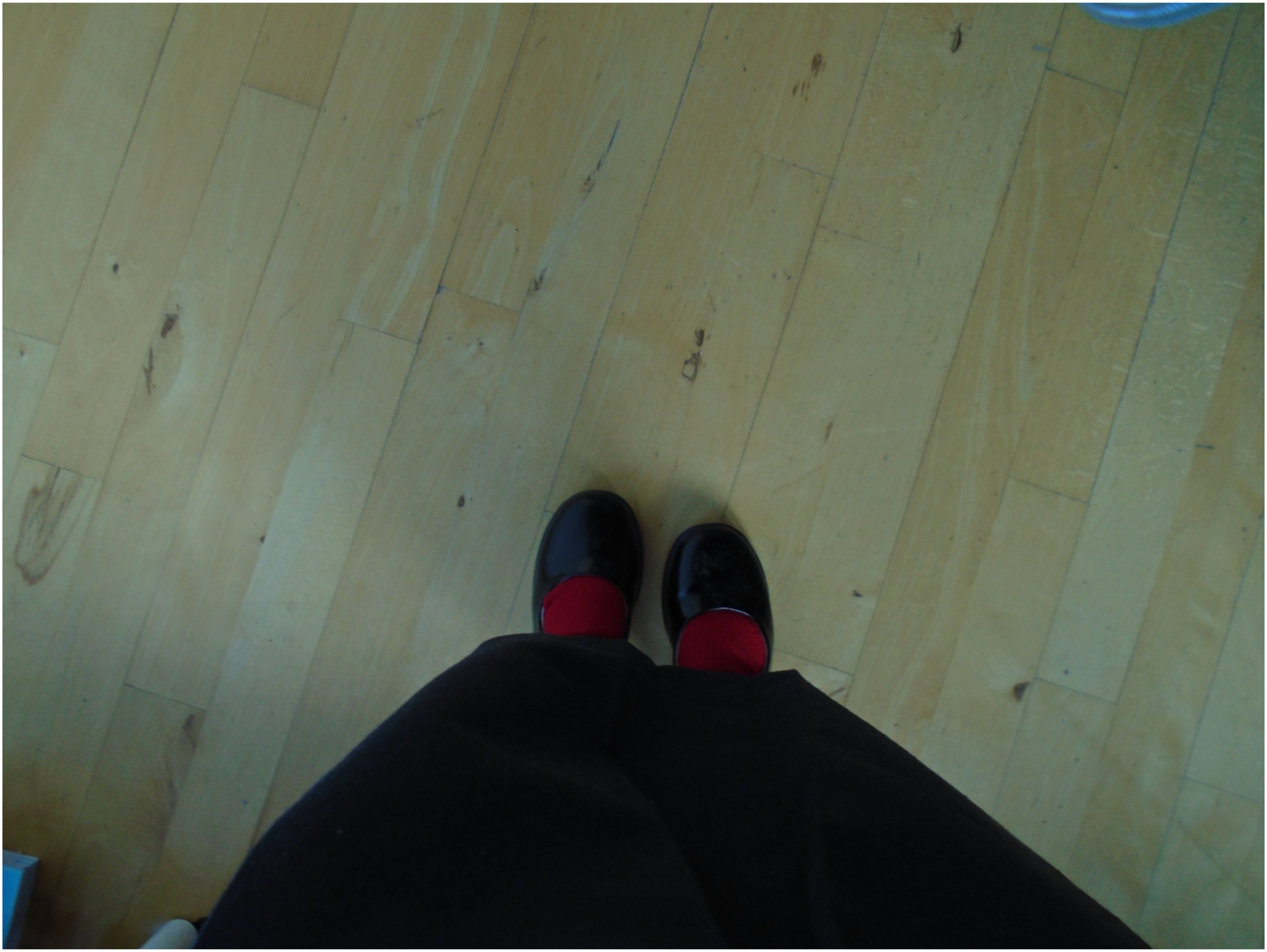
By contrast, evident patterns also existed across the three schools with respect to the emotive experience associated with places identified as not caring, along with the role of teachers in this experience. Here, we share examples of children’s experience of danger, worry, and loneliness from each of the schools: Schoolyard at Poolbeg. (Poolbeg, all boys) Space outside children’s classroom at Ardnakinna. (Ardnakinna, all girls) Chloe’s feet at Cashla, representing the feeling of being lost. (Cashla, co-ed)

Discussion
The research outlined in this paper compares two participatory methods, FGDs and photovoice, with respect to their implementation during data collection, processing and analysis of data, and themes and discourses arising from each in our exploration of care in children’s school lives. As noted throughout, in order to facilitate the direct comparison between methods, a number of factors remained consistent across both, including children’s self-selected friendship groups (Adler et al., 2019; MacRuairc, 2011; Vogl et al., 2023), the space in which discussions took place, the binary nature of questions/prompts, and the researcher with whom children engaged, as well as the adoption of the least-adult role in order to diminish any power imbalance (Adler et al., 2019; Mandell, 1988; Welker & Kamberelis, 2023). Therefore, any key findings which arise from our comparative analysis can be more appropriately attributed to the methods themselves rather than any points of inconsistency. In relation to data collection for the two participatory methods, as our overview illustrates, FGDs were considerably less complex to implement, requiring only one session, compared to photovoice which involved a training session, a photography activity, printing of photographs, and a group discussion of photographs over a two-day period (see Table 2). In addition, the two-level and multi-modal processing and analysis of photovoice data was similarly more complex than the inductive coding and thematic analysis of FGD transcripts. A central question, therefore, concerns whether these varying degrees of complexity are reflected in the quality of data and richness of findings ascertained from each method.
Our emergent themes suggest two distinct discourses on care in children’s school lives arising from each method. While FGDs produced a discourse centred on the traits and behaviours of teachers identified as caring by children, and to a lesser extent those identified as not caring, narratives emerging from the photovoice method focus more on the manner in which care is imbued in physical space and the emotive experience of being cared for or, indeed, not being cared for. Such contrasting findings arising from each method reflect Ottmann and Crosbie’s (2013) conclusion that different methods generate different discourses, underscoring the potential to overlook particular insights if one method were chosen over the other. As such, in our analysis, FGDs proved effective for children’s initial descriptions of care in their school lives, akin to Welker and Kamberelis’ (2023) analogy of “the tip of the iceberg” (p. 225), while more personal and in-depth accounts arose through the photovoice method, corresponding with the varying degrees of complexity associated with the two methods described above. In light of this, we argue that the synthesis of findings across both methods offers the most complete representation of children’s experiences of care in their school lives, highlighting the complementarity of FGDs and photovoice (Ottmann & Crosbie, 2013). Indeed, it is notable that, in the reviewed literature on care in children’s lives, most studies involving FGDs complemented the method with other qualitative approaches (Antrop-González & De Jesús, 2006; Jackson et al., 2014; Rolón-Dow, 2005; Tichnor-Wagner & Allen, 2016; Valenzuela, 1999; Watson et al., 2016).
It is also important to discuss a number of methodological decisions taken during the course of the research. Firstly, in order to encourage openness and authenticity in their discussions, it was decided to invite children to self-select friendship groups for their participation in both methods (Adler et al., 2019; Devine, 2004; MacRuairc, 2011; Vogl et al., 2023). This was evident in exchanges between children, during which they held each other accountable (Adler et al., 2019; Horgan, 2016; Vogl et al., 2023) by corroborating and challenging perspectives put forth by their peers. However, in light of Horgan’s (2016) discussion of groupthink in the collective production of knowledge with children, we acknowledge such corroboration with caution, particularly in relation to the consensus within groups with respect to photographs taken for the photovoice method, underscoring the limits to the inclusion of children’s voices in research (Spyrou, 2011). Indeed, our research contrasts with some of the reviewed photovoice literature (Devine & McGillicuddy, 2019; McGovern & Devine, 2016; Ryu et al., 2022; Walls, 2021a, 2021b; Walls et al., 2021) in its group-based approach to the photography activity. It is worth noting, therefore, that the consensus within groups regarding the photographs taken may not have manifested if children had taken photographs individually as in Samonova et al. (2022, 2023) research. It may also be argued that minor priming and order effects contributed to the richer insights gained from the photovoice method as all children had engaged in FGDs on the topic of care prior to their engagement in photography activities and discussions of photographs (see Table 2).
Ultimately, this paper contributes to the knowledge on research with and by children (Bradbury-Jones et al., 2018; James, 2007; Luttrell, 2010), arising from the interdisciplinary field of childhood studies (Cook, 2020; James & Prout, 1990; Mayall, 1994; Qvortrup, 1987; Tisdall et al., 2023) and the recognition of children’s right to voice on matters affecting them (Holland et al., 2010; Lundy et al., 2011; Lundy & McEvoy, 2012; Vogl et al., 2023). It addresses a gap in the methodological literature by comparing the employment of FGDs and photovoice in our exploration of care in children’s school lives. This paper can be characterised as a comparative analysis of participatory methods which engage directly with children in the collection of data (Montreuil et al., 2021), as our predetermined focus on care limited opportunities for children’s active decision making in the research process. A study with more open-ended and exploratory research objectives may allow for children to be afforded greater agency in decision-making in future research, as broadly characterised by Montreuil et al. (2021) as participatory research. Our findings on the richer insights gained from the photovoice method, as well as the complementarity of the two methods in realising a complete understanding of children’s experience of care in their school lives, represents an important contribution to the recognition of children’s voice and agency as co-researchers of their social worlds.
Footnotes
Declaration of Conflicting Interests
The author(s) declared no potential conflicts of interest with respect to the research, authorship, and/or publication of this article.
Funding
The author(s) disclosed receipt of the following financial support for the research, authorship, and/or publication of this article: The Children's School Lives longitudinal study is funded by National Council for Curriculum and Assessment (Ireland). This work also received funding from the Irish National Teachers' Organisation and the Teaching Council (Ireland).
