




Abstract
This paper is a methodological reflection on a community-based participatory research (CBPR) project that used the photovoice method to unravel the educational experiences of disabled college students in China’s higher education institutions. Although CBPR endeavors to nurture equitable community engagement in research processes, there are practical challenges to address the full participation of people with divergent disabilities and access needs. Drawing upon the critical disability studies literature, and particularly upon the activist scholarship of disability justice that revolves around interdependency, collective access, and cross-disability solidarity, we provide an open discussion on the complexities, tensions, and challenges of envisioning and creating access for participants with different disabilities in a visuality-centered CBPR. Our findings suggest that access creation in CBPR should go beyond the checklist style of accommodation and instead be approached as relational, dynamic, and iterative processes that require ongoing reflection, (re)learning, and negotiation among researchers and participants. We implemented nonvisual photography to adapt to the visuality-centered bias in the photovoice method. Nonvisual photography empowered participants with visual disabilities to evoke multiple sensorialities in their photo-taking, displaying, and interpretation. Moreover, the participants without visual disabilities also learned and practiced collective access and interdependency through co-transforming the CBPR into an accessible space for all. The heterogeneity among participants with divergent disabilities and access needs challenged CBPR’s envisioning of a unified community with recognized commonalities. The inclusion of participants across disability groups created an opportunity for all participants to draw meaning from the ableist social and political circumstances that forged them as a community and to develop a sense of belonging and bonding in and through CBPR. In that light, disability justice and access should be reimagined and incorporated into CBPR.
Community-based participatory research (CBPR) is a collaborative research paradigm that seeks to achieve social change (Wilson, 2019). With its transformative orientations that emphasize equitable and inclusive partnerships between researchers and communities (Minkler & Wallerstein, 2008), CBPR has been used increasingly in disability studies to challenge disabling attitudes, empower and foster the strength and resources of disabled people, and engender alternative narratives and representations of disability (Macdonald et al., 2023; McDonald & Stack, 2016). Conventional social science epistemology and methodology often time centers around ability and normalcy while marginalizing disabled bodies and minds (Linton, 1998b). The CBPR alternatively emphasizes the research process as an empowering and power-sharing endeavor that is sensitive to social inequalities (Israel et al., 2008). However, there are challenges to fully realize the empowerment mandates of CBPR when it involves the disabled community in the research processes. The engagement of disabled people in CBPR requires an accessible research design that makes the research accessible to and inclusive of disabled persons (Rios et al., 2016; Watharow & Wayland, 2022) –something can be particularly challenging and is underexamined in developing, complex “contexts of prejudice, poverty, and inequality” (Vaughan et al., 2020, p. 371). Furthermore, many CBPR projects include only homogeneous participants with one type of disability, and thus in their research processes they inadequately address the diverse, multiple-access needs of people with different impairments (Macdonald et al., 2019).
This paper is a methodological reflection of the design and implementation of a CBPR project using the photovoice method to unravel the educational experiences of disabled college students in China’s higher education institutions (HEIs). Drawing from the critical disability studies literature, and particularly the disability justice scholarship and activism (Hamraie, 2013; Mingus, 2010, 2017), this paper critically evaluates how engagement with disabled college students in the Chinese context simultaneously challenges and pushes the boundaries of existing CBPR philosophies and practices. Photovoice is a visual CBPR method that draws upon visual representations of participants’ life world through photography and critical discussion (Ciolan & Manasia, 2017). For this study, which involved people with multiple disabilities and especially those with profound visual disabilities, it was challenging to make the knowledge production processes accessible. In research processes that engaged a group of college students with diverse disabilities and access needs, we critically unfolded and developed the meaning of participation and community as the central ethos of CBPR. We discuss how we were able to apply and adapt CBPR principles and practices, using a visual-based photovoice study, to create access for a group of college students in China with different sensorialities and corporealities, including those with visual disabilities. We provide an open reflection on the complexities, tensions, and challenges of envisioning and creating access in a complex context in which disability access is poorly institutionalized and access needs are divergent.
Photovoice as a CBPR Method: Disentangling Community and Participation
Community-based participatory research is an orientation to research that emphasizes mutual respect and co-learning between partners, individual and community capacity building, systems change, and a balancing of research and action (Wallerstein et al., 2018; Wilson, 2019). Despite being rooted in divergent historical traditions (i.e., the Northern, more pragmatic tradition vis-à-vis the Southern emancipatory tradition) and thus varied in its goals and theories of change, CBPR builds upon a shared set of core principles that emphasize participation, cooperation, co-learning, and equality among researchers and community members, empowerment, and balance between research and action (Wallerstein et al., 2018).
As a form of CBPR, photovoice is a research method in which “people can identify, represent, and enhance their community through a specific photographic technique” (C. C. Wang, 1999, p. 185). Rooted in three theoretical sources – critical consciousness, feminist theory, and nontraditional approaches to documentary photography – photovoice enables people from all walks of life, and particularly marginalized communities, to initiate personal and community change through creating and discussing photographs. Initially developed by Wang and Burris (C. Wang & Burris, 1997) to capture the health and work realities of village women in Yunnan, China, photovoice has been widely applied to study a variety of public health and social justice issues across different sociocultural contexts, such as to explore the chronic pain experience in older adults in the U.S. (Baker & Wang, 2006), to raise the awareness of HIV/AIDS among community members in rural South Africa (Harley, 2012), to gather health-related conditions in rural Guatemala (Cooper & Yarbrough, 2010), to understand the experiences of people with disabilities working in social enterprises in South Korea (Cho et al., 2019), and so on.
The photovoice method, and CBPR in general, are distinct from the traditional approach to knowledge production through their emphasis on engaging the participation of previously marginalized communities in the research processes. Through photography, photovoice democratizes the production of knowledge by enabling the marginalized community to take control over whatever constitutes issues that matter to them and their community. By means of the participatory analysis processes, community members can further create meaning and theorize community concerns of their own. Therefore, the power of knowledge production decenters from the conventional top-down paradigm that is dominated by the researcher as an authority figure, and instead gives voices to the marginalized community, who are enabled to identify, communicate, and represent their experiences, making knowledge production a democratic, collaborative, and reciprocal project between the researcher and research participants. In addition, photovoice and other CBPR methods emphasize the strengths and assets of community members in not only identifying and making meaning of their own community concerns, but also in locating strengths and resources within the community to initiate positive social change. The CBPR processes are thus intentionally designed to be empowering and to contribute to capacity building of community members.
While CBPR entails strengths and great transformative potentials to enact community engagement and equal participation, there can be several practical and contextual challenges when applying CBPR to the disabled community. First, in order to fully realize CBPR’s values of equitable participation of community members in the research processes, the ableist assumptions of corporal-sensory normality entailed in conventional social science research epistemology and methodology must be challenged and the diverse access needs of people with disabilities must be accommodated. In this process, the social contexts in transnational settings such as China, which are characterized by a lack of resources, social attitudes, and institutional arrangements to engender equitable access (Dai & Lin, 2023; Huang, 2020; Wu, 2023), may further complicate the implementation of CBPR principles to the disabled community. In addition, while the CBPR recognizes the community as a unit of identity, the diversity of disability conditions may impose challenges to the formation of a cohesive social community and the building of cross-disability solidarity, because individuals with disabilities have different, and even conflicting, access needs (Best & Butler, 2012). These dynamics are particularly salient when conducting a photovoice study with a group of people with multiple corporealities and sensorialities, because this CBPR method draws primarily upon visuality, which can be inaccessible to persons with visual impairments. In addition, because of the complexity of the access needs among the cross-disability community in research processes, the majority of photovoice projects to date have only included people with physical or intellectual disabilities (Macdonald et al., 2019). It is thus necessary to rethink and reimagine the meaning of equitable community engagement and participation in the implementation of CBPR, and the conditions under which it can be implemented, adapted, and transformed. In fact, as demonstrated by a variety of innovative studies, the CBPR, developed as a transformative, dynamic, and iterative research paradigm, can be enhanced and better accomplish its emancipatory mandates through reflexive and iterative adaptation according to the divergent challenges, needs, strengths, and power structures that influence different communities such as women, ethnic minority, indigenous people, disabled people, and beyond (Castleden et al., 2008; Powers et al., 2006; Salma & Giri, 2021; Vaughan et al., 2020).
Integrating Access, Making CBPR Inclusive to All
In order to re-envision CBPR as an inclusive and accessible space for multiple corporealities and sensorialities, this CBPR project adopted the critical disability studies perspective on access, and particularly the disability justice scholarship and activism.
Our conception of disability access builds upon critical disability studies’ propositions that access is tied to the social organization of participation. Rather than reducing access and accessibility to a legalistic and physical configuration, which is how it is typically represented in the rights-based approach (Valentine, 2020), this study follows the definition of access as a “complex form of perception that organizes socio-political relations between people in social space” (Titchkosky, 2011, p. ix). A critical disability studies perspective posits that exploring the problems of access enables the revelation of the ableist norms, values, and practices that dictate what particular kind of body-mind is worthy of entering, being included in, and belonging to the designated social space, and who is not (Lajoie, 2022). Drawing upon those conceptions of critical disability studies, this study pays particular attention to the research processes as a social space in which new political-social relations of disability access can be engendered.
In the face of the persistent marginalization and exclusion of disabled people in public spaces, the disability justice scholarship and activism that has originated in North America takes an expansive definition of human rights to “build an accessibility that welcome multiple corporalities and sensorialities” (Gesser & de Mello, 2023, p. 51). The burgeoning framework for and practice of disability justice are critical to overcoming the limitations of the liberal approach to disability rights, and are built upon 10 principles: (1) intersectionality, (2) leadership of those most impacted, (3) anti-capitalist politics, (4) cross-movement solidarity, (5) recognition of wholeness, (6) sustainability, (7) commitment to cross-disability solidarity, (8) interdependence, (9) collective access, and (10) collective liberation (Berne et al., 2018). Seeking access in its individualistic forms, such as disclosure of disability and requests for accommodation, can be emotionally taxing for disabled people, as it involves the labor of constantly communicating to others their nonnormative ways of being and moving in social spaces (Konrad, 2021). The principles of disability justice propose a radical re-envisioning of the access needs of disabled body-mind individuals from being an individual responsibility to an act of love, a collective commitment, a community building project, and ultimately, to a world-transforming endeavor. By relying on the collective efforts of the disabled community and its allies to improvise access and to attend fully to the access needs of people with different disabilities, the activism of disability justice, such as the Creating Collective Access campaign in Detroit, Michigan, United States (Mingus, 2010; Piepzna-Samarasinha, 2018), exemplifies the powerful possibilities of interdependently generating new ways of relating to a community with diverse needs. This process of solidarity-building also transforms the sociopolitical relationships that shape the often inaccessible lifeworld experienced by the disabled community, and it builds towards a more socially just environment and stronger relationships for that community.
A growing body of work within the critical disability studies tradition is recognizing the necessity for a comparative examination of disability’s intersection with the transnational processes of oppression and marginalization (Cobley, 2018; Erevelles, 2011; Grech, 2015; Ingstad & Whyte, 1995). Understanding access as the embodied difference situated in sociopolitical relationships also invites a transnational lens through which to examine how particular institutions, legal cultures, economic resources, and social systems in non-Western contexts organize and shape the experiences of access, participation, and belonging, for the disabled. In this study, we reflect upon how we explored and created access in a CBPR project that involved unraveling the educational experiences of what we call the “first-generation” disabled college students in China. We pay particular attention to how the creation of an accessible research space manifested differently in a non-Western context that entailed a particular sociocultural meaning and institutional infrastructure regarding disability and access.
Research Background
As is the case in many developing countries, the global expansion of inclusive higher education (Powell, 2014) had not occurred in China until recently. In 2015, the Ministry of Education in China stipulated a national policy that enfranchised disabled students to access the National College Entrance Exam (NCEE) – the most important standardized academic test for selecting high school graduates into HEIs – via 12 forms of reasonable accommodation. This policy removed a significant barrier for disabled students to gain access to inclusive higher education in China, particularly for those with profound disabilities requiring substantial accommodations and support services in learning and testing (Cui et al., 2019; Hu, 2022). Since then, the number of disabled students in mainstream HEIs has burgeoned and almost doubled, increasing from 7864 in 2014 to 14,559 in 2021. Consequently, a new generation of disabled students has become increasingly visible in China’s mainstream higher-education landscape, opening up possibilities for better social inclusion and employment opportunities for disabled persons. Still, the access to higher education itself did not address the more systemic, structural barriers within the higher education system (Cui et al., 2019; Ma & Ni, 2020). With barely any prior experience in admitting and educating disabled students, HEIs in China are poorly equipped institutionally – if they are equipped at all – to accommodate the educational needs of disabled students. Faculties and students in HEIs also have little knowledge of and experience with supporting and interacting with disabled students.
Under that background, we initiated a CBPR project that adopted the photovoice method to unravel the educational experiences of what we refer to as the first-generation disabled college students in China. Whereas the term “first-generation” typically refers to the first college student in a family, we use the term to highlight the presence of disabled bodies/minds in the social space of HEIs (Titchkosky, 2011) as a new phenonmenon, on one hand, and to represent the absence of disability support infrastructures in HEIs on the other hand. This CBPR project sought to showcase the voices and experiences of disabled students in China’s HEIs. We asked, how does a new generation of disabled college students navigate and negotiate access, barriers, identity, and social relationships in their everyday educational life? What does it mean for disabled students to enter an educational landscape where disability is becoming increasingly present? What changes at the policy, institutional, and relational levels are needed, from the perspectives of disabled students, to facilitate their equal and full inclusion in HEIs?
Research Design and Research Processes
The study was initiated by two female academic researchers. The principal investigator was trained as a critical disability studies scholar, and the co-investigator is an experienced practitioner and educator of disability justice who is affiliated with a university. A community advisory board (CAB) composed of three CBPR partners was formed at the conceptualization stage of the project (Newman et al., 2011). The three partners were experienced disabled community leaders who came from two Disabled Persons’ Organizations (DPOs) that were committed to supporting disabled college students in China. At the planning stage of the project, multiple meetings were conducted between the two academic researchers and the CAB members to identify community concerns and priorities, and to develop the research design and access strategies for this study (Newman et al., 2011). Two of the CAB members joined all of the group meetings and provided ongoing recommendations for the study.
Demographic Information About the Participants.
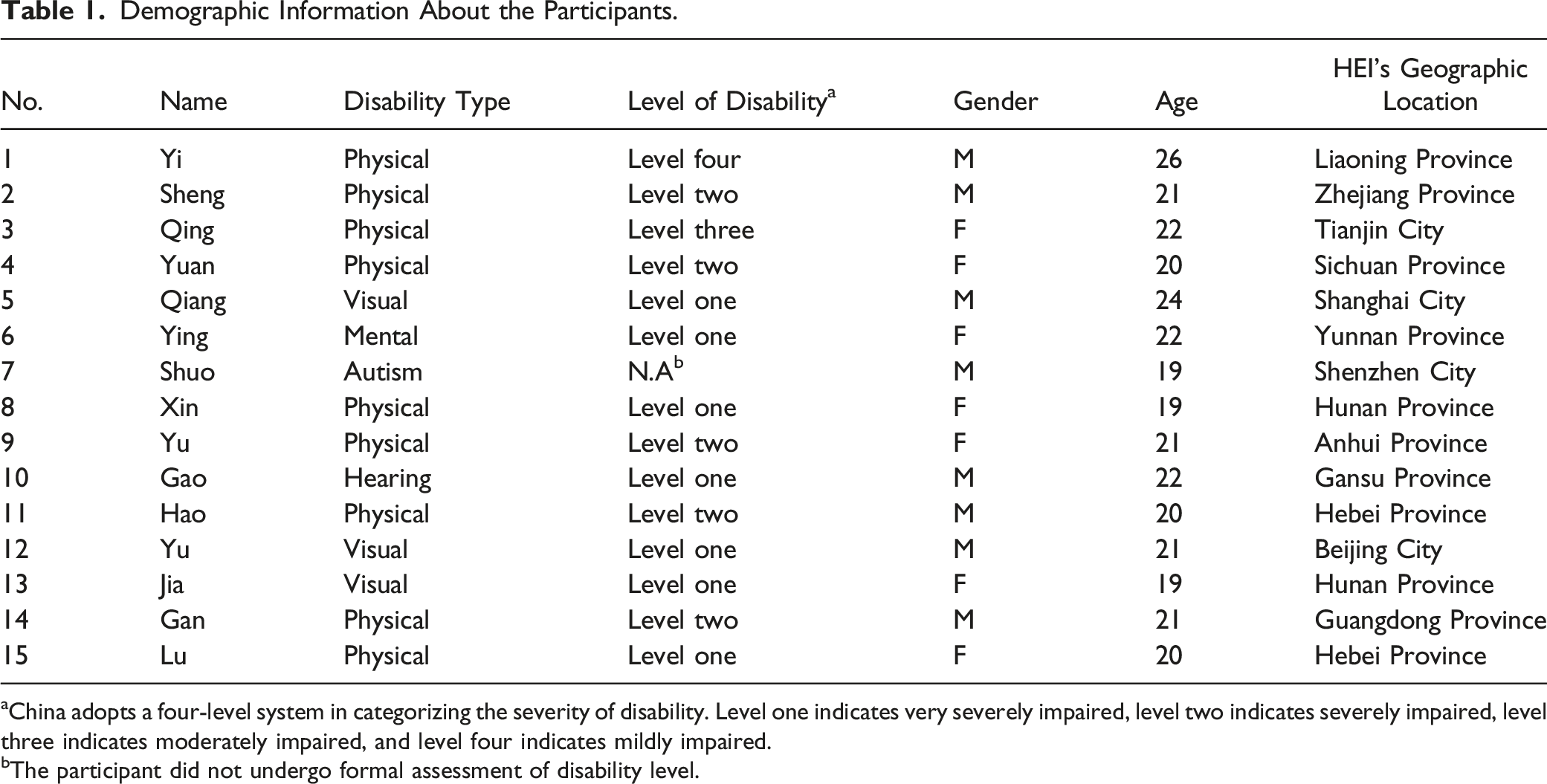
aChina adopts a four-level system in categorizing the severity of disability. Level one indicates very severely impaired, level two indicates severely impaired, level three indicates moderately impaired, and level four indicates mildly impaired.
bThe participant did not undergo formal assessment of disability level.
The study was approved by the University of Hong Kong’s Human Research Ethics Committee (HREC) (HREC reference no: EA220163). Participants signed up for the research through a digital questionnaire, in which they conferred digital written consent to the research procedures and filled demographic questionnaire about their nickname, age, gender, disability types and severities, university, province of the university, and province where they pursued high school. To protect the confidentiality of participants, pseudonyms were used and all identifiable personal information (i.e., university name) was removed in this article.
Outline of the Group Meetings.

Group meeting one was an introductory session that involved an interactive overview of the research project, the photovoice method, and the ethics of photo-taking. That meeting was also seen as an important opportunity for group members to connect and build trust with each other, by setting ground rules including collective access, and by collectively brainstorming and making decisions about the themes of photo-taking and group sharing for the subsequent group meetings. After the themes had been selected, the participants used their cell phones to take photos that represented the theme of the week’s session prior to the group meeting. In group meetings two through five, participants selected and shared the photos they had taken, and that sharing was followed by an open-ended group discussion about the subthemes that had emerged in the participants’ photos and sharing. At the end of group meeting five, the participants also developed action plans about a public exhibition of their photos, about campus advocacy, and about report writing, to address the issues discussed in the photovoice study.
All group meetings were videorecorded and transcribed verbatim. A Professional Communication Access Realtime Translation (CART) service was hired to provide real-time captioning for all participants, throughout the group discussions. The transcripts were later shared with the participants for an accuracy check. During the group discussions, the participants also actively engaged in participatory data analysis by selecting photos that they felt reflected the community’s needs, contextualizing the photos, and codifying the issues, themes, and subthemes that emerged in the group discussions and photos. A participant with visual disability who was a college student majoring in Sociology expressed his willingness to participate in the report writing and was invited to be a co-author of this article (author 3).
Now that we have given a general overview of the research background, design, and processes, in the next section we will focus our discussion on our methodological reflections regarding the dynamics of transforming the CBPR study into an inclusive space for participants with different (dis)abilities. To elaborate upon this process, we will draw from the photos and group discussion, as well as from the researchers’ assessments of the meaning of the group dynamics.
Methodological Reflections
Here, we will review the researchers and participants’ experiences of creating an accessible space for participants with different disabilities, as reported in the photovoice study. We reflect upon the limitations of conventional checklist-style accessibility and suggest that access creation in this CBPR unfolded through dynamic and iterative processes. We provide methodological reflections on how we created access in the research process, focusing on including participants with diverse corporealities and sensorialities in the visually-oriented research process through implementing nonvisual photography. We also discuss how the creation of access imposed challenges to equitable participation and community building in and through CBPR, while pushing the boundary of that participation and community building.
Access Creation as Dynamic and Iterative Processes
To create an accessible research space for participants with different corporealities and sensorialities, the researchers and CAB members adopted several strategies for nurturing a sense of access intimacy and collective responsibility that ultimately contributed to our visions of interdependency. During the individual interviews with participants, the researchers queried the participants about their access needs and the forms of accommodation they expected from the group. In the first group meeting, the researchers facilitated a discussion about taking access as a collective responsibility, and inquired about the diversity of access needs within the group. A number of access infrastructures were provided in anticipation of the researchers’, CAB members’, and participants’ access needs, including a professional CART service and visual description training for all participants. The participants were asked to provide a textual visual description of their photos at least 24 hours prior to every group meeting and a verbal image description during the group discussions. As will be further explored in the next section, the researchers also proactively supported the participants with visual disabilities in their photo-taking efforts, including verbally describing the photos they took, in order to enable photo sorting.
In our journey of creating access in the research processes, we found that the generation of an interdependent space in which access needs were recognized and embraced entailed dynamic and iterative negotiations, and learning and relearning among the researchers, CAB members, and participants, rather than being a one-off effort of providing accommodation in logistical forms. The dynamic processes of access creation involved an ongoing accumulation of knowledge about access and required the participants and researchers to constantly reflect upon their own privilege, biases, and ignorance regarding the access needs of people with different disabilities. For example, most of the participants had little knowledge of and few skills for making visual descriptions – an ability that was pivotal for enabling the participants with visual disabilities access the photovoice research that produced a vast amount of visual information. Prior to the beginning of the first group meetings, researchers and CAB members offered both written materials and oral instructions regarding the principles and skills for translating visual information. However, participants and researchers without visual disabilities were accustomed to a social world that was structured primarily around visual information, and an unreflexive use of visual information and a lack of awareness of the access needs of people with visual disabilities were reflected in the provision of visual descriptions in the research processes. To nurture access building as a collective responsibility, the researchers and CAB members deliberately delegated the responsibility of providing a visual description to every participant– as mentioned above, the participants were asked to provide textual and verbal visual descriptions of their own photos. Even so, it took several meetings and constant reminders from the researchers to gradually establish this practice: Researcher: Sorry to interrupt. Could you please visually describe what you took in this photo? Participant: OK. Sorry I didn’t consider that. This photo is about… Researcher: Excuse me. Please describe the motorbike in your photo. Participant: Sorry I forgot again! (group meeting 2)
Conversations like this repeatedly happened during the group discussions. Even in the final group meeting, participants still “forgot” to visually describe their photos before they started sharing. Although disability justice activists and scholars value access intimacy and collective access, the actual cultivation of access in the real world takes ongoing efforts of community (re)education and reflection, in an extended effort to bring about access awareness and knowledge.
The challenges of creating an accessible space were revealed to be particularly intense in a sociopolitical context in which disability and access needs were rarely acknowledged and supported institutionally and interpersonally. A participant with autism and attention deficit hyperactivity disorder (ADHD) used a blank paper (Image 1) to showcase the rights he enjoyed from the state: I think the disability rights I enjoy from the government [are] completely blank. Since I was diagnosed with ADHD, I have never received any social and attention training from the government. I cannot get my disability certificate, either, because the policy is not clear. Everything is ambivalent. (Shuo, group meeting 5) The Disability Rights I Gained. Photographer: Shuo. Visual description: An A-4 size white paper is placed at the center of the picture.
In a social environment in which access needs are poorly recognized and supported, if they are noted at all, claiming one’s access needs raises the ableist stigma of underperformance, unproductivity, and being less-than-normal, thus making students with disabilities hesitant to negotiate their access needs in their daily educational life. Despite the researchers’ and CAB members’ ideals of nurturing access in the group meetings, the participants were reluctant to express their access needs privately to the researchers and openly in the groups – a dynamic that echoed what Konrad (2021) referred to as “access fatigue” in the face of power relationships and institutional barriers. The ongoing discussions and attentiveness to access and accessibility in the research processes, as well as in the participants’ educational experiences in general, however, transformed the participants’ and researchers’ capacity to think about, acknowledge, and practice access. The participants not only became more proactive about expressing their access needs to other group members, they also reflected upon abandoning the stigma associated with access needs and advocating for their own educational access. A participant with physical disability reflected upon his thinking about expressing and claiming access needs at the end of a group meeting: Today many of us, as people with disabilities, shared experiences of encountering access barriers in school and in the society. We all encountered all sorts of access problems in our lives. Now, I think we must step out to communicate and solve the problems. In the past, I was very reluctant to communicate, particularly to instructors … But if I do not raise the issue, people would assume that I am all good and I must bear the consequences on my own. So, I must speak out, when I encounter issues, to staff and instructors. (Yi, group meeting 3)
As Yi revealed, his immersion in a collective endeavor to reframe and practice access empowered him to recognize and normalize his access needs from the “uncommunicable” to an act of self-advocacy and problem solving. Thus, the research processes that prioritized interdependent access were able to contribute to the empowerment and transformative agenda of CBPR. During this process, the participants and researchers also co-produced knowledge about the manifestations of (in)accessibility as well as about students’ negotiations of academic ableism in HEIs.
Integrating Nonvisual Photography, Transforming the Photovoice Method
One of the biggest challenges of making the photovoice study accessible to all was engaging the participants, with their different sensorialities, in this visual method. Although the traditional photovoice method democratizes photography by decentering the aesthetic values of the photos themselves, and instead uses photos and photo-taking as a mechanism of communicating the participants’ voices and experiences (Wang, 1999), it is inadequate for addressing conventional photography’s visuality-centered bias that permeates the processes of taking, displaying, and interpreting photos (Adams et al., 2013).
Thus, inspired by the practices of “blind photography” (McCulloh, 2013), we incorporated what a local disability community in China refers to as “nonvisual photography (非視覺攝影)” in this photovoice study. Nonvisual photography, or blind photography, is a set of photography solutions that are developed for people with visual disabilities, in which a photographer with visual disabilities creatively evokes various environmental sounds, tactile explorations, and other sensory hints to generate a spatial perception of the object being photographed, and then utilizes wide-angle lenses, autofocusing, and other photographic technologies to record the scenes they want to photograph (Strickfaden, 2016). In other words, nonvisual photography mobilizes multiple sensory perceptions to feel, make meaning of, and represent the social world from the photographer’s sensory standpoint (Herssens & Heylighen, 2012). This adaptation of nonvisual photography thus pushes the boundary of the photovoice method by making it inclusive for people with multiple sensorialities.
To integrate nonvisual photography into our photovoice study, we invited a CAB member who is a community educator of nonvisual photography to provide ongoing support to the participants with visual disabilities in the group. As a person with visual disability himself, the CAB member is the director of a DPO of persons with visual disabilities. This CAB member held a nonvisual photography workshop for the participants with visual disabilities and other participants who were interested in the topic, prior to the beginning of the group meeting. In that workshop, the participants, especially those with visual disabilities, learned, with examples, about the sensoriality-diversity philosophy of nonvisual photography, and they explored how to evoke visual and nonvisual sensorialities to capture what they wanted to represent in their photos.
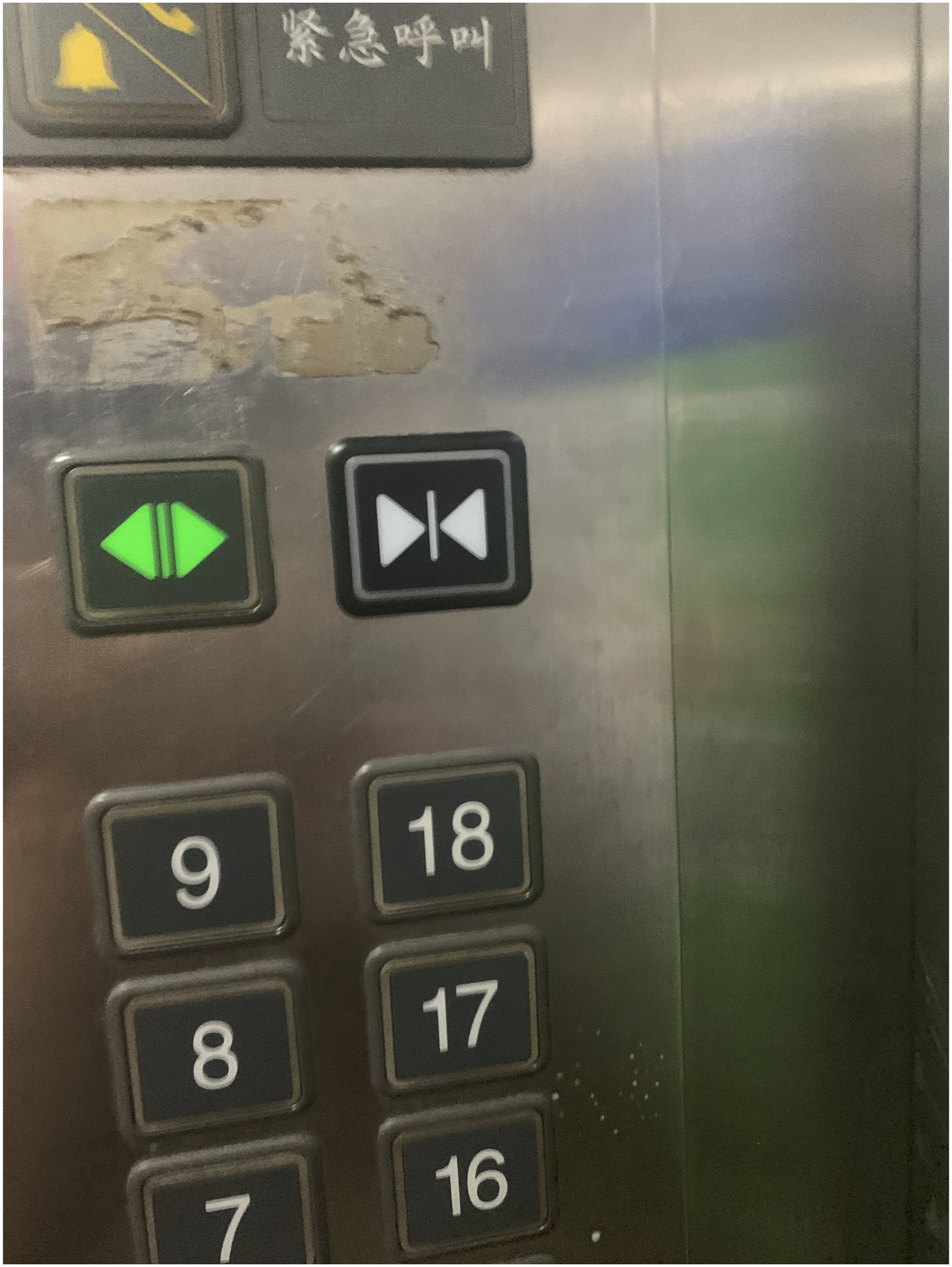
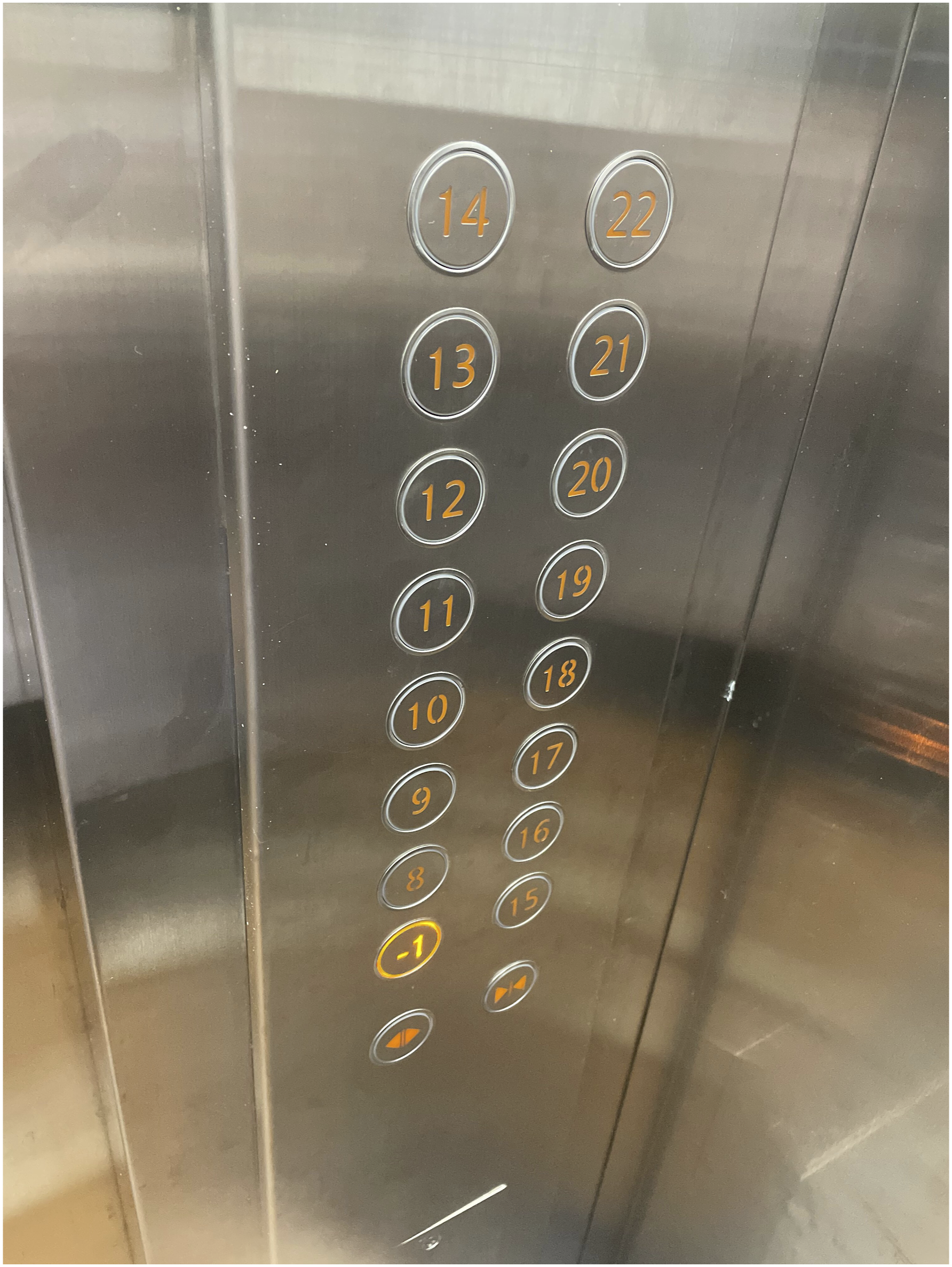
The participants with visual disabilities then used what they learned from the nonvisual photography workshop to take photos that represented their perspectives on their educational life. Evoking both visual and nonvisual sensorialities, they photographed items, the environment, or scenarios in their educational life to directly showcase or symbolize their perspectives on that life. In addition to the visual information represented in a photo itself, the participants with visual disabilities added a small paragraph of textual description to each of their photos to elaborate upon their ideas about those photos (examples of nonvisual photography in the study can been seen in Images 2–4). By incorporating the nonvisual photography’s philosophy and techniques, our photovoice study was transformed into an accessible social space in which the participants with visual disabilities were able to express their experiences and perspectives of their educational lives, thus contributing to the CBPR’s ethos of engaging community participation in the production of knowledge. For example, Qiang, a participant with visual disabilities, took a photo entitled “Intersection” (Image 2) of a braille slate and a pen to represent the two largely contradictory methods of information acquisition: The braille slate refers to the blind community’s nonvisual ways of information acquisition through touching or listening, whilst the pen refers to the visually-oriented ways of information acquisition through handwriting characters, pictures, etc. They conflict with each other and constitute a major barrier for me in school. Today they may be different and separated, but in the future they will definitely integrate with each other. (Qiang, group meeting 2) Intersection. Photographer: Qiang. Visual description: A braille slate and a pen are on a wooden table. They are placed nearly in parallel, with their left ends inclining slightly towards to each other. Elevator. Photographer: Yu. Visual description: Several buttons of an elevator’s control panel are visible. The floor numbers are displayed from the bottom up, with numbers 7, 16, 8, 17, 9, 18, and open, close, and emergency buttons shown in the photo. Panel on the Elevator. Photographer: Jia. Visual description: The picture shows the control panel of the elevator. At the bottom of the control panel are the door open and close buttons. From the bottom up, the left column displays the numbers −1, 8, 9, 10, 11, 12, 13, and 14. The right column displays the numbers 15, 16, 17, 18, 19, 20, 21, and 22.
Instead of relying on vision to take that photo, Qiang alternatively evoked tactile sensation to place the slate and the pen in a position that conveyed his thinking about the visual and nonvisual modes of information acquisition. The participants with visual disabilities, like Qiang, sought visual descriptions from people without visual disabilities, such as the researchers, other participants, peers, or family members, so that they could photograph what they intended to capture in a photo. For the participants without visual disabilities, the processes of converting visual information into verbal information through describing the photo enabled them to develop an understanding of how people with divergent sensorialities perceive, feel, and communicate with the world. At the end of the study, both the participants with visual disabilities and those without reflected that nonvisual photography was a major takeaway for them in this study: I learned nonvisual photography [in this study]. I only heard about nonvisual photography in the past. The ways in which I put it into practice are very different from my imagination. I gained a new skill and learned a lot from the processes. (Yu, group meeting 5) I think joining this study makes me know about the perspectives and opinions of students with different disabilities. I also learned about the skills of nonvisual photography, which I think is very helpful. I will continue to learn about it in the future. (Shuo, group meeting 5)
As those two participants illustrated, the process of taking photos, displaying them, and discussing them became an opportunity for the participants with divergent sensorialities to negotiate and acknowledge their own access needs, learn about and understand the divergent access needs of others, and practice collective access in the group. The interdependent relationships among the participants with different disabilities also laid the foundation for the co-production of a knowledge base that represented the divergent needs and voices of community members.
Different but Feel the Same: Building Community in and Through CBPR
To a certain extent, the inclusion of participants with divergent corporealities and sensorialities in this photovoice study challenged the CBPR’s visions of community as a unit of shared identity with acknowledged commonalities (Wallerstein et al., 2018). The CBPR principles acknowledge that “individuals belong to larger, socially constructed identities that shape strengths, challenges, and disparities” (Collins et al., 2018, p. 3). Under that conceptualization, CBPR researchers can work with community members with a shared identity and strengthen their sense of community through collective engagement in the research processes. Even so, however, the emancipatory narratives about community oftentimes ignore the elusive, ambiguous, and even contested nature of the term “community” (Shaw, 2008). When it comes to the case of disability, although people with disabilities are often thought to comprise a homogeneous unity in the most fundamental sense, in reality enormous variations exist within the community in terms of the types and experiences of impairments, disablements, age of onset, strengths, resources, and the like (Haimowitz, 2001).
In this photovoice study, the participants, who had different forms of disabilities, expressed divergent experiences and needs in their everyday encounters with disablement in HEIs. When discussing the topic of accessibility on campus, for example, several participants took photos of the same item – an elevator – yet each was showcasing very different dimensions of access. Two participants with visual disabilities took similar photos of the elevator’s floor panel (Images 3 and 4) and proposed that their accessibility barriers lay on the elevator, as they encountered difficulty identifying the floor number on the panel. Participants with physical disability, on the other hand, took photos to showcase that the presence of the elevator on campus was itself access-enabling (Image 5). Within their HEIs, the students with different corporealities and sensorialities encountered very different barriers, and even at times conflicting ones, in their everyday educational life. Still, the heterogeneities among people with different disabilities are often simplified in rights-based policy and political narratives as being “social barriers,” without adequate recognition of the widely divergent experiences of individuals with disabilities (Haimowitz, 2001). Elevator in the Library. Photographer: Yuan. Visual description: The photo shows the door of the elevator. On the left side of the elevator, there is a control panel and a television.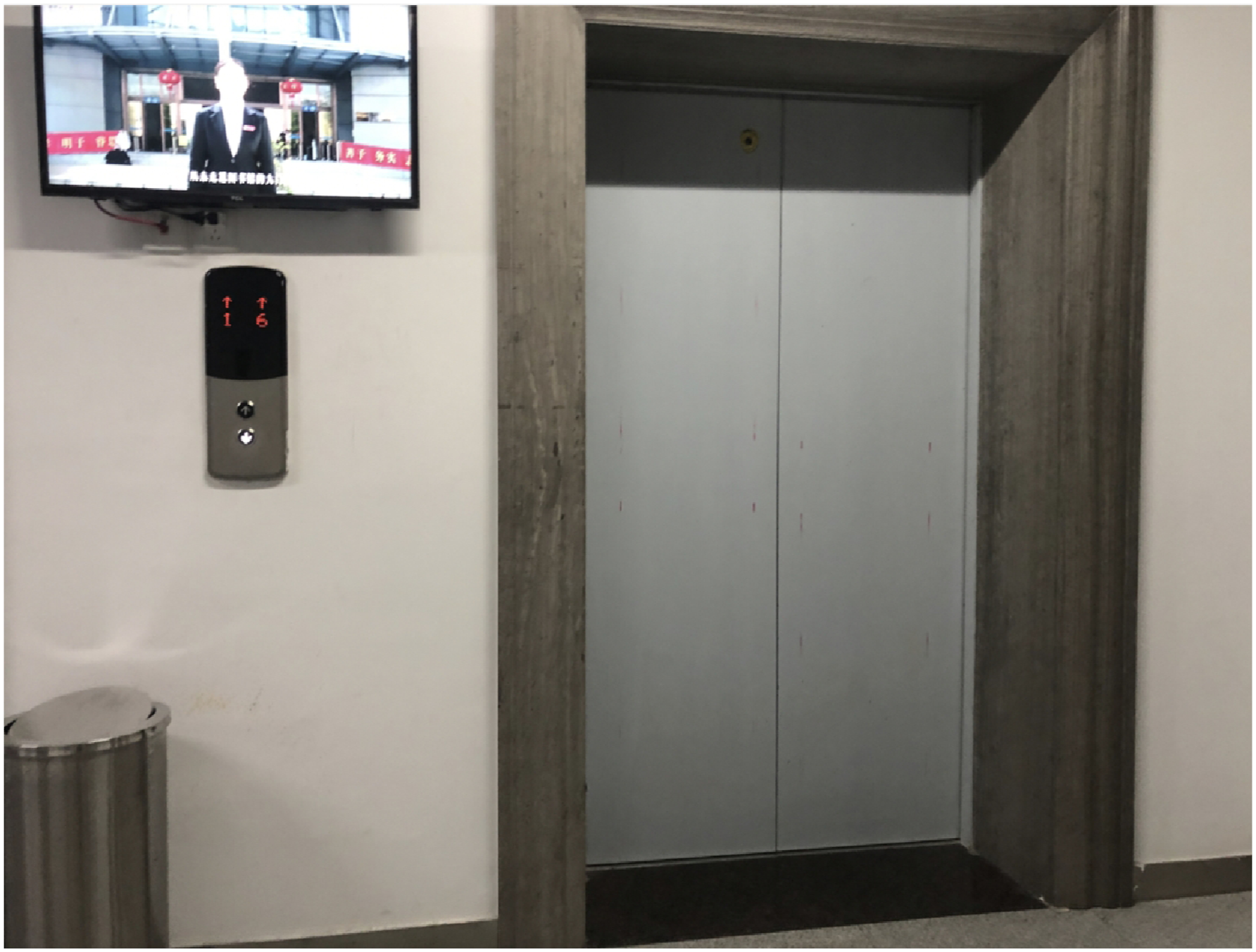
Meanwhile, the processes of research and access creation in this photovoice study served as a social space in which the participants with disabilities were able to nurture a sense of community. Engagement in the photovoice study provided an opportunity for the participants, who were often isolated from other disabled people in their educational environment, to share, discuss, and create meaning from their everyday encounters with the ableist world. In a group meeting, the participants discussed loneliness as a collective experience of disabled students in HEIs. A participant with physical disability took a photo (Image 6) of herself being forced to sit alone in the first row in a classroom, because of the inaccessibility of the classroom: In college, people only sit on the first row when they are late, or something gets wrong. I am always the only person sitting on the first row. I feel very lonely. You can see that the chairs are all empty and I become the only person who always gets the instructor’s attention and [is] asked to answer questions. So, people do not want to team up with me because they don’t want to sit on the first row. This is a dilemma that I face. (Yuan, group discussion 4) Sitting Alone on the Front Row in Class. Photographer: Yuan. Visual description: From the bottom of the photo upward are a very long desk and more than 10 chairs in a stair classroom. A canvas bag and a pen are on the table, and no one is sitting on the front row. Many people are sitting on the back rows.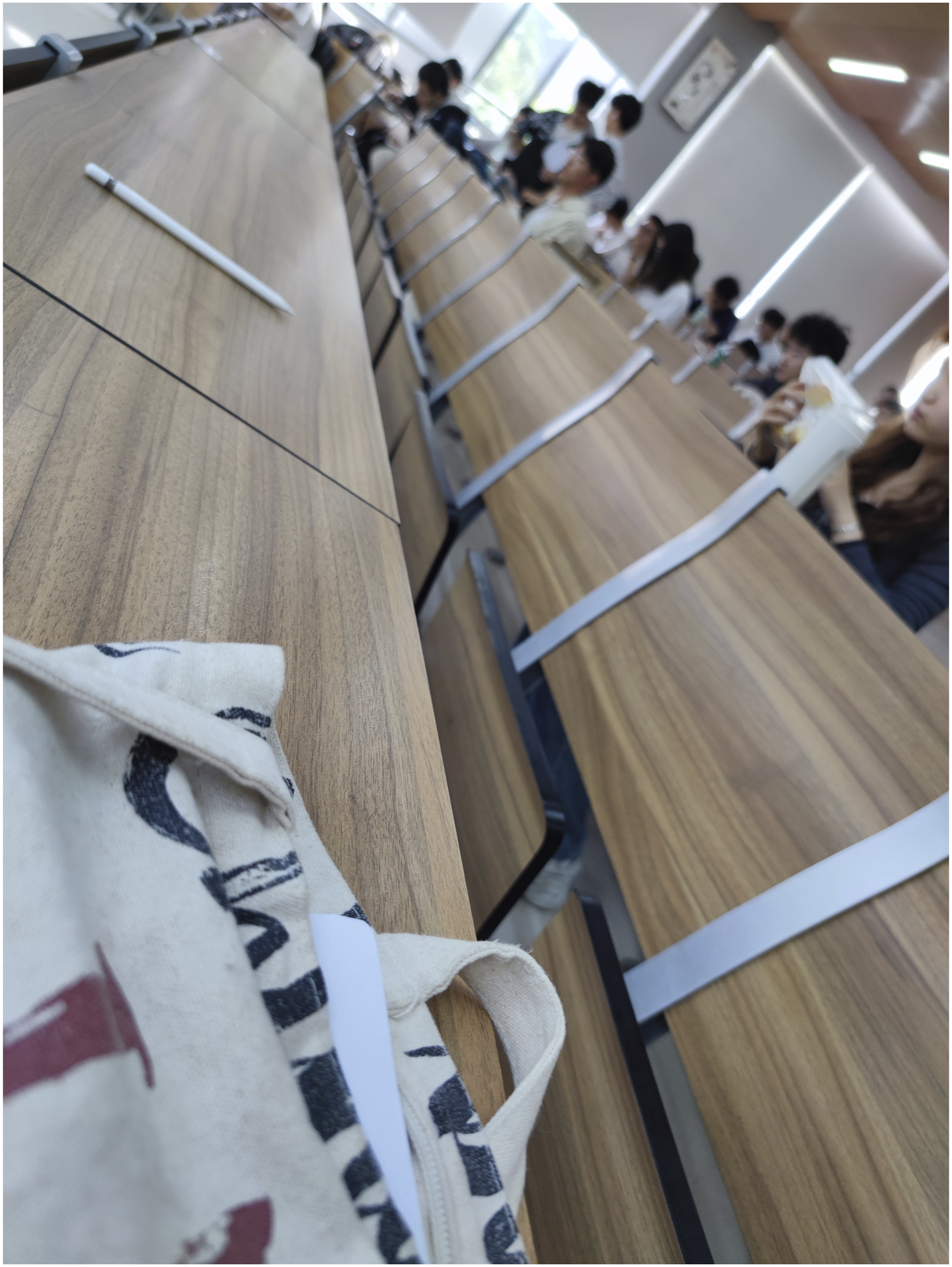
Although Yuan’s story focused on her experiences of feeling lonely and isolated in the face of a physically inaccessible classroom, other participants with different forms of disabilities instantly echoed her sense of loneliness. Following Yuan, a participant with visual disabilities expressed his shared struggle to build intimate bonds with peers: I feel the same with Yuan. In my relationships with my peers and roommates, they are very willing to give me a hand when I encounter difficulty in [my] life. However, it is very difficult to build personal, friendlike bonding with them besides the relationship of helping and [being] the helped… If I do not take initiative, they never think about asking me to hang out proactively. I feel difficulty [trying] to build friendships with them. (Qiang, group discussion 4)
Following Qiang, a participant with hearing disability immediately jumped in and described his sense of loneliness in the face of communication barriers: I want to share my experience as well. I cannot participate in all kinds of social activities because they involve a lot of communication. The issue of hearing disability has a huge impact on my relationship with instructors and peers. It is very difficult to build close relationships with them. I can only rely on the Internet to communicate. (Gao, group discussion 4)
As this strand of spontaneous discussions in the groups illustrates, even though the participants varied in the forms of their disabilities, they “felt the same” and instantly related to each other when they were discussing the shared experiences of loneliness and isolation in HEIs. Disability studies scholar Simi Linton argued that the disability community is formed by the collective experiences of oppression, rather than by people’s impairments – “we are all bound together, not by this list of our collective symptoms but by the social and political circumstances that have forged us as a group (Linton, 1998a, p. 3).” In this study, college students with different forms of disabilities certainly encountered similar “social and political circumstances” that comprise the academic ableism that structures the social spaces of HEIs, making those spaces physically, relationally, and institutionally inaccessible for people with disabilities (Dolmage, 2017). Like many of their disabled peers, the participants in this study were largely isolated within the disability community in their personal and educational lives. This CBPR project thus provided an opportunity for them to share, discuss, and build a collective meaning for their shared experiences of encountering ableism. They formed a new sense of bonding and belonging in this process, thereby laying the foundation for a collective identity as part of the disability community. In the final group meeting, a participant with physical disability emotionally revealed: Joining this group with disabled peers makes me feel a sense of belonging. I think the complexity of this feeling can only be understood by disabled peers. This experience of “belonging-ness” is the beginning of our search for a collective identity. And this collective identity makes me rethink my own disability as well as my relationship with the society. (Sheng, group meeting 5)
As Sheng revealed, the participants’ sense of belonging to the disability community was nurtured through the interdependent relationships that were built in the CBPR processes, in which as people with disabilities they created meaning for and learned to embrace their collective experiences of vulnerability, marginalization, and social exclusion: I love the atmosphere of today’s meeting as compared to the previous two. We let go [of] our worry to talk about some of our negative experiences. I really enjoy this discussion. Even though we have different forms of disabilities and different experiences of inaccessibility, I think we all demonstrate the same form of resilience and expertise to make changes. It is great that we are able to spill that out! (Gan, group meeting 3)
As Gan suggested, the participants in the photovoice study not only collectively created meaning with their experiences of vulnerability, they also shared their knowledge, skills, and resilience for living in and transforming a social world in which encountering ableists is an everyday reality. In the group discussions, the participants shared their experiences of dealing with disabling stereotypes in their daily interactions with instructors and peers, of advocating for learning accommodation and physical accessibility, of searching for identity, of building intimate relationships, and other similar challenges. The creation of an accessible and inclusive space throughout the research processes nurtured the participants’ community building by creating a facilitative environment wherein the access needs arising from different corporealities and sensorialities were acknowledged and embraced.
Conclusions
In this article, we provide a methodological reflection on a CBPR project that adopted the photovoice method to unravel the educational experiences of first-generation disabled college students in China. We extended the boundary of the CBPR approach by bringing in disability sensitivities to reflect upon participation and community-building as CBPR’s central ethos. Drawing on critical disability studies, and particularly on the perspective of disability justice activist scholarship, we suggest that access creation should be prioritized to include people with an array of different corporealities and sensorialities, in order to fully achieve CBPR’s mandate of equitable participation and community engagement in and through the research processes. Several lessons can be drawn from this CBPR project and used to implement and rethink disability justice and access in CBPR.
As is illustrated by our practices in this study, the journey of nurturing an accessible research space went far beyond the rights-based approach of providing accommodation in a checklist approach (Valentine, 2020). Instead, in our experience the access creation unfolded as a dynamic, relational process that involved ongoing and iterative negotiations and even contestation. In this CBPR project, we adapted photovoice as a visuality-centered CBPR method by introducing nonvisual photography. The inclusion of multiple sensorialities in the processes of photo-taking, elicitation, and sharing not only made the research space accessible to all participants, it also facilitated the sense of interdependency and community among participants with divergent access needs. Although the diversity among people with disabilities might disrupt the conception of a unified community in CBPR, the participants in this study engendered a sense of community bonding via the interdependency that was nurtured through accessible research processes, as well as through their shared political and social circumstances with academic ableism. We suggest that this process of creating collective access and interdependency ultimately contributes to a (co-)production of knowledge in and through community-based participatory research.
Footnotes
Acknowledgements
We would like to express our gratitude to the Equality Rights Project, Faculty of Law, The University of Hong Kong, for providing institutional support throughout this research. We thank our community partners, Minority Voice (少数派), One Plus One Group of Disability (一加一残障人集团), and Pro-Signers (守语者), for providing support for this study. We are indebted to the three Community Advisory Board members, Shen Chengqing (沈丞晴), Liu Xiaoxuan (刘小玄), and Cai Cong (蔡聪), who generously shared their time, knowledge, and expertise. We thank Xue Qian (薛倩), the research assistant for this project, and Feng Qiuju (冯秋菊), the CART provider, for providing essential support to this study. Most importantly, we would like to express our deepest thanks to all of the participants who took part in the photovoice study. We hope that our collective endeavors will make the world a more accessible and equal space for all.
Declaration of Conflicting Interests
The author(s) declared no potential conflicts of interest with respect to the research, authorship, and/or publication of this article.
Funding
The author(s) received no financial support for the research, authorship, and/or publication of this article.
