




Abstract
The Venezuelan refugee crisis has triggered Latin America’s largest mass migration, displacing over a fifth of the country’s population. A significant number of migrants have sought refuge in neighboring countries like Peru. Within this context, Venezuelan migrants confront an array of vulnerabilities, including xenophobia and economic hardship, which have compelled some to sex work for their livelihoods. Venezuelan sex workers (VSWs) in Peru face amplified challenges, including heightened risks for HIV and sexually transmitted and blood-borne infections (STBBIs) and exposure to various forms of violence. Addressing the urgent need to comprehend and enhance HIV and STBBI preventive services tailored to this marginalized group in Peru’s capital is paramount. Our biobehavioural HIV prevention study combines sequential mixed methods: we start with a rapid ethnography, followed by semi-structured interviews and finally incorporate cross-sectional surveys with HIV and STBBI testing. The present study protocol presents the integrated and initial rapid ethnographic component of the study which explores the dynamics of street-based sex work in Lima and the sociocultural narratives surrounding VSWs. Data collection will involve systematic fieldnote taking including non-person photos during in-person and virtual participant observation. This comprehensive approach will provide a nuanced understanding of the complex landscape of sex work and HIV/STBBI vulnerabilities among VSWs in Lima. The rapid ethnography endeavors to offer valuable insights that can underpin evidence-based healthcare interventions, specifically tailored to cater to the unique requirements of this marginalized population.
Background
The Venezuelan refugee crisis has sparked an unprecedented mass migration phenomenon in Latin America, ranking second to Syria globally (Freier & Parent, 2019). Over 7 million people, constituting over a fifth of Venezuela’s population, have been displaced due to the grave political turmoil and humanitarian crises unfolding in the country (Inter-Agency Coordination Platform for Refugees and Migrants from Venezuela, 2022). Most of these displaced individuals, surpassing 80%, sought refuge in neighboring Latin American nations, with Colombia and Peru serving as primary destinations. This humanitarian exodus has far-reaching implications at both individual and population levels, as Venezuelan migrants grapple with a myriad of socio-structural challenges that profoundly impact their well-being, including employment precarity, xenophobia, and material deprivation (Huerta et al., 2021; Standley et al., 2020). Additionally, the influx of migrants has placed an immense strain on already underfunded healthcare and public services in the destination countries, compounding the complexity of the situation (Doocy et al., 2019).
Among the multitude of challenges faced by Venezuelan migrants, a particularly disconcerting plight emerges for those engaging in sex work, especially women, girls, and sexual and gender minority individuals like gay, bisexual and other men who have sex with men (GBM) (Moloney, 2017; Otis, 2021). This vulnerable group confronts unique biosocial stressors that expose them to heightened risks of sexual exploitation and abuse (Pérez & Ugarte, 2021; Perez-Brumer et al., 2021). As such, the gravity of this situation calls for the development of targeted prevention and care services, specifically addressing the prevalence of HIV and other sexually transmitted and blood-borne infections (STBBI) among Venezuelan sex workers (VSW). The comprehension of this public health issue remains limited, underscoring the urgent need for research in this area. For instance, a significant knowledge gap exists concerning the epidemiology of HIV (e.g., prevalence rates) among Venezuelan migrants residing in host countries like Peru (Wirtz et al., 2023).
Migrants involved in sex work globally bear a higher burden of HIV/STBBIs compared to non-migrant sex workers (Platt et al., 2013). The COVID-19 pandemic has made their situation worse by exacerbating their precarious livelihoods, increasing risks related to informal working conditions like street-based sex work, and hence making them more vulnerable to HIV/STBBIs (Baral et al., 2012; Goldenberg et al., 2014; Howard, 2020; Platt et al., 2020). Access to healthcare is already difficult for migrant communities, including VSW, due to obstacles like stigma, discrimination, and strict identity documentation requirements (Deering et al., 2014; Irons, 2022). For those engaged in sex work, additional obstacles such as violence, stigma, and criminalization of sex work make it even more complex to access healthcare.
To bridge this substantial knowledge gap, the study Proyecto RADIANTE: Improving HIV and STI Prevention and Care for Refugee and Displaced Venezuelans Engaged in Sex Work in Lima, Peru employs syndemic theory (Mendenhall et al., 2022) as a comprehensive framework for exploring the interconnected factors that contribute to heightened risks of HIV/STBBIs among VSW in Lima. The project’s primary objective is to unearth pathways to enhance the involvement of VSWs in HIV/STBBI prevention initiatives, assess strategies for bolstering their resilience, and propose innovative care systems customized to address the distinct needs of this population cohort.
The overarching research project is led by a multidisciplinary approach (e.g., epidemiology, sociology, anthropology), and it adopts an exploratory sequential mixed methods design. The study’s initial phase incorporates a rapid ethnography (Isaacs, 2013). This ethnographic phase serves as a foundational step to ensure a comprehensive understanding of the socio-cultural context in Lima, as well as a nuanced insight into the specific needs of migrant sex workers. The rapid ethnography is conceived as a fully integrated and complementary study component, designed to capture facets of lived experience, spatial dynamics of sex work, distribution, and socio-political factors that increase vulnerability to HIV and STBBIs among Venezuelan migrants who engage in sex work and have recently relocated to Lima, Peru. As such, the present research protocol delineates the ethnographic component, situating it within the broader purview of the comprehensive research initiative.
Study Setting
The decision to initiate the formative stage of this study with a rapid ethnography is rooted in both the intricate nature of evaluating vulnerability to HIV and STBBIs among Venezuelan migrants involved in sex work and the specific geographic context of Lima, Peru. Lima, the capital of Peru, is home to nearly 10 million residents (Instituto Nacional de Estadística e Informática, 2017). Lima is characterized by its extensive geographical expanse, featuring diverse socioeconomic concentrations (Mesclier et al., 2015). The primary aim of the ethnographic phase is to gain a comprehensive understanding of the living and working patterns of Venezuelan migrants, particularly those engaged in street-based sex work.
Our analysis includes an examination of where Venezuelan migrants reside and work, particularly considering the challenges posed by the city’s public transportation infrastructure. Additionally, this exploration is critical for comprehending how these environmental factors intersect with instances of violence, such as xenophobia, directed towards Venezuelan migrants. Notably, anti-Venezuelan sentiments have fueled Peruvian nationalism, leading to the popularization of slogans like “the Venezuelan diaspora is robbing our future” and “#PeruWithoutVenezuelans” (Sanchez, 2018). These sentiments have prompted efforts to safeguard Peruvian economic interests and have been associated with an increase in gender-based violence, including femicide, targeting Venezuelan women and transgender individuals, as documented by activist blogs and social media sources (El Nacional Web, 2017; Redacción Publimetro, 2018). Furthermore, it is noteworthy that Lima has recently experienced significant State interventions, including the declaration of a state of emergency in neighborhoods with a substantial Venezuelan presence, resulting in the deployment of military personnel (CNN Español, 2023; El Comercio, 2023). Therefore, the choice to employ an ethnographic approach in the initial phase of this study in Lima is highly relevant as it enables a deep contextual understanding of the experiences of Venezuelan migrants, including those engaged in sex work, providing invaluable insights that will inform and enrich the subsequent phases of the research, namely interviews and surveys.
Research Aims
The primary aim of the integrated formative rapid ethnographic component is to enrich the broader study by elucidating factors that may not be captured with interviews and surveys (e.g., exploring and documenting the dynamics and environments of street-base sex work in different locations across Lima). In this context, the outcomes of the ethnographic research aspire to unearth and foster a holistic comprehension of the intricate nexus between migration, engagement in sex work, gender violence, and vulnerabilities among VSWs in Peru.
Concomitantly, a secondary objective of the ethnographic inquiry is to assess how the urban landscapes impact prevailing discursive narratives surrounding VSWs. This facet of the ethnographic component is motivated by the imperative to gain insights into the socio-spatial dynamics and prevailing cultural constructs that shape the experiences and identities of VSWs within urban settings, thereby adding an additional layer of contextual richness to the broader research framework. The ethnographic exploration of urban geography will enable us to discern differences in spaces where street-based sex work is prevalent, aligning within an implementation science approach to inform targeted interventions (Bauer & Kirchner, 2020; Lobb & Colditz, 2013).
The ethnographic component of this study delineates the following specific objectives: 1. Mapping Geographical and Digital Dimensions of Sex Work in Lima: This facet of the ethnographic inquiry endeavors to systematically identify and document the locations and digital platforms—whether physical or virtual—where sex work is advertised and conducted within the urban landscape of Lima. 2. Examine Sociocultural Narratives Encompassing VSW in Peru: Within the sociocultural milieu of Peru, this objective seeks to discern, dissect, and critically analyze the dominant narratives that permeate various channels of media, policy discourse, and everyday conversations concerning Venezuelan migrants who engage in sex work (e.g., socio-cultural imaginaries around the sexualization of Venezuelan migrants). 3. Facilitate Study Implementation: This objective serves to reinforce the successful execution of the overarching research initiative by addressing critical components such as the refinement of recruitment methodologies, ensuring cultural appropriateness in research protocols, and enhancing the comprehensiveness of survey domains.
Methods
Study Design and Setting
The main research project utilizes a sequential mixed methods design as its primary research approach. In the first phase, semi-structured interviews will be conducted with VSW to gain insights into their experiences, particularly exploring the relationship between their migration history and engagement in sex work. This phase also seeks to understand the factors that influence their vulnerability and access to HIV/STBBI prevention and testing as migrants, like gender violence and discrimination in healthcare settings (Irons, 2022). The second phase of the study involves a cross-sectional biobehavioural survey administered to VSW, including HIV/STBBI testing to identify variations in prevalence across different demographic groups, such as gender, age, sexual identity, and migration status in Peru. It is important to note that survey participants may not necessarily overlap with those who participated in the semi-structured interviews.
The research commenced its initial phase of semi-structured interviews in June 2023, while the subsequent quantitative phase is to commence in 2024. Concurrently, the ethnographic component, initiated in July 2023, is envisaged to unfold over a span of 6 months. The ethnographic exploration will be centered in Lima, the focal point of Venezuelan migrants within Peru.
Recognizing the inherent time and funding constraints, we’ve chosen to employ a rapid ethnography approach (Isaacs, 2013). Rapid ethnography, a specialized methodology within ethnographic research, prioritizes efficiency and timeliness while maintaining depth of understanding. It entails shorter, focused fieldwork periods and accelerated data analysis and reporting compared to traditional ethnography (Ackerman et al., 2015). This approach excels at capturing real-time insights into complex social phenomena, making it particularly well-suited for research where timely information is crucial, as in our case, given the urgent and heightened vulnerability and precarious circumstances faced by VSWs. Our use of rapid ethnography is driven by the need to generate findings within timelines conducive to informing healthcare improvements (Vindrola-Padros & Vindrola-Padros, 2018). Timeliness is as critical as accuracy in this context. Rapid ethnography enables us to comprehensively explore the intricacies of our three research objectives: (1) mapping geographical and digital dimensions of sex work in Lima, (2) examining sociocultural narratives surrounding VSWs in Peru, and (3) facilitating the implementation of our study within limited time frames (McNall et al., 2004).
In the context of our research, rapid ethnography is a valuable tool for complementing our interviews and surveys. It allows us to swiftly capture real-world nuances, including the dynamics of street-based sex work in Lima, neighborhood disparities, and socio-cultural norms that can significantly affect the vulnerabilities of VSWs. This approach ensures that our research delivers timely and actionable findings to inform healthcare enhancements for this vulnerable population.
Leveraging Rapid Ethnography
Against the backdrop of the enduring Venezuelan migration, which has left an imprint on Latin America, particularly in nations such as Peru, rapid ethnography emerges as a pivotal and multidimensional strategy for comprehending the multifaceted vulnerabilities confronted by VSWs (Gertner et al., 2021). The insights gained from rapid ethnography will significantly inform the refinement of our interview guide and survey questions.
The findings obtained through rapid ethnography will enhance our broader research, particularly in the development of healthcare interventions tailored to meet the distinctive needs of VSWs in Lima. When integrated with interview and survey data, ethnographic insights will guide the formulation of strategies to bolster VSWs' involvement in preventive initiatives, assess the effectiveness of resilience-building approaches, and design personalized care systems. Rapid ethnography effectively captures the intricacies of the real-world environment, including a comprehensive exploration of the dynamic landscape of street-based sex work and the profound impact of socio-cultural norms on VSWs. This adaptable methodological approach ensures the production of timely and actionable findings that can drive tangible improvements in healthcare services for this vulnerable population.
For instance, initial analysis of participant observation data has revealed insightful distinctions in the gender dynamics of street-based sex work among GBM, cisgender women, and transgender women. Rapid ethnography equips our research with a holistic and comprehensive understanding of the vulnerabilities experienced by VSWs. This comprehensive perspective enables us to effectively address their unique needs and circumstances, ultimately fostering the development of more equitable and responsive healthcare solutions tailored to this marginalized population.
Population
The ethnography will center around the same subpopulations of the main research project: VSW who are trans and cis women, and GBM. However, an additional population of study will be the general Peruvian population alongside Venezuelan migrants who do not engage in sex work, and clients of sex workers. We will examine their perspectives of VSW to gain insights into the discourse surrounding VSW. The researcher will be immersed in Lima for the duration of the rapid ethnography and will be interacting with individuals in everyday interactions. This includes developing acquaintances, attending public events like cultural festivals, and participating in community gatherings. For instance, the ethnographer has already established contact with a Peruvian sex worker activist who provides support to sex workers and their children in Lima. While this activist does not meet the criteria for formal interviews or surveys, her unique social position, history, and perspective have offered valuable ethnographic insights. This immersive ethnographic engagement will provide a comprehensive and nuanced understanding of the diverse social dynamics and allow to understand how VSW are framed within Peru. This ethnographic exploration will include an examination of the comments and opinions expressed by local residents regarding VSW.
Data Collection Procedure
The data collection protocol incorporates participant observation as a central method, including conversations with informants, executed through meticulous field note taking (Wolfinger, 2002). The methodological significance of systematic field note taking lies in its ability to facilitate a complete comprehension of the cultural context. Field notes methodically encapsulate the unfolding context, environmental cues, and interpersonal dynamics, ensuring the situational embedding of data within its nuanced cultural and social framework. Field note taking also involves documentation through pictures. For instance, as part of our ethnographic observations, this investigation has already documented instances of hateful graffiti targeting Venezuelan migrants. This ethnographic data collection remains mindful of the research’s principal objectives: the health and wellbeing of VSW.
Given the inherent complexities associated with sex work, including its deeply rooted taboos and stigmatization, coupled with the intricate legal framework in Peru (where sex work is legally allowed under specific conditions but is predominantly pursued informally, especially among the Venezuelan population), it becomes essential to provide a detailed explanation of the participant observation process. This clarity ensures a rigorous approach to comprehensively capturing the multifaceted aspects of this phenomenon while recognizing the sensitivities and intricacies inherent to our research context. Consequently, our participant observation will encompass two primary methods: in-person and virtual.
Part 1: Participant Observation in Person
The data collection process for in-person participant observation is facilitated through notetaking within a mobile note application, used by the researcher. Notetaking is accompanied by non-person photos, such as informal publicity for sex work present across the city (e.g., stickers on sidewalks and lampposts). Field notes, which encapsulate critical observations, are succinctly developed in point form immediately following engagements with study participants or observations. This methodological choice serves a dual purpose: first, it mitigates the risk of inducing discomfort among participants, and second, it minimizes potential recall bias inherent in retrospective data recording. These preliminary field notes are securely transferred to a password-protected OneDrive repository and methodically organized in chronological sequence. Then, additional details are added as needed to create more robust detailed field notes.
Street-based sex work is frequent in various neighborhoods across Lima, with varying levels of prevalence. Neighborhoods with street-based sex work exhibit distinct divisions among cisgender and transgender women sex workers, and GBM sex workers. Our participant observation methodology involves visiting these neighborhoods during both daytime and nighttime hours, spanning different days and weeks of the month. For instance, Peruvian key informants have noted that individuals typically receive their employment payments at the end of the month, which is when men are more likely to purchase sex; hence, a possible higher prevalence of street-base sex work at that time of the month. Importantly, this observation process does not necessarily involve direct interaction with the individuals engaged in sex work. Instead, it aims to closely examine various aspects of street-based sex work, including differences among sex workers based on demographic groups, such as cisgender versus transgender women. For instance, we will explore their approaches to potential clients (active engagement or passive waiting), the level of activity in the area (busy or deserted), and interactions between police and sex workers. This multifaceted exploration is poised to yield insights that extend beyond the confines of interviews, providing a comprehensive view of the intricate landscape of street-based sex work in Lima. The logistics of this participant observation will include visiting those neighborhoods while merging with the crowd (e.g., waiting at bus stops) to not disrupt the interactions.
Part 2: Virtual Participant Observation
The topic of sex work is legally complex, intimate, and taboo, which makes studying it a challenge. To address this issue, we employ virtual participant observation as a valuable location for this research method. For instance, in our initial online research, we’ve observed a notable trend: individuals are using platforms like YouTube to share videos of their activities on the streets of Lima including scenes of street-base Venezuelan sex workers. Alongside these videos, various individuals contribute comments with diverse perspectives on street-based sex work. Additionally, there’s been a surge in media content discussing Venezuelan migrants, sometimes attributing the rising rates of HIV/STBBIs to the increased incidence of street-based sex work among this population in Peru (Irons, 2022). Furthermore, we have identified 14 websites advertising sex work in Lima that feature the Venezuelan nationality of sex workers. Conversations with young Peruvian men has also unveiled that some mobile applications are being used to purchase sex. Whereas some gay men have shared the use of social media platforms to advertise sex services disguised under massage therapy.
Our research framework includes an online participant observation component, where we collect comprehensive data from digital platforms. This involves a thorough examination of user profiles to identify indicators of national origin and information related to HIV/STBBI prevention. During our initial exploration, we encountered instances where VSW explicitly mentioned their willingness to engage in unprotected sexual encounters in exchange for higher costs. This underscores the importance of conducting thorough participant observation to uncover dimensions that may not be immediately apparent through traditional research methods like surveys and interviews.
Data Analysis
The planned data analysis is iterative and draws on several data points (Figure 1). At the conclusion of the fieldwork research, ethnographic data will be processed and analyzed using qualitative software NVivo 12 Plus. This software will aid in organizing, managing, and extracting insights from the collected data, which includes fieldwork notes and media content. 1. Team Collaboration: Weekly meetings are led with the entire research team, including those conducting interviews. These meetings facilitate discussions on ethnographic findings and foster productive dialogues to guide the subsequent phases of the research project. As an example, during the meetings, we examine publications related to news reporting on Venezuelan migrants to assess how the content may impact our research, particularly in the context of selecting neighborhoods for participant observation. 2. Coding and Categorization: The initial stage of data analysis will encompass coding and categorization (Gibbs, 2007). During this phase, we meticulously identify and label recurring themes, concepts, and patterns within the ethnographic narratives and observations. Our coding process is dynamic and iterative, allowing us to adapt and refine codes as new themes emerge during the analysis. Aligned with the overarching objectives of our research, this coding phase is primarily directed towards the identification of categories that encompass the factors either impeding or facilitating the engagement of participants in HIV/STBBI prevention measures. This deliberate categorization will enable a nuanced exploration of the multifaceted dynamics underlying the participants' behaviors and experiences concerning HIV/STBBI prevention. 3. Thematic Analysis: Building upon the coded data, we will conduct a thematic analysis, as proposed by Clarke et al. (2015). This phase involves a deep dive into the dataset to identify, define, and refine overarching themes that encapsulate the diverse aspects of VSWs’ experiences and representations. We will pay meticulous attention to the nuances and connections between these themes to offer a comprehensive understanding. Furthermore, within the ambit of thematic analysis, diligent scrutiny is extended to demographic variables, such as gender, sexual identity, and migration status, with the objective of elucidating both commonalities and disparities among these subgroups. 4. Contextualization and Interpretation: An integral aspect of our analysis entails the contextualization of identified themes within the broader sociocultural, economic, and political contexts relevant to both Venezuelan migrants and the host country, Peru. This step is crucial for elucidating how external factors shape the experiences of VSWs, how they navigate these contexts, and the potential implications for HIV/STBBI prevention strategies. This data analysis process includes paying attention to the different policies introduced in Peru regarding Venezuelan migrants. 5. Triangulation: To enhance the validity and reliability of the findings, triangulation will be employed, following the approach suggested by Carter et al. (2014). This involves comparing and cross-referencing data from multiple sources, including the transcripts from the semi-structured interviews, the fieldwork notes and relevant academic literature published on the subject. By triangulating data, we aim to validate and corroborate emerging themes and insights, ensuring their robustness. Map of data collection and data analysis process.
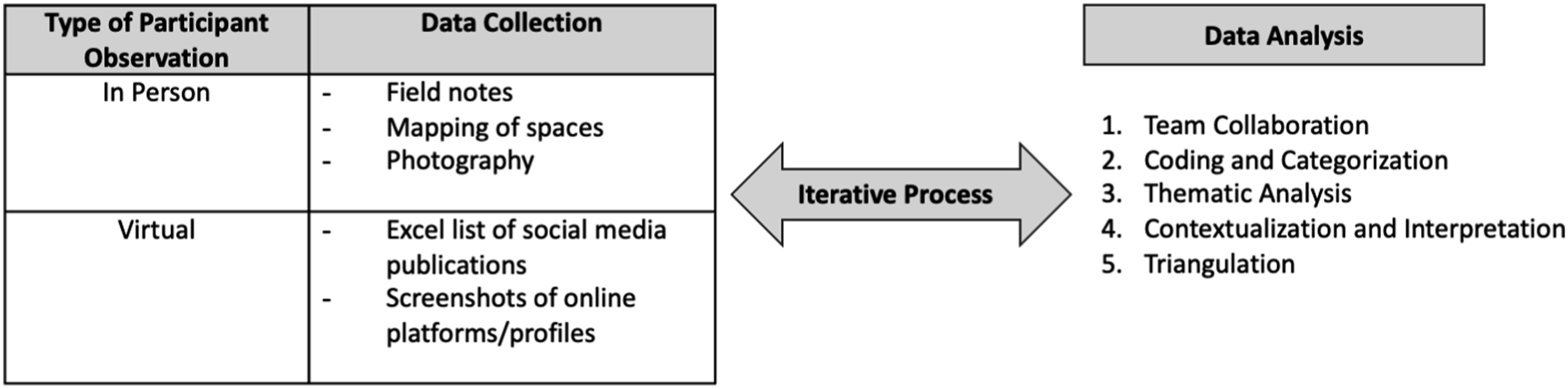
The data analysis process will be guided by the research objectives and the unique context of VSWs in Peru. This comprehensive approach aims to uncover the nuanced narratives of VSWs, enabling a deeper understanding of their lived experiences, agency, and the multifaceted factors that influence their well-being within the urban landscape of Peru.
Rigor
Throughout our study, we will adhere to the established guidelines provided by the Consolidated Criteria for Reporting Qualitative Research (COREQ) framework (Tong et al., 2007) by adapting the framework as relevant to ethnography. This framework is a recognized and rigorous set of criteria designed to enhance the transparency and quality of qualitative research reporting. As we embark on the ethnographic aspect of our research, it is essential to acknowledge the inherent subjectivity associated with this methodology. We will remain acutely aware of how our subjective positions as researchers may interact with and influence our interpretation of the textual data we collect. To mitigate potential biases and enhance the rigor of our analysis, we will employ a collaborative approach. This approach involves a multidisciplinary team consisting of three primary investigators along with research assistants. The involvement of this extensive team offers several advantages. It allows for a diversity of perspectives and insights during the interpretation of the collected data, including Peruvian, Venezuelan and North American researchers. By engaging in ongoing discussions and critical reflections within the research team, we aim to ensure a comprehensive and nuanced understanding of the data. Furthermore, this collaborative process promotes methodological rigor by enabling us to cross-check interpretations, identify potential biases, and maintain transparency in our analytical approach.
Ethics and Dissemination
The study Proyecto RADIANTE: Improving HIV and STI Prevention and Care for Refugee and Displaced Venezuelans Engaged in Sex Work in Lima, Peru obtained approval from the [anonymized] Research Ethics Board (REB) and the [anonymized] in Peru. As per Article 2.3 of Canada’s Tri-Council Policy Statement: Ethical Conduct for Research Involving Humans (TCPS2), REB review is not required for research involving the observation of people in public places where: (A) it does not involve any intervention staged by the researcher, or direct interaction with the individuals or groups, (B) individuals or groups targeted for observation have no reasonable expectation of privacy, and (C) any dissemination of research results does not allow identification of specific individuals. As such, while the ethnographic component of the research did not require REB approval, it still went under REB evaluation.
Regarding fieldwork notetaking, given that no personally identifiable data is being collected and the notes are stored in a password-protected location on the ethnographer’s personal computer, consent is not required. Regarding the online facet of the research, the materials are publicly accessible, rendering their inclusion within the research framework ethically permissible. However, it is noteworthy that no identifiable information (e.g., website names, images) will be divulged in the course of publication, as a measure to uphold the principle of confidentiality and respect the absence of consent in this context.
The outcomes derived from the ethnographic investigation will be integrated into the core body of the study. The presentation of findings will be in Spanish, catering to the reporting requirements of national entities within Peru, such as the Ministry of Health. Additionally, these findings will be shared with international organizations present in Peru, including the International Organization for Migration. The overarching objective is for these bodies to utilize the results as actionable insights, effectively addressing the distinct needs of Venezuelan migrant sex workers. Additionally, the results will be presented at conferences (e.g., American Anthropological Association annual conference) and in peer-reviewed journals (e.g., Global Public Health).
Study Limitations
While adopting a rapid ethnography as a methodology in this study offers valuable insights into Venezuelan migrant sex work in Lima, it is important to acknowledge and address inherent limitations that affect the depth and breadth of our research findings. One limitation arises from the compressed timeline of rapid ethnography compared to traditional ethnographic studies. Typically, ethnography entails a more extended immersion in the field, allowing researchers to develop deeper rapport and understanding. This extended timeframe often results in more comprehensive and robust findings. In our rapid ethnography, the condensed duration may constrain the depth of insights we can achieve.
Another limitation concerns the potential for representation bias associated with participant observations. For instance, there are constraints on our ability to confidently identify street-based sex workers and ascertain the nationality of individuals. These ethical considerations related to the ethnographic aspect of this research will be the focus of a forthcoming article.
Discussion
The Venezuelan humanitarian crisis persists with no clear resolution in sight. Consequently, it is foreseeable that Latin American countries, including Peru, will continue to experience a growing influx of Venezuelan migrants. In the absence of effective public health interventions, we can anticipate a further escalation in the rates of HIV/STBBI among both Venezuelan migrants and the wider Peruvian population.
Our research assumes a paramount role in addressing this public health crisis and aligns with key objectives of implementation science with the goal addressing HIV/STBBI prevention. It is poised to make substantial contributions to both the scientific understanding of the issue and the development of evidence-based interventions. The ethnographic component of our research is especially pivotal in this context. Rather than operating in isolation, it is designed to synergize with the main thrust of our research, which encompasses interviews and surveys. By doing so, it forms an integral part of our comprehensive research strategy with the goal of advancing HIV/STBBI prevention among VSW.
In the realm of recruitment, the ethnographic approach helps identify and engage with hard-to-reach populations among Venezuelan migrants, contributing to the effectiveness of our implementation efforts. Additionally, it assists in identifying various types of vulnerabilities that may affect the implementation of interventions, offering a justice-informed research process in the production of knowledge. While interviews and surveys are valuable for capturing specific data, the ethnographic approach enriches our research by providing a deeper, contextual understanding of the complex social dynamics surrounding VSWs. By intertwining the ethnographic element with our mixed-methods research, we create a comprehensive and multifaceted view of the current situation. This holistic perspective is instrumental in guiding our efforts, as it allows us to tailor interventions to the unique needs and challenges faced by VSWs and the broader migrant population.
Ultimately, the fusion of ethnography with our broader research efforts equips us with a multifaceted understanding, enhancing the robustness and applicability of our findings to address this pressing public health challenge effectively, while simultaneously advancing the goals of addressing the needs of migrant health and HIV/STBBI prevention.
Footnotes
Author Contributions
APB, ASS and KAK are the primary investigators who developed the research project. JB and FLM developed the manuscript.
Declaration of Conflicting Interests
The author(s) declared no potential conflicts of interest with respect to the research, authorship, and/or publication of this article.
Funding
The author(s) disclosed receipt of the following financial support for the research, authorship, and/or publication of this article: This work is funded by the Canadian Institutes of Health Research, grant number: PSS-184,000 (PI: Perez-Brumer) and Canada Research Chair, Tier 2 #2021-00,132 (PI: Perez-Brumer). This is also supported by the University of Toronto’s School of Cities Post-Doctoral Fellow Matching Grant.
Ethical Approval
The study Proyecto RADIANTE: Improving HIV and STI Prevention and Care for Refugee and Displaced Venezuelans Engaged in Sex Work in Lima, Peru obtained approval from the University of Toronto’s Research Ethics Board (REB) and the Universidad Peruana Cayetano Heredia in Peru.
