




Abstract
Co-designing research-informed guidelines with youth for adapting research methods to other contexts has received little research attention. We report on guidelines co-designed with youth for adapting arts-based methods (ABM) for youth mental health (MH) research in online environments. Seven youth co-researchers participated in 3 co-design workshops and 2 graphic recording focus groups. Data analysis involved a thematic analysis approach. We identified one overarching theme (sustaining mindful presence when conducting research) and 4 subthemes (creating a safe space, youth having a say, facilitating meaningful engagement, paying receptive attention throughout the research process). Facilitating participants’ authentic expression in online environments requires: 1) Letting youth self-identify; 2) incorporating diversity and inclusion; 3) providing accommodations, recognition, and compensation; 4) language considerations; 5) offering ABM training and resources for creating art; 6) using virtual platforms youth use; 7) being mindful of ethical considerations and technology fatigue; 8) addressing barriers in accessing and using technology; 9) providing choice in type of ABM and research methods used; and 10) providing options for communicating during research activities and for engaging in research outside of allotted time (e.g., email, group chat). These research-informed guidelines can be useful for conducting youth MH research and other youth research in online environments.
Introduction
Participatory in nature, arts-based methods (ABM) have been defined as “research methods in which art forms play a primary role in any or all of the steps of the research process” (Austin & Forinash, 2005, p.458–459). Traditionally applied as a data collection technique or dissemination technique (Fraser & Al Sayah, 2011), artistic methods and ways of representation include visual (e.g., photography, carving, painting), narrative (e.g., poetry, literary writing), and performative (e.g., dance, theatre, film-making) (Austin & Forinash, 2005). ABM can facilitate accessing thoughts and experiences on sensitive topics and provide more nuanced perspectives than other research methods as they allow for creative exploration and expression of experiences in ways other than the usual verbal means (Austin & Forinash, 2005; Casey & Webb, 2019; Gerber et al., 2022). Arts-based methods are thus useful when working with children, youth, and young adults as these methods can address literacy issues, distrust of those in power, and facilitate communicating about topics young people may find difficult to discuss (Nathan et al., 2022).
Globally, it is estimated that one in seven 15-to-24-year-olds (14%) experiences a mental health disorder; anxiety and depressive disorders are the most common with a global prevalence of 3.4% and 4.6% respectively (Institute for Health Metrics and Evaluation, 2019; World Health Organization, 2021). Arts-based methods have been used in youth mental health research (Abdulla, Abdulla, & Liamputtong, 2021; Atayero et al., 2020; Boydell, 2011; Boydell et al., 2016; Nathan et al., 2022). Topics explored include anxiety (Woodgate, et al., 2020; Woodgate, Zurba & Tennent, 2017a, 2017b), depression (Sawyer & Earle, 2019; Willis et al., 2018), and suicide (Keller et al., 2019). The therapeutic benefits of art creation in this context have been documented (Casey & Webb, 2021; Nitzan & Orkibi, 2021; Watson & Barton, 2020; Woodgate et al., 2017, 2020, 2021). Youth have described ABM to be: 1) an accessible and innovative way to share their lived experiences (Boydell, 2011; Boydell et al., 2016; Woodgate et al., 2017b); 2) effective in promoting self-confidence and dialogue (Archibald & Gerber, 2018; Fraser & Al Sayah, 2011; Kassan et al., 2020; Leavy, 2015; Teti, 2020); 3) useful in reducing power imbalances between researchers and youth (Archibald & Gerber, 2018; Fraser & Al Sayah, 2011; Kassan et al., 2020; Leavy, 2015; Teti, 2020); and 4) therapeutic: a safe space for expression (Woodgate et al., 2017b; Woodgate et al., 2014) and the development of social and emotional wellbeing (Ennis & Tonkin, 2018).
The COVID-19 pandemic has had detrimental effects on youth mental health (Meherali et al., 2021). Increases in the global prevalence of depressive and anxiety symptoms among youth have been documented (Racine et al., 2021). A high prevalence of stress (Ellis et al., 2020; Meharali et al., 2021), post-traumatic stress disorder (Liang et al., 2020; Ma et al., 2021), sleep problems (Ma et al., 2021), loneliness (Beam & Kim, 2020; Mental Health Commission of Canada, 2020), helplessness (Meherali et al., 2021) and feelings of isolation (Mental Health Commission of Canada, 2020) among youth have also been reported. Concerning is that the impact of the pandemic on youth mental health is expected to be felt for years to come (Racine et al., 2021; Vaillancourt et al., 2021; Wolff & Hamilton, 2020; United Nations, 2020b). The COVID-19 pandemic also impacted research due to social distancing mandates and lockdowns, limiting in-person research methods as well as postponing research involving close contact with participants and communities (Harper et al., 2020). These research restrictions posed a challenge for participatory ABM that rely heavily on the relationship and collaboration between researcher and participant (Kara & Khoo, 2020; Midgelow, 2020; Rania et al., 2021). The disruption to ABM research brought about by the COVID-19 pandemic (Kara & Khoo, 2020; Midgelow, 2020; Rania et al., 2021), the lasting and disproportionate impact of COVID-19 on youth mental health (Meherali et al., 2021; Racine et al., 2021), and the threat of future pandemics (Behl et al., 2022), highlighted the need to explore new directions in using ABM for youth mental health research.
While there are studies reporting how researchers have adapted their research protocols and ABM during the pandemic (Cuevas-Parra, 2020; Rania et al., 2021), lacking is work focused on adapting ABM to an online environment for youth mental health research. Also lacking is youth involvement in the process (Jörgensen et al., 2022). Including youth in the research process is important given growing recognition of: 1) youth’s right to be heard and participate in all matters affecting them (UN Convention on the Rights of the Child, 1989); 2) the potential of research engagement to enhance research relevance (Flotten et al., 2021); and 3) the beneficial effects on youth such as increased self-esteem, confidence, and empowerment (Flotten et al., 2021; Gibbs et al., 2018). Yet, fewer than 1% of child and adolescent health studies report using youth advice in their research (Sellars et al., 2020). Most studies have youth advise on research design, data analysis, and dissemination activities with little involvement in conducting research (Sellars et al., 2020). To our knowledge, this is the first Canadian study to engage youth co-researchers in co-designing guidelines for adapting research methods to other contexts. Including youth’s voices on how best to conduct ABM research in online contexts is imperative for ensuring this methodology suits their needs (Efuribe et al., 2020; Orygen, 2020; United Nations, 2020a). The purpose of this paper is to report on findings specific to research-informed guidelines co-designed with youth for adapting ABM for youth mental health research in online environments. The findings emerged from a larger New Frontiers in Research Fund (NFRF) study designed to engage youth as co-researchers in co-designing, implementing, and evaluating a new ABM approach for use in youth mental health research in online environments.
Methods
Study Design and Framework
We used a participatory, youth-centred, co-design approach where co-design refers to “the process in which actors share their knowledge about both the design process and the design content…to create shared understanding on both aspects …and achieve the larger common objective: the new product to be designed.” (Kleinsmann & Valkenburg, 2008, p. 370). Woodgate’s Youth Engagement in Research Framework guided our engagement of youth as co-researchers and facilitated their full and active participation (Woodgate, 2022; Woodgate, Moser, & IN*GAUGE research partners, 2022; Woodgate et al., 2018). In addition to youth engagement, a second design feature was the use of a virtual social innovation lab to co-create or co-design with youth. Social innovation labs are intellectual spaces that foster collaboration, creativity, and invention (McConnell Foundation, 2020). A third design feature was the use of multi-methods, co-design workshops and graphic recording (GR) focus groups, to examine data from various sources and attain a comprehensive understanding of guidelines suggested by youth. In this study, a co-design workshop refers to a meeting of creative cooperation that provides opportunity for individuals to share their ideas, experiences, and knowledge (Steen, 2013) and disentangle a specified problem through a series of group exercises (Ozkaynak et al., 2021). A GR focus group is a novel arts-based data collection method that involves an artist listening to key ideas and documenting them in visual form during the focus group (Leavy, 2015; Think, 2020). In addition to the focus group interview data, the end product is a graphical depiction of the main discussion points (2019).
Participants and Recruitment
Youth Co-Researchers Characteristics (N = 7).

Note. Gender and sexual orientation add up to 8 (n = 7).
Data Collection
Prior to data collection, the study’s research coordinator (master’s trained) gave youth study information (e.g., purpose, confidentiality, anonymity etc.), obtained informed consent, and shared that the principal investigator conducts research on the mental health and well-being of youth, engages young people and their families in research, and uses innovative approaches such as arts-based methods.
Youth co-researchers (YCRs) then took part in three co-design workshops and two graphic recording sessions conducted from July to October of 2022. The first co-design workshop (Discovery) consisted of the first author and research coordinator presenting to the YCRs information about what research entails, arts-based methods (ABM), an overview of the study and its purpose, and YCRs’ role in the study. The presentation was followed by discussion with the YCRs about their past experiences in participating in research, their experiences during the COVID-19 pandemic, and their thoughts about conducting research with youth. During the second co-design workshop (Ideation & Integrate) the YCRs were introduced to existing visual ABM followed by a discussion about how best to adapt, develop, and implement visual ABM for youth MH research in an online environment. Following the second workshop, the first graphic recording (GR) focus group was conducted with the YCRs. The goal of this session was to brainstorm and further explore YCRs’ ideas for using ABM for youth MH research in online environments. The GR focus group was led and conducted by the first author who asked questions using an interview guide developed by the first author. In addition to using a focus group interview guide, a graphic recording artist visually recoded the discussion through large scale drawings. This enabled YCRs to visualize their words and make sense of their work together (see Figure 1. Graphic Recording 1). The drawings were then shared with the YCRs at the end of the session to validate the visual representation and request additional feedback from the YCRs (e.g., what else to add, what to delete). Through this co-design process (visual summary and sharing of experiences and perspectives by youth) we hoped to facilitate engagement by encouraging reflection, promoting ownership, and stimulating discussion (Espiner & Hartnett, 2016). Graphic Recording 1.
During the third co-design workshop (Assess & Redesign) youth co-researchers (YCRs) collectively discussed, generated ideas, and created a toolkit of guidelines for using visual ABM in online environments for youth mental health (MH) research. Ethical considerations when using online environments for research with youth were also discussed. Following this workshop, a second graphic recording (GR) focus group was conducted to further explore the guidelines suggested by YCRs. A summary of the guidelines co-designed during the previous session was presented by the first author. The YCRs were then invited to elaborate on items that were not clear and offer additional suggestions. A graphic recording (GR) artist was present and documented the discussion via a drawing (see Figure 2. Graphic Recording 2). Towards the end of the session, the drawing was hared with the YCRs who where then asked to validate the visual representation of the discussion and the toolkit of guidelines. Graphic Recording 2.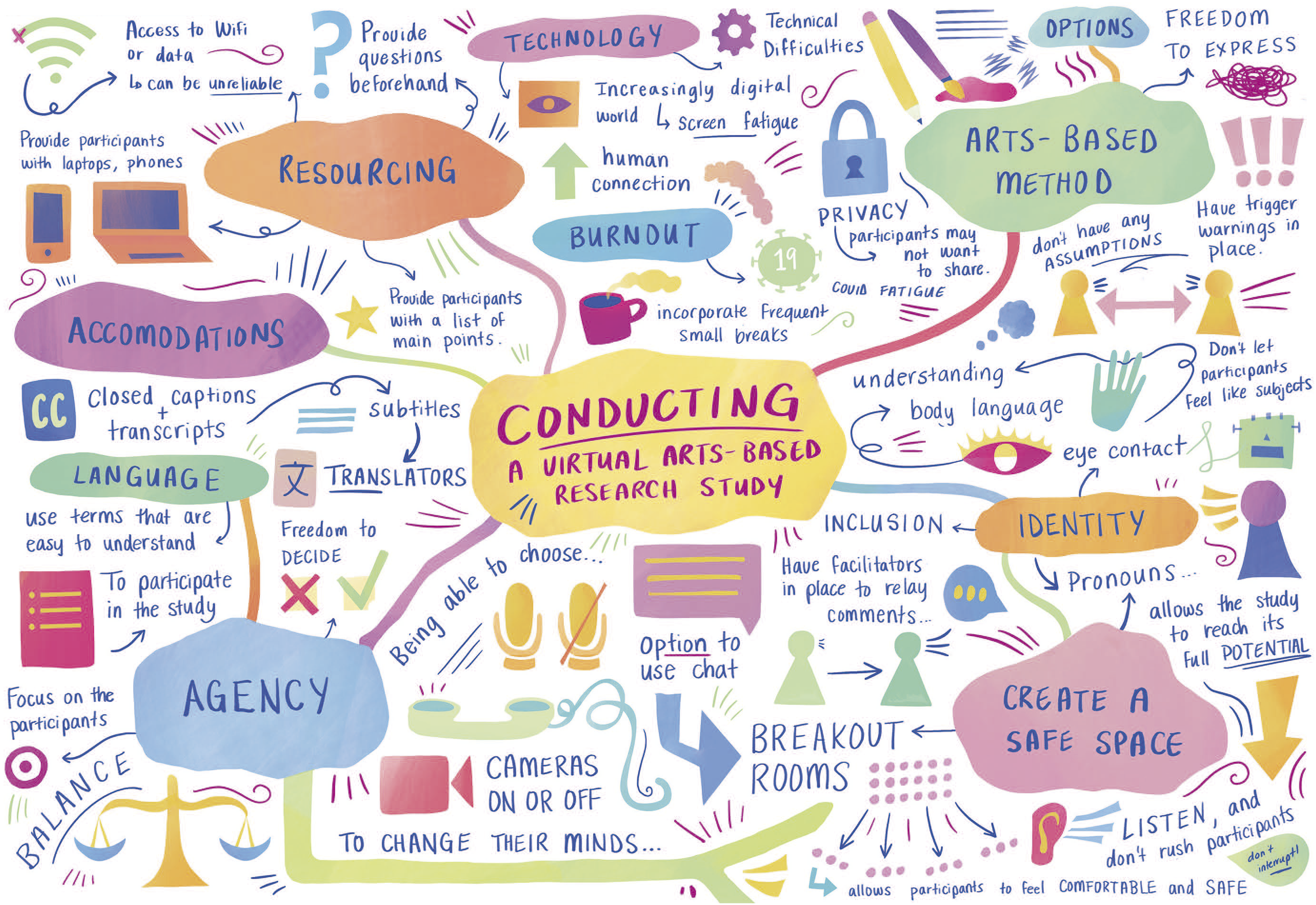
All sessions were conducted and recorded using the Zoom online platform and lasted from one to 3 hours. The sessions were led by the first author (a PhD trained distinguished professor and a Tier 1 Canadian research chair known internationally for conducting qualitative and multi-methods research using innovative approaches such as arts-based methods) alongside the study’s research coordinator, and the graphic recording artist (for the graphic recording focus groups only). Interview guides were developed by the first author for each session, refined based on youth co-researchers’ feedback, and covered topics relating to the session descriptions noted above. Field notes were recorded following each session and involved describing nonverbal behaviours, communication processes, context, and dynamics. We used and sent the Zoom audio recordings (deleted the video recordings) for transcription. To preserve their authenticity, sessions were transcribed verbatim.
Data Analysis
We used univariate descriptive statistics to explore participant demographics. Analysis of the qualitative data occurred concurrently with data collection. All data emerging from the co-design workshops, graphic recording (GR) focus groups, and field notes were organized using the software Microsoft Word. Only the research coordinator and first and second authors had access to the data. To identify important patterns, we used a thematic analysis approach that involved various levels of analysis: 1) reading the transcripts to obtain a general sense of the information and reflecting on the overall meaning; 2) inductively coding the data or identifying persistent words, phrases, or concepts; 3) grouping codes into categories and identifying all text supporting each category; 4) identifying relationships among the categories and integrating them into themes; and 5) comparing, contrasting, and refining themes from each data source (Mayan, 2001). The first author and the second author (a PhD trained mixed methods researchers with training and experience conducting qualitative research) collaborated on all steps and discrepancies were resolved through discussion. Methods to enhance methodological rigour included prolonged engagement with the data, careful line-by-line analysis of the transcripts, and discussion with team members during the analysis and interpretation phases (Lincoln, 1985). To enhance trustworthiness, we have: 1) used methodological triangulation (collected data through co-design workshops, graphic recording focus groups, field notes); 2) incorporated member checking (youth co-researchers had access to the transcripts, allowing them to provide feedback on the findings), (3) ensured that two researchers conducted the analysis and were engaged with the data, and (4) provided rich description of the findings.
Ethical Considerations
Ethics approval was obtained from the University of Manitoba Education/Nursing Research Ethics Board. The study was conducted in line with the principles of the Declaration of Helsinki. All participants provided written and verbal informed consent and all names were anonymized (replaced with code numbers) to ensure participant privacy and safety. Participants were compensated $30.00 CDN per session. The honorarium was distributed as an e-gift card that was emailed based on the participants’ preference.
Results
Study findings: Overarching Theme, Subthemes, Categories, and Representative Quotations.

Overarching Theme
The overarching theme of sustaining mindful presence when conducting research refers to the qualities youth co-researchers (YCRs) thought should be adopted throughout the research process: openness and curiosity “..if you’re having an interview with this other individual, maybe not jumping right into the interview questions, but rather just having a general conversation with them. Maybe asking them why they’re here, what they did to get here, asking them more about themselves, what their interests are. You know, allow that person to kind of feel as if they can speak their mind…but may be allowing them to ask questions as well” (Female 1, age:19)
Skillful listening and attuning to or focusing on the participant (relational engagement) were also seen as key to facilitating authentic expression. One YCR noted: “Sometimes if it’s more just question after question towards the person and we don’t really give much of ourselves, then it does feel like we do have to say the best thing, the right thing. But if the other person mentions like, ‘Oh you know, I totally understand’ or ‘Oh, I experienced this’ or ‘I completely understand.’ Saying little stuff like this makes it feel more like an authentic conversation… taking that time to get to know them, to feel like they are valued, they are important. It’s not like they’re just a research subject but they’re a person that is existing and they have thoughts and feelings. So kind of focusing on them and not rushing into just asking questions, not rushing into what you want to say, what you want to achieve but rather focusing on the person.” (Female 2, age: 19)
Youth co-researchers (YCRs) stressed that sensitivity and empathy must be exercised. They suggested that sending an email to participants prior to the research activity outlining topics to be discussed could help participants prepare to discuss sensitive topics: “I’ve also noticed that just sending emails prior, 10 minutes prior to the meeting, just indicating what we’re going to talk about or what’s going to be involved. Like ‘YCR2’ was saying before, to have those specific questions or something laid out for a person that is not comfortable speaking, it can help them prepare beforehand so that they’re not overwhelmed. That way, it could be easier for them to form sentences or have something to say because they would feel like they’re more prepared and they could feel more confident that way too.” (Female 1, age: 19)
Checking with participants as to possible triggers before discussing sensitive topics and having random check-ins throughout the research activity were other suggestions offered. One YCR explained: “Just making sure that the participants beforehand mention if there’s any subject that’s triggering to them, so that you know, if we are getting around the subject or we do want to inquire about it we are using correct terminology or asking: ‘hey, would you be okay with talking about your experience regarding this particular thing’. Then they can elaborate on it or not and if they don’t feel comfortable, that’s fine. Just making sure beforehand that we do know what participants are or are not comfortable getting into.” (Female 2, age:19)
Another YCR stated: “I think that having random check-ins, not scheduled necessarily, but having check-ins where the interviewee just asks the person: ‘hey are you comfortable with what we’re talking about right now, do you want to continue, is this okay with you?’ Because a lot of times I find that, again as ‘YCR2’ was saying, we don’t know if something’s triggering until it happens right? And often we can feel comfortable at the beginning of something but that does not mean that we’re comfortable throughout the whole thing.” (Female 1, age: 19)
Being accepting, non-judgemental, and respectful were also seen as important to help participants feel comfortable and facilitate engagement and authentic expression: “So, by having that sort of ability to read body language and facial expressions removed {referring to virtual environment where participant can have camera off}, you have to almost put in more effort to make sure you find ways to show more comfort, and more understanding, and more positivity, and interest towards what they’re saying.” (Female 2, age:19)
Another YCR noted: “So, a lot of times when the setting or the group is feeling comfortable to them [participants] and they feel as if they won’t be judged for their opinions, they can say things that are a lot more free to them or things that come to their mind a lot more often. Giving textbook answers is probably just the result of the fact that they feel like they need to stay on task. So, I definitely think being comfortable with your team members or your group members definitely helps with releasing that.” (Female 1, age:19)
The four sub-themes detailed below (creating a safe space, allowing for youth input, facilitating meaningful engagement and paying receptive attention throughout the research process) further exemplify how conducting research with mindful presence can be achieved.
Subtheme 1: Creating a Safe Space
Youth co-researchers (YCRs) highlighted that creating a safe space for youth was important when using arts-based methods (ABM) to conduct youth mental health (MH) research in online environments. Providing accommodations, letting youth self-identify, incorporating diversity and inclusion, using gender inclusive as well as plain language, and being mindful of ethical considerations were seen as key to creating a safe space for youth. YCRs thought it was important to make participants feel as comfortable as possible by providing accommodations. They thought this could be done by: 1) Sending an email to participants prior to the research activities to ask if they need accommodations or if there is something that they would like the research team to know (e.g., triggers, preferences for participation); 2) providing accommodations during the research activities such as having captions, the option to go on mute, choice to use the video camera, providing responses via email, taking breaks as needed (e.g., if discussing sensitive information and participants get choked up etc.); and 3) letting participants know they can let the research team know if they need accommodations at any point in time. As one YCR noted: “I know this may seem like a simple thing but possibly before the project and the interviews start you could send all the participants an email saying that they can directly mention something if they want to. And what I mean by that is we could just let all the participants know beforehand that, ‘hey if there’s something you want to let us know before the meeting, just let us know.’ That way if there is something that can potentially trigger them, or there’s something that they want to know, or if there’s terminology that they don’t want you to use, then that way we don’t use it. And as well, it doesn’t just have to be before the meeting, we can also mention after: ‘if you think of something at any point of the meeting or anytime you can just let us know’” (Female 2, age:19)
Another YCR noted: “I think, wait for them to be as comfortable as possible. So maybe they could keep themselves muted for sure and turn off their camera or maybe they could send in a written response if they feel that’s more comfortable like an email or something. Yeah that’s a few things I could think about.” (Female 5, age: 26)
Youth co-researchers also highlighted it was important to let youth participants self-identify in online environments. They noted this was important to make them feel safe and comfortable and that this could be done by asking them to use their pronouns:
Being mindful of, including, and encouraging youth to share their diverse experiences was also seen as key to creating a safe space. Youth co-researchers recognized that everyone has diverse experiences and identities and highlighted it is important to take that into consideration when conducting research. As one youth co-researcher expressed: “Just making sure that the participant knows that they can discuss any of the things that have changed or shaped their perspective and experience is quite important. So, for instance, like somebody can come from or in my case, I have an invisible disability, I come from a minority, and I am visibly recognized as so. So being a female and a youth and all this stuff, it makes my experience very specific if that makes sense. I can’t remember the exact word for it. I just can’t remember what it is. Oh, intersectionality there you go. I feel like it’s important to consider that as well because when it comes to intersectionality, peoples’ experiences tend to merge and just become super specific and it’s important to consider that.” (Female 2, age:19)
The language used when conducting research and for project related information (e.g., visual graphics) was seen as contributing to creating a safe space for youth. Youth co-researchers recommended using gender-inclusive language (e.g., using “What do you identify as?” as opposed to the classic options of male, female, and other), plain language, and providing translations (English/French) as needed. As one youth co-researcher noted: “I think that what we need to consider is using something that’s easy to understand for the youth, like using easy language in whatever method we’re going to use. Maybe basic English or again with the visual graphics, that’s very helpful for some youth to understand the research, the message we’re trying to convey. Also, I’m not sure if translation would benefit some youth if they really have a hard time with communicating in English or understanding it.” (Female 6, age:26)
Being mindful of and discussing ethical considerations with participants was also seen as important. Youth co-researchers spoke about the importance of ensuring personal and sensitive information remains confidential as well as reminding participants they can choose not to answer a question, withdraw from the study at any time, and request to have specific details they share removed from the findings. As one youth co-researcher explained: “I can also add that maybe just reminding them that as somebody describes something, we may have more questions. But before we ask those questions that go further into their experience, just reminding them that they don’t have to answer. Sometimes when we do ask further questions, they may feel just obliged to answer but they’re not really comfortable. So just reminding them that if they’re not comfortable talking about it further, or if they want some details left out, or anything of that sort, just reminding them of those options that are there for them.” (Female 2, age:19)
Another youth co-researcher stated:
Subtheme 2: Youth Having a Say
Facilitating youth agency by being flexible and providing choice was seen as important. Youth co-researchers (YCRs) thought it was essential for youth to have a say in the type of arts-based methods (ABM) used for the research. YCRs indicated that providing choice and flexibility in this regard would facilitate clear and authentic expression. One YCR noted: “…being able to choose what kind of arts-based method they would like to use. I’m thinking some youth may want to do the film, they could also choose the poetry, or if they want to be more pictures and creativity, it would be more collage. They choose whatever works for them.” (Female 5, age: 26)
As another YCR described it: “The methods allow for all sorts of people that have different connections with their own experiences to demonstrate or represent what they went through. It just allows more people to express whatever they’d like in their own way.” (Female 1, age:19)
A suggestion provided by YCRs was to provide a list of possible options of ABM strategies that can be used by participants and ensuring the list includes methods that allow for different forms of expression. Suggestions of ABM strategies provided by YCRs include journaling, photovoice, body mapping, dance, and music. As one YCR noted: “Maybe providing a list of examples and then you can mention that ‘if you think of something else, just let us know’ and then we could discuss that as an arts-based method as well.” (Female 2, age: 19)
Being flexible and providing choice in the complementary research methods used with arts-based methods (ABM) was also highlighted as important by youth co-researchers (YCRs). Suggested research methods include individual interviews, focus groups, and breakout sessions where participants share with the facilitator. YCRs noted that choice and flexibility in this regard would help youth participants feel less overwhelmed, provide opportunity to be with others with similar experiences, and offer privacy (e.g., one-on-ones). As one YCR put it: “I feel like as a youth it might be a little overwhelming if we all interviewed them. It should be easier or much better I’d say, having like a one-on-one {referring to interview} or two-on-one, and then breakout rooms on Zoom.” (Female 3, age: 20)
Another YCR noted: “I think it would be good to have groups for sure {referring to focus groups} but also involve breakout rooms just so that you can get one-on-one. By having groups, the participant doesn’t necessarily feel alone or considering this is mental health related, sometimes it can be a bit of a touchy subject. So just having other people there, knowing they’re in the same boat, they’re all participating in this together may be helpful.” (Female 1, age:19)
Providing and using a combination of research methods (e.g., individual interview and break out session) was also recommend by YCRs: “I think, like the combo is also a really smart idea that “YCR5” pointed out. I feel like having options in general is always better. That way, the person can feel like they have some control or that they can choose whatever they’re best comfortable with.” (Female 2, age:19)
Subtheme 3: Facilitating Meaningful Engagement
For youth co-researchers (YCRs), ensuring meaningful engagement of youth participants in online environments was important. To this end, they suggested using virtual platforms participants are comfortable with, having options and flexibility in ways to communicate during research activities, and providing the option for research participation at times outside of the research activities. YCRs provided examples of virtual platforms youth are comfortable using Zoom, Skype, Facetime, Google hangouts, Facebook, and Instagram. One YCR noted: “Zoom was like the basic one that you would use.” (Female, age: 19). Another YCR expressed: “Facebook, you’re seeing a reduction of youth using it. So Instagram, TikTok, Snap Chat, they’re really great platforms for younger youth.” (Female 7, age: 28).
Having options and flexibility in ways to communicate during research activities was seen as critical for facilitating meaningful and authentic engagement in an online environment. YCRs provided examples of different ways to communicate allowing for the use of captions, microphone, video (on/off), emojis, and the chat function during research activities. One YCR stated: “I think again just having options. Options meaning, … having captions so that you know if somebody wants to turn them on, they can. Another thing would be the opportunity to use the chat if they want to or use their mic if they want to. Keep their video on or off and then making sure that they know that it’s flexible. So, if all of a sudden, they’re like: ‘You know what? I want to shut my camera off’, they can. They don’t really have to say so either.” (Female 1, age: 19)
Another YCR described how the chat function could be used during research activities: “So I think something that might help is, because we have a live chat that is available during Zoom, it would be helpful if they could just put their input through typing it in the chat and just making sure that we are saying as much as we are engaged and talking and those who are uncomfortable with talking we are as engaged in the chat so that they feel completely involved, they feel like they are part of the group, that they’re not sidetracked. That happens quite often when you are in a chat. You do often feel ignored because most of the attention is going towards those who are speaking. But if we are able to put that same attention towards those that are in the chat, then I feel they’d be a lot more comfortable.” (Female 2, age:19)
Providing options and flexibility for research participation at times outside of research activities was also seen as important. Youth co-researchers indicated this could be done by creating group chats or group email to facilitate sharing of ideas and generating additional discussions. One YCR explained:
Subtheme 4: Paying Receptive Attention Throughout the Research Process
Paying receptive attention throughout the research process was seen as important to facilitate research participation and engagement. Youth co-researchers (YCRs) identified the following as important to consider identifying and addressing barriers in accessing and using technology, offering training in arts-based methods (ABM), providing necessary resources and tools to create art, being mindful of technology fatigue and burnout, and providing rewards.
Identifying and Addressing Barriers to Access and Use of Technology
YCRs highlighted the importance of asking participants about barriers to accessing and using technology prior to commencing research activities. To address barriers to access and use of technology, YCRs suggested loaning devices needed to participate in the study and encouraging participants to use technology (e.g., computer, laptop) available through their school or public library: “So you know having that option in place to go to their local library and sign out a computer for an afternoon…” (Female, age:28). Another YCR offered: “Let’s say youth that don’t have access to the internet or even a laptop or phone, then they could maybe loan a Smartphone or a computer.” (Female 6, age: 26)
Other suggestions included providing spaces that have the technology needed for research participation (e.g., office room), having someone show participants how to use the technology and software chosen for the study, supporting participants by providing compensation for internet or phone services, and using free platforms (e.g., Instagram, TikTok) and apps for drawing and creating virtual designs. A YCR offered: (Female 5, age:26)
Another YCR stated: “Also, maybe someone that could guide them cause sometimes some of them might not have knowledge in using technology or computer or anything like that.” (Female 6, age: 26)
Offering Training in Arts-Based Methods and Providing Resources to Create Art
Youth co-researchers (YCRs) also thought it was important to offer participants training in arts-based methods (ABM) and to provide needed resources and tools for creating art. They suggested providing training in various forms of ABM and options as to the training process (individual vs. group training). A YCR explained: “I think maybe if there were to be training then doing it as a group would be good, and just because it will hopefully make the participant less like they’re being tested. I know often when there’s training involved and its individualized, they may feel pressure to know all the options.” (Female 1, age: 19)
YCRs suggested that if providing training was not possible, resources on ABM should be provided. Examples of suggested resources included introduction videos about ABM, links to different ABM, and how others have used ABM as illustrated by the following: “So maybe having an intro video if you are doing a group training to welcome the participants, that involves mentioning that art is totally how you express yourself and putting it more on the participant and their method of expression. If we don’t do training, you can provide links to each arts-based method with examples or videos of how some people do it and then those videos will probably involve the person mentioning that whether you choose this colour or that colour is totally up to you.” (Female 2, age: 19)
Providing the necessary tools and resources (e.g., art supplies, cameras, stationary, software, programs) for creating art was also seen as important. Resources and tools discussed by YCRs include cameras, art supplies, and free software applications. One YCR explained: “So, giving them the option to make whatever it is virtually as well by providing a list of apps that are free and available for both IOS and android. That would probably be helpful.” (Female 1, age: 19)
YCRs also noted that providing a space (‘creative space’) for youth to use to participate in research activities were ideal. YCRs suggested this space could be virtual or physical and facilitate working independently or as part of a group: “So, I’m not sure if we plan on having them in the meet while they do the journaling or anything of that sort or having them do it in their own time. But I know for sure that a lot of the times, people can reach that creative space mentally when they’re by themselves. Or it will be the opposite- they actually need to be distracted because wherever they are located, whichever environment that they’re doing it in, may not be the most comfortable for them, it may not influence that creative space. Something that may help could be for example if we, in the case that we had several people journaling, just have a meet where they all have their videos off but just knowing that there are other people there. We can even put something on for them to watch or some music in the background or we can allow for conversations between us and the interviewees or between the participants. I just feel like if all of them have the opportunity to reach that sort of virtual creative space it may help them in the case that they may not be able to reach that creative space mentally by themselves.” (Female 2, age: 19)
If the research team decided to provide a physical ‘creative space’ for participants, YCRs suggested this could be an office room, drop-in centre, or library. As one YCR noted: “Yeah, I would just add, there’s definitely drop-in centres or maybe a library, or having an open and safe space that could allow people to hangout and relax but also take some time for themselves to proactively work through something because sometimes even if I say that I’m going to think about something, I get distracted. And yeah, I might not engage or give it deeper thought. But there might be environments, maybe even in a group setting, where people can start thinking about it more deeply and just stay focused on it.” (Female 6, age: 26)
Being Mindful of Technology Fatigue and Providing Rewards
Youth co-researchers (YCRs) thought it was important to be mindful of technology fatigue and burnout and to provide rewards. Suggestions provided by YCRs to prevent technology fatigue include:
1) keeping meeting times to 1–1.5 hours; 2) incorporating 15-min breaks during research activities; 3) allowing for unscheduled breaks to use the washroom, get a drink of water, or collect their thoughts; and 4) using emojis during virtual research activity to show the participant has left for a break. As one YCR stated:
The importance of unscheduled breaks was highlighted by another YCR: “Or just knowing that if they need the washroom, they can go. Even though that’s a simple thing, a lot of people don’t even consider that: ‘oh yeah I can just go and use it, that’s totally fine’, and they can come back.” (Female 1, age: 19)
Another YCR reinforced: “Yeah, I think breaks would be a really good idea cause I agree, it can get quite tiring. So, you can incorporate a break time, saying that halfway through there’s like a 15-minute break. Of course, sometimes people need breaks randomly. They can’t sort of wait until the break time. At the beginning you can have an option for example, you know how there’s the reaction button, you can say: ‘Oh just click a thumbs up if you have to leave quickly, whether it’s for a drink of water, to use the washroom, or to take a break from the screen’. So, they can just hit one of those reactions and then leave and then come back whenever they need to.” (Female 2, age:19)
Finally, youth co-researchers agreed that participants should be compensated for their time and contribution through an honorarium (e.g., gift card). As one youth co-researcher explained: “If we could have an incentive for the participants. Youth, they are also working or in school and just having an incentive might be helpful.” (Female 5, age26)
Discussion
The purpose of this paper was to report on findings specific to guidelines co-designed with youth for adapting arts-based methods (ABM) for conducting youth mental health research in online environments. Although there is a growing body of evidence on the engagement of youth co-researchers in the various stages of research (e.g., preparatory phase, recruitment, design, data collection, analysis, dissemination) (Flotten et al., 2021), co-designing guidelines for adapting research methods to other contexts has received little research attention. To our knowledge, our study is the first of its kind in Canada and adds to the knowledge base in this regard. Youth co-researchers (YCRs) spoke about adapting arts-based methods for conducting youth mental health research in online contexts with mindful presence and highlighted the importance of creating a safe space, youth having a say, facilitating meaningful engagement, and paying receptive attention throughout the research process. Important considerations identified by YCRs include: 1) letting youth self-identify; 2) incorporating diversity and inclusion; 3) providing accommodations, recognition, and compensation; 4) language considerations; 5) offering ABM training and needed resources for creating art; 6) using virtual platforms youth use; 7) being mindful of ethical considerations and technology fatigue; 8) addressing barriers in accessing and using technology; 9) providing choice in type of ABM and research methods used; and 10) providing options for communicating during research activities and for engaging in research outside of allotted time (see Figure 3. Preliminary Research-Informed Guidelines). Preliminary Research-Informed Guidelines.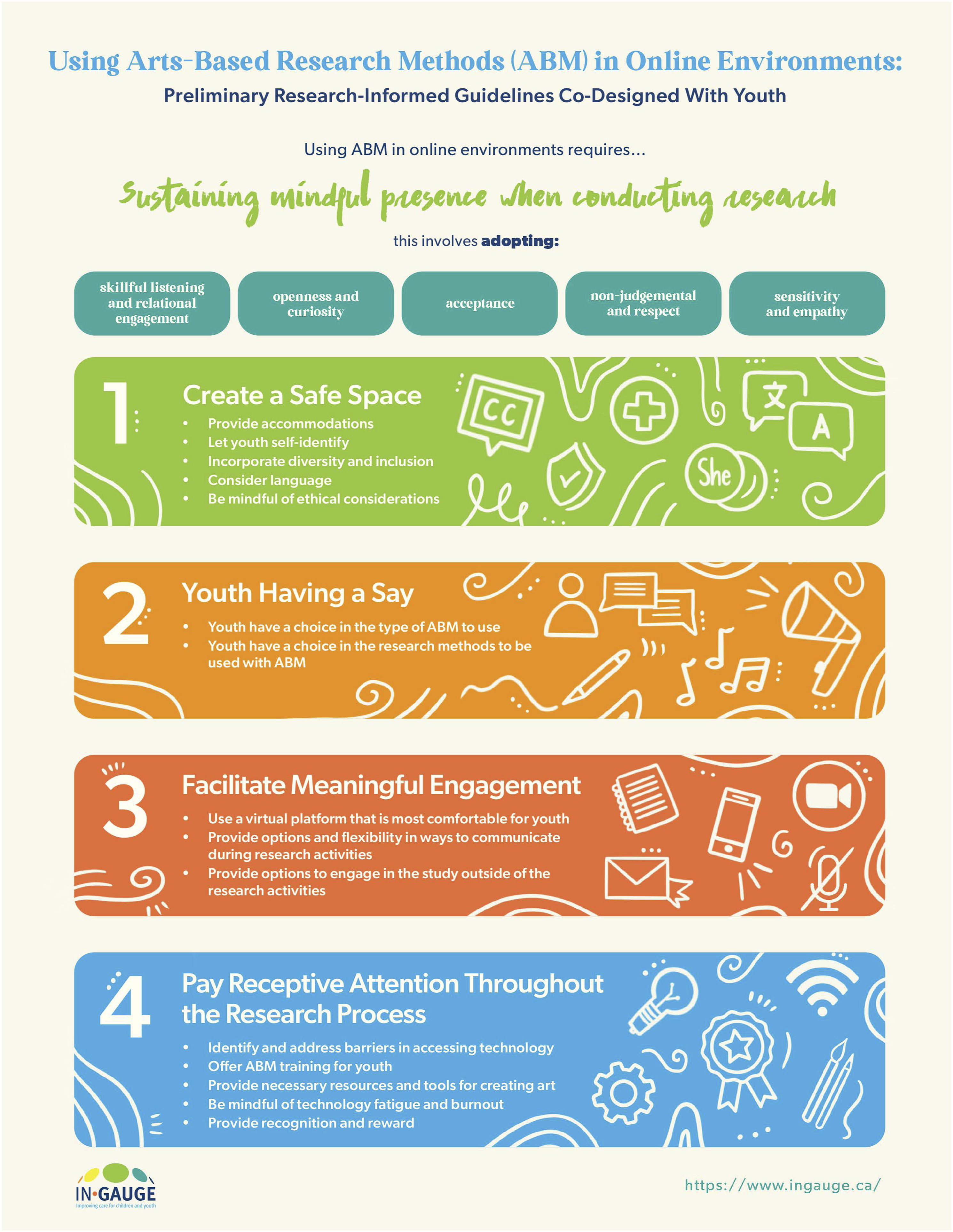
Conducting Research with Mindful Presence
In the qualitative research literature, the concept of sustaining mindful presence refers to conducting research with careful thought, receptive attention, and awareness of what is taking place to provide space for participants’ authentic expression, ensure participants have meaningful research experiences, and enhance researchers’ understanding of participants’ perspectives (Reid, 2009; Woodgate et al., 2017). Characteristics of conducting research with mindful presence have been proposed and include openness and curiosity, skillful listening, relational engagement, empathy and acceptance, non-judgement and respect, flexibility, receptive attention, reflexivity, self-awareness and self-regulation (Woodgate et al., 2017). In this study, youth co-researchers (YCRs) highlighted the importance of conducting youth mental health (MH) research in online environments with openness and curiosity, skillful listening and relational engagement, sensitivity and empathy, acceptance and non-judgement, respect, flexibility, and receptive attention. Thus, our findings are consistent with characteristics of mindful presence that have been previously proposed (Woodgate et al., 2017).
Co-designing Guidelines for Adapting ABM to Online Environments
There is a growing body of literature on the involvement of youth in co-designing interventions or services (Reed et al., 2021) and in the co-production of research design (e.g., research questions), data analysis (e.g., advice and/or engagement in data analysis), and dissemination activities (e.g., outputs) (Sellars et al., 2020). Given co-designing guidelines with youth for adapting arts-based methods (ABM) to online environments is novel, there is a lack of published research in this area. However, the importance youth co-researchers (YCRs) in this study gave to creating a safe space for youth participants is consistent with findings of research conducted by the first author (Woodgate, Tennent, & Barriage, 2020). Drawing from studies that used qualitative and participatory arts-based methods to examine the experience of youth living with various conditions, Woodgate, Tennent, and Barriage (2020) found that creating a space in which youth voices are welcomed, respected, and heard was critical for youth to share their stories, perspectives, and opinions. Our findings are also consistent with national (Canada) and international work on youth engagement highlighting the importance youth place on having meaningful opportunities for their voices to be heard. For instance, the importance our youth co-researchers (YCRs) attributed to creating a safe space, youth having a say (e.g., ABM type, complementary research methods), facilitating meaningful engagement (e.g., using youth-friendly platforms, having options/flexibility in ways to communicate during and outside of research activities), and paying receptive attention throughout the research process is consistent with findings from the work of the Young Canadians Roundtable on Health (YCRH), a national advisory of youth leaders who lead research, provide consultancy, and participate in decision-making related to child and youth health in Canada (Yogalingam, 2021). The YCRH conducted interviews with representatives from youth advisory committees (YACs) from across Canada to ask about meaningful youth engagement. The YCRH found that creating safe spaces (e.g., youth can voice their perspectives without judgement), incorporating youth ideas, and providing option, flexibility, and the supports and resources needed were seen as critical for facilitating authentic expression and engagement of youth (Yogalingam, 2021). Our findings are also in line with results from consultations conducted with 10,000 youth from across Canada to inform the country’s first youth policy (Government of Canada, 2018a; 2018b). Findings from these consultations indicate that youth want: 1) their voices to be heard and respected (they want youth to have a say); 2) meaningful opportunities to engage in matters that affect them; and 3) the supports and resources (e.g., skills training, tools) needed to this end (Government of Canada, 2018a; 2018b). Finally, the importance our YCRs attributed to creating a safe space, incorporating youth input, providing choice and flexibility to facilitate meaningful engagement, and providing resources needed by youth echo findings of work conducted by the United Nations and youth civil service organizations and networks on how to meaningfully engage with youth (UNESCO, 2019).
Future research is needed to see if these guidelines and characteristics hold true and facilitate arts-based methods (ABM) research. Accordingly, the first author and the youth co-researchers are currently undertaking the next stage of this research-implementing and evaluating the research-informed guidelines in an online research study that explores youth’s mental health experiences through the COVID-19 pandemic and beyond using ABM.
Strengths and Limitations
There are a number of strengths. First, to our knowledge, this is the first Canadian study to engage youth co-researchers (YCRs) in designing guidelines to adapt arts-based methods (ABM) for conducting youth mental health research in online environments. Thus, our findings provide researchers (youth co-researchers included) with tools that can be used when using ABM for conducting youth mental health research as well as other youth research in online contexts. Second, our sample size was reflective of the number of participants used for youth advisory groups and ideal for our data collection methods (Krueger, 1994; Sellars et al., 2020). Our group of youth co-researchers was also diverse (only one YCR was white): that is, youth who are often unheard exercised their voice through this project. Third, we have provided a definition for the term ‘co-design’ as well as rich description of how the co-design activities were conducted, the arts-based methods used, and the theoretical framework that served as a roadmap for engaging YCRs in the study. This is a strength given inadequate reporting of this information has plagued the field particularly for research on co-design with groups experiencing social inequities (Toto King et al., 2020). Fourth, the participatory design (e.g., the use of co-design workshops and graphic recording focus groups) facilitated redistributing the power and expertise among YCRs and adult researchers and generating a visual output that enhanced ownership and discussion (Espiner & Hartnett, 2016; Hautopp & Ørngreen, 2018). Fifth, we have used the Standards for Reporting Qualitative Research (SRQR) guidelines (see Supplemental information-S1 file) to enhance transparency and quality of reporting (O’Brien et al., 2014). A final strength is the use of various data sources (workshops, graphic recording focus groups, field notes) which allowed for methodological triangulation and facilitated engaging YCRs in critical thought and reflection. Nonetheless, there are limitations. Our YCRs were eager to engage in this research and cannot be assumed to be representative of youth in general. Finally, future research involving male youth of differing educational and ethnic backgrounds as well as youth from Western Canada may result in additional perspectives not currently captured in the present study.
Conclusions
We have engaged youth as context experts to discern the best way to adapt arts-based methods (ABM) for conducting youth mental health research in online environments. The youth-informed guidelines we have identified can prove useful post-pandemic: in future crisis contexts and in non-crisis contexts to make research participation accessible (e.g., for those for whom online participation is most convenient, for those who cannot participate in person such as youth living in rural areas). Regardless of context, sustaining mindful presence through the course of a research project is critical for facilitating youth’s authentic expression.
Supplemental Material
Supplemental Material - Co-designing Guidelines for Using Arts-based methods when Conducting Youth Mental Health Research in Online Environments
Supplemental Material for Co-designing Guidelines for Using Arts-based methods when Conducting Youth Mental Health Research in Online Environments by Roberta L. Woodgate, Miriam Gonzalez, John Christian Barrion, Tasmiah Hussain, Iman Shamraiz, Nicole Singcay, Stacie Smith, Nicole Thielmann and Erika Yazon in International Journal of Qualitative Methods
Footnotes
Acknowledgements
The authors sincerely thank all youth co-researchers who shared their experiences and perspectives with us. We also acknowledge and thank the artists on this project: Kristen Elkow and Paulina Occhino.
Declaration of Conflicting Interests
The author(s) declared no potential conflicts of interest with respect to the research, authorship, and/or publication of this article.
Funding
The author(s) disclosed receipt of the following financial support for the research, authorship, and/or publication of this article: This work was supported by the Government of Canada’s New Frontiers in Research Fund (NFRF) [grant number: NFRFR-2021-00296]. Dr Roberta Woodgate is supported by a Tier 1 Canadian Research Chair in Child and Family Engagement in Health Research and Healthcare (Canadian Institutes of Health Research- Canadian Research Chair- 950–231845). The funders had no role in study design, data collection and analysis, decision to publish, or manuscript pre,parati,on.
Ethical Statement

Supplemental Material
Supplemental material for this article is available online.
References
Supplementary Material
Please find the following supplemental material available below.
For Open Access articles published under a Creative Commons License, all supplemental material carries the same license as the article it is associated with.
For non-Open Access articles published, all supplemental material carries a non-exclusive license, and permission requests for re-use of supplemental material or any part of supplemental material shall be sent directly to the copyright owner as specified in the copyright notice associated with the article.
