




Abstract
Giving a voice to youth and promoting their health and well-being is essential for successful future communities. However, millions of youth, particularly in low-to middle-income countries, are misunderstood, lack a voice, and face many challenges, which maintains their disengagement. As approaches for youth engagement evolve, this paper presents an innovative, qualitative methodology to engage vulnerable youth (NEETs – acronym for youth who are Not in Education, Employment or Training) in identifying and ranking their needs and giving them a voice to contribute to prevention programming. Drawing on principles of empowerment theory, the paper expands on the popular youth-adult partnerships’ literature by injecting a new engagement approach that focuses on (i) using a literature-based community needs assessment, (ii) engaging vulnerable youth in small group discussion to rank their needs, (iii) comparing rankings between groups, (iv) creating spaces for youth to include other pressing issues not identified in the literature, and (iv) comparing rankings across surrounding communities. The ideas presented demonstrate that the Needs Ranking activity, as an engagement and data collection tool, may be particularly relevant in gathering viewpoints and opinions of underserved youth. These youth are traditionally not well represented through the more conventional and common methods currently employed in research and community development such as local government community development board meetings and needs assessments, and research interviews. The paper also creates awareness around the Needs Ranking activity as a viable and verifiable qualitative approach in youth engagement.
Keywords
Introduction
During one of the focus group discussions (FGD) conducted in small rural communities in the Eastern Cape, South Africa, a participant stated that “We must sit like this and discuss”. This was his reaction to an innovative qualitative method called Needs Ranking that is presented in this paper and is an expression of his desire to engage in further discussion with peers and adults. Drawing on principles of empowerment theory, we developed a Needs Ranking activity as part of data collection for a study on substance use and risky sexual behaviors among rural South African youth (Majee et al., 2021, 2022; Wegner et al., 2022). This paper reports on the novel Needs Ranking activity we developed and delivered using feedback collected from research participants, and our own reflections as Needs Ranking activity and FGD facilitators, and as researchers. To our knowledge, this is the first report to document a Needs Ranking methodology for youth engagement. Our goal is to share our approach and the insights we gleaned from implementing it, with others interested in, and/or serving, vulnerable youth. Further, we seek to demonstrate the value of empowering youth by giving them a voice in the assessment of their needs. Their involvement can facilitate the co-creation of more relevant programs to improve health and well-being of vulnerable youth.
Growing Youth Population and Disengagement
It is uncontested that the world is experiencing a growing population of young adults who are Not in Education, Employment or Training (NEET). For example, Africa has the youngest population worldwide, with 40% of the population under 15 years of age (Statista Research Department, 2022). The youth population in Africa will increase by 42% by 2030, and account for 75% of those under age 35 in Africa (Desa, 2015). In some countries, for example, Zimbabwe, Nigeria and South Africa, economic growth is lagging youth population growth. This puts overwhelming pressure on organizational and community capacities to serve the youth. COVID-19 has also precipitated the growth of youth NEETs. The proportion of the world’s youth NEETs increased from 21.8% in 2015–2019 to 23.3% in 2020, due to the COVID-19 pandemic. Although youth represented only 13% of total employment before the crisis, they made up 34.2% of the 2020 decline in employment (United Nations Department of Economic and Social Affairs, 2022). This emerging cohort of youth, particularly in resource limited economies, experience specific vulnerabilities within the family, education, and labor systems that hinder them from building essential skills and knowledge foundational to better livelihoods. These challenges may result in increased high school drop-out rates, and weak education -training-work transition due to inadequate numbers of teachers, poor training, the mismatch between curricula and job market demands, and a lack of information and communication technology and other digital tools (United Nations Department of Economic and Social Affairs, 2022).
Both work and school experiences provide opportunities to gain knowledge and skills necessary for meaningful community participation. Additionally, educational institutions ingrain positive work habits and build confidence in young people through participation in different extra-curriculum activities such as sports and performing arts. On the other hand, work spaces introduce and nurture soft skills like dependability, accountability, punctuality and teamwork, and help young people to connect with others (Ridzi et al., 2020). Educational attainment and work experience, and community participation, offer a sense of achievement, dignity and belongingness that can promote more engagement (Ridzi et al., 2020). That the proportion of youth in NEET status is projected to grow exponentially, and that young people are susceptible to engaging in risk behaviors, is a huge concern. Experts fear that the growing proportion of disengaged youth can be a catalyst for exacerbating existing community issues such as substance abuse, violence, human trafficking, irresponsible sexual activities, inadequate educational, economic and health care opportunities, and increased family poverty (Givetash, 2022; Majee et al., 2021; United Nations Office on Drugs and Crime, 2022). For instance, youth (under 35 years old) in Africa represents the majority of people being treated for drug use disorders. According to Ogundipe et al. (2018), alcohol and tobacco use have the highest prevalence (i.e. 40.8% and 45.6%, respectively) among adolescents in sub-Saharan African (Ogundipe et al., 2018). In South Africa, amongst those admitted to treatment centers for substance use, the primary drugs used were heroine and methamphetamine (South African Community Epidemiology Network on Drug Use [SACENDU], 2022). High prevalence of substance use among youth has been found to be associated with community problems such as vandalism, theft, unwanted pregnancies, increased burden of infectious diseases, and strained familial relationships (Deressa & Azazh, 2011; Hoel et al., 2014; Jere et al., 2017).
Since the advent of COVID-19, communities with high rates of disconnection, such as rural areas, have been dealing with greater challenges in keeping youth engaged. For many youths in these communities, remaining engaged in academic tasks during school closure, was difficult, and returning to school once they re-opened was not guaranteed. Given the negative impact of COVID-19 on in-person learning or work, vulnerable youth who were already in NEET status, are more likely to face a host of challenges in re-engaging with the school or work systems. These growing concerns highlight the unquestionable need for better ways to engage youth. We define youth engagement as the participation of youth in activities that positively impact themselves and others. These activities can be in the form of family, school, training, work, or community participation (Centers for Disease Control, 2009).
Youth Engagement Approaches
Recognized forms of data collection in community-based participatory research include, community action planning, community mapping, town hall discussions, focus group discussions, surveys, online mapping, and DataWalks. For each of these methods, whether used independently or in combination, the aim is to achieve one or a combination of the following: inform, consult, involve, collaborate with, and empower community members (Fedorowicz et al., 2020). Many of the forms of engagement have been used widely to promote youth participation in research (Mawn et al., 2015; Nguyen et al., 2019; Willis et al., 2017). For example, Data Walks are a popular approach for increasing youth participation in research (Murray et al., 2016). A Data Walk is an event organized by researchers to share information with community members, receive input, and use the gained insights to identify gaps in research. During the event, information is shared with community members on large posters, and participants are given an opportunity to walk from poster to poster to learn about the information and provide feedback. To facilitate learning and feedback, researchers may explain the information, answer questions, or facilitate discussion with participants (Fedorowicz et al., 2020).
Our broader study on substance use among NEET youth is rooted in the principles of empowerment. Empowerment is a complex notion, that describes a sense of inner strength that manifests itself in acts that allow a person to take charge of their lives and impact the institutional and societal systems in which they live (Clay, 2005; Segal et al., 1993). Psychological empowerment at an individual level has three outcomes: sense of control, participatory behaviors, and critical awareness, and may be achieved through participation in problem-solving activities with others within one’s immediate environment (Zimmerman, 2000). It recognizes the context (political, social, and economic) in which people live and how this context works to create inequities within a society (Liebenberg, 2022; Mandel, 2013). Thus, empowerment theory recognizes the interdependence of people within their environment. It promotes increased individual and community participation in influencing important issues and events, affecting their lives (Kari & Michels, 1991; Rissel, 1994; Torre, 1986; Wallerstein, 1992). As the descriptions of empowerment continue to evolve, it is evident that a process of individual/personal development, participation, consciousness awareness, and social action happens. Our drive to develop and implement an approach that nurtures and strengthens empowerment, particularly of marginalized youth, stems from this understanding. We believe that empowerment must come from within a group or individuals constituting a group and cannot be given to them. Thus, engaging youth in a Needs Ranking activity becomes a critical pillar of the empowerment process.
In community engagement, youth-adult partnerships have been heavily promoted for engaging youth (Petrokubi, 2014; Zeldin et al., 2013, 2017). Having youth involved in decision-making on issues affecting them, can boost motivation to participate in programs, increase retention, provide a sense of belonging, self-worth and dignity, and promote better relations with adults (Akiva et al., 2014; Deschenes et al., 2010; Larson & Angus, 2011; Mitra, 2009), thereby helping communities be more responsive to youth needs (Akiva & Petrokubi, 2016). However, when not properly addressed, relations between youth and adults in such partnerships can be tense due to power dynamics (Akiva & Petrokubi, 2016) as youth may withdraw feeling voiceless and unvalued, while adults may feel disrespected. This impasse highlights the need for sustained active engagement of youth in community programs (Bulc et al., 2019) through new approaches where youth and adults partner in co-creating programs that address community needs as perceived by diverse community members, including vulnerable youth. Admittedly, progress is being made at all levels to prioritize the involvement of young people in meaningful community life. In South Africa for example, communities are organizing around adolescent and youth programming [e.g., the Sibanye Coalition highlighted in one of our recent publications (David et al., 2023)]. Corporates (for example, Kouga Wind Farms) and Non-Governmental Organizations (NGOs) (for example, Kidlinks Small Farm Incubator both in the Eastern Cape Province) are increasingly working with local communities to address youth engagement challenges. At the national and provincial level, policies such as the Youth Policy 2020 – 2030 (Makoae et al., 2021) and the Western Cape Youth Development Strategy (Western Cape Government, 2013) respectively have been formulated to promote youth engagement. Our Needs Ranking approach will aid current and future efforts in engaging and empowering youth.
Method: Needs Ranking Approach
Research Setting
The Needs Ranking approach was used in a study conducted in eight rural communities in two provinces of South Africa: the Eastern Cape (Kouga Municipality including Hankie, Humansdorp, Jeffreys Bay, Loerie, Patensie, Sea Vista and Thornhill) and the Western Cape (Barrydale). These communities were selected for the study as they represented typical rural communities. For the study, ‘rural communities’ meant low density, small villages, and towns in, or close to, farming communities or in remote areas (South Africa Census, 2001). In addition, the researchers had previously established partnerships with stakeholders in the Kouga Municipality and Barrydale who facilitated community access and participant recruitment through their networks of local partner organizations.
Participants were recruited through purposive, convenience sampling, with the help of a community partner. According to the South African National Youth Policy (2015), youth are aged 15–35 years. Participants for the study were selected using the following inclusion criteria: male and female youth aged 18–35 years, residing in one of the identified rural communities, who arrived at the community center on the day that data collection took place, and consented to participate in the study. Potential participants were informed about the study verbally by the research team and they received an information letter in their home language (either English, isi Xhosa or Afrikaans). They signed a consent form and a focus group confidentiality binding form, agreeing to keep confidential whatever was discussed in the focus groups. Participants received a unique study identification number to ensure anonymity. Participants were asked to consent to their photographs being taken for research purposes and to be audio recorded in the focus groups. In cases where participants did not give consent to be audio-taped, they were included in a focus group which was not audio recorded; instead, the researcher made extensive field notes directly after completing the FGD. Participants received light refreshments either during the Needs Ranking activity or focus group discussion.
Procedures
The study was conducted in three phases: literature review (Phase 1), Needs Ranking activity (Phase 2), and focus group discussions (Phase 3).
Phase 1: Literature Search
In Phase 1, the research team (one based in the US and another in South Africa) reviewed literature on the needs and challenges experienced by youth living in rural South Africa in general, and more specifically by youth living in the rural communities in our study. The literature reviewed included peer-reviewed research, government publications NGO reports and websites (e.g., South African National Youth Policy 2020–2030, HOPE Recovered, United Nations Children Fund South Africa U-Report poll, and local municipality reports (Fadi & Dreyer, 2016), and blogs on rural youth development. Because the communities in which the study was conducted are both small and remote, researchers were not able to find community level data on needs/challenges for these communities. The two researchers held several Zoom meetings to discuss results of the literature review and agree on major “challenges” and “needs.” At the end of the literature search phase, the research team organized the needs/challenges into eight broad areas: skills development, career development and training, housing, further education, parenting, health facilities, leisure and recreation facilities, and entrepreneurship. Each of these needs were written on a separate card to facilitate shifting and ranking of cards (needs). The needs/challenges should not be ranked prior to presenting them to the youth as the novelty of this approach is to understand needs as they are experienced by youth in the community and examine how the rankings align with literature.
Phase 2: Needs Ranking Activities
At each research site, researchers welcomed participants and oriented them regarding the purpose of the study. As the Needs Ranking activity was very interactive, researchers and youth participants co-created some ground rules prior to starting the activity. While ground rules differed slightly from community to community, elements that were common across communities include: respect for others’ views and lived experiences, being open minded – having a problem shared is a problem half-solved mindset - and being non-judgmental. Following, the creation of ground rules, participants were divided into small groups of 4–6 each. Each group was then provided ten cards, of which eight had one community need listed (prepared from literature review conducted in Phase (1) and two were left blank for additional needs as perceived by participants. There were three small groups at each of the eight sites, so a total of 24 small groups who participated in the Needs Ranking activity. Groups were allowed up to 90 minutes to complete the following four steps of the Needs Ranking activity: (i) discuss listed needs in relation to the realities faced by youth in the community, (ii) rank the needs and post them on the wall, (iii) learn from one another through walking around the room to compare their own ranking with that of peer groups (DataWalk approach), and (iv) all participant, researcher-facilitated, whole group discussion on the portrayed rankings and differences between groups (Picture 1). Youth participating in steps (i) and (ii) of the needs ranking activity.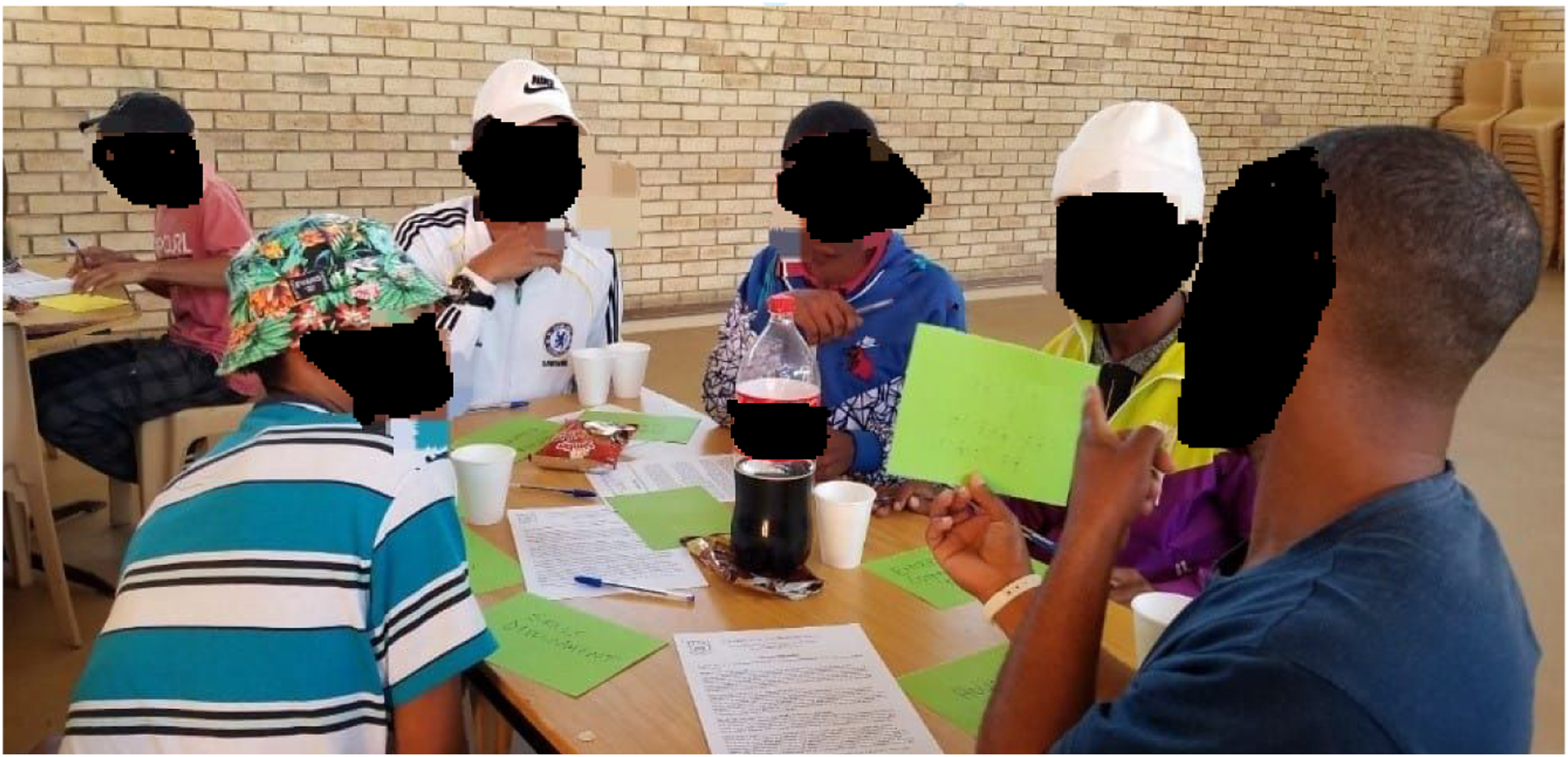
During the discussion, researchers/facilitators separately visited each table and asked questions intended at provoking participants’ perspectives of their unmet needs or challenges and how key community stakeholders could help address them. Examples of the discussion generating questions used as prompts include: How does your ranking compare with those of peer groups? What do you think caused the differences/similarities in ranking? If you were the mayor or in a position of authority, what would you do with this information? How would you meet the different needs? (Majee et al., 2022). The research team took photographs of each group’s final ranking of needs (Picture 2). Youth ranked needs.
Phase 3: Focus Group Discussions
Eight FGDs were conducted with 126 youth. The aim of FGDs conducted in Phase 3 of the study was to allow participants to further discuss their needs and barriers from a broader perspective that included substance use and risky sexual behavior and understand the interconnectedness of risk behaviour compounding factors. To promote discussion among participants, researchers used open ended questions and probes aimed at soliciting rich descriptions of participants’ experiences. Prompts such as “Please describe what life is like for a young person living in this area?” “What do you think are the good things about living in this area?” “What are the bad things about living in this area?” are examples of questions used to generate discussion. On average FGD sessions lasted 1.5–2 hours.
Caution on Refusal to Participate and Unsuccessful Data Capture
Researchers had longstanding research relationship with some youth serving organizations with whom they partnered to conduct the study. Because of their local presence and knowledge with youth concerns, community partners assisted with recruitment of participants, securing of venues for study activities, and with inviting other key stakeholders (e.g., representatives from Wind Farms) to observe the Needs Ranking activity. Collaborating with community partners was important because it gave the research team credibility in the eyes of the participants and facilitated community access. Vulnerable youth are a risk-averse population in terms of what and how they will share their experiences and with whom. Some youth will refuse to participate, preferring to be at the research site and watch others participate. Those who consent to participate may accept one data collection approach instead of another. In our case, the majority of participants (at least 80%) at each site allowed us to audio record them. Those who did not consent to an audio recording had concerns around having their thoughts permanently captured – particularly in today’s society where information could easily be shared on a variety of social media platforms. Researchers should plan for cases of “unsuccessful data capture” due to either incomplete data entry on forms (e.g., consent, demographic information sheets), incomprehensible statements during discussions, and/or illegible writing. In our study, data from one Needs Ranking activity group comprising five participants could not be used as the data were not legible.
Closely related to the issue of unsuccessful data collection is the likelihood of raising false hopes among marginalized youth through their participation in a Needs Ranking activity. Researchers should be transparent to participants with regards to the aim of the study – what it promises to do and how it benefits participants. In our case, we explained to participants that this was a data collection tool and that researchers were going to prepare a report that would be disseminated to people with authority to distribute/re-distribute resources in the communities in which we work.
Data Analysis and Interpretation
Needs Ranking Data
Photographed Needs Ranking data were captured in Excel. The data were coded by allocating a score of 8 points if a need was ranked first in a group, with scores decreasing down to one for the lowest (eighth) ranked need in a group. The scores for each category of need were totalled and then assessed against the maximum possible score as a percentage. In our case, the maximum score possible was 184 (23 groups × 8 points). For example, “Further education” scored a total of 157 out of a maximum of 184 points, giving a percentage of 85 (Majee et al., 2022). The categories were then ranked from first to eight for various groups and a chart was produced showing the percentage scored for each of the eight categories (Majee et al., 2022).
Qualitative Data
Data were professionally transcribed verbatim and managed in NVivo 12 and thematically analysed (Braun & Clarke, 2014). As in qualitative data analysis, researchers familiarized themselves with the FGD data and independently coded five transcripts. Researchers discussed their coding and collaboratively developed a coding scheme which was then used to code all eight FGD transcripts (Majee et al., 2022). Notes from unrecorded discussions (needs ranking and FGD) were reviewed and value adding information extrapolated. Coded transcripts were discussed to verify completeness, ensure reliable coding and resolve areas of disagreement (Braun & Clarke, 2014). Trustworthiness of study findings was ensured using various strategies. Credibility ad dependability was ensured through triangulation of data sources: ninety-nine participants across eight rural communities in two provinces; having a team of researchers; and multiple data collection methods: firstly, by dividing youth into small groups to work on the same task, i.e., needs ranking, and then having them engage in peer respondent corroboration of ranked needs. Second, the initial results from the needs ranking activity were discussed in the follow up focus group with participants at the site – further confirming our understanding of the experiences of youth (Majee et al., 2022). Confirmability was ensured through the provision of an audit trail, and transferability was ensured through providing detailed descriptions of the research setting and participants.
Novelty of the Participatory Needs Ranking Approach
Engaging the Disengaged
Spectrum of Community Engagement to Empowerment.
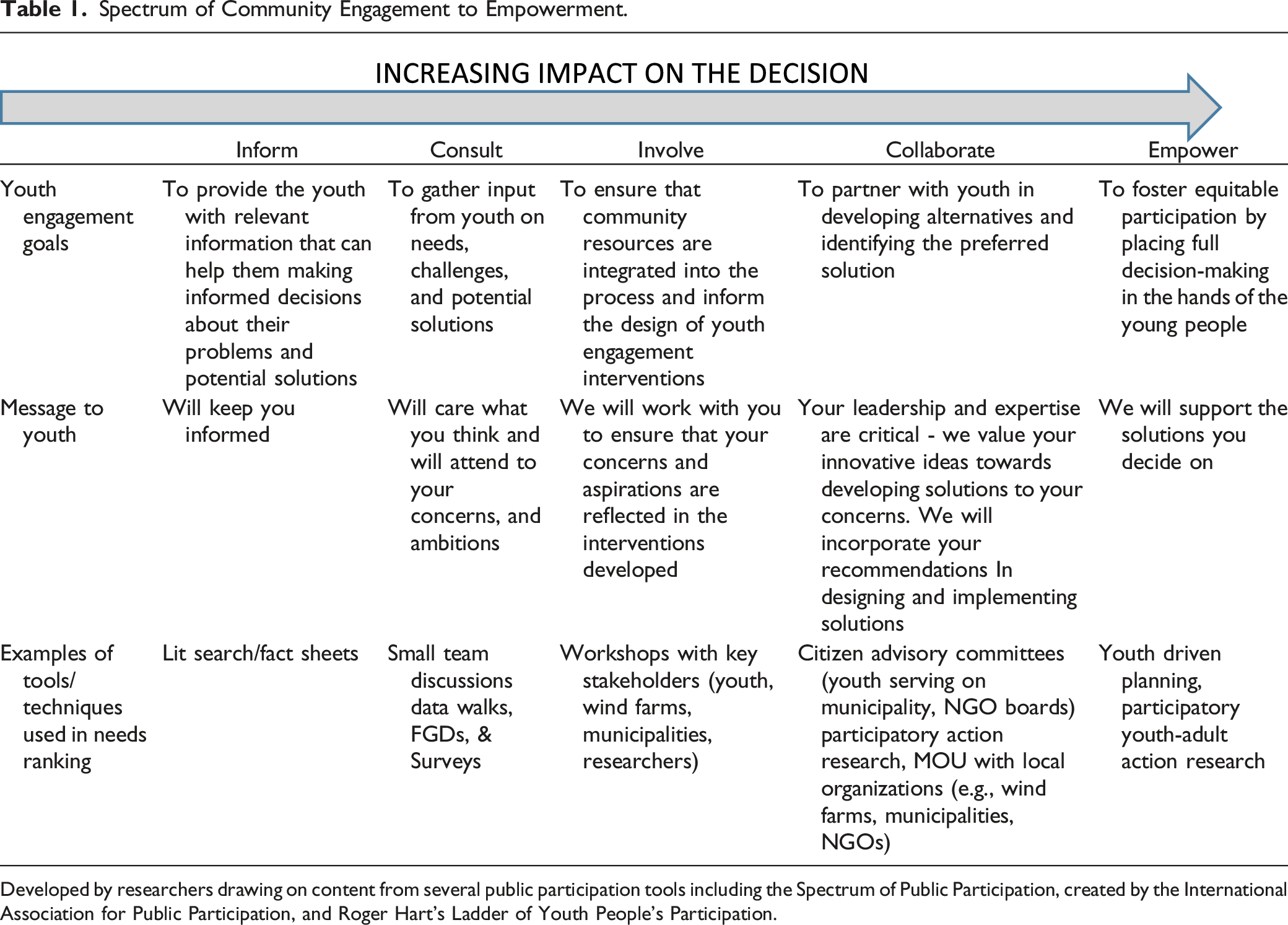

Developed by researchers drawing on content from several public participation tools including the Spectrum of Public Participation, created by the International Association for Public Participation, and Roger Hart’s Ladder of Youth People’s Participation.
Inform
Although social media is a powerful tool for community organizations to inform their stakeholders on events and new developments, it is not necessarily an effective way to gather feedback on complex community issues like youth disengagement. During the Needs Ranking activity, researchers, and practitioners alike, conduct literature searches, using their expertise to gather information from authentic sources to provide participants (youth and other key stakeholders) with research-based information that facilitates informed decision-making around problems and potential solutions.
Consult
The consultation level involves giving youth a platform to interactively discuss community issues while experts listen. For the Needs Ranking activity, youth discuss and ranked their needs all the while providing justification or feedback to their chosen order of needs. Further, youth provided potential solutions to their perceived pressing needs – assuming that they had authority to redistribute resources in their communities. Researchers acknowledged youth as experts.
Involve/Engage
Youth participation is vital for effective programs. Creating a space where youth feel welcome, respected, and valued is foundational to their engagement. Using engagement approaches that resonate with their experiences is also critical. What the Needs Ranking activity did, was to solicit youth participation through presenting issues that resonated with the needs they were experiencing first-hand and/or seeing amongst their peers. Youth were then given a safe space for deliberation, knowing that youth are often open and willing to take risks, and have great potential to come up with “outside the box”, innovative ideas. The Needs Ranking participatory approach inspired, informed, and engaged underserved youth to collectively discuss their livelihood – factors affecting their health and well-being – and actions that they perceived as necessary to address the issues. Not only did the Needs Ranking activity deepen youth’s understanding of their own socioeconomic and health issues, but it also elevated their willingness to speak up, creativity, and appreciation of how their voices and contributions could inform the allocation of resources and development of programs. The shift in roles from research subjects to co-creators of ideas meaningful to them provided a sense of accomplishment many wanted to see sustained. It was evident during both the Needs Ranking activity and the subsequent FGDs, that youth were good at reaching and engaging each other. In addition to engaging youth, the approach acknowledges the importance of working with diverse stakeholders in the realm of youth engagement. In our case, local organizations were involved during literature searches and provided support with outreach around the event (recruitment), serving as a trusted voice for youth (Majee et al., 2022). Two representatives of local organizations (Wind Farm and the Municipality) attended some sessions to observe the Needs Ranking activity. The research team presented study findings at an annual meeting of Wind Farms and was invited to host a 2-day workshop with youth, community leaders, and representatives from Wind Farms with the goal of co-creating a 5-year plan for youth engagement in the affected communities.
Collaborate
Engagement promotes mutual decision making. The Needs Ranking activity allowed youth to work collaboratively to rank their needs and realize how their experiences match or were different from findings reported in the literature. The activity also enabled local organizations serving youth to collaborate with researchers in empowering youth. Local organizations’ practice of working with, and listening to, youth to build long term relationships and develop meaningful solutions to complex issues affecting vulnerable youth were enhanced. No external expert or entity should assume the power to act in its own self-interest. Rather, activities that nurture relationships between youth and adults (researchers, community development practitioners etc.) that are characterized by mutual cooperation and responsibility towards achieving a specified goal are needed – the Needs Ranking activity promotes that.
Empower
The Needs Ranking approach provides information to participants to better understand their concerns, listens to participants as experts rich in lived experiences, and empowers participants to play a vital role in contributing to the development of interventions that meet their needs. Youth are not only tomorrow’s leaders, they are also the drivers of change today. How we engage them and meet their needs and ambitions impacts our common future. Our success will depend largely on how well families, communities, governments, and the youth themselves engage one another. While literature on youth engagement (Bulc et al., 2019; Mawn et al., 2015; Nguyen et al., 2019; Willis et al., 2017) focuses mostly on engaging youth in research, the Needs Ranking approach extends to include youth as experts in identifying community needs, and ranking them, thereby empowering youth to potentially serve as co-producers (alongside adults) of programs. This method debunks the assumption that young people are unable to provide meaningful contributions and reflects the need to facilitate non-tokenistic involvement of youth in community issues. A Needs Ranking approach stresses the importance of not ignoring youth in the design and implementation of community programs. It seeks to empower the youth to participate in shaping the future of their communities. The approach also realizes that promising youth a chance to make a change or have a say in decision-making and then not deliver can foment dissolution and erode trust. Thus, the approach promote partnership with local organizations that can provide continued support for sustainable youth engagement.
Beyond collective discussions, additional strengths of the Needs Ranking approach include the generation of trustworthy data, adaptability, and inclusivity. This is because of “member checking” or corroboration of participants’ thoughts during round table discussions (Majee et al., 2022). The exchange of perspectives on common challenges enriches both the process of collecting the data and the data that was collected. In all the steps of the Needs Ranking process, women, and men, the educated and less educated – freely mingled and shared their perspective (Majee et al., 2022). Participants felt part of the process irrespective of their human ecology (how they were perceived demographically). Closely related to the characteristic of inclusiveness was that the approach was a more equitable engagement process by checking researchers/experts’ literature-based needs and providing feedback by way of communicating needs, challenges, and potential solutions as experienced by youth. The provision of a platform for youth to contribute, while being listened to, created a sense of fair/impartial conversations with people generally viewed as experts. By deepening these relationships, ideally, the value of inclusivity is central, where adults (researchers, community organizations, government entities) create dialogue with the underserved of their communities. Finally, although this approach was used with a target population of youth in rural areas, it is amenable to use with diverse populations and in different community/geographic settings.
Conclusion
What this paper has done is to introduce a new approach, the Needs Ranking approach, that aims at improving the way we perceive and engage youth, especially those in NEET status. The approach suggests steps that can help achieve meaning engagement of youth through Needs Ranking to inform, consult, involve, collaborate with, and empower youth. Interventions to involve youth in a meaningful way should co-designed with youth through engaging them in identifying the challenges they experience and the potential solutions to those issues. The Needs Ranking approach acknowledges the leadership and expertise of youth as critical in the development of sustainable community programs. Although engaging with youth looks different in every situation, the elements of the Needs Ranking approach can be implemented to advance youth engagement and empowerment in any community. Furthermore, the Needs Ranking approach enables researchers to obtain insight into the nuances and complexities of the challenges experienced by youth, which may differ from community to community.
Having youth participate in all phases of intervention development can help them become more visible as contributing members of society. Historically, program development has treated vulnerable youth as objects of, and not as partners in, development. Yet, to solve community issues, it is essential that those impacted are included in the solution as well. Engaging youth through Needs Ranking activities, round table, and focus group discussions, gives vulnerable young adults a voice that can inform systems to improve services for youth.
Moving forward, we need to continue reimagining more collaborative and youth empowering approaches that dismantle power imbalances in youth-adult partnerships and cultivate meaningful relationships, so all youth can thrive. We call for inclusive strategies that can expand on the Needs Ranking approach to include youth, families, and community leaders, and facilitate sustained dialogues among all key stakeholders. The change youth need cannot come from adults alone. It is vital that both youth and adults (families and community) support young people in creating the opportunities they want. In developing community programs, we should be challenged to ask: “Are our youth here and how have we engaged them?” Only then will we recognize gaps in youth engagement, and hopefully make intentional efforts to close those gaps.
Footnotes
Acknowledgments
We greatly appreciate the support of the Kouga Municipality in helping with community entry, recruitment of youth, securing venues for meetings, and serving as an observer during data collection. The support from all the youth we worked with on this project is priceless-thank you. None of our reflection on the discussed approach would have been meaningful without the lived experiences of the youth.
Authors’ Contributions
Both authors contributed to the conception, design of the study, and data collection and analysis. One drafted the manuscript and the other provided critical review of the draft. Both authors read and approved the final manuscript.
Declaration of Conflicting Interests
The author(s) declared no potential conflicts of interest with respect to the research, authorship, and/or publication of this article.
Funding
The author(s) disclosed receipt of the following financial support for the research, authorship, and/or publication of this article: The project on which the paper is based was funded by the University of Missouri South Africa Educational Program.
