




Abstract
Participatory research methods are particularly appropriate when working with marginalised groups in vulnerable conditions, including migrant youth who are widely seen as confronting a range of vulnerabilities. This article draws on research undertaken with migrant youth as peer-researchers, between 2020 and 2023 in England and Sweden, to explore how young people can learn from earlier generations in navigating vulnerabilities and to build knowledge across migration and ‘integration’ experiences over time. The reflections presented in this article are based on eight intergenerational focus groups, four in each country, involving five peer researchers, three in England and two in Sweden. By reflecting on our mutual experiences of conducting intergenerational focus groups facilitated by young peer researchers we contribute to debates around peer research and community-based participatory research methods more broadly. We suggest that our approach has potential for creating space for reflection over power and agency within the research process. By connecting the past, present and future in an intergenerational setting, possibilities to build knowledge in support of inclusive social change are enabled. The article contributes with reflections within a specific research context of vulnerabilities related to experiences of migration, but we believe that these reflections have potential to support the design of future research that aims to employ intergenerational focus groups for their specific research topic.
Introduction: Context and Problems Addressed
Participatory approaches to qualitative research enquiry are valued for being less extractive than conventional methodologies, and for holding potential for the empowerment of those involved in the research (Banks et al., 2013). For this reason, participatory research methods are particularly appropriate when working with marginalised groups in vulnerable conditions, for whom conventional approaches risk re-producing vulnerabilities and exacerbating marginalisation and disempowerment (Cahill, 2007). Such groups include migrant youth who are widely seen as confronting a range of vulnerabilities (Aldridge, 2015; Ní Laoire, 2016), which we understand in this article as reflecting the experiences produced through migrants’ interaction with unequal and exclusionary systems of power. In line with socio-ecological systems thinking, these vulnerabilities manifest at individual, family and community levels, but are produced and re-produced in relation to macro-level structural processes (Brown, 2015). Importantly, we view ‘vulnerability’ as not merely a descriptive concept. Rather, vulnerabilities are created through political processes where certain groups are ‘vulnerabilised’ (Lind, 2019) as part of the governing of said groups. The vulnerable conditions that our participants experienced (most often created by states through hostile migration and integration policies) included scenarios such as seeking asylum alone, having precarious, temporary legal statuses and (as a consequence of one’s status) having difficulties attaining appropriate education and language skills. This article draws on research undertaken with migrant youth as part of the MIMY project which ran between 2020 and 2023 1 . The MIMY project’s main objective was to investigate social, economic and cultural ‘integration’ processes of non-EU young migrants (aged 18 to 29) in Europe who were confronting vulnerable conditions, and the role of institutions in enabling or constraining their ‘integration’ 2 .
Beyond the focus on unaccompanied asylum-seeking children, migrant ‘integration’ is often treated as an ageless process. There is little research exploring how migrant youth experience ‘integration’, particularly within a European context (Grabowska et al., 2025). Young people often experience international migration alongside key life transitions. Traditional literature on youth transitions—typically shaped by normative, Eurocentric perspectives—focuses on milestones such as leaving the family home, entering the workforce, forming long-term relationships, and starting families (Arnett, 2000; Cote, 2014). More recent research has complicated this view, showing how broader societal shifts have made these transitions longer, more uncertain, and especially challenging for marginalised, working-class youth (Arnett, 2000; Furlong & Cartmel, 2006; McDonald & Marston, 2005). Yet, how migration impacts youth transitions remains underexplored in European contexts (Grabowska et al., 2025).
The MIMY project aimed to examine what helps and what hinders young migrants to build their lives in new places, and to support their empowerment. The research explored how migration and ‘integration’ processes, and their outcomes, interact with local conditions in nine countries, including England and Sweden, the research locations focused on in this article. The project employed a range of participatory methods, including youth-led peer research. The peer research element was operationalised in different ways across the research project’s activities, depending on the specific research question being addressed. In addressing a research question on what can be learned from the ‘integration’ experiences of earlier generations of migrants in order to better support recently arrived migrant youth, the project took an innovative approach to youth-led peer research, using intergenerational focus groups to explore the life experiences of different generations of migrants.
Peer research with young people has been discussed in this journal as suitable for research with populations confronting vulnerable conditions (Shankley et al., 2023), as a non-extractive approach to research (Ritterbusch et al., 2020), and as able to enhance the voices of youth as knowledge brokers in the analysis process (Liebenberg et al., 2020) – to the extent that working with youth in youth focussed enquiries is becoming a non-negotiable aspect of research design (Chaffee et al., 2024). In relation to peer research where peers interview peers directly, Dixon and colleagues (2019) found that a majority of the young participants in their research project stated that they preferred being interviewed by a peer researcher instead of a professional researcher. By embedding the group studied at the center of the project, this process is less likely to be experienced as “top down” and extractive (Kindon et al., 2007). In addition to contributing to the general debate on the advantages and challenges involved in youth peer research, in this article we also contribute to debates ongoing in this journal on focus group methodology in diverse contexts (CohenMiller et al., 2022). The earlier research that most closely resembles our approach has been described as community-based participatory research conducted through intergenerational exchange (as discussed in this journal, see Swanson & Leader, 2023; Wexler, 2011). However, here we contribute with reflections on a specific and novel design for youth-led peer-research in intergenerational settings where young migrants are facilitating focus group discussions with groups of older people of diverse migration backgrounds. We contend that developing youth-led peer research as an intergenerational approach represents a novel contribution to the peer research method, and to the field of participatory research methods more broadly.
The article is composed of a further four sections. The next section (Section Two) outlines the rationale underpinning, and the approach taken to, the development of youth-led peer-research for intergenerational learning, situating this within the specific research focus of the MIMY project, and wider methodological debates around the peer research method. Section Three describes the process of designing and conducting the intergenerational focus groups in England and Sweden, including an overview of the particular elicitation tool - the river of life storytelling method - used to guide focus group discussions. Section Four meanwhile presents the reflections of the process and research methodology. The final section concludes by discussing the significance of the approach, and reflecting on the broader implications, potential applications and next steps.
Youth-Led Peer-Research for Intergenerational Learning: Rationale and Approach
We developed our youth-led peer research as an intergenerational approach in seeking to learn lessons about experiences of life-building with previous generations of migrants who had moved to the project’s local areas of interest from outside of Europe. In a research project focused on developing understandings of the vulnerabilities confronting young, recently arrived migrants, it was valuable to take this longer view for a number of reasons. Firstly, it provided the opportunity to learn about the relationship between the past and the present; that is, how early experiences of arrival and settlement play out over time to impact migrants’ lives, and vulnerabilities, in the long run. Our rationale was that building evidence of the long term effects of the opportunity structures, or lack thereof, available in early arrival would better enable us to advocate for change in approaches to supporting young people’s ‘integration’. The ‘long view’ also had the potential to deepen our understanding of the local areas our research was taking place in and help us ‘make sense’ of what we see today in terms of social, political and economic life-building. Here we follow Jones (2022) who highlights the ‘sticky inertia’ of place and the importance of historical context. This historical perspective reinforces a processual understanding of ‘integration’ that focuses on the dynamics of context, place and relationships. Finally, repeated encounters with young migrants throughout our research careers had revealed how, for some, migration had resulted in separation from older family and kin members, leading to depleted access to the advice and wisdom of elders. Likewise, in other of our research encounters, some older migrants had expressed a desire to share their experiences with younger generations, so as to help them better navigate the vulnerabilities commonly experienced by migrants. We saw potential, therefore, in providing opportunities for reflexive knowledge sharing to help foster individual and community wellbeing, and to inform action for positive social change to address vulnerabilities.
Our methodological contribution lies in our adoption of a relational learning process between longer-standing migrants as research participants, and young people with migration experiences acting as peer researchers alongside university-based researchers. Peer research is a participatory approach to knowledge production, grounded in a commitment to ensuring those affected by social issues co-produce the research about their lives. It is an ethical and political position that understands research itself as a social process, and it is an approach dedicated to establishing egalitarian relationships and addressing power inequalities (Banks et al., 2013; Mata-Codesal et al., 2020). Attempts to co-produce research involves overcoming several barriers, including sufficient training of those involved and the ability of university-based researchers to cede control of parts of the process (Bovaird & Loeffler, 2012), as well as handling the potential personal or psychological challenges involved for peer-researchers (Mayer & Ma, 2017). Tokenistic involvement of children and young people is also a common problem in participatory research with youth (Teixeira et al., 2021) that we have actively worked to counter in the MIMY project; involving the peer researchers as authors of this article is one example of such attempts (see below for further details of this process).
As the focus of the MIMY project overall was to develop understanding of how young people with migration experiences can be supported in building their lives in new places, they were the primary group engaged as peer researchers. Together, peer researchers and university-based researchers approached the idea of ‘peer’ as recognising the complex, multiple and intersecting identities and experiences of young migrants in all their diversity. While in England and Sweden, the peer researchers’ lived experiences were diverse, they shared a commitment to addressing the conditions of vulnerability being navigated by the young people at the center of the research. Their involvement in designing and delivering the research, and in providing reflective interpretation of the research data, ensured that young people and their lives remained centered.
The research approach aimed to go beyond extracting data, to driving change, and to contributing to the goals and aspirations of young peer researchers (Sukarieh & Tannock, 2019). It was therefore imperative that peer researchers were employed in paid roles and appropriately trained and supported in their work. Training and support for the intergenerational focus groups was delivered as part of a wider programme of capacity-release and mentoring. This was designed and delivered by the project’s university-based researchers, and was bespoke to each country. In both England and Sweden, training for the intergenerational focus groups specifically occurred during four half-day sessions, in which elements of the focus group design were, to different degrees across the two countries, co-produced with the peer researchers (see Section Three for further detail). Following each focus group, a de-brief between university-based and peer researchers provided the opportunity for identifying any support needs, which were then addressed through mentoring.
In total, nine young people with experience of migrating to England and Sweden from outside Europe were employed directly by the respective universities. In Sweden they were Ali, born in Lebanon and Nada, born in Somalia – both of whom are co-authors of this article. Nada and Ali collaborated with Jacob, a university-based researcher, in conducting two focus groups each with older people with the same ethnic or cultural background as them. In England, there were seven young peer researchers born in Somalia, Mexico, Egypt, Eritrea, Ethiopia and Southern Africa. Three of them were involved directly in the intergenerational focus group research discussed in this article: Asma born in Somalia, Cristina born in Mexico and Muetesim born in Eritrea collaborated with Thea and Majella, university-based researchers, across four focus groups, and two of those peer researchers (Asma and Cristina) are co-authors of this article 3 . In both countries, the university-based researchers took notes during discussions with the peer researchers about the planned article, and included the peer researchers’ reflections into initial drafts, which the peer researchers then read and commented on.
The Process of Designing and Conducting Intergenerational Focus Groups Involving Youth Peer Researchers
Identifying and Recruiting Research Participants
Focus Group Characteristics

Key terms in table in order of presentation: Country of origin; Migratory Route (Refugee, Labour, Family Reunification); Gender (F/M)]; Age; Years stay (length of time in country); Language of focus group; Mode (in-person/online).
In England, the peer researchers played a crucial role in recruiting and engaging participants within focus group discussions. Lived experiences of migration and ‘integration’ processes meant that peer researchers could highlight pertinent issues that might be affecting recruitment, such as lack of trust in institutions (e.g. universities), or a lack of belief among longer-standing migrants that their voices would be heard by decision-makers. Young peer researchers either undertaking recruitment themselves, as in England, or being visible within the research team, as was the case in both countries, had a positive impact on trust, and strengthened relationships with local organisations that could facilitate access to longer-standing migrants. In England and Sweden, focus group discussions took place between peer researchers and participants that had shared countries of origin and that did not. Social positioning and relational identity played out within the focus groups. This had different implications for the interpretive knowledge that emerged, as is discussed later in Section Four.
In total, four focus groups were conducted in each country between late 2021 and early 2022. Table 1 summarises the key characteristics of each focus group. Ethical approval for the research was sought separately from, and granted separately by, the Research Ethics Committee of the University of Sheffield and the Swedish Ethical Review Authority.
Taking a Group-Based Learning and Inquiry Approach
Communicating and understanding the complexities of intergenerational change is challenging (Denborough, 2010; Nunn, 2017). Our aim was to create an approach that would support learning within and between migrant generations, and situate that learning within social, political and cultural histories of people and places. We used a focus group discussion method, which was co-produced with the peer researchers, and was based on feedback gained from longer-standing migrants in England during the University of Sheffield research team’s (the team responsible for designing this research task for the MIMY project consortium) ongoing process of relationship building within its research sites. In particular, the co-design process highlighted the importance of finding approaches to data collection that do not replicate institutional interviews (e.g. the immigration or welfare interview) and that could promote wellbeing, going beyond the ‘do no harm’ bar in ethical principles. By designing the research encounter as a group-based process, the participants were able to share experiences of vulnerabilities with each other and create a shared learning environment with the young peer researchers. This kind of collective speaking enables people to talk about difficult things in a collaborative way. Such sharing of stories and skills between different people and perspectives has the potential to help those involved reconnect with their strengths, as opposed to producing and reproducing deficit narratives of vulnerability (Jacobs, 2018).
The organisation and design of each focus group was planned together with one or more of the peer researchers. In England, the peer researcher team spent time ahead of each focus group working through the potential intergenerational inequalities in power relations, including in relation to conflicting perspectives and values, such as on young people’s voice and leadership. In response to these discussions, the peer researchers highlighted the importance of their role being to facilitate and to listen to longer-standing migrants, as they would hope to be listened to in return.
Across both countries, when starting focus group discussions, peer researchers performed the role of variously lead and support facilitators. Either way, they were immediately approached by the participants in a shared language — such as Arabic or Somali — or engaged by older participants about their new lives in the local area. This relational dynamic represented the creation of a welcoming environment by the longer-standing migrant participants to the young peer researchers, who were largely entering into an encounter with a group of people who had pre-established relationships. This also had a powerful impact on the traditional power asymmetries within the research encounter, positioning the university-based researcher/s in a supporting, rather than lead, role. What is also interesting about this dynamic is the redistributive effect on overall power relations within the group setting, building connectedness and solidarity rather than an ‘us’ and ‘them’ research encounter. Moreover, where the young peer researchers were involved in asking questions and providing encouragement to the group participants to share their experiences, new listening relationships were being built. The collective experience of intergenerational learning in a group setting has the potential for empathy and understanding to be fostered, supporting the knowledge of all generations to be valued in looking for a whole-community response to addressing migrants’ vulnerabilities. This is a more inclusive approach to research that is aware of its impact within a local social context and recognises the role of intergenerational contact in tackling ageism (WHO, 2021).
Using a Creative Life Story Method to Facilitate Group Dialogue and Peer Researchers’ Reflections
Given the reality in European contexts that being of a migration background often places individuals in complex and overlapping conditions of vulnerability, it was important to work with a method that supported a position of power and agency for participants. We chose to work with a participatory creative method to facilitate opportunities for different modes of self-expression, and as outlined above, to help deinstitutionalise the research encounter and to promote wellbeing. Creative methods, such as drawing and visualisation, can support self-directedness that enables more ownership of the process of self-expression (Denov et al., 2012), including in terms of ensuring cultural relevance (Linds et al., 2023). The use of symbols and metaphor provide participants with the time to process the questions being asked, and to think through the level of information they are comfortable to share, strengthening the caring ethics of the research encounter (Clacherty & Shahrokh, 2023).
Strengths-based approaches that integrate creativity with self-reflection and arts-based collective narrative practice such as ‘tree of life’ drawings (Ncube, 2006), have been used successfully with people with migration backgrounds to share personal and collective histories in an empowering way (Jacobs, 2018). Building on this work, we chose to use the river of life storytelling method to elicit focus group participants’ experiences. The method invites participants to consider how they might represent their experiences using the metaphor of a river. Mental health and community support workers from a Somali grassroots organisation in England shared with the University of Sheffield research team during a meeting about the project how the river of life approach connected with the oral storytelling methods that they used to break down barriers experienced during their community-engagement work. As with other visual and creative participatory approaches, the river metaphor aimed to support a reflective and open conversation; in contrast to interview questions, it was designed to enable participants and peer researchers to have more ownership in shaping the group dialogue. The reflection is not only about what happened, but why, and how the person felt through their experience. As a result, it aims to be a supportive process, with others witnessing and validating experiences that may have been difficult to revisit (Denov & Shevell, 2021).
Researchers at the University of Sheffield developed the elicitation tool in the form of the metaphor of a river to encourage participants to share their experiences of the opportunity structures they encountered in their localities, and how these have impacted their lives over time. Further inspiration came from the use of this metaphor in participatory community-based research with marginalised groups such as young people (see Carmody, 2023 for a short overview of its history). The feedback received from young peer researchers and research partners during the co-design phase was that the river could be conducive to thinking about changes over time, while acknowledging that people’s lives do not move in a straight line: sometimes there are changes of direction; lives can be going in circles, they can encounter setbacks, or they can stand still. Relatedly, the beginning or end of the river was not defined. Thus, drawing on insights from migration scholarship on time and the life course (e.g. Carling, 2017; Collins & Shubin, 2015), the river metaphor was used to explore the complex, often open, non-linear, flow of the life course in the context of international migration. Symbols were suggested during co-design that might facilitate personal understandings, interpretations and connections. These included: • Positive sources of support or change: bridges, streams, fish, trees • Difficulties or barriers: boulders, rapids, a dried up river, deep or dark water • Change or feeling blocked: bends, waterfalls or lakes/pools
There is no set format for the river of life method, rather key features are layered onto the metaphor and visual image depending on the purpose of the research (Carmody, 2023). For the purpose of this research, the first part of the elicitation guide was designed to connect to participants’ personal experiences and to understand what was important in the first years after their arrival. This was to dispel assumptions that participants had an ambition of settlement or ‘integration’, and to acknowledge that imagined futures may have been around return or moving-on. This introductory section provided an opportunity to learn about the potentially diverse aspirations, plans and intentions in relation to different participants’ migration processes. The second part of the session focused on what has helped and what has hindered in building lives in the local area. The language of ‘building lives’ was adopted since it was felt to be less abstract and less value-laden and politicised than the language of ‘integration’. The focus was on societal, institutional, family and individual factors (opportunity structures). The third part focused on identifying, based on the experiences shared in the previous sections, what lessons could be learnt to improve things today, and for the future, with a particular focus on young, recently arrived migrants.
Depending on contextual factors such as the length of the session, number of participants, prior group relationships and confidence of the research facilitators, the river activity was conducted in one of two ways. The first way was initially an individual, self-directed activity, which was then shared and discussed in the group setting. The second way involved the collective creation of the diagram facilitated by the researcher through the prompt questions outlined in the focus group discussion tool. To understand the contextualisation of this approach in Sweden and England, see the example river metaphors below. The example from England represents the individual-initiated approach, while that from Sweden represents the researcher-facilitated collective approach (Figures 1 and 2). Example of Participant Created River of Life Method From Research in England Example of Researcher Facilitated River of Life Method From Research in Sweden. The Words on the Whiteboard in Swedish Concern a Wide Range of Issues Such as “School”,” Language”, “Family Support”, “Rights”, “Patience”, “Neighbours” and “Not to Lose Hope”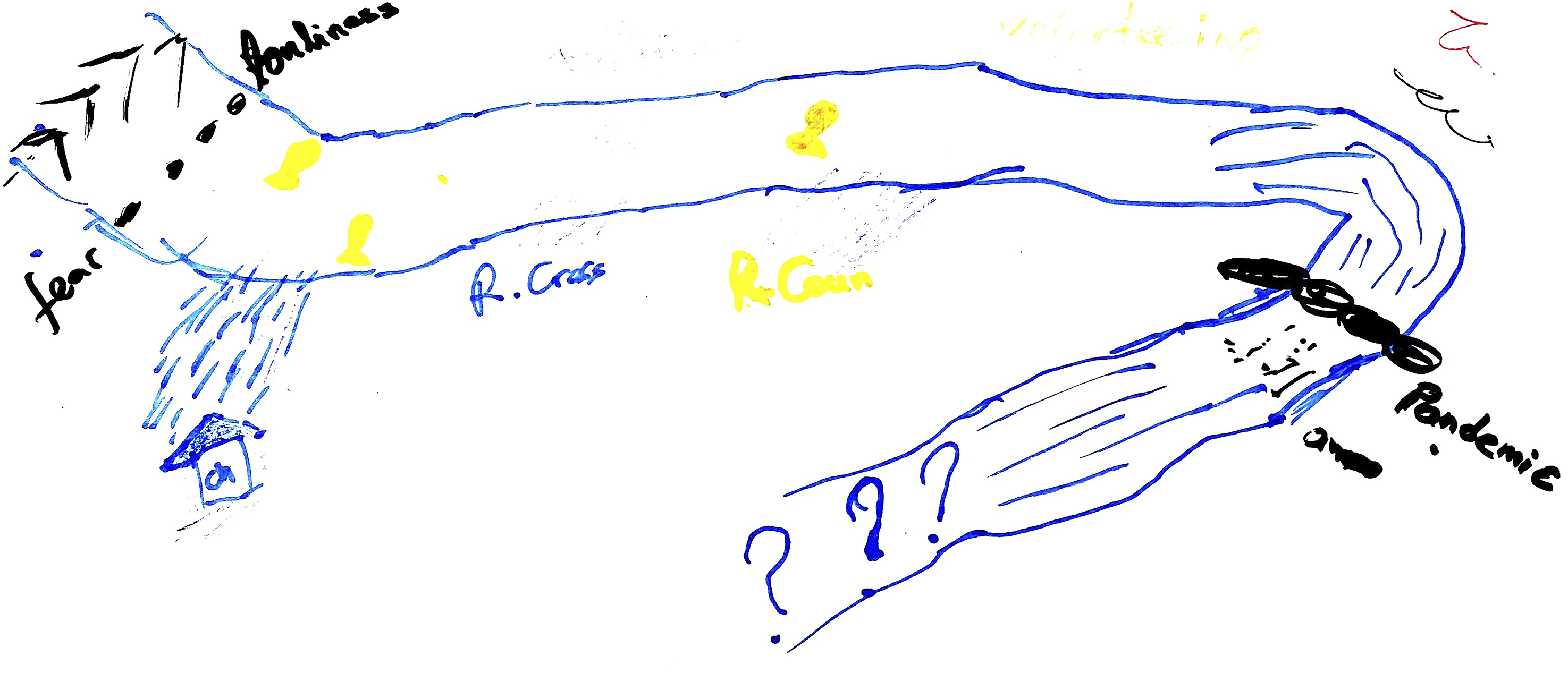

Reflections and Knowledge Gained Through Researching Vulnerabilities Intergenerationally, Creatively and Dialogically
Peer research must ensure that it does not celebrate the performance of participation, “rather than the actual ideas, knowledge or critique the youth put forward” (Hagen, 2021, p. 282). In order to ensure our research process was accountable to this participatory ethic, and to capture intergenerational learning, as well as to identify any support needs arising, each intergenerational focus group was followed by a reflective discussion between university-based and peer researchers of their experience of the focus group’s dialogue. This was done on a continuous basis, asking the peer researchers to reflect on the different aspects of the project, building their ideas into future directions and decision-making. This helped the peer researchers feel that they were listened to, and that their opinions and reflections were making a difference to the project. As trust and reciprocity grew within the research teams, the peer researchers increasingly shared their ideas and thoughts based on their own, and their friends’ and families’, life experiences. This led to more nuanced and grounded interpretations of the intergenerational focus group discussions, which challenged university-based researchers’ conceptualisations and presuppositions. The following sections share reflections from our intergenerational learning process, on what we can know and how we can know it. We highlight the possibilities of ‘knowing’ connected to the relations and life experiences of different actors in the research encounter. The areas of discussion cover: recognising non-typical discourse; identifying silences and nuancing statements; and facilitating intergenerational insight.
Seeing the Role of Discourse in Shaping and Sharing Understandings of Vulnerabilities
In England and Sweden, some of the young peer researchers were involved in focus group discussions with longer-standing migrant communities with whom they had shared ethnicities or countries of origin. This provided a specific set of reflections around social position and the construction of discourse. Peer researchers drew on their own lived experience and understanding of experiences and attitudes within their wider social worlds to problematise dominant perspectives being communicated within focus groups.
Peer researchers in Sweden found that in two of their focus groups, participants from longer-standing migrant communities talked extensively about the responsibility of the individual to fight for themselves, to learn the language or to find employment. Ali in Sweden suggested that this is in line with a general discourse among people from the country that the participants were born in; “you cannot trust society to fix things for you, so you have to fight for yourself if you are going to succeed”, he suggested was a dominant belief. At the same time, the peer researcher questioned this discourse and reflected on whether the responses may have been different if the group had consisted more of people with a working-class background like single parents that he knew who struggled in Sweden. Ali felt that the single parents he had met had lost hope in many ways, as they felt that their children were caught up in ‘bad company’ while growing up. His experience was that these parents often felt that they were not able to contend with the impact of deep-rooted social and economic issues such as poverty, inequality, racism and youth unemployment, and that stronger social and economic infrastructures were needed to help their children build their lives. Nada, the other peer researcher in Sweden, also noticed that the participants in one of the focus groups emphasised the individual’s responsibility rather than what they expected from state institutions. She was surprised at hearing this, saying that she was more used to meeting people (with the same country of origin) who placed the responsibility on the government and institutions for securing employment and learning the language.
These reflections (together with additional findings presented below) highlight the usefulness of discussing life-building across generations as it can help identify how younger and older people differ in their understanding. Future research applying this approach could consider the possibility of drawing on the reflections made by the young peer researchers after an initial focus-group session for follow-up sessions with the same or a different group of longer-standing migrants. It can be difficult or intimidating for young people to express what can be perceived as criticism of older persons’ views in an ongoing focus group session. However, allowing the peer and university-based researchers time to reflect on an initial focus group’s insights could then enable further knowledge building and bridging of intergenerational understanding through formulating new questions to ask in a follow-up session.
Identifying and Contextualising Silences and Nuancing Statements
Peer researchers were committed to listening and learning from the longer-standing migrant communities. In listening actively in this way, peer researchers were surprised by some of the silences in the discussion, especially those relating to social, political and economic issues that they understood to be important. Again, these reflections were expressed by the peer researchers after the focus group had taken place in a debriefing session with the university-based researchers – further pointing towards the potential in conducting follow-up focus groups where these reflections could be addressed to re-balance power dynamics across generations. The identification of these silences highlights the importance of reflexive practice within the research encounter for deepening knowledge.
On the topic of employment, Nada in Sweden had expected participants to be critical of the efforts by authorities aimed at helping migrants to get jobs. Her experience was that people with the same migratory background as her generally feel that there is a strong sentiment that the current system locks migrant communities into being dependent on low-level benefits and low-paid work even though they want to progress and have financial independence. She also reflected that the participants did not raise the issue of waiting in connection to gaining legal status as people in her close social network have experienced very long waiting processes and have been deeply affected by this, including being pushed into precarious situations relating to legal status and paid work. In general, she was surprised that participants seemed to want to focus on what works in terms of how people are building their lives and not on the problems. Nada’s position was that prejudices against migrant communities are dominant in Sweden, and that coping with the stereotypes and discrimination is extremely exhausting and undermining of wellbeing, and this was not discussed in the focus group.
In England, Asma also felt that there could have been more attention within the intergenerational focus group on the challenges faced and the difficulties, including between generations, rather than on an idealised perspective on getting through something and being on the other side. Asma felt that there are important issues within some migrant communities around intergenerational differences, including with regard to the expectations put on young people by families. She also felt that there is an important discussion to be had about what she sees as a generation of youth who are demotivated and have faced racism and exclusion at school. The questions being raised by Asma highlight the importance of all parties in the dialogue having the opportunity to represent their own ideas and concerns within the intergenerational research encounter. This could help better connect this reflective learning to young people’s own active work towards building their futures.
Further reflection on the above points within the intergenerational focus groups, potentially in a follow-up session, could have provided an important layer of knowledge and understanding of the issues under exploration, signalling the additional value of intergenerational learning. In England, Muetesim also highlighted that in the focus group he undertook with older post-war migrants there was limited explicit acknowledgement of the realities young new arrivals were facing today. Muetesim highlighted that it would be helpful to have more space in the conversation to bring these experiences together, and he felt that the merging of knowledge(s) held, could have led to more constructive discussions around solutions. A key learning point from Muetesim’s observation for future research using youth-led peer-research for intergenerational learning is to build space for reflexivity into the focus group sessions themselves; not just with a debrief session between peer researchers and university-based researchers – especially if a follow-up focus group is not attainable.
A linked issue to those outlined above about partial knowledge is the issue of partial interpretations. In one of the Swedish focus groups, the importance of migrants learning Swedish was highlighted. The Swedish university-based researcher, Jacob, was surprised how critical the participants were of Swedish authorities who offered interpreters and information translated into their own language. For him, such critiques were controversial, being posited largely by far-right or conservative politicians. Nada, the peer researcher, however, suggested that the participants’ critique may reflect people’s wider frustration with having limited opportunities to learn Swedish ‘with Swedes’. Indeed, segregation from ‘society’ – which was understood as being anywhere where people speak Swedish and where you are forced to speak Swedish – emerged as a dominant theme in the focus groups. Another frustration that Nada was aware of was how interpreters signal the ‘migrantisation’ (Dahinden, 2016) of people with minority ethnicities in Sweden. She highlighted the experience of her sister who was once provoked when an interpreter was ordered for her without them asking her; she felt that she could have tried speaking Swedish. Nada had also been provoked when people started speaking English with her, assuming she did not understand Swedish. However, she was critical of the view that interpreters at institutions are problematic. She had never seen this as hindering her ‘integration’, but rather as a motivation, so as to have a chance to understand these institutions. Nada’s nuanced exploration of the discussion point from her own lived experience in the debriefing session highlighted the complexity of the issue, in a way that did not happen in the focus group – again emphasising the importance of building space for reflexivity into the focus group sessions or conducting follow-up focus groups.
Facilitating Intergenerational Insight on Lived Experiences of Vulnerabilities
In both contexts the focus groups showed the everyday intergenerational mixing that takes place within community-based spaces, and the aspirations for further understanding and relational learning between generations. The intergenerational focus groups provided a platform for dialogue within and between generations. As highlighted above, young peer researchers were very aware of different, and sometimes conflicting, perspectives held between generations. This played out in the peer researchers’ interactions. For example, in Sweden, Nada was provoked that some participants suggested young people do not have any ‘excuses’ not to fight for themselves. She felt that the mental health difficulties that young people face were not recognised in such a perspective. In England, peer researchers also highlighted the assumptions they felt older generations made about them, including in relation to their degree of adherence to ‘traditional’ norms and values.
In England, one of the focus groups took place within a community centre established by members of a longer-standing migrant community in Sheffield. It was established in the context of institutionalised neglect of this community’s particular needs. The focus group itself brought together older generations, younger generations and peer researchers into dialogue, and showed the potential for bringing together the positions of different generations in understanding support structures (or lack thereof) within educational settings. Young Female: So it’s a two-way street, there’s an immense pressure on the parents but there’s also an immense pressure on the children to kind of be this cultural link, a bridge. And I saw it all the time in parents’ evenings where the mum and dad for example couldn’t speak English or couldn’t speak English very well and it was up to the child to translate. Asma: Can I ask a question about that because I guess most of you are parents in this room? Did you feel like the school was supportive of your children when they were going through education, do you feel like they relayed that information to you well? Older Female: I’m the chair governor for two schools, one primary, one secondary … From the get-go the school does not offer mentoring, and that’s the problem. … [mothers] they come out of the community and then she’s helpless, and then she doesn’t know any mentoring groups to put her child in there, so already there’s so much barriers and the child already failed to be seen as he can succeed ... Some of them absolutely put you in that box and they will put you in that box whether you’re a refugee, whether you are Black, whether you are BAME [Black, Asian and Minority Ethnic] or whether you are different ... They won’t give you a chance until you have somebody that says a word on you.
Also in England, the issue of the pressures on parents to manage their own difficulties, and to simultaneously support their children and partners’ lives, was raised by Cristina as a key take away from her focus group, and a point for new understanding and empathy. The potential of this intergenerational learning was also highlighted by young people newly arrived to England, who did not have prior experience and understanding of the histories of migration and ‘integration’ in their new context. Muetesim highlighted that he had never before met with anyone older who had moved to England, and was surprised at the challenges they had faced and the persistence of the issues over time. This also led young peer researchers to ask how the older generations managed to remain open minded and reflect positively on the difficulties that they have been through, with humour, and to “keep going”. Cristina highlighted that she would love to know more about how they have achieved this, because this seems out of reach for many young people today. This led to a discussion during the post focus group reflexive session around intergenerational support structures, and the potential for an initiative for new arrivals, especially those arriving without older family members, such as unaccompanied asylum seeking young people, to be mentored by people within longer-standing migrant communities, which could also lead to more sustained connections and support over time. This example highlights the potential inherent in such intergenerational knowledge exchange to identify innovative solutions to better support newly arrived migrant youth.
One specific theme of intergenerational solidarity building was highlighted by Asma in England who reflected that it would be positive to explore a potential connection between activism within the black liberation movements in the 20th century in the UK, and present-day mobilising within the Black Lives Matter movement. The rich lessons learned from past organising could inform contemporary youth action and feelings of connectedness to a wider community. The focus group discussion had highlighted the impact of continued state violence on the depletion of emotional and relational resources among longer-standing migrants. Asma was highlighting the potential for this to be replenished through intergenerational conversations, and that this could also help address disaffection in young people who otherwise might feel that they are doing it alone, or even that they are perhaps the first to take anti-racist action. In this sense, intergenerational dialogue has the potential to go beyond identifying sources of support for newly arrived migrant youth, to fostering co-learning and solidarities with possibilities to foster strategies and movements to challenge and transform the conditions producing and reproducing the vulnerabilities experienced by migrants across different generations.
Conclusion
In this article, we have argued that intergenerational knowledge can fruitfully be co-produced between young migrant peer researchers, focus group participants of diverse migration backgrounds who have lived in receiving countries for a number of years, and university-based researchers. The article in itself is co-written by the first and last group, who together have reflected on the possibilities provided by intergenerational focus groups facilitated by young peer researchers. The purpose of the article has been to contextualize and critically reflect on our research approach. We suggest that our approach has potential for creating space for reflection over power and agency within the research process. Moreover, by connecting the past, present and future, possibilities to build knowledge in support of inclusive social change are enabled.
The young peer researchers enabled access and trust during the focus group recruitment process and in the focus groups themselves. Young people’s visibility and centrality in the research encounter as ‘peer researchers’ helped make the purpose of the research clear to the longer-standing migrants engaged in this intergenerational activity. This transparency was important in terms of recognising the localised nature of this research and the building of relationships within communities through the research process. Having the opportunity to work with young people, as well as with university-based researchers, to share their stories, reflected new listening relationships and knowledge exchange that had the potential to strengthen intergenerational bonds and ties spanning both shared, and different, ethnic and cultural backgrounds. The young peer researchers also provided invaluable reflections and interpretation in debriefing sessions, and while writing this article, on what had been said during the focus groups. These reflections included different aspects of the focus group participants’ discourses and ways of talking about dealing with hardships that surprised the young peer researchers. The peer researchers were also able to identify silences and the importance of understanding the social positioning of the participants as not representative of larger groups of people with similar ethnic or cultural background. Furthermore, the focus groups led to the facilitation of intergenerational insight and imaginaries of solidarity building. Overall, we argue that the analytical knowledge produced in dialogue between research actors that are both generationally and culturally diverse generates complex and layered knowledge that makes visible the resonance and dissonance across different social positions. This knowledge provides a richer picture of the fabric that young people’s lives are woven into and the implications for their futures.
Our critical reflections, however, also highlight some of the challenges with the approach. A particular one was around providing space for reflexivity during the sessions themselves. Power imbalances between generations can make younger people feel uncomfortable with being seen to be criticizing older people, and potentially more so when those older people are from the same community. Such power imbalances and their potential impact on focus group dynamics should be addressed during training sessions with the peer researchers before commencing fieldwork. Our reflections suggest that it is also important to build space for reflexivity into the focus group sessions themselves. This could take the form of a coffee break during the focus group when the peer and university-based researchers could have a short reflexive discussion and formulate questions for the second part of the session that addresses issues the peer researchers identified during the first part but were not comfortable with commenting on immediately. Another, more resource intensive option, is to have follow-up focus groups with the same or different people. In that way, there would be time for the research team to reflect on the first session and construct questions that could address issues raised during the debriefing. A follow-up session prepared in this way could also potentially help build confidence in the peer researchers so that they could take a more active role in leading the second session with the support of the university-based researcher.
The reflections offered in this article are based on eight focus groups, four in each country, involving five peer researchers, three in England and two in Sweden. Consequently, we do not argue that our experiences are generalizable to a large extent. Rather, the article contributes with reflections within a specific research context of vulnerabilities related to experiences of migration. However, we believe that these reflections have potential to support the design of future research that aims to employ intergenerational focus groups for their specific research topic. Speaking primarily to the methodological debates around peer research and community-based participatory research, we hope that our reflections can strengthen the quality of research with and for people in vulnerable situations and inspire researchers to apply an intergenerational learning approach involving peer researchers across diverse vulnerabilities. Building designated space for reflection during the focus group themselves could potentially lead to stronger intergenerational dialogue and is a key learning point from our experience for future research employing this approach.
Footnotes
Acknowledgments
We would like to thank the participants of the focus groups for contributing to our research.

Ethical Considerations
The study was approved by the Swedish Ethical Review Authority (Dnr. 2020-04922, 2020-11-19) and The University of Sheffield Research Ethics Committee (Application No. 039367).
Consent to Participate
Informed consent was provided by all participants orally or in writing.
Author Contributions
Shahrokh drafted the first version of the article based on discussions among all of the authors and everyone was involved equally in finalizing the text.
Funding
The authors disclosed receipt of the following financial support for the research, authorship, and/or publication of this article: Open access funding provided by Malmö University. The research leading to the results in this article received funding from Horizon 2020 MIMY Project (Empowerment through Liquid Integration of Migrant Youth in Vulnerable Conditions) under Grant Agreement No. 870700.
Declaration of Conflicting Interests
The authors declared no potential conflicts of interest with respect to the research, authorship, and/or publication of this article.
Data Availability Statement
Under the grant agreement with the research funder, we are not required to make the data used in this article publicly available due to risk of harm for the research participants.