




Abstract
Loneliness among the elderly has become a pressing issue in Western societies. In the Spanish context, the problem of the so-called “empty” Spain disproportionately affects this population group—elderly individuals living in rural areas with low population density, and therefore at higher risk of social exclusion and isolation. We introduce here a mixed-method, quantitative-qualitative research protocol, triangulated with technological tools, designed to improve both data acquisition and subsequent data analysis and interpretation. This study will take place in a rural locality in the Extremadura region (Spain), chosen according to a particular socio-demographic profile. The De Jong Gierveld Loneliness Scale will be used on a cohort of 80 people over 65 years old. Within this cohort, a smaller sample of 20–30 individuals will be selected for semi-structured interviews about their beliefs and experiences of loneliness. Finally, data gathered from technological tools (smartbands, Bluetooth sensors) will allow us to monitor social interactions and to map daily loneliness/interaction patterns. Data will be triangulated by analyzing and comparing the empirical material gathered through these different methods and tools. Strict adherence to ethical standards for data protection and handling will be essential through data collection and analysis. As well as providing insights into the phenomenon of loneliness in old age, the use of different methods and tools for data collection will provide the basis for an epistemological reflection on the scope and limits of each one of these methods.
Contributions to Current Understanding
The analysis of loneliness and social isolation is an increasingly important subject for public health policies and healthcare management. In recent years, an increasing number of studies have addressed the nature and scope of this phenomenon among different social groups. Most of these studies are based on quantitative approaches, using standardized questionnaires and scales. These approaches can offer very precise descriptions of the numbers of people who live alone or experience feelings of loneliness. A number of studies are based on surveys of very large cohorts and population samples, whilst others have focused on the review and adaptation of the measurement instruments used (Sancho et al., 2020; Ventura-León et al., 2020). However, this kind of approach fails to grasp the nature of the experience of loneliness in its entirety—since this is grounded on social, political, emotional, and cultural underpinnings that can prove elusive and difficult to quantify (Agren, 2017; Elias, 2009; Nzabona et al., 2016). In order to create a more nuanced picture of the phenomenon of loneliness as a study subject or category, and to provide a more complex and accurate approach, traditional perspectives could be enriched through the extra layers of understanding provided by qualitative research (Morgan et al., 2020). Moreover, it is important to consider the application of new, technology-based research tools.
A debate has surged in Spain in recent years about the increasing depopulation of rural areas—the so-called “Empty Spain” or even “Hollowed-out Spain.” In the contexts involved, experiences of loneliness and social isolation have become normal. As a more complete framework for the analysis, discussion, and understanding of this reality, we propose here a mixed-method, quantitative-qualitative protocol similar to those used in previous studies on loneliness (Dare et al., 2019). This protocol focuses on the people who live in these territories, most of whom are elderly. To create public policies to tackle this phenomenon efficiently, it is important to understand the whole dimension of the experiences and beliefs of the people under study (Courtin & Knapp, 2017). In order to achieve this, we need to analyze, understand, and discuss, through a variety of empirical materials, their subjective experiences of loneliness and social isolation. Through the analysis of the narratives and voices of this elderly, rural population, we aim to capture and describe common elements emerging from their subjective experiences (Creswell, 2007).
This study proposes a comparative analysis of empirical material gathered through different methodologies and tools. Our main goal is to carry out a critical analysis of the homogeneity (or heterogeneity) of the results obtained through a variety of approaches. This will provide a better understanding of this complex phenomenon, while also setting the scene for a reflection on the strengths and limitations of each methodological proposal. Finally, this study aims to underscore how the explanatory potential of ethnography for understanding social processes such as the one examined here can be improved with methodological innovations—such as the use of new technologies to produce empirical materials.
Our methodological proposal (Figure 1) is, therefore, two-fold in its aims: on the one hand, to understand loneliness among older adults in rural areas; and, on the other, to promote a reflection on the potential and limitations of different research methodologies. We aim to provide a theoretical framework for using technology in traditional ethnographic research, so that results from quantitative and qualitative research can be assessed together and compared—in other words, a framework for the epistemological analysis of different methodological choices. Our study will focus on a specific location in the Extremadura region (Spain). A standardized scale, the De Jong Gierveld Loneliness Scale (de Jong-Gierveld & Kamphuis, 1985), will be used as a first stage. The study will then conduct a number of in-depth, semi-structured interviews as a source of qualitative data—together with other ethnographic techniques such as participant observation and notes taken in a field diary. Finally, the study will examine data collected through technological devices on a number of variables related to loneliness and social isolation—that is, mobility and social interaction. This technology-based methodology provides an interesting, pioneering approach to research on the issue of loneliness, as well as on the different ways in which data can be acquired and presented.

Research protocol.
Data will be triangulated by analyzing and comparing the empirical materials gathered through different methods and tools. Technological devices will also allow us to create displays tracing “maps of loneliness” in the study location, as well as numerical compilations of meetings and the locations where they take place—a “cartography of loneliness.” Strict adherence to ethical standards for data protection and handling will be a mainstay for data collection and its subsequent analysis.
Background
Loneliness and social isolation have become an increasingly worrying social problem in recent years—as well as a pressing public health concern in Western societies (Hajek & König, 2020; Putnam, 2000). The problem is even more acute among older adults (Luanaigh & Lawlor, 2008; Valtorta & Hanratty, 2016), since life experiences in this age group tend to take place within a network of social and family relations that, over time, might diminish or disappear altogether (López Doblas & Díaz Conde, 2018; Victor et al., 2009). In the past decades Europe has seen a significant increase in the number of elderly people living alone in their homes (Chandler et al., 2004), as well as—to a lesser extent—in care institutions (Tarricone & Tsours, 2008). Recent studies have pointed out that in Europe up to 16.9% of people aged 80 and older feel lonely frequently (“always or almost always” and “most of the time”; Yang & Victor, 2011). In Spain, a 2017 study undertaken in the capital, Madrid, suggested that up to 6.8% of the city’s inhabitants experienced feelings of loneliness—reaching 14.2% among those over 65 years old (Hernán Montalbán & Rodríguez Moreno, 2017).
This problem is even more pressing in rural areas, 1 home nowadays only to 5.9% of the Spanish population—in contrast to 11% a few decades ago (Ayala García & Abellán García, 2018). In the last few years a debate has emerged around the concept of the “Empty Spain” (Del Molino, 2017). This refers to the large swathes of population-depleted Spanish hinterland, where population density is low and there is a marked demographic imbalance—the remaining population is largely male and elderly, working-age individuals with adequate education and work skills being scarce (Navarro & García-Azcárate, 2019). The Extremadura region, where our research will be focused, offers an ideal scenario for this kind of study because of its socio-demographic profile: low population density (26 inhabitants per square kilometer), a birth rate around 7.18%, and an aging index of 144.3%—almost 19 points above the national average, and 13 points above the 2010 data (Spanish National Statistics Institute, 2019). This eminently rural context is therefore well suited for studying the impact of social isolation, and the experiences of loneliness among older adults.
Loneliness has been studied from different viewpoints, with recent approaches exploring its various meanings and consequences in modern society (Stein & Tuval-Mashiach, 2015). Biomedical perspectives—from Health Sciences, Psychology or Psychiatry—have dominated the field, its scales and methods of observation and assessment being used in other disciplines (Menéndez, 2003). This has also been the case for loneliness. For instance, a number of studies have explored the potentially adverse effects of loneliness on certain illnesses or processes relevant to health, such as increased cardiovascular risk (Steptoe et al., 2004), acute myocardial infarction (Mookadam & Arthur, 2004), pulmonary diseases (Barton et al., 2015), or nutritional problems (Ramic et al., 2011). Psychological studies have focused largely on specific aspects, such as its association with depressive symptoms (Cacioppo et al., 2010), or its impact on people with mental disabilities (Griffin, 2010).
Different measurement instruments developed to assess loneliness, such as the UCLA loneliness scale (Russell, 1996) or the De Jong Gierveld Loneliness Scale (de Jong-Gierveld & van Tilburg, 2010), are clear examples of the importance attributed to quantitative approaches: multiple-choice questions, fixed answers with a numerical value attached, and identification of levels of loneliness or social isolation according to a final score. The reductionist nature of this quantitative, number-based approach has been queried by a number of authors (Comelles et al., 2007; Flores Martos & Mariano Juárez, 2016; Lizet Veliz et al., 2012). At the same time, it could be argued that a large part of research on loneliness has been concerned with “diagnosis” over explanation (Rivero Jiménez et al., 2020).
By contrast Social Sciences—and particularly Anthropology, with its experience in qualitative cultural analysis—can provide a richer, more nuanced approach to this phenomenon. This mixed-method study protocol aims to provide a better understanding of loneliness among older adults in rural areas, as well as providing an assessment of the methodology used for that purpose.
Objectives
The main aims of this study are to explore loneliness among elderly individuals in rural contexts, its emic definition according to these social actors, the impact of loneliness on their lives, and how it affects their social relations.
This is examined through a series of specific goals: To describe experiences of loneliness among older adults living in rural areas. To compare the data collected through different measurement instruments and methods, analyzing different empirical materials (quantitative and qualitative). To assess the contribution of new technologies as tools for data collection in qualitative research.
Explanation and Justification of Method
This study will implement a mixed-method research methodology (Creswell, 2014; Tashakkori & Creswell, 2007). The quantitative approach, through the application of the De Jong Gierveld Loneliness Scale (DJGLS; de Jong-Gierveld & Kamphuis, 1985; de Jong-Gierveld & van Tilburg, 2010; Gierveld & Van Tilburg, 2006), offers a general appreciation of how study subjects perceive loneliness—an approach grounded on numbers. The qualitative approach, based on semi-structured interviews (Guber, 2011), will attempt to define loneliness and describe the participants’ experiences. Finally, empirical materials will be collected through several technological devices. Once data have been collected, we will analyze the discourse and themes emerging from the questionnaires, semistructured interviews, field notes, and informal conversations—with particular attention to the common elements emerging from these narratives, through which we will unlock discourses, experiences, and definitions of loneliness.
Materials and Methods
Study Period
The study will take place between February 1, 2021 and November 1, 2021. During this period, we will conduct fieldwork (DJGLS and semi-structured interviews), a review of literature on the topic, and an analysis of empirical material. Data collection with technological devices will be carried out during three 3-week periods at different times of the year—9 weeks in total. The purpose of this is to obtain a fuller picture, by collecting data at different times within the festive calendar. For instance, during the summer months the normally depleted Extremadura villages are visited by those who have left to live and work in cities or abroad, but return during their holidays.
Scope of the Study
This mixed-method study will be carried out in a rural location in the Extremadura region—located to the west of Spain, along the border with Portugal. The location will be selected on the basis of a number of socio-demographic indicators: that is, a total population under 300; more than 40% of its population being 65 years or over; a 10% decrease in population size over the last decade; a birth rate lower than 5%; or a population density around 10 inhabitants per square kilometer. Any location with this sociodemographic profile will be adequate for this study, and we will chose one among the resulting selection in order to conduct our research.
Measuring Instruments
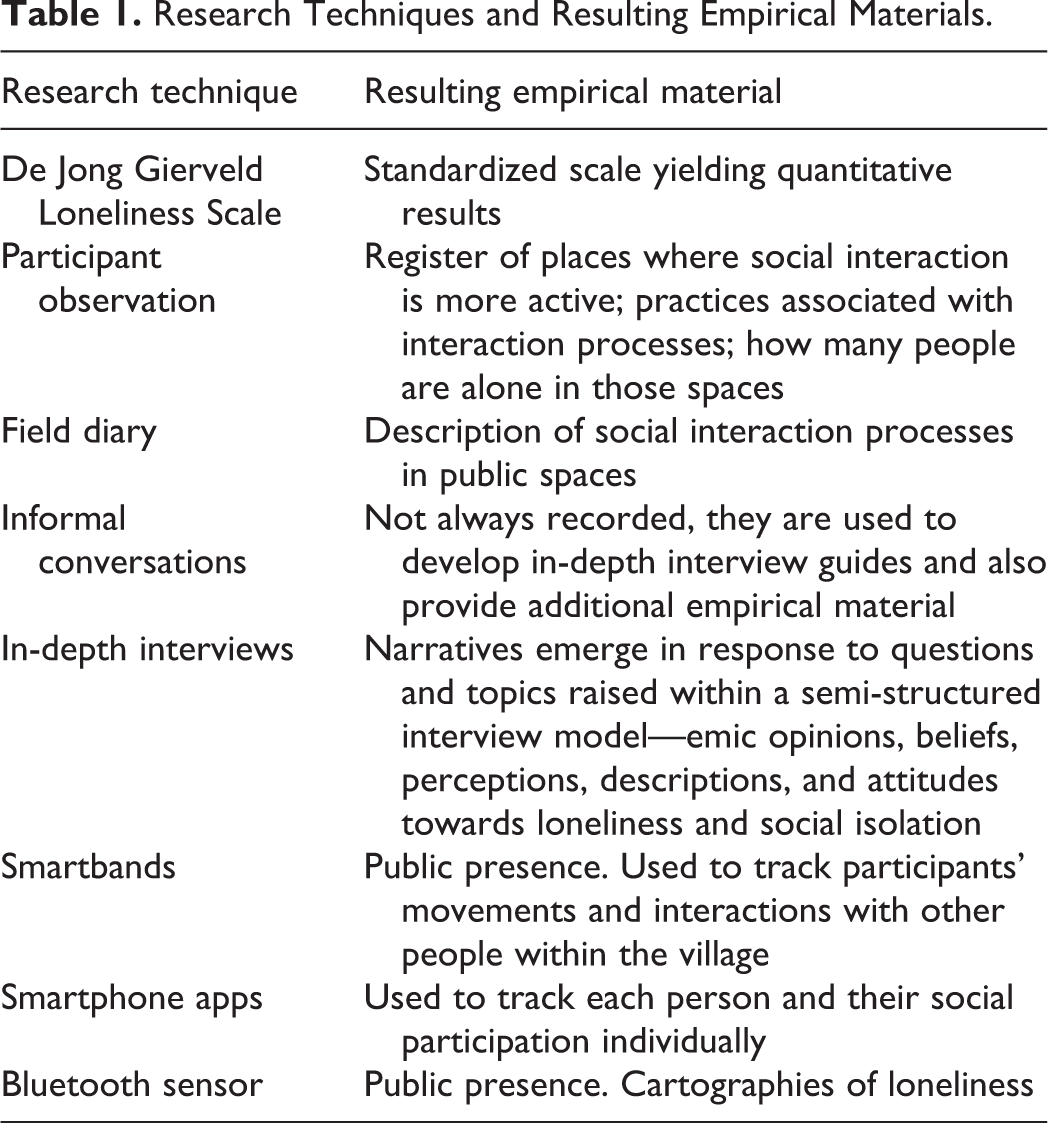
Table 1 includes the different techniques and tools that will be used during our study and the empirical materials that will be gathered through them.
Research Techniques and Resulting Empirical Materials.
Quantitative Tools
The De Jong Gierveld Loneliness Scale (DJGLS) will be used as a validated measurement instrument (de Jong-Gierveld & Kamphuis, 1985). This scale considers loneliness from three perspectives: type of loneliness, the perspective of time, and emotional aspects. The scale consists of 11 items, divided into two separate subscales: social loneliness subscale (five items) and emotional loneliness subscale (six items; de Jong-Gierveld & van Tilburg, 2010). However, a six-item version of this scale has been created for large-scale surveys requiring shorter measurement instruments (Gierveld & Van Tilburg, 2006) The DJGLS has been validated for its use with older populations (Victor et al., 2005), as well as in Spanish (Buz et al., 2014). We aim to complete 80 questionnaires for our study, which we consider enough to yield significant research results. The questionnaires will be handled by a member of the research team specifically trained and experienced in their use.
Qualitative Tools
The qualitative research proposed is based on the traditional tools and paradigms of ethnographic fieldwork (Brinkman & Kvale, 2015; Hammersley & Atkinson, 2007), also including a number of technological devices to obtain empirical material. Qualitative instruments such as participant observation, informal conversations, and in-depth interviews will provide empirical materials on the experience, perception, and definitions of loneliness among the study subjects.
Informal conversations carried out in the first stages of fieldwork will provide invaluable information for the design of the initial observational categories, as well as for the development of the semi-structured interview guides (Strauss & Corbin, 1997). These informal conversations will include village dwellers, as well as other relevant social agents such as local political and religious authorities, social workers, and shop and bar workers. These will be carried out for the duration of the fieldwork.
A fieldwork observational guide will be developed, to include data collected in different observational units—that is, homes, shops, bars, hair salons. Participant observation will aim to characterize the social environment, describe different interaction processes among the subjects, and identify strategies and tactics for social participation, among others (Quintana Peña, 2006).
At the same time, notes will be taken down in a field diary—providing additional information on the fieldwork, participant observation, informal conversations, and interviews (Velasco & Díaz de Rada, 2006). The field diary will be shared by all the researchers conducting fieldwork and analyzing the empirical materials obtained.
Semistructured interviews will focus on exploring the definitions and experiences of loneliness among the study participants. The interviews will also provide context and meaning for the actions and attitudes previously observed, and can help in checking the (sometimes rushed) inferences garnered during participant observation (Velasco & Díaz de Rada, 2006). The interviewers will follow a guide developed to include a number of meaningful categories—as established after reviewing other empirical material as well as existing literature on similar research projects. We estimate a total of 30 interviews will be necessary before a point of data saturation is reached. Before their interview, each participant will be informed of the study goals and will provide written consent. Interviews will take place in a place where the participants feel comfortable. All interviews will be audio-recorded (video-recording will only take place if the participants provide specific consent). However, whenever possible we will try to obtain audio-visual records (photographs and videos) in order to diversify the empirical material and also for dissemination purposes.
All fieldwork will be conducted by two members of the research team, both experienced in qualitative research and in-depth interviews with people within this age group. A third member of the research team will oversee and coordinate their work, in order to guarantee a cohesive research approach.
Technological Tools
The third and last data source will be the use of technological tools (Figure 2). These will provide information on the presence of people in different spaces—the ways in which people move around, where they spend their days, and how long they spend with other people on a daily basis. To this end, different devices will be used. Smartbands will provide information on the movements and different meetings people experience through their day—as in previous studies on older adults (Recio-Rodríguez et al., 2019). These smartbands are connected to an application based on the architecture of the Spanish “Radar COVID” mobile application (Pérez, 2020). Its main goal is to identify close contacts between people. To track social interactions in public spaces, a Bluetooth sensor will be used. When paired with smartbands, Bluetooth sensors will be able to detect study participants as they pass by. This will allow us to create maps of people’s movements, providing a better understanding of social interactions in public spaces, as well as each individual’s social participation. Bluetooth sensors could be installed in public spaces such as the village square, bars, shops, hair salons, or health centres. This automated, big data collection will provide additional context to understanding the empirical material obtained through qualitative research. Our final goal is to create a “cartography of loneliness”—a spatial and temporal representation of social participation (or lack thereof). Data collected will provide information on temporal, as well as spatial, patterns of interaction—with the identification of popular places or routes, mapping spaces of sociability.

Data collection through smartbands and bluetooth sensors.
Sampling/Recruitment
Participants
Selection of participants will take place between February 1, 2021 and April 31, 2021. Criteria for inclusion will be (1) over 65 years old, living in their homes (alone or not), in a specific locality in the Extremadura region (Spain). The selection of the locality will be based on a particular socio-demographic profile. (2) Participation will be voluntary and participants must provide written informed consent. Criteria for exclusion will be (1) not having provided written informed consent; (2) cognitive impairments; (3) not belonging to this age-group.
Recruitment Strategy
Social workers and healthcare professionals in the study location will be approached to facilitate access to individuals over 65 years of age. These professionals will introduce and explain the aims of the study to their patients during consultations. Once the professionals have introduced the subject to the selected patients, the research team will contact them via phone calls.
Once the study sample is selected, a general meeting will be organized so the study goals can be explained—as well as organising the delivery of smartbands, introducing the use of the smartphone app, and explaining where the Bluetooth sensors will be installed. The participants will receive a document detailing the research objectives, and an informed consent form. Data confidentiality in all stages of the research process will be guaranteed and stressed to participants.
Choice of Sample Size
For quantitative analysis, we aim to obtain a sample of 80 participants over 65 years residing in the study location. The determination of the number of participants necessary for the semi-structured, qualitative interviews will be based on data saturation. This technique means interviews with participants within the total sample will be conducted until no new concepts or categories emerge (Strauss & Corbin, 1997).
Data Analysis
A simple online form has been designed to allow completion of the questionnaire from a smartphone, thus automating data collection. Once all the participants have completed the questionnaire, the results will be analyzed using the IBM SPSS statistical software.
All semi-structured interviews will be audio-recorded and fully transcribed. The interview transcripts will be analyzed using the qualitative data analysis software ATLAS.ti. The empirical material obtained through qualitative research will be analyzed using the constant comparison method, inductive analysis, and triangulation. Notes in the field diary will be used during the process of data coding and analysis. Two members of the research team will conduct the analysis, comparing their notes and individual interpretations, in order to achieve consensus. A third member of the research team will arbitrate in any potential discrepancies.
The analysis of empirical materials will be based on Grounded Theory (Charmaz, 2017; Strauss & Corbin, 1997). The categories included in the semi-structured interview guide, based on research conducted on similar contexts and population samples (Bedin et al., 2019; Conkova et al., 2018; Morgan et al., 2020), will also guide the initial analysis once the interviews have been transcribed.
Movement maps and interactions captured through smartbands and Bluetooth sensors will be anonymized. The analysis will be completed with the empirical material obtained from technological devices. This will also be used to create “maps of loneliness,” which will provide a graphic representation of those spaces where loneliness is clearer, and how this is affected by different categories (i.e., health, gender).
Rigour
Strategies to ensure the accuracy of our study will include:
Credibility
We will use triangulation across our data, methods, and the analysis itself, as suggested in Strauss and Corbin’s Grounded Theory (1997). Empirical material obtained through interviews will be triangulated with notes on a field diary and participant observation. Triangulation during the analysis stage will determine the final categories—two researchers will suggest categories and a third one will arbitrate over their decisions to achieve consensus.
Accuracy
Data accuracy is crucial in qualitative research which deals with and tries to understand human experiences. In order to guarantee data accuracy, notes taken in the field diary will be taken into account during the in-depth interviews and subsequent analyses, during their transcription, and, finally, when checking the correspondence between categories emerging from the initial analysis and the data obtained through other methods.
Transferability
In order to guarantee data transferability and the possible replication of the study in different scenarios and contexts, the methodology used will be explained in detail in different reports. To guarantee its quality, the study will also follow the criteria and guidelines defined in the COREQ checklist for reporting qualitative research.
Limitations of the Study
The main limitation of the study could be that the study will be carried out in a single location. This might limit the scope of data available, and also make it difficult to compare our results with those obtained when applying our three-fold study protocol in a different scenario or context (i.e., urban). On the other hand, our study will focus specifically on older adults, as we assume the impact of loneliness is greater in this age-group. Therefore, we will not seek to obtain data from other age cohorts. In any case, even if the possibilities of extrapolating our results are limited, the methodological approach suggested has wider potential in terms of transferability.
Implications for Research and Dissemination
This study is both ground-breaking and original. To date, the use of technological applications in the context of loneliness has focused on their therapeutic potential, not as a research tool. Also, ethnographic research into this population group has been limited. The outcomes of this study can help inform public health policies and management, both within this region and in other rural contexts. At the same time, the methodological protocol proposed can be applied in other rural contexts, in Spain or further afield. Finally, the study results can be disseminated in scientific meetings and conferences.
Footnotes
Data Confidentiality
This study will pay special attention to participants’ data protection and confidentiality. Data obtained and collected through the study will be treated in line with the Spanish Organic Law 3/2018, of 5 December, on Personal Data Protection. None of the transcribed interview material or data collected for analysis contains information that can help identify the study participants. Audio-recordings will be destroyed after their transcription. The file containing localization data will be immediately anonymized. Printed documents with information on the study participants will be securely locked and only the research team will have access to them, if and when necessary.
Ethics
This study has been approved by the Ethics Committee of the University of Extremadura (Code 138b/2020). The study will be conducted in accordance with the ethical principles outlined in the Declaration of Helsinki and the Belmont Report. All participants will sign a consent form whereby they will be informed of the terms of their participation and the study research goals. Data collected will be anonymized, and only the research team will have access to them. Confidentiality of the participants’ personal data will be guaranteed throughout the whole of the research process. Participants will also be informed that they can discontinue their participation at any time without further consequences.
When working with an elderly population it is important that the role of the researchers is clearly defined and explained to participants. Whenever social workers or health professionals act as “gatekeepers” for a research project, the study participants might feel confused about the researchers’ role—not identifying them as separate from other public health workers. For this reason, a formal introduction will be carried out in addition to the researchers’ physical presence during participant observation—through a general meeting with the participants where the researchers’ role will be fully explained, establishing them as independent figures.
Informed Consent
Informed consent is essential when undertaking a project of this nature. Social workers and health professionals will play a crucial role in reaching this goal. They will be the ones approaching potential participants and introducing them to the project. Once contact has been established, the researchers will approach each participant individually. Finally, a group meeting will be carried out where the whole research project and procedure will be explained in detail. That the participants are free to discontinue their participation at any time will be emphasized throughout. After the general meeting, the interviewer will meet each participant and provide a document with information on the study and a consent form, as well as a document to be signed if they discontinue their participation.
Declaration of Conflicting Interests
The author(s) declared no potential conflicts of interest with respect to the research, authorship, and/or publication of this article.
Funding
The author(s) disclosed receipt of the following financial support for the research, authorship, and/or publication of this article: This research was funded by the Interreg V-A España-Portugal (POCTEP) 2014–2020 program, 4IE+ project (0499_4IE_4_PLUS_4_E) and Programa Operativo FEDER Extremadura (2014–2020) y Fondo Europeo Desarrollo Regional (FEDER) (GR18143).
