




Abstract
The purpose of this study was to develop a new arts-based measure assessing school bullying and to test it within a pilot study involving 19 schoolchildren (mean age = 15.4; range = 1.00). The researchers designed the new methodological tool (referred to as graphic vignettes) as a set of incomplete comic strips, which participants were asked to complete in a creative way. Researchers then invited participants to engage in follow-up interviews using completed comic strips as individualized interview prompts. The authors detail the design and administration of the graphic vignettes and discuss their efficacy, limitations, and potential applications. The researchers argue that studies on sensitive topics can benefit from a wider dissemination of this arts-based research method. They also assert that the use of creatively co-constructed interview prompts individualizes participant–researcher interactions, placing the power in the hands of participants. The article aims to inspire further development of graphic vignettes.
Introduction
Detrimental effects of bullying reflect negatively on students’ academic achievements, their social life, and mental health (Rothon et al., 2011; Schwerdt & West, 2013). If bullying is not identified and promptly addressed, it may lead to extreme consequences such as crime and suicide (Gentry & Pickel, 2016). The phenomenon is pervasive and hardly new, but it is still far from being effectively addressed (Horton, 2016; Olweus, 1993; Thornberg, 2018). Indeed, numerous intervention programs yield only modest results (Ferguson et al., 2007; Rigby, 2004; Vreeman & Carroll, 2007). This could be related to the fact that spotting and addressing bullying presents a serious challenge, as a substantial number of those being bullied fail “to report their victimization” (Unnever & Cornell, 2003, p. 8) which is often linked to the fear of retaliation and further escalation of bullying (Spence, 2013; Wiseman & Jones, 2018).
Moreover, existing research on bullying has mostly applied a quantitative approach to data collection and analysis, employing mainly questionnaires and psychometric measurements (Espelage & Swearer Napolitano, 2003; Thornberg, 2018). Although quantitative studies offer a critical overview on bullying, “traditional paper-and-pencil self-report or peer-report measures” (Bosacki et al., 2006, p. 232) fail to present children with an opportunity “to discuss their understanding of bullying experiences in their own voices” (Bosacki et al., 2006, p. 232). In view of this, new qualitative methods need to be designed to go beyond what is already known about bullying because it is qualitative research that provides “rich and unique detail about the variety of tactics used to carry out bullying” (Bosacki et al., 2006, p. 232). This article aims to expand the boundaries of a primarily quantitative approach toward bullying by acknowledging it as a sensitive topic and incorporating a qualitative method that engages participants in creative reflection appropriate for sensitive research.
Literature Review
Text-Based Vignettes
Traditional vignettes are “short stories about hypothetical characters in specified circumstances, to whose situation the interviewee is invited to respond” (Finch, 1987, p. 105). Over the past decades, vignettes have been actively employed and developed as a research tool in a wide range of medical and social studies, helping to amass substantial knowledge (Al Sadi & Basit, 2017; Grønhøj & Bech-Larsen, 2010; Schoenberg & Ravdal, 2000; Straits, 1985; Wilks, 2004). Widespread use of vignettes stems from the recognition of their effectiveness, especially in research concerning sensitive issues such as abuse, trauma, stigma, social justice, sexuality, mental health, physical disabilities and differences,and so on (Cromer & Freyd, 2009; Hughes & Huby, 2002, 2012; Schoenberg & Ravdal, 2000; Winstone & Kinchin, 2017). The effectiveness of vignettes in sensitive research is in part due to their depersonalization and distancing effect. Vignettes ask sensitive questions but allow respondents to distance themselves from personal circumstances when answering (Finch, 1987; Hughes, 1998; Hughes & Huby, 2002; Palaiologou, 2017; Schoenberg & Ravdal, 2000). This opportunity to distance themselves reduces the likelihood of social desirability bias, which ultimately contributes to higher quality data (Hughes & Huby, 2002).
Notwithstanding the aforementioned strengths and versatility of text-based vignettes, there are a number of difficulties associated with their use. Finch (1987) argues that it is impossible to determine what triggers certain responses to vignettes (personal experience, witnessed situations, or imagined scenarios). In view of this, it is important to conduct follow-up interviews to clarify participants’ views. However, even after the interviews, it is not always possible to establish causal connections (Schoenberg & Ravdal, 2000). Moreover, Parkinson and Manstead (1993, p. 306) assert that the text of a vignette “provides limited information” and does not reflect various aspects of real-life situations due to the word limit. This ultimately reduces the perception of vignette characters to one-dimensional “paper people” (Kinicki et al., 1995). Thus, text-based vignettes impose low interpretational demands on participants (Given, 2008; Hughes & Huby, 2002, 2012; Kinicki et al., 1995). Another issue raised by Finch (1987) is whether it is possible to predict respondents’ future actions based on their response to vignettes. Concerning this point, Jenkins et al. (2010, p. 178) argue that the purpose of using vignettes is not “to arrive at an accurate prediction of an interviewee’s behaviour but instead to achieve insight into the social components of the participant’s interpretative framework and perceptual processes.” Indeed, people’s perceptions and interpretations are in themselves important to study, which is why “issues inherent in interpretation become a valuable addition to the research rather than an obstacle to be overcome” (O’Dell et al., 2012, p. 702). People do draw on their past when interpreting present situations, so it might be more helpful to view vignettes as a method to explore people’s past experiences rather than as a tool to predict their future actions.
Visual Research and Arts-Based Methods
Criticism of text-based vignettes precipitated the search for other methodological approaches. Recently, educational research has been significantly advanced through vignettes containing visual components: videotaped vignettes (McKinstry, 2000), vignettes in the form of photographs and paintings (Huber et al., 2018), and vignettes that elicit line drawings as a response (Chambers & Craig, 1998). Such vignettes provide participants with both verbal and visual stimuli, ensuring better understanding of presented materials and problematic situations. We attempted to extend this range of visually enhanced vignettes by developing a new method with a creative component, and thus, we turned to arts-based visual research. Holm et al. (2018, p. 311) define arts-based visual research as “an umbrella term for research that searches for ways to utilize visual arts in studying the human experience in more complex ways.” A variety of artistic mediums can be used in arts-based visual research, including photographs, collages, drawings, cartoons, and videos. Visual research methods are not new but have been traditionally developed and used in life sciences. Recently, however, researchers have been highlighting the effectiveness of visual methods and arguing in favor of their wider use in social and educational research (Ciolan & Manasia, 2017; Culshaw, 2019; Holm et al., 2018; Moss & Pini, 2016; Pain, 2012; Vacchelli, 2018; Woolner et al., 2010).
Potentials of Arts-Based Methods: Participant Empowerment and Enriched Expression
Many arts-based methodologies have the potential to facilitate participant-led engagement and empowerment. Indeed, structuring participant–researcher interactions around participants’ creative activities allows them to be in control, as they are able to adjust the pace of interactions and focus on what is truly important to them personally (Bravington & King, 2018; Dutton et al., 2019; Gausman et al., 2019; Goopy & Kassan, 2019; Hardy et al., 2012; Levell, 2019; Lyon & Carabelli, 2016). Moreover, it should be noted that the research methods centered on participants’ creative outputs were born out of psychological therapy and counseling, which makes them powerful tools in sensitive research, as they help participants feel safe to face and work through negative emotions, unpleasant memories, and even trauma (Coholic et al., 2009; Houghton, 2015; Kara, 2015; Levell, 2019; Mak, 2011; Reilly et al., 2018). Creative activity encourages people to tap into suppressed memories and allows them “to communicate what really happened to them before they can consciously accept the reality of their experiences” (Mak, 2011, p. 85). Deep reflection and meaning-making are supported through creative activities, as they provide an opportunity to take a fresh look on things and rearrange one’s thoughts and beliefs (Cheng et al., 2001; Levell, 2019; Nickerson et al., 2013).
Indeed, art-making can help not only with locating deep-seated thoughts and realizing unexpressed feelings but also with articulating them. It is also important to “recognize that tacit knowing is unreachable by words alone” (Schwind et al., 2014, p. 1168). Creative activities facilitate the exploration of nonlinguistic dimensions, expression of the unsayable, and the uncovering of new layers of meaning (Bagnoli, 2009; Eisner, 2008; Gauntlett, 2007; Visse et al., 2019). Furthermore, arts-based research methods can be effectively used in studies involving participants who might experience difficulties when expressing themselves verbally (children, immigrants, people with speech disorders; Bagnoli, 2009; Vacchelli, 2018) as well as in studies with groups of people who are prone to producing unreliable evidence through traditional research methods (Huss & Cwikel, 2005). Research also shows that, with shy and reserved participants, art-making can be an effective tool to “break the ice” and overcome inhibitions (Theron et al., 2011). Indeed, art-centered activities can be viewed as a springboard for participants to discuss sensitive topics as well as share their private thoughts and feelings. Levell (2019) provides an illustrative example of how engaging with music helped study participants assume a comfortable pace and gradually move from discussing abstract ideas to reflecting on personal experience. This methodological effectiveness is linked to potential empowerment through arts-based research methods, which “allow a creative way of interviewing that is responsive to participants’ own meanings and associations” (Bagnoli, 2009, p. 547).
Challenges of Arts-Based Methods: Participant Resistance to Engage and Misinterpretation
Some participants might feel reluctant about joining a creative activity if they perceive that this activity requires specific creative skills and they see themselves as “not artistic” (Buckingham, 2009; Scherer, 2016). However, this initial hesitation can be gradually overcome if researchers take time to build a strong connection with participants (Lyon & Carabelli, 2016). Arts-based methods can actually help overcome resistance that is prevalent in traditional research, involving vulnerable and marginalized populations. For example, Goopy and Kassan (2019) argue that traditional language-centric research places power in the hands of the researcher, preventing harder-to-reach communities from voicing their genuine opinions and concerns. Roger and Blomgren (2019) stress that traditional research and academic literature might appear as an inaccessible fortress to nonacademic people, leading to intimidation, skepticism, and understandable unwillingness to volunteer one’s time and efforts needed for participation. Indeed, the aforementioned empowerment potential is especially important in research involving vulnerable and marginalized people because their nonengagement might feed into the perpetuation of biases against them if researchers conduct studies and interpret findings from the perspective of only their own (often dominant) culture (Goopy & Kassan, 2019). Structuring participant–researcher interactions around artworks created by participants builds a unique communication bridge, which establishes the balance of power and mutual understanding (Goopy & Kassan, 2019; Roger & Blomgren, 2019), both of which are important for researchers to comprehend the true message of participants.
Lyon and Carabelli (2016) raised an important concern “that the nature of data produced through arts-based methods can leave researchers with significant problems of interpretation” (p. 430). Nevertheless, the possibility of misinterpretation can be minimized through the constructive use of follow-up interviews as they give an opportunity for the participants to walk the researcher through their artworks as well as the inspiration and logic behind them (Bagnoli, 2009). Lyon and Carabelli (2016) also reported that interviews with some participants in their arts-based research produced more clarity and important insights; however, interviews with other participants obscured and hindered participant–researcher understanding. Obviously, different people have different communication styles and preferences for how to share their thoughts and feelings. “Images are also not necessarily meant to convey the whole idea. Often they are visual aids to facilitate talking points. The picture does not tell a story…It comes with a story” (Mitchell et al., 2011, p. 33). It seems reasonable to argue that the possibility of misinterpretation (much like participants’ resistance) can be reduced through participants’ empowerment. If participants are able to navigate participant–researcher interactions in a way that is most preferable to them personally, then they will feel more comfortable and invested in the research and this in turn ensures better data. Figure 1 is a visual summary of all the ideas discussed in this literature review—it visually represents our understanding of the potentials and challenges of arts-based research methods as a puzzle. The puzzle pieces are all able to be linked, suggesting that these processes are all interconnected. At the center of the puzzle is the participant–researcher connection and surrounding that are pieces representing the potentials and challenges of an arts-based methodological process. In the puzzle, the potential pieces are able to connect to the challenge pieces when the central piece is missing. However, when the central piece is present, it is able to connect to the potential pieces but not to the challenge pieces. Metaphorically, this represents the idea that with the presence of a participant–researcher connection, potentials can be unlocked and challenges are automatically reduced.

The potentials and challenges of arts-based research.
Theoretical Basis of the Study
In the current study, we have adopted the symbolic interactionist perspective (Becker & McCall, 2009; Blumer, 1969). Being active social agents in the construction of their own culture, children react to social situations like school bullying by adjusting to the environment they are exposed to. In line with symbolic interactionism, we assumed that children respond to and accommodate situations by interpreting their “signs” and “symbols.” When interpreting co-constructed graphic vignettes, we placed the focus on the three key features of symbolic interactionism: (1) what meaning is attributed to certain situations by participants, (2) how language is used in interpreting a particular situation, and (3) how self is reflected in different situations (Mead, 1967).
Our attempt to invite children to express their creativity and codirect the exploration process is also based on the constructivist approach to education, “which argues that students need to be authors of their own understanding” (Cook-Sather, 2006, p. 365). Gabriel and Connell (2010, p. 508) assert that collaborating on the creation of stories facilitates a conversation that is “especially useful in establishing moral boundaries, acceptable and unacceptable behaviors, and fine gradations between right and wrong.” To deal with such a sensitive topic, we provide a framework for a constructivism-informed research tool that (1) enables participants to creatively construct their own vignettes, making them unique to their experiences, beliefs, and preferences and (2) probes into different aspects related to the issue, thus providing a structure for participation without making participants feel overwhelmed, intimidated, challenged, or judged. Young people feel empowered and are more responsive when they engage proactively in the research, sharing in “shaping the process” (Lyon & Carabelli, 2016, p. 432).
Research Question
This methodological study presents the process of developing a new research method and discusses its potentials and challenges for other studies with sensitive topics by exploring the following research questions:
Method
The article presents a new methodological tool based on incomplete comic strips (referred to as graphic vignettes) that the authors deployed during the pilot study. In educational research, comic strips can be employed as “a unique way of contextualizing stories” (Lawrence et al., 2017), which enriches our perspectives on studied issues. When designing our graphic vignettes, we drew upon the comics-based method created by Lawrence et al. (2017) as well as on numerous studies conducted with the use of text-based vignettes (Al Sadi & Basit, 2017; Finch, 1987; Gould, 1996; Hughes, 1998; Hughes & Huby, 2002; Schoenberg & Ravdal, 2000). We also derived the inspiration for creating graphic vignettes from the story completion method (Clarke et al., 2017; Gravett, 2019). The developed methodology facilitated active collaboration with our participants: We cocreated problem-focused stories and coconstructed their meanings over the course of follow-up interviews. At the same time, we would like to stress that creative components are more than just an add-on to traditional interviews—the art-making component works as a unique mechanism to empower participants and enrich their interactions with the researcher, as will be further discussed (Bagnoli, 2009; Levell, 2019).
Participants and Ethics
The pilot study was conducted in Kazan—a city located in Western Russia with a population of approximately 1.2 million inhabitants. A school with a socially and economically diverse student body was selected. This school applies selective admission through enrollment examinations but does not charge tuition.
A total of 19 schoolchildren (13 females and 6 males) from the same class group participated in the study. In Russia, children at the start of school are placed into a class group and the class peer group remains the same for the subsequent 9–11 years of schooling. Participating schoolchildren ranged from 15 to 16 years old (Russian eighth grade). In the course of this study, it was important for us to explore the climate within one classroom as a whole because bullying needs to be studied and addressed as a “group phenomenon” (Salmivalli et al., 1996. p. 11). Since bystanders play an important role in the perpetuation of bullying, focusing exclusively on either bullies or their victims cannot provide the full picture (Espelage et al., 2003; Salmivalli et al., 2004; Salmivalli et al., 2011).
In order to gain a better understanding of the school context, we conducted interviews with all volunteering teachers who worked with this particular class of students on a regular basis (N = 7). When asked to measure the average level of problems with relations within this particular peer group (taking into account their frequency and seriousness), the teachers indicated that the level is more or less the same as in other classes of this age-group, M = 3.3 (measured on a 5-point Likert-type scale in which 0 = significantly lower than in other class groups, 5 = significantly higher than in other class groups). Throughout the interviews, teachers reinforced the view that this class of students is not prone to conflicts or bullying; they are within what the teachers consider to be “the norm.”
The parents of the participating children provided their written consent and the children gave verbal assent. The researchers reassured all participants that their responses were anonymous and that numeric codes would be used to record their responses. The pseudonymized data that support the findings of this study are available on request from the corresponding author. The data are not publicly available due to privacy and ethical restrictions.
Designing the Vignettes
The set of four graphic vignettes (Supplemental Appendix 1) was designed specifically for this study and in accordance with the recommendations developed for traditional (text-based) vignettes by Gould (1996) who asserted that the plausibility and realism of vignettes defines their effectiveness. When designing our vignettes, we drew upon the most common types of bullying noted in academic literature (physical, verbal, and relational as well as cyberbullying, which is emerging as the newest distinct type of peer aggression; Slonje & Smith, 2008; Wang et al., 2009). The main principle behind designing our graphic vignettes was to ensure balance between providing enough space for participants’ creativity and prompting structured problem-centered interactions between researchers and participants. We deem this balance to be necessary for gaining accurate interpretations of creative inputs, which can be later faithfully translated into academic text. In view of this, each graphic vignette contains enough text to present a problem (a situation of potential bullying) without making the situation too rigid or prescriptive. Moreover, each vignette introduces multiple characters in order to encourage participants to consider bullying as a group phenomenon and to explore different roles children and adults may play in dealing with bullying.
Vignette 1 was designed as a situation of potential exclusion that could be observed by peers and teachers. Vignette 2 illustrated explicit exclusion and cyberbullying, which were unlikely to be visible to others. Vignette 3 was designed as a situation of potential manipulation and relational bullying, invisible to others. Finally, Vignette 4 depicts potential physical aggression. We made sure that each vignette was open to interpretation and could be completed in various ways. The levels of intensity and overtness for each bullying situation depended on an individual completion of each situation by our participants. Vignettes 2 and 3 had fewer predesigned elements, providing more space for ambiguity and interpretation, while Vignettes 1 and 4 were more straightforward.
Administering the Vignettes
Each participant was presented with the set of four graphic vignettes to work on privately for 20 min. Detailed instructions were given to all the participants (Supplemental Appendix 2), and creativity was encouraged as much as possible. Participants could write or draw anything they wanted when completing their vignettes. At the same time, participants were asked to use their personal experience as a prime source of inspiration. They were advised to invent their own stories only when they could not remember anything relevant. Participants were also asked to indicate the frequency of each situation in their class (on a scale from 0 to 10), so that the researchers could see which situations were made up and which were real. Participants were reassured that there could be no right or wrong answer, and teachers were absent during our session with children. We, however, were present in the room throughout in order to provide assistance in case participants had any questions. We also observed and made sure that all the participants worked individually.
After engaging with graphic vignettes and creating their own stories, participants were invited to complete an in-depth follow-up interview. Interviews play an important role in arts-based research, facilitating mutual understanding between a participant and a researcher and ensuring accurate interpretations of creative outputs (Bagnoli, 2009; Culshaw, 2019; Mitchell et al., 2011). The interviews were framed around individual creative works with participants being acknowledged and respected as an equal partner capable of deep reflection and valuable contributions (Miller & Rolnick, 2013). Most participants navigated their interviews by discussing the meanings and inspirations behind their creations, to clarify how they were related to their life experiences. They also discussed their attitudes and feelings about the situations they had created. Although participant-led engagement made our interview processes personalized, fluid, and loosely organized (Culshaw, 2019), we still had a general interview structure, which is available in Supplemental Appendix 2.
Moreover, we intentionally avoided the use of the Russian equivalents of the words “bully” and “bullying” (травить, издеваться, изводить, измываться) in the materials given to participants and in all interview questions except for the last one, as we wanted to create an opportunity for participants to approach bullying and explore their understanding of it without being pushed toward this topic. At the very end of the interviews, we asked participants to measure the level of bullying in their class group (on a scale from 0 to 10). This was done in order to see if the situations drawn or otherwise communicated by participants as instances of bullying were actually understood by them as bullying. We hypothesized that some participants might not report bullying verbally, not because they have no experience of it, but because they are not aware of what constitutes bullying.
Results
Our methodology involved concurrent data collection and analysis to allow for emerging data to be immediately studied and incorporated into the research process. This way, over the course of the study, we developed a four-step cycle of continuous data analysis. The first step involved analyzing completed graphic vignettes through interviews structured as a collaborative interpretative process between participants and researchers. During the second step, researchers organized and digitized the raw data (the completed graphic vignettes, the interview audio files, and the field notes) and transcribed verbatim the in-depth interviews. The third step involved initial inductive coding of both visual and text-based data. Researchers then met and collaborated to ensure intercoder reliability. As a result of this work, two lengthy lists of metacodes were developed: methodology-related codes (Empowerment, Resistance to participate, Transition to personal experience, Examples of deep reflection, Examples of empathy, Assessing seriousness, etc.) and bullying-related codes (Physical bullying, Verbal bullying, Relational bullying, Teachers’ role in bullying, etc.). Creative works were also coded with the use of nonverbal codes (Tears, Blood/Injuries, Hearts, Hugs, Smiles, Smirks, etc.). The fourth step involved collaborative work of the researchers once again. Regular meetings were organized by the researchers to analyze and discuss the data and emerging themes. The result of this collaborative work was continually evolving coding categories. For this article, we mostly used methodology-related codes to analyze how graphic vignettes were used by participants.
Graphic Vignette 1
Working individually with Vignette 1, 19 participants (coded as ID-A…ID-S) created various scenarios that were later grouped into six main types. Vignette 1 (Supplemental Appendix 1) was designed as a potential situation of exclusion; however, none of the predesigned components of this vignette indicated explicit bullying. This was done in order to provide the participants with a simple warm-up exercise in which they could reflect on a situation that most of them had witnessed or experienced on multiple occasions (as confirmed by their teachers). At the same time, this situation gave participants an opportunity to talk about those who might be excluded from group activities and why this was so. It is important to note here that throughout the discussions of the first vignette, we noticed participants’ reticence, stiffness, and unwillingness to reflect. Fortunately, this initial reluctance waned (and in some cases vanished) as our interactions progressed. In view of this, most participants (N = 14) deemed that the situation in this vignette was not serious. They could not identify its potential reason. Participants kept their replies vague and limited to “past events” and “some hurt feelings”: I do not know (the reason); there are people (in our class) that we rarely talk to…so how are you supposed to work as a team with someone you don’t know? (Respondent ID-A) Most likely this boy (the excluded character) is disliked for some reason…In our class we have a boy like that and he is my friend. People dislike him because he is overweight. When we have choreography lessons nobody wants to even hold hands with him. So the boy (the character) has certain physical characteristics or he is just different somehow…. (Respondent ID-L) If you look at this situation from the perspective of the boy (the excluded character)…if I were in his shoes I would have been very upset. This is indeed hurtful. As for the girl…she just showed her disgust towards him…briskly without thinking…. (Respondent ID-F)
Graphic Vignette 2
Vignette 2 (Supplemental Appendix 1) was designed as a situation of explicit bullying and the predesigned components of this vignette pointed at an obvious victim. The 23 participants generated 12 different types of scenarios when working with Vignette 2. During our discussions about this vignette, 12 participants did not name any potential reasons why this situation might arise and 11 participants could not assess the seriousness of such a situation. Still, this vignette provided us with important insights into why bullying occurs in schools and how children deal with it. For example, two participants noted that bullying is caused by people who are abusing others in order to improve their own position in a group: I think it (the reason) is children’s cruelty. Nowadays there are a lot of situations like this one when children hurt one another. They usually act in groups because they are probably too afraid of doing this alone. They are trying to advance their own status by putting down others who might be shy or who can’t stand up for themselves. (Respondent ID-H) This is a widespread problem in society at large, I mean people…if you have low self-esteem, if you underestimate yourself then, people are like animals, so to say, they sense it and they get uncomfortable (with you)…They start boosting their egos at your expense (Respondent ID-A). This situation might have been caused by some previous events and actions. Maybe he himself (the victim) did something…for instance, betrayed someone. Maybe he is acting against the system and doesn’t want to follow some rules. (Respondent ID-I) Probably, he himself (the victim) caused this abuse somehow so it would be a good idea for him to change. Then people would treat him differently (Respondent ID-G). The boy (the victim) says to himself: “I tried to be friendly, I struggled to do my best, I changed myself for you…in order to improve our relations…” But this girl here (the bully) doesn’t care; it doesn’t make any difference to her…. (Respondent ID-R)

Episodes from Vignette 2 completed by Respondent ID-R (reported frequency 6). Note. Translation of Figure 2:
In addition, Respondents ID-M, ID-N, and ID-R highlighted the difficulty of opening up about experiences of bullying. One of these participants also added that students cannot divulge their problems to adults (teachers and parents), but it is possible to confide in peers who attend a different school: We are actually scared of telling her (the homeroom teacher) about these things because she would go straight to our parents bringing all of this up…but we don’t want that. (…). Threats happen (at school), something like ‘don’t you dare tell your mom about this’. And this child (the peer who supports the victim) is a friend but she is not from this school so she (the victim) tells her like ‘dear Alice, I feel so bad’ (…). I think that children…none of them would tell their teacher. At least if it was our class…I think none of us would tell about this. (Respondent ID-R)
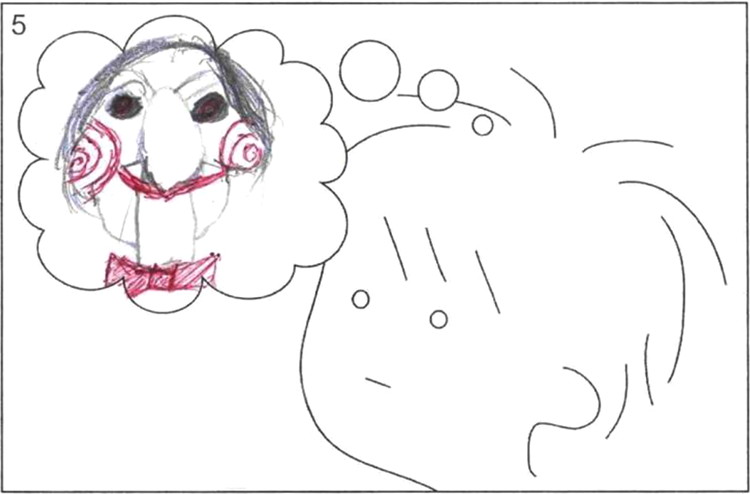
Billy the puppet drawn by Respondent ID-L in an episode from Vignette 2 (reported frequency 2).
When discussing his plot and drawings, this participant transitioned from talking about his character to sharing personal struggles: He (the character) initially thought that it (the message from his classmates) was not intended for him. But it turned out that they were pretending to be his friends to take the mickey out of him. It used to happen to me a lot and I have always wanted to get rid…doesn’t matter how, to get rid of these people so that these people would be gone from the class…to a different class or something…you know what I mean. (Respondent ID-L)
Graphic Vignette 3
Nineteen participants generated 15 types of scenarios when working with Vignette 3 (Supplemental Appendix 1), which was designed as a situation of manipulation and relational bullying in which a character is threatened with friendship withdrawal. Out of the whole set, this vignette inspired the most diverse range of scenarios, meaning that even though many participants noted similar frequencies, they were remembering and referring to very different experiences. Respondents ID-E and ID-F present an interesting example of contrasting scenarios despite indicating the same frequency (2) of their situations (Figures 4 and 5).

Episodes from Vignette 3 completed by Respondent ID-E (reported frequency 2). Note. Translation of Figure 4:
It is obvious that the two participants interpreted Vignette 3 in two dramatically different ways. The role of an abuser shifted from one character to the other. The participants supported their distinct views with their interview comments, explaining who they considered to be at fault: She (the female character) does not want to be around this person, most likely that is because her friends don’t like him and she is sort of influenced by her circle of friends. (Respondent ID-E) Judging by this (preprinted) phrase, I thought that maybe the boy mocked her somehow by doing something that was hurtful and offensive and then he did not say he was sorry…(Respondent ID-F).
Graphic Vignette 4
Six types of scenarios emerged as a result of participants working with Vignette 4. This vignette was designed as a situation which, depending on participants’ views, could be constructed either as an accident or intentional physical aggression. Eight participants (ID-B, ID-D, ID-F, ID-G, ID-I, ID-Q, ID-J, and ID-N) interpreted and completed this vignette as an accident; the rest (11 participants) perceived this vignette as a situation of physical aggression. At the same time, three participants, out of those who saw this situation as intentional aggression, highlighted that outsiders (i.e., adults/teachers) are very likely to misjudge these situations: Well, sometimes people treat others badly and then get certain reactions but adults, well, they only see the reaction, the response of those (who are treated badly). That is why they (adults) do not see the whole situation; they do not understand where the problem is coming from. (Respondent ID-H) Well, I will say it again, I don’t think they (teachers) should be involved because they have only a limited perspective on these situations, they don’t know what is at the bottom of it all. I mean they would need to be explained absolutely everything or they would need to be completely submerged into the situation, being able to sense the most subtle movements, micromovements even, in order to understand who is actually bad and who is good. (Respondent ID-A) This is a common thing and it is not just because of a ball…I mean children intentionally threw the ball into his face but then they said that they had not done anything. The teacher believed them because they are in the majority. But this boy is hurt. (Respondent ID-L, Figure 5)

Episodes from Vignette 3 completed by Respondent ID-F (reported frequency 2). Note. Translation of Figure 5:
Once again, the use of graphic vignettes enables participants to communicate their understanding of bullying as a highly complex and sensitive issue that is often misjudged and misinterpreted by those who are not directly involved.
Moreover, the theme of hiding one’s true feelings was continued through this vignette as well. Two participants (ID-B and ID-D) highlighted that in their experience people usually grin and bear it in such situations. Respondent ID-B illustrated how a person feels when being hit in the face (Figure 6, Episode 2) and how this person feels later after seeing that people around are completely indifferent (Figure 6, Episode 3). Respondent ID-B also shows an important contrast—the character communicates being OK, but at the same time emanates a dark cloud, which indicates the actual inner state of mind.

Episodes from Vignette 4 completed by Respondent ID-B (reported frequency 1). Note. Translation of Figure 6:
Important Reflections and Limitations
Our findings indicate that hidden emotions and deep feelings as well as empathy can be effectively investigated with the use of graphic vignettes, which is an important aspect to explore not only in research on bullying but also in research on other sensitive topics as well. Our participants were able to convey complex emotional states through the combination of words and drawings. Figure 7 presents one of the examples of an effective use of a graphic vignette—Respondent ID-B depicted characters who on the surface seem to have accepted their situation while the background drawing speaks of their deep frustration.
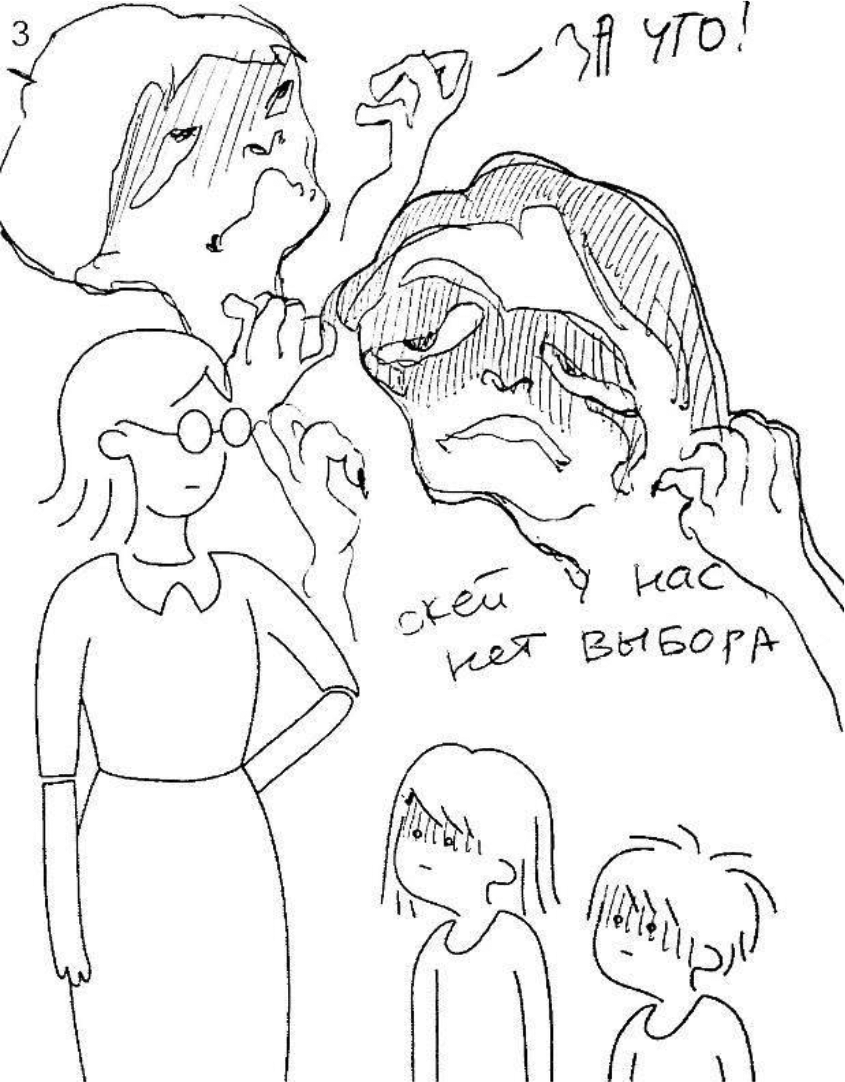
Episodes from Vignette 1 completed by Respondent ID-B (reported frequency 2). Note. Translation of Figure 7:
Some participants demonstrated real empathy toward their characters by emphasizing the seriousness of created situations and by providing detailed descriptions of characters’ emotions and feelings. These participants often added tears and sometimes even blood to convey how hurt their characters were. They also tried helping the characters by creating supportive friends for them. It was sometimes unclear, however, if these participants were channeling their own experiences or somebody else’s when creating their characters and talking about them. Some participants admitted that their characters represented themselves, but others only mentioned the experiences of others.
The frequencies of the situations reported by participants can also be indicative of empathy. When given instructions about how to work with graphic vignettes, participants were asked to measure how often these situations happened in their class group. Despite this, some participants demonstrated self-centered perception of in-class climate and could not adequately measure the frequency of a situation unless they had personal experience of it. Others, however, reported not needing personal experience—they noticed when others were bullied and could assess how often it happened. Thus, reported frequencies reflected very different meanings (e.g., for some a frequency of 0 meant “That never happened to me personally” but for others it meant “That never happened to anyone I know”).
These meanings behind reported frequencies were sometimes, but not always, clarified in follow-up interviews. At the same time, reported frequencies for all vignettes fluctuated widely (from 0 to 10) from person to person, despite all participants being part of the same class group. We view reported frequencies at this stage as an interesting and important talking point in follow-up interviews rather than a reliable measure of how often bullying actually happens. How frequencies are reported and analyzed within this methodology is to be developed in future studies. It is clear that measuring how often bullying takes place with the use of quantitative tools can be problematic as reported frequencies depend on personal understandings of what constitutes bullying, which is affected by people’s cultural contexts, personal experiences, and their ability to feel empathy for others. With the replication crisis currently unfolding in psychology and other social sciences (Loken & Gelman, 2017; Shrout & Rodgers, 2018), we see an opportunity for gleaning important insights from qualitative research and utilizing them to strengthen quantitative tools.
We also noted participants’ initial resistance to engage, though we were able to overcome it over the course of our interactions. Indeed, it is possible to facilitate meaningful engagement through gradually building connections with participants by interacting with them on equal terms (Lyon & Carabelli, 2016). We made an effort to make our research accessible to children by explaining to them who we were and what we were doing, as well as by highlighting how valuable their contributions were for us. Seeing the transparency of our intentions and understanding the value of our work contributed toward children’s willingness to collaborate with us (Roger & Blomgren, 2019). Some children felt more comfortable with just writing down everything they wanted to communicate with us, others showed more interest in drawing their ideas and creating visual metaphors, still others did not feel enthusiastic about creating characters and graphic stories but wanted to share their views and experiences in an interview. Ultimately, we did our best to encourage participant-led interactions (Bagnoli, 2009).
Moreover, as mentioned previously, we avoided the use of the words “bully” or “bullying” in all materials given out to participants and in all interview questions except the last one. This was particularly important to do in the Russian context because the word “bullying” has a strongly negative connotation in the Russian language, implying serious abuse and/or violence. People tend to reserve this word for referring to extreme situations. In view of this, it was not surprising that only three participants (ID-F, ID-P, and ID-R) used the Russian words “bully” or “bullying” when interacting with researchers. At the same time, eight participants (ID-F, ID-G, ID-H, ID-I, ID-L, ID-O, ID-R, and ID-S) admitted that bullying took place in their class group when answering the final direct interview question about bullying. The rest (the majority of participants) reported no bullying whatsoever in their class group. What is interesting here, and what could be further investigated with arts-based methods, is how children see and experience bullying without realizing that it is bullying. Figure 8 provides an example of relational bullying that in fact happened to Respondent ID-M (confirmed in an interview). Despite indicating bullying in her graphic vignette and confirming this experience in an interview, this participant verbally reported at the end of her interview that no bullying ever took place in their class group.
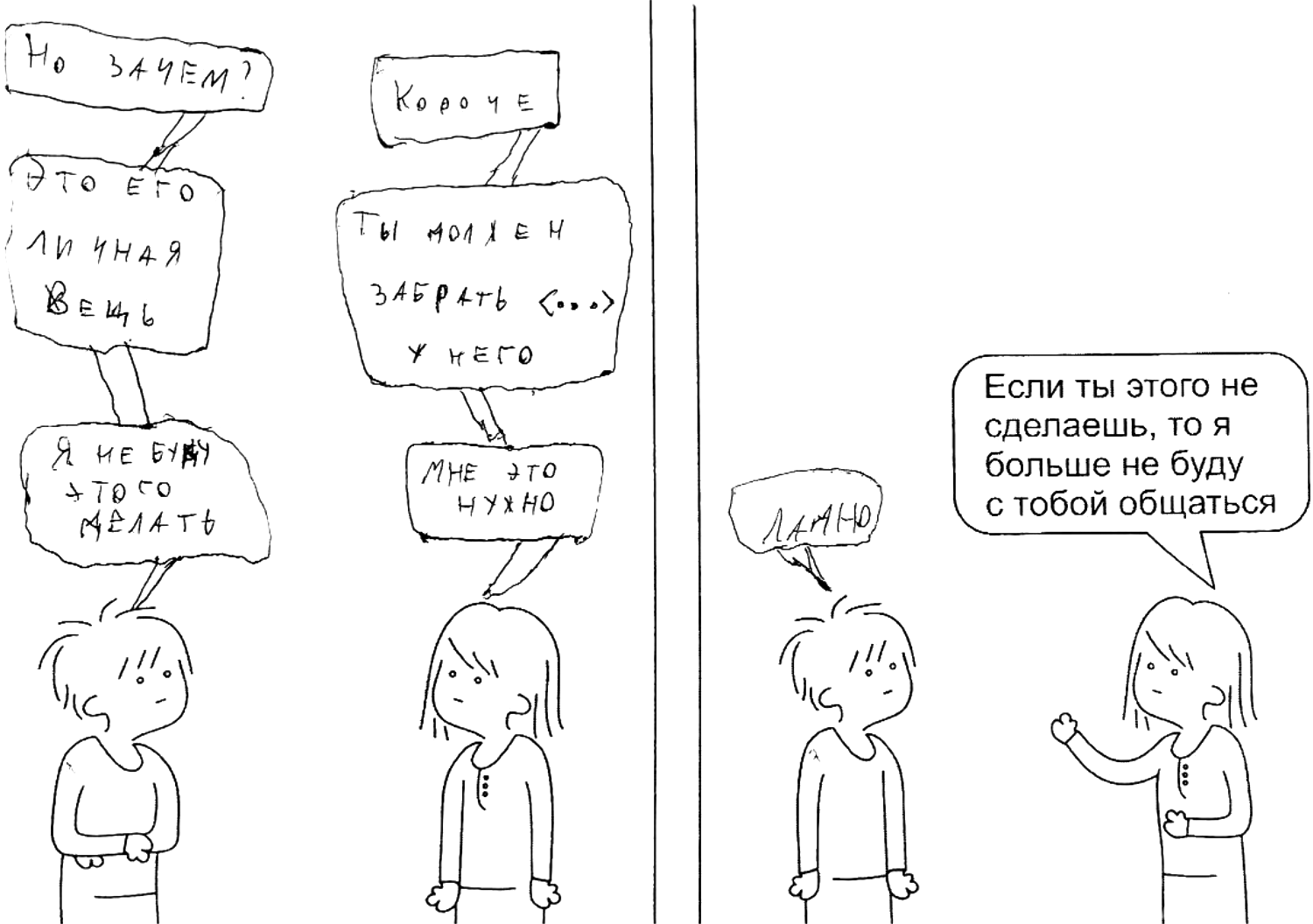
Episodes from Vignette 3 completed by Respondent ID-M (reported frequency 2). Note. Translation of Figure 8:
This example highlights that different cultural connotations of such complex notions as bullying could be effectively explored with graphic vignettes in future cross-country comparative studies. Indeed, arts-based research can provide a valuable insight into what is seen and understood as bullying in different cultures.
Concluding Remarks
From a methodological perspective, we have come to see that the new methodology has the potential to enrich our understanding of sensitive topics. The findings of this study indicate that the process of coconstructing graphic vignettes gives participants an opportunity for articulating what is important to them personally.
Through their creative work with graphic vignettes, participants were able to communicate many important points. To begin with, they highlighted their inability to open up about their struggles to others, most importantly to adults (parents and teachers), due to fears that they would be misunderstood and that it might lead to further escalation of bullying. This finding is consistent with previous research on bullying (Spence, 2013; Wiseman & Jones, 2018). Auspiciously, the developed methodology helped us ensure that participants could talk openly with researchers and share their concerns and unpleasant memories. Most participants easily went back and forth from discussing the vignettes’ characters and abstract ideas to revealing deeply personal experiences, reflections, and feelings. This supports earlier evidence that arts-based research methodologies help participants open up (Coholic et al., 2009; Culshaw, 2019; Houghton, 2015; Mak, 2011; Reilly et al., 2018), which ultimately provided us with valuable insights into the complex nature of bullying. We intend to share these in future articles (e.g., Khanolainen et al., 2020).
Supplemental Material
Supplemental Material, Appendix_1_-_Vignettes_1-4_(English_translation) - School Bullying Through Graphic Vignettes: Developing a New Arts-Based Method to Study a Sensitive Topic
Supplemental Material, Appendix_1_-_Vignettes_1-4_(English_translation) for School Bullying Through Graphic Vignettes: Developing a New Arts-Based Method to Study a Sensitive Topic by Daria Khanolainen and Elena Semenova in International Journal of Qualitative Methods
Supplemental Material
Supplemental Material, Participant_instructions_for_the_Graphic_Vignettes - School Bullying Through Graphic Vignettes: Developing a New Arts-Based Method to Study a Sensitive Topic
Supplemental Material, Participant_instructions_for_the_Graphic_Vignettes for School Bullying Through Graphic Vignettes: Developing a New Arts-Based Method to Study a Sensitive Topic by Daria Khanolainen and Elena Semenova in International Journal of Qualitative Methods
Footnotes
Declaration of Conflicting Interests
The author(s) declared no potential conflicts of interest with respect to the research, authorship, and/or publication of this article.
Funding
The author(s) disclosed receipt of the following financial support for the research, authorship, and/or publication of this article: The work was performed under the auspices of the Russian Government Program of Competitive Growth of Kazan Federal University.

Supplemental Material
Supplemental material for this article is available online.
References
Supplementary Material
Please find the following supplemental material available below.
For Open Access articles published under a Creative Commons License, all supplemental material carries the same license as the article it is associated with.
For non-Open Access articles published, all supplemental material carries a non-exclusive license, and permission requests for re-use of supplemental material or any part of supplemental material shall be sent directly to the copyright owner as specified in the copyright notice associated with the article.
