




Abstract
Research aimed at generating evidence to address elicitation challenges that arise because of extreme inequality and marginalized perspectives requires deliberation on relevant methodologies that can elicit insights by both revering marginalized sociocultural strengths and being sensitive to power imbalances. In this article, we provide examples of participatory methods that make the most of often silenced non-Western sociocultural strengths and create opportunities for participation despite barriers due to inequality. The examples emerged from multiple researcher journals and visual data from a study that documented indigenous psychology on resilience with elders (n = 24; male = 10, female = 14) and young people (n = 48; male = 21, female = 27) in two remote Southern African border communities. We describe the examples of elicitation methods to make the most of culture using (i) symbols that reflect nonmainstream sociocultural perspectives, (ii) familiar multiliteracies, (iii) a variety of spoken languages, and (iv) familiar collectivist modes, as well as contextual characteristics to (i) equalize opportunity given structural disparity, (ii) equalize power, and (iii) honor gender and age hierarchies. We conclude that methods for indigenous research can honor and leverage marginalized cultures and contexts to extend beyond sympathy for an oppressed worldview or a context of deprivation.
Keywords
Introduction
Inequality continues to characterize the postcolonial South African society (The World Bank, 2012). Research aimed at generating evidence to address challenges emerging from such inequality requires methodologies that can on the one hand elicit insights, while respecting power imbalances and revering often marginalized existing sociocultural strengths on the other. The use of participatory methodologies to generate data for development aims in marginalized populations is known (Chambers, 2007).
Rather than opting for participatory methodology to accommodate marginalization, the aim of this article is to provide novel insights on how participatory elicitation spaces can make the most of culture and context when generating indigenous knowledge. The article draws on insights from a 3-year study, indigenous pathways to resilience (De Gouveia, 2015; Malan-Van Rooyen, 2015), with elders and young people in two remote Southern African border communities to document indigenous psychology knowledge on resilience. The objectives of the article are to (i) describe an exemplar of participatory inquiry to document indigenous knowledge, (ii) discuss the need for indigenous knowledge, (iii) explain the relevance of elicitation methods to document indigenous knowledge with marginalized populations, and (iv) provide examples of participatory, elicitation methods that leverage characteristics of culture and context.
The Indigenous Pathways to Resilience Study to Document Indigenous Knowledge
The indigenous pathways to resilience study was conducted under the aegis of the Centre for the Study of Resilience, University of Pretoria, with the aim of contributing to resilience knowledge through an indigenous psychology lens. The indigenous pathways to resilience project used participatory reflection and action (PRA) in a longitudinal comparative case study (Zartman, 2012) to generate knowledge on indigenous pathways to resilience.
Various conceptualizations of resilience are premised on the principle of capacity to adapt successfully to disturbance (Masten, 2014) with increased awareness that such adaptation manifests differently in various cultural contexts (Ungar, 2008). This calls for indigenous understandings of resilience. Globally and locally in South Africa, there are studies to derive indigenous perspectives on resilience (Ebersöhn, 2013, 2014; Liebenberg, Ikeda, & Wood, 2015; Theron, Theron, & Malindi, 2013) to comprehended resilience within the broader context of complex interactions between individuals, their communities, and the systems in which indigenous agency and identity evolve (Kirmayer, Dandeneau, Marshall, Phillips, & Williamson, 2011). The inclusion of a sociocultural dimension in resilience conceptualization is important, since adaptation to adversity will depend not only on available and accessible resources but also on whether the environment provides these health-enhancing resources in culturally relevant ways (Ungar et al., 2007).
Two bounded cases of high risk, high need, and non-Western worldviews were conveniently sampled. Both research sites were remote border sites that experience chronic and cumulative adversities such as geographical isolation, poverty, sparsely populated areas, inadequate funding and resources, and limited access to health care (Mapesela, Hlalele, & Alexander, 2012). The first research site was located in the far northeast of the Limpopo province on the boundary of the Kruger National Park, close to the Zimbabwean and Mozambique borders. The site falls under the Mutale Local Municipality, which forms part of the Vhembe District Municipality, and is considered as one of the poorest districts in South Africa. The language spoken locally is Tshivenda. The second research site was situated in the Mpumalanga province and falls under the Albert Luthuli Local Municipality, which forms part of the Gert Sibande District Municipality. SiSwati is the local language spoken in the area, and the region has a low population density with high proportions of younger children. Figure 1 shows the geographic location of the two research sites.
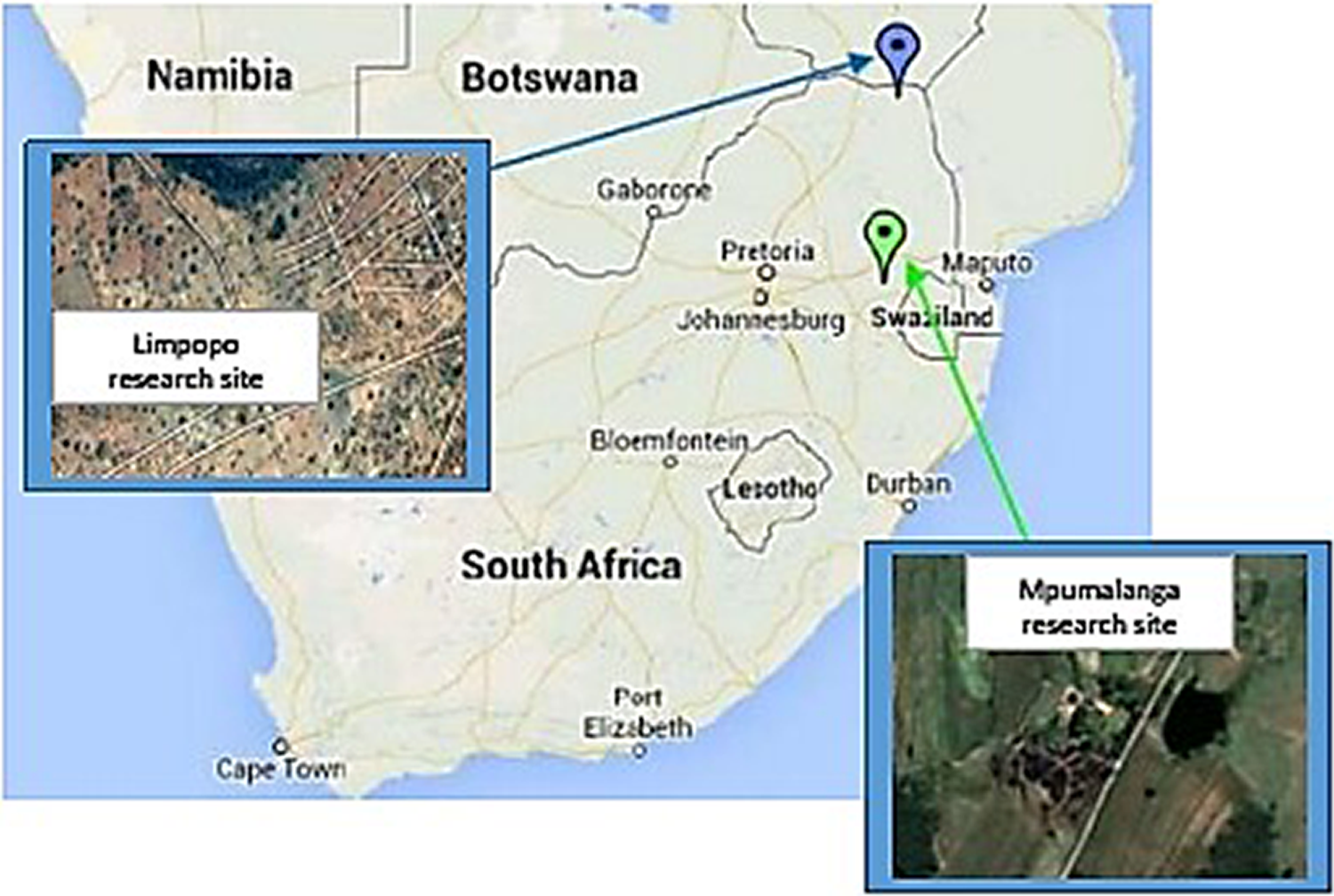
Geographic location of research sites.
Local partners assisted with the purposive selection of participants and research criteria demanded that participants be either Tshivenda- or SiSwati-speaking and live within the risk context. In order to mirror sociocultural power beliefs and account for the intergenerational transfer of indigenous knowledge (Owusu-Ansah & Mji, 2013), the sample (n = 72) was stratified for age (youth = 48, elders = 24) and gender (women = 41, men = 31). In this way, it was possible to see whether indigenous knowledge of elders was evident among young people. To accommodate local knowledge on age, participants decided how they wanted to delineate age boundaries. Across the sites, there was consensus that these self-selected age boundaries were 18–29 years for young people and 30 and over for elders.
Tables 1 and 2 summarize demographic information of the research participants related to age and education for each of the research sites, respectively.
Demographics—Limpopo Participants.

Demographics—Mpumalanga Participants.

As illustrated by Table 1, most of the Limpopo participants were females, and the majority of participants were in the age category of 18–25 years. Only 26% of the Limpopo participants had completed matric, and none of the participants have had an opportunity for further education.
Similar to their Limpopo counterparts, the Mpumalanga participants were mostly women and fell in the age category of 18–25 years. All the Mpumalanga participants reported some level of education, and the majority reported to have completed high school.
As is the case in similar postcolonial spaces (Ebersöhn, 2017), in addition to marginalized non-Western worldviews, the elders and young people who participated in indigenous pathways to resilience project were marginalized due to extreme levels of poverty. Structural disparity caused them to struggle in accessing limited services (health, education, welfare, and employment). Owing to the isolated places of inquiry, the high national level of unemployment (27.7%; StatsSA, 2017), and limited job opportunities, the majority of participating elders and young people were unemployed. The skewed education opportunities in South Africa (Howie et al., 2016) suggest high levels of illiteracy, especially among elders and females. With regard to contextual vulnerability, the following therefore served as secondary questions that directed our methodological decisions: Which methods can accommodate high levels of illiteracy? Which methods reflect sensitivity to heightened vulnerability due to poverty and isolation in a society that is already highly unequal? Which methods acknowledge sociocultural diversities related to age, gender, and governance hierarchies?
We opted for participatory methods as we intentionally wanted to include indigenous knowledge systems (Darroch & Giles, 2014) and marginalized existing sociocultural strengths in the participating indigenous groups. Consequently, we wanted the elicitation methods not to simplistically script participants as vulnerable victims of inequality. Rather, we wanted to create a space that would enable participants to contribute from a power base of strength. To our minds, participatory methods were the answer to methodological questions such as: Which methods honor a variety of spoken languages? Which methods provide opportunities for nonmainstream sociocultural perspectives to be elicited? Which methods embrace multiliteracies familiar in the research spaces? Which methods include relevant collectivist modes?
Data generation consisted of two waves (8 days per site over 2 years) of PRA-led conversations per site, conducted in regional mother tongues and facilitated by trained local translators. Data sources included (i) PRA-led conversations that were documented as verbatim transcriptions of audio-recordings translated into English (Davidson, 2009; MacLean, Meyer, & Estable, 2004); (ii) observations, documented textually in field notes and research journals by multiple researchers and visually as figures of the context over time, and (iii) PRA artifacts (Angrosino & Rosenberg, 2011).
Thematic in-case and cross-case analysis (V. Braun & Clarke, 2006) of the data sources produced inductive themes (Fereday & Muir-Cochrane, 2008) on indigenous pathways to appraisal, adaptive coping, and well-being, that is, conceptualized as indigenous pathways to resilience.
The Need for Indigenous Knowledge
Worldwide knowledge is skewed to privilege western and global north worldviews. Overall, indigenous knowledge represents knowledge systems that differ from dominant Western knowledge. Hence, the documentation of indigenous knowledge systems will challenge most modern concepts of knowing and being, as well as knowledge creation, knowledge application, and meaning making (Smith, Maxwell, Puke, & Temara, 2016). The documentation of indigenous knowledge could further contribute to new concepts, theories, and intervention strategies that resonate with indigenous peoples’ values and ways of knowing (Chilisa, 2011).
Indigenous scholars are mainly interested in the concept of indigenous knowledge and specifically how it is produced, enhanced, and applied (Smith et al., 2016). Indigenous knowledge is believed to originate naturally within a specific culture, society, and location (Mapara, 2009; Odora Hoppers, 2008) and is shared between generations within the context of community living (Owusu-Ansah & Mji, 2013). With regard to its nature, indigenous knowledge reflects indigenous culture (Nilsson, 2008) and is used to manage the environment (Odora Hoppers, 2008).
Chalmers (2017) states that indigenous research methodologies and decolonizing research methodologies are often seen as similar, due to their emphasis on the need to transform science—however, they are paradigmatically different. Decolonizing research methodologies are grounded in critical theory found within the transformative paradigm of Western research (Kovach, 2010). Although indigenous research methodology welcomes a decolonizing perspective, it centers on indigenous knowledge found in indigenous worldviews, including philosophical views on ontology and epistemology (Kovach, 2010; Wilson, 2001).
The Relevance of Elicitation Methods to Document Indigenous Knowledge With Marginalized Populations
Importantly, for research, relationships and interconnectedness are often associated with an indigenous worldview (Chalmers, 2017). A relational ontology implies a relational understanding of the self, others, and the environment (Chilisa, 2012). Knowledge creation unfolds in such a relational context and will reflect the relationship between indigenous knowledge drivers themselves, others, and the environment (Chilisa, 2012; LaFrance, Nichols, & Kirkhart, 2012; Nsamenang, 2006; Owusu-Ansah & Mji, 2013; Roos, Chigeza, & van Niekerk, 2010).
Indigenous understandings can be conceptualized by incorporating both cultural values and complex indigenous constructs that are expressed through specific stories and metaphors grounded in local culture and language (Kirmayer et al., 2011). Thus, participatory methodology is useful in indigenous research because of its relational ability to support indigenous worldviews (Zavala, 2013) and learn from participants, and to be informed by local understanding, rather than by the researcher’s own worldview (Abedi & Badragheh, 2011; Chambers, 2006, 2007, 2010; Goodarzi, Tavassoli, Ardeshiri, & Ahmadi, 2011; Zavala, 2013).
Participatory methods support indigenous relational and epistemological assumptions that knowledge is generated through interaction and (Chambers, 2007; Zavala, 2013) in a collective space of sharing and collaboration. Participatory methods enable access to indigenous knowledge as the drivers of indigenous knowledge are accepted as experts who express and analyze complex patterns and relationships in their ways of living (Chambers, 2013).
Access to indigenous knowledge systems is further made possible by the flexible nature of participatory methodology, which allows research teams to adapt the research process to different cultural contexts (Goodarzi et al., 2011). The user-friendly nature of these methodologies allows people access to remote communities where their voices are not often heard (Chambers, 2007), which in turn foregrounds different ways of knowing (Coburn, 2013; Dei, 2013). In sum, participatory methodology is useful in indigenous research because of its potential to transform knowledge production (Brewer, 2013).
Methods that appear to work well in indigenous research are usually qualitative, collaborative, and conversational in nature (K. L. Braun, Browne, Ka’opua, Kim, & Mokuau, 2013; Coombes, 2012). PRA methods such as participatory mapping and diagramming (to be discussed later) are qualitative in nature, and they promote collaboration between researchers and participants through the facilitation of conversations in which the participants are considered the experts. What makes PRA mapping and diagramming especially useful, is the fact that it has the potential to facilitate the exploration and expression of unconscious thoughts, beliefs, and assumptions (Mazetti & Blenkinsopp, 2012). The latter again allows access to participants’ realities (Abedi & Badragheh, 2011).
Conversation forms an important part of indigenous research as it allows knowledge to be shared through storytelling—congruent with indigenous culture (Kovach, 2010). Creating a space for conversation led by indigenous knowledge drivers also guides nonindigenous researchers to acknowledge values and worldviews that differ from their own (K. L. Braun et al., 2013). Methods should not only be conversational in nature but also allow for visual representation of indigenous knowledge systems, especially when low literacy levels of participants and language differences between researchers and participants are influencing factors. PRA methods such as mapping and diagramming are visual in nature (Chambers, 2013), and if research teams collaborate with translators, conversations in which indigenous knowledge is embedded, become possible.
Using Participatory Methods for Elicitation That Make the Most of Culture and Context
We were able to generate examples of how participatory methods made it possible to elicit indigenous psychology insights that accommodated both culture and context. We could track and record the process of methods as the team of six coresearchers in the indigenous pathways to resilience study each maintained a researcher journals (Silverman, 2013). In these researcher journals, the multiple researchers documented field notes as well as their reflections on research processes (Angrosino & Rosenberg, 2011). In addition, we could study the visual data (Chambers, 2006; Ghaffari & Enami, 2011) of the participatory sessions together with the researcher journals to clarify our understanding of examples of how the methods enabled elicitation given a nondominant culture and context.
We provide examples of how, when eliciting indigenous insights, (i) reverence for sociocultural strengths can be demonstrated and (ii) how to enact sensitivity to context.
Demonstrating Reverence for Sociocultural Strengths When Eliciting Indigenous Insights
In this section, we provide examples from the indigenous pathways to resilience study of how to demonstrate reverence for sociocultural strengths when eliciting indigenous insights. These examples include the use of (i) symbols that reflect nonmainstream sociocultural perspectives, (ii) familiar multiliteracies, (iii) a variety of spoken languages, and (iv) familiar collectivist modes.
The Use of Symbols That Reflect Nonmainstream Sociocultural Perspectives
A primary concern when eliciting knowledge with participants for indigenous psychology purposes was to make use of symbols that would be familiar—contextually and socioculturally—to participants in both sites. The researchers would obviously have no expertise with regard to appropriate symbols, metaphors, and queues to explore pertinent resilience constructs and processes. They therefore collaborated with local partners from previous projects at both sites to reach consensus on prompts that could elicit group conversations on constructs and processes relevant to knowledge on indigenous pathways to resilience. These prompts (or items) had to be effective in eliciting useful contributions—irrespective of the site, age, gender, and language of participants.
To elicit the views of participants on risk factors and protective resources prevalent in their lifeworlds, the following community mapping prompt was decided on: Imagine you are a bird and you are flying over your community. Think about everything that you would be able to see. Draw this on the page. After drawing a picture of their community (Figure 2), they identified resources on their map by pasting the picture of a cow (culturally considered a resource) on each resource. To identify risk factors in their communities, they pasted the picture of a snake (culturally perceived as a risk) on each risk. The way in which the participants viewed their resources and risks gave insight into their relationship with the environment, their appraisal of adversities, and the resources they have available to manage their environment.

Example of a community map constructed by a group of older men, Limpopo, 2012.
The image of a drum was used to elicit knowledge on established resilience processes (how participants drew on available resources to adapt to risk). The drum metaphor is socioculturally appropriate as a drum was traditionally used to call and gather community members to discuss a problem and find a solution. Each gender-by-age group received a poster with the image of a drum (Figure 3), and the principal investigator asked all groups simultaneously: The next thing we would like you to share is how you solved a problem in the past. We are really interested in how you solved it. Please draw or write on the page how you solved it.

Younger men, with a visual representation of how they solved problems in the past, Mpumalanga, 2012.
To elicit additional examples of resilience processes from an Indigenous Psychology perspective, the image of a knobkerrie (a traditional weapon carried for protection against attacks) was used to assist participants to think and talk about protection against harm. The question posed verbally to accompany this visual prompt was: How would you solve a future problem? Please draw or write on the page how you would solve this problem. The figure shows a poster made by participants at the Limpopo Province research site (Figure 4).

Example of the older men group’s visual representation of solving a future problem, Limpopo 2012.
In order to elicit perspectives on what was considered as psychological well-being (a positive adaptive outcome in resilience processes), we decided to use the metaphor of a mealie (corn on the cob). Mealies are familiar as crops cultivated for nourishment. Together with the image of the mealie on the poster we asked: If you go to bed at night, and you close your eyes, and you go to sleep, and you think of everything that has happened in that day, what makes you think that this was a good day? Please draw the story or things that happened to make it a good day. Below is an example of the fourth PRA discussion (Figure 5).

Older women’s poster with visual representation of well-being, Limpopo, 2012.
Following in-case and cross-case analysis, the researchers returned to the respective sites to ask participants whether they agreed with the documenting of their contribution to knowledge on indigenous pathways to resilience. The participants were given the opportunity to edit, clarify, and elaborate on the analyzed and interpreted data (Carlson, 2010). Participants sat collectively as community members to weigh in on the research team’s views and understanding of the shared knowledge as seen in Figures 6 and 7.

Member checking, Limpopo, 2014.

Member checking, Mpumalanga, 2014.
The Use of Familiar Multiliteracies
We wished to draw on the heritage of visual and verbal traditions in the Venda and Swati cultures, since African culture is rich in indigenous stories and symbolism (Mkabela, 2005). Visual images are often used in research with indigenous communities (Liebenberg, 2009) as they have the added benefit of circumventing low literacy levels, especially among elders participating in the study. We consequently decided to use participatory mapping and diagramming (Chambers, 2006; Ghaffari & Emami, 2011), as it creates opportunities for participants to leverage their inherent knowledge and express it in a familiar literacy (visual and narrative). In participatory mapping and diagramming, participants draw maps and diagrams and then discuss among themselves what their life expressions mean (Chambers, 2007; Khodamoradi & Abedi, 2011).
Our use of PRA methods in conjunction with socioculturally relevant symbols culminated in a comfortable rhythm of visual and narrative literacies familiar to participants. This served as a safe space in which to elicit contributions from men, women, youngsters, and elders—in both the remote sites. For example, in the community mapping exercise, each gender–age group drew a community map on a large poster using colored pens. The flexible nature of PRA discussions allowed the participants to add to their community map or identify more resources and risks as the discussion unfolded. Figure 8 depicts a moment where the participants discussed their community maps among one another.

An older women group creating their community map, Mpumalanga, 2012.
The processes of negotiating informed consent hinged on navigating the following cumulative challenges: (i) High levels of illiteracy, especially among older participants; (ii) multiple languages spoken between sites and research partners; (iii) being circumspect when explaining that refusing to participate was acceptable, even though neighburs may participate, senior community members had approved the research protocol, and “powerful” outsiders were asking. The protocol that we used to attempt to address this quagmire of power inequality was as follows: A familiar local translator explained to participants in their home language what they would be doing, for what reason, what the information would be used for, and that they were allowed to withdraw at any stage. In previous work conducted in similar sites in Southern Africa, teacher-participants explained to us that anonymity was not their preference (Ebersöhn, 2017). Consequently, we asked participants whether they wanted to be acknowledged as cogenerators of the knowledge—whether by name or visually (Rambaldi, Chambers, McCall, & Fox, 2006).
Including a Variety of Spoken Languages
We wanted the chosen research methods to favor the two indigenous languages of the participants and translators, so as to enable researchers (with diverse home languages of English, Afrikaans, and Yoruba) to understand contributions by participants as translated by local translators.
Using translators is common in research where cultural diversity prevails (Wong & Poon, 2010). Considering the complex nature of indigenous knowledge, the indigenous pathways to resilience research team viewed the role of the translators as more than mere switching between languages (Van Nes, Abma, Jonsson, & Deeg, 2010). The translators were expected to mediate between the cultural worlds of the research team and participants (Wong & Poon, 2010)—an exercise that required from them to consider cultural nuances (Chen & Boore, 2010) to limit miscommunication that could lead to flawed data (Choi, Kushner, Mill, & Lai, 2012). The translators who partnered in the indigenous pathways to resilience project were fully bilingual and had the same sociocultural background as the participants.
At the Limpopo site, four translators were used—one for each gender–age group. In Mpumalanga, one participant per group who was conversant in English worked in tandem with a translator who circulated among the different groups to assist with translations.
Some of the translators had experience with similar previous projects. The principal investigator took time before the start of research activities to explain their role and responsibilities during the data generation process as is illustrated in Figure 9.
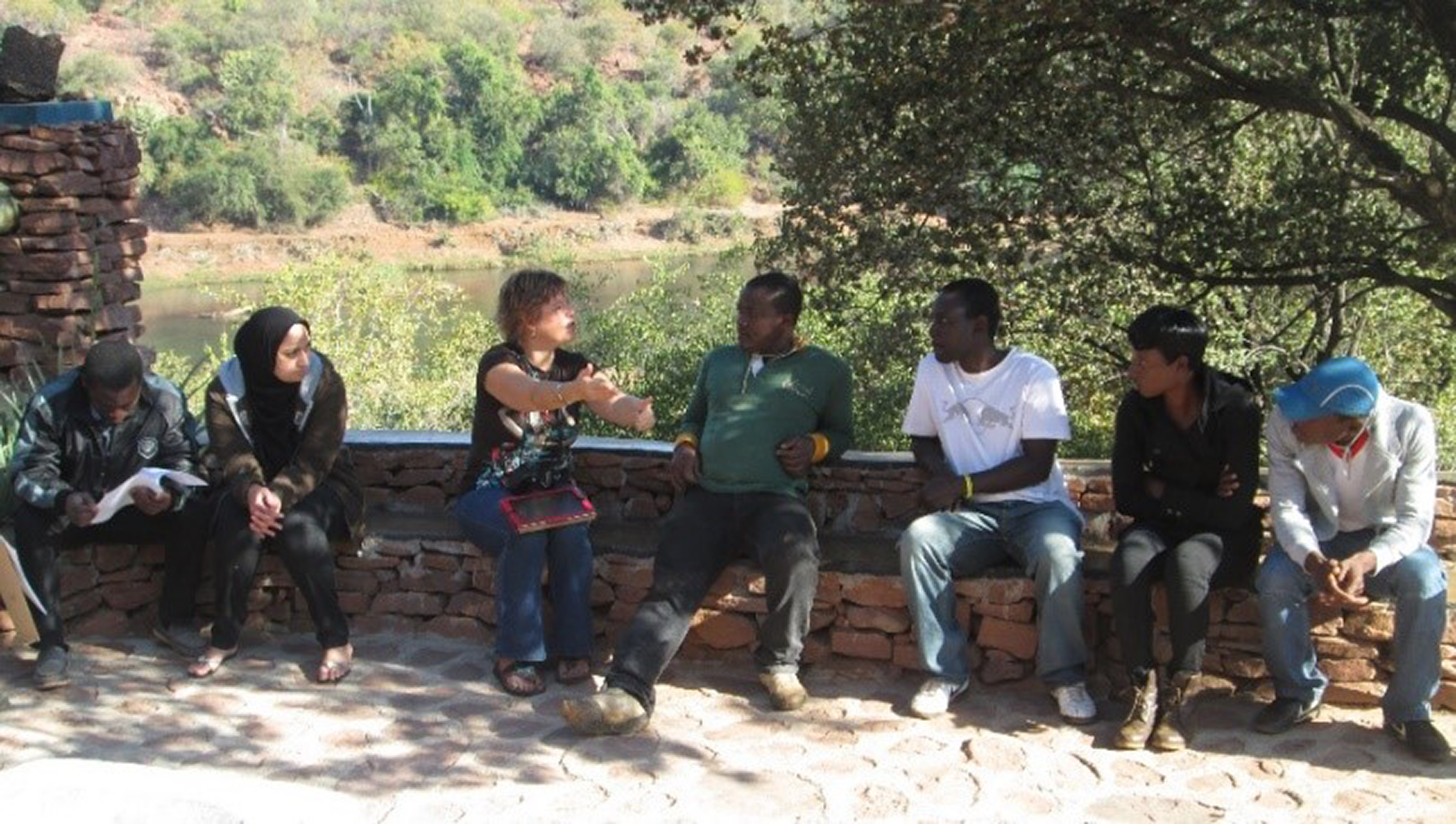
Principal investigator preparing fellow translators, Limpopo Research site, 2012.
After the general orientation, researchers ensured that the translator for each gender–age group understood what was expected and emphasized the importance of directly translating participants’ contributions rather than giving their own interpretation (Squires, 2009). Figure 10 illustrates a researcher in conversation with a translator following the initial preparation by the principal investigator.
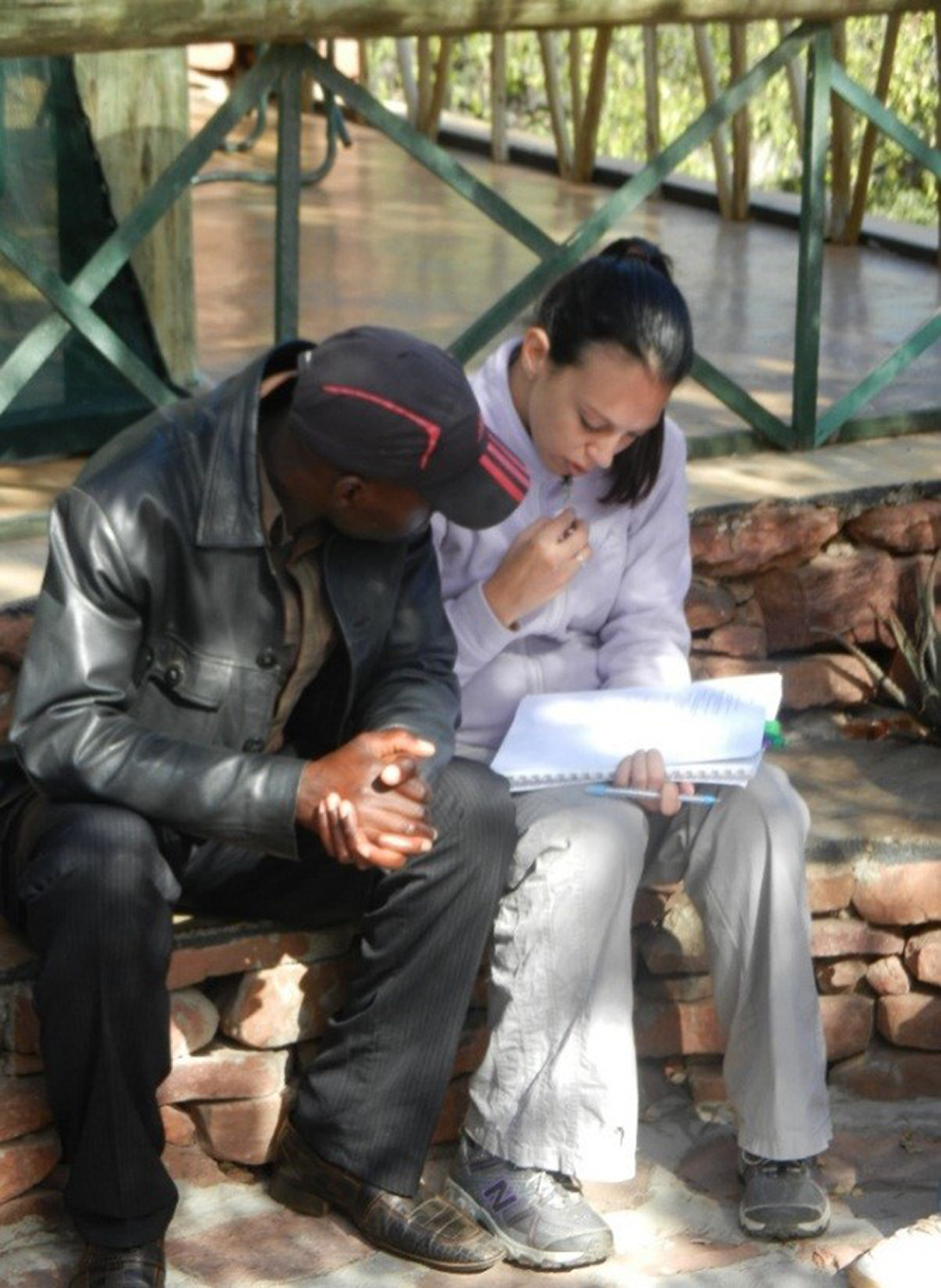
Researcher with translator, Limpopo, 2012.
At each of the research sites or wave of data generation, the principal investigator voiced, in English, the standard instructions tailored for each PRA activity. Figure 11 illustrates the principal investigator explaining the instruction for one of the PRA activities.

Principal investigator and translator working together to introduce one of the participatory reflection and action activities, Limpopo, 2012.
For each activity, participants first discussed and completed visual presentations as answers and thereafter explained these visual answers to the researcher in their gender-by-age group. The researcher could then ask for further explanation to either make sure they correctly understood the shared indigenous knowledge or to clarify what has been said.
The PRA discussions were transcribed verbatim by various role players. The fieldworkers were able to transcribe any conversation that occurred in English. SiSwati and Tshivenda speakers were sourced and asked to transcribe all conversations that took place (English and home language sections), after which they had to transcribe the siSwati and Tshivenda sections. The research team was able to compare the English transcriptions with the translators’ transcriptions, which promoted transparency (Davidson, 2009).
Using Familiar Collectivist Modes
We wanted the coproduction of knowledge to mirror the collectivist culture synonymous with Venda and Swati participants. We did this structurally by placing the four gender-by-age groups in the same venue per site. We also gave the verbal prompts per activity to the group at large. In addition, the poster activity could only be completed after conversations within groups took place. Once there was consensus among group members as to what they wished to note as answers, any member or members of the gender-by-age group could draw or write down their answer. After each activity, the respective groups gave verbal feedback to the other three groups in “presentation” style. The open-ended democratic nature of PRA contributed especially to a space where collaboration and sharing could be promoted by respecting several voices (Chambers, 2010).
Being Sensitive to Contextual Vulnerabilities When Eliciting Indigenous Insights
In this section, we provide examples from the indigenous pathways to resilience study of how to demonstrate sensitivity to contextual vulnerabilities when eliciting indigenous insights. These examples included strategies to (i) equalize opportunity given structural disparity, (ii) equalize power, and (iii) honor gender and age hierarchies.
Strategies to Equalize Opportunity Given Structural Disparity
Limited infrastructure for public transport, as well as sparse funds to access such transport, meant that we had to meet with participants in spaces close to their homes. The Limpopo data generation venue was located at a campsite with a roofed open space next to the Mutale River. Since the site was not within walking distance for the participants coming from different villages, they were collected in vehicles. Transport also had to be organized in the Limpopo province for participants who lived in villages too far removed from the site to travel by foot. Figure 12 shows the Limpopo data generation site.

Limpopo data-gathering venue for 2012 and 2013.
The Mpumalanga data generation site was at a high school located inside the community that was walking distance for the participants. During the first research visit, a classroom was made available for the data generation exercise and a roofed open space was used for the second and third visits, as illustrated in Figures 13 and 14.
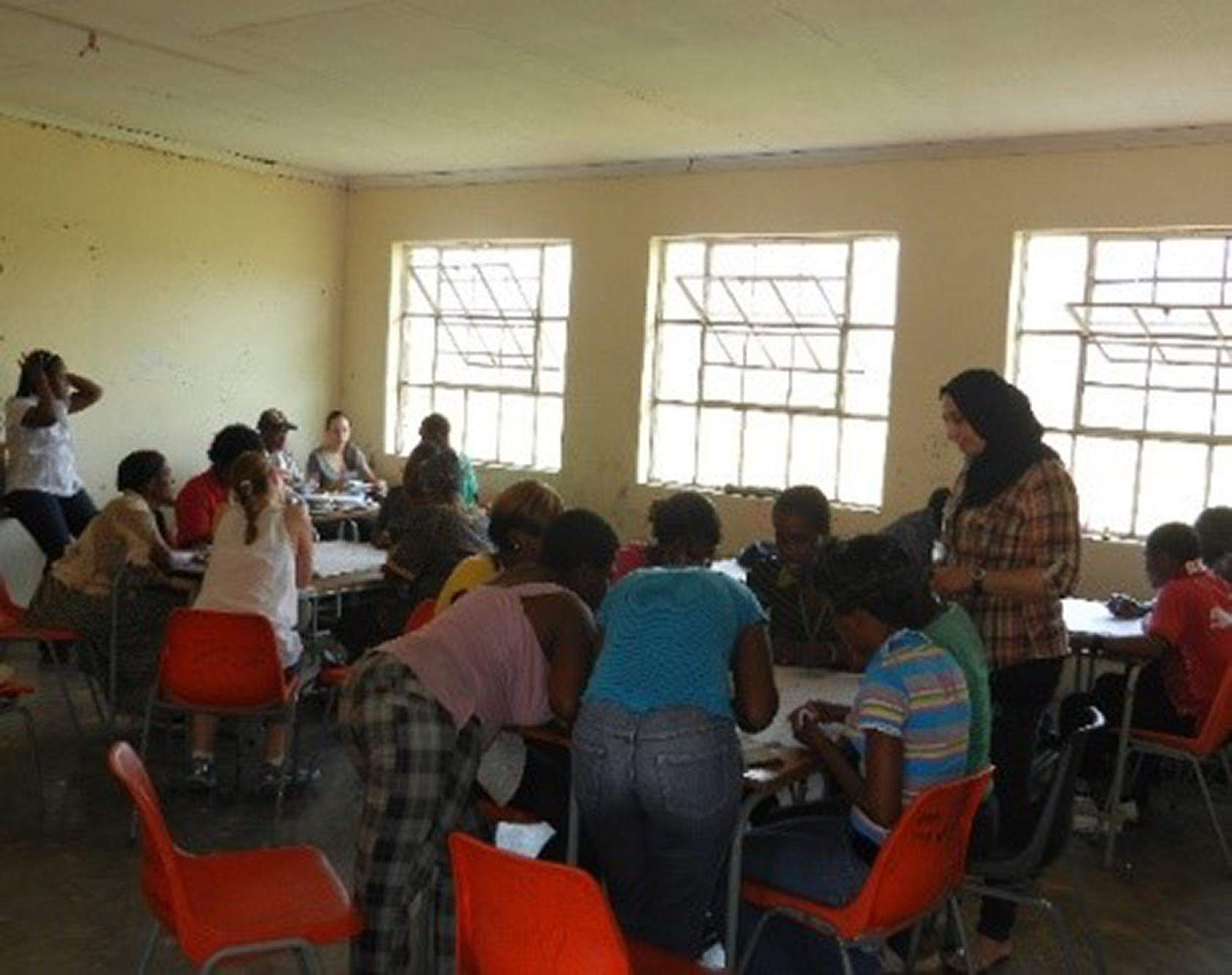
The data-gathering space for 2012, Mpumalanga.

The data-gathering space for 2013, Mpumalanga.
At the heart of poverty lies hunger and so, to start every day, we all shared a meal. Besides addressing the reality of deprivation, this shared time also mirrored the sociocultural practice of hospitality that is characteristic of traditional rural spaces. Figure 15 shows the younger women group at the Mpumalanga research site sharing a meal with one of the fieldworkers.

Sharing a meal with participants before data gathering, Mpumalanga, 2012.
In some instances, participants could not attend data collection sessions. Absences occurred particularly when opportunities for employment presented themselves and when participants had to collect social grant payouts in person. Showing respect for the voluntary nature of research meant that the research team had to bear with it if fewer participants attended on some data generation days. The team also needed to be flexible in instances where participants had to leave data generation sessions early to go back to work. In cases where participants were late, or where new participants arrived in the middle of PRA conversations, one of the coresearchers stepped away from his/her conversation to introduce the participants to the indigenous pathways to resilience project and to facilitate the process of obtaining informed consent.
Strategies to Equalize Power
Our research team turned up at each of the remote sites as obvious advantaged, urbanite outsiders, privileged by structural opportunities of education and class during apartheid. Three of us were from the oppressor White racial group, one of us was Muslim, and one came from Nigeria. Not only were the five of us foreigners within these spaces, we also knew that our presence would remind community members of a continuum of advantage and disadvantage (having been privy to structural opportunities or not). We used a range of strategies to attempt to be sensitive to this power disequilibrium.
According to Chambers (2006); Gibbon (2002); and Rambaldi, Chambers, McCall, and Fox (2006), the time of people living in rural communities is often precious, especially at difficult times of the year such as during the harvesting season. Rural people are often quite polite, hospitable, and friendly to outsiders, who do not realize the sacrifices that these people have to make to participate in activities such as research studies. As such, the research team needed to be flexible and respectful to ensure that participants were accommodated in terms of the amount of time that they were able to spend with us, without compromising on the quality of the data that were generated. The indigenous pathways to resilience research team was able to connect with participants by implementing some of the core principles of PRA, such as investing time to build rapport (e.g., by sharing a meal or tea at the beginning of a day and lunch midday; Chambers, 2006). Dividing the participants into groups according to their age and gender also promoted interaction, as this limited the emergence later of possible issues related to the power inherent in age and gender.
A significant benefit at the sites we sampled was that we could leverage existing partnerships that the Centre for the Study of Resilience and its partners had established in the past. Consequently, although we were outsiders in the Mpumalanga space, we were familiar outsiders who had been collaborating in the space for more than a decade. In the Limpopo space, again, we fell under the auspices of another long-term collaboration. In both cases, the participants had not been involved in previous studies, and the researchers and participants did not know one another. However, community participants appeared to accept the researchers’ presence by virtue of their knowledge of prior engagements between the researcher and base in each site. Thus, long-term collaboration in these isolated sites had what seems to be a “pay-it-forward” effect, where previous experiences of researcher presence instilled familiarity and encouraged members of the community to take part in new research endeavors.
We also attempted to establish and maintain rapport with each of the stratified gender-by-age groups by arranging for the same researcher to collaborate with a group over the 2-year period. In addition, we worked with local partners with whom we had forged relationships over time when we made decisions on sampling procedures, providing appropriate food and refreshments, and so on.
However, the process of documenting data inevitably and repeatedly reconfirmed the differences between researchers and participants. No matter how inconspicuously we tried to take photographs of processes and products of PRA activities; to audio-record conversations between the research team, translators, and participants; or to quickly jot down an observation (Angrosino & Rosenberg, 2011) in a researcher diary, these actions reaffirmed our “otherness” in the process of the joint documentation of elicited insights. Figure 16 shows a fieldworker making field notes.

Fieldworker making observation notes, older men group, Mpumalanga, 2012
Honoring Age and Gender Hierarchies
As mentioned earlier, we stratified the samples for age and gender to respect inherent social and cultural power structures. This decision was made together with local partners. Our purpose was to be nonjudgmental and refrain from disrupting gender and age hierarchies, so that the already artificial (and potentially outsider-dominated) research space may have some elements of familiarity where participants could feel safe and comfortable to freely express their views on resilience.
The data generation venues therefore had to offer sufficient physical space to allow participants to work in four separate gender–age groups (older women, older men, younger women, younger men). These groupings also respected the internal workings of the communities, especially their socially differentiated nature with regard to gender and age (Chambers, 2006; Gibbon, 2002). The figures are of the participant groups, each with a fieldworker (Figures 17 –20).
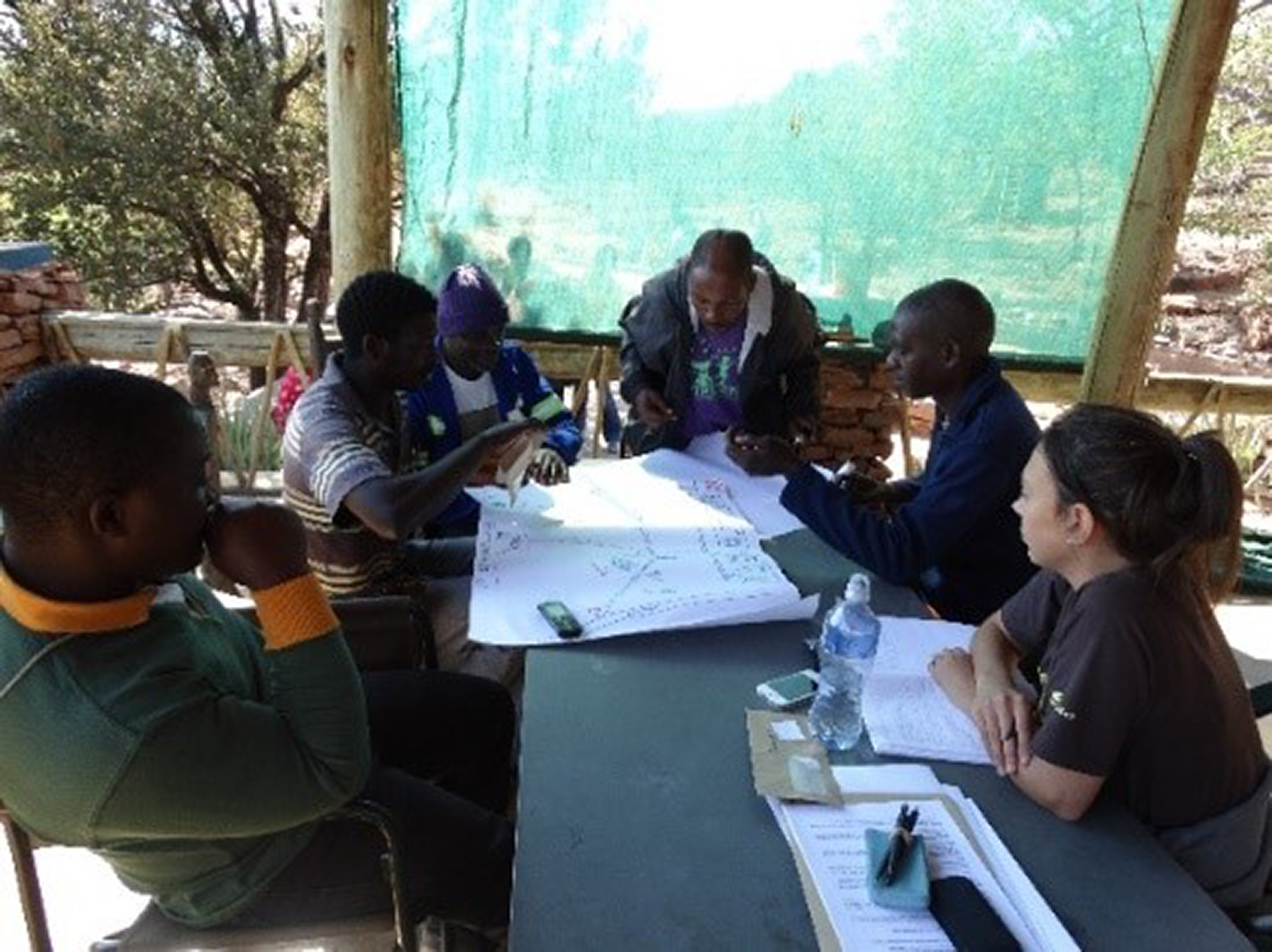
Older men's group and fieldworker, Limpopo, 2012.
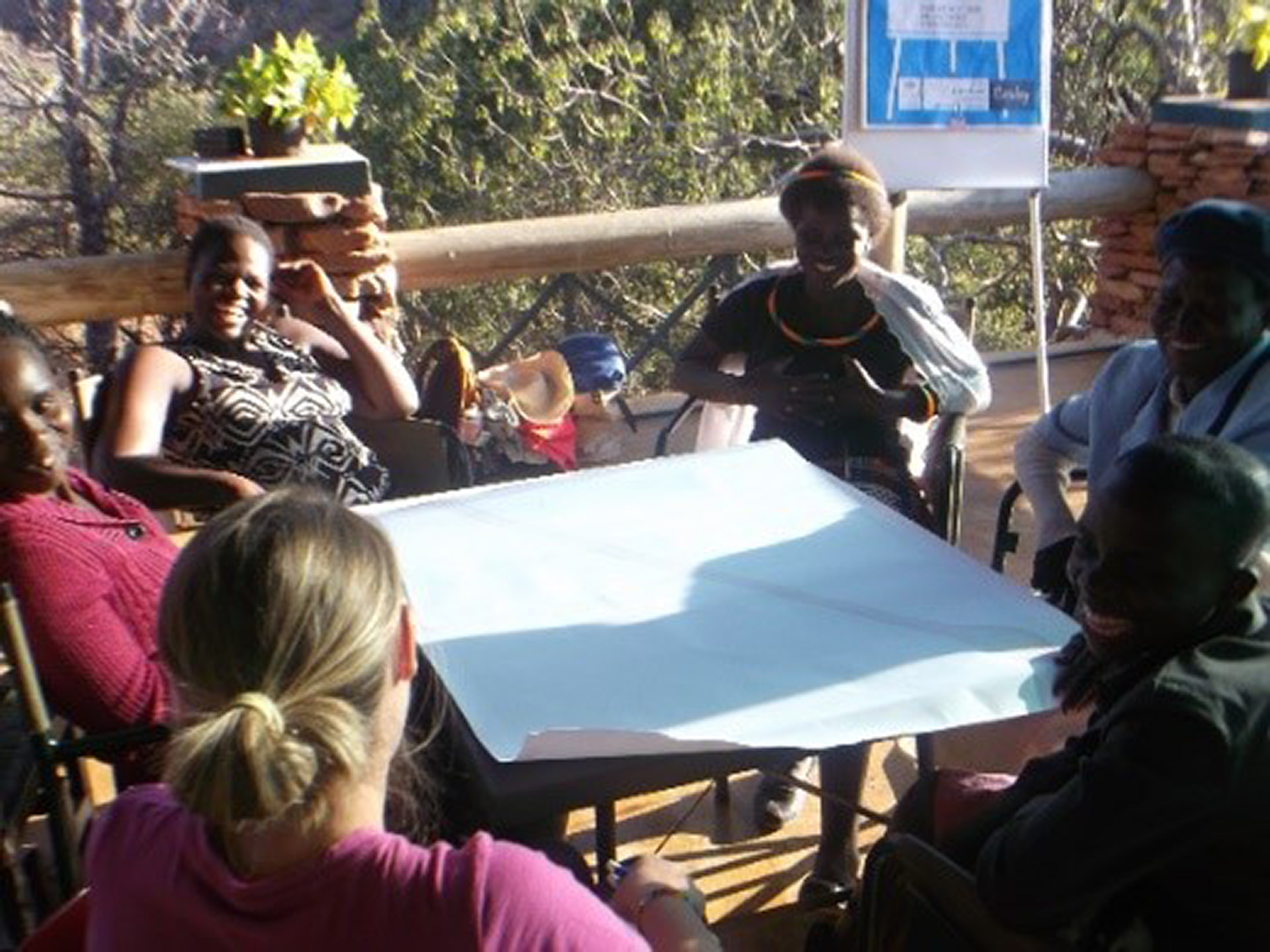
Older women's group and fieldworker, Limpopo, 2012.

Younger men's group and fieldworker, Limpopo, 2012.

Younger women's group and fieldworker, Limpopo, 2012.
Discussion—Accepting Fallibility and the Humility of Eliciting Indigenous Knowledge
In our quest to contribute to a fledgling Indigenous Psychology base in Africa, we have had to accept that our elicitation of indigenous insights is fallible. Although this is the case, we assert that even these fallible endeavors have significance in adding alternative perspectives to psychology knowledge dominated by Western views. In particular, we acknowledge the importance of ensuring that research is done “with” rather than “on” indigenous people (Drawson, Toombs, & Mushquash, 2017), and we posit that the nature of research reaffirms power differentials.
As a research team, we were aware of our stance as outsiders who do not grasp what living in participating communities actually entails. We also used many strategies to attempt to make the elicitation of insider views as familiar and “painless” as possible. However, in the end, documenting the elicited insights reiterated the presence of different roles and benefits—and ultimately power. Part of accessing and documenting indigenous knowledge through research is then the acknowledgment that one can neither completely understand the inter-dynamics of participants nor the subtleties, nuances, and significance of interactions of what is shared (Walker, Eketone, & Gibbs, 2006).
Indigenous knowledge is complex, as it captures the values, thoughts, and beliefs of indigenous people that have been obtained through their long-standing engagement with a specific environment (Bohensky & Maru, 2011; Shams & Hwang, 2005). This complex nature of indigenous knowledge naturally limits complete understanding by an outsider, especially one adopting a Western perspective (Sillitoe & Marzano, 2009). We found that reflexivity (individually and jointly) assisted us to identify limitations in our understanding of the expressed insights.
During the indigenous pathways to resilience research project, indigenous knowledge was accessed at a specific point in time, which means that the documented knowledge does not account for all the variables that influence the participants’ relational reality and the way in which they manage this reality (Mann, 2003). In other words, more indigenous knowledge and richer insights may have been accessed if more time could have been spent over a longer period within the communities involved.
A conundrum of the collectivist pathway we followed is that on the one hand, we attempted to mirror customary social practices, while on the other, we did not know whether we elicited a representative view from all participants per group. Even stating this may be the result of our imperfect “normalized” Western and individualized lenses—where we ascribe to the notion that only when each individual has a turn to speak, they can each “truly” express their individual views. Potentially, the cadence of expression and reply and consensus in a collectivist mode of elicitation afford opportunities for “all” voices to be elicited.
Despite the flexible and open nature of PRA conversations, linguistic and cultural differences further complicated access to complex indigenous knowledge systems. Understanding the complexity of indigenous knowledge requires significant linguistic and cultural skills to avoid oversimplifying or misrepresenting these unique knowledge systems (Smith et al., 2016). We would like to claim that the use of translators—who were fluent in the home language of participants and familiar with their culture (as most of them resided in the communities themselves)—helped to bridge language and cultural barriers. However, this claim may be simultaneously naive and arrogant. At worst, what we may consider elicited and documented data may be only the views of the translators. Ideally, indigenous researchers would be extremely well-placed to elicit knowledge from indigenous participants who share the same language, sociocultural history, and contextual familiarity. This ideal may unfortunately remain elusive for some generations yet in a transforming society such as South Africa, where indigenous peoples were prevented the opportunity to become researchers at higher education institutions.
Accessing and working with indigenous knowledge comes with great responsibility. The indigenous pathways to resilience research team served as a link between the indigenous and scientific community, which can cause researchers as outsiders to still be criticized as colonizing the shared knowledge (Darroch & Giles, 2014). It was therefore our responsibility as a research team to ensure the accurate representation of the shared knowledge while still viewing the participants as the holders of indigenous knowledge (Chambers, 2006; Ponterotto, 2010; Rambaldi et al., 2006). With our use of member checking (Carlson, 2010), we tried, in as far as possible, to ensure that the elicited indigenous knowledge systems were represented truthfully.
Indigenous people are the drivers of indigenous knowledge (Bohensky & Maru, 2011). As such, they can decide what they want to share with researchers and what is allowed, or they may be reluctant to allow researchers into their communities (Cochran et al., 2008). Although participants allowed us to witness their discussions, they—as the experts of their knowledge systems—decided how much indigenous knowledge we could be privy to. In the indigenous pathways to resilience research project, it was useful to create spaces for sharing by using more than one PRA discussion activity and ensuring that the data were documented in different ways. The latter ensured that the indigenous knowledge that participants were willing to share was documented as thoroughly as possible.
Based on the totality of the indigenous pathways to resilience team’s experience, it was concluded that indigenous research involves much more than merely using indigenous methods in indigenous contexts to access and document indigenous knowledge. It also goes beyond being able to motivate the extent to which certain methods support indigenous epistemology and ontology in order to prove why certain methods are suitable for indigenous environments. Indigenous research comes down to the intention of researchers to document indigenous knowledge and their ability to constructively collaborate with the true drivers of indigenous knowledge. It remains the researchers’ responsibility to ensure that the research process serves the needs and interests of the communities to which indigenous knowledge belongs.
Conclusion
By its very nature, studies on indigenous knowledge require the selection of marginalized, non-Western populations. The aim of this article was to provide novel insights on how participatory elicitation spaces can make the most of culture and context in indigenous research.
Although participatory methodologies have been found to be effective to acknowledge power imbalance, in this article, we argued that sympathy for an oppressed worldview or a context of deprivation is not sufficient when eliciting indigenous knowledge. Rather than highlighting an oppressed knowledge base that requires mollycoddling, we argue that the use of intentional methods enables “oppressed knowledge” to stand on its own feet.
We used one exemplar study on indigenous knowledge to illustrate our contention. The multiple researcher journals and visual data from this study served as data sources to track and report on the process of methods. We found examples of methodological strategies that can be used deliberately to make the most of culture and context. Methods to make the most of culture include using (i) symbols that reflect nonmainstream sociocultural perspectives, (ii) familiar multiliteracies, (iii) a variety of spoken languages, and (iv) familiar collectivist modes. Methods to make the most of contextual characteristics include being intentional to (i) equalize opportunity given structural disparity, (ii) equalize power, and (iii) honor gender and age hierarchies.
The intentional use of these methods during elicitation enables researchers to extend beyond paternalistic concern to protect the interests of marginalized populations. Using these methods can enable researchers to engage with depth and breadth with that which signifies “otherness.” And when documenting indigenous knowledge, this is what is required of researchers: to readdress incorrect and insufficient understandings and even misrepresentations of indigenous ways of living (Wilson, 2008).
Footnotes
Declaration of Conflicting Interests
The author(s) declared no potential conflicts of interest with respect to the research, authorship, and/or publication of this article.
Funding
The author(s) received no financial support for the research, authorship, and/or publication of this article.
