



Abstract
Aim
To organize a cross-cultural adaptation study and analyze the reproducibility and test-retest reliability of a Brazilian version of the Toddler Sensory Profile 2 (TSP2Br) for children aged 7–35 months.
Methods
The English language version of the profile was translated and culturally adapted into Brazilian Portuguese, administered to 168 caregivers of toddlers aged 7–35 months, and then re-administered to a portion of the sample (39 caregivers; 23%) for 7–14 days for test-retest reliability. The internal consistency and test-retest reliability was analyzed using the Cronbach’s alpha and kappa coefficient, respectively. As it is a norm-referenced standardized assessment, the cut-off scores used were 1.0 and 2.0 standard deviations above and below the mean for each group of items established as the preliminary cut-off scores for the Brazilian children.
Results
The TSP2Br showed good internal consistency (>0.70) when measured on the total scale; however, when it was analyzed for sensory areas, five to seven areas presented alpha values <.70. By quadrants, alpha was <.70, for all items. The test-retest values fell into the category of near-perfect agreement (.89–.97). The preliminary cut-off points of the Brazilian scores were distinct from those of the Americans.
Conclusions
The TSP2Br showed preliminary reliability and validity in the identification of sensory processing problems in Brazilian children aged 7–35 months; however, it would be necessary to increase the sample size to generalize our findings to the general Brazilian population.
Introduction
Studies have shown that sensory-motor experiences influence the brain development, health, well-being, and skills of children in the first years of life (Caminha & Lampreia, 2008; Elles et al., 2012; Freitas et al., 2010; Jorge, 2000; Machado et al., 2017). The central nervous system organizes all body sensations, promoting sensory processing integration, which generates appropriate adaptive responses to sensory stimuli (Ayres, 1963; Fox et al., 2010; Kandel, 2014).
Sensory integration is the ability to organize sensory stimuli and select relevant information that deserves attention or requires a response, which includes ignoring irrelevant stimuli at a given moment (Fox et al., 2010). As we integrate all sensory inputs from sensory systems, it is possible to make meaningful interpretations to decide the course of action. Usually, these decisions occur without conscious effort and result in adaptive responses (Krishnan, 2018). Children with typical development can appropriately interpret and respond to sensory stimuli coming from the environment. Their brains can perceive and process sensations that stimulate neural processes, thus generating adaptive responses according to neurological maturity (Ayres & Robbins, 2005). Sensory integration is how an organism adequately responds and acts to the stimuli experienced in a specific situation (Ayres & Robbins, 2005). This is how children accurately present behavioral responses to their environment.
On the other hand, if the brain does not integrate the sensations received, it will have difficulty interpreting the information and the child will need more effort to adapt to their surroundings (Han et al., 2007). Children who experience challenges with integration may have a reduced capacity to respond appropriately to the demands of their environment (Fox et al., 2010). These children are in a constant battle trying to navigate through normal daily activities, such as dressing, eating a meal, or trying to stay focused on an activity or play (Krishnan, 2018).
Dunn’s sensory processing framework (Dunn, 2014) is an essential theoretical framework that proposes an interaction between the neurological thresholds and self-regulatory behavioral responses, thus providing a method for explaining sensory processing (Dunn, 2014). It characterizes and explains children’s behavior, and relates this behavior to the central nervous system’s neurological thresholds, which leads to an understanding of how the child interacts with the environment (Dunn, 1997; 2014).
Sensory screening, along with clinical observations, may be a way to investigate signs and symptoms and identify sensory features that affect children’s daily lives. Identifying early sensorimotor alterations, aggravated by the scarcity of normative data and standardized validated instruments for early childhood, especially relating to sensory areas, remains challenging in Brazil. Although some instruments are culturally adapted for Brazilian children, they are specific to other developmental areas (Mancini, 2005; Pinto et al., 2015), not sensory areas. None of the instruments covered sensory development or screening for sensory problems early in life. Therefore, this study adapted and validated the Toddler Sensory Profile 2 (TSP2) for young Brazilian children, as instruments without the necessary cultural adaptations can lead to incorrect categorizations of developmental delays and difficulties (Lopes et al., 2009).
The TSP2 is a questionnaire for children aged 7–35 months with 54 items distributed into seven sensory categories (General Sensory Processing, Auditory, Visual, Tactile, Movement, Oral Sensory, and Behavioral Responses related to Sensory Processing) and classified into four sensorial profile quadrants (Seeking, Avoiding, Sensitivity, and Registration) (Dunn, 2014). Each quadrant reflects the child’s response to sensory experiences. Children classified under “Seeking” present low neurological thresholds, and seek intense and prolonged sensory stimulation (Dunn, 2014). The children classified under “Avoiding” also have a low neurological threshold; therefore, they attempt to flee or defend themselves by avoiding sensory stimuli and situations in which unforeseen and additional stimuli may occur (Dunn, 2014). Children classified under “Sensitivity” are sensitive to stimuli due to their low neurological threshold and are easily distracted by sensory stimulation (Dunn, 2014). Finally, children classified under “Registration” present low capacity and difficulty recognizing stimuli due to their high neurological threshold (Dunn, 2014).
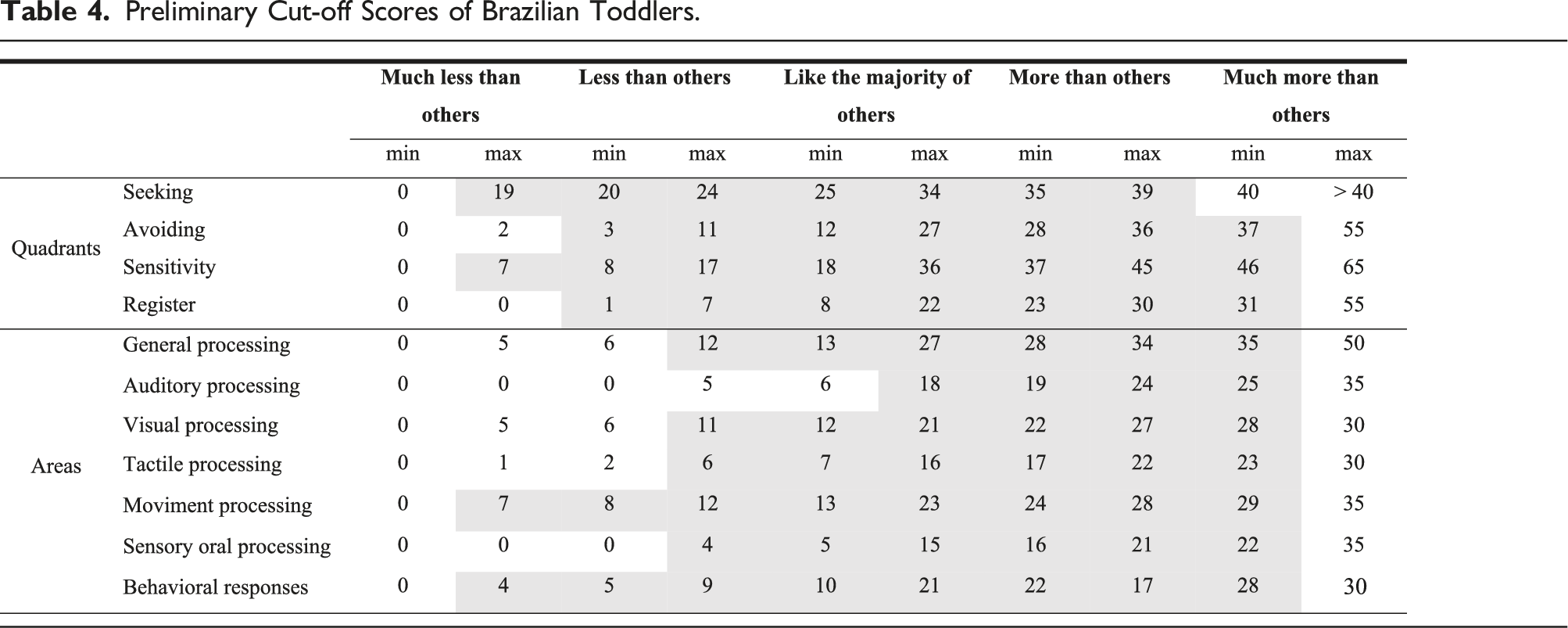
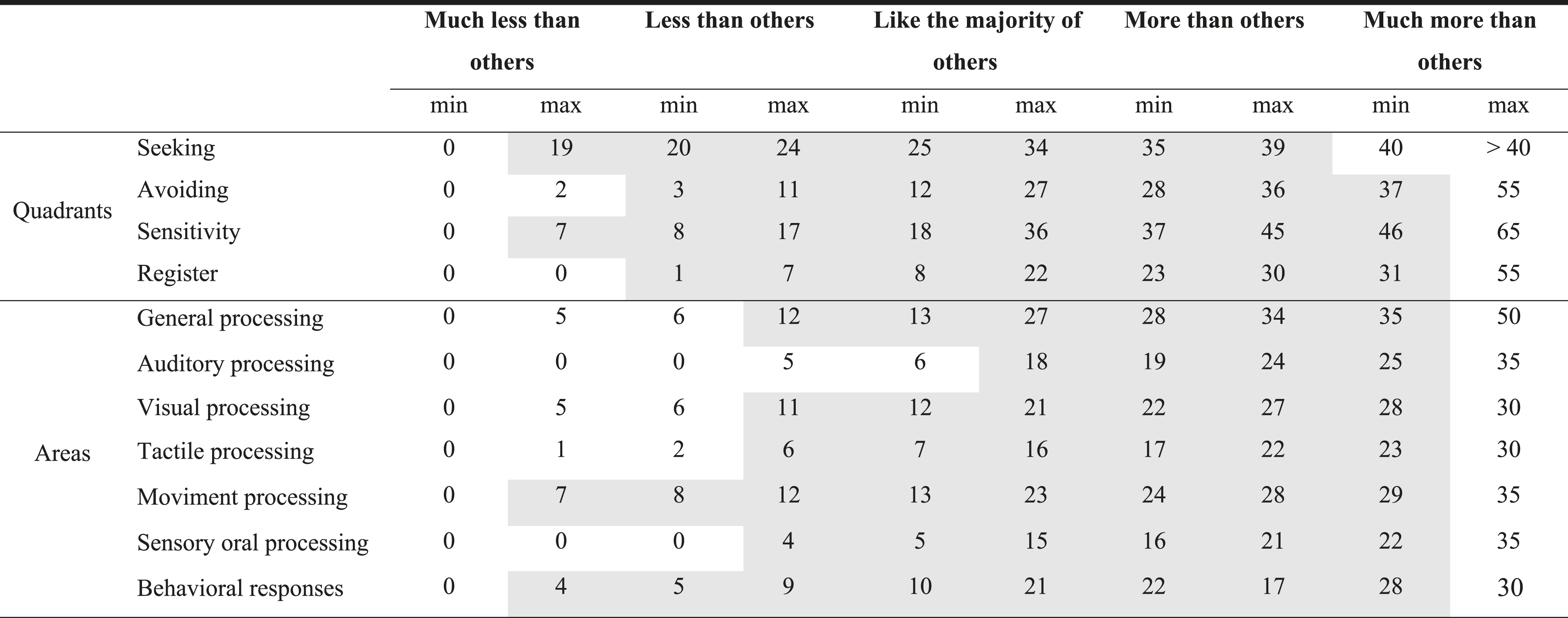
The sum of the items provides a total score, scored by sensory areas and quadrants, which, compared to normative scores, allows us to classify children with typical or atypical performance. Caregivers completed the questionnaire by indicating the frequency of a child´s sensory responses using a five-point scale weighted with a score of 1–5 (almost never, occasionally, half the time, frequently, almost always), with an option of zero if the response did not apply. The cut-off scores were distributed on the mean and standard deviation for each summary score consisting of five categories: much less than others, less than others, just like the majority of others, more than others, much more than others. This system provides an estimate of how the child compares to peers in the same age group. When a child presents an atypical performance, it is possible to see a low sensory record, a search for sensory stimulation, sensitivity, or rejection (avoidance) to sensory stimuli, indicating which sensory system contributes to or hinders functional performance (Dunn, 2014).
This research aimed to translate, adapt, and verify the reliability of the cultural adaptation of the TSP2 and suggest a preliminary normative score for Brazilian toddlers.
Our interest in understanding and establishing the sensory profiles of Brazilian children, accompanied by the lack of standardized evaluations that delineate and measure children’s sensory profiles in Brazil, led us to develop the cultural adaptation of the TSP, an instrument that can be used to address this issue. This study may offer tools for both researchers and professionals who provide care based on children’s sensory needs.
Methods
Design and Setting
This study was a methodological, cross-sectional, non-experimental, quantitative analysis conducted at the pediatric outpatient clinic of the University Hospital and two pediatric clinical research laboratories of the Federal University of Triângulo Mineiro and the University of São Paulo, Brazil. The research followed all the ethical criteria of research involving humans (Ethics Committee on Human Research, Federal University of Triângulo Mineiro, approval no. 1.537.364) and was conducted in two phases: 1) to perform the cultural adaptation of the TSP2 and 2) to verify the reliability of the TSP2Br.
Procedures and Data Analysis
Phase 1: Cultural Adaptation of the TSP2 to Brazilian Toddlers
The cultural translation and adaptation procedures followed the guidelines proposed by Guillemin et al. (2002) and Wild et al. (2005), in five stages: 1) Two Brazilian translators (T1 and T2) independently translated the original version of the TSP2, producing two Portuguese versions, named PV1 and PV2. T1 worked in the neuropediatric field and had prior knowledge of the instrument, while T2 just had knowledge of the two languages. 2) A technical committee composed of two occupational therapists (one specialized in sensory integration and the other in neuropediatric) compared PV1 and PV2 and elaborated a synthesis of these versions named the technical version (TV). Next, five occupational therapy and sensory integration experts independently analyzed the semantics and content of the TV. The technical committee analyzed all experts’ suggestions and re-evaluated and restructured all items with <80% agreement. The TV was sent to the experts again until an acceptable version was obtained. Thus, the technical committee elaborated on the Portuguese consensual version (PCV) and sent it for back-translation. 3) Two translators, whose mother tongue is English, created two independent versions named back-translation versions 1 and 2 (BTV1 and BTV2). The technical committee compared the two versions and elaborated on the synthesis of these versions, called the consensus back-translated version (CBTV). 4) We forwarded the PCV and CBTV to NCS Pearson (a global provider of applications, services, and technologies for education, testing, assessment, government, and complex data management) and Dr. Dunn (the TSP2’s original author) to analyze this cultural adaptation. The technical committee accepted the author’s suggestions and forwarded the new version to the author for approval. Thereby, the TSP2Br was created. 5) At the cognitive debriefing, suggested by Wild et al. (2005), 22 caregivers of toddlers analyzed the TSP2Br regarding comprehensibility and evaluated the semantic equivalence and clarity of the instructions. Any suggested changes were noted and investigated by a technical committee. No significant changes were observed because the caregivers understood all statements.
Phase 2: Reliability of the TSP2Br
A convenience sample of 168 caregivers of children aged 7–35 months with typical and atypical development, recruited from a pediatric outpatient clinic at the Federal University of Triângulo Mineiro, Brazil, responded to the TSP2 questions, which were filled in by the assessor. This sample of 168 caregivers of toddlers is the maximum number granted in the Research Translation License by NCS Pearson to conduct this research in Brazil.
We used the Pearson chi-square test to verify the difference between the characteristics of the respondents of the TSP2 and Cramér V to test the significance of the associations between categorical variables (Cramér, 1946).
The caregivers were mostly mothers (152; 90.5%), with an average age of 19 years (13 – 47 years), with at least a high school education (88; 52.3%; Pearson chi-square = 32.361; p = 0.26), and distributed among different socioeconomic levels, including families without fixed income, until almost US$ 2.000 per monthly (Pearson chi-square = 25.209; p = .194).
Distribution of Toddlers According to Age and Sex.
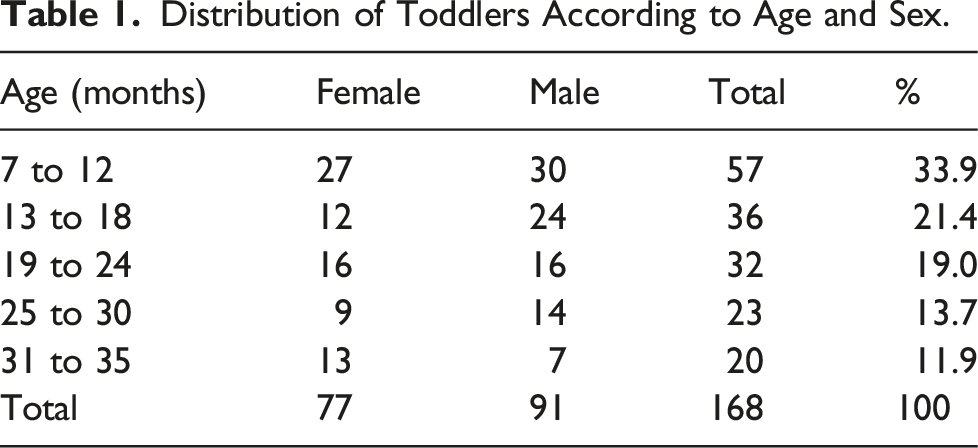
Following Dunn’s original sampling (Dunn, 2014), we included typical toddlers (106; 63%), toddlers with a history of prematurity without sequelae (19; 11%), as well as toddlers with any diagnoses that impacted their development (43; 25.3%) (Pearson chi-square = .970; p = .80; and Cramér’s V = .076).
We analyzed the internal consistency and stability to verify the reliability of the TSP2Br and established the preliminary cut-off scores of quadrants and areas of the sensory profile for the sampling of Brazilian toddlers. 1) The Cronbach’s alpha test analyzed the internal consistency (Cronbach, 1951) of the TSP2, performed with a total sample of 168 caregivers of children aged 7–35 months with both typical and atypical development. 2) The instrument’s stability was assessed with 23% (39 caregivers of toddlers) of the total sample, by performing a test-retest reliability with an interval of 7–14 days between administrations, using the kappa coefficient (Landis & Koch, 1977). 3) The TSP2 is a norm-referenced standardized assessment and considering that children from a different countries can have different sensory performance levels, their scores need to be analyzed. We established the preliminary Brazilian cut-off scores according to the original instrument by mean minus two standard deviations, mean minus one standard deviation, mean plus one standard deviation, and mean plus two standard deviations.
Figure 1 shows a summary of the phases and stages developed during the cultural adaptation and reliability testing of the Brazilian version of the Toddler Sensory Profile 2 and the participants included in each of them. Cultural adaptation and reliability of Brazilian version of the Toddler Sensory Profile 2.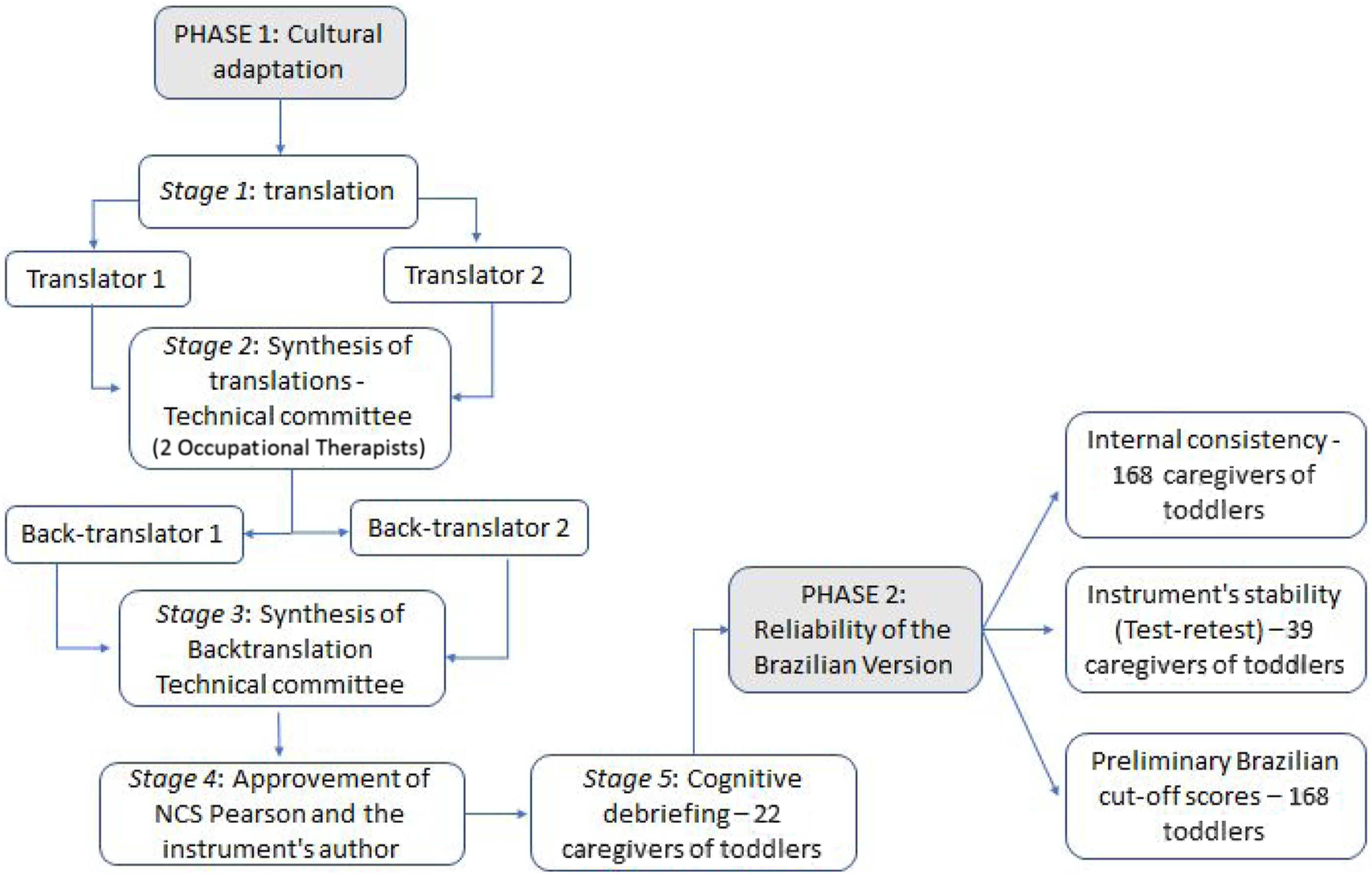
Results
The translations from English to Portuguese (PV1 and PV2) of the 54 items that structure the instrument were analyzed, and 100% agreement was found between the versions in six items, grammatical changes in 29, semantics with a mixture of translations in 14, and idiomatic changes in five items. Subsequently, the TV was created and forwarded to a committee of experts to verify the validity of the version. Of the 54 items, 25 received total agreement (100%), and 21 received an agreement of 80% between the experts. Thus, the technical committee restructured the eight items with an agreement that was lower than expected and resubmitted the TV to be analyzed a second time. Both translators accepted the changes made. Thus, the PCV was created and subsequently forwarded for the back-translation process. The technical committee analyzing the back-translation verified that seven items received 100% agreement between BTV1 and BTV2. They restructured the other items, based on semantic, idiomatic, and conceptual equivalents closest to the original instrument, while incorporating the CBTV. The instrument’s author analyzed the CBTV, elaborated by the technical committee, verifying the back-translated version’s equivalence with the original, and suggested modifications in 11 items, changing some words to obtain the correct idea of information. The technical committee performed these modifications and sent it back to the author, who approved the modifications and created the TSP2Br.
Among the 168 caregivers of toddlers, 22 analyzed the TSP2Br at the cognitive debriefing (about their comprehension of items), since they are the target audience for applying the instrument. They pointed out that three items were not clear enough. Two were written with two negatives in the phrase, and the other had one word that was unusual in the Brazilian vocabulary, which could lead to misinterpretation of the caregivers' answers. The technical committee restructured these three items and resubmitted this version to be analyzed for a second time to certify whether the changes made were clear enough, with each item receiving the caregivers' agreement.
The psychometric analysis assessed internal consistency (from items in the questionnaire, sensory areas, and quadrants) and reproducibility (test-retest). In addition to these steps, we created preliminary cut-off scores for the Brazilian version.
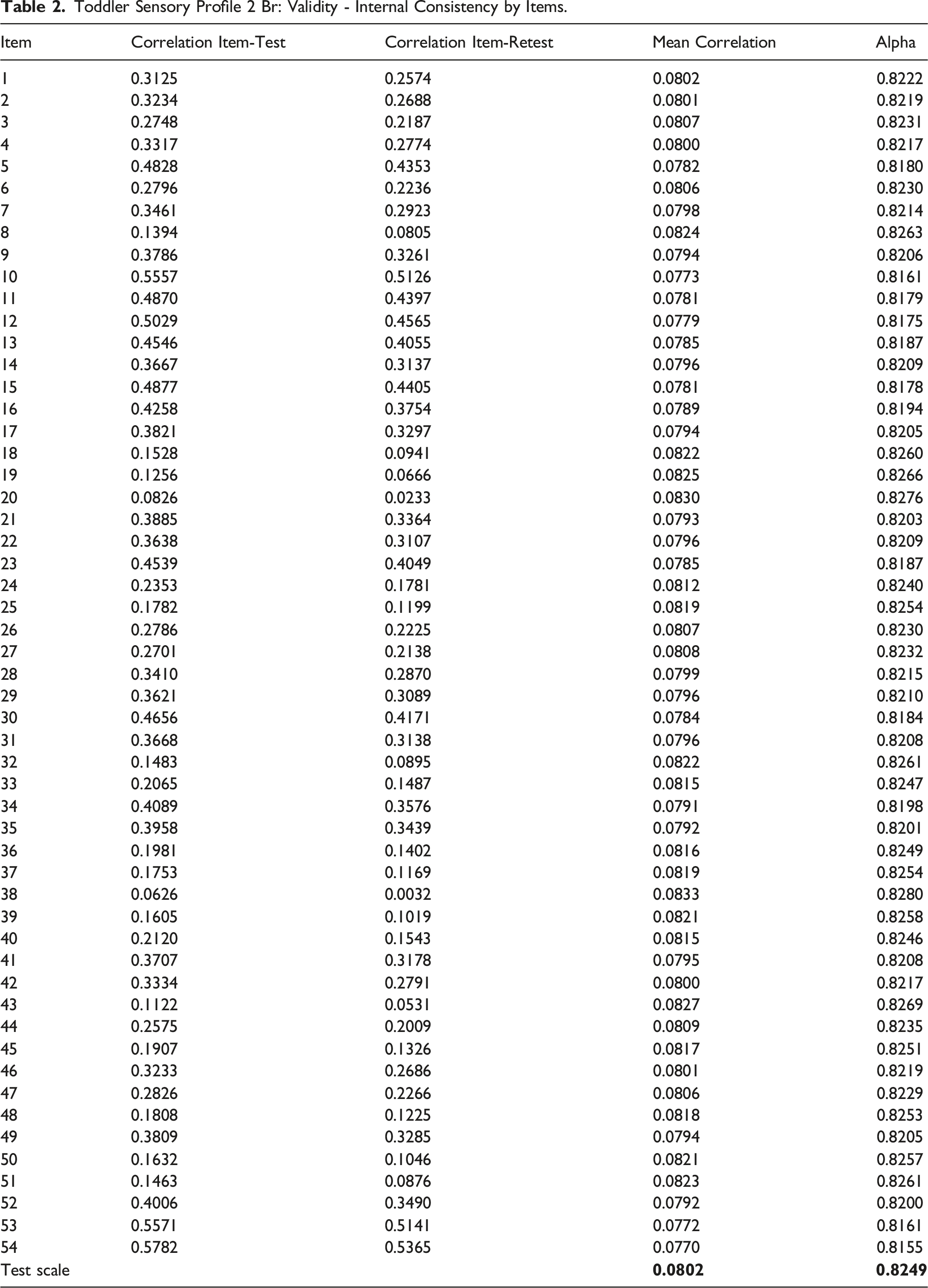
Toddler Sensory Profile 2 Br: Validity - Internal Consistency by Items.
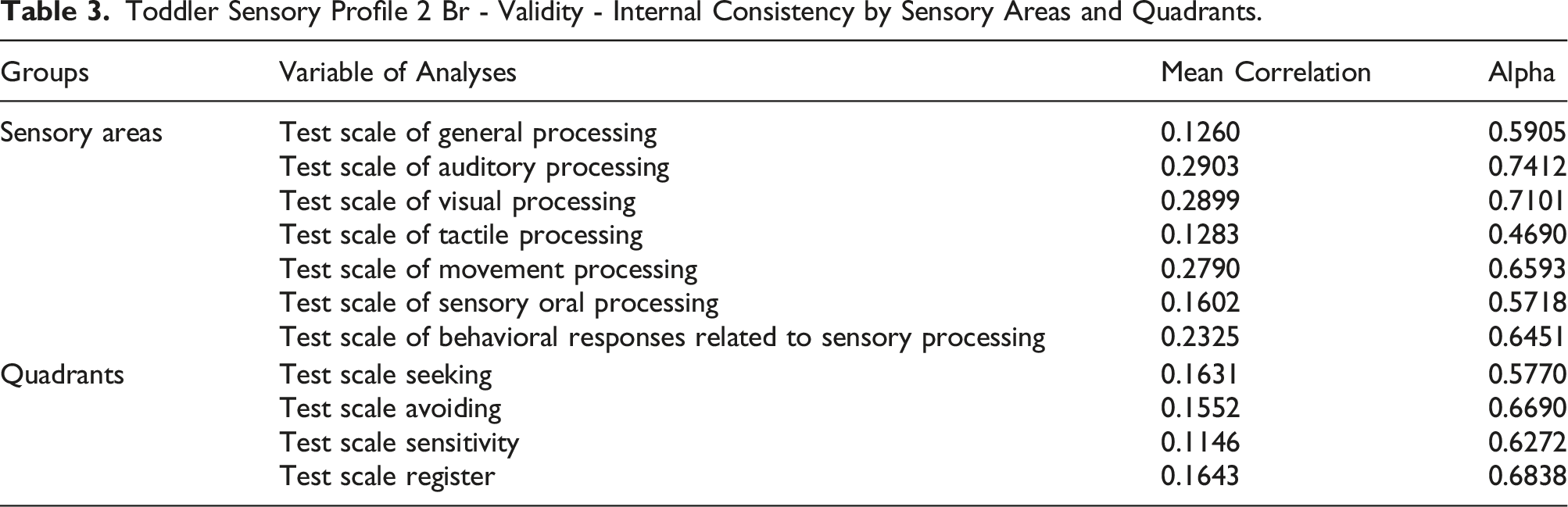
Toddler Sensory Profile 2 Br - Validity - Internal Consistency by Sensory Areas and Quadrants.
A good agreement between the test and retest was verified, analyzing 23% (39 participants) of the sample of 168 caregivers of toddlers, with the weighted kappa ranging from 0.89 to .97.
Preliminary Cut-off Scores of Brazilian Toddlers.
Discussion
In this research, the steps of translation, back-translation, and adaptation were rigorously performed. The entire process was monitored and approved by the author of the instrument and followed the theoretical framework proposed by Guillemin et al. (2002) and Wild et al. (2005).
In addition to the steps of cross-adaptation for a new culture, statistical analysis needs to be performed to verify the instrument’s validity and reliability for the context for which it has been adapted (Borsa et al., 2012). Adapting and validating an instrument are, therefore, distinct steps that complement methodological research. There is no consensus on what and how much evidence an instrument should provide to be considered valid and reliable for a new culture (Urbina, 2007). However, the more evidence a researcher can provide, the more it increases the instrument’s reliability. We confirmed the test-retest reproducibility and internal consistency of the TSP2Br version in the current study.
There is no agreement in the literature for a consensually acceptable internal consistency; however, Cronbach’s alpha values of .70 and .90 are generally considered adequate for psychometric scales (Cummings et al., 2003). These same researchers do not recommend values above 0.90, as they may indicate redundancy of the items. According to Pasquali (2010), internal consistency is an estimate of the precision of the instrument’s accuracy, and based on the formulation, if the items are understood in a particular occasion, they could be interpreted in any test-use circumstance, establishing the test’s reliability. Therefore, the results of this study demonstrate that the TSP2Br is preliminary reliable.
In the psychometric analysis, the TSP2Br showed good internal consistency (>.80) for all 54 items and for the total sum of items (.82). However, in all quadrants and sensory areas, except for auditory and visual processing, the alpha was below .70. This study followed the same allocation pattern as the original instrument. The author tested the internal consistency with 404 children in the 7–35-month age group, showing values higher than .70 in all quadrants and sensory areas, except for tactile processing and movement. However, the original instrument did not present an alpha coefficient value for the full scale.
Because internal consistency is an assessment of a given instrument’s reliability, it is necessary to reflect on the adapted instrument. The total scores were higher than .70 in the adapted instrument, which occurred in the original version; however, when the internal consistency of areas or quadrants were analyzed, the answers to the items and the scores by section were not internally consistent. Therefore, there is evidence that these items do not measure the same construction.
Despite these results, it is essential to state that the cultural adaptation showed broad agreement and comprehensibility of the respondents' items, which were well-drafted and enabled interpretation and understanding. The transcultural adaptation was possibly not a problem, suggesting the need for a more detailed analysis of the allocation of items by areas and quadrants.
To verify the reproducibility, we performed the test-retest, with intervals of 7–14 days for a subgroup of participants. For Pasquali (2010), the test-retest is an index of precision. In this case, it consists of a bivariate correlation between the two scores of the same subjects, which is another way of verifying the reliability of a measuring instrument. The results of the TSP2Br showed good reproducibility, with almost perfect agreement, according to Landis and Koch (1977).
This study presented a preliminary normative score, and according to the manual, we observed that the Brazilian cut-off scores were distinct from the American cut-off scores (Supplemental file 2). It is essential to mention the importance of using Brazilian scores because children can be misclassified if assessed using American cut-off scores.
Conclusions
Although there is no consensus in the literature regarding the adaptation of instruments for use in different cultural contexts, there is an agreement that the adaptation process must go beyond translation and back-translation, since this is the only way one can guarantee the validity of the construct and the reliability of the measurement. Using adapted and validated instruments enables a more accurate assessment of a child’s level of sensory-motor development and performance in daily activities, the proposal of interventions based on the child and family’s real needs, and the promotion of practices and research based on scientific evidence. Future studies would be essential to analyze and test the instrument’s exploratory and confirmatory factorial structure to determine its equivalence and validity for adapted versions. It would also be necessary to increase the number of participants to generalize our findings to the general Brazilian population.
Supplemental Material
Supplemental Material - Cross-Cultural Adaptation and Reliability of the Toddler Sensory Profile 2 for Brazilian Children Aged 7 to 35 Months
Supplemental Material for Cross-Cultural Adaptation and Reliability of the Toddler Sensory Profile 2 for Brazilian Children Aged 7 to 35 Months by Lucieny Almohalha, Jair Lício Ferreira Santos and Luzia Iara Pfeifer in Journal of Social and Personal Relationships.
Footnotes
Declaration of Conflicting Interests
The author(s) declared no potential conflicts of interest with respect to the research, authorship, and/or publication of this article.
Funding
The author(s) received no financial support for the research, authorship, and/or publication of this article.

Supplemental Material
Supplemental material for this article is available online.
References
Supplementary Material
Please find the following supplemental material available below.
For Open Access articles published under a Creative Commons License, all supplemental material carries the same license as the article it is associated with.
For non-Open Access articles published, all supplemental material carries a non-exclusive license, and permission requests for re-use of supplemental material or any part of supplemental material shall be sent directly to the copyright owner as specified in the copyright notice associated with the article.
