



Abstract
The Traditional Mediterranean Physical Activity (TMPA) pattern, characterized by daily, incidental, and socially embedded movement, represents a core yet understudied component of the Mediterranean lifestyle. Unlike structured exercise, TMPA encompasses activities such as walking for transportation, agricultural work, gardening, household chores, and participation in cultural events. With global declines in functional daily movement and an increase in sedentary behavior, understanding the health impact of TMPA is increasingly relevant. A systematic literature search was conducted across major databases (MEDLINE, Embase, PsycINFO, CINAHL, Web of Science, Scopus, and ProQuest) from inception to present. Of 6037 records identified, 27 studies met all inclusion criteria involving adult populations from Mediterranean countries and reporting physical activity-related health outcomes. Both quantitative and qualitative research, as well as systematic and narrative reviews, were included. A narrative synthesis of the 38 studies was undertaken due to heterogeneity in study design, outcomes, and TMPA definitions. Evidence consistently demonstrated that TMPA contributes to broad physical health benefits, including reduced cardiovascular and all-cause mortality, improved metabolic profiles, healthier body composition, enhanced musculoskeletal strength, and greater functional capacity in older adults. Its integration with other lifestyle pillars, such as diet, rest, and social engagement, appears to amplify these effects. TMPA was also associated with improved mental health outcomes, including reduced depressive symptoms, lower stress, enhanced emotional resilience, and greater life satisfaction. Studies emphasized that the social, outdoor, and culturally meaningful context of TMPA distinguishes its health effects from conventional exercise. However, substantial methodological variability, reliance on self-reported measures, and limited longitudinal research constrain the strength of causal inferences. Conclusions: TMPA emerges as a culturally embedded and sustainable form of daily movement with significant physical and mental health benefits. Its holistic, lifelong nature positions it as a valuable model for public health strategies aimed at counteracting sedentary lifestyles. Future research should prioritize standardized definitions, objective measurement tools, and longitudinal or interventional designs to clarify causal pathways. Incorporating TMPA principles into modern environments may offer innovative, culturally grounded approaches to promoting population health.
“TMPA provides a culturally rich and scientifically supported model of activity that bridges tradition and modern public health.”
Introduction
In recent decades, the Mediterranean lifestyle has attracted substantial scientific attention, primarily due to its potential links with longevity, lower chronic disease prevalence, and enhanced well-being. While the Mediterranean diet was thoroughly investigated and widely recognized, another equally important but less examined component is Traditional Mediterranean Physical Activity (TMPA). 1 TMPA refers not to structured exercise programs or formal training sessions, but to movement patterns naturally integrated into daily life. This includes walking as a mode of transportation, agricultural labor, fishing, gardening, household chores, dancing, and participation in local festivities. 1 These activities are often carried out in outdoor, social, and culturally meaningful settings, making TMPA an inseparable part of the Mediterranean way of life.2,3 Moreover, TMPA is rarely practiced in isolation. It is intertwined with other core aspects of the Mediterranean lifestyle, such as diet, rest, and strong social networks, forming a synergistic way of life associated with a range of health benefits.4,5
The significance of studying TMPA has grown amid global shifts toward the rise in sedentary lifestyles and the prevalence of lifestyle-related diseases. Modern urban environments, increased reliance on motorized transport, and changes in work and recreation patterns have led to a marked reduction in incidental and functional movement. This makes it critical to understand how traditional, culturally embedded forms of physical activity, such as TMPA, contribute to health, not only as a matter of historical interest but also as a model for developing sustainable and contextually relevant public health strategies. 6 Importantly, TMPA’s influence extends beyond physical fitness to encompass aspects of psychological and emotional well-being. The interplay between movement, outdoor environments, and social engagement in Mediterranean settings creates a multidimensional form of activity that may promote both physical and mental health through mechanisms that differ from structured exercise. The integration of movement into daily routines, the enjoyment of scenic and biodiverse surroundings, and the social reinforcement provided by community activities together suggest that TMPA’s health effects are holistic and sustained over time.7,8
The aim of this review was therefore to examine the effect of the TMPA on physical and mental health by synthesizing existing evidence. By means of reviewing studies conducted across Mediterranean populations, this paper explored the breadth of TMPA’s health-related impact, ranging from its potential to support functional capacity, mobility, and independence to its role in fostering emotional resilience, reducing stress, and enhancing social connectedness. In doing so, the review attempted to provide a comprehensive understanding of TMPA’s relevance to contemporary health promotion, identifying how traditional movement patterns may inform strategies to counter sedentary lifestyles and improve population health within and beyond the Mediterranean region.
Methodology
This study is a systematic literature review designed to explore the effects of TMPA on physical and mental health outcomes among adults living in the Mediterranean region. An a priori protocol for this review was registered in PROSPERO https://www.crd.york.ac.uk/PROSPERO/view/CRD42023437458. A comprehensive search strategy was applied across multiple electronic databases, including Ovid MEDLINE, Embase, PsycINFO, EBSCO CINAHL, Web of Science, Scopus, and ProQuest Social Science Premium, from their inception to the present. In total, 6037 records were identified. A comprehensive list of search terms covering the following concepts was included in the search: Mediterranean region, physical activity, and health well-being outcomes. The reference lists of all included studies were hand-searched, and forward citation tracking was performed to identify additional relevant publications. All search results were imported into Covidence software for screening, and 3315 duplicates were identified, leaving 2722 unique records. Following title and abstract screening, 467 articles were retained for full-text assessment. All 467 full texts were successfully retrieved. After applying the inclusion criteria, 440 were excluded due to reasons such as inappropriate study design (n = 332), incorrect or non-relevant intervention (n = 88), or other predefined exclusion criteria. Eligible studies were required to report on adult human populations from the Mediterranean basin (e.g., Greece, Italy, Spain, Morocco, Lebanon, and others) and to include exposure to any form of physical activity or exercise in relation to health or well-being outcomes. No restrictions were applied regarding publication date or study setting.
Laboratory or animal studies were excluded unless they provided relevant human outcome data that fit the PICOS framework (Population, Intervention, Comparator, Outcomes, and Study design). The review included both quantitative and qualitative studies, and synthesized data from various types of literature, including systematic reviews, meta-analyses, scoping reviews, narrative reviews, and original research articles. Studies focusing on holistic Mediterranean lifestyle factors were eligible, provided physical activity was clearly reported. Both positive and negative health outcomes were considered to ensure methodological neutrality. These outcomes included lifespan, quality of life, successful aging, mortality, and decline in physical or mental health. Comparators included populations from non-Mediterranean regions, no- or minimal-intervention groups, and groups exposed to differing intensities or frequencies of physical activity. The review also documented whether studies accounted for additional pillars of the Mediterranean lifestyle, including nutrition, sleep, social connection, toxin avoidance, and mental well-being. In total, 27 studies met all inclusion criteria and were incorporated into the final synthesis. A narrative synthesis was employed to analyze and present the findings due to heterogeneity across study designs, exposure definitions, and outcome measures. The study selection process is summarized in the PRISMA flow diagram (Figure 1). The full search strategy is available on request. Prisma flow diagram for study selection.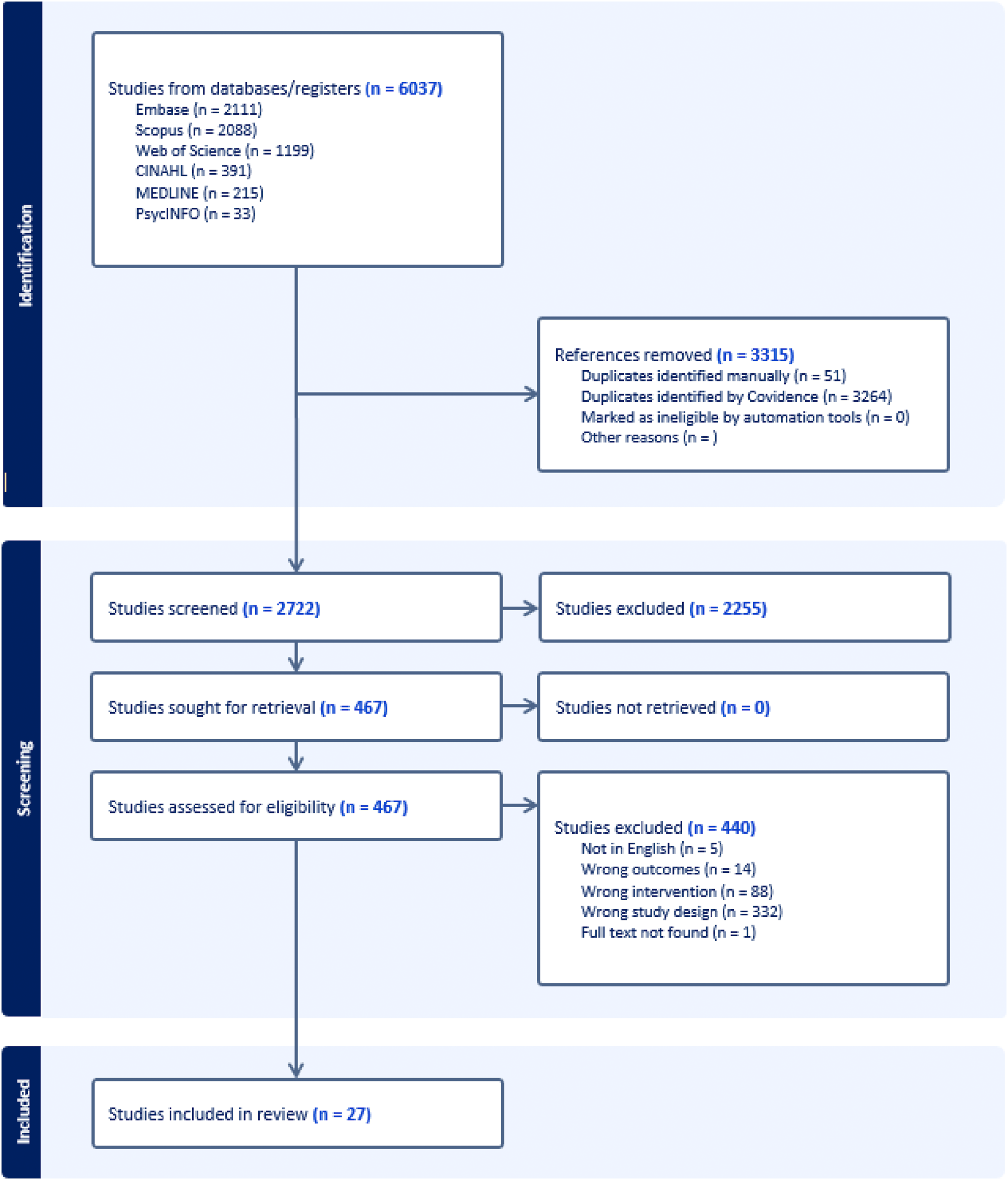
Results
The included studies on Mediterranean lifestyle and physical activity comprise a mix of observational designs (primarily cross-sectional and prospective cohort studies), randomized controlled trials synthesized in meta-analyses, and narrative/systematic reviews. Most were conducted in Mediterranean countries such as Spain and Greece, with some in non-Mediterranean settings, and populations ranged from general adult cohorts and older adults to specific groups such as students, firefighters, bariatric patients, and the elderly (≥90 years). Sample sizes varied substantially, from small studies (n ≈ 71-92) to large population-based cohorts exceeding 19,000 participants, as well as reviews including multiple studies. Across studies, the primary health outcomes assessed were predominantly physical, including cardiovascular disease incidence and mortality, metabolic syndrome, obesity and anthropometric indices, hypertension, lipid profiles, glucose metabolism, and overall mortality, while mental health outcomes included depression, quality of life, psychological well-being, self-concept, and menopausal symptoms. Overall, the evidence consistently examined the relationship between Mediterranean lifestyle behaviors, particularly physical activity, and a broad spectrum of cardiometabolic and psychosocial health outcomes (Appendix 1).
Physical Health
TMPA was consistently associated with substantial improvements in physical health, ranging from cardiovascular and metabolic benefits to musculoskeletal and functional advantages. It was shown to contribute to reduced all-cause and cardiovascular mortality, with evidence indicating that individuals who combine TMPA with a Mediterranean diet exhibit a stronger protective effect against chronic disease and premature death.9,10 Cardiovascular benefits are particularly well-documented, as TMPA was linked with lower incidence of coronary artery disease, better lipid profiles, and improved vascular function.4,11,12 Furthermore, population-based studies in Mediterranean countries have highlighted that regular engagement in TMPA reduces the risk of metabolic syndrome and hypertension, while supporting better glycemic control and healthier body composition.8,13 These findings are in line with evidence showing that higher adherence to an overall Mediterranean lifestyle, combining traditional dietary habits, regular physical activity, adequate rest, and social interactions, was associated with markedly lower odds of metabolic syndrome and a more favorable cardiometabolic profile. 10 These findings underline the role of TMPA not only in disease prevention but also in the long-term maintenance of physiological balance and metabolic efficiency.
The musculoskeletal system also appears to benefit from lifelong engagement in TMPA. Daily activities such as walking in hilly environments, farming, and manual labor enhanced muscular endurance, skeletal muscle mass, and bone density, all of which protected against frailty and disability in older age.14,15 In particular, TMPA performed in natural terrains, such as mountainous rural areas, was associated with significantly lower mortality rates than sedentary lifestyles in lowland populations, demonstrating that environmental context enhances its health-promoting effects. 15 Studies of elderly Mediterranean cohorts have also indicated that TMPA helps preserve independence and mobility, reducing the burden of sarcopenia and falls, thereby supporting healthy aging trajectories.3,16
Another important domain of impact is weight regulation and obesity prevention. It was observed that adherence to TMPA, particularly when combined with dietary adherence, contributes to lower body mass index, healthier waist-to-hip ratios, and reduced visceral adiposity.17,18 These benefits extended beyond weight management, as TMPA helped maintain metabolic flexibility, ensuring more efficient energy utilization and reducing systemic inflammation, which is a key factor in the development of obesity-related comorbidities. This integration of daily movement with lifestyle factors represents a unique advantage of TMPA compared with more sporadic or structured forms of physical activity.
Emerging findings also suggest protective associations between TMPA and cancer risk. Lifestyle patterns combining TMPA with Mediterranean dietary practices appeared to reduce the incidence of several cancer types, with some studies highlighting its role in lowering breast cancer risk. 19 The proposed mechanisms included improved immune surveillance, reduced adiposity, and lower systemic oxidative stress, all modulated by sustained, moderate-intensity daily activity.
In addition, TMPA supported healthier vascular function, as indicated by studies showing lower systolic blood pressure, reduced arterial stiffness, and improved endothelial performance among active Mediterranean cohorts.20,21 These vascular improvements were critical not only for cardiovascular protection but also for maintaining cognitive and renal health, further highlighting the systemic impact of TMPA.
Overall, the evidence demonstrates that TMPA exerts broad and multidimensional effects on physical health by simultaneously targeting cardiovascular, metabolic, musculoskeletal, and functional systems. It fosters resilience against chronic disease, supports independence in aging, regulates body composition, and enhances vascular integrity. These outcomes suggest that TMPA represents more than simple physical movement: it is a culturally rooted health practice with sustainable, lifelong benefits that far exceed those of isolated exercise regimens.5,22
Mental Health
TMPA was also consistently associated with enhanced mental health and psychological well-being, offering benefits that extend beyond those observed with conventional exercise. It was observed that participation in daily, low-intensity, and socially integrated outdoor activities contributes to reduced stress levels, improved mood, and greater emotional resilience. 23 Among older adults, adherence to TMPA was linked to lower prevalence of depressive symptoms, better life satisfaction, and stronger psychological well-being compared with sedentary counterparts.24,25 Moreover, TMPA’s role within the broader Mediterranean lifestyle appeared to amplify these mental health benefits by embedding movement within a structure of conviviality, shared meals, and cultural identity, which collectively foster purpose and resilience.26,27 Taken together, these findings highlighted that TMPA functions not only as a preventive measure against psychological distress but also as a holistic promoter of mental well-being, offering protective effects against depression and cognitive decline while simultaneously nurturing social cohesion and emotional health.
The methodological approaches used to capture TMPA varied considerably. Many studies relied on the International Physical Activity Questionnaire (IPAQ) or country-specific adaptations to quantify activity levels.15,22 However, these tools were often supplemented with culturally sensitive indices designed to capture the unique integration of movement into Mediterranean life. One example is the MEDLIFE index, which explicitly incorporates items related to lifestyle-based movement, such as active transportation and household tasks, alongside dietary and social behaviors. 4 Lan et al further emphasized the importance of multidimensional measurement, noting that TMPA cannot be accurately evaluated if treated only as a proxy for minutes of moderate-to-vigorous activity. 8 Instead, its frequency, social context, and integration into everyday routines are essential aspects that distinguish it from conventional physical activity.
Collectively, the findings from these studies suggest that TMPA represents a unique and sustainable form of physical activity that is closely tied to health across multiple domains. Unlike structured exercise, which is often constrained by time, accessibility, and adherence challenges, TMPA is inherently woven into daily living, making it both feasible and enduring. The evaluation tools used across studies confirm that TMPA cannot be adequately captured and multidimensional approaches are needed to fully understand its impact. Finally, comparisons between TMPA and conventional physical activity underscore its potential as a model for sustainable movement patterns in modern societies, particularly in the face of rising sedentarism.
Limitations
Despite increasing interest in TMPA, the current evidence base exhibits several limitations. Foremost, there is no standardized definition or measurement framework for TMPA, resulting in considerable variability across studies. Many studies relied on generic tools such as the International Physical Activity Questionnaire (IPAQ), which may not fully capture the unique, culturally embedded, and multidimensional nature of TMPA. While some efforts, such as the MEDLIFE index, have incorporated lifestyle-based activities, these tools remain relatively new and inconsistently applied across studies. 4 This variability complicates direct comparisons and limits the ability to perform meta-analyses.
Second, much of the literature is cross-sectional, preventing causal inference about the relationship between TMPA and health outcomes. Longitudinal and intervention studies are scarce, leaving open questions about the long-term effects and mechanisms through which TMPA influences physical and mental health.
Third, the available evidence often relies on self-reported activity measures, which are subject to recall and social desirability biases, potentially leading to over- or under-estimation of activity levels. Another limitation lies in the heterogeneity of the populations studied. While rural and older Mediterranean communities continue to embody TMPA principles, younger, urban populations are increasingly adopting sedentary lifestyles, creating generational differences that complicate generalizations.
Furthermore, many studies were conducted in specific regions (e.g., Greece, Spain, Sardinia), making it challenging to extend conclusions to the entire Mediterranean basin, let alone to non-Mediterranean settings. Cultural and environmental factors, such as settlement design, climate, and social traditions, play a critical role in sustaining TMPA, and these factors may not be easily replicable in other contexts. Finally, publication bias cannot be excluded, as studies reporting positive associations between TMPA and health may be more likely to be published, while null or negative findings remain underrepresented.
Taken together, these limitations underscore the need for more rigorous, standardized, and longitudinal research to understand TMPA and its health effects better. Future work should prioritize culturally sensitive measurement tools, objective activity monitoring (e.g., accelerometers), and diverse study designs that capture both physiological and psychosocial outcomes across different populations.
Conclusions and Future Directions
In conclusion, the accumulated evidence highlights TMPA as a central component of the Mediterranean lifestyle, offering broad and enduring benefits for both physical and mental health. Unlike structured forms of exercise that are often time-limited or difficult to sustain, TMPA is characterized by daily, habitual activities that are naturally integrated into life routines and cultural traditions. This embeddedness makes TMPA sustainable across the lifespan and accessible to diverse populations, contributing to its observed associations with reduced cardiovascular and metabolic risk, preserved musculoskeletal function, healthier body composition, and enhanced longevity. At the same time, TMPA appears to nurture psychological well-being, reduce depressive symptoms, strengthen cognitive function, and foster social connectedness, reflecting its multidimensional contribution to holistic health. By combining movement with culture, environment, and community, TMPA represents not only a mode of physical activity but also a lifestyle practice that supports resilience and quality of life in ways that structured exercise alone may not achieve.
Nevertheless, several gaps remain in the current literature. Future research should move beyond descriptive associations and adopt more rigorous methodological approaches. Longitudinal studies and randomized interventions are needed to establish clear causal pathways and clarify the dose–response relationships of TMPA. The integration of objective measurement tools, such as accelerometry and wearable sensors, would allow for more accurate and nuanced assessments of TMPA patterns. Moreover, interdisciplinary collaborations that combine epidemiology, behavioral science, gerontology, and environmental health could provide a more comprehensive understanding of how TMPA interacts with social structures, built environments, and individual behaviors.
There is also an urgent need to examine how TMPA can be promoted and adapted in modern contexts where sedentary lifestyles dominate, particularly in urbanized settings where traditional activities are less accessible. Interventions that incorporate TMPA principles into community programs, urban planning, and workplace initiatives could offer innovative strategies to enhance population health. Ultimately, TMPA provides a culturally rich and scientifically supported model of activity that bridges tradition and modern public health. By recognizing its value and adapting its principles to contemporary societies, TMPA has the potential to inspire new approaches to sustainable health promotion that can address both physical and mental health challenges among aging populations worldwide.
Supplemental Material
Supplemental material - Effects of Traditional Mediterranean Physical Activity on Physical and Mental Health: A Systematic Review
Supplemental material for Effects of Traditional Mediterranean Physical Activity on Physical and Mental Health: A Systematic Review by Amalia Sidossis, Konstantinos D. Tambalis, Catherine Itsiopoulos, Rob Lawson, Anastasia Beneka, Robert Bird, Charistoula Chatzinikola, Darinka Korovljev, Emanuela Mercore Hutanu, Linda Errington, Karolina Piątek, Helen Soultanakis, Anna Tkacz, Dimitris Vlachopoulos, Giannis Arnaoutis, Labros S Sidossis in American Journal of Lifestyle Medicine
Footnotes

Funding
The authors received no financial support for the research, authorship, and/or publication of this article.
Declaration of Conflicting Interests
The authors declared no potential conflicts of interest with respect to the research, authorship, and/or publication of this article.
Supplemental Material
Supplemental material is available online.