



Abstract
“Gender identity, sexual orientation, and race/ethnicity have been well-documented as predictors of negative health outcomes.”
Public health threats of physical inactivity, 1 poor diet and nutrition, 2 inadequate sleep, 3 and heavy alcohol 4 and substance use/misuse 5 are increasing chronic conditions (e.g., obesity, heart disease, etc.) among adults, leading to high individual and social economic burden. 6 These behaviors often cluster and have synergizing effects 7 ; thus, identifying and examining patterns of lifestyle behaviors among certain at-risk populations (i.e., young adults), and how they vary by socio-demographic characteristics, remains paramount to address these threats. Without these understandings, our ability to tailor promotional efforts to reduce the current influx of chronic conditions experienced by US adults will remain stinted.
Young adulthood, often coinciding with college years, serves as a pivotal developmental period to develop lifelong habits. College student lifestyle behaviors of physical activity (PA), diet, sleep, and alcohol and substance use may be influenced by personal, social, and environmental changes through navigation of newfound independence, social engagements, and new living conditions. 8 Because of these factors, it is essential to identify and examine lifestyle behavior patterns, given the opportunity of health promotion during higher education. Specific to PA behaviors, individuals are recommended to achieve 150 to 300 min per week of moderate-PA or 75 to 150 min per week of vigorous-PA, or an equivalent combination of both, and at least two days a week of muscle-strengthening activities. 1 Aerobic activities support heart and lung function; while, muscle-strengthening can enhance strength and muscular endurance, emphasizing the need to participate in both activities. 1 Importantly, college-attending individuals who are physically inactive during college are more likely to remain physically inactive post-graduation. 9 Further, college students report unhealthy snacking, high-calorie convenience eating, reduced access to healthy foods, and infrequent fruits and vegetable consumption 10 ; which may be associated with increased food insecurity and obesity rates. 11 Reduced sleep quality and duration are also of concern, 12 with academic and social pressures, irregular schedules, physical inactivity, and food insecurity being associated with poor sleep. 13 The college environment can also increase exposure to alcohol and other substances, increasing the susceptibility of misuse among college students. 14 This misuse may result in negative consequences of risky sexual behaviors, physical illness and injury, missed classes and reduced academic success, and altered cognition.15,16 These behavior patterns can vary by certain socio-demographic characteristics of gender identity, sexual orientation, and race/ethnicity, requiring improved tailored efforts to support health equity.
Specific to gender, college-attending women are less likely to meet PA guidelines, 17 are more likely to make healthier diet choices, 18 experience reduced sleep quality, 19 and are less likely to misuse alcohol and other substances, 20 when compared to men. Specific to race/ethnicity, minority students often report reduced rates of aerobic and muscle-strengthening (MS) activity participation, 17 increased rates of unhealthy diets and food insecurity, 18 poor sleep quality and duration, 21 and are less likely to misuse alcohol and other substances, 20 compared to non-Hispanic (NH) White students. 20 Sexual minority (SM) college students are less likely to participate in aerobic and MS activities, 22 report varying diet quality, 23 reduced sleep quality, 24 and more alcohol and substance use compared to heterosexual students. 20 These disparities by socio-demographics remain pertinent when discussing health promotion efforts to support health equity among college students.
Latent class patterns have been previously mapped regarding similar lifestyle behaviors among US college students; however, there are limited studies that have included MS as an independent measure of PA, as well as studies assessing the role of multiple socio-demographic characteristics on class predictability. Thus, the aims of this latent class analysis were 2-fold: (1) uncover latent classes of lifestyle behaviors characterized by patterns of PA (aerobic and MS), diet, sleep, and alcohol and substance use among US college students and (2) investigate if socio-demographic characteristics of gender identity, sexual orientation, and race/ethnicity predict class membership.
Methods
Study Sample
Data for this study were collected at a large, Northeastern US university from 2018–2024 via an online, anonymous survey (Qualtrics, Provo, UT). The survey consisted of 50 questions documenting demographics, PA, diet, sleep, and alcohol and substance use. Participants were enrolled in general health and wellness courses and provided a link to an online survey at the beginning of each semester (Fall and Spring). This was not a required course assignment. The average completion rate across cohorts was 86%. An informed consent statement was provided at the beginning of the survey and participants could enter a drawing to receive a gift card upon survey completion. Analyses included 6197 participants. The university’s institutional review board approved this study.
Measures
Physical Activity
The Global Physical Activity Questionnaire, 25 assessed volume of moderate- (MPA) and vigorous- (VPA) intensity PA. Participants self-reported the number of days per week they engaged in MS activities. Weekly minutes of MPA and VPA were calculated through activity frequency and duration and were then multiplied by their corresponding metabolic equivalent of task (MET) value to calculate MET-mins/week (MPA = 4.0; VPA = 8.0). Participants were classified as meeting aerobic (≥600 MET-mins/week) and MS guidelines (≥2 days/week) based on current PA guidelines. 1
Diet
Participants were provided the current US Dietary Guideline’s definitions for serving size amounts of fruits/vegetables and self-reported their average daily consumption. Participants who reported two or more servings of both fruits and vegetables per day were classified as meeting diet guidelines. 2
Substance Use
Participants self-reported if they used any of the following substances in the past 30 days (yes/no): Cigarettes, Smokeless tobacco, and vaporizers and/or electronic cigarettes. Due to sample size, all substances were collapsed into one variable and classified based on use of at least one substance.
Alcohol Use
The Daily Drinking Questionnaire, 26 assessed volume, quantity, and frequency of alcohol consumption. Participants were provided descriptions of standard drink equivalent of standard American beer, microbrew or European beer, single-serve wine and wine coolers, wine bottles, and hard liquor single-serve drinks and bottles. Participants self-reported the amount of alcohol they consumed during a typical week in the last 3 months from zero drinks to 10+ drinks per day. Participants were classified as heavy drinkers based on the National Institute of Alcohol Abuse and Alcoholism thresholds of ≥15 drinks/week for men and ≥8 drinks/week for women. 27
Sleep
Participants were asked how many days during the past week they got enough sleep to feel well rested in the morning using a slider scale (0 = none; 7 = everyday). Participants were classified as obtaining frequent restful sleep (≥4 days) as used in a previous study among college students. 28
Covariates
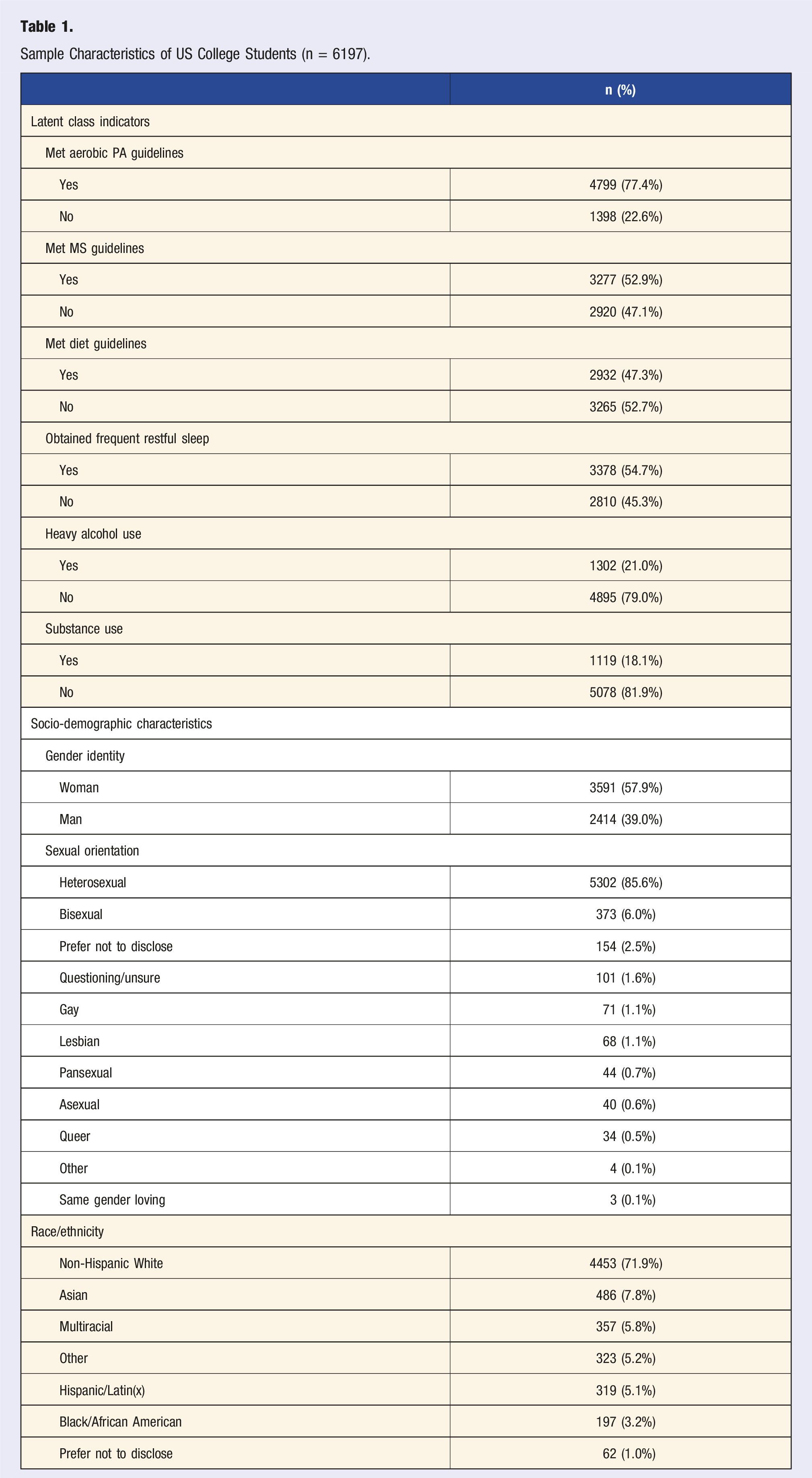
Sample Characteristics of US College Students (n = 6197).
Statistical Analysis
SAS 9.4 (SAS Institute, Cary, NC, USA) was used for analyses. Descriptive statistics describe the sample. Latent class analyses (LCA) identify similar subgroups within a larger heterogeneous sample based on multiple indicators 30 ; which were conducted using the PROC LCA 29 and LCABoostrap 31 SAS macro programs. Six lifestyle behaviors were used as indicators: meeting aerobic guidelines, meeting MS guidelines, meeting diet guidelines, obtaining frequent restful sleep, heavy drinking, and substance use. LCA class fits ranged from one to six in a step-wise fashion, with the optimally fitted class being determined by the lowest Akaike information criteria (AIC), Bayesian information criteria (BIC), sample size adjusted BIC (ssaBIC) fit statistics, a bootstrap likelihood ratio test (BLRT), and item-response probabilities that support theoretical interpretability. 30 Once the model was identified (aim 1), a regression model incorporated socio-demographic characteristics of gender identity, sexual orientation, and race/ethnicity to determine potential predictions of class membership (aim 2). Models yielded an odds ratio of the effects of each covariate on class membership. The reference latent class was the class with high probabilities of health-diminishing behaviors (i.e., heavy drinking, substance use) and low probabilities of health-enhancing behaviors (i.e., adequate PA, diet, sleep). Those identifying as a woman, heterosexual, and non-Hispanic White served as our referent group given their high frequency of occurring in the sample. A Bonferroni correction of P ≤ 0.01 accounted for multiple comparisons. We accepted the statistical significance of the odds ratio if the confidence interval did not include zero.
Results
Overall, participants (n = 6197) were women (58.2%), heterosexual (85.6%), NH White (71.9%), and 20 ± 2 years of age. The majority met aerobic PA (77.4%) and MS guidelines (52.9%), did not meet dietary guidelines (52.7%), obtained frequent restful sleep (54.7%), and were not heavy alcohol drinkers (79.0%) or substance users (81.9%) (Table 1).
Model Identification
Model Fit Statistics for Latent Classes of Lifestyle Behaviors Among US College Students.
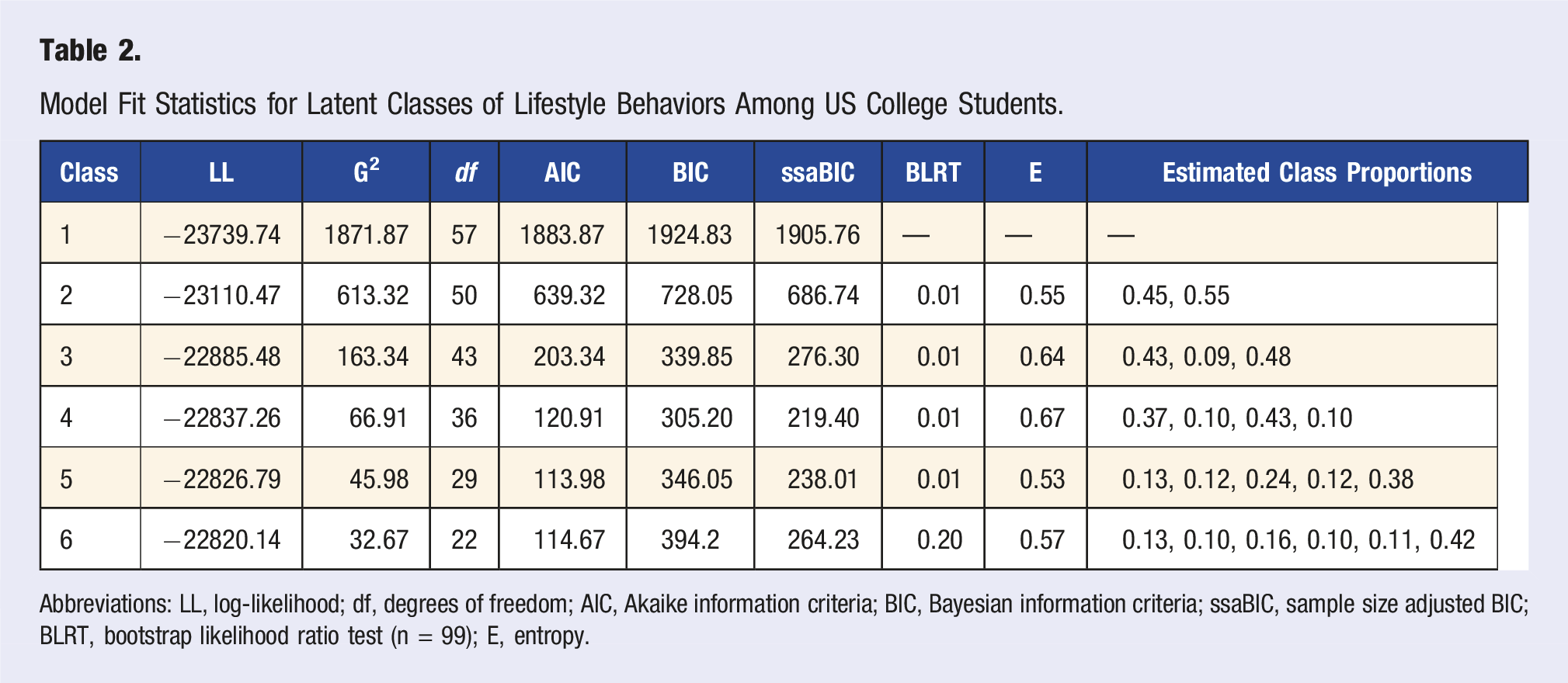
Abbreviations: LL, log-likelihood; df, degrees of freedom; AIC, Akaike information criteria; BIC, Bayesian information criteria; ssaBIC, sample size adjusted BIC; BLRT, bootstrap likelihood ratio test (n = 99); E, entropy.
Item-Response Probabilities of Endorsing Lifestyle Behavior Indicators in Latent Class Among US College Students.
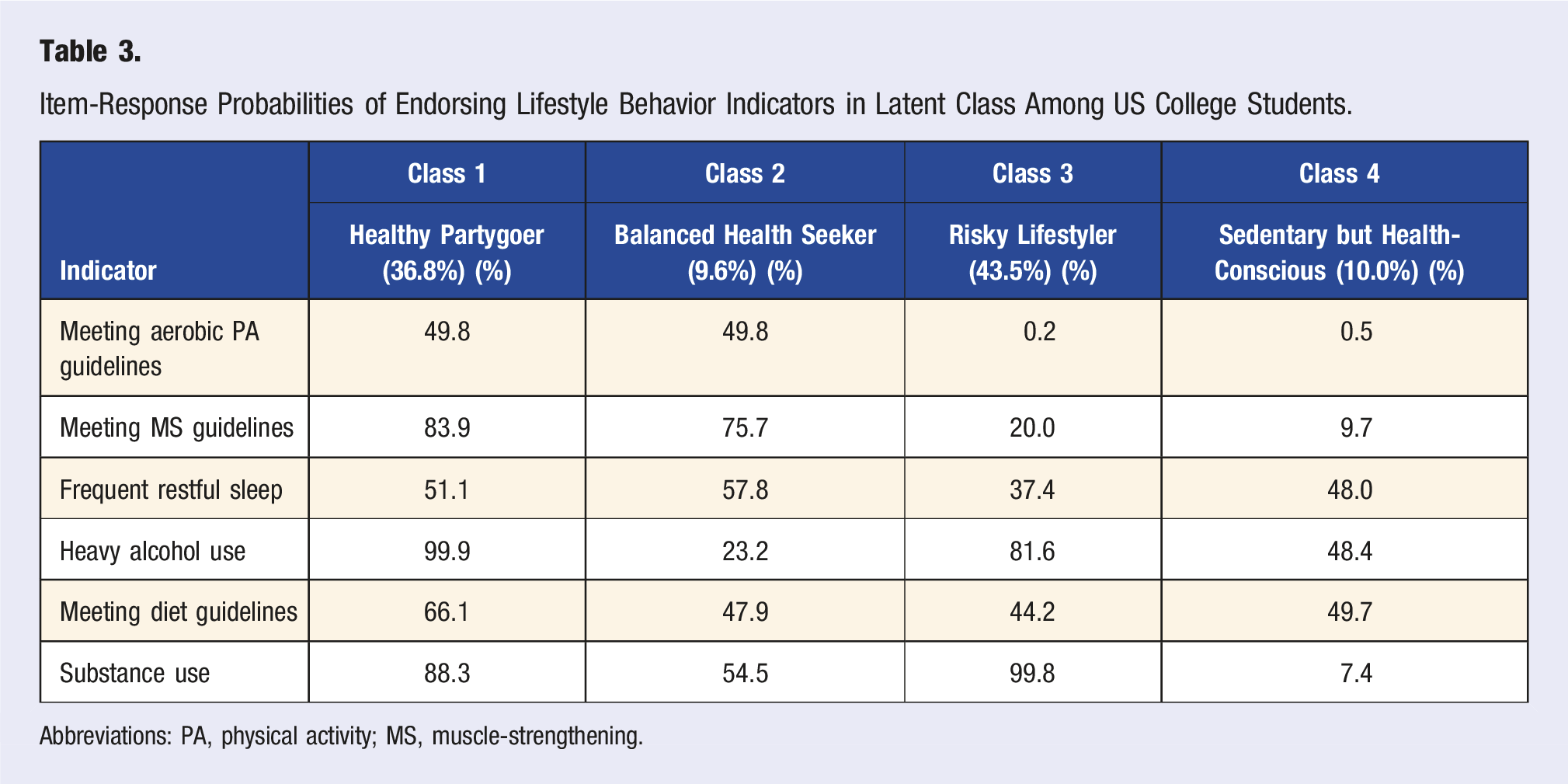
Abbreviations: PA, physical activity; MS, muscle-strengthening.
Latent Class Covariates
Gender Identity, Sexual Orientation, and Race/Ethnicity as Predictors of Membership in Latent Classes of Lifestyle Behaviors Among US College Students.
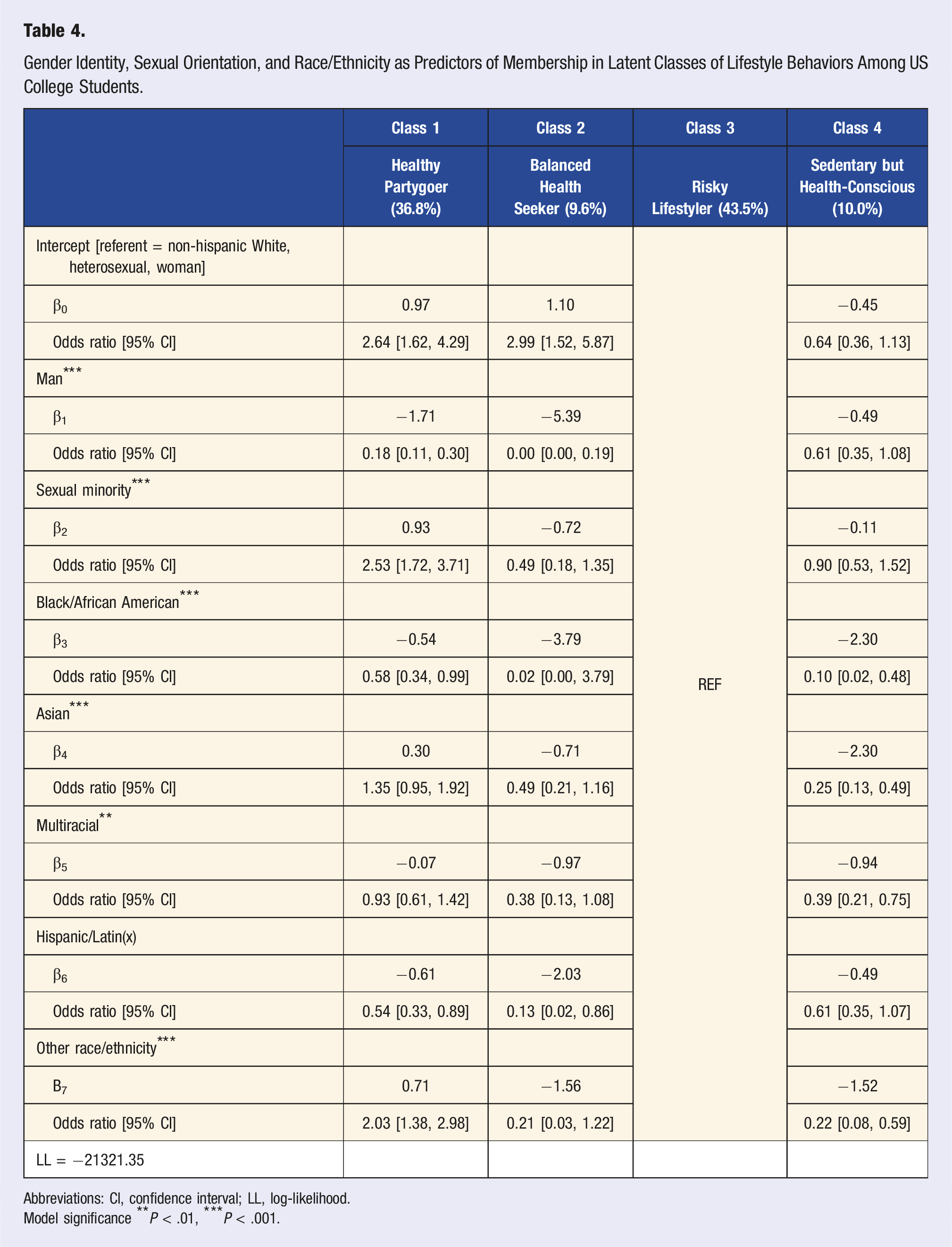
Abbreviations: CI, confidence interval; LL, log-likelihood.
Model significance **P < .01, ***P < .001.
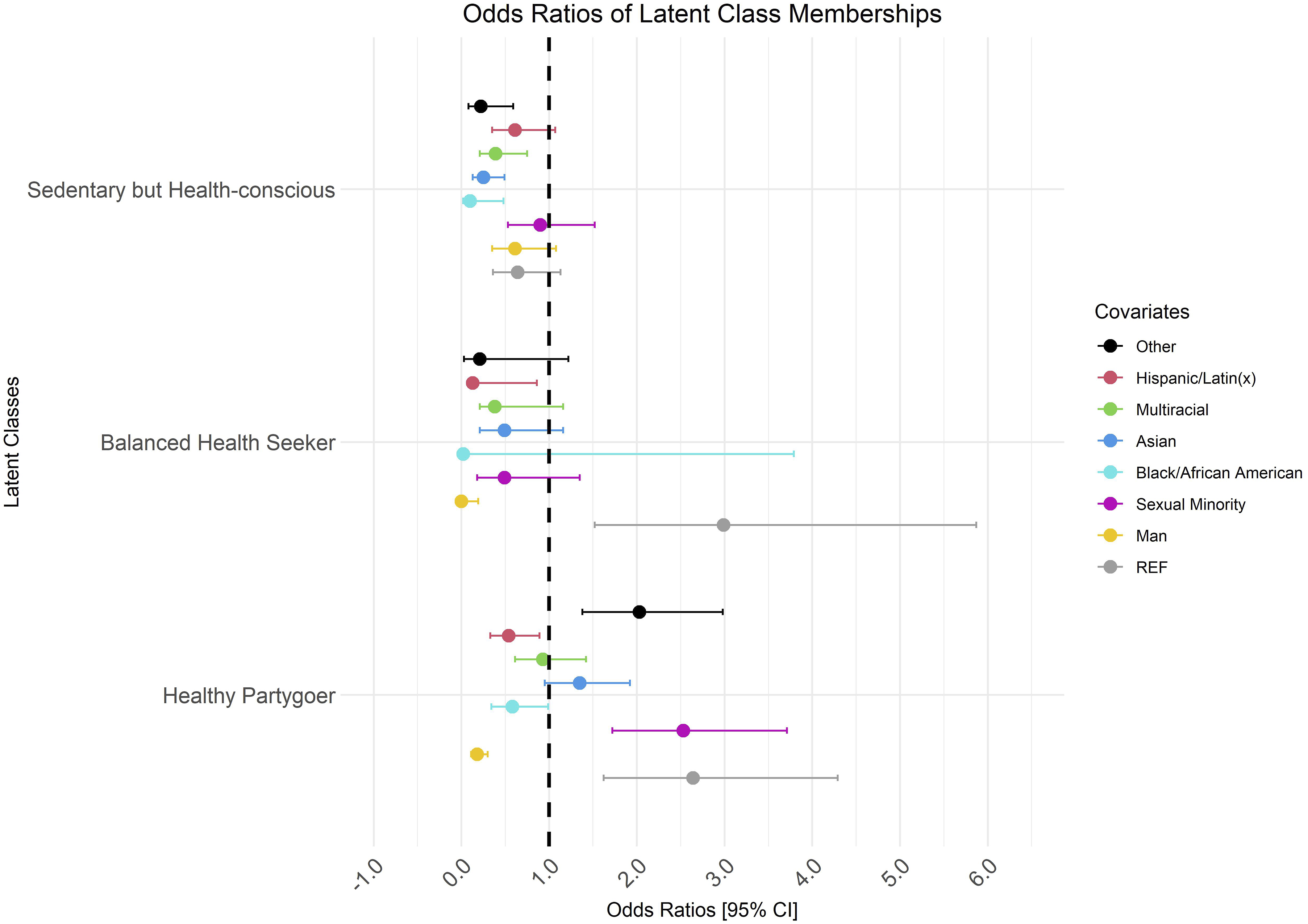
Odds ratios of latent class membership. Reference class (x = 1.0; class three, “risky lifestyler”). Abbreviations: REF, referent group; non-Hispanic White, heterosexual, woman. CI, confidence interval.
Men, compared to women, were significantly associated with 82% lower odds of being in class one and the same odds of being in class two, compared to class three. Although nonsignificant, men were associated with 39% lower odds of being in class four. SM identity, compared to heterosexual identity, was associated with 153% greater odds of being in class one, compared to class three. Although nonsignificant, SM identity was associated with 51% lower odds of being in class two and 10% lower odds of being in class four, compared to class three. Black/African American identity, compared to all other race/ethnicities, was associated with 42% lower odds of being in class one and 90% lower odds of being in class four, compared to class three. Although nonsignificant, Black/African American identity were associated with 98% lower odds of being in class two, compared to class three. Asian identity, compared to all other race/ethnicities, was significantly associated with 75% lower odds of being in class four, compared to class three. Although nonsignificant, Asian identity was associated with 35% greater odds of being in class one and 51% lower odds of being in class two, compared to class three. Multiracial identity, compared to all other races/ethnicities, was significantly associated with 61% lower odds of being in class four, compared to class three. Although nonsignificant, multiracial identity was associated with 7% lower odds of being in class one and 62% lower odds of being in class two, compared to class three. Other [Native American, Pacific Islander, Other] identity, compared to all other race/ethnicities, was associated with 103% higher odds of being in class one and 78% lower odds of being in class four, compared to class three. Although nonsignificant, Other identity was associated with 79% lower odds of being in class two compared to class three. Hispanic/Latin(x) identity was not a significant covariate in the model.
Discussion
Overall, these findings suggest that US college students who participated in this study engage in similar lifestyle behaviors, resulting in four meaningful classes based on aerobic and MS PA, diet, sleep, and alcohol and substance use behaviors. Given the vulnerable period of habit development during college, it remains paramount to identify and examine these patterns to ensure health behavior participation can transcend into later life. Gender identity, sexual orientation, and race/ethnicity have been well-documented as predictors of negative health outcomes; thus, this study provides novel findings pertaining to lifestyle behavior profile predictability among historically minoritized groups to support tailored health promotion efforts. The patterns identified ranged from high probabilities of engaging in both health-enhancing (i.e., PA, diet, sleep) and health-diminishing behaviors (i.e., alcohol/substance use), to high probabilities of engaging in health-diminishing behaviors and low probabilities of engaging in health-enhancing behaviors. This research confirmed that health behaviors often interact and cluster together, 7 and that social and cultural factors dictate behavior participation among college students. 8
As discussed, latent class model selection within the social sciences relies on parameter estimates but can also be informed by previous research. 30 This was supported through the identification of class one, “healthy partygoer,” which described students who report high/moderate probabilities of having met all health-enhancing guidelines of PA, diet, and sleep, but also report high probabilities of health-diminishing behaviors like having drank heavily and used substances. This pattern is similar to research among college students that identified over 60% of college students meet PA guidelines 32 ; albeit, this review (k = 432) included 31 studies that assessed both aerobic and MS activity, and only 2 studies that only included MS activity. The current study’s inclusion of meeting MS guidelines as an independent variable provides much-needed evidence regarding MS among college students, especially regarding clustering of PA behaviors. This work also supports findings that increased PA is related to sleep quality, 33 a higher likelihood to binge drink, and reduced likelihood to use tobacco/smoke.34,35 The college social environment may explain participation in both health-enhancing and health-diminishing behaviors, given that peer groups and networks may predict adolescent behavior. 8
Specifically, compared to class one, class two, “balanced health seeker,” are moderately likely to have engaged in all behaviors although they are less likely to have reported heavy drinking and substance use. Interestingly, both classes were comprised of individuals who were more likely to have met MS guidelines compared to aerobic guidelines, which may provide novel findings to PA participation among college students. Class three, “sedentary but health-conscious” is similar to class two given these students reported healthy diets and sleep, and moderate amounts of alcohol and substance use, but differs by a stark decline in participation in aerobic and MS activities. In contrast, class three “risky lifestyler,” the largest proportion of students, reported participating in only health-diminishing behaviors of heavy drinking and substance use, which, is alarming given the key developmental period of habit forming while attending college. Classes three and four highlight the 40% of college students who are not meeting PA guidelines, 32 and engage in health-diminishing behaviors that are common among college-attending individuals.14,16 Also, the high likelihood of substance use in class one and three supports the recent influx of students using e-cigarettes/vaporizers, and the increased likelihood of initiating cigarette/tobacco use. 36 Young adults are experiencing cardiometabolic risk factors that are increasing their likelihood of later-life cardiovascular disease, 37 and these findings may add necessary contexts.
Importantly, identifying as a man, a SM, and Black/African American, Asian, Multiracial, or Other [Native American, Pacific Islander, Other] significantly predicted membership in lifestyle behavior classes that may increase the risk of chronic conditions. Men had lower odds of being in class one when compared to class three and the same odds of being in class two, demonstrating their affinity for participating in worse health behaviors but a potential balance between health-enhancing and -diminishing behaviors. This is similar to previous research which found women are less likely to drink heavily or use substances, 20 but in contrast to research highlighting men are more likely to be physically active and sleep well.17,19 This is also demonstrated by our referent group having an affinity for participating in healthier behaviors. Albeit, high likelihood of reporting heavy drinking and substance use was evident in class one, which is supported by recent research describing a narrowing gap between men and women who drink heavily, 38 and that social and environmental contexts may explain substance use. 39
Similarly, SMs had higher odds of being in class one when compared to class three, demonstrating that are more likely to participate in both health-enhancing and -diminishing behaviors. Trends of these individuals having lower odds of class two and four may be supported by previous research reporting SM students are less likely than their peers to participate in PA (aerobic and MS), 22 and higher odds of being in class one may be supported by findings detailing that SMs are more likely to report binge drinking and use substances compared to their peers. 20 Describing these odds remains complex given the limited availability of research examining these behaviors among SM college students; however, these findings elucidate behavior patterns among SMs during a key developmental period and support improved tailored promotional efforts.
Regarding racial/ethnic identities, Black/African American, Asian, Multiracial, and Other had lower odds of being in class four when compared to class three, noting they reported participation in worse health behaviors. Black/African American identity was also associated with lower odds of being in class one, while Other identity was associated with higher odds. This supports literature detailing reduced participation in health-enhancing behaviors (i.e., healthy diet, adequate sleep, being active),17,18,21 and may highlight social and cultural difficulties adopting and adhering to healthy behaviors or adjusting to a predominantly White institution. Uniquely, Other identity individuals had higher odds of being in class one, highlighting their high likelihood of participating in both health-enhancing and -diminishing behaviors. This may be explained by Pacific Islander men being more likely to meet MS guidelines when compared to NH White men; although the opposite was true for women. 17 This classification is also in contrast with previous findings that racially/ethnically diverse students often report less alcohol and substance use, compared to NH White students. 20 Previous research has identified social environments may dictate behaviors, 8 which may be supported by the large population of NH White students at this university. These findings add to the complexity of behavior participation among multiple races/ethnicities and how factors influencing health behaviors may vary, whether helpful or harmful, but highlight a need for improved tailored health promotion efforts.
This study supports health behavior research among young adults, a group that is often not considered at risk for chronic conditions, and successfully mapped behavioral patterns that depict many students do not participate in adequate health-enhancing behaviors of PA, a healthy diet, and adequate sleep. The strength of this study lie within it is inclusion of separate measures of physical activity, both aerobic and MS, and the added findings of the role certain socio-demographics may play in class membership of lifestyle behaviors among US college students. The findings highlight that gender, sexual orientation, and race/ethnicity play a significant role in lifestyle behavior participation among college students but also highlight similarities between heterogeneous groups. College lifestyle interventions are lackluster, 40 and students will continue to be at risk of developing later-life chronic conditions without improved interventions.
This study also has limitations. Our sample was mostly NH White, women, and heterosexual, reflective of a large northeastern US university; however, the findings remain impactful when discussing population trends on college campuses. The self-report nature of our measures from students enrolled in general health and wellness classes may provide overestimates of a more active sub-population; however, these findings assist in understanding which groups may be more inclined to participate in health-enhancing or -diminishing behaviors. Future studies should use longitudinal, objective measures to determine potential shifts in behaviors as students’ progress through their college education; while accounting for socio-demographic influences.
Conclusion
Understanding health behaviors among young adults remains paramount to reducing later-life chronic disease conditions and associated individual and societal economic burden. This study found that a moderate proportion of college students participate in only health-diminishing behaviors (i.e., heavy drinking and substance use), with smaller proportions engaging in both health-enhancing behaviors (i.e., PA, diet, sleep) and -diminishing behaviors. Gender identity, sexual orientation, and race/ethnicity were significant predictors of class membership. This pattern mapping is required to understand and promote health during a formative period in development, emphasizing tailored college health promotion efforts to promote health equity. Without improved approaches, current public health threats will continue to plague the US population.
Footnotes
Acknowledgments
The authors are grateful for the participants who offered their candid responses.
Declaration of Conflicting Interests
The authors declared no potential conflicts of interest with respect to the research, authorship, and/or publication of this article.
Funding
The authors received no financial support for the research, authorship, and/or publication of this article.
Ethical Statement

Data Availability Statement
Data can be made available upon request.