



Abstract
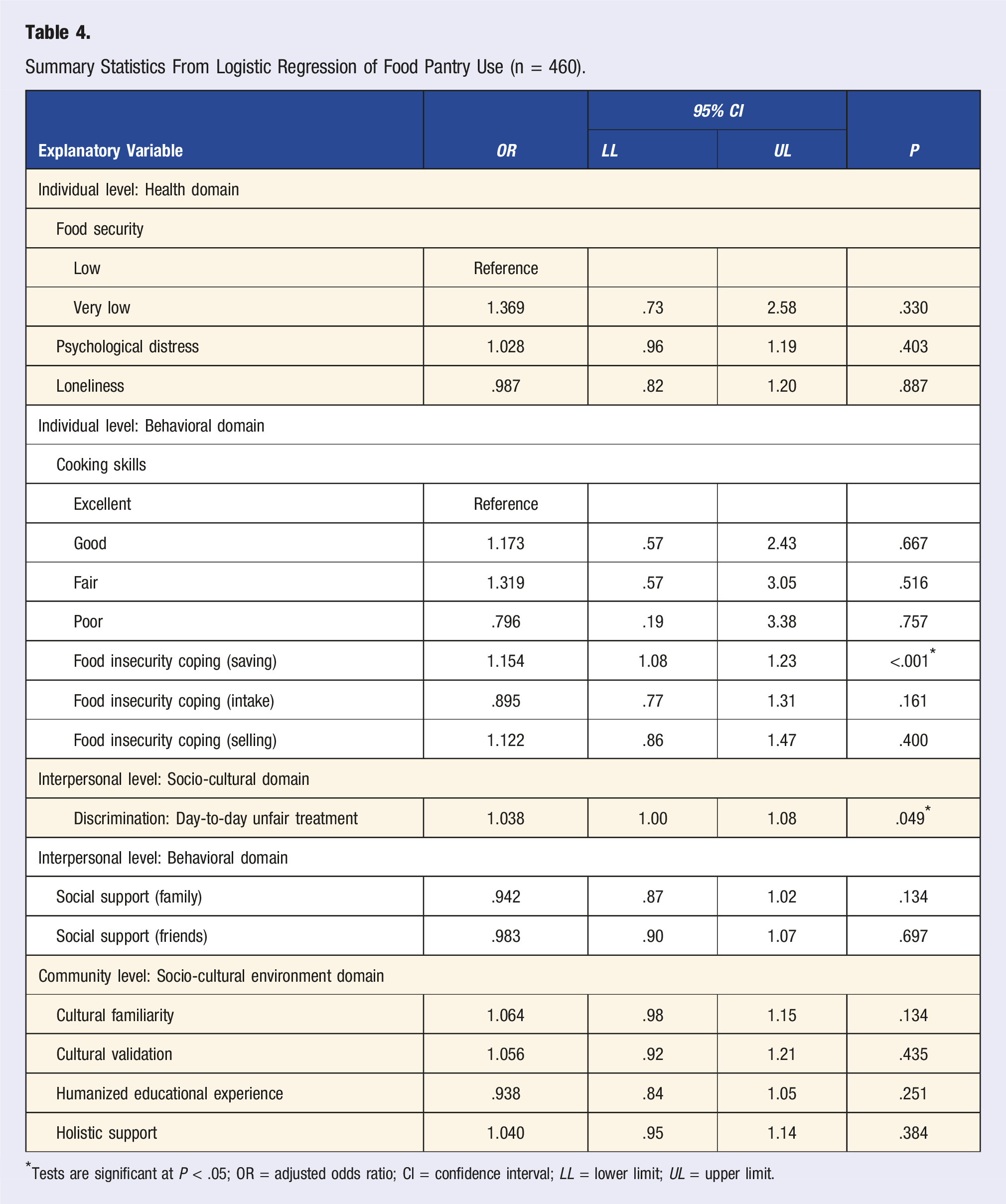
College students are disproportionately more food insecure as compared to the general U.S. population with racial and ethnic minority students at greater risk. The purpose of this study is to explore socio-ecological characteristics of food pantry utilization among food insecure Black/African American non-Hispanic and Hispanic college students employing secondary data analyses of a larger cross-sectional study of food insecurity among college students. The current study sample (n = 460) was comprised of 174 self-identified Black/African American non-Hispanic, 26 Black/African American & Hispanic, and 260 Hispanic participants. Food pantry use served as the dependent variable. Multi-level independent variables included Individual, Interpersonal, and Community Level factors. A multivariate logistic regression model analyzed the relationship between food pantry use and independent variables found to be significant in earlier independent sample t-tests and chi-square analyses. Statistical significance was set at P < .05 and a confidence interval (CI) of 95%. “Saving” coping mechanisms (OR = 1.15, 95% CI [1.082-1.231] and discrimination experiences of day-to-day unfair treatment (OR = 1.04, 95% CI [.1.000-1.077]) were predictive of food pantry utilization. This study suggests food pantry use among food insecure racial and ethnic minority college students may be influenced by socio-cultural influences at both interpersonal and community levels. Implications include interventions developed with a health equity framework.
“Most participants (83%) reported not using the food pantry while 17% reported using the food pantry.”
Introduction
Food insecurity among U.S. college students is a recognized public health concern. 1 College students are disproportionately more food insecure as compared to the general U.S. population. Weighted estimates across 62 peer-reviewed publications reveal 41% of college students as food insecure 2 as compared to 13.5% in the general U.S. population. 3 Underserved, underrepresented, and multi-ethnic students are at greater risk of experiencing food insecurity.1,4-9 Critically, Black/African American and Hispanic college students are 1.5 times more likely to experience food insecurity as compared to their White and Asian counterparts.5,7,10-12
Food insecurity is associated with many physical4,5,12-22 and mental health issues such as stress, anxiety, depression, and suicidal ideation among college students.5,7,23-25 Black/African Americans are six times more likely to be observed with serious psychological distress while experiencing food insecurity. 26 Moreover, a recent study revealed that among food insecure college students, Black/African American students exhibited lower flourishing scores (i.e., self-perceived success in relationships, self-esteem, purpose, and optimism), and Hispanic/Latino students had significantly higher psychological distress, greater loneliness, and lower resilience as compared with those who were food secure. 27 In addition to health issues, food insecurity has been associated with lower academic performance among college students.16,23,28-30 A recent study revealed that food insecure students were 6 times more likely to have a GPA than 2.5 and 6 times more likely to suspend studies due to finances as compared to food secure students. 31
Concerns regarding college student food insecurity were first noted during the 2008-2009 Great Rescession. 32 Steady increases resulted in Freudenberg et al. (2019) noting college students as the “new face” of food insecurity in the US. 33 Further, COVID-19 resulted in increased awareness about food insecurity among college students. 34 Due to the increased prevalence of food insecurity among college students, a rapid growth in college campus food pantries has taken place as evidenced by the increase in College and University Food Bank Alliance membership from 15 schools in 2012 to over 700 schools nationally by 2019. 7
Although food pantries have the potential to improve health outcomes, 35 food-insecure students have been found to not use campus food pantries at high rates, despite reporting a lack of available food.36-39 For example, in a cross-sectional study of 896 college students, 48.8% were classified as food insecure, yet only 17.4% utilized the campus food pantry. 38 Similarly, in a 2022 study among college students, 49.2% of participants were food insecure, with only 40% reporting campus food pantry utilization. 37 Racial- and ethnic minority students, specifically those who received Pell grants, accessed food pantry resources at higher rates than their non-Hispanic White counterparts.40-44 Identified barriers to campus-based food pantry utilization span multiple levels of influence including: a) individual: such as time,8,37 self-stigma associated with pantry use,38,39,44-47 lack of pantry awareness,8,44,45 and beliefs that other students need it more,37,38,44,45 lack of clarity regarding eligibility44,47; b) interpersonal: social-stigma8,36,44; normalcy surrounding lack of food and finances in college36,39,48; and c) structural: lack of transportation,8,44,47 limited hours of pantry operation,37,44,47 location, 47 food quality and quantity. 47
A major limitation in increasing our understanding of food insecurity and food pantry use is the lack of research regarding multi-level determinants of food insecurity, with gaps in the literature especially among racial and ethnic minority college students. 9 Although various strategies such as food pantries have been implemented across U.S. colleges, addressing food insecurity requires a comprehensive approach that can examine and address the multiple determinants, especially among racial and ethnic minority college students.16,49 More specifically, based on a scoping review of food insecurity among college students, Goldman and colleagues note the need for a greater understanding of how campus climate perceptions influence food pantry use. 9 To that end, the purpose of this study was to examine characteristics of campus food pantry utilization among Black/African American and Hispanic college students employing a multidimensional socio-ecological framework depicting multiple levels and domains of influence.
Methods
Study Design
The current study employed a secondary analysis utilizing an existing dataset as part of a larger cross-sectional study exploring food insecurity among racial and ethnic minority undergraduate college students attending a large, urban research institution (n = 588). 50 The study was reviewed and approved by the [blinded for peer review] university’s Institutional Review Board (IRB # 004835). Participant recruitment and eligibility as part of the larger study are detailed in a previous report. 50
Data Source and Selection
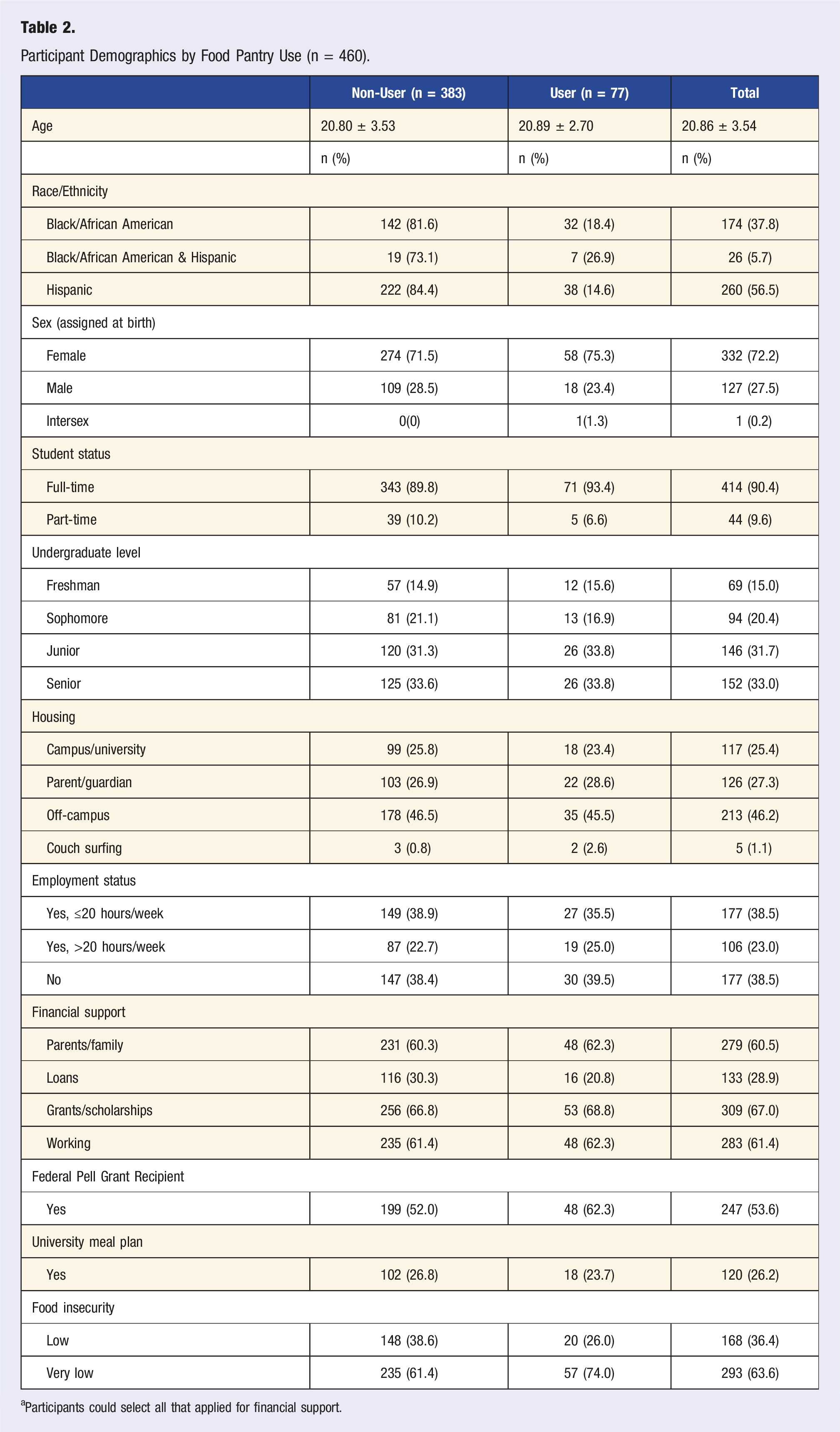
The current study sample (n = 460) was comprised of 174 self-identified Black/African American non-Hispanic, 26 Black/African American & Hispanic, and 260 Hispanic participants. As part of the larger study, the FI screener was as follows: Individuals responding positively to a one item FI screener (In the last 30 days, did you ever cut the size of your meals or skip meals because there wasn’t enough money for food?) 50 were invited to participate in the study. Participants were included in the analysis if they met the following criteria: a) self-reported as non-Hispanic Black/African American; b) self-reported as Hispanic; and c) screened with low or very low food security. As the current study focused on examining characteristics of campus food pantry utilization, students who screened as food secure, were not part of the study sample as they would not be eligible to use the campus food pantry.
Conceptual Framework
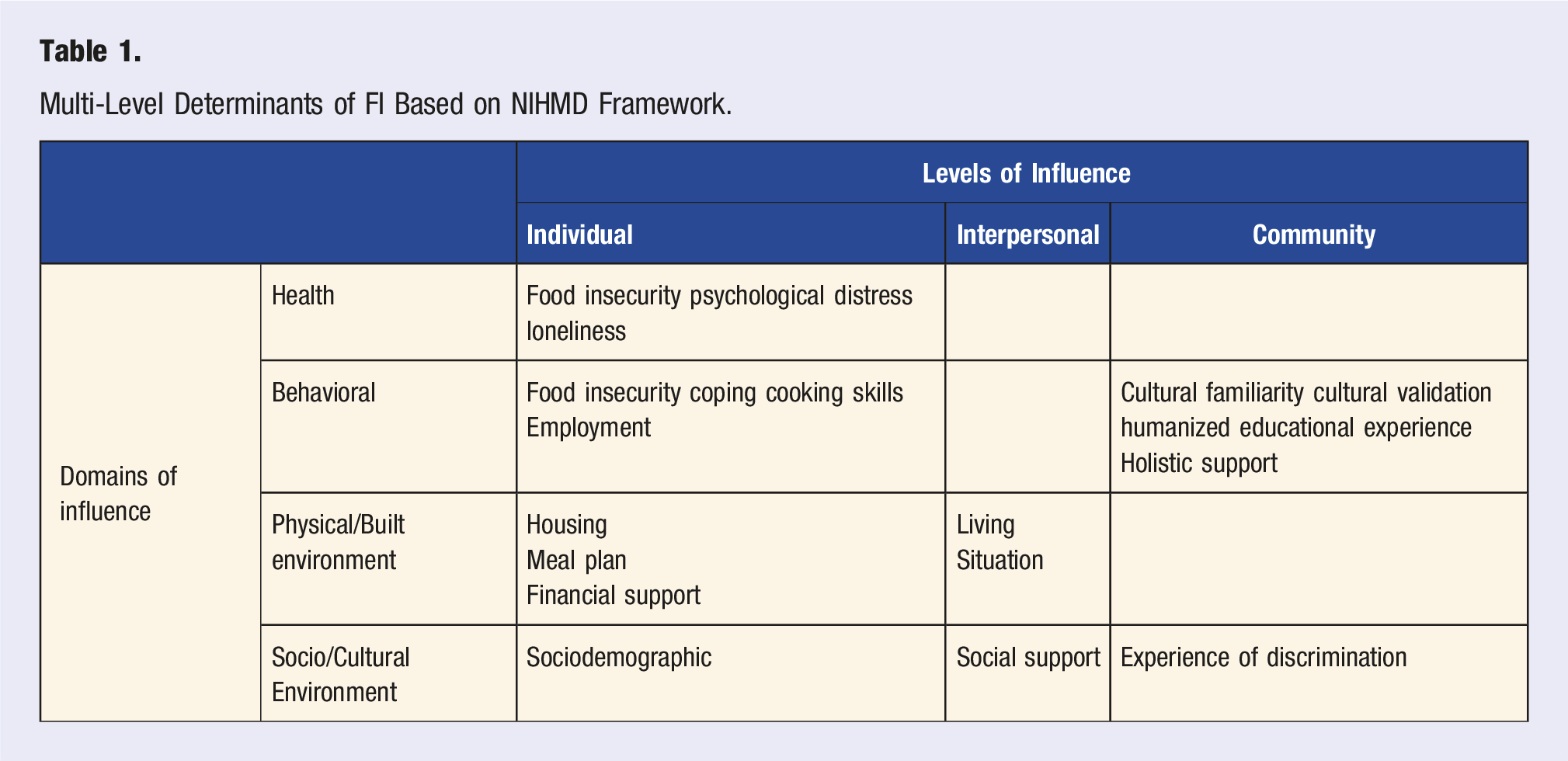
The National Institute on Minority Health and Health Disparities (NIMHD) Research Framework 51 served as the conceptual framework for the current study. 52 The NIMHD research framework is informed by the socio-ecological model and serves as a guide for encouraging research that addresses the complex multi-faceted nature of minority health comprised of domains of influence (i.e., biological, behavioral, environmental, socio-cultural environment) categorized along multiple levels of influence (i.e., individual, interpersonal, community). 52 This framework was selected as the conceptual framework for this study for the purposes of identifying the complex multi-level determinants of health disparities, particularly among minoritized populations. The NIMHD Framework can also serve as a useful tool to identify determinants and factors for minoritized populations that experience persistent health disparities.
Measures
Multi-Level Determinants of FI Based on NIHMD Framework.
Individual Level of Influence: Health Domain
Food Insecurity
The USDA Food Security Survey Short Form is a validated 53 6-item questionnaire (five items for self-administration) used to measure the level of food security.54,55 For self-administration purposes, two of the six items are combined to create a single item with a 2-point value for an affirmative response, resulting in scoring based on 6 affirmative points. A sum score was generated ranging from 0-6 with higher scores reflecting higher levels of food insecurity. Scores were categorized as 0-1= high/marginal food security; 2-4= low food security; 5-6 = very low food security. This measure has demonstrated validity in food insecurity among college students 4 and good reliability (Cronbach α = .87). 53 In the current study, Cronbach’s alpha for the USDA Food Security Survey Short Form items was α = .60.
Psychological Distress
The Kessler Psychological Distress Scale (Kessler6) 6-item version of the original 10-item scale used to measure non-specific psychological distress. 56 Responses range from “none of the time” to “all of the time” for the following questions “During the past 30 days, about how often did you feel: a) nervous; b) hopeless; c) restless or fidgety; d) so depressed that nothing could cheer you up; e) that everything was an effort; f) worthless.” A sum score was generated ranging from 0-24 with higher scores reflecting higher levels of psychological distress. This scale has demonstrated very good internal consistency (Cronbach α = .89). 56 In the current study, Cronbach’s alpha for the Kessler6 items was .83.
Loneliness
The 3-item UCLA Loneliness Scale was used to measure loneliness on a 3-point Likert scale (1 = hardly ever to 3 = often). 57 A sum score was generated ranging from 3-9 with higher scores reflecting higher levels of loneliness. This scale has shown an acceptable internal reliability (Cronbach α = .72). 57 In the current study, Cronbach’s alpha for the 3 UCLA Loneliness Scale items was .81.
Individual Level of Influence: Behavioral Domain
Food Pantry Use
Food pantry use was assessed by asking participants how often they obtained food from the food pantry within the last 30 days. The three categorical response options were “never,” “sometimes,” and “often.” A dichotomous variable was created to distinguish between food pantry users and non-users. Participants who answered “sometimes” and “often” were categorized as food pantry users. Participants who answered “never” were categorized as non-users.
Food Insecurity Coping Strategies
The 29-item Coping Strategies Scale is based on strategies used by students experiencing food insecurity.38,58,59 Items comprised three subconstructs including: saving (19 items), food intake/access (6 items), and selling (4 items) utilizing a three-point scale with response options of “often,” “sometimes,” and “never.”
The
Items representing the
Items representing the
Cooking Skills
A single-item that uses a 4-point Likert scale was used to measure perceived cooking skills. Students were asked “How would you rate your cooking skills?” Response options included “excellent,” “good,” “fair,” and “poor.” 59
Individual Level of Influence: Socio-Cultural Domain
Sociodemographic
Variables included self-reported age, race, ethnicity, sex (assigned at birth), undergraduate level (freshman, sophomore, junior, senior), enrollment status (full-time vs part-time), housing, employment status (working <20 hours/week, working >20 hours/week, not working), sources of financial support (loans, grants/scholarships, working, and/or parents/family), having a Pell Grant), and meal plan status.
Interpersonal Level of Influence: Socio-cultural environmental domain
Experience of Discrimination
The Everyday Discrimination Scale 60 assessed self-reported experiences of interpersonal discrimination that are chronic or episodic in everyday life. The scale comprises 10 items (e.g., being treated with less courtesy, receiving less respect, people acting as if they are afraid of you, and being called names) using a 4-point scale (never, 1 time, 2 or 3 times, 4 or more times). A total sum score was calculated with higher scores indicating greater experiences of day-to-day discrimination. This scale has shown an acceptable internal reliability (Cronbach α = .84).60,61 In the current study, Cronbach’s alpha for 10 items of the Everyday Discrimination Scale was .79.
Social Networks and Social Support
The 12-item Lubben Social Network Scale was used to measure students’ social networks and support.62,63 The questionnaire includes two subscales employing a 5-point scale to assess social networks/support among friends and family members with a total score calculated as the sum of all items. 63 Participants were asked how many and how often they interact with friends and family. A sum score ranging from 0-20 was generated for each subscale with higher scores reflecting greater social engagement/support. These scales have demonstrated acceptable internal reliability (Cronbach α = .84-.89 for family & Cronbach α = .80-.82 for friends). 63 In the current study, Cronbach’s alphas for the family subscale items and the friends subscale items were .77 and .80 respectively.
Community Level of Influence: Socio-Cultural Environmental Domain
Campus Climate
The Culturally Engaging Campus Environments (CECE) scale 64 was employed to assess campus climate. In contrast to typical campus climate surveys that identify problems with discrimination that are used to inform diversity efforts, the CECE assesses climate by focusing on positive actionable elements that allow diverse populations to thrive. 65 To that end, the CECE assesses student experiences regarding elements of inclusive and equitable environments that are relevant to diverse backgrounds. 65 This scale consists of two subconstructs of cultural relevance (cultural familiarity and cultural validation) and two subconstructs of cultural responsiveness (humanized educational environment and holistic support) demonstrating acceptable internal reliability (cultural familiarity Cronbach α = .81; cultural validation Cronbach α = .91; humanized educational experience Cronbach α = .87; and holistic support Cronbach α = .94.64,66 All items were rated on a 5-point Likert scale (1= strongly disagree to 5 = strongly agree). 64 In the current study, Cronbach’s alphas for the cultural familiarity, cultural validation, humanized educational experience, and holistic support items were .86, .87, .90, and .70 respectively.
Data Analysis
Survey data were exported from REDCap (Research Electronic Data Capture web-based application) 67 and uploaded into IBM SPSS Statistics Version 29.0.1 where all statistical analyses were conducted. Descriptive statistics were computed for all demographic variables by food pantry use. Independent sample t-tests and chi-squared tests were used to identify any differences between food-insecure food pantry users and non-users across multi-level variables.
A multivariate logistic regression model was constructed to analyze the relationship between food pantry use and individual, interpersonal, and community level predictor variables found to be significant in earlier independent sample t-tests and chi-square analyses. Cox & Snell R2 and Nagelkerke R2 values were utilized to explain the variation in food pantry use within the multivariate logistic regression. Statistical significance was set at P < .05 and a confidence interval (CI) of 95%.
Results
Participant Characteristics
Participant Demographics by Food Pantry Use (n = 460).
aParticipants could select all that applied for financial support.
Differences in Multi-level Determinants by Pantry Use vs Non-use
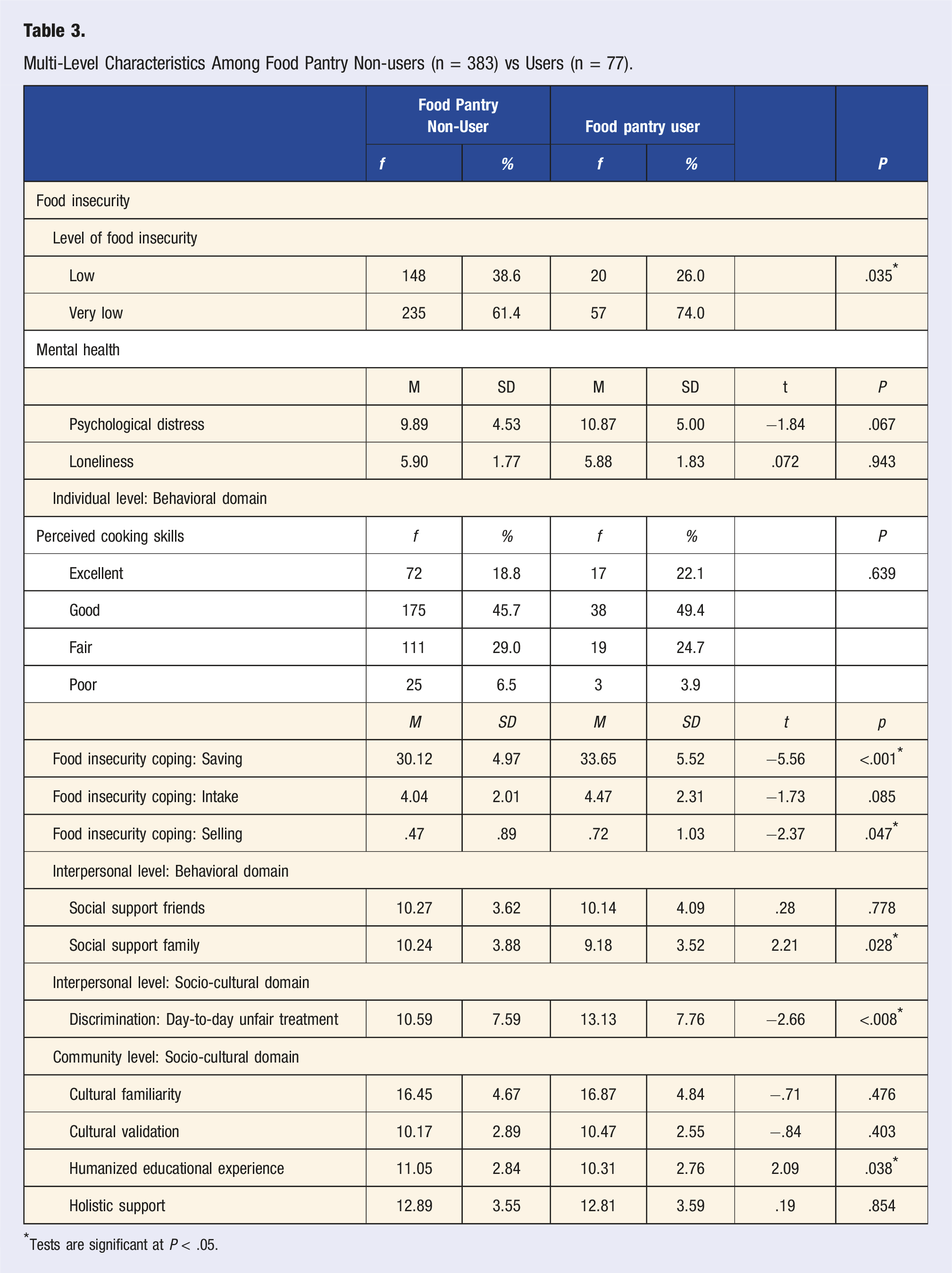
Multi-Level Characteristics Among Food Pantry Non-users (n = 383) vs Users (n = 77).
*Tests are significant at P < .05.
Within the Interpersonal Level, food pantry users exhibited statistically significantly higher mean scores for experiences of day-to-day unfair treatment (M = 13.13, SD = 7.76, P = .008) as compared to non-users (M = 10.59, SD = 7.59). Additionally, food pantry users demonstrated lower mean scores for social support from family (M = 9.18, SD = 3.52, P = .028) as compared with non-users (M = 10.24, SD = 3.88).
At the Community Level, statistically significant differences emerged regarding humanized educational experiences between food pantry users and non-users (P = .038) whereas food pantry users exhibited lower mean scores (M = 10.31, SD = 2.76) as compared to food pantry non-users (M = 11.05, SD = 2.84).
Multi-level Determinants on Food Pantry Use
Summary Statistics From Logistic Regression of Food Pantry Use (n = 460).
*Tests are significant at P < .05; OR = adjusted odds ratio; CI = confidence interval; LL = lower limit; UL = upper limit.
Discussion
The current study offers novel insights into the multi-level determinants of food pantry use among food insecure racial and ethnic minority college students, a population disproportionately affected by food insecurity.5,7,10-12 By applying the NIMHD Research Framework, 52 this study advances the understanding of how individual, interpersonal, and community level factors influence campus-based food pantry utilization among racial and ethnic minority college students. Although prior research has focused broadly on barriers to food pantry use, to our knowledge, this is the first known study to examine campus-based food pantry utilization among racial and ethnic minority college students using a multi-level ecological framework. Collectively, results both support previous research and present key novel findings.
Supporting previous studies reporting modest utilization of food pantries,36-39 the current study revealed only 17% of food insecure racial and ethnic students as food-pantry users. Further a greater percentage of students experiencing very low food security in the current study reported using the pantry (20%) as compared with those experiencing low food security (12%) suggesting normative beliefs surrounding food that exist among college students. For example, previous studies have revealed barriers to food pantry access including perceived normalcy surrounding lack of food and finances in college36,39,48 and beliefs that other students may be in more need of resources.37,38,45,48,68 Lastly, although only approaching statistical significance, the current study is in line with previous studies suggesting an association between receiving a Federal Pell Grant and food pantry use.40-44 For example, Twill et al. (2016) found that 57% of campus food pantry users reported receiving the Federal Pell Grant 40 and our study found that 62.3% of food insecure Black/African American non-Hispanic and Hispanic college students who used the food pantry reported receiving a Federal Pell Grant.
Most noteworthy, results reveal
Second, at the interpersonal level, the current study uniquely identified day-to-day discrimination as a statistically significant predictor of food pantry uses. This finding supports a growing body of literature linking interpersonal racism and other forms of discrimination and food insecurity in the U.S.69-74 More specifically, Larson et al. (2021) found experiencing interpersonal racism in the past month was associated with food insecurity among emerging adults. 74 The combination of day-to-day discrimination and low family support may create an obstructive social environment; thus, increasing the need for access to food. Further, this finding links interpersonal racism to basic needs behavior, highlighting how social marginalization may exacerbate college students’ vulnerability and increase reliance on institutional support systems.
Third, at the community level, the current study aimed to gain a better understanding of the influence of campus climate and food pantry use. Results reveal statistically significantly lower scores on humanized educational experiences (i.e., experiences where diverse students perceive that faculty and staff are committed to their success 65 ) among food pantry users; thus, suggesting students who use campus-based food pantries may feel less supported or connected to faculty and/or staff, consequently compounding their sense of marginalization and lessen engagement with other campus resources. 66 This is consistent with previous research that found students who experience food insecurity are more likely to experience less on-campus social support.29,75,76 This insight challenges assumptions that students who access resources are more engaged and may point to gaps in relational support and opportunities for developing culturally responsive campus environments. Additional research exploring campus climate pertaining to racial and ethnic minority college student experiences regarding inclusive and equitable environments and food insecurity is warranted.
Nonetheless, interpretation of findings should be considered in the context of a few study limitations. First, the study sample was comprised of undergraduate-level students at a single university which may affect generalizability to graduate-level and college students attending institutions in other geographical regions. Second, reliance on self-reported experiences (e.g., discrimination) over a long duration (e.g., in the past 12 months) can potentially introduce recall bias and affect the validity of the results. More specifically, current research has suggested the use of “since being in college” as opposed to “in the last 12 months.” 9 Third, the sample was homogenous in food insecurity status thus students who are not food insecure were not represented in this sample. Lastly, the variables representing both levels and domains of influence per NIMHD Research Framework were limited due to the nature of the study being a secondary data analysis of a larger study on food insecurity among racial and ethnic college students. For example, variables representing the health domain were only assessed at the individual level.
Practical Recommendations for Increasing Food Pantry Use Among Food Insecure Racial and Ethnic College Students
Despite limitations, the current study provides additional insight into food insecurity and food pantry use among racial and ethnic minority college students. Collectively, the current study suggests food pantry use among food insecure racial and ethnic minority college students may be influenced beyond individual and structural barriers and include socio-cultural influences at both the interpersonal and community level. While the NIMHD Research Framework was instrumental for assessing multi-level determinants of food pantry use, it is not designed to provide actionable guidance for intervention development as it does not offer a roadmap for addressing structural and relational inequities that perpetuate food insecurity among racial and ethnic college students. Accordingly, translation of current findings for improving health equity regarding food insecurity among college students may be served by applying a justice-based health equity framework such as the Health Equity Framwork.47 Centering health equity at a population level, the Health Equity Framework provides a justice-based model for guiding solutions encouraging multi-level, equity driven interventions that target factors (i.e., psychological pathways, individual, relationships and networks, systems of power) that affect access to resources and opportunities.47,77 To that end, based on findings from the current study, the following practical multi-level recommendations are presented to increase campus-based food pantry use among food insecure racial and ethnic minority college students.
At the individual level, the current study found “saving” coping strategies serving as the main predictor of campus-based food pantry resource utilization. As such, structured solutions to support coping strategies may include the following strategies that may be facilitated as part of the campus-based food pantry services: a) workshops on meal planning to empower students with practical skills to reduce reliance on coping mechanisms like skipping meals and selling possessions; b) financial literacy programs that include budgeting for food and accessing aid; and c) provision of small, rapid-response grants to students facing acute food insecurity to prevent reliance on harmful coping strategies like skipping meals or selling personal items.
At the interpersonal level, greater day-to-day discrimination, lower family support and fewer humanized educational experiences were associated with food pantry use. Thus campus-based strategies that reduce social marginalization through strengthen culturally responsive campus environments are warranted. Enhancing inclusive campus climates to address food insecurity among racial and ethnic minority students may include the following practical applications: a) cultural ally training for faculty, staff, and student leaders to increase perceptions of cultural responsiveness and fill gaps in relational support; b) culturally responsive food insecurity peer support groups that create supportive and inclusive environments where food insecure students can connect, share experiences, and build mutual support; and c) partnering with student organizations to train students from diverse backgrounds to serve as peer navigators that can assist with access to food resources, reduce stigma, and build community.
At the institutional level, addressing systems of power via reforming institutional policies and practices to reduce barriers are warranted. Practical applications may include the following: a) normalizing food pantry use through inclusive messaging in course syllabi, new student orientation, and campus-wide campaigns that frame food access as right; b) integrating campus-based pantry access into student services (e.g., financial aid, advising, housing); c) incorporating campus-based food pantry into wellness programs (e.g., health promotion, counseling, health services) to frame it as part of holistic student health; and d) establishing a campus-wide task force to ensure equitable funding and staffing of food pantries, meal voucher programs, and culturally relevant food initiatives.
Despite its public health significance, negligible work exists on the evaluation of programs and policies addressing food insecurity on college campuses.28,78-80 Further, more research is needed regarding campus-based interventions that address multi-level determinants of food insecurity. Implications for further research include the use of equity-focused multi-level frameworks to develop and evaluate system-thinking programs with the aim of decreasing the prevalence of food insecurity among college students.
Footnotes
Author Contributions
Conception and design (RD, MS, KC, AD, DH), analysis and interpretation of data (RD, JJ,JP, RJ). Drafting of the manuscript (RD, JJ, J) and critical revision of the manuscript (all authors).
Declaration of Conflicting Interests
The authors declared no potential conflicts of interest with respect to the research, authorship, and/or publication of this article.
Funding
The author(s) disclosed receipt of the following financial support for the research, authorship, and/or publication of this article: The current study was funded by the College of Public Health at the University of South Florida.
Ethical Statement

Data Availability Statement
The data that supports the findings may be available from the corresponding author, RD, upon reasonable request.