



Abstract
“Supplementing individuals should conciously scrutinize their supplement intake and ideally seek healthcare professional support to determine the need of supplements”
Introduction
Vegetarian and vegan diets enjoy wide popularity in the German-speaking countries.1,2 Both dietary patterns have been associated with several health benefits, as they were shown to lower the risk for diabetes, overweight, elevated blood pressure levels and dyslipidemia.3-6
A former position paper by the Academy of Nutrition and Dietetics highlighted that an appropriately planned vegetarian or vegan diet is “healthful, nutritionally adequate, and may provide health benefits for the prevention and treatment of certain diseases.” 7 Considerable evidence now supports shifting populations towards healthful plant-based diets that reduce or completely eliminate animal products and maximize favorable “One Health” impacts on human, animal and environmental health. 8
Several leading dietetic associations across the world have now acknowledged that a well-planned plant-based diet is healthy for everyone across the lifecycle. 6 Unbalanced, hypocaloric and non-diversified vegetarian and vegan diets, on the contrary, bear the risk of nutritional deficiencies, and may thus be detrimental to human health.1,9-11
Critical nutrients in plant-based diets include vitamin B12, vitamin D, calcium, iron, zinc, iodine, selenium, eicosapentaenoic acid (EPA) and docosahexaenoic acid (DHA).1,10,12 While vitamin D, calcium and iron (in women) are generally considered nutrients of public health concern in recognized dietary guidelines, such as the Dietary Guidelines for Americans, 13 vegetarians and vegans frequently have a lower intake of these particular nutrients.1,10
Recent data from a cross-sectional study conducted by our research group revealed that the German-speaking plant-based community is now paying increasing attention to several nutrients of potential concern in plant-based diets, with a particular focus on vitamin B12. 1 The latter meanwhile seems to be readily supplemented by the majority of vegans in Germany and Austria.1,2,14 On the contrary, the use of vitamin B12 supplements among German plant-based healthcare professionals still appears to be limited and inappropriate. 15
Supplement Intake in Vegetarians and Vegans in Cross-Sectional Studies From the German-Speaking Countries: An Overview.
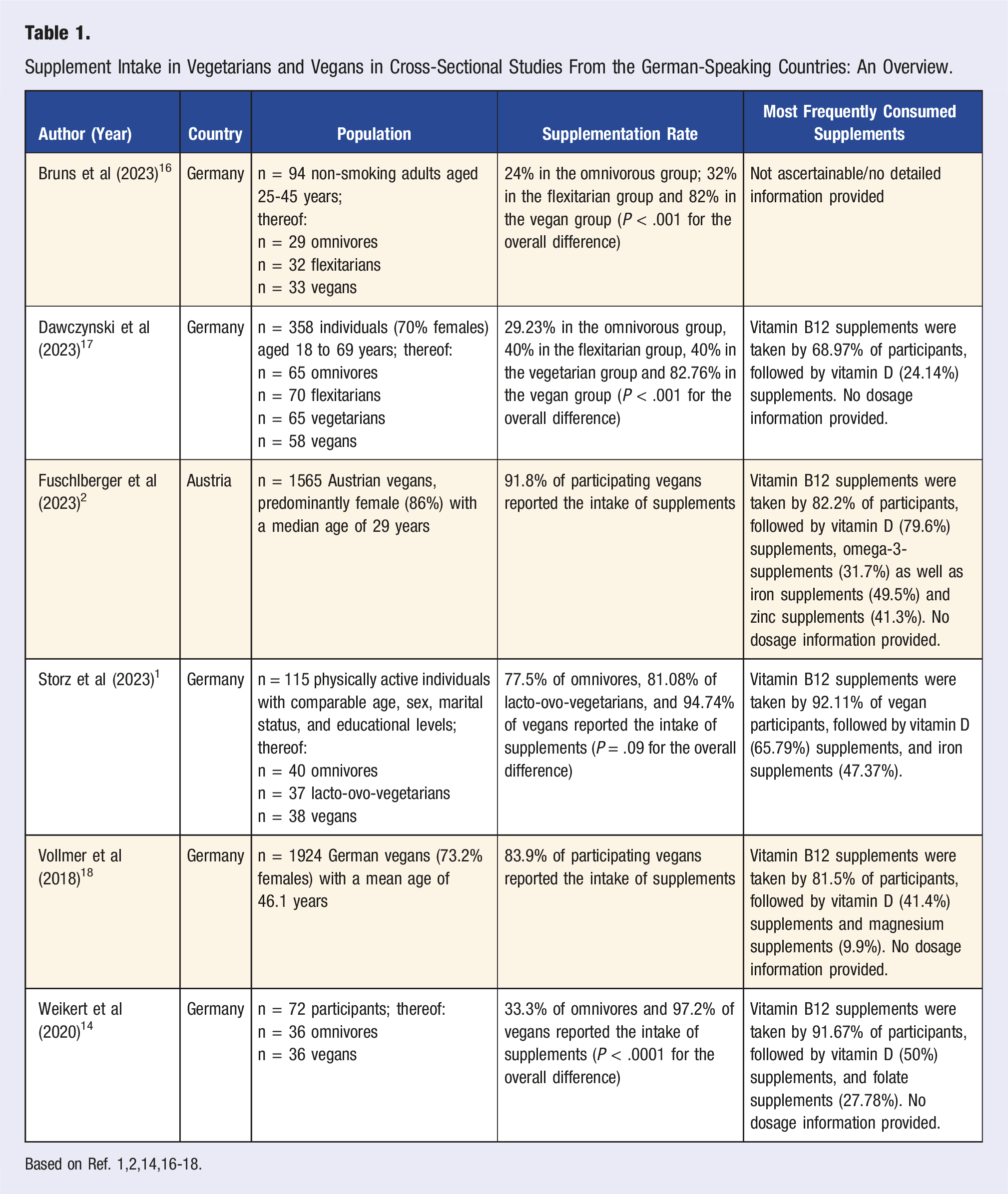
A major limitation of many studies with vegetarians and vegans is the lack of a precise supplement intake quantification analysis, which goes beyond a simple binary intake registration (e.g., “yes” vs “no” for the intake of a certain supplement). 1 While Table 1 presents an overview of the most commonly consumed supplements in vegetarians and vegans, precise intakes are often undisclosed. As such, scientific data on supplement intake expenditures in vegans and vegetarians is still scarce, and—to the best of our knowledge—currently unavailable for the German-speaking countries.
Here, we computed supplement expenditures in a previously presented cohort of n = 115 healthy and physically active vegans, vegetarians and omnivores characterized by a comparable age, sex and marital status, as well as comparable educational levels. 1 Their previously reported supplementation behavior was re-analyzed, focusing on supplementation expenditures by dietary group with a particular emphasis on plant-based diets. The analysis was performed under the hypothesis that vegans generally spend more money on dietary supplements than their lacto-ovo-vegetarian and omnivorous counterparts.
Materials and Methods
General Information
Our methods and study protocol have been described earlier in great detail. 1 In brief, we conducted a cross-sectional study including n = 115 participants (n = 40 omnivores; n = 37 lacto-ovo-vegetarians, and n = 38 vegans) with comparable sociodemographic data based on a series of strict participant selection criteria allowing for a homogeneous study sample. This cross-sectional study was performed between December 2021 and May 2022 in the city of Freiburg, in the Southern part of Germany, and included nutrient intake data, supplementation intake data as well as laboratory biomarkers. The ethical committee of the University Medical Center of Freiburg, Germany (EK Freiburg 21-1442) approved the study before onset. The study was prospectively registered at the German Clinical Trial register (DRKS00027425).
As defined by the study protocol, only individuals who indicated consequent long-term dietary adherence (≥2 years) to one of the examined diet groups without interruptions were considered eligible. The in- and exclusion criteria have been discussed in detail in the main publication. 1 Only healthy and free-living individuals were included for this study. Their dietary intakes were meticulously captured based on 4-day weighed food diaries, as previously described in a 2015 study in a Danish population. 21
Dietary Supplement Assessment
Similarly to the aforementioned study by Kristensen et al, 21 we instructed study participants to bring their dietary supplements with them upon the first study examination day or the biosampling day. We recorded every single supplement with the exact ingested daily dosage and additionally inquired about all other supplements taken within the last year. We also registered whether participants took multivitamin supplements (which we defined as a supplement that included ≥2 different nutrients/vitamins). Based on the U.S. Dietary Supplement Health and Education Act of 1994 [108 Stat. 4325], a dietary supplement was defined as a product “intended to supplement the diet that bears or contains one or more of the following dietary ingredients: a vitamin, a mineral, an herb or other botanical, an amino acid, a dietary substance for use by humans to supplement the diet by increasing total dietary intake, or a concentrate, metabolite, constituent, extract, or combination of the aforementioned ingredients.” 22 A reservation must be made, that protein supplements (e.g., protein bars or powders) are considered foods in the European Union, and thus an exception was made in this particular case. 23 For this secondary data analysis, we focused exclusively on supplements that included the following nutrients: Vitamin C, vitamin D, vitamin B12, vitamin K2, vitamin B1, vitamin B2, vitamin B3 (niacin), vitamin B5 (pantothenic acid), vitamin B6, vitamin B7 (biotin), folic acid, magnesium, calcium, iron, zinc, selenium, and iodine as well as the long-chain omega-3 fatty acids EPA and DHA. These supplements were purposefully selected based on their intake frequencies reported in the main study, which exceeded 15% for all supplements. 1 For practical reasons, supplements consumed only rarely, such as vitamin E, were not considered for this particular analysis.
Covariates
Important covariates have been discussed previously, 1 including subjective social status (measured with the MacArthur Scale of Subjective Social Status (MASSS) 24 ), physical activity level (measured with the International Physical Activity Questionnaire (IPAQ) 25 ), age, sex, educational level, race/ethnicity as well as anthropometric data.
Statistical Analysis
Information on the sample size calculation and power analysis of the study was published previously. 1 Supplement intake and supplementation behavior were both secondary endpoints.
Histograms, box plots, and subgroup summary statistics were employed to check for data frequency distribution and data variability. 1 Stata’s Shapiro-Wilk-Test was additionally used to determine data distribution. Normally distributed variables were given as mean ± standard deviation, whereas non-normal distributed variables were provided as medians with the corresponding interquartile range. Parametric and non-parametric tests were used for the comparison between the 3 different dietary groups. For normally distributed data, we used one-way analysis of variance to examine whether the mean of the dependent variable was different in the 3 diet groups. Similarly, we used the Kruskal–Wallis H test when data was not normally distributed. For comparisons of categorical variables, we used the chi-square test of association.
In addition, we ran Poisson regression, negative binomial regression, zero-inflated Poisson regression and logistic regression models to examine potential predictors of supplement intake (binary outcome (no/yes), logistic regression), total supplement expenses (continuous outcome, Poisson regression and negative binomial regression (NBR), zero-inflated Poisson regression), and the total number of supplement consumed (continuous outcome, Poisson regression, NBR). Post regression, Stata’s “margins” and “contrasts” functions were used. Marginsplots were employed to graph statistics from fitted models.
Following logistic regression, we employed Stata’s post regression command “estat gof” to employ a Hosmer–Lemeshow goodness-of-fit test for the respective models. Hereby, we followed Hosmer, Lemeshow, and Sturdivant’s suggestion to regroup the data by ordering on the predicted probabilities and by forming 10 nearly equal-sized groups. 26
In line with our previous publications, we used scatterplots, Pearson’s correlation coefficients, and Spearman’s correlations coefficients to examine potential associations between supplement expenses and the number of reported supplements. 27 Finally, strip plots were used to visualize the results.
Expenses in € (Euro) were calculated for all supplements and for mono- and multivitamin supplements only. Average supplement prices for each product from the year 2022 were obtained from idealo internet GmbH, a freely accessible German price comparison service which allows users to compare prices on a range of products from hundreds of online shops.28,29 Expenses were calculated for actual intakes and the calculation method did not consider the costs for opened but potentially unused packages. Average supplement prices were queried and cross-verified retrospectively in January 2024 by 2 independent reviewers (JH and MAS).
Statistical significance was determined at α = .05; all analyses were performed with STATA 14 statistical software (StataCorp. 2015. Stata Statistical Software: Release 14. College Station, TX: StataCorp LP). Only participants with a full dataset were considered and no data was imputed.
Results
Sociodemographic Data of Study Participants Stratified by Dietary Group.
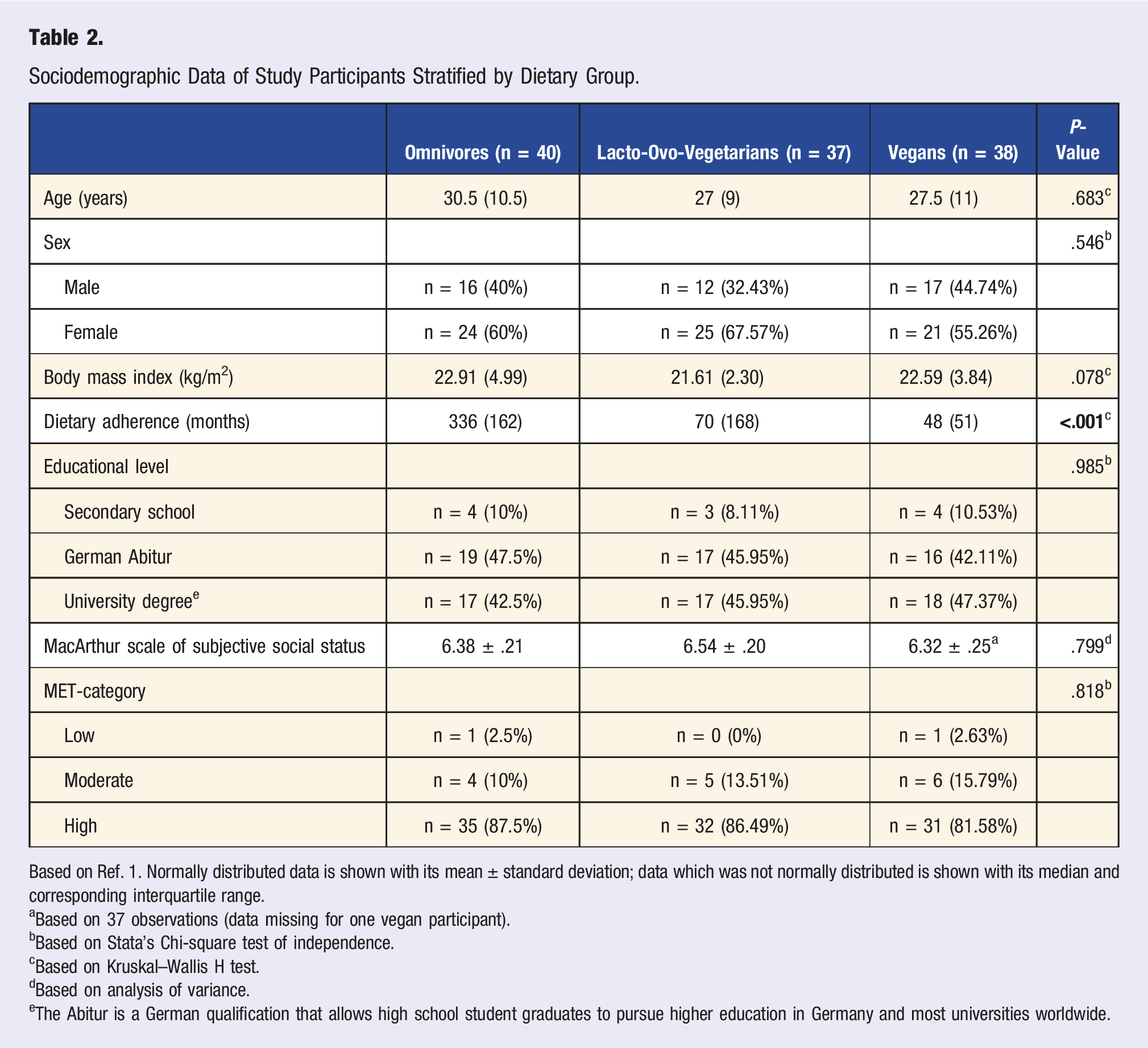
Based on Ref. 1. Normally distributed data is shown with its mean ± standard deviation; data which was not normally distributed is shown with its median and corresponding interquartile range.
aBased on 37 observations (data missing for one vegan participant).
bBased on Stata’s Chi-square test of independence.
cBased on Kruskal–Wallis H test.
dBased on analysis of variance.
eThe Abitur is a German qualification that allows high school student graduates to pursue higher education in Germany and most universities worldwide.
Supplementation Behavior Stratified by Dietary Group.
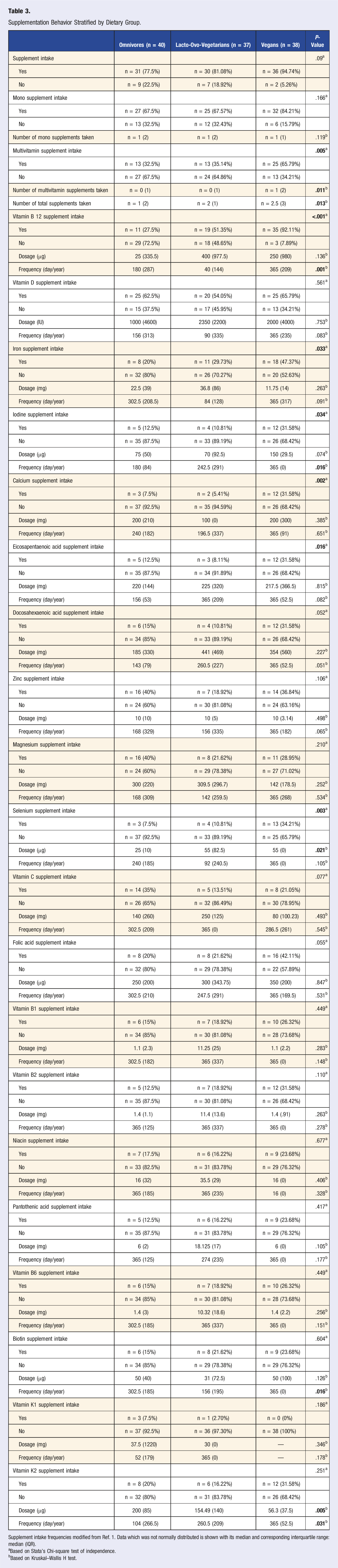
Supplement intake frequencies modified from Ref. 1. Data which was not normally distributed is shown with its median and corresponding interquartile range: median (IQR).
aBased on Stata’s Chi-square test of independence.
bBased on Kruskal–Wallis H test.
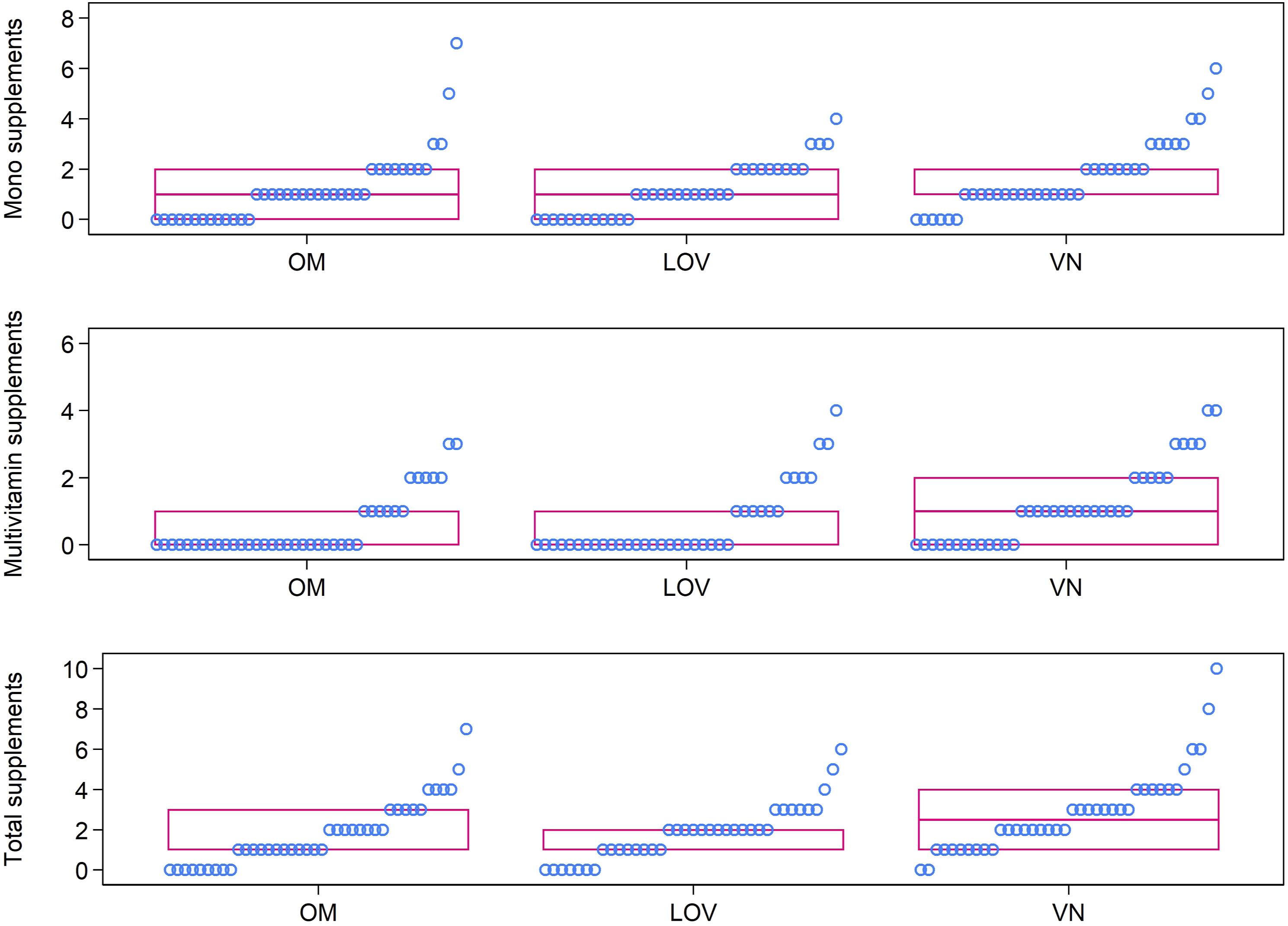
Supplement intake distribution across dietary groups. Strip plots showing mono supplement intake (top), multivitamin supplement intake (middle) and total supplement intake (bottom) shown by dietary group. Based on n = 115 observations. OM = Omnivores. LOV = Lacto-ovo-vegetarians. VN = Vegans.
Protein supplements were analyzed separately, because they are considered foods in the European Union. 23 Only n = 7 participants reported a regular intake of protein powders when supplements were queried (Supplemental Table 1). When analyzing the weighed food diaries, a total of 14 participants listed protein bars or powders (Supplemental Table 2). The between group differences were not significant.
Supplementation Expenses in € Stratified by Dietary Group.
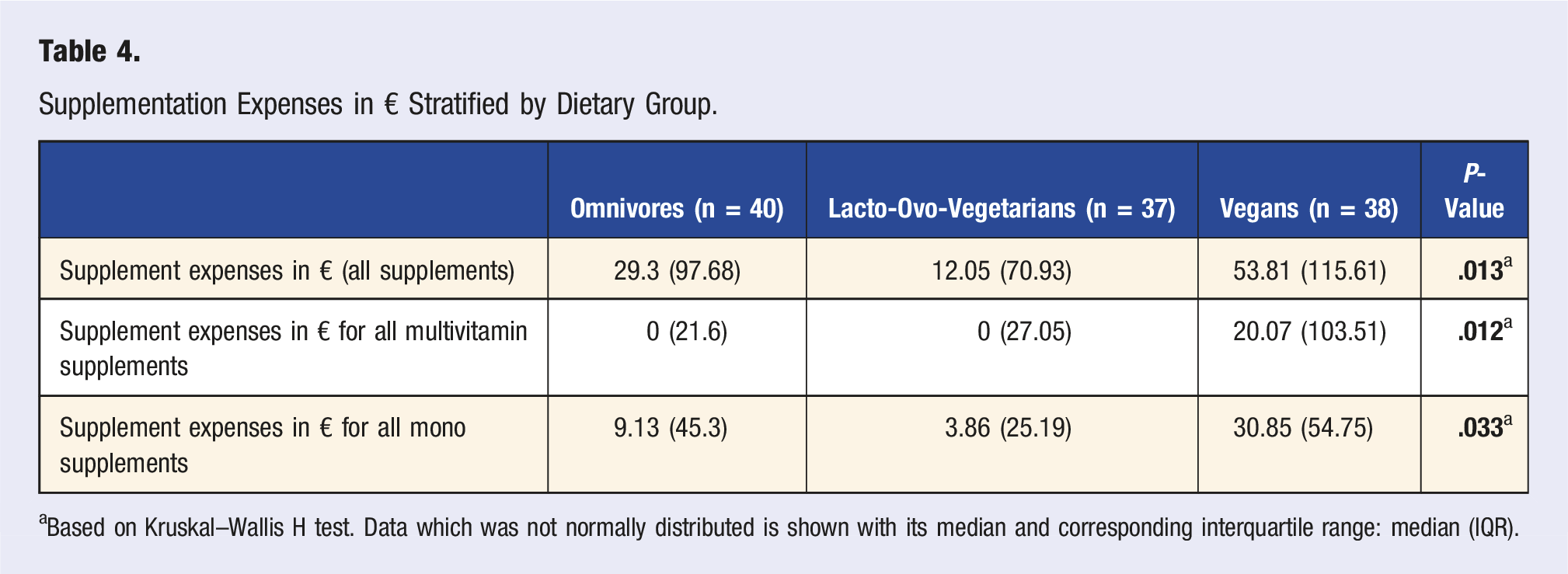
aBased on Kruskal–Wallis H test. Data which was not normally distributed is shown with its median and corresponding interquartile range: median (IQR).
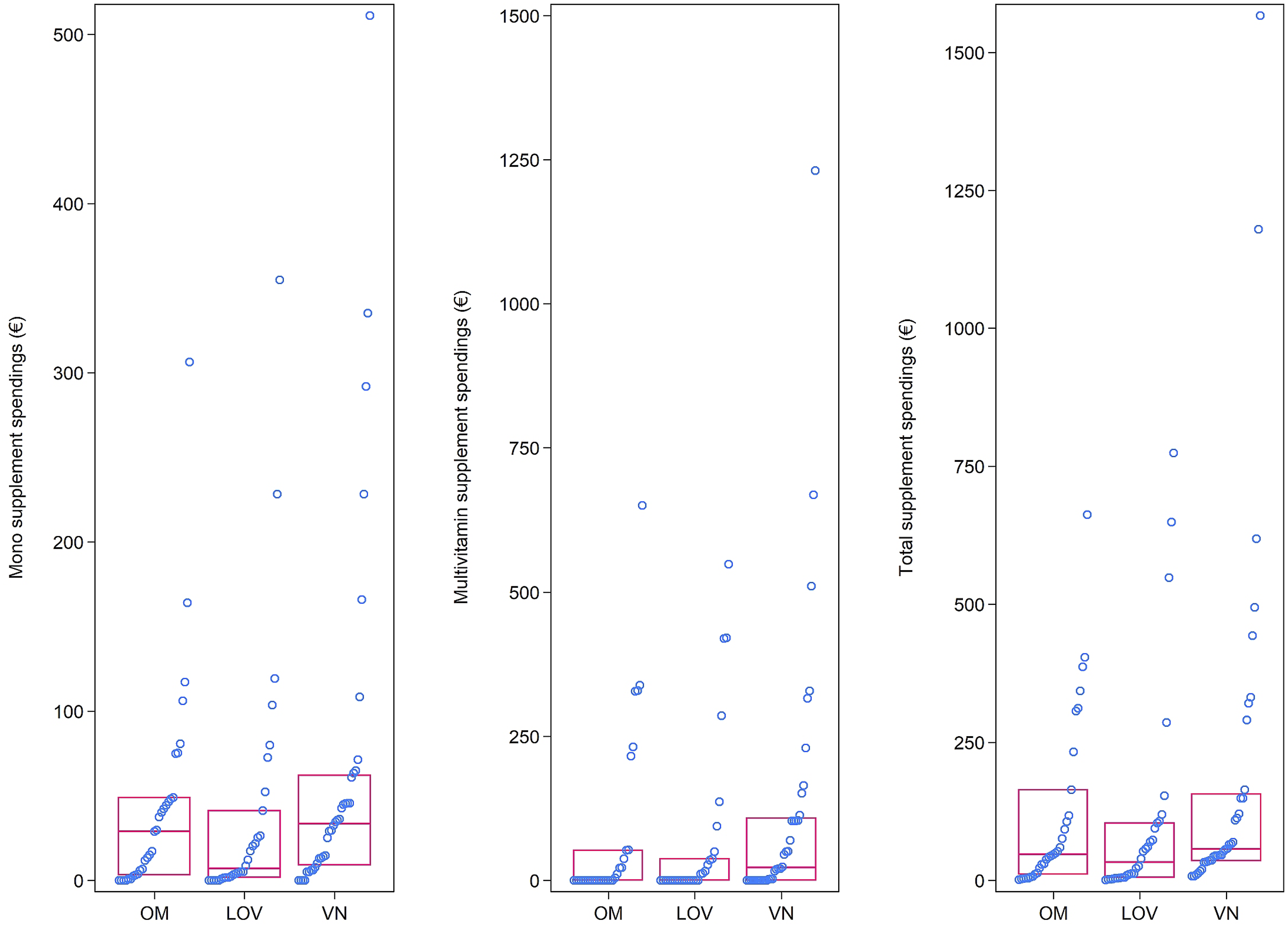
Supplement expenses across dietary groups. Strip plots showing mono supplement expenditures (left), multivitamin supplement expenditures (middle) and total supplement expenditures (right) shown by dietary group. Based on supplementing individuals only (n = 97 observations). OM = Omnivores. LOV = Lacto-ovo-vegetarians. VN = Vegans.
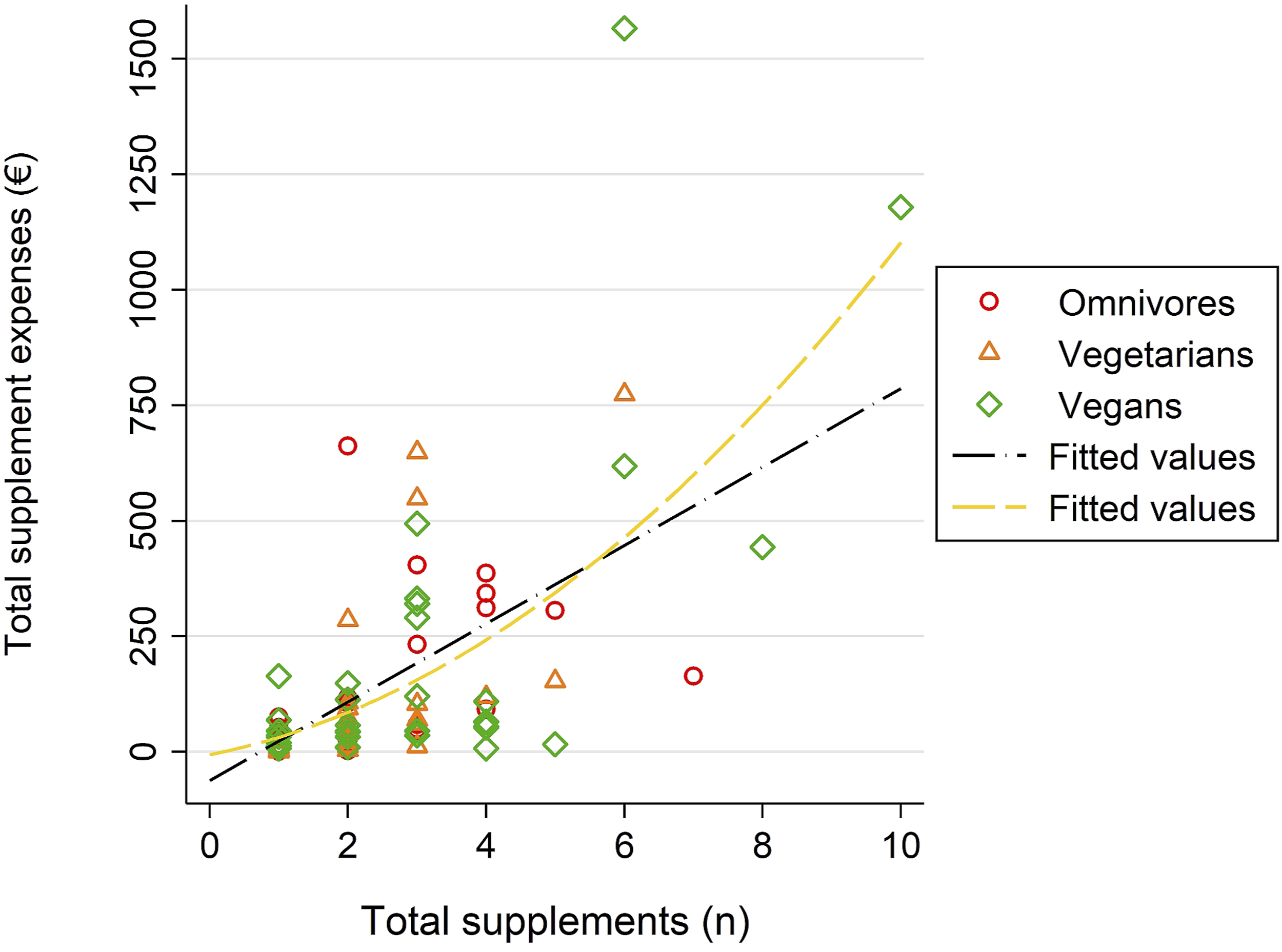
Association between supplement expenditures and the number of supplements consumed. Scatter plot showing the association between total supplement expenses and the number of consumed supplements. Spearman’s rho was .65 for the entire sample (P < .001). Spearman’s rho was 0.71 in omnivores, .80 in lacto-ovo-vegetarians and .44 in vegans, respectively. (P < .001 for omnivores and lacto-ovo-vegetarians, P = .006 for vegans). Based on supplementing individuals only (n = 97 observations).
Supplemental Table 3 shows logistic regression models with “supplementation” as a binary outcome (yes/no). Three models where constructed: a crude model (model 1), a model adjusting for sex, age and educational level (model 2), and a final model additionally adjusting for diet duration (model 3). After adjustment for all covariates, the diet group could not predict the odds for supplementation at a statistically significant level.
NBR was run to predict the total number of supplements taken within the last 12 months based on dietary group, sex and age (Supplemental Table 4). NBR was selected over Poisson regression for this particular analysis as the supplement count outcome variable did not exhibit Poisson distribution, and was overdispersed with variance higher than mean values. The adjusted mean of supplements taken in the vegan group was 2.87 (95% confidence interval (CI): 2.23-3.51) and differed significantly from the omnivorous group (1.78 (95% CI: 1.28-2.28)) at a P-value of .008 (Figure 4). Zero-inflated Poisson regression was run to predict the total supplements expenditures within the last 12 months based on dietary group, sex and age (Supplemental Table 5). In this predictive model, no significant intergroup differences in expenditures were found. Plunger plot showing predictive margins with 95% confidence intervals of supplement intake (left). The adjusted mean of supplements taken in the vegan group based on sex category and age was 2.87 (95% confidence interval (CI): 2.23 - 3.51); whereas it was 1.78 (95% CI: 1.28 - 2.28) in the omnivorous group and 1.80 (95% CI: 1.36 - 2.25) in the lacto-ovo-vegetarian group. Based on Stata’s contrasts command, the predicted difference between omnivores and vegans was statistically significant (P = .008). OM, Omnivores; LOV, Lacto-ovo-vegetarians; VN, Vegans.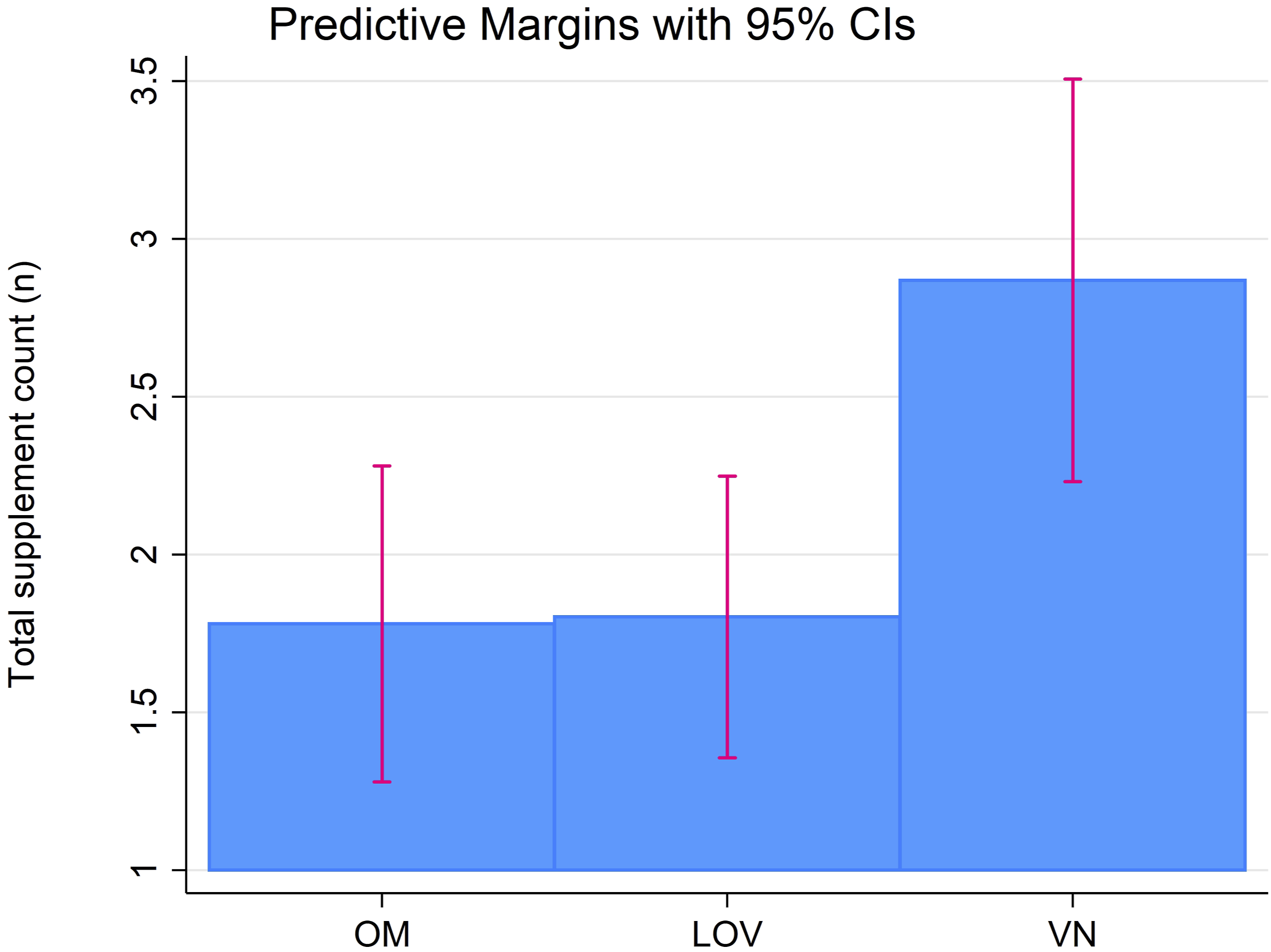
Discussion
Adequate supplementation of critical nutrients on a plant-based diet is crucial to avoid micronutrient deficiencies.1,30 We aimed to determine whether supplementation expenditures differed between vegans, lacto-ovo-vegetarians and omnivores, and revisited a cohort of n = 115 individuals incorporating these dietary patterns. 1 Significant differences were found in total supplement expenditures and supplements taken. The general supplement intake frequency in the vegan subgroup was slightly higher compared to other vegan cohorts from the German-speaking countries (see Table 1,1,2,14-18).
Vitamin B12 was the most commonly reported supplement in vegans across the aforementioned studies,2,14,16,17 and our study revealed a similar pattern. 1 Vitamin B12 supplement intake ranged from approximately 69% in the study by Dawczynski et al to almost 92% in the study by Weikert et al.14,17 The second most reported supplement taken by vegans in our study was vitamin D (approximately 66%). Again, this was consistent with previous studies in the field where vitamin D was often reported to be among the most frequently consumed supplements in vegans (Table 1).
For the first time, we calculated supplement expenditures and identified substantial differences between the 3 dietary groups. Supplement expenditures ranged from .66 Euros to 1566.50 Euros per year in participants reporting supplement intake. The high expenditures in selected individuals (e.g., 1179.38 Euros in one study participant and 1566.50 Euros in another participant) are particularly worth noting. In total, n = 48 individuals spent >50 Euros per year on supplements.
This indirectly raises the question as to whether the selected supplements were necessary and/or medically indicated. For example, we originally found that up to 30% of vegans took magnesium supplements, although the vegan subgroup met the national dietary intake recommendation for magnesium from foods alone. 1 Likewise, 21% of vegans supplemented with vitamin C, although the recommended intake was also sufficient from foods alone. 1 When it comes to the supplementation of vitamin B12, a nutrient that may not be obtained in sufficient quantities from plant-foods, the high supplementation rate in vegans (90%) seems adequate and indicated. 1 To the contrary, only 50% of lacto-ovo-vegetarians supplemented vitamin B12, although their dietary intake from foods alone was insufficient. 1 In omnivores, we observed the opposite picture: the most frequently consumed supplements (magnesium, zinc, vitamin C and vitamin D) contributed to the total nutrient intake, and intakes for all 4 nutrients from food alone were insufficient. Results are thus consistent with a recent systematic review by Neufingerl and Eilander, which emphasized that exactly these nutrients fall short in an omnivorous diet. 10
While such an analysis on an individual participant level is beyond the scope of this paper, it appears that the high expenses in some participants could be caused by unnecessary and/or excessive supplementation.
Unsupervised excessive use of supplements (e.g., supplements taken without consulting a healthcare professional) may be harmful by causing direct or chronic toxic effects (e.g., due to an over-supplementation of fat-soluble vitamins) as well as by adverse drug-supplement interactions in those individuals with a regular medication.31,32 Binns et al reviewed problems in public health regulations regarding supplements, and argued that supplements were sometimes found to be contaminated with heavy metals and occasionally do not contain the expected/advertised quantities of active ingredients. 33 Their expert review further suggested that “supplements are not needed except in cases of established deficiencies” and highlighted that excess of some nutrients was in fact associated with increased rates of cancer (e.g., vitamin A). 33
It is now widely accepted that vegans and lacto-ovo-vegetarians are strongly encouraged to supplement vitamin B12 to prevent insufficiency and deficiency.34,35 Yet, the adequate dose and frequency of vitamin B12 supplementation remain to be determined in randomized-controlled studies. Additionally, the need for supplementation of other micronutrients in individuals on a plant-based diet remains controversial.10,36,37 Vitamin D intake, for instance, is lower in diets excluding animal-based foods, 14 such as fish, eggs and some dairy products. 38 From a nutritional perspective, vegans might be at greater risk of vitamin D deficiency, although the majority of vitamin D is produced by sun exposure-dependent endogenous synthesis and only a minor portion is contributed by nutrition. 14 In line with this, inadequate vitamin D intakes are often reported in omnivores, as well. 36 Adequate vitamin D status may depend on multiple factors, including sun-light and smoking exposure, medication intake, physical activity. 39 The need for vitamin D supplementation shall thus be evaluated on an individual basis. While vegans and vegetarians have a lower intake of vitamin D, vitamin D is generally considered a “nutrient of public health concern” for the general population, 13 and the need for vitamin D supplementation may not be diet-specific. Vitamin D supplementation might thus also be warranted in an omnivorous diet.
A recent systematic review and meta-analysis by Bickelmann et al suggested a lower intake of calcium in vegans in comparison to vegetarians and omnivores. 40 The authors urged vegans to monitor their calcium status considering that a low calcium intake may induce osteoporosis. 40 Determining the impact of a vegetarian diet on bone health is generally complex with many potential confounders, 41 and study results regarding vegetarian (or vegan) status and bone health often revealed conflicting results. A study by Fang et al analyzing 6210 Chinese adults aged ≥50 years suggested that long-term low intake of dietary calcium was not associated with increased fracture risk in individuals living on habitual plant-based diets containing approximately 400 mg of calcium per day. 42 On the contrary, a systematic review and meta-analysis by Iguacel et al concluded that “vegetarian and vegan diets should be planned to avoid negative consequences on bone health,” as individuals on both diets showed lower bone mineral density at the femoral neck and lumbar spine. 43 The authors also reported a higher risk of fractures among vegans. 43 Since calcium is also considered a nutrient of public health concern in the United States, 13 it is generally advised to ensure an adequate calcium intake and to supplement if necessary. This may also apply in an omnivorous diet. Plant-foods of high nutritional quality can provide a healthy foundation for building and maintaining healthy bones and preventing fractures in vegans/vegetarians, who may ensure an adequate supply of calcium with a regular intake of kale, broccoli, other cabbage, green leafy vegetables and legumes as well as tofu products, and tahini.41,42 Individuals who do not consume these foods may want to consider calcium supplements, as done by almost 32% of vegans and 5.4% of vegetarians in our cohort.
Supplementation is not without cost and substantial differences were found with regard to the 3 dietary groups examined. Whether a supplementation of the 3 aforementioned nutrients results in monthly costs as high as 129 Euros remains questionable. Some individuals in our cohort took multiple (and often redundant) supplements which may add up in unnecessary expenditures. Due to the cross-sectional nature of this study, however, a look at individual intakes and environmental factors remains difficult. More generally, our data does not allow for inferences regarding the overall costs (including foods and supplements) of the examined diets. Dietary costs per se were not examined. Recent US-based data, however, suggests that plant-based vegan diets may result in lower costs when compared to a standard American diet or omnivorous diet.44-46
The present study has strengths and limitations that warrant further consideration. The main limitation is the limited sample size; thus our findings are not generalizable to the German population. The main study was designed to recruit a homogenous sample of healthy individuals to compare nutrient intakes and laboratory markers while considering a wide array of confounders. 1 As such, we present supplement expenditures of health-conscious individuals who generally exhibited what is considered a “healthy lifestyle” without smoking and regular alcohol consumption. Thus, it is not surprising that the supplementation predictor analysis revealed no intergroup differences. Participants were recruited by local convenience sampling and we acknowledge that results may not apply to vegans and lacto-ovo-vegetarians in other parts of Germany. Supplement intakes were self-reported, and although we paid close attention to meticulously record all ingested supplements within the last 12 months, we may not rule out reporting or recall bias. We focused on the most frequently reported supplements but excluded costs for protein powders, bars, and shakes, classified as foods under European law. About 10% of participants reported these in their food diaries, potentially adding unconsidered costs. Supplementing individuals should conciously scrutinize their supplement intake and ideally seek healthcare professional support to determine the need of supplements. For instance, some took vitamin B12 from both a monosupplement and a multivitamin, making it impractical to estimate single nutrient costs within multivitamins, so we avoided this analysis.
As for the strengths, we present a well-described sample in which multiple confounders and all relevant sociodemographic aspects were carefully assessed. In contrast to online survey studies, we screened participants personally and repetitively inquired about supplement intake. Products and intake quantities as well as costs were assessed with great care by independent researchers, allowing for a detailed estimation of expenditures.
Supplementation is not without cost, and supplement expenditures ranged widely in our cohort. Whether always necessary and whether medically indicated will be subject to future investigations. Larger studies that include nationally representative data are warranted to gain a better understanding of supplement expenditures in vegans and vegetarians.
Conclusions
Our data suggest that supplementing individuals should consciously scrutinize their supplement intake and ideally seek healthcare professional support to determine the precise need of supplements. The lack of guidelines on supplement dosage and frequency for individuals following plant-based diets renders these individuals particularly vulnerable to both under- and over-supplementation, with the latter incurring greater financial costs.
Supplemental Material
Supplemental Material - Supplementation Behavior and Expenditures in Healthy German Vegans, Lacto-Ovo-Vegetarians and Omnivores: A Cross-Sectional Study
Supplemental Material for Supplementation Behavior and Expenditures in Healthy German Vegans, Lacto-Ovo-Vegetarians and Omnivores: A Cross-Sectional Study by Julian Herter, Alexander Müller, Lisa Niederreiter, Markus Keller, Roman Huber, Luciana Hannibal, and Maximilian Andreas Storz in American Journal of Lifestyle Medicine.
Supplemental Material
Supplemental Material - Supplementation Behavior and Expenditures in Healthy German Vegans, Lacto-Ovo-Vegetarians and Omnivores: A Cross-Sectional Study
Supplemental Material for Supplementation Behavior and Expenditures in Healthy German Vegans, Lacto-Ovo-Vegetarians and Omnivores: A Cross-Sectional Study by Julian Herter, Alexander Müller, Lisa Niederreiter, Markus Keller, Roman Huber, Luciana Hannibal, and Maximilian Andreas Storz in American Journal of Lifestyle Medicine.
Supplemental Material
Supplemental Material - Supplementation Behavior and Expenditures in Healthy German Vegans, Lacto-Ovo-Vegetarians and Omnivores: A Cross-Sectional Study
Supplemental Material for Supplementation Behavior and Expenditures in Healthy German Vegans, Lacto-Ovo-Vegetarians and Omnivores: A Cross-Sectional Study by Julian Herter, Alexander Müller, Lisa Niederreiter, Markus Keller, Roman Huber, Luciana Hannibal, and Maximilian Andreas Storz in American Journal of Lifestyle Medicine.
Supplemental Material
Supplemental Material - Supplementation Behavior and Expenditures in Healthy German Vegans, Lacto-Ovo-Vegetarians and Omnivores: A Cross-Sectional Study
Supplemental Material for Supplementation Behavior and Expenditures in Healthy German Vegans, Lacto-Ovo-Vegetarians and Omnivores: A Cross-Sectional Study by Julian Herter, Alexander Müller, Lisa Niederreiter, Markus Keller, Roman Huber, Luciana Hannibal, and Maximilian Andreas Storz in American Journal of Lifestyle Medicine.
Supplemental Material
Supplemental Material - Supplementation Behavior and Expenditures in Healthy German Vegans, Lacto-Ovo-Vegetarians and Omnivores: A Cross-Sectional Study
Supplemental Material for Supplementation Behavior and Expenditures in Healthy German Vegans, Lacto-Ovo-Vegetarians and Omnivores: A Cross-Sectional Study by Julian Herter, Alexander Müller, Lisa Niederreiter, Markus Keller, Roman Huber, Luciana Hannibal, and Maximilian Andreas Storz in American Journal of Lifestyle Medicine.
Footnotes
Acknowledgments
Maximilian Storz would like to express his deep gratitude to the Karl und Veronica Carstens Foundation for their continuous support.
Author Contributions
Conceptualization: J.H., A.M., R.H., L.H. and M.A.S.; Data curation: A.M. and M.A.S.; Formal analysis: J.H., A.M. and M.A.S.; Funding acquisition: R.H., L.H. and M.A.S.; Investigation: J.H. and M.A.S.; Methodology: J.H. and M.A.S.; Project administration: J.H., A.M., R.H., L.N., L.H. and M.A.S.; Resources: R.H., L.H. and M.A.S.; Software: M.A.S.; Supervision: R.H., L.H. and M.A.S.; Validation: J.H. and M.A.S.; Visualization: J.H. and M.A.S.; Writing—original draft: M.A.S.; Writing—review and editing: J.H., A.M., M.K., L.N., R.H., L.H. and M.A.S.
Author’s Note
Some aspects of this work (e.g., sociodemographic data of the participants) have been published before in the form of a general cohort analysis and study presentation. Previously published data may be obtained from “Storz MA, Müller A, Niederreiter L, Zimmermann-Klemd AM, Suarez-Alvarez M, Kowarschik S, et al A cross-sectional study of nutritional status in healthy, young, physically active German omnivores, vegetarians and vegans reveals adequate vitamin B12 status in supplemented vegans. Ann Med. 2023;55(2):2269969.”
Declaration of Conflicting Interests
The author(s) declared no potential conflicts of interest with respect to the research, authorship, and/or publication of this article.
Funding
The author(s) disclosed receipt of the following financial support for the research, authorship, and/or publication of this article: Maximilian Andreas Storz and the study were funded by the Karl und Veronika Carstens Foundation in Essen, Germany. Grant number: Karl und Veronica Carstens-Stiftung; KVC 0/127/2022. Luciana Hannibal received a research grant of the Federal Ministry of Economics and Technology (BMWi), grant number: 03THWBW002. The funders had no role in the design of the study; in the collection, analyses, or interpretation of data; in the writing of the manuscript; or in the decision to publish the results.
Ethical Statement

Supplemental Material
Supplemental material for this article is available online.
References
Supplementary Material
Please find the following supplemental material available below.
For Open Access articles published under a Creative Commons License, all supplemental material carries the same license as the article it is associated with.
For non-Open Access articles published, all supplemental material carries a non-exclusive license, and permission requests for re-use of supplemental material or any part of supplemental material shall be sent directly to the copyright owner as specified in the copyright notice associated with the article.
