




Abstract
This study was conducted to determine the effects of nurses’ emotional eating behaviour and burnout levels on job performance. The population of this descriptive and cross-sectional study covered 750 nurses working in İstanbul Haseki Training and Research Hospital, and the sample included 255 nurses. The data were collected between 15.08.2023 and 15.11.2023 using the ‘Personal Information Form’, ‘Maslach Burnout Inventory’, ‘Emotional Eater Questionnaire’, and ‘Job Performance Scale’. The mean scores of the Maslach Burnout Inventory and Emotional Eater Questionnaire of the participant nurses who had been working for 1-5 years, who were dissatisfied with their work and who worked in intensive care were found significantly higher. A positive relationship was found between the Job Performance Scale, the Maslach Burnout Inventory and the Emotional Eater Questionnaire. Based on the obtained data, it was concluded that nurses experience burnout and exhibit emotional eating behaviour. Therefore, it is recommended to support nurses in managing burnout and stress, plan training sessions, and, if necessary, provide psychiatric support. Processes in the work environment can negatively affect nurses emotionally and physically, which is reflected in job performance and patient care. Burnout affects not only job performance but also emotional eating.
‘Nurses may experience stress due to the responsibilities of having children and may consequently exhibit emotional eating behaviour’.
Introduction
Although it was thought that burnout would only be seen in human care professionals, it was later seen that it could develop in every profession. 1 Factors such as exposure to traumatic events, workload, long working hours, wages, and lack of social support affect burnout. 2 Documenting patient care and paperwork can also lead to burnout. 3 Burnout can have detrimental effects on attitudes towards the organization, employee performance, and even work misbehaviour. 4 Therefore, occupational stress includes situations where work-related characteristics negatively affect a person’s physical or mental health and cause stress. 5 Burnout is a syndrome and its symptoms may lead an individual to seek help because they cause a physical or emotional problem. 6 Therefore, burnout leads to high levels of emotional exhaustion, cynicism or depersonalization. 1
Emotional eating is not an eating disorder but is a type of eating behaviour that is affected by habits, stress, emotions, and individual attitudes toward eating. 7 Emotional or comfort eating and stress-induced eating tend to eat in response to emotions that the individual perceives as negative, often consuming energy-dense, nutrient-poor, and palatable foods. 8 Some people reduce their food intake when exposed to stress or negative emotions, while others increase it. However, it is not clear who will exhibit emotional overeating under what conditions. 9 Since acceptance by others promotes fitness in the course of evolution, humans have developed biopsychological mechanisms to inform themselves of threats to acceptance or belonging and emotional systems to manage threats to acceptance. 10
In health services, job performance is a reflection of positive or negative elements within the organization and can affect service users. 11 Successfully fulfilling activities in patient care plays a vital role in nurses’ job performance and is a critical element of providing superior quality service. 12 Job satisfaction is important to nurses’ lives and affects patient safety, performance, quality of care, and commitment to the institution and profession. 13 Job satisfaction has a strong relationship with job performance. Policymakers should consider interventions such as strengthened human resources policies and improved working conditions and wages to increase job satisfaction among professional nurses. 13 Employees with high levels of burnout will have a higher tendency to quit their jobs. 14 Thus, this study was conducted to determine the effects of emotional eating behaviour and burnout levels of nurses on job performance.
Methods
Study Design and Participants
This study was carried out in a descriptive and cross-sectional design to determine the effects of emotional eating behaviour and burnout levels of nurses on job performance. After obtaining the necessary ethics committee and institutional permission, data were collected from nurses by face-to-face interview method in ‘İstanbul Haseki Training and Research Hospital between 15.08.2023 and 15.11.2023. The study population covered 750 nurses and the sample included 255 nurses, calculated using a sampling method for a known population. Inclusion criteria were i) working in the institution on the specified study dates and ii) being a nurse.
Data Collection Tools
Statistical Analyses
Data were analyzed using the SPSS (Statistical Package for Social Sciences) 26.0 program. Descriptive statistics (frequency, percentage values), the ‘Mann-Whitney U test’ for pairwise comparisons, the ‘Kruskall Wallis test’ for three or more comparisons, and ‘Spearman correlation’ analysis were used to examine the relationship between the scales.
Ethics Considerations
The study was conducted following the provisions of the Declaration of Helsinki. Permission was obtained from the ethics committee of XXX University (Date: 26.05.2023 / No: 2023/11) to evaluate the ethical suitability of the research. Permission was obtained from the owners of the instruments to use them in the study. Institutional permission (Date: 15.08.2023 / No: 2023/12) was obtained from XXX Training and Research Hospital. The purpose of the study was explained to the nurses, and their written consent was obtained with a voluntary consent form to participate in the study in line with the principle of voluntariness.
Results
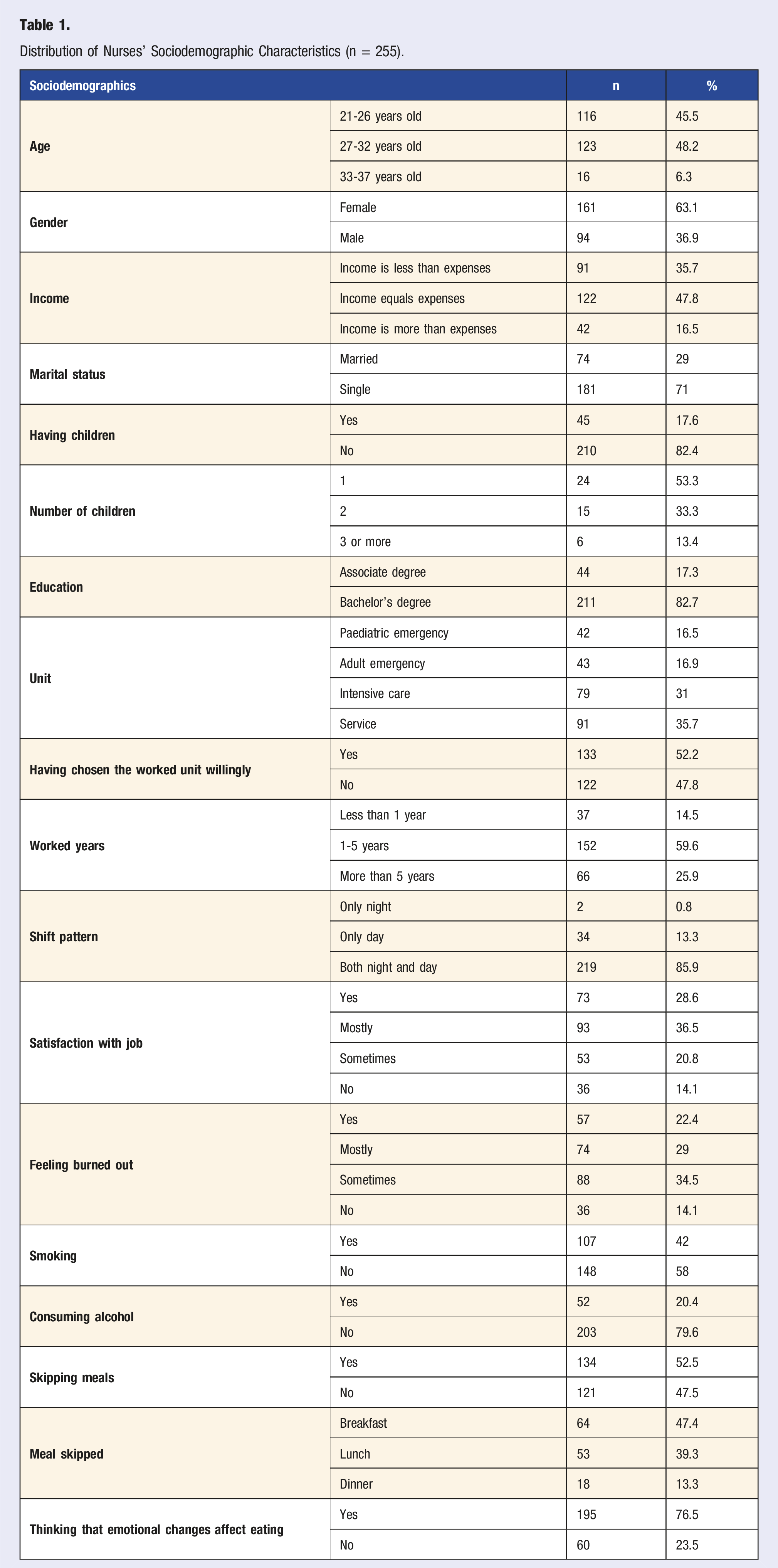
Distribution of Nurses’ Sociodemographic Characteristics (n = 255).
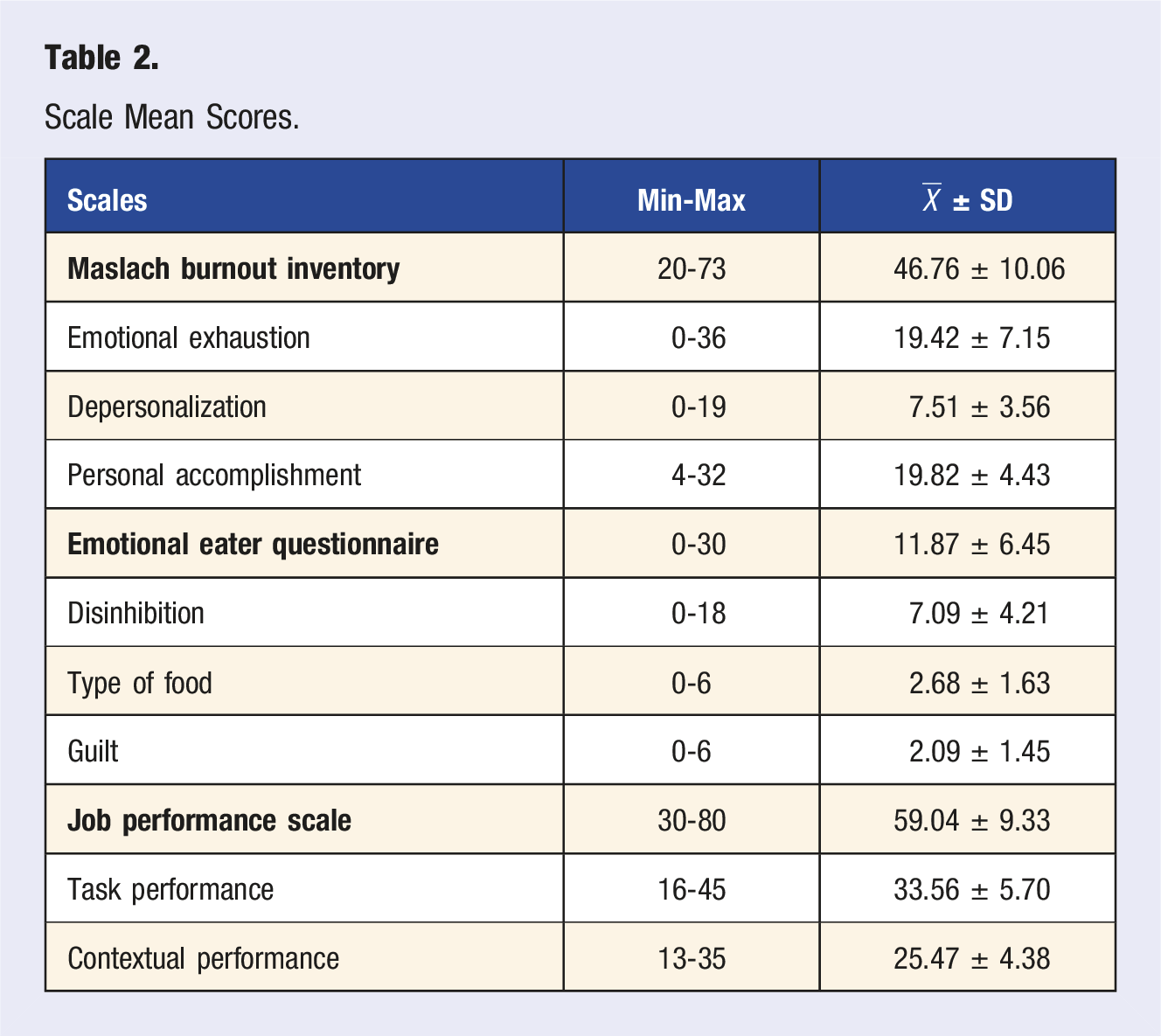
Scale Mean Scores.
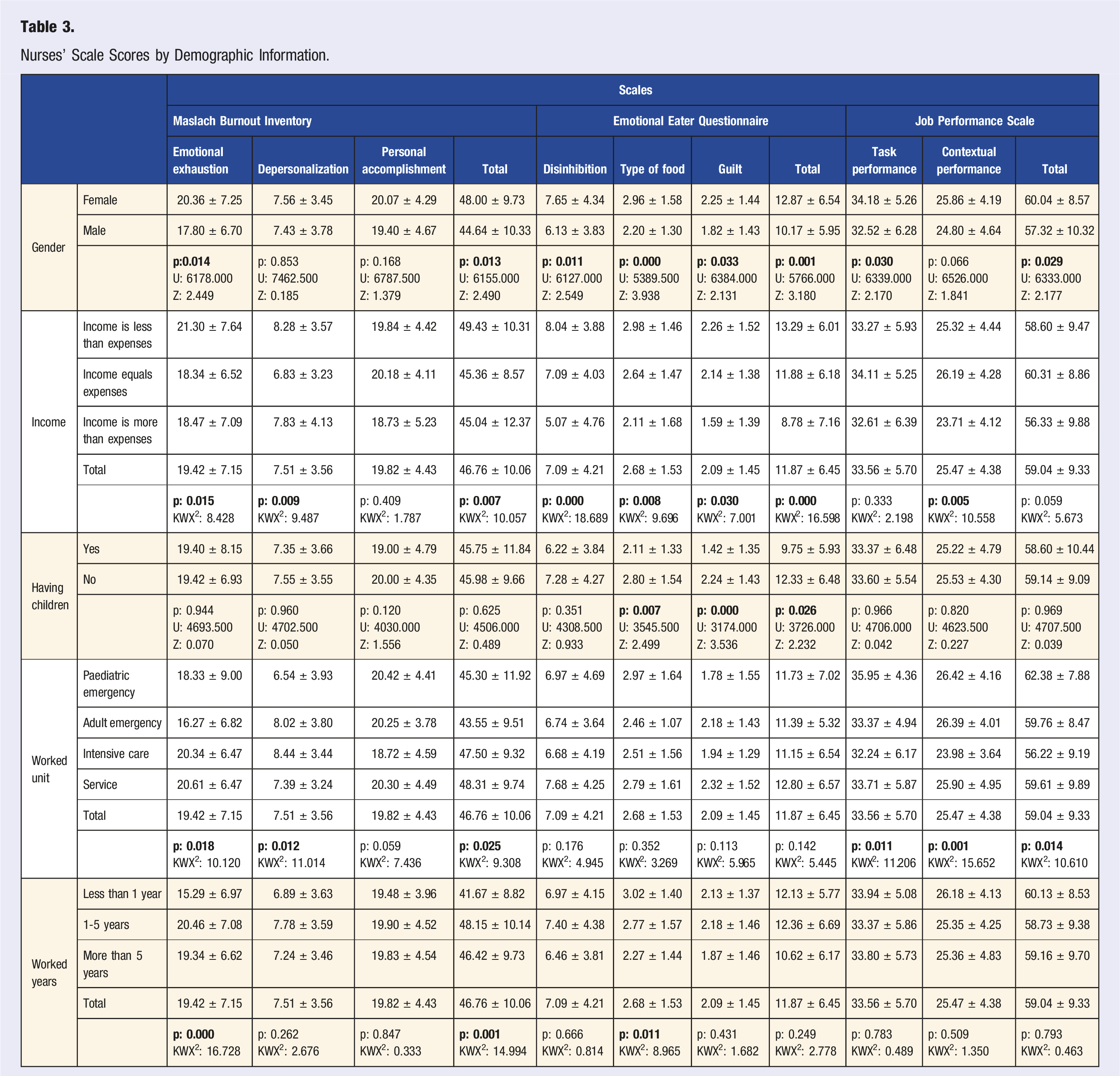
Nurses’ Scale Scores by Demographic Information.
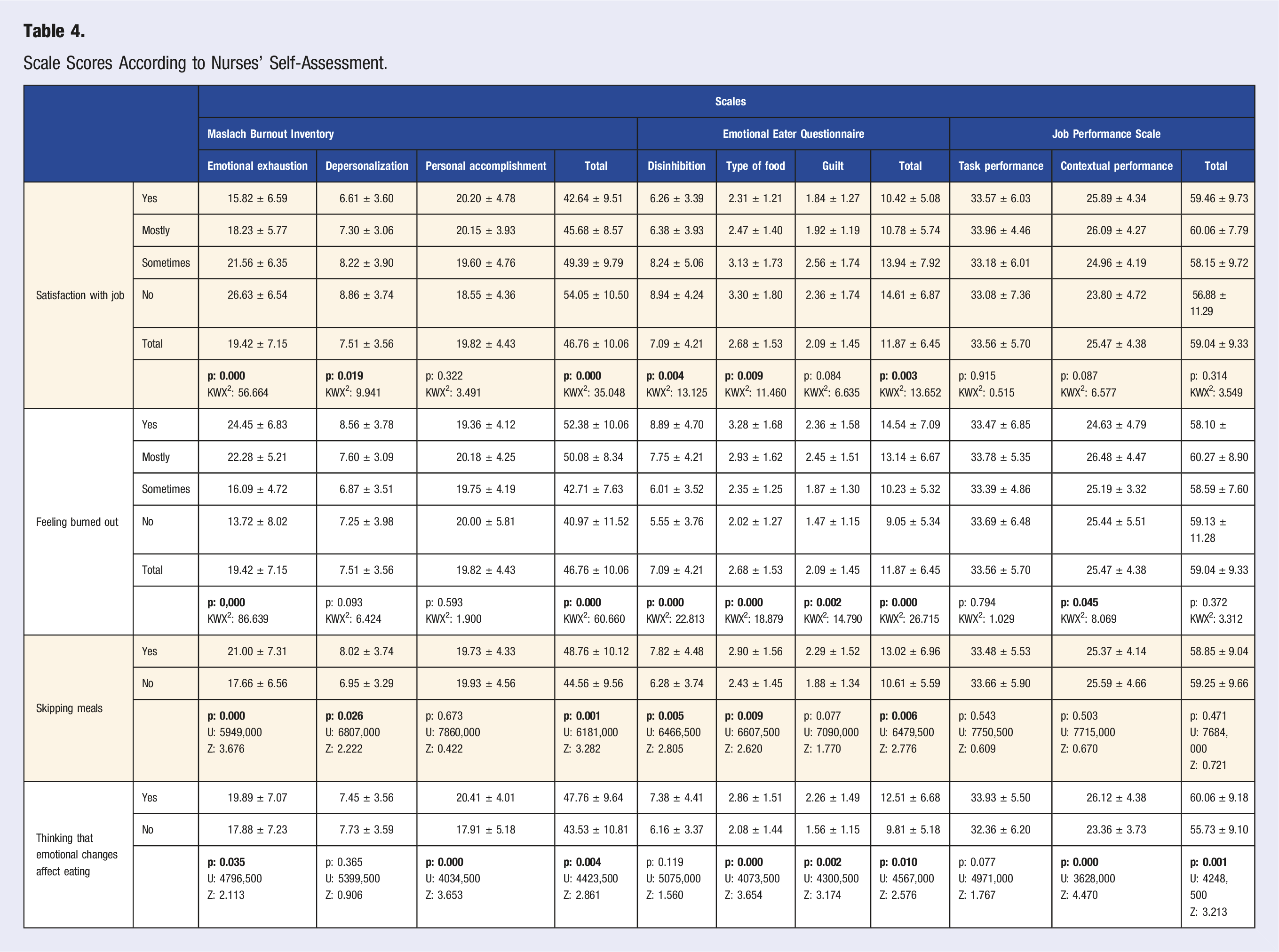
Scale Scores According to Nurses’ Self-Assessment.
Correlation Analysis Between Maslach Burnout Inventory, Emotional Eater Questionnaire and Job Performance Scale.
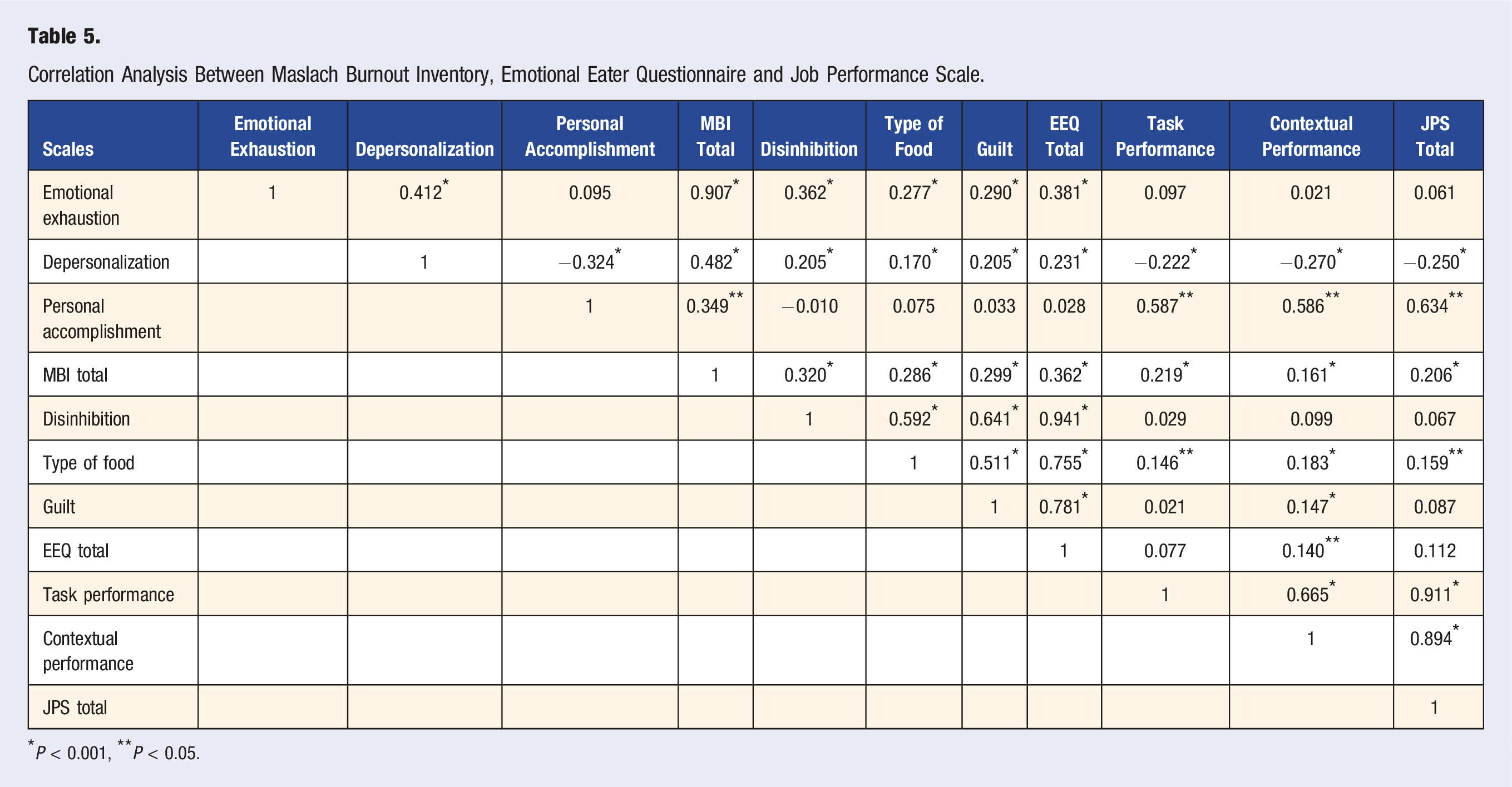
*P < 0.001, **P < 0.05.
Discussion
Burnout is the exhaustion of energy, scepticism towards work, and reduced professional effectiveness that occur as a result of chronic job stress. Factors such as excessive workload, lack of personnel, feelings of inadequacy, lack of reward mechanisms and poor working environment increase the risk of burnout among nurses. 18 Chronic stress affects the amount and type of food intake, leading to both overeating and undereating and the development of chronic diseases. 19 Thus, burnout can reduce the work efficiency of nurses by increasing the tendency to emotional eating.
In this study, the emotional exhaustion and MBI total scores were higher in women (P < 0.05). Yıldırım et al. (2023) found that men had higher mean scores on the MBI and its subscales, with a significant relationship between MBI depersonalization and gender. 20 In the study by Camci and Kavuran (2021), the mean score of men was higher on the MBI, 21 while in the study conducted by Akyüz et al. (2015), the mean score of women was higher on the MBI and its subscales. 22 We believe that the different results of this study compared to the literature are due to the fact that burnout is affected by the institution, working hours and team.
In this study, nurses with low income had higher mean scores on the MBI emotional exhaustion and depersonalization and MBI total and EEQ and subscales (P < 0.05). In the study conducted by Gezginci and Öztaş (2021), the scores of nurses with low income were higher in all subscales of the MBI. 23 In the study conducted by Akyüz (2015), emotional exhaustion and depersonalization scores are higher in those with insufficient monthly income levels. 22 Ünal and Ayyıldız (2023) found that the mean score of MBI depersonalization was higher in nurses whose income was less than their expenses. 24 An individual’s food preferences are shaped by the person’s taste, health, social status, income, personal and social factors, religious beliefs, eating and drinking habits, living environment and other psychological factors. 25 Therefore, the tendency to emotional eating may affect low-income nurses more. According to the related literature, lower income may increase the level of burnout. In this study, the mean scores of nurses with income equal to expenses were higher in JPS total score and its subscales (P < 0.05). Intrinsic and extrinsic motivation sources are used to increase job satisfaction and improve performance, and low salary is a precursor to job dissatisfaction. 26 Factors such as insufficient income, not being promoted or problems with promotion, not being given fringe benefits, not being given training opportunities and not being rewarded, and poor working conditions have a negative impact both job satisfaction and performance. 27 Therefore, income level may affect nurses’ motivation and commitment to work.
In this study, the mean scores of nurses who did not have children were higher on the EEQ and subscales (P < 0.05). Parents project their own values, expectations and goals to their children directly or indirectly while shaping their children’s eating habits. This may affect the child’s nutritional preferences, energy intake, food relationship and weight status. Therefore, understanding parents’ feelings, thoughts, and approaches towards eating plays an important role in evaluating children’s eating attitudes. 28 Thus, nurses may experience stress due to the responsibilities of having children and may consequently exhibit emotional eating behaviour.
In this study, nurses working in services had a higher mean MBI score in the emotional exhaustion, those working in the intensive care unit had a higher mean MBI depersonalization score, and those working in paediatric emergency had a higher mean MBI Personal Accomplishment score. In the study conducted by Camci and Kavuran (2021), the mean MBI score of nurses working in the inpatient service was higher. 21 Uzun and Mayda (2020), found that nurses working in internal clinics had higher mean scores in MBI emotional exhaustion and MBI depersonalization, and those working in the emergency department had higher mean scores in MBI personal achievement. 29 Ramírez-Elvira et al. (2021) found that intense workload, seniority and age were the main factors associated with burnout syndrome in intensive care nurses. 30 Although different departments were analyzed, the burnout and depression rates increased as experience increased, especially in intensive care nurses. 31 It is thought that the results related to the units vary in countries and regions due to the differences in nursing professional functioning, patient profiles and hospital systems.
In this study, nurses who worked between 1 and 5 years had higher mean scores on the MBI and subscales (P < 0.05). Camci and Kavuran (2021) found that the mean score of the MBI was higher in nurses who worked 12 years and longer. 21 Uzun and Mayda (2020) found that the nurses who worked between 1 and 5 years had higher mean scores on the depersonalization. 29 Age is associated with psychophysical exhaustion and a sense of professional inadequacy aspects of burnout. 32 Factors such as less intensive care unit experience, being single and being younger are among the factors that increase the level of burnout. On the other hand, as the number of years worked in the intensive care unit increases, the level of personal success also increases. 30 Nurses with more years in the profession and older age have lower burnout and higher job satisfaction, while for younger nurses, the friendly relationships established with patients may cause frustration and fatigue later on, leading to burnout. 32 Although nurses’ personal factors affect the time they encounter burnout, they may suffer from burnout at any time, with responsibilities, work hours and intensive work pace apparently having an effect.
In this study, the mean scores of nurses who were dissatisfied with their work were higher in the EEQ disinhibition, the EEQ type of food, and the EEQ total score (P < 0.05). An individual’s satisfaction with the service they provide at an enterprise or institution is directly proportional to their job or position within the organization. 33 There is a view that emotional consumers prefer this habitual and compulsive consumption to cope with negative emotions. 34 It is believed that nurses who are dissatisfied with their job exhibit emotional eating behaviours due to this stress and resort to food as a means to achieve satisfaction in relation to their work.
In this study, the mean scores of nurses who felt burnout were higher in the MBI emotional exhaustion, the MBI depersonalization, and the total score of the MBI (P < 0.05). In the study conducted by Yıldırım et al. (2023), the mean scores in the MBI depersonalization and the MBI personal accomplishment were higher in nurses who felt burnout. 20 Similarly, Özçetin et al. (2019), found that the mean scores of MBI and its subscales of oncology nurses who felt exhausted were high. 35 Nurses’ feeling emotionally exhausted, depersonalization towards colleagues and the work environment, and increased feelings of personal failure are defined in the literature as processes of coping with difficulties at work. 36 Nurses may experience feelings of burnout more frequently as their monthly working hours increase and their professional motivation decreases.
In his study, the mean scores of nurses who felt burnout were high on the EEQ disinhibition, the EEQ type of food, and the EEQ total score. Additionally, the mean scores were high in the EEQ guilt, the JPS, and its subscales among nurses who mostly felt burnout. Nurses who feel professional burnout may develop a lack of motivation, negative self-esteem, inadequate team relationships, an inability to allocate time to patients, less empathy with them, and a sense of powerlessness. 32 Feeling burnout may cause emotional eating behaviours in nurses, potentially affecting their job satisfaction and performance.
In this study, emotional exhaustion, depersonalization, MBI, EEQ and its subscales were higher in nurses with meal-skipping behaviour (p < 0.05). A stressful work environment and long shift system cause nurses to feel excessively tired, and since time and energy are limited, they may prefer snacking instead of preparing healthy meals. 37 Burnout can occur when nurses skip meals for reasons such as shift work and working long hours, and when they do not have enough energy because they do not get enough food. Skipping meals increases emotional eating behaviour. Nurses may skip meals because of working in shifts, exposure to work stress and poor hospital food, and this may lead nurses to emotional eating behaviour.
In this study, nurses who thought their emotional changes affected their nutritional status had higher mean scores on the MBI and its subscales, the EEQ and its subscales, the JPS and its subscales (P < 0.05). Negative emotions that are stated to affect eating behaviour are generally anxiety, sadness, loneliness, worry, anger, stress and depression. 38 Factors such as emotional changes, especially stress or emotional disorders, can affect eating behaviour. Changes in eating habits may be related to a person’s emotional state, which may increase burnout. Besides, emotional eating habits and burnout levels may also negatively affect job performance.
A positive relationship was found between the JPS, MBI and EEQ. In the study conducted by Asar and Ocak (2021), a positive relationship was found between MBI depersonalization and JPS task performance. 39 Ayalew and Workineh (2019) found that recognition increases nurses’ motivation, which in turn increases job satisfaction. 27 According to Altınbay (2021), there is a negative relationship between burnout and job performance. 40 Therefore, increased depersonalization will mean reduced job performance, and it can be concluded that reduced work motivation and decreased job interest and satisfaction due to depersonalization can negatively affect job performance.
Limitations
The study’s limitations include being conducted in a single hospital and, therefore, not being generalizable. Another limitation is that the heavy workload and shift work schedule resulted in nurses being unwilling to participate in the study.
Conclusion
It was observed that emotional eating behaviour was present among nurses aged 21-26 who participated in the study, that burnout was more prevalent among women, and that this situation affected their emotional eating and job performance. Burnout was also found to be more common among nurses whose income was less than their expenses, leading to emotional eating behaviour. Changes in emotional states were found to affect burnout, emotional eating behaviour, and job performance. Additionally, it was concluded that Emotional Exhaustion significantly influenced emotional eating and job performance and that job performance decreased as depersonalization increased. To eliminate or prevent burnout in nurses, it is necessary to provide support and psychological support as necessary, identify nurses’ abilities to cope with stress and burnout and provide training based on the deficiencies identified. Planning activities to improve nurses’ job performance and motivation and establishing regular breaks and rest periods is recommended.
Burnout factors need to be eliminated so that nurses can work more willingly and more efficiently in the work environment and at the same time protect their physical and mental health. In addition, the duties and responsibilities of nurses need to be clarified in clinics to prevent and reduce burnout. While nurses meet the needs of the patient/healthy individual, processes in the work environment can negatively affect nurses emotionally and physically, which is reflected in job performance and patient care. Negative emotions, intense work tempo, and shift work can also cause burnout in nurses, which can lead to emotional eating and negatively affect the healthy nutrition processes of nurses.
Footnotes
Acknowledgements
The authors wish to thank all the nurses who agreed to participate
Author Contributions
All authors commented on previous versions of the manuscript. All authors read and approved the final manuscript. Study design: ES, GK, Data collection: ES, Data analysis: ES, GK, Study supervision: GK, Manuscript writing: ES, GK, Critical revisions for important intellectual content: GK.
Author’s Note
This study was presented as a master’s thesis by Erhan Sert, under the supervision of Assistant Professor Gülcan Kendirkıran, at Arel University Graduate Education Institute, Department of Nursing.
Declaration of Conflicting Interests
The author(s) declared no potential conflicts of interest with respect to the research, authorship, and/or publication of this article.
Funding
The author(s) received no financial support for the research, authorship, and/or publication of this article.
