



Abstract
The coronavirus disease 2019 (COVID-19) pandemic forced people to change their lifestyles. We examined dietary differences by job type and industry among workers during the pandemic. This cross-sectional study was conducted using data an internet survey. Job type and industry were classified into 3 and 22 groups, respectively. Dietary behaviors were assessed using self-reported questionnaires. Logistic regression analysis nested in the workplace prefecture was conducted. Workers involved in jobs that required communication with people were more likely to skip breakfast (odds ratio [OR]: 1.17, 95% confidence interval [CI]: 1.10-1.24) and had a lower meal frequency (OR: 1.25, 95% CI: 1.17-1.34) than workers engaged in desk work. Manual workers were more likely to eat fast food or meals (OR: 1.10, 95% CI: 1.03-1.17) than were those engaged in desk work. Workers in the newspaper, magazine, television, radio, advertising, and other mass media industries were more likely to skip breakfast (OR: 2.43, 95% CI: 1.82-3.24) and have a lower meal frequency (OR: 3.90, 95% CI: 2.87-5.28) than workers in public offices and organizations. These results were partially consistent with trends reported before the pandemic. Further studies should be conducted to clarify the causes of differences in dietary behavior among workers.
“Dietary differences according to job type during the pandemic appeared to be consistent with those before the pandemic.”
Introduction
The coronavirus disease 2019 (COVID-19) pandemic markedly affected the lifestyles of people around the world. 1 To prevent the spread of COVID-19, people were required to stay at home, which directly affected food accessibility and availability. Dietary habits during the pandemic that have been reported from around the world suggest inconsistent changes in dietary habits, including the intake of snacks, alcohol, fruits, and vegetables. 2
Variations in dietary habits during the pandemic may depend on background characteristics, such as age, body mass index (BMI), and physical activity. An Italian survey reported that during lockdown, the 18–30-year age group showed higher adherence to the Mediterranean diet than younger and older groups. 3 A study in Spain reported that people with increased physical activity had higher scores for the Healthy Mediterranean-Style Dietary Pattern. 4 A study involving Polish adults reported that a tendency to eat and snack was observed in individuals who were overweight and obese. 5 According to a previous review, some factors seem related to dietary changes, including age, BMI, psychological condition, and living with family. 2
During the pandemic, workers’ dietary habits may have been influenced by their working style, which can differ depending on job type and industry. Before the pandemic, several studies have shown that workers’ diets varied according to their occupation.6-8 However, similar studies were not conducted during the COVID-19 pandemic, and little is known about dietary differences among workers according to job type or industry during that period. During the pandemic, a public health emergency, information on workers’ dietary differences depending on their job type and industry allowed occupational and medical staff to provide appropriate advice to working people. This study focused on dietary habits from the perspective of occupational health and aimed at investigating the differences in workers’ dietary behaviors across job types and industrial groups during the pandemic.
Methods
This cross-sectional study used data from the Collaborative Online Research on the Novel Coronavirus and Work (CORoNa Work) Project. This project was an internet-based nationwide prospective cohort study designed to investigate the working environment and health status of workers during the COVID-19 pandemic in Japan. The data for the present study were obtained from a baseline survey conducted during the third wave of the pandemic in Japan in December 2020. The study protocol has been described elsewhere 9 and was approved by the ethics committee of the University of Occupational and Environmental Health, Japan. Full-time workers, excluding health care workers and caregivers, were invited to participate in the survey. Based on stratification by gender, region, and job type, 33,302 participants were selected. After excluding invalid responses, 27,036 participants were included in this study. Informed consent was obtained from all the participants through the website.
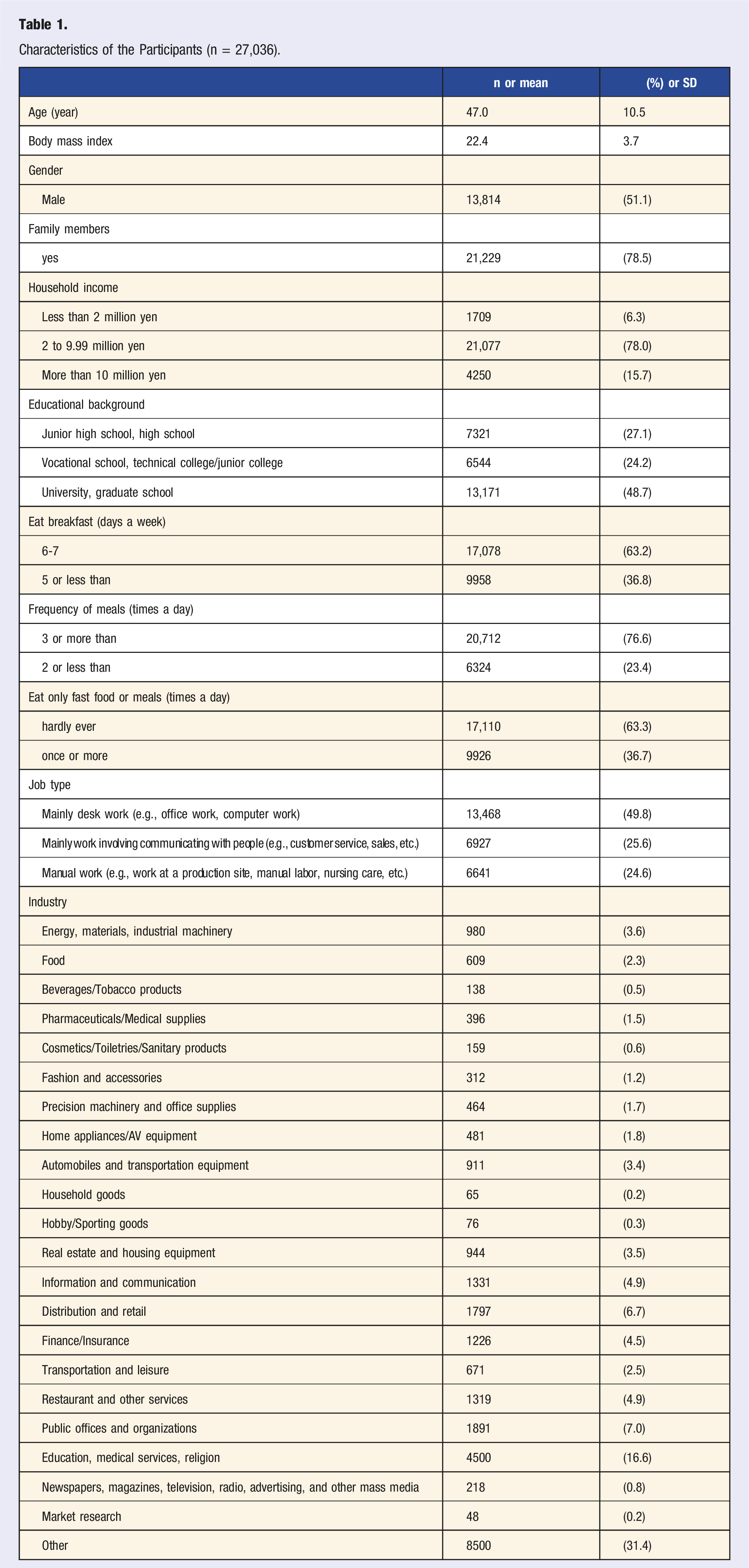
Information on job type was assessed using a single question: “Please choose the response closest to your job description.” The answer categories were mainly desk work (e.g., office and computer work), mainly work involving communication with people (e.g., customer service and sales), and manual work (e.g., work at a production site, manual labor, and nursing care). Industry information was also assessed using a single question, “Please choose the industry in which you work.” The 22 answer categories provided were as follows: energy, materials, and industrial machinery; food; beverages/tobacco products; pharmaceuticals/medical supplies; cosmetics/toiletries/sanitary products; fashion and accessories; precision machinery and office supplies; home appliances/audiovisual equipment; automobiles and transportation equipment; household goods; hobby/sporting goods; real estate and housing equipment; information and communication; distribution and retail; finance/insurance; transportation and leisure; restaurant and other services; public offices and organizations; education, medical services, religion; newspapers, magazines, television, radio, advertising, and other mass media; market research; and other.
The questions regarding eating breakfast had the following five response categories: “6-7 days a week,” “4-5 days a week,” “2-3 days a week,” “less than 1 day a week,” and “hardly ever.” Questions regarding the frequency of meals and eating only fast food or meals per day also had five response categories: “four or more times,” “three times,” “twice,” “once,” and “hardly ever.” Participants were asked whether they lived with family members and were required to respond with “yes” or “no.” Household income was categorized into three groups: <2,000,000 yen; 2,000,000-9,999,999 yen; and ≥10,000,000 yen. Educational background was categorized into three groups: junior high school or high school; vocational school or technical college/junior college; and university or graduate school.
Descriptive analysis was performed; continuous variables are expressed as means and standard deviations and categorical variables as numbers and percentages. Logistic regression analysis was performed using Stata/IC 14.0 (StataCorp, College Station, TX, USA) to analyze the association between dietary behaviors and job type or industry. Desk work and public offices and organizations were defined as the reference categories for job type and industry group, respectively. Responses regarding dietary behaviors were divided into two categories: eating breakfast, 6-7 days and ≤5 days a week; frequency of meals, ≥3 times and ≤2 times a day; and eating only fast food or meals, hardly ever and more than once a day. In this analysis, eating breakfast ≤5 days a week was defined as “Skipping breakfast,” eating ≤2 times a day was defined as “Lower frequency of meals,” and eating only fast food or meals more than once a day was defined as “Eating only fast food or meals.” All final models were adjusted for gender, age, BMI, living with family members, educational background, and household income. Odds ratios (ORs) and 95% confidence intervals (CI) were also determined. The level of statistical significance was set at P < 0.05.
Results
Characteristics of the Participants (n = 27,036).
Association Between Skipping Breakfast and job Types/industries During the Pandemic.
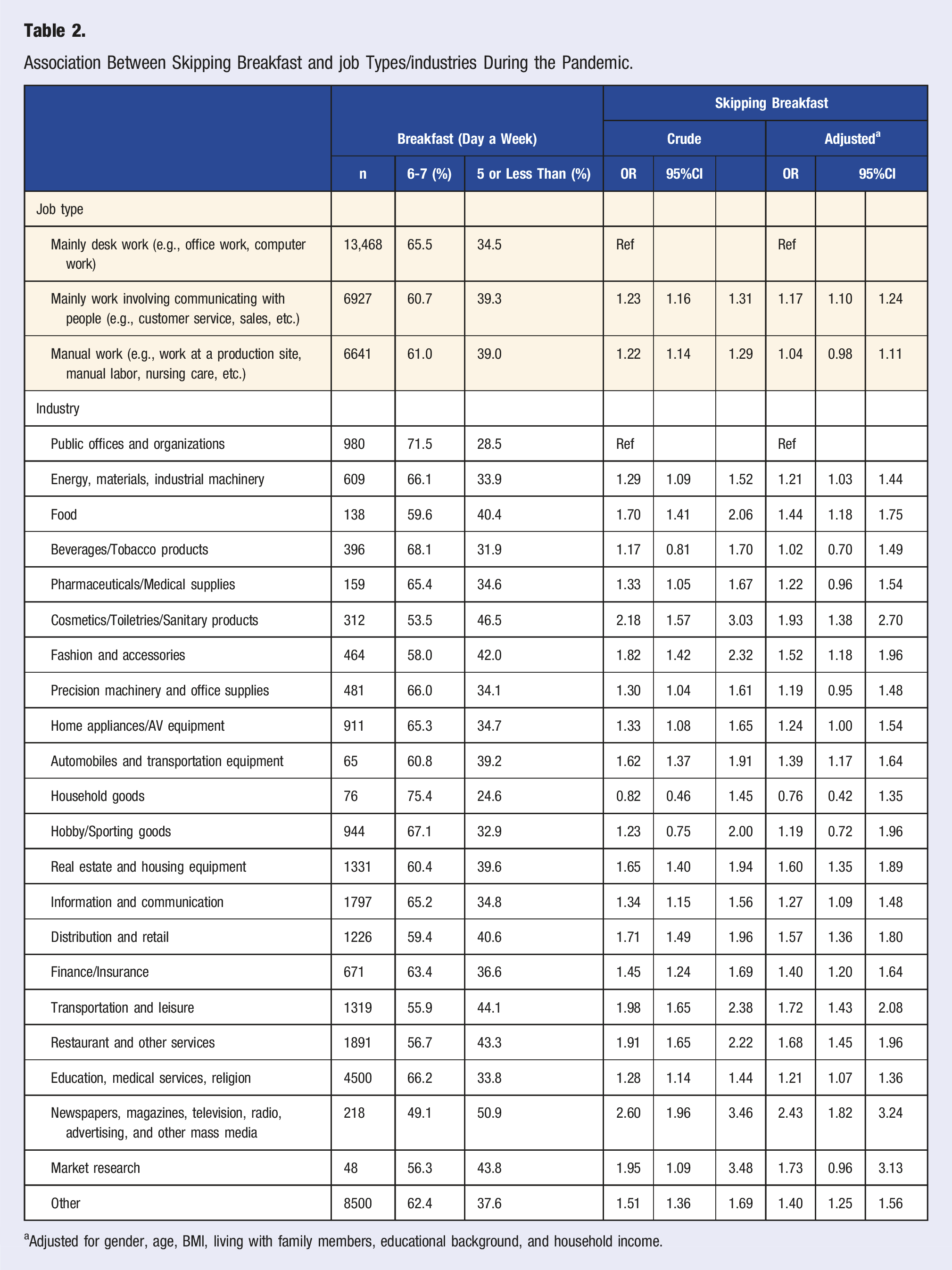
aAdjusted for gender, age, BMI, living with family members, educational background, and household income.
Association Between Lower Frequency of Meals and job Types/industries During the Pandemic.
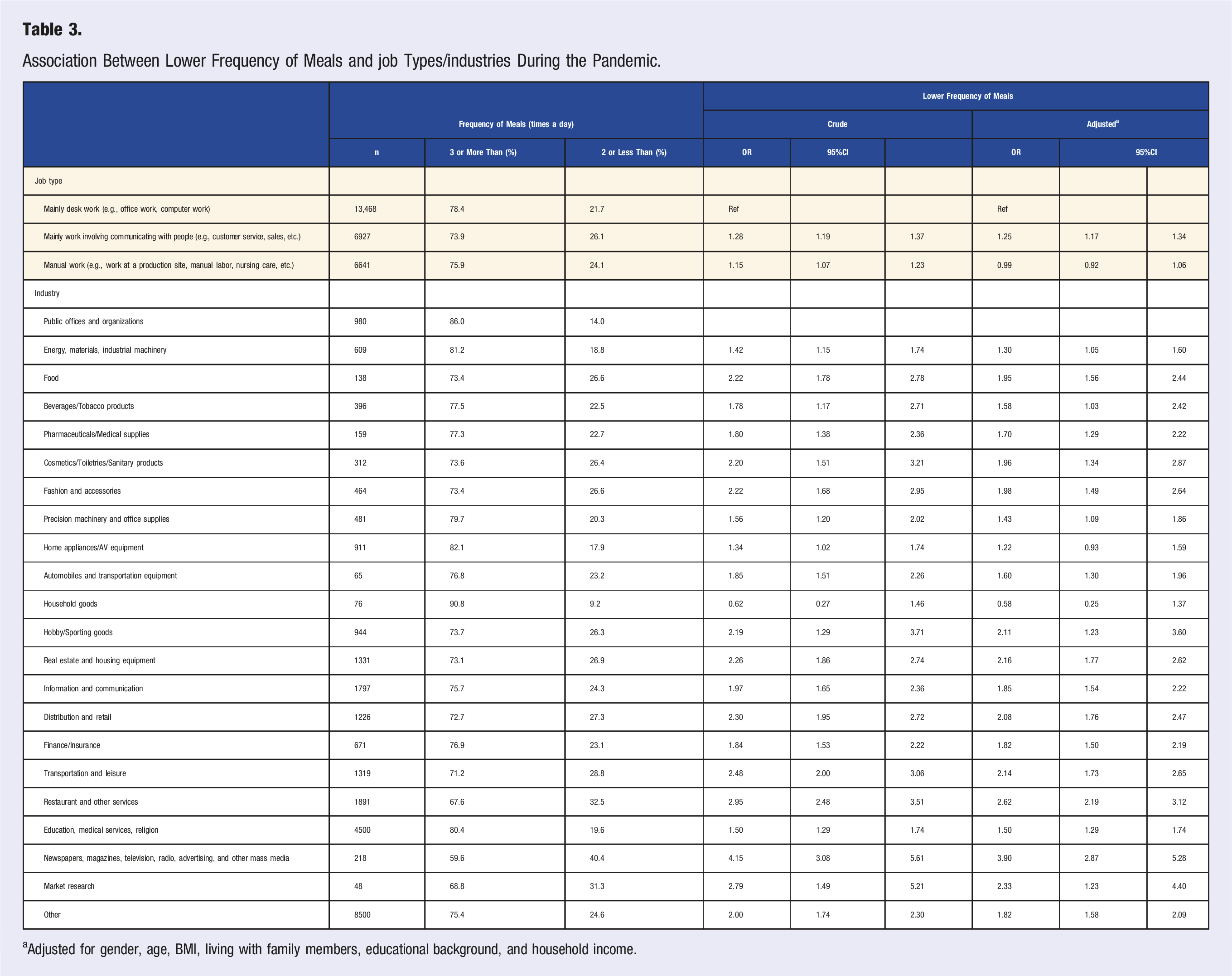
aAdjusted for gender, age, BMI, living with family members, educational background, and household income.
Association Between Eating Only Fast Food and job Types/industries During the Pandemic.
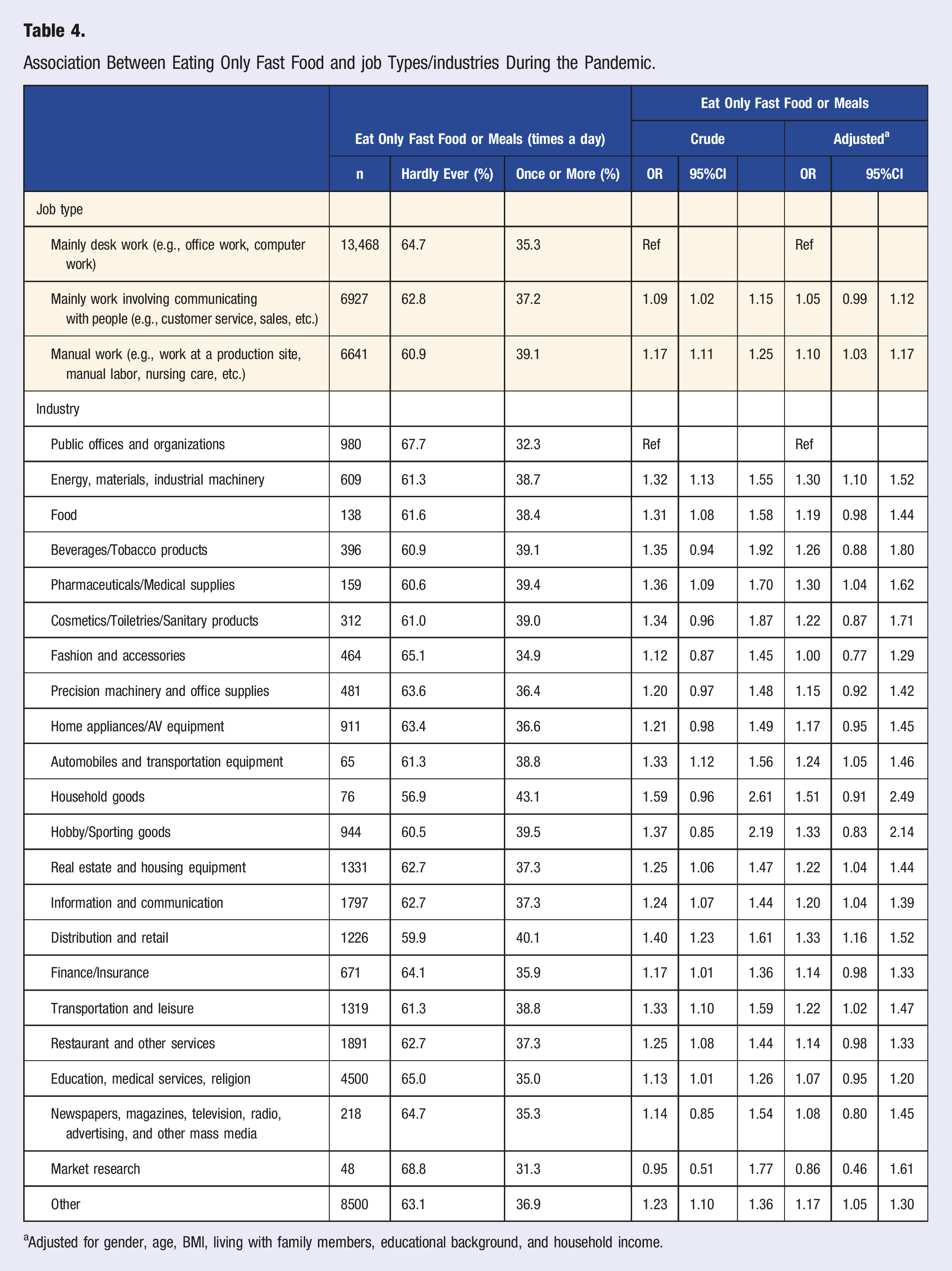
aAdjusted for gender, age, BMI, living with family members, educational background, and household income.
Discussion
This study investigated dietary behaviors among workers in Japan during the COVID-19 pandemic and found differences among workers across job types and industries. Compared with desk workers, those involved in jobs requiring communication with people (e.g., customer service and sales) were more likely to skip breakfast or other meals and those involved in manual work (e.g., work at a production site, manual labor, and nursing care) were more likely to eat fast food. Workers in newspaper, magazine, television, radio, advertising, and other mass media industries showed a lower meal frequency than that among individuals working in public offices and organizations.
Dietary differences according to job type during the pandemic appeared to be consistent with those before the pandemic. Compared with desk workers, workers involved in jobs that require communication with people tended to skip breakfast and have a lower frequency of meal consumption; similar patterns were noted before the pandemic. A previous study reported that merchandise sales workers and other service workers were more likely to skip breakfast compared with government officials involved in management work. 8 Compared with desk workers, manual workers tended to eat fast food; this finding was also consistent with that of a previous study. Further, motor vehicle drivers were more likely to eat instant food compared with government officials involved in management work. 8 Regardless of the COVID-19 outbreak, these dietary behavior tendencies among service and manual workers is a priority issue that requires particular attention in the field of occupational health.
These findings may be partially explained by work-related factors. Shift work has been attracting attention for its influence on workers’ dietary behaviors, and several studies have highlighted shift workers’ unhealthy diets. 10 Although few reports are available on work hours and diet, a previous report stated that long working hours are associated with unfavorable dietary behaviors. 8 According to a previous report analyzing the labor force survey and survey on time use and leisure activities conducted before the pandemic, “service workers” and “transport and machine operation workers” appeared to have characteristic schedules related to working time, such as irregular working time and long work hours. 11 During the state of emergency in Japan (April 7-May 25, 2020), there was a large decrease in the work hours of “sales workers” and “service workers,” while subsequently, in July 2020, the differences in the decreased work hours among occupations seemed to be diminished. 12 Additionally, telecommuting could contribute to the dietary style; some studies have provided new perspectives on the dietary habits of telecommuting workers during the pandemic.13-15 Service and manual workers are less likely to work from home, while those involved in flexible occupations such as administration and management workers, professional and engineering workers, clerical workers, and sales workers are more likely to work from home. 16 A possible explanation is that service and manual workers tend to have unfavorable dietary habits, such as skipping meals and/or eating fast food, because of long working hours, shift work, and little telecommuting, regardless of the pandemic.
Dietary differences among the industries were also examined in this study. Although a previous study found no significant differences among industries in this context, 17 our findings suggest some significant differences. Workers in newspapers, magazines, television, radio, advertising, and other mass media industries had the highest percentage of skipping breakfast and a low frequency of meal consumption. Of the 218 participants belonging to this industry, 51% reported that they ate breakfast ≤5 days a week and 40% reported that they ate meals ≤2 times a day. To the best of our knowledge, no study has investigated the dietary behaviors of workers engaged in industries involving newspapers, magazines, television, radio, advertising, and other mass media before and during the pandemic. Our new insights may help provide dietary advice to workers belonging to industries related to mass media. In 2020, a relatively small decrease in work hours was observed in industries related to the information and communications. 12 However, workers in these industries are more likely to work from home. 18 Further studies are required to clarify the causal relationship between various work-related factors and dietary styles among workers in information and communication industries.
A previous review summarized papers reporting changes in dietary habits before and during the pandemic, suggesting both positive and negative effects on dietary habits, including snacking, meal number and frequency, fresh produce and home cooking, comfort food, and alcohol consumption. 19 Reviews showing unfavorable changes in dietary habits during the pandemic have also been published.20,21 In our study, although most of the workers who participated showed no change in the frequency of eating breakfast, several workers reported an increased or decreased frequency of eating breakfast (data not shown). Differences in dietary behavioral changes during the pandemic may vary according to background characteristics, including gender, age, physical activity, and work-related factors. Further detailed research should be performed to evaluate the impact of working style on dietary habits during the pandemic, which may help improve the dietary approach to occupational health.
This study has several limitations. First, external validity and selection bias should be acknowledged. This analysis was based on data from an internet survey; thus participants may not represent the national population. To reduce the effect of bias, the participants were sampled according to gender, region, and job type. Second, this study classified three job types and 22 industrial groups. The industrial group includes various occupations. One large occupational group comprises various smaller groups, among which there were differences in dietary intake. 7 Similarly, one large industrial group contains various occupational groups, which may show different dietary behaviors. For example, according to the Japan Standard Industrial Classification, Rev.13, television broadcasting, radio broadcasting, newspaper publishers, commercial art, and graphic design belong to information and communications industry. 22 Thus, workers’ dietary habits should be discussed in the context of both occupation and industry. To interpret our findings, it is necessary to obtain detailed information regarding the relationships among industry, occupation, and job type. Third, dietary behaviors were assessed using a self-reported questionnaire, which may have been influenced by a social desirability bias. The potential for over- or under-estimation should be considered when evaluating the results of studies examining dietary intake. Fourth, potential confounding factors should be addressed. Our final models were adjusted for several socioeconomic factors that are known to be associated with dietary habits, 23 and the OR changed after adjustment. In addition, other potential confounding factors should be considered, such as shift work, which has been shown to be associated with dietary habits.10,24-30 To examine the relationship between work and diet in more detail, future studies should consider work-related factors that may be associated with dietary behaviors. Finally, the findings showed the results of a cross-sectional analysis; therefore, the causal relationship was unclear, although a possible explanation was discussed in some previous studies.
In summary, this study clarified dietary behaviors, such as eating breakfast and fast food, according to job type during the COVID-19 pandemic in Japan. A tendency to skip meals was noted among service workers and to eat fast food was observed among manual workers compared with desk workers in this study; this finding was consistent with that of a previous study reported before the pandemic. Workers engaged in industries related to newspapers, magazines, television, radio, advertising, and other mass media were more likely to skip meals than those in public offices and organizations, which is a novel finding of this study. Our findings may be useful for promoting healthy diets according to occupation.
Footnotes
Acknowledgments
The current members of the CORoNaWork Project, in alphabetical order, are as follows: Dr Yoshihisa Fujino (present chairperson of the study group), Dr Akira Ogami, Dr Arisa Harada, Dr Ayako Hino, Dr Hajime Ando, Dr Hisashi Eguchi, Dr Kazunori Ikegami, Dr Kei Tokutsu, Dr Keiji Muramatsu, Dr Koji Mori, Dr Kosuke Mafune, Dr Kyoko Kitagawa, Dr Masako Nagata, Dr Mayumi Tsuji, Ms. Ning Liu, Dr Rie Tanaka, Dr Ryutaro Matsugaki, Dr Seiichiro Tateishi, Dr Shinya Matsuda, Dr Tomohiro Ishimaru, and Dr Tomohisa Nagata. All members are affiliated with the University of Occupational and Environmental Health, Japan.
Declaration of conflicting interests
The author(s) declared no potential conflicts of interest with respect to the research, authorship, and/or publication of this article.
Funding
The author(s) disclosed receipt of the following financial support for the research, authorship, and/or publication of this article: This study was supported and partly funded by the research grant from the University of Occupational and Environmental Health, Japan (no grant number); Japanese Ministry of Health, Labour and Welfare (H30-josei-ippan-002, H30-roudou-ippan-007, 19JA1004, 20JA1006, 210301-1, and 20HB1004); Anshin Zaidan (no grant number), the Collabo-Health Study Group (no grant number), and Hitachi Systems, Ltd. (no grant number) and scholarship donations from Chugai Pharmaceutical Co., Ltd. (no grant number).
