



Abstract
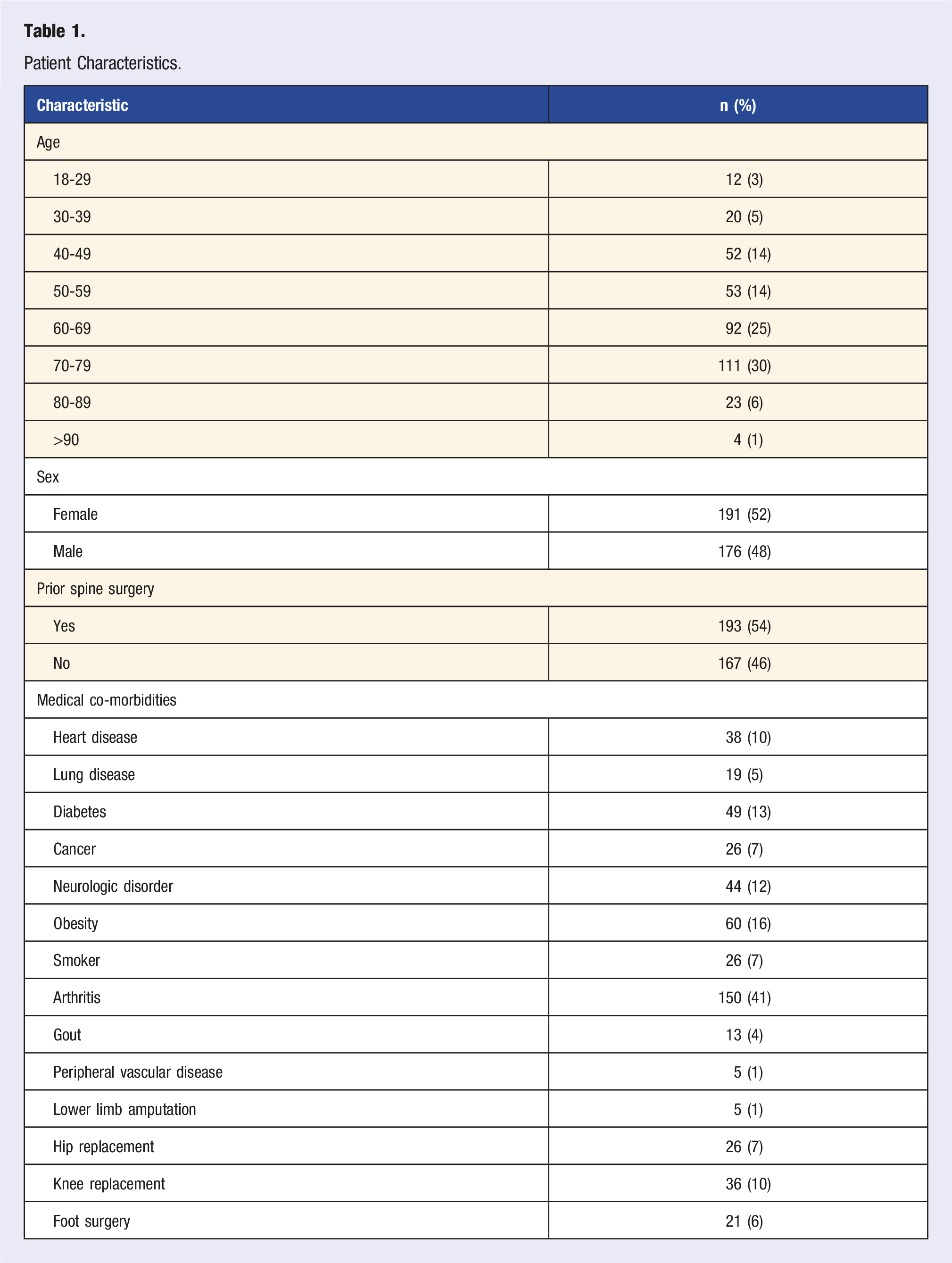
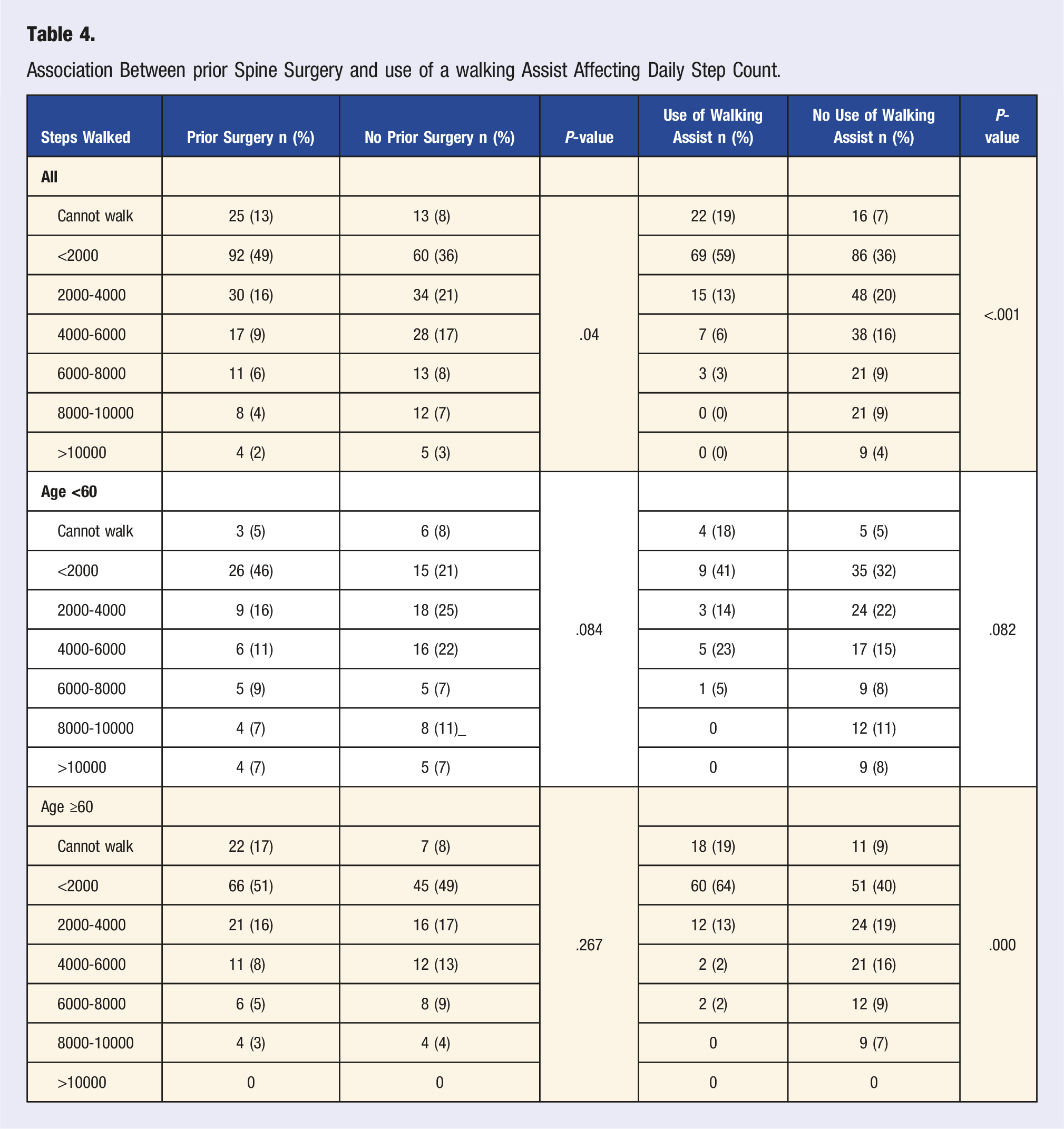
Up to 10,000 steps per day may be associated with lower risk of all-cause mortality as well as cancer and cardiovascular disease mortality. Here, we evaluate daily step count in patients seen in spine clinic and its association with step goal knowledge, step tracking, and physical factors affecting walking. Of the 575 clinic patients, 368 met criteria and agreed to participate (mean age range 60-69 years; 52% female; 54% prior spine surgery). Of the population surveyed for actual daily steps, 55% reported <2000 and 9% reported >8000. Patients with a higher knowledge of the ideal step goal and who possessed a step counter (64%) had a higher number of actual daily steps (P < .001). The main prohibiting factor to actual walking was pain (64%). Prior spine surgery and the use of a walking assist was associated with less daily steps (P < .04, 6% reported >8000 steps; and P < .001, 0% reported >8000 steps, respectively). Patients presenting for evaluation in spine clinic underestimate the recommended number of steps taken daily to help decrease all-cause mortality, and cancer and cardiovascular disease mortality.
“Patients taking our survey are not only walking <4000 steps per day, but they also believe this sedentary level of activity is the ideal daily step goal.”
Introduction
Hippocrates, traditionally referred to as the “Father of Medicine,” is quoted as saying, “Walking is man’s best medicine!” The average number of steps per day for adults worldwide is estimated at 5000 and in the United States (US) it is 4800. 1 Multiple studies have been published advocating for increasing daily step counts to help improve overall health; however, many of these studies were completed in specific patient populations and were not cohesive in determining a target daily step goal.2-8 In 2020, a landmark paper in a large cohort of US adults provided further evidence that the more steps taken per day up to a goal of 10,000 was significantly associated with a lower all-cause mortality. 9 In 2022, another large cohort study showed the additional benefits of lowering cancer and cardiovascular disease incidence when approaching 10,000 steps per day. 10
Conditions of the spine are one of the most prevalent issues plaguing adult patients. One study has reported that for isolated low back pain alone, the prevalence is 10-30% of the general US population annually with a lifetime prevalence of 65-80%. 11 Regardless of the underlying type of spine pathology, the main functional goal of spine surgery is to help relieve patients of pain, weakness, and instability, which prevents them from walking; however, although initiatives are taken for early ambulation post-operatively,12-14 few studies have reported on activity15,16 and tracking daily step counts in this patient population.17-21 With spine pathology being of such high prevalence in adults,22,23 this is a large patient population that deserves the attention of all medical practitioners providing care for these patients in terms of monitoring daily step counts and advocating for the benefits to overall health.
Therefore, the objectives of this survey were to evaluate the following and their association with actual daily step counts: 1) patients’ knowledge of an ideal daily step goal, 2) whether patients track their steps, and 3) physical factors such as pain, weakness, imbalance, prior surgery, and use of a walking assist.
Methods
Survey Design
A cross-sectional patient reported survey was distributed as part of a quality improvement initiative to help increase awareness of the benefits of walking with both providers and patients. The Institutional Review Board of Swedish Providence Hospital waived the need for ethics approval and the need to obtain patient consent for the collection, analysis, and publication of the anonymized data for this non-interventional cross-sectional survey.
Survey Development
The survey was presented and refined at Spine Division meetings held at the Swedish Neuroscience Institute to obtain a consensus on the content. Input on the survey content was given by four neurosurgeons, five orthopedic spine surgeons, and an epidemiologist (Supplemental Figure 1). The survey collected demographic information on patient age and sex, relevant medical co-morbidities, and history of prior spine surgery. Additionally, patients were asked about their knowledge of the ideal number of steps per day, whether they tracked their steps per day, and factors affecting steps per day. For patients who did not actively track their daily step numbers, we provided a conversion based on their responses to time spent ambulating and distance to daily steps. This conversion was modeled after a prior study correlating steps to walking speeds. 24 We used 3mph in an average stride length in a person of average height and weight, which is the average walking speed for an adult.
Survey Setting, Patient Eligibility, and Administration
Surveys were distributed at the spine outpatient clinic at the Swedish Neuroscience Institute during a period from October 2022 to December 2022. Accounting for normal clinic turn over, a three-month period was selected to reduce duplicate surveys from returning patients. Inclusion criteria were adults over the age of 18 years who presented in-person for evaluation to spine clinic. Patients who were seen as telehealth appointments were excluded. The surveys were handed out at the beginning of the clinic appointment. The medical assistants would inform the patients that the clinic was conducting a survey on walking and that participation was voluntary. The survey questions and answers were not discussed with the patients prior to completion of the survey. The surveys were collected from the room at the completion of each clinic visit and deposited in a labeled box in the locked physician workroom. Responses from the surveys were tallied each week and were not linked to patient medical records.
Data Analysis
To calculate a required sample size, we estimated that among patients who track their steps, at least 50% would walk >5000 steps per day. Assuming that only 25% of patients may use a step counter, to detect a difference of 20% among those who did and did not walk > 5000 steps per day, a sample size of 324 respondents (65 users and 259 nonusers) was required to achieve 80% power. Patient results were displayed as the total group of participants and also stratified by age (<60 years and ≥60 years).
To evaluate the association between specific factors such as knowledge, step tracking, and physical factors with actual steps, an x2 analysis was used. Significance was set at P < .05. Data were analyzed using Stata version 14.0 (StataCorp).
Results
Survey Participation
A total of 575 patients were seen either in clinic or via telehealth during the study period. Among the 575, 94 were telehealth and excluded from participating, leaving 481 eligible patients of whom, 113 declined participation. The final participating group included 368 patients, rendering a response rate of 77%.
Patient Population
Patient Characteristics.
Association Between Patient Knowledge of Ideal and Actual Daily Step Counts
There was no consistency among the patients as to the ideal number steps per day with most patients believing that the step per day goal is 2000-4000 (22%), followed by <2000 (20%); whereas 17% responded with a goal of 8000-10,000 and 10% with >10,000 steps per day. When patients were asked their actual daily step count, 55% responded with <2000 steps per day or inability to walk followed by 18% with 2000-4000 steps per day; whereas 6% responded with 8000-10,000 steps per day, and 3% responded with >10,000 steps per day. The association between the knowledge of the ideal and actual daily step counts was statistically significant (P < .001, Figure 1). Of patients who reported the ideal number of steps per day was 2000-4000, 94% reported <4000 for actual daily steps and 3% reported >8000 actual daily steps. Whereas, in patients who reported an ideal daily step goal of >10,000, 34% walked >8000 steps per day and 6% reported walking <4000 steps per day. Association between ideal and actual daily step count.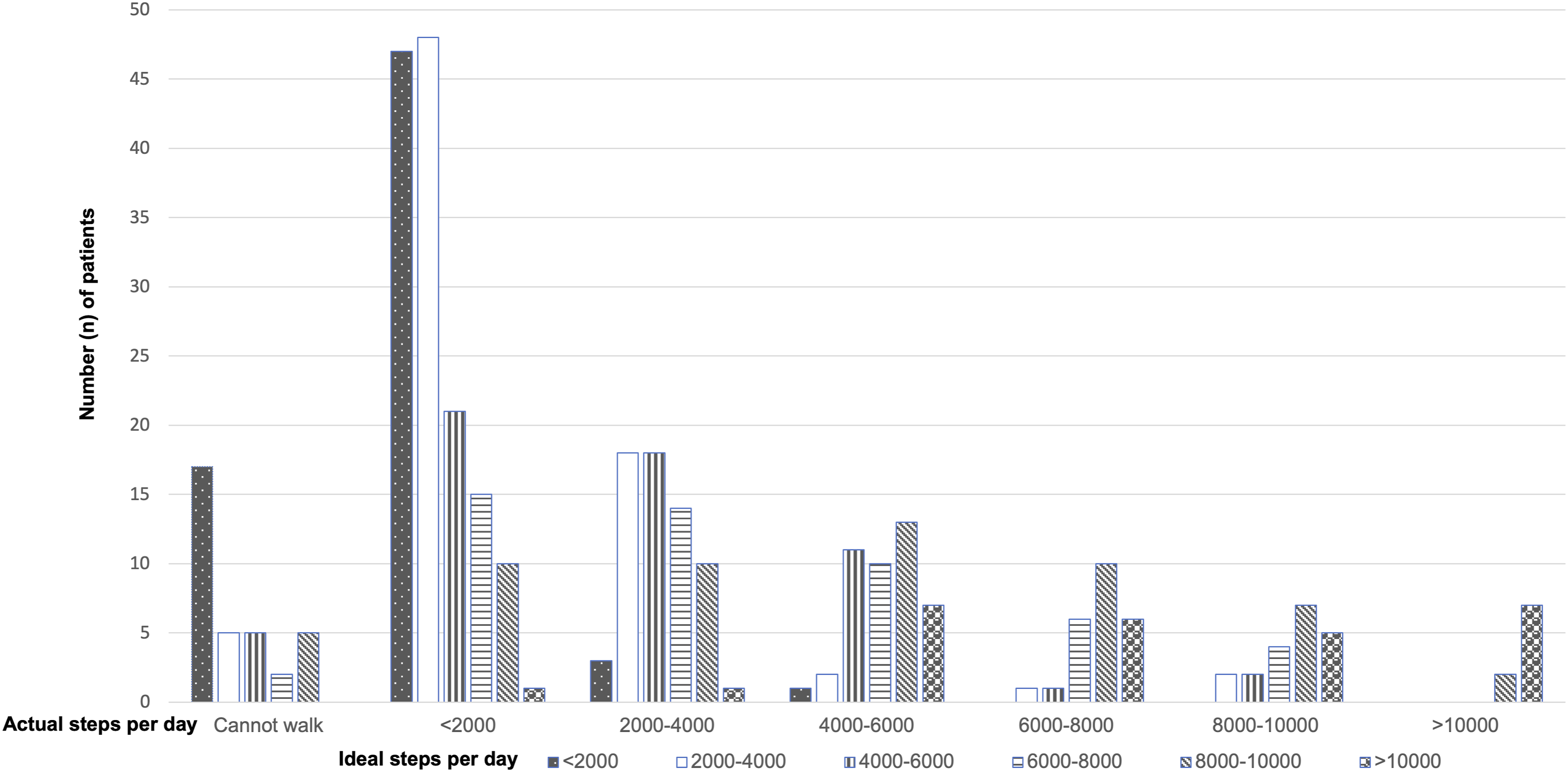
Association Between Step Counter Possession With the Number of Steps per Day
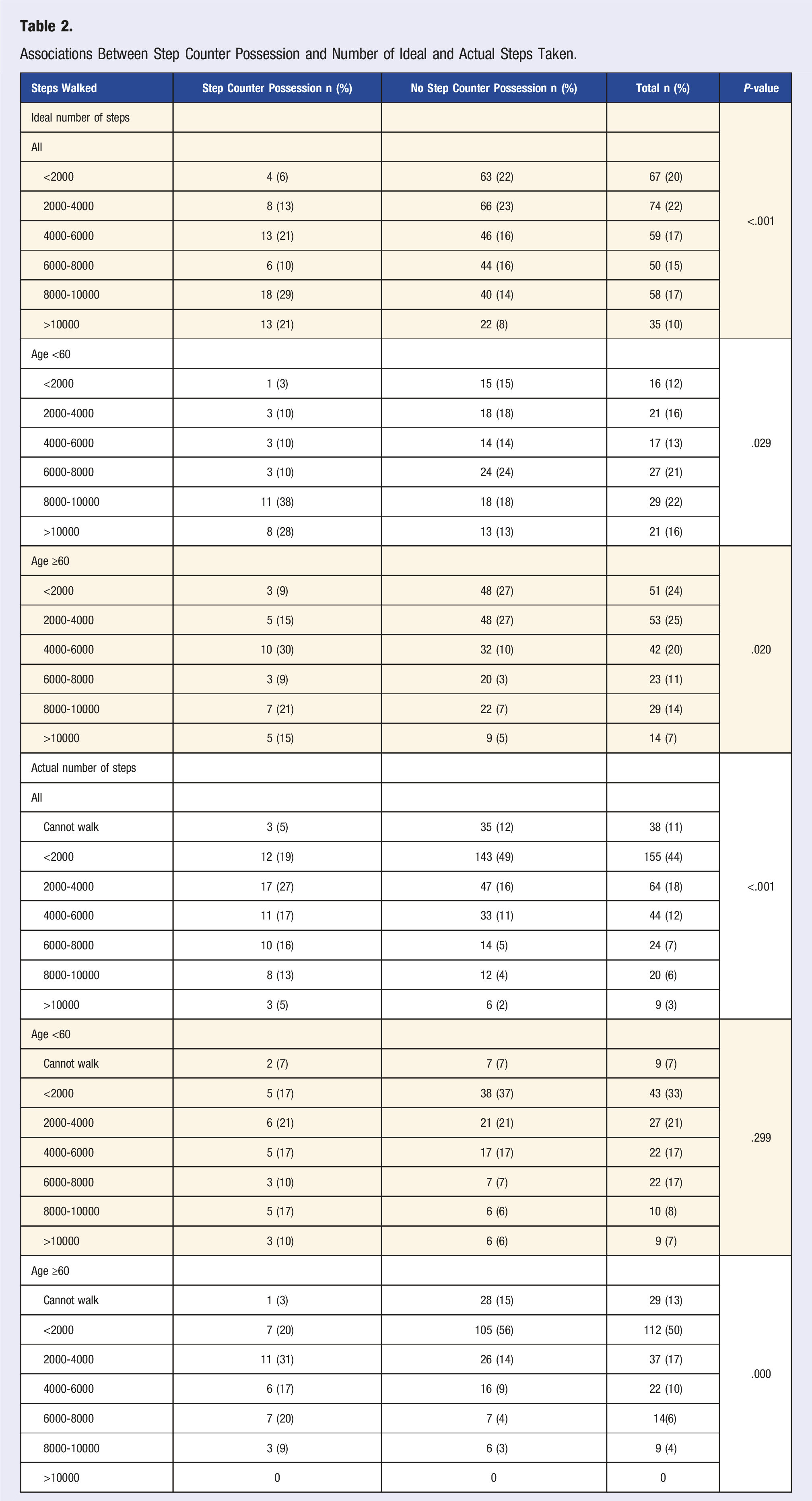
Associations Between Step Counter Possession and Number of Ideal and Actual Steps Taken.
Physical Factors Affecting Patient Steps per Day
Association Among Pain, Imbalance, and Weakness Affecting Actual Daily Step Count.
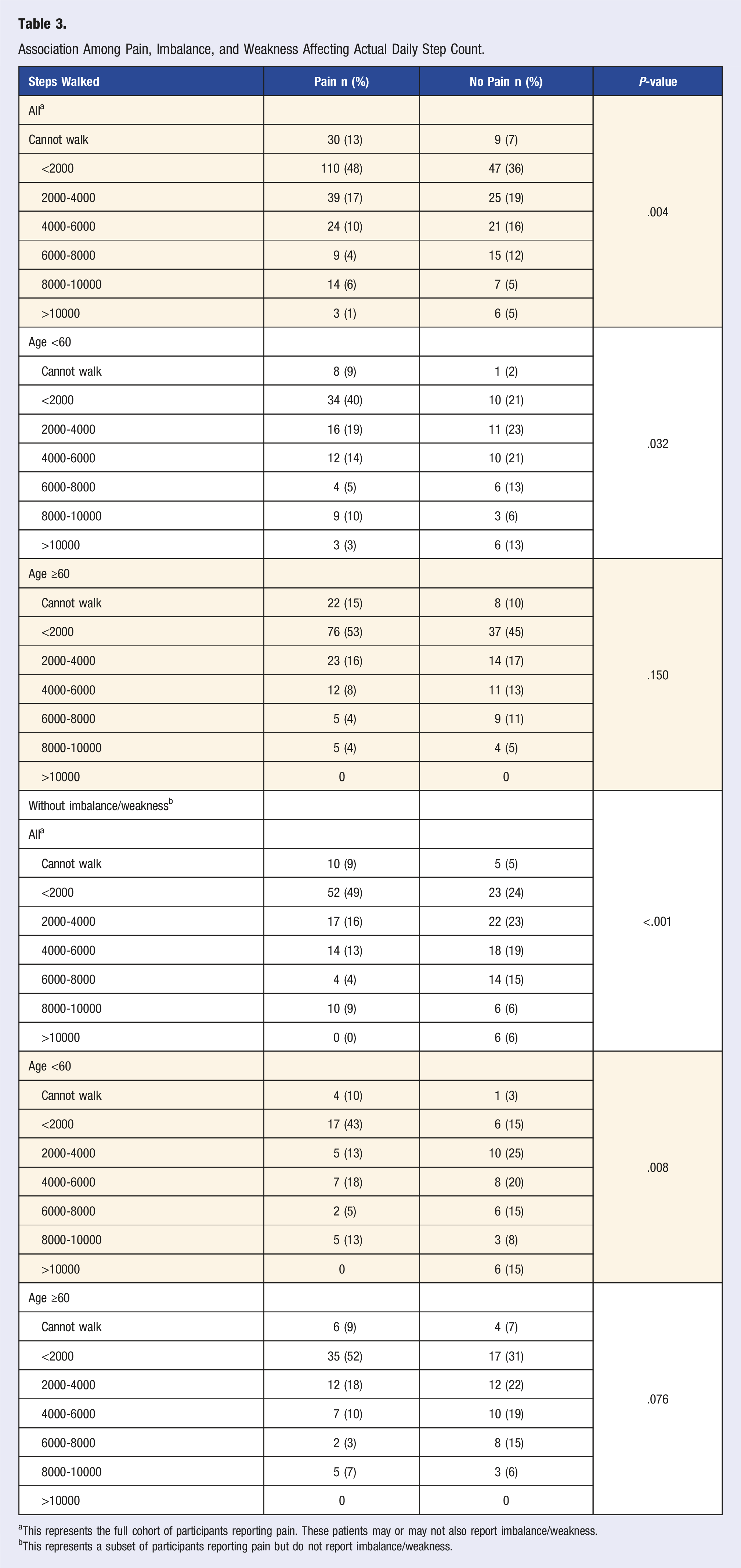
aThis represents the full cohort of participants reporting pain. These patients may or may not also report imbalance/weakness.
bThis represents a subset of participants reporting pain but do not report imbalance/weakness.
Association Between prior Spine Surgery and use of a walking Assist Affecting Daily Step Count.
Discussion
The 2020 landmark paper provided strong evidence for the correlation between increasing the total number of daily steps to a goal of 10,000 and decreases in all-cause mortality as well as cancer and cardiovascular disease mortality. 9 Importantly, the paper also showed that the total step amount was more important than the step intensity. The 2022 study in a larger cohort saw a benefit in approaching 10,000 steps per day, no significant benefit over that amount, and mild additional risk reduction with increased step cadence. Therefore, it does not require excessive amount of exercise for people to significantly improve their health. They may do so by walking to meet their daily step goal.
This cross-sectional survey among patients in spine clinic revealed that patient knowledge of higher ideal steps goal is associated with a greater number of actual daily steps; however, on average, the actual number of steps is considerably less than the 10,000 daily step recommendation. Patients who possess a step counter walk more than those who do not; however, their actual step counts are far less than the recommended number of steps as well. Furthermore, the use of walking aids does not help to improve the number of daily steps. However, prior research has shown that commercially available step trackers have poor reliability and may underestimate step counts in people using walking aids.25,26 There were significant differences in daily step count depending upon age for patients possessing a step counter and for those using a walking assist over the age of 60 years.
Other forms of aerobic exercise, which would include physical therapy, did not explain the limited amount of walking in this population as only 10% reported that as limiting their walking. These findings, in addition patients reporting not enough time to walk, suggest that there is a lack of prioritization for walking which may be due to a knowledge gap. Additionally, along with the 13% of patients who cited a medical condition, patients reported other inhibitory factors such as pain, weakness, and imbalance. Our survey identified pain as the primary physical factor inhibiting walking activity. A large study that looked at general referral for spine pathologies found that pain was the most common complaint. 22 The prevalence of pain in patients from our survey was also very high. There was a significant difference in daily steps in patients younger than 60 years who reported pain, even in the absence of imbalance and weakness. Additionally, 41% of our patients reported arthritis, in which pain can inhibit walking, regardless of the location in the body. Given its effect on walking activity, even in patients who use step counters, had prior surgery, and use a walking assist, providers should appreciate the adverse impact of pain. It also supports that more support strategies must be used for pain, as surgery appears to not be a solitary solution.
In terms of prior spine surgery, the results of the Enhanced Recovery After Surgery (ERAS) protocol have shown the benefits of early ambulation in the immediate post-operative period.12-14 Studies that tracked the number of steps per day taken by patients for a period prior to and after spine surgery have been published.18-21 Similar to our findings, the daily step counts were higher when patients were using a step counter.19,20 However, in these prospective studies, participants were told ahead of time that their steps would be monitored.19,20 Therefore, the elevation may be due to the Hawthorne effect; however, the highest daily step count was slightly over 8000 with large variability at three months after surgery. 19 Furthermore, one study pointed out that post-operatively, their patients significantly decreased their daily steps compared to baseline until one year later. 20 In the retrospective studies where data was pulled from patients’ smartphones, patients had very low pre-operative daily steps and even at two years after surgery, the patients were averaging approximately <4000 daily steps, which qualifies as sedentary behavior and has little benefit on improving all-cause, cancer, and cardiovascular disease related mortality.18,21,27 These data from retrospective studies is in line with that from our cross-sectional survey in that most patients seen in spine clinic are walking around 2000 steps per day, regardless of whether they had surgery. There also was no significant difference in daily step count due to age in patients who have had spine surgery. Furthermore, the number of steps in these patients is lower than recommended in other smaller daily step count studies which showed a benefit of 4400 steps per day in older women, 2 6000-8000 in patients >60 years, and 8000-10,000 in patients <60.7,8
The benefits of walking for maintenance of overall health have been thoroughly studied. Walking has been correlated with decreased diastolic blood pressure, triglyceride levels, blood glucose levels, and high sensitivity C-reactive protein levels.28-31 Other smaller studies have supported the evidence that there is benefit in walking for cancer patients and those with cardiovascular disease.32,33 The American Heart and American Stroke Associations have recommend walking for stroke prevention. 34 Stroke patients who retain the ability to walk and have a modified Rankin score of 3 have better 7-year survival and quality of life.35,36 In patients >60 years, walking >5000 steps per day was associated with reduced risk of falling, which can lead to serious health complications in this patient population. 37
Conversely, decreased physical activity and increased sedentary behaviors lead to increased frailty with a high mortality risk38,39 as well as increased risk of cancer and cancer mortality. 40 Although the major studies on daily step count did not find a minimal beneficial threshold,9,10 another study defined sedentary behavior in adults as taking <5000 steps/day and was associated with negative health parameters. 27 Most patients taking our survey are not only walking <4000 steps per day, but they also believe this sedentary level of activity is the ideal daily step goal. Even patients who reported knowing a higher step goal is ideal still reported a lower performance in their actual steps. This sedentary behavior was also seen in patients that have had prior surgery where one of the surgical goals was to reduce factors prohibiting walking to increase daily steps and functionality. It was also seen in patients who report tracking their steps and using a walking assist.
It stands to reason that more providers ideally educate their patients not only on the benefits of walking but also on specific daily step goals that will have a meaningful impact on their lives by reducing all-cause mortality and due to the many benefits listed above. As evidenced by our survey, patients are not aware of how much they should be walking nor that step count is a metric they should be tracking just like they track their blood pressure or blood glucose levels. A recent randomized control trial (SMARTER, Step monitoring to improve arterial health) and a follow-up qualitative evaluation provided an evaluation for feasibly integrating a physician-delivered step count prescription,41,42 and showed the obvious benefit to patients when this was enacted. A similar intervention could be applied to the spine patient population.
Limitations
The catch area for Swedish Neuroscience Institute includes most of the Pacific Northwest and Alaska and Hawaii. However, this patient population is from one spine center and may be different depending upon sampling from different areas of the country. Our patient population is similar to those evaluated in both of the large daily step count studies in terms of age and gender distribution, but may have less incidence of general co-morbidities (aka may be healthier overall).9,10 Patients are referred for evaluation for multiple pathologies including degenerative disorders, deformities, infection, trauma, and oncologic disease. We did not distinguish the underlying pathology as our focus was on any patient being evaluated with spine pathology. Similarly, we did not distinguish the etiology of pain nor the timing or type of prior spine surgery as that was not the focus of describing physical factors. In the age stratified analysis, some measures were nearing significance likely due to the lower sample in specific strata. The trends were relatively clear on when age did or did not have an effect.
In the group of our patients who do not track their steps, there may be a difference in the actual number of daily steps taken vs what was reported on the survey. A prior study has shown that patients tend to underestimate their step count when compared to being tracked by a pedometer. 43 Additionally, patients do not have their cell phones on them at all times, which can underestimate step count; although this was used in prior studies to record patient steps.15-18,21,44 However, our patients’ reported values are so far beneath 8000-10,000 steps per day that the amount of underestimation may not be significant. We used average values to provide a conversion of distance and time to the number of steps; however, to get the most accurate calculation of step count, it is best for the patient to measure their step length. In patients with weakness, instability, and pain from spine pathology, we are aware that their walking speed may be below average and that they may walk less steps per day than the average calculation.
Conclusions
In patients presenting to spine clinic for evaluation where pain, weakness, and instability are common presenting symptoms, it is important to assess patients’ daily step goal prior to and after spine surgery. Medical providers who evaluate and treat patients with possible spine pathology should be aware of patients walking activity and provide recommendations accordingly. This will help improve their overall health and decrease all-cause mortality. Additionally, looking at pain more as a function of prohibiting movement and daily step counts may help to better evaluate patients for referrals for spine surgery as well as other forms of pain management. Future prospective research should focus on specific spine patient populations (i.e., those with cervical or lumbar pathology), and consider interventions that increase the knowledge of ideal steps goal, quantify step count measurements, and increase the actual step counts in this population. Those studies would help to understand the specific benefits of walking in spine patient populations.
Supplemental Material
Supplemental Material - Association of Daily Step Count With Patient Knowledge, Step Tracking, and Physical Factors in Patients With Spine Pathology
Supplemental Material for Association of Daily Step Count With Patient Knowledge, Step Tracking, and Physical Factors in Patients With Spine Pathology by Amanda N. Sacino, Dan Norvell, Anna Gorbacheva, Amal Sajid, August Avantaggio, Rod J. Oskouian, and Jens R. Chapman in American Journal of Lifestyle Medicine
Footnotes
Acknowledgments
Thank you to Polly Brune, Michael Greb, and Zachary Bailey for distributing the surveys during clinic. Thank you to Drs. Mauricio Avila, Abraham Schlauderaff, Chris Seidel, Jim Hicks, Jared Cooke, and Jonathan Plumer for input on the patient survey.
Declaration of Conflicting Interests
The author(s) declared no potential conflicts of interest with respect to the research, authorship, and/or publication of this article.
Funding
The author(s) received no financial support for the research, authorship, and/or publication of this article.

Supplemental Material
Supplemental material for this article is available online.
References
Supplementary Material
Please find the following supplemental material available below.
For Open Access articles published under a Creative Commons License, all supplemental material carries the same license as the article it is associated with.
For non-Open Access articles published, all supplemental material carries a non-exclusive license, and permission requests for re-use of supplemental material or any part of supplemental material shall be sent directly to the copyright owner as specified in the copyright notice associated with the article.
