



Abstract
Culinary medicine offers a practical, experiential approach to nutrition education, but in-person programs are resources intensive. Digital interventions may offer a scalable, acceptable approach to culinary medicine in populations that are at increased risk for poor diet, such as parents with low income. The purpose of this study was to examine modern home cooking behavior and the role of new media from the perspective of parents with low income and identify implications for culinary medicine research. Twenty parents from 6- to 11-year-old children that qualify for free/reduced school lunch programs completed a survey and interview examining online cooking information seeking behaviors, current cooking practices, and factors that influence healthy eating. Interview transcripts were analyzed using a semi-structured hybrid coding approach. Three major themes emerged from the data: (1) Current cooking habits and environment; (2) Factors that influence healthy cooking; and (3) The role of the internet in home cooking. This research may be used to inform the creation of digital culinary medicine intervention tools to promote healthy eating in this population.
“Acknowledging information quality as an issue is important when attempting to develop health promotion materials that rely on new media.”
Introduction
Diet is a key modifiable risk factor for cardiometabolic disease and several cancers.1–3 Diet quality is low across the U.S. population,4,5 with mean Healthy Eating Index (HEI) scores particularly low among school-aged children, and those in lower-income households.6,7 The majority of children and adults in the US do not meet recommended intakes for fruit, vegetables, and whole grains5–7; and consumption of processed/red meat and ultra-processed foods is particularly high among families with low income.7,8 Dietary habits established in childhood track into adulthood and influence future risk for diet-attributable disease.9–11
Parents are key agents of influence on diet as they typically control how food is purchased and prepared. 12 Families with low income have developed unique foodways (the multifaceted structures of food sourcing, preparing and eating behaviors that are influenced by familial arrangement, preferences, cultural norms, and food access) to cope with limited resources. 13 For example, adults with low income prepare food at home more often and spend more time cooking than those with higher incomes.14–17 Overall, preparing and consuming foods at home has been associated with lower food costs 18 and better diet quality among adults and children,17,19–22 while meals prepared outside the home are associated with poorer food choices.23–25 The degree to which diet quality is associated with cooking frequency, however, is significantly lower among Americans with low income compared to those with higher incomes.16,26
Improving parent cooking practices may increase diet quality among children living in low-income households by cultivating strategies to encourage healthy eating in the context of existing foodways, as opposed to promoting radical shifts in consumption that may not be attainable or sustainable. 27 While culinary medicine programs are increasingly popular approaches to nutrition education, most rely on in person learning, which may be out of reach for lower resourced communities. Digital culinary medicine programs may offer a more scalable approach to practical nutrition education. The internet and smartphone applications have emerged as important sources for recipes among parents with low income28,29 and over one-third of respondents in a nationally representative survey reported learning to cook from online resources. 30 Little is known about how these new media sources (any digital media including internet, social media, smartphone apps, etc.) influence home cooking behavior in families with low-income. Understanding of the role of new media in home cooking behavior will support the creation of scalable culinary medicine tools for this high-need population. The objective of this study was to qualitatively examine modern home cooking behavior and the role of new media from the perspective of parents from 6- to 11-year old children with low income and identify implications for culinary medicine research and practice.
Materials and Methods
This study was reviewed and obtained ethics approval from the Baylor College of Medicine Institutional Review Board (H-50324). Participants completed an informed consent document before taking part in study procedures.
Participants
Parents from 6- to 11-year old children from low-income households in the Houston, TX, Metropolitan Statistical Area 31 were recruited for this study. Low-income was defined as qualifying for free or reduced school lunch programs (i.e., household income is ≤185% of the federal poverty line). Additional inclusion criteria were English-speaking, report cooking at least three times per week on average, and report having some familiarity with online recipes. Online recipe familiarity was assessed with the question “How often do you look at online recipes?”, and those that responded “never” were excluded. This was to ensure an information-rich sample on the topic of cooking and new media. Recruitment took place over eight weeks and was done through flyers in the community and via an email list-serve maintained by the USDA’s Children’s Nutrition Research Center. After completing an online screener, eligible participants reviewed and completed an informed consent document and were enrolled.
Data Collection
Enrolled participants were sent a link to a brief online survey that included demographic questions as well as items covering online recipe/nutrition information seeking behavior, current cooking practices, attitudes about cooking and health, and factors that influence healthy cooking and eating. The survey responses were used to guide the subsequent interviews (e.g., “you stated on the survey you look at online recipes every day, what are some reasons you look at online recipes that often?”). Using open-ended questions, interviews went into further depth regarding perceptions of new media usage and its influence on home cooking behavior. Interviews lasted up to one hour and took place via videoconference (audio only). Interviews were recorded, professionally transcribed, and transcriptions were quality checked against the audio prior to analysis to ensure accuracy. Following the interviews, all participants were compensated $25 for their time.
Analysis
Descriptive statistics were used to assess survey response. Interview transcripts were analyzed using Dedoose software. All coders listened to interview recordings prior to coding the transcripts which served both as a quality check to the transcription and allowed coders to better familiarize themselves with the material. A semi-structured hybrid coding approach was used to code the data. This process included 5 main steps: (1) A summary analysis of each interview was created to identify responses to the interview questions. This set the foundation for deductive primary codes; (2) One coder listed all responses identified in the interview summaries for each key concept extracted from the interview questions; responses that were mentioned in more than one transcript formed deductive subcodes. Once complete, a second coder reviewed the interview summaries and discussed further changes to the subcodes. Discrepancies were mediated by the first author. (3) Deductive primary and subcodes were crafted into a codebook with formal definitions, rules, and example quotes. (4) The codebook was then applied to the interview transcripts. Three study staff applied the codebook to all interview transcripts and added new inductive primary and subcodes as they emerged. By the sixth interview, no new inductive codes were added and the codebook was stabilized with both deductive and inductive primary and subcodes. (5) Two coders then independently re-coded all the interviews using the finalized codebook. No new codes were added during this process, suggesting codebook saturation at 6 interviews in this sample, which is in line with other phenomenological research.32–34 Discrepancies between coders were mediated through discussion. Code frequency tables showing the number of occurrences each primary or subcode was applied to a transcript were generated. This allowed for the calculation of percentages of respondents that mentioned specific concepts, thus offering insight into broader trends in the data set.
Results
Thirty-one individuals initially responded to advertisements for the study; 2 were ineligible as they responded “never,” when asked how often they looked at online recipes (6%) and 3 were ineligible because they did not qualify for free/reduced lunch (9%). Four individuals did not respond to contact from study staff after completing the screener (12%), and 2 individuals noted they were not interested upon learning more about the study (6%). Twenty participants (61% of those screened) completed the informed consent document, pre-interview survey and interview. No participants dropped out of the study once enrolled.
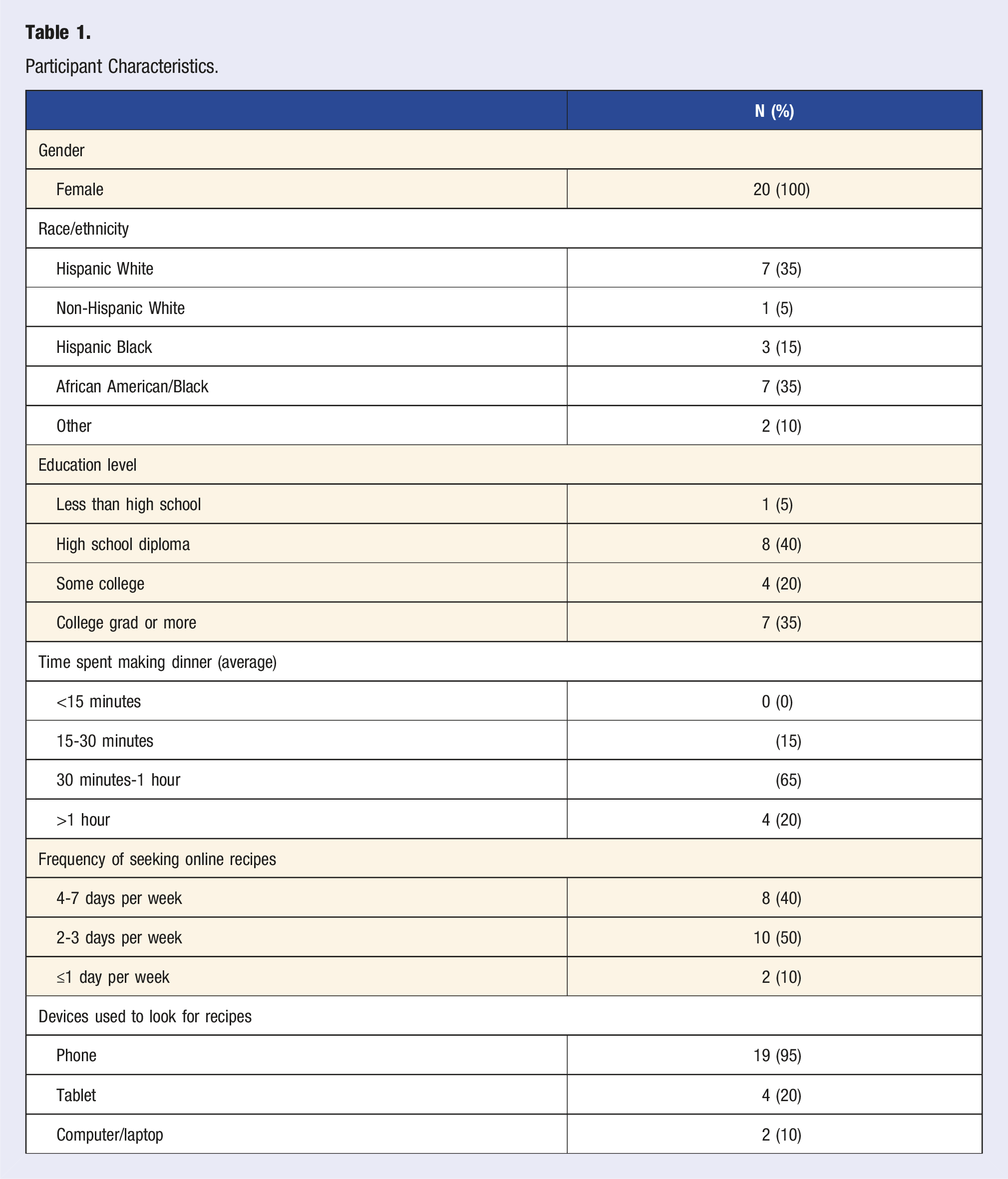
Participant Characteristics and Cooking Behavior
Participant Characteristics.
Qualitative Findings
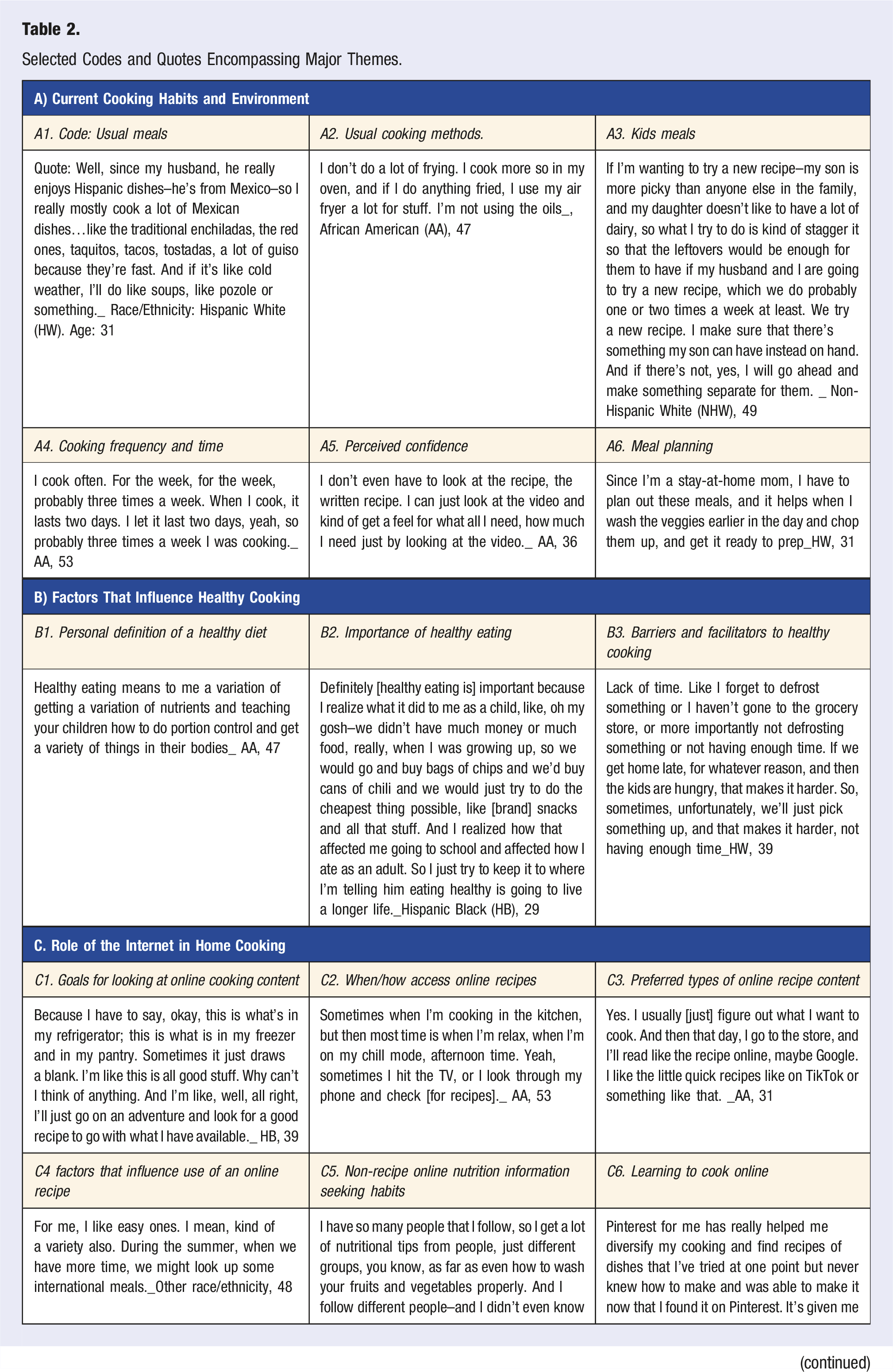
Selected Codes and Quotes Encompassing Major Themes.
Current Cooking Habits and Environment
The most common meals mothers reported cooking in this study were carbohydrate-based dishes (in which a grain-based product serves as the main component of the dish such as pasta or fried rice), (Table 2, Section A) including cultural foods from Mexico, the Caribbean, and Latin America (Table 2, A1). Some participants noted the importance of making meals adaptable for children by serving meal components separately or leaving off spices/ingredients children did not like and almost half (45%) noted cooking completely separate meals for their children at least some of the time due to picky eating (Table 2, A3). Many participants (55%) reported cooking meals using special equipment such as a slow cooker or air-fryer, which were hailed as beneficial for time management, health factors, and taste (Table 2, A2). Meal planning varied in the sample, with 20% specifically mentioning not planning meals, while 40% did a high level of meal planning by listing out dishes for the week (Table 2, A6). Most participants reported high cooking confidence (70%) and high cooking frequency (55%) when discussing their weekly home food preparation routines. Cooking frequency was sometimes tied to confidence as parents described building skills through practice, which in turn leads to a better ability to integrate new recipes found online (Table 2, A5).
Factors That Influence Healthy Cooking
There were several factors that emerged as relevant to shaping one’s ability to prepare healthy meals. (Table 2, Section 2B) Personal definitions of healthy eating varied in the sample but fell into four main, non-exclusive categories (Figure 1). The most common way participants discussed healthy eating was in terms of specific foods, such as avoiding processed foods (25%) or animal fats (45%), or eating fruits and vegetables (80%) Parents also discussed nutrients such as fat, carbohydrates and vitamins, but often with a focus on balance (Table 2, B1). Nearly 1/3rd of participants (n = 6) described why healthy eating was important to them in the context of their role as caregivers (Table 2, B2). Several described being impacted by their lived experiences growing up with family members that had diet-related disease, or their current experiences coping with heart problems and weight issues. Time and competing responsibilities were mentioned as a barrier to healthy cooking by 14 participants (70%) (Table 2, B3). Family preferences were also a commonly mentioned factor that influenced healthy cooking. That is, in an environment where children and/or parents prefer vegetables or healthier meals, it is easier to prepare those foods. The opposite also emerged, if parents meet resistance to healthy dishes, they are less willing to prepare them. Over half of the sample (55%) described knowledge as a facilitator to healthy cooking, specifically in terms of having cooking skills (50%) and having access to recipes and nutrition information online (40%). Network map of relationships between themes. Scheme illustrating the relationship between themes as identified in the data set. Dashed lines represent theoretical influence of cooking practices on diet quality and downstream nutrition-related disease risk.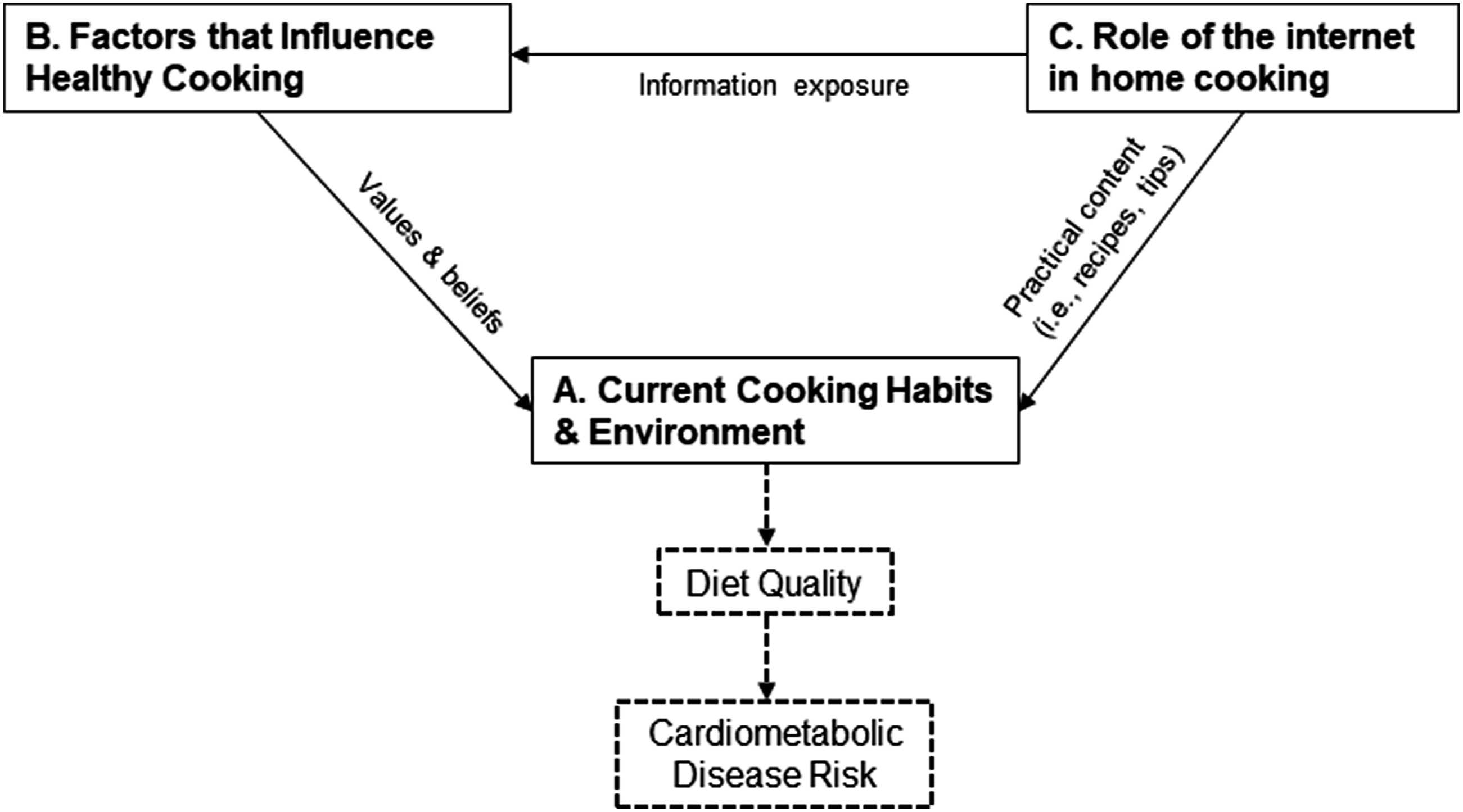
Role of the Internet in Home Cooking
Participants noted their goals when looking at online recipe content including: (Table 2, Section C) identifying recipes to cook at home (65%) (Table 2, C1), general inspiration (50%), and entertainment (25%). The most common scenarios in which parents were seeking online recipe information was when they were planning meals (60%) or in the kitchen preparing food (60%) (Table 2, C2). Casual viewing was common with half the sample indicating they browsed online recipes during downtime or weekends. Preferred resources for online recipes included search engines like Google (90%) and social media sites (75%). Most preferred recipe videos (75%), and written step-by-step recipes (60%), although some participants expressed annoyance at excessive narrative in written formats. Participants noted that they were more likely to try recipes if they came from a trusted site or influencer they were already familiar with and that had reliably fulfilled other criteria in the past (recipes that were easy, relatively fast, novel, liked by the family, used common ingredients) (Table 2, C4). Participants specifically described learning cooking and healthy eating skills through social media both by following health influencers (Table 2, C5) and by scrolling through content (Table 2, C6).
Relationships Between Major Themes
A network diagram was developed to explore the relationship between themes (Figure 1). This visualization brings together the emergent findings and reveals potential opportunities and barriers to leveraging online content for digital culinary medicine programming. The internet is a major resource for cooking and nutrition information among low-income mothers, and there are two paths of influence demonstrating the role of this new media on home cooking behaviors. First, respondents noted using practical, instructional information from online recipes and culinary tips to support skill development. Figure 1 conceptualizes this as the directional pathway from Theme C (role of the internet in home cooking) to Theme A (current cooking habits and environment). Second, respondents described how the internet exposes them to different types of people and information through social media by scrolling targeted pages (such as Pinterest boards) and following diet/nutrition influencers. This creates a learning environment wherein participants learn from multiple sources, re-shaping their beliefs and action related to healthy eating. This pathway is shown in Figure 1 as linking the Theme C (role of the internet in home cooking) to Theme B (factors that influence healthy cooking). Home cooking behavior changes as parents attempt to align their cooking habits with their values and beliefs about health-promoting behaviors and foods. This is shown on the figure as Theme B (factors that influence healthy cooking) linking to Theme A (current cooking habits and environment), which represents the actual practices that are occurring in participant’s kitchens, influencing diet quality and, in turn, downstream risk factors for diet-attributable disease.
Discussion
This qualitative study, undertaken with parents from 6- to 11-year old children with low income, detailed several aspects of modern home cooking practices, perceptions of healthy eating and healthy cooking and the way in which home cooking is influenced by new media. Parents in our study expressed high usage and reliance on online resources for cooking information, and information exposure further influences cooking habits through impact on how people conceptualize healthy eating and healthy cooking. Through an examination of the relationships between cooking practices, new media, and health perceptions, we identified avenues for future culinary medicine efforts to support scale-up through digital programming.
Implications of Findings for Culinary Medicine Research and Practice
Potential Culinary Medicine Opportunities in the Context of Online Food Media.
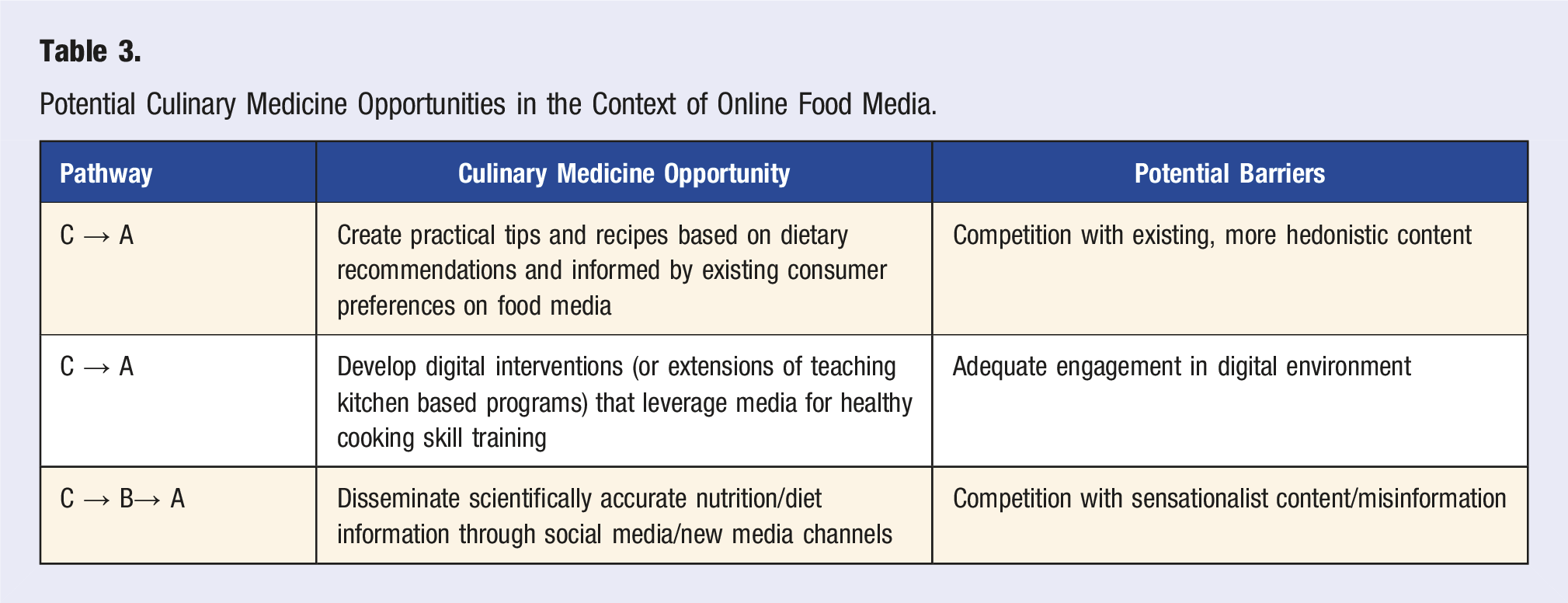
The processes of identifying and using online recipes described by participants in this study suggest a reliance on content hubs (search engines, social media platforms) as opposed to specific websites. This approach exposes users to large amounts of information of varying quality. Interventions aiming to redirect users to specific health-focused sites and apps may have limited value, since parents are searching online for recipes and tips that fit their immediate needs and preferences, not necessarily searching for health-focused information. 38 A better approach may be to teach parents specific ways to optimize the nutrition of the recipes they encounter online. Scalable culinary medicine programs that utilize new media to teach healthy cooking strategies have potential for this population, given their high utilization of online recipes and culinary content. However, digital interventions risk failure through low engagement. 39 Many existing digital nutrition interventions integrate phone or in-person counseling, which may support motivation and engagement, but also adds cost to program design.39,40 Importantly, teaching kitchens and culinary medicine programs are increasingly popular in the United States. Thus, there may be potential to expand the reach of these programs by offering digital classes and/or resources as extensions to existing programmatic infrastructure. Both stand-alone digital culinary medicine programs, and those built to work with teaching kitchens will benefit from formative research with end users to understand the context in which people will use these types of technologies. This represents the first step of the user-centered design process which aims to support programs that are enjoyable and intuitive, thus supporting adoption and continued engagement. 41 Findings from the current study, which detail the usage of online recipes in modern home cooking, will support future studies aiming to utilize new media in culinary medicine research and practice for parents with low income.
Present Findings in the Context of Existing Literature
Our research represents some of the first in this area. Specific home cooking behaviors and the factors that influence their use have not been well studied despite increased investment in culinary medicine.42–45 It is critical to understand how new media influences home cooking behavior if we want to create scalable digital methods for culinary medicine. While few studies examining the use of online cooking content have been published, our results, wherein only 2 of the 31 individuals screened for our study indicated never looking at online recipes, are in line with findings from Tobey et al, 29 who qualitatively examined recipe resources among mothers with low income as part of a larger study to refine a nutrition education smartphone application. The authors found that most (90%) of the 55 participants across 9 focus groups indicated using the internet for identifying recipes. Similar to our findings, Tobey et al also found parents often use online recipes to add variety to their cooking habits and get practical information for using ingredients they have on hand. While current research in this area is limited, it is important to consider that new media will likely continue to be a major resource for both practical cooking and nutrition information among families with low income as the digital divide between rich and poor continues to narrow, 46 and internet and smartphone usage becomes even more ubiquitous in the population. 47
Strengths and Limitations
This study has several strengths including a predominantly minority sample of participants, with only one individual reporting race/ethnicity as non-Hispanic White. This is in line with our expectations as Hispanic and African American individuals are over-represented in poverty in Houston, Texas. 48 Food security and SNAP/WIC participation was not collected in the sample; however, participants were only eligible for the study if they self-reported that their child was eligible for free or reduced school lunch. In Texas, the school lunch program utilizes the same income qualification as WIC (household income is ≤185% of the federal poverty line). We utilized teleconferencing methods to conduct interviews, which may have reduced barriers to participation for some individuals, while potentially limiting participation of those with less digital access. Only audio was used for the interviews, thus we may have missed some non-verbal or body language cues using this method. Importantly, although Hispanics are over-represented in poverty in urban Texas, interviews were only conducted in English which likely limited engagement with an important population (recent immigrants) that may be more likely to live in poverty. More research in Spanish and other languages is needed to better understand this phenomena among different subpopulations in the US.
Conclusion
New media can play an important role in promoting healthier eating habits among families with low income through the creation of practical nutrition education content that is accessible, adaptable, and convenient. Future research on this topic may include cognitive task analysis through critical decision method49,50 interviews to gain detail and identify timelines, decision points, and factors influencing decision making related to online recipes. Information on low-income parents’ preferences for digital delivery of culinary medicine programs are also needed to inform the creation of enjoyable, intuitive tools that are aligned with user goals.
Supplemental Material
Supplemental Material - Modern Home Cooking Practices, the Role of New Media, and Implications for Culinary Medicine: A Qualitative Study Among Mothers With Low Income
Supplemental Material for Modern Home Cooking Practices, the Role of New Media, and Implications for Culinary Medicine: A Qualitative Study Among Mothers With Low Income by Margaret Raber, Maria Vazquez, Syeda Khan, Sahiti Myneni, and Debbe Thompson in American Journal of Lifestyle Medicine.
Ethical Statement
Ethical Approval
This study was reviewed and obtained ethics approval from the Baylor College of Medicine institutional review board (H50-324). Participants completed an informed consent document before taking part in study procedures.
Footnotes
Acknowledgments
We would like to acknowledge Noemi Islam, who supported recruitment for this study, and Jennifer Coon who offered administrative and editing support. Thank you to all participants that shared their experience with our study team.
Author Contributions
MR conceptualized and supervised all aspects of this study. DT and MR designed the methodology; MV took part in data collection and management; MR, MV, and SK conducted the analysis and collaboratively wrote the first draft of the paper. SM offered expertise in new media throughout the study process. All authors reviewed and approved the manuscript.
Declaration of Conflicting Interests
The author(s) declared no potential conflicts of interest with respect to the research, authorship, and/or publication of this article.
Funding
The author(s) disclosed receipt of the following financial support for the research, authorship, and/or publication of this article: This work was supported by the Agricultural Research Service (USDA/ARS), and funded in part with federal funds from the USDA/ARS under Cooperative Agreement No. 58-3092-5-001.

Data Availability Statement
Data presented is primarily qualitative, interview transcripts will not be made available unless deidentified, by specific request, and with a formal data-sharing agreement in place to protect participant privacy. Subsequent use of data may require re-consenting of participants.
Supplemental Material
Supplemental material for this article is available online.
References
Supplementary Material
Please find the following supplemental material available below.
For Open Access articles published under a Creative Commons License, all supplemental material carries the same license as the article it is associated with.
For non-Open Access articles published, all supplemental material carries a non-exclusive license, and permission requests for re-use of supplemental material or any part of supplemental material shall be sent directly to the copyright owner as specified in the copyright notice associated with the article.
