




Abstract
Online sources of health information are a significant means by which the public educates itself about health and wellness. The purpose of this study is to investigate how undergraduate students evaluate and assess health-related websites for accuracy, as well as the self-reported factors used in identifying whether a website is an accurate source of information. One hundred and fifty-seven students participated by reviewing a series of 10 health-related websites and indicated whether they believed the website to be an accurate source of health information. Students completed an open-ended question to self-report how they made this determination. Results indicate that students were not able to accurately distinguish between credible sources of web-based health information and those sources that were previously categorized as not being credible sources. Analysis of self-reported qualitative feedback gave rise to 6 factors used to determine the accuracy of the websites reviewed. While students report using these factors, and these factors are consistent with previous research, this does not appear then to be translating to successful determination of a source’s accuracy. Educating students in proper fact-checking and evaluation skills may be warranted to develop a generation of individuals who can be said to have better health literacy.
‘With the desire for greater patient-centered care in the health care field, especially for shared medical decision making, this increase in individual’s access to obtain information related to their health diagnosis and treatment can be promising.’
It is estimated that, in 2018, approximately 89% of US adults utilized the internet, with 98% of adults aged 18 to 29 having accessed the internet during the year. 1 Furthermore, approximately 80% of users search for health-related information while on the internet. 2 An individual’s ease of access to utilize the internet for health information is not inherently negative, as it allows the individual to take a more active role in the care and management of their health status. With the desire for greater patient-centered care in the health care field, especially for shared medical decision making, 3 this increase in individual’s access to obtain information related to their health diagnosis and treatment can be promising.
However, ease of access does not necessarily lend itself to better health behaviors, as eConsumers of health information need to be able to properly seek out, evaluate, and understand the information they are finding. 4 Among those adults who have been raised in an environment where access to the internet has been ever-present, often referred to as digital natives, it is often assumed that skills needed to evaluate websites and digital information is naturally present. 5 However, this is not necessarily the case. A study by Sbaffi and Chen found that, for university-aged students, an individual’s experience with a specific internet channel (ie, search engine, social media networking site, etc), their age, and their student status had a significant impact on which channels they used to seek out health information, making their selection choice more subjective than objective in nature. 6 An additional problem is the presence of websites and digital media that are extoling information that may be incorrect, misleading, or dangerous. These factors coupled together provide a strong rationale for the necessity for individuals to not only possess basic digital literacy skills but also to be able to evaluate the credibility of the information being found. While online recommendations from other users of a particular internet site and recommendations from members of a social network community have been found to have a limited impact on the development of trustworthiness of a web-based source of health information, 7 further insight into how younger adults are determining the credibility of web-based sources of health information is warranted. Thus, the purpose of this study is to evaluate the ability of college-aged students to differentiate between digital sources of health information for their credibility, as well as better understand the self-reported factors they are using to make these determinations.
Review of Literature
Health Literacy in the Digital Age
The World Health Organization defines health literacy as the ability of individuals to gain access to, understand, and use information in ways that promote and maintain good health for themselves their families, and their communities. 8 The sources of health information are an important consideration, as selecting good sources of health information to utilize is a crucial determinant of optimal health outcomes. 9 Making sources of health information more accessible to consumers of health care has shown to have numerous potential benefits, including better knowledge about disease management, reducing anxiety, and encouraging individuals to take a more active role in their health planning and care. 10 Research suggests that patients can serve as sources of education to members of their health care team by presenting health information obtained online during office visits and consultations, of which the health care professional may be been previously unaware. 11
This paradigm shift in how individuals seek out health information has resulted in health care professionals, as well as professional health organizations, no longer serving as the gatekeepers of health-related information. Additionally, this change in how consumers are accessing health information occurs alongside changes in how websites and digital information are developed. The ease at which individuals can now develop and share content online has resulted in an increase in websites, blogs, social media, and video media sharing that is available for individuals to seek. 12 Thus, while many individuals turn to people they know to seek or offer advice in times of questioning, so too do consumers of health information turn to peer-generated webpages and content when searching for health information.
This appears to be especially prominent among individuals living with chronic health conditions (ie, high blood pressure, diabetes, cancer, etc), with approximately 1 in 4 internet users with a chronic condition found to have specifically explored online sources in order to find others with similar health needs. 13 This shift toward user-generated content, often referred to as Web 2.0, has further increased reliance of health consumers on the internet for information related to medical information. 14 With an estimated 6 million Americans searching for health information on the internet each day, it becomes evident that a significant amount of information is being accessed daily. 15
Importance of Electronic Health Literacy
Accompanying this change in accessibility and usability of web-based sources of health information comes questions about the accuracy of this information. Therefore, it is crucial that consumers of online sources of health information possess the tools and skills necessary to search for, evaluate, and utilize the information they find. For if these foundational skills are absent, members of the population can fall victim to medical misinformation during their searches. This is a concerning possibility, as an estimated 52% of internet users believe that “most” or “almost all” of the information they access on health websites is credible. 16 One especially potent example of how the internet can influence health beliefs is the increasing voice of the anti-vaccination movement. Evidence appears to be building which shows that in regions where anti-vaccination messages are being shared and proliferated, vaccination rates of children have been found to decrease significantly. 17 Additionally, a recent study that claims a correlation between the consumption of fluoridated water with lower IQ in children was circulated widely across the internet and accepted as medical fact, in spite of the fact that the article was found to contain “severe” limitations in its design and findings. 18 This appears to track well with the published literature, as a growing body of literature is supporting how social media websites 19 and social networks 20 are shaping and influencing personal health behaviors.
It should be noted that in the scholarship surrounding electronic health literacy, as described by Norman and Skinner, 21 there are different domains and components to electronic health literacy. Within this framework, much attention has been paid to the importance of information literacy and media literacy as opposed to scientific literacy. 22 This is not to say that scientific literacy, knowledge, and familiarity of the basic components of biology and the scientific method is not important. But given the technically advanced level of scientific information, which may not be understood by members of the general public, it is often more accessible to understand the means by which individuals evaluate the sources of information themselves, which fall more into the information and media literacy domains.
However, it should be noted that the very presence of this divide shows the need for developing scientific media literacy. As noted by Mackenzie, an evaluation in 2007 showed that 70% of US adults cannot read or properly understand the science section of journalistic sources such as the New York Times. 23 Coupled with a reported 69% of US adults indicating that their trust in the information they receive through media has decreased over the past decade, and the influx of fake news and pseudoscience in the media landscape, there is a clear need for both media literacy and scientific literacy to be taught in tandem as opposed to being treated as 2 independent skillsets with no overlap.
Student Health Literacy and Online Sources
Traditionally aged (ie, 18-22 years of age), undergraduate college students are often described as being digital natives. This refers to the fact that they have been born and raised in a world in which digital technology has been a ubiquitous part of their landscape. This designation is not only meant to describe the role that technology has played in their developing lives, but more specifically it makes a claim that members of this generation are naturally familiar with and skilled in using digital technologies. However, this may not be the case. A 2010 assessment on how college students use the internet to answer questions found that students evaluated a search result’s credibility on the site’s placement in the search engine results, and not on critical evaluation of the site itself. 24
Research shows that college-aged students and younger can have difficulty telling the difference between a news story and an advertisement. In addition, students are often more interested in top-level domain designation (ie, a.com vs a.org) in determining accuracy than in the content of the site itself. 25 A 2018 study of 18- to 24-year-old individuals found that YouTube videos that contained misinformation regarding the tobacco products lead to viewers responding positively and credulously to these videos, and positive attitudes toward the products being discussed. 26 Digital media’s influences on other health behaviors, such as alcohol usage, marijuana, and gambling, have also been explored; all with similar concerns regarding the ability of digital media consumers to differentiate between accurate versus misleading information being addressed. 27
Study Aim and Research Questions
Thus, the present study explores the health literacy of undergraduate college students who are engaging with online sources of health information. Specifically, the following research questions are posed:
Methodology
Procedures
Researchers designed an online survey via the research software program Qualtrics. The survey was delivered via email to faculty at a mid-size, liberal arts university on the east coast and approved by the institutional review board after expedited review. Data collection took place during the fall 2018 academic semester and the spring 2019 academic semester, with instructions for faculty to encourage their students to complete the survey by the end of each academic semester. Students were asked to complete the evaluative portion of the survey after reviewing each health-based website that was provided, as well as a qualitative feedback question at the end of the survey. All data was then collected via Qualtrics, with the final data report being pulled at the completion of the spring 2019 semester.
Instrument
The instrument consisted of 4 subsections. The first subsection consisted of an informed consent form (Appendix A; available online), and the second subsection asked students to indicate which academic school within the university they were enrolled in as part of their undergraduate program of study (Appendix B). The third subsection consisted of a series of 10 websites that participants were asked to visit by clicking on a hyperlink to the main page of each site, and then indicate whether they felt the website was an accurate source of health information by selecting “yes” or “no” bubbles (Appendix C). Websites were randomly chosen to represent various sources of health information that can be found online, and were categorized as being a Health Organization, an Advocacy group, or a Journalism website (Table 1). Six websites were designated as being valid sources of health information, and 4 websites were designated invalid sources of health information.
Categorization of Health Websites Reviewed by Students.
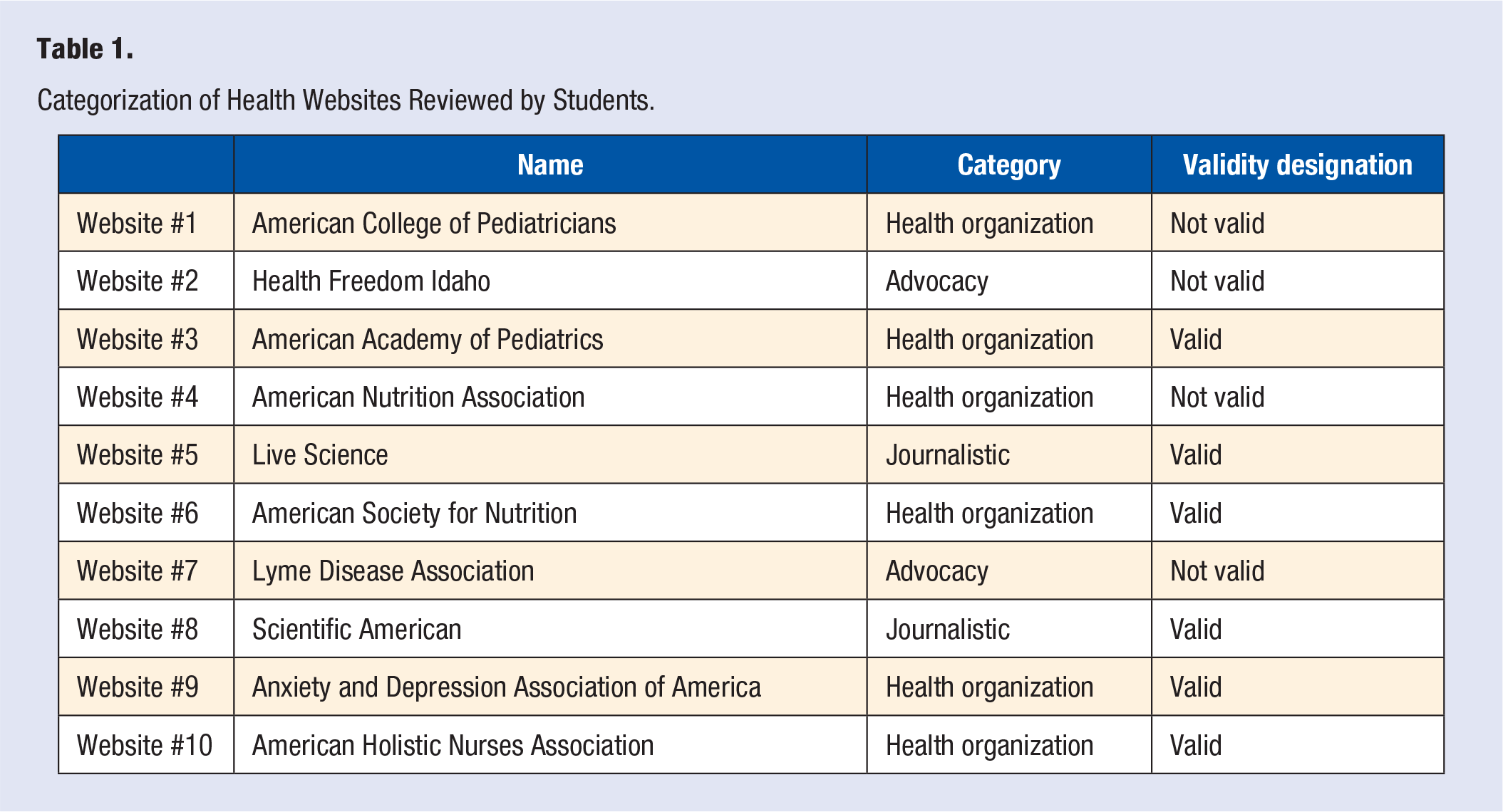
In developing the designation categories of valid versus nonvalid sources of health information, it was important to remain consistent with how validity of information is described within the literature. Validity, or the extent by which a concept is deemed accurate, would ideally focus on content validity. 28 However, considering that there are not any accepted valid measurements when making the determination between a credible versus noncredible websites, face validity was chosen as the appropriate model to use in the process of categorizing the informational accuracy and validity of the chosen websites for this study. Face validity can be described as a measurement of the opinions of reviewers regarding the items being evaluated. 28 While face validity is not measuring validity in a technical sense, but rather the appearance of validity. 29 Given the fact that this study is looking to understand the self-reported factors that undergraduate college students utilize in their efforts to evaluate whether a web-based source of health information is accurate, face validity was a guiding concept in setting up the categorization of websites into valid versus non-valid sources of health information.
Therefore, designation of validity was assessed based on factors that would be available and accessible to participants via face validity approach. Thus, the major categories chosen in designating each website to its appropriate validity claim were the external professional reputation of the source, the presence and quality of references, the longevity of the organization or business in its operations, and any apparent evidence of bias.
For example, a webpage within the American College of Pediatricians (Figure 1) shows clear bias against sexuality education with no accompanying professional references, whereas a webpage within the American Academy of Pediatrics (Figure 2) shows the development of a professional position using evidence-based information, clinical reports, and statements from professionals.
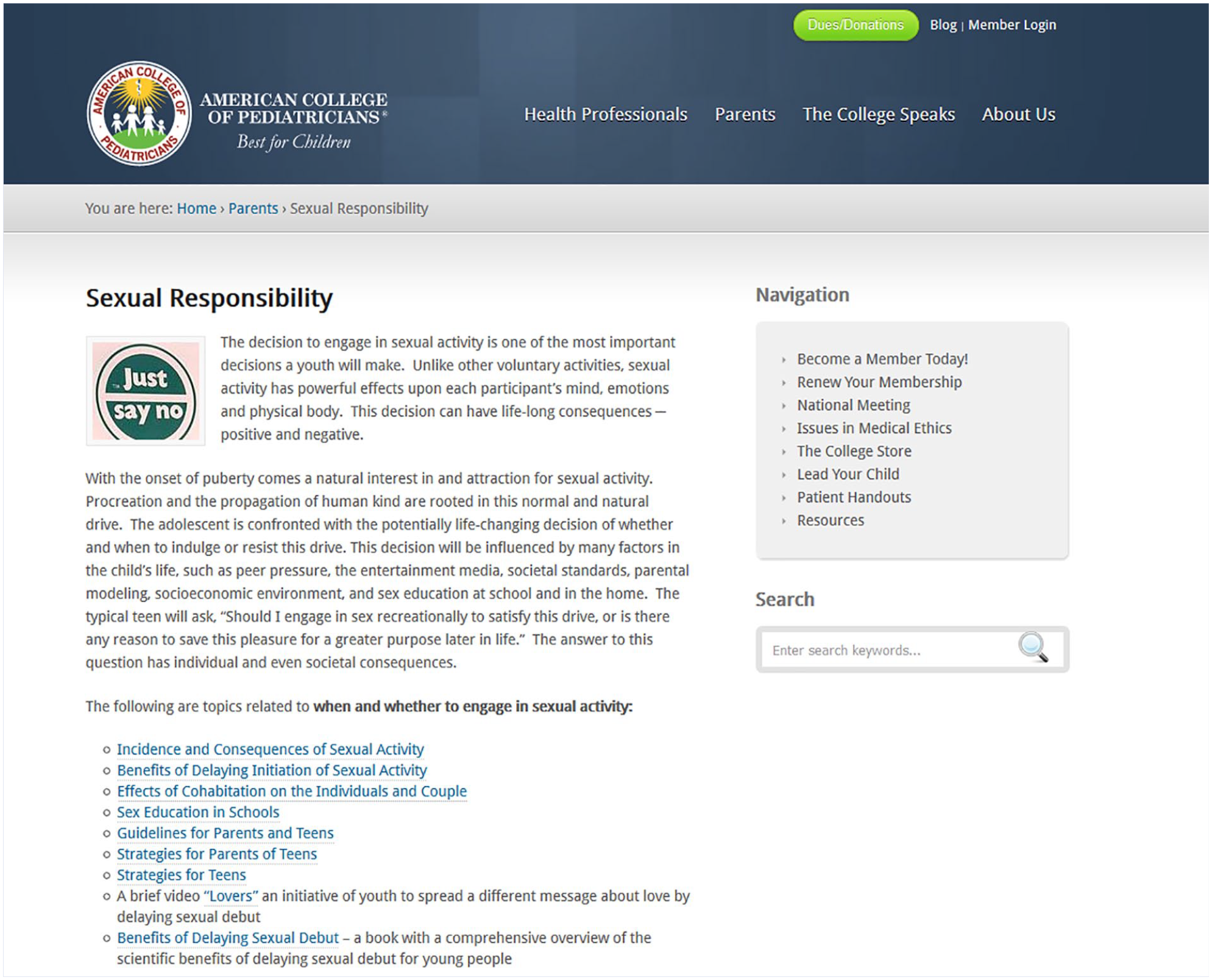
American College of Pediatricians sexual health statement.
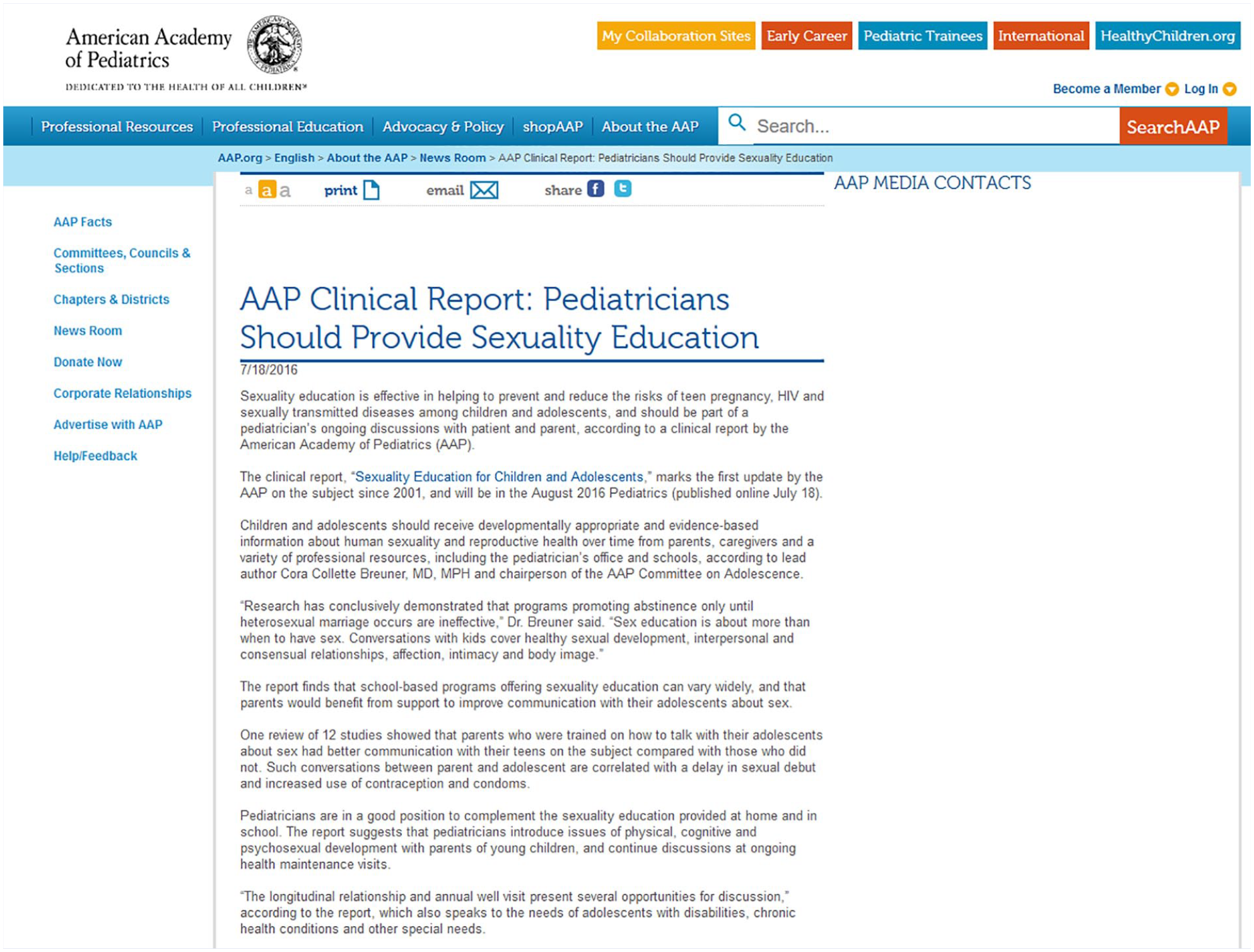
American Academy of Pediatrics sexual health statement.
Finally, student participates were invited to provide a qualitative response to self-report the factors they utilize to make their determinations about the accuracy of the websites that they visited (Appendix D). Qualitative responses were coded using conventional content analysis by the author in order to provide additional insight and support for quantitative data.
Conventional content analysis is often used with studies whose aim is to describe a phenomenon that allows the categories (and names for categories) to emerge organically from the data. With this type of content analysis, researchers immerse themselves in the data to allow insights to emerge. 30 The method of analysis used by this study would be best described as abductive, as the previous knowledge possessed by the researchers was utilized in developing an understanding of the qualitative data being analyzed and in ultimately drawing conclusions. In an abductive model, ideas and findings emerge while also taking previous knowledge into account. 31 As suggested by Tesch, 32 the researchers began by reading all data repeatedly to achieve immersion and obtain a sense of the whole. Researchers then read data word-by-word to derive codes by first highlighting the exact words from the text that appear to capture key thoughts or concepts.33-35
Next, the researchers made notes of their first impressions, thoughts, and initial analysis. As this process continued, labels for codes emerged that were reflective of more than one key thought; these often came directly from the text and then became the initial coding process, similar to the process posited by Patton. 36 At this time, the researcher gave each new response a new number, and grouped repeated responses with previously similar responses (that already had an assigned number). Codes showing commonality were grouped together which gave rise to categories, which ultimately were linked together to develop the identified themes. 37 Knowledge generated from this type of content analysis is based on participants’ unique perspectives and grounded in the actual data.38,39
Sample
Over the course of the 2018-2019 academic year, 175 students began the online survey. After removing survey data from those participants who indicated that they did not give consent for their responses to be utilized, a final sample of 157 completed surveys was obtained. Descriptive demographics of which schools of study that students were enrolled in were as follows: School of Business 22 (13.8%); School of Health Sciences 74 (46.5%); School of Social and Behavioral Sciences 23 (14.5%); School of Natural Sciences and Mathematics 22 (13.8%); School of General Studies 4 (2.5%); School of Arts and Humanities 4 (2.5%); and School of Education 8 (5.0%). Of the 157 students who completed the survey, 119 provided qualitative responses to this question, providing a 75.8% response rate for the qualitative section of the survey instrument.
Results
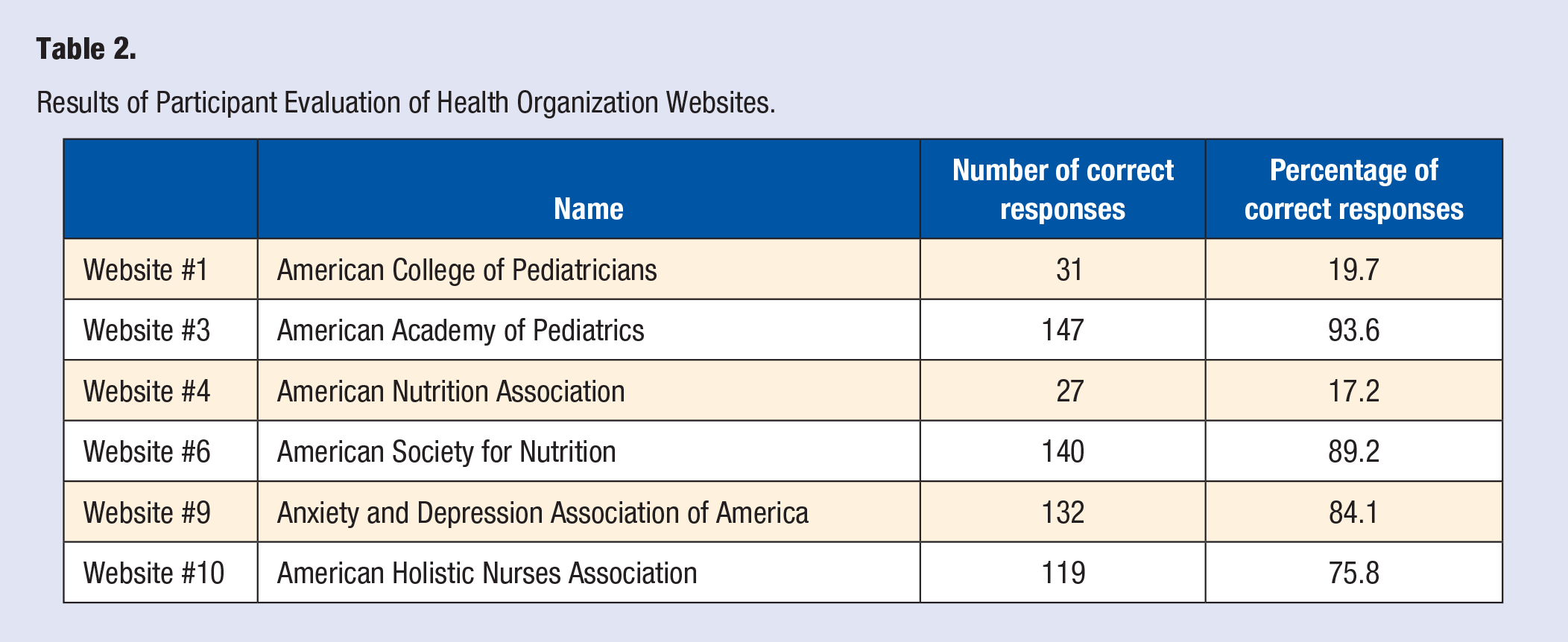
Research Question 1 explores the level of accuracy of undergraduate college students in determining whether a web-based source of health information is accurate and credible in the information it is providing. Frequency statistics indicate that while the majority of student participants were successful in identifying the 4 credible health organizations as being valid sources of health information for websites #3, #6, #9, and #10 (93.6%, 89.2%, 84.1%, and 75.8%, respectively), less than 20% of participants were able to correctly identify those health organizations which were not accurate or credible sources of health information (Table 2).
Results of Participant Evaluation of Health Organization Websites.
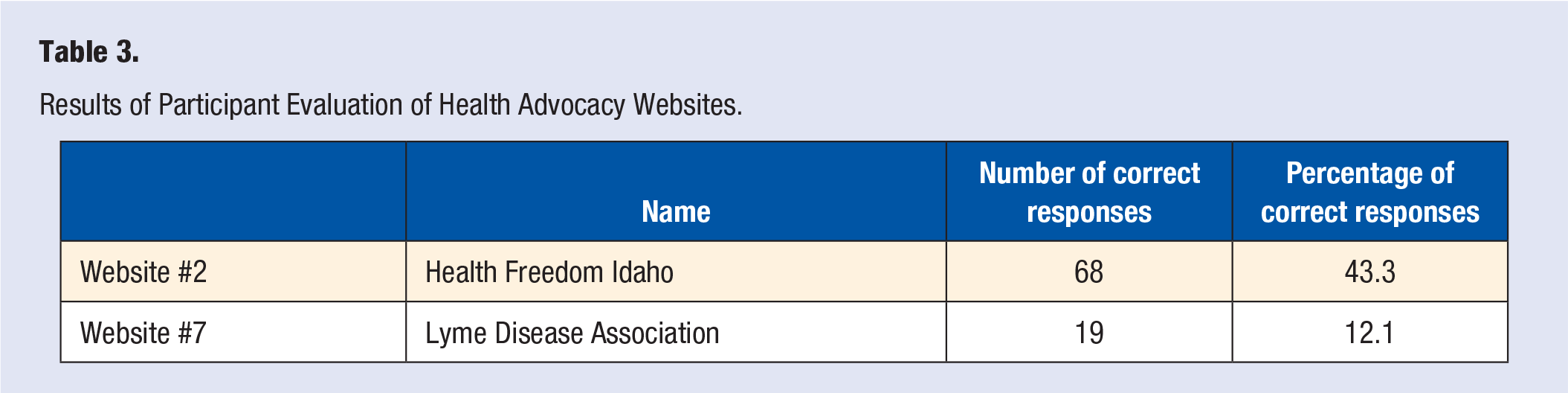
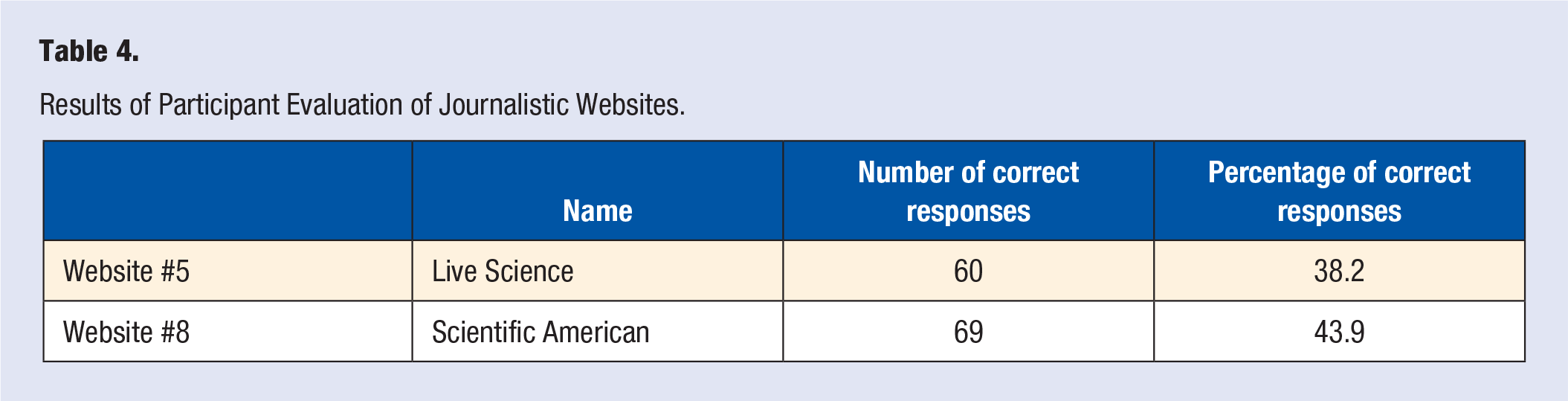
Among the health advocacy websites, both of which were categorized as not being credible sources of health information, participants also failed to correctly identify them as such, with 43.3% correctly identifying website #2 as a not credible source, and only 12.1% correctly identifying website #7 as a not credible source (Table 3). Furthermore, for the journalistic websites, both of which were categorized as being accurate sources of health information, again the majority of students failed to identify them correctly as being valid sources, with 38.2% identifying website #5 as an accurate source, and 43.9% correctly identifying website #8 as an accurate source (Table 4).
Results of Participant Evaluation of Health Advocacy Websites.
Results of Participant Evaluation of Journalistic Websites.
Research Question 2 explores the self-reported factors that undergraduate college students utilize in their efforts to evaluate whether a web-based source of health information is accurate. Analysis of qualitative responses presented the following 6 themes: Personal Knowledge Base, Top Level Domain Designation, Website Design, Assertion of Personal Values/Opinions, Presence and Perceived Quality of References, and External Validation and Reputation. A more detailed description and example of each theme is provided below.
Personal Knowledge Base
Participants asserted that their personal knowledge base regarding the themes and topics of the websites being reviewed was a factor in determining the level of accuracy of the sites being evaluated. The processes of analysis and thematic discovery are described and shown in Figure 3. Here are a few actual responses that illustrate personal knowledge as a method: Facts that I previously knew to help my decision if the websites were true. If the websites displayed accurate information that I have experienced personally then I said it’s a good website. I briefly looked over the articles for any scientific backing and also used my general knowledge in biology to make my decisions. I clicked on each website and read what they said and compared it to my own knowledge to see if it was accurate.
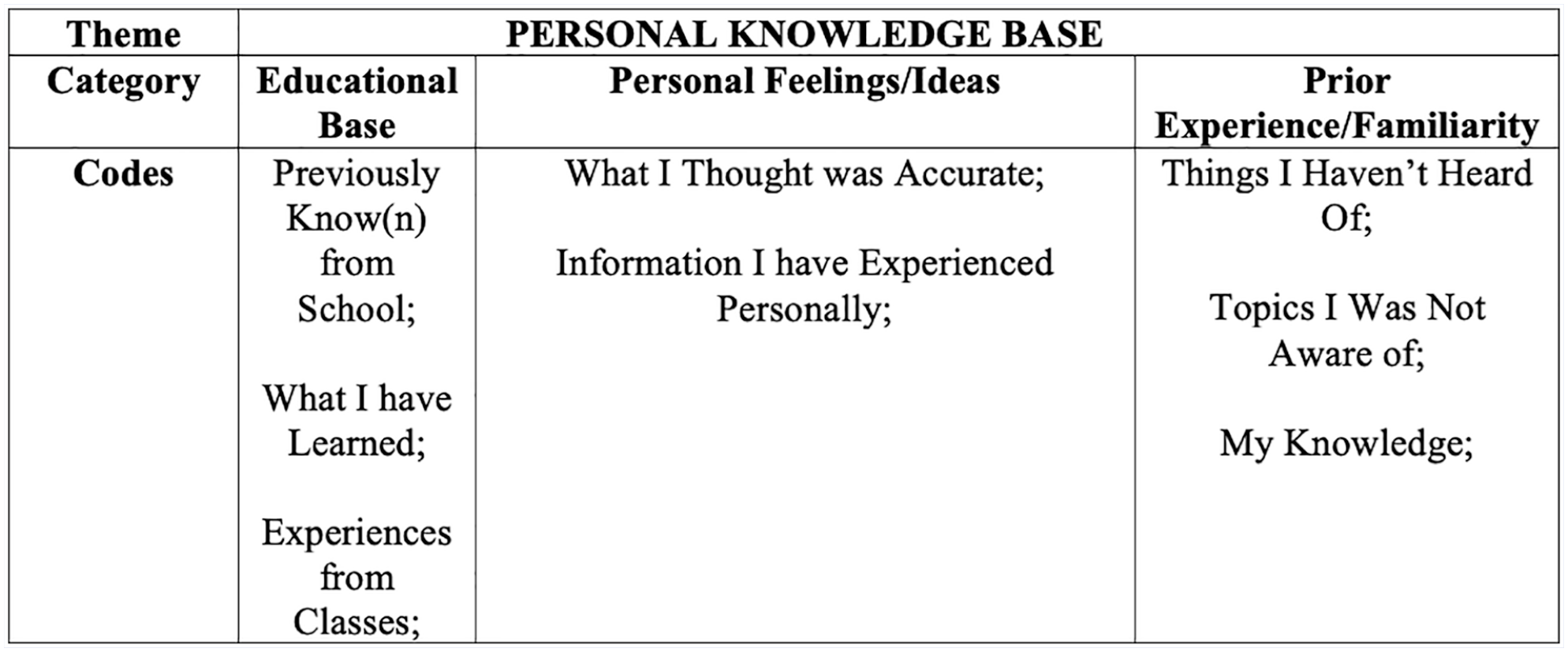
Processes of analysis and thematic discovery for Personal Knowledge Base.
Top Level Domain Designation
Participants indicated that the suffix that follows the name of the website, the top-level domain, was a significant factor that was used in evaluating the quality of the website. The processes of analysis and thematic discovery are described and shown in Figure 4. Here are a few actual responses that illustrate using the name of a website as method for evaluation: The first step I take is look at the link. Typically if the site end in “.com”, its being used for commercial purposes and that mean that somebody stands to gain if the information is skewed. I was told in the past by high school educators that usually websites ending in “.org” have reliable sources. I know that if the website is “.or”, it is usually more reliable of information. The first thing I tend to look at is the website address, specifically the very end to see if it ends in .com, .net., .org., etc. I typically trust “.gov” sites the most.
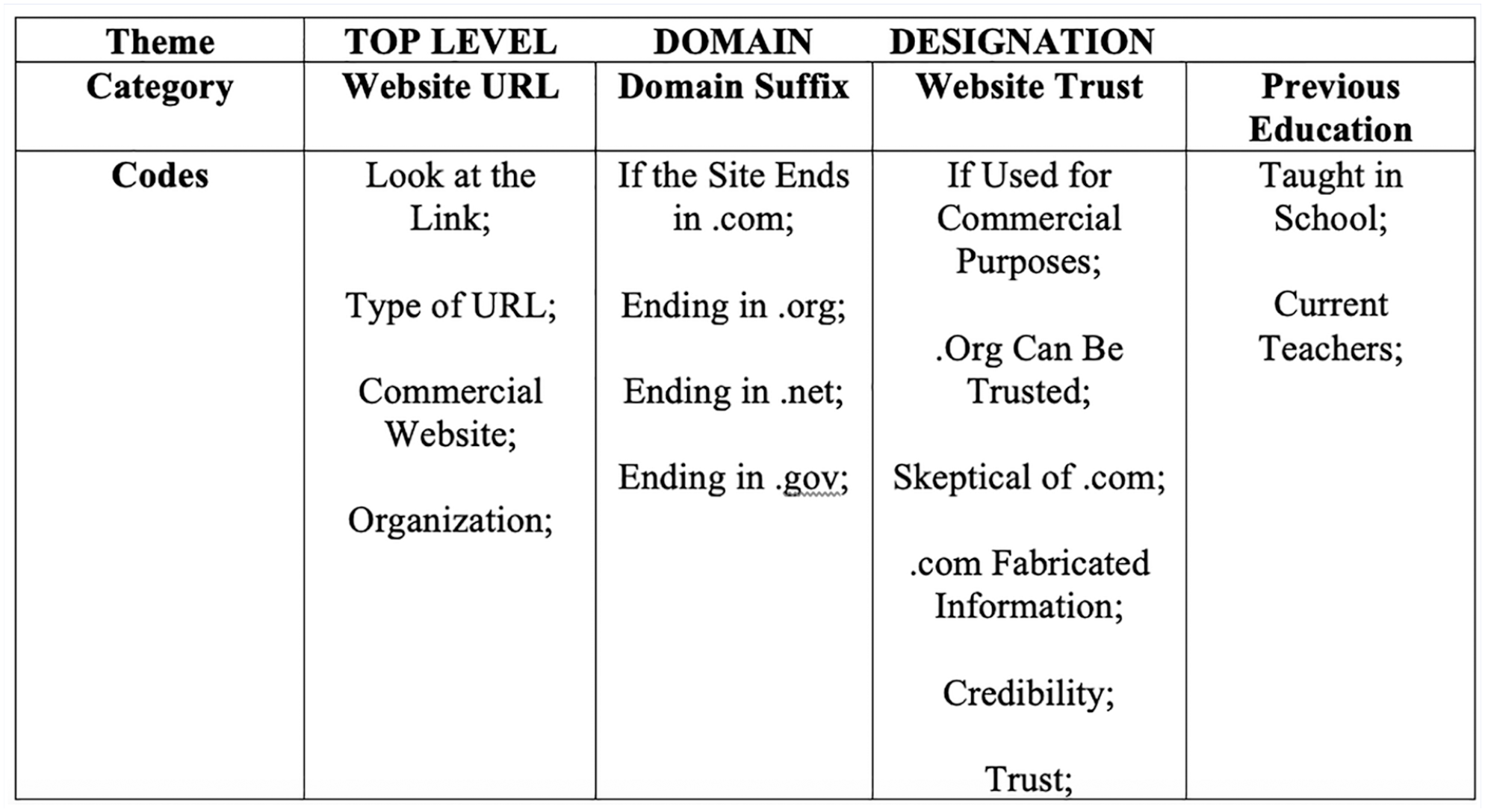
Processes of analysis and thematic discovery for Top Level Domain Designation.
Website Design
The layout and design of each website was a common theme identified as being a criterion used in establishing a sense of credibility and accuracy to the information that was being provided. This included the professional appearance of the website, the construction of the website itself, and the appearance of clarity and security to the design of the website. The processes of analysis and thematic discovery are described and shown in Figure 5. Study participants reported the following: Also the sites that did not have terms of use or copy right were sketchy to me. Some of the websites seemed smaller and sort of limited in information which left me to believe it wasn’t credible. I checked to see if they were secure websites. I looked how the home page was set up. Some of the websites layouts were not professional and looked off. Usually if the website has an abbreviation I feel like its a reliable source, the long URLs don’t really scream “I’m a reliable source.” Websites that have easy access to find information on health, is what I used to help determine what websites I thought were reliable.
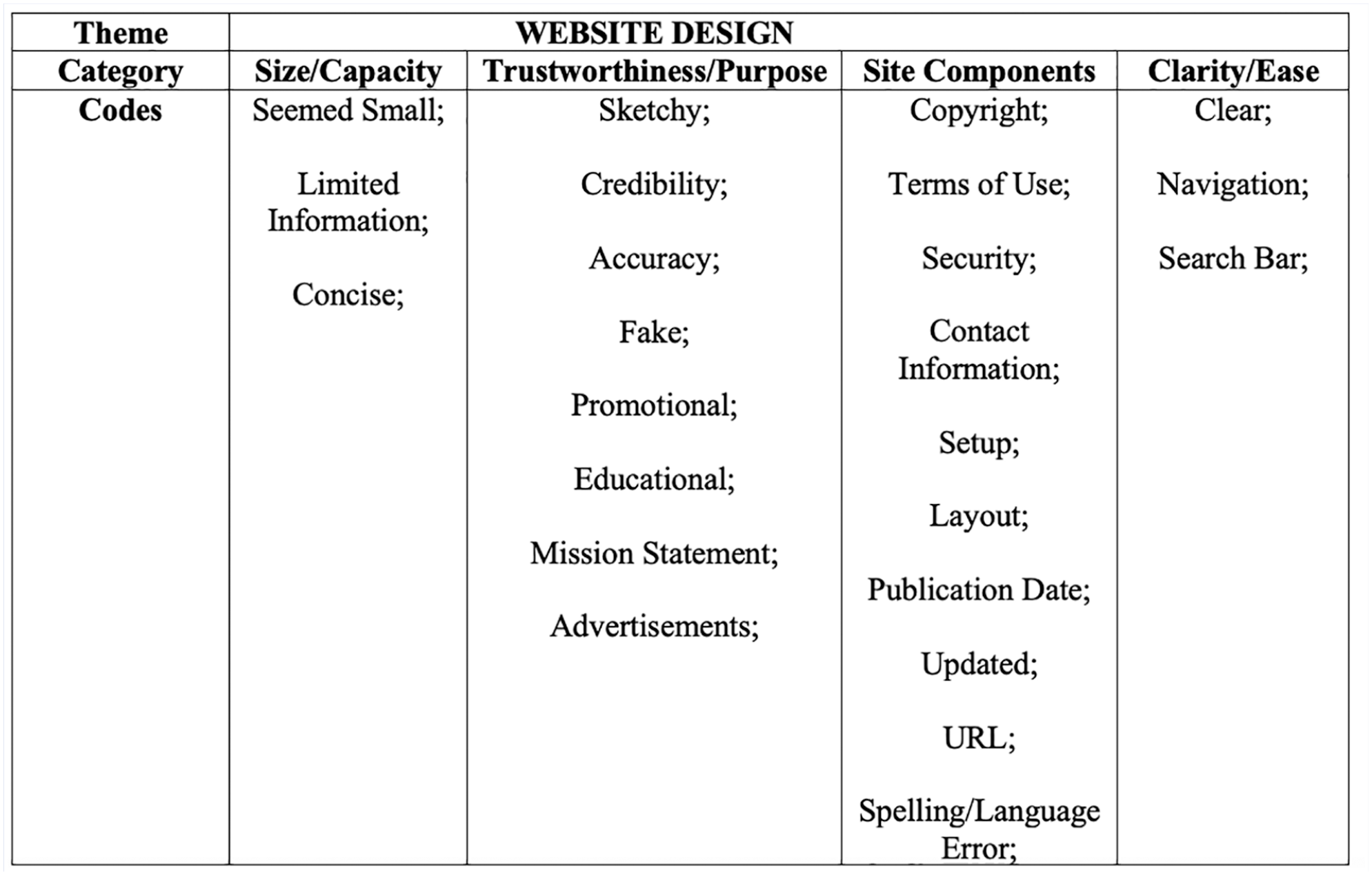
Processes of analysis and thematic discovery for Website Design.
Assertion of Personal Values/Opinions
Another emergent theme was the feeling that if a website was trying to assert a particular set of values or opinions, which gave the appearance of bias and lead to concerns about the quality and accuracy of the source. The processes of analysis and thematic discovery are described and shown in Figure 6. For example, study participants gave the following responses as examples of this belief: Some of the websites appeared to have a political agenda. … when going through the site, if the site contains a lot of articles and opinionated perspectives, I be less inclined to trust its information. It was important to address the about us tab found on most of the websites and while that usually helped to discern which websites actually held legitimate information some actually fell in a middle ground where they were mostly accurate but never went into enough detail to be considered an accurate and reliable source of information. My first step was to review the website’s About Us page, if applicable. Some pages were straightforward in their explanation, while others just seemed donation-seeking or were unclear about their mission. Websites with blog post and opinion pieces may decrease that sense of reliability for me, because they may seem bias and not empirical/objective based.
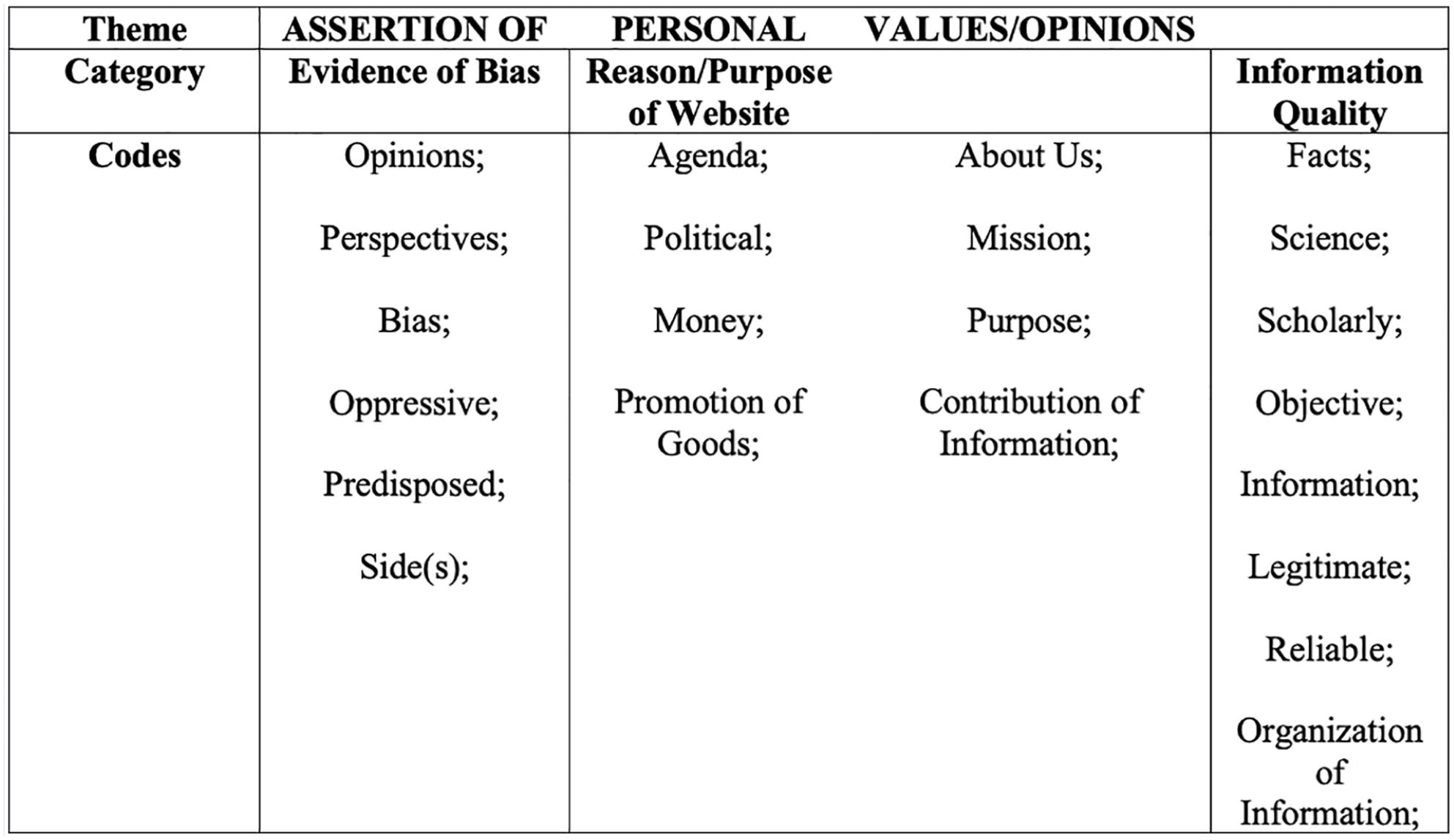
Processes of analysis and thematic discovery for Assertion of Personal Values/Opinions.
Presence and Perceived Quality of References
Participants reported both the presence of references on these website and apparent quality of the references that were provided as a sense of accuracy and credibility to the information being provided and the website as a whole. The processes of analysis and thematic discovery are described and shown in Figure 7. For example, study participants gave the following responses as examples of this belief: I sought after peer reviewed journals that they may be using to support their message on the website. This typically separates valid research from ill-advised and incorrectly done research. Looked for citations and see where their information comes from. I paid attention to where they got their sources from and if they were credible. Proper sources from credible cites help determine its credibility. If there are references for their information, then I would consider it to be more reliable.
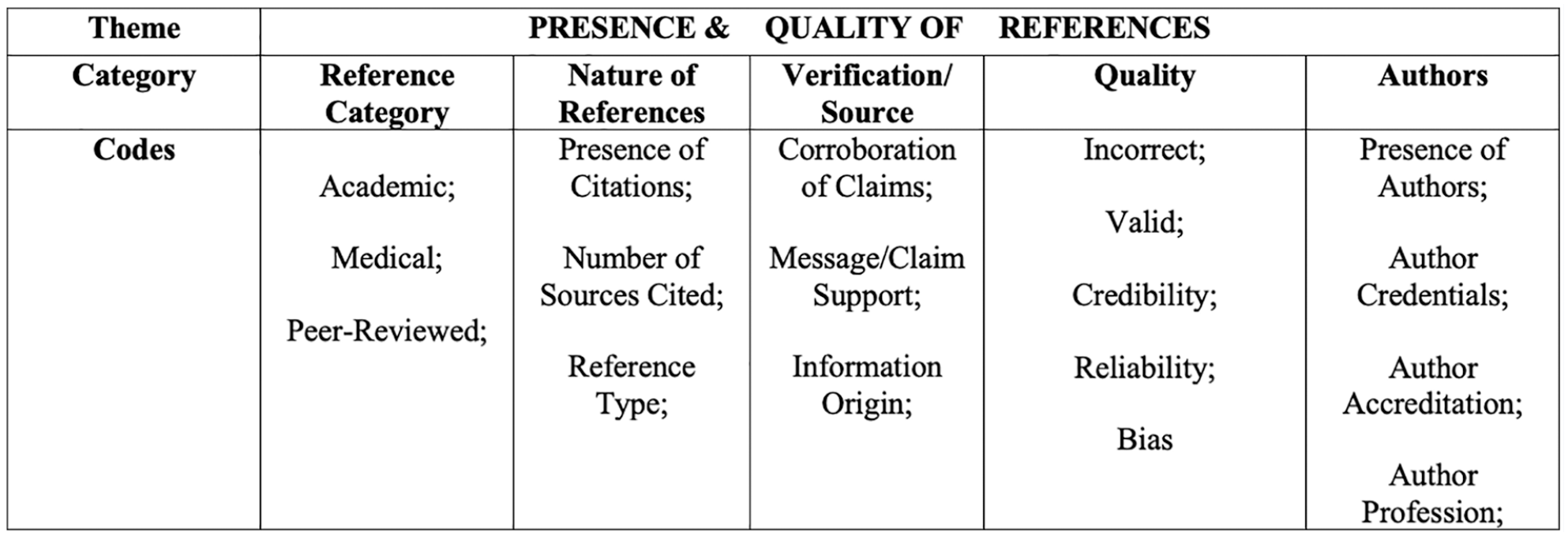
Processes of analysis and thematic discovery for Presence and Quality of References.
External Validation and Reputation
Last, external validation and reputation of the organization or authors became a common occurrence theme among responses. Specifically, participants indicated doing additional searchers for the following: to look up the reputation of an author; if they had heard of the organization before; looking at other websites; and the credentials of the authors. The processes of analysis and thematic discovery are described and shown in Figure 8. Some responses from participants that highlighted this belief include the following: Who was writing the articles/answering the questions/and by whom the websites were made by. A few of the websites were journal websites with no institutional backing, which led me to believe that they were not reliable sources of health. Also, when I input the names of these organizations or website, the search drop box listed other information that was helpful to determine my conclusion. For example, when I typed, in google search—American College of Pediatricians, before pressing enter, hate group also popped up with the organization. I googled searched the name or the organization, website—followed by the words credibility. In many cases the websites/organizations were either biased, politically swayed, or had an affiliation with some sort of party, to publish whatever to the public for currency. I also looked to see if it was an organization or association recognized for its credibility. When reading an article on the website, you could research the author to look at their credibility and research.
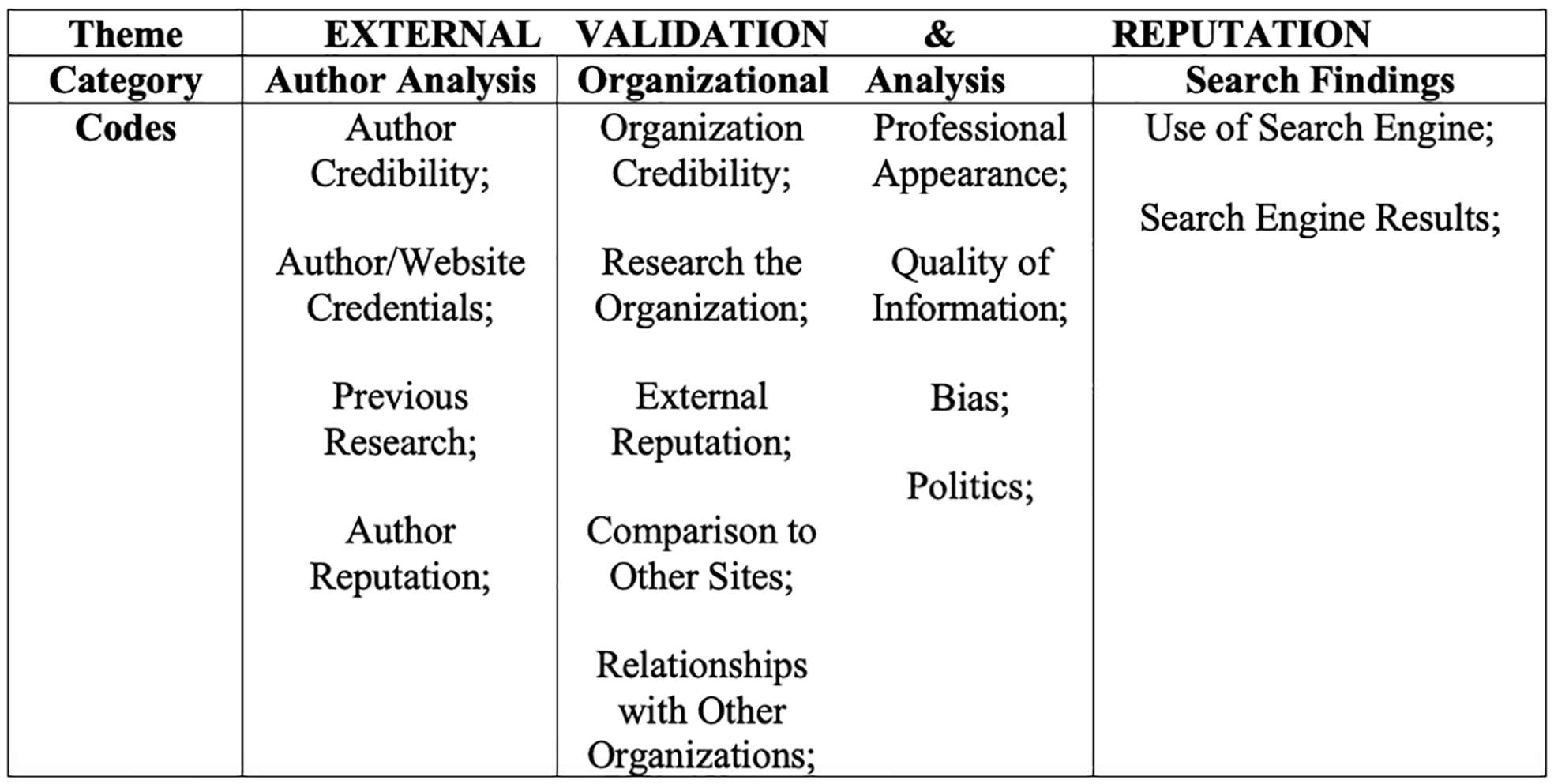
Processes of analysis and thematic discovery for External Validation and Reputation.
Discussion
The results of this study offer important insights into how college-aged undergraduate students evaluate sources of health-related information they find on the internet. Based on the designations given by the researchers for each website, students were not consistently successful in correctly identifying which online sources of health information were accurate sources of health information versus those which were not. This lack of ability to correctly identify sources of health information may be better understood by examining the self-reported factors that students utilized in conducting their evaluations. It should be noted that students looking at the structural features of a website’s design (ie, navigation, layout and organization, homepage setup) is consistent with previous research, which has also found a positive association between website design features and perceived credibility.40,41 The impact of confirmation bias also appeared to be present in this study, with students asserting that personal knowledge base was a primary factor in determining accuracy of information found. This is consistent with research by Whitmire, which shows that the beliefs of undergraduate students play a significant role in their information-seeking behaviors. 42
With Top Level Domain Designation being one of the most consistently identified strategies that students reported, it is of particular importance to note the lack of reliability that a website’s suffix gives to its accuracy. While this may have once been a true statement (ie, that a “.com” website is less credible than an “.org” website), given the ease at which a web domain can be purchased, this is no longer the case. Students must be educated that the presence of a particular suffix is not a sufficient indicator of the accuracy or credibility of that website’s content.
Additionally, it is important to note that these themes, while unique in of themselves, do not operate independently of one another. For example, with regard to the response, “I briefly looked over the articles for any scientific backing and also used my general knowledge in biology to make my decisions,” it should be noted that in addition to sharing insights regarding Personal Knowledge Base, this response also connects with the self-reported factor Presence and Perceived Quality of References. This shows the interrelated and perhaps simultaneous ways in which these self-reported factors are used by students as part of their evaluation methods. This is consistent with the ways in which reflective judgment has been described in an attempt to understand how individuals attempt to make decisions in the face of uncertainty. 42 Knowledge is ultimately filtered through the various levels of perception and interpretation that an individual carries within them, and is rarely based on a single set of criteria.
Additionally, it should be noted that the factors self-identified by students regarding their methods of evaluating a website’s accuracy (specifically Assertion of Personal Values/Opinions, Presence and Perceived Quality of References, and External Validation and Reputation) overlap with the factors utilized by the authors to review and apply designations to each website utilized in this study. This is encouraging and fits with findings from other evaluations of web-based sources of health information. In a study by Sillence and colleagues, similar factors were identified including design factors (layout, navigation) and content factors (ie, presence of biased or unbiased information, source credibility). 43 Therefore, it does appear that these students are able to identify these factors as important components of assessing and judging sources of health information they come across. However, as demonstrated in this study, this does not appear then to be translating to successful determination of a source’s accuracy.
This lack of proficiency and skill in health information literacy and evaluation is a concerning finding, although not fully surprising. There appears to be a concerning gap in readiness as students transition from high school to undergraduate educational settings. 44 Even among undergraduate students studying within health-related fields, levels of digital health literacy have been shown to be lacking. 45 To combat this skill gap, undergraduate students would benefit from learning basic fact-checking skills that can be utilized when accessing web-based sources of health information. Michael Caulfield, Director of Blended and Networked Learning at Washing State University Vancouver, proposed 4 basic skills that are necessary for developing competent student fact-checkers. 46 Caulfield argues these skills, Checking for Previous Work, Going Upstream, Reading Laterally, and Circling Back, aid students in getting closer to the truth of a web-based information source (Figure 9). This additional training in fact-checking skills may then bridge this gap between the identification of important factors related to health literacy and the correct application and utilization of these factors.
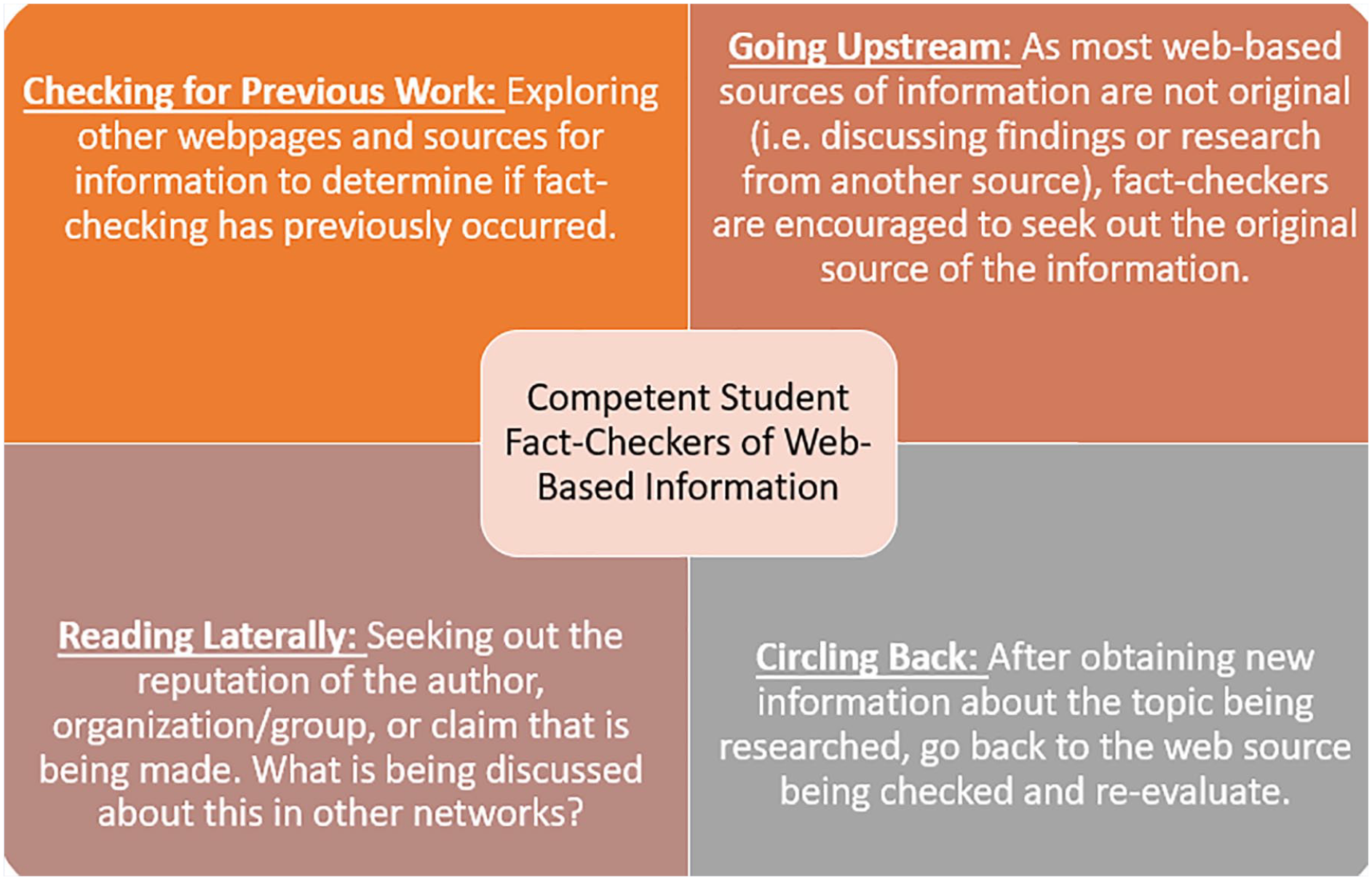
Components of fact-checking skills for students.
Limitations
One limitation to identify is the uneven distribution of students across the various schools within the university. With student participants coming from the School of General Studies, the School of Arts and Humanities, and the School of Education being so low (2.5%, 2.5%, and 5.0%, respectively), it becomes more difficult to make concrete determinations of student skills across disciplines. Additionally, researchers did not ask for participants to share gender identity as a demographic factor, which would have allowed for comparisons of assessment skills among gender groups. Additionally, obtaining students’ GPA and class rank may have provided additional insight, as these metrics can provide further comparisons of participant results related to academic success, as well as developmental maturity. Future research in this topic area would do well to obtain these data and insight for further descriptive analysis. An additional limitation is that students were only given a Yes/No question to answer regarding each website reviewed, which can leave gray areas of uncertainty or ambiguity unable to be properly identified and described. As demonstrated by the self-reported factors generated in response to Research Question 2, there are a number of different ways in which students are looking at these sources of health information, and a Yes/No question may be too limiting and lacking in complexity to allow students to engage with the sources more fully. Future research into student health literacy pertaining to online sources of health information may benefit from a less constricted means of assessing student perceptions.
Conclusion
Health literacy allows for individuals to better understand and evaluate sources of health information. Without this knowledge, consumers of health information may be vulnerable to information and guidance that is inaccurate, confusing, or even harmful. This study shows that while this current generation of college-aged students has familiarity and comfort with the internet and digital information, and are able to identify important factors used in evaluating sources of health information, this has not translated into tangible skills in correctly determining the accuracy of the sources of information they may encounter online. This is of importance to health care professionals and practitioners, as education and outreach efforts that focuses on teaching digital health literacy and fact-checking skills is needed. Such efforts will provide the younger generations with the foundational knowledge needed to navigate a world that is ever more digitized in its information delivery methods. In addition, future research into best practices in teaching health literacy and fact checking skills for young adults would be beneficial.
Supplemental Material
sj-pdf-1-ajl-10.1177_1559827621990574 – Supplemental material for I Read It Online: Understanding How Undergraduate Students Assess the Accuracy of Online Sources of Health Information
Supplemental material, sj-pdf-1-ajl-10.1177_1559827621990574 for I Read It Online: Understanding How Undergraduate Students Assess the Accuracy of Online Sources of Health Information by Anthony Dissen, Qudratullah Qadiri and Charles J. Middleton in American Journal of Lifestyle Medicine
Footnotes
Acknowledgements
The authors would like to thank Dr Tara Crowell (Stockton University) and Dr Mary Lou Galantino (Stockton University) for their invaluable help in reviewing and editing this manuscript.
Declaration of Conflicting Interests
The author(s) declared no potential conflicts of interest with respect to the research, authorship, and/or publication of this article.
Funding
The author(s) received no financial support for the research, authorship, and/or publication of this article.
Ethical Approval
Ethical approval was granted for this study by the Stockton University IRB Committee.
Informed Consent
Infored consent was obtained by all subjects who participated in this study.
Trial Registration
Not applicable, because this article does not contain any clinical trials.

Supplemental Material
Supplemental material for this article is available online.
References
Supplementary Material
Please find the following supplemental material available below.
For Open Access articles published under a Creative Commons License, all supplemental material carries the same license as the article it is associated with.
For non-Open Access articles published, all supplemental material carries a non-exclusive license, and permission requests for re-use of supplemental material or any part of supplemental material shall be sent directly to the copyright owner as specified in the copyright notice associated with the article.
