




Abstract
There is an astounding amount of conversation and research about vitamin D. It carries many claims, and there is controversy as to what adequate levels should be, how to ensure reaching appropriate serum levels, and what the consequences are of vitamin D insufficiency. This article describes the role of vitamin D, reviews some of the evidence, and provides the current recommendations for vitamin D supplementation, including if a daily walk in the sun is the most appropriate prescription or do we need something more?
It is true that there is much debate about who needs to take vitamin D, at what dose, and for how long.
Vitamin D is frequently the center of conversation in both the medical community and at the dinner table—there are many claims about its benefits in lay publications and medical journals. Is it a cure for numerous ailments? Is vitamin D deficiency the cause of chronic disease? Is too much vitamin D dangerous? Why are our levels so low—are we no longer basking in the warmth of the sun? Should vitamin D supplementation be considered in most people?
On the one hand, fortunately, there are many researchers conducting studies to find answers; on the other hand, unfortunately, the results from the different studies show varying data and conclusions. It is true that there is much debate about who needs to take vitamin D, at what dose, and for how long. The question we all should be asking is: What does the evidence show—about the purpose of adequate vitamin D levels, consequences of vitamin D insufficiency, and if a daily walk in the sun is the most appropriate prescription or do we need something more?
Vitamin D: A Brief Review
Vitamin D, also known as calciferol, is technically a group of lipid-soluble compounds with a 4-ringed cholesterol backbone and is a fat-soluble vitamin. It also has properties of a hormone and is necessary for maintaining calcium and phosphate concentrations, bone growth and remodeling, and other roles in inflammatory processes, immune function, and glucose metabolism. There are 2 hydroxylations that occur in the body to activate the vitamin D obtained externally. The liver is where the first hydroxylation takes place converting vitamin D to calcidiol (25-hydroxyvitamin D). Then, in the kidney, the second hydroxylation occurs to form the physiologically active 1,25-dihydroxyvitamin D [1,25(OH)2D], also known as calcitriol. 1
Various causes of vitamin D deficiency and potential drug-drug interactions include1,2 the following:
Inadequate intake
Gastrointestinal (GI) diseases, that is, hepatobiliary disease, malabsorption, chronic pancreatitis
Chronic renal failure or liver dysfunction
Inadequate sunlight exposure, higher levels of melatonin, or inability of aging skin to synthesize vitamin D efficiently
Hereditary disorders of vitamin D metabolism
Obesity or gastric bypass therapy
Long-term therapy with antiepileptic medications, that is, phenytoin, carbamazepine, primidone, which may increase the metabolism of vitamin D
Orlistat: may reduce absorption of vitamin D from food and supplements
Statins: potential for reduced statin potency if high-doses of vitamin D are taken
Corticosteroids: may reduce calcium absorption, impair vitamin D metabolism
Thiazide diuretics: vitamin D supplements may lead to hypercalcemia due to thiazides decreasing urinary calcium excretion
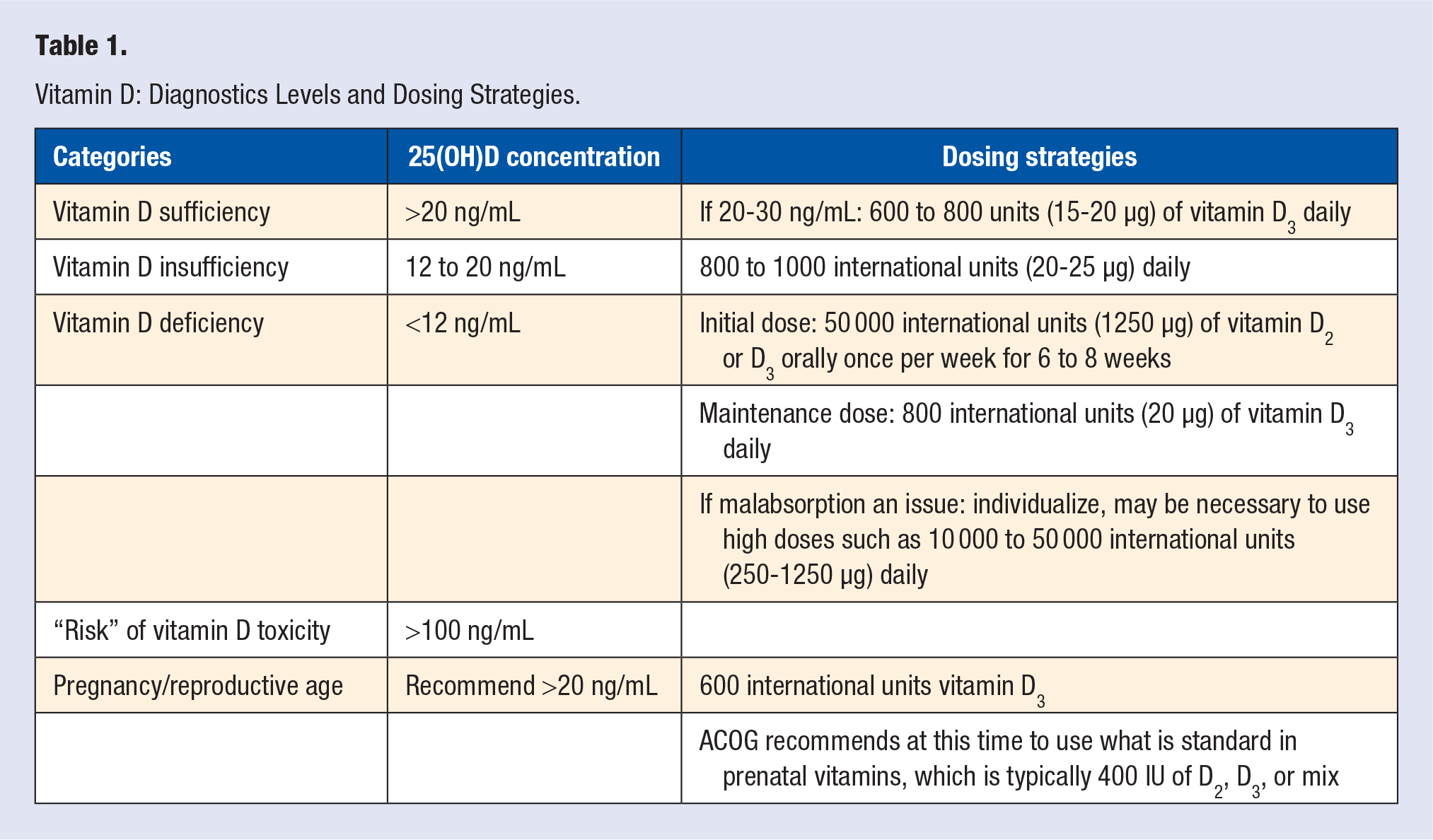
The most common condition associated with vitamin D deficiency is rickets in children and increased risk of fractures in adults. Researchers have not absolutely determined at what levels vitamin D is associated with these conditions, and what is considered to be sufficient levels of serum vitamin D is controversial. Table 1 describes the general consensus by various experts, including the Food and Nutrition Board at the National Academies of Sciences, Engineering, and Medicine and Institute of Medicine for defining vitamin D sufficiency. On the other hand, the National Osteoporosis Foundation, International Osteoporosis Foundation, and American Geriatric Society state that, in older adults, 30 ng/mL should be the minimal sufficient level. 3
Vitamin D: Diagnostics Levels and Dosing Strategies.
Vitamin D: A Glimpse Into the Evidence
There are many studies evaluating the prevalence of vitamin D and a myriad of conditions correlated with vitamin D insufficiency, both in the general population, as well as specifically in women. Low vitamin D levels are linked to an increased risk of numerous chronic conditions including hypertension, diabetes, myocardial infarctions, or stroke as well as pre-eclampsia, gestational diabetes, and other adverse pregnancy outcomes. 4 The causation is not well understood, and clinical trials show varying evidence and may be connected to various factors rather than serum vitamin D levels. For example, those with low vitamin D levels who develop heart disease may also be getting less physical activity outdoors, so it is difficult to identify the sole risk factor contributing to a disease. 5
A search of “vitamin D and women” in PubMed will yield 4062 results published over the last 5 years. To illustrate the research being conducted about vitamin D, specifically in women’s health, some of the more recent examples include the following:
A matched case-control study in Karachi, Pakistan, included 411 women with primary breast cancer matched by age ±5 years to 784 controls, free of any cancer. Women with serum vitamin D insufficiency had a higher risk of breast cancer compared with those without a deficiency (odds ratio [OR] = 1.65, 95% confidence interval [CI] = 1.10-2.50), and those who took a vitamin D supplement 1 year prior had significant protective effect against breast cancer (OR = 0.32, 95% CI = 0.24-0.43). 6
In a double-blind, placebo-controlled study of 160 postmenopausal women with vitamin D deficiency, the treatment group (n = 80) received supplementation with 1000 IU vitamin D3/day for 9 months. It was found that in the treatment group, the vitamin D levels increased significantly, there was a significant reduction observed in triglycerides (−12.2%, P = .001), and less hyperglycemia (OR = 0.23; 95% CI = 0.10-0.52) compared with the placebo group (P < .05). 7
A systematic review published in the Cochrane database examined if maternal and neonatal outcomes can be improved with vitamin D supplementation alone or in combination with calcium or other vitamins and minerals. Thirty trials with 7033 women in total were included, and researchers found that the risk of pre-eclampsia, gestational diabetes, low birthweight, and severe postpartum hemorrhage may be reduced with vitamin D alone, but doing it with other vitamins or minerals may not make a difference in preterm birth or low birthweight. Overall, it was concluded that more rigorous high-quality studies needed to occur to define the role of vitamin D in the context of maternal adverse events. 8
A systematic review that included 11 of 345 identified studies evaluating the effect of vitamin D supplementation in women with polycystic ovarian syndrome on insulin resistance. The evidence suggests that continuous low doses of vitamin D < 4000 IU/day may result in better insulin sensitivity based on glucose values. 9
Obtaining Vitamin D
Foods With Vitamin D
Fatty fish such as trout, salmon, tuna, and mackerel are foods that naturally contain higher amounts of vitamin D, while cheese, egg yolks, and beef liver have lesser amounts. Some foods in the United States such as dairy products, cereals, juice, and plant-based milks are fortified with vitamin D. Mushrooms, especially those that are grown in the sun, have vitamin D. Considering that vitamin D is not readily available naturally in foods, supplementation may be the most beneficial way to obtain appropriate amounts of vitamin D. This recommendation is secondary, of course, to obtaining it from being out in the sun! 1
Vitamin D From the Sun
Sunlight is unarguably the most optimal way to obtain vitamin D plus numerous other benefits. It is free, and our body is able to self-regulate the amount of vitamin D it receives, making vitamin D toxicity improbable. The skin has 7-dehydrocholesterol, which absorbs ultraviolet (UV) B radiation, and it is converted to previtamin D3, which in turn isomerizes into vitamin D3. It is optimal to have sun exposure for 5 to 30 minutes a day, most days a week, without sunscreen, as SPF ≤8 may block the body’s ability to absorb the UVB rays to effectively make vitamin D. There are factors that affect UV radiation exposure and vitamin D synthesis, including season, time and length of day, cloud cover, environmental pollution, melanin content, and sunscreen. While the recommendations call for sun time without any sunscreen, it is prudent to limit the time in the sun without sun protection due to the increased risk of skin cancer. In optimal circumstances, one might choose to spend a small amount of time in the sun (no more than 30 minutes) for vitamin D synthesis and then follow sun protection recommendations, including using sunscreens with appropriate levels of SPF and clothing/hats to cover exposed areas. While tanning beds may offer UVB radiation, the risks may outweigh the benefits.10,11
Vitamin D Supplementation
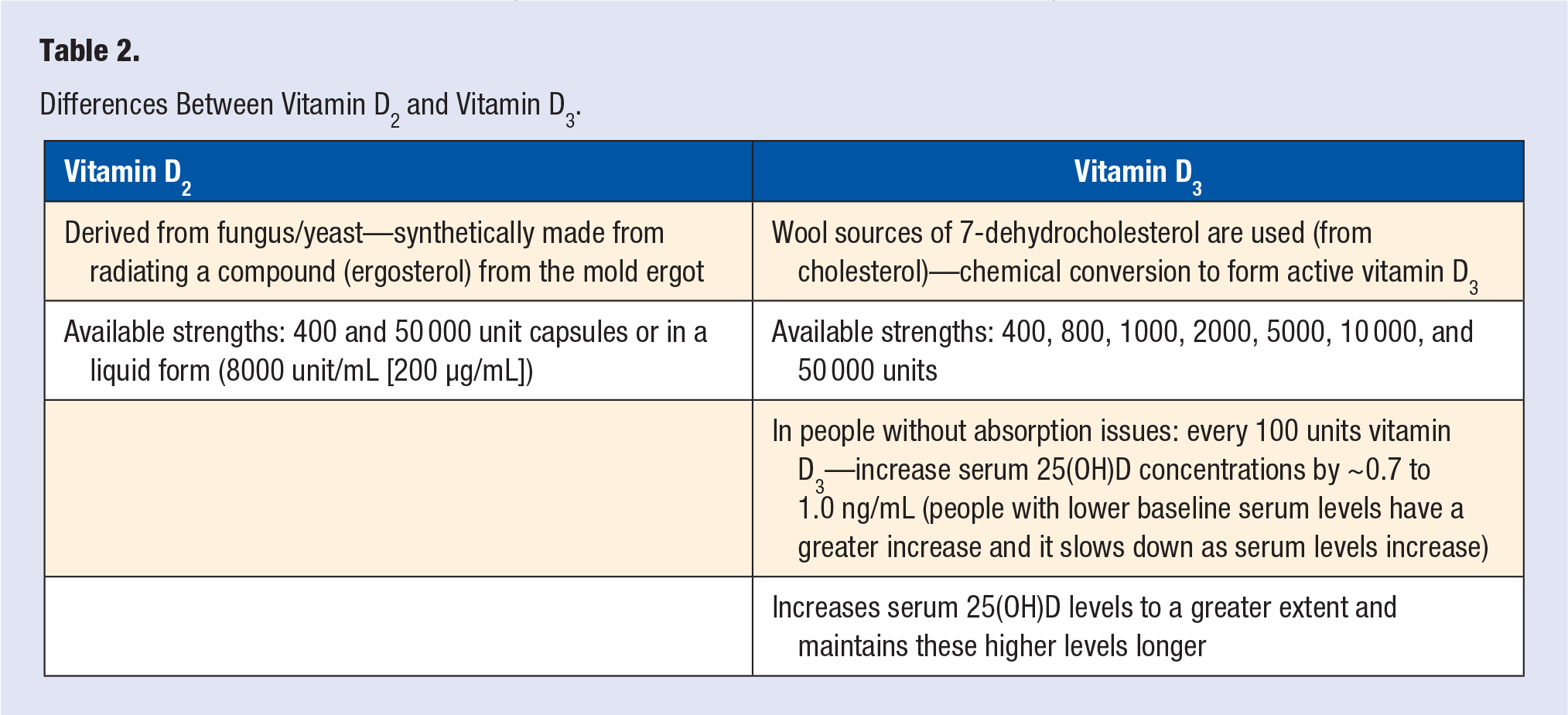
Vitamin D is available over-the-counter as vitamin D2 (ergocalciferol) and the recommended vitamin D3 (cholecalciferol). Table 2 describes the differences between both products. Prior to initiating vitamin D therapy, a thorough medication history should occur to assess for any underlying conditions, interactions, and/or possible duplicative therapy. The dosing of vitamin D may be dependent on a person’s baseline serum levels and vitamin D absorptive capacity. Other individual factors or conditions to consider include pregnancy, chronic kidney disease, malabsorption, or primary hyperparathyroidism. Table 1 describes the dosing recommendations for the various levels of vitamin D insufficiencies. In general, healthy adult people taking vitamin D supplementation of 600 to 800 international units daily do not need their vitamin D levels monitored. If one is being treated for vitamin D deficiency, repeat 25(OH)D levels should be monitored 3 months after initiating supplementation. 12
Differences Between Vitamin D2 and Vitamin D3.
When choosing any over-the-counter dietary supplement product, it is important to keep in mind that safety and efficacy are not regulated like prescription products, and a “seal of approval” indicates that the company has voluntarily undertaken quality tests for content, strength, and contaminants. Examples of organizations that offer the the “seal of approval” include ConsumerLab.com, NSF International Dietary Supplement Certification, and US Pharmacopeia Dietary Supplement Verification Program. 13
Vitamin D: What Is Too Much?
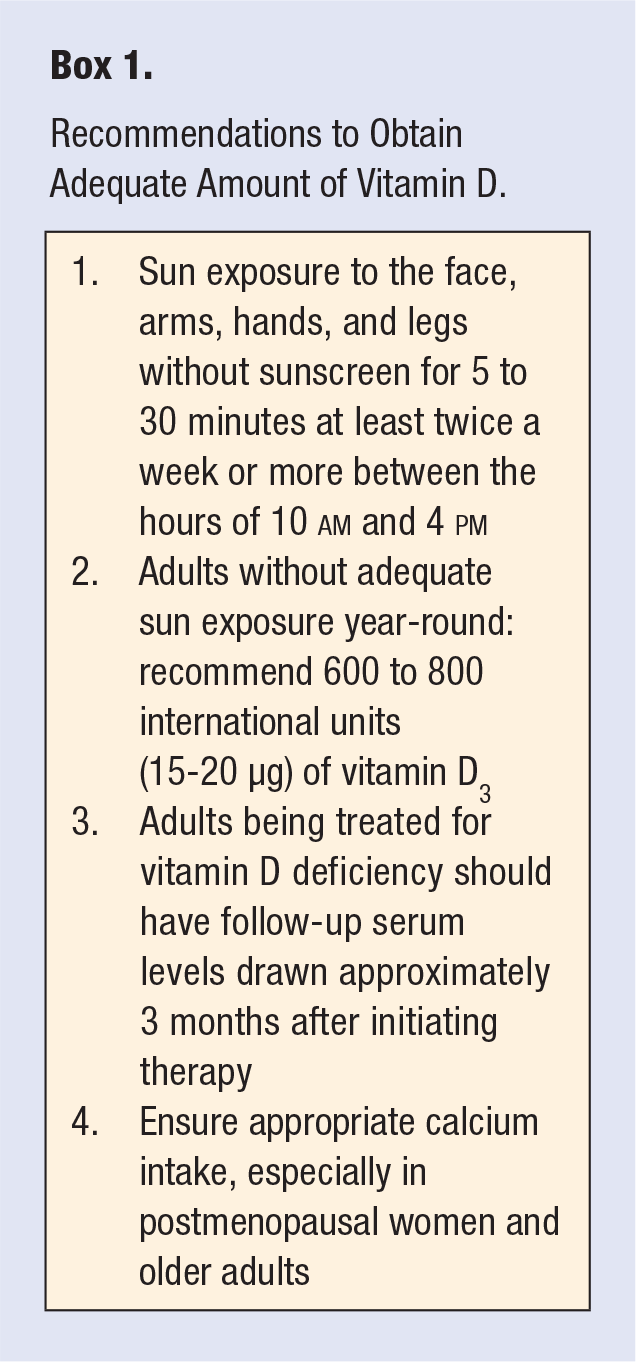
The tolerable upper intake level (UL) in adults is 100 µg (4000 international units) daily for healthy adults and children 9 to 18 years per the Institute of Medicine. While infrequent, vitamin D intoxication does occur, most often due to mega doses of vitamin D seen in certain fad diets or in those taking vitamin D replacement therapy. Doses above this UL may lead to anorexia, hypercalcemia, soft tissue calcification, kidney stones, renal failure, and increased risk of certain types of cancer (see Box 1).2,10
Recommendations to Obtain Adequate Amount of Vitamin D.
Conclusion
Vitamin D is essential for optimal health outcomes. Although the evidence may not be conclusive about its impact or what the exact optimal serum concentration should be, the consequences of vitamin D deficiency and the significance of maintaining adequate vitamin D levels is indisputable. As is the data presenting how humans are spending much less time outdoors, receiving the UVB rays necessary to synthesize vitamin D naturally. Conversations with our patients about the role of sunshine and vitamin D supplementation is vital to optimizing health outcomes.
Footnotes
Declaration of Conflicting Interests
The author(s) declared no potential conflicts of interest with respect to the research, authorship, and/or publication of this article.
Funding
The author(s) received no financial support for the research, authorship, and/or publication of this article.
Ethical Approval
Not applicable, because this article does not contain any studies with human or animal subjects.
Informed Consent
Not applicable, because this article does not contain any studies with human or animal subjects.
Trial Registration
Not applicable, because this article does not contain any clinical trials.