




Abstract
From rock bottom beginnings, lifestyle medicine became a symbol of hope for people with chronic diseases in the Philippines. Noncommunicable diseases remain the burden of disease in the country and with the acceptance of lifestyle medicine by the Philippine Medical Association, the future of lifestyle medicine looks bright in this part of the world.
Keywords
the data from around the world tell us that today’s burden of most diseases is not remedied by surgery, . . .
A Personal Story
Lifestyle medicine began in the Philippines as a reaction to a “missing link” in my medical training. Allow me to let you in on the account, as it is a story that involves myself. As with any training hospital, I entered the medical hierarchy from the bottom, with my plan to work my way up through the ranks. It was in late 2009 when I decided to go into residency training. Initially wanting to do surgery, I ended up in internal medicine residency because at that time, all the surgery training hospitals were full. I was at a point in my life where I was a new dad and had “to do something” to get me to a place where I could sustain my growing family. So even if it was not my first choice of specialization, it was available, and at that time, I was willing to sacrifice my want to satisfy a need. It was in the first few months of training when I realized that the success of modern medical care was only limited to treating acute conditions. We are experts at mending broken bones, combating infections, and reviving stopped hearts. Today, we can even do heart and other organ transplants. We have reached a huge peak in the advancement of medical technology. The one reason that surgery looked attractive to me was because after a procedure, the wound usually heals, and the patient goes home. Although that is an oversimplistic way of describing an extraordinarily complex and intricate specialization in medical practice, essentially, that is what surgeons do. They “fix” the physical aspect of a person. However, the data from around the world tell us that today’s burden of most diseases is not remedied by surgery,1,2 medications, 3 or any of the modern interventions that medical technology has to offer. Most of the conditions that end up negatively affecting the lives of people, are conditions that stick around and eventually takes the person’s life, prematurely. 4 It was at this point that I could not help thinking whether what I was doing was truly accomplishing my calling as a healer.
To make the long story short, frustration resulted from patients coming back needing more medication, more admissions, more surgery, more chemotherapy, and the list of interventions go on. The goal of getting the patients from a state of chronic disease to a state of wellness did not happen during my training. I saw some of my patients so often that we became friends. We looked forward to our consultations, which usually ended up as friendly conversations. Despite the application of the best medical interventions available, frustration from not being able to heal my patients completely turned into depression as several of them succumbed to their disease. The depression I experienced caused me to fall behind my paperwork and duty responsibilities. Those deaths and the depression that ensued brought me to a turning point in my career. Because I was underperforming, I either had to quit my training or get kicked out. To preserve my dignity, for the first time in my life, I quit an academic pursuit.
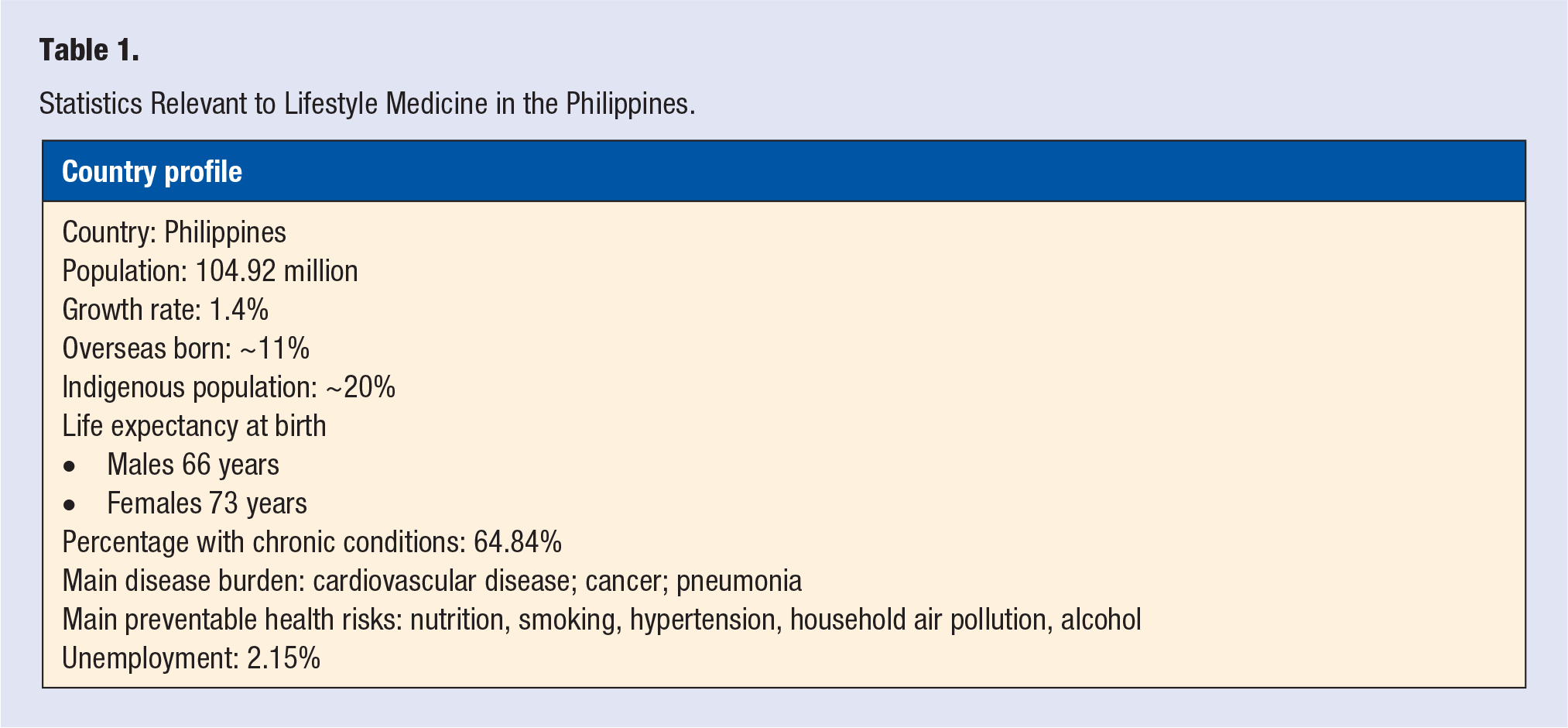
There is nothing like the experience of hitting rock bottom before deciding to build on that rock, a solid foundation for something great. I had to get myself out of depression and back into facing the realities of life. After all, I still had to feed the family. My online search for something meaningful to do with my medical background led me to the American College of Lifestyle Medicine in late 2010. It was such a breath of fresh air! I embraced the hope that chronic diseases can be reversed based on solid evidence from numerous studies worldwide. 5 I was so inspired by this discovery, that when the opportunity came, I decided to start practicing lifestyle medicine as I educated myself from my own research. I asked several hospitals throughout Metro Manila if they had slots for doctors who were practicing lifestyle medicine or if they had even heard of the science behind it, and to my surprise, they had little knowledge of it. There was one hospital in the Metro that claimed to have a lifestyle medicine program, but on checking, it was a front, for an executive check-up package focusing on early detection and diagnosis, rather than disease prevention and reversal. In March 2011, I joined the American College of Lifestyle Medicine (ACLM) with the goal of bringing lifestyle medicine into the country since the disease burden in the Philippines at that time (see Table 1) was at par with the rest of the world and still is. 6 I was introduced to the Complete Health Improvement Program (CHIP), which is now widely used as an Intensive Therapeutic Lifestyle Change (ITLC) program to help people treat the risks for chronic conditions, particularly coronary heart disease. 7 I was absorbed by a local tertiary hospital to conduct CHIP and practice lifestyle medicine. After several classes, we collaborated with lifestyle medicine colleagues from Loma Linda and Australia and conducted a study showing that CHIP was as effective at bringing down risk factors of chronic diseases in the Philippines as it was for those countries. 8 I started attending the ACLM annual conferences and trainings, and joined ACLM committees and remain an active member in ACLM to this day. This helped me improve my practice so I could also teach my colleagues and other allied health professionals about this new field of clinical practice.
Statistics Relevant to Lifestyle Medicine in the Philippines.
Milestones
From humble beginnings, the efforts to advocate lifestyle medicine throughout the country turned into fruition when in 2015, the Philippine College of Lifestyle Medicine (PCLM) was founded by a small group of passionate physicians who longed for the improvement of their chronic disease patients and the chronic disease burden in the country. We were the first country in Asia to achieve this. Since then, the PCLM has hosted 1 international lifestyle medicine conference, 3 national annual conferences, 1 mid-year conference, 1 postgraduate conference, and conducted 4 International Board of Lifestyle Medicine (IBLM) exams in different locations around the country. Our lifestyle medicine leaders and officers are in constant collaboration with the ACLM, the Lifestyle Medicine Global Alliance (LMGA) and the IBLM and continue to advocate lifestyle medicine in Asia through the Asian Lifestyle Medicine Council (ALMC). In December 5, 2019, we were recognized by the Philippine Medical Association (PMA) under the Philippine Academy of Family Medicine, and the president of the PMA himself, in the person of Dr Jose P. Santiago Jr, was present to confer the new Diplomates of Lifestyle Medicine in the Philippines. One recently opened medical school has already incorporated lifestyle medicine into their curriculum, and several others are following suit. At present, we are a little more than 200 members strong and through the initiatives of Dr Mechelle A. Palma, our current PCLM president, we are presently developing our own Lifestyle Medicine Core Competencies curriculum based on international and local data. We hope to launch this course within the next 2 months to train Filipino doctors and health care professionals in the practice of lifestyle medicine. Dr. Palma has also initiated the creation of a Culinary Prescription course. Dr Bysshe Fernan-Sta.Cruz, our current PCLM Treasurer, is developing a Health Coaching course. With the help of Jeff Young, a kinesiologist, medical fitness, and postrehabilitation subject matter expert and resource speaker of the ACLM on fitness, myself and my colleagues and fellow fitness enthusiasts are establishing fitness certification courses and the equivalent of the Exercise is Medicine organization in the United States, called the Physical Activity Association. 9
Summary
What started as a story of despair and disdain opened an opportunity that brought lifestyle medicine to the Philippines. Lifestyle medicine is now providing hope to thousands of Filipinos who hear about and discover it through the PCLM and the different individual and group practices of lifestyle medicine in the country. The future of lifestyle medicine looks bright as we envision to work toward a Philippines free from chronic disease.
Footnotes
Declaration of Conflicting Interests
The author(s) declared no potential conflicts of interest with respect to the research, authorship, and/or publication of this article.
Funding
The author(s) received no financial support for the research, authorship, and/or publication of this article.
Ethical Approval
Not applicable, because this article does not contain any studies with human or animal subjects.
Informed Consent
Not applicable, because this article does not contain any studies with human or animal subjects.
Trial Registration
Not applicable, because this article does not contain any clinical trials.