




Abstract
Background: Identifying effective educational strategies to change lifestyle behaviors related to eating habits is imperative for health professionals providing education related to disease management and prevention. The purpose of this study is to investigate the use of mass media as a tool for improving dietary habits. Methods: 151 Undergraduate students participated in a quasi-experimental control group design at a midsize liberal arts university. The treatment group watched the film Forks Over Knives and was assessed on their dietary habits, locus of control, and current stage of change before and after viewing the film. Results: Results showed differences to current stage of change in reducing animal-based food consumption in the treatment group but did not show significant changes in increasing plant-based food. Discussion: This study provides evidence that use of the documentary Forks Over Knives affects students’ intake of animal-based foods but is not an impactful enough tool to increase intake of plant-based foods. Translation to Health Practice: Professionals who utilize the film Forks Over Knives to encourage dietary changes should do so as part of a more structured, long-term behavior change intervention program. Additional research is needed to compare Forks Over Knives with other documentary films that encourage plant-based dietary habits.
‘Beyond traditional forms of dietary change education (ie, lectures/presentations), different forms of mass media are effective possibilities to promote health behavior change.’
Introduction
The major causes of death among men and women in the United States are chronic diseases, largely caused by dietary and lifestyle factors. Among US adults, the majority of incidences of coronary artery disease, type 2 diabetes, stroke, many forms of cancer, and overweight and obese weight status are considered preventable. 1 Specifically, changes in dietary habits and overall nutritional intake are considered to be of primary importance in making successful, sustainable changes in lifestyle behavior. These changes serve as both preventive measures against the development of chronic disease as well as a positive way to manage a previously diagnosed chronic condition. One such method of dietary change is the promotion of a plant-based diet—one that emphasizes the intake of fruits, vegetables, whole grains, and legumes and minimizes the intake of animal-based foods such as pork, poultry, red meat, dairy products, and eggs.
Plant-based diets are recommended as an ideal form of treating and preventing chronic diseases, and physicians and other health care professionals are encouraged to promote this style of eating to their clients and patients. 2 However, what remains in question is the effectiveness of different forms of educational and intervention-based programs in their ability to lead to measurable and sustainable improvements in dietary quality. Beyond traditional forms of dietary change education (ie, lectures/presentations), different forms of mass media are effective possibilities to promote health behavior change. Thus, the purpose of this study is to research a select example of one particular form of mass media as a potential tool for use in health education for improving dietary habits.
Review of the Literature
Nutrition and Dietary Changes
Plant-based nutrition has exploded in popularity, and many advantages have been well documented over the past several decades. 1 Not only is there a broad expansion of the research supporting the myriad benefits of plant-based diets, but health care practitioners are also reporting awe-inspiring results with their patients across multiple unique subspecialties. 2 Research posits an evolution in both research emphasis and scientific opinion regarding the benefits of a plant-based diet. Scientifically, diets based on minimally processed, plant-based foods are viewed as more beneficial. They improve health and prevent disease, whereas meat and animal-food centric diets are generally associated with poorer health outcomes, with increased risk of chronic disease. 3 Plant-based diets are protective against a number of common, chronic diseases such as cardiovascular disease, 4 cancers, 5 and type 2 diabetes. 6 In addition, plant-based diets have been associated with supporting sustainable weight management, 7 reducing medication needs,8-10 lowering the risk for most chronic diseases,2,11 and decreasing the incidence and severity of high-risk conditions, including obesity, 12 hypertension, 13 and hyperlipidemia. 14 Therefore, a public shift toward a plant-based diet could be a significant strategy to manage and prevent chronic diseases in the US population.
Among US college students, the average daily consumption of plant-based foods continues to be below national recommendations. 15 Between 2011 and 2012, less than 1% of US adults (aged 18 years and older) met USDA recommendations for daily whole grain consumption, 16 and daily legume consumption was also low. Food preferences are often established early in life, and the transition from adolescence to adulthood during college years is an important time to develop new food selection patterns and food preferences. 17 Research shows that nutrition and health interventions that improve dietary knowledge, as well as beliefs and attitudes, successfully improve dietary intake and food habits in male and female students. 18
Mass Media and Films
Film is a medium that can establish a relationship with the public along with becoming a voice for a certain group(s) of individuals. Specifically, Clair et al 19 posit that a film can “create an image of society and organizations, presents issues, affects policy-making, and promotes certain practices (p. 71).” 19 Furthermore, the persuasive ability of a film makes it the hallmark of cultural studies and high on the list of influential media.20,21
In social work, research by Liles 22 shows that feature films can be an effective way to engage students in exploration and discussion regarding various topics. Grindstaff 23 found that Brokeback Mountain advocated empathy for gay men while turning their story into a romanticized tragedy for the voyeur. Additional research found that mass media campaigns can be effective at both preventing negative changes in health-related behaviors as well as producing positive changes in larger populations. 24 In fact, television programs and commercial films have been utilized for the past several decades as a means to simultaneously increase viewers’ health knowledge, elicit emotional changes, and raise consciousness surrounding personal health choices. 25 Documentary films that address diet and health are potentially useful educational tools to aid in consumption of healthful diets. For example, the 2004 documentary Super Size Me received much media attention and a report in USA Today stated that this film is a possible way to “effectively . . . change minds and behavior” of its viewers. 26
Internal Locus of Control and Self-efficacy
Locus of control is “the degree to which individuals perceive events in their lives as being a consequence of their own actions, and thereby controllable (internal control), or as being unrelated to their own behavior, and therefore beyond personal control (external control) (p. 35).” 27 Related to locus of control is self-efficacy, which is a measurement of individuals’ own capability to utilize their current level of motivation to meet a goal or situational demands. 28 As a means of quantifying the self-efficacy and readiness of an individual to make a behavior change, researchers have used Stages of Change Model (sometimes referred to as the Transtheoretical Model of Behavior Change) as a means of determining baseline readiness and potential change over the course of an intervention or study. Stages of change are often described as being housed in distinct levels of readiness: precontemplation, contemplation, preparation, action, and maintenance. 29
Examining these additional measurements are important considerations to evaluate the effectiveness of the documentary film as a health education tool because a stronger internal locus of control has been shown to be predictive of diet-related behavior change in individuals. 30 Furthermore, research illuminates that health interventions that include messages to increase feelings of self-efficacy are successful in producing change. Specifically, these interventions have been shown to aid in promoting positive results in health behavior changes in relation to chronic disease risk. 31 Movement along the stages of change spectrum can predict positive dietary changes. 32
The present study explores whether a film that advocates for a more plant-based diet is an effective educational tool in producing measurable changes in dietary behaviors related to the adoption of a more plant-based diet. Furthermore, this study explores whether viewers of this documentary film show measurable changes in their internal locus of control, as related to health behaviors, and their stage of change, or readiness, regarding adopting a more plant-based diet. Finally, this study explores if this type of mass media tool can be an effective way to provide health education to a student population. Specifically, the following research questions are posed:
RQ1: Does watching a health care documentary have an effect on students’ consumption of fruits, vegetables, and whole grains and legumes?
RQ2: Does watching a health care documentary lead to students’ report of a greater internal locus of control?
RQ3: Does watching a health care documentary advance students along their stage of change to increase intake of plant-based foods?
RQ4: Does watching a health care documentary advance students along their stage of change to decrease intake of animal-based foods?
Methodology
Demographics
Study participants included undergraduate students enrolled in a 4-year, public university located on the east coast. Average annual enrollment of undergraduate and graduate students at the university is approximately 9900 students. Undergraduate student racial/ethnicity demographics are 68.5% white, 8.0% black, 12.6% Hispanic, 6.3% Asian, 0.1% American Indian, 0.5% nonresident alien, and 4.0% race unknown. The undergraduate student population is approximately 58.8% female, and the average annual in-state cost for tuition and fees is $12 542.
Procedures
Researchers designed a quasi-experimental control group using 10 different sections of courses during 2 academic semesters. Participants in the treatment group were enrolled in either the Health Science or General Studies course of one professor, whereas the control group were students enrolled in either the Public Health or General Studies courses of a second professor. Data collection took place during both the spring and fall semesters to reach a larger sample size. All students completed a pretest during week 4 of the semester. Then, students in the treatment group viewed the movie Forks Over Knives during a regularly scheduled course meeting during week 5 of the semester.
The film Forks Over Knives uses a specific approach in its advocacy for adopting a plant-based diet. The movie was viewed in its entirety by all students in the treatment group during both academic semesters. Forks Over Knives was chosen because of its consistent scientific emphasis on advocating for the adoption of a whole food, plant-based diet without additionally advocating for other forms of dietary changes (ie, raw food diet, organic foods, local agriculture, etc), which could introduce additional variables into the treatment group. Students in the control group did not view the movie. Students in the treatment group completed a postfilm survey immediately after the film. Four weeks later, all students (both treatment and control groups) completed the posttest during week 9 of the semester.
Instrument
An informed consent form (Appendix A, available online) indicated students’ willingness to participate in this study. A demographics questionnaire (Appendix B) assessed gender identity, age, class rank, major/field of study, and ethnicity. The pretest included a Food Frequency Questionnaire (FFQ) developed by the National Cancer Institute, the All-Day Screener, to assess self-reported intake of fruits, vegetables, and legumes (Appendix C). The FFQ screener asked participants to answer questions regarding their consumption of fruits, vegetables, and legumes over the past month and self-report their frequency of consumption and approximate quantity of food consumed at each time. This FFQ screener is both valid and reliable in its ability to assess intake of fruits, vegetables, and legumes 33 ; is part of public domain; and may be used by investigators. Cronbach α was run for the current study and yielded the following reliability: fruit consumption, .778 (pretest) and .790 (posttest); vegetable consumption, .830 (pretest) and .828 (posttest); and legumes, .903 (pretest) and .891 (posttest).
The pretest included an 18-item Locus of Control, with responses on a 5-point Likert scale from strongly agree to strongly disagree. This was adapted from the study by Cottone and Byrd-Bredbrenner 34 on knowledge and psychosocial effects from the film Super Size Me on young adults (Appendix D). The format of their statements and scale assignment were derived from the Health Locus of Control Scale32,33 and Weight Control Locus of Control Scale 34 and modified to reflect locus of control for maintaining a healthy weight. The locus of control instrument included 3 Likert-type scales (ie, internal, external: powerful others, and external: chance), which contained 6 items with 5 choices, and the scoring method remained the same as the attitude scales. Given that this scale measures 3 dimensions of Locus of Control, reliability was calculated for all 3 scales. Because participants completed the scale twice, reliability for each was run twice. The Cronbach coefficients for Internal were .733 (postfilm) and .723 (posttest); External for post, .632 (postfilm) and .681 (posttest); for Chance, .692 (postfilm) and .709 (posttest). This study’s reliability αs meet or exceed those reported by Cottone and Byrd-Bredbenner.
Students completed a 12-item Stage of Change survey (Appendix E) with question response ranging from “no intention of increasing or decreasing a particular food” (fruit, vegetables, whole grains, legumes, nuts/seeds, beef, pork, poultry, fish, shellfish, eggs, and dairy) within the next 6 months to “have been increasing or decreasing consumption for more than 6 months” (specific responses are as follows: 1 = no; 2 = no, but intend; 3 = no, but intend within the month; 4 yes, for more than a month; and yes, more than 6 months). Scale reliability was run for all 3 data collections (pretest, postfilm, and posttest). The following are the Cronbach αs for each: pretest .794, postfilm .822, and posttest .850. The postfilm survey included only the Locus of Control and Stage of Change surveys, whereas the posttest consisted of the FFQ, Locus of Control, and Stage of Change surveys.
Sample
A total of 151 students were enrolled in the study, 70 (46.4%) in the treatment group and 81 (53.6%) in the control group. Age ranged from 17 to 38, with a mean of 20.5 and a SD of 2.64. Student gender reporting showed 41 males (27.2%), 106 females (70.2%), 1 transgender (0.7%), and 3 missing values (2%). Additional descriptive demographics included the following: class rank—freshman 25 (16.6%); sophomore 31 (20.5%); junior 55 (36.4%); and senior 35 (23.2%); ethnicity—Caucasian 106 (70.2%); African American 13 (8.6%); Hispanic 12 (7.9%); Asian 6 (4.0%); Asian Indian 4 (2.6%); Native Hawaiian 2 (1.3%); Mexican 2 (1.3%), and other 3 (2.0%); and major—students in undergraduate health majors made up 73% of the sample. The rest of the sample comprised majors in the social sciences, science, business, and arts and humanities.
Results
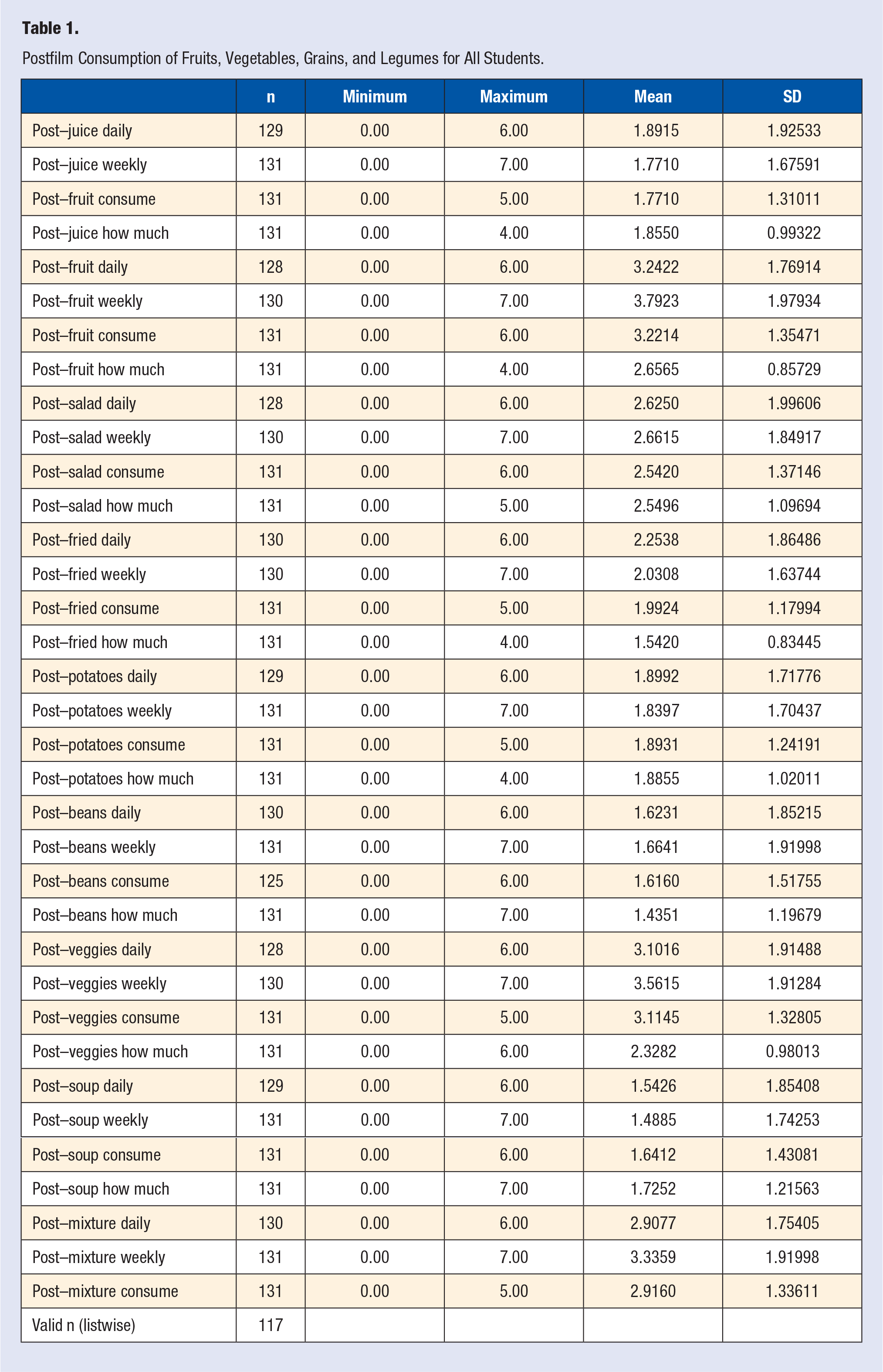
Research question 1 explores students’ current consumption of food and if watching a health care documentary such as Forks over Knives makes a difference in students’ consumption of food; specifically, students’ consumption of fruits, vegetables, and grains and legumes. Although results of independent t-tests revealed no difference between groups, results of descriptive statistics do elucidate students’ current consumption (see Table 1). Given that no significant differences were found, only postfilm descriptive data are reported as their most current consumption of the fruits, vegetables, grains, and legumes.
Postfilm Consumption of Fruits, Vegetables, Grains, and Legumes for All Students.
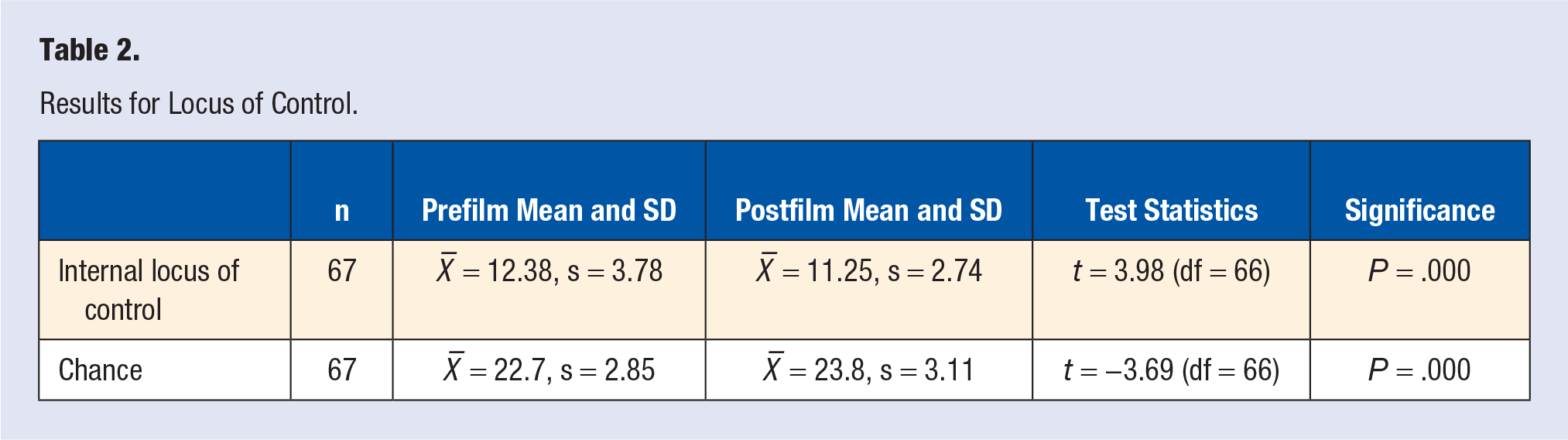
Research question 2 explores whether or not watching a health care documentary such as Forks over Knives makes a difference in students’ reports of locus of control. Students’ scores of Locus of Control were computed into total scores for Internal Locus of Control, External Locus of Control, and Chance. Each score was computed on pretest for all students, postfilm for the treatment group, and posttest for all students. SPSS independent t-test was used to determine Internal Locus of Control, External Locus of Control, and Chance, and results indicate no statistically significant differences. A paired t-test was calculated for the treatment group to determine a difference between locus of control from pretest to postfilm and pretest to posttest. Results revealed 3 statistically significant differences (see Table 2).
Results for Locus of Control.
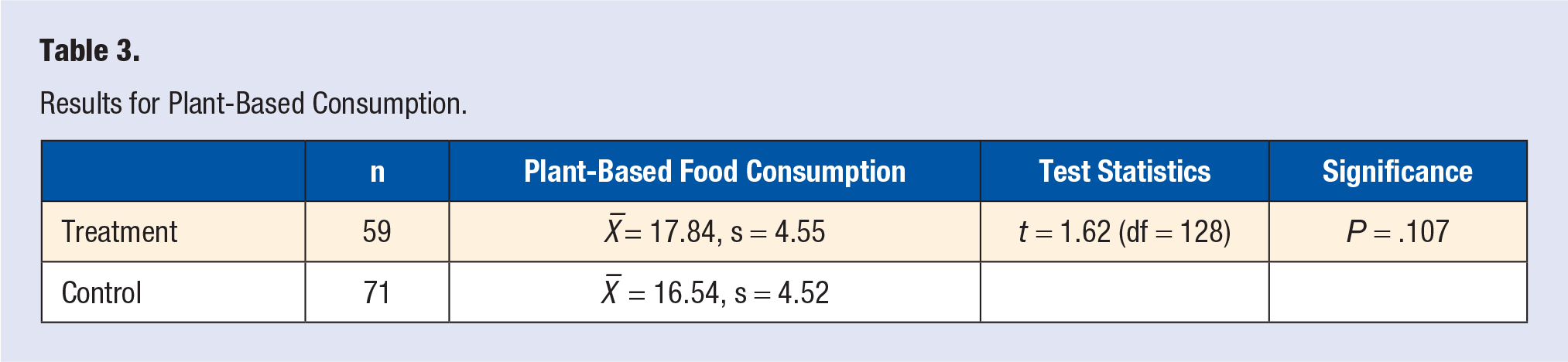
Research question 3 explores whether or not watching a health care documentary such as Forks over Knives moves students along their stage of change to increase their intake of plant-based foods. Students’ total scores of plant-based foods were computed for pretest and posttest. An independent t-test was run with IV (treatment and control) and DV (posttest total plant-based food), and results indicate no significant difference between treatment group and control group in readiness related to consumption of plant-based food (see Table 3).
Results for Plant-Based Consumption.
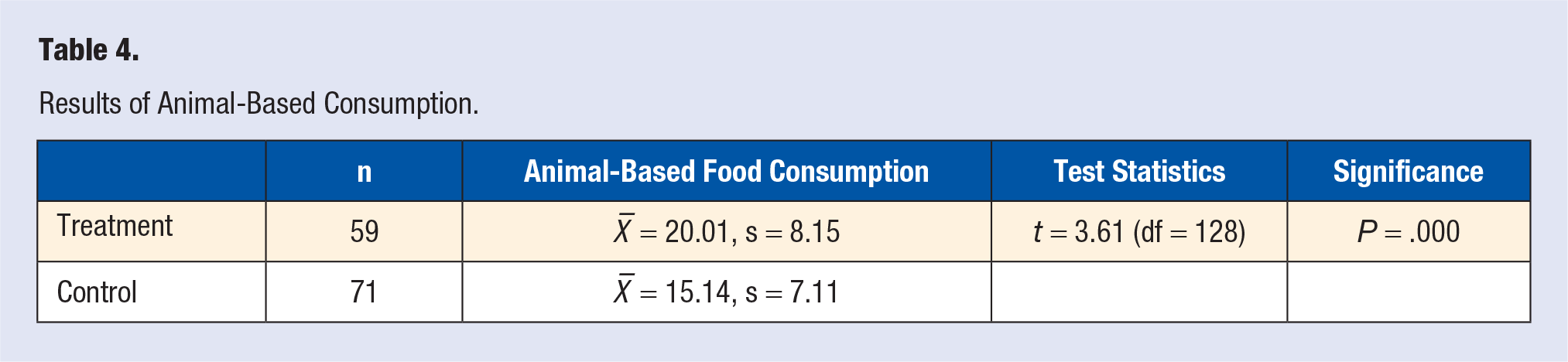
Research questions 4 explores whether or not watching a health care documentary such as Forks Over Knives moves students along their stage of change to decrease their intake of animal-based foods. To determine if there was a difference, first, an independent t-test was run with IV (treatment and control) and DV (posttest total animal-based food), and results indicate a significant difference between treatment group and control group mean in readiness related to consumption of animal-based foods, with the control group lowering their intake (see Table 4).
Results of Animal-Based Consumption.
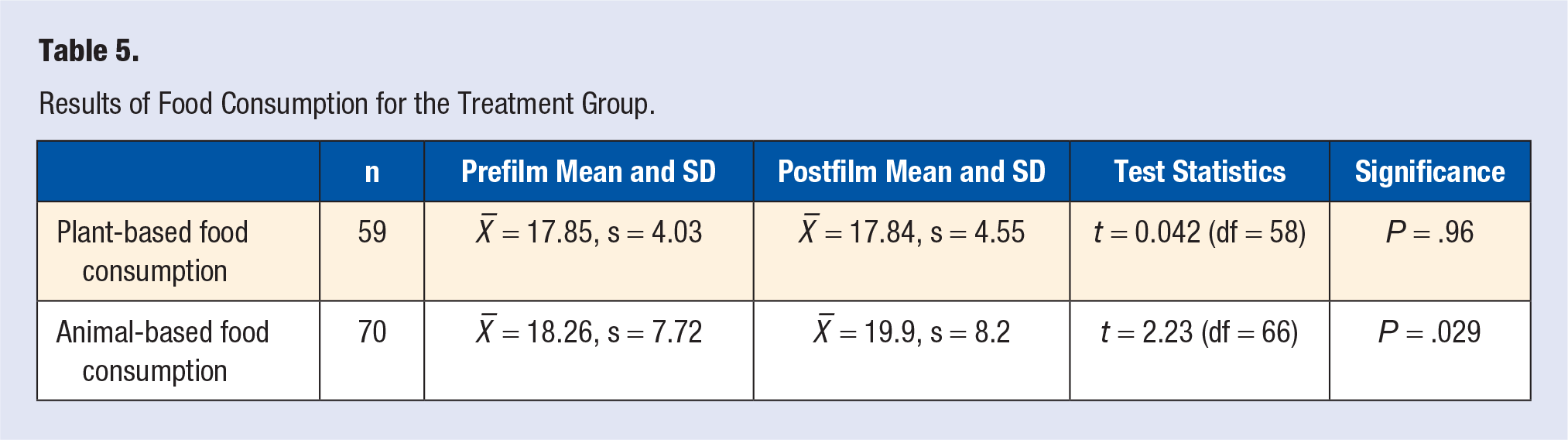
Post hoc analyses were conducted on the treatment group to see if there was a difference between animal-based and plant-based consumption of food from pretest to postfilm and pretest to posttest. Results of a posttest revealed no statistically significant differences for plant-based food but did reveal a significant difference between prefilm and postfilm on animal-based consumption of food (see Table 5).
Results of Food Consumption for the Treatment Group.
Discussion
These results provide valuable insight into the current eating habits of students and the impact watching the film Forks Over Knives had on their stage of change, locus of control, and dietary behaviors. Specifically, these results provide frequency data on students’ consumption of fruits, vegetables, and whole grains and legumes. Results provide evidence as to whether or not the use of the health care documentary Forks Over Knives affects students’ health locus of control and their motivation to change their intake of plant-based and animal-based foods.
In interventions that have been successful in changing and sustaining individuals’ nutritional behavior, education is the first step and must be followed up with strategies and tactics for actual behavior change. In dietary and lifestyle intervention programs, individuals who incorporate scheduled follow-up sessions as a core component (when compared with single-session interventions) are typically more effective at leading to healthier outcomes among participants. 35 Thus, it is not surprising that no significant difference in students’ actual consumption of fruits, vegetables, or grains and legumes was found after a single viewing of the film.
Despite no differences being found, it is important to obtain a baseline measure of these constructs in order to understand students’ current consumption and areas where improvements can be made. For example, students indicated that they consume fruit weekly, which is followed closely by their rate of vegetable consumption. Similarly, students’ consumption of grains and legumes are less than that of their fruits and vegetables and averages only in the 1 to 2 range of a 7-point scale. Also, students’ consumption of soups and mixtures, one way to get the daily recommended amount of vegetables and legumes, is also fairly low. Therefore, these specific areas need to be addressed in future efforts to educate and change students’ dietary habits.
One factor that can influence students’ ability to change their dietary habits is their internal locus of control. Although results of this study did not indicate a difference in locus of control between the posttest of the treatment and the control group, it did show that students who viewed the film reported a change in their internal locus of control from prefilm to postfilm. However, results did not indicate these changes based on students’ posttest scores. These results can lend some support to the notion that health and nutrition–focused documentary films may influence immediate or short-term attitude locus of control changes but not necessarily long-term ones.
Similar to locus of control change, results indicate that viewing the film made no difference to treatments and controls in increasing readiness to increase intake of plant-based foods but did affect the treatment group immediately following the film. Students who watched the film indicated that the film incentivized them to increase their intake of a plant-based diet, but only briefly after viewing it. However, results showed a difference for both treatments and controls for readiness to decrease consumption of animal-based foods. Therefore, the use of the health care documentary Forks Over Knives may influence students’ motivation to decrease their intake of animal-based diet immediately following the film and was sustained at 4 weeks after viewing the film. In future research, actual consumption of students’ animal-based foods should be measured, not just their desire to decrease this behavior.
Marteau et al 36 argue that effective health behavior changes will often fall into 2 different categories: those that alter the environment in which an individual is interacting and those that specifically target the automatic processes of the individual. This first category includes subdomains of ease of effort (ie, making the healthier choice the easier or more convenient choice), availability of options (ie, whether or not a healthier option is even available), and product design (ie, attractiveness or physical dimensions of a particular product or option). The second category focuses more on the subdomains of activating or inhibiting existing associations (ie, an environmental stimulus that associated with a previously learned behavior) and altering existing or creating new associations (ie, using positive stimuli with healthier behavior choices and negative stimuli with less healthy choices).
Bearing these categories in mind, perhaps interventions would be more beneficial if geared toward behavior change that takes into account an individual’s interaction with their environment and the presence of stimuli within the environment related to dietary and lifestyle behavior change versus simply sharing health and nutrition-based information and data. Moreover, Marteau et al 36 recommend this approach, given that relatively simple interventions that are brief in their time commitment can lead to measurable benefits. For instance, in a study by Logel and Cohen, 37 undergraduate women who completed a values affirmation achieved greater change in body weight and dietary habits. Results show that affirming the value a person finds most important can reduce health risks and that brief interventions can change behavior patterns that would otherwise continue to lead to worsening of health. There is also growing evidence to support the notion that interventions that incorporate online social networks may be effective in assisting in sustainable behavior change. 38 This is an important finding because it shows that mass media can be used not only to educate or inform a population about a health-related topic (ie, showing a documentary film), but also as a tool for follow-up and reinforcement.
Interpretation of results should take into consideration the limitations of self-report data, nonprobability sampling, and absence of randomization with a quasi-experimental design. Nonetheless, the results provide valuable insight. In addition, although the current sample size yielded some significant results, a larger population would increase power and decrease the chance of type II error. Thus, future studies may find additional significant relationships with a larger sample size, meaning that some effects in the population may not have been observed in this sample because of the sample size. Future research may do well to compare these findings with other population subgroups to determine application outside of a higher education setting. Another important limitation to note is whether participants had previously viewed this or other films related to plant-based diet advocacy, which may have influenced study outcomes. Future research on the effectiveness of films advocating for plant-based dietary changes may benefit from screening participants for their previous exposure to Forks Over Knives or other related films.
Although a helpful tool as part of a larger education or outreach program, documentary films may not be effective enough independently to motivate behavior change in terms of dietary practice. Results indicate that although these films may help change mindset, they may not be strong enough to change practical dietary habits without adequate follow-up. Future research on the effectiveness of mass media in multistages on nutritional behavior change needs further investigation to determine if a dose-response relationship for film viewing (ie, a single viewing vs multiple viewings) may exist. Recommending nutrition- and/or health-related mass media can be an enticing tool for health practice, but further evidence is needed to recommend it as best-practice in improving nutrition and health behaviors of individuals as well as the public at large. For example, Forks Over Knives uses dietary science and medical research to support its advocacy for dietary changes, but this may not necessarily be the most effective approach. Other films that promote a plant-based diet such as Vegucated incorporate discussion around topics including environmental consciousness and animal welfare. 39 Future research exploring the underlying pedagogy of films that advocate for a plant-based diet that have an impact on the dietary changes of its viewers may provide additional insight that can be of use to health professionals.
Translation to Health Practice
The current study explored the use of the health care documentary Forks Over Knives on students’ consumption of fruits, vegetables, and whole grains and legumes along with their health locus of control and motivation to change intake of plant-based and animal-based foods. Based on these study findings, future educational and prevention efforts should focus on increasing students’ intake of healthier food options because their current rates are still below the recommended levels. Additionally, the use of film can be an effective tool to initially increase students’ internal locus of control—the realization that they do have control over their health. This can be an essential tool for health care professionals and educators in aiding their students, patients, and/or clients in taking a more hands-on role in their health planning and goal setting. Finally, the use of film can be effective in increasing students’ awareness and initial motivation to increase healthier eating habits but may be used as a follow-up tool for more long-term behavior change.
Health professionals and educators who impart foundational knowledge related to nutrition and dietary intake and facilitate students to improve dietary and nutritional practices can benefit from understanding how media such as Forks Over Knives may be a useful tool. These study results show that there are initial changes in locus of control as a result of watching this film, but specific strategies and tactics need to be utilized in follow-up support and reinforcement to allow for sustainable change. Educators may also benefit from incorporating social support systems (either in person or via online platforms) to further reinforce these healthful dietary and behavior changes and further increase an internal locus of control related to these dietary modifications. By incorporating such practices and techniques into health education and lifestyle change–promoting settings (see Figure 1), there is greater potential for mass media tools, such as educational documentaries, to have substantive impact on the measurable behaviors and attitudes of the intended audience.
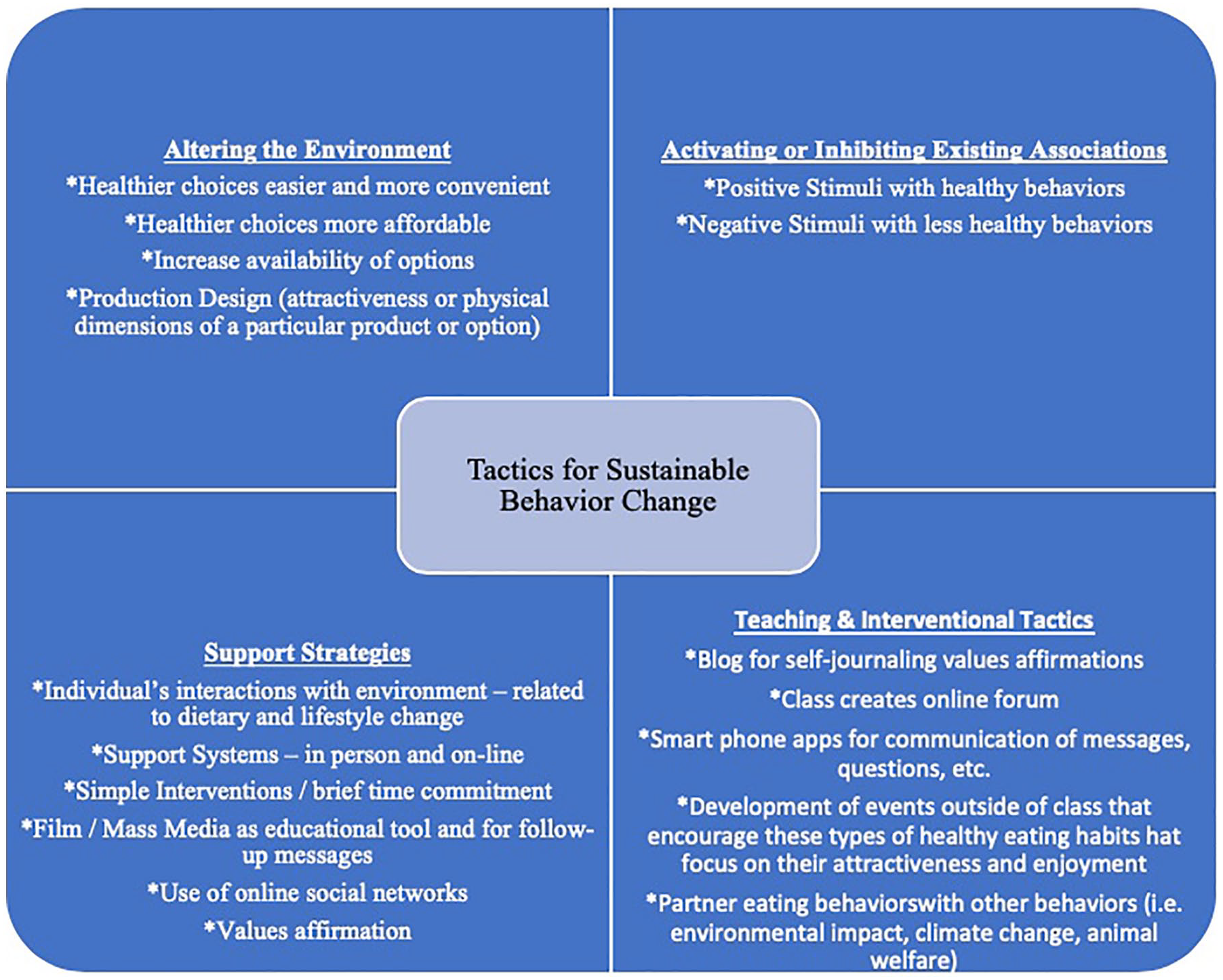
Tactics for promoting and maintaining sustainable changes in health behaviors.
Supplemental Material
Appendix – Supplemental material for We Are What We Eat: Assessing the Use of a Documentary Film as an Educational Tool to Change Students’ Nutritional Attitudes and Behaviors
Supplemental material, Appendix for We Are What We Eat: Assessing the Use of a Documentary Film as an Educational Tool to Change Students’ Nutritional Attitudes and Behaviors by Anthony Dissen and Tara Crowell in American Journal of Lifestyle Medicine
Footnotes
Acknowledgements
We would like to thank Dr Carol Byrd-Bredbenner (Rutgers University), Ellen Cottone, and Dr Peggy Policastro (Rutgers University) for their help in developing the Locus of Control instrument utilized within this study. We would also like to thank Dr Mary Lou Galantino (Stockton University) and Dr Lisa Calamidas (Stockton University) for their invaluable help in reviewing and editing this manuscript.
Declaration of Conflicting Interests
The author(s) declared no potential conflicts of interest with respect to the research, authorship, and/or publication of this article.
Funding
The author(s) received no financial support for the research, authorship, and/or publication of this article.
Ethical Approval
Not applicable, because this article does not contain any studies with human or animal subjects.
Informed Consent
Not applicable, because this article does not contain any studies with human or animal subjects.
Trial Registration
Not applicable, because this article does not contain any clinical trials.

Supplemental Material
Supplemental material for this article is available online.
References
Supplementary Material
Please find the following supplemental material available below.
For Open Access articles published under a Creative Commons License, all supplemental material carries the same license as the article it is associated with.
For non-Open Access articles published, all supplemental material carries a non-exclusive license, and permission requests for re-use of supplemental material or any part of supplemental material shall be sent directly to the copyright owner as specified in the copyright notice associated with the article.
