



Abstract
The purpose of this study was to determine the associations among body weight status perception, health status, diet quality, and consumption of fruits and vegetables within the adolescent population in the United States. A cross-sectional study was conducted with 1737 adolescents (12-17 years) participating in the Family Life, Activity, Sun, Health, and Eating study, an internet-based survey study sponsored by the National Cancer Institute. Adolescents reported their perception of their weight status, diet quality, health status, and the frequency with which they consumed common fruits and vegetables in a week. Results showed that 62% of the adolescents reported perceiving their weight as “just right,” and 10.9%, 22.4%, and 4.7% perceived their weight to be “underweight,” “a little overweight,” and “very overweight,” respectively. Those who perceived their weight status as “just right” also reported their health to be “very good” or “excellent” and that their diet was good. Similarly, adolescents who perceived their weight to be just right consumed significantly more fruits and vegetables than those who perceived their weight as “underweight” or “overweight.” Results of this study have important implications for future research on weight and health status, diet quality, and healthy eating behaviors among adolescents.
Previous studies have suggested that actual body weight status may differ from reported perceived weight status in both adults and children.
Introduction
Childhood obesity continues to be a major concern worldwide and especially in the United States. Current statistics by the Centers for Disease Control and Prevention (CDC) show that 20.9% of adolescents (12-19 years old) are either overweight or obese. 1 These statistics are alarming because research shows that 80% of the obese adolescents end up being obese adults, and about 70% remain obese by the age of 30 years. 2 Similarly, a high body mass index (BMI) in adolescents is associated with a high risk of coronary heart diseases, diabetes, and some cancers in adulthood. 3 In addition to health-related concerns, overweight and obesity in adolescents is associated with negative perceptions of body image, which in turn may negatively influence healthy lifestyle behaviors.4,5
Body weight perception may be defined as an individual’s judgment of their body image and how that influences their attitudes and thoughts around their weight, shape, and appearance. 6 Previous studies have suggested that actual body weight status may differ from reported perceived weight status in both adults and children.7-9 A recent review on the comparison between self-reported body measurements and actual body measurements showed that most people tend to underestimate their weight and overestimate their height, leading to inaccurate BMI classifications especially by individuals in the overweight and obese categories. 8
Adolescents’ perception of their weight has been shown to influence their dietary habits, 10 which may play a key role in weight management. 11 Underestimation of weight status has been found to be a risk factor for obesity in some individuals, 12 whereas overestimation of weight status—especially by the normal and underweight categories—has been associated with disordered eating. 13 Weight status, although not the only indicator, is commonly used as a measure of the health status of individuals.
Health status of individuals is commonly measured using a self-rated health tool that asks for an individual’s perception of their health and has been shown to be a valid and reliable indicator of physical and mental well-being. 14 Individuals who report irregular exercise, heavy smoking, and overweight also report to have fair or poor health. 15 Specifically, overweight and obese adolescents are more likely to report their health status as very poor as compared with adolescents of normal weight status. 16
In adolescents, perception of poor health status related to being overweight or obese has been shown to increase the risk of weight gain across the lifespan. This weight gain in adolescents is related to poor coping strategies such as emotional eating. 17 Emotional eating entails consumption of foods that are rich in sugar and fats and minimal consumption of fruits and vegetables. Previous studies have shown that very few adolescents are able to meet their daily recommendations for fruit and vegetable intake. 18 Additionally, intake of fruits and vegetables has remained relatively constant over the years despite extensive campaigns to increase the consumption rate. 19
The US Department of Agriculture (USDA) recommends that children and adolescents aged 9 to 18 years should consume between 2 to 3 cups of vegetables and 1½ to 2 cups of fruits per day. Furthermore, USDA recommends that per week, adolescents should consume 1½ cups of dark green vegetables (broccoli, spinach, kale), 4 to 5½ cups of red and orange vegetables (carrot, red peppers tomatoes), 1 to 1½ cups of dry beans and peas, 5 cups of starchy vegetables (potatoes, green peas, and corn), and 3½ to 4 cups of other vegetables such as cabbage, cauliflower, and lettuce. 20 Factors influencing adolescents’ consumption of fruits and vegetables have been extensively studied.21,22 However, there are currently very few studies that explore the relationship between adolescents’ perception of their weight status and consumption of fruits and vegetables.
Although relationships among perceived weight status and actual weight status, perceived health status, and dietary intake have been explored, there are few studies that explore the relationship of these characteristics in the same population using nationally representative data. Therefore, the purpose of this study was to determine adolescents’ perception of their weight status and its relationship with their (a) actual weight status as calculated from the weight and height measurements provided, (b) perception of their health status, (c) perception of the quality of their diet, and (d) their frequency of consuming fruits and vegetables.
Methods
This study consisted of a secondary data analysis of the 2014 Family Life, Activity, Sun, Health, and Eating (FLASHE) study sponsored by the National Cancer Institute. 23 The cross-sectional FLASHE study included an internet-based questionnaire administered to adolescents aged 12 to 17 years and their parents/caregivers. Participants completed questionnaires between April and October 2014. The resulting sample is nationally representative in terms of sex, income, age, household size, and region.
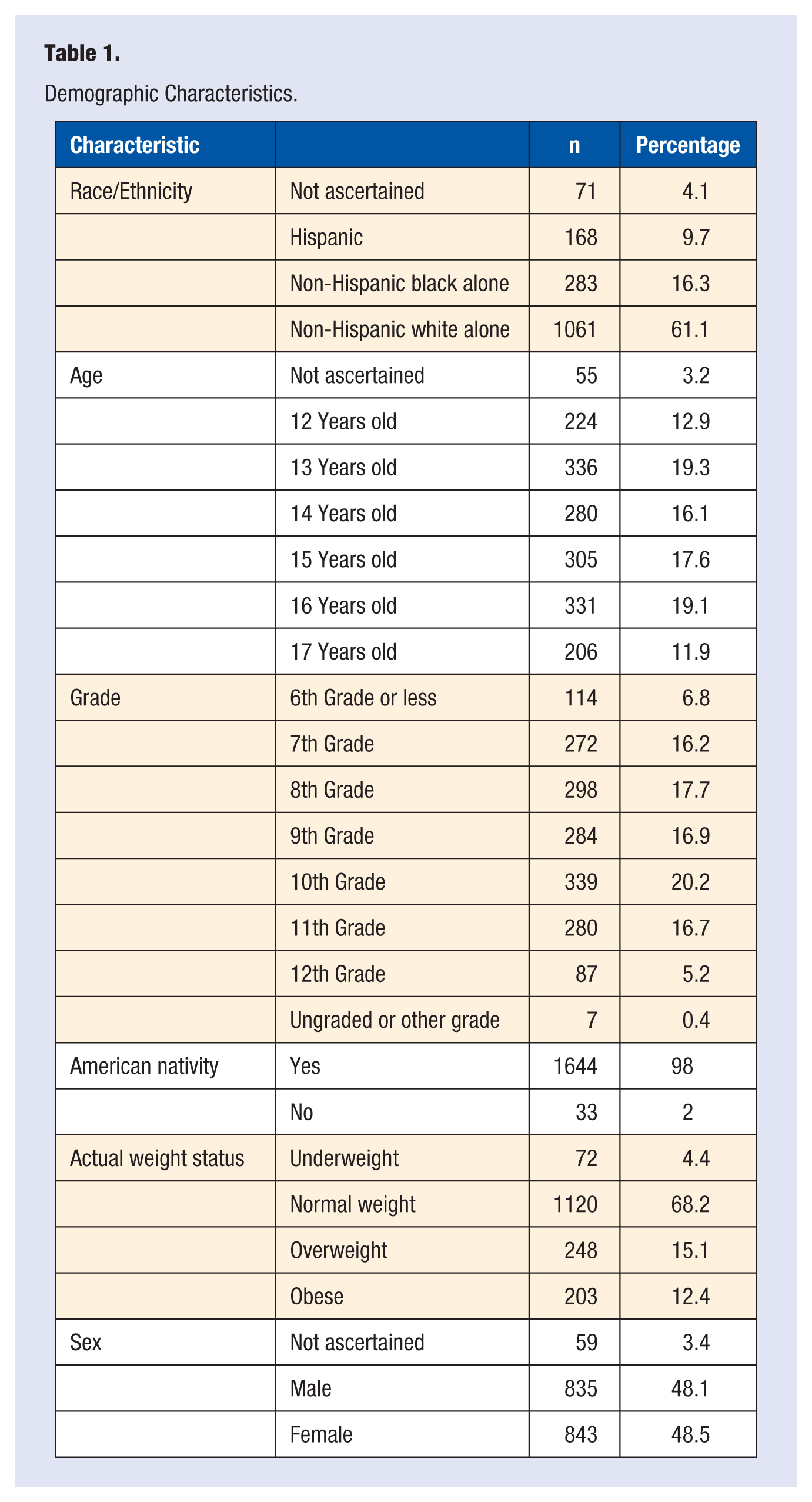
The FLASHE study adolescent sample (n = 1737) includes a relatively even distribution by sex (48.1% male; 48.5% female). The average participant was non-Hispanic white (63.7%), a US native (98%), and was within a healthy weight range (64.5%). Table 1 includes sociodemographic distributions for the current study sample.
Demographic Characteristics.
Measures
To address the primary purpose of this study, 6 specific measures were studied. The measures included perception of weight status, actual weight status, perception of health status, diet quality perception, and fruit and vegetable consumption. To provide context for the current study, a brief description of measures included in this study follows. A complete description of the FLASHE questionnaire is available on the National Cancer Institute’s FLASHE website. 23
Perception of Weight Status
Weight status perception was measured with a single question, “Overall, how would you rate your current weight?” Participants responded by indicating one of the following response choices: “I’m very underweight,” “I’m a little underweight,” “My weight is just right,” “I’m a little overweight,” or “I’m very overweight.”
Actual Weight Status
Actual weight status was measured based on self-report by participants. The question asked, “What is your height and weight without shoes?” BMI percentile was determined based on BMI percentile charts for children.
Perception of Health Status
Perception of health status was measured with a question asking participants, “In general, would you say your health is . . .” Participants responded by indicating that their health was “excellent,” “very good,” “good, “fair,” or “poor.”
Perception of Quality of Diet
The quality of the participant’s diet was measured on a 5-point response scale from strongly disagree to strongly agree in response to the statement, “I eat a healthy diet.”
Fruit and Vegetable Consumption
Participants self-reported vegetable and fruit consumption in the past 7 days by responding to survey items from the NHANES Dietary Screener Questionnaire and the CDC’s National Youth Physical Activity and Nutrition Survey. Fruit consumption was measured with 1 item: “DURING THE PAST 7 DAYS, how many times did you eat fruit like apples, bananas, melon, etc? COUNT fresh, frozen, canned and dried fruit. DON’T COUNT fruit juices.” Vegetable consumption was measured with 3 items: “DURING THE PAST 7 DAYS, how many times did you eat a GREEN SALAD with or without other vegetables,” “DURING THE PAST 7 DAYS, how many times did you eat any OTHER KIND OF POTATOES that aren’t fried like baked, boiled, mashed or potatoes used in soups and stews,” and “DURING THE PAST 7 DAYS, how many times did you eat other NON-FRIED VEGETABLES like carrots, broccoli, collards, green beans, corn, etc? DON’T COUNT green salad or potatoes.” The responses for consumption items were as follows: “I did not eat fruit [non-fried vegetables; green salad] during the past 7 days,” “1-3 times in the past 7 days,” “4-6 times in the past 7 days,” “1 time per day,” “2 times per day,” and “3 or more times per day.” The Cronbach α for this measure was .709.
Analysis
Descriptive analyses were conducted to determine the demographic makeup of the study participants. χ2 Statistics were used to determine the associations between perception of weight status and actual weight status, perception of health status, and perception of the quality of their diet. Analysis of variance was conducted to determine significant differences between weight perception categories and frequency of consumption of fruits and vegetables.
Results
Adolescents’ Perception of Their Weight and Health Status
Majority (62%) of the adolescents considered their weight to be just right, whereas 10.9%, 22.4%, and 4.7% considered themselves to be underweight, overweight, and obese, respectively. According to the weight and height provided, 68.2% of the adolescents were within the healthy BMI percentile (5th-85th percentile), 4.4 % were underweight (<5th percentile), 15.1% were overweight (85th to <95th percentile), and 12.4% were obese (>95th percentile).
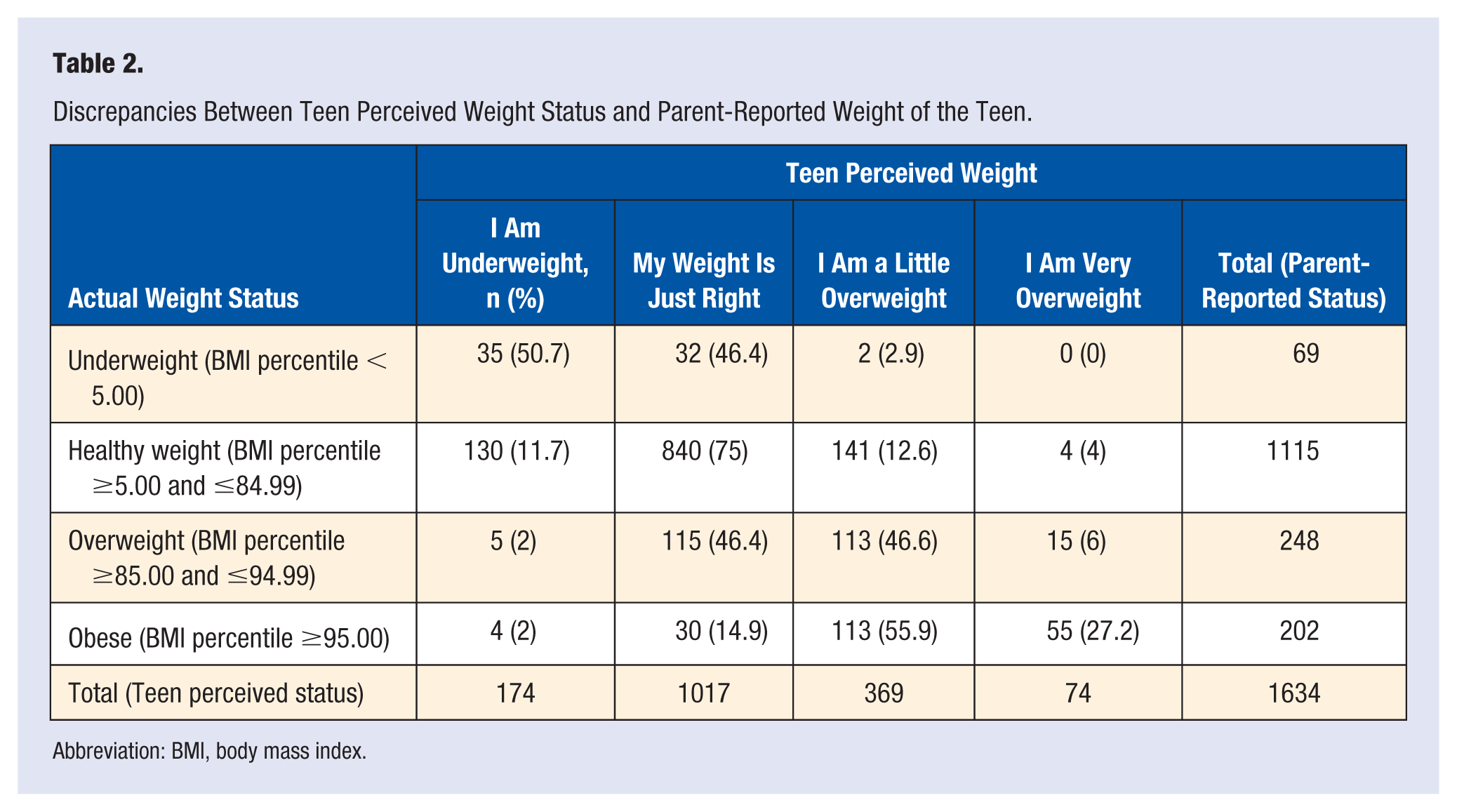
There were observed discrepancies between the adolescent’s perception of their weight status and their actual weight status as shown in Table 2. Most adolescents (55.9%) who were obese perceived themselves to be slightly overweight, and only 27% perceived themselves to be very overweight. For the adolescents who were overweight, 46% felt that their weight was just right, similar to 46% who perceived themselves to be a little overweight. In all, 75% of adolescents with a normal weight BMI percentile also stated that they perceived their weight to be just right. Adolescents’ perception of their weight status showed a moderate agreement with their actual weight status (k = 0.319; P < .001).
Discrepancies Between Teen Perceived Weight Status and Parent-Reported Weight of the Teen.
Abbreviation: BMI, body mass index.
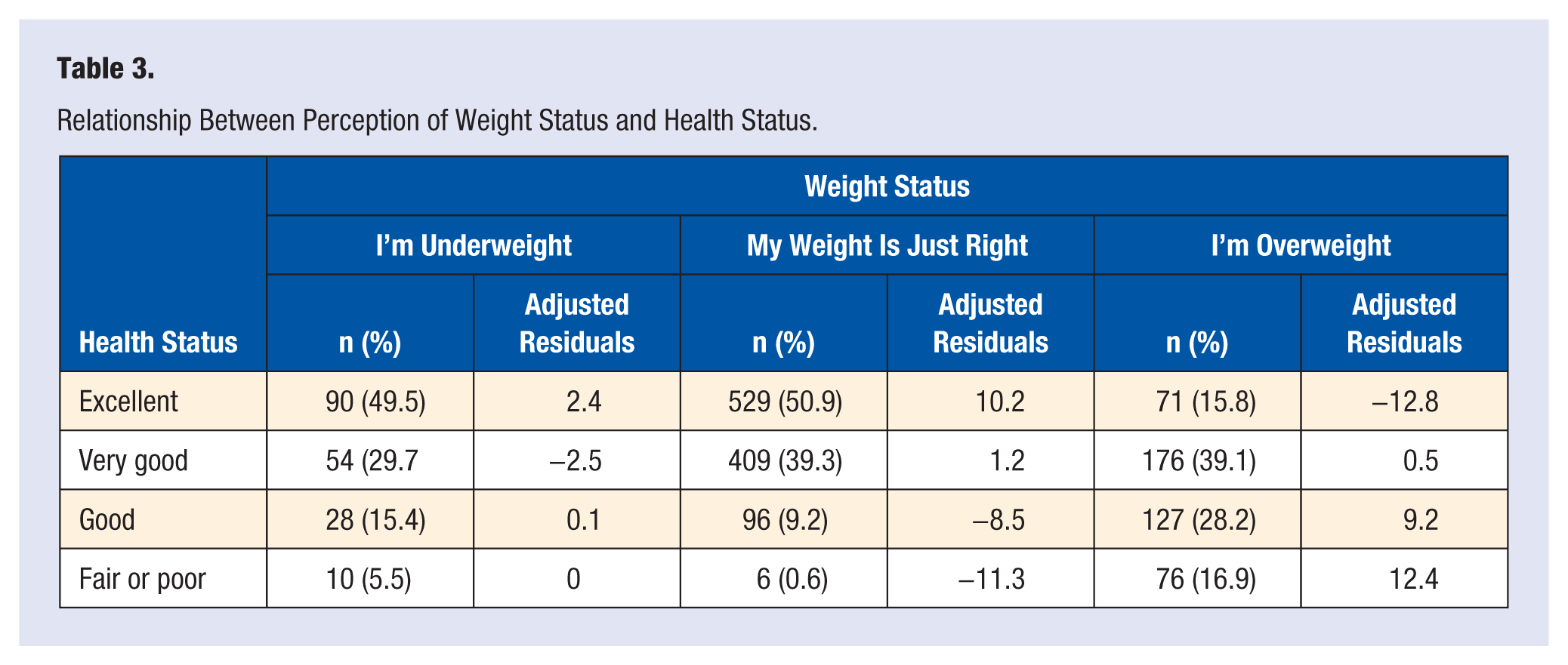
Asked about their perception of their health status, 41% of the adolescents considered themselves to be in excellent health, 38% in very good health, and 15% in good health, and 5.5% (92) considered their health to be fair or poor. χ2 Statistics showed that there was a significant relationship between the adolescents’ perception of their weight status and their perception of their health status (χ2 = 328.294; P < .001). Adolescents who considered their weight to be just right were more likely to perceive their health as excellent, whereas adolescents who perceived themselves as overweight were more likely to consider their health as fair or poor. Similarly, fewer adolescents who considered their weight to be just right considered themselves to be in poor health, and fewer adolescents who considered themselves to be overweight also felt that their health was excellent, as shown on Table 3.
Relationship Between Perception of Weight Status and Health Status.
Perception of Diet Quality
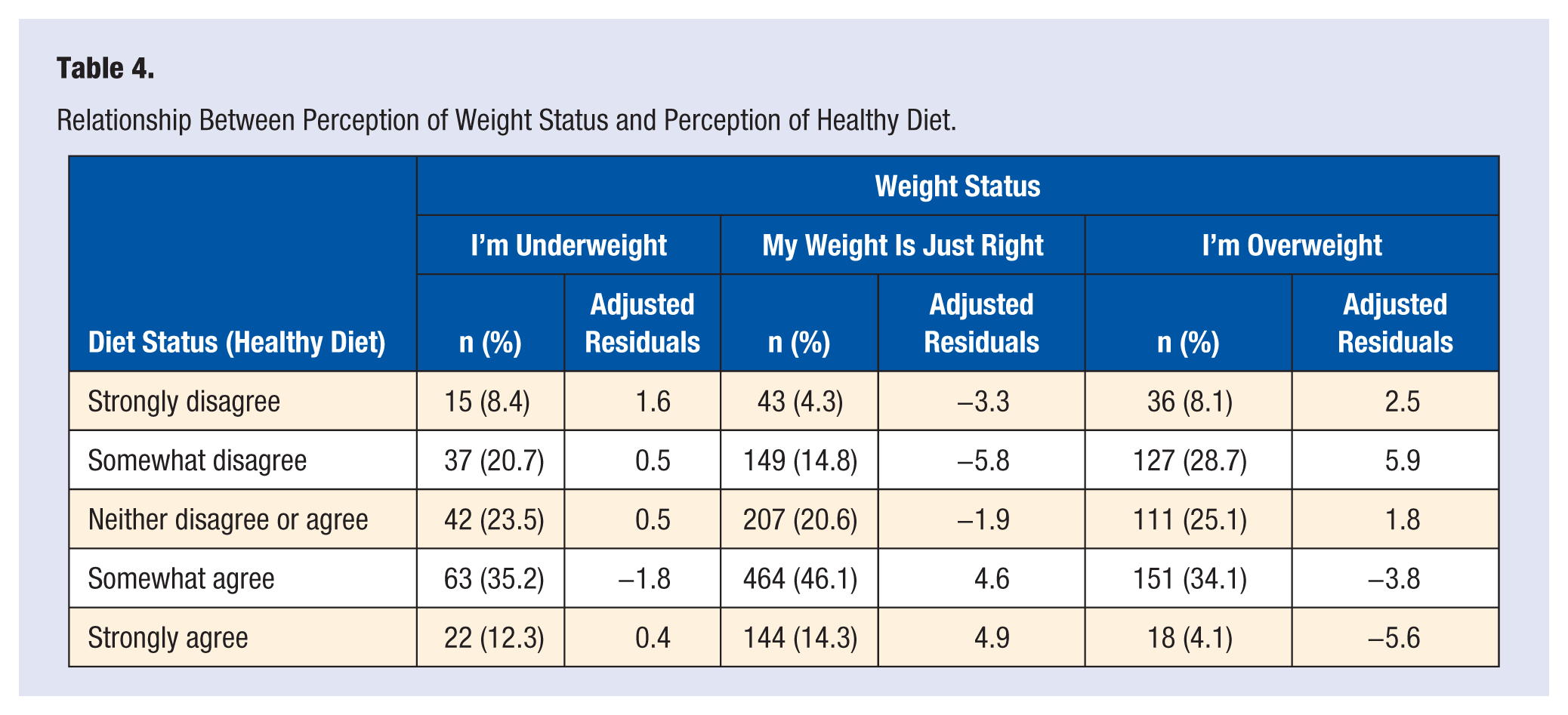
Most (41.6%) adolescents answered “somewhat agree” when asked whether they perceived their diet as healthy. Only 11.2% of the adolescents answered, “strongly agree” that they were having a healthy diet, with almost half either stating, “strongly disagree” (5.8%), “somewhat disagree” (19.2%), or “neither disagree or agree” (22.1%). χ2 Statistics showed that these differences were significant (χ2 = 85.66; P < .001) among adolescents with different perceived weight categories. Adolescents who considered their weight as just right also strongly agreed that their diet was healthy, whereas more of the adolescents who perceived themselves to be a little overweight or very overweight also considered their diet to be unhealthy, as shown in Table 4.
Relationship Between Perception of Weight Status and Perception of Healthy Diet.
Association Between Weight Status and Consumption of Fruits and Vegetables
Regarding the frequency of consumption of fruits and vegetables, the median consumption of fruits was almost once a day, whereas the consumption of vegetables was 1 to 3 times in a week. Significant differences were observed between the perceptions of weight categories and the frequency with which the adolescents consumed fruits and vegetables within the week. Post hoc analysis (Dunnet C) showed that those who considered their weight to be “just right” also consumed fruits and vegetables more often than those who perceived their weight status to be underweight or overweight (mean 2.45 ± 0.03 vs 2.28 ± 0.06 in underweight and 2.26 ± 0.04 in overweight; P < .001). For those adolescents who considered themselves to be either underweight or overweight, frequency of consumption of fruits and vegetables did not differ from each other.
Gender and Racial/Ethnic Differences
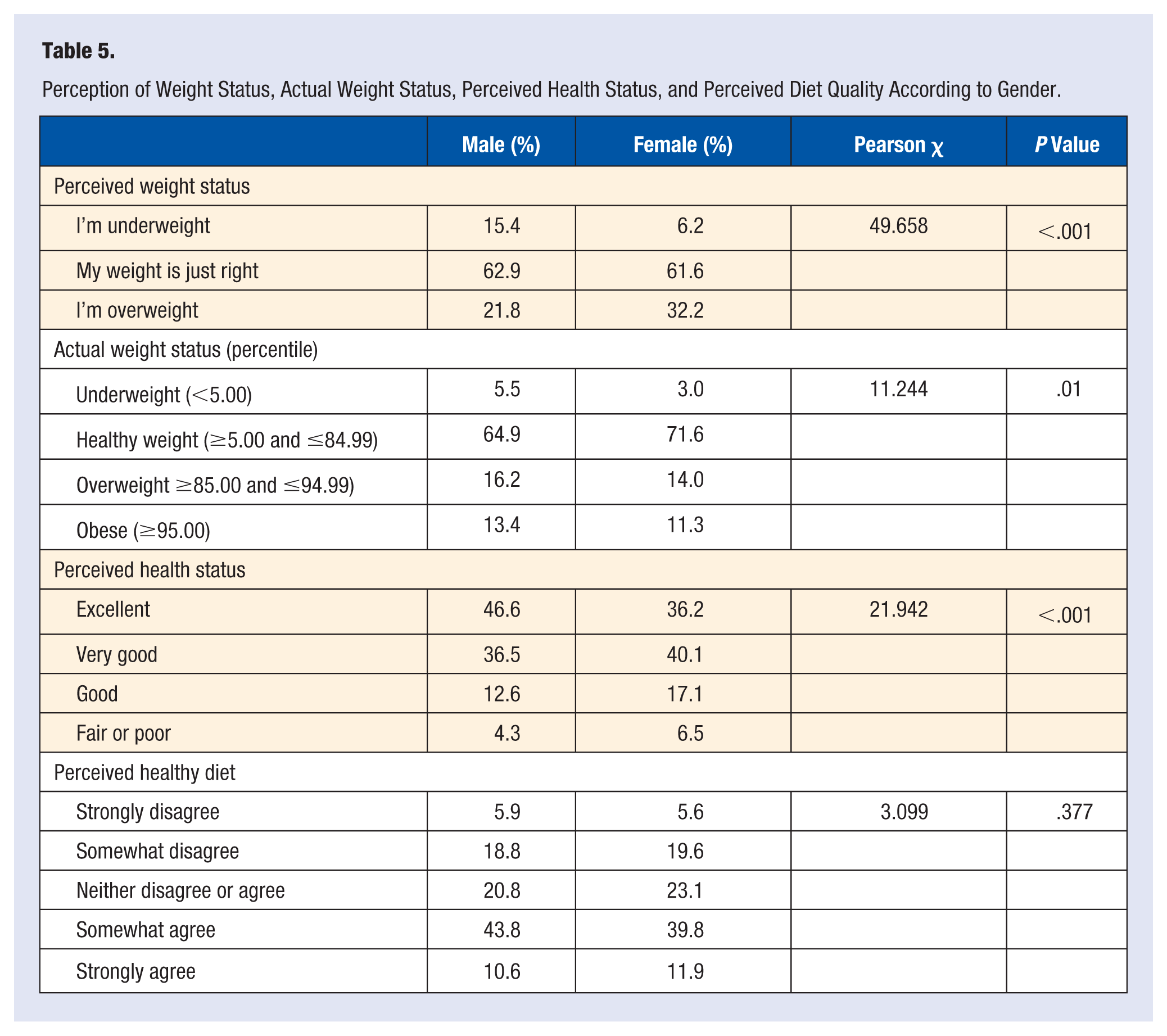
There were significant differences between male and female participants in relation to weight perception, actual weight, and health status as shown in Table 5. Male participants were more likely to perceive themselves as underweight as compared with female participants, whereas more female than male participants perceived themselves to be overweight (χ2 = 48.6; P < .01). According to actual weight status, more male participants were underweight as compared with female participants. Similarly, more male participants considered their health to be excellent as compared with their female counterparts (χ2 = 21.94; P < .001). There were no significant gender differences in perception of diet quality and frequency of consumption of fruit and vegetables.
Perception of Weight Status, Actual Weight Status, Perceived Health Status, and Perceived Diet Quality According to Gender.
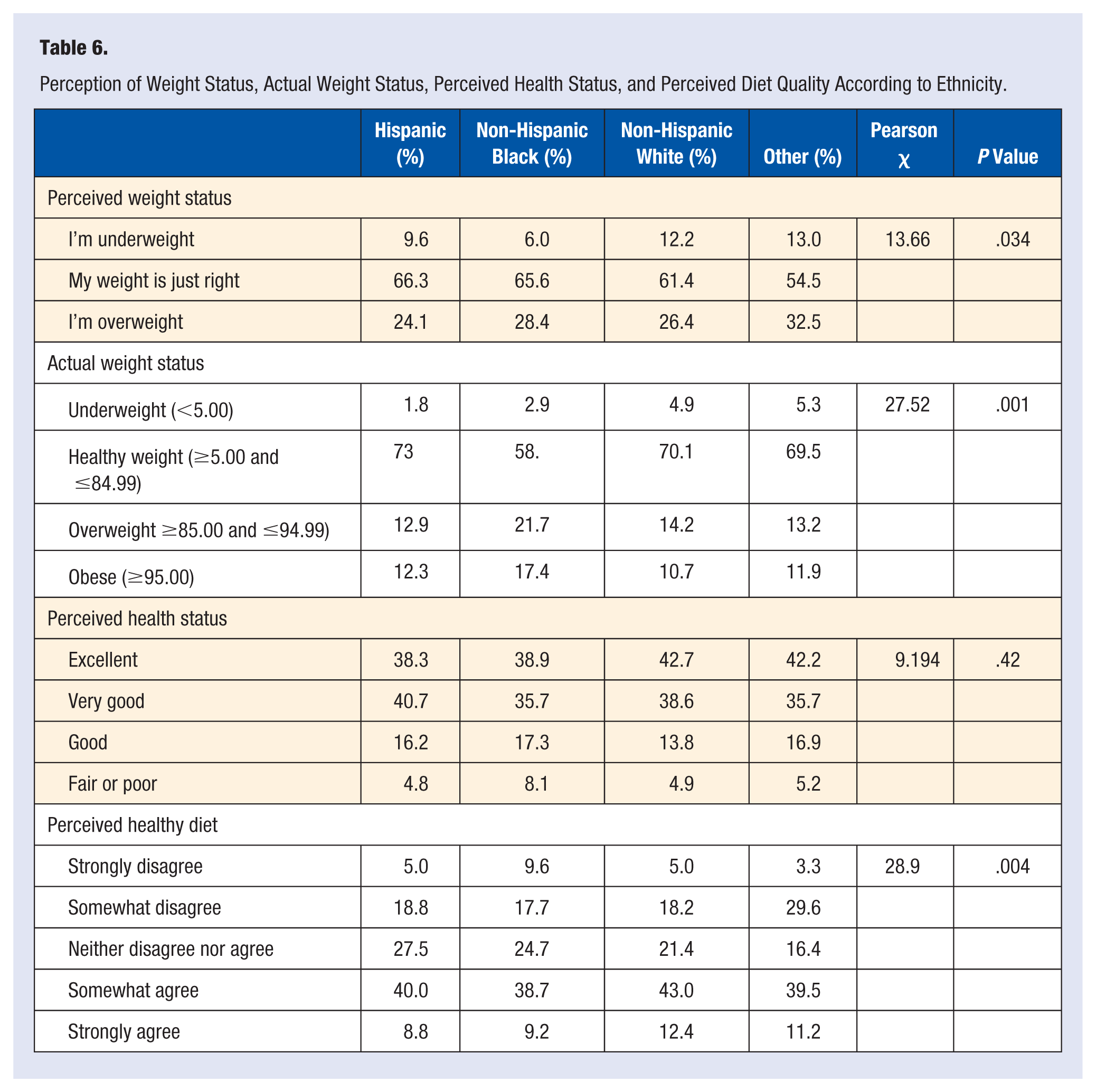
There were significant differences between race/ethnicity and the perception of weight status, actual weight status, and perception of diet quality, as shown in Table 6. More non-Hispanic blacks perceived themselves to be underweight as compared with their non-Hispanic white and Hispanic counterparts (χ2 = 13.66; P < .01). For the actual weight status, more non-Hispanic blacks (39.1%) were either overweight or obese as compared with Hispanics (25.2%) and non-Hispanic whites (24.9%; χ2 = 11.244; P < .01). In addition, more non-Hispanic blacks strongly disagreed with the statement, “I consider my diet to be healthy” than the other racial/ethnic categories. There were no differences between race/ethnicity and perception of healthy status or frequency of consumption of fruits and vegetables.
Perception of Weight Status, Actual Weight Status, Perceived Health Status, and Perceived Diet Quality According to Ethnicity.
Discussion
Adolescent years are critical for the growth and development of the individual. At this period, several physiological changes occur that warrant increased intake of energy and nutrients. At the same time, adolescents are more aware of their body image, and this may influence their food consumption. Previous studies have indicated that body image, especially perception of weight status, in adolescents has more of an association with healthy behaviors in adolescents than BMI. The purpose of this study was to determine the associations among adolescents’ perception of their weight status and (a) their actual weight status, (b) perception of their health status, (c) quality of their diet, and (d) consumption of fruits and vegetables.
The majority of adolescents were within the normal range of BMI either by their perception or by their actual BMI percentile. Results showed that there was a moderate agreement between the perceived weight status and actual weight status. A higher number of adolescents reported being overweight, and a lower number reported being obese as compared with their actual BMI percentile. Similar findings were found with a study that utilized the NHANES data to investigate personal and parental misrepresentation of weight loss in children and adolescents. 24 In that study, adolescents of normal weight were more likely to accurately perceive their weight status than the overweight and underweight categories. Early studies had shown that parental reports were a better predictor of overweight and obesity as compared with teen reports. 25 Incorrect classification of weight status among adolescents has been shown to influence dietary intake and has been associated with disordered eating. 13
Overweight and obesity in children and adolescents is associated with numerous health conditions. Therefore, this study sought to identify an association between adolescents’ perception of their health status as compared with their perception of their weight status. In this study, 79% of the adolescents reported to be in excellent or very good health. These findings were similar to those by the CDC, which estimates the proportion of adolescents (12-17 years) who report being in excellent or very good health to be approximately 81.6%. Previous studies have shown that individuals who tend to misrepresent their health status are less likely to engage in healthy habits such as physical activity or healthy eating. Further analysis showed that adolescents who reported their weight to be just right also considered their health status to be very good or excellent. Few adolescents who were overweight and obese considered their health to be excellent.
This study sought to identify adolescents’ perception of the quality of their diet and how that was related to their perception of their weight status. Only about 11.2% of those studied strongly agreed that their diet was healthy. The majority of the adolescents were neutral—that is, neither agreeing nor disagreeing that they consumed a healthy diet. A systematic review by Vaitkeviciute et al 26 revealed that adolescents who had higher food literacy also had better dietary intake behaviors, such as higher consumption of fruits and vegetables and less fat intake.
On average, adolescents in the study reported consuming a vegetable 1 to 3 times in a week. This is contrary to the recommendations by the Dietary References for Americans, which recommend at least 4 to 5 servings of vegetables per day. 27 In addition, the average consumption of fruits was higher than that of vegetables, which is consistent with previous results that showed that adolescents consumed a higher percentage of fruits than vegetables. 18
In the present study, adolescents who perceived themselves to be of normal weight status also consumed fruits and vegetables more frequently than their overweight and underweight counterparts. These findings are in agreement with previous studies that found that adolescents who perceived their weight to be normal were predicted to have healthier eating patterns—in other words, consuming more servings of fruits and vegetables per day as compared with their counterparts who considered themselves to be overweight.4,28,29 These studies have concluded that recognition of overweight and obesity may actually discourage health behaviors.
There were gender differences with regard to perception of weight status, actual weight status, and health status. Girls were more likely to perceive themselves as overweight. Moreover, more girls perceived themselves as overweight and their health as fair or poor as compared with boys, who were more likely to perceive themselves as underweight and have excellent health. There are contrasting findings regarding body image dissatisfaction among boys and girls and their willingness to engage in healthy lifestyle behaviors. Losekanm et al 30 found that there was a reduction in the willingness to engage in physical activities by boys being teased for being overweight than in girls. In contrast, Jensen and Steele 31 reported that body dissatisfaction was more likely to reduce engagement in physical activity in girls than boys. Although both women and men may have societal pressure to conform to lean body ideals, there seems to greater social and psychosocial stigma for girls than boys. 32 However, further studies need to be done to identify consistent patterns.
Within racial/ethnic categories, non-Hispanic blacks were more likely, as compared with other racial/ethnic groups, to perceive themselves as underweight even though they were not. In addition, non-Hispanic blacks had the highest rate of actual overweight and obesity as compared with the other racial/ethnic groups. Many studies have shown similar results. These studies found that non-Hispanic blacks, especially non-Hispanic black women, are less likely to perceive themselves as overweight regardless of their size.33,34 This is despite the fact that non-Hispanic black women have the highest prevalence rates for obesity-related chronic diseases in the United States. 33 This disparity has been attributed to differences in cultural perception of body size, where a larger size is considered an ideal body size for non-Hispanic black women. Typically, non-Hispanic white women express body dissatisfaction at lower BMIs than do non-Hispanic black women. 35 Most of these studies have been done among adult women, and more research is needed to identify the cause of disparities on weight perception among adolescents from different races/ethnicities.
With these results, certain study limitations should be considered. Because this was a cross-sectional study using FLASHE study data, conclusions regarding causality cannot be determined. Moreover, there are limitations to the generalizability of the results given that the sample for the FLASHE study was a convenience sample. In addition, the self-reported data collected in this study were subject to recall bias and social desirability bias, including BMI. Furthermore, intake of fruits and vegetables was reported as only frequency and not quantity. This does not allow the researchers to identify the quantity of nutrients the adolescents were getting. However, this study focused on highlighting the relationship between weight status perception and frequency with which adolescents consumed fruits and vegetables and, therefore, did not require specific nutrient information.
Despite these limitations, the study findings have important implications for future research with the FLASHE study data or other large, nationally representative samples of adolescents. Specifically, future research should continue to seek to understand the relationships among weight status perceptions, actual weight status, health status and diet quality perceptions, and healthy eating behaviors in adolescents. The current study explored discrepancies in perceived weight status, actual weight status, and health status based on gender and race/ethnicity. However, future studies should include additional demographic characteristics such as age or socioeconomic status. In addition, weight status and diet quality are related to other healthy eating behaviors beyond fruit and vegetable consumption. 27 Further study on this topic should include additional healthy eating behaviors such as the consumption of whole grains.
Footnotes
Declaration of Conflicting Interests
The authors declared no potential conflicts of interest with respect to the research, authorship, and/or publication of this article.
Funding
The authors received no financial support for the research, authorship, and/or publication of this article.
Ethical Approval
Not applicable, because this article does not contain any studies with human or animal subjects.
Informed Consent
Not applicable, because this article does not contain any studies with human or animal subjects.
Trial Registration
Not applicable, because this article does not contain any clinical trials.
