




Abstract
Youth sport is a key physical activity opportunity for children and adolescents. Several factors influence youth sport participation, including social factors, but this has not to date been clearly delineated. This study is a scoping review to survey the literature on the influence of family and peers on youth sports participation. The review identified 111 articles of which the majority were cross-sectional, included boys and girls, and were conducted primarily in the United States, Canada, Australia, and the United Kingdom. The articles were grouped into 8 research themes: (1) reasons for participation, (2) social norms, (3) achievement goal theory, 4) family structure, (5) sports participation by family members, (6) parental support and barriers, (7) value of friendship, and (8) influence of teammates. Friendships were key to both initiation and maintenance of participation, parents facilitated participation, and children with more active parents were more likely to participate in sport. Less is known on how family structure, sibling participation, extended family, and other theoretical frameworks may influence youth sport. The review suggests that social influences are important factors for ensuring participation, maximizing the quality of the experience, and capitalizing on the benefits of youth sport. Future research studies, programs, and policies promoting and developing evidence-based youth sporting experiences should consider social influences on youth sport participation.
‘In general, children who participate in youth sport receive many benefits, including physical and psychosocial benefits, . . .’
Sport has been identified as 1 of the 7 best investments for promoting physical activity, which is particularly relevant for youth. 1 A study of 38 countries worldwide found that approximately half of children participate in organized youth sport; however, this varies from country to country. 2 It is estimated that the youth sport industry in the United States is worth $15 billion, 3 further emphasizing its high profile in society. Importantly for health, youth sport is one of the key physical activity opportunities for youth,4,5 and contributes a significant proportion of their total physical activity. 6 In general, children who participate in youth sport receive many benefits, including physical and psychosocial benefits, many related to participation in physical activity during sports. These include reduced risk of obesity, improved metabolic profiles, increased muscular strength, 7 improved self-esteem, reduced risk of depression, 8 and overall positive youth development, 9 which is a prosocial approach to reaching positive outcomes for youths. 9 However, both the physical and psychological benefits of sport are highly dependent on the quality of the specific sporting experience.8,10 Interestingly, some of the benefits may not be solely due to increased physical activity or energy expenditure, and there is some evidence that sport participation may be a greater contributor to mental health than overall physical activity. 11 Children who participate in youth sport also report several other positive health behaviors such as improved diet, safer sexual practices, and decreased substance abuse. 12
Since developing positive habits (eg, physical activity) in childhood can track into adulthood,13,14 it can be argued that there should be an emphasis on enjoyable lifelong activities that children can participate in.15-17 Youth sport participation can be regarded as a lifelong physical activity that can be safe and effective for providing myriad physical and psychosocial benefits for children when implemented with qualified instruction and appropriate supervision. Unfortunately, not all children participate in youth sports, and many of those who do participate have negative sporting experiences, which can lead to dropout—owing to injury, unsustainable expectations and demands, and/or burnout. According to the Sports and Fitness Industry Association, recent data from the United States suggest that overall participation in youth sports is dropping. 18 Australian research has found that children begin dropping out of youth sport at the age of 8 years, 19 which is similar to the age of physical activity decline recently reported in British children. 20 A better understanding of these sporting experiences (or lack of sporting experience) will help increase participation, quality, and the benefits that children receive from youth sport.
Several factors influence youth sport participation. Using a socioecologic framework, it is proposed that factors from multiple levels influence access, quality, and outcomes. 21 Historically, research on correlates of sports and physical activity in general in both adults and children have focused on intrapersonal factors, including demographic and biological, psychosocial, and behavioral variables. 22 However, youth sport is a social experience and it is likely that interpersonal factors, which we will refer to as social factors throughout the article, play a large role. These social factors include family, friends, teachers or any other people who may influence an individual. One of the most obvious social agents is the coach. A growing body of research has explored factors related to coaches that influence youth sport experiences.23-25 But there are several other social agents that influence the youth sport experience including peers and families. Less is known on how these external social agents influence the youth sporting experience from access, quality of the experience, and the outcomes of participation. These social influences must be understood in order to increase youth sport participation and high-quality sporting experience for children to ultimately maximize the number of children receiving the physical and psychosocial benefits from a positive, evidence-based sporting experience.
Therefore, the purpose of this scoping review was to explore social influences on youth sport participation. More specifically, it explored how social agents, including peers, parents, and siblings, influence youth sport participation.
Methods
Study Design
The current study was guided by the methodological framework for scoping reviews proposed by Arksey and O’Malley 26 and further defined by Levac et al. 27 Scoping reviews allow a rapid and broad survey of existing literature. The authors proposed 6 stages to conduct a scoping review, including: (1) identifying a research question, (2) identifying relevant studies, (3) study selection, (4) charting the data, (5) collating, summarizing and reporting the results, and (6) consultation.26,27 The authors’ 6 stages guided the current study.
Stage 1: Identifying a Research Question
The research question for the current study was: how do social agents, including peers, parents, and siblings, influence youth sport participation? These social agents were later grouped into family and peers.
Stage 2: Identifying Relevant Studies
We searched 3 databases, including: PubMed, ERIC, and PsychInfo. Our PubMed search terms and strategy are detailed below. The same key words were used while searching the other 2 databases. The review included studies published prior to September 2017.
The following search terms were used to search the abstract and title: ((sport) AND (child* or youth)) AND (sibling* or brother* or sister* or parent or parents or mother or father or mom or dad or friend* or peer* or teammate*).
Stage 3: Study Selection
Included studies sampled youth from an organized youth sport setting. For the purposes of this study, organized youth sports (herein referred to as youth sport) was defined as an organized activity, formally arranged and governed by the rules of a given sport. 28 Youth sport participants attended regular practices and games under supervision of one or more adults, who most often assume the role of team coach. 28 For the current study, youth sport did not include sport occurring during school time (eg, school sport, physical education) or sport occurring outside of the typical formal setting (eg, summer camps, off-season training). Youth were defined as children and adolescents 18 years old and younger.
Studies must have explored a social agent’s influence on youth sport participation, specifically peers and family (i.e., parents and/or siblings). No limitations were set regarding study design, participants’ sex, or publication date. Excluded studies included: protocols papers, book reviews, commentaries, majority of participants were aged >18 years, limited to special populations (eg, children with disabilities), sport injury studies, studies that only addressed physical activity in general and not sports specifically, those limited to parent demographic variables such as family income or parent education, and those not written in the English language.
Stage 4: Charting the Data
Articles were then screened by title, abstract, and full text by the first author. Data were extracted from the articles independently by 2 reviewers, such as details about the population and study design (Supplemental Table A available in the online version of the article).
Stage 5: Collating, Summarizing, and Reporting the Results
To collate and summarize the data, the 3-step process method proposed by Levac et al 27 was used and included analysis, reporting, and meaning. The analysis phase includes developing both numerical and qualitative summaries of the findings. The reporting phase includes the organization of these results into an end-product such as themes that may be a conceptual framework or table. In the third phase, the specific findings must be discussed within the broader context and consider implications to add validity to the findings. 27
Stage 6: Consultation
Consultation was not performed at this stage, however the implications for key stakeholders is discussed.
Results
Study Selection
The initial search included 5291 titles after removing duplicates (4656 from PubMed, 967 from ERIC, 923 from PsychInfo). After screening by title, 431 articles remained. Abstracts were then screened and 252 full-text articles were reviewed for full text. A final sample of 111 full-text articles were included in the final review (See Supplemental Table A).
Study Characteristics
The majority of studies were cross-sectional (80 studies) with an additional 15 qualitative, 10 longitudinal studies, 4 reviews, 1 experimental, and 1 quasi-experimental. Most of the included studies were conducted in the United States (40 studies), Canada (13 studies), Australia (11 studies), and the United Kingdom (10 studies; 6 studies specified England). One study had multinational samples from the United States and the United Kingdom and 1 had participants from Australia and Canada.
Participant sample size ranged from 8 to 67,124 with a median of 231 participants. Of studies that included youth participants, 62 studies included adolescents (above primary grades), 19 included children only, and 18 included both children and adolescents. An additional 13 studies included adult participants (recalling childhood experiences) or were review articles. Most studies included both girls and boys (n = 96, 86%), with 12 studies including girls only and 3 studies including boys only. The majority of studies examined youth sport in general (n = 66, 59%) or a combination of sports (n = 15). The most common single sport researched was soccer (n = 9).
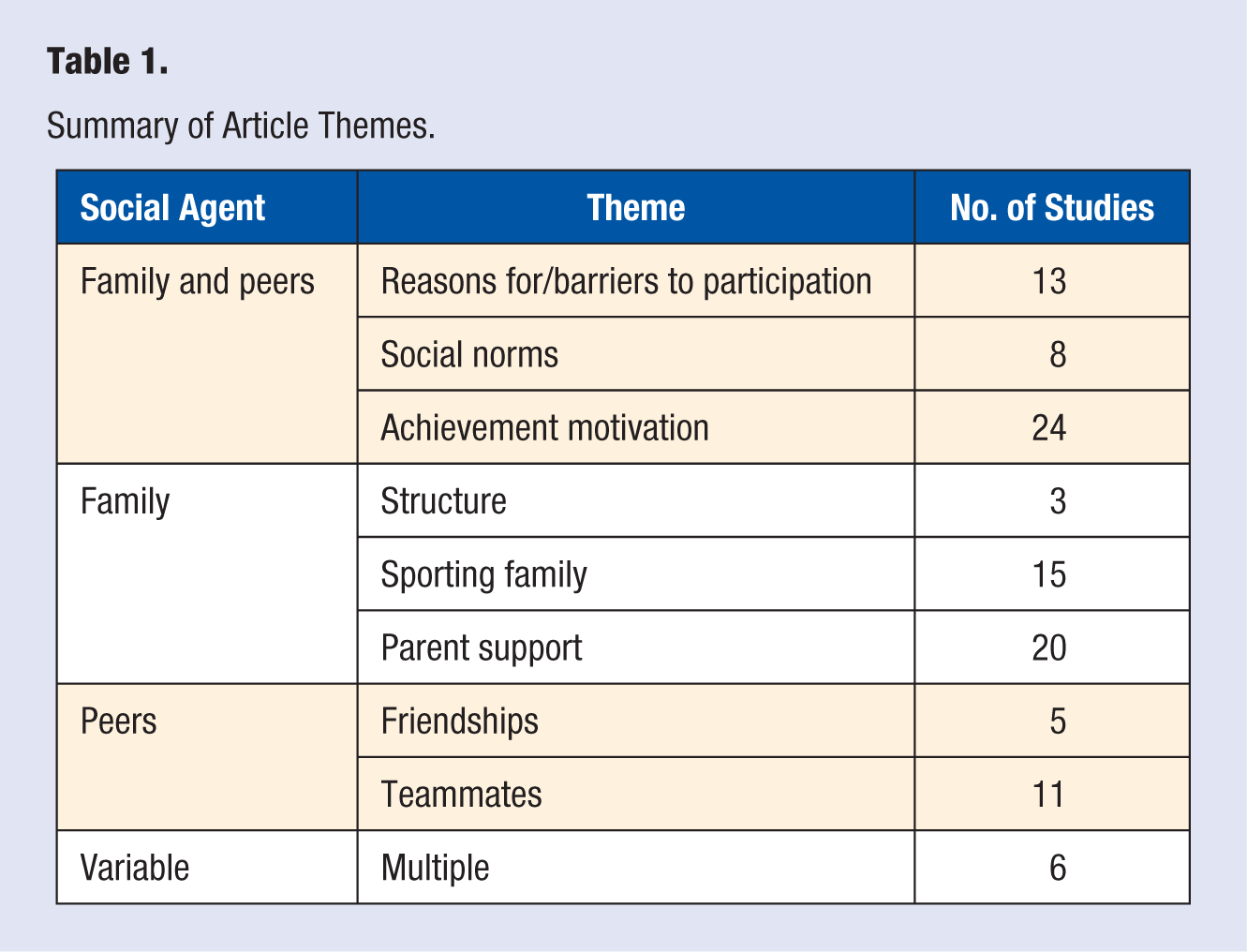
The articles represented 8 broad themes as shown in Table 1. These included reasons for/barriers to participation, social norms, achievement goal theory, family structure, sporting family, parent support, value of friendship, and influence of teammates.
Summary of Article Themes.
Reasons for and Barriers to Participation in Youth Sport
Several studies, using surveys or qualitative interviews, indicated that the most common reasons children gave for participating in youth sports were because of friends or family (see Supplemental Table A). Five qualitative studies29-33 asked participants to describe reasons for sport participation. An Australian study of 9- to 12-year-old children reported family, siblings, and community reasons for joining soccer, 29 which was echoed by a study of Canadian adolescents, 31 but friendships were important for continued youth sport participation. 29 Another study of adolescent soccer players in England found that family, particularly bringing the family together and connecting with family members was motivation for participating in youth sport. 30 Additionally, involvement and engagement with others was a theme that emerged in a qualitative study that interviewed Swedish adolescents about their participant in youth sport. 32 However, these results may be biased by interviews with children and adolescents who are participating in sport. Similarly, Coleman et al 33 found that UK adolescents who participate in sports report friends as a reason for participating; however, those who do not participate in youth sports reported friends as a barrier because these participants perceived sport to take away from time to be social.
Quantitative surveys had inconsistent results regarding the role of family and peers for participating in sports. A study of boys aged 6 to 10 years in the United States found the top reasons for participating in sport to be feeling part of a team and being with and making new friends. 34 However, a survey of Australian children and adolescents reported competition, skills, physical fitness, and liking a challenge as top reasons for participating. 35 It is possible that there are cultural or racial differences in reasons for participation in youth sport, as found in one study, 36 or differences in age groups. Basterfield et al 37 found that physical barriers (eg, not having transportation) were more important for 9-year-olds in England, but social environmental factors (eg, friends and peer acceptance) were more important for 12-year-olds. Other evidence suggests gender differences may account for some differences in participation and factors related to it with girls having greater social influences. 38 A survey of French adolescents found that boys reported having a friend in sport as a reason for participating, while girls more specifically participated for encouragement and support from parents, siblings, and friends. 39 An additional parental barrier to participating included a fear of injury.40,41
Social Norms
Seven cross-sectional and qualitative studies addressed social norms,42-48 displayed by family and peers, as they are associated with youth sports. These mainly included perceptions of gender and popularity. Several older studies examined what characteristics high school students’ value for popularity. While one study found athletes were most popular, 43 another found that high schoolers would prefer to be remembered for being smart as opposed to an athlete. 45 Unsurprisingly, youth perceptions of popularity were highly influenced by gender, not only of the participant, but also the sport in which they participate. One study found male athletes were considered more popular and boys valued sports for popularity. 43 Furthermore, females in stereotypical “feminine” sports (eg, ballet) were given higher status as rated by their peers compared to those in stereotypical “masculine” sports (eg, karate, basketball).42,46 These gendered perspectives existed among family members as well as peers. Two studies examined family gender stereotyping from parents and sibling order, with boys more likely to have sport or “masculine” toys from early ages.47,48 While the majority of this research was conducted prior to 2000, a more recent Serbian study using social network methods found that those who participate in sport have higher sociometric status as rated by their peers. 44
Achievement Goal Theory
Twenty-four studies were based on achievement goal theory and included studies of motivational climates and goal orientations (See Supplemental Table A). Twenty-one of these studies were cross-sectional, with only 2 longitudinal49,50 and 1 qualitative. 51 Both peer and parent motivational climates, or the psychological environment that is created in a situation, were researched. The motivational climate includes the goals (eg, social, winning) of the social agents (eg, coach, parent) which are emphasized in the environment. The majority of these studies examined associations between task or ego climates and youth outcomes such as motivation or maintenance. One study of US soccer players found parent goal orientations were associated with child orientations. 52 Task-oriented peer and/or parent climates in sports have been associated with flow, 53 intrinsic motivation and persistence in sport,54-57 and positive self-worth and enjoyment. 58 Studies also found that combinations of individual traits, such as perfectionism and stress combined with particular climates and orientations were associated with negative outcomes such as burnout59,60 and unsportspersonlike play. 61
Family-Specific Themes
Family Structure
Three cross-sectional studies examined family structure only,62-64 not whether family members participated in sports, but how many parents were in the household and sibling orders. Family structure, particularly parents, was associated with youth sports participation. In 1 large Canadian study of more than 20,000 children and adolescents 62 and 1 smaller study of 381 adolescents from the United Kingdom, 63 children from single-parent families were less likely to participate in youth sports. Only 1 study examined the effect of sibling order on sports participation and found no relationship. 64
Sporting Family
Fifteen studies examined the associations between family members’ participation in sport and a child’s participation in sports (see Supplemental Table A). Two of these included qualitative information65,66 and 2 were reviews,67,68 with the remaining cross-sectional studies. This has been both examinations of associations between family members’ sporting behaviors as well as possible genetic contributions. Three studies have discussed a potential genetic basis of shared of sports participation with 2 being reviews, concluding limited evidence for a genetic influence.67,68 The 1 cross-sectional study was conducted in the Netherlands and found relationships in sports behavior between parents, and between female twins, but not between parents and offspring. 69 Other studies have consistently found that children with parents who participate in sport, or are active, are more likely to participate in sports.65,70-74 With regard to siblings specifically, one study found that both sibling participation in elite or nonelite sports and the interaction with sibling order related to a child’s sport participation. 75 For example, children with an older sibling who participated in the same sport were more likely to be elite athletes.
Parent and Family Support
Twenty studies researched how parents provide support for children in youth sport as well as potential barriers that they may face to providing that support. Again, the majority were cross-sectional studies; however, 7 were qualitative,76-82 1 was longitudinal, 83 and 1 was a review article. 84 Parents play several roles for youth in a sport setting, including being supporters (eg, cheering from the sideline), coaching, managing (eg, fundraising). and being providers (eg, providing transportation). 80 The majority of studies described parental support as an important facilitator for participation.77,82,84,85 While multiple studies describe the importance of financial support,78,79 and often financial toll, parents provide other forms of support including tangible, esteem, information, emotion and network support. 81 Parental modeling of sport, while associated with higher rates of child participation, may not be as critical for sports participation as other forms of support.86,87 On the other side, children who receive negative parental support, such as pressure to excel88,89 or hostility, 90 may result in a negative experience for children in sport. Some barriers parents experience in providing support include cost, time, and work.76,91
Peer-Specific Themes
Value of Friendship
Four cross-sectional studies92-95 and 1 cross-sectional and longitudinal study 96 examined friendship in sports. Generally, youth have friends who participate in sport with them 95 and friendships in sport may predict sporting commitment. 94 However, the reverse may not be true. Participating in sport together was not critical for friendship. Socializing and school were more important for maintaining friendship compared to participating in sports together as ranked by fourth and eighth graders in the United States. 93 Bigelow et al 92 found that friendships were also resilient to sporting context, meaning that if a child has a friend on another team, they can still maintain that friendship. In the National Longitudinal Study of Adolescent Health in the United States, a social network analysis of more than 67 000 adolescents found that children are more likely to be friends if they participate in sport together and in a longitudinal follow-up of a subsample of 2550 participants, those who participate in sport together are more likely to be friends 8 months later. 96
Influence of Teammates
More specifically than peers and friends, 11 studies described factors related to teammates that influenced behaviors, both prosocial and antisocial behaviors. These included 5 cross-sectional studies,97-101 2 qualitative studies,102,103 2 longitudinal studies,104,105 1 quasi-experimental study, 106 and 1 experimental study. 107 Being involved in youth sport itself may lead to improved prosocial behaviors.102,105-107 The antisocial behaviors studied included bullying, aggression, and unsportspersonlike conduct. Sporting context, 97 team norms, 101 and self-efficacy 98 have been associated with antisocial behaviors. Baar and Wubbels 97 conducted a survey of more than 1400 10- to 12-year-olds in the Netherlands and found that sports clubs had higher levels of aggression than school sports and that this may result from different prosocial and Machiavellian resource control strategies in different sporting contexts. A study of ice hockey players in Canada, found that teammates who perpetrated antisocial behaviors saw their behavior as justified and acceptable, while positive teammate behaviors influenced social identity of the team. 102 Group cohesion 104 and positive group membership 105 may be beneficial for team outcomes and weaker social connections have been associated with bullying. 99 The 1 experimental study found in this review, compared a coach-led soccer environment with a peer-led soccer environment, and found that those in the peer-led group had higher prosocial behaviors and communication. 107
Cross-Themes
Six studies included multiple themes of those described above.108-113 Two qualitative studies conducted with Australian adolescents examined reasons for participating, including participate to advance education, barriers to participation, including lack of parent provided transportation, how having active family members promoted sport, enjoyment of participating with friends, and influences from peer social norms.108,109 The other studies were cross-sectional surveys and examined how both parents and peers interest were higher in athletes compared with nonatheltes, 111 how strong parent support may counteract peer negative support, 112 how parent and peer support is associated with self-esteem 110 and important for fun in sport. 113
Discussion
This scoping review identified 8 main themes of existing research related to social influences on youth sport, not including coaches. These themes are not exclusive or comprehensive to all the potential themes of social influences on youth sport, but a summary of the major research themes in existing literature. The social agents include parents, siblings, extended family, friends, teammates, other peers, as shown in Figure 1. While this represents an oversimplified view of the complex and nuanced relationships influencing youth sport, it is a current summary of the broad themes existing in the literature. These social agents have been shown to influence motivational climates that interact with goal orientations. All these social influences exist within a system of social norms.
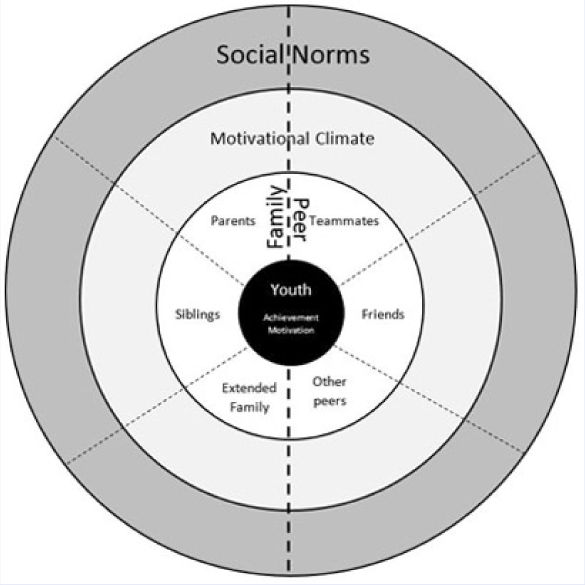
Sporting Social, a description of themes resulting from a scoping review of the social influences on youth sport.
Friends were consistently reported as a predominant reason given by children and adolescents for participating in sports. Thus, to increase and sustain participation, it is important to involve the friendship network. It is likely that friendship importance and quality differ by gender and ages and may be differentially associated with sport motivation. 114 Future interventions may target friend groups to all participate in a sport as opposed to including individual children or adolescents. Family, including siblings and parents were also given as reasons for participating. Similarly, families should be included in the sporting experience. While sport is not suggested to be important for maintaining existing friendships, continuing sport may be highly dependent on whether youth have a friend participating with them. This may have implications for how teams are created, for example, keeping friends together on the same team instead of randomly selecting teams. This may also help in minimizing parent barriers. However, friendships may also result from being on teams, and coaches should facilitate these friendships to maintain sports participation and positive benefits of sport.
In addition to coaches, teammates have a large influence on the sporting experience, which can be both positive and negative. More effort is needed to ensure that this is a positive experience that encourages prosocial behaviors using systematic evaluation and valid interventions. 115 For example, in addition to teaching skills and sport-specific team strategies, a good youth sport experience will also implicitly and potentially explicitly teach good social skills similar to other quality after-school programs. 116
Few studies examined family structure in specific relation to sports’ participation. A single-parent home may be associated with fewer time and financial resources which are cited as key barriers for parental support.76,91 While there was limited research on siblings and sport, there has been more research on sibling concordance of broader health behaviors, including physical activity, 117 and associated health outcomes such as obesity. 118 It is possible that total number of siblings, and not birth order may be more important, which may be indicative of family socioeconomics or differences in parenting strategies 118 ; however, birth order has shown to be associated with other types of achievement such as educational attainment 119 and related skills such as cooperation. 120 While family structure is not an easily modifiable factor, it may help to target resources toward youth in particular family situations who are less likely to gain the benefits from sports.
Not only may family structure influence sporting participation, but the sport behaviors of those family members have shown to be associated with youth sport participation. While several studies examined cross-sectional associations between sporting or activity habits of parents being positively associated with sport participation in children, this scoping review identified few articles on the effects of siblings’ sports participation on sports participation. A study of elite athletes found interesting and complex relationships between birth order and level of sport. 75 Their study of Australian and Canadian elite athletes found that elite athletes were less likely to be first-born and more likely to have older siblings who participated in recreational sports. This suggests that there may be unique parenting or a transfer of skills or motivation that may encourage younger siblings who have older siblings involved in sports, though not at an elite level, to become elite athletes. For example, research has shown that eldest children receive more psychological support than youngest children. 121 Similar to friends, if siblings play a large role in promoting youth sports participation, sports programs and interventions may aim to involve siblings in the sport experience. It is likely that the effect of siblings on sports participation is complex and an understanding of sibling order, gender, personality types, relationships, and sporting context are likely to influence sporting participation.
It is consistent that parents are an important supporter of youth sports participation, which is consistent with broader physical activity. 122 Parents need to be included when targeting participation and barriers to parent support, particularly time and money should be addressed. However, it is interesting to note that financial support, while a major form of parent support for youth sport participation, is not the only type of support that may be beneficial for participation. 81 Parents should be made aware of the multiple forms of support, beyond financial support, that they can provide for their children. Less is known on the influence of extended family. One study addressed how the influence of nuclear vs extended family on sporting behavior may differ by socioeconomic status. 66 When parental barriers are high due to limited resources, extended family may be a key social agent. Different cultures may have differing functional 123 involvements levels of extended family members that may also need to be included in the sporting experience.
Multiple social agents, parents, teammates, and peers, have been researched in the context of achievement goal theory. Achievement goal theory has been the dominant theoretical framework for understanding the influence of family and peers on youth sport experiences, and examining motivation in educational research in general. 124 While much of the research has taken a simplistic approach to achievement motivation goals and orientations, a more complex understanding is need to better understand youth sport behavior and outcomes. 124 Most research seems to suggest that for the majority of participants, a task parent and peer climate are most conducive to positive sporting experiences. Therefore, youth sport experiences that encourage task-oriented climates should be promoted. Other theoretical frameworks should also be explored. In taking a broader social network approach, theories, and methods from social network analysis such as social capital theory or rational choice theory may be considered. 125 For example, instead of limiting analyses to a single social agent (ie, parents), social network analysis may examine multiple social agents and then connections between these agents. When examining a peer network, some peers may hold more influential status or complex connections between peers may be critical to influencing participation.
Finally, broader social norms have shown to influence these social relationships in the context of youth sport participation. Athletic or sport status was not as highly valued among high schoolers as expected.43,45 However, these studies were conducted in 1976 and 1994. The role of sports in society continues to evolve with a seemingly greater impact at all levels. Since the publications of those studies, sport has been increasingly specialized, commodified, and an increased presence in media. 126 Even the way that individuals interact with the media has dramatically changed, with digital communication and social networking making sports easily accessible and “telepresent.” 127 Sports media has shown to influence social norm perceptions. Current studies may find that the current form of sports, both professionally and recreationally, and how that is communicated and perceived in society has changed.
The role of gender stereotypes may have also changed in recent times; however, some evidence suggests that gender stereotypes are still present and may be strengthened. 128 These gender norms may be reinforced as children get older with girls less likely to join sport at older ages and some boys joining during adolescence. 19 Recently, adolescents have tended to rate masculine activities as more masculine, feminine activities as more feminine, and neutral activities as more masculine than did adults; though the role of gender stereotypes can change. 129 There are still different social pressures and inequalities for girls participating in sports compared to boys. The way we consider gender in sport has changed and there is a growing appreciation of the intersectionality of race, cultures, and gender. 130 More qualitative and longitudinal studies on how these social norms influence participation over time are needed. Especially during the transition from childhood to adolescence, as it is likely that these peer and family influences change during these different life stages. Research on physical activity in general suggests that the influence of family changes to a greater influence from peers. 131
Overall, existing literature suggests an important role of family and peers on youth sport participation. However, the bulk of literature is limited by single cross-sectional survey study designs. This is an appropriate study design for many of the research questions such as how the structure of the family is associated with child sport participation. However, more longitudinal studies are needed to track participation over time and factors that may influence maintenance of dropping out of youth sports. Furthermore, experimental studies, intervening within social networks, such as with siblings or friends, may be a key method of increasing youth sport participation. However, change at the population level will not be affected without widespread implementation and dissemination of the findings from these longitudinal and experimental studies. Currently, there is a lack of implementation and dissemination research related to sports participation. This current scoping review was limited in depth to include a breadth of studies, while also including some indicators of study quality. Future systematic reviews may include more depth of studies as they relate to a single social agent such as parents or teammates. However, this is a first preliminary step in assessing the evidence for a role of social influences on youth sport participation and how these multiple influences may interrelate (Figure 1).
Conclusion
Social influences are important factors for ensuring participation, maximizing the quality of the experience, and capitalizing on the benefits of youth sport. Social factors appear to critically influence youth sport participation. Thus, future research, programs and policies hoping to increase participation and ensure high quality sport experiences, need to better understand the nuanced social relationships and address the many social agents influencing youth sport.
Footnotes
Acknowledgements
We would like to thank Grady Finley and Torey Walter for their help in collecting and extracting articles.
Declaration of Conflicting Interests
The author(s) declared no potential conflicts of interest with respect to the research, authorship, and/or publication of this article.
Funding
The author(s) received no financial support for the research, authorship, and/or publication of this article.
Ethical Approval
Not applicable, because this article does not contain any studies with human or animal subjects.
Informed Consent
Not applicable, because this article does not contain any studies with human or animal subjects.
Trial Registration
Not applicable, because this article does not contain any clinical trials.

References
Supplementary Material
Please find the following supplemental material available below.
For Open Access articles published under a Creative Commons License, all supplemental material carries the same license as the article it is associated with.
For non-Open Access articles published, all supplemental material carries a non-exclusive license, and permission requests for re-use of supplemental material or any part of supplemental material shall be sent directly to the copyright owner as specified in the copyright notice associated with the article.
