




Abstract
Adequate intake of dietary fiber is associated with digestive health and reduced risk for heart disease, stroke, hypertension, certain gastrointestinal disorders, obesity, type 2 diabetes, and certain cancers. According to consumer research, the public is aware of the benefits of fiber and most people believe they consume enough fiber. However, national consumption surveys indicate that only about 5% of the population meets recommendations, and inadequate intakes have been called a public health concern. To address the fiber consumption gap and formulate potential solutions, researchers, educators, and communicators convened at a Food & Fiber Summit on January 28, 2014, in Washington, DC. Panelists and attendees devised communication strategies to correct consumer misperceptions about fiber. These misperceptions include commonly held beliefs that all whole-grain foods are good sources of fiber and that foods with fiber are expensive, unpalatable, and complicated to prepare. To help close the fiber intake gap, nutrition and health educators can use communication strategies such as providing clear and concise information, recommending flavorful fiber-rich foods, and describing the benefits of adequate fiber intake. Several supporting messages were developed to effectively communicate about fiber. An example is to advise people to consistently check nutrition labels to find good sources of fiber.
‘ . . . confusion among the public about what foods provide good sources of fiber and how much fiber to consume . . . ’
The role of dietary fiber to help promote good health and reduce risk for several chronic diseases is supported by years of dietary recommendations and a significant body of research.1-8 Fiber intake recommendations from the Institute of Medicine (IOM) range from 19 grams to 38 grams per day, depending on gender and age. 9 However, the vast majority of Americans fall exceedingly short of meeting these recommendations. 10 The reasons are multifactorial and include confusion among the public about what foods provide good sources of fiber and how much fiber to consume, individual misperceptions that fiber recommendations are being met, and food trends such as the popularity of gluten-free diets, which are inherently low in dietary fiber.11-15
To address the fiber intake shortfall, a Food & Fiber Summit was held on January 28, 2014, in Washington, DC. The Summit convened nutrition researchers, educators, and communications experts to explore the issues behind the fiber consumption gap and devise practical solutions to help healthcare practitioners close the gap.
This article focuses on Summit outcomes concerning communication strategies to help people meet fiber intake recommendations.
The Fiber Consumption Gap: A Continuing Public Health Concern
The IOM defines total fiber as the sum of dietary fiber and functional fiber. Dietary fiber includes nondigestible carbohydrates and lignins that are intrinsic and intact in plants; functional fiber includes isolated, nondigestible carbohydrates that have beneficial physiological effects in humans. Common sources of intrinsic fiber include grain products, vegetables, legumes, and fruit. 16 Many functional fibers are isolated from intrinsic sources and added to other foods.
The recommended daily Adequate Intake (AI level) established by the IOM is based on total daily fiber and does not differentiate between dietary and functional fiber. 9
Both intrinsic fiber and functional fibers are associated with a host of potential health benefits, with varying effects depending on the source and specific type of fiber. The fiber component of foods is associated with reduced risk of cardiovascular disease, coronary heart disease, stroke, hypertension, certain gastrointestinal disorders, obesity, and metabolic dysfunctions, including prediabetes and type 2 diabetes, and colorectal, gastric, and breast cancers. Fiber also is associated with digestive benefits, such as increased stool bulk, decreased transit time, and fermentation by colonic microflora.1-8
Although adequate intake of all types of fiber is associated with many health benefits,1,2 an estimated 95% of American adults and children do not consume recommended amounts of fiber. 10 According to 2009-2010 National Health and Nutrition Examination Survey (NHANES) data, mean daily fiber intake is 16.2 grams, 10 representing an increase of approximately 1 gram from 15.1 grams found in the 2001-2002 survey. 17 The most recent estimates are significantly below daily intake recommendations from the IOM (Table 1).
Institute of Medicine Recommended Daily Intake for Fiber a .
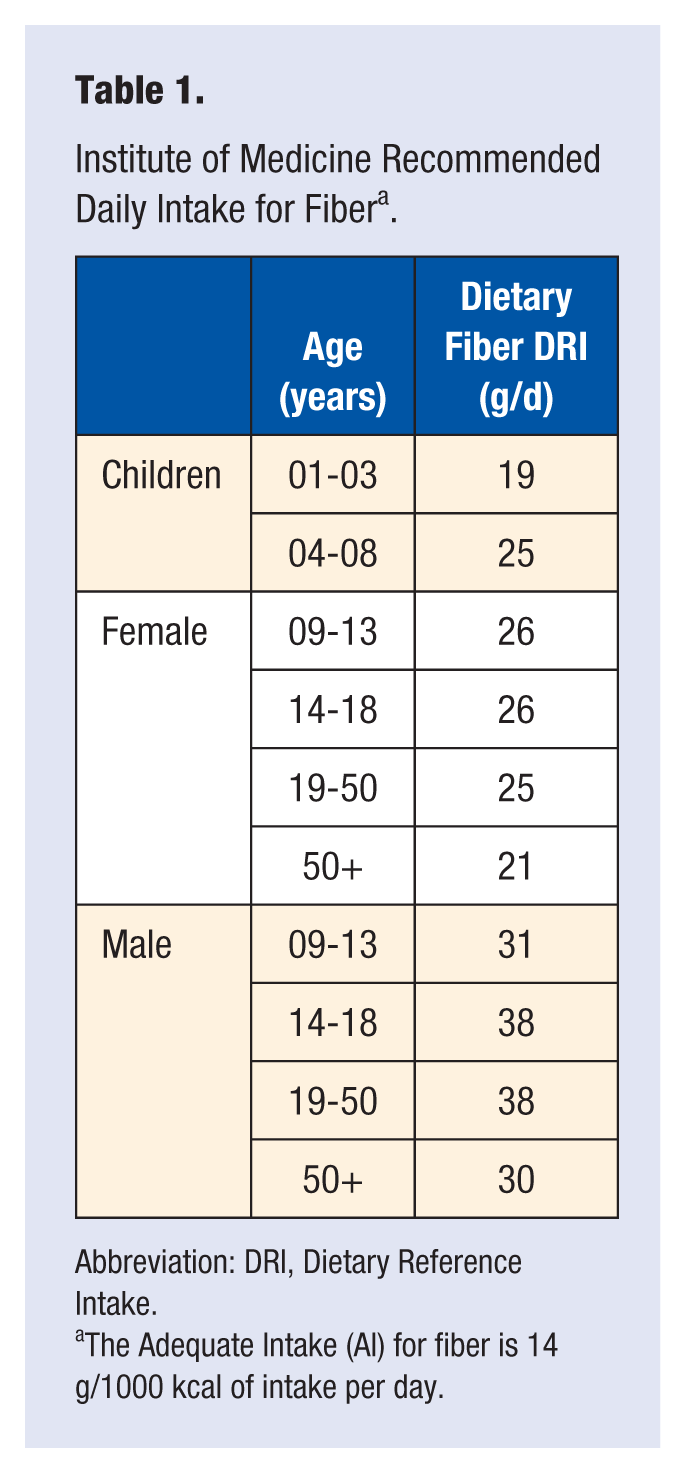
Abbreviation: DRI, Dietary Reference Intake.
The Adequate Intake (AI) for fiber is 14 g/1000 kcal of intake per day.
Because of the significant gap between total fiber intake and fiber recommendations, the Dietary Guidelines for Americans have identified fiber as a “nutrient of concern” since 2005. The continuing low levels of fiber intake may be considered a public health concern in light of the health benefits related to adequate fiber intake.18,19
Economic benefits may result from improving dietary fiber intake. Recent economic modeling found that increasing dietary fiber consumption may lead to considerable annual savings for functional constipation-related health care costs. According to the analysis, an estimated $12.7 billion in direct health care costs related to functional constipation could be saved if all American adults increased dietary fiber intake by 9 grams per day to reach the US Food and Drug Administration Daily Reference Value of 25 grams per day.20,21 Just a 3-gram per day increase by half the adult population could save more than $2 billion. 20
Consumers Recognize the Benefits of Fiber, but Mistakenly Believe They Consume Enough
Research indicates that many people understand the health benefits of fiber and strive to increase their fiber intake. 22 They also believe they consume enough fiber, despite evidence to the contrary. 12 According to the 2013 Food and Health Survey conducted by the International Food Information Council, respondents identified several health benefits associated with fiber, including maintaining a healthy digestive system (85%), weight management (72%), heart health (52%), and healthy blood sugar (43%). In addition, nearly 7 out of 10 (68%) identified fiber as a food component that influences their decision of what packaged foods to buy. Six in 10 (62%) said they are making an effort to eat more fiber by consuming more fruits and vegetables (88%) and more foods with whole grains (78%). 22 Other research conducted by the International Food Information Council indicates that two thirds (67%) of consumers believe they meet their fiber needs, 12 in sharp contrast to 2009-2010 NHANES survey data indicating that only about 5% do so. 10
Despite many consumers’ reported recognition of fiber’s health benefits and interest in consuming more fiber, the question remains as to why a significant and long-term fiber consumption gap exists. Speakers and attendees of the Food and Fiber Summit identified several potential barriers to adequate fiber consumption, which are described below.
Confusion About the Fiber Content of Foods: A Barrier to Meeting Recommendations
Confusion about what foods are good sources of fiber may hinder the ability to meet intake recommendations and achieve expected health benefits. A recent Omnibus Survey indicates that many people look to foods labeled “whole grain” as a source of fiber. 11 Additionally, both the 2005 and 2010 Dietary Guidelines for Americans recommend consuming at least half of all grains as whole grains to increase fiber intake.18,19 However, although whole grains usually provide more fiber than refined grains, the naturally occurring fiber content of whole grains varies widely (Table 2), as does the fiber content of foods made from whole grain ingredients. Furthermore, not all products labeled as whole grain meet the Food and Drug Administration definitions for good source of fiber (at least 3 grams per serving) or excellent source of fiber (at least 5 grams per serving). 21
Fiber Content of Several Whole Grains a .
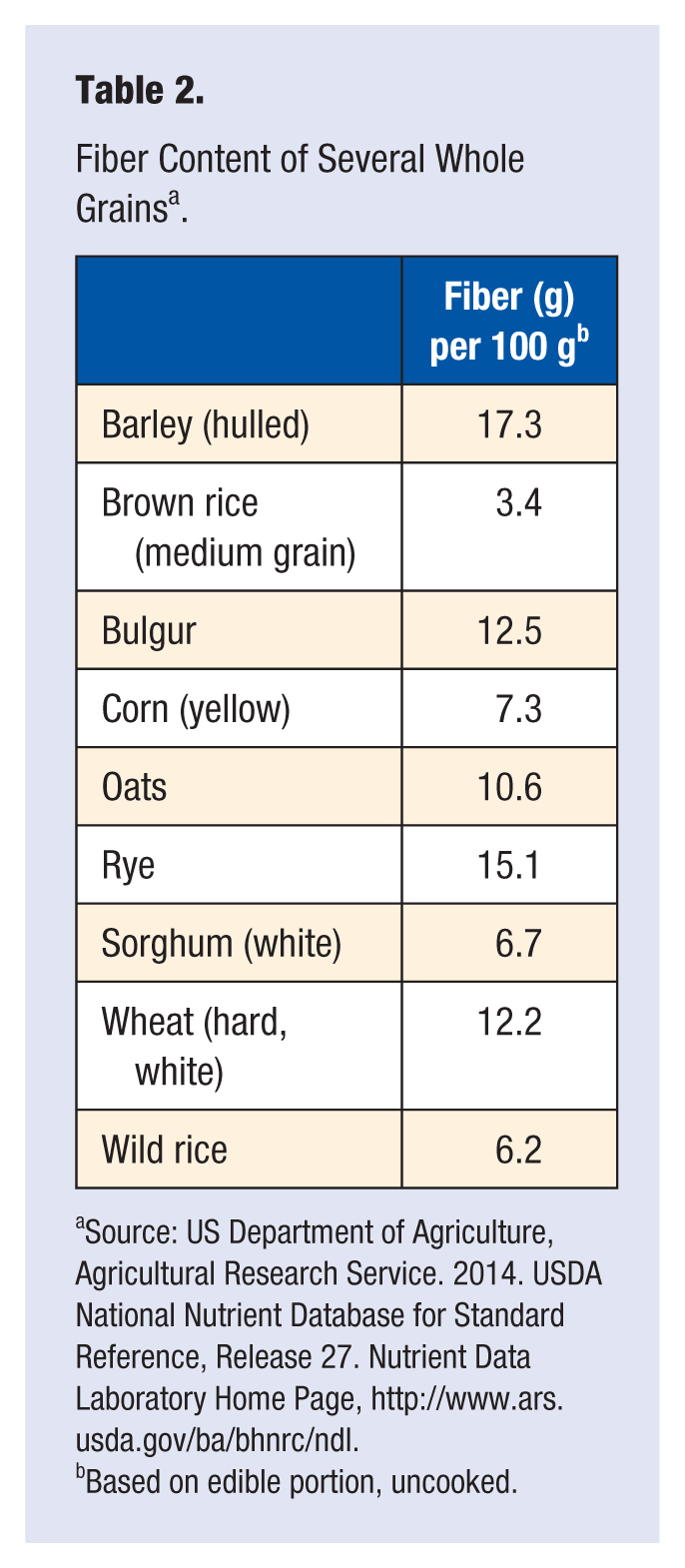
Source: US Department of Agriculture, Agricultural Research Service. 2014. USDA National Nutrient Database for Standard Reference, Release 27. Nutrient Data Laboratory Home Page, http://www.ars.usda.gov/ba/bhnrc/ndl.
Based on edible portion, uncooked.
An audit of the cereal aisle revealed that about one third (34%) of ready-to-eat cereals that carry a whole-grain claim are not a good source of fiber. 23 Checking the Nutrition Facts panel for the fiber content of whole-grain foods can help consumers select those whole-grain foods that are good or excellent sources of fiber. However, the previously referenced Omnibus Survey indicates that only 1 in 4 (25%) consumers examine the Nutrition Facts panel every time they purchase whole-grain foods, 11 and objective observational research in the grocery aisle suggests that less than 15% of shoppers look anywhere other than the front panel of the package when shopping. 11 In addition, lack of regulation concerning the use of whole grain labeling may contribute to confusion about whole grains and fiber.24-26
As mentioned earlier, consumers mistakenly equate fiber and whole grains and rely on foods labeled “whole grain” as fiber sources. In the Omnibus Survey, two thirds (66%) of respondents identified as “making an effort to add fibers to their diets” said a reason to eat more whole grains was “to get more fiber” and 85% expect products labeled “whole grain ingredients” or “made from whole grains” to be good or excellent sources of fiber. 11 In addition, nearly 8 of out 10 (78%) of all respondents agreed that foods made from whole grains are one of the best sources of fiber, and 7 out of 10 (69%) rely on foods made with whole grains for their daily fiber needs. 11
Other Barriers to Meeting Fiber Recommendations
The growing popularity of gluten-free, wheat-free, and grain-free diets, which tend to limit or eliminate fiber-rich grains from the diet, may contribute to the fiber intake deficit.13-15
Summit panelists and attendees also noted several observed misperceptions among consumers that may contribute to low fiber consumption. These include beliefs that fiber-containing foods do not taste good, are expensive, and are time-consuming and complicated to prepare. Also noted was consumer hesitancy to eat foods with higher fiber content due to perceived and real negative digestive effects, such as intestinal gas.
Communication Strategies to Bridge the Fiber Intake Gap: Insights From the Summit
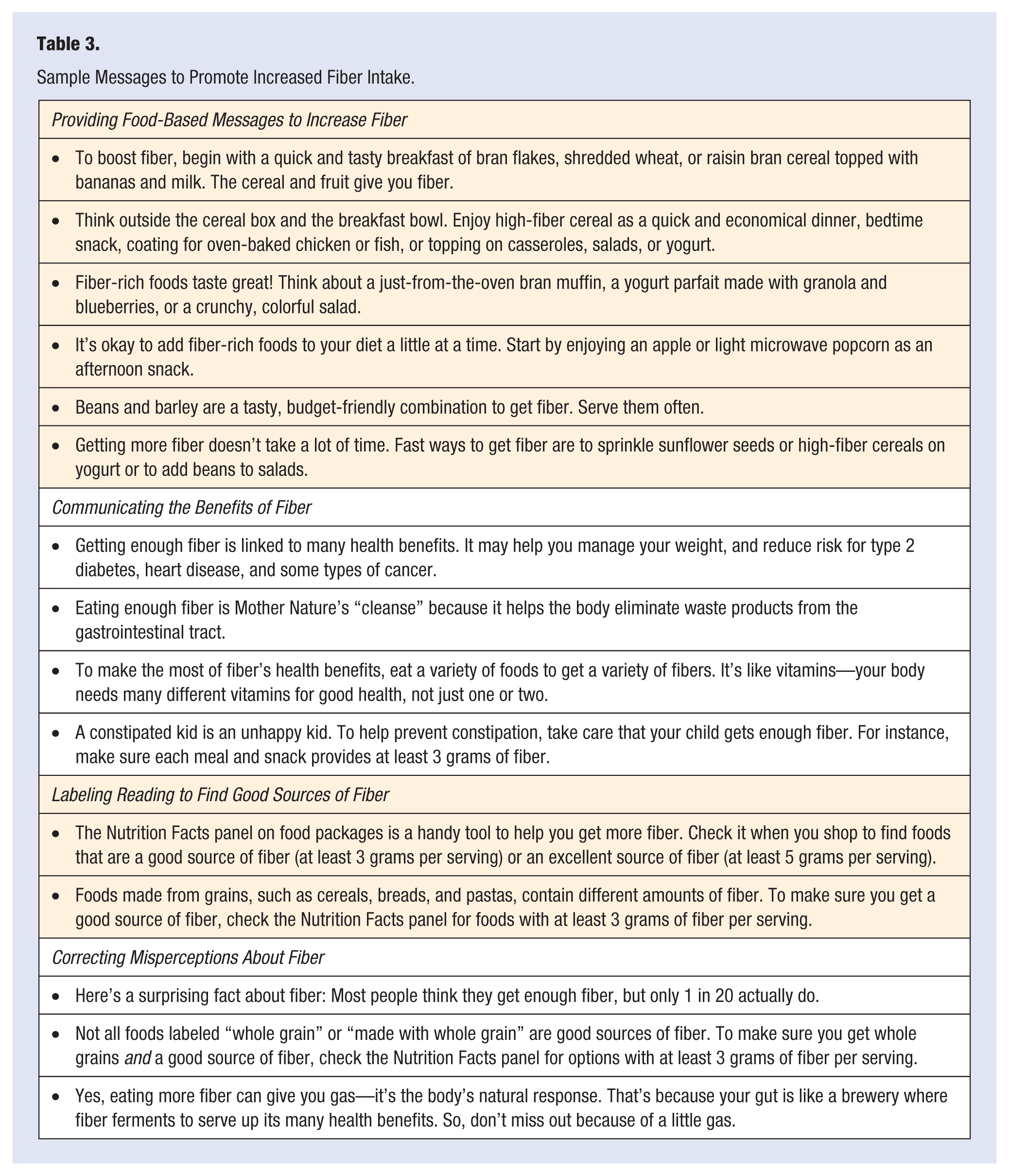
During breakout sessions, attendees considered Summit learnings to propose communication strategies and messages that health care practitioners and nutrition communicators can use to help address consumer barriers about fiber and help consumers increase fiber intake. Three key strategies developed by the group are summarized below, and supporting sample messages appear in Table 3.
Sample Messages to Promote Increased Fiber Intake.
Use Short, Specific, and Simple Recommendations to Address Confusion and Misperceptions About Fiber
Provide easy-to-follow recommendations to increase fiber, such as choosing a bowl of high-fiber cereal and fruit for breakfast, a cup of lentil soup for lunch, or a serving of broccoli for dinner. Speak in consumer-friendly language and avoid scientific terminology they may not understand.
Because the fiber content of foods varies, teach people how to use the Nutrition Facts panel on packaged foods to find options containing at least a good source of fiber (3 grams or more per serving) when possible. This step is especially important for foods labeled “whole grain” or “made with whole grains” because, despite their variable fiber content, consumers rely on these foods as fiber sources.
Offer just 1 or 2 suggestions at a time. Consumers may be more likely to make gradual but meaningful dietary changes, and keeping fiber advice brief addresses time constraints for both consumers and professionals.
In addition, customize fiber advice to make messages as relevant to each person as possible. They will be more likely to follow advice that considers factors such as their food preferences, lifestyle, culinary skills, cultural influences, and economic circumstances.
Consider referrals to a registered dietitian nutritionist when more comprehensive dietary advice is warranted.
Relay Messages That Lead With Food and Flavor, Not Fiber, to Address Negative Taste Perceptions
Attendees concurred that practical advice that promotes appealing and flavorful fiber-rich foods resonates better with consumers than technical discussions about nutrients. In addition, encouraging consumers to meet recommendations by enjoying an array of fiber-containing foods such as grains, vegetables, legumes, and fruit, instead of fiber supplements, helps them consume the variety of fibers needed for multiple health benefits.
For nutrition communicators who are active with the media, including fiber messages during broadcast or print interviews, and in articles, blogs, videos, recipes, and other media, can be an effective way to reach large numbers of consumers with fiber messages. Similar to one-on-one communications, consumers seem more receptive to print and online fiber messages that focus on flavorful foods, according to Summit panelist observations. In addition, consumers are more interested in specific foods, food categories, or occasions (eg, breakfast), and may be more interested in fiber messages that are incorporated in recipes and food tips.
Communicate Fiber’s Many Benefits to Address the Belief That Fiber Is Only for Digestive Health
As part of food-focused messages, describe the potential health advantages of consuming adequate fiber. Consumers may be more motivated to increase fiber intake when they know it is associated with a personally meaningful and tangible benefit, such as assistance with weight management, heart health, or digestive health. Guidance to eat a variety of fiber-containing foods to receive a variety of benefits also may motivate, as well as a simple message about the potential health economic advantages of consuming adequate fiber from foods. 20
In addition, acknowledge the intestinal effects of increasing fiber intake. Traditionally, health care practitioners and nutrition communicators have advised people to slowly increase fiber to avoid or lessen side effects, such as intestinal bloating and gas. However, these effects are a normal consequence of fiber fermentation in the intestine, a process that is responsible for some of fiber’s health benefits. Assurance that having gas is a normal, short-lived effect of eating more fiber and is a signal that fiber is doing its job of providing longer-term benefits may help alleviate concern.
Strengthening Future Messaging to Close the Fiber Intake Gap
Summit panelists and attendees identified several opportunities to clarify and strengthen fiber communications to help close the fiber intake gap.
Stronger fiber recommendations in nutrition policy and dietary guidance are needed. Specifically, guidance must directly address consumer confusion about fiber and whole grains by recommending that the public most often choose whole grains that are a good source of fiber (at least 3 grams per serving). Emphasizing that all types of fiber provide health benefits and encouraging consumers to choose a variety of appealing fiber-containing foods may positively influence fiber intakes.
Educating people about front-of-package labeling systems that may highlight fiber content per serving, such as Facts Up Front from the Grocery Manufacturers Association and the Food Marketing Institute, may help consumers shop for foods that provide the best sources of fiber.
Public–private partnerships can help communicate consistent messages about fiber, combat misinformation about grains and carbohydrates, and create a fiber call-to-action among health professionals, nutrition communicators, the food industry, and consumers.
Nutrition communicators can use Summit findings to consistently communicate targeted and benefit-driven advice about fiber. Relaying the benefits of fiber beyond digestive health and offering customized and appealing food-based fiber tips can make inroads on closing the fiber intake gap.
Footnotes
Acknowledgements
The Food & Fiber Summit was supported through an unrestricted educational grant by the Kellogg Company.
Authors’ Note
Patricia Felt-Gunderson is an employee of the Kellogg Company. Diane Quagliani, Nutrition Consultant, was paid by Kellogg Company to develop the article.