



Abstract
Increasing physical activity is a possible strategy for the prevention and/or treatment of many physical and mental health conditions that are experienced among cancer survivors. Although engaging in physical activity is safe, feasible, and effective for cancer survivors, few are sufficiently active to obtain health benefits. This review summarizes findings from published research studies and review articles to highlight the benefits of physical activity for cancer survivors. For the purpose of this review, a cancer survivor is defined as an individual who has been diagnosed with cancer and who has completed all systemic or primary treatments. This review includes evidence from a wide range of sources to help provide a holistic summary of both quantitative and qualitative findings on the benefits of physical activity for cancer survivors. The benefits are presented within survival, biological/physiological, psychological, and social themes using a using a broad quality of life model. The evidence suggests physical activity is associated with reduced rates of mortality, improved immune function, improved health-related quality of life, decreased fatigue, improved fitness, maintenance of healthy weight and bone density, improved physical and psychological indicators of well-being, and that physical activity programs can foster social support and feelings of connectedness. This review establishes that physical activity may reduce the various adverse side effects associated with cancer treatments and improve cancer survivors’ physical, psychological and social quality of life facets. Encouraging physical activity is the first step in helping cancer survivors experience long-term health and well-being.
Survival rates for many cancers have improved considerably over the past 20 years, in part because of early detection and improvements in treatments. It is estimated that there are close to 700 000 individuals in Canada and 12 million individuals in the United States who are living as survivors of cancer.1,2 There are several competing definitions of a cancer survivor that range from including individuals immediately following a diagnosis, around the time of primary and systemic treatment initiation, or after primary treatment completion. It is important to adequately define and target individuals at various stages across the cancer trajectory given the unique needs that are present during initial diagnosis, treatment plans, and following medical intervention. Many reviews target individuals from cancer diagnosis onward. For the purpose of this review, we are defining a cancer survivor as an individual who has had a diagnosis of cancer, has completed primary treatment (ie, surgery, radiation therapy, and chemotherapy), and who is currently disease free. 3 This survivorship period represents a unique challenge for many cancer survivors since they are no longer followed closely by multiple health specialists (surgeons, radiation oncologists, medical oncologists) yet are often making attempts to improve health to avoid complications or cancer recurrences.
Thus, increasing physical activity levels has been identified as a possible strategy for the prevention and/or treatment of these health conditions during cancer survivorship.
Many cancer survivors experience adverse short- and long-term physical and psychosocial challenges, including fatigue, pain, and decreased cardiovascular fitness, quality of life, and immune function.4,5 In addition, cancer survivors may be at increased risk for secondary cancers and comorbidities, such as cardiovascular diseases, diabetes, osteoporosis, and depression.6-8 Finally, there is a high prevalence of obesity among cancer survivors, which may increase vulnerability to experience physical and psychosocial health problems. 9 Whereas these physical and psychosocial effects are in part because of the multiple and often toxic forms of treatments received for cancer (ie, surgery, chemotherapy, radiotherapy, hormonal therapy), low rates of physical activity also represent a major challenge to improving physical and mental health.9,10 Thus, increasing physical activity levels has been identified as a possible strategy for the prevention and/or treatment of these health conditions during cancer survivorship.
There are several reviews and consensus statements presenting evidence that physical activity is feasible and safe for individuals who have been diagnosed and treated for cancer and suggesting that regular participation leads to a variety of physical and mental health outcomes.11-13 Subsequently, physical activity guidelines have been established for cancer survivors, 12 which can be undertaken in supervised and/or unsupervised settings (eg, home-based). These guidelines suggest cancer survivors should engage in 3 main types or modes of physical activity, namely aerobic activity, musculoskeletal or strength training, and flexibility training. Aerobic activity refers to any activity that uses large muscle groups, can be maintained continuously for a long period of time, and is rhythmic in nature. The physical activity guidelines recommend that cancer survivors engage in aerobic activities at moderate intensity (ie, heart rate and sweating increases, can still maintain a conversation) for a total of 150 minutes per week or vigorous/strenuous intensity (ie, fast and hard breathing, heart rate increases considerably, cannot maintain a lengthy conversation) for 75 minutes per week; or some combination of moderate and vigorous activities. Musculoskeletal or strength training refers to activities that use resistance (ie, free weights, one’s own body weight, bands) to increase one’s ability to exert (concentric) or resist (eccentric) force. Recommendations for strength training suggest cancer survivors should perform activities that work the major muscle groups in the lower and upper body 2 or 3 times per week. Flexibility refers to activities that lengthen muscles to increase range of motion around the joints. Guidelines suggest stretching major muscle groups when aerobic and strength training activities are performed. The main message regarding these physical activity guidelines is that they are very similar to those guidelines established for the general adult population. Following these physical activity guidelines is safe, feasible, and effective for cancer survivors, yet few cancer survivors are physically active. 9
The number of observational (ie, cross-sectional, longitudinal) and experimental studies examining the associations between physical activity and physical and psychological outcomes has considerably increased over the past decade. 11 The evidence on the benefits of physical activity during cancer survivorship is heavily weighted on studies of breast cancer. Nonetheless, there are emerging studies focused on colon, prostate, gynecological, hematologic (with and without stem cell transplantation), and lung cancers. The aim of this report is to summarize findings from published research studies and review articles to highlight the benefits of physical activity for cancer survivors. We acknowledge that this review does not provide information on the strength of associations or an evaluation of the study design but rather summarizes the body of work that has examined the benefits of physical activity. This being said, there are numerous review articles that have published strengths of associations and/or evaluations of study rigor14-23 and these articles have significantly informed the current review. The current review contributes to the existing evidence base in several ways. First, the focus is on reviewing the benefits of physical activity among individuals following cancer diagnosis and systemic or primary treatment. Most reviews include individuals who have received a diagnosis or who are currently going through various treatment modalities as well as individuals who have completed treatments. There are likely different needs and physical activity benefits if an individual is struggling with a recent diagnosis, enduring daily or weekly treatments that introduce multiple side effects, or has finished treatments for weeks, months, or even years. Second, the current review includes observational studies, where appropriate, showing evidence on the benefits of physical activity for cancer survivors. Most existing reviews include only randomized control trials and therefore do not adequately reflect the more experiential benefits that are described by cancer survivors in qualitative or mixed methods research. Finally, the current review focuses on the physical activity benefits that have been consistently reported to influence general quality (and quantity) of life. For this reason, the benefits are presented within survival, biological/physiological, psychological, and social themes. Using a broad quality of life model enables benefits that have not been included in other reviews, such as social support or positive emotional health indicators, to be introduced here.
Based on reviews of the literature, the benefits of physical activity are predominantly experienced by engaging in aerobic activity, usually cycling or walking, at moderate intensity for an average of 30 to 45 minutes at least 3 times per week.12,16 Benefits from resistance training are observed predominantly following programs involving large muscle groups worked at 25% to 85% of the one-repetition maximum with 1 to 3 sets of 8 to 12 repetitions on average of 2 to 3 times per week. 23 Many studies include a combination of aerobic and muscular strength training exercises, and most studies include minimal flexibility training and rarely provide details on this aspect of the program. The main benefits associated with physical activity participation have survival, physiologic/biological, psychological, and social underpinnings.
What Are the Survival-Related Benefits?
Mortality
There is growing evidence that physical activity is associated with lower rates of mortality among colon,24,25 prostate, 26 and breast cancers.27-29 Much of the evidence points to the effects on all-cause mortality, although there are specific benefits on reductions in cancer-specific mortality. Holmes et al 28 reported reductions in breast cancer deaths among individuals who engaged in physical activity of low to moderate intensity for 30 to 45 minutes per day. Furthermore, Meyerhardt et al 25 reported that highly active women were less likely to die from colon cancer compared with less active women. In a study examining cancer-related deaths, Laukkanen et al 30 reported that higher intensity of physical activity was associated with lower lung and gastrointestinal cancer deaths among men who engaged in at least 30 minutes of exercise per day. The evidence presented from these prospective cohort studies suggests physical activity may protect cancer survivors from premature death and/or death due to their cancer. Furthermore, it appears that physical activity postdiagnosis plays a more important role in reducing risk of mortality than lifetime physical activity prediagnosis. 29
What Are the Main Physiological and Biological Benefits?
Immune Function
Chronic inflammation, assessed as tumor necrosis factor-α (TNF-α), interleukin-6 (IL-6), and C-reactive protein (CRP), has been associated with poor health outcomes for cancer survivors. Physical activity may be protective of chronic inflammation. 31 CRP levels have been shown to decrease among postmenopausal breast cancer survivors who engage in moderate physical activity 3 times per week, 32 but TNF-α and IL-6 levels appear unchanged. Physical activity at this intensity has also been shown to increase natural killer cell cytotoxic activity and unstimulated [3H] thymidine uptake by peripheral blood lymphocytes. 33 Of note, there are limited studies examining immune function and chronic inflammation in non–breast cancer survivors. In a recent review of positive effects of physical activity interventions, Speck et al 16 reported insufficient evidence linking physical activity to immune variables among cancer survivors, which included T cells, lymphocytes, white blood cells, natural killer cells, mononuclear cells, neutrophils, and leukocytes. Nonetheless, chronic inflammation is a consistent marker of, and has been associated with, many of the comorbidities (ie, cardiovascular disease, hypertension, diabetes) that could affect the health of cancer survivors.34-37 Based on evidence that physical activity may reduce markers of inflammation such as CRP in individuals without a history of cancer,38,39 and thus protect against negative health conditions, aerobic moderate-intensity physical activity is recommended for cancer survivors.
Furthermore, lymphedema is a condition that develops in an estimated 2% to 40% of women treated for breast cancer.40,41 The condition is defined as localized swelling of the arm(s) due to dysfunction of lymphatic system that can cause pain, loss of range of motion, or flaring of the affected arm(s). Aerobic physical activity has been found to be unrelated to the occurrence of lymphedema.12,13 Also, lymphedema symptoms have not worsened during strength training programs. 21
Cancer-Related Fatigue
Physical activity has been studied most often as a way of reducing fatigue during cancer treatment, although studies examining its effect on cancer-related fatigue (CRF) during survivorship have recently emerged in the literature. This is important since many individuals with no clinical evidence of disease continue to experience fatigue for months and years following the completion of cancer treatment.42-45 In a systematic review of older adult cancer survivors, Luctkar-Flude et al 22 reported that aerobic and strength training may be effective in reducing fatigue during survivorship for individuals older than 65 years diagnosed with different cancer types, cancer stages, and treatments endured. Based on another systematic review of adult cancer survivors, participating in light to moderate physical activity 3 or more times per week may reduce or prevent cancer-related fatigue. 14 Similarly, Speck et al 16 suggest there is a moderate relationship between physical activity and fatigue across various cancer types posttreatment. Additionally, Basen-Engquist et al 46 found that physical activity was associated with lower levels of fatigue among endometrial cancer survivors. Courneya et al 47 reported fatigue levels decreased among mixed solid tumor cancer survivors who engaged in a self-directed physical activity intervention consisting of moderate intensity aerobic activity performed 3 to 5 days per week for 20 to 30 minutes. Karvinen et al 48 found that bladder cancer survivors who were meeting physical activity guidelines (ie, >75 minutes of vigorous intensity activity or 150 minutes of moderate intensity activity per week) reported lower levels of fatigue compared with survivors who were not meeting guidelines. Finally, McNeely and Courneya49(p948) report that physical activity is effective in reducing CRF; however, they highlight that “questions remain regarding the optimal type and timing of exercise, the long-term effects of exercise on CRF, and the efficacy of exercise in cancer survivors with moderate-to-severe CRF.” Based on the evidence, aerobic physical activity appears to be effective in reducing fatigue among cancer survivors. There is much less evidence on the effectiveness of strength training and flexibility programs in the alleviation of fatigue.
Fitness
In 2 large reviews and evaluations of the literature, physical activity has been clearly linked to improved cardiorespiratory fitness.16,18 Based on the existing evidence, low to moderate intensity physical activity (predominantly cycling and walking) performed 3 to 5 times a week has been linked to improved physical performance and aerobic fitness among many cancer survivors, including gastrointestinal and lung cancer survivors, 50 breast and colon cancer survivors, 51 breast, 52 lung, 53 and mixed cancer survivors.54,55 These findings are encouraging since improvements in cardiorespiratory fitness may be protective of chronic conditions and may influence survival. 8 Furthermore, several reviews have highlighted additional fitness-related benefits for breast, prostate, colon, gynecological, and hematologic (with and without stem cell transplantation) cancer survivors who engage in physical activity, most notably improved muscular strength and flexibility.12,13,16,17 These outcomes are usually observed following programs that include both aerobic and strength training components.
Body Weight and Composition
Obesity is a risk for many cancers, and may be a continued risk for secondary cancers during survivorship.8,56 Weight gain is a widely documented outcome following cancer treatments for certain cancers, such as women who are prescribed adjuvant therapy for breast cancer and men who are prescribed androgen deprivation therapy for prostate cancer.57,58 In contrast, survivors with head and neck, esophageal, or gastric cancers may be underweight or at risk of losing weight because of their treatments. 12 Therefore, physical activity programs that are designed as weight loss programs should be restricted to cancer survivors who are overweight or obese. Alternatively, physical activity programs that combine aerobic and strength training can be used to help healthy-weight cancer survivors maintain their weight.
The specific effects of physical activity on body composition factors such as waist circumference, body fat percentage, lean and fat mass, and body mass index vary as a function of the type, intensity, frequency, and duration of physical activity. Many studies show significant changes in body composition for breast47,51,59 and prostate60-62 cancers, but the evidence is much less conclusive for other cancer sites, including colon, hematologic, lung, and gynecological (ovarian and endometrial). 63 Nonetheless, reviews generally suggest a small effect of physical activity interventions on body weight and fat mass.12,17 This effect of weight loss is clinically meaningful since increased or excess weight is associated with a multitude of comorbidities, including cardiovascular disease, diabetes, and hypertension that may affect the lives of cancer survivors.
Health-Related Quality of Life
Health-related quality of life is defined as an individual’s perception and importance of their physical, functional, mental, and social health attributes that are influenced by disease, injury, treatment, or policy.64,65 McAuley and Morris 66 provide a state-of-the-art review on the evidence linking physical activity and quality of life among noncancer survivors. Physical activity has had a consistent positive effect on quality of life in the general adult population64,66 and among cancer survivors.13,16,17,48,67 The strongest effects have been noted in the physical health (the control/relief of symptoms, maintenance or improvement in biological and physiological indicators of health, comorbidities), functional health (the maintenance of function and independence, balance), and mental health (cognitive and affective aspects including emotional distress, fear of recurrence and death, body image, and self-esteem) facets.16,68,69 Generally, physical activity can positively influence all domains of health-related quality of life.
Other Physiological and Biological Benefits
Based on a review targeting healthy (nonclinical) adults, 70 coupled with limited studies focused on cancer survivors, physical activity is likely associated with numerous other physiological and biological benefits. Other possible benefits of physical activity include protection from bone loss, which appears to be a frequently reported concern among breast and prostate cancer survivors, improved sexual functioning, reduced incontinence, improved sleep, reduced pain, improved balance, and healthy blood pressure and resting heart rate.7,12,16 However, there is insufficient or inconclusive evidence on these benefits among cancer survivors. Given that cancer treatments, such as surgery, chemotherapy, radiotherapy, and/or hormone therapy, are reported to influence many if not all of these factors, 71 it is important to examine the possible beneficial role of physical activity on these physiological and biological factors during survivorship. To date, there are no known mechanisms that would suggest the benefits among cancer survivors would be any different than the benefits reported for nonclinical adults.
What Are the Main Psychological Benefits of Physical Activity?
Distress and Mood
The period of cancer survivorship is often accompanied by long-term and persistent psychological effects. In some studies, nearly 60% of the cancer survivors report depression symptoms, and up to 30% report symptoms of anxiety; with the prevalence of distress and mental illness generally exceeding rates in the general population.72-74 Furthermore, cancer survivors use mental health services more than individuals without a history of cancer. 75 This highlights the continued need for effective management of distress for cancer survivors. Physical activity is an effective mechanism for reducing the burden of mental illness among cancer survivors.12,16,76-89 Lower levels of depression and anxiety are consistently demonstrated as outcomes of physical activity, as well as improved mood and lower levels of stress.76-84 For example, Pinto and Trunzo’s 77 cross-sectional study revealed that active breast cancer survivors reported lower levels of depression than nonactive survivors. Similarly, Stevinson et al’s 78 cross-sectional study found that ovarian cancer survivors meeting physical activity guidelines reported higher levels of happiness and lower levels of depression and anxiety than survivors not meeting guidelines. Furthermore, intervention studies have found similar findings whereby physical activity significantly decreases depression, anxiety, and mood disturbances.79-82 Interventions involving both aerobic and strength training have led to positive mental health outcomes, with some effects demonstrated with as little as one physical activity session per week. 80 Although results from these studies are promising, it is important to note that some studies have found no association between physical activity and distress.85-87 For example, a longitudinal study by Alfano et al 85 showed that change in physical activity levels across time was not related to change in depression. Furthermore, Speck et al 16 determined that there was insufficient evidence to link physical activity interventions with enhanced positive mood and decreased mood disturbances among cancer survivors. However, this review reported low to moderate strength of association between physical activity and depression and anxiety. Based on the evidence, physical activity may differentially influence mental health indicators such as distress, mood, and depression and anxiety symptoms. Further research is necessary to distinguish the possible mechanisms of action and the optimal type and intensity of physical activity to influence these outcomes.
Posttraumatic Growth
Most of the psychological outcomes that have been studied are negative affective states and how physical activity can reduce the burden or experiences of these negative psychological outcomes (eg, depression, negative affect, distress). Recently, there has been an increasing focus on how physical activity may be associated with positive emotional outcomes such as posttraumatic growth90,91 or positive psychological growth in breast 92 and mixed young adult 93 cancer survivors. This growth is defined as an individual’s ability to cope with a trauma (such as a cancer diagnosis and related treatments) and to benefit in personal, social, and spiritual ways. To date, there have been no longitudinal or randomized controlled trials examining the effects of exercise on posttraumatic growth. However, observational studies support a possible association between engaging in physical activity and experiences of growth and adaptation during survivorship.92,93 Specifically, physical activity may provide opportunities to experience a new appreciation for life, relate to others, realize new opportunities, and gain personal strength. 92
Body Image
Given the physical changes that result from cancer treatment, increases in body image concerns are often reported and may compromise emotional health and psychological well-being. Studies have generally shown that physical activity is linked to several body image constructs (eg, satisfaction, self-esteem, physical condition perceptions, self-perceptions of appearance, social physique anxiety),77,94-99 and this relationship is consistent across activity types (ie, aerobic training, strength training). Findings from cross-sectional studies suggest that cancer survivors who participate in physical activity have greater body image perceptions than sedentary survivors.77,96,97 For example, Pinto and Trunzo 77 reported that breast cancer survivors who participated in physical activity reported more positive attitudes toward their physical condition and sexual attractiveness than sedentary women. Similarly, Baldwin and Courneya 96 showed that physical activity of vigorous intensity was positively related to self-esteem and perceptions of physical competence. Intervention studies, including programs of aerobic and strength training, as well as nontraditional types of activities (eg, Tai Chi Chuan, yoga) have also documented improvements in body image constructs.95,98-100 Most of this evidence is focused on breast cancer survivors. Nonetheless, a recent cross-sectional study conducted with bladder cancer survivors reported a positive association between physical activity and body image. 48 These findings suggest that physical activity may be effective in improving body image for survivors of other types of cancers.
Other Psychological and Mental Health Outcomes
Additional benefits associated with physical activity among cancer survivors may include enhanced happiness, sexual attractiveness, personality functioning, and locus of control, and reduced tension, cognitive disorganization, emotional irritability, and confusion.12,16,101
What Are the Main Social Benefits of Physical Activity?
Social Support
Research has demonstrated that cancer survivors continue to have needs for social support beyond the active treatment phase of cancer and that support needs change as survivors move farther away from the acute phases of the disease. 102 However, the association between physical activity and social support is an overlooked area of research among cancer survivors. Group- or community-based physical activity programs may foster increased feelings of social support and connectedness among cancer survivors. To date, the few studies exploring the role of physical activity in fostering social support among cancer survivors have been focused on dragon boating for breast cancer survivors.92,103,104 The evidence suggests that group activity is beneficial in helping breast cancer survivors gain support by providing them with a forum to discuss cancer-(and noncancer) related concerns within a group of “similar others.” Group-based physical activities, where discussions about cancer and the provision of social support are not necessarily the primary focus of the group (such as in support groups), seem to help fulfill these needs.104,105 It is possible that social support benefits are also experienced with participation in other group-based physical activities targeting cancer survivors, but there is inconclusive evidence to date. Most studies have assessed social benefits within the quality of life model rather than focusing on better understanding the specific and unique social support outcomes of physical activity for cancer survivors. Additional research is needed in this area.
Summarizing the Evidence on the Benefits of Physical Activity for Cancer Survivors
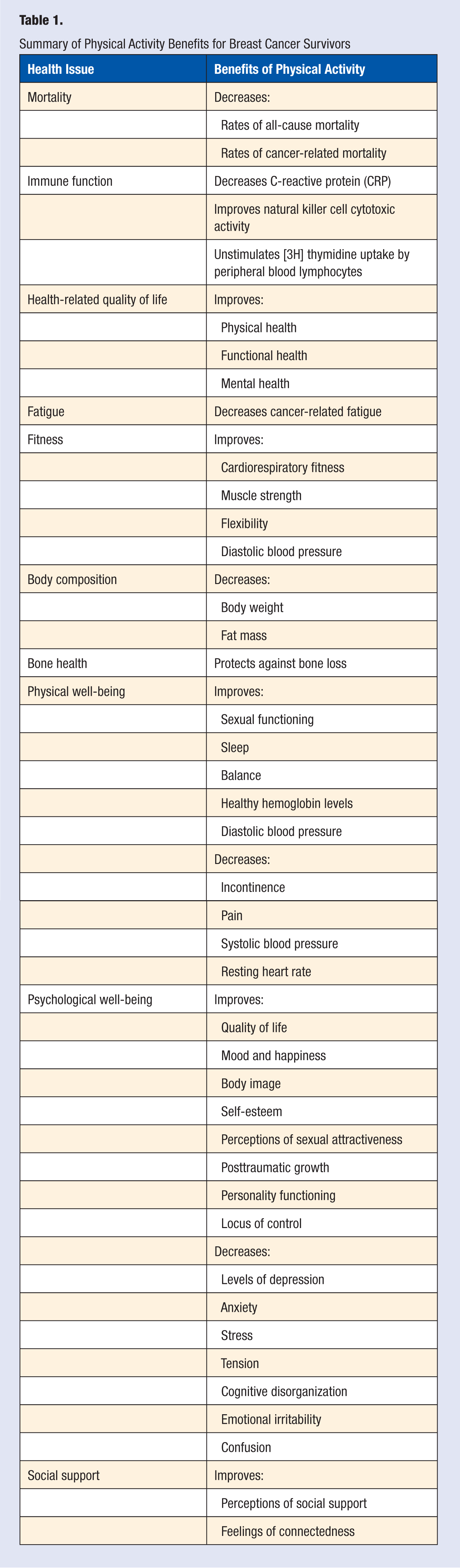
Efforts are needed to address the adverse physical and psychosocial challenges faced by the growing population of cancer survivors.4,5 An increasing number of nonpharmacological therapies have been advocated to attend to these challenges. Physical activity is one type of nonpharmacological therapy that has been promoted as a strategy to attend to these challenges.14-23 Physical activity confers a number of health benefits to survivors of various cancers (see Table 1 for a summary of the benefits associated with participation in physical activity). Physical activity should therefore be promoted as a way of improving cancer survivors’ physical, psychological, and social well-being.
Summary of Physical Activity Benefits for Breast Cancer Survivors
It is important to acknowledge that significant associations were not observed consistently across studies. Also, many available findings are based on samples of self-selected volunteers regardless of whether or not they have the outcome of interest. For example, physical activity is not likely to improve any of the physical, psychological, or social factors for individuals who do not experience the conditions (ie, lymphedema, poor body image, depression) in the first place. Including individuals in research studies regardless of their baseline status underestimates the influence of physical activity strategies and may appear like a plateau effect (small gains, if any, followed by constant levels). To avoid these “plateau effects,” studies should target cancer survivors who experience the symptoms of interest. Additional study limitations were also evident in the research reviewed. For instance, studies assessing physical activity using objective measures were scarce. Most studies rely on self-report physical activity measures that may overestimate levels and intensity of activity. In addition, the reviewed studies were heterogeneous with regard to the type, intensity, frequency, and duration of assessed physical activity, and few studies integrate alternative forms of physical activity (ie, dragon boating, yoga, tai chi) to understand the benefits associated with these types of activities. The associations between physical activity and health outcomes likely vary as a function of these physical activity parameters. Therefore, there is a need for future research to compare the effect of different physical activity modalities on health outcomes. Furthermore, the majority of studies were observational, and experimental studies rarely looked at interventions longer than 6 months in duration and rarely assessed follow-ups, which is necessary to detect possible delayed benefits. Finally, many of the constructs studied as benefits of physical activity are difficult to define and measure, which precludes making comparisons across studies and gathering consensus on the outcomes. For example, constructs such as health-related quality of life and body image are multidimensional in nature yet all dimensions are rarely assessed. Immune function, body composition, and cardiorespiratory fitness also have numerous methods of assessment and indicators of well-being that vary across studies. There is a need for more refined research studying similar constructs while testing different physical activity parameters (ie, type, duration, intensity, frequency) rather than continuing to study different constructs and various activity parameters.
Notwithstanding these limitations, the overall pattern of results demonstrates that physical activity may reduce cancer-related side effects and improve the physical, psychological, and social well-being of cancer survivors. To this end, it is recommended that health care practitioners encourage cancer survivors to follow physical activity guidelines for cancer survivors. 12 Specifically, adult cancer survivors should engage in aerobic activity at moderate intensity for a total of 150 minutes per week (30 minutes, 5 days per week) or vigorous intensity for 75 minutes per week (20 minutes, 3-4 days per week); or some combination of moderate and vigorous activity, include 2 to 3 strength training sessions per week that work the major muscle groups in the lower and upper body (10 exercises with 8-10 repetitions), and stretch the major muscle groups (legs, back, trunk, arms, neck) when aerobic and strength training activities are performed. Younger and older adult cancer survivors are highly underrepresented in the current findings. Until future guidelines are highlighted for these populations, it is recommended that these groups follow the general guidelines for physical activity.22,106,107
What Can Practitioners Do to Help Cancer Survivors Become and Stay More Active?
Given the reported benefits associated with physical activity participation, it is surprising that so few cancer survivors engage in regular physical activity. It is important to help more survivors become active enough to gain health benefits. Cancer survivors should be encouraged to select activities that are enjoyable, since these activities are likely to be more sustainable. Activities that may be easily integrated into their lifestyle should also be promoted rather than simply recommending structured physical activity. Additionally, practitioners need to be aware that there are many personal factors that may influence the survivors’ physical activity choices and levels. For example, some survivors may have lower fitness levels, whereby they may not be able to meet the recommended amounts initially. These individuals should be encouraged to simply start being more physically active and to build up to the recommended levels. Others may have contraindications (eg, injuries, health conditions) that should be assessed prior to starting an exercise program. 12 Physical activity programs may need to be adapted or revised for some cancer survivors based on their health status, disease trajectory, and the treatments that they endured for their cancer. Other variables that may influence physical activity programming for cancer survivors, as they do with healthy adult populations, include age (activity levels decline with age), sex (males tend to be more active than females), and socioeconomic status (lower household income is related to lower physical activity levels compared with higher incomes). It is important to keep all of these factors in mind when encouraging and counseling on physical activity. Finally, it is noteworthy that many findings on the benefits of physical activity occur with activity initiated since diagnosis and treatment. Furthermore, Blanchard et al 108 reported that change in physical activity since cancer diagnosis may be more strongly linked to quality of life outcomes compared with absolute current amount of activity. This means that all cancer survivors, whether previously active or not, will likely experience the physiological/biological, psychological, and social benefits. And those individuals who are the least active have the most to gain from participating in physical activity. Encouraging physical activity is the first step in helping cancer survivors experience long-term health and well-being.
Health and medical practitioners can work with cancer survivors to help integrate physical activity into their day. Specifically, practitioners can guide cancer survivors to
Accumulate physical activity throughout the day; there is evidence that shorter bouts of activity are as effective as one bout of longer duration physical activity.
Start slowly and gradually to increase physical activity levels. As it becomes easier, survivors should consider increasing the intensity of their physical activity.
Choose activities that are enjoyable and interesting; traditional exercise programs (eg, gym classes, home-based exercise equipment) are not a necessity to engage in regular physical activity. Lifestyle activities, such as cleaning the house, washing the car, parking the car far away from the destination, taking the stairs instead of the elevator, and walking or cycling instead of driving help integrate physical activity into one’s day.
Make exercise part of the daily routine. If the workout is scheduled into one’s calendar (similar to meetings and appointments), it is more likely to become a regular part of the day. Similarly, set goals and create an action plan to meet the goals.
Use prompts to encourage physical activity. For example, leave running shoes at the door or tied to the door handle, write a contract and have it witnessed by a family member (or a medical practitioner) to hold accountability, write down and post goals in a visible location at work or at home, and pack a gym bag so that it is always ready.
Involve family and friends in physical activity. Make coffee time an active time, go to the park with kids, and try holding active meetings where everyone walks instead of sits in a boardroom.
Concluding Remarks
There is a growing body of work examining, reviewing, and evaluating the evidence on the benefits of physical activity among cancer survivors. Overall, the data suggest that there are many biopsychosocial benefits associated with physical activity participation. Unfortunately, most cancer survivors fail to meet established physical activity guidelines and are therefore not taking steps to improving their health and well-being. At the clinical level, health care providers should seek to improve their patients’ health by actively promoting the safety and benefits of physical activity. They should also ensure that cancer survivors understand it is particularly important to participate in physical activity after both-diagnosis and treatment because the positive effects of physical activity during this time period appear stronger than that of lifetime physical activity—at least in terms of quality of life and mortality. Small changes in activity levels may lead to a longer life and healthier body and mind, and a physically active lifestyle begins with one step.