



Abstract
Background of the Study
The increase in the therapeutic use of tramadol in the management of moderate to severe pains in some disease conditions and its unregulated access has led to its associated toxicity and there is little or no information on the protection against its associated toxicity.
Aim of the Study
Considering the medicinal value of pumpkin seed oil, its availability, and neglected use, it becomes necessary to evaluate the possible potential of the seed oil in tramadol-induced oxidative stress in Wister Albino rats.
Methods of the Study
This study used fifty-six (56) albino rats to determine the impact of Cucurbita pepo seed oil (CPSO) on tramadol-induced oxidative stress. The rats were grouped into 7. After a week of acclimatization, rats in group 1 (normal control) had access to water and food, while rats in group 2 received 5 mL/Kg (b.w) of normal saline. 100 mg/kg of tramadol (TM) was delivered to groups 3–6 to induce toxicity. The third group (TM control) received no treatment, whilst the other 3 groups (TM-CPSO treatment groups) received 5, 2.5, and 1.5 mL/Kg of CPSO, respectively. Group 7 received only 5 mL/kg CPSO (CPSO group). Similarly, groups 2 through 7 had unrestricted access to food and water for 42 days and received treatments via oral intubation once per day. Indicators of oxidative stress were discovered in the brain homogenate.
Results
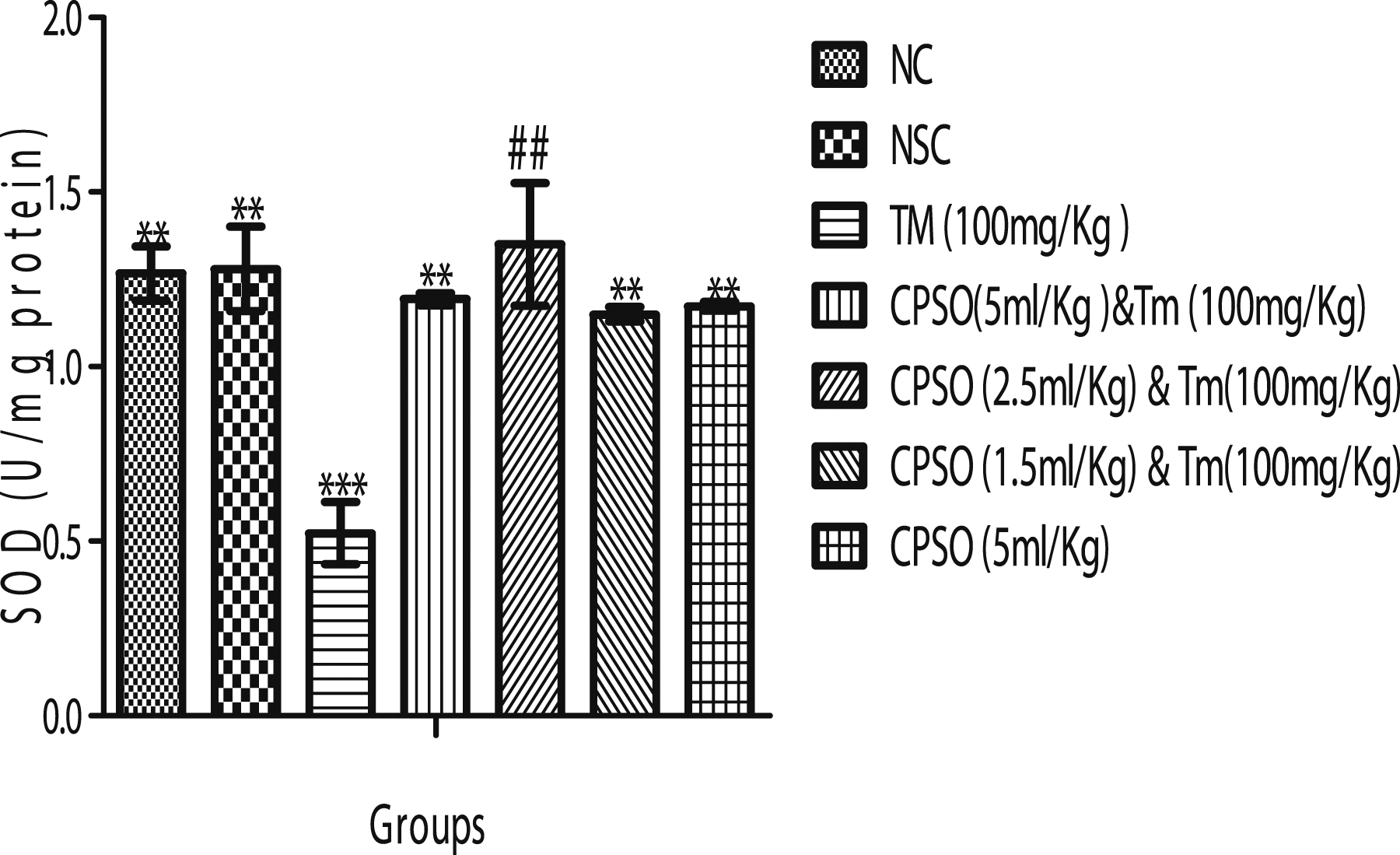
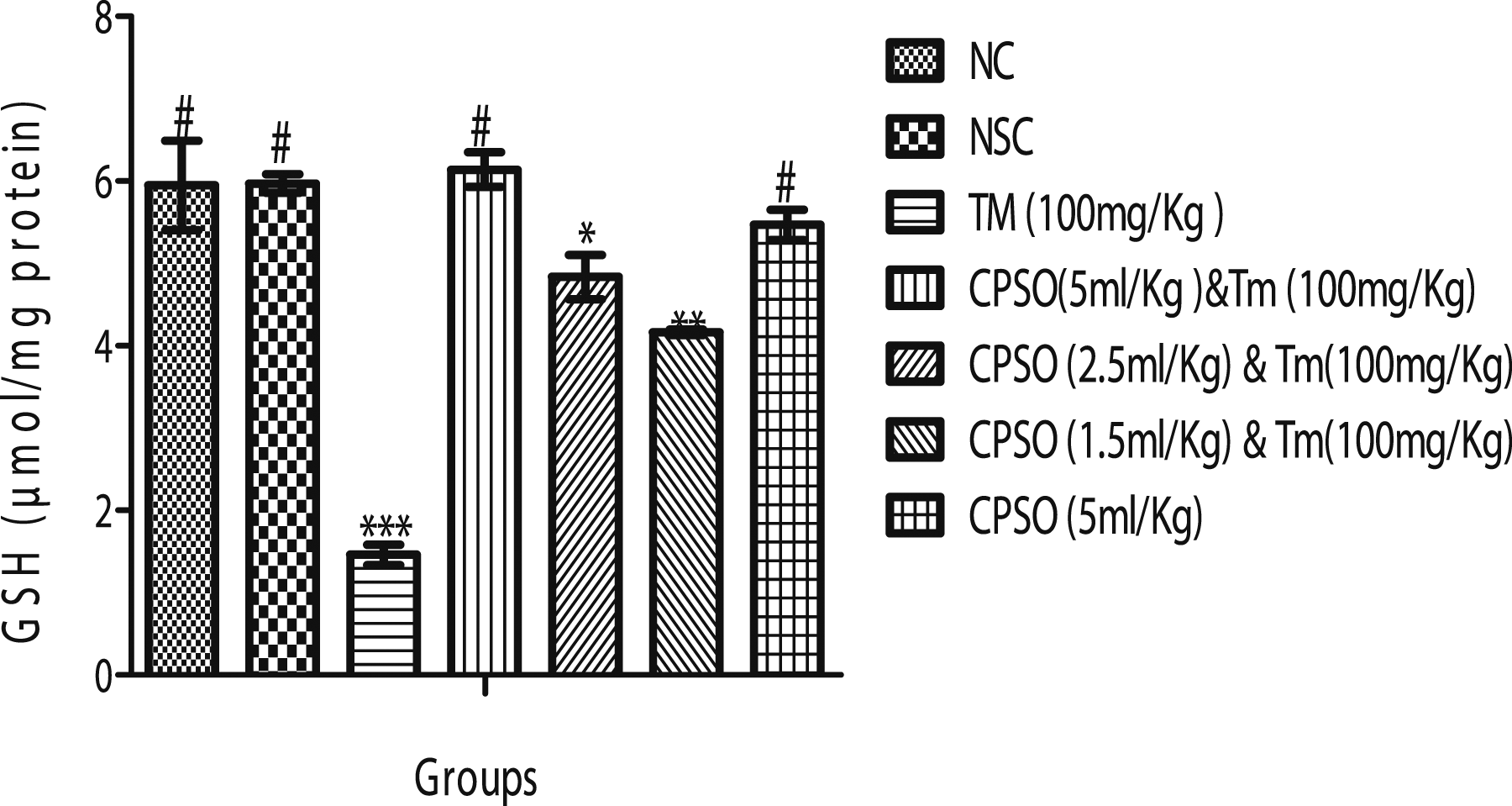
TM toxicity was demonstrated by a considerable increase (P < .05) in the brain MDA level and a significant drop (P < .05) in the brain GSH level, as well as a significant reduction (P < .05) in GPx, catalase, SOD, GST, and quinone reductase activities.
Conclusion
The dose-dependent delivery of CPSO was able to restore not only the activity but also the concentrations of the altered markers.
Introduction
Tramadol is a centrally-acting opioid analgesic frequently given to relieve moderate to severe pain. 1 Tramadol suppresses nociceptive sensations in the central nervous system by agonistically activating opioid receptors and decreasing neuronal serotonin and norepinephrine absorption. 2 The number of prescriptions for tramadol to treat persistent pain will continue to rise, according to a clinical study.3-5 In addition, there is a risk of getting dependent on the opioid tramadol. Abuse is prevalent in settings where substances such as alcohol and opioids are readily available. The great majority of individuals who abuse tramadol do so by consuming multiple high dosages at once. 6 However, prolonged tramadol use was connected with the development of several adverse consequences.7,8 Long-term tramadol usage in animal studies has been associated with malfunction and harm to many organ systems.9-11 Intoxication with drugs, specifically with long-term use of tramadol, is connected to oxidative stress. According to Domènech and Marfany, an increase in the production of reactive oxygen species promotes membrane lipid peroxidation, protein oxidation, and DNA damage. 12 In addition, oxidative stress, and excessive ROS production can disrupt the mitochondrial respiratory chain, cause oxidative damage to mitochondrial DNA, and cause mitochondrial malfunction. 13 Inflammation and an increase in pro-inflammatory cytokine production are 2 additional indicators of increased ROS production.14,15 Notable is the association between prolonged opioid usage and mitochondrial malfunction and mitochondria-dependent apoptosis. 16
Historically, the pharmaceutical industry has benefited from the vast chemical diversity of the natural product industry.17,18 With the use of plants and herbs, disease prevention, treatment, and management have been practiced since antiquity. 19 Because of the abundance of health-promoting compounds and phytochemicals, it contains, pumpkin is used to treat a wide range of metabolic disorders.20,21 Pumpkins are members of the Cucurbitaceae family, which has a wide variety of edible plants and is largely distributed across several countries.22,23 Pumpkin seeds are healthy because they contain proteins, triterpenes, lignans, phytosterols, polyunsaturated fatty acids, and antioxidative phenolic components. 24 Even if there are very few or no studies evaluating the effect of CPSO on various oxidative stress markers of tramadol-induced toxicity in albino rats, the claim must be studied. Co-administration of PSO to the NaNO3 restored most parameters cited above to near-normal values. Therefore, the present investigation revealed the ability of PSO to attenuate NaNO3-induced oxidative damage. 25 Exogenously administered L-thyroxine induced significant testicular damage and germ cell apoptosis, which could be ameliorated by concomitant treatment with pumpkin seed oil. 26 Antioxidant and hepatoprotective effects of pumpkin seed oil in CCl4-intoxicated rats 27 PSO and zinc attenuated the CMS by improving the antioxidant milieu and anti-inflammatory status of the cerebral cortex. 28
The therapeutic use of tramadol in the management of moderate to severe pains in some disease conditions and its unregulated access has led to its associated toxicity and there is a need to mitigate these side effects. However, there paucity of information on the antioxidant potential of pumpkin seed oil against tramadol-associated toxicity. Considering the medicinal and nutraceutical values of Cucurbita pepo (pumpkin) seed oil, its availability locally in our environment, and its nutritional potential, it becomes necessary to investigate the possible antioxidant potentials of the seed oil from the pumpkin on the tramadol-induced toxicity in Wistar albino rats. Data generated from this study would go a long way to increase the volume of information about the toxicity of tramadol at its therapeutic doses and the potential uses of essential oil from this locally available pumpkin seed.
Materials and Methods
Biological Materials
Fresh seeds of Cucurbita pepo were obtained from Aghara-oza village in Izzi Local Government Area of Ebonyi State. Professor S. C. Onyekwelu, a Taxonomist in the Department of Applied Biology at Ebonyi State University in Abakaliki, Ebonyi State, Nigeria, later identified these seeds. Enugu, Nigeria’s University of Nigeria in Nsukka’s School of Veterinary Medicine supplied the albino rats. Before the experiment was conducted on the rats, they spent 1 week acclimating to their environment in the animal house of the Department of Biochemistry at Ebonyi State University in Abakaliki, Nigeria.
Extraction of Cucurbita pepo Seed Oil
The dry seeds of the Cucurbita pepo plant were mechanically pressed to extract the seed oil. At the first step of the process, the seeds were cleansed of any dirt and stones. Sun-drying the seeds was the next phase in the process. In the third procedure, pumpkin seeds were used to generate the powder. Ultimately, the notion of diffusion was employed to separate the oil from the powdered sample by constantly pushing the sample.
Experimental Animals
This study was conducted under the supervision and approval of the Office of Research, Innovation and Institutional Ethics Committee of Ebonyi State University, Nigeria (EBSU/BCH/ET/21/007). All protocols for animal studies were performed following guidelines and legislations in harmony with the National Institute of Health Guide for the Care and Use of Laboratory Animals (NIH Publications No. 80-23, revised in 1996) (National Institutes of Health 1985)29,30 as well as the National guidelines for the use of laboratory animals for research and teaching based on the principles of 3 Rs, reduce refine or replace. 30 The study used 56 male Wistar albino rats of about 6 weeks old which were sourced from the Animal House of Ebonyi State University, Nigeria. They were kept in stainless cages (size: 16 × 9 = 144 inches) in a well-ventilated animal house. They were acclimatized for 7 days under good laboratory conditions (12 h light/dark cycle; room temperature) before the start of the experiments. All animals were allowed free access to standard rodent chow and water ad libitum. All animals were humanely sacrificed using halothane. The report of this study conforms to ARRIVE 2.0 guidelines according to the reports of 31 and. 32
Acute Toxicity of Cucurbita pepo Seed Oil
Cucurbita pepo Seed Oil acute toxicity in Wistar albino rats (male) was evaluated according to 33 as specified in guideline No. 425. Acute toxicity was done using the test protocol of limit dose according to guideline No. 425. For this experiment, 6-week-old male Wistar albino rats were used for the study and were acclimatized in the laboratory for 7 days before the experiment. Fifty mL/kg of CPSO was orally given to a female rat after fasting overnight. Thereafter, the rat was strictly monitored for any observed behavioral or physical change for an initial 30 min after the CPSO’s administration, and then periodically observed for the next 24 hours, with more attention within the first 4 hours, and then monitored daily for 14 days. Foods were given to the rats after 3–4 hours of administration of CPSO. After the first rat survived, the other 4 rats (male) were recruited and then fasted for 4 hours. The rats subsequently received the same CPSO dose followed by the same observation/monitoring, which continued for an additional 14 days to watch for possible toxicity.34,35 At the 50 mL/kg limit test dose, there were no signs of gross behavioral or physical changes in the rats, such as motor activity, reduction in feeding, or hair erection during the 24-hour and 14-day monitoring periods. Consequently, 5 mL/kg limit dose (10%) was chosen as the intermediate/middle dose, 2.5 mL/kg (half of this) was chosen as the lower dose, while 7.5 mL/kg (1.5 times the middle dose) was chosen as the higher dose according to the guideline of OECD (20080) as stated in the OECD guideline No. 425.
Experimental Design
After 1 week of acclimatization, the 56 male Wistar albino rats were randomly placed into 7 experimental groups of 8 rats each, numbered 1 through 7. The control group (Group 1) received pellets and unrestricted access to water, while the saline group (Group 2) received 5 mL/Kg of normal saline. In the study conducted by Abdel-Zaher 36 and Ghoneim, 8 rats in Groups 3–5 received 100 mg/kg of tramadol, while rats in Group 3 (which received only tramadol) were kept untreated. The tramadol and Cucurbita pepo seed oil treatment groups received 5, 2, 5, and 1.5 mL/kg of Cucurbita pepo seed oil, respectively. In total, 5 mL/kg of Cucurbita pepo seed oil was administered to the group who received it.37,38 The complete course of treatment, which lasted 6 weeks, was administered orally once every day. After 42 days, the rats were fasted overnight, sacrificed after being anesthetized with halothane, and dissected to collect blood via cardiac puncture.
Determination of Oxidative Stress Parameters
The Aebi method was utilized to determine the catalase (CAT) activity level (1974) 39 . The Marklund and Marklund method was utilized to determine superoxide dismutase (SOD) levels (1974) 40 . Habig et al. employed a spectrophotometric technique to evaluate the level of glutathione S-transferase (GST) activity in tissue samples (1974) 41 . Using the Flohe and Gunzler method, the level of glutathione peroxidase (GPx) activity was determined (1984) 42 . Using Jollow et al.’s study, the approach was utilized to evaluate the sample’s reduced glutathione concentration (1974) 43 . The procedures developed by Ohkawa et al. for evaluating the quantity of thiobarbituric acid reactive compounds (TBARS) were used to measure the amount of malondialdehyde present (1979) 44 . The method established by Mancini and Solioz was used to measure the activity of quinone reductase (QR) (2015) 45 .
Statistical Analysis
GraphPad Prism 8.0.2 (263) and a one-way analysis of variance were used to analyze the data. To make a comparison between the groups, a post hoc Tukey test was carried out. The information is provided as the average value together with the standard deviation of the mean values (SEM), where P < .05, and the differences were considered to be significant.
Results
The administration of tramadol to albino rats caused a substantial decrease (P < .05) in the activities of GPx, catalase, SOD, GST, quinone reductase, and GSH, even though the level of MDA dramatically rose (P < .05). This was compared to the group that served as the control (Figures 1–7). The group that received CPSO treatment caused the trends of these markers to revert to levels comparable to those observed in the control groups, in contrast to the group that received tramadol but no further treatment. This was observed in comparison to the group that received no additional treatment (NC, NSC, and CPSO; P < .05) (Figures 1–7). In a similar vein, there was not a statistically significant gap (P > .05) between the normal control group and the CPSO-only group (Figures 1–7). GPx activity of tramadol-induced toxicity in albino rats treated with CPSO. NC, normal control; NSC, normal saline control; Tm, tramadol; CPSO, Cucurbita pepo seed oil. Catalase activity of tramadol-induced toxicity in albino rats treated with CPSO. NC, normal control; NSC, normal saline control; Tm, tramadol; CPSO, Cucurbita pepo seed oil. SOD activity of tramadol-induced toxicity in albino rats treated with CPSO. NC, normal control; NSC, normal saline control; Tm, tramadol; CPSO, Cucurbita pepo seed oil. MDA level of tramadol-induced toxicity in albino rats treated with CPSO. NC, normal control; NSC, normal saline control; Tm, tramadol; CPSO, Cucurbita pepo seed oil. GST activity of tramadol-induced toxicity in albino rats treated with CPSO. NC, normal control; NSC, normal saline control; Tm, tramadol; CPSO, Cucurbita pepo seed oil. GSH level of tramadol-induced toxicity in albino rats treated with CPSO. NC, normal control; NSC, normal saline control; Tm, tramadol; CPSO, Cucurbita pepo seed oil. Quinone reductase activity of tramadol-induced toxicity in albino rats treated with CPSO. NC, normal control; NSC, normal saline control; Tm, tramadol; CPSO, Cucurbita pepo seed oil.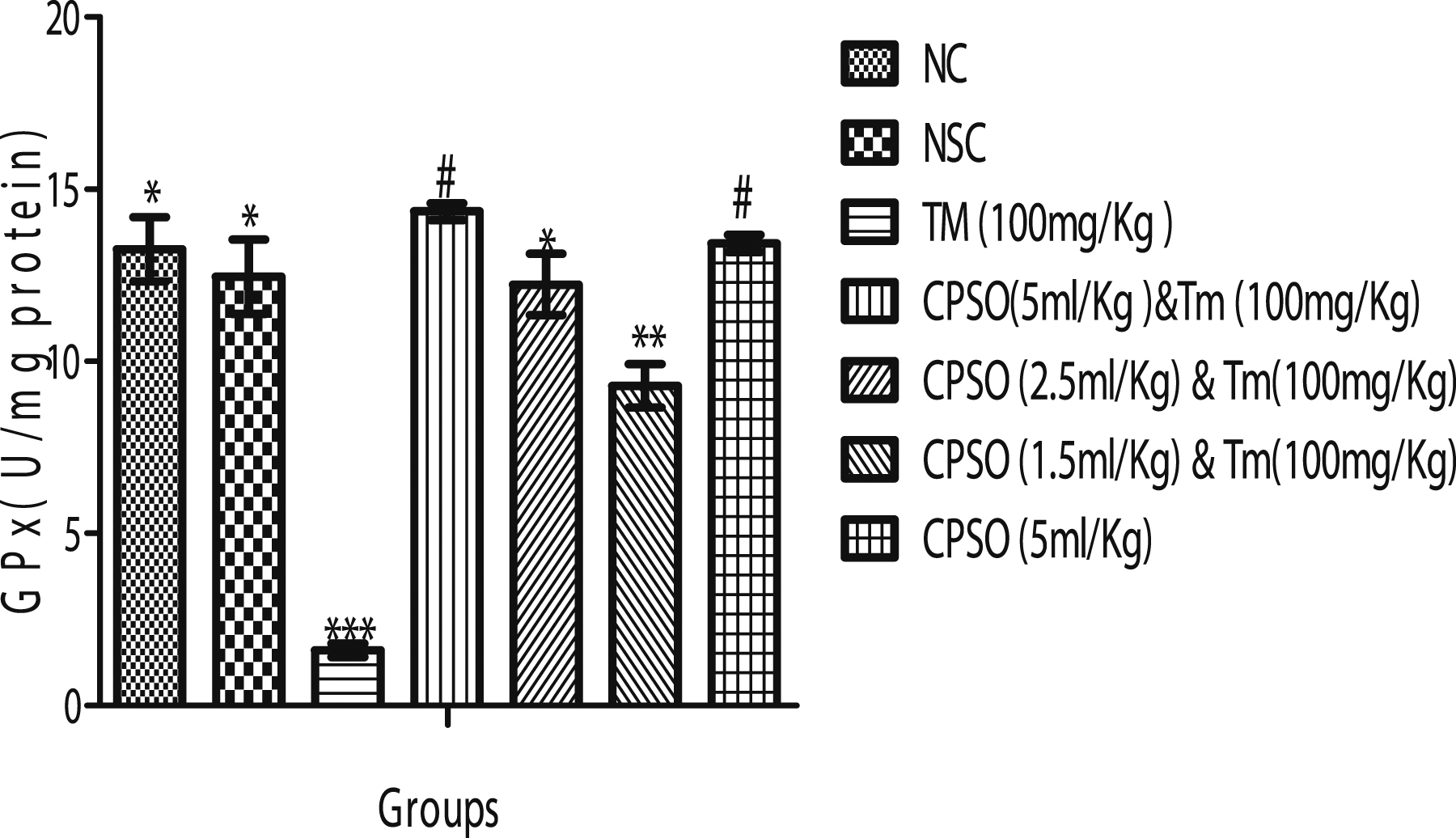




Discussion
Although tramadol is an effective treatment for moderate to severe pain, it has been related to tissue damage due to oxidative stress. This is the case although it is efficient. Due to the absence of evidence establishing the effect of Cucurbita pepo seed oil (CPSO) on key oxidative stress indicators of tramadol-induced toxicity in albino rats, we wished to examine its effect on tramadol administration. For us to have a better understanding of how it works, something needed to be done. When tramadol was given to albino rats, the activities of GPx, catalase, SOD, GST, quinone reductase, and GSH all reduced significantly (P < .05), although the amount of MDA increased dramatically (P < .05), demonstrated in Figures 1–7. It was discovered by Ref. 46 that giving tramadol to albino rats could result in a statistically significant (P < .05) increase in brain lipid peroxidation, as well as a decrease in GSH concentration and antioxidant enzyme expression. After using the drug known as “catalase, superoxide dismutase, peroxidase, glutathione reductase, glutathione-S-transferase, glutathione peroxidase, and quinone reductase,” researchers noticed these side effects. Intravenous administration of CCl4 is associated with acute neurotoxicity. 47 This is demonstrated by a significant (P < .05) decrease in the activities of antioxidant enzymes significant (P < .05) increase in the activities of enzymes that produce reactive oxygen species. 48 demonstrated both low and high doses of tramadol (P < .05). This effect was observed in rats. Hanaa and colleagues 49 found that treatment with rotenone resulted in a statistically significant (P < .05) rise in levels of lipid peroxidation and NO in both the brain and serum, whereas the levels of GSH decreased significantly in both the brain and serum.
Tramadol’s ability to toxic brain tissue resulted in a decrease in phase I enzymes such as SOD, POD, and CAT, which supported the findings of earlier research. In addition, it was hypothesized that the free radicals produced by the metabolism of tramadol decreased the protein concentration in brain tissue samples as well as the catalytic capacity of phase II enzymes. GSH-Px, GST, and GSR are just a few examples of the enzymes that fall within this category. An overdose of tramadol causes the production of reactive oxygen species. These reactive oxygen species can establish covalent connections with macromolecules and the membranes of cells, which speeds up the process of lipid peroxidation. Tramadol overdoses can also cause death.50,51 Malonaldehydes are created whenever polyunsaturated fatty acids are subjected to the process of peroxidation. When the levels of TBARS were found to be elevated, it was clear that tramadol had caused oxidative damage to brain tissue.52-54
The reduced form of glutathione is an essential thiol protein that is involved in a wide variety of the body’s anti-oxidative defense mechanisms. Both hydrogen peroxide and superoxide anion are flushed out of the body as a result. The negative effects of tramadol can cause GSH levels to drop, which can result in damaged tissue and disorders that are linked to oxidative stress. 55 Glutathione reduction is responsible for the removal of many free radicals. In oxidative-challenged systems, GSH is converted to GSSG by the GSH-Px activity, while GSH is generated from GSSG by the GSR activity. 56 Glutathione peroxidase can be found in the cell membrane. It has been hypothesized that GSH’s ability to shield lipids from oxidative degradation is contingent on GSH-Px. This protective effect occurs due to the GSH-Px-mediated decrease of endogenous H2O247,57 47 found that GSH-Px is more efficient than CAT and SOD at removing H2O2 from brain tissues. In addition, the combination of GSH-Px and GSH terminates the chain reaction of lipid peroxidation by lowering the concentrations of H2O2 and a variety of other hydroperoxides. 58 The presence of a transition metal cofactor in GPx enzymes has been demonstrated. Tramadol’s interaction with the metals present in these enzymes may account for their observed inactivation.59,60 Combining reduction and conjugation activities, GSH typically functions as a cellular defense mechanism against both exogenous and endogenous toxins. 61 Deficiencies in the synthesis, consumption, and degradation of glutathione (GSH), as well as variations in the activity of glutathione peroxidase and glutathione reductase, may account for the decreased GSH concentration. An enzyme known as superoxide dismutase is responsible for neutralizing peroxide anion radicals and putting a stop to the continued breakdown of fatty acids. 62 Reduced levels of SOD and CAT activity were seen in albino rats administered tramadol due to oxidative stress induced by the medication.
As shown in Figures 1–7, administration of CPSO for 42 days was adequate to reverse the trends of these markers, returning them to levels comparable to those observed in the control groups (NC, NSC, and CPSO), compared to the group that received tramadol without treatment. In their investigation into the effects of Digera muricata extract on CCl4 toxicity, 50 discovered that increasing the dosage of the extract increased the levels of SOD, POD, and CAT. These results align with what they uncovered via their investigation. 49 found that rotenone therapy led to a significant (P < .05) rise in brain and serum lipid peroxidation as well as NO levels, while serum and brain GSH levels decreased dramatically. Co-administration of PSO, on the other hand, resulted in a considerable enhancement of the tested parameters. According to the findings of Abou-Zeid et al., the administration of emamectin increases oxidative stress in the liver, brain, and kidney (2018) 63 . This was demonstrated by an increase in the levels of MDA as well as DNA fragmentation, in addition to a decrease in the activity levels of GSH, CAT, and SOD. On the other hand, the co-administration of pumpkin seed oil resulted in significant protection for the liver, kidneys, and brain as a whole. This was demonstrated by a significant improvement in the parameters that were investigated. According to research conducted by Ref. 47, consuming Cucurbita pepo fruit peel led to a statistically significant (P < .05) increase in the activity of a variety of antioxidant enzymes. These enzymes include catalase, superoxide dismutase, peroxidase, glutathione reductase, glutathione-S-transferase, glutathione peroxidase, and quinone reductase. Further examples include quinone reductase and glutathione peroxidase.
The seed oil and tramadol reduced oxidative stress by increasing GSR, GSH-Px, GST, and QR compared to the tramadol-treated group. Oxalis corniculata reduced CCl4-induced nephrotoxicity in albino rats, similar to Refs. 64,65. The seed oil’s ability to restore enzyme activity revealed the oil’s ability to eliminate superoxide radicals from the body. Reversal effects were caused by either a decrease in the generation of free radicals caused by tramadol or the antioxidant activity of the bioactive components identified in the seed oil. Following treatment with oil produced from Cucurbita pepo seeds, the concentration of TBARS in brain tissue returned to normal levels in the current investigation. The restoration of antioxidant enzymes is probably responsible for the elimination of tramadol-induced toxicity.66,67 The bioactive components in Cucurbita pepo seed oil are probably responsible for the oil’s potent neuroprotective benefits against tramadol-induced alterations. Pumpkin seeds include antioxidants such as 9, 12-octadecadienoic acid, oleic acid, carotenoids, and vitamin E, which prevent oxidative damage to membranes, organelles, and protein. 68 Pumpkin seed oil contains tocopherols and selenium, which synergistically protect cell membranes from free radical-mediated lipid peroxidation. 69 PSO also increases the protein level and activity of antioxidant enzymes such as superoxide dismutase, catalase, and glutathione (GSH) reductase in rat brains, as well as the rate-limiting enzyme in GSH synthesis, -glutamyl cysteinyl synthase in the brains of rats treated (Ahmed et al., 2009) 70 . Our findings show that this plant has been used to treat many health disorders because of its anti-oxidative stress capabilities and biochemical marker effects. In this study, there are some limitations in this present study which included no standard control group in the experimental design and characterization of the bioactive compounds. It is advised to utilize a well-researched antioxidant medication as a standard control drug, identify the bioactive elements present in the pumpkin seed oil, and possibly look into clinical studies as a starting point
Conclusion
The effect of Cucurbita pepo seed oil (CPSO) on oxidative stress parameters of tramadol-induced toxicity was examined. The concurrent administration of CPSO restored the changed markers’ activity and concentrations in a dose-dependent manner. Brain histology results corroborated the results of the CPSO’s modulatory influence on biochemical indicators. The data reveals TM-induced cerebral damage by oxidative stress. The protective effect of CPSO suggested that it could be used to treat tramadol-related illnesses. The results supported the conclusions of the moderating effect of the CPSO on the biochemical indicators.
Footnotes
Acknowledgments
For supplying the materials that were necessary for the successful completion of this investigation, the authors of this study owe a debt of gratitude to both Ebonyi State University in Abakaliki, Nigeria, and Kampala International University in Kampala, Uganda. These educational institutions can be found, one at a time, in the countries of Nigeria and Uganda.
Author Contributions
The authors state that there is no potential bias in their work.
This research is collaborative work. Each of the outlined authors has made meaningful contributions as follows:
Declaration of Conflicting Interests
The author(s) declared no potential conflicts of interest with respect to the research, authorship, and/or publication of this article.
Funding
The author(s) received no financial support for the research, authorship, and/or publication of this article.
Ethical Statement

Data Availability Statement
The data that were utilized for this analysis can be obtained upon request by contacting the respective author, even though all of the pertinent data have been supplied here.