



Abstract
The current study aims to isolate, purify, and characterize the trypsin inhibitor protein from seeds of soya beans, scientifically known as Glycine max. Its seeds were ground, and the powder was soaked several times using n-hexane. It was added to phosphate buffer saline (PBS) followed by filtration and centrifugation of the PBS dissolved extract. The supernatant was subjected to ammonium sulfate precipitation and about six fractions, 30% to 80% were prepared. The centrifuged pellets obtained from each fraction were dialyzed and run on SDS-PAGE. The trypsin inhibitor protein was precipitated and characterized in 30% pellet and molecular weight was 21.5 kDa compared to protein ladder (ThermoFisher 10-170 kDa). GC-MS analysis revealed the steroid derivatives such as stigmasterol, campesterol, beta-sitosterol, and gamma-tocopherol. Glycine max trypsin inhibitor could be used as a plant-derived drug to overcome the over-activation of trypsin without its real substrate (proteins) becoming activated and start auto digestion leading to pancreatitis.

Keywords
Introduction
Protease inhibitors (PIs) are essential tools with abundant applications in medicine and biotechnology. They are fundamental tools for interpreting those principles according to which proteins act in different mechanisms and the discovery of new compounds to overcome pathogenesis and other illnesses. 1 PIs are found abundantly in nature most importantly in legume seeds. Legumes contain two kinds of inhibitors: Kunitz and Bowman-Birk inhibitors, the most widely reported. 2 The weight ranges in Dalton for Bowman-Birk peptides. According to literature, the range is between 8000 and 10000 Da with two serine units at reactive sites, 7 disulfide bonds, and about 71 amino acids. BBI is unique in having two functional groups at opposite ends leading to inhibition of trypsin and chymotrypsin enzymes.3,4 An appropriate peptide widely reported in plants and implemented to prevent multiple diseases and cancer, BBI is found to be a proper protein to function while considering the parameters like extreme temperature, acidic environment, and above all, it’s handling. 5
Based on their structural and functional characteristics, some plant-related protease inhibitors are divided according to the properties mentioned above, such as cereal trypsin inhibitor/a-amylase inhibitors, potato type I and II inhibitors, and Bowman-Birk serine and soybean Kunitz inhibitors.6,7 In the two decades, many fresh families of PIs have been unearthed and the previously reported families. Although some inhibitor families are still not studied thoroughly, researchers are still working on analyzing their explicit structural confirmation. 3
Humankind is facing health challenges, especially viral and bacterial infections. Before synthetic drugs, plants were the primary candidates for dealing with ailments and other pathogenic infections. 8 Chinese and Greeks were the experts in applying medicinal plant extracts against pathogenic infections. 9 Soon after industrialization, well-formed equipment and machinery in combination with scientific knowledge introduced the whole picture of synthetic drugs formulation. These synthetic drugs include antivirals, antibiotics, and chemo protectants. 10 Plants have a lot of biologically active components that are a source of nourishment and medicine. These natural compounds are well known for imparting color, taste, and scent. As a phytochemical, these compounds protect against environmental conditions like pollution, drought, stress, ultraviolet radiation, and microbial pathogenesis. 11 Considering the role in metabolic pathways plant phytochemicals are classified accordingly as primary or secondary metabolites. Primary metabolites are bases (purine and pyrimidine), sugars, amino acids, proteins, chlorophyll, etc. All other remaining bioactive compounds fall under secondary metabolites like phenolics, flavonoids, alkaloids, steroids, and glucosides. 12
Soybean (Glycine max) crop belongs to the legume family cultivated worldwide, such as in America, South Africa, Malaysia, and Pakistan. Soybean pods are rich in seeds that contain a high number of valuable proteins and lipids. Soybean reported being deficient in methionine essential amino acid. Hence there are high chances of methionine and cysteine in high oleic acid-containing soybean. Henceforth, we recommend considering the dissimilarity in the make-up of peptides among the high protein (Hutcheson, S97-1688, R95-1705), and the high oleic acid soybean (N98-4445A) varieties. 13 There are different mechanisms of inhibitor interactions with proteases, but the two are most commonly known. 14 The first one is exemplified by the protease’s families of serpins (14), α2 macroglobulins (139), and baculovirus protein p35 inhibitors (I50) which follow the irreversible interaction and trap the corresponding target.14,15 Altogether, inhibitors that work by this mode of action are established and it was verified for serine protease inhibitors. 14 The serine proteases frequently of plant origin follow the standard interaction inhibition mechanism. 16
Based on their structural and functional characteristics, some plant-related protease inhibitors are divided according to the properties mentioned above such as cereal trypsin inhibitor/a-amylase inhibitors, potato type I and II inhibitors, and Bowman-Birk serine and soybean Kunitz inhibitors.6,7 In the two decades, many fresh families of PIs have been unearthed and the previously reported families. Although several inhibitor families are still not studied thoroughly, researchers are still working on analyzing their exact structural confirmation. 3
This study aimed to extract and purify trypsin inhibitor protein from soybean. Also, to quantify total soybean protein by Bradford method and then characterize trypsin inhibitor protein through SDS-PAGE and GC-MS analysis of soybean oil contents. The percentage radical scavenging activity of soybean oil by the DPPH method was evaluated.
Materials and Methods
Sample Collection
Soybean seeds were collected from Swat, Pakistan in April 2021. Experimental work was conducted in the Biochemistry lab, Faculty of life sciences, University of Central Punjab, Lahore. All the chemicals used in this project were of analytical grade purchased from Sigma Aldrich
Extraction of the Trypsin Inhibitor Protein
Trypsin inhibiter was isolated, according to Roy et al 17 with a little modification. About 15 g of fresh soybean (Glycine max) seeds were washed with distilled water to remove the dust particles and bacteria. After washing the seeds were dried in the open air (sun-light) to remove the moisture contents, an important step in preventing bacterial, yeast, and mold growth. Drying is followed by de-hulling in which the outer covering or protective coating of seeds is removed manually as in the grinding process of seeds this covering of seeds becomes part of the seed powder and may impair our protein of interest during purification. Later on, the seeds were ground to a final powder. The seed powder was subjected to a defatting process in which the seed was thoroughly washed with n-hexane in a 1:10 (w/v) ratio. This step was repeated a few times until all the oily contents of the seed were removed thoroughly, although the n-hexane was used in lesser amounts with each wash. Phosphate buffer saline (pH 7.2) was added to the above-defatted seed powder at a 7:1 (v/w) ratio and stirred for a few hours at a magnetic stirrer. The sample was then filtered using several folds of cheesecloth. The filtered extract was later centrifuged for 45 minutes at 9500 rpm and the supernatant was stored at 4°C. 18
Purification of Trypsin Inhibitor Protein by Ammonium Sulfate Precipitation and Membrane Dialysis
Ammonium sulfate was added to the above-centrifuged supernatant for crude protein precipitation and purification. About 6 fractions of 30%, 40%, 50%, 60%, 70%, and 80% were prepared by adding ammonium sulfate in just amount to each fraction while stirring continuously. Each fraction was centrifuged separately; the pellet was obtained with the same extractive (PBS) buffer. The supernatant was utilized for the following fraction up to the completion of six fractions (30–80%). 18
The salt added in the above step is removed by introducing the crude protein and ammonium sulfate into a dialyzing membrane. But before use, the membrane must be treated with water to remove glycerin that acts as a humectant. After sealing at both ends, the membrane is placed into a beaker filled with distilled water and subjected to magnetic stirring for 18–24 hours with 3 to 4 changes of water so that salt can exit the membrane pores while protein/peptide remains intact inside the membrane. After the completion of salting out, the protein was collected by punching a hole to one end of the membrane allowing the liquid to flow into falcon tube or sometimes via the syringe. The dialyzed sample was stored at 4°C. 19
Quantification of Total Protein by Bradford Assay
Bradford is one of the standard methods to calculate total protein. It is based on the color change of the Bradford reagent from red-brown to blue upon reaction with the protein that strongly binds with proteins. For estimation of total protein, bovine serum albumin used as standard. A higher 1 mg/mL stock of BSA (bovine serum albumin) was prepared and various concentrations (100–1000 µg/mL) were prepared from stock solution. About 10 µL of BSA standard and soybean protein was added to 250 µL of Bradford reagent in a 96-well microplate and absorbance was taken at 630 nm using BioTek Elisa reader.20,21
Characterization of Soybean Trypsin Inhibitor Protein by SDS-PAGE
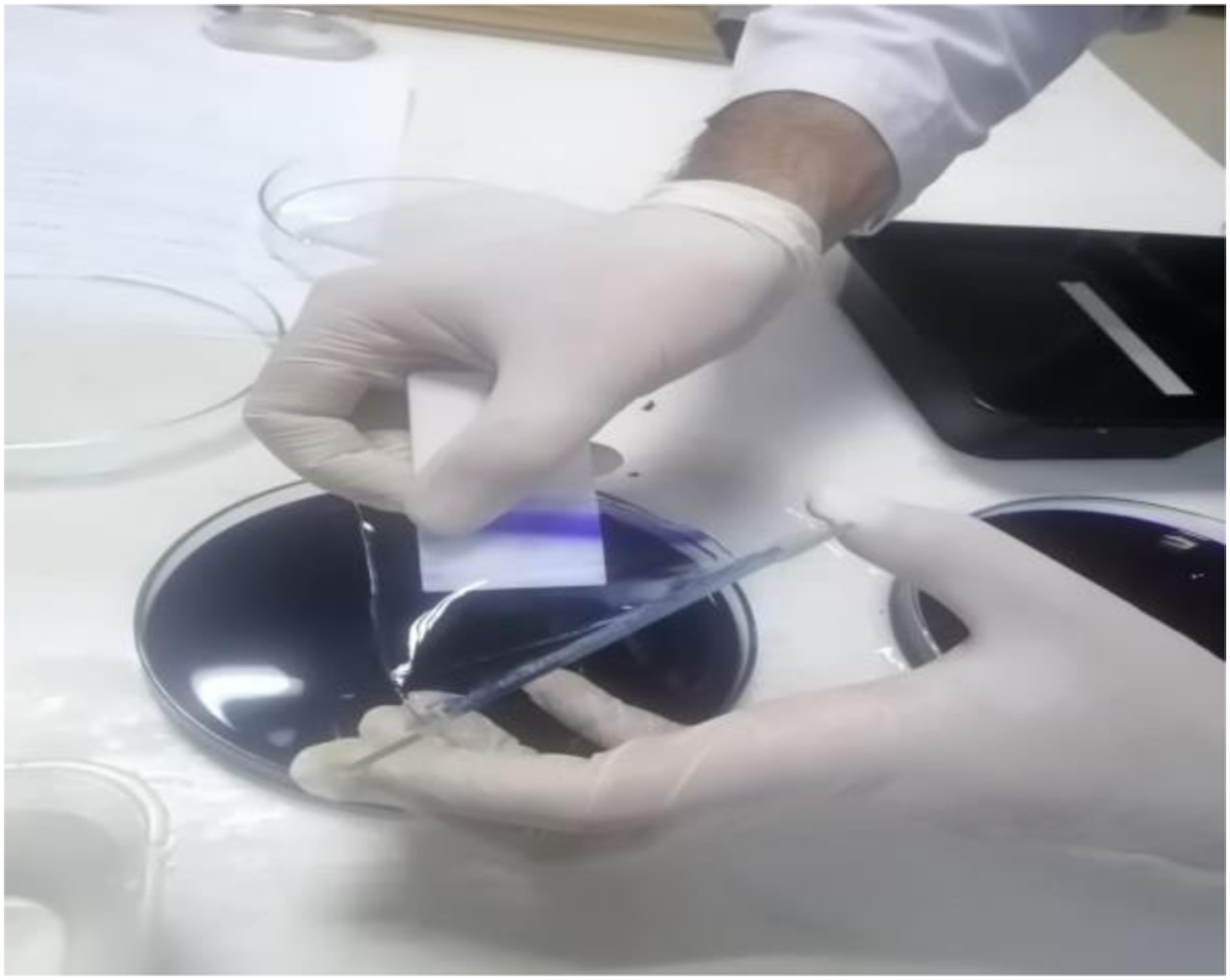
The inhibiter of interest was separated by using the standard method. The PBS dissolved samples were taken in an Eppendorf tube along with loading dye (100 mM, Tris-CI pH 6.8, 200 mM DTT, 4% SDS, 20% glycerol, and .2% bromophenol blue) in 10:5 (v/v) microliters and heated in a water bath at 95 °C for about 7 minutes. The stacking gel (5%, pH 6.8) and resolving gel (12%, pH 8.8) were cast between the plates and waited for 30–45 minutes until the gel polymerized properly. The electrophoretic tank was filled with running tris-glycine buffer (pH 8.3). After this, the heated samples and denaturing dye (about 10 µL) were loaded into the wells generated by combing the stacking gel between the plates (Figure 1) Later, the apparatus was placed in an electrophoresis tank containing Tris-glycine buffer, and a voltage of 50–70 V was applied initially. Once the samples crossed the staking gel the voltage increased to 120 V until the samples reached a little above the bottom of the plates. After reaching samples to the required level the electric supply was turned off, plates were collected and the gel was recovered in a Petri plate or glass box filled with water (Figure 2). Later on, the gel was stained with a coomassie brilliant blue-250 stain (45% methanol, 10% glacial acetic acid, 45% distilled water, .25% of R-250 coomassie brilliant blue) for 30–40 minutes (Figure 3). For the clear resolution of bands, the gel was immersed in distaining solution (30% methanol, 10% glacial acetic acid, and 60% distilled water) and incubated in a shaking incubator for 30 minutes and 1 hour at room temperature changing the distain solution twice (Figure 4).
22
Sample loaded into SDS-PAGE apparatus. Gel separation from plates. Staining of gel with coomassie brilliant blue-250 stain. Distaining of gel with distain solution.


Gas Chromatography-Mass Spectrometry of Soybean oil Contents
The Instrument used, Agilent Technologies GC systems with GC-7890A/MS-5975C model with DB-5MS column (30 m in length × .25 µm in diameter × 250 μm in thickness of film). The oven temperature was kept at 50°C for 1 minute and the temperature steadily increased to 25°C/min to 120°C for 5 min and a 1μL sample was introduced for analysis. Helium gas 99.9% was used as the carrier gas. The flow rate of carrier gas was 1 mL/minute sample injected temperature was upheld at 230°C and the split ratio was 20 during the experiment. The ionization mass was done at 70 eV. The mass spectra were recorded for the mass range 55-416 m/z for 26 minutes. The compounds appearing with different peaks were identified by comparing their mass spectra. During elution through the column they distinguished based on the production of electronic signals, specific for each compound appearing in our sample. The mass-to-charge ratio calibration was compared with each molecule’s mass spectrum (fingerprint). Finally, the mass spectra obtained for each compound were compared with the PubChem and NIST libraries.23,24
Antioxidant Activity of Soybean oil
Glycine max oil’s free radical scavenging activity was measured by the decline in absorbance of methanol solution of DPPH (2, 2-diphenyl-1-picrylhydrazyl). A stock solution of 1 mg DPPH in 50 mL methanol was prepared to evaluate antioxidant potential.
Using the stock solutions (1 mg/mL) of ascorbic acid as standard and soybean oil, about 20 µL of each concentration (.1-1 mg/mL) in 10% DMSO (dimethyl sulfoxide) was incubated with 20 µL of DPPH in the dark for 30–40 minutes. After that, absorbance was measured by using an ELISA microplate reader at 490 nm. The free radical scavenging activity was calculated as percentage inhibition, whereas DMSO was used as blank. 25
Results and Discussion
Extracted Soybean Trypsin Inhibitor Protein
Soybean trypsin inhibitor was isolated successfully using multistep washing, drying, grinding, defatting, and filtration. Optimization of defatting is an important step in isolating a protein of interest. In this regard, two things are very important to consider. First, the choice of solvent for defatting or washing the sample as some solvents not properly formed micelle with lipids particles of sample and oil components remains intact, which might further purification of the desired protein.
Precipitated and Purified Soybean Trypsin Inhibitor Protein by Ammonium Sulfate and Membrane Dialysis
The soybean extract was precipitated into different fractions of 30%, 40%, 50%, 60%, 70%, and 80% with ammonium sulfate. Sometimes, the sample can be dialyzed for a more extended period until the sample’s color in the dialyzing membrane becomes transparent.
Bradford Assay
Bradford is the best option for quantifying total protein as it is simple compared to the Lowry method, which requires the complex formation of copper ions with the protein. We prepared BSA standards ranging from 100 to 1000 µg/mL to estimate total protein. Total protein estimated in soybean from BSA standard curve was found to be 477 µg/mL (Figure 5). Quantification of unknown protein from BSA standard curve. Soybean trypsin inhibitor protein characterized by SDS-PAGE.
Among the crude and six other fractions (30%, 40%, 50%, 60%, 70%, and 80%) precipitated with ammonium sulfate followed by membrane dialysis (purification) and ultimately subjected to SDS-PAGE. Initially, all six fractions have shown several bands that refer to multiple soybean proteins. Although our protein of interest, trypsin inhibitor, was visible in 30% pellet after comparing it with protein ladder (Thermo Fisher protein ladder, 10–180 kDa) and its molecular weight was 21.5 kDa (Figure 6). We repeated the gel-electrophoresis several times to confirm the trypsin inhibitor and verified it in the same (30%) fraction with a molecular weight of 21.5 kDa. Optimization of the protocol is very important in any protein characterization. Especially remove other phytochemicals like phenolics, glycosides, and lipid contents with solvent wash. That’s why several proteins were visible in all fractions in addition to trypsin inhibitors in 30% pellet. Trypsin inhibitor (21.5 kDa) characterized by SDS-PAGE. GC-MS analyzed soybean oil contents.
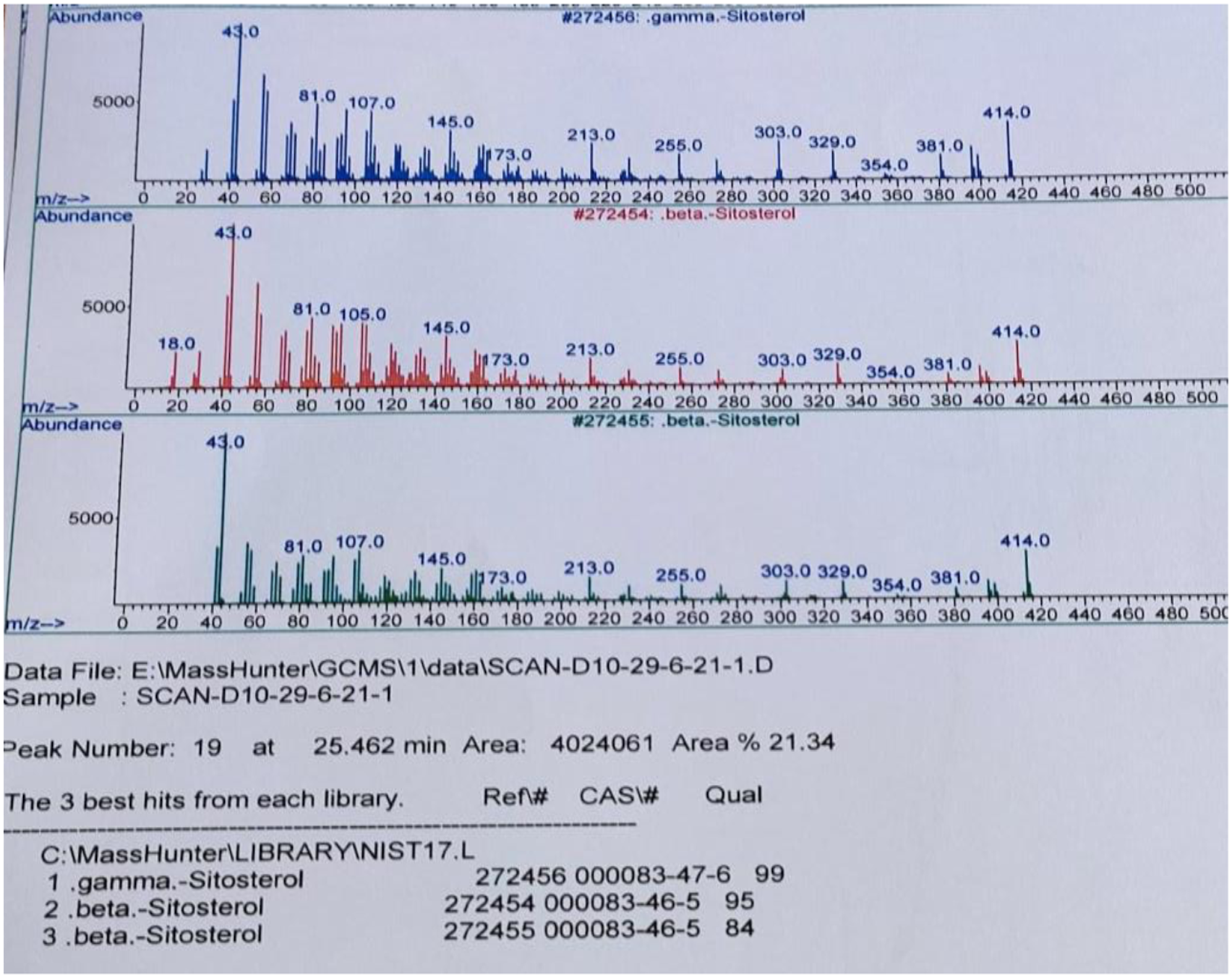
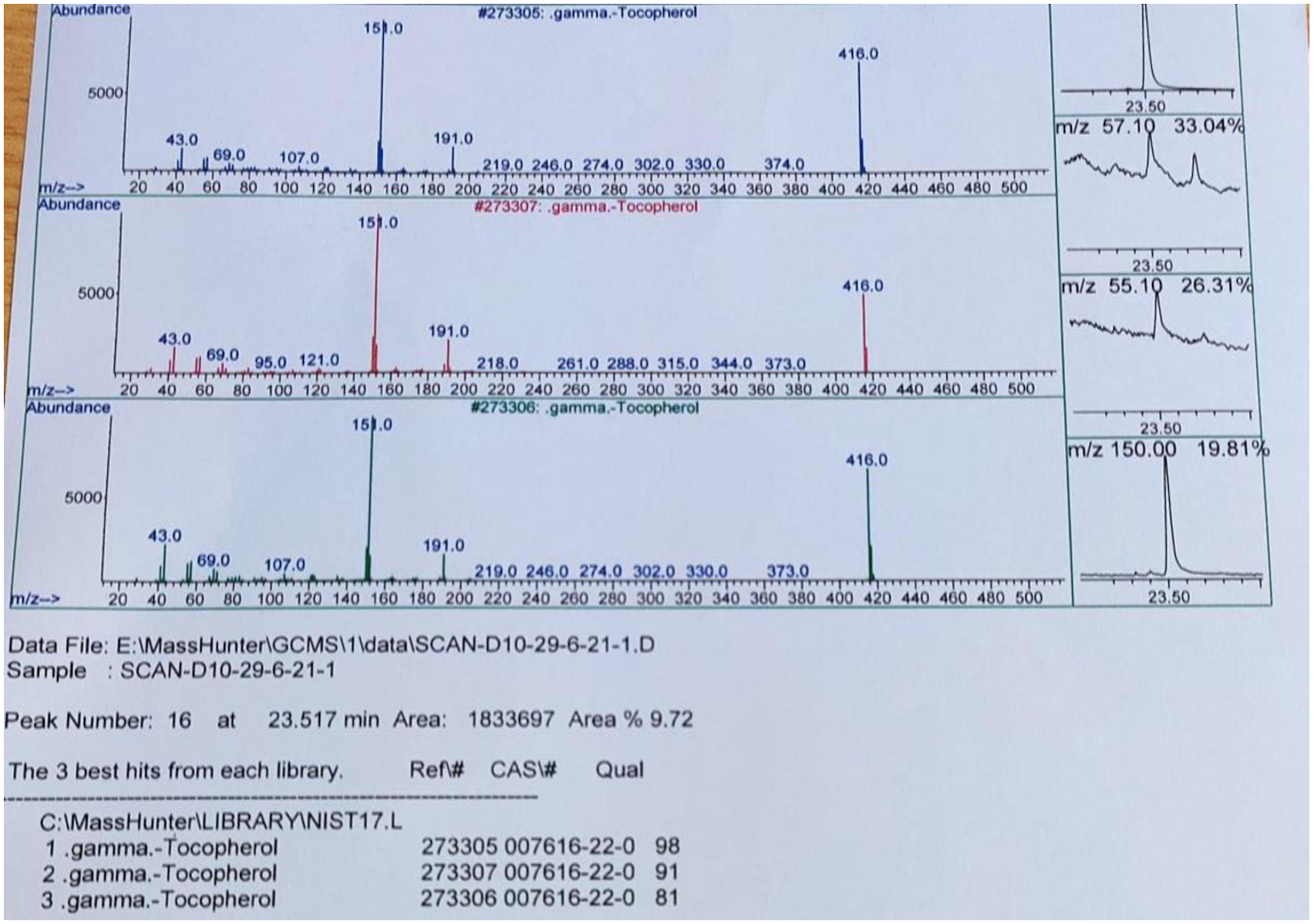
The GC-MS analysis of the n-hexane fraction of soybean seed showed 17 compounds with the highest number of oil contents (Figure 7). GC-MS revealed the presence of many phytochemicals in soybean including proteins, alkanes, lipids, acids, vitamins, ester, ether, and a single alcoholic compound. The most important from a medicinal and nutritional point of view is gamma-tocopherol also known as vitamin E, campesterol, stigmasterol, and beta-sterol (Table 1). Sterols are mostly lipids or fats and play an important role in imparting strength to plant cell membranes. Some of them like gamma-tocopherol (vitamin E) act as antioxidants to lipid particles in the human body. Glycine max seeds have gone through GC-MS analysis because of their wider nutritional and medicinal applications. The seeds of soybean are full and diverse in chemical composition. The percentage of the total compound was found to be 93.61%. The key compounds present in the extract are β-sitosterol (21.34%), stigmasterol (10.57%), campesterol (10.11%), Octacosyl heptafluorobutyrate (9.82%), and γ-tocopherol (9.72%) (Figures 8, 9, 10, and 11). Chromatogram of GC-MS of soybean oil contents. GC-MS Data of Soybean Oil Content. Chromatogram of beta-sitosterol. Chromatogram of stigmasterol. Chromatogram of campesterol. Chromatogram of gamma-tocopherol. Free radical scavenging activity of soybean oil.




Percentage Radical Scavenging Activity of Soybean oil
Percentage of Inhibition Activity of Soybean Seeds Oil.

The highest percentage of radical scavenging activity observed for soybean oil was 54.69 ± .009 as compared to that of Vitamin C (77.55 ± .026) and the smallest inhibition activity was found to be 18.77 ± .002 and 21.63 ± .026 for a sample and standard, respectively (Figure 12).
Soybean reportedly grows best in proper environmental conditions, which include temperature (25–30°C), although the optimum temperature is 23–24°C, moisture contents up to 50%, photoperiod and soil conditions like pH 6–6.8, and nutrients availability from soil especially N, K, and P. 26 The study on soybean seeds was collected in Pakistan from Swat in KPK province. Swat is a green floral area with an optimized temperature of 23.5°C, nearly neutral soil pH, and nutrient availability from soil. 27
Just like animal plants adapted defense strategies to protect themselves from viral and bacterial infections, all these because of gene encoded peptides.28,29 The protease inhibitors derived from plants as per the literature review are mostly amino acids and organic molecules. 30 About 10% of solubilized proteins belong to seeds of legumes and are expressed as proteases through their role in plant physiology and resistance to infections. So, these proteases actively inhibit target molecules, especially proteins, via proteolysis and protection against insects or microbial attacks.31,32
Kunitz-type inhibitors comprise one to several inhibitory domains. Plant Kunitz-type inhibitors generally range from 18 kDa to 24 kDa, but a few smaller peptides (∼8 kDa) have also been described in plants and animals. 33 On the other hand, Bowman-Birk inhibitors are 5–16 kDa with two or more inhibitory β-sheet domains with loops on either side of the molecule that actively inhibit the target molecule. It has several disulfide bonds that provide overall stability to these proteins. 31
We have successfully isolated and purified the soybean trypsin inhibitor. We use a multistep methodology involving extraction, purification (ammonium sulfate precipitation and dialysis against distilled water), and gel electrophoresis characterization. 17 Similarly, a trypsin inhibitor of 20 kDa was also reported to be isolated from Pithecellobium dum sum seeds. 34 The results of our characterized soybean trypsin inhibitor (21.5 kDa) were approximately in line with that of Natarajan et al. 35 with a molecular weight of 20–23 (kDa). Although the same molecular weight inhibitor of 21.5 kDa was obtained from Glycine max. 36 Another trypsin inhibitor protein is characterized by Putranjiva ruxbhurgii 37 though its molecular weight is 34 kDa as compared to the soybean trypsin inhibitor protein. Kunitz trypsin inhibitor of 20 kDa was isolated and purified via SDS-PAGE. 38
Currently, an isolated compound (tridecane) is reported as a bio-pesticide. 39 Undecane 2,6-dimethyl is previously unearthed as a fungal metabolite and is present in star anise tree fruit and Citrullus colysyntheis.40,41 Our soybean n-hexane fraction also contains pentadecane; also a volatile oil reported in Scandix balansae species. 42 The (Z, Z)-9,12-Octadecadienoic acid we obtained from soybean is an animal and plant fat, mostly present in high concentrations in foods including cloves, green beans, pecan nuts, and kumquat. It’s an unsaturated fat with two double bonds at two positions and is mostly present in glycosides. It is an important fat in mammalian nutrition and is involved in prostaglandins and cell membrane synthesis. We have also obtained octacosyl heptafluorobutyrate, a volatile compound reported in Rosa hybrida. 41 Gamma tocopherol is one of the twelve homologs of vitamin E and it’s a kind of natural soluble neutraceutical to prevent lipid peroxidation.43,44 Gamma tocopherol is an essential component and was previously reported in a few other seeds like rapeseed, corn germ, and also soybean.45,46 Soybean-derived campesterol can be used as cholesterol-lowering ingredients in food supplements and medicine. Campesterol was previously reported in soybean oil also sunflower and canola. 47 We characterized stigmasterol from soybean and its precursor compound as a steroid. It is unsaturated at carbon 5 and 6. A literature review indicated the presence of stigmasterol in beans, seeds, nuts, legumes, and unpasteurized milk. Stigmasterol plays an important role in the translocation of GLUT4 a leading strategy in treating type 2 diabetes. 48 Beta-sitosterol and stigmasterol mixture was obtained from Baccaurea macrocarpa (known locally as Tampoi) extract of n-hexane and ethyl acetate using NMR data. The fractions were also found to be non-toxic. 49
The highest radical DPPH activity of soybean may be due to gamma-tocopherol, 50 which is similar to our GC-MS findings that revealed the presence of gamma-tocopherol in soybean oil. Also, the presence of isoflavones in soybean is associated with significant antioxidant activity. 51 A similar relation of gradual increase in inhibition activity with increase in concentration (mg/mL) was reported for soybean seed extracts which strongly supports our results. 52 The pomegranate seed oil also showed comparable antiradical activity, signifying the importance of oil from natural sources mostly plants for use as medicinal product directly as food or in combination with other medicinal products. 53
Medicinal remedies are currently emerging as a competitor to the number of antibiotics to which bacterial species have become resistant and the resistance is increasing daily. Besides the resistance to antibiotics human body threatens by the side effects of these antibiotics and other synthetic drugs. Considering the given scenario, plant-based formulations became a choice with at least no side effects or toxicity to the human body. Soybean trypsin inhibitor could be used as a plant-derived drug to overcome the over-activation of trypsin that without its real substrate (proteins) becomes activated and start auto digestion (autophagy) leading to pancreatitis. Also, the amino acid sequence of soybean proteins and the highest concentration makes it a compatible product to overcome nutritional problems and other food shortage and supply challenges.
The antioxidant potential of soybean revealed its importance as the best candidate in the future to overcome the production of free radicals such as H2O2, singlet oxygen species, and dis-mutases involved in tissue damage. We also observed the nearest scavenging activities of soybean compared to Vitamin C at each concentration. The government of Pakistan is working on the soymilk project to overcome the challenges of food shortage.
Conclusion
Soybean is a rich source of proteins and peptides; many of these proteins are used as drugs for ailments including antibacterial, antifungal, anti-inflammatory, antioxidant, and even anticancer properties. Medicinal remedies are currently emerging as a competitor to the number of antibiotics to which bacterial species have become resistant and the resistance is increasing daily. Because of the side effects of synthetic drugs, people are now more curious about using plant-based formulations. Soybean trypsin inhibitor could be used as a plant-derived drug to overcome the over-activation of trypsin that without its real substrate (proteins) becomes activated and start auto digestion (autophagy) leading to pancreatitis.
Many countries are seriously considering soybean as an alternative source of meat protein. Also, the amino acid sequence of soybean proteins and the highest concentration makes it compatible with overcoming nutritional problem and other food shortages and supply challenges. Interestingly, current government of Pakistan is working on the soymilk project to overcome the challenges of food shortage.
Footnotes
Declaration of Conflicting Interests
The author(s) declared no potential conflicts of interest with respect to the research, authorship, and/or publication of this article.
Funding
The author(s) received no financial support for the research, authorship, and/or publication of this article.
