




Abstract
Studies into drug combination at low doses are a promising approach to the management of pain and inflammation. The aim of this study was to evaluate the anti-edema and anti-hyperalgesic effects of a combination of diclofenac and andrographolide. Male Sprague-Dawley rats were first treated with diclofenac or andrographolide alone (3–100 mg/kg), as well as a combination of the 2 drugs. Carrageenan was then injected into the right hind paw of rats, and changes in paw volume and sensitivity to mechanical (von Frey) and thermal (Hargreaves test) stimuli measured. Results showed drug combination produced synergistic effects at reducing paw edema especially at lower doses, with a Loewe synergy score of 13.02 ± 8.75 in SynergyFinder and a combination index of .41 ± .18 after isobolographic analysis. Again synergy scores for decreasing response to 1.0 and 3.6 g force application of von Frey filaments after drug combination were 10.127 ± 5.68 and 8.554 ± 6.53, respectively, in SynergyFinder. Synergistic effects were also seen after drug combination in the Hargreaves test with a synergy score of 5.136 ± 16.38. In conclusion, combination of diclofenac with andrographolide showed better pharmacologic effects after carrageenan injection and was more synergistic at low-dose combinations.
Introduction
Inflammation and its associated pain are two of the major causes of discomfort and disability in humans. 1 Due to their vast potential causes and complex physiology, inflammation and pain are unifying characteristics of many diseases, as well as physical or emotional trauma. They serve as warning signs of actual or potential tissue damage and may thus prevent further damage and aid healing. 2 In some instances, however, they become either disabling or unwanted and may even be unnecessary as seen in some states of chronic inflammation and neuropathic pain.3,4 The non-steroidal anti-inflammatory drugs (NSAIDs), which work through reducing the actions of prostaglandins, are one of the main groups of drugs for the management of inflammation and pain. They are mainly limited by their ability to cause gastric ulcers and also by their toxic effects on vital organs like the kidneys, heart, and liver.5-7 Despite these limitations, the NSAIDs remain one of the main go to group of drugs for the management of moderate-to-severe inflammation and pain.3,8,9 This fact contributes to the challenge faced with managing chronic conditions of pain and inflammation and as such there is the need for continuous research into new and potentially safer drugs as well as improved strategies for managing unwanted inflammation and its associated pain. Some researchers resort to trying combinations of different classes of known drugs as a way forward in research.10,11 A reduction in the dose of individual drugs needed to produce a given effect may produce a corresponding reduction in the side effect associated with the individual drugs. This study investigates the anti-inflammatory and anti-hyperalgesic effect of a combination of diclofenac, which is one of the most widely used NSAIDs, 12 and andrographolide, a novel anti-rheumatic compound 13 with gastro-protective, 14 hepato-protective,15,16 and analgesic effects17,18 in the carrageenan-induced paw edema experiment. The study could be of relevance to clinicians as both diclofenac19,20 and andrographolide21-23 have been shown to have a potential benefit in the management of SARS-CoV-2. The Loewe additivity model 24 in SynergyFinder web application25,26 was used to investigate effects of the drug combination and carry out analysis of dose combination matrices from which results were presented as surface plots of synergy scores. An isobolographic analysis 27 was also performed to evaluate synergistic effects of the drug combination using a fixed 1:1 ED50 dose combination ratio of the 2 drugs.
Aim of the Study
The aim of this study was to investigate the anti-inflammatory and anti-hyperalgesic effects of a combination of diclofenac with andrographolide in the carrageenan-induced paw inflammation model in rats.
Materials and Methods
Drugs and Chemicals
Andrographolide powder was obtained from Xi’an Teng-Yun Biotech Company limited, Xian, China. Diclofenac powder was obtained from Ernest Chemist’s Limited, Accra, Ghana. Carrageenan, tween-80, and sodium chloride were obtained from Merck KGaA, Darmstadt, Germany.
Animals
Male Sprague-Dawley rats of weight 150–200 g were obtained from the Department of Pharmacology, Kwame Nkrumah University of Science and Technology (KNUST), Kumasi, Ghana, and used for all experiments. Animals were housed in rectangular steel cages (34 × 47 × 18 cm3), with five animals kept per cage and provided a standard pelleted diet, (Agricare Ltd, Kumasi, Ghana) and water. Housing conditions were maintained at temperature 24–25°C, relative humidity 60–70%, and animals kept in a 12 hour light–dark cycle. All experimental procedures were approved by the Committee on Animal Research, Publication and Ethics (CARPE) at the Department of Pharmacology, KNUST (FPPS/PCOL/013/2019) and were carried out in accordance with the guidelines concerning the care and use of laboratory animals in experimentation (Directive 2010/63/EU).
Selection of Standards and Doses
Diclofenac was the NSAID of choice for combination due to its widespread use and relative safety at low doses. 28 Additionally, andrographolide was used in the combination with diclofenac since it has been shown to possess protective effect in the gastrointestinal tract, liver, and kidney and also has analgesic properties.17,18 Doses selected for ED50 determination of both diclofenac and andrographolide were based on notes from previous literature and selected route of administration.17,18,29 All drugs were prepared in normal saline with tween-80 added for adequate dispersion of andrographolide (1 drop of tween-80 for every 10 mL of saline). Calculations for preparation of solutions were such that maximum volume of final solution administered to each 150 g rat was not more than 1.5 mL. Normal saline with tween-80 (1 drop of tween-80 per 10 mL of saline) was used as the vehicle and given at a dose not exceeding 10 mL/kg to rats. Purity of diclofenac and andrographolide samples used in this study was confirmed by NMR analysis with the aid of Bruker CMC-assist software (see supplementary material 3, Sup Fig 1).
Procedure for Randomization and Blinding
Animals were randomly assigned to groups by using an application for randomly generating numbers. All animals were given a unique whole number (1 to 150) and desired treatment groups randomly filled by using the software to generate corresponding sets (n = 5) of random whole numbers (1-150) with no duplicates. Animals were then filled into respective treatment groups containing their assigned whole number. Blinding was done for all measurements in rats by allowing independent technicians with no idea of group placements to re-label (A-Z) well-prepared solutions of various treatments (contained in identical dispensing bottles) before experiments and the key only revealed at the end of measurements.
Dose Response Surface Analysis with SynergyFinder Web Application
SynergyFinder web application (SynergyFinder 2.0, https://synergyfinder.fimm.fi) is an online resource which enables analysis and visualization of the interaction resulting from combination of a drug pair in the form of a dose matrix.25,26 The principle of dose matrix analysis in drug combination studies is that each dose of one drug is combined with each dose of the second drug and thus varying dose ratios are used in the final determination of the type of drug interaction. This is unlike the isobolographic analysis where one dose ratio (usually 1:1) is used. In SynergyFinder 2.0, the synergy scores from the dose response matrix are presented as a surface plot of delta scores (δ-scores) based on algorithms derived from one of four reference models (HSA, Loewe, Bliss and ZIP models) and show the average excess response due to drug interactions. The summary delta score indicates in percentage, how much an observed response after combination of a dose pair in experiments deviates from an expected theoretical response. 30 A delta score above 0 indicates an increase in response beyond the expected after combination of the dose pair and falls above the plane on the surface plot while a delta score below 0 indicates a decrease in response beyond the expected after combination and falls below the plane on the surface plot. An increase above the expected theoretical response is regarded as a synergistic interaction while a decrease is regarded as antagonism. However, based on findings, it is usually expected that an interaction score in SynergyFinder 2.0 less than −10 be considered antagonistic, more than 10 synergistic, and in between additive. In this study, delta synergy scores based on the Loewe additivity model (the expected response from combination of a dose pair is given by the additive effect of the individual responses of the 2 drugs) were obtained in SynergyFinder 2.0 and used for discussion. Though comparison of the synergy scores from all reference models is ideal, Loewe synergy scoring was used due to its relation to the isobolographic analysis also performed here and for easier interpretation of data. The mathematical framework of the delta score based on the ZIP model has also further been described by Yadav et al. 30
Induction of Paw Edema
The experiment was carried out as previously described. 31 Rats were randomly divided into twenty five groups of five animals each. On the day of testing, animals of the control group received vehicle 10 mL/kg, p.o. while drug-treated groups received one of the following treatments: diclofenac (3, 10, 30, 100 mg/kg, p.o.), andrographolide (3, 10, 30, 100 mg/kg p.o.), and the remaining 16 groups received a combination of diclofenac and andrographolide p.o. such that each dose of diclofenac above was combined with each dose of andrographolide to produce a dose combination matrix. Thirty minutes after drug administration, edema was induced by injecting carrageenan (.1 mL, 1% w/v in normal saline) into the subplantar tissue of the right hind paw. The entire experiment, together with paw volume and hyperalgesia measurements, was carried out over 8 days using the same batch of animals (3 groups per day).
Measurement of Paw Edema
The severity of paw edema was determined by measuring the injected paw volumes of each rat using the water displacement method. Very gently, the injected paw of each rat was lowered into a 100 mL beaker containing water filled almost to the brim and the change in weight produced on an electric balance by water displacement was recorded. Paw volume measurements were determined every hour for 6 hours after carrageenan injection. Percentage change in paw volumes was determined and used to plot time course curves. The area under the various time course curves was determined and used to generate bar graphs for each of the treatments and obtain the surface plot for the dose response matrix.
Von Frey Test for Mechanical Allodynia
The von Frey test requires application of different filament sizes to produce a range of pressures to which animals respond. Sensitivity of animals to mechanical nociceptive stimulus was determined by measuring the number of times the animal responded to 10 applications of 1.0 and 3.6 g force (gf). Von Frey filaments of sizes 5 and 9 (IITC Life Sciences Inc.) were used to achieve pressures of 1.0 and 3.6 gf, respectively. Application was done at the lateral plantar surface of the injected hind paw of each rat and was done 10 times for each animal regardless of the response. Prior to carrageenan edema experiment, baseline thresholds of all animals to von Frey filaments were first determined to ensure animals produced no response to Filaments 5 and 9. Animals which showed responses were excluded from the experiment. Three hours after carrageenan administration, animals were again tested for response to Filaments 5 and 9. At the time of testing, animals were placed in a plastic cage with a wire mesh floor and were allowed to habituate for 5 minutes before commencement of the test. The filament was applied at the lateral plantar surface of the hind paw of the rat until the filament just bent for a duration of 2 seconds. A positive response was defined as withdrawal or licking of the paw as well as jumping of the animal. This was repeated 10 times using the up and down method leaving 5 seconds between consecutive applications and the number of positive responses to each filament converted to percent response. Thus data was recorded as the percentage of the 10 applications that yielded a positive response. Measurements were made 3 hours after injection of carrageenan and the data presented as percentage response in the form of a matrix table and a surface plot of synergy scores obtained from the dose response matrix.
Hargreaves Test for Thermal Hyperalgesia
The test was done 30 minutes after von Frey testing. Testing for baseline responses of animals was first done prior to carrageenan injection (predrug latency) and repeated again 3 hours after injection of carrageenan (postdrug latency). Plantar Analgesia Meter Model 390G from IITC (Woodland Hills CA) equipped with a glass platform was used to test hind paw thermal latency. Rats were placed on the glass platform for 5 minutes to allow for acclimatization after which a focused thermal heat stimulus was delivered from a fixed distance to the plantar surface of the injected hind paw for up to 20 seconds (cut of latency) or until the animal showed a positive response which was defined as withdrawal or licking of the paw. The test was performed on the ipsilateral (injected) paw and each rat was tested once. Results of the Hargreaves test are given as a percentage of the maximal possible effect (%MPE), which was calculated as follows

The percentage maximum possible effect was then normalized to within 0 and 100% with GraphPad Prism for better result interpretation.
Isobolographic Analysis
An isobolographic analysis for the drug combination was performed using ED50 doses from effect of single drug administrations on paw volumes only. Treatment groups were the following: vehicle (10 mL/kg, p.o.), diclofenac (3.73 mg/kg, p.o.), andrographolide (28.31 mg/kg, p.o.), and fixed ratio (1:1) combination of ED50 doses of diclofenac and andrographolide (4.01, 8.01, 16.02, and 32.04 mg/kg, p.o.). Procedures for induction of paw edema and measurement of changes in paw volume were similar to that previously described in the sections Induction of Paw Edema and Measurement of Paw Edema. The isobolographic analysis was carried out as previously described.
32
A theoretical line of additivity (the isobole) for all dose combinations of diclofenac and andrographolide expected to give 50% inhibition of total edema was drawn and a theoretical Zadd value (located on the isobole) corresponding to expected ED50 from fixed dose combination was calculated. The observed ED50 from experimentation (Zmix) was used to calculate a combination index (CI) for assessing the degree of interaction. The combination index, CI, was calculated as

If Zmix fell below Zadd on the line of additivity and CI<1, then the interaction was considered synergistic and vice versa. The further away from 1 the CI is, the stronger the interaction.
Statistical Analysis
Analysis of surface plots was done using SynergyFinder web application and synergy scores (shown as delta values) calculated using the Loewe additivity principle for each combination dose. The overall synergy score for the surface plot is shown as mean ± 95% confidence interval. GraphPad Prism 6 for Windows (GraphPad Software, San Diego, CA, USA, Version 6.01) was used for ANOVA analysis and results shown as mean ± standard error of the mean (SEM). Five rats (n = 5) were used per group in each experiment, and P<.05 was considered statistically significant in all analyses.
The time-course curves were subjected to two-way (treatment × time) repeated measures analysis of variance (ANOVA) with Dunnett’s post hoc test. Total edema was calculated in arbitrary units as the area under the curve (AUC) and subjected to one-way ANOVA with Dunnett’s post hoc test. To determine the percentage inhibitions for each treatment in plotting dose response curves, the following equation was used

ED50 (dose responsible for 50% of the maximal effect) for each drug was determined by using an iterative computer least squares method in GraphPad, with the following non-linear regression equation
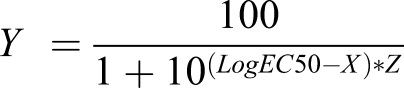
Isobolographic analysis was carried out as previously described
32
; theoretical ED50 (Zadd) was calculated using the following formula in Microsoft Excel software

The variance (Var) of the Zadd was calculated from the fraction of the ED50 in the combination as

Zmix was the ED50 value of the dose response curve from 1:1 combination mixture used in the experiment and was obtained using GraphPad Prism 6. The isobole was plotted in GraphPad Prism 6 using ED50 of diclofenac, ED50 of andrographolide, Zadd, and Zmix values.
Results
Measurement of Paw Edema
Results obtained from measurement of paw volumes after individual drug treatments in the rat carrageenan-induced paw edema experiment are shown in Figure 1. Time course curves obtained from hourly measurements of paw volumes for 6 hours are shown in Figure 1a and c for diclofenac and andrographolide, respectively. In the vehicle-treated control group, there was a progressive increase in the volume of the injected paw after intraplantar carrageenan injection. The progressive increase in paw volumes for the control group was such that it peaked at 2 hours and plateaued until the fourth hour after which there was a decrease. Treatment with both diclofenac and andrographolide increased the time taken to reach the peak paw volume and also decreased the peak paw volume observed as compared to the control group. Two-way ANOVA for time course curves showed significant reduction in percentage edema for both diclofenac (3–100 mg/kg p.o.; F6, 132 = 71.74, P < .0001; Figure 1a) and andrographolide (3–100 mg/kg p.o.; F6, 134 = 82.44, P < .0001; Figure 1c) as compared to control group. To better compare the differences between groups, areas under the various time course curves were obtained and results shown as total edema in Figure 1b and d. One-way ANOVA between the different groups and control showed a significant and dose-dependent reduction in the AUC values for diclofenac (3–100 mg/kg p.o.; F4, 20 = 9.058, P = .0002; Figure 1b) and andrographolide (3–100 mg/kg p.o.; F4, 20 = 4.289, P = .0115; Figure 1d) as compared to controls. Dose response curves for % inhibition of total edema gave ED50 values of 3.74 ± 1.39 mg/kg and 28.31 ± 1.4 mg/kg for diclofenac and andrographolide, respectively (Figure 1e). Effect of diclofenac (3—100 mg/kg, p.o.) and andrographolide (3—100 mg/kg, p.o.) on time course curves for percentage change in paw volume (a, c) and total edema (b, d) in the rat carrageenan-induced paw edema experiment. Total edema was calculated as AUC over the 6-hour period. % inhibition of total edema for both treatments was calculated and used to plot DRCs (e). Values are presented as mean ± S.E.M. (n = 5). *P < .05; **P < .01; ***P < .001; ****P < .0001 compared to vehicle-treated control group (Two-way ANOVA followed by Dunnett’s post hoc test). ##P < .01; ###P < .001 compared to vehicle-treated control (Cntrl) group (one-way ANOVA followed by Dunnett’s post hoc test).
Percentage Inhibition of Total Edema by Diclofenac (3–100 mg/kg, p.o.), Andrographolide (3–100 mg/kg, p.o.), and Dose Combination Matrix of the Two Drugs in the Rat Carrageenan-Induced Paw Edema Experiment.

Values are presented as mean ± S.E.M. (n = 5). All analyses were by one-way ANOVA followed by Dunnett’s post hoc test with significance indicated as: aP<.05; bP<.01; cP<.001; dP<.0001 when compared to vehicle-treated control group; fP<.01; hP<.0001 when compared to diclofenac-only treated group at the respective dose level; iP<.05; jP<.01; kP<.001; lP<.0001 when compared to andrographolide-only treated group at the respective dose level. The value of δ is the synergy score computed at each dose combination.
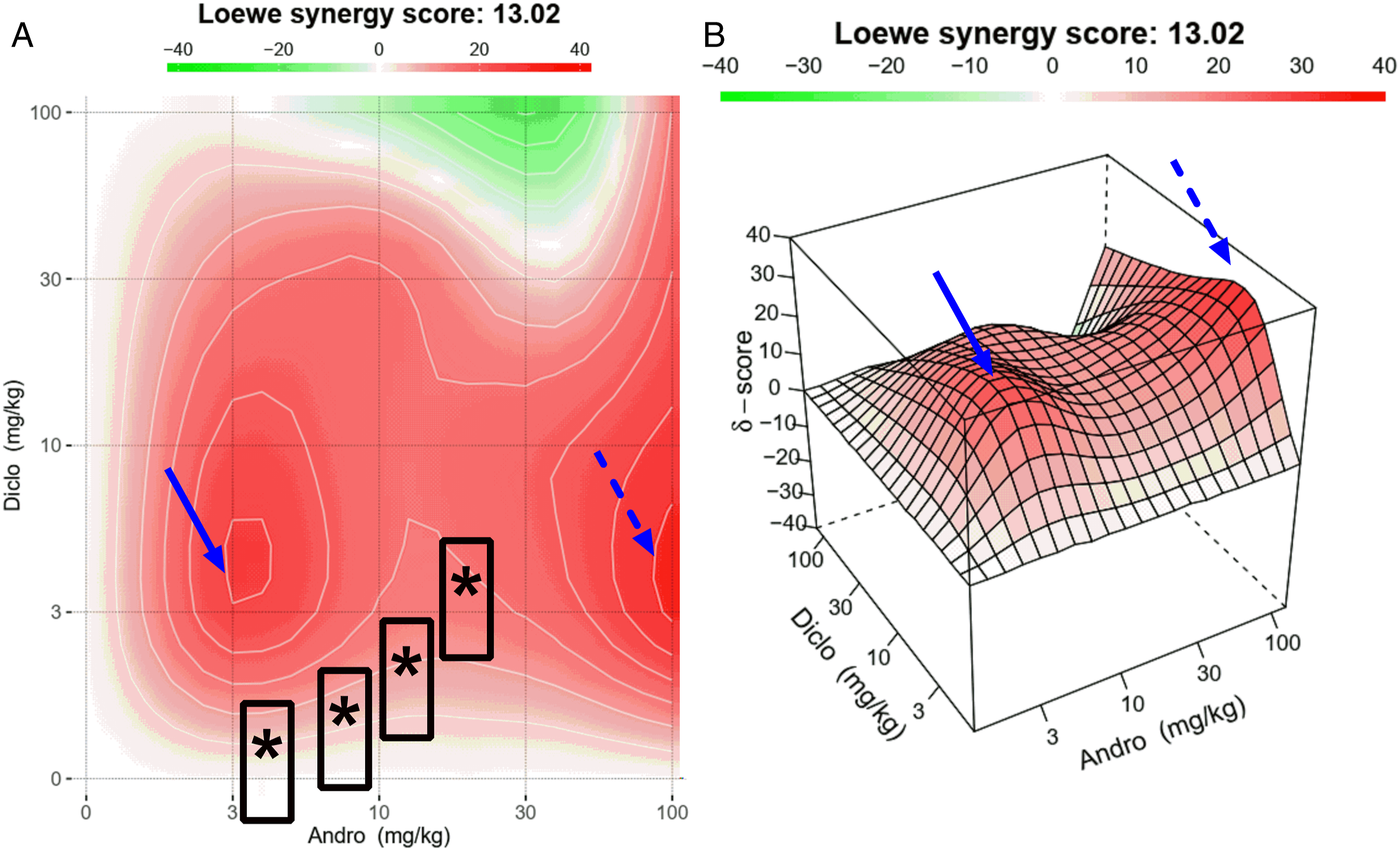
Surface plot in two- (a) and three- (b) dimensional views, showing synergy scores for effect of diclofenac (Diclo) plus andrographolide (Andro) combination (3—100 mg/kg, p.o., dose combination matrix) on paw volumes in the rat carrageenan-induced paw edema experiment. Loewe synergy scores (shown as δ-scores) were calculated from % inhibition of total edema in the dose combination matrix. Areas in red, white, and green show regions of synergy, additivity, and antagonism, respectively. Arrows indicate the regions of highest synergy for lowest dose of diclofenac. Asterisks indicate 1:1 ED50 dose combinations used in isobolographic analysis.
Von Frey Test for Mechanical Allodynia
Von Frey filament 5 (1.0 gf)
Effect of Diclofenac (3100 mg/kg, p.o.), Andrographolide (3–100 mg/kg, p.o.), and Dose Combination Matrix of the Two Drugs on % Response to von Frey Filament 5 in the Rat Carrageenan-Induced Paw Edema Experiment.
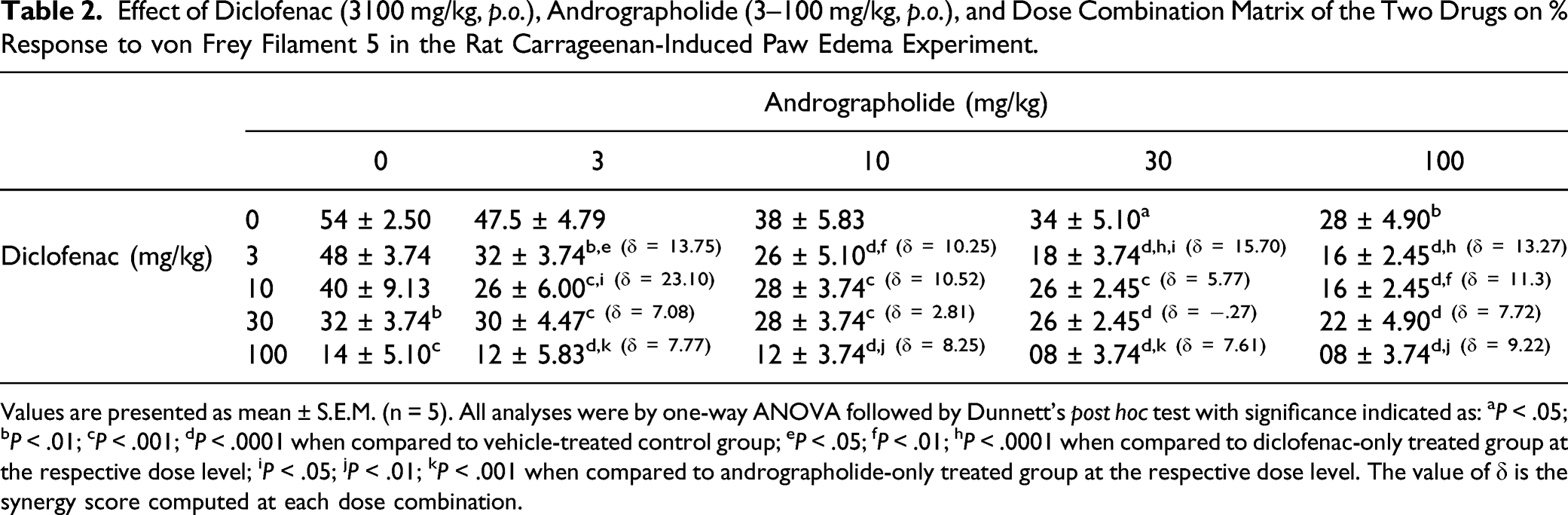
Values are presented as mean ± S.E.M. (n = 5). All analyses were by one-way ANOVA followed by Dunnett’s post hoc test with significance indicated as: aP < .05; bP < .01; cP < .001; dP < .0001 when compared to vehicle-treated control group; eP < .05; fP < .01; hP < .0001 when compared to diclofenac-only treated group at the respective dose level; iP < .05; jP < .01; kP < .001 when compared to andrographolide-only treated group at the respective dose level. The value of δ is the synergy score computed at each dose combination.

Surface plot in two- (a, c) and three- (b, d) dimensional views, showing synergy scores for effect of diclofenac (Diclo) plus andrographolide (Andro) combination (3—100 mg/kg, p.o., dose combination matrix) on % response to von Frey filaments in the rat carrageenan-induced paw edema experiment. Loewe synergy scores (shown as δ-scores) were obtained from % response of animals to filaments 5 (a, b) and 9 (c, d) in the dose combination matrix. Areas in red, white, and green show regions of synergy, additivity, and antagonism, respectively. Arrows indicate the regions of highest synergy.
Von Frey filament 9 (3.6 gf)
Effect of Diclofenac (3–100 mg/kg, p.o.), Andrographolide (3–100 mg/kg, p.o.), and Dose Combination Matrix of the Two Drugs on % Response to von Frey Filament 9 in the Rat Carrageenan-Induced Paw Edema Experiment.
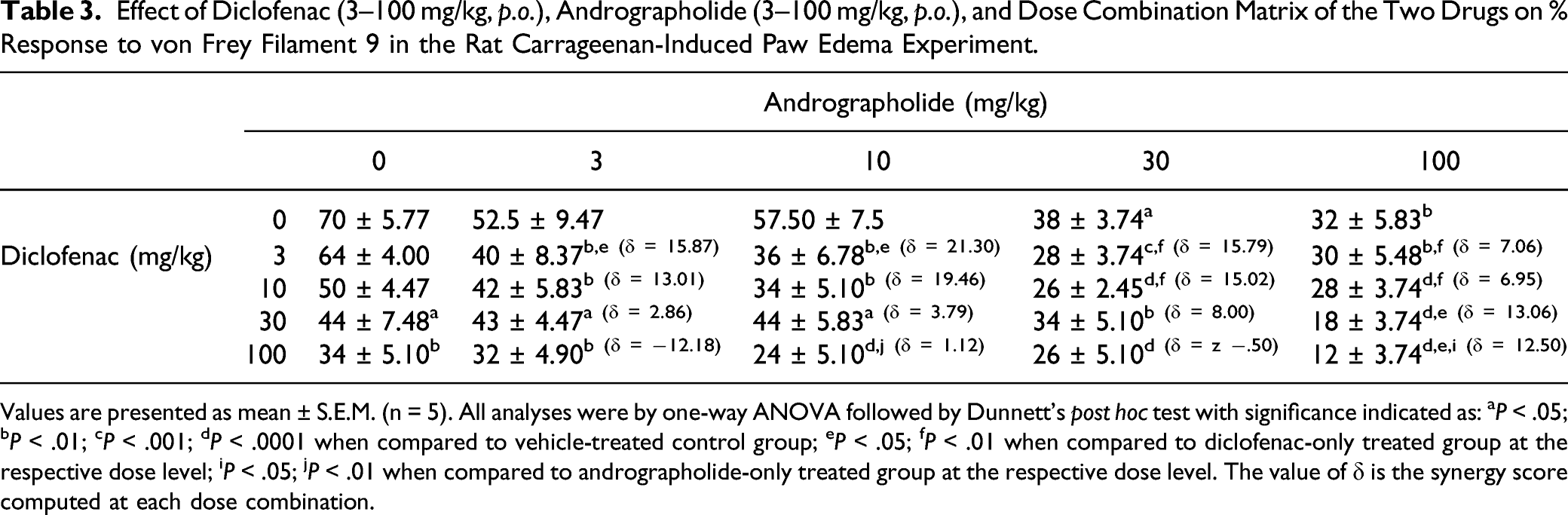
Values are presented as mean ± S.E.M. (n = 5). All analyses were by one-way ANOVA followed by Dunnett’s post hoc test with significance indicated as: aP < .05; bP < .01; cP < .001; dP < .0001 when compared to vehicle-treated control group; eP < .05; fP < .01 when compared to diclofenac-only treated group at the respective dose level; iP < .05; jP < .01 when compared to andrographolide-only treated group at the respective dose level. The value of δ is the synergy score computed at each dose combination.
Hargreaves Test for Thermal Hyperalgesia
Effect of Diclofenac (3–100 mg/kg, p.o.), Andrographolide (3–100 mg/kg, p.o.), and Dose Combination Matrix of the Two drugs on %MPE of the Hargreaves Test in the Rat Carrageenan-Induced Paw Edema Experiment.

Values are presented as mean ± S.E.M. (n = 5). All analyses were by one-way ANOVA followed by Dunnett’s post hoc test with significance indicated as: aP < .05; bP < .01; cP < .001; dP<.0001 when compared to vehicle-treated control group; eP < .05 when compared to diclofenac-only treated group at the respective dose level; iP < .05; jP < .01 when compared to andrographolide-only treated group at the respective dose level. The value of δ is the synergy score computed at each dose combination.

Surface plot in two- (a) and three- (b) dimensional views, showing synergy scores for effect of diclofenac (Diclo) plus andrographolide (Andro) combination (3—100 mg/kg, p.o., dose combination matrix) on %MPE of the Hargreaves test, in the rat carrageenan-induced paw edema experiment. Loewe synergy scores (shown as δ-scores) were calculated from % MPE in the dose combination matrix. Areas in red, white, and green show regions of synergy, additivity, and antagonism, respectively. Arrows indicate the regions of highest synergy.
Isobolographic Analysis
Results from isobolographic analysis on 1:1 ED50 dose combinations (4.01, 8.01, 16.02, and 32.04 mg/kg, p.o.) of diclofenac and andrographolide on % change in paw volume in the rat carrageenan-induced paw edema experiment are shown in Figure 5. Time course curves for % change in paw volume and total edema from AUC calculations are shown in Figure 5a and b, respectively. Two-way ANOVA (treatment × time) of time course curves compared to control groups showed there was a significant decrease in the % change of paw edema after drug combination (4.01–32.04 mg/kg, p.o.; F6, 139 = 43.69, P < .0001; Figure 5a). Total edema of the drug combination showed there was a significant decrease compared to control after the drug combination was administered (4.01–32.04 mg/kg, p.o.; F4, 19 = 12.49, P < .0001; Figure 5b). Figure 5c shows dose response curves obtained from % inhibition of total edema after 1:1 combination of ED50 doses and from single drug administration. Combination gave an ED50 value of 4.514 ± 1.33 mg/kg which shows an increased potency as compared to andrographolide but not diclofenac. Figure 5d shows the isobolograph obtained from 1:1 combination of ED50 doses. Experimental ED50 value (Zmix) fell below the expected theoretical value (Zadd) on the line of additivity with a combination index of .41 ± .18. Effect of 1:1 combination of ED50 doses (4.01, 8.01, 16.02, and 32.04 mg/kg, p.o.) of diclofenac (Diclo; 3.73 mg/kg, p.o.) and andrographolide (Andro; 28.31 mg/kg, p.o.) on time course curves for % change in paw volume (a) and total edema (b) in the carrageenan-induced paw edema experiment in rats. Total edema was calculated as AUC over the 6-hour period. DRCs for the drug combination and individual drugs (c) were plotted using % inhibition of total edema. The isobolograph (d) was plotted using experimental ED50 value (Zmix) obtained from drug combination. Values are presented as mean ± S.E.M. (n = 5). *P < .05; **P < .01; ***P < .001; ****P < .0001 compared to vehicle-treated control group (Two-way ANOVA followed by Dunnett’s post hoc test). #P < .05; ##P < .01; ###P < .001; ####P < .0001 compared to vehicle-treated control (Cntrl) group (One-way ANOVA followed by Dunnett’s post hoc test).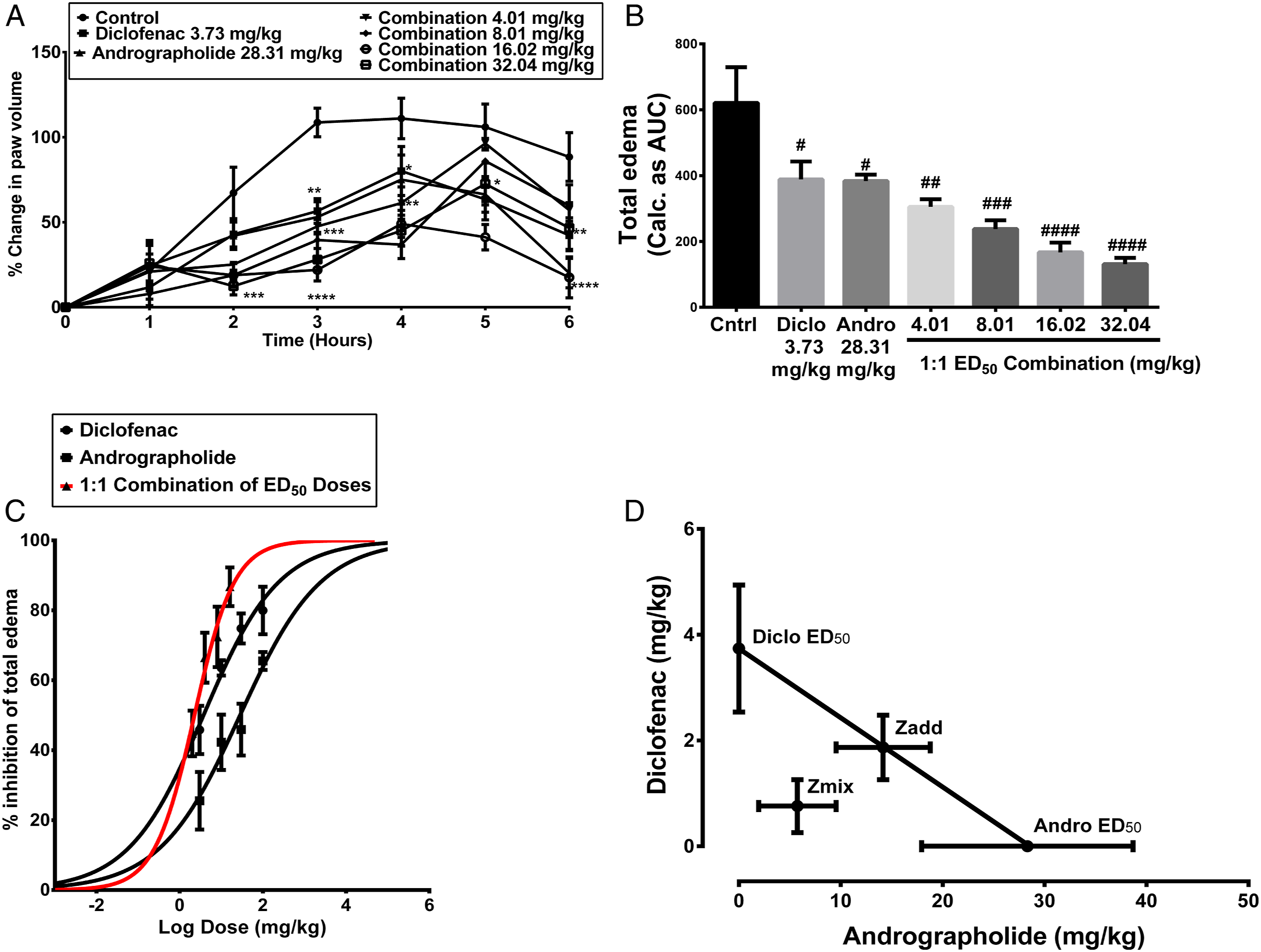
Discussion
Findings of this study revealed a synergistic effect after diclofenac and andrographolide combination in the carrageenan-induced paw edema and hyperalgesia model in rats. Carrageenan administration into the rat paw leads to the production and release of various pro-inflammatory mediators including histamine, nitric oxide, prostaglandins, TNF-α, and interleukins all of which contribute not only to the inflammatory state but also play a major role in the development of inflammatory pain. Thus, intra-plantar administration of carrageenan can be used to induce states of inflammatory hyperalgesia (heightened response to painful stimuli) and allodynia (painful response to non-painful stimuli) in rodents.33,34 This allows for the evaluation of the drug combination on hyperalgesia states that may present with inflammatory and neuropathic pain. The inflammatory process induced by carrageenan which ultimately leads to the development of allodynia and hyperalgesia is initiated first by the production and release of histamine, serotonin, and bradykinins. 35 This is then maintained by the production of prostaglandins which sustain the inflammatory process and account for the peak inflammatory effect. 35 Subsequently, systemic inflammatory effects are manifested by the production of pro-inflammatory cytokines (TNF-α and IL-6). Also implicated in the late systemic phase of the inflammatory process is the release of inducible nitric oxide. 35 Non-steroidal anti-inflammatory drugs (NSAIDs), including diclofenac, are known to work by inhibiting the action of cyclooxygenase (COX) enzymes, which are necessary for the formation of prostaglandins and their resulting pro-inflammatory and nociceptive effects. Thus, though the NSAIDs are effective at reducing the inflammatory effects of carrageenan and the resulting sensitization to pain, they do not block all the pathways associated with carrageenan-induced inflammation especially at low doses and these other un-inhibited pathways can still contribute to the inflammation and pain observed after carrageenan injection. As a result, the NSAIDs are known to block about 60 to 80% of the inflammatory edema observed after carrageenan administration. 36 The search for new analgesic and anti-inflammatory agents has led to the discovery that, andrographolide, which is a purified plant extract, has the ability to inhibit the formation of inflammatory cytokines, TNF-α, and interleukin-6 which are also implicated in the effect observed after carrageenan administration.13,37 Andrographolide has also been found to possess analgesic effects in some commonly employed rodent models of analgesia.18,38 In this study, the von Frey test 39 which employs plastic filaments of different sizes to deliver a mechanical stimulus and the Hargreaves test 40 which employs a radiant heat stimulus were used for the evaluation of allodynia and hyperalgesia in carrageenan-treated rodents. The findings of this study showed that the therapeutic effect of combining diclofenac with andrographolide into a single dose is more prominent than when either agent was used alone for both inflammation and hyperalgesic states. Calculation of Loewe synergy delta scores using SynergyFinder web application revealed this increased effect is synergistic especially for drug combinations in the lower dose ranges of 3 and 10 mg/kg. Many studies have shown that inflammatory pathways which are un-inhibited by the mechanism of diclofenac can be inhibited by andrographolide. In a previous study, andrographolide was more effective than diclofenac-treated groups at decreasing allodynia induced by the spared nerve injury model in mice tested with von Frey filaments. 17 The study showed that andrographolide blocked the actions of substance P at the spinal levels better than diclofenac due to its effect on NF-κB expression. This is important because during the initiation and progression of pain impulses, as well as sensitization to nociceptive stimuli in various pathological states, a number of processes in both the peripheral and central nervous systems contribute to the painful experience.41,42 The blockade of these pathways at different points is expected to produce a better outcome and a synergistic effect as seen in this study. The effects of the various mediators involved in inflammation have also been demonstrated in various findings to contribute to the development of pain. Both prostaglandins 43 and TNF-α 44 contribute to the development of allodynia and hyperalgesia. The ability of andrographolide to block these 2 major pathways due to its effects on NF-κb 45 may contribute to its synergistic effect with diclofenac. Whereas andrographolide blocks the expression (through inhibition of NF-κB) of cyclo-oxygenase-2 enzymes, 45 diclofenac on the other hand completely inhibits the already available COX enzymes. It is likely that these 2 effects at different points in the inflammatory pathway may add up synergistically to reduce the pro-nociceptive effects of prostaglandins in this model.
The role of diclofenac in the combination can however not be understated. It blocks completely the enzyme responsible for the production of prostaglandins, which play major roles in the development of edema and pain. Their roles as anti-inflammatory and analgesic agents cannot be overlooked, and diclofenac contributes a significant part to the overall analgesic effect after drug combination. This was demonstrated in this current study by comparing the total edema (calculated as AUC) values for highest doses of diclofenac and andrographolide when administered alone. Thus whereas combination of diclofenac with andrographolide at lower doses produces a much greater effect than the individual drugs alone, the effect of diclofenac is still greater than andrographolide when the agents are used separately. As mentioned earlier, the addition of andrographolide allows for blockade of the other pathways other than those blocked by diclofenac and thus produces a synergistic effect at lower doses where the effect of diclofenac alone may not be sufficient.
The overall synergistic effect on pain alleviation after the drug combination was much greater for the response to von Frey filaments as compared to those for the Hargreaves test. A difference in these findings could be as a result of the different pathways of nociception in the respective tests and the ability of both drugs to block inflammation and nociception at different points along the different pathways in the various tests. The von Frey test utilizes a mechanical stimulus to induce nociceptive responses, and the allodynia resulting from filament 5 is more akin to that observed after light pressure (force application of 1.0 gf or .0098 N) while that for filament 9 borders more on application of a higher non-painful mechanical pressure (force application of 3.6 gf). The Hargreaves test however utilizes a radiant heat source to deliver a thermal stimulus. It has been shown that though mechanisms involved in hyperalgesia require receptor sensitization, the type of sensitized receptors which respond in hyperalgesia from mechanical stimulation are different from those of thermal stimulation. 2 Nociceptor sensitization in mechanical hyperalgesia involves not only primary sites of injury (primary hyperalgesia) but also secondary sites (secondary hyperalgesia). Increased response to sub-threshold mechanical stimuli in the primary site of injury usually involves type 2 A-δ fibers which can become sensitized and give a heightened response to initially non-provocative mechanical stimulus (such as lower von Frey filaments). Hyperalgesia response to thermal stimuli is however only usually felt at the primary site of injury and does not extend to secondary sites. 2 From this it could be assumed that drug combination of diclofenac and andrographolide has a greater benefit or relevance when measuring responses to mechanical hyperalgesia as there are many more pathways that can be targeted to reduce pain and produce an overall synergistic effect as compared to the thermal hyperalgesia state.
The amount of variation (mean ± 95% confidence interval) seen for delta scores in the surface plot is much greater for the Hargreaves test (5.136 ± 16.38) than with other tests. Larger areas of the synergy plot showing an antagonistic interaction imply optimization of the combination dose ratio is important as not all dose ratios would give a synergistic effect. There is no doubt though that significance of the overall delta score stated for the surface plot is reduced with an increase in the variation as some dose combinations may produce an effect different from the mean value stated. As such, synergistic effects with the dose matrix analysis in this study could be examined further with optimized dose ranges of both drugs and this work provides a lead for further research.
Another reason that could account for the different synergy values at different doses and between tests is that for a truly synergistic effect according to Loewe principles, the experimental result from the drug combination should be superior to the expected additive effect of the 2 individual drugs combined. 46 Thus, for single drug administrations which produce almost maximum effects, combinations with the second drug may not show a synergistic effect according to the Loewe additivity model, or may have a reduced synergistic effect as compared to combinations at lower doses, where there is a greater chance of seeing a marked increase in effect after drug combination. This is the case with drug combinations at higher doses of 30 and 100 mg/kg where the combination seemed antagonistic and the combination did not produce an effect greater than the additive result of the individual drugs.
In the use of drug combination for therapy, aside the aim of increasing the desired therapeutic effect, there is also the aim of reducing the toxicity of the individual drugs. Lower doses of diclofenac combined synergistically with andrographolide and this means there is a decreased chance of developing some of its unwanted effects including the ability to induce gastric ulcers and also its toxic effects on vital organs like the kidneys,7,47 heart,12,48 and liver.5,6 In addition, combination with andrographolide which has previously been found to be gastro-protective, 14 hepato-protective,15,16 cardio-protective,49-51 and reno-protective52-54 in various studies may further contribute to the safety of the drug combination. Research into the benefits of the drug combination would however benefit from more rigorous safety studies.
Conclusion
Combination of diclofenac with andrographolide synergistically reduced paw swelling and responses to pain stimuli, in the rat carrageenan-induced paw edema and hyperalgesia model.
Supplemental Material
Supplemental Material - Effect of Diclofenac and Andrographolide Combination on Carrageenan-Induced Paw Edema and Hyperalgesia in Rats
Supplemental Material for Effect of Diclofenac and Andrographolide Combination on Carrageenan-Induced Paw Edema and Hyperalgesia in Rats by Augustine Tandoh, Cynthia Amaning Danquah, Charles Kwaku Benneh, Donatus Wewura Adongo, Eric Boakye-Gyasi, and Eric Woode in Dose-Response.
Supplemental Material
Supplemental Material - Effect of Diclofenac and Andrographolide Combination on Carrageenan-Induced Paw Edema and Hyperalgesia in Rats
Supplemental Material for Effect of Diclofenac and Andrographolide Combination on Carrageenan-Induced Paw Edema and Hyperalgesia in Rats by Augustine Tandoh, Cynthia Amaning Danquah, Charles Kwaku Benneh, Donatus Wewura Adongo, Eric Boakye-Gyasi, and Eric Woode in Dose-Response.
Footnotes
Acknowledgments
The authors would like to acknowledge the technical staff at the Department of Pharmacology, KNUST, especially Mr. Prince Dagadu Okyere and Mr. Edmond Dery who provided invaluable laboratory assistance and helped with the animal handling and blinding procedures.
Author Contributions
Augustine Tandoh: Conceptualization, Methodology, Resources, Software, Formal analysis, Investigation, Data Curation, and Writing—Original Draft. Cynthia Amaning Danquah: Conceptualization, Methodology, Resources, Writing—Original Draft, Writing—review and editing, Supervision, and Project administration. Charles Kwaku Benneh: Conceptualization, Methodology, Software, Formal analysis, Data Curation, Writing—Review and Editing, supervision, and Project administration. Donatus Wewura Adongo: Formal analysis, Investigation, Data Curation, and Writing—Review and Editing. Eric Boakye-Gyasi: Data Curation and Writing—Review and Editing. Eric Woode: Conceptualization, Methodology, Writing—Review and Editing, Supervision, and Project administration. All authors have read and approved the final manuscript for submission.
Declaration of conflicting interests
The author(s) declared no potential conflicts of interest with respect to the research, authorship, and/or publication of this article.
Funding
The author(s) received no financial support for the research, authorship, and/or publication of this article.
Institutional Animal Care and Use Committee Statement
All experiments were conducted in accordance with the guidelines concerning the care and use of laboratory animals in experimentation (Directive 2010/63/EU). The Committee on Animal Research, Publication, and Ethics (CARPE) in the Department of Pharmacology, Faculty of Pharmacy and Pharmaceutical Sciences, KNUST, approved the experiments (FPPS/PCOL/013/2019).
Data Sharing Statement
Data on inhibition of paw volumes has been made available for purposes of understanding the surface plot and its interpretation. All other data and images collected in this study, as well as analysis tables, are available on reasonable request from the corresponding author.
Research Institution
Department of Pharmacology, Kwame Nkrumah University of Science and Technology, Kumasi, Ghana.
ORCID iD

Supplemental Material
Supplemental material for this article is available online.
Appendix
References
Supplementary Material
Please find the following supplemental material available below.
For Open Access articles published under a Creative Commons License, all supplemental material carries the same license as the article it is associated with.
For non-Open Access articles published, all supplemental material carries a non-exclusive license, and permission requests for re-use of supplemental material or any part of supplemental material shall be sent directly to the copyright owner as specified in the copyright notice associated with the article.
