




Abstract
Chemotherapy is widely used to treat cancer. The toxic effect of conventional chemotherapeutic drugs on healthy cells leads to serious toxic and side effects of conventional chemotherapy. The application of nanotechnology in tumor chemotherapy can increase the specificity of anticancer agents, increase the killing effect of tumors, and reduce toxic and side effects. Currently, a variety of formulations based on nanoparticles (NPs) for delivering chemotherapeutic drugs have been put into clinical use, and several others are in the stage of development or clinical trials. In this review, after briefly introducing current cancer chemotherapeutic methods and their limitations, we describe the clinical applications and advantages and disadvantages of several different types of NPs-based chemotherapeutic agents. We have summarized a lot of information in tables and figures related to the delivery of chemotherapeutic drugs based on NPs and the design of NPs with active targeting capabilities.
Introduction
Cancer is an important cause of death worldwide. 1 At present, chemotherapy is an important method for treating cancer, but traditional chemotherapy preparations have strong toxic and side effects. 2 Patients need to be in the hospital for a long time and require strict clinical care to deal with adverse events caused by chemotherapy. The use of nanoparticles (NPs) to deliver chemotherapeutic drugs is expected to change this situation. Nanotechnology has developed rapidly in recent years, and nanoscale materials have unique physical, chemical, and biological properties. 3 -5 Especially, the use of nanotechnology for drug delivery, diagnosis, imaging, and treatment is of great interest. Nano-oncology, the application of nano-biotechnology in cancer treatment, is currently the most important application area of nanotechnology. The development of NPs chemotherapy drug delivery systems based on nanotechnology can improve the bioavailability of drugs, improve the solubility of drugs, change the biodistribution of chemotherapy drugs, eliminate drug resistance caused by treatment, and reduce nonspecific toxicity. 6 -8 In particular, it can reduce the side effects of chemotherapy on patients, reduce the adverse events caused by chemotherapy, improve the quality of life of patients, and prolong the survival time. 9 -13 Several recent studies have shown that nanomaterials can penetrate biofilms and enter cells, tissues, and organs that larger size particles usually cannot penetrate, delivering drugs to locations that are difficult to reach with conventional chemotherapy drugs. 14 -18 There are currently several formulations based on NPs delivery on the market, and others are at different stages of development. This review will discuss the application of NPs-based drug delivery systems for the delivery of chemotherapy drugs.
Limitations of Current Tumor Chemotherapy
Cancer chemotherapy refers to the use of chemicals to block the growth or kill cancer cells. Chemotherapy of tumors began in the early 20th century. From the first use of nitrogen mustard as a drug for cancer treatment 70 years ago to the current attempt of developing drugs for specific cancer-related targets, researchers from multiple disciplines have joined forces to seek more effective chemotherapeutic drugs. 19 At present, chemotherapy has become an important means of treating tumors, especially playing a vital role in the treatment of undetectable cancer microlesions and free cancer cells.
Conventional chemotherapy mainly works by inhibiting mitosis and interfering with DNA synthesis, leading to the death of rapidly growing and dividing cancer cells. The chemotherapeutic agents are usually nontarget toxic and can also damage healthy tissues, especially fast-growing healthy tissues, such as blood cells and digestive tract skin cells, causing serious unintended and adverse side effects. 20 -22 Side effects of chemotherapy usually include immunosuppression and bone marrow suppression, gastrointestinal discomfort, anemia, fatigue, hair loss, secondary tumors, infertility, cognitive impairment, organ damage, and so on. 23 -29 Besides, multi-drug resistance (MDR) is another obstacle to chemotherapy. Once tumor cells acquire MDR, the anticancer effect of chemotherapy drugs will be reduced. Multi-drug resistance is the most important cause of cancer chemotherapy failure. 30,31 Because conventional chemotherapy has nontarget toxicity and is prone to MDR, it can only extend the patient’s progression-free survival to a certain extent. In some cases, the side effects of chemotherapy seriously reduce the patient’s quality of life and even lead to patient’s death. Therefore, there is a need to develop new formulations for the treatment of cancer, which are less toxic and can provide patients with a better quality of life.
Nanoparticles as Drug Delivery Vehicles
In recent years, the field of nanomedicine has developed rapidly, which will change the diagnosis and treatment of cancer. Nanoparticles are solid colloidal particles that usually have a small particle size (diameter within 10-200 nm). Nanoparticles generally have a large surface area to volume ratio, which allows them to adsorb and contain various types of anticancer agents, such as chemotherapeutic drugs, proteins, DNA, and so on. 32 -34 Compared to the direct use of free chemotherapy drugs, NPs can deliver chemotherapy drugs with many advantages. Some of them are related to the fact that nano-drugs can improve the solubility of chemotherapeutic drugs and increase the stability of chemotherapeutic drugs; at the same time, intravenous administration of NPs-delivered chemotherapeutic drugs can improve the biodistribution of drugs, extend the circulation time of drugs, and reduce the adverse effects of chemotherapy reaction. 35 -38 Due to the enhanced permeability and retention (EPR) effect, the use of nanocarriers to deliver chemotherapeutic drugs can preferentially deliver chemotherapeutic drugs to the tumor site, which is because the internal dissection characteristics of solid tumors are different from normal healthy tissues 39 as shown in Figure 1. Tumor angiogenesis is tortuous and abnormal, with a gap size of 100 nm ∼2 μm, and most of the lymphatic vessels inside the tumor are folded and compressed. The leaking vasculature and poor lymphatic drainage system inside the solid tumor lead to a pressure difference between the tissue at the center of the tumor and the surrounding tissue. Due to this pressure difference, molecules from about 10 nm to 200 nm preferentially accumulate in the tumor and remain longer. Studies have shown that the retention time of drugs contained in NP is 10 times that of unpackaged drugs, which will eventually return to the vascular system. 40 -44 Due to the EPR effect, nanocarriers have the ability to passively target tumors. The schematic diagram of passive targeting of NPs is shown in Figure 2.

Schematic representation of enhanced permeability and retention (EPR) effect. Typical blood vessels from solid tumors contain pores of various sizes that allow the nanoparticles (NPs) and molecules of the drug to enter the interstitium of the tumor tissue. A, The free chemotherapeutic drugs are small in size and reach the tumor site through free diffusion. Only a small amount of drug can reach the tumor site. There is no significant difference in drug concentration between tumor tissues and other healthy tissues. B, The size of the NPs allows them to penetrate the extravascular space through the gap and accumulate inside the tumor, where the carrier releases the drug. 41
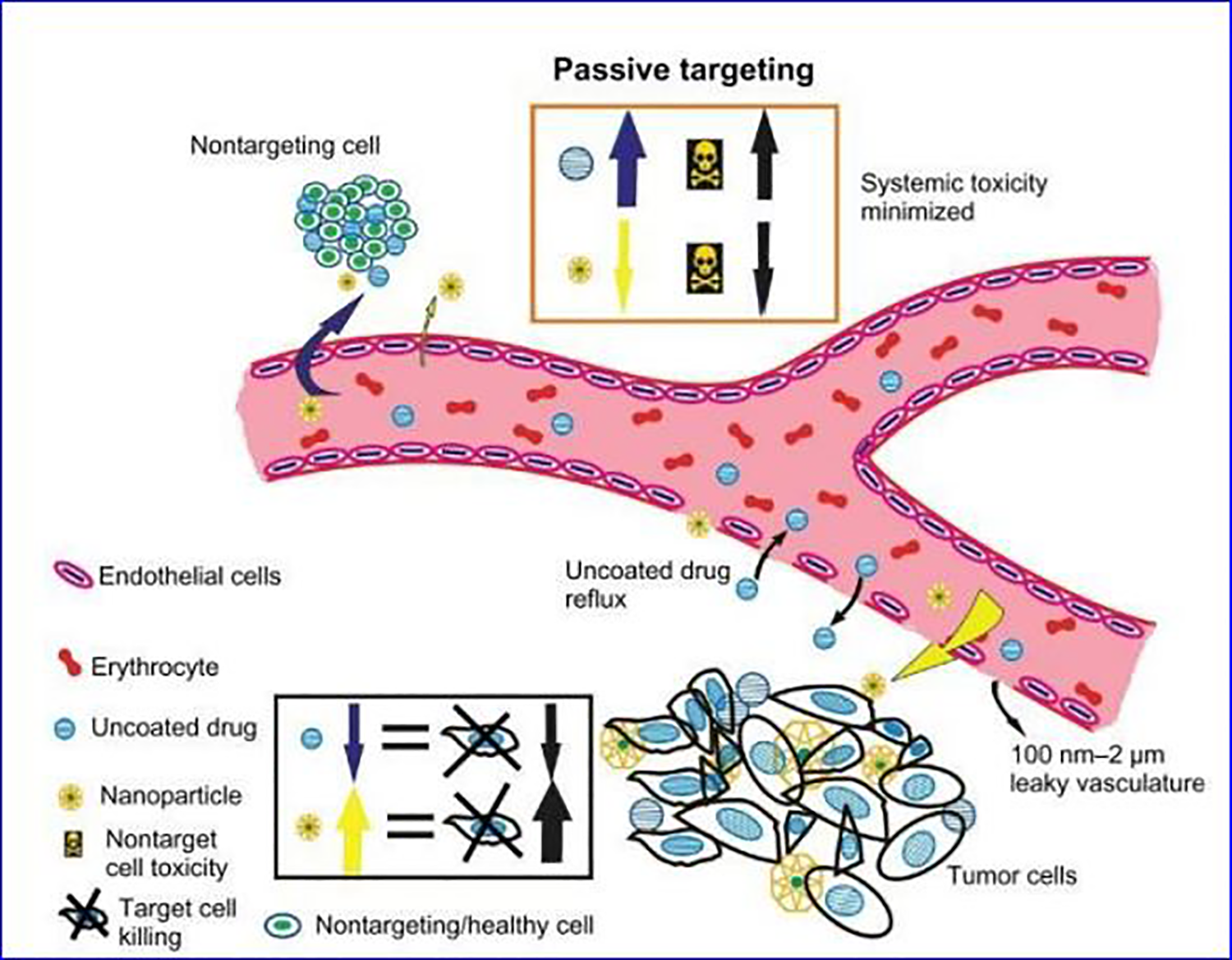
Passive targeting of nanoparticles (NPs) to tumor cells. NPs (yellow) can accumulate in the tumor stroma, enhancing the lethality of tumor cells and reducing the systemic toxicity of chemotherapy. Free anticancer drugs (blue) do not have the ability to passively target and will spill over to serious side effects caused by healthy tissues. 44
Examples of Nanoparticles used for Chemotherapeutic Drug Delivery
In cancer chemotherapy, nanomedicine has special significance. Table 1 lists some of the NPs that have been used in clinical chemotherapy. In this review, we will discuss the applications, advantages, and limitations of different types of NPs used to deliver chemotherapy drugs.
List of US Food and Drug Administration (FDA)–Approved Nanomedicines for Cancer Treatment.

Liposomes
Liposomes, illustrated in Figure 3, are phospholipid bilayer vesicles in which drugs can be retained. Liposomes are mainly composed of natural or synthetic phospholipids, have good biocompatibility, are biodegradable, and do not cause immune reactions. Liposomes can deliver both lipophilic and hydrophilic compounds, fat-soluble drugs, and amphiphilic drugs that can be inserted into the liposome bilayer phospholipid membrane, and water-soluble drugs are stored in the aqueous compartment. 53 Therefore, liposomes are also regarded as a universal drug carrier that can deliver many different types of drugs. 54,55 Liposomes are the most widely used NPs, and they exhibit quite effective capabilities in the following areas: (1) increase the solubility of hydrophobic drugs; (2) improve the biological distribution of chemotherapeutic drugs and the selectivity of therapeutic agents; (3) reduce the cytotoxicity of chemotherapeutic drugs to normal tissues, thereby reducing its toxic side effects; and (4) extend the cycle time of chemotherapeutic drugs and control the release. 56 -59 In the past few years, many liposome chemotherapeutic agents have observed positive results in the clinic, and some of them have been approved by the European Medicines Agency and the US Food and Drug Administration (FDA) for the treatment of various Kind of cancer. Table 1 lists some of the liposome chemotherapeutic agents approved by the FDA, and there are a variety of anticancer drug-encapsulated liposome preparations at different stages of clinical trials or waiting for approval, as shown in Table 2.
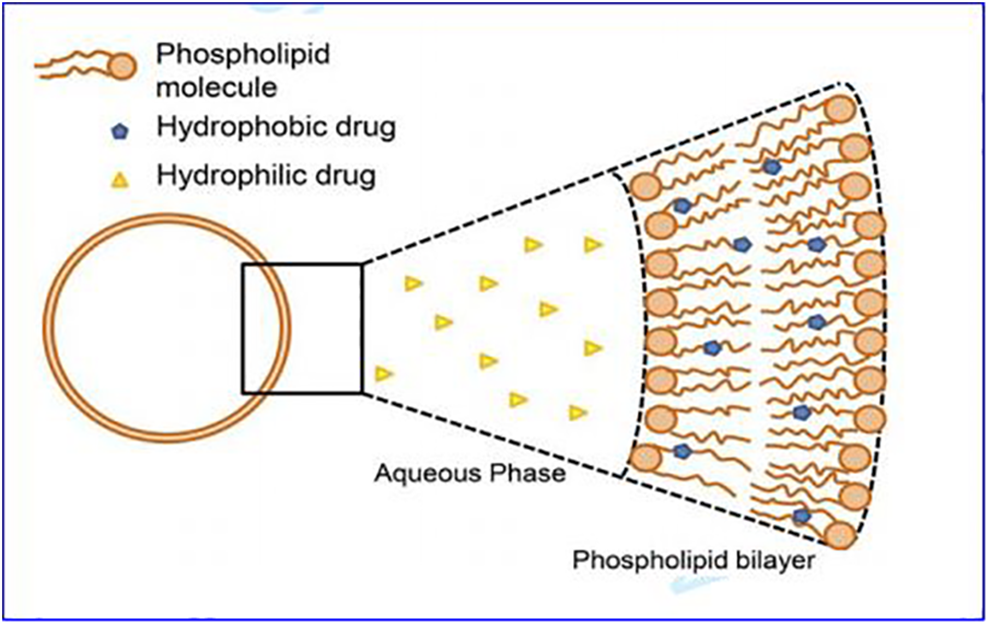
Schematic diagram of liposome structure. 55
Liposomal Formulations of Anticancer Drugs in Clinical Trials.

Doxil, the first FDA-approved liposome chemotherapeutic agent. 45 Doxil is a PEGylated liposomal DOX formulations. By using polyethylene glycol (PEG) to modify the surface of liposomes, the liposomes can be given stealth properties. Conjugation of PEG to the surface of liposome phospholipid bilayer can reduce the interaction between liposomes with plasma protein through steric hindrance, which will reduce the adsorption of plasma protein to the surface of the liposome. In turn, it can reduce the conditioned effect and clearance of the reticuloendothelial system (RES) on liposomes. 75,76 PEGylated liposomes further prolong the circulation time of liposomes and extend their half-life in circulation, therefore increasing the accumulation of liposomes at the tumor site. Doxil has shown highly selective tumor localization (Figure 4) and excellent pharmacokinetic properties in clinical applications. 77 Under the condition that the dose of DOX is 50 mg/m2, the area under the curve (AUC) of Doxil is about 300 times that of the free drug. Clearance and volume of distribution are drastically reduced (at least 250-fold and 60-fold, respectively). 78 Tumor DOX levels peak between 3 and 7 days after Doxil administration, indicating that tumor cells exposed to the drug are much higher and longer. Compared to the free drug DOX, Doxil not only has a better therapeutic effect but also significantly reduces the side effects of DOX and has better tolerability. The main side effects of DOX include bone marrow suppression, hair loss, vomiting and diarrhea, and tissue damage. DOX has a cumulative dose-dependent cardiotoxicity, and the usual cumulative dose of conventional DOX for chemotherapy is 550 mg/m2. 79 In general, Doxil can greatly improve the patient’s daily compliance and particularly important is a significant reduction in cardiac toxicity (compared to standard care), which can increase the cumulative dose, thereby extending the treatment time. However, although Doxil is superior to doxorubicin in overall tolerability, similar to most liposomal formulations, Doxil still observes the side effects observed with 2 atypical standard of care drugs. The first and most important one causes grade 2 or grade 3 desquamative dermatitis, which is called palmar-plantar erythrocyte paresthesia or “hand–foot syndrome.” The second effect is an infusion-related reaction, which is characterized by flushing and shortness of breath. This symptom can be alleviated by slowing down the infusion rate and appropriate medication. 45 At present, liposome-encapsulated chemotherapeutic drugs represented by Doxil have been widely used in clinics. With the continuous development of liposome technology, more types of liposome preparations are at different stages of research, such as enzyme-sensitive liposomes, magnetic liposomes, redox-sensitive liposomes, ultrasound-responsive liposomes, and liposomes for photodynamic therapy.
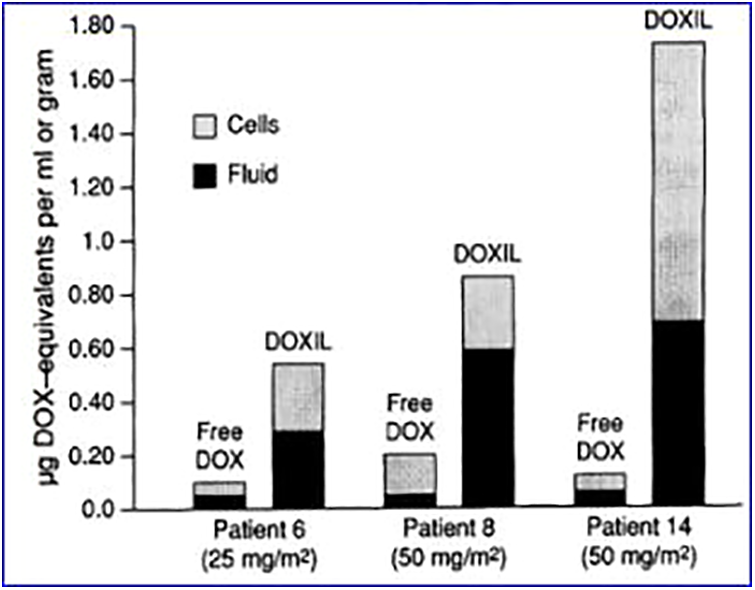
Doxorubicin levels in patients’ tumor biopsies, comparing free DOX and Doxil. 77
Protein-Based Nanocarriers
Protein is formed by one or more polypeptide chains with a certain spatial conformation and biological activity. Protein-based NPs have the following advantages for the delivery of tumor chemotherapy drugs: (1) Proteins are endogenous and have excellent biocompatibility. (2) Proteins have biological activity. Protein-based nanoplatforms can inherit this effect without further surface modification, which will greatly simplify the synthesis process. (3) Amino acid residues constituting the basic unit of protein have various functional groups (such as -COOH and -SH) that can be used in combination with chemotherapeutic drugs, which imparts function expansibility to protein. 80 With paclitaxel (PTX) preparation (Abraxane) based on human serum albumin (HSA) obtained FDA approval in 2005, 81 HSA has been widely studied as a chemotherapeutic drug carrier. Human serum albumin is the main component in serum, consisting of 585 amino acid residues, with a molecular weight of 66.5 kDa. The approximate 3-dimensional shape of HSA can be described as a heart shape 82 as shown in Figure 5. Human serum albumin contains 3 homologous domains I, II, and III, and each domain also includes 2 separate subdomains. Its characteristic structure is conducive to the combination of chemotherapeutic drugs. 83,84
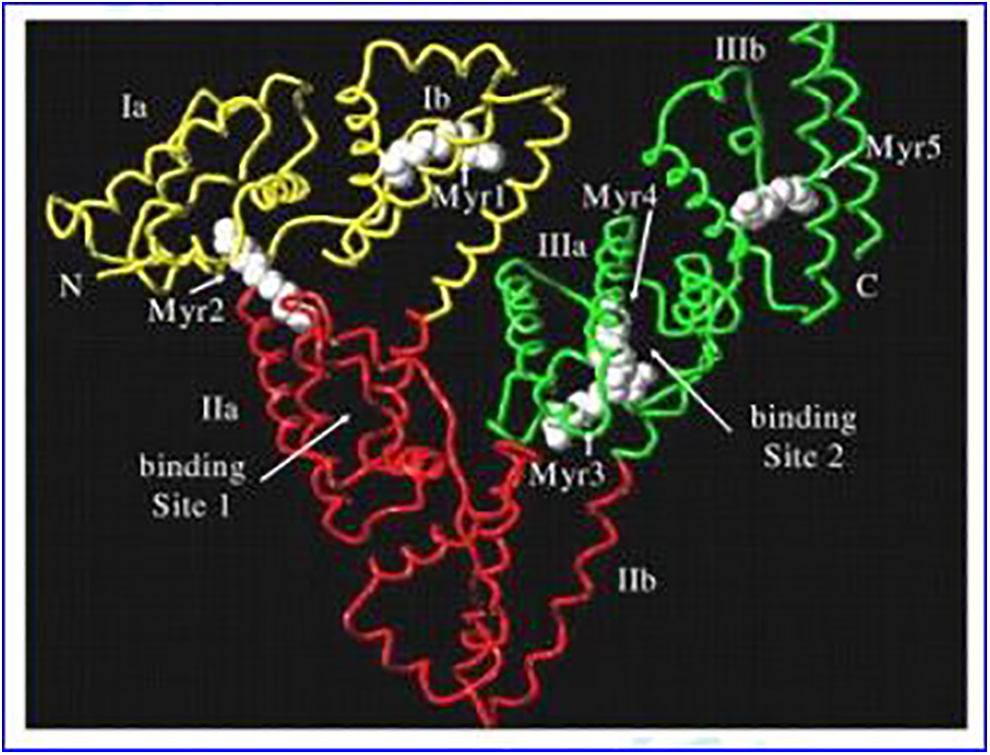
X-ray structure of human serum albumin. 85
Abraxane has achieved great clinical success, clinical data show Abraxane treatment results in an improvement in overall response and survival. Compared to the use of PTX, treatment with Abraxane can prolong the average survival time of patients by 2.76 months. 86,87 At the same time, Abraxane is better tolerated than PTX. Paclitaxel is a hydrophobic chemotherapeutic drug, and toxic-solubilizing agents such as polyoxyethylene castor oil/PEG-35 castor oil/ethanol are often used to administer the drug. 88,89 Polyoxyethylene castor oil can cause severe allergic reactions and even life-threatening hypersensitivity reactions. In order to minimize the risk of hypersensitivity, clinical use of corticosteroids such as dexamethasone is often used to pretreat patients. Even so, 40% of all patients still have mild hypersensitivity reactions, with adverse reactions such as bronchospasm, urticaria, abdominal and limb pain, and so on. 41,90 Abraxane eliminates the toxicity associated with polyoxyethylene castor oil to the greatest extent. Patients receiving Abraxane do not need to use corticosteroids in advance to prevent hypersensitivity, and they are easier to administer. The risk of allergic reactions is significantly reduced, making patients less time in hospital and easier to care for. It is worth noting that relevant clinical studies have shown that Abraxane requires a higher dose of 50% than paclitaxel to achieve a better tumor response. 86 The cost of treatment with Abraxane is relatively high, which limits its application to a certain extent. In addition to Abraxane, the use of protein-based carriers to deliver other chemotherapeutic drugs, such as rapamycin, doxorubicin, and methotrexate, is also under study and has bright prospects.
Actively Targeted Drug Delivery Nanoparticles
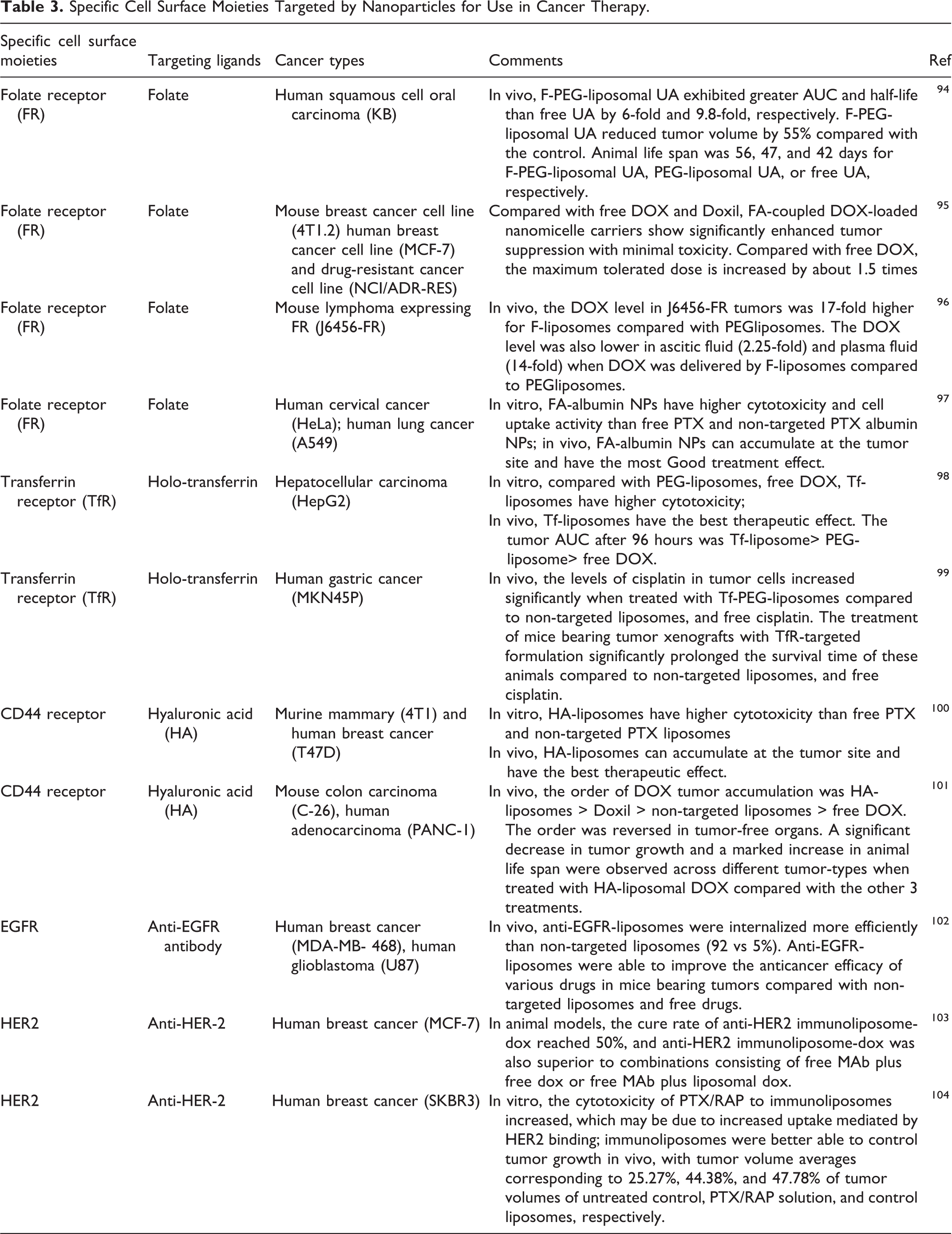
In addition to passive targeting, NPs drug delivery systems can be modified to be more selective for cancer cells through active targeting. In active targeting, specific ligands recognized by cells at the tumor site (Table 3) are coupled to the surface of the NPs, allowing them to interact specifically with tumor cells, as shown in Figure 6. Nanoparticles with active targeting should have the following characteristics: (1) It should be determined that there is a sufficient amount of target on the surface of the tumor cell (overexpression) to provide a good opportunity for targeting NPs to firmly bind to the cancer cell. (2) Targeting ligands are internalized and promote the internalization of the carrier and the anticancer drug combined with the carrier. (3) The specific ligand should not affect its specific binding characteristics and long-term circulating activity in the blood attached to the surface of drug-loaded nanocarriers. (4) The drug released from the carrier inside the tumor or inside the tumor cell should release the therapeutic concentration of the drug and be maintained for a reasonable period. 91 -93
Specific Cell Surface Moieties Targeted by Nanoparticles for Use in Cancer Therapy.

Active targeting of nanoparticles (NPs) to cancer tumors. 55 Active targeting can only occur once passive targeting is completed. In active targeting, specific ligands recognized only by cells at the disease site are coupled on to the surface of nanoparticles, allowing them to interact specifically with these cells. For the treatment of cancer, there are 2 cellular targets in which nanoparticles can be directed to via active targeting, namely, cancer cells, and tumoral endothelium.
Folate-Linked NPs
Folic acid (FA) is a member of the vitamin B family and plays a key role in DNA synthesis and cell proliferation. Human malignancies rely heavily on the biosynthesis of de novo purine and pyrimidine nucleotides. Folic acid plays a key role in the carbon donor of de novo biosynthesis of nucleotides required for DNA replication. 105,106 Folic acid receptor (FR) is a tumor marker that binds firmly to its substrate folate. It has been found that FRs are significantly overexpressed on the cell surface of a series of solid tumors including kidney, ovary, lung, bladder, breast, pancreas, and colon. 107,108 Studies show that FRs show a high affinity for FA-modified NPs, and FRs internalize FA through receptor-mediated endocytosis. 109,110 The study of Ulbrich et al confirmed that the covalent conjugation of FA and HSA NP increases the uptake of cancer cells by NP. 111 In the study by Lu et al, the coupling of FA to the surface of DOX-loaded nano-micelle carriers showed higher uptake of DOX by cells in vitro and significantly enhanced antitumor activity with minimal adverse effects in vivo compared to free DOX and liposome Doxorubicin Preparation, Doxil. 95
Transferrin-Linked NPs
Transferrin (Tf) is a serum glycoprotein that primarily mediates iron uptake by cells. Transferrin binds to the transferrin receptor (TfR), transports iron into the cell through the blood, and then is internalized by endocytosis mediated by TfR. 112 Transferrin is an important protein involved in the regulation of iron homeostasis and cell growth. The high-level expression of TfR in cancer cells may be 100 times higher than the average expression of normal cells, and this receptor is an attractive target for cancer treatment. 113,114 Currently, the effectiveness of TfR targeting cancer cells has been studied in vivo and in vitro. In the study by Kobayashi et al, it was found that Tf-conjugated liposome DOX is 3.6 times more cytotoxic than free DOX, showing higher accumulation of cellular DOX. 115 In addition, Tf-conjugated NPs have the potential to deliver drugs across the blood–brain barrier. Transferrin-conjugated 5-florouracil 99mTc-DTPA bearing liposomes exhibited 17-fold and 13-fold higher brain uptake compared to free 99mTc-DTPA and non-targeted liposomes. 116
Hyaluronic Acid–Linked NPs
Hyaluronic acid (HA) is a natural polyanionic polysaccharide that is the main component of the extracellular matrix and is essential for cell growth, proliferation, and adhesion. The CD44 receptor is a principal cell surface receptor for HA, which overexpressed in many types of cancer, including breast cancer, colorectal cancer, lung cancer, and malignant melanoma. 117 CD44 is involved in the regulation of cancer cell proliferation, differentiation, and migration. The interaction of CD44 and HA is also closely related to tumor growth and progression. 118 Hyaluronic acid as an active targeting ligand has high specificity, high biocompatibility, low toxicity, and biodegradability making it a cancer-targeting ligand with NPs for chemotherapeutic drugs. 119 In the study by Ravar et al, HA electrostatically adsorbed PTX liposomes were prepared. In vitro, compared to free PTX and non-targeted liposomes, HA liposomes are more easily taken up by tumor cells and have stronger cytotoxicity. In vivo, HA liposomes can aggregate more in tumor site and enhance the therapeutic effect of PTX. 100 In the study, Zhong et al synthesized a new endosomal pH-activated prodrug micelle based on HA-b-dendritic oligoglycerol; HA-micelles can be highly aggregated at the tumor site (6.19% ID/g at 12-h post injection) with minimal side effects, completely inhibited tumor growth during the 55-day experimental period, and achieved a 100% survival rate. 120
Anti-Human Epidermal Growth Factor Receptor 2 Antibody–Labeled NPs
Human epidermal growth factor receptor 2 (HER2) is a tyrosine kinase bound to the surface of cell membranes, which is usually regulated in a complex manner leading to cell growth, survival, and differentiation. Overexpression of HER2 is found in nearly 20% of breast cancers and is associated with poor prognosis. 121 Trastuzumab is a humanized monoclonal antibody (mAb) against the HER2 epitope, which can improve the clinical benefit of first-line chemotherapy in patients with metastatic breast cancer that overexpress HER2. 122 Previous studies in vivo and in vitro confirmed that PEGylated DOX liposome conjugated anti-HER2 antibody fragments are specific for HER2. Among the 2 HER-2 overexpressing solid tumor cell lines, human breast cancer (SKBR-3) and human gastric cancer (N-87), HER-2 targeted liposomes had 10 to 20 times higher in vitro binding than non-targeted liposomes. 123 Park et al studied the pharmacokinetics and therapeutic efficacy of anti-HER2 immunoliposomes containing doxorubicin in animal models. Anti-HER2 immunoliposome-doxorubicin produced enhanced antitumor efficacy through targeted delivery and showed more excellent treatment effect. 103
Conclusions
Nano-oncology is a young science. The targeted delivery of drugs through NPs has shown the therapeutic potential to improve the efficacy of cancer treatment compared to traditional chemotherapy and radiation therapy. Passive targeting can accumulate NP in the tumor area by using the EPR effect, prolong the circulation time of drugs in the body, increase the exposure time of tumor cells in cytotoxic drugs, and significantly reduce toxic side effects. The use of NPs to deliver incompatible drugs can significantly improve the solubility of drugs, avoid the use of toxic prosolvents, simplify the administration method, reduce the difficulty in nursing care for patients with chemotherapy, and patients do not even need to be hospitalized, which improves the quality of life of patients. Active targeting uses different molecules overexpressed in tumor cells to design selective NP-based drug delivery systems that recognize specific targets. Nanoparticles with active targeting function can not only accumulate the drug in the tumor site but also be internalized by the target cells, thereby generating high intracellular drug concentration and bypassing MDR. The benefits of active targeted drug delivery systems are expected to be huge compared to equivalent passive targeted drug delivery systems. There is no doubt that nanocarriers, especially NPs-based drug delivery systems, will exist as the main treatment in the future. We can expect the emergence of many NPs for drug delivery applications, which will change the chemotherapy of cancer.
Footnotes
Declaration of Conflicting Interests
The author(s) declared no potential conflicts of interest with respect to the research, authorship, and/or publication of this article.
Funding
The author(s) received no financial support for the research, authorship, and/or publication of this article.
