



Abstract
The western apparel industry is increasingly prioritizing sustainability, creating a ripe opportunity for recycled textiles clothing to make a significant impact. Effective merchandising strategies that highlight eco-friendliness and ethical production can help manufacturers to capitalize on this trend. Understanding consumer behavior and leveraging innovative retail and marketing approaches can be key to successfully entering and thriving in this market. The importance of analyzing potential merchandising approaches for recycled textiles clothing in the western apparel industry lies in promoting sustainable fashion, enhancing economic growth through eco-friendly practices and meeting the increasing consumer demand for ethical and environmentally conscious products. This review will explore the background of recycled textile clothing in the western apparel industry, potential merchandising approaches, and the associated challenges and opportunities. Additionally, this paper will state the future prospects, providing insights into how manufacturers can capitalize on the growing demand for sustainable fashion.
Keywords
Introduction
The increasing focus on sustainability within the global fashion industry presents a significant opportunity for manufacturers of recycled textile clothing in the western apparel market. Clothing that is both ecologically friendly and ethically manufactured is in high demand due to the increasing environmental consciousness of western consumers.1–3 Manufacturing countries such as Bangladesh, India, and Vietnam with established textile and garments sectors, can leverage its expertise and resources to produce high-quality recycled clothing that meets these market demands. This analysis explores various merchandising strategies that manufacturers can employ to effectively penetrate and thrive in the western market, emphasizing the importance of sustainable branding, targeted marketing, innovative retail approaches, and the challenges that need to be addressed. The analysis of potential merchandising approaches for recycled textile clothing in the western apparel industry holds significant importance in today’s global context of sustainability and ethical consumerism.4,5 Recycled textiles provide a practical way to reduce the environmental toll of the fashion industry by cutting down on waste and carbon emissions.6–10 By exploring effective merchandising strategies, such as sustainable branding, targeted marketing, and innovative retail techniques, manufacturers cannot only capitalize on its textile manufacturing expertise but also contribute to global efforts in promoting circular fashion practices. This topic underscores the crucial intersection of environmental responsibility, economic opportunity and consumer demand for ethically sourced and sustainable clothing options in international markets. There are limited scholarly exploration specifically focused on merchandising strategies for recycled textile clothing to western markets.11–15 While sustainability in fashion and the global textile industry has been extensively studied, there is a lack of comprehensive research addressing how manufacturers can effectively market and merchandise recycled textile products to meet the unique preferences and demands of western consumers.16–18 Existing literature primarily focuses on broader aspects of sustainability, consumer behavior and supply chain management in the textile industry,19–21 but there is a notable absence of detailed analysis on the merchandising strategies tailored specifically for recycled textiles in western markets. Therefore, exploring this gap is crucial for understanding the practical implications and strategic opportunities for manufacturers aiming to capitalize on the growing trend of sustainable fashion in western markets.
The aim of potential merchandising approaches for recycled textile clothing in the western apparel industry is to identify strategic pathways that leverage textile manufacturing capabilities toward sustainable fashion trends. By exploring effective merchandising strategies, the objective is to enhance the market presence of recycled textile clothing in western markets. This involves understanding consumer preferences for sustainable products, identifying key marketing and branding tactics and addressing logistical and supply chain challenges. Ultimately, the aim is to promote promising manufacturers such as India, Bangladesh, and Vietnam as significant players in the global sustainable fashion movement while enhancing economic growth and environmental stewardship within the textile industry.
Background
The global fashion industry is increasingly recognized for its environmental impact from the extraction of natural resources during production to the emission of CO2 and disposal processes for waste textiles. 22 A greater number of environmentally conscious consumers has contributed to a surge in the popularity of sustainable clothes. 23 One way to respond to these long-term economic implications is by creating new uses for post-consumer waste, as textiles can be recycled and applied in a variety of ways. 24 So, when manufacturer keeps exporting textile recycling clothes to western apparel market such as Europe, UK, Canada, and the USA it has an opportunity to vastly contribute to the development of the fashion industry.
Sustainable fashion and textile recycling
Deforestation and chemical contamination are two additional major environmental problems caused by the apparel industry. Ecosystems are harmed and biodiversity is lost when trees are cut down to manufacture fibers like viscose and rayon.25,26 Polluting water supplies with toxic chemicals used in dyeing and finishing poses a threat to aquatic life and human populations.27–29 Carbon emissions increase and climate change is made worse due to the energy-intensive nature of clothes production.30–33 Organic fibers and closed-loop production are two examples of sustainable alternatives that show promise.34,35 Upcycling and the implementation of eco-friendly certifications can minimize the fashion industry’s negative influence on the environment. 36 It can take industry-wide cooperation, stringent regulations and consumer activism to create a fashion landscape that is more environmentally aware and sustainable.37,38
Negative effects of the textile industry on the environment
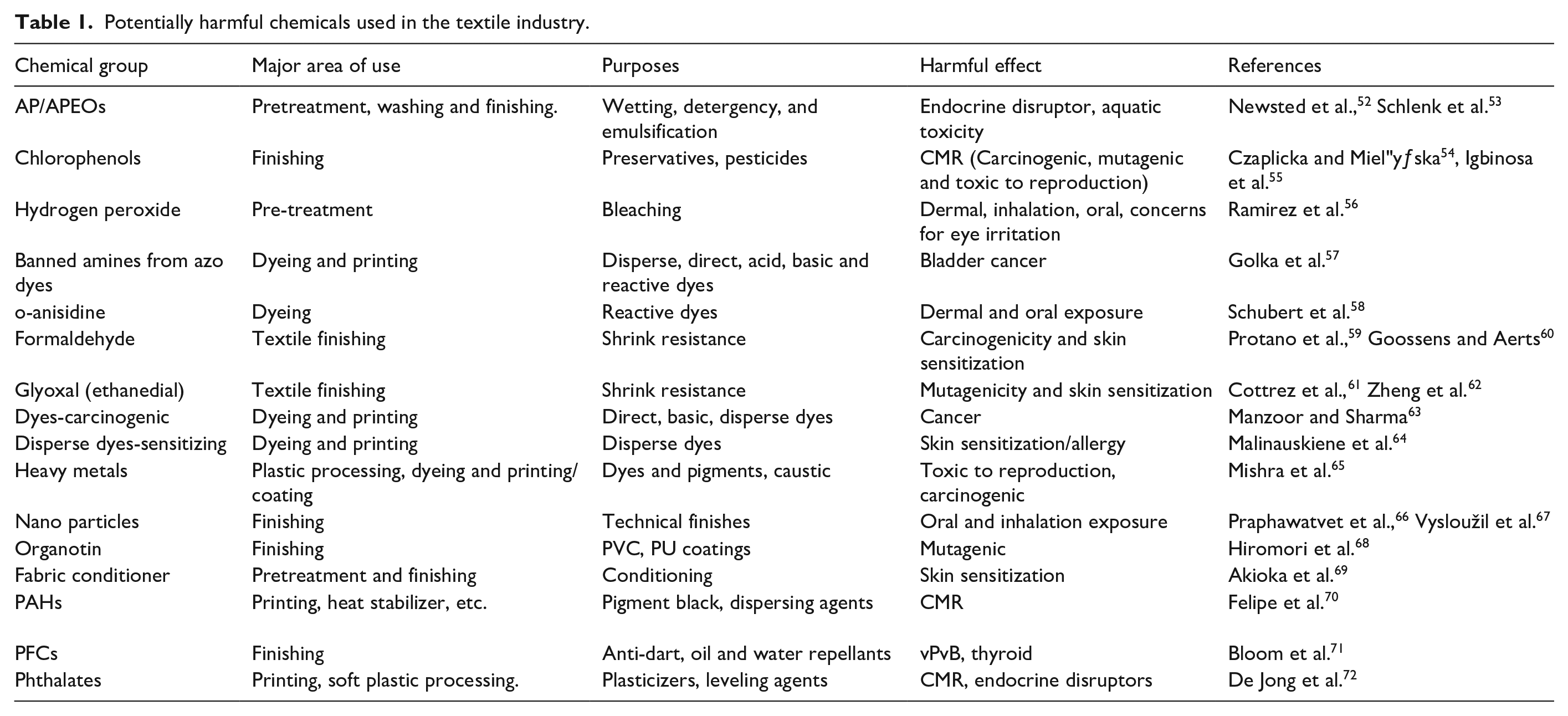
From the extraction of raw materials through the production and disposal of garments, the textile industry is a sector that possesses extensive environmental implications. Starting with cotton, one of the most commonly used fibers in textiles, its cultivation accounts for a significant portion of global pesticide use and water consumption.39,40 Moreover, the processing of cotton into wearable fabric involves intensive chemical treatments, such as bleaching and dyeing, that release harmful substances into waterways and contribute to pollution. 41 Synthetic fibers like polyester, derived from non-renewable sources like petroleum, have own set of environmental challenges. 42 The production of polyester releases greenhouse gases and consumes large amounts of energy, further contributing to climate change. 43 Beyond the production phase, the textile industry faces issues of waste management. Synthetic materials in textile waste, such as production scraps and old garments, can take hundreds of years to break down in landfills. 44 Even when textiles are incinerated, the process releases toxins into the air. 45 In addition, the fast fashion model perpetuated by the industry encourages overconsumption, leading to increased textile waste and a higher demand for production, hence exacerbating environmental impacts. 46 However, there has been a growing awareness within the industry and among consumers regarding the need for sustainable practices. Initiatives like sustainable sourcing of materials, implementation of recycling and upcycling processes and adoption of eco-friendly production techniques are being increasingly embraced by some companies.47–49 Technical textiles manufacturing like antimicrobial, e-textiles, self-cleaning textiles can also be a part of sustainable production. 50 These products can be prepared enforcing in recycled materials as most of them can be used for one time only like bandages with an antimicrobial finish. 51 Furthermore, the rise of circular fashion concepts, aiming to close the loop on textile production and consumption by promoting durability, reusability and recycling, shows promise in mitigating the industry’s environmental footprint. By working together for sustainability, the textile industry can become a responsible and environmentally conscious business that reduces its impact on the planet. Chemicals that pose health risks when used in the textile industry are shown in Table 1.
Potentially harmful chemicals used in the textile industry.
Trends in sustainable fashion
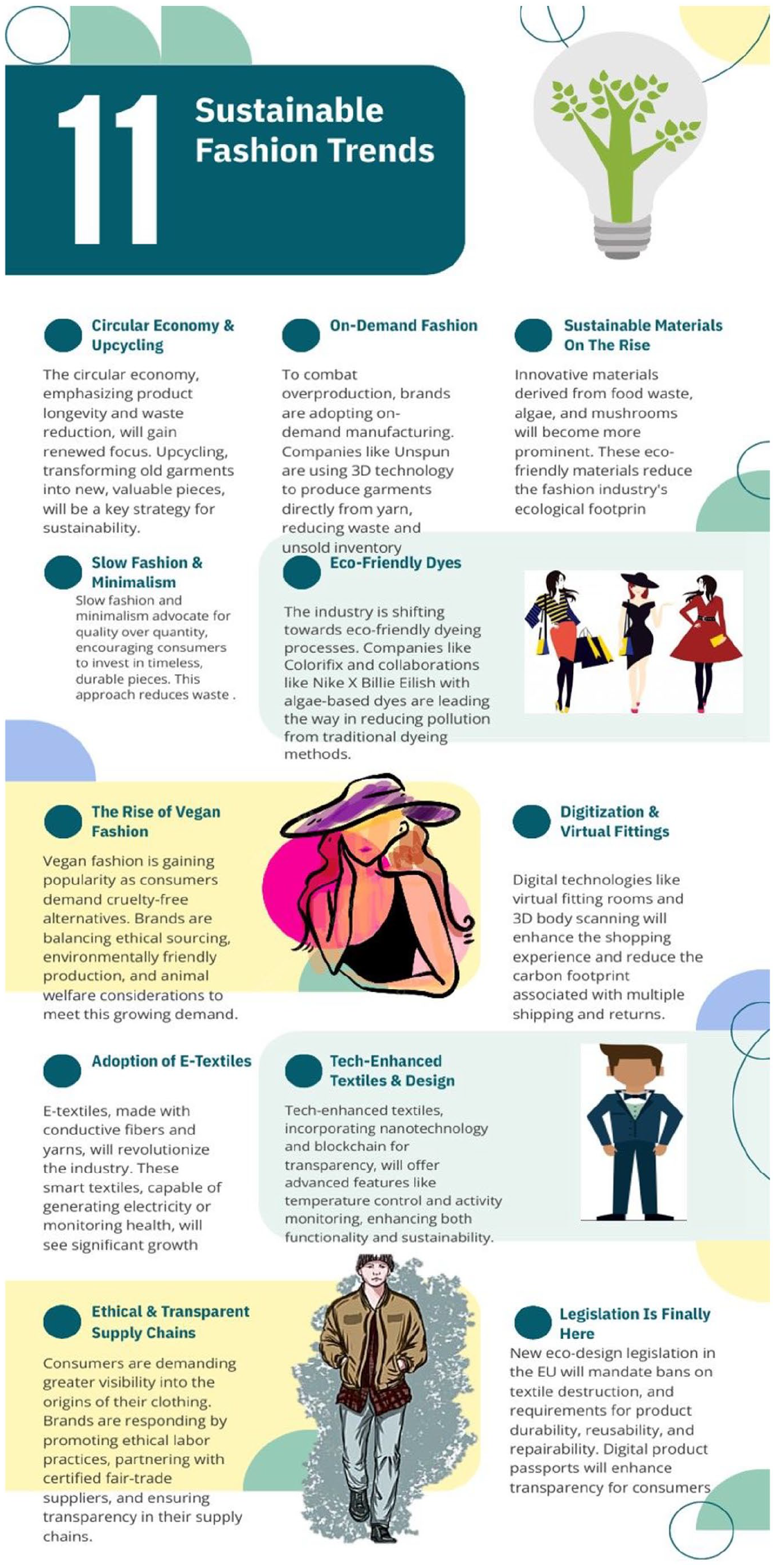
Sustainable fashion has started to become a trend due to the disastrous effects of the fast fashion industry on the environment and social costs. In an increasingly aware world where concerns like climate change, resource scarcity and slave labor are becoming more widely shared, both consumers and brands alike are gravitating toward more sustainable ways of doing business. This movement includes sourcing materials, manufacturing and the lifespan of these clothes. A particular fashion trend that sticks out is how eco-friendly materials are becoming commonplace within the fabric-production revolution. Cotton used traditionally is typically water-intensive because of the high number of pesticides and results in soil erosion. 73 Conversely, sustainable brands are choosing organic cotton, hemp, bamboo and other natural fibers that have a smaller environmental footprint in addition to using fewer resources.74,75 Recycled material, for example, recycled polyester from PET bottles is also being underestimated as a solution in order to waste less and go circular Ethical Production. It’s another important key to sustainable fashion. Respectful treatment of workers and living wages and safe working conditions throughout the supply chain. Enter the age of brand transparency, as businesses swiftly embrace and communicate not just the products and services but the truth about how they source and manufacture the products so consumers can feel good when purchasing things. Programs like fair trade certification, partnerships with ethical suppliers encourage social equity in the industry. Trends in sustainable fashion in illustrated in Figure 1.
Sustainable fashion encourages longevity and durability in clothing. Fast fashion, characterized by rapid turnover and cheaply manufactured garments contribute to immense waste as trends quickly come and go.38,79 In response, Brands dealing with sustainable products focusing on timeless designs, high-quality craftsmanship and versatile pieces that withstand the test of time. By taking this tack, the ecological footprint of garments manufacturing can be reduced while simultaneously inspiring people to purchase fewer things. A fashion economy that uses a regenerative process is also becoming more popular. This involves designing clothes with recyclability and biodegradability in mind so that these can be repurposed, reused or returned. 80 Brands are exploring recycling technologies and take-back programs to facilitate the reuse of materials and minimize waste.81,82 Additionally, some are experimenting with rental and subscription models allowing consumers to enjoy new fashion experiences without contributing to overconsumption.83,84
While consumer awareness and activism go a long way in changing attitudes toward fast fashion, it is also helpful to have personalities associated with the cause. As people get increasingly woke about the environmental and social footprint of their consumption habits, the demand for transparency and accountability in how brands source and produce goods becomes ever louder. However, the power of social media and digital platforms has allowed consumers to vocalize the beliefs and influence change in the industry by supporting those who put sustainability at the forefront.
Textile recycling technologies and processes
Textile recycling technologies and processes have become increasingly important due to the environmental impact of textile waste. These textile recycling technologies hope to responsibly divert the millions of tons of textiles that land in either landfill or incinerating processes each year that provides new circular life to textiles by reusing and repurposing them.85,86 Mechanical recycling is a vital technology in textile recycling. This includes sorting and shredding textiles into fibers, cleaning and spinning the fibers into new yarns or fabrics.87,88 Cotton and polyester textiles can be mechanically recycled because these materials can be broken down and manufactured into new and quality fiber.89,90 However, challenges exist with blended fabrics and certain synthetic fibers that are harder to separate. Chemical recycling presents another promising approach. It involves breaking down textiles into chemical components using solvents or other processes that reform these components into new materials.91,92 This method can handle a wider range of textile types, including blends and mixed fibers which mechanical recycling struggles.93,94 Chemical recycling aims to create higher-value products and reduce the environmental footprint associated with textile production. 95 Additionally, there are emerging technologies such as textile-to-textile recycling where old garments are processed to create new garments of similar or higher quality. This approach often involves advanced sorting technologies and innovative processing techniques to maintain material integrity and performance. Moreover, initiatives are focusing on upcycling and reuse within the textile industry. These include creating new products from discarded textiles or using them as raw materials for other industries such as automotive or construction.
The emergence of recycled textile clothing
The use of recycled textiles in garments production is a significant step toward eco-conscious style which aims to reduce the already devastating impact of the fashion industry on the environment. This trend is about as progressive as fashion gets. This creative method gives previously used or discarded items a new life as an item of clothing. Reusing and recycling garments has many benefits, including reducing landfill waste, minimizing the demand for new raw materials. Thus, the fashion industry’s carbon footprint, reducing the amount of energy, water and chemicals used in production.96,97 It can promote resource efficiency and a circular economy based on the principle of maximum cascading of materials. Clothing manufactured from recycled textiles encourages male consumers to be more conscientious of the impact on the environment at the point of sale.98,99 This expanding market for recycled apparel is indicative of a broader trend toward sustainable fashion. As large fashion houses embrace what they perceive as sustainability practices, such as the use of organic or sustainably sourced materials in the production. The rapid expansion of recycled textile (yarn) clothing into a full-fledged industry is proof of sustainable fashion. In the fight for a more ethical and environmentally friendly fashion industry, it is a giant leap forward. They need to be recruited from the production departments. It needs to be “picked” for further processing because the various parts of the product ultimately produce waste streams. Table 2 gives an overview of the generated waste in every step of apparel manufacturing
Waste generated in apparel manufacturing.

Bangladeshi textile industry
Bangladesh’s textile sector is a significant driver of growth to the economy, both in terms of domestic employment and foreign currency. Bangladesh is one of the top textile and clothing exporters in the world because to its prominent garments industry. The low cost of labor, high quality of the workforce and reliable supply chain have all contributed to the industry’s success. The sector spans the complete value chain from cotton spinning to the fabrication of finished clothes. There have been attempts to improve the sustainability of Bangladesh’s textile industry and address problems like those of workplace safety and workers’ rights. Despite setbacks, the industry is expanding and making a substantial contribution to Bangladesh’s economic growth. Bangladesh is well-positioned to become a global leader in the textile industry because to recent government initiatives, foreign investments and an emphasis on sustainable practices.
Bangladesh and recycled apparels
The garments industry has helped to propel Bangladesh to the forefront of global fashion and the country’s textile industry is a major economic driver. Recycling and reusing old clothes are an important part of Bangladesh’s garments industry. To meet the increasing demand for eco-friendly clothing around the world, Bangladesh has emerged as a major player in the recycled apparel industry in recent years. Used clothing is gathered from a variety of places such as donations and recycling centers and subsequently cleaned, sorted and transformed into new items.104,105 The Bangladesh Garments Manufacturers and Exporters Association (BGMEA) and P4G collaborated on a study that found that in 2019, Bangladesh produced approximately 577,000 tons of waste from Ready-Made Garments (RMG) and fabrics mills.106,107 Approximately 250,000 tons was produced by 100% pure cotton. Bangladeshi factories could make as much as USD 100 million by selling 100% cotton waste to recycling companies, according to estimates. 108 By manufacturing garments last longer, this method helps to create a more circular economy and decreases textile waste. Several factors have contributed to the significant growth of Bangladesh’s recycled apparel sector. Bangladesh is a great place for factories to set up shop because of its affordable labor costs and large pool of qualified workers. The country’s position in the recycled apparel market is further strengthened by its proximity to important markets in North America and Europe, as well as its well-established textile production infrastructure.
Many brands and manufacturers in Bangladesh have also made environmental responsibility a priority because of the country’s dedication to sustainability.109,110 Businesses can win over eco-conscious consumers looking for sustainable options and minimize the impact on the environment by putting money into recycled clothing production. Policy initiatives and incentives for manufacturers have been put in place by the government of Bangladesh to encourage the growth of the recycled apparel sector. The goal of these initiatives is to establish Bangladesh as a frontrunner in sustainable fashion practices and a traditional garments manufacturing powerhouse.
Partnerships and collaborations
Bangladesh has increasingly recognized the importance of partnerships and collaborations in advancing its recycled apparel sector. One notable initiative involves partnerships with international organizations such as the United Nations (UN) and the World Bank which have provided technical expertise and financial support to bolster the country’s capacity in recycling textiles.111,112 These collaborations aim to improve waste management practices, promote sustainable fashion and reduce the environmental footprint of Bangladesh’s garments industry. Partnerships among public sector entities, private sector organizations and NGOs have been vital on a national scale.113,114 For instance, the Ministry of Environment and Forests collaborates with NGOs like Waste Concern and local municipalities to implement recycling programs and raise awareness about the benefits of recycled apparel. These efforts not only address environmental concerns but also contribute to social and economic development by creating jobs in the recycling sector. Furthermore, Bangladesh has forged partnerships with international retailers and brands that are committed to sustainability. These partnerships often involve initiatives to recycle post-consumer textiles and incorporate recycled materials into new garments production. Companies such as H&M, Zara and Patagonia have collaborated with Bangladeshi manufacturers to promote closed-loop recycling systems and improve the traceability of recycled materials in the supply chains. 115
Innovation in textile recycling
In Bangladesh, innovation in textile recycling has emerged as a transformative force within the apparel industry driven by environmental and economic imperatives. As the nation being one of the world’s largest garments exporters, the issue of textile waste has become increasingly pressing. Innovators and entrepreneurs have risen to the challenge by pioneering new methods and technologies to recycle textiles into new apparel. Thus, it is reducing the industry’s ecological footprint. Improvements in mechanical and chemical recycling methods stand out. In mechanical recycling, used textile fibers are sorted, shredded and respun to manufacture new yarns and fabrics. 116 Cotton and polyester blends which make up a large amount of textile waste are especially well-suited to this method. 117 However, chemical recycling separates textiles into individual chemical components which can subsequently be utilized to create new fibers or alternative materials. 118 In addition to reducing landfill waste, these methods help to conserve resources by minimizing the demand for raw materials. Efforts to encourage a more sustainable fashion industry have also increased in Bangladesh. A number of businesses have started using systems that collect used clothes, sorting and manufacture something new out of them. This promotes a more sustainable consumption pattern among consumers while simultaneously addressing the environmental impact of textile waste. Digital solutions that optimize waste management and traceability are also part of the innovation that goes beyond recycling processes. In order to make recycling more transparent and accountable, technologies like blockchain are being considered for the purpose of tracking garments at every stage of lifespan.
US apparel market
The US apparel market is a dynamic and diverse industry that reflects the evolving tastes and preferences of consumers. With a robust economy and a culturally rich landscape, the market encompasses a wide range of clothing segments from casual wear to high-end fashion. Cities like New York and Los Angeles play a significant role in the fashion industry by setting trends and determining the direction of the market. Consumers now have easy access to a plethora of apparel alternatives like e-commerce which has significantly altered the retail landscape.119–121 Well-established brands and emerging designers compete for consumer attention, driving innovation and style diversity. 122 Sustainability and ethical practices are gaining prominence, influencing consumer choices and pushing the industry toward more responsible manufacturing processes. 123 The US apparel market is not only a reflection of fashion trends but also a barometer of societal values, making it a fascinating and ever-evolving sector with a significant impact on both the economy and cultural landscape.
Demand for sustainable fashion in the US market
The demand for sustainable fashion has been on the rise in the US market for a while now as rising eco-consciousness, ethical concerns and evolving consumer tastes. Shoppers are thinking about how apparel choices affect the environment and they’re choosing brands that use sustainable materials, minimize the impact on the planet and support fair labor standards. 124 The desire for transparency within the fashion industry is driving this shift as consumers seek information about labor conditions and supply chain practices. 125 Promoting a culture of mindful consumption, influencing consumer choices and increasing visibility for sustainable fashion are all greatly aided by digital and social media platforms.
Consumers perspectives on fashion sustainability have been illuminated by recent data. Nearly three quarters of American consumers are cognizant of the fashion industry’s impact on the sustainability and nearly half are interested in purchasing clothes manufactured with less harmful materials. On the other hand, nearly half of the population is clueless about sustainable clothing brands and a third would shop exclusively at sustainable store. Among Vogue readers, 69% consider sustainability an important factor in fashion purchase decisions, with 38% aiming to purchase as much sustainable fashion as possible and 46% sometimes purchasing sustainable fashion. 126 Only 2% of Vogue readers are not interested in making sustainable purchases. 127 Additionally, 38% of consumers prioritize the reduction of environmental impact by fashion brands. 128 These figures highlight a growing trend toward sustainability in fashion, driven by increasing consumer awareness and interest. However, there is a clear need for better accessibility and visibility of sustainable fashion brands to effectively meet consumer demand. Moreover, the COVID-19 pandemic has heightened awareness of sustainability and resilience, prompting consumers to rethink shopping habits and embrace sustainable alternatives like second-hand clothing, upcycled fashion and rental services. 129 As a result, US brands and retailers are increasingly integrating sustainability into their business models, responding to a growing demand for fashion that is not only stylish but also environmentally and socially responsible. Recent trends indicate a growing consumer shift toward sustainable fashion, despite ongoing economic challenges. In both the U.S. and the UK, more than half of consumers are becoming increasingly aware of sustainability issues in the fashion industry.130,131 According to PWC, 26% of UK consumers state that sustainability factors directly influence purchasing decisions. 132 This shift is particularly evident among younger generations, such as Gen Z and Millennials, with 52% of U.S. Gen Z consumers supporting government action to promote sustainable fashion. 133 Furthermore, 59% of global respondents are willing to pay a premium for clothes manufactured from certified sustainable materials, such as organic cotton. 134 However, while sustainability continues to be a priority for many, the challenge of affordability remains significant. Nearly 60% of consumers, including those in the U.S., express concerns over the high cost of sustainable fashion, even as 46% of U.K. consumers actively donate old clothes to support more circular fashion practices. 135 Despite these barriers, the market for second-hand clothing is booming, with the global resale market expected to reach $350 billion by 2028, growing at a pace faster than the overall apparel sector. 136 These insights demonstrate a growing demand for sustainable fashion, yet price and accessibility remain key challenges for broader consumer adoption. 137 Retailers are thus encouraged to balance ethical practices with more affordable and accessible options to cater to the expanding consumer base for eco-friendly fashion.
Competitor analysis and market opportunities
In assessing the competitive landscape and market opportunities for recycled apparel in the US market, several key factors come into play. The US apparel market is increasingly embracing sustainability, driven by consumer demand for eco-friendly products and corporate commitments to reducing environmental footprints.138,139 Recycled apparel represents a burgeoning niche within this context offers manufacturers a significant opportunity to leverage its robust textile manufacturing capabilities. Competitor analysis reveals that established brands and emerging startups alike are integrating recycled materials into product lines.140,141 Companies such as Patagonia and The North Face have pioneered the use of recycled fibers, setting a precedent for quality and sustainability in the outdoor and activewear segments. 142 Additionally, fast-fashion giants like H&M and Zara are also exploring recycled textiles as part of sustainability initiatives, albeit on a larger scale. 143
The sustainable fashion market is segmented across various regions, each contributing differently to the global market. North America leads with a significant share of 29.62%, indicating a strong emphasis on sustainable practices in the fashion industry within this region. 144 Following closely is Europe which holds 24.96% of the market, reflecting its commitment to environmentally friendly fashion initiatives. 145 Asia contributes 21.36%, showing growing awareness and adoption of sustainable fashion trends. 146 The Middle East accounts for 12.48%, indicating a moderate but noteworthy participation in the sustainable fashion market. Lastly, South America has an 11.57% share, demonstrating its emerging efforts in promoting sustainability within its fashion sector. These figures highlight the varying levels of engagement and development in sustainable fashion across different parts of the world. 147
Bangladesh, as a major player in global textile manufacturing, possesses a competitive advantage in producing recycled apparel due to its established infrastructure, and cost-efficiency in production. Leveraging this strength, manufacturers can capitalize on the growing demand for sustainable fashion in the US market. 148 However, challenges such as ensuring supply chain transparency and meeting stringent quality standards will need to be addressed to compete effectively with established players. Market opportunities abound as consumer awareness and preference for eco-friendly products continue to rise. Targeting niche segments such as athleisure, outdoor apparel and casual wear presents avenues for growth. Collaborations with US retailers and brands looking to enhance sustainability credentials could further bolster position in the recycled apparel market.
European apparel market
The European apparel market is increasingly embracing sustainability with a notable shift toward recycled products. Consumers are showing a growing preference for clothing items manufactured from recycled materials. They are driven by environmental concerns and a desire to reduce the carbon footprint. 149 This trend has prompted many apparel brands to integrate recycled fabrics into their collections, providing eco-conscious choices to customers. The demand for sustainable fashion options is likely to further influence the market. It encourages more innovations in recycling technologies and materials within the European apparel industry. 150
Demand for recycled products in Europe
Sustainable clothing has seen rising demand in the European market over the past few years. An increasing number of shoppers are opting for clothes manufactured in an ethical manner with little environmental impact. They delve deeper into the social and environmental consequences of their purchases. Many fashion brands have responded to this change in consumer behavior by embracing more sustainable practices.151,152 These include reduced water and energy consumption, the use of organic or recycled materials and the assurance of fair labor conditions throughout the supply chains. In addition, there are growing movements and accreditations that give shoppers confidence that the clothes they purchase are ethically manufactured, such as the Fair-Trade movement, the Global Organic Textile Standard (GOTS) and the B Corp certification.153,154 European government policies and regulations help to spread the word about sustainable fashion by pressuring businesses to follow green guidelines and embrace the circular economy. 155 People all over the world are becoming more conscious shoppers and the growing interest in sustainable fashion in Europe is just one small part of that movement. People are looking to purchase clothes that not only make a statement but also help the planet and the people in it. Countries in Europe that priorities recycled clothing are given in Figure 2.
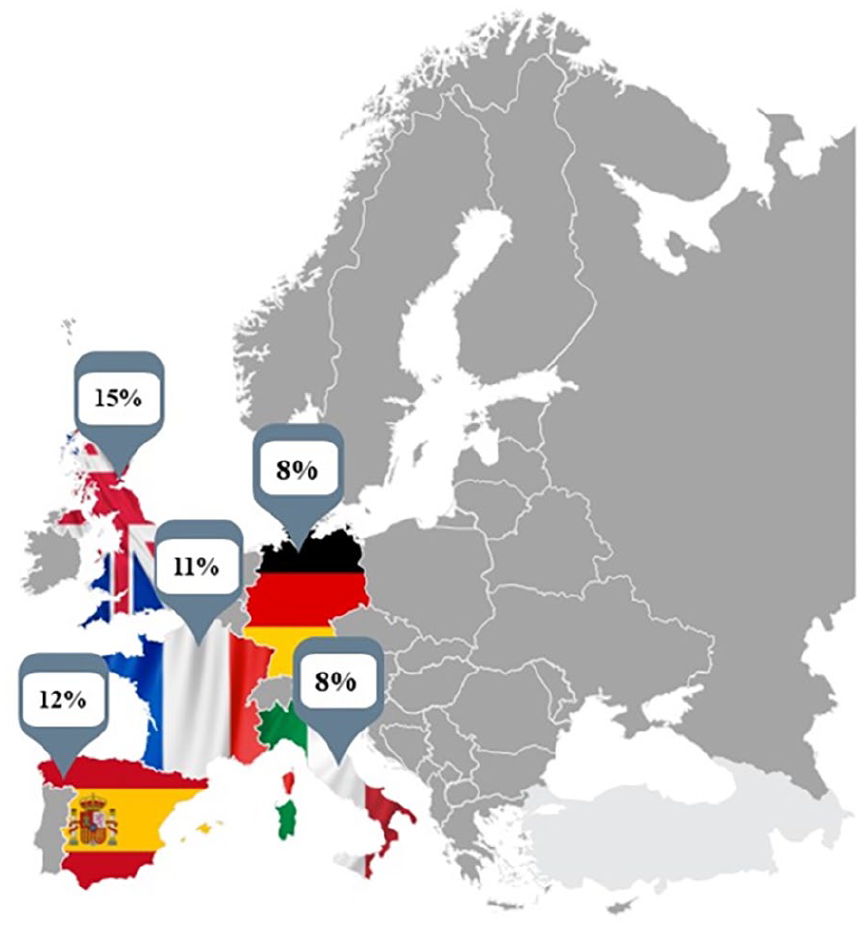
Selected European countries recycled apparel preference.
According to a 2020 survey conducted by Statista which involved 5000 respondents through an online interview, a notable proportion of consumers across various European countries highlighted the importance of clothing manufactured from recycled materials. In particular, the poll found that 15% of Brits, 12% of Spaniards, 11% of French and 8% of Germans and Italians thought it was important that the clothes they bought used recycled materials. 156 This data underscores a growing consumer awareness and preference for sustainable practices in the fashion industry across these regions.
Competitor analysis and market opportunities
In exploring the landscape of recycled apparel within the European market for Bangladesh, a comprehensive competitor analysis reveals a dynamic environment ripe with opportunities. European consumers are increasingly prioritizing sustainability, driving demand for eco-friendly fashion choices. Major competitors in this sector include established brands like H&M. They have made significant strides in integrating recycled materials into the product lines and innovative startups such as Reformation and Everlane, known for transparent supply chains and sustainable practices. 157
Key market opportunities for lie in leveraging its strong position as a global leader in textile manufacturing and its burgeoning interest in sustainable production. Manufacturers can capitalize on its existing infrastructure and expertise in garments manufacturing to enter the recycled apparel market. They can tap into new markets and satisfy the increasing demand for sustainable fashion by forming joint ventures or partnering with European brands. Furthermore, they can differentiate itself by emphasizing cost-effectiveness and scalability in producing recycled apparel. Also, potentially providing competitive pricing compared to Western counterparts. This approach could appeal to brands seeking to balance sustainability goals with financial viability. Navigating this market requires a nuanced understanding of European consumer preferences, regulatory frameworks promoting sustainability and evolving trends in eco-conscious fashion. As consumer awareness continues to grow, there is ample opportunity to carve out a niche in the European recycled apparel market. Positioning itself as a reliable partner in sustainable fashion production while capitalizing on its established textile industry infrastructure.
Consumer behavior and preferences
An increasing awareness of environmental and ethical issues has prompted a change in consumer behavior and preference toward recycled clothing. More and more people are talking about sustainability. As a result, they are looking for products that help them to live out the values of minimization of waste and promotion of circular economy principles. Water consumption, chemical usage and landfill waste are some of the environmental issues linked to traditional textile production that consumers are becoming more aware of and this is having an impact on consumer behavior. 158 An attractive substitute that reduces the impact on the environment is recycled clothing which uses materials such as organic cotton and recycled polyester. Furthermore, how consumers view the quality and longevity of recycled clothing also influences the purchasing decisions. There are social considerations alike shoppers place a higher value on ethical and transparent business practices in the apparel sector. Sustainable brands that show care about ethical sourcing and production methods tend to attract ethically-minded shoppers who are prepared to spend more for goods that reflect their beliefs.
Perception of sustainable fashion
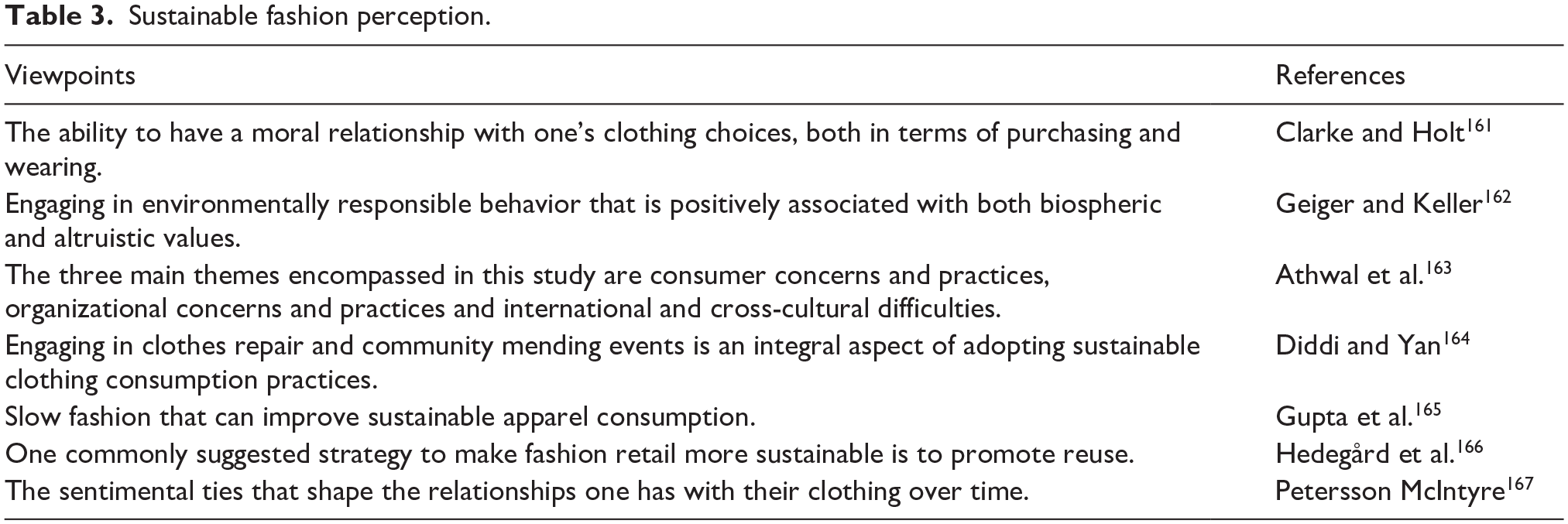
Ethical and environmental concerns are having a greater impact on how consumers view sustainable fashion. Climate change, resource depletion and the fashion industry’s labor practices have all contributed to a discernible trend in recent years toward more conscientious consumer behavior. Brands that are transparent about their supply chains, use sustainable materials and advocate for fair labor conditions are increasingly likely to have consumer support. 159 Many buyers now prioritize sustainable products and are prepared to pay more for those that reflect their morals. 160 But there are still obstacles to ensuring consistent practices across the industry and to educating consumers about sustainable fashion. The demand for sustainable fashion is expected to keep rising as more and more people become aware of the issue and have easier access to information. This will have an impact on consumer preferences and industry standards. Table 3 gives an overview of them perception of sustainable fashion.
Sustainable fashion perception.
Influencing factors on purchase decisions
Another significant factor influencing consumers decisions to purchase recycled apparel is ethical considerations. The ethical treatment of workers, fair wages, and transparency in the supply chain are some of the most pressing concerns of modern consumers. Recycled apparel often aligns with ethical consumerism principles by repurposing materials and reducing reliance on new resources. Thereby supporting a more ethical approach to fashion consumption.168,169 Additionally, the esthetic appeal and fashion ability of recycled apparel play a crucial role. In the past, recycled clothing have been perceived as lacking in style or variety. The elements that impact consumers’ choices to purchase environmentally friendly products are organized in Figure 3.
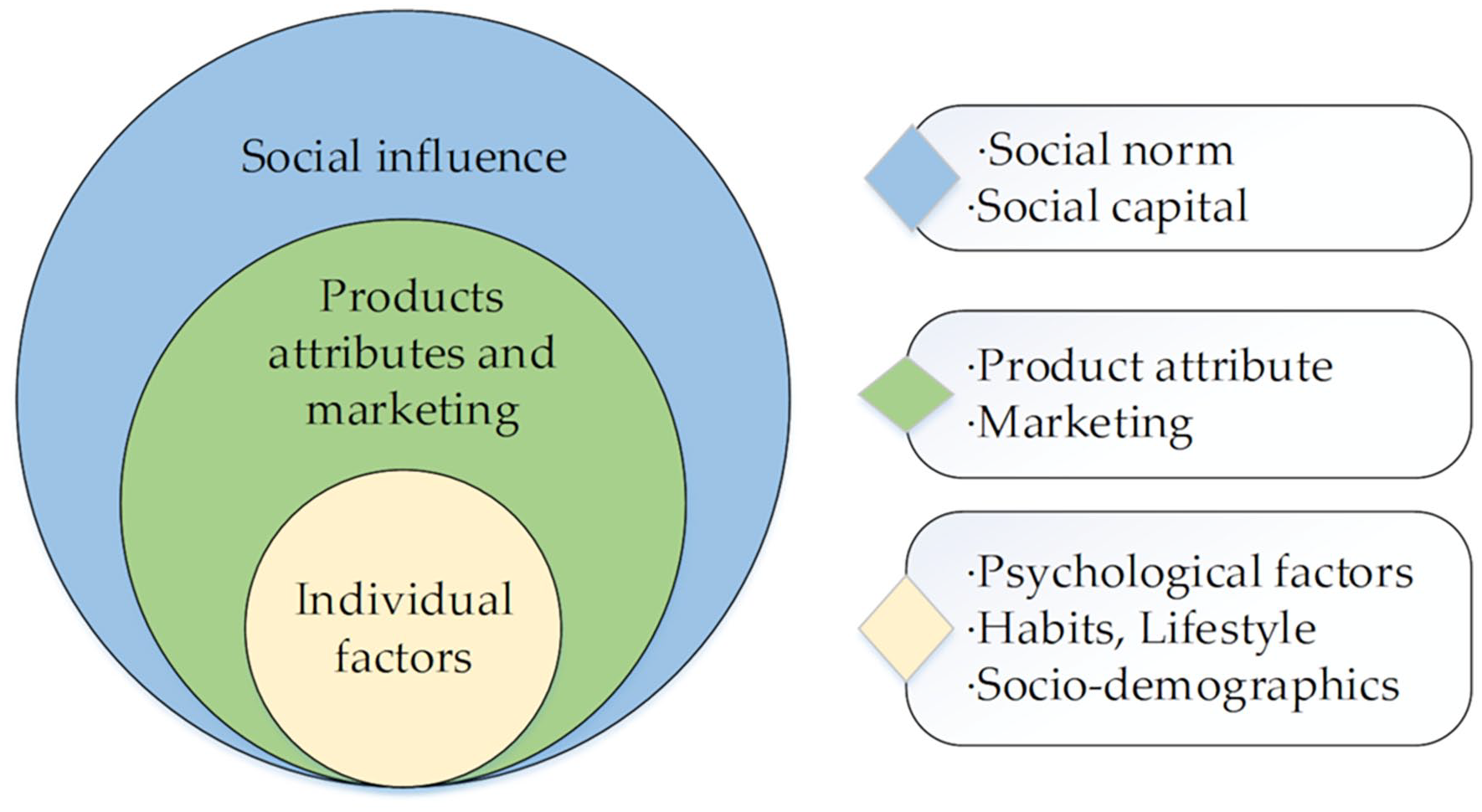
Categorization of factors influencing green purchasing decisions.
However, contemporary designs and collaborations between fashion brands and sustainable initiatives have led to a broader range of attractive and fashionable recycled apparel options. This trend attracts consumers who seek both style and sustainability in clothing choices. Moreover, peer influence and social norms contribute to the popularity of recycled apparel. 171 As sustainability becomes a more widely discussed topic and a social norm among certain groups, individuals can feel social pressure or encouragement from friends, influencers, or communities to choose environmentally friendly clothing options like recycled apparel.
Attitudes toward recycled clothing
As people have become more environmentally conscious and have different ideas about what it means to be sustainable, the attitudes toward recycled clothing have changed. Initially viewed as a niche, recycled clothing now appeals to a broader demographic. One major shift is the growing recognition of the environmental benefits of recycling textiles which reduces waste and minimizes the carbon footprint associated with fashion consumption. 172 Moreover, there has been a cultural shift toward valuing uniqueness and individuality in clothing choices. Recycled garments often provide distinctive designs or vintage appeal that mass-produced items cannot replicate, appealing to consumers seeking personal style statements. An investigation was conducted in Taiwan, surveying a total of 135 consumers from Generation X (Typically includes individuals born between 1965 and 1980, corresponding to ages 44–59), 134 consumers from Generation Y (commonly known as millennials that includes individuals born between 1981 and 1996, corresponding to ages 28–43) and 139 consumers from Generation Z (individuals born between 1997 and 2012, corresponding to ages 12–27). The path model and bootstrapping method were employed to examine the postulated relationships. The findings indicated that consumers’ intentions to purchase sustainable apparel were significantly influenced by the environmental consciousness, perceived value and perceived risk. However, it was discovered that the generational cohort had a negative impact on the connection between environmental consciousness and the intention to purchase sustainable apparel. 173 From another study, factor analysis and structural equation modeling were conducted on survey responses of 187 US college students to analyze data and test hypotheses. To demonstrate that the model has good psychometric properties as well as that all statistical criteria are appropriately satisfied. The results of all data analyses conducted for this purpose. While the model can account for two-thirds of consumers’ decisions to purchase environmentally friendly alternatives, several psychological factors weigh heavily on green purchasing. Attitude, social pressure and the belief that individual efforts can make a difference each promote stronger intent to purchase eco-friendly options. Moreover, understanding how products and behaviors benefit the environment amplifies the effect of positive views, leading to greater consistency between mindset and actual money spent. By teasing apart these cognitive and social influences, researchers gain insight into not just what moves people toward sustainability but also how to strengthen those motivations through information and empowerment. 174 However, the transparency and ethical aspects of recycled fashion resonate with socially conscious shoppers who prioritize supporting brands that demonstrate environmental responsibility. 175 However, challenges remain. Perceptions of quality and durability of recycled clothing compared to new garments can influence purchasing decisions, despite efforts to improve standards in manufacturing and materials. Furthermore, education about the benefits of recycled fashion and debunking myths about its inferiority are ongoing tasks for brands and retailers.
Potential merchandising approaches
Merchandising approaches encompass a range of strategies aimed at optimizing product presentation and maximizing sales in retail environments. One approach focuses on visual merchandising. Where store layouts, displays and signage are meticulously designed to attract and engage customers. Another strategy involves promotional merchandising that uses discounts, offers and seasonal campaigns to drive sales and consumer loyalty. Inventory management is also crucial, ensuring products are well-stocked and aligned with consumer demand. Additionally, digital merchandising leverages online platforms to enhance product visibility and customer experience. Possible approaches to promoting recycled clothing in Figure 4.
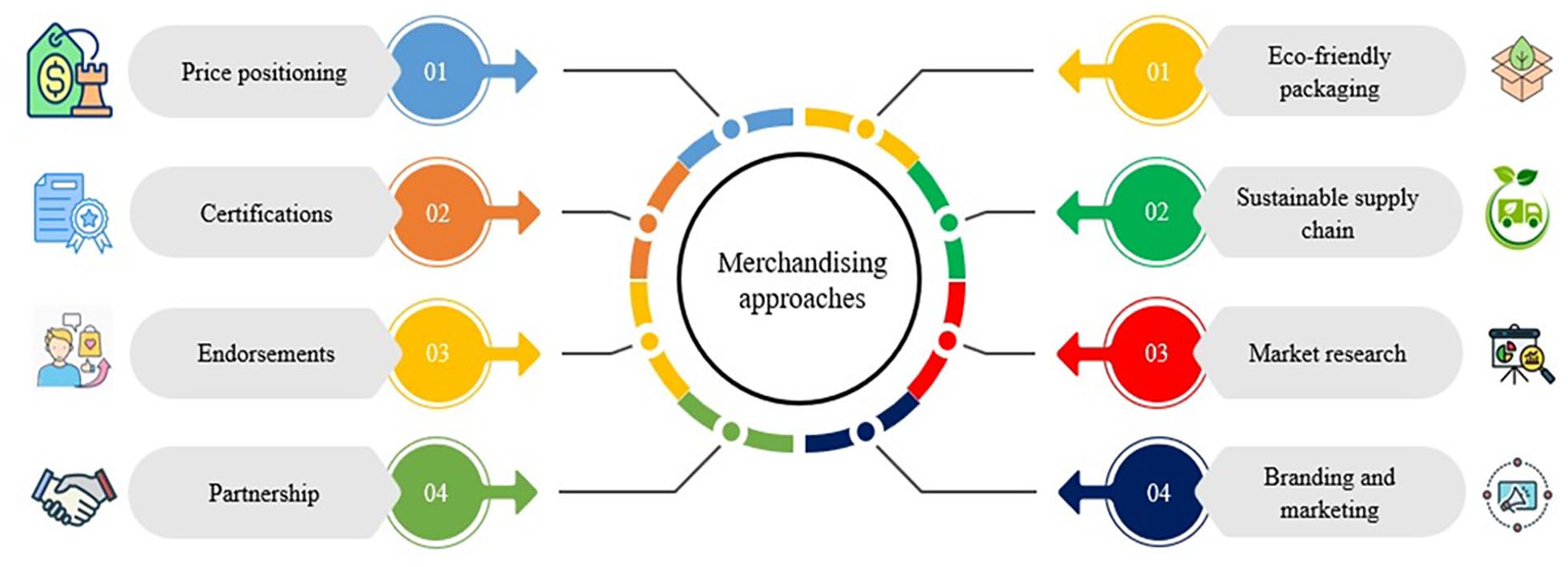
Potential strategies of recycled apparel merchandising.
Market research
To keep up with the ever-changing sustainable fashion industry, market research on consumer demand for recycled fabrics and garments is essential. Businesses in the fashion sector have new problems and opportunities. As a result of the growing interest in recycled textiles that stems from the worldwide trend toward eco-conscious shopping. 176 This analysis covers a lot of ground to get a good feel for the market as a whole. Understanding the current landscape of the sector requires research into its historical growth, its major actors and its governing structures. It’s just as important to figure out for whom the product is manufactured by looking at demographics and consumer habits to catch to their needs. It is helpful to build items that meet market demand by learning what styles and types of recycled clothing buyers prefer. 177 In light of the environmental effect and the perceived quality, the value that consumers place on recycled textiles is vital. Understanding the competitive landscape requires investigating market trends such as fashion industry cooperation and technological advances in production.
It is important to carefully evaluate marketing channels and consumer touchpoints to guarantee efficient communication and participation. Adoption barriers can be overcome through the use of focused techniques when the existence, such as price sensitivity and lack of awareness is identified. The market research report should also include a look into the foreseeable future of industry trends and consumer expectations. This market research provides a solid basis for companies seeking to navigate and prosper in the growing market of recycled textiles and garments through the use of consumer surveys, feedback analysis and sustainability indicators. 178 Businesses can not only meet the demands of a sustainability-focused consumer base but also anticipate the needs by being alert to consumer preferences and industry trends.
Branding and marketing
Advertising on recycled clothing is a great way for companies to reach people who are concerned about the environment. An engaging brand story that highlights sustainability, ethical manufacturing and environmental consciousness is essential. 179 The values of eco-conscious consumers should be reflected in the brand’s identity. Successful advertising can include displays of production methods, reuse of materials and explanations of other positive effects on the environment. 180 Awareness of a brand can be increased through social media, influencers and eco-friendly collaborations. Promoting recycled apparel’s quality and fashion sense while dispelling preconceptions about secondhand clothes helps to gain consumer’s trust. In a study, it was found that brands are promoting its unique recycled products through social media platforms like “X” which was commonly known as Twitter earlier and the data is shown in Table 4.
Tweets encouraging recycled products. 181

The company’s dedication to a cleaner future is shown in eco-friendly packaging and sustainable supply chain practices. Manufacturers of recycled clothing who prioritize fashion and environmental responsibility can find success by emphasizing these factors.
Collaboration with sustainable fashion advocates
Brands looking to bolster their green reputation should work closely with sustainable fashion activists. Partnerships like these allow brands to gain the genuine endorsement of sustainability-minded individuals within the green fashion industry. 182 Brands can reach more people who care about ethical fashion by partnering with influencers, NGOs or eco-conscious organizations to spread the message. This engagement not only boosts a brand’s visibility but also builds a community around a sustainable ideal. It produces a powerful alliance that drives positive change in consumer behavior and supports a collective dedication to a more environmentally conscious lifestyle.
Sustainable supply chain
Ethical and environmentally conscious businesses must prioritize establishing a sustainable supply chain. Fair labor conditions, increased transparency and reduced environmental impact are the tenets of this method. A sustainable supply chain is one that continuously works to reduce its impact on the environment, beginning with the procurement of raw materials and continuing through production and delivery. A study suggested that supply chain management should prioritize “source reduction,” or reducing inventory and developing zero-waste designs, to reduce waste. “Reuse” means repairing and re-wearing discarded clothing without alteration. Good-condition take-back or unsold clothing can be sold as new in the second-hand market. “Upcycle” combines upgrading and recycling by combining designs and ideas with existing objects to create better uses. 84 Figure 5 shows the textile waste hierarchy for both consumers and fashion companies.
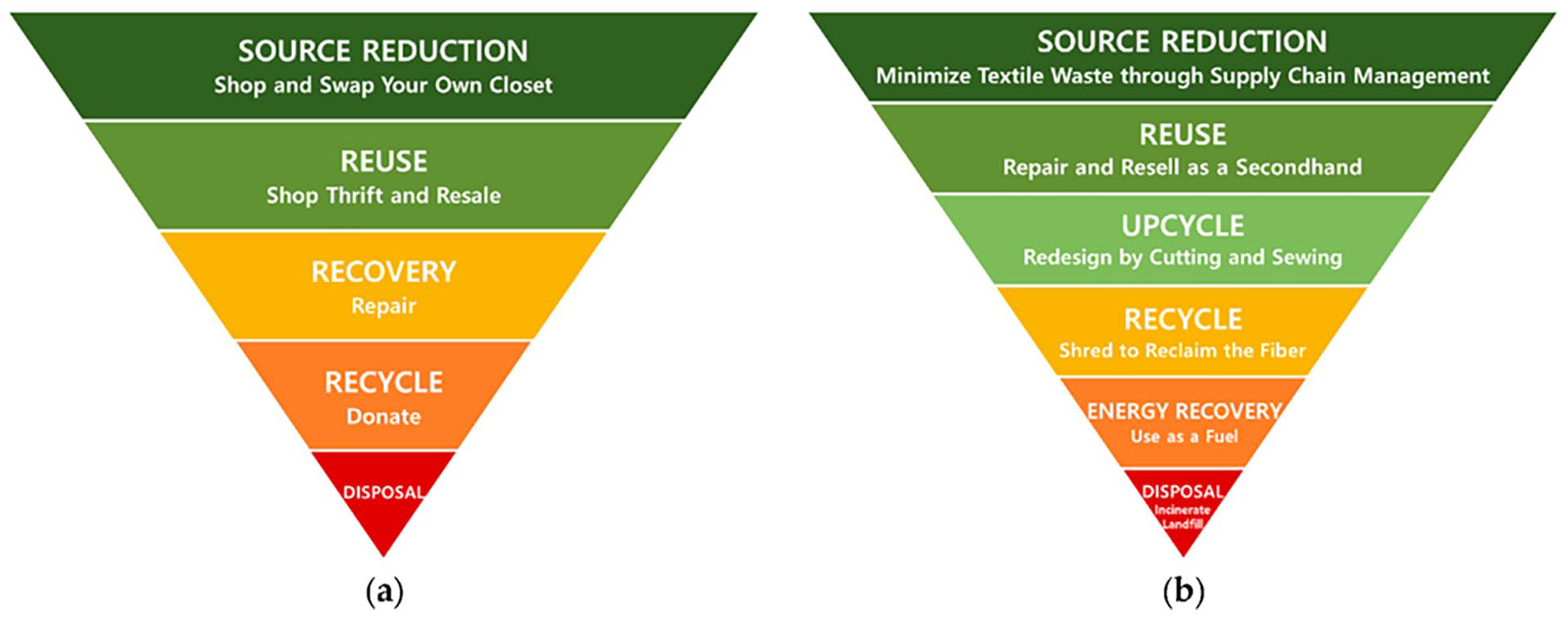
The hierarchy of textile waste, for consumers (a) and fashion companies (b).
Companies often engage in ethical sourcing of materials, utilizing renewable resources and employing eco-friendly manufacturing techniques. Fair labor practices and socially responsible partnerships further characterize a sustainable supply chain that promotes worker well-being and community development. Businesses can make a difference in the world and appeal to a new generation of eco-conscious shoppers by implementing sustainability practices through supply chains. This can help them to stand out from the competition and keep consumers coming back for more.
Online and offline retail channels
Purchasing habits for recycled goods are significantly impacted by the availability of both online and offline retail channels. Consumers can quickly and easily research and evaluate different recycled items the accessibility and depth of information provided by online marketplaces. 183 Targeted marketing strategies on social media and e-commerce sites also help to spread the word and sway eco-conscious shoppers. In contrast, traditional brick-and-mortar stores let consumers examine recycled goods up close, leading to a more personal connection with the brand overall. 184 The store’s atmosphere, the assistance of trained employees and the depth of the exhibits all add to the overall allure. By bridging the gap between digital knowledge and hands-on product experience, a dynamic shopping environment is created through the interplay of online availability and offline involvement.
Green washing
Even though more and more businesses are incorporating sustainability into CSR strategies, greenwashing is still a big problem for sustainable merchandising. Rather than dealing with fundamental problems, like overproduction, these initiatives frequently erect a green veneer. Critics have pointed out that H&M’s garment collection initiative, in which consumers trade in old clothes for vouchers, hasn’t done much to slow down environmental degradation. 185 Even though they managed to gather nearly 29,000 tons of garments in 2021, that was just a small portion of the yearly production roughly 3 billion garments. 186 The fashion industry’s carbon footprint is largely attributable to overproduction, which such practices fail to address.
Companies like Syre, which is part of H&M are at the forefront of innovative recycling solutions and circular economies to counter this and encourage true sustainability. 187 In order to facilitate closed-loop manufacturing, Syre is centered on decomposing textiles into reusable fibers. Reducing the consumption of virgin materials and finding a solution to textile waste are both achieved through this method. 188 Companies can address concerns about greenwashing and stay in line with changing consumer expectations and regulations by integrating these technologies with transparent reporting mechanisms. The effectiveness of CSR-driven sustainability initiatives could be enhanced by teaching consumers how to consume more sustainably and by encouraging collaborations throughout the supply chain. 189 These steps can lead to more genuine eco-conscious actions by highlighting responsibility and creativity.
Eco-friendly packaging
Adopting environmentally friendly clothing packaging is not only in keeping with long-term goals but also makes a strong marketing statement. Eco-friendly packaging is a sign of a company’s dedication to socially and environmentally responsible business operations which today’s concerned consumers appreciate. Reducing waste through the use of recyclable materials, biodegradable components and creative packaging can improve a company’s image positively.190,191 Educating consumers about these initiatives through labeling and advertising increases honesty and resounds with those who care about the environment. In addition to helping maintain a good reputation for the business, eco-friendly packaging also reflects the priorities of an expanding consumer base that places a premium on not harming the environment. Sustainable packaging strategies allow clothing companies to stand out in a crowded market while also demonstrating dedication to a greener, more sustainable future. The cost of packaging is a critical factor in sustainable merchandising for recycled textiles and apparel in the Western apparel industry. Special packaging, designed to highlight sustainability or enhance the product’s appeal, can significantly increase overall product costs. 192 This increase is primarily due to the higher quality materials used, such as biodegradable plastics, recycled paper, or eco-friendly inks, which often come at a premium. Moreover, packaging innovations such as minimalist designs or reusable packaging can involve higher initial costs due to the need for custom materials and production processes. 193 For instance, packaging made from recycled fabrics or sustainable sources, like hemp or bamboo, tends to be more expensive than traditional plastic-based alternatives. 194 According to a 2020 report by McKinsey & Company, sustainable packaging can add up to 15% to the total cost of a garment. 195 These added expenses are crucial for product development discussions, where every cost increment is scrutinized. However, brands are finding innovative ways to balance packaging costs with sustainability goals, such as optimizing packaging size to reduce waste and transportation costs. By investing in eco-friendly packaging, companies are enhancing environmental credibility, even when the increased costs can lead to higher retail prices. In the long run, the brand’s sustainable image can enhance consumer loyalty, making these costs more justifiable.
Consumer engagement
Increasing demand for recycled clothing relies heavily on a proactive client base. Using material that is both engaging and instructive, companies can encourage target audiences to purchase recycled products. The use of social media facilitates two-way communication, provides a window into the workings of the business and spreads stories that appeal to environmentally concerned consumers. The message can be amplified and spread to more people through the use of influencers or partnerships with environmental activists. Challenges and partnerships that bring people together are great examples of interactive campaigns. Consumers are more likely to stick with a brand when that company actively listens to and acts on the feedback. Companies can build a dedicated consumer base that appreciates the style and quality of recycled clothing as well as the shared dedication to sustainable fashion by providing an engaging and interactive brand experience. In the context of sustainable merchandising for recycled textiles and apparel in the Western apparel industry, company size and e-commerce play critical roles in determining the success of launching an online store. Smaller, independent fashion brands often face significant financial barriers when entering the e-commerce market, especially when these brands aim to implement sustainable practices like using recycled materials. 196 These companies need to allocate resources not only for sustainable sourcing but also for website development, logistics, and marketing to attract a growing eco-conscious consumer base. 197 On the other hand, large-scale fashion companies can leverage established infrastructure and consumer base to implement sustainable e-commerce strategies more efficiently, which includes the integration of recycling systems and sustainable packaging solutions. Additionally, data-driven insights allow larger companies to provide personalized experiences that resonate with environmentally conscious shoppers. However, this level of investment is not always accessible to Small and Medium Enterprises (SMEs), which often struggle to compete with the marketing power of larger companies. 198 For instance, sustainability-focused initiatives can require upfront investments in technology and supply chain changes, which SMEs can find difficult to fund. Therefore, understanding the specific challenges and opportunities for different company sizes is crucial for tailoring effective sustainable merchandising strategies in e-commerce.
Promotion through ethical fashion marketplaces
There is a rare chance for brands to meet consumer expectations while also promoting values through ethical fashion marketplaces. These platforms not only cater to the growing demand for sustainable and socially responsible products but also serve as hubs for conscientious consumers seeking transparency and authenticity. Fair labor practices, eco-friendly production methods and supply chain transparency can all be showcased by brands through ethical fashion marketplaces. 199 Brand reputation is enhanced and loyal customers who prioritize ethical considerations in purchasing decisions are attracted by this.200,201 In addition, these marketplaces frequently provide a welcoming community and the chance to connect with other brands and consumers. In here, they share similar values which can greatly enhance the visibility and credibility of the brand. Additionally, it provides a carefully selected area where consumers can look at products with the assurance that they are in line with moral principles. Essentially, a brand’s commitment to sustainability and ethical principles is showcased when it promotes through ethical fashion marketplaces. A win-win situation is created when profit and purpose-driven business practices work together to benefit consumers and the environment.
Celebrity and influencer endorsements
Celebrity and influencer endorsements have become pivotal in modern marketing strategies, leveraging the power of personalities to influence consumer behavior. These endorsements capitalize on the trust and admiration that audiences have for their favorite stars, translating into increased brand visibility and sales. Celebrities often lend credibility and aspirational appeal to products, making them more attractive to potential buyers who seek to emulate their idols. 202 The impact of these endorsements extends beyond mere visibility. It can shape consumer perceptions, associating brands with desirable qualities such as success, attractiveness, or reliability. 203 Moreover, influencers provide a more relatable form of endorsement that helps to cultivate a sense of authenticity and engagement that resonates deeply with followers. The ability to create compelling narratives around products helps brands to connect on a personal level with diverse audiences. The beneficial effect of congruency on pro-environmental intentions did not seem to be mediated by influencer credibility. Furthermore, micro- and meso-influencers had identical effects. It proves that influencer-message congruence is critical for influencing Instagram users to take action for the environment. 204
However, the effectiveness of celebrity and influencer endorsements hinges on careful alignment between the brand’s image and the personality endorsing it. Audiences can easily tell when an influencer isn’t being genuine which can result in negative feedback and harm to the influencer’s and the brand’s reputation. Thus, although these endorsements have a lot of sway over consumer behavior, these only work when it form strategic alliances with other brands that really connect with target demographic.
Partnership with retailers for sustainable initiatives
Forming partnerships with retailers committed to sustainable initiatives is crucial in enhancing a more environmentally responsible business ecosystem. These partnerships not only align with values but also amplify collective impact on sustainability efforts. Through partnering with retailers that prioritize environmentally conscious practices such as reducing carbon emissions, promoting ethical sourcing and minimizing waste.205,206 The sustainability of the product can be greatly improved through products and operations. The objective is to incorporate sustainable practices throughout the entire supply chain, encompassing the sourcing of raw materials, distribution, and retail. 207 This approach not only satisfies the desire of consumers for products that are more ecologically sound, but also stimulates the development of inventive methods for conducting sustainable business. Through the act of collaborating with retail partners, brands can enhance a domino effect that promotes the widespread implementation of sustainable initiatives by sharing resources, knowledge, and best practices. 208
Moreover, collaborating with retailers allows us to reach a broader audience with a sustainability message and influence consumer behavior toward more conscious purchasing decisions. Together with set new standards for corporate responsibility and contributing positively to the health of the planet and future generations. Through ongoing dialog and joint efforts, a sustainable future can be built where businesses thrive in harmony with the environment.
Certifications and standards
Certifications and standards are essential in the apparel industry as those serve as a strategic marketing approach for recycled products. When recycled textile clothing from Bangladesh is sold in Western markets, certifications like the Global Recycled Standard (GRS) and OEKO-TEX Standard 100 can greatly improve the credibility of the products and increase consumer trust.209,210 The GRS certification guarantees that products have a designated minimum proportion of recycled materials. Strict social, environmental and chemical standards are upheld at every stage of the supply chain. The OEKO-TEX Standard 100 certification ensures that textiles are devoid of any harmful substances, providing consumers with confidence in the safety and sustainability of the product. 211 These certifications serve to validate both the use of recycled materials and sustainable practices. Additionally, it help to distinguish products in a competitive market by aligning with the increasing consumer demand for transparency and ethical sourcing. By prominently displaying these certifications, manufacturers can effectively communicate the commitment to sustainability and quality. Thereby enhancing the appeal and marketability of recycled textile clothing in the Western apparel industry.
Price positioning
Price positioning plays a pivotal role in successfully merchandising recycled products in the Western apparel industry. Given the growing consumer interest in sustainability, pricing strategies must strike a balance between affordability and perceived value. Recycled textile clothing can leverage its competitive advantage of lower production costs while highlighting its eco-friendly credentials.212,213 One effective approach is to adopt a premium pricing strategy, emphasizing the superior quality and unique sustainability story of recycled textiles. Manufacturers can target environmentally conscious consumers who are willing to pay more for products that align with the values by pricing these products higher. Alternatively, a mid-range pricing strategy can appeal to a broader audience seeking sustainable options without the luxury price tag. 214 This approach ensures accessibility while maintaining profitability and sustainability standards. Moreover, transparent pricing that reflects the true cost of sustainable production can enhance consumer trust and justify higher price points. Discounts or promotional pricing can also be utilized strategically to attract price-sensitive consumers or during seasonal sales events. 215 Ultimately, effective price positioning should consider market dynamics, consumer perceptions and the competitive landscape to maximize the appeal and profitability recycled textiles clothing in the Western market.
Challenges and opportunities
Recycled apparel products face both challenges and opportunities in today’s market. Challenges include overcoming consumer skepticism about quality and durability, as well as the higher initial costs associated with sourcing and processing recycled materials. However, there are significant opportunities as well. Increasing environmental awareness among consumers has created a growing demand for sustainable products, including clothing manufactured from recycled materials. Brands that embrace recycled apparel can differentiate themselves in a competitive market. They appeal to environmentally conscious consumers and enhancing the brand image. Moreover, advancements in recycling technologies are making it easier to produce high-quality recycled fibers that meet performance standards. Collaborations between fashion brands and recycling companies also enhance innovation in design and manufacturing processes. Ultimately, the key to success lies in educating consumers about the benefits of recycled apparel, ensuring consistent quality and continuing to innovate within the sustainable fashion sector. The advantages and disadvantages of selling recycled clothing are illustrated in Figure 6.
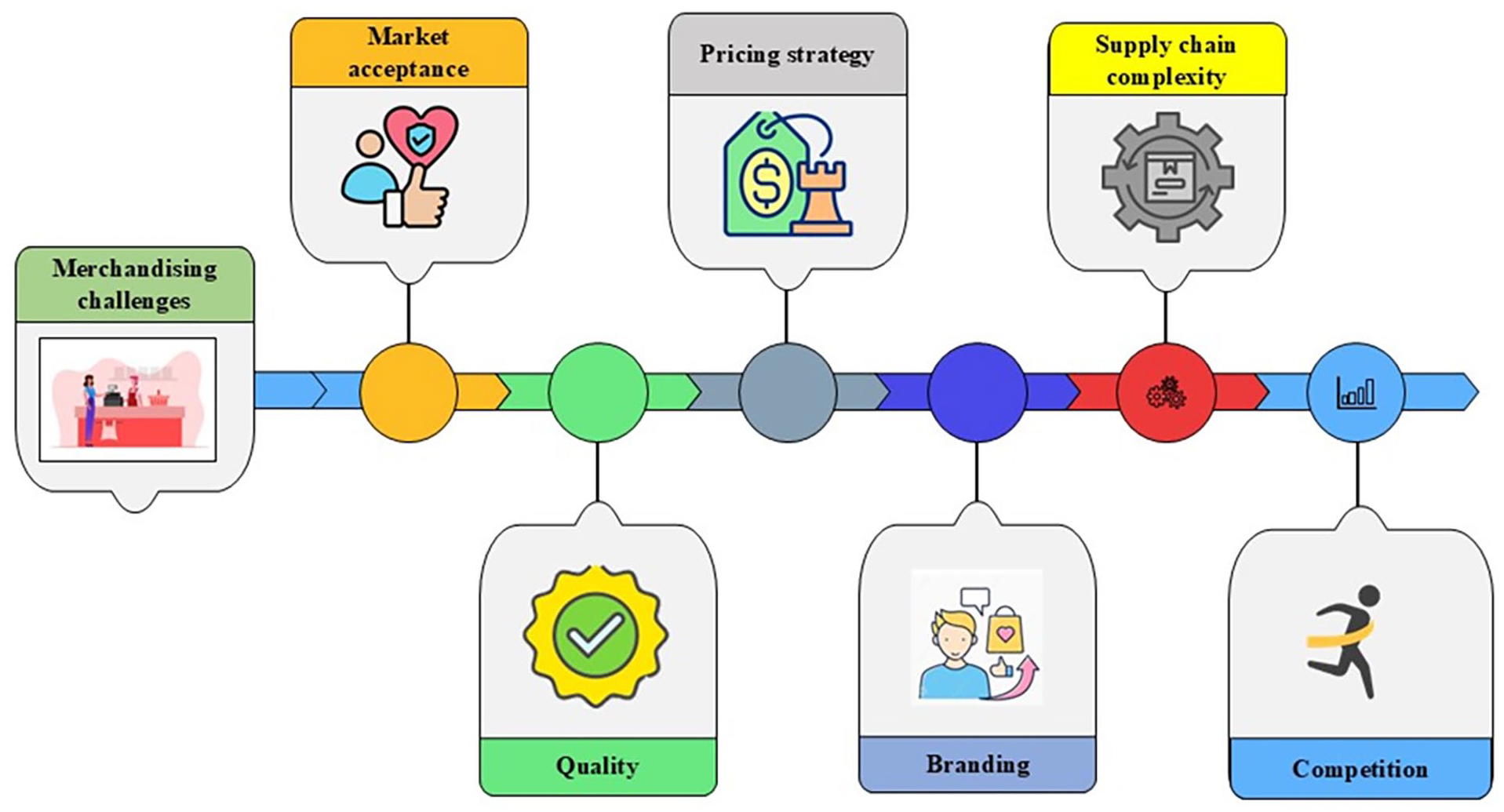
The positive aspects and drawbacks of recycled clothing merchandising.
Regulatory compliance
Selling recycled clothing in the United States can be difficult because of all the rules and regulations that must be followed. Labeling, safety standards and environmental claims in the textile sector are all governed by different sets of federal and state laws. Attention to detail is required to meet the strict requirements for recycled content labeling and to accurately depict eco-friendly initiatives. 216 Marketing and selling recycled clothing can be complicated by the need to comply with environmental requirements such as those established by the Federal Trade Commission (FTC). Sustainable brands must find a middle ground between creative freedom and compliance with these rules. 217 To ensure that recycled clothing not only satisfies ethical and environmental requirements but also earns trust and acceptance in the competitive us market, it is crucial to stay ahead of evolving legislation and to enhance clear communication with consumers.
Competitive landscape
Selling used clothes in the United States is difficult because of all the other brands out there. The market for eco-friendly products is becoming increasingly competitive as more and more companies recognize the importance of sustainability. Differentiating recycled clothing products in a saturated market is difficult. Brands should highlight not only the eco-friendliness but also the distinct esthetics, high quality and satisfying overall experience. It is now crucial to create a memorable brand identity that appeals to conscientious shoppers. 218 To stand out from the crowd, brands need to create compelling stories and be open about the commitment to sustainability. Additionally, encouraging collaborations, new marketing methods and keeping nimble in adjusting to evolving consumer preferences are crucial for standing out in a market where competition for attention is severe. Sustainable innovation, fresh thinking and an in-depth familiarity with today’s ever-changing consumer world are all necessary ingredients for success in this arena. Production limitations related to Minimum Order Quantities (MOQs) present a significant challenge for small brands in the sustainable apparel industry, particularly in countries like Bangladesh and Vietnam, where the local production capacity cannot align with large-scale orders. 219 Brands often struggle to meet the MOQs set by factories that focus on high-volume production, as these thresholds can be prohibitively expensive for small-scale manufacturers who are committed to sustainable and ethical production methods. In response, many small brands choose to shift production to countries like Portugal or Turkey, where shorter lead times and lower MOQs are more manageable, allowing for a more flexible production process. 220 Additionally, these regions have a well-established reputation for quality textile manufacturing, often with stronger regulatory frameworks for sustainable practices. In countries like Portugal and Turkey, smaller-scale operations can cater to bespoke, low-volume, high-quality demands, aligning more closely with sustainable fashion objectives such as minimizing waste and reducing overproduction. 221 The shift in production also facilitates more transparent and traceable supply chains, an essential factor for brands emphasizing sustainability and ethical practices. However, while this approach offers a solution, it can increase production costs, posing a challenge for brands trying to balance sustainability with affordability.
Raising consumer awareness
Brands selling recycled clothing in the us market have a significant obstacle in the form of consumer education. While more people are becoming environmentally conscious, many can still be unfamiliar with the subtleties of shopping using recycled materials. Companies have the dual responsibility of promoting products and informing consumers about how such items affect the environment. The importance of educating consumers on the value of recycled materials, the process of manufacturing them and the myths surrounding used clothing cannot be overstated. 222 To cultivate an educated consumer base, brands need to invest in transparent, easily accessible messages across multiple media. Influencer collaborations, alliances with environmentally concerned organizations and interesting content can all play important roles in closing the informational gap. 223 A concentrated effort to equip consumers with the knowledge they need to make environmentally responsible selections when selecting recycled garments is necessary to overcome this obstacle.
Sustainability certifications
Obtaining and communicating sustainability certifications poses a challenge for brands merchandising recycled apparel in the us market. While consumers increasingly seek eco-friendly options, navigating the array of certifications can be complex. Brands face the challenge of not only meeting these standards but also effectively conveying commitment to sustainability. 223 Obtaining certifications such as the Global Recycled Standard (GRS) or Oeko-Tex can bolster credibility, but it is a time-consuming and resource-intensive process. Additionally, educating consumers about the significance of these certifications is crucial for building trust. 224 Striking a balance between meeting certification requirements and ensuring transparent communication becomes paramount. Overcoming this challenge involves a strategic approach that integrates certification efforts into a brand’s narrative, reinforcing the commitment to environmentally friendly practices and meeting the discerning expectations of the conscious us consumer base.
Certifications and eco-labels are often used as sustainability indicators, but these don’t always guarantee compliance. The German government’s “Green Button” certification ensures textile products’ environmental and social standards. 225 Critics have accused it of greenwashing due to its opaque reporting mechanisms. Critics say the certification relies heavily on third-party standards without requiring rigorous independent audits, leaving claims verification gaps. This highlights the fact that many certifications ignore raw material sourcing, production emissions, and product disposal. A recycled textile certified by a specific label can still use a lot of energy, water, or chemicals. In order to address these issues, the industry must use blockchain technology to track supply chains in real time and Life Cycle Assessment (LCA) tools to evaluate a product’s sustainability. 226 For sustainable merchandising to meet consumer trust and environmental goals, certification schemes must be transparent and accountable.
Perception and branding
Perception and branding present both challenges and opportunities for recycled apparel products. Initially, consumer perception often associates recycled materials with lower quality or limited style options. Effective branding strategies that highlight the positive aspects of sustainability its ability to reduce environmental impact and support ethical practices are necessary to overcome these perceptions.227,228 Branding can position recycled apparel as innovative and trendy, appealing to eco-conscious consumers who prioritize sustainability. 77 Collaborations with influencers and endorsements by celebrities can also enhance brand credibility and reach new markets. Furthermore, communicating the durability and unique esthetic of recycled materials through storytelling and transparent marketing builds trust and loyalty among consumers.
Quality and durability concerns
Quality and durability are significant concerns when it comes to recycled apparel products. While the concept of recycling textiles is commendable for its environmental benefits, the process often involves breaking down existing fabrics to create new ones. This can lead to fibers being shorter and weaker than those in virgin materials, impacting the overall strength and durability of the final product. 229 One major challenge is maintaining consistent quality. Recycled materials vary widely in composition, depending on the source and the recycling process used. This variability makes it difficult to ensure that each batch of recycled fabric meets the same standards as its virgin counterparts. 230 Inconsistent quality can result in garments that wear out faster or do not perform as well over time.
Durability is another concern. Fabrics manufactured from recycled fibers cannot be as strong or resilient as those manufactured from new fibers. This can affect how well the garments hold up to washing, stretching and everyday wear. Consumers expect their clothing to last and if recycled apparel does not meet these expectations, it can lead to dissatisfaction and reluctance to purchase recycled products in the future. 231 Addressing these challenges requires innovation in recycling technologies to improve fiber quality and consistency. It also involves educating consumers about the benefits and limitations of recycled apparel. It promotes responsible consumption and encourages the fashion industry to prioritize durability alongside sustainability. By overcoming these obstacles, recycled apparel can fulfill its promise of being both eco-friendly and long-lasting.
Supply chain complexity
The complexity of supply chains poses significant challenges for recycled apparel products. Unlike traditional supply chains, sourcing recycled materials involves identifying reliable suppliers who can consistently provide materials of the desired quality and quantity. Variability in the availability and quality of recycled materials adds another layer of difficulty, requiring robust systems for sorting, cleaning, and processing. 232 Furthermore, in order to meet regulatory requirements, achieve consumer trust and verify recycled content claims, it is critical to ensure transparency and traceability throughout the supply chain. 233 Integrating these complexities into existing apparel production processes can increase costs and lead times, potentially affecting competitiveness. 234 Additionally, educating consumers about the benefits and limitations of recycled apparel is essential for market acceptance and long-term sustainability. Addressing these challenges demands innovation in supply chain management, technology adoption and collaboration across sectors to streamline processes and maximize the environmental benefits of recycled apparel products. Supply chain transparency is a critical issue in the Western apparel industry, especially when it comes to sourcing materials such as cotton. Major retailers like Tchibo face significant challenges in tracing the origins of raw materials, particularly cotton, which can be produced under unethical conditions. 235 One of the most pressing concerns is the potential use of forced labor in regions like Xinjiang, China, where reports of human rights violations, including forced labor, have raised alarms globally. 236 In response, there has been increasing pressure from both consumers and governments for companies to ensure that supply chains are free from such practices. Retailers are investing in technologies such as blockchain and traceability systems to provide consumers with verifiable information about the journey of the products, from raw material sourcing to retail shelves. For instance, companies like Patagonia and Everlane have implemented transparency initiatives that allow consumers to track the origins of the fabrics and materials used in the garments. 237 This shift toward supply chain transparency not only helps to address ethical concerns but also builds consumer trust, particularly in a market increasingly driven by sustainability. However, the challenge remains in creating standardized systems across the industry to ensure consistent and reliable data on sourcing and manufacturing practices.
Pricing strategy
Pricing recycled apparel products poses several challenges in the market. One significant issue is the perception of value among consumers. Recycled apparel is often associated with lower quality or perceived as less desirable compared to new clothing, affecting consumers’ willingness to pay higher prices. Additionally, the cost structure of producing recycled apparel can be higher due to sourcing, sorting and processing used materials. 238 This creates a dilemma for brands and retailers trying to balance sustainability goals with profitability. Furthermore, the market competition from traditional apparel brands providing cheaper alternatives further complicates pricing strategies for recycled apparel. 239 To overcome these challenges, brands can need to educate consumers about the quality and environmental benefits of recycled apparel, invest in efficient production processes and explore innovative pricing models that appeal to both sustainability-conscious consumers and price-sensitive shoppers.
Market acceptance
Market acceptance of recycled apparel products faces several challenges. There’s a perception issue among consumers regarding quality and durability compared to non-recycled counterparts. Many still associate recycled clothing with lower quality or less appealing esthetics. Moreover, Price competitiveness is crucial; recycled apparel often carries a higher price due to production costs and the perceived added value of sustainability. 240 Limited availability and variety of designs hinder widespread adoption. Fourthly, inadequate consumer awareness and education about the benefits of recycled fashion impact purchasing decisions. Logistical challenges in the supply chain, including sourcing consistent and high-quality recycled materials, pose significant barriers. Addressing these challenges requires concerted efforts from brands, consumers and policymakers to enhance product quality, affordability, awareness, and availability in the market.
Future prospects
The demand for recycled goods is expected to skyrocket in the next years. New developments in recycling technology can produce improved materials that can be used for anything from building materials to everyday items. Businesses will start using recycled materials more often to satisfy both government regulations and consumer demands for environmentally friendly goods as sustainability takes center stage on a global scale. As a result of this change, green technology investment will increase and new opportunities will arise in the circular economy which aims to reduce waste and maximize resource efficiency. In the long run, recycled goods have the potential to bring about positive changes in both the environment and the economy.
Economic opportunities
Recycled apparel presents significant economic opportunities across various sectors. It taps into a growing market demand for sustainable fashion, appealing to environmentally conscious consumers. 241 This creates opportunities for businesses to capitalize on a niche market, potentially boosting sales and brand reputation. Moreover, recycling apparel contributes to a circular economy by reducing waste and conserving resources. This can lead to cost savings for manufacturers through reduced raw material procurement and waste disposal expenses. Additionally, it opens avenues for job creation in recycling facilities, collection centers and innovative technology sectors focused on textile recycling. 242 From a global perspective, the recycled apparel industry supports international trade in recycled materials and technologies, enhancing economic partnerships and collaborations. It also aligns with government initiatives promoting sustainability, potentially qualifying businesses for grants, incentives, or favorable regulatory conditions
Sustainable supply chains
The future of recycled clothing looks bright with sustainable supply chains that can reduce negative effects on the environment while still satisfying consumer demand for green goods. Virgin resources such as cotton and polyester are both resource-intensive and a major pollutant. By incorporating recycled materials into the supply chain, businesses can minimize the dependence on these resources. 243 Reusing materials that would otherwise be sent to landfills or incinerators is one way that recycled apparel contributes to the concept of circularity in fashion.
Furthermore, sustainable supply chains encompass practices such as ethical sourcing, fair labor conditions and efficient logistics aligning with consumer preferences for transparency and social responsibility. A company’s image, its ability to attract eco-conscious consumers and its ability to stand out from the competition can all benefit from a focus on sustainability. 244 As regulations and consumer awareness continue to evolve, the demand for sustainable fashion solutions is likely to grow. Embracing recycled apparel within sustainable supply chains not only addresses environmental challenges but also positions companies strategically for long-term success in a world increasingly focused on ethical and ecological considerations.
AI in fashion
In addition to H&M, several other major fashion brands are integrating AI to drive sustainability and enhance consumer experience. 245 Zara, a part of the Inditex group, uses AI to improve its inventory management, and predict fashion trends, ensuring that the right products are available in the right quantities, which helps to reduce waste. 246 Zara’s AI-driven supply chain system analyzes data from stores, social media, and search trends to predict demand, allowing the company to reduce overproduction and focus on sustainable practices. 247 Nike is another key player that has embraced AI to develop innovative and sustainable products. The brand uses AI for designing and creating products with more efficient use of resources, including AI-driven material selection algorithms that prioritize recycled and sustainable fabrics. 248 Nike’s “Move to Zero” campaign also incorporates AI to streamline production processes, making the supply chain more sustainable and reducing carbon emissions.
Similarly, Adidas has partnered with the German tech company Carbon to use AI in developing 3D-printed shoes, reducing material waste and creating more sustainable footwear. The use of AI to create precision designs and more efficient production processes is allowing Adidas to stay ahead in both innovation and sustainability. 249 These brands are leveraging AI not only to optimize product offerings and reduce waste but also to align with the growing consumer demand for eco-friendly and sustainable fashion. AI provides the tools to advance the recycling and upcycling of materials, enabling fashion companies to meet the sustainability goals while catering to an increasingly conscious consumer base.
Brand reputation
The prospect of recycled apparel holds significant promise as brands increasingly prioritize sustainability and consumers become more environmentally conscious. Several brands have already positioned themselves as leaders, showcasing both innovation and commitment to reducing environmental impact through recycled materials. Patagonia is a standout example, renowned for its durable outdoor clothing and strong environmental advocacy. 250 They actively promote recycled materials in the products, aiming to minimize resource consumption and waste. This approach not only enhances the brand reputation but also aligns with the core values of sustainability and responsible consumption. Another notable brand is EILEEN FISHER which focuses on timeless, high-quality fashion with a commitment to sustainability. They have launched initiatives like “Renew Program” which transforms old garments into new designs, promoting circularity in fashion. 251 This innovative approach not only attracts environmentally conscious consumers but also sets a benchmark for sustainable practices in the industry. Adidas has also made strides with Parley collection, collaborating with Parley for the Oceans to create sportswear from recycled ocean plastic. This initiative not only addresses environmental concerns but also resonates with consumers who seek products that reflect their values.
The incorporation of recycled materials into these brands’ products has improved the reputation and attracted an increasing number of environmentally conscious consumers. Sustainable fashion options are likely to see a surge in demand as environmental consciousness grows. Brands that embrace recycled apparel not only contribute to environmental stewardship but also position themselves as forward-thinking and socially responsible entities in the eyes of consumers and stakeholders alike. Thus, the future prospect of recycled apparel appears promising, providing both environmental benefits and strategic advantages for brands that lead the way in sustainability.
Innovation and technology transfer
Innovation and technology transfer hold significant promise for the future of recycled apparel, providing substantial opportunities for sustainability and economic growth. As global awareness of environmental issues grows, so does the demand for sustainable fashion solutions. Recycled apparel which involves reusing materials from discarded garments or other sources like plastic bottles or fishing nets, represents a crucial step toward reducing the fashion industry’s carbon footprint.
In the creation of more sophisticated recycling methods, innovation is playing an increasingly important role. Mechanical recycling entails shredding and re-spinning fibers, while chemical recycling disassembles textiles into molecular components for reuse. 252 These methods use less energy and less resources than the old-fashioned way of manufacturing textiles. Furthermore, technology transfer plays a crucial role in scaling these innovations. By transferring knowledge and expertise across borders and industries, countries can accelerate the adoption of sustainable practices in textile manufacturing. For instance, developed countries with robust research capabilities can collaborate with emerging economies to establish efficient recycling infrastructure and capacity-building initiatives. 253 Moreover, advancements in digital technologies are revolutionizing how recycled apparel is marketed and consumed. Blockchain technology can enhance transparency in supply chains, ensuring that recycled materials are traceable from source to final product. A more sustainable consumption pattern can be enhanced when consumers are able to see the environmental effects of their purchases through the use of VR and AR applications.
Social impact
Recycled clothing has enormous potential for future societal impact. Recycled clothing helps to alleviate pollution and landfill overflow by encouraging a regenerative economy that reuses and recycles materials. People are becoming more conscious of the importance of recycling and the lifecycle of clothing as a result of this change which in turn promotes sustainable consumption habits. 254 From a social perspective, it encourages ethical practices in the fashion industry by lending financial backing to businesses that place a premium on sustainability and supply chain transparency. Additionally, recycled clothing has the potential to spur sustainable fashion innovation which in turn can lead to an increase in employment opportunities in green manufacturing and recycling technology. 255 More and more people and companies are purchasing recycled clothing which is changing people’s attitudes and actions toward sustainability. When people start wearing clothes manufactured from recycled materials, it will lead to a more sustainable and ethical fashion industry that cares about people and the planet.
Market differentiation
The future prospects for recycled apparel lie prominently in market differentiation. As sustainability becomes a pivotal concern globally, consumers are increasingly drawn to eco-friendly options. Recycled apparel offers a unique value proposition by reducing environmental impact through reusing materials. 256 Brands that emphasize recycled apparel differentiate themselves as leaders in sustainability, appealing to conscientious consumers who prioritize ethical consumption. Moreover, innovation in recycling technologies enhances product quality, ensuring that recycled apparel meets or exceeds traditional standards. This allows brands to provide diverse styles and designs, catering to varied consumer preferences without compromising on sustainability. Additionally, as regulatory pressures and consumer awareness grow, incorporating recycled materials into apparel production can preemptively align brands with future market trends and expectations.
By positioning recycled apparel as a cornerstone of their offerings, companies can enhance customer loyalty, attract new demographics, and gain a competitive edge in a crowded marketplace increasingly shaped by environmental concerns. Thus, market differentiation through recycled apparel not only addresses current consumer demands but also sets a resilient course for future growth and sustainability in the fashion industry.
Consumer demand
Consumer demand for recycled apparel is poised for significant growth as sustainability becomes a primary concern among shoppers. The increasing awareness of environmental issues is driving consumers to seek out clothing options that minimize the carbon footprint and reduce waste. Recycled apparel offers a solution by repurposing materials like plastic bottles, old textiles and even discarded fishing nets into new garments. This trend is supported by a growing number of eco-conscious consumers who prioritize ethical production practices and transparency in the fashion industry. As more brands adopt recycled materials in their collections and communicate the sustainability efforts, consumer confidence and demand are likely to rise. The future of recycled apparel looks promising, with potential expansions into various market segments as consumers continue to prioritize both style and sustainability in the purchasing decisions.
Circular economy promotion
Promoting a circular economy for recycled apparel holds immense future potential. This approach conserves resources like water and energy that are otherwise expended in producing new garments. Moreover, recycled apparel contributes to reducing greenhouse gas emissions associated with textile manufacturing. In the future, as consumer awareness grows and sustainability becomes a priority, the demand for recycled apparel is expected to rise. Brands embracing circular economy principles can innovate with eco-friendly designs, catering to conscientious consumers. This transition not only addresses the environmental challenges posed by the fashion industry but also enhances economic opportunities through new business models centered on recycling and upcycling. As technologies improve and collaborations strengthen across industries, the potential of recycled apparel to transform the fashion landscape becomes clearer. It provides a way forward that won’t deplete the planet’s limited resources while still allowing the fashion industry to flourish.
Cost savings
The future of recycled apparel presents promising cost savings across various fronts. The use of recycled materials typically reduces raw material costs, as these are sourced from existing products rather than newly extracted resources. This can lead to lower production expenses for apparel manufacturers. Additionally, recycling reduces waste disposal costs and potential fines associated with environmental regulations, thereby enhancing operational efficiencies. Furthermore, the demand for sustainable products is growing among consumers, prompting brands to invest in recycled apparel lines. This shift can attract environmentally conscious consumers, leading to increased sales and brand loyalty. Moreover, as recycling technologies advance and become more efficient, the cost of processing recycled materials continues to decrease, manufacturing recycled apparel more competitive in the market. The future outlook for recycled apparel not only aligns with environmental goals but also offers substantial cost-saving opportunities for businesses willing to embrace sustainable practices.
Conclusions
The Western apparel industry is increasingly looking for sustainable fashion so there is significant space recycled textile clothing. Given the country’s heritage in textiles and an increasing emphasis on sustainability. Manufacturers are well-placed to help to serve those eco-conscious consumers who are looking for ethical, sustainable solutions. In this highly competitive market, a successful merchandising strategy such as branding, designing, and strategic marketing can position manufacturers recycled textiles at a stable level to maintain competitiveness. The way forward for manufacturers textile brands now would be to position themselves as value-led sustainability advocates. Not only to improve the market presence but also to chime positively with the growing momentum toward more sustainable fashion consumption globally. To successfully merchandise recycled textile clothing in the western apparel industry, brands should emphasize sustainability and ethical production in their branding. Utilizing digital marketing and social media platforms can engage eco-conscious consumers while collaborations with influencers and sustainable fashion retailers can enhance visibility. Providing a diverse product range with innovative designs that blend Western trends with traditional craftsmanship will attract a broader audience. Ensuring transparency in the supply chain and obtaining sustainability certifications can build consumer trust and differentiate the brand from competitors. Successfully introducing recycled textile clothing into the Western apparel industry faces significant challenges, including ensuring a reliable and efficient supply chain to maintain consistent product quality and availability. Additionally, overcoming potential negative consumer perceptions of recycled clothing. Differentiating the brand from a competitive market require strategic branding and effective marketing efforts. The future prospects for recycled textile clothing in the western apparel industry are promising, driven by the increasing global emphasis on sustainability and ethical consumption. By capitalizing on its established textile manufacturing infrastructure and commitment to environmentally friendly practices, manufacturers can position itself as a leader in sustainable fashion. Emphasizing transparency, quality and innovative design will attract eco-conscious Western consumers, allowing brands to tap into lucrative markets. Strategic collaborations with international retailers and robust digital marketing will enhance brand visibility and credibility. As demand for sustainable apparel continues to grow, growing manufacturers such as Bangladesh, India and Vietnam have the potential to significantly improve its exports, thereby earning substantial foreign currency and contributing to economic growth. Through these efforts, Manufacturers can transform its textile sector, making it a vital player in the global sustainable fashion industry.
Footnotes
Acknowledgements
Technical supports from the “ZR Research Institute for Advanced Materials,” Sherpur-2100, Bangladesh are gratefully acknowledged.

Author contributions
Arnob Dhar Pranta: Conceptualization, Methodology, Resources, Data curation, Formal Analysis, Methodology, Resources, and Writing—original draft. Md. Reazuddin Repon: Conceptualization, Methodology, Resources, Supervision, Visualization, Writing—original draft, and Writing—review & editing. Aminoddin Haji: Formal Analysis, Resources, Visualization, Writing—review & editing. Musfiqur Rahman: Resources, Writing—review & editing. Mohammed M. Rahman: Resources, Writing—review & editing. All authors have read and agreed to the published version of the manuscript.
Funding
The author(s) received no financial support for the research, authorship, and/or publication of this article.
Declaration of conflicting interests
The author(s) declared no potential conflicts of interest with respect to the research, authorship, and/or publication of this article.
Hazards,human,or animal research
Not applicable.