




Abstract
This study proposes an optimized sizing system for medical examination clothing that balances fit and production and management efficiency. The research investigated existing sizing systems in the market and conducted focus group interviews with medical staff and online surveys with examinees to identify issues in current sizing practices, particularly with Korea Medical Institute’s (KMI) medical examination clothing. A loss function approach was applied using a loss coefficient ratio derived from survey data and body dimensions of 5082 adults from the eighth Size Korea survey. The resulting optimized system reduced the number of sizes from six to four while achieving a high accommodation rate of 81.9%. The developed system includes 2XS-XS for smaller-bodied females, L-XL and 2XL-3XL for males, and S-M for larger-bodied females and smaller-bodied males. This reduction in sizes improves production and management efficiency without compromising wearer satisfaction. While the proposed system follows a unisex sizing structure similar to market products, it enhances accommodation rate and efficiency by applying a data-driven optimization approach tailored to Korean body types. This study demonstrates the effectiveness of the loss function optimization method and its practical benefits in enhancing both user satisfaction and operational efficiency.
Keywords
Introduction
As the global population ages, there is a growing concern and awareness regarding various diseases, emphasizing the importance of medical examinations more than ever.1,2 In the case of Korea, it is projected that by 2025, over 20% of the population will be aged 65 and above, entering into the super-aged society. 3 Consequently, the National Health Insurance Service is actively promoting the participation of citizens in medical examinations tailored to different life stages, including those for infants (0–6 years old), students (6–18 years old), general medical examinations and cancer screenings for adults over 20.
These medical examinations not only significantly contribute to disease prevention and early detection, 4 but are also associated with a reduction in complications from chronic diseases, cost reduction, and a decrease in mortality rates.5,6 It has been shown that simply participating in medical examinations promotes positive health behaviors and fosters improvements in lifestyle habits.7–9 Consequently, medical examinations are predicted to become a crucial social system in the forthcoming super-aged society. However, current participation in medical examinations is hindered by factors such as procedural inconveniences, discomfort associated with the examinations, and negative past experiences. 10 Particularly, patient gowns or examination gowns that do not fit well with the patient’s body have been shown to reinforce these negative medical experiences and emotions.11–15
Most of the prior research related to these issues have focused on general hospital gowns or patient gowns rather than medical examination gowns, aiming to improve them from a design perspective.16–20 However, this approach has not directly addressed improvements in the size and fit (i.e. alignment of clothing size and shape with the human body in terms of form, condition, and degree 21 ) of medical examination clothing, leading to limited solutions. There have been some prior studies related to the size and fit of patient gowns, such as Cheon and Seo’s 22 study proposing a new sizing system for pediatric patient gowns and Jankovska’s 23 study attempting an anthropometric approach to improving the fit of patient gowns, yet these studies are very limited. To date, there has been no research attempting to develop a sizing system for medical examination gowns based on adult anthropometric data.
The examination centers under the KMI (Korea Medical Institute) currently provide a variety of clothing sizes, ranging from M to 4XL, encompassing six different options to improve examinee satisfaction. However, despite the availability of multiple size options, ongoing complaints about size persist among examinees. Additionally, the efficiency of medical staff and center personnel in handling, laundering, managing, and distributing clothing of various sizes is hindered, highlighting the need for improvements in the sizing system.
There is a paradoxical nature to medical examination clothing: it should offer a variety of sizes to enhance examinee satisfaction, while also streamlining the number of sizes for production and management efficiency. In situations where the number of sizes needs to be limited for production and management efficiency, many prior studies have applied the concept of a loss function proposed in Park and Kim’s 24 research to achieve the best fit. Consequently, loss function optimization models have been applied in the development of size systems for communication sales clothing, 25 bras for elderly women, 26 clothing for obese women, 27 clothing for post-school age girls, 28 clothing for obese boys, 29 and combat gloves for soldiers. 30 However, there have been no instances where this concept has been applied to the development of sizing systems for medical examination clothing.
To further distinguish this study from previous research, we specifically focus on medical examination clothing, which presents unique challenges in terms of manageability within healthcare environments, and the need for gender-neutral sizing. Furthermore, unlike prior studies on medical clothing, this research incorporates anthropometric data from the Korean population to enhance the accuracy and applicability of the proposed sizing system.
Therefore, in this study, we first aimed to investigate the current status of various medical examination clothing sizing systems available in the market. Subsequently, we conducted FGIs (Focus Group Interviews) with medical staff and an online survey with examinees to assess the current wearing conditions of existing medical examination clothing and identify areas for improvement in the size system. Ultimately, our goal is to develop a medical examination clothing sizing system optimized for Korean examinee body dimensions through the application of a loss function optimization technique.
Methods
Investigation of the medical examination clothing sizing system available in the market
To understand the current status of the size systems of medical examination clothing available in the market, an investigation was conducted from May to July 2023. The study examined the size systems of 35 products (23 tops, 12 bottoms) from 10 online medical examination clothing retailers. The collected information includes whether the sizing system of each product distinguishes between genders, the type of dimensions provided (product dimensions or body dimensions), the number and types of dimensions provided for each product, and the total number of sizes offered.
Investigation of the wearing conditions and size satisfaction of current medical examination clothing
In this study, we conducted FGIs with medical staff and an online survey with examinees to understand the wearing conditions and size satisfaction of current medical examination clothing from both the perspective of medical staff and examinees. Initially, an FGI was conducted with 13 medical staff to discuss the handling, laundering, managing, and distributing of existing medical examination clothing in detail to identify the shortcomings of the current sizing system. The aim was to gather improvement suggestions to be incorporated when developing a new sizing system. The medical staff participating in the FGI were involved in various tasks such as examination facilitation, basic examination, blood examination, MRI examination, ultrasound examination, endoscopy examination, and biopsy examination to collect comprehensive opinions. Among them, a higher proportion of staff from the examination facilitation department, responsible for responding to examinees’ complaints and demands and handling, managing, and distributing examination clothing, were included to gather in-depth opinions.
The online survey was conducted with 1800 examinees (940 females, 860 males) who underwent medical examinations from August 18 to 27, 2023, at eight KMI examination centers nationwide. The participants had an average age of 39.7 years for males and 43.8 years for females, an age distribution as presented in Table 1. The survey items were designed to quantitatively assess and analyze the issues of existing medical examination clothing sizes derived from the interviews with medical professionals. The survey included demographic items, questions about the sizes of everyday clothing worn normally and the sizes of medical examination clothing worn during examinations, and questions evaluating the size adequacy of the medical examination clothing using a 5-point Likert scale (1-very small, 2-small, 3-adequate, 4-large, 5-very large). Additionally, to determine the loss coefficient ratio to be used in the loss function optimization, a question about the size tolerance was included, asking participants about their willingness to wear medical examination clothing sizes that are larger or smaller than their size. The survey was implemented online to allow examinees to wear medical examination clothing during the examinations and respond in real-time using their smartphones. The response data were analyzed using descriptive statistics and frequency analysis with SPSS 26.0 software. All experimental procedures were approved by the Institutional Review Board of Seoul National University (IRB No. 2309/003-001). Participants’ consent was obtained prior to all interviews and surveys.
The age distribution of the online survey participants.

Development of an optimal sizing system for medical examination clothing
The development of the sizing system for medical examination clothing in this study was carried out through the data-driven optimization program developed by Hong and Choi 30 based on the loss function proposed by Taguchi 31 and Park and Kim. 24
The loss function L(x) is a model for production size optimization, which defines the loss as the difference between the consumer’s required size (x) and the provided product size (u) (1).
30
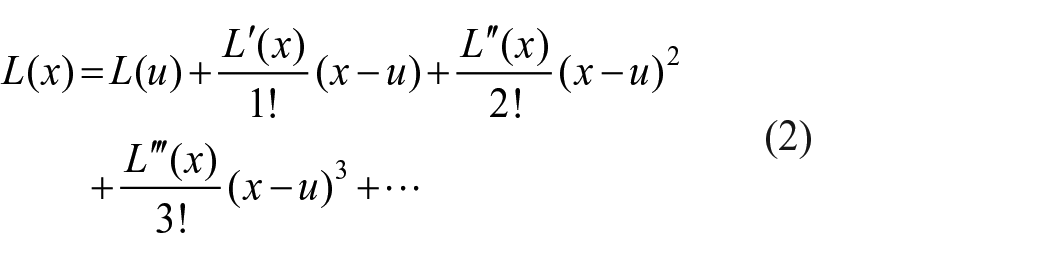
By applying the Taylor expansion (2), the L(x) can be approximated as shown in (3). For apparel products, the probability of the wearer choosing a smaller or larger size varies depending on their preference, wearing purpose, and environment. Accordingly, the loss function was adjusted by splitting the loss coefficient based on the two conditions of selecting a smaller (



The key dimensions of the medical examination clothing sizing system developed in this study were chosen as height and chest circumference, considering that these are the most commonly used key dimensions in the international standards (ISO 8559-2:2017, ISO 8559-3:2018) and the Korean standards (KS K 0050, KS K 0051) for clothing sizing systems, as well as in various commercial medical examination clothing sizing systems. For optimization, anthropometric data of 5082 adults aged 20–60 collected from the eighth Size Korea, a National anthropometric survey conducted in 2020 and 2021, were utilized, after removing outliers. Outliers were defined as values falling below the 25th percentile (Q1) −1.5Interquartile range, or above the 75th percentile (Q3) +1.5Interquartile range, as determined using box plots. 32 The general characteristics of the anthropometric data used for the optimization of the medical examination clothing sizing system are presented in Table 2.
General characteristics of anthropometric data involved in optimization.

The optimization was conducted by applying the loss coefficient ratio derived from the survey results and was performed individually for cases with 1, 2, 3, 4, 5, and 6 sizes. Subsequently, after considering the total loss and the efficiency of production and management for each size scenario, the final number of sizes was determined. The accommodation rate of the developed optimal sizing system was calculated using cross-analysis in the SPSS 26.0 program.
Results and discussion
Medical examination clothing sizing system available in the market
The investigation into the sizing system of medical examination tops available on the market revealed that all 23 analyzed products provided sizes without distinguishing between men and women. This suggests a deliberate choice to offer unified sizes for both genders, rather than precisely catering to the distinct body curves of men and women. This design approach aligns with the nature of medical examination clothing, which is intended to comfortably envelop the wearer’s body with a loose and straight silhouette, rather than adhering closely to the body’s contours. Additionally, all the products exclusively listed product dimensions without any anthropometric measurements. Among the 23 analyzed products, as depicted in Table 3, the majority (60.9%) offered four product dimension items, while five products each provided two or three product dimension items. All products included total length and chest width dimensions, with 17 products also indicating shoulder width and 15 products specifying sleeve length. Additionally, products offering three sizes were the most common, accounting for 52.2% of the sample. Products with one, two, four, and five sizes were found in 2, 3, 2, and 4 products, respectively.
Investigation result of sizing system of medical examination tops available on the market.

The investigation into the sizing system of medical examination bottoms available on the market revealed that all 12 analyzed products provided sizes without distinguishing between men and women, similar to the tops. Additionally, all the products exclusively listed product dimensions without any anthropometric measurements. As shown in Table 4, the majority (50.0%) offered two product dimension items, while 1 product each provided one or three product dimension items. Among the 12 analyzed products, 11 products (91.7%) included total length, and 10 products (83.3%) included hip width as product dimension items. Additionally, products offering three sizes were the most common, accounting for 50.0% of the sample. One product each provided one, two, or four sizes, while three products offered five sizes. In summary, both tops and bottoms of medical examination clothing in the market are predominantly offered in three sizes. However, compared to this, the current sizing system offered by KMI examination centers consists of a total of six sizes, which may indicate that the market products are more efficient in production and management.
Investigation result of sizing system of medical examination bottoms available on the market.

Wearing conditions and size satisfaction of current medical examination clothing
The findings from the FGIs conducted with medical staff indicated significant issues with the existing sizing system of medical examination clothing, particularly concerning aspects such as size label, size intervals, and size range (Table 5). These identified issues raised by the medical staff were further analyzed by connecting them with the results from the examinee surveys.
Commonly identified problems and requirements pointed out by the medical staff.

Size label issue
First, in the FGI with medical staff, it was pointed out that the size labels of medical examination clothing differ from those of everyday clothing. Everyday clothing sizes generally consist of S, M, L, or XS, S, M, L, XL, with the smallest size being S or XS. However, the existing medical examination clothing starts from size M and goes up to 4XL, causing difficulty and confusion in intuitively perceiving the size labels of medical examination clothing. Particularly, medical staff from the examination facilitation department mentioned that when examinees who normally wear XS or S-sized everyday clothing are given size M medical examination clothing, they misunderstand that the examination center did not provide clothing that fits their body. Medical staff emphasized that they have to repeatedly explain that XS or S-sized medical examination clothing is not available, which leads to a decrease in work efficiency.
Regarding this issue, the online survey investigated the sizes of everyday clothing that examinees usually wear and the sizes of medical examination clothing they wore during the examination. The results showed that the majority of examinees who actually wear XS-sized everyday clothing (n = 23) wore size M (n = 23) or L (n = 20) medical examination clothing. Similarly, most examinees who wear S-sized everyday clothing (n = 216) wore size M (n = 90) or L (n = 99) medical examination clothing (Figure 1). Particularly, it was found that the proportion of examinees affected by this size label issue accounts for approximately 14.6% of the total, causing significant confusion among a considerable number of examinees (Table 6). Therefore, to prevent confusion and decreased work efficiency caused by size labels, it is deemed necessary to structure the size labels similar to everyday clothing, as requested by the medical staff.

Relationship between the size of everyday clothing and the size of medical examination clothing of the examinees.
Cross-analysis result of everyday clothing sizes and medical examination clothing sizes.


Highlighted the medical examination clothing sizes that account for more than 20% within each everyday clothing size group.
Size interval and range issues
In addition to the problem with size labels, it was pointed out in the FGI with medical staff that the medical examination clothing does not fit well for examinees with relatively large body sizes, which was attributed to issues in size intervals, and the range. Medical staff mentioned that the size differences between existing 2XL, 3XL, and 4XL sizes of the examination clothing are hardly discernible, and they found the overly detailed size options to be inefficient from a management perspective. Consequently, they requested the integration of the existing large sizes (2XL, 3XL, 4XL) into a single size and suggested increasing the size increments between each size in the final sizing system. Moreover, they raised concerns that even the largest size available, 4XL, frequently does not fit for examinees with larger body sizes, as there has been a notable increase in the proportion of such examinees recently. Therefore, they advocated for consolidating the existing large sizes (2XL, 3XL, 4XL) into a single size and introducing a size larger than 4XL.
In relation to this matter, an online survey was conducted to evaluate the suitability of the examination clothing sizes worn by examinees. The evaluation utilized a 5-point Likert scale for 10 different areas: neck circumference, armhole, sleeve width, sleeve length, robe length, waist circumference, hip circumference, crotch length, pant leg width, and pant length. The results revealed that examinees who typically wear everyday clothing sizes of S, M, L, XL rated the size suitability of the examination clothing worn during the examination as 3.0 (appropriate) ±0.2 points (Figure 2). On the other hand, examinees who wear XS sizes of everyday clothing (n = 46) rated the size suitability of the examination clothing as an average of 3.51 points, indicating it was larger than their own body size. Examinees who wear 2XL, 3XL, and 4XL sizes of everyday clothing (n = 172, 51, 28) rated as averages of 2.62, 2.31, and 2.58 points, respectively, indicating that the examination clothing was smaller than their own body size. Therefore, this discrepancy in sizes was most pronounced among examinees with larger body sizes (everyday clothing sizes 2XL–4XL), as highlighted by medical staff, and was also noted among those with smaller body sizes (everyday clothing size XS). Consequently, it is essential to design a system that offers examination clothing sizes suitable for examinees at both ends of the body size spectrum, particularly for those with larger body sizes.

Size suitability evaluation for medical examination clothing by area.
Development of an optimal sizing system for medical examination clothing
Derivation of loss coefficient ratio
The online survey on size tolerance was conducted to derive the loss coefficient ratio for optimizing the size system through the loss function. The majority of respondents for both tops and bottoms of the examination clothing indicated that they could not tolerate sizes smaller than their original size. However, they could tolerate one size larger, with responses of 41.5% and 41.4%, respectively. Moreover, the average response from all participants regarding size tolerance suggested a willingness to wear examination clothing 0.17 sizes smaller (α) and up to 0.52 sizes larger (β) than their own dimensions. This implies that the tolerance for larger sizes is approximately three times higher than for smaller sizes. Consequently, larger sizes that adequately cover the body are preferred to avoid discomfort and maintain dignity, while smaller sizes that do not provide sufficient coverage are avoided. Additionally, given the necessity for various postures during examinations, larger sizes that offer ample room for comfortable movement are favored.
The loss coefficient ratio was calculated based on the survey results using the formula employed in the studies by Park and Kim
24
and Hong and Choi,
30
which is
Sizing system optimization
The sizing system for medical examination clothing was optimized using the loss coefficient ratio derived from survey results and height and chest circumference data collected from 5082 adults aged 20–60 (2310 males and 2772 females) through the eighth Size Korea project. In the case of limiting the number of sizes to 1, as shown in Figure 3(a), the optimal dimensions were relatively larger compared to the distribution of overall height and chest circumference. This indicates a preference for larger sizes over smaller ones, reflecting a higher tolerance for larger-sized examination clothing. Likewise, when the number of sizes was set to 2, 3, 4, 5, or 6, the optimized dimensions consistently leaned toward larger sizes compared to the distribution of overall height and chest circumference (Figure 3).

Optimization results (Unit: mm): (a) one size (total loss: 38,802), (b) two sizes (total loss: 15,636), (c) three sizes (total loss: 10,936), (d) four sizes (total loss: 8934), (e) five sizes (total loss: 7358), and (f) six sizes (total loss: 6314).
Comparison and analysis of total losses based on the number of sizes revealed a decreasing trend as the number of sizes increased (Figure 4). The reduction in total loss per segment decreased with the increase in the number of sizes. When transitioning from 1 to 2 sizes, there was a significant decrease in total loss. However, from 4 sizes onward, the total loss decreased marginally, maintaining a similar level. In this study, to develop an optimal sizing system for medical examination clothing, we aimed to choose one of the conditions with relatively low total loss: 4, 5, or 6 sizes. If the total loss values were similar, selecting the option with the fewest sizes would be efficient in terms of production and management. Therefore, among the conditions with minimal difference in total loss values (4, 5, or 6 sizes), 4 sizes were selected as the final number of sizes. Additionally, to align with the preferences of medical staff, size labels were set similar to everyday clothing: 2XS-XS, S-M, L-XL, 2XL-3XL.

Changes in total loss with number of sizes.
Boundary construction and overlapping section definition
The setting of optimal size boundary intervals was based on the range classification tables provided for body measurements in the Korean Standards (KS) for adult men’s clothing sizes (KS K 0050) and adult women’s clothing sizes (KS K 0051). For adult men’s clothing sizes (KS K 0050), the chest circumference intervals from L to XL sizes were set at 15 cm, which was then reflected in the examination clothing’s optimal size system for L-XL and 2XL-3XL sizes. On the other hand, for adult women’s clothing sizes (KS K 0051), the chest circumference intervals from S to M sizes were set at 17 cm, which was then applied to the examination clothing’s optimal size system for 2XS-XS and S-M sizes. The height range was chosen as 12–13 cm for men (KS K 0050) and 10 cm for women (KS K 0051), and considering the unisex nature of examination clothing, 13 cm was applied.
The boundaries for each size were determined considering that the allowance for larger-sized examination clothing over smaller-sized clothing was approximately three times higher, as revealed by the survey results. In other words, for a wearer with a demand dimension (body dimension) of

Relationship between the allowable size and the boundary of the optimal dimension.
Optimal dimensions and boundaries of height and chest circumference.

When the results of Table 7 are represented on the height and chest circumference scatter plot of 5082 adults, it results in three overlapping sections, as shown in Figure 6(a). In this study, these overlapping sections were defined as the closest size labels, as depicted in Figure 6(b), ultimately leading to the design of the sizing system as shown in Figure 6(c). For example, a person with a height of 158 cm and a chest circumference of 89 cm, falling within the overlapping sections, would be categorized under the 2XS-XS size.

Development of optimal sizing system for medical examination clothing: (a) optimal dimensions and boundaries applied to eighth size Korea data, (b) size definition of overlapping section, and (c) optimal sizing system of medical examination clothing.
Validation of the developed sizing system
The effectiveness of the developed optimal size system was validated by analyzing the accommodation rate using SPSS 26.0 (Figure 7). The total accommodation rate was 81.9%, with the highest accommodation rate of 32.1% observed for the 2XS-XS size. The accommodation rates for the S-M, L-XL, and 2XL-3XL sizes were calculated as 21.3%, 20.7%, and 8.2%, respectively. Additionally, the 2XS-XS size, with an accommodation rate of 32.1%, was predominantly represented by females, accounting for 31.1% of the total. It was predicted to be a size targeting relatively smaller-bodied females. In contrast, the L-XL size, with an accommodation rate of 20.7%, was mainly represented by males, accounting for 20.0% of the total. The 2XL-3XL size, with an accommodation rate of 8.2%, was entirely represented by males, indicating it would target males. Furthermore, the accommodation rate of 21.3% for the S-M size showed a nearly equal distribution between males (9.7%) and females (11.6%), indicating it would likely be a size suitable for both relatively larger-bodied females and smaller-bodied males.

Accommodation rate of optimal sizing system of medical examination clothing.
We conducted a performance comparison using the concept of accommodation efficiency, as introduced by Yi and Kim 33 and applied in several prior studies.34,35 Accommodation efficiency is calculated as the average accommodation rate per size interval, incorporating both the number of sizes and the overall coverage rate. 33 For this comparison, we reviewed studies employing various approaches to sizing system development. These included Genetic Algorithms and Neural Networks,36,37 Decision Tree Approaches, 38 Clustering, and PCA, 39 and Desirability Optimization. 40 The comparison focused on key metrics such as Accommodation Efficiency, Accommodation Rate (%), and the Number of Sizes reported in each study.
Table 8 presents a comparative analysis of sizing system performance, demonstrating how our optimized system effectively balances fit and efficiency in comparison to existing approaches. The findings revealed that the proposed sizing system achieved the highest accommodation efficiency score of 20.5. In contrast, other sizing system development studies, such as those focusing on military or police uniforms, prioritized high accommodation rates by increasing the number of sizes to provide precise fit for specialized workers, often at the expense of accommodation efficiency. However, given the characteristics of medical examination clothing, where production and management efficiency are more critical than precise fit, this result underscores the effectiveness of the loss function optimization approach used in this study. By strategically limiting the number of sizes through the application of a loss function, the proposed system not only ensures satisfactory accommodation but also enhances the production and management efficiency of medical examination clothing.
Performance comparison with other sizing system development approaches.

Conclusion
This study aimed to enhance the satisfaction of examinees and alleviate the workload of medical staff by constructing an optimal sizing system that considers both fit and production/management efficiency for medical examination clothing. To achieve this, we investigated the sizing systems of existing medical examination clothing available in the market. We also performed FGIs with medical staff and surveyed examinees to assess the current state and satisfaction with medical examination clothing sizes. Furthermore, we developed an optimal sizing system for examination clothing using a loss function and then analyzed the accommodation rate of the proposed optimal sizing system to validate its effectiveness.
Investigation into the sizing systems of available medical examination clothing revealed that both tops (23 products) and bottoms (12 products) are designed as unisex size systems, providing only product dimensions without information on body dimensions. It was also found that both tops and bottoms are typically composed of three sizes. However, in comparison, the sizes of medical examination clothing provided by the current KMI examination center consist of a total of six sizes. This suggests that the current sizing system at the examination center may not be as efficient for production and management compared to the market products.
The sizing system optimization was conducted by applying the loss coefficient ratio of 9.36, calculated from the survey responses and height and chest circumference data of 5082 adults aged 20–60 collected during the eighth Size Korea survey. The optimization was performed for scenarios with 1–6 sizes, resulting in the selection of four sizes. Therefore, the optimal size system was determined as follows: 2XS-XS—Height: 151–164 cm, Chest circumference: 76–93 cm, S-M—Height: 157–170 cm, Chest circumference: 84–101 cm, L-XL—Height: 165–178 cm, Chest circumference: 92–107 cm, 2XL-3XL—Height: 172–185 cm, Chest circumference: 101–116 cm.
The effectiveness of the developed optimal size system was validated by analyzing the accommodation rate, which was found to be 81.9%. The 2XS-XS size was predicted to target smaller-bodied females, while the L-XL and 2XL-3XL sizes were expected to target males. The S-M size, on the other hand, showed a nearly equal distribution between males and females, indicating it would likely be a size suitable for both relatively larger-bodied females and smaller-bodied males.
The significance of this study lies in the development of a sizing system for medical examination clothing optimized for the body types of Korean examinees, thereby improving the satisfaction with wearing examination clothing. Particularly, by addressing the issues pointed out in the sizing system of the existing examination clothing, such as confusion caused by sizing designations that do not correspond to everyday clothing sizes and inappropriate size ranges, we aimed to enhance the service quality of the examination center. Additionally, while the sizing of the existing KMI examination clothing consisted of six sizes, which was inefficient in terms of production and management, the size system developed in this study is composed of a total of four sizes, reducing production costs for the examination center and improving the efficiency of management by medical staff. This study proposes an optimal sizing system that ensures a high accommodation rate of 81.9% while being efficient in terms of production and management, thereby addressing the issues related to examination clothing sizes.
In addition to optimizing the sizing system, this study highlights the importance of balancing fit optimization, examination efficiency, and national anthropometric data in medical examination clothing design. While reducing the number of sizes improves production and management efficiency, it is also essential to maintain appropriate size ranges to support smooth examination procedures. This study effectively adjusted size distributions by applying a loss function optimization approach, enhancing both wearer comfort and operational efficiency and demonstrating its practical applicability in medical settings.
However, while this study presents a refined sizing system for medical examination clothing, it has areas for further exploration. It focuses on Korean examinees, which may limit applicability to other populations. Large-scale wear trials with diverse users could further validate its fit and comfort. Future research should also address production, distribution, and inventory challenges to ensure seamless implementation in medical facilities.
Footnotes

Ethical Considerations
This study was approved by Seoul National University Institutional Review Board (IRB No. 2309/003-001).
Funding
The author(s) disclosed receipt of the following financial support for the research, authorship, and/or publication of this article: This work was supported by the Korea Medical Institute (KMI; No. 350-20230072), and the Korea Institute for Advancement of Technology (KIAT) grant funded by the Korea Government (MOTIE; P0012770, Professional Human Resources Training Project).
Declaration of conflicting interests
The author(s) declared no potential conflicts of interest with respect to the research, authorship, and/or publication of this article.