



Abstract
This study aimed to develop and evaluate a user-centered redesign of medical examination clothing that enhances both patient comfort and clinical efficiency by addressing the needs of both examinees and medical professionals. Traditional medical examination garments often cause discomfort and psychological stress, as they tend to expose sensitive body areas, leading to feelings of vulnerability and embarrassment. To address these issues, feedback was gathered from examinees and medical professionals using a mixed-method approach. An online survey of 1800 examinees and focus group interviews with 13 medical professionals were conducted to identify design requirements. Based on this input, prototype garments were developed. The evaluation process included assessing the overlap length in colonoscopy pants, conducting a wear test with 15 participants, and demonstrating the new designs to 5 medical professionals. The redesigned clothing significantly improved patient comfort during key stages of the medical process—such as walking, using the restroom, and undergoing examinations—while reducing anxiety related to body exposure. Both examinees and medical professionals reported higher levels of satisfaction with the new garments. This study highlights the effectiveness of a user-centered approach in redesigning medical clothing, showing that thoughtful, feedback-driven designs can enhance patient experiences and streamline clinical procedures. The redesign offers practical benefits for medical examination centers, potentially improving patient satisfaction, reducing anxiety, and increasing procedural efficiency for medical staff.
Keywords
Introduction
Periodic medical examinations play a crucial role in disease prevention and early detection. 1 Particularly, as the issue of population aging accelerates, concerns about various diseases, such as chronic illnesses and cancer, have increased, highlighting the importance of medical screenings.2,3 In response, the National Health Insurance Corporation of South Korea implements life-cycle health checkup programs, offering screenings to individuals across all age groups, from infants to adults and the elderly. These programs have proven effective in reducing complications from chronic diseases, lowering medical costs, and decreasing mortality rates.4,5 Furthermore, participating in health screenings can encourage positive health behaviors, leading to lifestyle changes, making it a highly recommended essential activity.6–8
However, several factors have been reported to hinder participation in medical examinations, including inconvenient procedures, embarrassment, complex preparation processes, and negative past medical experiences. 9 These factors are often closely tied to the examination gowns used during screenings. Studies on hospital gowns show that patients’ feelings of helplessness and shame are exacerbated by their attire in the hospital environment.10–14 Hospital gowns, which often expose significant parts of the body, can reduce patients’ self-esteem, induce anxiety, and cause embarrassment, 15 with research indicating a particularly profound impact on female patients.16–18 For female examinees, situations where wearing underwear is prohibited during the screening process often increase anxiety and threaten their sense of dignity.
Recognizing these issues, various efforts have been made to improve hospital gowns. Hospital gowns interact with more than one user group, including patients who wear them, medical staff who need easy access to the patient’s body, and hospital employees responsible for laundry and maintenance. As such, previous research on improving hospital gowns has emphasized a multi-faceted approach that considers the diverse needs of patients, medical staff, and hospital employees. Studies by Cho, 19 Black and Torlei, 20 Gordon and Guttmann, 21 and Arunachalam and D’Souza 22 designed and evaluated patient gowns by reflecting the needs of both patients and hospital systems through a user-centered design approach. Additionally, Hawkins et al. 23 developed therapeutic garments for hospitalized children by incorporating feedback from patients, parents, and medical staff, while Hwang et al. 24 designed hospital gowns for pregnant women based on input from expectant mothers and healthcare providers.
However, these studies have primarily focused on gowns for hospitalized patients, and research on examination clothing specifically used for health screenings remains relatively scarce. The examination clothing used in most health screening centers today typically consists of a top and bottom. To enhance the efficiency of medical examinations, the tops are designed in a robe style that can be easily removed for upper body examinations, while the bottoms often feature an opening at the back to facilitate colonoscopy procedures. This design carries a higher risk of exposing sensitive body areas compared to everyday clothing, potentially leading to heightened feelings of embarrassment for the examinee. 25 Nevertheless, its use remains necessary to facilitate efficient and seamless examinations by medical professionals. Therefore, optimizing the design of examination clothing is crucial to reconcile the conflicting needs of both examinees and healthcare providers.
This study aimed to develop and evaluate a new type of examination clothing by systematically identifying the needs of various user groups involved in the medical examination process. To achieve this, focus group interviews and surveys were conducted with examinees, medical staff, and hospital employees to derive comprehensive design requirements. These insights were utilized to inform the development of a user-centered examination gown. Furthermore, a comparative analysis was conducted between the newly designed gown and the existing one to assess the effectiveness and improvements offered by the proposed design.
Methods
This study was conducted in two phases: the Investigation and Design Phase and the Evaluation Phase (Table 1). During the Investigation and Design Phase, data were collected through an online survey targeting examinees (Sections 2.1.1 and 3.1.1) and focus group interviews (FGIs) with medical professionals and staff (Sections 2.1.2 and 3.1.2). These methods were employed to gather insights and requirements from both user groups. In the Evaluation Phase, wear tests were conducted with examinees to compare the existing and newly developed examination clothing (Sections 2.2.2 and 3.3.2). Feedback on the colonoscopy pants opening was collected from medical professionals involved in colonoscopy examinations (Sections 2.2.1 and 3.3.1). Additionally, opinions were gathered from medical professionals and staff on demonstrations of the four types of developed examination clothing (Sections 2.2.3 and 3.3.3).
Contents of the two research phases.

This iterative approach ensured that both user groups were comprehensively considered throughout the research process, culminating in the creation of four specialized types of examination clothing.
All experimental procedures in this study were approved by the Institutional Review Board at Seoul National University (IRB No. 2309/003-001). Informed consent was obtained from each participant.
Investigation of design requirements for the development of medical examination clothing
Online survey with examinees
This study employed two methods to investigate the current usage of existing medical examination clothing and to identify the design requirements for developing new examination clothing from both the examinees’ and medical professionals’ perspectives. First, an online survey was conducted with examinees, while a focus group interview (FGI) was carried out with medical professionals and staff.
The online survey was conducted from August 18 to 27, 2023, targeting 1800 examinees (940 females, 860 males) who had undergone medical examinations at eight Korea Medical Institute (KMI) centers across the country. The survey questions focused on key design elements of the existing KMI examination clothing, such as the neckline and closure method of the upper garment, and the opening in the lower garment used for colonoscopy. It also explored the design features that respondents hoped to see incorporated into the new examination clothing. The survey was designed in an online format, allowing examinees to respond via smartphone in real-time while wearing the examination clothing during their checkups. The collected data were analyzed using descriptive statistics and frequency analysis with SPSS 26.0.
Focus group interviews with medical professionals and staff
The FGI with medical professionals and staff involved the demonstration of 44 different examination procedures performed at KMI examination centers, allowing for the detailed observation of interactions between examinees, medical professionals, and the examination clothing. Design improvement needs were discussed throughout the process. Thirteen medical professionals and staff from various examination fields, including basic testing, blood tests, MRI, ultrasound, endoscopy, and biopsy, participated in the FGI, providing comprehensive feedback. Special emphasis was placed on gathering in-depth feedback from the department responsible for managing patient concerns, examination clothing distribution, and maintenance.
Design implementation and prototype fabrication
Based on the design requirements identified through the examinee survey and focus group interviews with medical professionals, an ergonomically optimized design for medical examination clothing was developed and proposed.
The prototype was constructed using 20-count cotton calico, selected for its combination of softness and structural stability. As the garment is designed to be worn directly against the skin, the fabric was required to be non-irritating while also offering sufficient thickness and firmness to effectively obscure the wearer’s body contours. Although practical applications of medical examination garments typically demand functional properties such as antibacterial efficacy, stain resistance, and laundering durability, these aspects were not incorporated in the current stage of development. Instead, cotton calico was chosen for its ability to provide wearer comfort, adequate coverage, and physical characteristics closely aligned with those of materials intended for eventual product implementation.
Evaluation of the developed medical examination clothing
Evaluation of the developed colonoscopy pants opening and selection of optimal overlap
To evaluate the opening design of the developed colonoscopy pants and to determine the optimal overlap length, an assessment was conducted with five medical professionals responsible for colonoscopy examinations. The professionals evaluated the examination suitability of the existing colonoscopy lower garment and the newly developed garments with overlap lengths of 10, 15, 20, and 25 cm, using a 7-point Likert scale. They were also invited to freely provide additional comments. The evaluation questions focused on three key aspects of ensuring the smooth conduct of colonoscopy examinations.
Evaluation of developed examination clothing through wear test with examinees
To assess the satisfaction with the developed examination clothing from the examinees’ perspective, 15 participants (7 males, 8 females) were recruited. They were asked to wear four different sets of examination clothing: the existing general examination upper and lower garments (Test Garment 1), the newly developed general examination upper and lower garments (Test Garment 2), the existing colonoscopy upper and lower garments (Test Garment 3), and the newly developed colonoscopy upper and lower garments (Test Garment 4). The participants then completed a series of evaluation protocols, including dressing, walking, using the restroom, undergoing examinations, and undressing, and rated their satisfaction with both comfort and appearance at each stage using a 7-point Likert scale. The results were analyzed using Wilcoxon Matched-Pairs Signed-Ranks Test in SPSS 29.0 to compare the existing and developed examination clothing.
Opinions of medical professionals on the demonstration of examination clothing
To evaluate the suitability of the developed examination clothing from the perspective of medical professionals, five recruited medical professionals re-enacted actual medical examination procedures with an examinee wearing newly developed examination clothing. A focus group interview (FGI) was then conducted, allowing the professionals to freely discuss whether the newly developed clothing was appropriately designed for conducting medical examinations. The demonstration included seven examination types, selected for their frequent interaction with the examination clothing: blood tests, blood pressure tests, electrocardiograms, arterial stiffness tests, ultrasounds, gastrointestinal radiography, and colonoscopy.
Results and discussion
Findings from the design requirements investigation
Online survey with examinees
The average age of the examinees who participated in the online survey was 39.7 years for men and 43.8 years for women, as shown in Table 2.
Age distribution of survey respondents.

First, regarding the depth of the neckline in the existing examination clothing top, 61.4% of respondents (1106 individuals) answered that it was “adequate,” while 34.2% (615 individuals) expressed concern that the neckline was “too deep and could result in exposure” (Table 3(a)). This issue is likely due to the design of the current examination top, which, like a bathrobe, overlaps the front panels and ties with a belt around the waist. While a properly fastened garment can create an appropriate neckline, failure to do so may result in an excessively open neckline.
Examinee feedback on existing examination clothing.
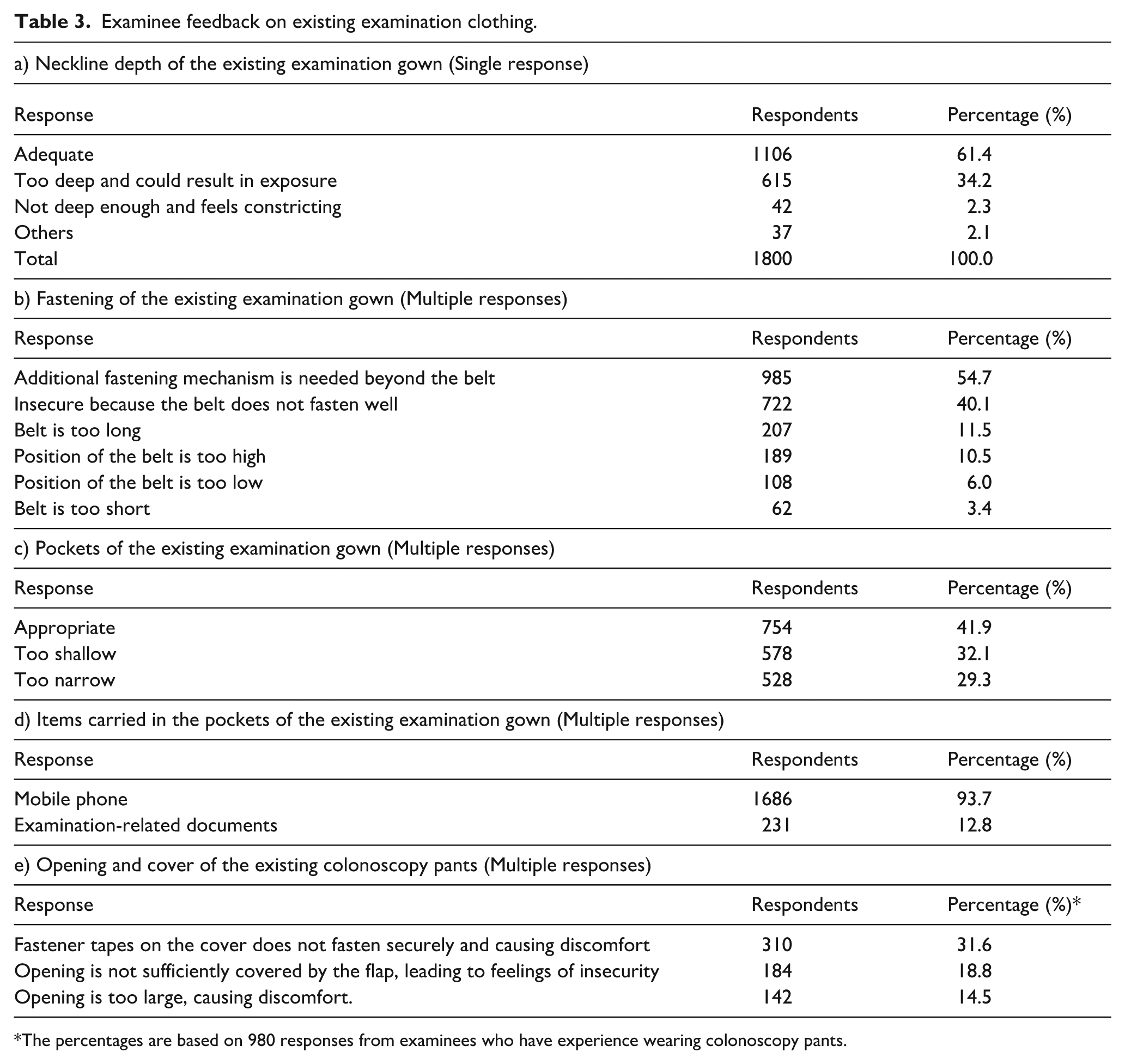
The percentages are based on 980 responses from examinees who have experience wearing colonoscopy pants.
In the survey on the fastening method of the top, 54.7% of respondents (985 individuals) indicated that “an additional fastening mechanism is needed beyond the belt,” and 40.1% (722 individuals) felt “insecure because the belt does not fasten well” (Table 3(b)). This may be due to the fastener tapes on the current garment deteriorating after repeated washing, causing them to lose their grip, and the belt position at the waist, leading to gaping around the chest area.
Regarding the size of the pockets in the top, 41.9% (754 individuals) responded that the pocket size was “adequate,” but 32.1% (578 individuals) found the pockets “too shallow,” and 29.3% (528 individuals) said they were “too narrow” (Table 3(c)). The most frequently mentioned items stored in the pockets were mobile phones (1686 respondents, 93.7%) and examination-related documents (231 respondents, 12.8%; Table 3(d)). These findings suggest that the perception of pocket adequacy varies based on the size of the mobile phones used by the examinees. Therefore, it is recommended to design pockets based on the dimensions of the largest mobile phones available on the market to accommodate a wide range of devices.
Additionally, open-ended responses regarding dissatisfaction with the current top highlighted issues such as “the silhouette of women’s breasts and nipples is visible, causing embarrassment,” “for overweight individuals, tying the belt emphasizes the waistline, which is uncomfortable,” and “the belt around the waist makes it uncomfortable to raise arms during the examination.”
In the evaluation of the opening and cover of the existing colonoscopy lower garment, 31.6% (310 respondents) indicated that “the fastener tapes on the cover does not fasten securely, causing discomfort,” and 18.8% (184 respondents) stated that “the opening is too large and not sufficiently covered by the flap, leading to feelings of insecurity” (Table 3(e)). Additional open-ended responses about the discomfort of the current colonoscopy garment included concerns such as “the flap becomes displaced, exposing the body when sitting or lying down for the examination,” “the crotch area is exposed from the front when sitting,” “the flap falls into the toilet when using the restroom,” and “the flap is visible under the gown, causing embarrassment.”
The survey on examinees’ preferences for the neckline of examination clothing revealed that 57.1% (1028 respondents) preferred a V-neck, 30.3% (545 respondents) favored a round neck, and 12.1% (218 respondents) chose a shawl collar, indicating that the V-neck style was the most preferred (Table 4(a)). Additionally, in terms of sleeve length preference, 62.2% (1119 respondents) preferred three-quarter sleeves, 19.5% (351 respondents) preferred short sleeves, and 17.7% (319 respondents) favored long sleeves, with three-quarter sleeves being the most popular (Table 4(b)). The main reasons for preferring three-quarter sleeves were that they are “easier to roll up during examinations” and “provide a sense of security.”
Examinee preferences for examination clothing design.
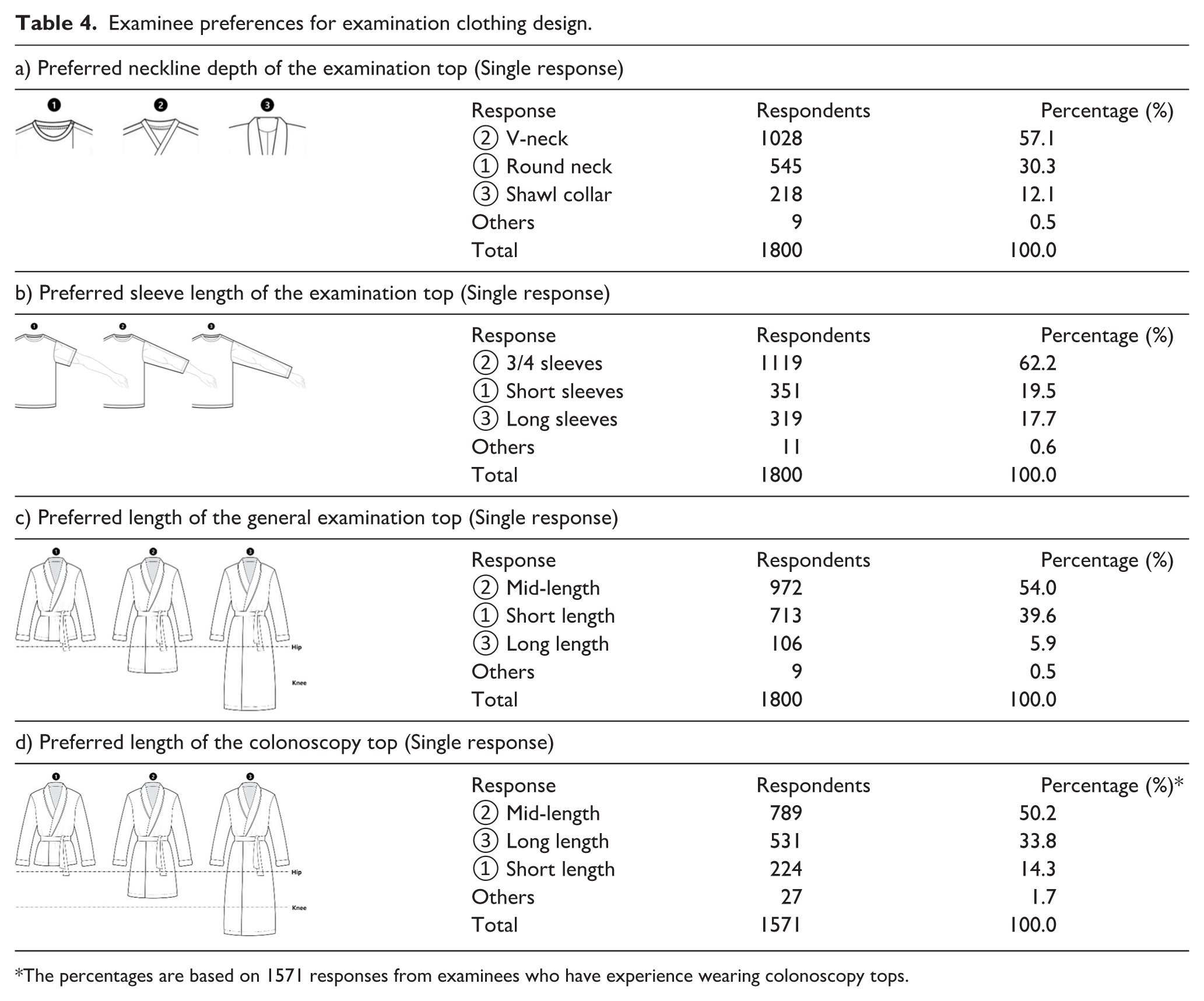
The percentages are based on 1571 responses from examinees who have experience wearing colonoscopy tops.
Regarding the length of the top for both general examinations and colonoscopy examinations, the survey showed that a mid-length top, which covers the hips, was the most preferred for both types (Table 4(c) and (d)). As a result, it is suggested that developing a unified design for both general examination and colonoscopy tops, rather than separate designs, could enhance both examinee satisfaction and production efficiency.
Focus group interviews with medical professionals and staff
During the focus group interviews with medical professionals and staff, all 44 examination procedures performed at the health screening center were demonstrated sequentially (Figure 1). This allowed for close observation of the interactions between examinees, medical professionals, and the examination clothing throughout each procedure, followed by in-depth discussions regarding the design characteristics required for the examination clothing in each specific context (Figure 2). As a result, the design requirements collected from the FGIs were refined into specific elements, including the neckline, sleeves, fastening, and length of the general examination top, the fastening and length of the colonoscopy top, the length and waistband of the general examination pants, and the opening and cover of the colonoscopy pants (Table 5).

Medical examination demonstration.
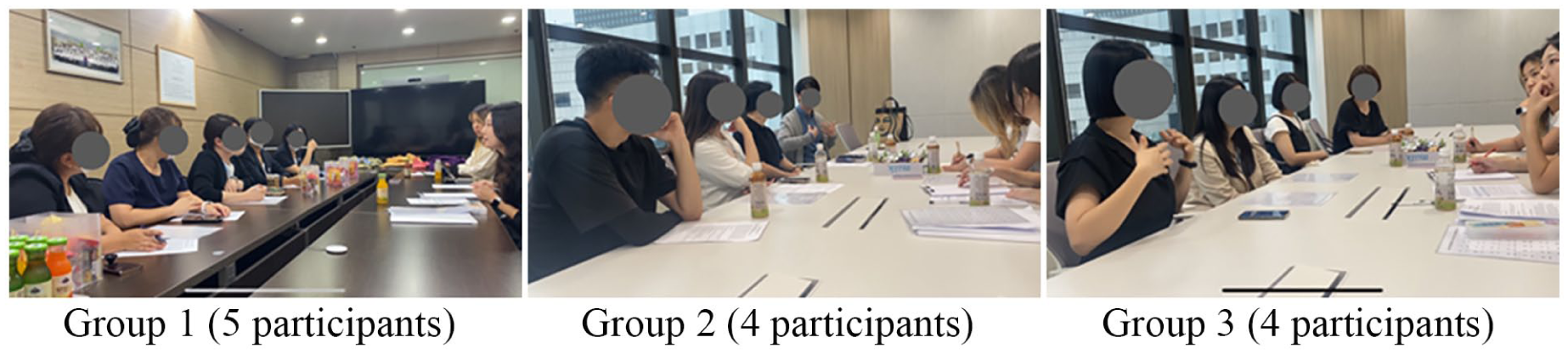
Focus group interviews with medical professionals. Group 1 (5 participants). Group 2 (4 participants). Group 3 (4 participants).
Design requirements for each examination clothing item derived from FGIs with medical professionals and staff.

Examination clothing design suggestions
Based on the findings from the examinee survey and the FGIs with medical professionals, this study proposed an ergonomically optimized design for examination clothing. First, to enhance user satisfaction and improve efficiency in clothing management, a unified design was developed that integrates both general examination and colonoscopy examination gowns. After considering the design requirements from both examinees and medical professionals, three gown design prototypes were developed. The research team then conducted a comprehensive evaluation of the designs based on the extent to which they met the requirements, production complexity, cost, and ease of maintenance. Ultimately, Design 1 was selected (Figure 3).

Design proposal for the developed examination gown.
Design 1 does not involve fastening around the entire waist, thereby avoiding pressure on the examinee’s abdomen, which contributes to greater comfort. It also does not emphasize the waistline, which is expected to increase examinee satisfaction. Moreover, unlike Designs 2 and 3, it is anticipated that Design 1 will not experience issues with the collar warping or folding after repeated laundering, making it more manageable from the perspective of medical professionals and staff.
In this project, instead of simply unifying the two existing types of gowns, we additionally proposed a t-shirt-style examination top that meets the design requirements of both examinees and medical professionals. This t-shirt features a panel design under the bust that separates horizontally, allowing easy access to the abdomen and chest without the need for full undressing (Figure 4). The panels are designed to overlap sufficiently at the bustline to prevent body exposure during regular wear. Moreover, to avoid revealing the silhouette of the breasts and nipples, particularly for female examinees, the edges of the panels are positioned outward from the nipple area, ensuring that two layers of fabric cover the nipples. The neckline is designed as a high V-neck to minimize concerns about exposure, while a slit down to the bustline ensures ease of wear and removal.
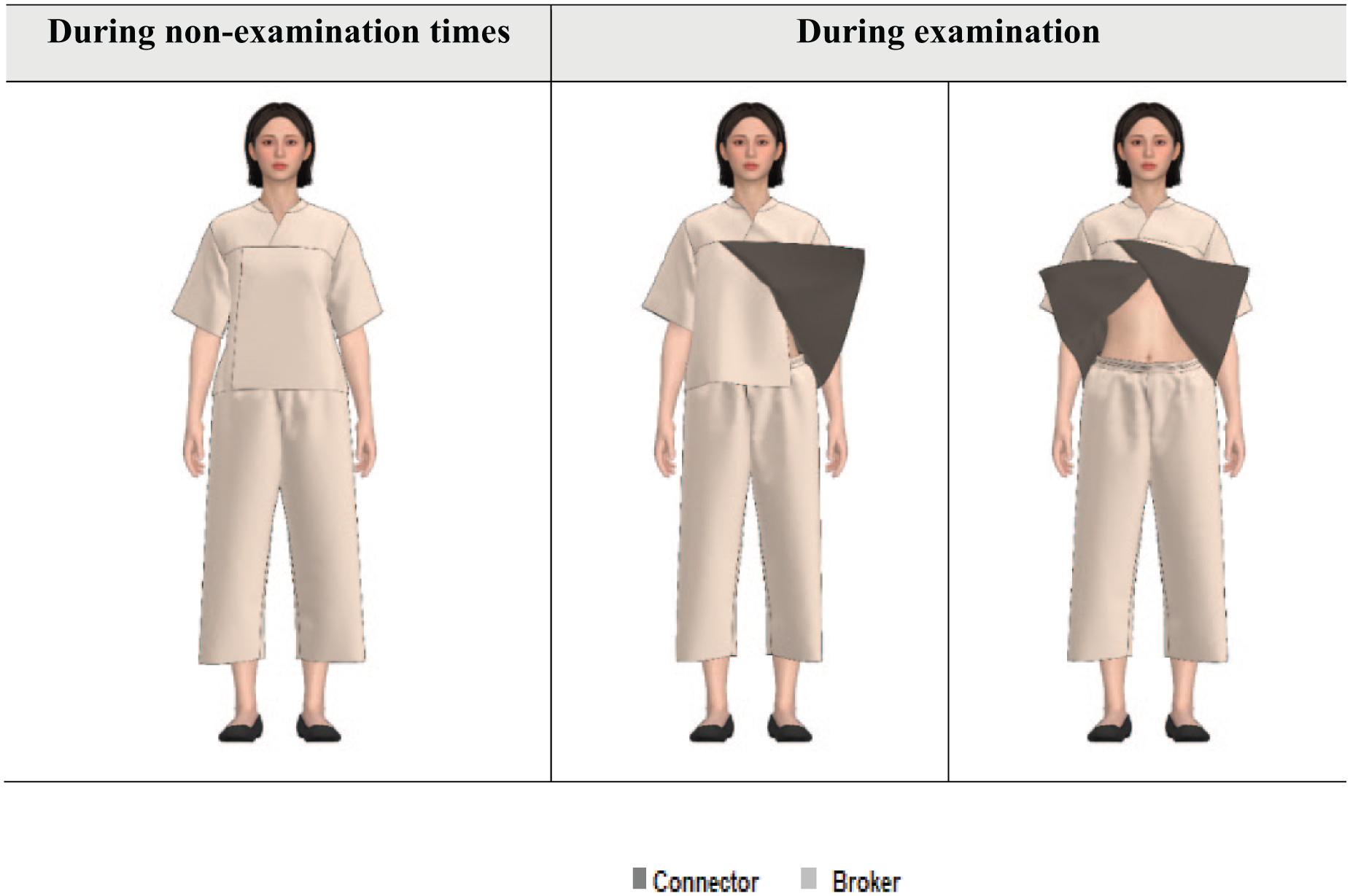
Design of the developed examination t-shirt (Appearance during non-examination and examination times).
The design of the general examination pants was retained in the pajama style with an elastic waistband, as satisfaction with the existing pants was high. However, for the colonoscopy pants, a new opening design was developed based on the general examination pants, incorporating the design requirements of both examinees and medical professionals. The opening was designed so that the two panels overlap at the center back, ensuring that the opening remains concealed during non-examination times. During the examination, when the examinee assumes a crouched position, hugging their knees, the skin around the hip area stretches, causing the opening to naturally part (Figures 5 and 6).

Design of the developed general examination pants and colonoscopy pants.

Opening design of the developed colonoscopy pants.
The final designs for the examination gown, t-shirt, and colonoscopy pants, along with the design requirements from both examinees and medical professionals that were reflected in each, are shown in Figures 7 to 9.

Requirements of examinees and medical professionals reflected in the developed examination gown.

Requirements of examinees and medical professionals reflected in the developed examination t-shirt.

Requirements of examinees and medical professionals reflected in the developed colonoscopy pants.
Evaluation of the developed examination clothing
Evaluation of the developed colonoscopy pants opening and seection of optimal overlap
To evaluate the opening design in the colonoscopy pants and determine the optimal overlap length, a comparative assessment was conducted between the developed colonoscopy pants with overlap lengths of 10, 15, 20, and 25 cm, and the existing colonoscopy pants. The medical professionals involved in the evaluation were shown the back view of examinee in a standing position as well as their examination posture while wearing each type of pants (Table 6). They were asked to evaluate on a 7-point Likert scale (1 = strongly disagree, 7 = strongly agree) whether: the opening is appropriately designed to allow for proper insertion of examination instruments into the anus, the position of the opening is suitable regardless of anal type, and the size of the opening is appropriate for various anal types.
Appearance of the existing colonoscopy pants and the developed colonoscopy pants.

The position of the participant’s anus was marked with a yellow sticker.
The results of the evaluation, conducted by five medical professionals responsible for colonoscopy examinations, showed that both the existing colonoscopy pants and the developed pants with a 10 cm overlap length received the same score of 71 points (Table 7). This indicates that the developed colonoscopy pants offered a similar level of examination suitability and ease of use while improving examinee satisfaction. Consequently, the optimal overlap length for the developed colonoscopy pants was determined to be 10 cm, and this design was subsequently used in the examinee wear test and the medical professional examination demonstration evaluation.
Evaluation results of the existing and developed colonoscopy pants by five colonoscopy medical professionals.

Evaluation of the developed examination clothing through a wear test with examinees
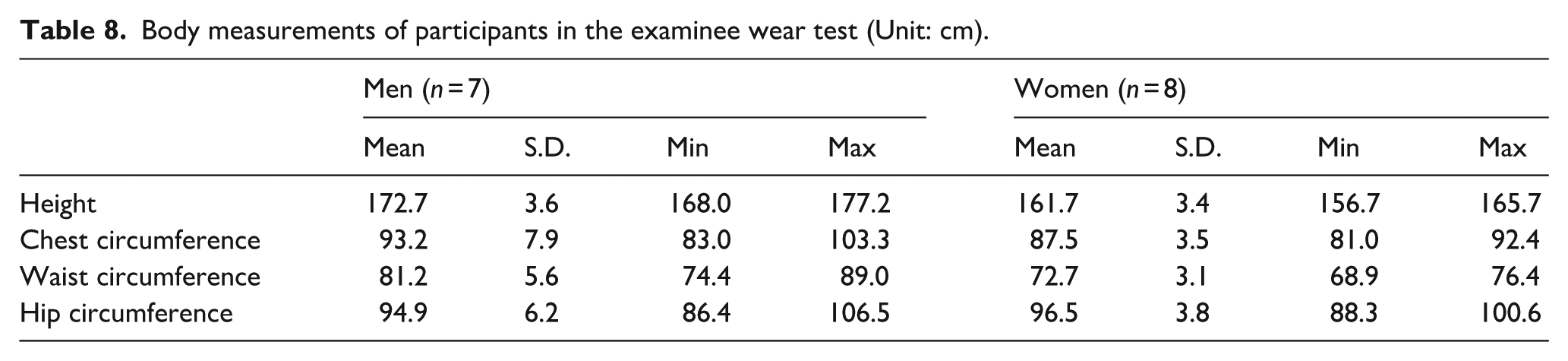
The evaluation of the developed examination clothing through a wear test was conducted with seven healthy male and eight healthy female participants. The body measurements of the recruited participants are shown in Table 8. The evaluation questions were adapted from the study by Cho 19 on hospital clothing development and Hwang et al. 24 on maternity hospital clothing development, with additional items specifically designed to assess the unique performance requirements of the examination clothing identified during the preliminary research phase of this study. Based on this, the wear test evaluation consisted of 38 items in total: 5 items related to comfort, 6 items related to walking, 2 items related to restroom use, 18 items related to the examination process, 3 items related to undressing, and 4 items related to design satisfaction (Table 9).
Body measurements of participants in the examinee wear test (Unit: cm).
Question design for the evaluation of the developed examination clothing.

To eliminate order effects, the participants were asked to wear the existing general examination top and bottom (Test Garment 1), the developed t-shirt and developed general examination pants (Test Garment 2), the existing colonoscopy top and bottom (Test Garment 3), and the developed gown and developed colonoscopy pants (Test Garment 4) in a random sequence (Table 10). After each wearing scenario, the participants performed tasks such as dressing, walking, using the restroom, assuming the examination posture, and undressing, and then rated their agreement with each evaluation item using a 7-point Likert scale.
Appearance of the test garments worn during the examinee wear test.

A comparative analysis of wearer evaluations was conducted using Wilcoxon Matched-Pairs Signed-Ranks Test in SPSS 29.0 for the existing general examination top and bottom (Test Garment 1) and the developed t-shirt and general examination pants (Test Garment 2), which were designed for use in general examinations excluding colonoscopy (Table 11). The results indicated that the developed t-shirt provided statistically significant improvements in comfort compared to the existing top when walking, using the restroom, lying on one’s side, and exposing the abdomen. Furthermore, significant improvements were observed in reducing upper body exposure and the associated anxiety during walking, lying down, lying on one’s side, and raising the arms. Satisfaction with the design of both the top and bottom, as well as the willingness to wear the top, also significantly increased, confirming a higher overall level of satisfaction.
Results of the Wilcoxon matched-pairs signed-ranks test for the existing general examination clothing and the developed general examination clothing.


Items that showed statistically significant improvement are highlighted with shading.
Based on negative ranks.
Based on positive ranks.
Total negative rank = Total positive rank.
p < .05, **p < .01, ***p < .001.
Similarly, a Wilcoxon Matched-Pairs Signed-Ranks Test in SPSS 29.0 was conducted to compare wearer evaluations of the existing colonoscopy top and bottom (Test Garment 3), with the developed gown and colonoscopy pants (Test Garment 4), designed for colonoscopy examinations (Table 12). The analysis showed that the developed gown and colonoscopy pants significantly improved comfort during using the restroom, and exposing the abdomen compared to the existing examination clothing. Additionally, significant improvements were found in reducing upper body exposure and the associated anxiety during walking, lying on one’s side, raising the arms, and exposing the abdomen. Satisfaction with the design of both the top and bottom, as well as the willingness to wear them, also significantly increased, indicating a higher overall satisfaction with the developed garments.
Results of the Wilcoxon matched-pairs signed-ranks test for the existing colonoscopy examination clothing and the developed colonoscopy examination clothing.

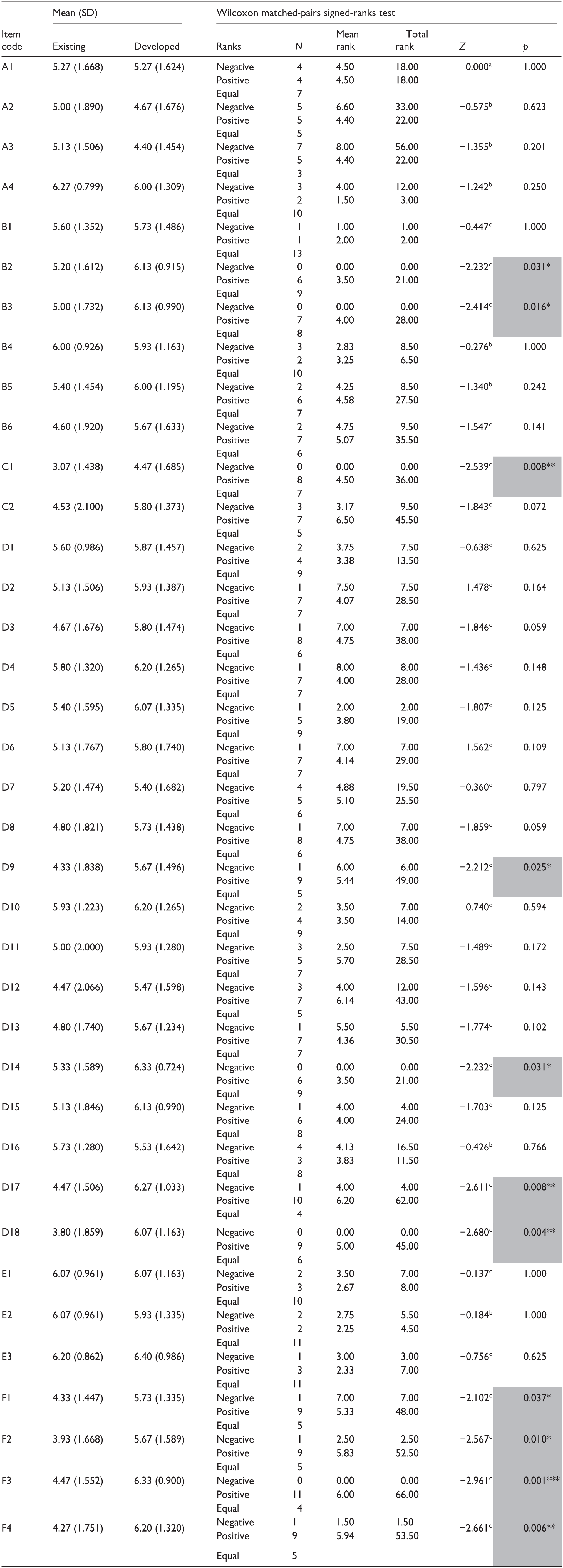
Items that showed statistically significant improvement are highlighted with shading.
Total negative rank = Total positive rank.
Based on negative ranks.
Based on positive ranks.
p < .05, **p < .01, ***p < .001.
Opinions of medical professionals on the demonstration of examination clothing
In this study, the suitability of the developed examination clothing for medical procedures was assessed by having medical professionals perform a demonstration of the examination process while wearing the developed clothing samples, and then freely share their opinions (Table 13). The demonstration focused on procedures with frequent interactions with examination clothing, as identified in the FGIs with Medical Professionals. These procedures included blood tests, blood pressure tests, electrocardiograms, arterial stiffness tests, ultrasounds, gastrointestinal radiography, and colonoscopy.
Medical examination demonstration of the developed examination clothing.
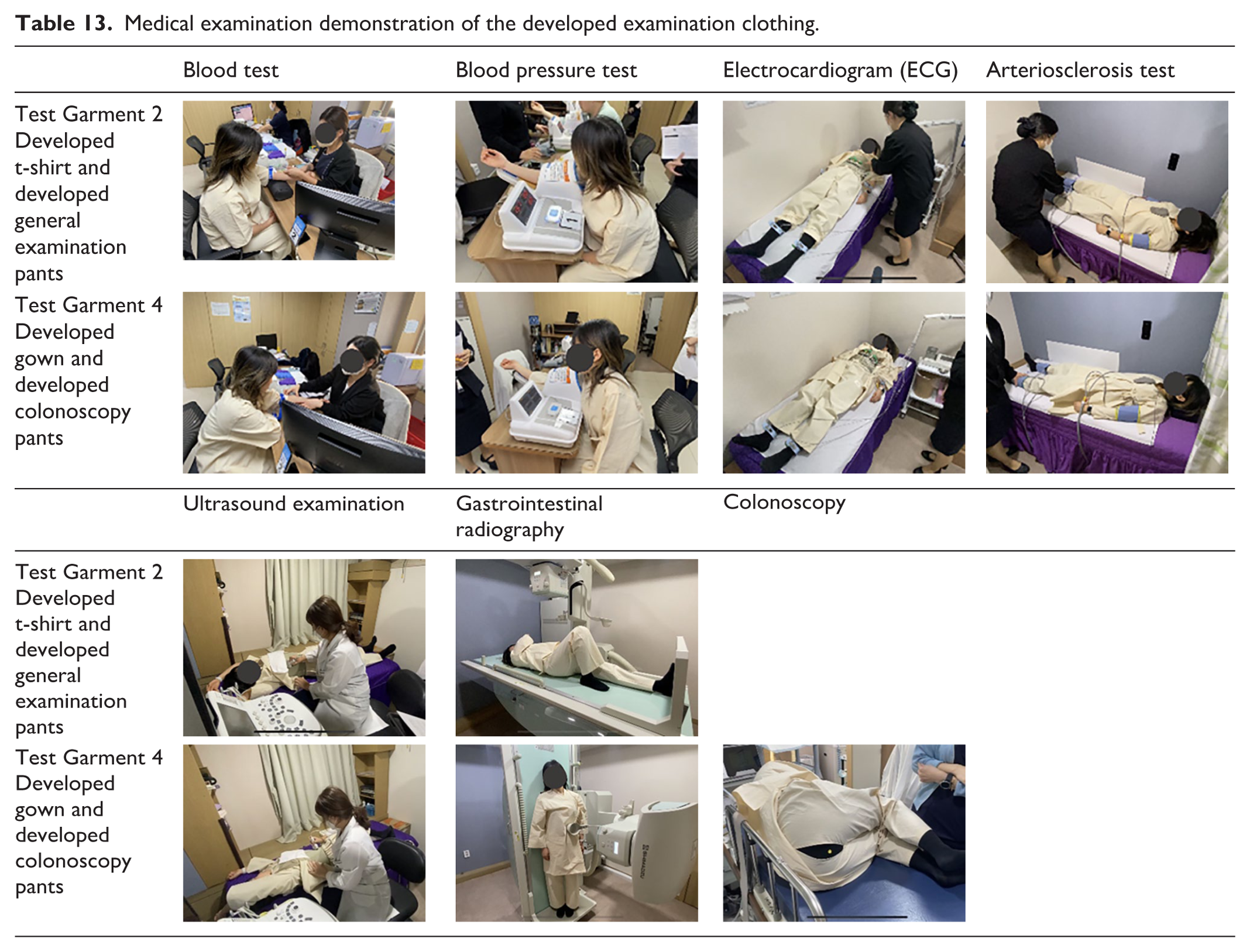
The demonstration results showed that the integrated design combining the existing general examination gown and the colonoscopy gown received positive feedback in terms of management efficiency. Additionally, the change in the fastening position from the waistline in the existing gown to the chest line in the developed gown was well-received, as it allowed for ultrasound imaging without untying the belt and ensured that the knot did not obstruct the cone during gastrointestinal radiography.
The developed t-shirt also received positive responses, as it enabled ultrasound imaging without the need to untie a belt and did not interfere with the procedure during gastrointestinal radiography. In particular, it was highly praised for allowing female examinees to expose the abdomen without the anxiety of breast exposure. Furthermore, the developed colonoscopy pants were positively evaluated for preventing body exposure while sitting or lying down during other examinations besides colonoscopy.
Application of user-centered development and evaluation methods
This study incorporated the perspectives of actual users—medical professionals, staff, and examinees—at every stage of the development and evaluation process for user-centered medical examination clothing. Based on real clinical settings, the goal was to simultaneously improve garment functionality and user satisfaction through an integrated, practical approach.
In the development phase, the study significantly expanded both the scale and diversity of the user base compared to prior research. While earlier studies typically relied on qualitative interviews with small samples of 2–15 participants (Table 14), this study conducted a large-scale online survey involving 1800 examinees. This enabled the collection of design requirements grounded in quantitative evidence, increasing both the depth and reliability of user insights.
Comparison of development and evaluation methods applied in studies on hospital and examination clothing.

For evaluation, three complementary experiments were conducted to comprehensively assess usability. Most notably, medical professionals performed actual examinations on examinees wearing the developed garments, followed by a focus group interview (FGI) to discuss the garments’ functionality and areas for improvement. This approach goes beyond the conventional patient-centered wear tests commonly found in previous studies, providing practical validation based on healthcare providers’ real-world experiences.
Through this combination of large-scale user needs analysis, strengthened quantitative evaluation, and context-based validation in actual medical environments, this study offers a distinctive and practical model for user-centered design of medical examination clothing.
Conclusion
This study aimed to develop a user-centered medical examination clothing that addresses the needs of both examinees and medical professionals by improving the design of examination clothing, and to validate its effectiveness. Existing examination clothing has been criticized for causing discomfort and psychological burden for examinees, potentially leading to a negative impact on health screening participation rates. To address these issues, this study designed new examination clothing by comprehensively incorporating the opinions of various stakeholders, including examinees, medical professionals, and hospital staff, and evaluated its suitability for medical examinations.
In the first stage of the study, surveys were conducted with examinees and focus group interviews were held with medical professionals and staff to identify problems with existing examination clothing and gather improvement requirements. The survey results showed that examinees felt anxious about exposure due to the inadequate fastening of the existing tops and were uncomfortable with the insufficient coverage provided by the opening flap of the colonoscopy pants. Medical professionals suggested that elements such as the neckline, sleeve length, fastening position, and the opening and length of the pants need to be designed to accommodate the examination procedures and equipment usage. Based on these findings, a new examination clothing design was proposed, taking into account both the protection of the examinee’s body and the efficiency of the medical examination.
The developed examination clothing consists of two types of tops (an examination gown and an examination t-shirt) and two types of pants (general examination pants and colonoscopy pants). The examination gown’s fastening was moved to the chest line to reduce the anxiety examinees feel about chest exposure, and an additional t-shirt option was developed. The opening in the colonoscopy pants was redesigned to alleviate concerns about exposure while ensuring smooth colonoscopy procedures. Through experimentation, the optimal overlap length for the opening was determined, allowing for sufficient coverage of the examinee’s body while maintaining the efficiency of the examination for medical professionals.
The developed examination clothing received higher evaluations from both examinees and medical professionals compared to the existing clothing. The results of the wear test with examinees indicated that the design of the tops and bottoms provided comfort and reduced body exposure and the associated anxiety. Female examinees, in particular, reported a significant reduction in psychological burden, as they were able to easily expose their abdomen without exposing their bust during examinations. The redesigned colonoscopy pants were also positively evaluated for minimizing body exposure and improving comfort during activities such as walking and using the restroom.
The medical professionals’ opinions on the examination demonstration also indicated that the new examination clothing was more suitable for medical procedures compared to the existing clothing. The new design simplified the process of dressing and undressing during the examination, saving time, and was structured to avoid interfering with the examination itself, significantly enhancing the efficiency of the medical professionals’ work. In particular, the improved fastening of the top and the redesign of the pants’ opening were praised for facilitating smoother interactions between examinees and medical professionals.
In conclusion, this study demonstrated that improving medical examination clothing can play a crucial role in enhancing the psychological comfort of examinees and increasing participation rates in health screenings. By reducing anxiety and providing a more positive examination experience, improved examination clothing can contribute to higher health screening participation. Additionally, the integrated design, which also considers the efficiency of medical professionals’ work and ease of managing examination clothing, is expected to have a positive impact on the overall healthcare system.
Footnotes

Ethics considerations
This study was approved by Seoul National University Institutional Review Board (IRB No. 2309/003-001).
Funding
The authors disclosed receipt of the following financial support for the research, authorship, and/or publication of this article: This work was supported by the Korea Medical Institute (KMI; No. 350-20230072). This work was supported by the Korea Institute for Advancement of Technology (KIAT) grant funded by the Korea Government (MOTIE; P0012770, Professional Human Resources Training Project).
Declaration of conflicting interests
The authors declared no potential conflicts of interest with respect to the research, authorship, and/or publication of this article.