



Abstract
Work transactions through platforms enabled by digital transformation have exploded in the wake of COVID-19. Furthermore, the number of workers involved has increased rapidly. With the expansion of non-face-to-face communication even after the end of the pandemic, the transaction market value of delivery services is expected to reach USD 59.8 billion in 2022. The media has reported that transportation for delivery through delivery apps is mainly utilizing two-wheelers. Also riders to make as many deliveries as possible and receive good ratings, most work more than 8 h. This complex work environment and long working hours expose them to physical fatigue, scrapes, bumps, falls, and other accidents, making it more necessary than ever to pay attention to the health and safety of delivery riders. However, research on apparel design for delivery riders is limited. The clothing of delivery riders who work long hours influences their performance, comfort, and mobility. Recent field research suggests that delivery riders are unsatisfied with their current workwear, and ergonomic discomfort mainly affects their safety-critical work patterns and frequent physical movements. An urgent need exists to develop better designs that consider comfort and performance. This study serves as a resource for identifying and reflecting delivery riders’ needs and improvements to their workwear and providing good design. Recent field research suggests that delivery riders are unsatisfied with their current workwear, and ergonomic discomfort mainly affects their safety-critical work patterns and frequent physical movements. An urgent need exists to develop better designs that consider comfort and performance. This study serves as a resource for identifying and reflecting delivery riders’ needs and improvements to their workwear and providing good design.
Keywords
Introduction
The surge of work transactions facilitated by digital transformation platforms has been remarkable in the aftermath of the COVID-19 pandemic, accompanied by a rapid increase in the number of involved workers. Even post-pandemic, with the continued expansion of non-face-to-face transactions, the market value of delivery services is anticipated to reach USD 59.8 billion by 2022 and is projected to soar to approximately USD 314.3 billion by 2032, marking a Compound annual growth rate of 18.1% during the forecast period from 2023 to 2032 Media reports that delivery transportation facilitated by delivery apps predominantly relies on two-wheelers. According to a survey conducted by the Ministry of Employment and Labor, 1 there are presently 2.92 million riders in Korea, averaging 12 h of work per day, which is 1.5 times higher than that of average office workers. To maximize deliveries and maintain favorable ratings, nearly all of them work for over 8 h, contending with intense competition for quick deliveries. 1 Such a demanding work environment and prolonged working hours predispose workers to physical fatigue, injuries, and other accidents such as scratches, collisions, and falls.2,3 Wearing a helmet is essential for two-wheeler delivery riders to protect against head injuries and improve comfort in adverse weather conditions. 4 Helmets shield the face from rain and wind, enhancing visibility. Workwear designs must be compatible with helmets, ensuring unrestricted movement and comfort.
Consequently, the health and safety of delivery riders demand more attention. However, there has been limited on the design of clothing for delivery riders. The attire worn by delivery riders during extended shifts significantly impacts their performance, comfort, and mobility. While studies such as Jung et al. 2 have shed light on the status and safety concerns of delivery riders, research on the design, satisfaction, and comfort of delivery riders’ work attire remains scarce. He et al. 5 highlighted the current state of workwear and advocated for a diverse range of attire meeting safety, functional, practical, and fashion criteria, emphasizing the importance of selecting fabrics with UV protection, water repellency, and breathability. Nonetheless, the impact of fabric selection and design features on clothing breathability, as well as ergonomic performance such as movement restriction, remains inadequately evaluated. Song et al. 6 stressed the need to develop workwear considering the ergonomic needs of the increasing number of delivery workers, albeit the study solely focused on bottoms. Holmér 7 developed and assessed workwear to alleviate heat stress for construction workers during summer but noted deficiencies in durability and safety aspects despite the critical safety nature of construction work. Similarly, Kim 8 explored functional design aspects of automobile maintenance workwear, yet material-related issues surfaced during interviews, underscoring the necessity for material research and development. Choi and Park 9 evaluated summer workwear for environmental sanitation workers based on complaints without implementing prototypes. Although research on workwear across various occupational domains persists, there remains a dearth of research on workwear tailored for two-wheeler delivery riders. Previous studies have revealed discomforts among delivery riders with their current work attire, particularly concerning ergonomics, likely influenced by work patterns and frequent body movements, which are closely linked to safety. These discomforts are often exacerbated by the poor breathability of materials used in current workwear, the lack of ergonomic designs accommodating a full range of motion, and ill-fitting sizes that fail to consider diverse body types. The primary issues with current commercialized workwear made from 100% polyester include a lack of stretchability, which limits mobility, low breathability, and moisture-wicking properties, resulting in discomfort during high-sweat activities. Additionally, the rigid texture of polyester contributes to skin irritation during prolonged wear. Therefore, it is necessary to develop new attire that prioritizes the comfort and performance of delivery riders.
The primary objective of this study is to improve the comfort and functionality of rainy-day workwear for two-wheeled delivery drivers by introducing elastic materials and ergonomic designs. To achieve this, a test evaluation was conducted on newly developed rainy-day workwear aimed at addressing the discomfort experienced by delivery drivers in their 20s and 30s. The key evaluation criteria include design attractiveness, material satisfaction, comfort, activity, elasticity, and ease of movement.
This study aims to serve as a valuable resource for identifying and addressing the challenges faced by delivery riders regarding work attire, ultimately enhancing rider satisfaction by improving mobility and comfort through esthetically driven design enhancements.
Literature resource
Workwear is a garment that is worn on the human body in consideration of the work environment and performs the function of increasing the efficiency of work and protecting the human body. Therefore, workwear must be made in consideration of the environment in which it will be worn and the characteristics of the work to be performed while wearing it. Jung et al. 2 stated that the required characteristics of workwear are to help regulate body temperature, prevent harm from the outside, and keep the skin clean. In addition, unlike everyday wear, workwear should be patterned so that they are comfortable for large joint movements and minimize the feeling of tightness or restriction. 7 Workwear for rainy days should consider safety in the rain and comfort when working or riding a motorcycle. Therefore, waterproofing to protect the body from the rain, breathability, activity, and lightness are important, as rain can seep in and hinder activity. 10
Research on workwear includes a study on workwear for environmental sanitation workers, 11 a study on the development and wearing evaluation of workwear for construction site workers, 9 and a study on workwear for fishermen, 12 focusing on the characteristics and discomfort of workwear according to various work environments and occupations. However, previous studies3,10,11 have applied and studied lightness, durability, and waterproof fabrics that can protect the human body from dirt as the characteristics of work clothes required for work, but there is no study on stretch workwear that can ease movement by improving the mobility of movement. In addition, in a study on the development of workwear for fishing industry by Cha, 12 the need for stretchable workwear materials was explained by pointing out that workwear for fishing industry should be mainly made of waterproof materials because they work in water, but most of the waterproof fabrics are not stretchable, which can restrict movement and cause danger during work. On the other hand, the study of Cha 12 only suggests the need for a material that can improve mobility by thinking about the importance of movement mobility in work clothes. Thus, previous studies have applied and studied lightness, durability, and waterproof fabrics that can protect the human body from contamination as the characteristics of workwear required for work. However, there is a lack of research on suggesting stretchable workwear that can ease movement by improving the mobility of movement. Also, studies by Kim, 3 Bae, 10 and Watson et al. 11 have mainly focused on aspects such as pattern allowances, design details, breathability, and moisture absorption. Recent studies have shown a growing interest in factors that can increase the mobility of work movements, 12 highlighting the need for research that focuses on minimizing restrictions and ensuring comfortable movement during work.
The first element needed for rainy day workwear is breathability, which is important to reduce the physiological discomfort of working in the rain. Sweating can occur when wearing workwear on a rainy day. Previous studies, such as those by Kim 3 and Watson et al., 11 emphasize the importance of breathability in workwear to allow sweat to evaporate and maintain comfort. Secondly, heavy workwear on a rainy day can restrict workers movements. Studies by Bae 10 and Song et al. 6 highlight the need for lightweight and stretchable materials to ensure freedom of movement for workers. On a rainy day, two-wheeler delivery workers are exposed to rain, wind, and moisture simultaneously, requiring functional and protective workwear that is stretchable and allows for easy movement. However, despite the importance of these features, there is a lack of research on workwear using stretchable materials, as noted by Kim, 7 and untested workwear is often sold on the open market without consideration of comfort and protection. Compared to 100% polyester (PET), 100% polyamide (PA, nylon) exhibits superior stretchability, breathability, and softness, making it more suitable for high-mobility applications. While PET offers durability and wrinkle resistance, it lacks the flexibility and moisture management required for prolonged comfort. 13
This study aims to address these gaps by developing stretch workwear that is both waterproof and stretchable for rainy day two-wheeler riders. By utilizing stretchable materials to increase mobility and resolve the discomfort of existing workwear, this study seeks to provide a safer and more efficient working environment for delivery riders.
Research purpose and questions
The aim of this study is to formulate a design solution that effectively addresses the safety and risk factors faced by two-wheeler delivery workers during rainy conditions. This involves analyzing the dynamic movements of the human body to derive an optimized pattern and design. Additionally, we sought to enhance the comfort of delivery workers by developing an optimal fabric and pattern, achieved through a blend of stretchable materials with traditional workwear fabrics. The primary objective was to alleviate discomfort experienced by delivery workers and provide an improved fit as well as design.
The research questions are as follows.
What are the predominant issues with current delivery workwear available in the market?
Which design elements have the potential to address these issues effectively?
What are the preferred design choices among delivery riders?
Research methods
For research question 1, the researcher conducted a survey involving 12 delivery riders to identify the risks associated with rainy-day rides. Building upon the work of Song et al., 6 who evaluated wearing comfort and ease of movement in work pants for industrial workers, this study designed a basic survey to assess the discomfort of two-wheeler delivery riders. Their study specifically focused on how fabric and design influence mobility and comfort, which informed our approach to developing targeted survey questions.
The survey aimed to assess discomfort and challenges faced by riders and included five items:
(1) Demographic information (age, height, and weight), (2) Motorcycle riding experience, (3) Specific discomforts experienced while riding in the rain, (4) Suggestions for improving rainy-day workwear, and (5) Satisfaction with current rainy-day workwear.
For research question 2, to gain insight into the prevailing materials and designs of rainy-day workwear, nine samples were selected from online retailers specializing in such attire (Amazon and Coupang). A total of nine workwear samples featuring diverse designs were procured. Products within the rainy-day workwear category were scrutinized in each online shopping mall, revealing a consistent reliance on materials such as 100% Polyester or 100% Nylon, both of which lack stretchability. The products were categorized based on similarities in materials and designs as follows: the first group comprised 100% Polyester garments featuring a half-zip and hooded style, the second group consisted of 100% Nylons featuring a hoodie with a pull zip-up design, and the last group included 100% Polyester garments with a plain mock neck design devoid of hood straps or pockets. The materials and attributes of the samples grouped accordingly are detailed below (Table 1).
Commercially available rainy day overalls image.

As mentioned previously, numerous product details pertain to workwear; however, the amount of allowance stands out as a fundamental factor influencing comfort. Therefore, to determine which areas of the garment significantly impact rainwear comfort, we quantified the allowance by comparing the size specifications of the purchased prototypes with human dimensions. The prototype dimensions served as the averages for the participants in the study.
For research question 3, a prototype was designed based on the analysis of the purchased samples and the findings from the preliminary survey. Twelve individuals were interviewed to evaluate their subjective impressions. These 12 interviewees were selected utilizing both convenience and snowball sampling, with specific criteria including: (1) an interest in workwear, (2) full time engagement in delivery work, (3) a minimum of three deliveries per week, and (4) experience in delivering on rainy days, with ages ranging from their 20s to 30s. Ultimately, 12 men meeting these criteria were chosen to participate in formative assessments and in-depth interviews. The demographic characteristics of the selected interviewees are detailed in Table 2.
Demographic characteristics.

Finally, 12 men meeting these criteria were selected to participate in the clothing evaluation and in-depth interviews. The interviews were transcribed and analyzed thematically. Three key themes emerged: restricted mobility, poor breathability, and durability concerns. For instance, one participant stated, “My movements feel restricted when riding in the rain; the fabric doesn’t stretch enough to accommodate my posture.” Table 3 summarizes the key themes from the interviews.
Key themes from in-depth interviews.

To assess the subjective perception of each workwear according to movement, Kim’s 3 study was adopted, which explored specific design modifications to enhance the functionality of prototype tops. Key adjustments included optimizing fabric selection for breathability, improving seam placement to reduce friction, and incorporating stretchable materials to support a wider range of motion, ultimately aiming to improve comfort and performance. Specifically, the top range of motion (ROM) metric was utilized, serving as an indicator for objective measurement of garment functionality in workwear. The range of motion measurement method was developed in the United States after World War I to evaluate the disabilities of different soldiers. However, given the focus of this study on esthetic design and satisfaction with movement comfort, there was a concern about potential bias toward pattern design. Therefore, only the movement range of motion was considered and explained as an example of movement, without actual measurement data, as comfort, fit, activity, and ease of movement were subjectively assessed. A total of 12 adult males, with a mean age of 32.1 ± 1.0 years, height of 172.5 ± 3.72 cm, and weight of 72.25 ± 4.79 kg, participated in the evaluations. The assessed movements were performed in two repetitions, referencing the movement images of the ROM (Range of movement). Each movement was repeated twice, with the researcher directly measuring the ROM for each repetition. To ensure reliability and consistency, the two recorded measurements were analyzed, and the repetitions closest to the median value were selected. The average of these two repetitions was then calculated to determine the individual ROM value for each participant. This approach minimized potential outliers and ensured that the recorded data accurately represented typical movement performance.
The physical movements selected for measurement, based on functional measurement literature and movements commonly performed by delivery riders when operating motorcycles and carrying luggage, were as follows:
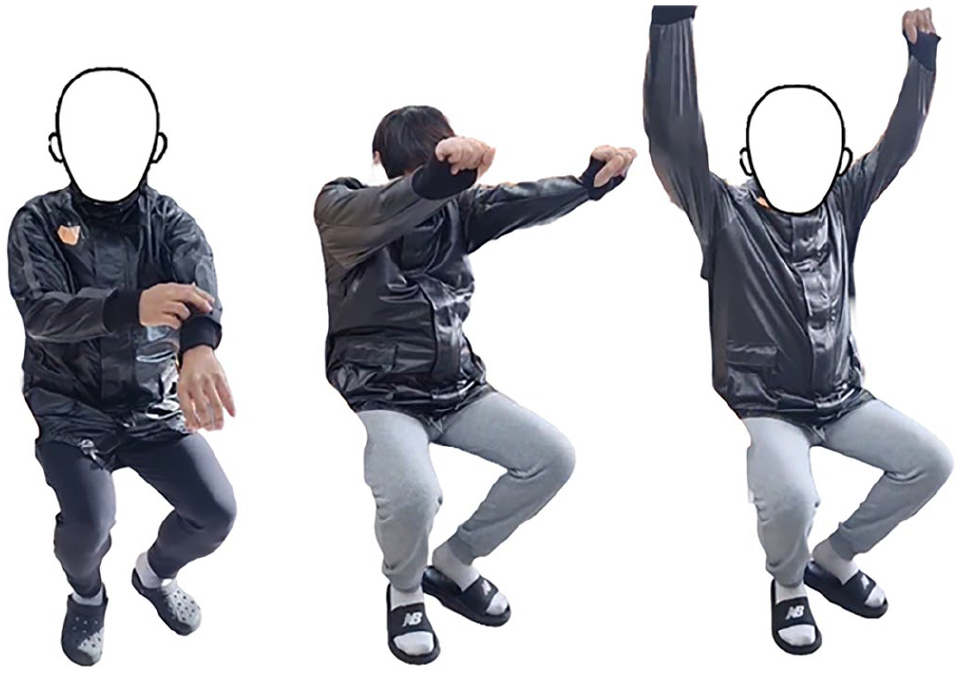
The participants were tasked with performing the following movements: walking with the left hand crossed in front of the right hand, walking with the left hand crossed in front of the left hand, walking with both hands raised above shoulder level to form a horizontal angle, and sitting with both hands on the steering wheel while adjusting elbow joint angles, as detailed in Table 4. They were instructed to execute these movements to the best of their ability without strain, and once prepared, images were promptly captured. In the laboratory setting, participants changed into shorts, T-shirts, socks, and sneakers. Following a 10-min seated period during which they received an explanation of the items listed in the questionnaire, participants engaged in the prescribed physical movements for 2 min.
Behaviors for subjective satisfaction assessments.

Subjective perceptions were evaluated utilizing seven rates for each of the three products, measured on a Likert 7-point scale. The questionnaire concerning satisfaction with stretch workwear products comprised eight items, gaging participants’ satisfaction with the fit, movement, and design, with reference to Song et al. 6 study. The subjective perception ratings on the questionnaire encompassed design attractiveness, material quality, elasticity, fit, mobility, comfort, and ease of movement, as detailed in Table 5.
Measures of subjective perception.

Finally, following trials of all six prototypes, participants were asked to indicate the style they found most satisfactory and provide brief explanations for their choice. This was aimed at elucidating the correlation between esthetic design appeal (design silhouette) and workwear, as well as understanding the primary attributes valued by rainy-day motorcycle riders in their work attire, as transcribed through in-depth interviews.
Materials
This study employed three types of materials with varying degrees of stretchability: high-stretch (92% polyester, 8% spandex), low-stretch (100% knitted polyester), and non-stretch (100% woven polyester). The high-stretch fabric was incorporated in high-movement areas such as the underarms and elbows to enhance mobility, while low-stretch fabric was used for body panels to maintain structural stability. Although the experimental data confirmed similar water resistance across different materials, the combination of high-stretch and low-stretch fabrics was implemented to optimize mobility while maintaining structural integrity. The body panels utilize low-stretch fabric to provide durability and prevent excessive deformation over prolonged use, while high-stretch panels are strategically placed in areas requiring greater flexibility, such as the shoulders and elbows. This ensures an optimal balance of movement and longevity, preventing issues such as fabric sagging or premature wear.
Results and discussion
After conducting surveys, interviews, and trial evaluations aimed at enhancing workwear of two-wheeler delivery riders on rainy days, the study yielded the following findings:
Issues with current commercialized workwear
Regarding workwear challenges during rainy days, eight respondents highlighted concerns with outdated designs, while six identified material-related issues, three cited poor elasticity, and an additional three pointed out lack of durability. All participants expressed dissatisfaction with the current designs, primarily as a result of concerns related to design, material quality, and durability. Firstly, participants expressed dissatisfaction with the designs, expressing a preference for esthetically pleasing workwear with appropriate length for their body size, rather than plain, uniform designs. Secondly, material concerns were raised, particularly regarding the lack of stretch in existing 100% polyester workwear, leading to discomfort during movement. Thirdly, durability emerged as a significant issue, as rainy-day workwear, despite being marketed as waterproof, proved ineffective in actual use, resulting in sweat accumulation discomfort. Participants expressed a desire for alternative materials that offer improved breathability and durability, recognizing the importance of visibility in ensuring safety.
Developing a prototype to solve the issues of current commercialized workwear
Six products were developed in response to the discomforts and improvements identified in the survey. These prototypes were standardized to a large size, reflecting the average height and weight of 12 participants. The dimensions of the prototypes were determined based on the average measurements of the participants in the study, as outlined in Table 6.
Average anthropometric data of subjects.

In the survey, 75% of the participants stated that they would prefer a stretchable waterproof fabric for reasons such as stuffiness and breathability; as a result, the new prototype was therefore developed with a combination of stretch materials. In this study, the stretch material was incorporated into a prototype utilizing a high-stretch fabric containing spandex, with low-stretch fabric featuring a knitted texture.
In addition, the pilot survey showed that the 20s and 30s considered flexibility, activity, and durability differently, and these points were considered in the design of each prototype.
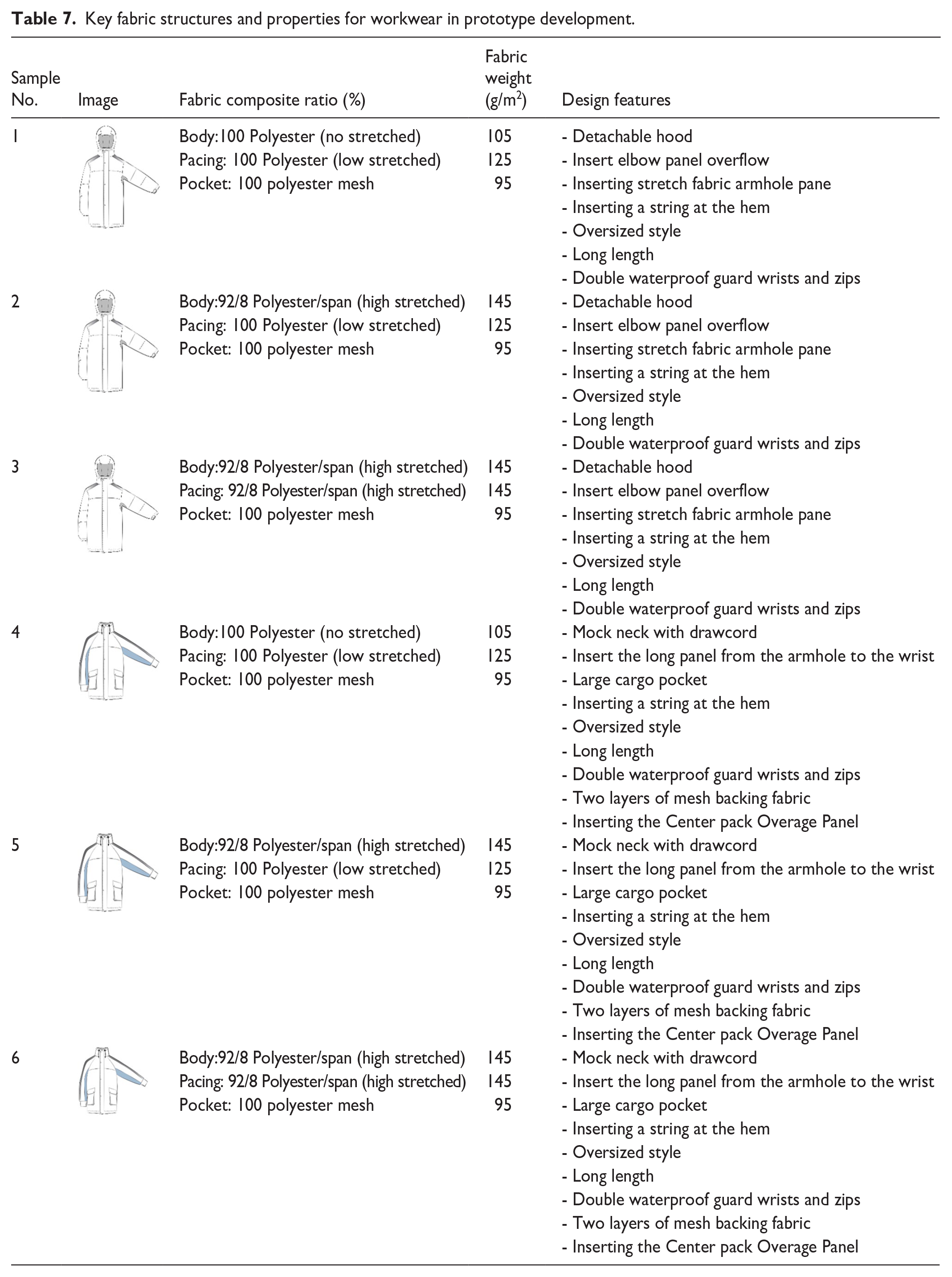
Firstly, designs 1, 2, and 3 are hooded. The hooded design appears in more than 80% of the rainy-day workwear for motorcycle riders currently on the market. However, this is inconvenient as the water enters where the hat is, and most of the products with hoods have feedback stating that the hoods are simply cut off with scissors to solve this inconvenience; therefore, designs 1, 2, and 3 are designed to make the hood detachable, and the detachable part is treated with a double layer of dam to prevent any rain leakage.
Prototype 1 utilized a non-stretchable material for the body plate to maintain structural integrity, while a highly stretchable fabric was strategically inserted from the underarm to the wrist along the sleeve panel. This design ensures greater flexibility in arm movement when operating a two-wheeled vehicle, reducing movement restriction while maintaining durability. In addition, there was feedback stating that the arm would rise while driving; therefore, a thumbhole was created at the wrist to prevent clothes from rolling up while driving. Comments were also received regarding clothes rolling up when the waist was bent while driving, the back would then become wet; therefore, the length of the prototype was extended by 15 cm more than the existing work clothes, and a string was included at the end to make a double structure to prevent it from rolling up, even when moving. In addition, a 4 cm allowance was included to the entire body plate to improve breathability and comfort.
Prototype 2 shares the same design structure as Prototype 1 but differs in material composition. Unlike Prototype 1, which utilizes a single material, Prototype 2 combines a low-stretch material was used for the body section from the armhole to the wrist to enhance freedom of movement.
The remainder of the body is constructed from a blend of 92% polyester and 8% spandex fabric, offering high stretchability. Unlike conventional waterproof fabrics, this highly stretchable fabric is treated with a waterproof coating, making it waterproof without compromising its elasticity. The low-stretch fabrics consist of 100% polyesters yarns knitted utilizing a specialized method, making it stretchable. To optimize both flexibility and structural stability, high-stretch fabric was strategically placed in high-mobility areas, such as the underarm and elbow panels, while low-stretch fabric was used in the body plate to maintain durability and fit. This combination allows for unrestricted movement while ensuring the garment retains its shape over prolonged use. Our aim was to discern any differences between the two types of stretch fabrics. Additionally, to evaluate the waterproofness and elongation properties of the high-stretch, low-stretch, and no-stretch fabrics, we engaged a textile testing agency to conduct elasticity and waterproofness tests.
Prototype 3 has the same design as Prototypes 1 and 2 and utilizes a high-stretch fabric for all parts of the workwear, including the arms and armholes. The purpose of this test was to evaluate the level of satisfaction with the elasticity by comparing the elasticity of the high-stretched fabric with that of the low-stretched fabric utilized in the previous test, while utilizing the high-stretched fabric for the entire garment.
Prototypes 4, 5, and 6 were designed as mock neck samples, in contrast to the hooded designs of prototypes 1, 2, and 3, developed previously. This decision stemmed from a common complaint among the 12 motorcycle couriers surveyed in the preliminary study, who reported issues with rain leaking into their hats, resulting in wetness and impaired vision. To address this, we modified the mock neck design by extending its length and adding an allowance of 1.5 cm to prevent water ingress. For Prototype 4, we utilized existing non-stretch material for the body section and incorporated high-stretch material only at the underarm area with a 2 cm allowance at the armhole to accommodate arm movement. Based on complaints regarding the weak durability of jackets during delivery rides, we included a pocket inside to prevent water leakage when carrying items or documents. Additionally, mesh fabric was included to the lining and back of the shoulder section for breathability, and a 3 cm slit and pin tuck insertion were made in the center of the back plate to provide a more comfortable design. Reflecting the opinion that it rained between the waist when sitting on a two-wheeler, the length of the body was increased by 15 cm more than that in the usual workwear design. Lastly, a drawstring was included at the hem to prevent it from rolling up during movement, employing a double structure for durability.
Prototype 5 had the same design structure as Prototype 4. However, for convenience of movement, a highly stretched material was utilized in the armhole section, while a low-stretched material was utilized in the arm section. By utilizing high- and low-stretch fabrics on the same garment, we wanted to determine if we could distinguish between the two types of stretch fabrics and what their differences were.
Prototype 6 has the same design as Prototypes 4 and 5 and utilizes a high-stretch fabric for all parts of the workwear, including the arms and armholes.
The six sample designs and materials (1, 2, 3, 4, 5, and 6) are summarized in Table 7.
Key fabric structures and properties for workwear in prototype development.
The elongation recovery and surface-wetting resistance tests for the no-stretch, low-stretch, and high-stretch fabrics utilized in the prototypes are described in Table 8. The tests were conducted utilizing the FITI test, an internationally recognized test organization. The results are as follows:
Fabric elongation recovery rate (KS K 0642: 2022): %.

“Wale/Slope” and “Course/Weft” indicate the corresponding directions in knitted and woven fabrics, respectively.
The Fabric Elongation Recovery Rate results exhibit that the low-stretched fabric elongation recovery rate is 92.4% in the Slope Direction and 90.4% in the FW direction, and the non-stretched fabric is relatively less than the other materials, with 89.6% in the slope direction and 82.6% in the Weft Direction. In contrast, the highly stretched fabric exhibited the best elongation recovery, with 97% in the Wale Direction and 96.5% in the Course Direction. The elongation recovery test was based on a total of 100%, and the closer the number was to 100%, the higher the elongation recovery or stretch it exhibited.
The fabric exhibited a wetting resistance of 4–5 on a scale of 1, indicating a high level of resistance to wetting (Table 9). This suggests that both highly stretched, low-stretched, and non-stretched fabrics possess high water resistance.
Fabric surface wetting resistance (KS K ISO: 4920: 2012): %.

The design that the participant is most satisfied with among the developed prototype samples
Subjective perceptions were assessed utilizing a Likert scale, and an independent sample t-test was employed to compare differences in participants’ satisfaction and subjective perceptions of the developed stretch workwear. The t-test was selected as it provides a robust method for determining mean differences in subjective satisfaction and perceptions for each prototype. This statistical test calculates the p-value (probability of significance) based on the t-value (t-statistic) and degrees of freedom (sample-2). Generally, a p-value below 0.05 indicates a statistically significant, suggesting differences between each group. Following surveys involving six participants in their 20s and six in their 30s across six products, the hypothesis was validated as follows:
The following hypothesis was set up for the evaluation of prototype 1. The null hypothesis, H₀, states that there is no difference between the 20s and 30s in the subjective satisfaction evaluation of prototype 1. The alternative hypothesis, H₁, suggests that there is a difference between the 20s and 30s in the subjective satisfaction evaluation of prototype 1.
Prototype 1 exhibited a difference in ratings only for activities with a p-value less than 0.05 (Table 10). In these cases, the participants gave a better evaluation of the activity in their 30s as opposed to their 20s.
Subjective perception evaluation of prototype 1 (t-test validation).

p < 0.05, statistically significant.
With regards to Prototype 1, a high-stretched fabric was utilized in the armholes and the inner part of the arm to the wrist in the existing non-stretchy workwear fabric, and it is interpreted that the insertion of stretchy fabric in only the panel part of the existing workwear fabric enabled the user of the garment to move freely and become more active. It is also believed that individuals in their 30s are more focused on activities than individuals in their 20s.
It was verified that the 20 s valued elasticity and design elements, while the 30s tended to prefer comfort and functionality. Accordingly, Prototype 6 was designed with highly elastic materials to meet the needs of the 20s, while Prototype 4 was designed with highly breathable materials and a mock neck to satisfy the needs of the 30s.
For prototypes 2, 3, 4, 5, none of the items had a p-value of <0.05. The t-test analysis was not included as there was no difference between the 20s and 30s in the evaluation of each item for the prototype.
The following hypothesis was set for the evaluation of Prototype 6. The null hypothesis, H₀, states that there is no difference between the 20s and 30s in the subjective satisfaction evaluation of Prototype 6. The alternative hypothesis, H₁, suggests that there is a difference between the 20s and 30s in the subjective satisfaction evaluation of Prototype 6.
For all six prototypes, the p-value was found to be less than 0.05 for both design attractiveness and elasticity criteria, confirming statistically significant differences across all tested designs (Table 11). Evaluations from participants in their 20s demonstrated superior ratings for design attractiveness and elasticity compared to those in their 30s. Participants in their 20s exhibited significantly higher satisfaction levels with elasticity, as they prioritized flexibility and esthetic appeal to enhance their mobility and comfort.
Subjective perception evaluation of prototype 6 (t-test validation).
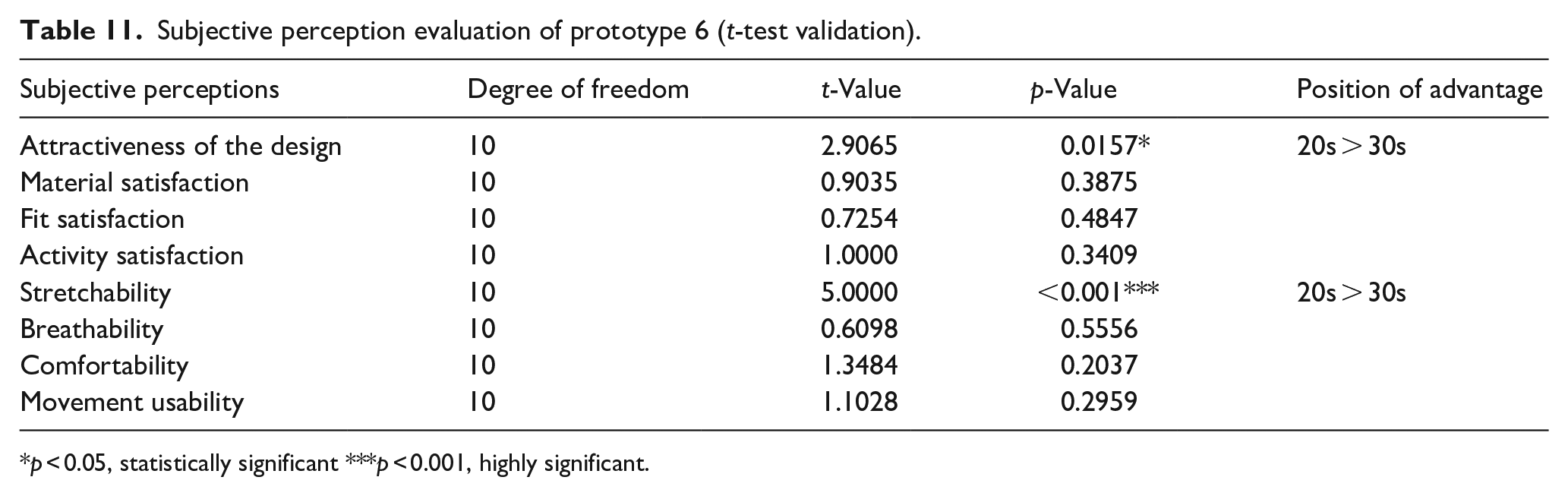
p < 0.05, statistically significant ***p < 0.001, highly significant.
In contrast, participants in their 30s, who generally had more delivery experience than those in their 20s, appreciated the ease of movement more during actual deliveries and recognized the importance of stretchy materials. These findings align with the results of a preliminary survey conducted prior to the prototype evaluations. This survey, involving 12 delivery riders (ages 20s–30s), aimed to identify key discomforts and preferences in rainy-day workwear. Participants in their 20s highlighted the importance of stretching and mobility to support active movement, while participants in their 30s prioritized durability and functionality due to their longer experience as delivery riders.
The insights from this preliminary survey informed the design features of the prototypes, ensuring that the materials and construction addressed the unique needs of both groups. For example, Prototype 6, made entirely of high-stretch material, was rated highly by participants across both age groups, albeit for slightly different reasons. These results demonstrate how age-related differences in priorities, such as esthetic appeal versus practical functionality, influenced satisfaction levels during the prototype evaluations.
The results of the differences in each item between the stretch material (3/6) and traditional rainwear fabric (1/4) are as follows: (Table 12).
Evaluation of subjective perception of preferred fabric (t-test verification).

p < 0.05, statistically significant **p < 0.01, very significant **p < 0.001, highly significant.
The null hypothesis, H₀, states that there is no significant difference in the subjective satisfaction ratings, such as material satisfaction, activity satisfaction, and elasticity, between the stretch material (3/6) and the conventional material (1/4). The alternative hypothesis, H₁, suggests that there is a significant difference in the subjective satisfaction ratings between the stretch material (3/6) and the conventional material (1/4).
According to the t-test, except for the design attractiveness item, which had a p-value higher than 0.05, all p-values were lower than 0.05, which was statistically significant and exhibited a difference in evaluation. In this case, the evaluation of products made of stretch fabrics was higher than that of conventional fabrics. In particular, the evaluation of activity, stretch, ease of movement, and comfort was higher than that of material satisfaction, fit, and comfort.
The differences between the hood and mock neck designs are as follows: (Table 13).
Evaluate the subjective perception of the preferred design (t-test verification).

p < 0.001, highly significant.
The null hypothesis, H₀, states that there is no significant difference in the subjective satisfaction ratings between hooded and neck-pullover designs. The alternative hypothesis, H₁, suggests that there is a significant difference in the subjective satisfaction ratings between hooded and neck-pullover designs.
The t-test exhibited a difference in ratings only for the design attractiveness item, which had a p-value less than 0.05. In this case, the mock neck design was rated better than the hooded design. As exhibited in the preliminary survey, the hood design is a popular design in the market; however, the preliminary survey results exhibited that when the hood is folded, water is collected inside and seeps through the garment. Therefore, we confirmed the opinion that “hoods are usually torn with scissors” is consistent with the preliminary survey results exhibiting that the hood design is not preferred.
Overall, the results of the t-test showed that the participants preferred fabrics that could stretch, mock neck as well as comfortable designs.
A brief interview was conducted to determine what satisfied the participants with the design. The results show that the designs of prototypes 4, 5, 6, and 2 were 50%, 34%, and 8%, respectively (Table 14).
Summary of participant satisfaction with prototypes.
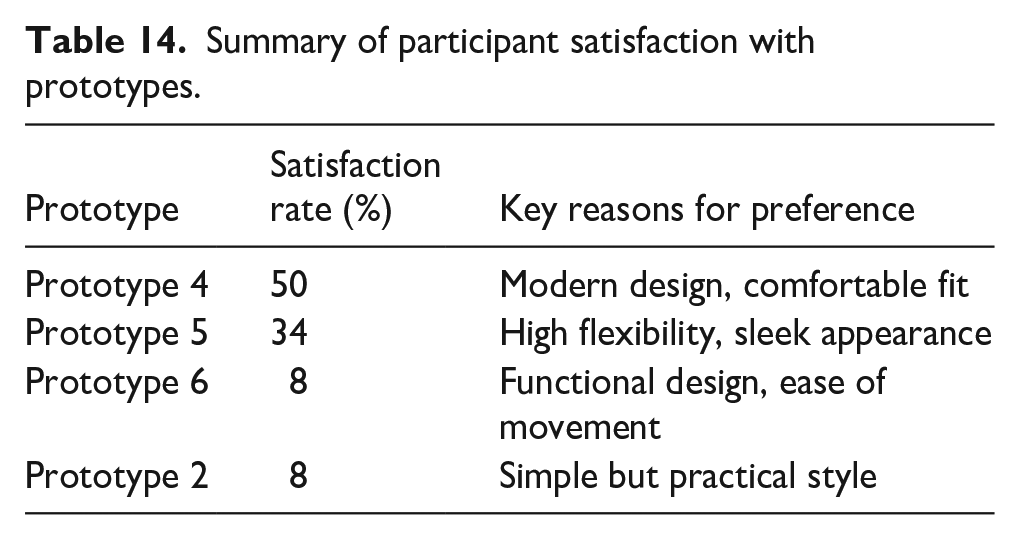
Prototypes 4 and 6 were both mock neck designs, however, the four designs were partially made of stretch fabric, whereas the six designs were entirely made of high-stretch fabric. We found that 50% of the participants selected the mock neck design, consistent with the results of the t-test for differences between the hooded and mock neck designs.
The second most popular product, Prototype 4, also has a mock neck design and is composed of a combination of conventional and high-stretch fabrics.
The participants who responded to the four prototypes had the same mock neck design as the six prototypes. However, they selected Prototype 4 as they were comfortable with the feel of the existing fabric and believed that the quality was improved by including an elastic material solely in places, they thought were uncomfortable.
The groups that selected Prototypes 2 and 5 had different designs. Prototype 5 is a mock neck design, whereas Prototype 2 is a hooded design. However, these two-share commonality in fabric utilized for body panels, offering both high-stretch and low-stretch fabric options. This indicates that the design preference is subjective, yet the participants expressed favor toward the combination of high- and low-stretch fabrics for the body.
To evaluate participant satisfaction with the prototype designs, preferences were analyzed based on the key features and reasons for selection. The findings are presented below.
Prototype 6 was the most preferred design, selected by 50% of participants. Key features influencing this preference included the use of high-stretch fabric throughout the design, a spacious ergonomic fit, and the incorporation of a two-layer mesh structure on the back panel. Participants noted that these features enhanced overall flexibility and comfort, allowed for ease of movement, and minimized sweat and discomfort during wear. The combination of innovative materials and practical design elements contributed to its high preference rate.
Prototype 4 was the second most favored design, chosen by 34% of participants. This design incorporated a combination of conventional and high-stretch fabrics, which provided a balance between familiarity and innovation. Participants highlighted the thinner fabric placement in areas such as the armpits and wrists, which improved breathability. Additionally, the adjustable and waterproof mock neck design was considered functional and user-friendly. These factors, combined with the targeted use of stretch fabrics, made Prototype 4 a popular choice among participants who valued practicality and comfort.
Prototype 5 was selected by 8% of participants and was noted for its targeted use of thin stretch fabric in sweat-prone areas, such as the armpits. This design feature was specifically appreciated for its ability to manage sweat and provide localized comfort. Participants who chose this prototype emphasized the importance of breathability in workwear, particularly in areas prone to perspiration.
Prototype 2, also selected by 8% of participants, featured a hooded design and a combination of high- and low-stretch fabrics. Participants who preferred this prototype noted that the hooded design provided a sense of security, particularly when paired with a helmet, and that the strategic use of high-stretch fabric in targeted areas enhanced comfort and flexibility. This preference reflects the importance of individualized design elements for specific user needs.
The analysis of participant preferences revealed several important trends (Table 15). Prototypes with mock neck designs, such as Prototypes 4 and 6, were the most favored, with 84% of participants selecting these designs. This preference highlights the dual appeal of mock neck designs, which offer both functional advantages, such as adjustability and waterproofing, and esthetic qualities that enhance the overall design.
Key insights from participant preferences analysis.

Another significant factor influencing participant satisfaction was the use of high-stretch fabrics and breathable elements. Participants consistently noted that features such as mesh panels or thinner fabrics in specific areas, including the armpits and wrists, enhanced comfort by improving ventilation and reducing sweat. The strategic placement of these materials not only improved usability but also addressed the practical needs of activewear users.
Finally, although Prototypes 5 and 2 were less popular overall, their specific design features demonstrated the importance of addressing niche needs. For example, Prototype 5’s thin stretch fabric in sweat-prone areas and Prototype 2’s hooded design provided targeted functionality that appealed to smaller groups of participants with specific preferences. These findings underscore the value of balancing innovative material use, ergonomic design, and tailored features to meet the diverse needs of workwear users effectively.
As a result, the front, back, and side-view wearing photos of Prototype 1–6 actually worn by the subjects are as shown in Table 16.
Pictures of completed prototypes 1–6 (front, side, back).

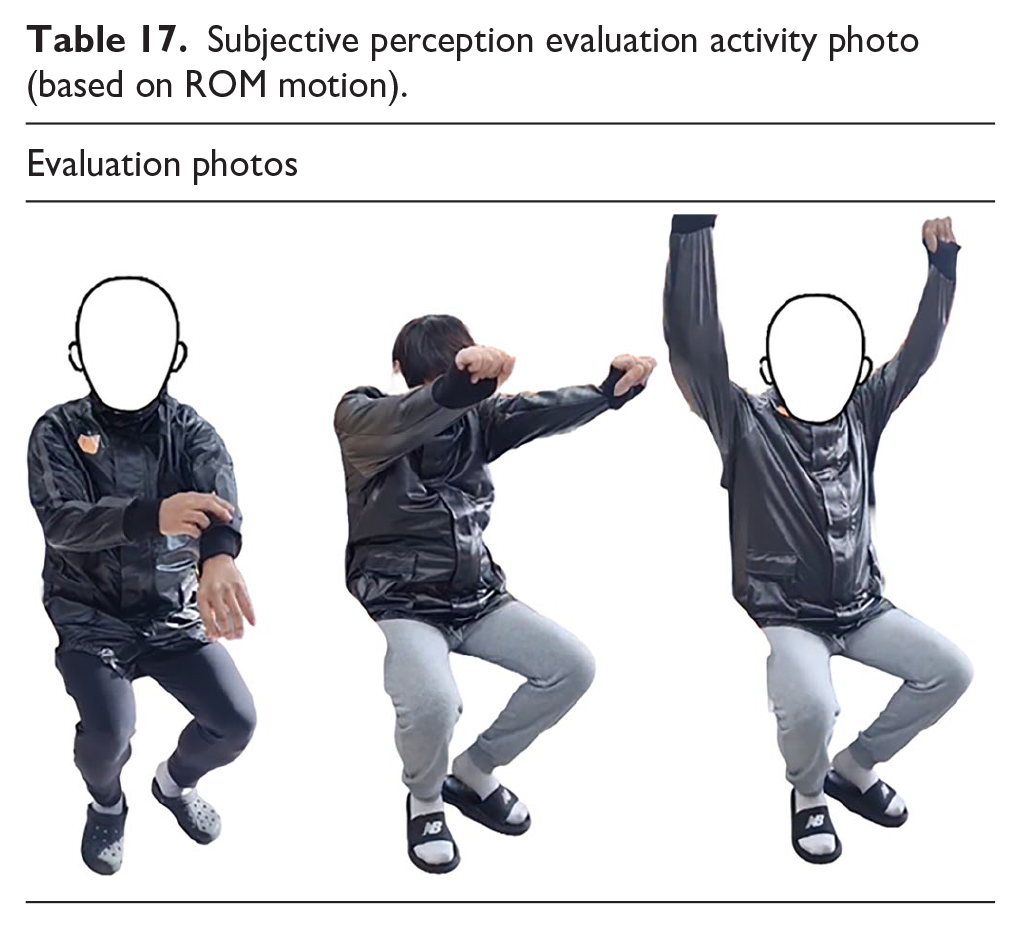
To evaluate ergonomic performance under dynamic conditions, motion tests simulating key delivery tasks were conducted and recorded. These tasks—such as gripping motorcycle handlebars, leaning forward, lifting packages, and reaching overhead—were selected based on the ROM (Range of Motion) evaluation protocol for workwear proposed by Kim, as well as pilot observations of actual movements commonly performed by delivery riders. Each movement was performed three times by the subjects while wearing Prototypes 1–6 (see Table 16), and the actions were recorded from multiple angles. The resulting videos were analyzed frame-by-frame to assess garment behavior. The analysis focused on wrinkle formation, fabric displacement, sleeve and hem shifts, and joint restriction. Criteria for wrinkle assessment were clearly defined to distinguish between functional wrinkles aiding movement and unnecessary wrinkles indicating poor fit or material strain. Unnecessary wrinkles were those persisting in neutral postures, limiting range of motion, or distorting garment balance. To ensure validity, the video analysis was independently conducted by three experts holding doctoral degrees or higher in pattern design. These experts evaluated wrinkle presence, movement interference, and overall fit based on standardized criteria. This comprehensive, multi-method approach provided objective insights into the dynamic fit, mobility, and functional suitability of each prototype for motorcycle delivery tasks (Table 17).
Subjective perception evaluation activity photo (based on ROM motion).
Conclusion
The primary objective of this study was to improve the comfort and functionality of rainy-day workwear for two-wheeled delivery drivers by introducing elastic materials and ergonomic designs. To achieve this, a test evaluation was conducted on newly developed rainy-day workwear aimed at addressing the discomfort experienced by delivery drivers in their 20s and 30s. The key evaluation criteria included design attractiveness, material satisfaction, comfort, activity, elasticity, and ease of movement. The findings revealed significant differences in prototype performance based on age, material satisfaction, and design satisfaction.
Firstly, the subjective perception evaluation of the six samples exhibited that only Prototype 1 differed in the evaluation of activity, whereas Prototype 6 differed in the evaluation of design attractiveness and elasticity. There were no obvious differences according to the criteria or age in the other prototypes. Prototype 1 and 6 were rated more favorably by those in their 30s as opposed to those in their 20s. This suggests that the combination of stretched fabric in the active areas of the existing workwear that lacked stretchability, and the extra amount of stretched fabric made the participants feel more active and satisfied with the improved prototype design. In addition, the preference for the stretch material over the existing rainy-day workwear in Prototype 1 and 6 indicate the importance of ease of movement. The difference was greater in the 30s group than in the 20s group, which was consistent with the findings of the preliminary survey, as the 30s group had generally been delivery riders for longer than those in their 20s and appreciated the ease of movement more during actual deliveries as well as the need for stretchy materials.
Secondly, the evaluation results highlighted the superiority of elastic materials compared to conventional rainwear fabrics. The use of stretchable materials significantly enhanced freedom of movement and comfort, particularly for more experienced riders in their 30s. These materials addressed critical issues such as limited mobility and discomfort associated with the rigid texture of traditional woven fabrics. Unlike conventional polyester rainwear, which lacks elasticity and is prone to causing skin irritation, the knit fabric developed in this study incorporated waterproof processing while ensuring flexibility and comfort. This innovation alleviated common complaints and improved the working environment, enhancing convenience without compromising functionality.
Thirdly, in a comparison of hooded versus mock-neck designs, the mock-neck design emerged as the preferred option. The hooded design caused practical issues, including water accumulation and obstruction of visibility during rainy conditions. By contrast, the mock-neck design provided better functionality, avoiding these inconveniences while maintaining esthetic appeal. Features such as an extended neck length and adjustable strings were well-received, combining functional effectiveness with user comfort and style.
Finally, in terms of final satisfaction with the improved samples, Prototype 6 received the most votes. It was designed with a generous silhouette for movement, extended length, and extra room in the sleeves, armholes, and back panel, all of which were made of stretch material. This sample was the most satisfying, as it incorporated all the discomfort issues that the respondents identified in the preliminary survey.
Overall, the results of this study exhibited that each participant was satisfied with the improved materials and design of the two-wheeled delivery system, which was uncomfortable on rainy days. The level of satisfaction varied depending on participants’ personal characteristics, preferences, experiences, and areas of importance. During the course of this study, it was discovered that references to stretchy materials were linked to freedom of movement and comfort as well as fit. Therefore, it is necessary to develop stretchable workwear for two-wheeled couriers to enable them to deliver on rainy days as their workwear forms part of the safety element while they work.
It is believed that the workwear developed based on the results of this study can improve the convenience and safety of two-wheeled delivery workers on rainy days and will assist in improving the inconvenience of the current market. In related industries, it is believed that it can be utilized as reference data to develop services that increase satisfaction with non-face-to-face screen platforms more effectively.
Practical implications, limitations, and suggestions
Through this research, it was identified that rainy-day workwear for delivery riders can be improved to enhance wearer comfort and esthetic satisfaction, which is expected to positively impact their work performance and reduce the risks and inconveniences of delivering during rainy conditions. The study contributes to the field by addressing the unique challenges faced by two-wheeler delivery riders, such as mobility constraints and exposure to environmental elements, through the development of stretchable and waterproof workwear.
However, this study has certain limitations. First, the sample consisted solely of young male riders, as they represent the majority (over 95%) of two-wheeler delivery riders in South Korea, according to national data 14 While this ensures that the study reflects the demographics of the target population, future research should aim to include female riders and a broader age range to capture more diverse perspectives and needs.
Second, while the research primarily focused on comfort and esthetic design, other critical aspects such as durability and safety require further attention. For example, the longevity of stretchable fabrics under frequent use and harsh conditions, as well as their protective capacity against accidents, were not comprehensively examined. Future studies should address these aspects to ensure the practicality and effectiveness of the workwear.
Third, field tests were not conducted to evaluate the prototypes in real-world delivery scenarios. While this study provides a foundational exploration of workwear design, future research should incorporate systematic ergonomic evaluations and long-term field tests to validate the effectiveness of the prototypes. These tests would provide valuable data on how well the workwear performs in daily operations, enabling further refinement of design features.
Lastly, while this study focused on developing stretchable materials to enhance mobility, a more detailed investigation into fabric performance under varying weather conditions (e.g. heavy rain or strong winds) is recommended. Experimental methodologies should also include advanced ergonomic testing techniques to ensure a more accurate fit for different body types.
Despite these limitations, this research highlights the importance of developing functional and user-centered workwear for two-wheeler delivery riders. By addressing comfort, mobility, and protection, the study lays the groundwork for improving the working conditions of delivery riders and offers practical insights for future advancements in workwear design.
Footnotes

Funding
The author(s) disclosed receipt of the following financial support for the research, authorship, and/or publication of this article: This research was supported by Basic Science Research Program through the National Research Foundation of Korea(NRF) and funded by the Ministry of Education (RS-2023-00245538).
Declaration of Conflicting Interests
The author(s) declared no potential conflicts of interest with respect to the research, authorship, and/or publication of this article.