






Abstract
This paper describes studies conducted to understand how a selected group of blouse materials contributed to tactile sensations on the human body during active wear; and to determine how the response was affected through wash treatment. Human subject hand evaluations and controlled garment wear studies were used to quantify subjective response to the tactile properties of materials that had been washed, starched, or softened. Fabric hand was analyzed using paired comparison and bipolar hand evaluation protocols. A novel human subject wear protocol was developed to assess material interactions with body location in dynamic wear. This study also shows how different protocols for subjectively evaluating tactile response were correlated in fabrics and garments that were deliberately washed, softened, or starched to achieve different levels of softness or stiffness.
Keywords
Introduction
Although fabric hand and garment wear comfort have been extensively studied, there is an ongoing need for better understanding the factors that influence human tactile response to clothing in dynamic wear conditions. 1 A need also exists to demonstrate subjective and objective evaluation procedures optimized for assessing the differences in fabric stiffness and texture specifically caused by the effects of washing, or by the use of fabric softeners or starch treatments. This study was conducted to provide a better understanding of the correlations between objectively measured fabric properties and perceived garment comfort for laundered clothing materials in dynamic wear.
Experimental
This study addressed several questions related to the effects of wash treatment on fabric hand. Can human subjects discriminate among the effects of wash treatments at the swatch-sized sample level? Which tactile sensations are most affected by wash treatments, and which of these sensations best predict perceived differences in fabric hand caused by the wash treatment?
Test Fabrics
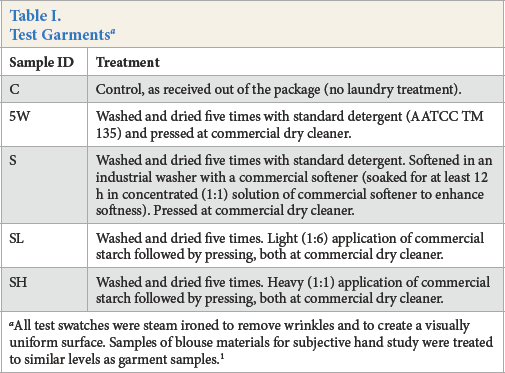
A 3.5 oz/yd 2 , 100% cotton, plain woven blouse fabric was used as the control material for this study. To achieve different levels of fabric stiffness, the control fabric was washed and dried, or treated with a commercial softener or starch in washing. Test garments and their corresponding treatment procedures are given in Table I.
Subjective Measurements of Fabric Hand
Two different subjective evaluation protocols for hand assessment were compared to evaluate these wash-treatment effects: a paired comparison method and a rating method using bipolar subjective descriptors. The paired comparison method was considered because this protocol is regarded as a definitive procedure for obtaining information on perceived human preference based on tactile response. 2 The bipolar method was considered because it has proven to be an effective hand rating procedure in fabric hand studies. 3
Twenty-six female evaluators, ages 18-25, participated in both hand evaluation protocols. AATCC guidelines for the subjective evaluation of fabric hand were followed. 4 Prior to fabric hand assessment, participants were required to wash their hands for 1 min. This was followed by paper towel drying and application of a moisturizing lotion. All hand evaluations were conducted under climate-controlled standard laboratory conditions (21 ± 2 °C, 65 ± 5% RH) after evaluator hands were acclimatized for 15 min.
Paired Comparison Method
The paired comparison protocol determined preference based on tactile response to handling fabric swatches. Hand panel evaluation participants were told that the test fabrics were intended for use in women's dress-style blouses. The protocol was conducted as a blind test. Fabric swatches (each eight-inch square) were presented to the evaluator, seated opposite the test administrator, two at a time on the opposite side of a visual barrier. Evaluators selected their most preferred swatch, based on touch, in a direct-paired comparison of the test fabrics presented to them in random order.
Paired combinations of five wash treatments were evaluated in two separate trials. This meant that each of the test fabrics was assessed four times by each of the 26 evaluators. This produced 208 opportunities for a particular fabric to be selected as having the best hand based on head-to-head tactile response in the comparisons.
Bipolar Rating Method
In the second hand evaluation protocol, hand panel evaluators were presented a set of the five test fabric swatches. They were instructed to touch and handle the fabric samples following a prescribed procedure for manipulation of the fabrics in the hands. Unlike the paired comparison procedure, the bipolar rating was not conducted as a blind test. Each participant rated the tactile response to each test fabric based on the bipolar descriptors described in Table II.
Bipolar Descriptor Terms
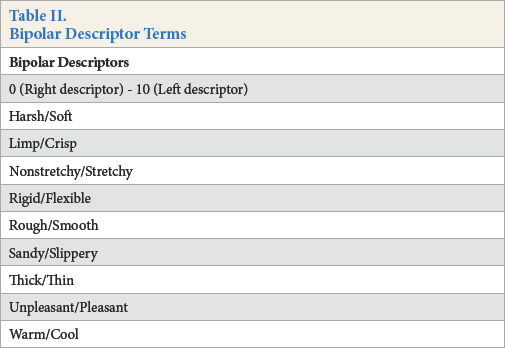
One set (unpleasant-pleasant) provided an overall hand preference rating. Evaluators indicated tactile ratings by marking on the bipolar scale lines. The rating scales were unmarked to eliminate unwanted influence that may arise with the use of a numerical scale. Ratings were transformed to quantifiable data using a 0–10 scale overlay on the rating line.
Results of Hand Evaluation
Fig. 1 shows the overall hand preferences for the blouse materials as indicated by the paired comparison hand evaluation protocol. Fig. 2 shows the rating obtained for the same materials using the bipolar hand rating method. Fig. 2 shows, not only the overall ratings of pleasant touch, but individual ratings of the primary sensory qualities that contribute to the hand ratings of the blouse materials. Additionally, all ratings for each descriptor were averaged to provide combined ratings for each material. Table III provides a summary analysis of the statistical significance of the blouse fabric comparisons.
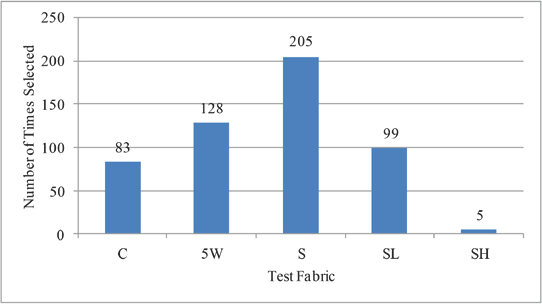
Number of times test fabric was identified as having best hand in paired comparisons.
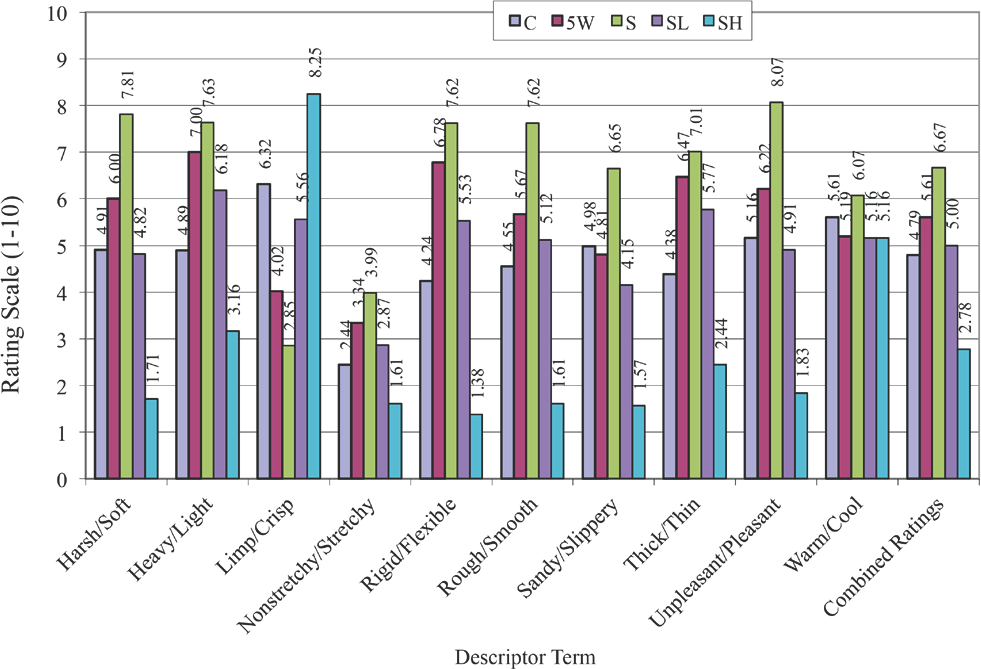
Average rating on comfort qualities.
T-test Analysis of Statistical Significance of Bipolar Ratings of Blouse Materials
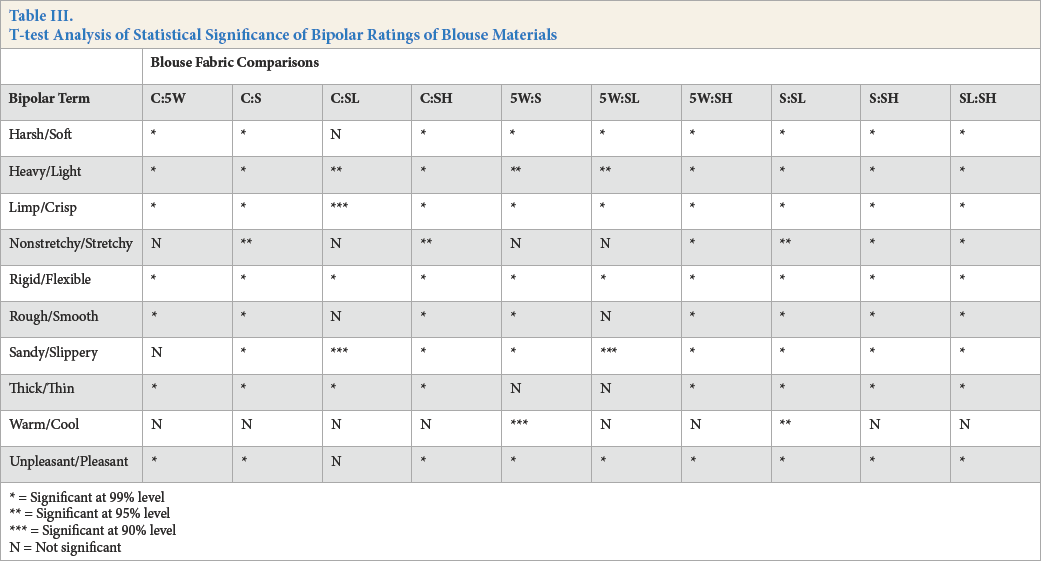
= Significant at 99% level
= Significant at 95% level
= Significant at 90% level
N = Not significant
From these data, evaluators were able to detect differences on the basis of most subjective descriptor terms. Tactile response to differences in fabric stiffness was particularly noticed by the hand evaluation panel. The blouse fabric that had been treated with a fabric softener (Sample S) consistently received the most favorable ratings, while the heavily starched material (Sample SH) was rated as having the least desirable hand quality. The washed fabric sample (Sample 5W) was rated the second most desirable treatment based on seven of the nine descriptor terms, overall hand quality (unpleasant/pleasant), and for the rating of combined tactile qualities. Evaluators were generally unable to detect differences between the control fabric (Sample C), Sample 5 W, and the lightly starched (Sample SL) blouse material.
Significantly, the ratings for the limp-crisp hand quality were inversely related to the ratings of the other nine sensory descriptor terms. In this case, Sample SH was ranked the crispest and was identified as having the more desirable hand, while Sample S was rated as limpest and as having the least desirable hand. This finding can be attributed to the group of evaluators associating the crispness quality with a professional appearance, a more desirable attribute for women's dress style blouses.
Relationship between Hand Preference and Tactile Sensations
Regression analysis was used to determine which subjective descriptor terms were the most important predictors of overall pleasant hand sensation. This analysis involved correlating each descriptor with the ratings of overall hand sensation of unpleasant/pleasant touch (Table IV).
Correlations Between Bipolar Descriptors of Primary Tactile Sensations and Pleasant Fabric Hand
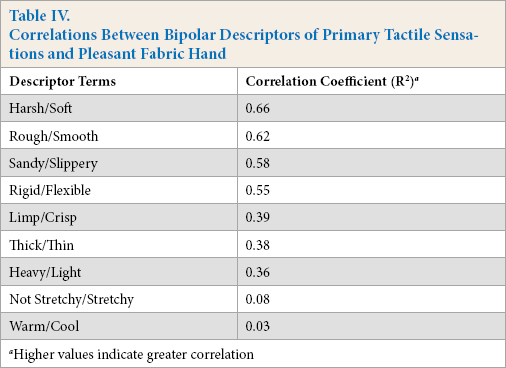
Higher values indicate greater correlation
The results show that the most important sensory contributors were associated with perceptions of fabric surface qualities and with perceived differences in fabric stiffness. The perception of harsh/soft, rough/smooth, and rigid/ flexible tactile sensations were the most important factors affecting the hand of these materials. Therefore, fabric surface or textural qualities strongly influenced overall perception of hand-touch pleasantness. At the same time, perceived differences in fabric extensibility and thermal touch sensations were not significant indicators for this group of wash-treated blouse materials.
Analysis of Garment Level Effects on Dynamic Wear
Having demonstrated that human subjects can detect perceived differences in the roughness and stiffness of swatch-sized samples of these blouse materials, the following questions were addressed:
What locations on the human torso are responsible for perceived tactile interactions in body movement that simulates dynamic wear of wash-treated garments?
What are the correlations between human tactile response in clothing dynamic wear and objectively-measured fabric properties?
Test Garments
Test garments were dress style blouses custom made from the same 3.5 oz/yd 2 , 100% cotton plain weave fabric. 1 They featured an uncomplicated pattern: buttoned up the front, simple collar, single button cuffs, with two lower rear bodice darts on each side of the center back, and shoulder seams with no yoke.
All blouses, with the exception of the control, were washed and dried five times following home laundry procedures similar to those described in AATCC Test Method (TM) 135. Industrial washing and drying equipment was used with AATCC Standard Reference detergent. 5 Garment wash-treatment procedures were deliberately selected to produce a range of fabric stiffness and texture similar to the treatments used in the previous fabric level hand study. 1 The laundry treatments are described in Table I.
Each evaluator was assigned a set of five properly-fitted test blouses, in random order. In addition to their individually assigned set of five test shirts, each participant supplied and wore their own long pants (khaki or jeans) and fat, closed toe shoes. To maximize garment to skin contact area, subjects were asked to wear a regular bra and to not wear camisoles and sports bras. Evaluators supplied the same items or the same type of item for each test session. The test blouses contained no labeling that may reveal the identity of the wash treatment to the evaluator. Twenty-six evaluators wore each of the test blouses in the wear trial, meaning that 26 evaluations were used to calculate an average tactile response rating for each of the test blouses. Blouses were not re-worn by the evaluators.
Wear Trial Protocol
Many human subject clothing wear studies can involve vigorous, sweat-generating exercise, or they may include hot and humid or cold environmental conditions that emphasize the thermal transfer, moisture absorption, or wicking properties of clothing materials. When considering the effects of wash treatments on tactile response to ordinary clothing, however, it was considered important to provide an initial evaluation in less stressful wear conditions, or in conditions where extreme climate or exertion are not expected to be important determinants of clothing comfort. Therefore, the wear activities used by this study were designed to simulate simple low stress physical tasks that may occur in a mild environment. They purposely did not involve vigorous, sweat-generating exercise on the part of evaluators. These conditions were chosen to ensure tactile focus on sensorial response, as well as to minimize effects associated with garment breathability, heat loss, or moisture management.
The wear trial was conducted under climatically-controlled, standard laboratory conditions. Five separate wear sessions were scheduled for each evaluator to wear one blouse from their assigned set. After donning the test blouse, and a 10 min acclimation period, evaluators performed a set of precisely choreographed movements focused on upper torso movements. These included crossing their arms holding light weights in their hands, touching their toes and raising their arms, as well as movement of their arm to simulate the action of rolling a bowling ball. The simulated bowling action was assisted using the bowling game software found in Nintendo's Wii video sports game. The activities are shown in Fig. 3.
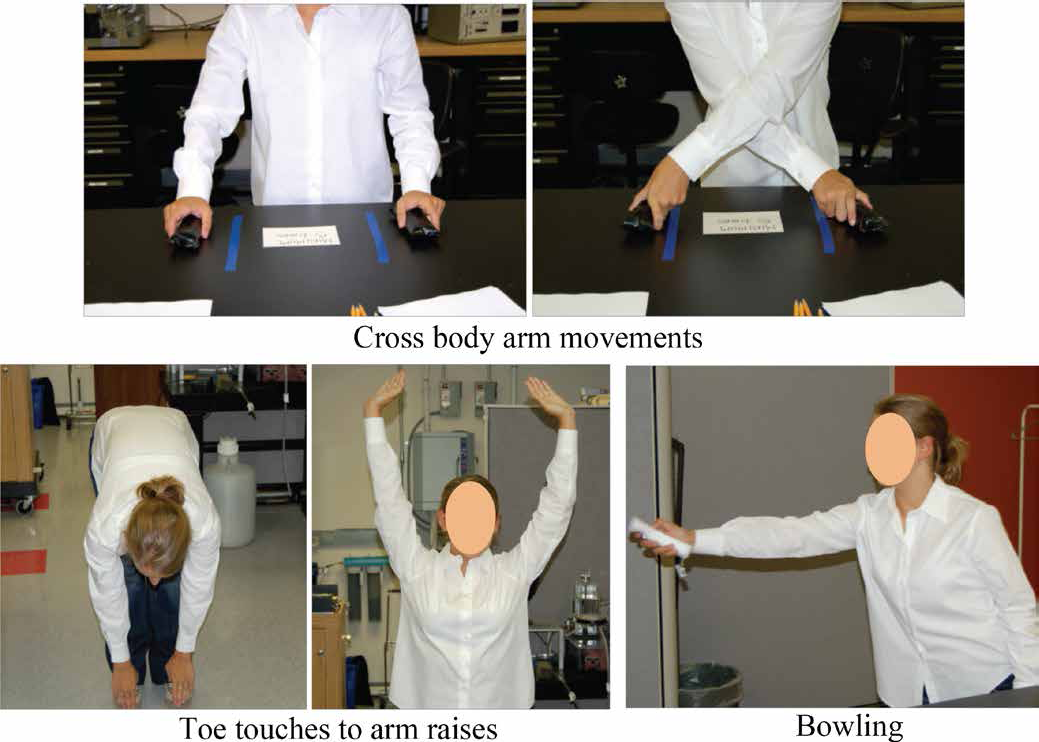
Wear protocol activities of subject wearing test blouse.
The evaluators were a group of 30 North Carolina State University female students; most participated in the hand panel. All study participants were between 18 and 25 years of age, healthy, non-smoking, with no history of skin problems or allergies to soap or other products used in laundering. All evaluators received an orientation that included proper size selection of the test shirt and a review of the wear protocol activities.
Evaluation of Tactile Response to Blouses
Several different quantitative assessments were made to obtain a complete picture of response to tactile interactions with the test blouses. After each choreographed movement in the exercise protocol, evaluators rated perceived thermal feeling, softness, and overall comfort of the test blouse on a 1–7 scale. In addition, they rated primary tactile qualities, including perceived heaviness, stiffness, stretchiness, scratchiness, and roughness of the blouses. They evaluated the perceived snugness of the blouse ft. This factor was included to ensure that it was not a condition influencing their perception of tactile response. These primary tactile factors were rated on a 1–5 scale, where a rating of 1 was equated with total perception of a negative tactile descriptor. These procedures followed the comfort rating routine pioneered by Hollies. 6 Clothing comfort studies have successfully used this approach for assessing garment wear comfort for many different clothing applications.7,8
In addition to these tactile comfort ratings, this research conducted a unique evaluation. Following each of the choreographed movements, evaluators identified the locations on their upper torso where they sensed tactile interactions with the blouse. They did this by marking the location on a human form diagram showing the front and back torso, or the area of their body covered by the test blouse.
Following completion of the wear test protocol, a post-test survey was conducted to obtain the evaluator's final impression of the tactile comfort of the blouses. For this evaluation, test participants were asked to assess all five test blouses in a simultaneous presentation. Through sight and random handling, subjects ranked each of the test blouses based on selected descriptor terms, indicating preference and responses based on their perception of end use, ft, and overall comfort rating. The main purpose was to obtain evaluator post-test preference for the tactile comfort of the blouses.
Objective Measurement of Fabric Properties
The Kawabata Evaluation System (KES) was used to characterize mechanical and surface properties of the blouse materials. 1 Fabric samples were cut from the upper back of three separate, unworn blouses for the control and each wash treatment. These blouse swatches were tested under standard laboratory conditions using KES compression, bending, surface, shear, and tensile instrumentation.
Results of Garment Level Effects in Dynamic Wear
Tactile Comfort Ratings
Figs. 4–7 show the average comfort, stiffness, roughness, and scratchy ratings for specific activities, from donning the test blouse, arms crossing, toe touch/arm raise, to arm motion in the simulated bowling routine. Additionally, all ratings for each activity were averaged to provide combined ratings for each material.
These data provided the basis for consistent conclusions regarding the effects of wash treatment on the perceived human response to the blouses. They show that statistically significant differences were associated with the effects of washing, or addition of a softener or starch, to the wash treatment. Samples SL (lightly-starched) and SH (heavily-starched) blouses were negatively rated on all tactile descriptors, with the SH blouse receiving the least desirable ratings, as would be expected. The starched blouses were decisively perceived as the harshest, stiffest, roughest, heaviest, scratchiest, least stretchy, and most uncomfortable garments to wear. The softened Sample S blouse received the most desirable tactile ratings, followed by the laundered Sample 5W and control Sample C blouses. Primary tactile descriptors associated with the perceived stiffness and roughness and scratchiness appeared to provide the most revealing differences based on wash treatment.
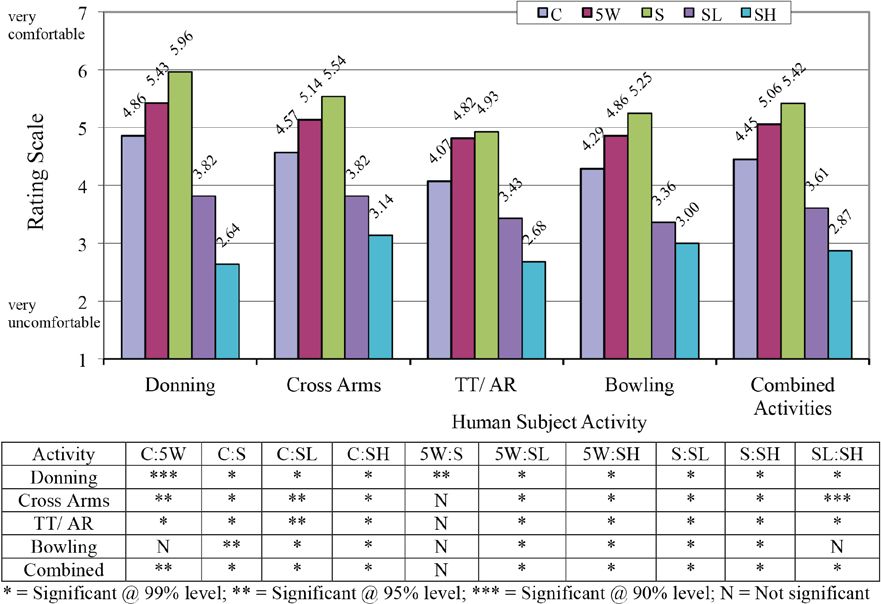
Average overall comfort rating (with Student's t-test analysis of significant differences between test garments).
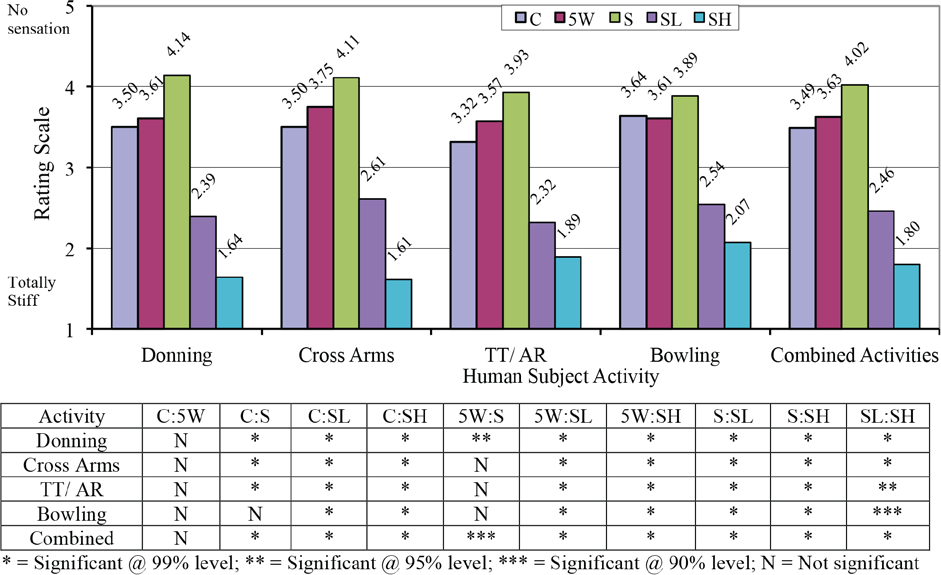
Average stiff rating (with Student's t-test analysis of significant differences between test garments).
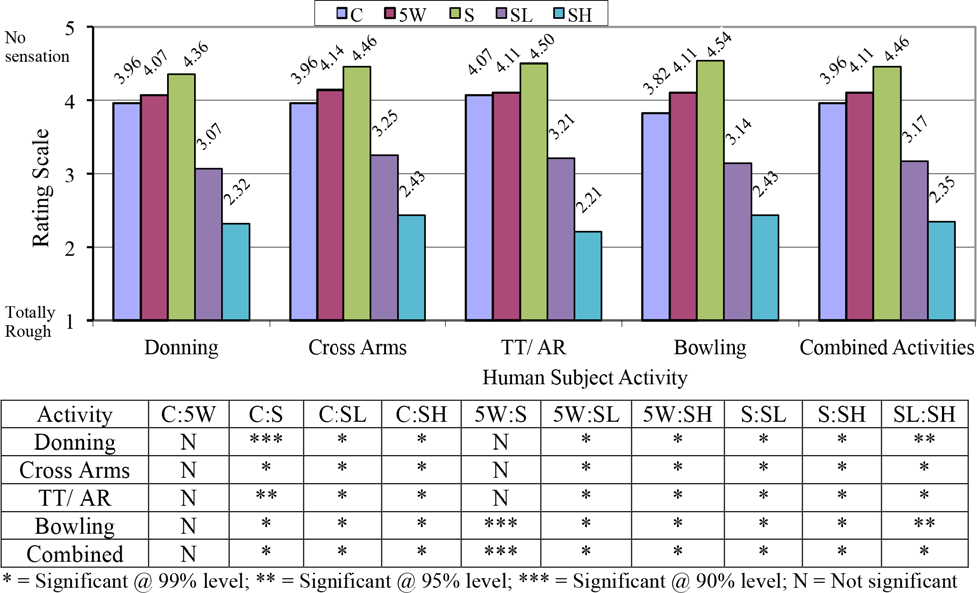
Average roughness rating (with Student's t-test analysis of significant differences between test garments).
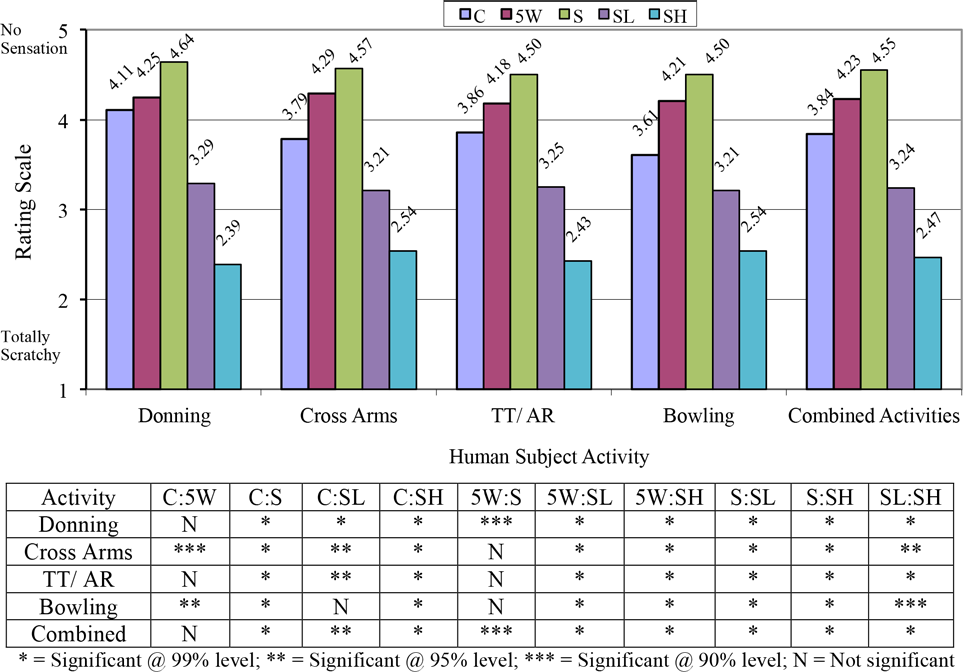
Average scratchy rating (with Student's t-test analysis of significant differences between test garments).
Specific subject physical activity or movements impacted subjective comfort ratings of the blouses in this choreographed laboratory simulation of active wear. Therefore, it was observed that more vigorous activities, such as the toe touch and arm raise and bowling motion resulted in more desirable tactile comfort responses than were generated by less vigorous activities, such as cross body arm movements, or by simply donning the blouse. However, the order of the tactile comfort ratings for the test blouses was generally consistent regardless of the physical activity performed by subject evaluators. Figs. 5–7 show that different motions or activities did not change the relative rating of blouses having different wash treatments.
Predicting Tactile Comfort Response from Objective Measurements
Swatch-sized fabric samples were cut from wash treated and control test blouses, and the mechanical and surface properties of these materials were measured using KES. Empirical models were then developed to establish the relationships between the objectively measured properties and subjective ratings of blouse tactile comfort in wear.
1
A stepwise linear regression model that used three standardized KES measured fabric surface parameters, including coefficient of friction (MIU), mean deviation of surface friction (MMD), and geometric roughness index (SMD) to predict subjective ratings of blouse scratchiness in wear, was developed (Eq. 1).

Std(
A second regression model was developed to predict subjectively perceived blouse stiffness based on KES measurement of fabric shear stiffness (Eq. 2).

Figs. 8 and 9 shows that these regression models successfully predicted important determinants of blouse tactile comfort response.
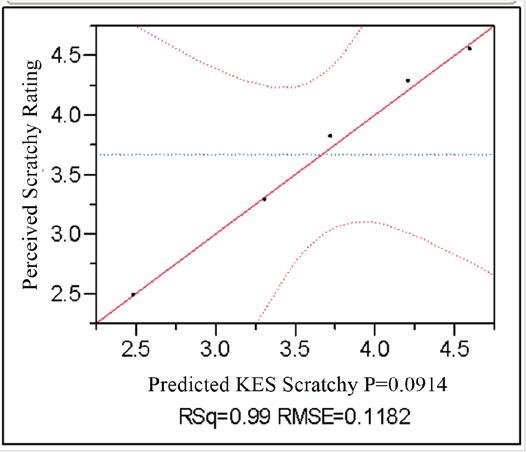
Rated blouse scratchiness and rating based on KES-measured surface properties.
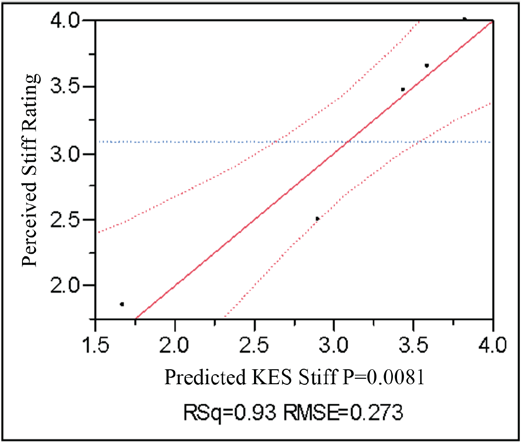
Rated blouse stiffness and rating based on KES-measured shear stiffness property.
Because of their indicated importance to tactile response, a regression model was developed that combined KES-measured surface properties and shear stiffness to predict the tactile comfort rating of the wash-treated blouse materials (Fig. 10). Fig. 10 shows that tactile comfort response to wash treated blouses in dynamic wear were accurately predicted from objectively measured fabric properties. 1
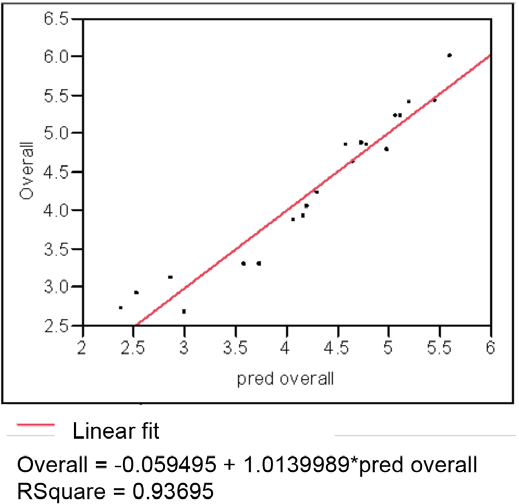
Correlation between tactile comfort rating and model based on measured fabric surface and shear stiffness properties.
Sites of Tactile Sensations in Wear
Following each of the wear test activities performed, test subjects were instructed to mark the locations on the torso where they most sensed garment contact and tactile response. A blank diagram illustrating the front and back of the torso was provided and marked to indicate these locations. Responses for a given area were tallied and a percentage, of the total areas where a response was indicated, was calculated for each area. These percentages are illustrated using a gray scale (Fig. 11), with darker areas representing the most concentrated location of garment tactile sensation. This analysis shows that garment interactions were associated with the specific physical activity performed by the test subjects. For example, the upper back area was a predominant site generating tactile response whenever test participants raised or crossed their arms, touched their toes, or performed a motion designed to simulate hurling a bowling ball down a lane. During all these activities, the shoulder areas (front, back, upper arm) were consistently marked as locations of skin-blouse tactile interaction. Conversely, areas on the subjects’ forearms were identified as sites generating tactile interactions when the activity involved a bowling movement. Of most significance, the body locations indicating tactile interactions were the same, regardless of the blouse wash treatment.
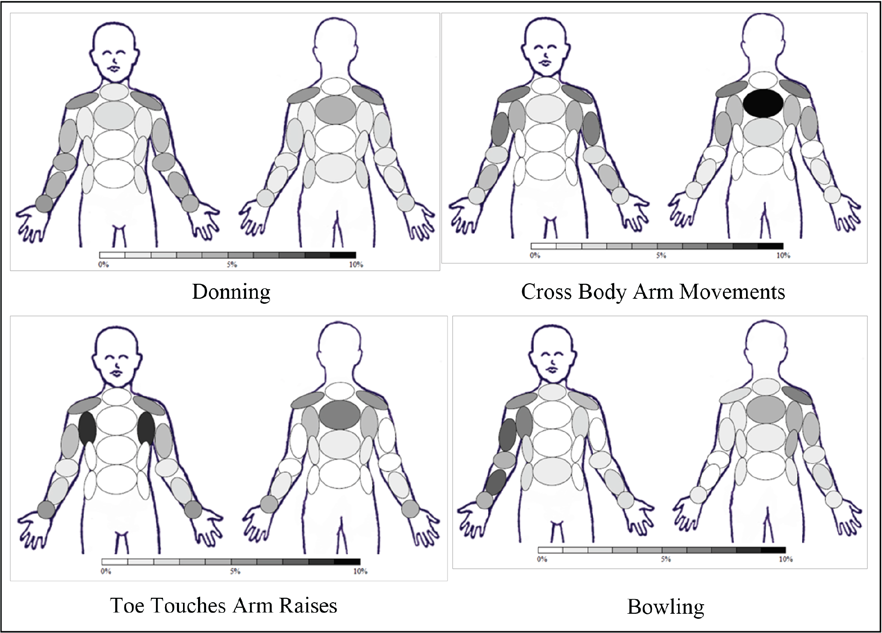
Locations of tactile sensations in controlled wear trial exercises (darker areas indicate locations of most indicated tactile interactions—across all test blouses).
Conclusions
This research demonstrates that the areas on the human body responsible for tactile response to blouse materials were logically associated with the specific activity of the wearer. Depending on the activity, sites of garment-to-skin interactions that contribute most to tactile sensations were located in the upper back, in the apex of the shoulders, or in the forearm of the wearer. These locations coincide with areas on the blouse where the highest level of stress would be expected based on the type and range of upper torso movement incorporated into each of the specific activities of the carefully prescribed protocol. Although the site of the tactile response depended on the specific nature of the physical activity, the relative tactile comfort ratings of the different wash-treated blouses remained the same regardless of the activity. This is a particularly useful result since it indicated that human subject activities need not be elaborately controlled or choreographed to reveal differences in tactile comfort, provided the dynamic movements are sufficient to cause clothing interactions with the skin of the wearer.
This research has confirmed that human subjects can detect differences in the tactile comfort of wash-treated clothing materials. It has shown that hand evaluations of fabric swatches provide useful screening for human comfort response to garment wear for clothing applications that are not driven by thermal factors and sweating. It has demonstrated that human tactile response to laundered blouses can be reliably predicted from a few objectively measured fabric properties, specifically fabric shear stiffness and surface properties.
It is important to note that these clothing wear trials were deliberately conducted using low intensity activities and in mild climatic conditions. Different fabric properties may influence human tactile response in more extreme environments, or for sweat generating activities, where thermal or moisture absorption properties of materials may be more important determinants of comfort.
There is ongoing interest in developing an instrumented method for in vivo measurement of tactile or haptic response to clothing materials in dynamic wear. This study informs that effort by identifying the locations on the upper torso where in situ instrumental measurement of the forces generated in skin-clothing interface interactions can be most productively focused.
Footnotes
Acknowledgements
The authors gratefully acknowledge the Unilever UK Central Resources Limited for providing support for this research and for supplying both fabrics and garments. They express their sincere gratitude to the subjects that participated in the laboratory evaluations. They are also grateful to Phil Williams and the Edge of Urge Inc. for their assistance in constructing, as designed, the garments needed for this analysis.