



Abstract
Durability and service life of structures are guaranteed towards the reparation and rehabilitation of concrete. Repair materials are usually cementitious matrixes reinforced with fibres. Partial replacement of cement by supplementary cementitious materials in repair products is important to decrease the consuming of cement, conserve natural resources, reduce waste as well as assisted to advanced sustainable building materials. For this purpose, six self-compacting repair mortar (SCRM) reinforced by polypropylene fibre (PPF) were prepared with replacement of cement by marble powder (MP) at different percentages 0%, 10%, 15%, 20%, 25% and 30% according to the EFNARC 2005 specifications. First, the optimization of fibre’s dosage is obtained at fresh and hardened states (compressive and flexural strength) at 28 days. Then, SCRM reinforced by polypropylene fibres was evaluated in different methods, at fresh states (slump flow) and hardened states (compressive and flexural strength and elasticity modulus) at 3, 7, 28 and 90 days. In addition, durability was studied on sorptivity at 28 days and adhesion strength on composite specimens (half SCRM/half substrate mortar) at 7, 28 and 90 days. The obtained results of fresh mortar revealed that the addition of PPF contributed to workability enhancement. The combined use of PPF and MP showed good mechanical properties of SCRM which fulfilling the requirements of class R4 materials for structural repair products. On the other side, elasticity modulus has decreased with the increment of marble powder content however, a good correlation is attained between elasticity modulus and compressive strength. Adhesion test indicated that 15% of MP is the optimum dosage which provides 20% of gain in adhesion strength.
Introduction
Concrete structures inspections and maintenance are an important uninterrupted process to ensure the preservation of structural integrity during its lifetime. Most structures would require minor repairs; however, some of them need major intervention. Structures damage is caused through several factors such as change in function, increase in loads, changes in the building regulations and sometimes the mistakes in execution or chemical attacks.1–4 These factors require either repair or reinforcement interventions. In addition to that, the damage caused by fire, earthquake and any other deterioration resulting from a natural or human phenomenon otherwise from ageing of the structure. The suitable solution in this situation is to repair or reinforce the structures rather than demolish and rebuild them. According to ACI Committee 2016, 5 concrete durability is defined as the ability to withstand the action of weathering and other deterioration processes throughout retaining serviceability when it is exposed to the intended service environment.
Due to the brittle nature of concrete and mortar, the use of fibre is indispensable and has numerous important effects on enhancing the toughness of the material and its precracking behaviour. Fibres are available in a variety of sizes, shapes, and materials. They can be made of steel,6,7 plastic, 8 glass, 9 and natural materials. 10 Many researchers reported that the incorporation of fibres into the mix can improve mechanical and ductile behaviour of the material.11,12 Hassan et al. 13 revealed that hybridization of polypropylene fibres led to 15% of shrinkage reduction. However, Zhang and Li 14 and Tabatabaeian et al. 15 showed that adding fibre to mortar mix reduced its slump flow.
The use of composite materials including carbon fibre, aramid, basalt, glass fibre and polypropylene fibre for structural reinforcement, load-bearing and containment is a proven technique. The addition of fibres to reinforce repair materials have gained recently more attention.16,17 Some researchers studied the effect of polyvinyl alcohol (PVA) fibres on slant shear tests with different slants of the repair interface, they indicated that the incorporation of PVA fibres in repair materials improves their interface properties by minimizing shrinkage and micro-cracks propagation.18,19
Self-compacting mortar is considered as an ideal material for reparation and rehabilitation of reinforced concrete (RC) elements. Because of its advantages over the normal mortar on decreasing the construction time and improving the filling ability of reinforced concrete structures.20,21 Its high flowability and stability are due to the high cement content, thus it is necessary to use inert fillers and supplementary cementitious materials. 22
Several waste materials and by-products have been used in concrete as Supplementary Cementitious Materials (SCMs) and aggregates to enhance some properties of concrete and reduce the problem of their disposal. 23 They can be used either as an addition, a partial replacement for portland cement24–27 or as aggregate in concrete.28–30 The recycling of waste materials is a topical issue in order to minimize pollution, protect the environment and provides economic advantages. Numerous researchers have utilized mineral admixtures such as natural pozzolana (NP) in producing repair materials. They found that including NP as a binder gave compatible repair mortars.31,32 Benyahia et al. substituted 20% of naturel pozzolana and 10% of limestone dust as a replacement of cement. They indicated that the use of NP and limestone dust are suitable materials to produce self-compacting repair material. 33
The marble, as a natural product, is extracted as blocks from quarries then transported to the factory for processing. Through the cutting blocks process, about 50% of it is the total amount of wastes, 34 which generates environmental problems35,36 due to the presence of high volume of calcium oxide. 37 Several researchers in recent years have been used marble waste in concrete. Thus, recycling marble scrap powder has multiple positive effects.38–43
A satisfactory performance could be resulted with the use of 10%–15% of marble powder as a substitution of cement in concrete mixes and consequently reduce the CO2 emission. 44 Arel 45 concluded that a reduction about 12% in the global annual CO2 emission is recorded by using 5%–10% of marble dust. Marble powder incorporation as cement replacement lead to workability enhancement46,47 which is related to its shape, its texture of particles surface and its fineness. 38 Marble powder can also improve cohesivity and other mechanical properties by using it as filler with a very fine particle size distribution. 44 Shawki et al. 42 resulted in a satisfactory rheological properties by using 10% of recycled marble powder in self-compacting concrete which ensure its suitability for the construction application. Utilizing marble powder as a partial replacement of cement up to 20% was found to increase compressive strength46,48–50 and flexural strength51–53 probably due to its filling effect. Other study reached that marble powder seems to decrease the mechanical strength 54 as a result of decreasing the amount of C-S-H gels. Ashish and Verma 55 reported that the combination of marble powder and fly ash gave a higher packing density and showed better performances that cannot be found by using them separately. Many research investigated the use of waste marble powder as cement and sand substitution on the properties of paste, mortar and concrete. However, limited researches have been done to experiment its feasibility on the durability of repair systems (repair mortar/old concrete).
About 50% of the repairs carried out on concrete structures end with a premature failure, as a consequence to the debonding of the repair layer due to a poor adhesion on the damaged concrete surface. The durability of the reparation depends on 56 : External exposure environment, characteristics of the substrate, characteristics of the used materials and maintenance. To guaranty the durability of concrete reparation, the comprehension of the cementitious behaviour of repair materials is very important.
View of the issue of huge amount of waste marble powder produced from the process of cutting marble blocks, the valorization of this waste and its use as partial replacement of cement seems to be the ideal technique to its disposal in nature. Besides to its contribution in the reduction of cement consumption and CO2 emission during its production. According to the few previous researches have been conducted on the impact of the combination of polypropylene fibres and marble powder on adhesion strength of repair materials on the substrate concrete and the durability of the repair system, the present paper is developed. First, the optimization of fibre’s dosage was assessed on rheological and mechanical properties. Then, the combined effect of polypropylene fibre and the substitution of cement by marble powder was evaluated on SCRMs prepared with 0%, 10%, 15%, 25% and 30% of MP and 0.06% of polypropylene fibre. SCRMs were tested for fresh properties, mechanical characteristics, elasticity modulus, sorptivity coefficient and adhesion strength.
Experimental
Materials
In this study, cement (C) class 52.5 N with a fineness of 3300 m2/kg and specific gravity of 3030 kg/m3 was used. Marble powder (MP) was crushed for 2 h to prepare a powder with higher fineness equals to 5000 m2/kg with a mean-particle diameter of 80 μm, a specific gravity of 2620 kg/m3 and bulk density of 1046 kg/m3. Table 1 gives the chemical component of cement and MP, Figures 1 and 2 illustrate laser particle size distribution and XRD analysis of both powders. Table 2 shows the characteristics of polypropylene fibre (PPF). The used river sand is a class 0/5, with a specific density of 2620 kg/m3 and fineness modulus of 2.41. Polycarboxylate superplasticizer (Sp) was used.
Chemical analysis of cement and marble powder.


Size distribution by laser of cement and marble powder.

XRD analysis of cement and marble powder.
Polypropylene fibre characteristics.


Table 1 shows that the main component of cement and MP is calcium oxide (CaO), with a proportion of 67.60% and 53.42%, respectively. Compared to the cement, MP has a lower amount of aluminium oxide (Al2O3) and iron oxide (Fe2O3). To analyse the microstructure of cement, marble powder and polypropylene fibre microscopies images (MEB) are presented in Figure 3. Figure 3(a) and (b) give the morphology, particle size and shape of the C and MP. Both materials have irregular, angular particle structure and a rough texture. Similar result was found by Singh et al. 57 Polypropylene fibre is showed in Figure 3(c). It has a smooth surface and a circular cross section.
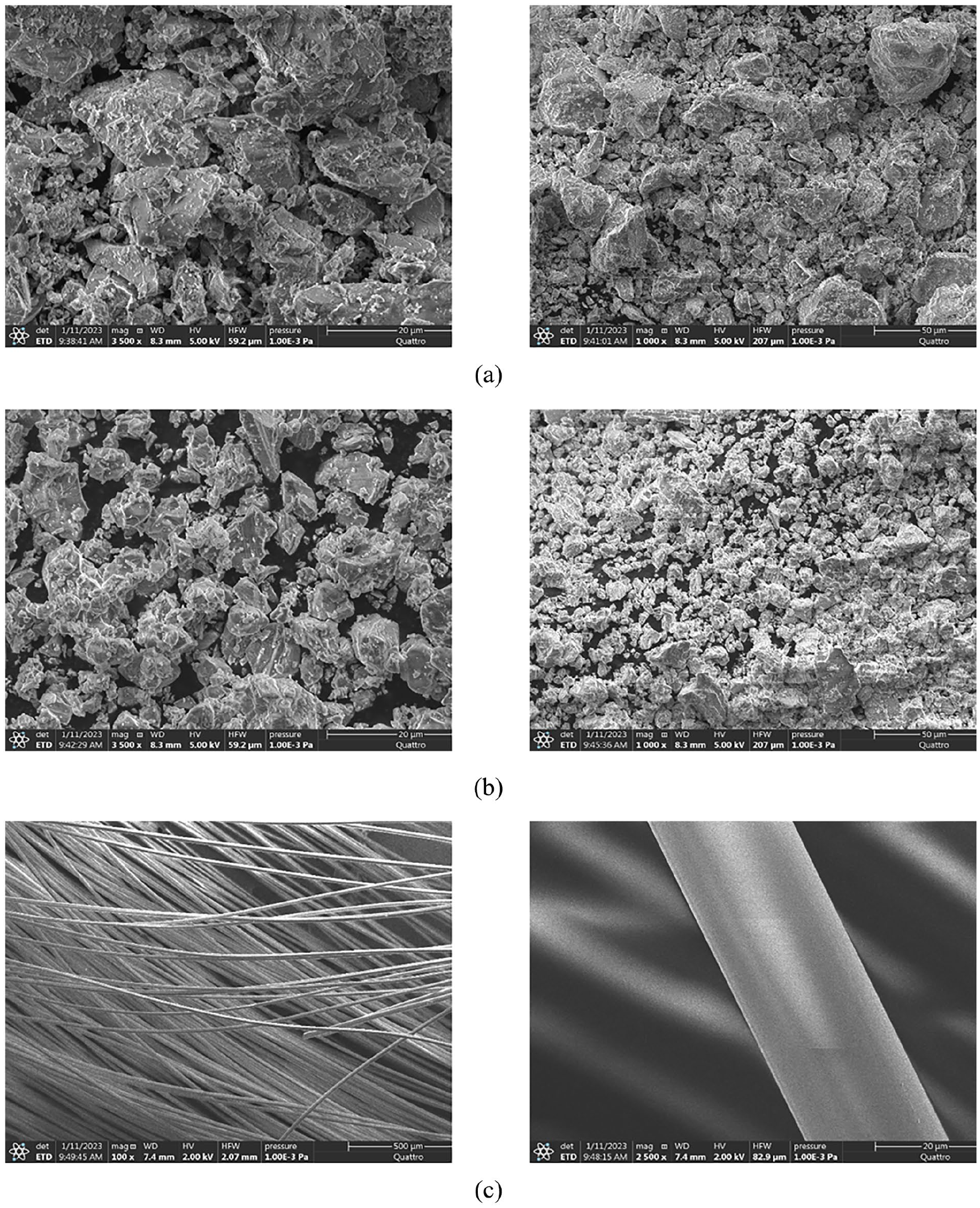
Microscopic images (MEB) of: (a) cement, (b) marble powder, and (c) polypropylene fibre.
Methods
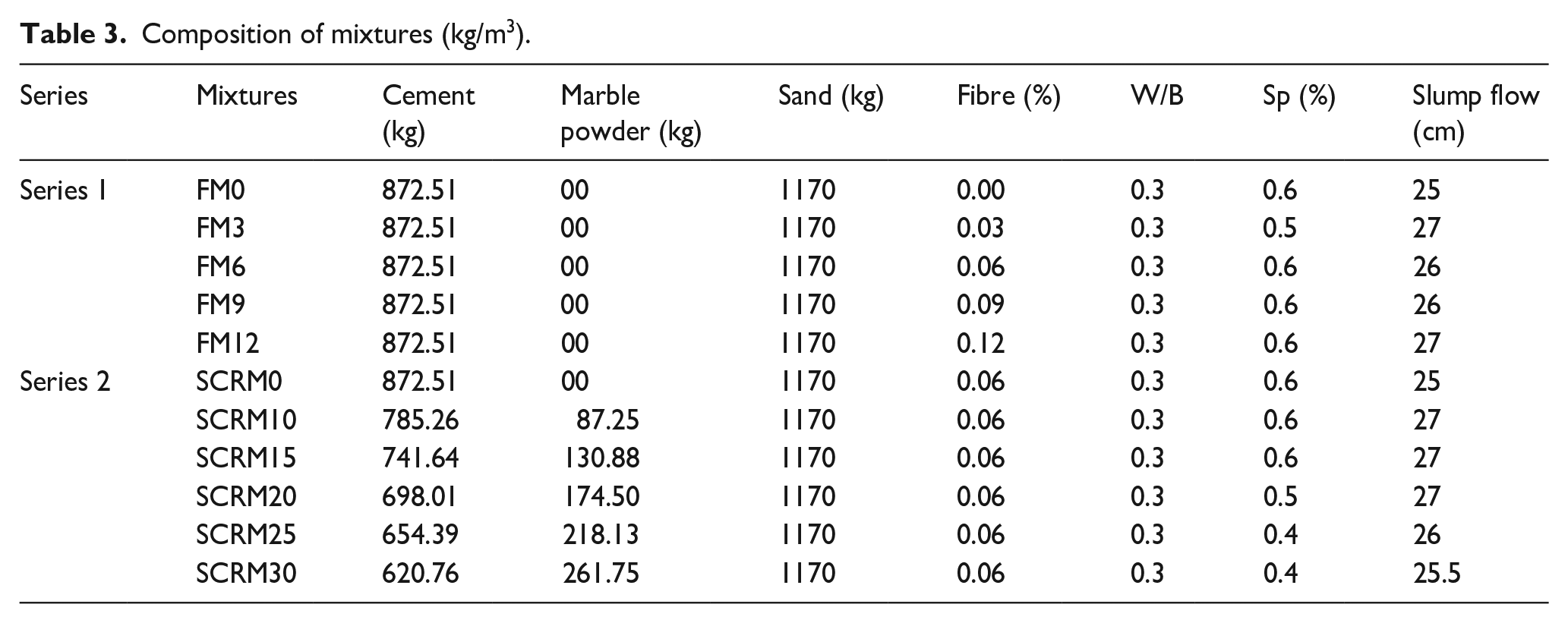
Two series of mixtures were prepared and presented in Table 3. Series 1 contains five mixtures with different dosages of polypropylene fibre 0%, 0.03%, 0.06%, 0.09%, 0.12% relative to the total volume. Six mixtures belong to series 2 which contains one dosage of fibre and six different dosages of marble powder. The choice of 10%, 15%, 20%, 25% and 30% of MP and 0.06% of fibre reveals to the optimal dosage with a good compressive and flexural strength at 28 days. Fibre’s dosage and W/B ratio were kept constant in all mixtures. All mixes were prepared according to the requirements of the European Federation for Specialist Construction Chemicals and Concrete Systems EFNARC 2005. 58
Composition of mixtures (kg/m3).
Fresh mortars were characterized by slump flow test using mini cone in truncated shape (height of 60 mm, upper and lower diameter of 70 and 100 mm). Bleeding, segregation and fibre’s agglomeration were also visually checked. The diameter value was measured in both directions and their average is defined as slump-flow diameter. Prismatic moulds (40 × 40 × 160 mm3) were filed with fresh mortar and covered with a plastic film then demoulded after 24 h. Mechanical properties were assessed (flexural and compressive strength) at 3, 7, 28 and 90 days according to standard EN 12190-6, 59 after conservation in saturated-lime water (T = 20°C ± 2°C, RH = 100%). Flexural strength is the average of three specimens, while the compressive strength is the average of the six resulting halves from the flexural strength test. In addition, modulus of elasticity (ED) was carried out on (60 × 90) mm3 cylindrical specimens using the ultrasonic pulse velocity test (UPVT; Figure 4(a)) after 28 and 90 days of curing in the laboratory (T = 20°C ± 5°C, RH = 30% ± 5%), according to EN 12504-4. 60 The ED is calculated with this equation:

where:
ED: Dynamic modulus of elasticity (MPa)
ρ: Density of dry specimen (kg/m3)

(a) Ultrasonic pulse velocity test, (b) sorptivity and (c) adhesion strength test.
The sorptivity coefficient (

Where
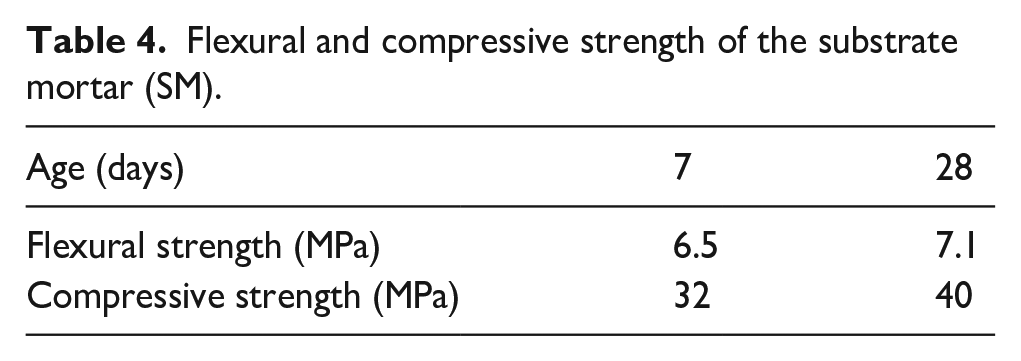
Adhesion test was evaluated using bonding tensile method (Figure 4(c)) on prismatic specimens (40 × 40 × 160 mm3; half SCRM/half substrate mortar). The substrate mortar (SM) was prepared and cured in humid chamber (T = 20°C ± 5°C, RH = 80% ± 5%) for 28 days before the application of SCRM. For a good adhesion, the substrate mortar was scratched and humidified before casting the SCRM. These composite specimens were tested after 7, 28, and 90 days of air curing. The mechanical characteristics of substrate mortar used in this study are set out in Table 4.
Flexural and compressive strength of the substrate mortar (SM).
Results and discussion
Optimization of fibre dosage
Fresh properties
Table 3 gives the slump flow of all mortars. It can be seen from the slump flow diameter that all mixtures are in the target of 25 ± 2 cm. Sp dosage was adjusted to obtain the slump flow required by EFNARC 2005. 58 The results reveal that by adding PPF into the mortar, its slump flow diameter increases slightly in all mixes but still in the target required by EFNARC 2005. That could be due to the smooth surface and hydrophobic nature of PPF so that it does not absorb water. In addition to the flexible character and small cross section of the used fibre about 32 µm, as shown in Figure 3(c), which contribute in minimizing the friction between the sand grains by increasing the distance between them thus allows the flowing of the self-compacting mortar. It was observed by Karthik and Maruthachalam 62 that hybridization of PPF and steel fibres gave a high workability performance of fresh concrete. In contrast to other findings, slump flow was found to decrease with the addition of PPF.14,15 The use of 0.03% and 0.06% of fibre showed a good dispersion and distribution in the matrix and presented the best rheological properties, while 0.09% and 0.12% presented an agglomeration of fibres (Figure 5).
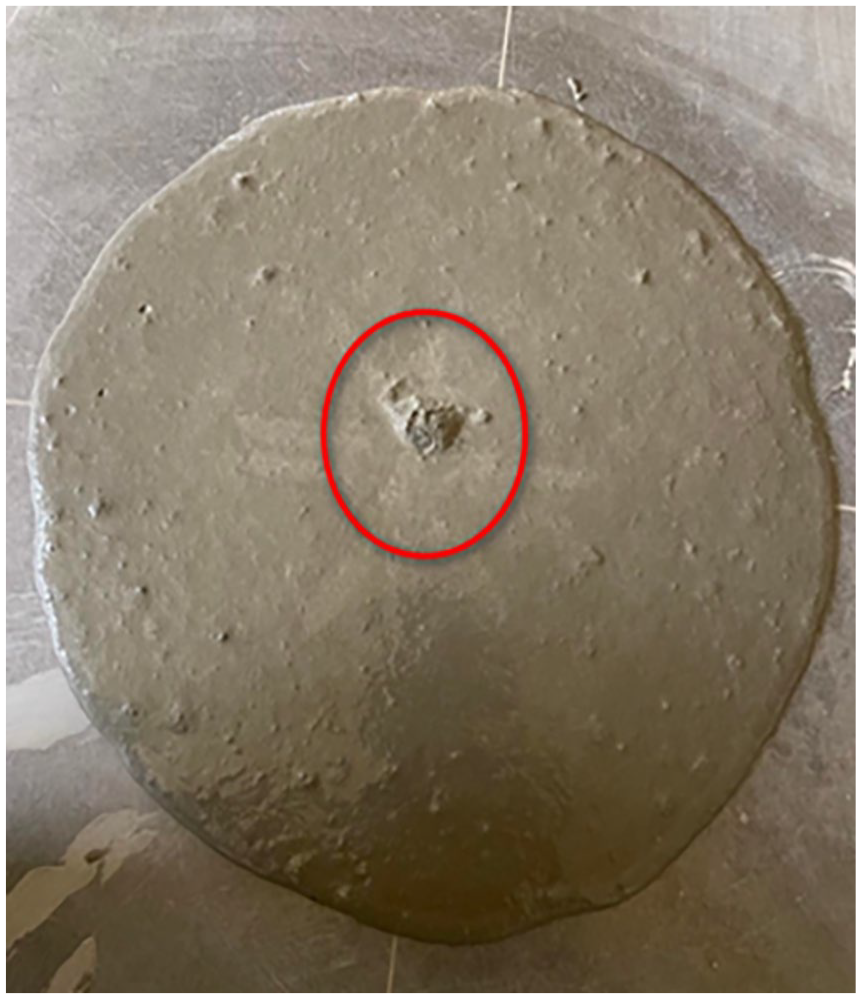
Agglomeration in mortars with 0.09% and 0.12% of fibre dosage.
Mechanical properties
After determining workability properties, mechanical strength was evaluated. Figure 6 provides the variation of compressive and flexural strength in function of fibre dosage at 28 days.

Evolution of mechanical strength in function of fibre dosage at 28 days.
The results show that the addition of polypropylene fibre in the matrix enhances both flexural and compressive strengths of fibre’s mortar. It is clearly seen that mortar containing 0.06% of fibre has developed the highest compressive strength value of 97.7 MPa at 28 days with an increment about 6.7% compared to control mortar. That could be related to the good dispersion of fibres through the mix (as noted in workability behaviour) which led to the ideal granular skeleton. This confirms also the effectiveness of PPF in delaying micro-cracks improvement and reducing their propagation. While mortar with 0.12% PPF exhibited the most important flexural strength with an improvement of 24.7% compared to control mortar. This could be due to the good length of the used fibres and its bridging effect where the tensile stress was transferred to the fibre.
Visual observation demonstrates that mortars with 0% and 0.03% of fibre failed suddenly once the mortar was cracked however, mortars with 0.06%, 0.09% and 0.12% did not fully separate. This could be related to the good adhesion between the fibre and the paste. In line with these results, several researchers have concluded that PPF incorporation enhances the mechanical performance. Sayed Mohammad Akid et al. 63 used polypropylene fibre and fly ash, they found a gain in compressive and tensile strength at 28 days where polypropylene fibre restrained and reduced the growth of initial and macro cracks. Zhou et al. 64 showed that the incorporation of PPF gave high enhancing coefficients in fibre reinforced concrete. Çelik and Bingöl 65 reported that the use of fibres delayed the fracture of the concrete by restricting the lateral expansion in compressive test, also PPF showed a ductile post peak behaviour in flexural test. Belaidi et al. 12 mentioned that the use of both silica fume and synthetic fibres enhanced the mechanical properties. We conclude that mortar with 0.06% of fibre is the optimal dosage which reveals to the good compressive and flexural strength at 28 days, also gave the best dispersion and the most homogenous mix in fresh state.
Optimization of marble powder dosage
Fresh properties of SCRMs
Figure 7 illustrates slump flow and superplasticizer demand of self-compacting repair mortars (SCRMs) contains 0.06% of PPF in function of the increase in marble powder percentage.
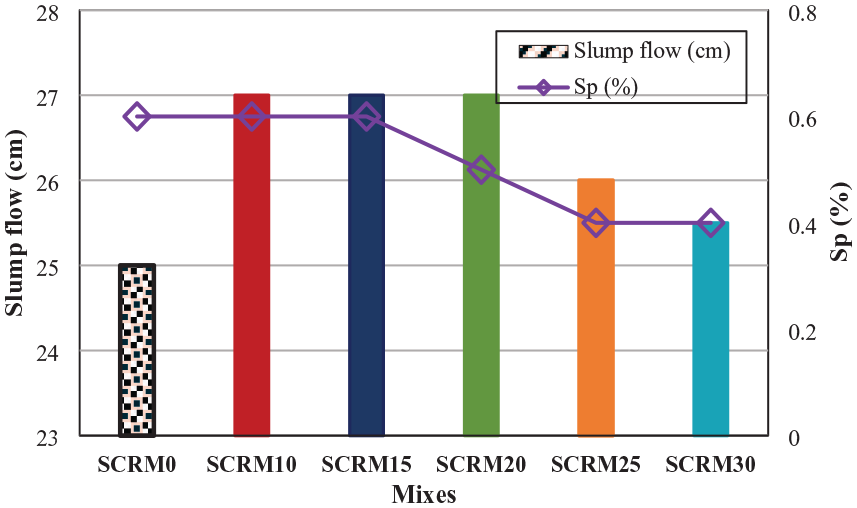
Slump flow and superplasticizer demand of SCRMs in function of MP dosage.
The obtained results showed that increasing MP content from 0% to 15% leads to increase slightly slump flow from 25 to 27 cm, respectively, with superplasticizer (Sp) dosage equal to 0.6%. Then the dosage of Sp was adjusted in mortars incorporating MP beyond 15% to obtain slump flow required by EFNARC. 58 That could be attributed to the filling and dilution effect of MP which increases the mobility of the cement particles. Moreover, at an early phase of hydration, the inert nature of MP, releases a part of the mixing water which causes lubrication of the grains, and improves the mixture’s workability. 39 Other researchers recorded that limestone fillers fill the inter-particle voids of the mortar and increase the compactness Φ * paste of the mixture which leads to release the water trapped in the voids and improving the workability. 66 The visual observations showed no bleeding or segregation phenomenon. Similar results were reported by Ruiz-Sánchez et al. 46 and Rashwan et al., 47 they replaced cement by MP and resulted in workability enhancement.
Mechanical strength of SCRMs
Compressive and flexural strength of SCRMs reinforced with 0.06% of polypropylene fibre in function of MP substitution at 3, 7, 28 and 90 days are given in Figures 8 and 9, respectively.

Variation of the compressive strength in function of marble powder of SCRMs at 3, 7, 28 and 90 days.

Variation of the flexural strength in function of marble powder of SCRMs at 3, 7, 28 and 90 days.
It is observed that mechanical properties increase with the proceeding in curing times from 3 to 90 days, while, they decrease with increasing the substitution levels of marble powder. The gain rate in compressive strength from 3 days to 7, 28 and 90 days of conventional mortar is higher than that of mortars with MP.
At an early age (3 days), the compressive strength generates a comparative value in all mortars compared to control mortar. That may be attributed to micro filler effect of MP which fill the voids and lead to denser paste. 67 Also the transition zone and cement paste is improved by filler effect. 57 At 7 days, 10% of MP content gives an augmentation in compressive strength about 8% compared to control mortar, while a reduction was observed with the increase of MP beyond 15%. A slight and insignificant diminution was generated in all self-compacting repair mortars at 28 days compared to control mortar. At later age (90 days), the strength started to decrease at higher level from 20% of replacement. This diminution in the strength gain is possibly due to the reduction in hydration products C3S and C2S.68–71
Singh et al. 57 and Kore et al. 44 observed that for 10% and 15% replacement level, the compressive strength increases then starts decreasing for 20% and 25% of replacement at 28 days of curing. Aliabdo et al. and other researchers68–71 noted that compressive strength is enhanced with 10% replacement level of cement by MP. 72 Since that lime-stone fine has similar mineralogical composition to marble powder, Voglis et al. 73 and Guemmadi et al. 74 indicated that lime-stone fine reacts with the alumina pastes of cement to form a calcium non-carbo aluminate hydrate phase which result in significant enhancement in strength, despite that lime-stone fine does not have a pozzolanic reaction. Singh et al. recorded that many factors can influence the reactivity of marble powder such as its fineness. In order to obtain a compressive strength close to that of control concrete, using the entire sample passing through 300 µm sieve could be beneficial. 57 We note that all repair mortars exhibited a compressive strength higher than 45 MPa at 28 days, fulfilling the requirements of class R4 materials according to the EN 1504-3 Standards. 75
Concerning the results of flexural strength, its trend was similar to that of compressive strength. An increase is observed in function of age, and a decrease in strength after adding MP. At 3 days, SCRM10 showed an enhancement about 16.3% compared to control mortar, while SCRM15, SCRM20 and SCRM25 gave a comparable value. A diminution about 12.2% was generated in SCRM30. At 7 days, SCRM10 gave the same strength as that of SCRM0, while a reduction was observed in the other mixtures. A decrease in strength is observed at 28 days, except for SCRM15 exhibited the same strength value with SCRM0. At longer age (90 days), the use of MP leads to a diminution in flexural strength, it is well observed from 15% of MP. This decrease is a consequence to the reduction in C3S and C2S required for hydration process and responsible for strength development.69,70,76,77 Agarwal and Gulati 78 reported that 10% and 20% of substitutions by MP resulted in disadvantages in performance of 12% and 25%, respectively, after 180 days of curing.
The correlation between compressive and flexural strengths are outlined by various researchers and can be summarized in a different way:

Where

The previous expression can be effectively utilized to estimate and predict compressive strength using the findings obtained from the flexural strength test as illustrated in Figure 10.

Correlation between flexural and compressive strengths of SCRMs.
Modulus of elasticity of SCRMs
The variation of elasticity modulus at 28 and 90 days is presented in Figure 11. There is a clear trend of decreasing in modulus of elasticity (ED) with the increment in marble powder replacement. The results demonstrate that modulus of elasticity follows the same trend of the compressive strength, where the MP effects negatively the ED value. The highest modulus values are recorded to SCRM0 at both ages thanks to the high content of cement. The diminution in ED could be due to the decrease in the volume of hydration products compared to control mortar and to the evaporation of water necessary for the hydration in case of air-cured conditions.

Effect of marble powder percentage on the modulus of elasticity at 28 and 90 days.
On the other hand, the elastic modulus of all self-consolidating repair mortar (SCRM) mixtures exhibited an increase over time, particularly noticeable after 90 days of curing. For example, during the extension of the curing period from 28 to 90 days, the elastic modulus of all the SCRMs increase between 8.7% and 13.2%.
All ED values were higher than the lower limit (20 GPa) required by the EN 1504-3 Standards for Class R4 repair mortars. It could be due to the high fineness of the used MP that gave a denser and less porous specimen, which enhance the compactness of the mix, fill the voids and denser paste is obtained. Because of theirs high ductility, composite materials are effective and good repair materials as it was reported by several researcher.79–81 Uysal and Yilmaz 82 indicated that modulus of elasticity decreases with increasing the replacement rates of mineral admixtures. Other researchers found that using both PPF and recycled aggregates lead to a decline in ED.
Various models and correlations have been suggested in the literature to estimate the modulus of elasticity of concrete, predominantly based on the concrete’s compressive strength. This study has formulated an empirical correlation between the modulus of elasticity and compressive strength, which can be articulated as:

Here,
Equation (5) demonstrates a strong correlation between elastic modulus and compressive strength, as evidenced by a coefficient of determination (R2) exceeding 0.86. Figure 12 further shows a remarkable correlation between the compressive strength and the modulus of elasticity.

Correlation between the dynamic modulus of elasticity and the compressive strengths of SCRMs.
Sorptivity
Sorptivity coefficient (S) at the age of 28 days is illustrated in Figure 13. The coefficient S varies between 0.26 and 0.53 kg/m2.h1/2. It is often measured to predict the durability of the material. 83

Variation of sorptivity of SCRMs at 28 days.
It can be clearly seen from Figure 13 that the use of high volume of marble powder contents increases significantly the coefficient of sorptivity at 28 days of water-cured conditions. SCRM0 presented the lowest sorptivity compared to all repair mortars, while SCRM20 gives the highest coefficient. A comparable value was observed with 10% and 30% of MP with 39% of evolving compared to SCRM0. Mortars SCRM15, SCRM20 and SCRM25 showed more than 45% of increment. This could be explained by the decrease in the volume of hydration products compared to control mortar and the inert nature of marble powder. Many researchers reported that sorptivity is directly related to formation of C-S-H gel, C-H crystalline and filling the pores.84,85 Other study 86 concluded that the use of marble waste particles finer than 150 microns to replace cement in ranges of 5%, 10%, 15% and 20% reduced water absorption by more than 40%.
Another study investigated the use of MP and found that the water absorption decreases gradually when increasing MP up to 20%. 69 Ghrici et al. 33 found that the substitution of 10% of limestone dust gave a capillary absorption coefficient about 0.48 kg/m2.h1/2. Choucha et al. 87 used naturel pozzolana (NP) as a cement replacement with a fineness about 4100 cm2/g and reported that a high volume of NP content increases significantly the capillary absorption at 28 days. Sayed Mohammad Akid et al. studied sorptivity of concrete containing 0%, 0.06%, 0.12% and 0.18% of polypropylene fibres and 15% of fly ash. They concluded that the samples with 0.06% PPF and 15% fly ash as well as 0.12% PPF and 15% fly ash exhibited the lowest sorptivity coefficient compared to control concrete. 63 As a conclusion, all the repair mortars meet the requirement for class R4 (˂0.5 kg/m2.h0.5) according to the EN 1504-3 except SCRM20.
A good correlation exists between sorptivity and dynamic modulus of elasticity with a coefficient of correlation R2= 0.73. The correlation can be presented as follows in equation (6) and Figure 14:

Where, ED is dynamic modulus of elasticity (GPa) and S is the sorptivity (kg/m2.h0.5).

Correlation between sorptivity and the dynamic modulus of elasticity at 28 days.
Adhesion strength
The adhesion strength between repair mortar (SCRM) and substrate mortar (SM) was evaluated by flexural bond test in function of marble powder substitution at 7, 28, and 90 days of curing (Figure 4(c)). A first analysis of Figure 15 shows that flexural bond strength enhanced with age. At an early age (7 days), the enhancement is at high level more than 25% compared to mortar with 0% of MP. This is in line with the study conducted by Vardhan et al. 88 on the effect of waste marble powder as cement replacement and revealed positive effect on early age compressive strength (7 days). At 28 days, the gain in bond strength of SCRM10, SCRM15 and SCRM20 was in the order of 20%, 20% and 8%, respectively. In the long term (90 days), only SCRM10 and SCRM15 showed an increase in bond strength about 18%–20%. Comparable values are obtained in SCRM0 and SCRM20. Repair mortars with 25% and 30% MP are characterized with lower bond strength compared to SCRM0 at 28 and 90 days. The improvement in the adhesion could be explained by the enhancement at the interface between the repair material and the old mortar caused by the increase in the friction between them; due to the angularity shape of the MP (Figure 3(b)). Similar results were obtained by Benyahia 33 and Aliabdo and Abd_Elmoaty. 89 Moreover, the fine particles size of marble powder contributes in filling microvoids, thus resulted in denser microstructure. As a consequence, it reduces the porosity and improves the bond strength by enhancing the interface contact.
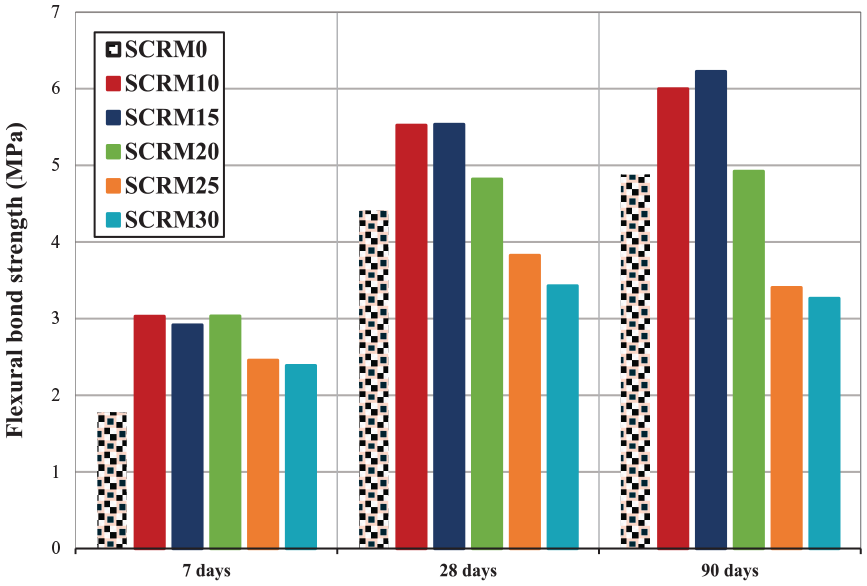
Variation of adhesion strength in function of marble powder percentage at 7, 28 and 90 days.
The obtained bonding results showed that the composite samples exhibited the same failure mode at all ages. Interface damage occurred in all test cases; the SCRM are completely separated from the substrate. Amar et al. 90 investigated the adhesion strength using waste glass powder (WGP) at 28 and 56 days. They concluded that using 10% of WGP as cement replacement had good adhesion with the substrate mortar, all the damage occurred in the SM at both ages.
Based on the results presented in Figure 15, it can be concluded that using 10%, 15% and 20% of MP are considered as suitable materials for use as cement replacement to produce self-compacting repair mortars.
Conclusion
Based on the experimental work carried out on self-compacting repair mortar (SCRM) reinforced with polypropylene fibre and marble powder at different dosages (0%, 10%, 15%, 20%, 25% and 30%). SCRMs were tested on fresh state, compressive strength, flexural strength, modulus of elasticity, sorptivity and adhesion strength. The following conclusions can be made:
The optimal percentage of fibre is recorded to 0.06% which yield to a good distribution in the matrix, a maximum compressive strength and good flexural behaviour.
The use of both polypropylene fibres and marble powder is beneficial for workability enhancement which is due to the hydrophobic surface of PPF and inert nature of MP.
According to the mechanical performance, marble powder can be used as cement replacement with PPF in repair mortars up to 30%. All SCRMs found to fulfil the requirements of class R4.
Modulus of elasticity changed in a very low range, its results reveal that 10% and 15% of MP showed insignificant decrease in the ED. From 20% an important diminution is obtained. Besides, a very good relationship is obtained between compressive strength and flexural strength, between elasticity modulus and compressive strength and between elasticity modulus and sorptivity coefficient.
Adding marble powder to the mix augment significantly the sorptivity coefficient. However, all self-compacting repair mortars satisfy the EFNARC specification, except SCRM20.
The adhesion test showed that using up to 20% of MP in repair mortars enhance bonding strength due to the fine particle size of MP and its contribution in filling the microvoids, enhancing the compactness of the mixture and thus enhancing the interface contact between repair mortars and the old mortar.
The synergistic work of MP and PPF revealed in appreciable results in mechanical performance and adhesion strength that cannot be achieved if they were used separately.
In general, the present work investigated the utilization of the marble powder in self-compacting repair mortar reinforced with PPF fibre in accordance with the international standard specifications and satisfactory results were obtained at replacement ratio of up to 30% MP with 0.06% of PPF.
Footnotes
Declaration of conflicting interests
The author(s) declared no potential conflicts of interest with respect to the research, authorship, and/or publication of this article.
Funding
The author(s) received no financial support for the research, authorship, and/or publication of this article.
