



Abstract
In modern society, a wide variety of electronic devices, such as those linked to Wi-Fi routers and power outlets, emit significant electromagnetic radiation. This radiation poses risks not only to human and animal health but also to data security, potentially serving as a source of sensitive information leakage. While short-term exposure to low-frequency radiation typically does not result in adverse effects, prolonged exposure has been associated with various health issues, including depression, nausea, anxiety, headaches, and, in some cases, miscarriages in women. The best solution to protect human from radiation is to cover human body with electromagnetic shielded textile fabrics. Author developed five different mesh-knitted structures and compared their properties with a plain single jersey structure. The purpose of developing mesh knitted fabric is to create curtains that can block or lessen electromagnetic radiation while still allowing light and air to pass through. Composite yarn containing stainless steel wire and carbon fiber was used. Fabric construction was carried out using a fully automatic flat knitting machine. The MH3 and MH5 mesh knitted structures were newly invented. The results showed that the MH3 mesh knitted structure exhibited the highest EMI SE among all the mesh knitted fabrics. The plain single jersey fabric (PJ0) included for the comparison with mesh knitted structures and it exhibited the highest value of electromagnetic interference shielding and UPF rating.
Introduction
In offices and public buildings, numerous electronic devices emit electromagnetic radiation. Employees spend eight working hours sitting there, exposed to these potentially harmful radiation, which can lead to various health problems. Additionally, public departments contain sensitive information that could be easily stolen through electromagnetic emanations. The electromagnetic radiation does not require any medium to travel, it can pass through buildings, water, and space.1–3 Various device components such as keyboards/keypads have become the main tool through which data can be stolen. To address this issue, there are two potential solutions: cover keyboard circuits with electromagnetic shielding material or use shielded fabric for windows or door curtains that help to stop electromagnetic emanations. 4 If a material is shielded between 10 and 20 dB, it is sufficient to destroy the electromagnetic signals that could be theft from government and military buildings through electromagnetic emanations. A person moving around a building that lacks the capacity to block electromagnetic radiation becomes susceptible to these radiations, putting their health at risk.5–7 Eger and Jahn investigated people who lived near a mobile phone signal tower and always remained under the influence of electromagnetic radiation. A questionnaire was distributed to all households asking them about any symptoms or changes they had experienced. The findings were surprising; many people complained of headaches (23.5%), memory abnormalities (28.2%), and reminiscing dizziness, tremors, and depression (48.3%).8–12 Oto et al. investigated 25 individuals employed by a UHF television station. They work there and continuously receive electromagnetic radiation. They experienced various changes including sadness, anxiety, aggression, phobic anxiety, paranoid ideation, psychoticism, and sleep disruption. 13
The shielding knitted covering sheets, window curtains and fabric wallpaper on the wall of room can also help to attenuate radiation emitted from electronic devices (Figure 1).14,15 Hence, a mesh knit structure that allows air and natural light to pass through while offering protection from electromagnetic radiation is a solution to the aforementioned problem.
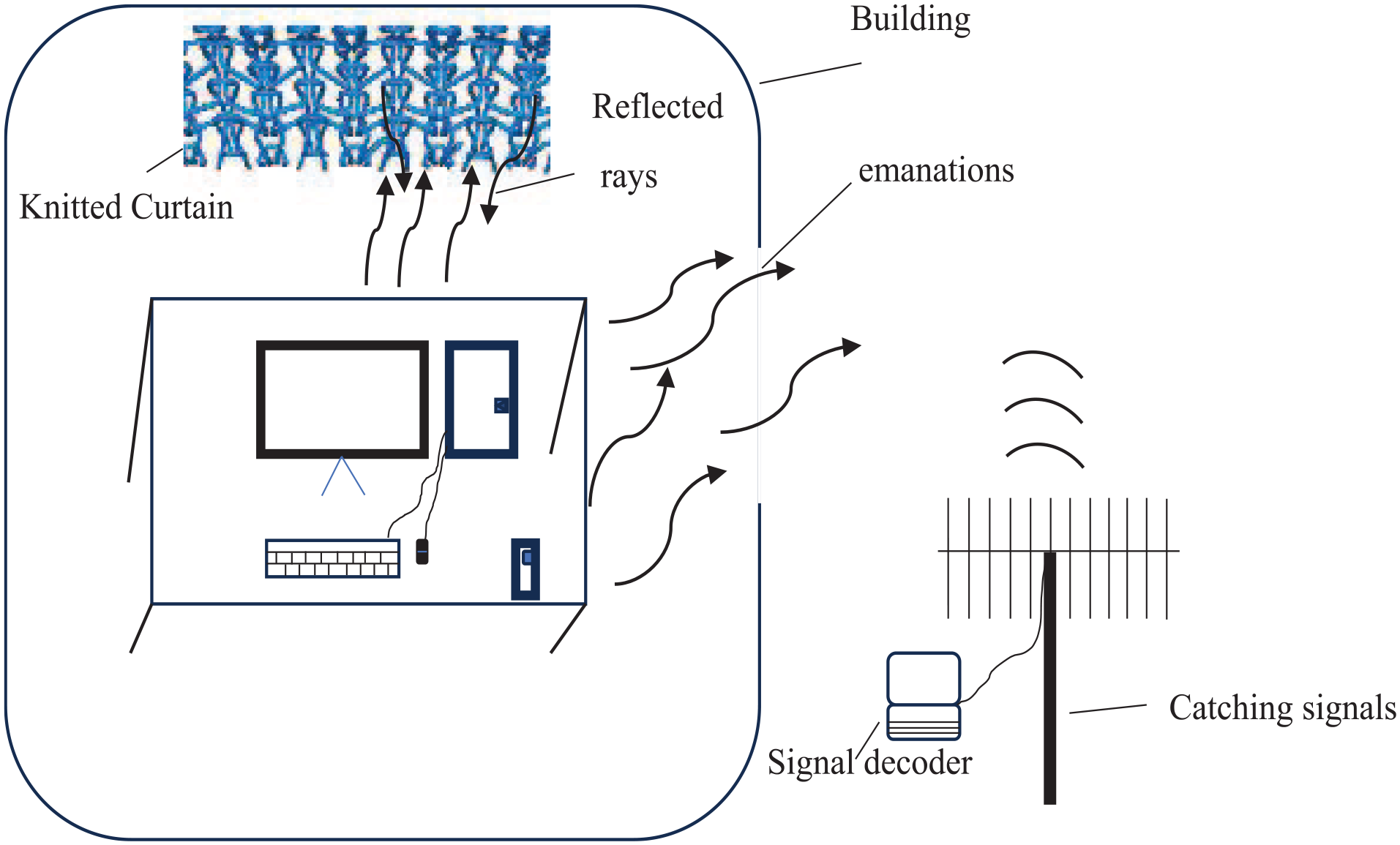
Demonstration of electromagnetic emanation through room window.
Materials and method
Materials
Carbon fiber was spun along with polyester fiber to manufacture the conductive yarn. Another yarn was prepared on sample ring spinning machine, with a core of stainless steel and sheath of polyester. Both yarns were twisted together to form the single plied yarn having a material composition of 80% polyester, 15% stainless steel and 5% carbon. Figure 2 shows the plied yarn that is, (yarns are produced by twisting together two or more yarns). The main purpose of stainless steel was to provide strength and shielding properties at low cost. 16 The carbon fiber was used due to its conductivity and ability to create a Faraday cage effect, which can prevent external electromagnetic fields from penetrating into the shielding area.17–19 The strength of plied yarn was 8 (N/tex). The resultant count of hybrid yarn was 10/1 Ne and specification of yarn mention in Table 1. 20
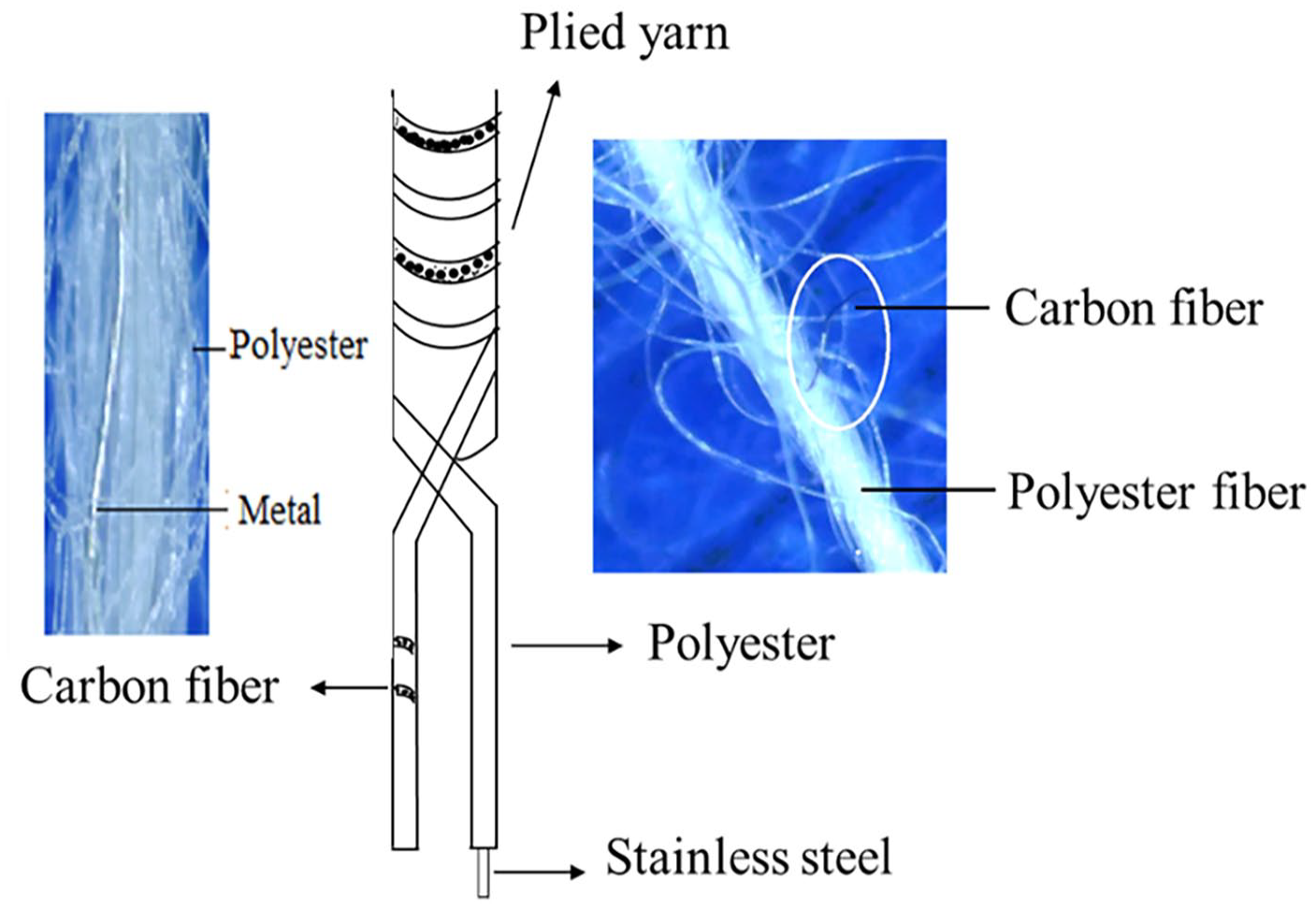
Plied yarn made up of carbon, polyester, and stainless steel.
Specification of yarn.

Equipment
Stoll flat knitting machine (530 HP TT med) in Figure 3 having twelve guage was used for the production of mesh knitted structures. The design of the mesh structure was prepared on M-1 designing software. Figure 5 shows the developed knitted fabrics.
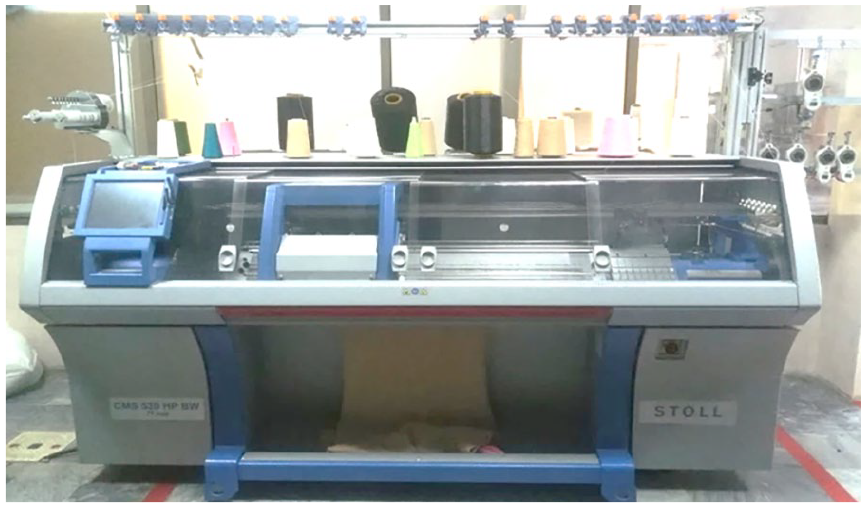
Stoll (530 HP TT med) fully functional jacquard knitting machine [NTU lab machine].
Five mesh structures were developed. A plain fabric was also produced using the same yarn and parameters. Subsequently, its properties were compared with mesh knitted structures. Knitting, all parameters were kept constants for all the knitted fabrics.
Knitted samples
The working mechanism of the needles in V-bed flat knitting machines is shown in Figure 4. For single jersey knitting, the needle goes through three basic steps: clearing the old yarn, capturing the new yarn, and knocking over the loop. However, when creating mesh in knitted fabrics, the needle does not perform these conventional actions. Instead, it holds the old yarn in its hook, and after the transfer action, it knocks over the yarn, creating holes in the fabric. 21

Knitting needles operations for loop formation.
Figure 5 shows the design notation of the mesh knitted structures. In the design of experiment five mesh knitted structures and one plain knitted structure were prepared on Stoll flat knitting machine.

Knit design notation and microscopic images of developed fabrics [M-1 Stoll software].
Figure 6 shows the actual fabric (MH3) view that will used for the final applications. The image clearly shows the presence of hole. MH was designated mesh knitted fabric and PJ for plain single jersey fabric.
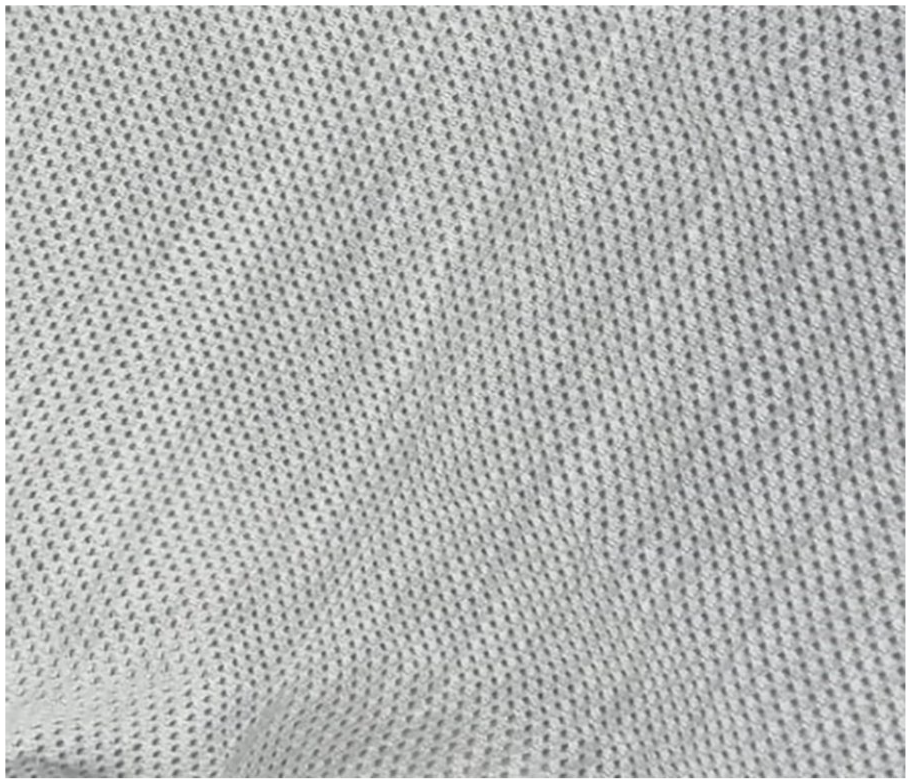
MH3 fabric sample.
Sample testing
The areal density of knitted samples was measured using a GSM cutter according to ASTM D3776. The thickness of samples was measured using digital thickness tester with 8-ounce weight according to ASTM D1777. The mesh size of the samples were measured using microscope and ImageJ software. 22 Surface resistivity was measured using four probe method according to ASTM F1711-96 23 Before measuring the surface resistivity, the sample was conditioned in control environment for 24 h at 22° temperature and 65% relative humidity. The electromagnetic shielding was measured on Vector network analyzer (VNA) according to ASTM D4935-99. Figure 7 shows a specially developed holder having 20 mm external diameter and 8.7 mm internal. VNA provides data on reflection (R), absorption (A) and transmission (T) and its working principle based on scattering parameters. 24
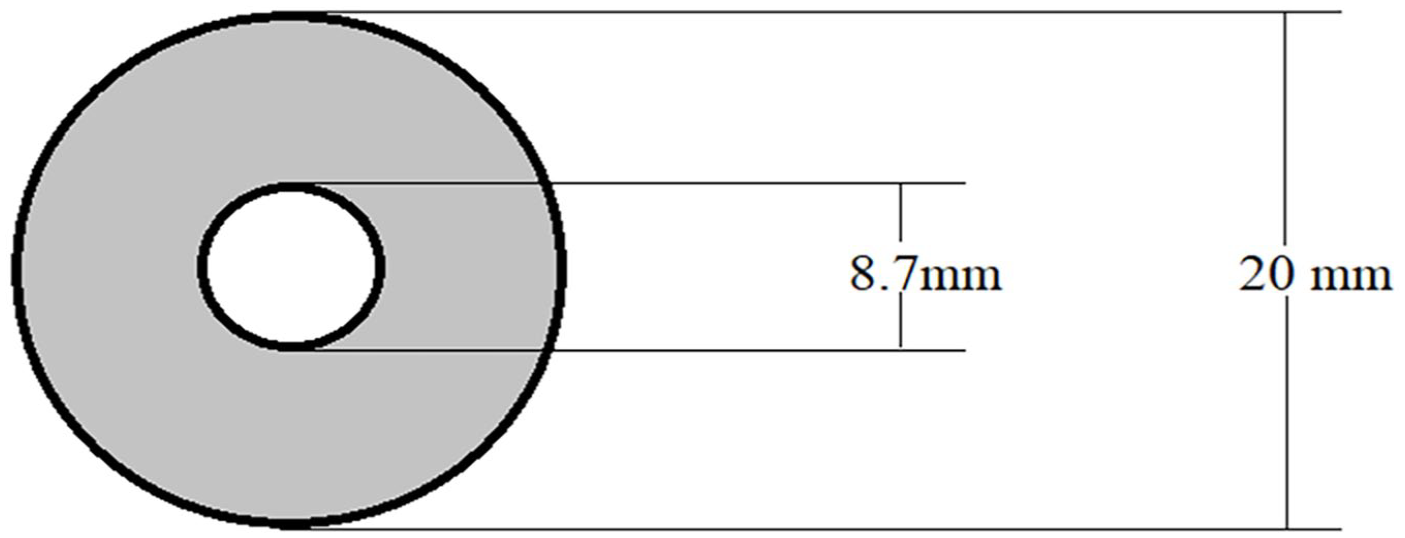
Sample size for VNA holder.
Figure 8 shows the mechanism when an electromagnetic wave strikes the fabric, and three types of mechanisms can be observed: reflection, absorption, and transmission. If the value of dB is high, then the transmission of electromagnetic waves will be less, and shielding material either reflects or absorbs the wave. The internal and multiple reflection is considered negligible when a material shielding is ⩾10 dB.25,26

Electromagnetic shielding mechanism (1) incident radiation (2) reflection of radiation (3) multiple reflection (4) transmission of radiation [Structure designed on Apex-lll design software].
Results and discussion
Physical properties of knitted structures
Physical properties of the samples are given in Table 2. The GSM of mesh knitted fabrics has a variation of ±15. The difference in mesh knitted fabric thickness was due to the alteration in loop architecture. The size of the mesh holes changed because the structure of the mesh fabric transitioned from one type to another.
Physical properties of knitted fabric.

Mesh size of knitted structures
The mesh size has a direct impact on the fabric’s capacity to attenuate and reflect electromagnetic radiation. Controlling the size of the mesh knitted fabric allows to optimize shielding performance for specific applications, guaranteeing efficient electromagnetic interference protection and protecting the integrity of sensitive electronic equipment.27,28 Figure 9 shows mean mesh sizes values of developed knitted structures.

Developed knitted sample mesh size in millimeter.
The standard knitted structure has the minimum mesh size and MH1, MH2, and MH4 the highest mesh size. Figure 10 shows ImageJ results that were comparable to the ones obtained by putting scale on fabric. The MH3 mesh size was optimal near 2.2 mm among all the mesh knitted structures and had a strong tendency to deflect electromagnetic radiation. The 2.2 mm is the mesh size that has a capacity to attenuate electromagnetic radiation. It also allows to pass more natural light and air than the normal PJ0 knitted sample. 29 Table 2 shows the mean and standard deviation of developed knitted fabric mesh sizes.

Knitted fabric mesh size measurements [Images by Ntu Optical Microscopy Surface Morphology].
Surface resistance
Figure 11 represents the surface resistance of developed knitted samples. The presence of difference in surface resistance results was due to the architecture of knitted loop. 30

Surface resistivity of knitted fabric.
In MH2, the surface resistance is lower compared to the rest of the sample due to its architecture, where the conductive yarn passing through the center creates a pathway for electrical current. Whenever a yarn connected wale wise the conductive yarn knitted sample showed the less electrical resistance and more conductivity. In MH3, although the hole size is smaller, there are no individual yarns connecting the holes in a course direction.
Electromagnetic interference shielding
The electromagnetic shielding value expresses the extent to which a material dampens incoming waves. The higher the dB value the lower will be the transmission of radiation. The value above than 10 dB are useful for the general use and greater than 20 dB is useful for professional use, according to standard method. 16
Figure 12 shows that PJ0 structure has the best electromagnetic shielding value among the other structures, because of its tight structure. It was used as a standard sample, and other mesh samples were compared. Its maximum shielding value was 24.8 dB. Figure 13 shows the total electromagnetic shielding peak value along with their reflection and absorption values. All the structures were derivative of single jersey. Electromagnetic shielding tests revealed different shielding results among the developed structures owing to differences in their structural architecture and porosity. 31 The MH3 structure gave the highest electromagnetic effectiveness among mesh structure. And its performance from 2 to 4 GHz is excellent. Because it has an optimum loop architecture and size of loop. MH3 has a homogenous mesh size throughout the fabric. 32

Total electromagnetic shielding of developed knitted structures.

Comparison of Peak value of EMI SET, SEA, and SER results.
Each structure was not homogeneous construction of loops and contained more than one sizes holes in a mesh. The shielding value of MH1 was 14.2 dB, which means that it could be used for general purposes. However, its behavior was consistent from 2 to 4 GHz. The structure MH2 was quite depleted. It has 10 dB, EMI SE owing to the unstable mesh. The behavior of the structure was also unstable in the resonant frequency range. The MH5 mesh knit structure had a better electromagnetic shielding than MH2 and MH4 because the yarn in a connected path in MH5. Because their mesh is almost same (Table 2).
Static charge
Two test methods can be used to analyze the static properties of knitted fabric. The surface test examines and verifies the charge generated on the surface, while the vertical test methodologically analyzes the formation of charges occurring internally within the structure. 33 Figure 14 shows vertical static charge behavior of mesh knitted structure with comparison of plain single jersey structure.

Vertical resistance behavior of knitted fabric.
The plain single jersey structure has different front and back side because the yarn connectivity in wale wise and course wise is different. The front side possesses that the fabric is antistatic while the back side of fabric has a little static behavior. The different static charge results observed on both the front and back sides of single jersey fabric emphasize the significance of knitted fabric architecture.
In the MH3 mesh knitted structure, a minor degree of static behavior was observed. Conversely, in the MH1, MH2, MH4, and MH5 structures, the inclusion of conductive yarns traversing through the fabric apertures effectively mitigated static charge accumulation. Nevertheless, in the MH3 and PJO structures, residual static tendencies persisted owing to the presence of gaps between the horizontally and vertically connected yarns.
Curtains with antistatic properties have several advantages. They decrease the static charge collection on the fabric surface, avoiding dust and lint attraction. This kept the curtain clean and attractive. Antistatic curtains provide a pleasant environment by minimizing the minor electric shocks. 34 Antistatic curtains assist in maintaining improved indoor air quality and lower the incidence of allergic responses by minimizing the static charge.
UPF
A higher number of UPFs provides better protection from the sun’s damaging ultraviolet (UV) radiation, which can cause fading, discoloration, and damage to furniture, flooring, and other indoor furnishings. Furthermore, curtains with higher UPF ratings provide greater protection for space occupants, thereby reducing their exposure to UV radiation. This is especially critical in rooms where curtains are routinely pushed back, enabling direct sunlight penetration. By choosing curtains with a higher UPF value, a more pleasant and UV-safe atmosphere can be created while also extending the life and beauty of the interior design.
MH3 offers the highest UPF protection due to its optimal mesh size, while MH1 provides higher protection than MH2, and MH5 offers less protection than MH4. The UPF and electromagnetic shielding performance of MH3 demonstrate optimal results, attributed to its ideal hole size and internal conductive properties. Figure 15 has 0.8 mm hole size, the PJ0 standard knitted fabric had the highest UPF rating.

Ultraviolet protection factor of knitted fabrics.
UVA rays can penetrate deep into the skin and have wavelengths ranging from 320 to 400 nm. UVB rays, with wavelengths ranging from 280 to 320 nm, predominantly affect the outer layer of the skin, causing sunburn, and contributing to skin cancer. UVC rays are primarily absorbed by Earth’s atmosphere and filtered off by the ozone layer, making direct exposure to UVC unlikely without artificial sources.35,36
At wavelength of 395 nm, the PJ0 standard knitted sample reached its highest UPF rating. The highest UPF rating for the MH1 mesh knitted fabric was obtained at a wavelength of 415 nm. Similarly, in Figure 16 the MH2 fabric had the highest UPF value at 398 nm, whereas the MH3 fabric had the highest UPF value at 392 nm.

UPF rating against wavelength.
Table 3 showed the U.V A and B blockage %, A-Blockage% denotes the capacity of the fabric to attenuate the incoming radiation. It denotes the proportion of radiation absorbed, reflected, or transmitted through the fabric. A greater A-blockage% implies stronger wave absorption and reflection, which leads to more effective shielding. B-Blockage%, on the other hand, refers to the fabric’s capacity to attenuate radiation from its backside. 37 It calculates the proportion of radiation blocked as it passes through the fabric and reaches the other side. A greater B-Blockage% indicates improved effectiveness against radiation from underneath the fabric. Among mesh knitted fabrics, MH3 provides the highest percentage of both A and B blockage.
UV-protection ratings and blockage percentage.

Conclusion
Five mesh knitted structures were compared with plain single jersey structure. The normal plain single jersey construction provides comparable high-level protection, it does not allow more light and air to enter through from the outside. In contrast, a special structure named MH3 in mesh knitted fabrics has a propensity to allow the flow of air and light, making it excellent for curtains. And MH3 has a better performance from 2 to 4 GHz, this is the working frequency of mobile phones and Wi-Fi connected devices. MH5 mesh knitted structure was better than a MH4 mesh knitted structure. Moreover, this structure possesses the capacity to prevent or interfere with signals originating from electromagnetic emanation. All developed fabrics exhibited antistatic behavior. Additionally, an ultraviolet test was conducted on all fabrics, with PJ0 showing the highest UPF rating, while MH3 in the mesh knitted structures achieved a UPF rating of 26. The fabrics were prepared in a cost-effective manner, resulting in a more affordable final product.
Footnotes
Declaration of conflicting interests
The author(s) declared no potential conflicts of interest with respect to the research, authorship, and/or publication of this article.
Funding
The author(s) received no financial support for the research, authorship, and/or publication of this article.
